Spandidos Publications Logo
  • About
    • About Spandidos
    • Aims and Scopes
    • Abstracting and Indexing
    • Editorial Policies
    • Reprints and Permissions
    • Job Opportunities
    • Terms and Conditions
    • Contact
  • Journals
    • All Journals
    • Oncology Letters
      • Oncology Letters
      • Information for Authors
      • Editorial Policies
      • Editorial Board
      • Aims and Scope
      • Abstracting and Indexing
      • Bibliographic Information
      • Archive
    • International Journal of Oncology
      • International Journal of Oncology
      • Information for Authors
      • Editorial Policies
      • Editorial Board
      • Aims and Scope
      • Abstracting and Indexing
      • Bibliographic Information
      • Archive
    • Molecular and Clinical Oncology
      • Molecular and Clinical Oncology
      • Information for Authors
      • Editorial Policies
      • Editorial Board
      • Aims and Scope
      • Abstracting and Indexing
      • Bibliographic Information
      • Archive
    • Experimental and Therapeutic Medicine
      • Experimental and Therapeutic Medicine
      • Information for Authors
      • Editorial Policies
      • Editorial Board
      • Aims and Scope
      • Abstracting and Indexing
      • Bibliographic Information
      • Archive
    • International Journal of Molecular Medicine
      • International Journal of Molecular Medicine
      • Information for Authors
      • Editorial Policies
      • Editorial Board
      • Aims and Scope
      • Abstracting and Indexing
      • Bibliographic Information
      • Archive
    • Biomedical Reports
      • Biomedical Reports
      • Information for Authors
      • Editorial Policies
      • Editorial Board
      • Aims and Scope
      • Abstracting and Indexing
      • Bibliographic Information
      • Archive
    • Oncology Reports
      • Oncology Reports
      • Information for Authors
      • Editorial Policies
      • Editorial Board
      • Aims and Scope
      • Abstracting and Indexing
      • Bibliographic Information
      • Archive
    • Molecular Medicine Reports
      • Molecular Medicine Reports
      • Information for Authors
      • Editorial Policies
      • Editorial Board
      • Aims and Scope
      • Abstracting and Indexing
      • Bibliographic Information
      • Archive
    • World Academy of Sciences Journal
      • World Academy of Sciences Journal
      • Information for Authors
      • Editorial Policies
      • Editorial Board
      • Aims and Scope
      • Abstracting and Indexing
      • Bibliographic Information
      • Archive
    • International Journal of Functional Nutrition
      • International Journal of Functional Nutrition
      • Information for Authors
      • Editorial Policies
      • Editorial Board
      • Aims and Scope
      • Abstracting and Indexing
      • Bibliographic Information
      • Archive
    • International Journal of Epigenetics
      • International Journal of Epigenetics
      • Information for Authors
      • Editorial Policies
      • Editorial Board
      • Aims and Scope
      • Abstracting and Indexing
      • Bibliographic Information
      • Archive
    • Medicine International
      • Medicine International
      • Information for Authors
      • Editorial Policies
      • Editorial Board
      • Aims and Scope
      • Abstracting and Indexing
      • Bibliographic Information
      • Archive
  • Articles
  • Information
    • Information for Authors
    • Information for Reviewers
    • Information for Librarians
    • Information for Advertisers
    • Conferences
  • Language Editing
Spandidos Publications Logo
  • About
    • About Spandidos
    • Aims and Scopes
    • Abstracting and Indexing
    • Editorial Policies
    • Reprints and Permissions
    • Job Opportunities
    • Terms and Conditions
    • Contact
  • Journals
    • All Journals
    • Biomedical Reports
      • Information for Authors
      • Editorial Policies
      • Editorial Board
      • Aims and Scope
      • Abstracting and Indexing
      • Bibliographic Information
      • Archive
    • Experimental and Therapeutic Medicine
      • Information for Authors
      • Editorial Policies
      • Editorial Board
      • Aims and Scope
      • Abstracting and Indexing
      • Bibliographic Information
      • Archive
    • International Journal of Epigenetics
      • Information for Authors
      • Editorial Policies
      • Editorial Board
      • Aims and Scope
      • Abstracting and Indexing
      • Bibliographic Information
      • Archive
    • International Journal of Functional Nutrition
      • Information for Authors
      • Editorial Policies
      • Editorial Board
      • Aims and Scope
      • Abstracting and Indexing
      • Bibliographic Information
      • Archive
    • International Journal of Molecular Medicine
      • Information for Authors
      • Editorial Policies
      • Editorial Board
      • Aims and Scope
      • Abstracting and Indexing
      • Bibliographic Information
      • Archive
    • International Journal of Oncology
      • Information for Authors
      • Editorial Policies
      • Editorial Board
      • Aims and Scope
      • Abstracting and Indexing
      • Bibliographic Information
      • Archive
    • Medicine International
      • Information for Authors
      • Editorial Policies
      • Editorial Board
      • Aims and Scope
      • Abstracting and Indexing
      • Bibliographic Information
      • Archive
    • Molecular and Clinical Oncology
      • Information for Authors
      • Editorial Policies
      • Editorial Board
      • Aims and Scope
      • Abstracting and Indexing
      • Bibliographic Information
      • Archive
    • Molecular Medicine Reports
      • Information for Authors
      • Editorial Policies
      • Editorial Board
      • Aims and Scope
      • Abstracting and Indexing
      • Bibliographic Information
      • Archive
    • Oncology Letters
      • Information for Authors
      • Editorial Policies
      • Editorial Board
      • Aims and Scope
      • Abstracting and Indexing
      • Bibliographic Information
      • Archive
    • Oncology Reports
      • Information for Authors
      • Editorial Policies
      • Editorial Board
      • Aims and Scope
      • Abstracting and Indexing
      • Bibliographic Information
      • Archive
    • World Academy of Sciences Journal
      • Information for Authors
      • Editorial Policies
      • Editorial Board
      • Aims and Scope
      • Abstracting and Indexing
      • Bibliographic Information
      • Archive
  • Articles
  • Information
    • For Authors
    • For Reviewers
    • For Librarians
    • For Advertisers
    • Conferences
  • Language Editing
Login Register Submit
  • This site uses cookies
  • You can change your cookie settings at any time by following the instructions in our Cookie Policy. To find out more, you may read our Privacy Policy.

    I agree
Search articles by DOI, keyword, author or affiliation
Search
Advanced Search
presentation
Oncology Reports
Join Editorial Board Propose a Special Issue
Print ISSN: 1021-335X Online ISSN: 1791-2431
Journal Cover
January-2021 Volume 45 Issue 1

Full Size Image

Sign up for eToc alerts
Recommend to Library

Journals

International Journal of Molecular Medicine

International Journal of Molecular Medicine

International Journal of Molecular Medicine is an international journal devoted to molecular mechanisms of human disease.

International Journal of Oncology

International Journal of Oncology

International Journal of Oncology is an international journal devoted to oncology research and cancer treatment.

Molecular Medicine Reports

Molecular Medicine Reports

Covers molecular medicine topics such as pharmacology, pathology, genetics, neuroscience, infectious diseases, molecular cardiology, and molecular surgery.

Oncology Reports

Oncology Reports

Oncology Reports is an international journal devoted to fundamental and applied research in Oncology.

Experimental and Therapeutic Medicine

Experimental and Therapeutic Medicine

Experimental and Therapeutic Medicine is an international journal devoted to laboratory and clinical medicine.

Oncology Letters

Oncology Letters

Oncology Letters is an international journal devoted to Experimental and Clinical Oncology.

Biomedical Reports

Biomedical Reports

Explores a wide range of biological and medical fields, including pharmacology, genetics, microbiology, neuroscience, and molecular cardiology.

Molecular and Clinical Oncology

Molecular and Clinical Oncology

International journal addressing all aspects of oncology research, from tumorigenesis and oncogenes to chemotherapy and metastasis.

World Academy of Sciences Journal

World Academy of Sciences Journal

Multidisciplinary open-access journal spanning biochemistry, genetics, neuroscience, environmental health, and synthetic biology.

International Journal of Functional Nutrition

International Journal of Functional Nutrition

Open-access journal combining biochemistry, pharmacology, immunology, and genetics to advance health through functional nutrition.

International Journal of Epigenetics

International Journal of Epigenetics

Publishes open-access research on using epigenetics to advance understanding and treatment of human disease.

Medicine International

Medicine International

An International Open Access Journal Devoted to General Medicine.

Journal Cover
January-2021 Volume 45 Issue 1

Full Size Image

Sign up for eToc alerts
Recommend to Library

  • Article
  • Citations
    • Cite This Article
    • Download Citation
    • Create Citation Alert
    • Remove Citation Alert
    • Cited By
  • Similar Articles
    • Related Articles (in Spandidos Publications)
    • Similar Articles (Google Scholar)
    • Similar Articles (PubMed)
  • Download PDF
  • Download XML
  • View XML

  • Supplementary Files
    • Supplementary_Data.pdf
Article Open Access

Fangchinoline exerts antitumour activity by suppressing the EGFR‑PI3K/AKT signalling pathway in colon adenocarcinoma

  • Authors:
    • Fengqi Jiang
    • Shuo Ren
    • Yaodong Chen
    • Ange Zhang
    • Yuekun Zhu
    • Zhenan Zhang
    • Zizhuo Li
    • Daxun Piao
  • View Affiliations / Copyright

    Affiliations: Department of Colorectal Surgery, The First Affiliated Hospital of Harbin Medical University, Harbin, Heilongjiang 150001, P.R. China, Department of Ultrasonic Imaging, First Clinical Medical College, Shanxi Medical University, Taiyuan, Shanxi 030001, P.R. China, Department of Surgery, Infectious Disease Hospital of Heilongjiang Province, Harbin, Heilongjiang 150001, P.R. China
    Copyright: © Jiang et al. This is an open access article distributed under the terms of Creative Commons Attribution License.
  • Pages: 139-150
    |
    Published online on: November 18, 2020
       https://doi.org/10.3892/or.2020.7857
  • Expand metrics +
Metrics: Total Views: 0 (Spandidos Publications: | PMC Statistics: )
Metrics: Total PDF Downloads: 0 (Spandidos Publications: | PMC Statistics: )
Cited By (CrossRef): 0 citations Loading Articles...

This article is mentioned in:


Abstract

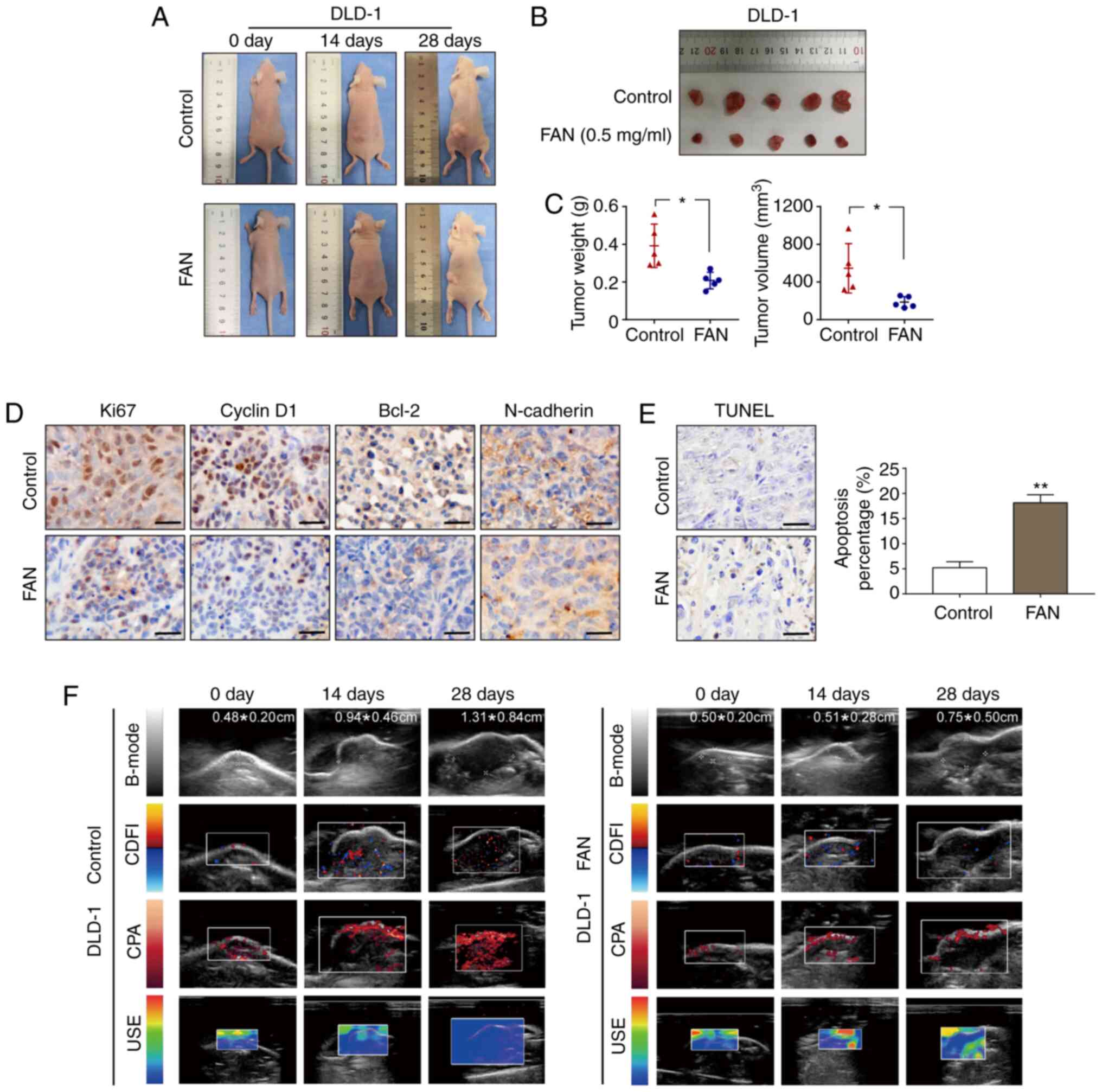
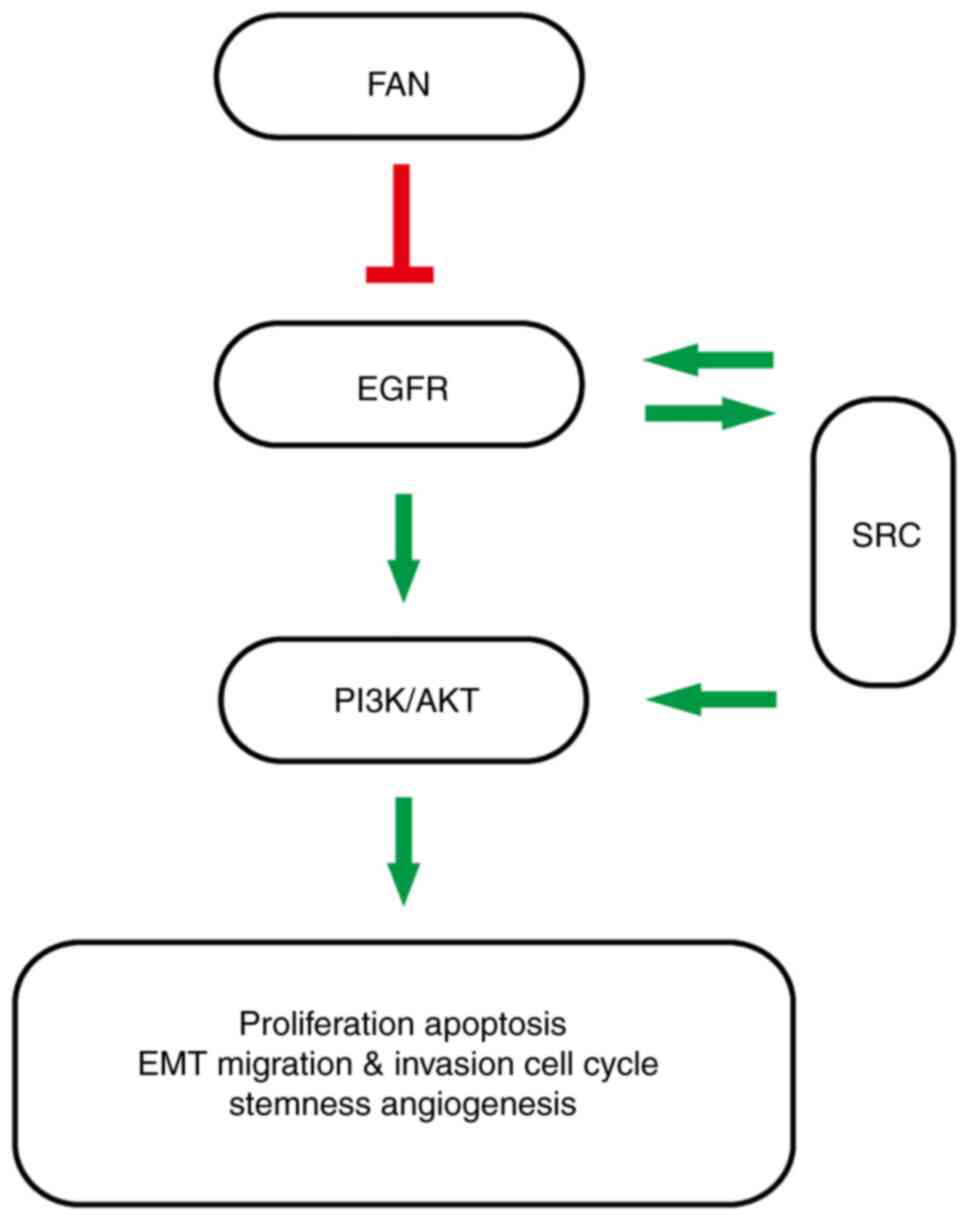
Fangchinoline (FAN), an alkaloid extracted from Stephania tetrandra, has a variety of biological and pharmacological activities, but evidence of its effects on colon adenocarcinoma (COAD) is limited. Therefore, the present study aimed to elucidate the molecular mechanisms by which FAN affects COAD. The cytotoxicity, viability and proliferation of DLD‑1 and LoVo cells were assessed in the presence of FAN using MTT and colony formation assays. The effects of FAN on apoptosis and the cell cycle in COAD cells were analysed by flow cytometry, and the migration and invasion of these cells were assessed by wound healing and Transwell experiments. Furthermore, a network pharmacological analysis was conducted to investigate the target of FAN and the results were confirmed by western blotting. In addition, a xenograft model was established in nude mice, and ultrasound imaging was used to assess the preclinical therapeutic effects of FAN in vivo. To the best of our knowledge, the results of this study provided the first evidence that FAN inhibited cellular proliferation, stemness, migration, invasion, angiogenesis and epithelial‑mesenchymal transition (EMT), and induced apoptosis and G1‑phase cell cycle arrest. Network pharmacological analysis further confirmed that FAN prevented EMT through the epidermal growth factor receptor (EGFR)‑phosphoinositide 3‑kinase (PI3K)/AKT signalling pathway. Finally, FAN significantly repressed tumour growth and promoted apoptosis in xenografts. Thus, targeting EGFR with FAN may offer a novel therapeutic approach for COAD.
View Figures

Figure 1

Figure 2

Figure 3

Figure 4

Figure 5

Figure 6

View References

1 

Banerjee A, Pathak S, Subramanium VD, G D, Murugesan R and Verma RS: Strategies for targeted drug delivery in treatment of colon cancer: Current trends and future perspectives. Drug Discov Today. 22:1224–1232. 2017. View Article : Google Scholar

2 

Bray F, Ferlay J, Soerjomataram I, Siegel RL, Torre LA and Jemal A: Global cancer statistics 2018: GLOBOCAN estimates of incidence and mortality worldwide for 36 cancers in 185 countries. CA Cancer J Clin. 68:394–424. 2018. View Article : Google Scholar

3 

Iqbal A and George TJ: Randomized clinical trials in colon and rectal cancer. Surg Oncol Clin N Am. 26:689–704. 2017. View Article : Google Scholar

4 

Avila-Carrasco L, Majano P, Sánchez-Toméro JA, Selgas R, López-Cabrera M, Aguilera A and González Mateo G: Natural plants compounds as modulators of epithelial-to-mesenchymal transition. Front Pharmacol. 10:7152019. View Article : Google Scholar

5 

Wang Y, Chen J, Wang L, Huang Y, Leng Y and Wang G: Fangchinoline induces G0/G1 arrest by modulating the expression of CDKN1A and CCND2 in K562 human chronic myelogenous leukemia cells. Exp Ther Med. 5:1105–1112. 2013. View Article : Google Scholar

6 

Feng T, Ding D and Li DD: Fangchinoline targets PI3K and suppresses PI3K/AKT signaling pathway in SGC7901 cells. Int J Oncol. 46:2355–2363. 2015. View Article : Google Scholar

7 

Wu WK, Wang XJ, Cheng AS, Luo MX, Ng SS, To KF, Chan FK, Cho CH, Sung JJ and Yu J: Dysregulation and crosstalk of cellular signaling pathways in colon carcinogenesis. Crit Rev Oncol Hematol. 86:251–277. 2013. View Article : Google Scholar

8 

Lamouille S, Xu J and Derynck R: Molecular mechanisms of epithelial-mesenchymal transition. Nat Rev Mol Cell Biol. 15:178–196. 2014. View Article : Google Scholar

9 

Barr S, Thomson S, Buck E, Russo S, Petti F, Sujka-Kwok I, Eyzaguirre A, Rosenfeld-Franklin M, Gibson NW, Miglarese M, et al: Bypassing cellular EGF receptor dependence through epithelial-to-mesenchymal-like transitions. Clin Exp Metastasis. 25:685–693. 2008. View Article : Google Scholar

10 

Kim N, Cho D, Kim H, Kim S, Cha YJ, Greulich H, Bass A, Cho HS and Cho J: Colorectal adenocarcinoma-derived EGFR mutants are oncogenic and sensitive to EGFR-targeted monoclonal antibodies, cetuximab and panitumumab. Int J Cancer. 146:2194–2200. 2020. View Article : Google Scholar

11 

Padfield E, Ellis HP and Kurian KM: Current therapeutic advances targeting EGFR and EGFRvIII in glioblastoma. Front Oncol. 5:52015. View Article : Google Scholar

12 

Li Z, Chen Y, An T, Liu P, Zhu J, Yang H, Zhang W, Dong T, Jiang J, Zhang Y, et al: Nuciferine inhibits the progression of glioblastoma by suppressing the SOX2-AKT/STAT3-Slug signaling pathway. J Exp Clin Cancer Res. 38:1392019. View Article : Google Scholar

13 

Vermeulen K, Berneman ZN and Van Bockstaele DR: Cell cycle and apoptosis. Cell Prolif. 36:165–175. 2003. View Article : Google Scholar

14 

Russo A, Terrasi M, Agnese V, Santini D and Bazan V: Apoptosis: A relevant tool for anticancer therapy. Ann Oncol. 17 (Suppl 7):vii115–vii123. 2006. View Article : Google Scholar

15 

Qian L, Liu Y, Xu Y, Ji W, Wu Q, Liu Y, Gao Q and Su C: Matrine derivative WM130 inhibits hepatocellular carcinoma by suppressing EGFR/ERK/MMP-2 and PTEN/AKT signaling pathways. Cancer Lett. 368:126–134. 2015. View Article : Google Scholar

16 

Sak K: Cytotoxicity of dietary flavonoids on different human cancer types. Pharmacogn Rev. 8:122–146. 2014. View Article : Google Scholar

17 

Boldbaatar A, Lee S, Han S, Jeong AL, Ka HI, Buyanravjikh S, Lee JH, Lim JS, Lee MS and Yang Y: Eupatolide inhibits the TGF-β1-induced migration of breast cancer cells via downregulation of SMAD3 phosphorylation and transcriptional repression of ALK5. Oncol Lett. 14:6031–6039. 2017.

18 

Vuddanda PR, Chakraborty S and Singh S: Berberine: A potential phytochemical with multispectrum therapeutic activities. Expert Opin Invest Drugs. 9:1297–1307. 2010. View Article : Google Scholar

19 

Hang Y, Qin X, Ren T and Cao J: Baicalin reduces blood lipids and inflammation in patients with coronary artery disease and rheumatoid arthritis: A randomized, double-blind, placebo-controlled trial. Lipids Health Dis. 17:1462018. View Article : Google Scholar

20 

Ferk F, Kundi M, Brath H, Szekeres T, Al-Serori H, Mišík M, Saiko P, Marculescu R, Wagner KH and Knasmueller S: Gallic acid improves health-associated biochemical parameters and prevents oxidative damage of DNA in type 2 diabetes patients: Results of a placebo-controlled pilot study. Mol Nutr Food Res. 62:Jan 18–2018.(Epub ahead of print). doi: 10.1002/mnfr.201700482. View Article : Google Scholar

21 

McCubrey JA, Lertpiriyapong K, Steelman LS, Abrams SL, Yang LV, Murata RM, Rosalen PL, Scalisi A, Neri LM, Cocco L, et al: Effects of resveratrol, curcumin, berberine and other nutraceuticals on aging, cancer development, cancer stem cells and microRNAs. Aging (Albany NY). 9:1477–1536. 2017. View Article : Google Scholar

22 

Kang M, Kim S and Ko J: Roles of CD133 in microvesicle formation and oncoprotein trafficking in colon cancer. FASEB J. 33:4248–4260. 2019. View Article : Google Scholar

23 

Zhang SS, Han ZP, Jing YY, Tao SF, Li TJ, Wang H, Wang Y, Li R, Yang Y, Zhao X, et al: CD133(+)CXCR4(+) colon cancer cells exhibit metastatic potential and predict poor prognosis of patients. BMC Med. 10:852012. View Article : Google Scholar

24 

Lu P, Weaver VM and Werb Z: The extracellular matrix: A dynamic niche in cancer progression. J Cell Biol. 196:395–406. 2012. View Article : Google Scholar

25 

Zucker S and Vacirca J: Role of matrix metalloproteinases (MMPs) in colorectal cancer. Cancer Metastasis Rev. 23:101–117. 2004. View Article : Google Scholar

26 

De Craene B and Berx G: Regulatory networks defining EMT during cancer initiation and progression. Nat Rev Cancer. 13:97–110. 2013. View Article : Google Scholar

27 

Han YT, Chen XH, Gao H, Ye JL and Wang CB: Physcion inhibits the metastatic potential of human colorectal cancer SW620 cells in vitro by suppressing the transcription factor SOX2. Acta Pharmacol Sin. 37:264–275. 2016. View Article : Google Scholar

28 

Beyes S, Andrieux G, Schrempp M, Aicher D, Wenzel J, Antón-García P, Boerries M and Hecht A: Genome-wide mapping of DNA-binding sites identifies stemness-related genes as directly repressed targets of SNAIL1 in colorectal cancer cells. Oncogene. 38:6647–6661. 2019. View Article : Google Scholar

29 

Chen T, You Y, Jiang H and Wang ZZ: Epithelial-mesenchymal transition (EMT): A biological process in the development, stem cell differentiation, and tumorigenesis. J Cell Physiol. 232:3261–3272. 2017. View Article : Google Scholar

30 

Zhao GX, Xu YY, Weng SQ, Zhang S, Chen Y, Shen XZ, Dong L and Chen S: CAPS1 promotes colorectal cancer metastasis via Snail mediated epithelial mesenchymal transformation. Oncogene. 38:4574–4589. 2019. View Article : Google Scholar

31 

Kahlert C, Lahes S, Radhakrishnan P, Dutta S, Mogler C, Herpel E, Brand K, Steinert G, Schneider M, Mollenhauer M, et al: Overexpression of ZEB2 at the invasion front of colorectal cancer is an independent prognostic marker and regulates tumor invasion in vitro. Clin Cancer Res. 17:7654–7663. 2011. View Article : Google Scholar

32 

Li MZ, Wang JJ, Yang SB, Li WF, Xiao LB, He YL and Song XM: ZEB2 promotes tumor metastasis and correlates with poor prognosis of human colorectal cancer. Am J Transl Res. 9:2838–2851. 2017.

33 

Wu K, Wei P, Liu M, Liang X and Su M: To reveal pharmacological targets and molecular mechanisms of curcumol against interstitial cystitis. J Adv Res. 20:43–50. 2019. View Article : Google Scholar

34 

Cheng F, Kovacs IA and Barabasi AL: Network-based prediction of drug combinations. Nat Commun. 10:11972019. View Article : Google Scholar

35 

Wang Y, Wang S and Huang M: Structure and enzymatic activities of human serum albumin. Curr Pharm Des. 21:1831–1836. 2015. View Article : Google Scholar

36 

Bauer J and Capra S: Comparison of a malnutrition screening tool with subjective global assessment in hospitalised patients with cancer-sensitivity and specificity. Asia Pac J Clin Nutr. 12:257–260. 2003.

37 

McMillan DC, Watson WS, O'Gorman P, Preston T, Scott HR and McArdle CS: Albumin concentrations are primarily determined by the body cell mass and the systemic inflammatory response in cancer patients with weight loss. Nutr Cancer. 39:210–213. 2001. View Article : Google Scholar

38 

Yamamoto M, Saito H, Uejima C, Tanio A, Tada Y, Matsunaga T, Sakamoto T, Honjo S, Ashida K and Fujiwara Y: Combination of serum albumin and cholinesterase levels as prognostic indicator in patients Ith colorectal cancer. Anticancer Res. 39:1085–1090. 2019. View Article : Google Scholar

39 

Pal I and Mandal M: PI3K and Akt as molecular targets for cancer therapy: Current clinical outcomes. Acta Pharmacol Sin. 33:1441–1458. 2012. View Article : Google Scholar

40 

Lossi L, Castagna C and Merighi A: Caspase-3 mediated cell death in the normal development of the mammalian cerebellum. Int J Mol Sci. 19:39992018. View Article : Google Scholar

41 

Chen H, Yang X, Feng Z, Tang R, Ren F, Wei K and Chen G: Prognostic value of caspase-3 expression in cancers of digestive tract: A meta-analysis and systematic review. Int J Clin Exp Med. 8:10225–10234. 2015.

42 

Lieu C and Kopetz S: The SRC family of protein tyrosine kinases: A new and promising target for colorectal cancer therapy. Clin Colorectal Cancer. 9:89–94. 2010. View Article : Google Scholar

43 

Parkin A, Man J, Timpson P and Pajic M: Targeting the complexity of Src signalling in the tumour microenvironment of pancreatic cancer: From mechanism to therapy. FEBS J. 286:3510–3539. 2019. View Article : Google Scholar

44 

Kopetz S: Targeting SRC and epidermal growth factor receptor in colorectal cancer: Rationale and progress into the clinic. Gastrointest Cancer Res. 1 (Suppl 2):S37–S41. 2007.

45 

Maa MC, Leu TH, McCarley DJ, Schatzman RC and Parsons SJ: Potentiation of epidermal growth factor receptor-mediated oncogenesis by c-Src: Implications for the etiology of multiple human cancers. Proc Natl Acad Sci USA. 92:6981–6985. 1995. View Article : Google Scholar

46 

Poole EM, Curtin K, Hsu L, Kulmacz RJ, Duggan DJ, Makar KW, Xiao L, Carlson CS, Slattery ML, Caan BJ, et al: Genetic variability in EGFR, Src and HER2 and risk of colorectal adenoma and cancer. Int J Mol Epidemiol Genet. 2:300–315. 2011.

47 

Chen J, Elfiky A, Han M, Chen C and Saif MW: The role of Src in colon cancer and its therapeutic implications. Clin Colorectal Cancer. 13:5–13. 2014. View Article : Google Scholar

48 

Lin L, Cheng K, He Z, Lin Q, Huang Y, Chen C, Xie Z, Chen L and Liang Z: A polysaccharide from hedyotis diffusa interrupts metastatic potential of lung adenocarcinoma A549 cells by inhibiting EMT via EGFR/Akt/ERK signaling pathways. Int J Biol Macromol. 129:706–714. 2019. View Article : Google Scholar

49 

Geethadevi A, Parashar D, Bishop E, Pradeep S and Chaluvally-Raghavan P: ERBB signaling in CTCs of ovarian cancer and glioblastoma. Genes Cancer. 8:746–751. 2017. View Article : Google Scholar

50 

Sigismund S, Avanzato D and Lanzetti L: Emerging functions of the EGFR in cancer. Mol Oncol. 12:3–20. 2018. View Article : Google Scholar

51 

Zhang L, Tao X, Fu Q, Ge C, Li R, Li Z, Zhu Y, Tian H, Li Q, Liu M, et al: Curcumin inhibits cell proliferation and migration in NSCLC through a synergistic effect on the TLR4/MyD88 and EGFR pathways. Oncol Rep. 42:1843–1855. 2019.

52 

Li C, Cai G, Song D, Gao R, Teng P, Zhou L, Ji Q, Sui H, Cai J, Li Q and Wang Y: Development of EGFR-targeted evodiamine nanoparticles for the treatment of colorectal cancer. Biomater Sci. 7:3627–3639. 2019. View Article : Google Scholar

53 

Wang N, Pan W, Zhu M, Zhang M, Hao X, Liang G and Feng Y: Fangchinoline induces autophagic cell death via p53/sestrin2/AMPK signalling in human hepatocellular carcinoma cells. Br J Pharmacol. 164:731–742. 2011. View Article : Google Scholar

54 

Suman S, Kurisetty V, Das TP, Vadodkar A, Ramos G, Lakshmanaswamy R and Damodaran C: Activation of AKT signaling promotes epithelial-mesenchymal transition and tumor growth in colorectal cancer cells. Mol Carcinog. 53 (Suppl 1):E151–E160. 2014. View Article : Google Scholar

55 

Shi J, Guo B, Hui Q, Chang P and Tao K: Fangchinoline suppresses growth and metastasis of melanoma cells by inhibiting the phosphorylation of FAK. Oncol Rep. 38:63–70. 2017. View Article : Google Scholar

56 

Xia J, Chen J, Zhang Z, Song P, Tang W and Kokudo N: A map describing the association between effective components of traditional Chinese medicine and signaling pathways in cancer cells in vitro and in vivo. Drug Discov Ther. 8:139–153. 2014. View Article : Google Scholar

57 

Bahrami B, Hojjat-Farsang M, Mohammadi H, Anvari E, Ghalamfarsa G, Yousefi M and Jadidi-Niaragh F: Nanoparticles and targeted drug delivery in cancer therapy. Immunol Lett. 190:64–83. 2017. View Article : Google Scholar

Related Articles

  • Abstract
  • View
  • Download
  • Twitter
Copy and paste a formatted citation
Spandidos Publications style
Jiang F, Ren S, Chen Y, Zhang A, Zhu Y, Zhang Z, Li Z and Piao D: Fangchinoline exerts antitumour activity by suppressing the EGFR‑PI3K/AKT signalling pathway in colon adenocarcinoma. Oncol Rep 45: 139-150, 2021.
APA
Jiang, F., Ren, S., Chen, Y., Zhang, A., Zhu, Y., Zhang, Z. ... Piao, D. (2021). Fangchinoline exerts antitumour activity by suppressing the EGFR‑PI3K/AKT signalling pathway in colon adenocarcinoma. Oncology Reports, 45, 139-150. https://doi.org/10.3892/or.2020.7857
MLA
Jiang, F., Ren, S., Chen, Y., Zhang, A., Zhu, Y., Zhang, Z., Li, Z., Piao, D."Fangchinoline exerts antitumour activity by suppressing the EGFR‑PI3K/AKT signalling pathway in colon adenocarcinoma". Oncology Reports 45.1 (2021): 139-150.
Chicago
Jiang, F., Ren, S., Chen, Y., Zhang, A., Zhu, Y., Zhang, Z., Li, Z., Piao, D."Fangchinoline exerts antitumour activity by suppressing the EGFR‑PI3K/AKT signalling pathway in colon adenocarcinoma". Oncology Reports 45, no. 1 (2021): 139-150. https://doi.org/10.3892/or.2020.7857
Copy and paste a formatted citation
x
Spandidos Publications style
Jiang F, Ren S, Chen Y, Zhang A, Zhu Y, Zhang Z, Li Z and Piao D: Fangchinoline exerts antitumour activity by suppressing the EGFR‑PI3K/AKT signalling pathway in colon adenocarcinoma. Oncol Rep 45: 139-150, 2021.
APA
Jiang, F., Ren, S., Chen, Y., Zhang, A., Zhu, Y., Zhang, Z. ... Piao, D. (2021). Fangchinoline exerts antitumour activity by suppressing the EGFR‑PI3K/AKT signalling pathway in colon adenocarcinoma. Oncology Reports, 45, 139-150. https://doi.org/10.3892/or.2020.7857
MLA
Jiang, F., Ren, S., Chen, Y., Zhang, A., Zhu, Y., Zhang, Z., Li, Z., Piao, D."Fangchinoline exerts antitumour activity by suppressing the EGFR‑PI3K/AKT signalling pathway in colon adenocarcinoma". Oncology Reports 45.1 (2021): 139-150.
Chicago
Jiang, F., Ren, S., Chen, Y., Zhang, A., Zhu, Y., Zhang, Z., Li, Z., Piao, D."Fangchinoline exerts antitumour activity by suppressing the EGFR‑PI3K/AKT signalling pathway in colon adenocarcinoma". Oncology Reports 45, no. 1 (2021): 139-150. https://doi.org/10.3892/or.2020.7857
Follow us
  • Twitter
  • LinkedIn
  • Facebook
About
  • Spandidos Publications
  • Careers
  • Cookie Policy
  • Privacy Policy
How can we help?
  • Help
  • Live Chat
  • Contact
  • Email to our Support Team