International Journal of Molecular Medicine is an international journal devoted to molecular mechanisms of human disease.
International Journal of Oncology is an international journal devoted to oncology research and cancer treatment.
Covers molecular medicine topics such as pharmacology, pathology, genetics, neuroscience, infectious diseases, molecular cardiology, and molecular surgery.
Oncology Reports is an international journal devoted to fundamental and applied research in Oncology.
Experimental and Therapeutic Medicine is an international journal devoted to laboratory and clinical medicine.
Oncology Letters is an international journal devoted to Experimental and Clinical Oncology.
Explores a wide range of biological and medical fields, including pharmacology, genetics, microbiology, neuroscience, and molecular cardiology.
International journal addressing all aspects of oncology research, from tumorigenesis and oncogenes to chemotherapy and metastasis.
Multidisciplinary open-access journal spanning biochemistry, genetics, neuroscience, environmental health, and synthetic biology.
Open-access journal combining biochemistry, pharmacology, immunology, and genetics to advance health through functional nutrition.
Publishes open-access research on using epigenetics to advance understanding and treatment of human disease.
An International Open Access Journal Devoted to General Medicine.
Oncol Rep 34: [Related article:] 3111–3119, 2015; DOI: 10.3892/or.2015.4274
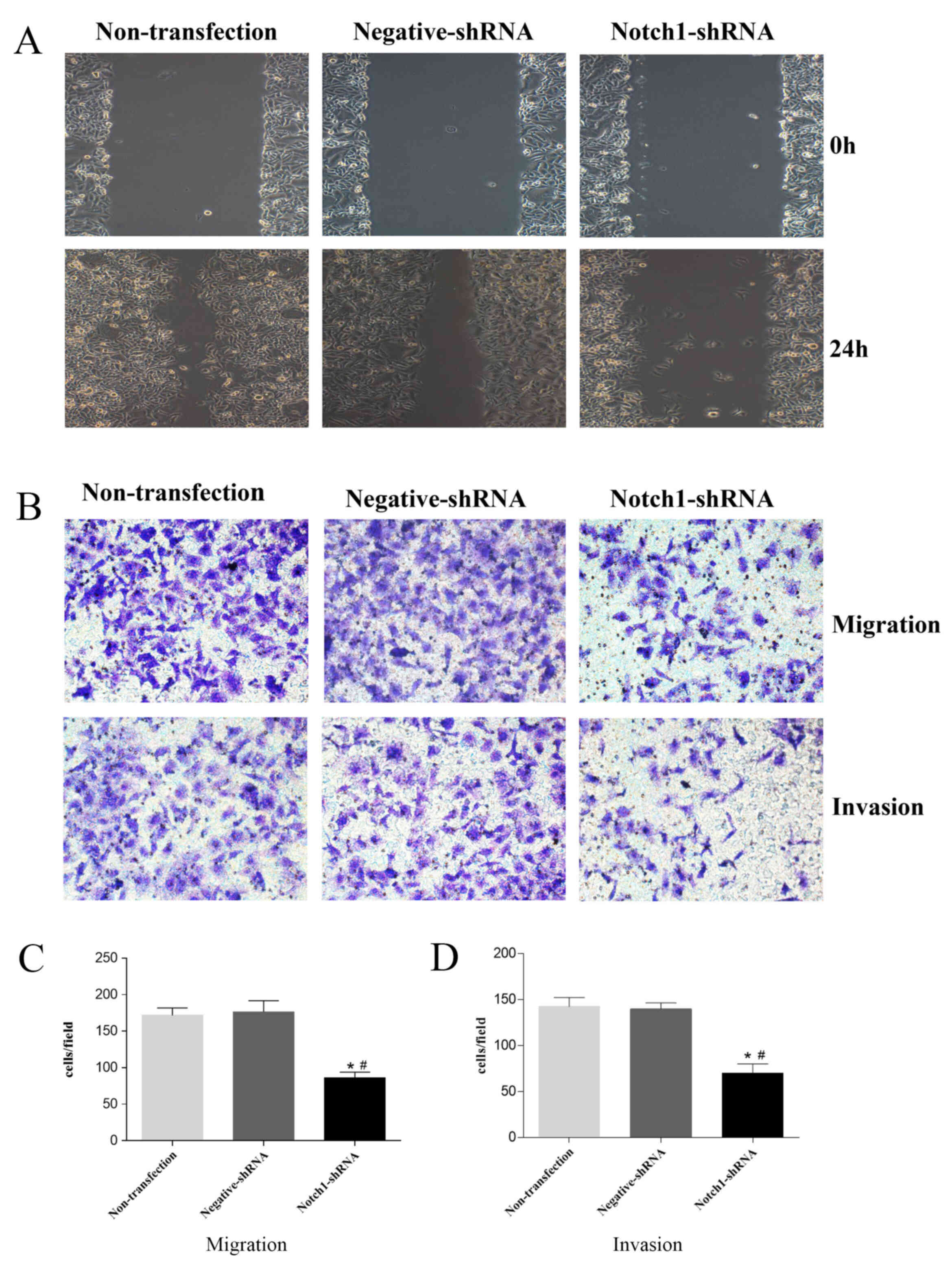
Following the publication of this article, a concerned reader drew to the authors' attention that a pair of the 24 h scratch-wound assay data panels in Fig. 4A, and three of the migration and invasion assay data panels in Fig. 4B, exhibited overlapping sections, suggesting that data which were intended to have shown the results from differently performed experiments had originated from the same sources. In addition, the total number of cases for the LSCC sample data in Table II did not reflect the sum of the samples indicated in the ‘negative’, ‘positive’ and ‘strong positive’ categories.
After having consulted their original data, the authors have realized that Table II and Fig. 4 contained some inadvertent errors: The authors divided their control group data into two subgroups, namely the non-transfection and negative-shRNA groups, although they overlooked details of the filing system they had devised for saving the data, and mistakenly included images from the non-transfection group in with the negative-shRNA group due to unclear file labeling. Moreover, in Table II, the data value for the ‘positive’ stained samples should have been written as ‘43’, not ‘44’.
The corrected versions of Table II and Fig. 4, which now shows the corrected data for the ‘Negative-shRNA / 24 h’ experiment in Fig. 4A and the ‘Non-transfection / Invasion’ and ‘Negative-shRNA / Migration’ experiments in Fig. 4B, are shown below and on the next page, respectively. The authors sincerely apologize for the errors that were introduced during the preparation of this table and this figure, thank the Editor of Oncology Reports for granting them the opportunity to publish this corrigendum, and regret any inconvenience that these mistakes may have caused to the readership.