Spandidos Publications Logo
  • About
    • About Spandidos
    • Aims and Scopes
    • Abstracting and Indexing
    • Editorial Policies
    • Reprints and Permissions
    • Job Opportunities
    • Terms and Conditions
    • Contact
  • Journals
    • All Journals
    • Oncology Letters
      • Oncology Letters
      • Information for Authors
      • Editorial Policies
      • Editorial Board
      • Aims and Scope
      • Abstracting and Indexing
      • Bibliographic Information
      • Archive
    • International Journal of Oncology
      • International Journal of Oncology
      • Information for Authors
      • Editorial Policies
      • Editorial Board
      • Aims and Scope
      • Abstracting and Indexing
      • Bibliographic Information
      • Archive
    • Molecular and Clinical Oncology
      • Molecular and Clinical Oncology
      • Information for Authors
      • Editorial Policies
      • Editorial Board
      • Aims and Scope
      • Abstracting and Indexing
      • Bibliographic Information
      • Archive
    • Experimental and Therapeutic Medicine
      • Experimental and Therapeutic Medicine
      • Information for Authors
      • Editorial Policies
      • Editorial Board
      • Aims and Scope
      • Abstracting and Indexing
      • Bibliographic Information
      • Archive
    • International Journal of Molecular Medicine
      • International Journal of Molecular Medicine
      • Information for Authors
      • Editorial Policies
      • Editorial Board
      • Aims and Scope
      • Abstracting and Indexing
      • Bibliographic Information
      • Archive
    • Biomedical Reports
      • Biomedical Reports
      • Information for Authors
      • Editorial Policies
      • Editorial Board
      • Aims and Scope
      • Abstracting and Indexing
      • Bibliographic Information
      • Archive
    • Oncology Reports
      • Oncology Reports
      • Information for Authors
      • Editorial Policies
      • Editorial Board
      • Aims and Scope
      • Abstracting and Indexing
      • Bibliographic Information
      • Archive
    • Molecular Medicine Reports
      • Molecular Medicine Reports
      • Information for Authors
      • Editorial Policies
      • Editorial Board
      • Aims and Scope
      • Abstracting and Indexing
      • Bibliographic Information
      • Archive
    • World Academy of Sciences Journal
      • World Academy of Sciences Journal
      • Information for Authors
      • Editorial Policies
      • Editorial Board
      • Aims and Scope
      • Abstracting and Indexing
      • Bibliographic Information
      • Archive
    • International Journal of Functional Nutrition
      • International Journal of Functional Nutrition
      • Information for Authors
      • Editorial Policies
      • Editorial Board
      • Aims and Scope
      • Abstracting and Indexing
      • Bibliographic Information
      • Archive
    • International Journal of Epigenetics
      • International Journal of Epigenetics
      • Information for Authors
      • Editorial Policies
      • Editorial Board
      • Aims and Scope
      • Abstracting and Indexing
      • Bibliographic Information
      • Archive
    • Medicine International
      • Medicine International
      • Information for Authors
      • Editorial Policies
      • Editorial Board
      • Aims and Scope
      • Abstracting and Indexing
      • Bibliographic Information
      • Archive
  • Articles
  • Information
    • Information for Authors
    • Information for Reviewers
    • Information for Librarians
    • Information for Advertisers
    • Conferences
  • Language Editing
Spandidos Publications Logo
  • About
    • About Spandidos
    • Aims and Scopes
    • Abstracting and Indexing
    • Editorial Policies
    • Reprints and Permissions
    • Job Opportunities
    • Terms and Conditions
    • Contact
  • Journals
    • All Journals
    • Biomedical Reports
      • Information for Authors
      • Editorial Policies
      • Editorial Board
      • Aims and Scope
      • Abstracting and Indexing
      • Bibliographic Information
      • Archive
    • Experimental and Therapeutic Medicine
      • Information for Authors
      • Editorial Policies
      • Editorial Board
      • Aims and Scope
      • Abstracting and Indexing
      • Bibliographic Information
      • Archive
    • International Journal of Epigenetics
      • Information for Authors
      • Editorial Policies
      • Editorial Board
      • Aims and Scope
      • Abstracting and Indexing
      • Bibliographic Information
      • Archive
    • International Journal of Functional Nutrition
      • Information for Authors
      • Editorial Policies
      • Editorial Board
      • Aims and Scope
      • Abstracting and Indexing
      • Bibliographic Information
      • Archive
    • International Journal of Molecular Medicine
      • Information for Authors
      • Editorial Policies
      • Editorial Board
      • Aims and Scope
      • Abstracting and Indexing
      • Bibliographic Information
      • Archive
    • International Journal of Oncology
      • Information for Authors
      • Editorial Policies
      • Editorial Board
      • Aims and Scope
      • Abstracting and Indexing
      • Bibliographic Information
      • Archive
    • Medicine International
      • Information for Authors
      • Editorial Policies
      • Editorial Board
      • Aims and Scope
      • Abstracting and Indexing
      • Bibliographic Information
      • Archive
    • Molecular and Clinical Oncology
      • Information for Authors
      • Editorial Policies
      • Editorial Board
      • Aims and Scope
      • Abstracting and Indexing
      • Bibliographic Information
      • Archive
    • Molecular Medicine Reports
      • Information for Authors
      • Editorial Policies
      • Editorial Board
      • Aims and Scope
      • Abstracting and Indexing
      • Bibliographic Information
      • Archive
    • Oncology Letters
      • Information for Authors
      • Editorial Policies
      • Editorial Board
      • Aims and Scope
      • Abstracting and Indexing
      • Bibliographic Information
      • Archive
    • Oncology Reports
      • Information for Authors
      • Editorial Policies
      • Editorial Board
      • Aims and Scope
      • Abstracting and Indexing
      • Bibliographic Information
      • Archive
    • World Academy of Sciences Journal
      • Information for Authors
      • Editorial Policies
      • Editorial Board
      • Aims and Scope
      • Abstracting and Indexing
      • Bibliographic Information
      • Archive
  • Articles
  • Information
    • For Authors
    • For Reviewers
    • For Librarians
    • For Advertisers
    • Conferences
  • Language Editing
Login Register Submit
  • This site uses cookies
  • You can change your cookie settings at any time by following the instructions in our Cookie Policy. To find out more, you may read our Privacy Policy.

    I agree
Search articles by DOI, keyword, author or affiliation
Search
Advanced Search
presentation
Oncology Reports
Join Editorial Board Propose a Special Issue
Print ISSN: 1021-335X Online ISSN: 1791-2431
Journal Cover
November-2025 Volume 54 Issue 5

Full Size Image

Sign up for eToc alerts
Recommend to Library

Journals

International Journal of Molecular Medicine

International Journal of Molecular Medicine

International Journal of Molecular Medicine is an international journal devoted to molecular mechanisms of human disease.

International Journal of Oncology

International Journal of Oncology

International Journal of Oncology is an international journal devoted to oncology research and cancer treatment.

Molecular Medicine Reports

Molecular Medicine Reports

Covers molecular medicine topics such as pharmacology, pathology, genetics, neuroscience, infectious diseases, molecular cardiology, and molecular surgery.

Oncology Reports

Oncology Reports

Oncology Reports is an international journal devoted to fundamental and applied research in Oncology.

Experimental and Therapeutic Medicine

Experimental and Therapeutic Medicine

Experimental and Therapeutic Medicine is an international journal devoted to laboratory and clinical medicine.

Oncology Letters

Oncology Letters

Oncology Letters is an international journal devoted to Experimental and Clinical Oncology.

Biomedical Reports

Biomedical Reports

Explores a wide range of biological and medical fields, including pharmacology, genetics, microbiology, neuroscience, and molecular cardiology.

Molecular and Clinical Oncology

Molecular and Clinical Oncology

International journal addressing all aspects of oncology research, from tumorigenesis and oncogenes to chemotherapy and metastasis.

World Academy of Sciences Journal

World Academy of Sciences Journal

Multidisciplinary open-access journal spanning biochemistry, genetics, neuroscience, environmental health, and synthetic biology.

International Journal of Functional Nutrition

International Journal of Functional Nutrition

Open-access journal combining biochemistry, pharmacology, immunology, and genetics to advance health through functional nutrition.

International Journal of Epigenetics

International Journal of Epigenetics

Publishes open-access research on using epigenetics to advance understanding and treatment of human disease.

Medicine International

Medicine International

An International Open Access Journal Devoted to General Medicine.

Journal Cover
November-2025 Volume 54 Issue 5

Full Size Image

Sign up for eToc alerts
Recommend to Library

  • Article
  • Citations
    • Cite This Article
    • Download Citation
    • Create Citation Alert
    • Remove Citation Alert
    • Cited By
  • Similar Articles
    • Related Articles (in Spandidos Publications)
    • Similar Articles (Google Scholar)
    • Similar Articles (PubMed)
  • Download PDF
  • Download XML
  • View XML

  • Supplementary Files
    • Supplementary_Data1.pdf
    • Supplementary_Data2.pdf
Article Open Access

T cell exhaustion‑related gene CD79B predicts prognosis, inhibits malignant progression and promotes tumor‑associated macrophage M1‑like polarization in lung adenocarcinoma

  • Authors:
    • Xia Wu
    • Chunhui Qu
    • Yiting Ouyang
    • Lifang Yang
    • Wuzhong Jiang
  • View Affiliations / Copyright

    Affiliations: Department of Pathology, The Second Xiangya Hospital, Central South University, Changsha, Hunan 410011, P.R. China, Cancer Research Institute, School of Basic Medicine Science, Central South University, Changsha, Hunan 410078, P.R. China, Department of Oncology, National Clinical Research Center for Geriatric Disorders, Xiangya Hospital, Central South University, Changsha, Hunan 410008, P.R. China
    Copyright: © Wu et al. This is an open access article distributed under the terms of Creative Commons Attribution License.
  • Article Number: 144
    |
    Published online on: August 25, 2025
       https://doi.org/10.3892/or.2025.8977
  • Expand metrics +
Metrics: Total Views: 0 (Spandidos Publications: | PMC Statistics: )
Metrics: Total PDF Downloads: 0 (Spandidos Publications: | PMC Statistics: )
Cited By (CrossRef): 0 citations Loading Articles...

This article is mentioned in:


Abstract

Lung adenocarcinoma (LUAD) is one of the most common malignancies in the lung. T cell exhaustion (TEX) is an important immune escape mechanism that may be targeted to improve tumor immunotherapy. The present study investigated TEX‑related genes in the tumor microenvironment to predict the prognosis of patients with LUAD. Data from 516 patients with LUAD were collected from The Cancer Genome Atlas database and classified them into TEX‑C1 and TEX‑C2 by unsupervised clustering based on the TEX‑related genes. Compared with TEX‑C1, TEX‑C2 cluster had worse prognosis, with shorter overall and progression‑free survival. Functional analysis revealed that upregulated genes in the TEX‑C2 cluster were significantly enriched in tumor immune‑ and metabolism‑related pathways. TEX‑C2 cluster had a poor immune checkpoint blockade (ICB) response and a shorter survival after ICB treatment by Tumor Immune Dysfunction and Exclusion algorithm. A prognostic TEX‑related gene signature was constructed for patients with LUAD by Least Absolute Shrinkage and Selection Operator regression analysis. B cell antigen receptor complex‑associated protein β chain (CD79B) was considered an independent prognostic indicator; in the clinical correlation analysis, the effect of CD79B on prognosis was associated with advanced lung cancer, advanced age, female sex and patients with history of smoking. The overexpression of CD79B was associated with more infiltration of CD8+ T cells, M1 macrophages (the classically activated type 1, pro‑inflammatory type), and less infiltration of M0 (undifferentiated) and M2 macrophages (the alternatively activated type 2, anti‑inflammatory type) by CIBERSORT algorithm, which was also significantly correlated with gene markers of innate and adaptive immune cells, and higher levels of immune checkpoint genes. Upregulation of CD79B could inhibit the proliferation, migration and invasion capabilities and promote the apoptosis of LUAD cells, and induce M1‑like tumor‑associated macrophage (TAM) polarization. In conclusion, patients with LUAD in the TEX‑C2 cluster had worse prognosis and adverse immune microenvironment. CD79B may be a potential prognostic indicator, which could inhibit malignant progression of LUAD cells and induce M1‑like TAM polarization.
View Figures

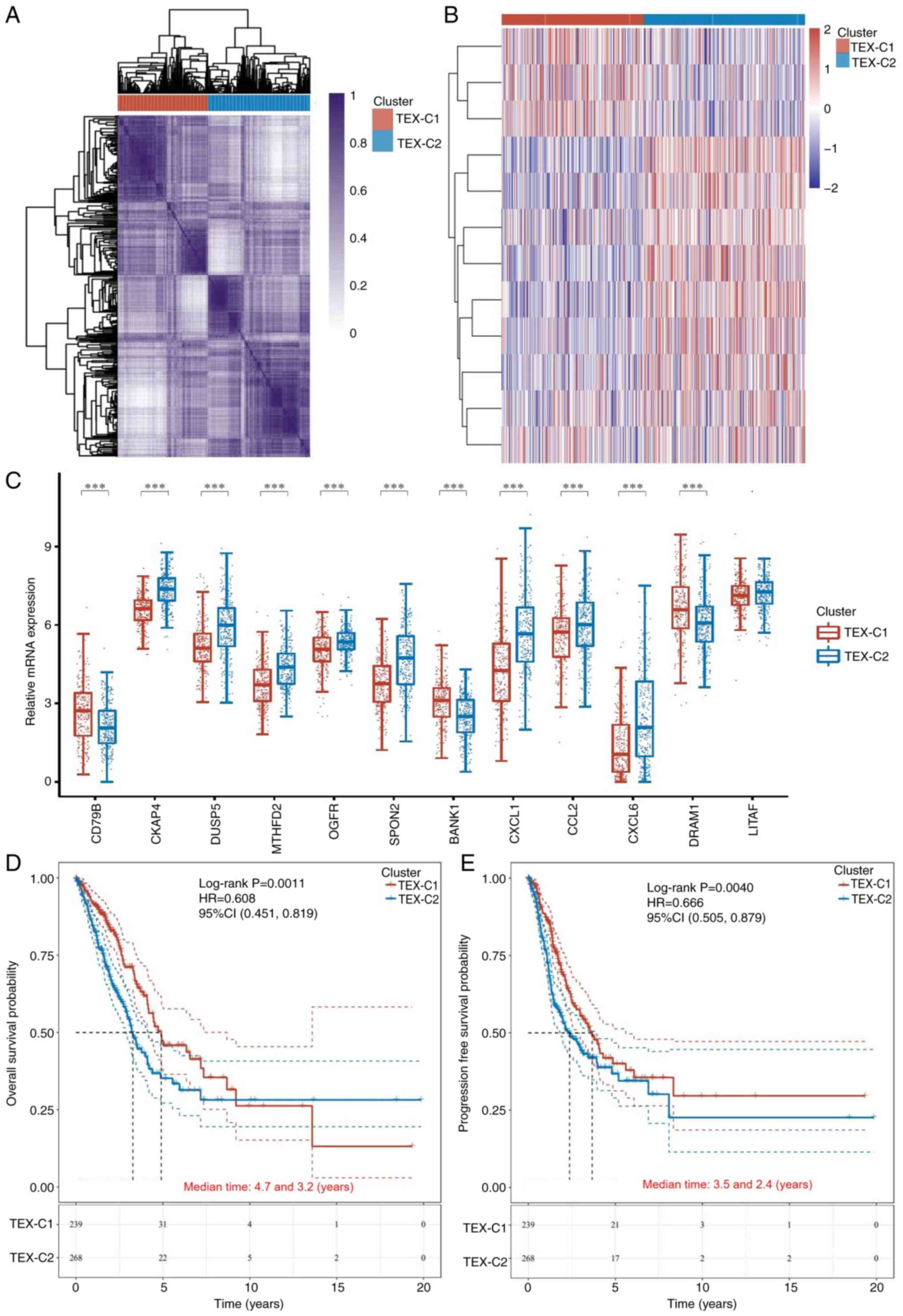
Figure 1

Cluster and survival analysis of
TEX-related genes in patients with lung adenocarcinoma. (A)
Unsupervised consensus cluster analysis identifying two clusters
(k=2). (B) Heatmap of TEX-related genes in the two clusters. (C)
mRNA expression of TEX-related genes between clusters. Kaplan-Meier
survival analysis of (D) overall and (E) progression-free survival
between TEX clusters. ***P<0.001. TEX-C, T cell exhaustion
cluster; CD79B, B cell Antigen Receptor Complex-Associated Protein
Beta Chain; DUSP, dual Specificity Phosphatase; MTHFD,
Methylenetetrahydrofolate Dehydrogenase; OGFR, Opioid Growth Factor
Receptor; SPON, Spondin; BANK, B Cell Scaffold Protein With Ankyrin
Repeats; CXCL, C-X-C Motif Chemokine Ligand; CCL, C-C Motif
Chemokine Ligand; DRAM, DNA Damage Regulated Autophagy Modulator;
LITAF, Lipopolysaccharide Induced TNF Factor;, HR, Hazard Ratio;
CI, Confidence Interval.

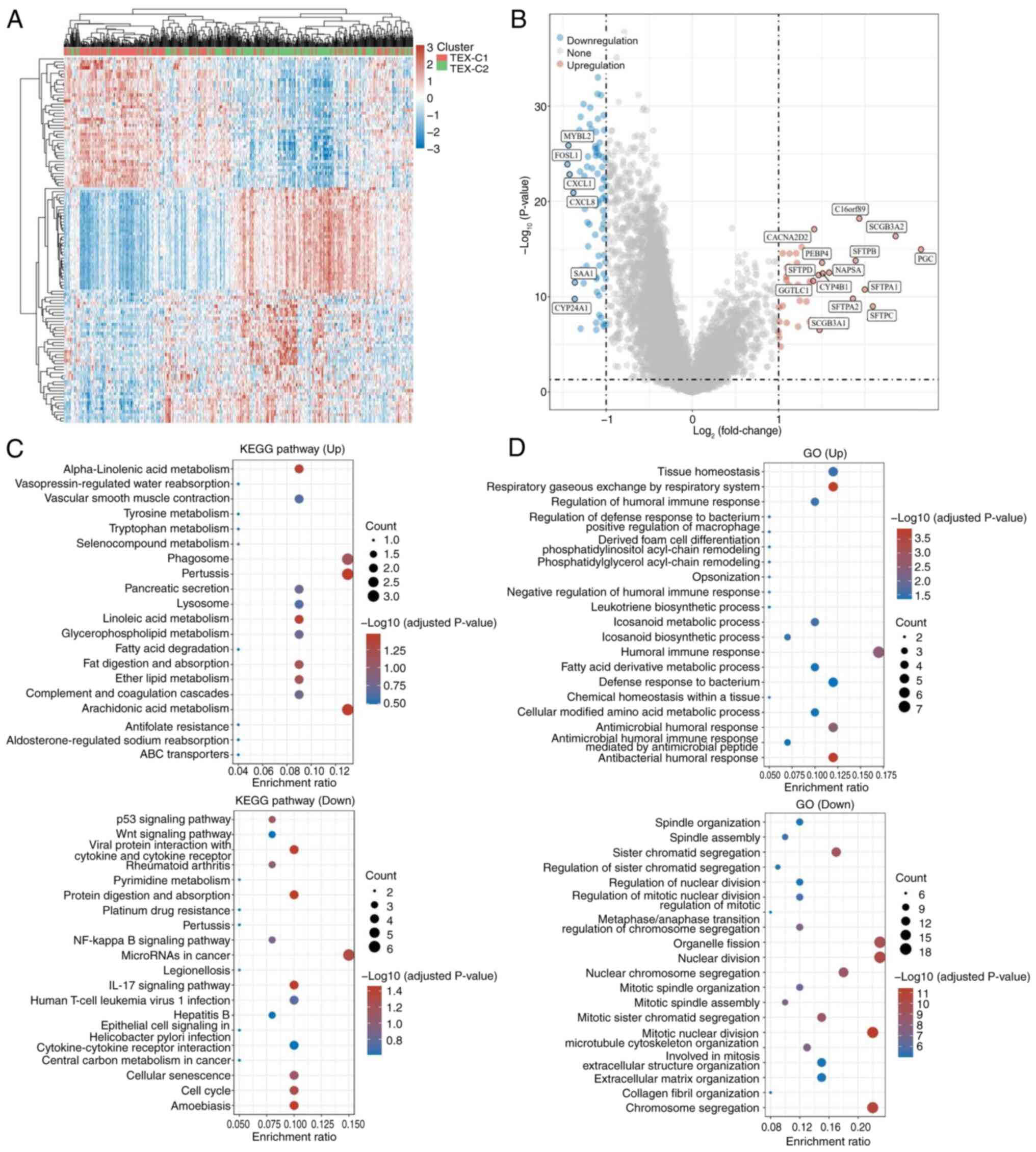
Figure 2

Differential gene expression and gene
enrichment analysis of TEX-based clusters in patients with lung
adenocarcinoma. (A) Heatmap of differentially expressed genes
between TEX clusters, (B) Volcano plot displays the magnitude of
gene expression changes (fold change) and the significance of
changes (P-value). Functional enrichment analysis includes the KEGG
pathway enrichment results (C) and GO term enrichment results (D)
for differentially up- or downregulated genes between the two TEX
clusters. TEX-C, T cell exhaustion cluster; GO, Gene Ontology;
KEGG, Kyoto Encyclopedia of Genes and Genomes.

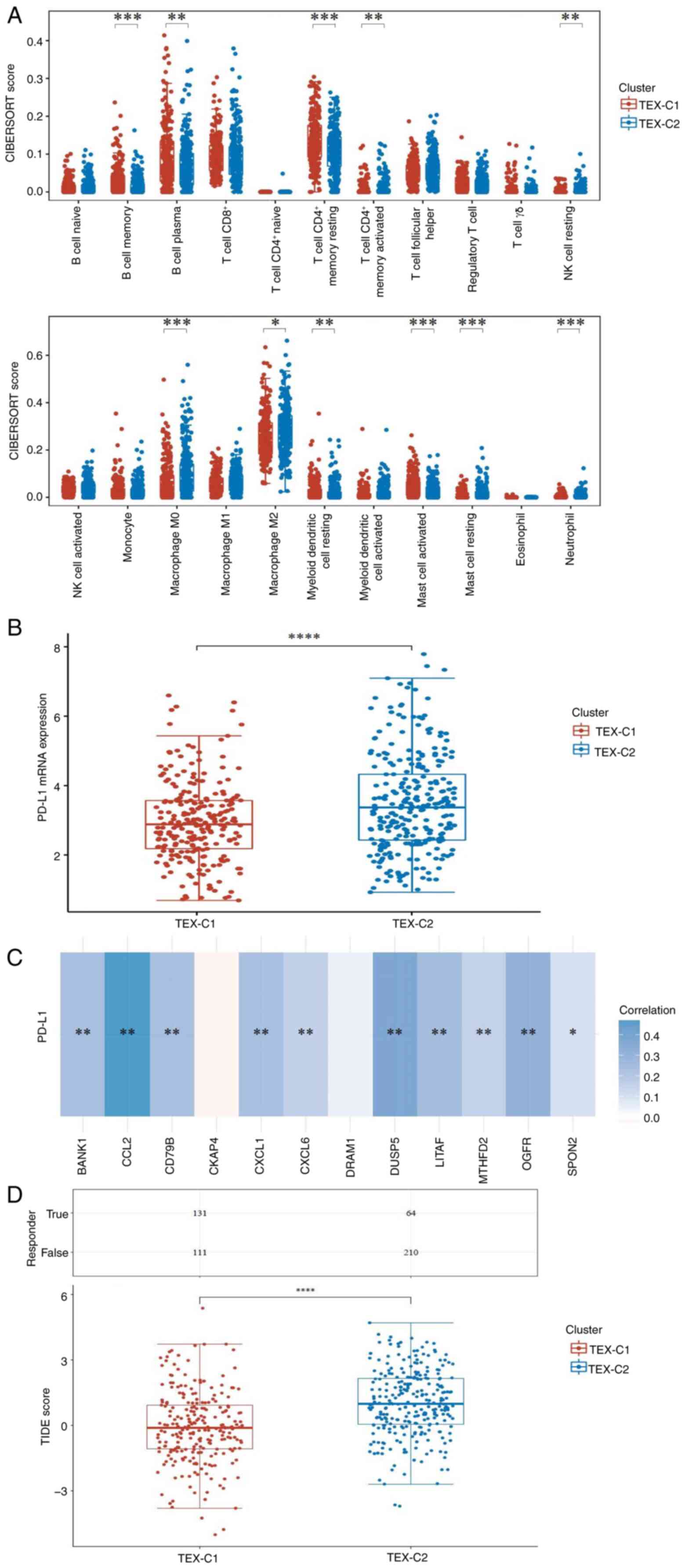
Figure 3

Tumor immune microenvironment
analysis of TEX-based clusters in patients with lung
adenocarcinoma. (A) Infiltration of immune cells between TEX
clusters was analyzed using the CIBERSORT algorithm. (B) mRNA
expression of PD-L1 between TEX clusters. (C) Heatmap of
correlation between PD-L1 and TEX-related genes. Blue, positive;
red, negative; the darker the color, the stronger the association.
(D) TIDE scores in TEX clusters. *P<0.05, **P<0.01,
***P<0.001 and ****P<0.0001. TEX-C, T cell exhaustion
cluster; TIDE, Tumor Immune Dysfunction and Exclusion; CD79B, B
cell Antigen Receptor Complex-Associated Protein Beta Chain; DUSP,
Dual Specificity Phosphatase; MTHFD, Methylenetetrahydrofolate
Dehydrogenase; OGFR, Opioid Growth Factor Receptor; SPON, Spondin;
BANK, B Cell Scaffold Protein With Ankyrin Repeats; CXCL, C-X-C
Motif Chemokine Ligand; CCL, C-C motif chemokine ligand; DRAM, DNA
Damage Regulated Autophagy Modulator; LITAF, Lipopolysaccharide
Induced TNF Factor; PD-L1, Programmed Cell Death 1 Ligand 1; NK,
natural killer cell.

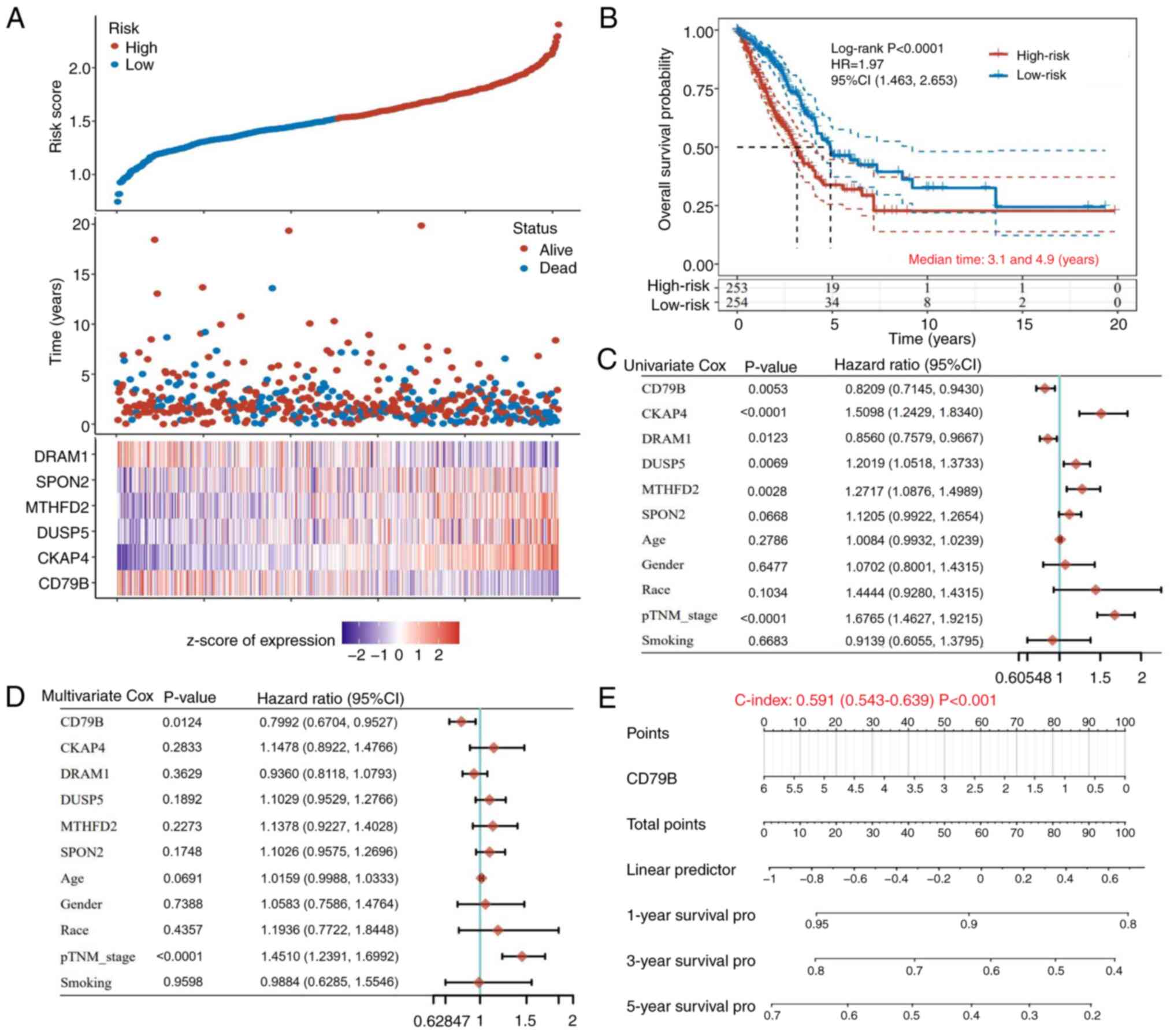
Figure 4

Construction of the prognostic
TEX-related gene signature in patients with LUAD. (A) Prognostic
analysis of the TEX-related gene signature in patients with LUAD.
The patients were divided into low- and high-risk groups using
median risk score (1.487) as the cutoff value. (B) Kaplan-Meier
analysis of overall survival between low- and high-risk groups. (C)
Uni- and (D) multivariate Cox overall survival analyses of the
prognostic TEX-related genes and other clinicopathological factors
in patients with LUAD. (E) Nomogram based on the results of the
multivariate analysis to predict the 1-, 3- and 5-year overall
survival of patients with LUAD. TEX, T cell exhaustion; LUAD, lung
adenocarcinoma; CD79B, B cell Antigen Receptor Complex-Associated
Protein Beta Chain; DRAM, DNA damage Regulated Autophagy Modulator;
DUSP, Dual Specificity Phosphatase; MTHFD,
Methylenetetrahydrofolate Dehydrogenase; SPON, Spondin; pro,
probability.

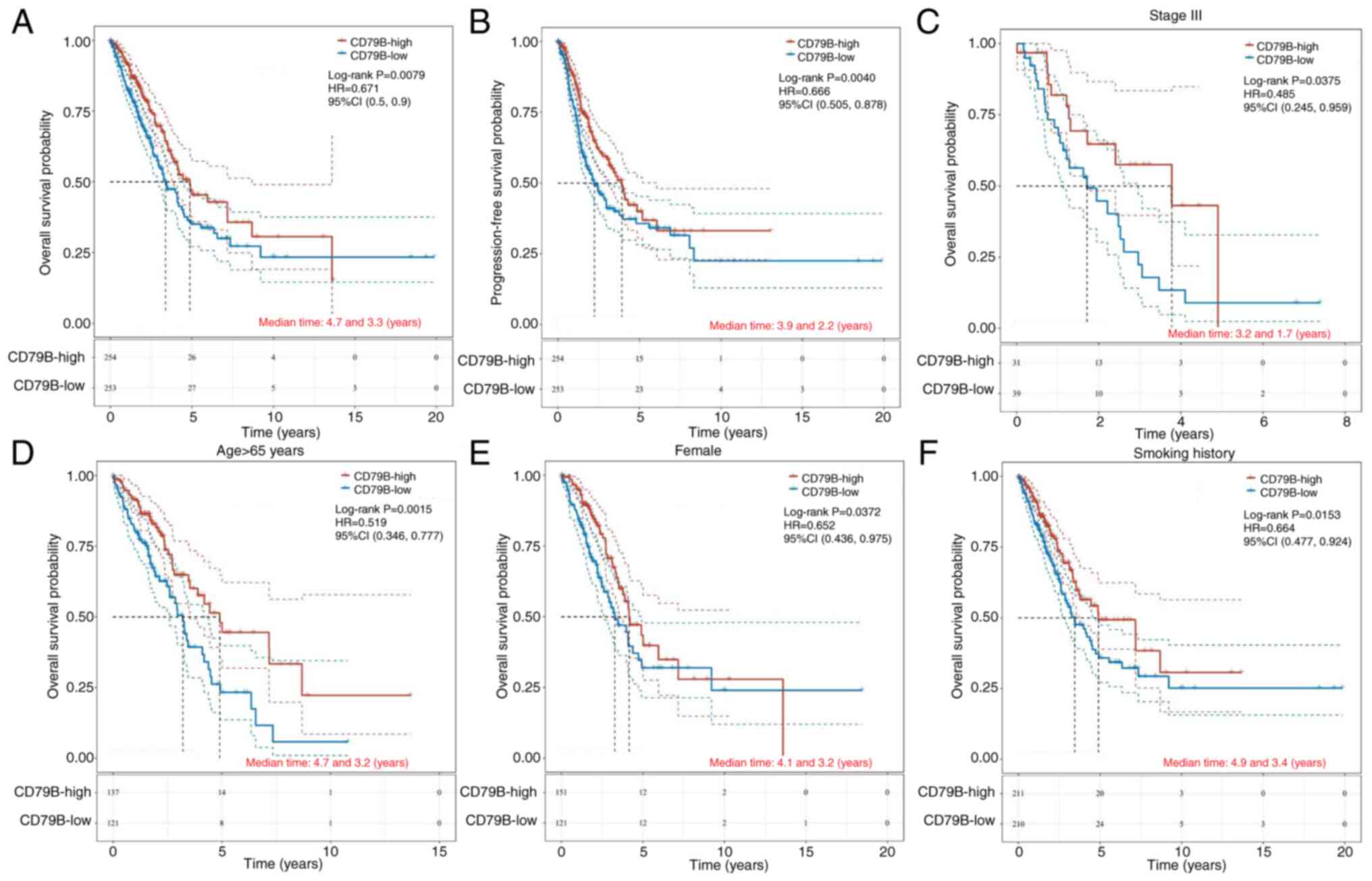
Figure 5

Prognosis analysis between CD79B
expression and clinical data in patients with LUAD. The patients
were divided into CD79B-low and -high groups. Kaplan-Meier survival
analysis of (A) overall and (B) progression-free survival between
CD79B-low and -high groups. Association between CD79B expression
and prognosis in patients with LUAD and (C) stage III, (D) age
>65 years, (E) female sex and (F) smoking history. CD79B, B cell
antigen receptor complex-associated protein Beta Chain; LUAD, lung
adenocarcinoma; HR, Hazard Ratio; CI, Confidence Interval.

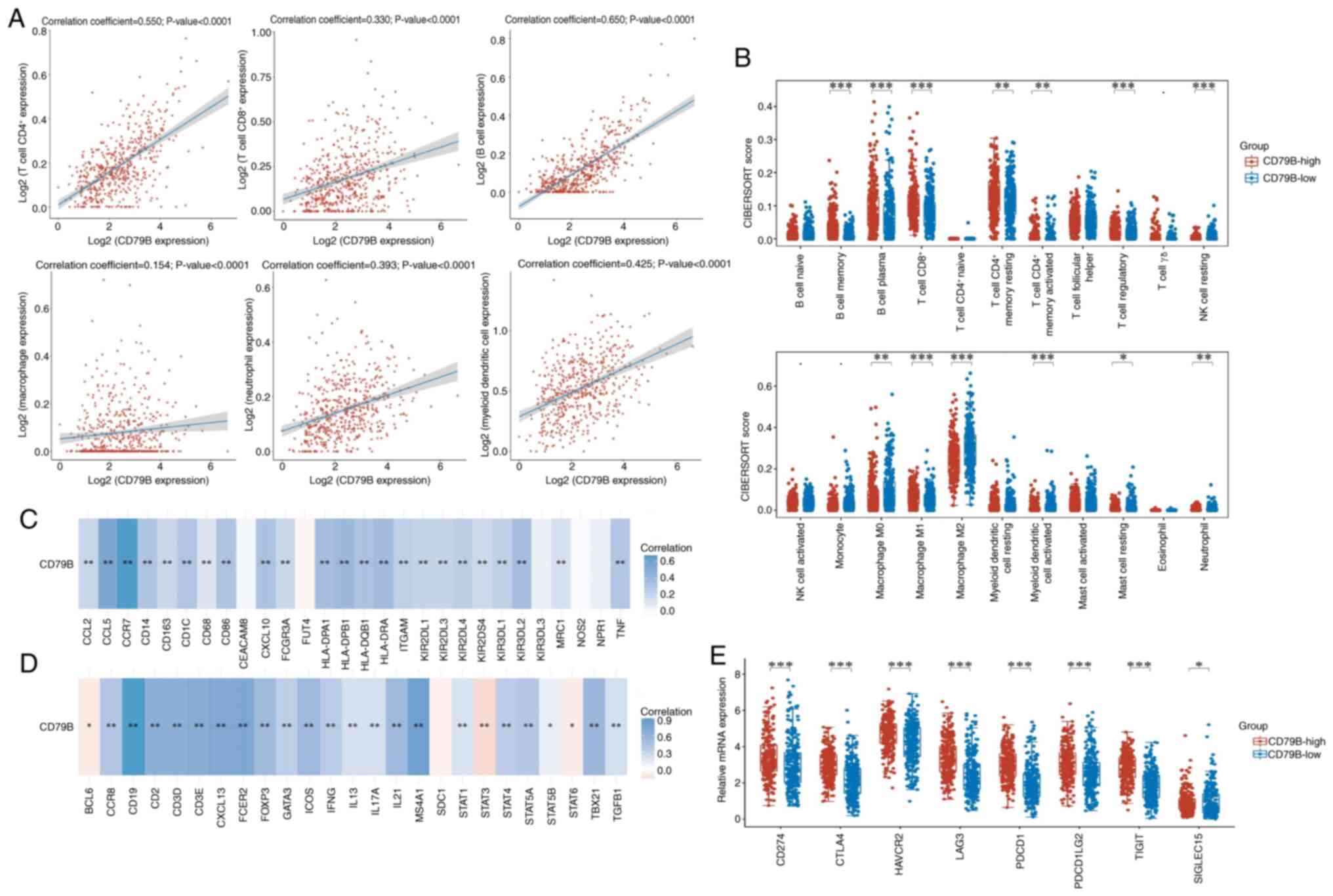
Figure 6

Tumor immune microenvironment
analysis of CD79B expression in patients with lung adenocarcinoma.
(A) Correlation between CD79B expression and immune cell levels was
analyzed using Spearman's correlation. (B) Infiltration of immune
cells between CD79B-low and -high groups was analyzed using the
CIBERSORT algorithm. Correlation between CD79B and markers of (C)
innate and (D) adaptive immune cells. (E) mRNA expression levels of
immune checkpoint genes between CD79B-low and -high groups.
*P<0.05, **P<0.01, ***P<0.001. CD79B, B cell Antigen
Receptor Complex-Associated Protein Beta Chain; NK, natural killer
cell; CTLA, Cytotoxic T-Lymphocyte Associated Protein 4; HAVCR,
Hepatitis A Virus cellular receptor 1; LAG, Lymphocyte Activating
3; PDCD1LG2, Programmed Cell Death 1 Ligand 2; TIGIT, T Cell
Immunoreceptor with Ig and ITIM Domains; SIGLEC, Sialic Acid
Binding Ig Like Lectin.

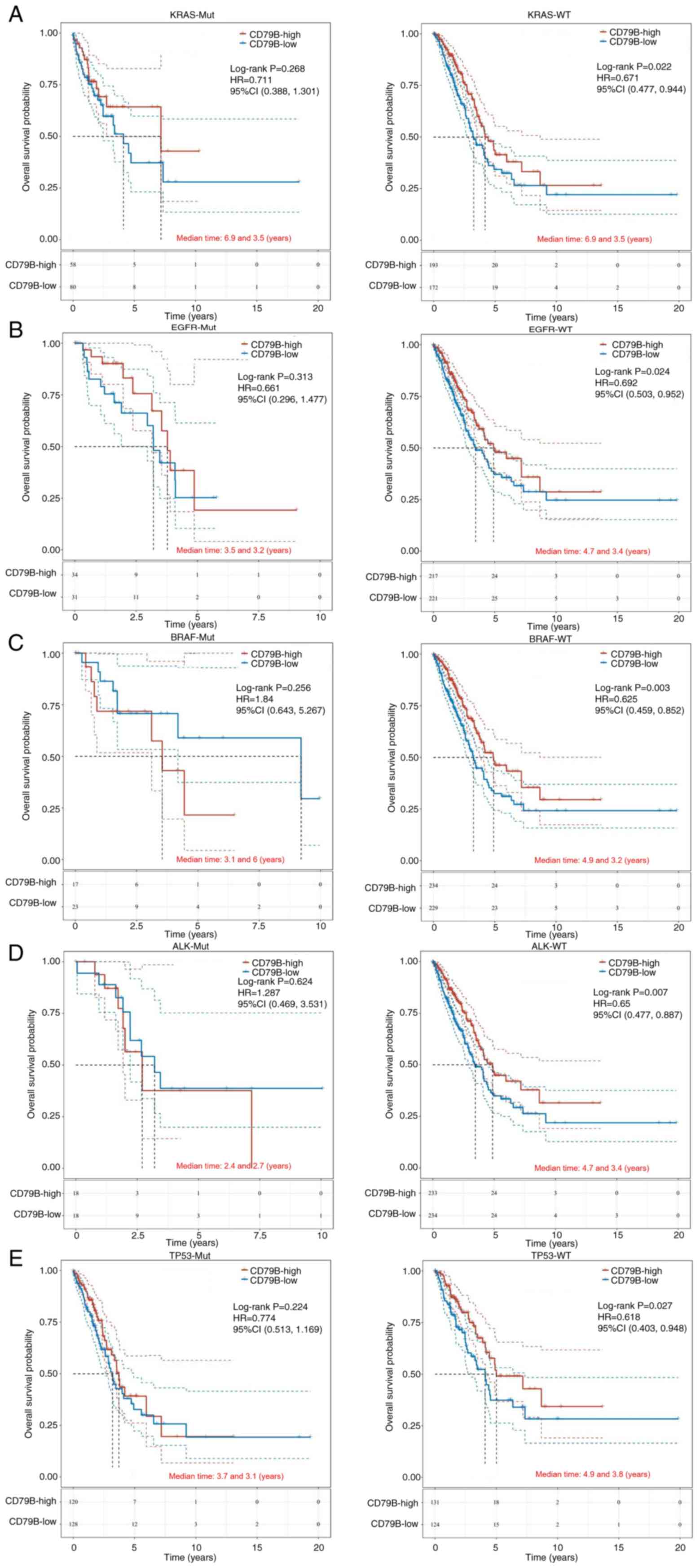
Figure 7

Survival analysis between CD79B
expression and driver gene mutations in patients with lung
adenocarcinoma. Overall survival of patients with mut or WT (A)
KRAS, (B) EGFR, (C) BRAF, (D) ALK and (E) TP53 between CD79B-low
and -high groups. CD79B, B-Cell Antigen Receptor Complex-Associated
Protein Beta Chain; ALK, Anaplasticlymphoma Kinase; mut, mutant;
HR, Hazard Ratio; CI, Confidence Interval; WT, widetype.

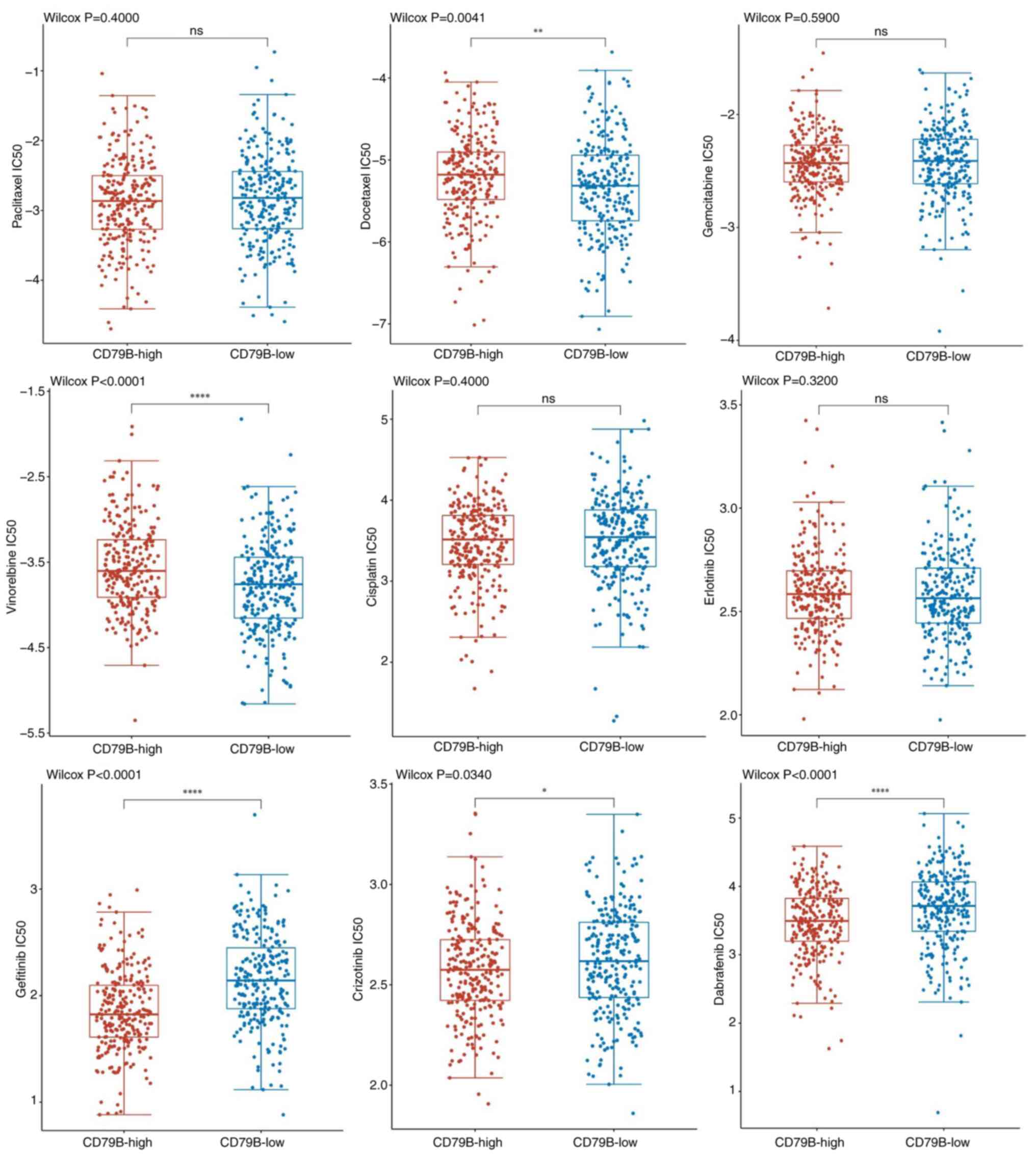
Figure 8

Prediction of therapeutic drug
sensitivity based on CD79B expression in patients with LUAD. The
distribution of IC50 scores of LUAD chemotherapy and targeted drugs
between CD79B- and CD79B-high groups. *P<0.05, **P<0.01 and
****P<0.0001. CD79B, B-Cell Antigen Receptor Complex-Associated
Protein Beta Chain; LUAD, lung adenocarcinoma; ns, not significant;
IC50, half-maximal inhibitory concentration.

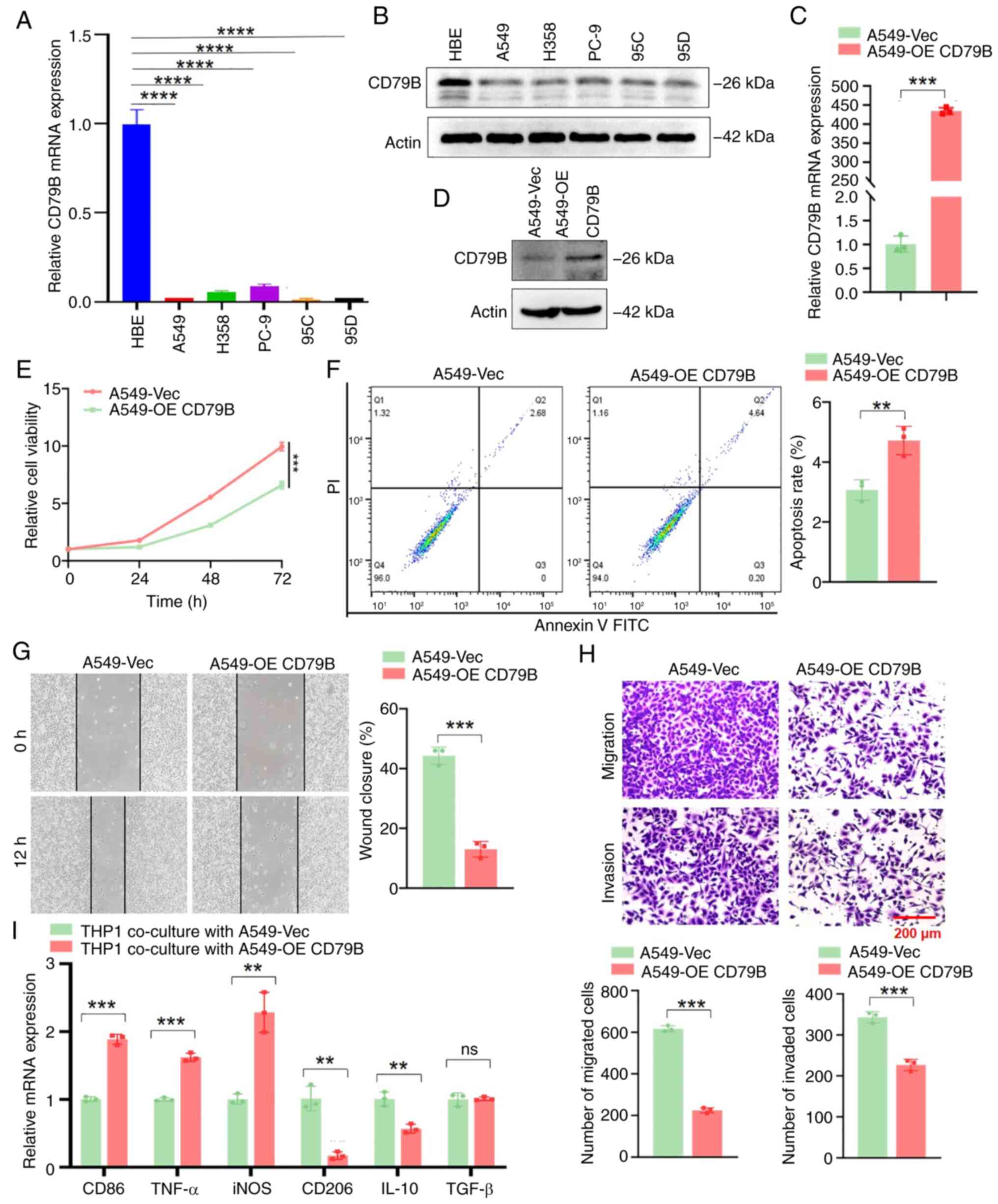
Figure 9

CD79B inhibits proliferation,
migration and invasion and promotes apoptosis of LUAD cells, and
induces M1-like tumor-associated macrophage polarization in
vitro. mRNA and protein expression of CD79B were detected by
(A) qPCR and (B) western blotting in normal lung epithelial HBE and
LUAD cells. A549 cells were transfected with the CD79B-OE plasmid
and mRNA and protein expression of CD79B were detected by (C) qPCR
and (D) western blotting. (E) Cell viability was detected by Cell
Counting Kit 8 assay. (F) Flow cytometry was used to analyze cell
apoptosis. (G) Scratch assay was used to detect cell migration. (H)
Transwell assay was used to analyze cell migration and invasion
ability. (I) M0 macrophage THP-1 cells were co-culture with A549
cells, and the mRNA levels of M1/M2 marker genes were detected by
qPCR after 48 h. **P<0.01, ***P<0.001 and ****P<0.0001.
CD79B, B-Cell Antigen Receptor Complex-Associated Protein Beta
Chain; LUAD, lung adenocarcinoma; q, quantitative; OE,
Over-Expression; ns, not significant; Vec, Vector; iNOS. Nitric
Oxide Synthase, Inducible.
View References

1 

Herbst RS, Morgensztern D and Boshoff C: The biology and management of non-small cell lung cancer. Nature. 553:446–454. 2018. View Article : Google Scholar : PubMed/NCBI

2 

Hirsch FR, Scagliotti GV, Mulshine JL, Kwon R, Curran WJ, Wu YL and Paz-Ares L: Lung cancer: Current therapies and new targeted treatments. Lancet. 389:299–311. 2017. View Article : Google Scholar : PubMed/NCBI

3 

Succony L, Rassl DM, Barker AP, McCaughan FM and Rintoul RC: Adenocarcinoma spectrum lesions of the lung: Detection, pathology and treatment strategies. Cancer Treat Rev. 99:1022372021. View Article : Google Scholar : PubMed/NCBI

4 

Hughes PE, Caenepeel S and Wu LC: Targeted therapy and checkpoint immunotherapy combinations for the treatment of cancer. Trends Immunol. 37:462–476. 2016. View Article : Google Scholar : PubMed/NCBI

5 

Smit EF and Baas P: Lung cancer in 2015: Bypassing checkpoints, overcoming resistance, and honing in on new targets. Nat Rev Clin Oncol. 13:75–76. 2016. View Article : Google Scholar : PubMed/NCBI

6 

Garon EB, Rizvi NA, Hui R, Leighl N, Balmanoukian AS, Eder JP, Patnaik A, Aggarwal C, Gubens M, Horn L, et al: Pembrolizumab for the treatment of non-small-cell lung cancer. N Engl J Med. 372:2018–2028. 2015. View Article : Google Scholar : PubMed/NCBI

7 

Jiang P, Gu S, Pan D, Fu J, Sahu A, Hu X, Li Z, Traugh N, Bu X, Li B, et al: Signatures of T cell dysfunction and exclusion predict cancer immunotherapy response. Nat Med. 24:1550–1558. 2018. View Article : Google Scholar : PubMed/NCBI

8 

Parra ER, Zhang J, Duose DY, Gonzalez-Kozlova E, Redman MW, Chen H, Manyam GC, Kumar G, Zhang J, Song X, et al: Multi-omics analysis reveals immune features associated with immunotherapy benefit in patients with squamous cell lung cancer from phase III Lung-MAP S1400I trial. Clin Cancer Res. 30:1655–1668. 2024. View Article : Google Scholar : PubMed/NCBI

9 

Mao X, Xu J, Wang W, Liang C, Hua J, Liu J, Zhang B, Meng Q, Yu X and Shi S: Crosstalk between cancer-associated fibroblasts and immune cells in the tumor microenvironment: New findings and future perspectives. Mol Cancer. 20:1312021. View Article : Google Scholar : PubMed/NCBI

10 

Yuan Z, Li Y, Zhang S, Wang X, Dou H, Yu X, Zhang Z, Yang S and Xiao M: Extracellular matrix remodeling in tumor progression and immune escape: From mechanisms to treatments. Mol Cancer. 22:482023. View Article : Google Scholar : PubMed/NCBI

11 

McLane LM, Abdel-Hakeem MS and Wherry EJ: CD8 T cell exhaustion during chronic viral infection and cancer. Annu Rev Immunol. 37:457–495. 2019. View Article : Google Scholar : PubMed/NCBI

12 

Cai MC, Zhao X, Cao M, Ma P, Chen M, Wu J, Jia C, He C, Fu Y, Tan L, et al: T-cell exhaustion interrelates with immune cytolytic activity to shape the inflamed tumor microenvironment. J Pathol. 251:147–159. 2020. View Article : Google Scholar : PubMed/NCBI

13 

Wherry EJ: T cell exhaustion. Nat Immunol. 12:492–499. 2011. View Article : Google Scholar : PubMed/NCBI

14 

Zhang Z, Chen L, Chen H, Zhao J, Li K, Sun J and Zhou M: Pan-cancer landscape of T-cell exhaustion heterogeneity within the tumor microenvironment revealed a progressive roadmap of hierarchical dysfunction associated with prognosis and therapeutic efficacy. EBioMedicine. 83:104–207. 2022. View Article : Google Scholar

15 

Liu J, Li M, Wu J, Qi Q, Li Y, Wang S, Liang S, Zhang Y, Zhu Z, Huang R, et al: Identification of ST3GAL5 as a prognostic biomarker correlating with CD8+ T cell exhaustion in clear cell renal cell carcinoma. Front Immunol. 13:9796052022. View Article : Google Scholar : PubMed/NCBI

16 

Xu-Monette ZY, Zhang M, Li J and Young KH: PD-1/PD-L1 Blockade: Have we found the key to unleash the antitumor immune response? Front Immunol. 8:15972017. View Article : Google Scholar : PubMed/NCBI

17 

Liu Z, Zhang Y, Ma N, Yang Y, Ma Y, Wang F, Wang Y, Wei J, Chen H, Tartarone A, et al: Progenitor-like exhausted SPRY1+CD8+ T cells potentiate responsiveness to neoadjuvant PD-1 blockade in esophageal squamous cell carcinoma. Cancer Cell. 41:1852–1870.e9. 2023. View Article : Google Scholar : PubMed/NCBI

18 

Tanoue K, Ohmura H, Uehara K, Ito M, Yamaguchi K, Tsuchihashi K, Shinohara Y, Lu P, Tamura S, Shimokawa H, et al: Spatial dynamics of CD39+CD8+ exhausted T cell reveal tertiary lymphoid structures-mediated response to PD-1 blockade in esophageal cancer. Nat Commun. 15:90332024. View Article : Google Scholar : PubMed/NCBI

19 

Wang H, Wu C, Tong X and Chen S: A Biomimetic Metal-organic framework nanosystem modulates immunosuppressive tumor microenvironment metabolism to amplify immunotherapy. J Control Release. 353:727–737. 2023. View Article : Google Scholar : PubMed/NCBI

20 

Li W, Wu F, Zhao S, Shi P, Wang S and Cui D: Correlation between PD-1/PD-L1 expression and polarization in tumor-associated macrophages: A key player in tumor immunotherapy. Cytokine Growth Factor Rev. 67:49–57. 2022. View Article : Google Scholar : PubMed/NCBI

21 

Yang T, Hao L, Cui R, Liu H, Chen J, An J, Qi S and Li Z: Identification of an immune prognostic 11-gene signature for lung adenocarcinoma. PeerJ. 9:e107492021. View Article : Google Scholar : PubMed/NCBI

22 

Liu YH, Jin HQ and Liu HP: Identification of T-cell exhaustion-related gene signature for predicting prognosis in glioblastoma multiforme. J Cell Mol Med. 27:3503–3513. 2023. View Article : Google Scholar : PubMed/NCBI

23 

Szklarczyk D, Kirsch R, Koutrouli M, Nastou K, Mehryary F, Hachilif R, Gable AL, Fang T, Doncheva NT, Pyysalo S, et al: The STRING database in 2023: Protein-protein association networks and functional enrichment analyses for any sequenced genome of interest. Nucleic Acids Res. 51:D638–D646. 2023. View Article : Google Scholar : PubMed/NCBI

24 

Wilkerson MD and Hayes DN: ConsensusClusterPlus: A class discovery tool with confidence assessments and item tracking. Bioinformatics. 26:1572–1573. 2010. View Article : Google Scholar : PubMed/NCBI

25 

Balachandran VP, Gonen M, Smith JJ and DeMatteo RP: Nomograms in oncology: More than meets the eye. Lancet Oncol. 16:e173–e180. 2015. View Article : Google Scholar : PubMed/NCBI

26 

Xi LJ, Guo ZY, Yang XK and Ping ZG: Application of LASSO and its extended method in variable selection of regression analysis. Zhonghua Yu Fang Yi Xue Za Zhi. 57:107–111. 2023.(In Chinese). PubMed/NCBI

27 

Li Y, Lu F and Yin Y: Applying logistic LASSO regression for the diagnosis of atypical Crohn's disease. Sci Rep. 12:113402022. View Article : Google Scholar : PubMed/NCBI

28 

Ritchie ME, Phipson B, Wu D, Hu Y, Law CW, Shi W and Smyth GK: limma powers differential expression analyses for RNA-sequencing and microarray studies. Nucleic Acids Res. 43:e472015. View Article : Google Scholar : PubMed/NCBI

29 

Yu G, Wang LG, Han Y and He QY: clusterProfiler: An R package for comparing biological themes among gene clusters. OMICS. 16:284–287. 2012. View Article : Google Scholar : PubMed/NCBI

30 

Ashburner M, Ball CA, Blake JA. Botstein D. Butler H, Cherry JM, Davis AP, Dolinski K, Dwight SS, Eppig JT, et al: Gene Ontology: Tool for the unification of biology. Nat Genet. 25:25–29. 2000. View Article : Google Scholar : PubMed/NCBI

31 

Kanehisa M, Goto S, Furumichi M, Tanabe M and Hirakawa M: KEGG for representation and analysis of molecular networks involving diseases and drugs. Nucleic Acids Res. 38:D355–D360. 2010. View Article : Google Scholar : PubMed/NCBI

32 

Subramanian A, Tamayo P, Mootha VK, Mukherjee S, Ebert BL, Gillette MA, Paulovich A, Pomeroy SL, Golub TR, Lander ES and Mesirov JP: Gene set enrichment analysis: A knowledge-based approach for interpreting genome-wide expression profiles. Proc Natl Acad Sci USA. 102:15545–15550. 2005. View Article : Google Scholar : PubMed/NCBI

33 

Hung JH, Yang TH, Hu Z, Weng Z and DeLisi C: Gene set enrichment analysis: Performance evaluation and usage guidelines. Brief Bioinform. 13:281–291. 2012. View Article : Google Scholar : PubMed/NCBI

34 

Edelman E, Porrello A, Guinney J, Balakumaran B, Bild A, Febbo PG and Mukherjee S: Analysis of sample set enrichment scores: Assaying the enrichment of sets of genes for individual samples in genome-wide expression profiles. Bioinformatics. 22:e108–e116. 2006. View Article : Google Scholar : PubMed/NCBI

35 

Lee E, Chuang HY, Kim JW, Ideker T and Lee D: Inferring pathway activity toward precise disease classification. PLoS Comput Biol. 4:e10002172008. View Article : Google Scholar : PubMed/NCBI

36 

Tomfohr J, Lu J and Kepler TB: Pathway level analysis of gene expression using singular value decomposition. BMC Bioinformatics. 6:2252005. View Article : Google Scholar : PubMed/NCBI

37 

Hänzelmann S, Castelo R and Guinney J: GSVA: Gene set variation analysis for microarray and RNA-seq data. BMC Bioinformatics. 14:72013. View Article : Google Scholar : PubMed/NCBI

38 

Gentles AJ, Newman AM, Liu CL, Bratman SV, Feng W, Kim D, Nair VS, Xu Y, Khuong A, Hoang CD, et al: The prognostic landscape of genes and infiltrating immune cells across human cancers. Nat Med. 21:938–945. 2015. View Article : Google Scholar : PubMed/NCBI

39 

Hu W, Wang G, Chen Y, Yarmus LB, Liu B and Wan Y: Coupled immune stratification and identification of therapeutic candidates in patients with lung adenocarcinoma. Aging (Albany NY). 12:16514–16538. 2020. View Article : Google Scholar : PubMed/NCBI

40 

Geeleher P, Cox NJ and Huang RS: Clinical drug response can be predicted using baseline gene expression levels and in vitro drug sensitivity in cell lines. Genome Biol. 15:R472014. View Article : Google Scholar : PubMed/NCBI

41 

Geeleher P, Cox N and Huang RS: pRRophetic: An R package for prediction of clinical chemotherapeutic response from tumor gene expression levels. PLoS One. 9:e1074682014. View Article : Google Scholar : PubMed/NCBI

42 

Livak KJ and Schmittgen TD: Analysis of relative gene expression data using real-time quantitative PCR and the 2(−Delta Delta C(T)) method. Methods. 25:402–408. 2001. View Article : Google Scholar : PubMed/NCBI

43 

Suarez-Arnedo A, Torres Figueroa F, Clavijo C, Arbeláez P, Cruz JC and Muñoz-Camargo C: An image J plugin for the high throughput image analysis of in vitro scratch wound healing assays. PLoS One. 15:e02325652020. View Article : Google Scholar : PubMed/NCBI

44 

Yuan L, Wu X, Zhang L, Yang M, Wang X, Huang W, Pan H, Wu Y, Huang J, Liang W, et al: SFTPA1 is a potential prognostic biomarker correlated with immune cell infltration and response to immunotherapy in lung adenocarcinoma. Cancer Immunol Immunother. 71:399–415. 2022. View Article : Google Scholar : PubMed/NCBI

45 

Korbecki J, Kupnicka P, Chlubek M, Gorący J, Gutowska I and Baranowska-Bosiacka I: CXCR2 receptor: Regulation of expression, signal transduction, and involvement in cancer. Int J Mol Sci. 23:21682022. View Article : Google Scholar : PubMed/NCBI

46 

Lee D, Cho M, Kim E, Seo Y and Cha JH: PD-L1: From cancer immunotherapy to therapeutic implications in multiple disorders. Mol Ther. 32:4235–4255. 2024. View Article : Google Scholar : PubMed/NCBI

47 

Ip EWK, Hoshi N, Shouval DS, Snapper S and Medzhitov R: Anti-inflammatory effect of IL-10 mediated by metabolic reprogramming of macrophages. Science. 356:513–519. 2017. View Article : Google Scholar : PubMed/NCBI

48 

Sawant DV, Yano H, Chikina M, Zhang Q, Liao M, Liu C, Callahan DJ, Sun Z, Sun T, Tabib T, et al: Adaptive plasticity of IL-10+ and IL-35+ Treg cells cooperatively promotes tumor T cell exhaustion. Nat Immunol. 20:724–735. 2019. View Article : Google Scholar : PubMed/NCBI

49 

Phelan JD, Young RM, Webster DE, Roulland S, Wright GW, Kasbekar M, Shaffer AL, Ceribelli M, Wang JQ, Schmitz R, et al: A multiprotein supercomplex controlling oncogenic signalling in lymphoma. Nature. 560:387–391. 2018. View Article : Google Scholar : PubMed/NCBI

50 

Shukla M and Sarkar RR: Differential cellular communication in tumor immune microenvironment during early and advanced stages of lung adenocarcinoma. Mol Genet Genomics. 299:1002024. View Article : Google Scholar : PubMed/NCBI

51 

Chi X, Luo S, Ye P, Hwang WL, Cha JH, Yan X and Yang WH: T-cell exhaustion and stemness in antitumor immunity: Characteristics, mechanisms, and implications. Front Immunol. 14:11047712023. View Article : Google Scholar : PubMed/NCBI

52 

Pichler AC, Carrié N, Cuisinier M, Ghazali S, Voisin A, Axisa PP, Tosolini M, Mazzotti C, Golec DP, Maheo S, et al: TCR-independent CD137 (4-1BB) signaling promotes CD8+-exhausted T cell proliferation and terminal differentiation. Immunity. 56:1631–1648.e10. 2023. View Article : Google Scholar : PubMed/NCBI

53 

Scharping NE, Rivadeneira DB, Menk AV, Vignali PDA, Ford BR, Rittenhouse NL, Peralta R, Wang Y, Wang Y, DePeaux K, et al: Mitochondrial stress induced by continuous stimulation under hypoxia rapidly drives T cell exhaustion. Nat Immunol. 22:205–215. 2021. View Article : Google Scholar : PubMed/NCBI

54 

Watowich MB, Gilbert MR and Larion M: T cell exhaustion in malignant gliomas. Trends Cancer. 9:270–292. 2023. View Article : Google Scholar : PubMed/NCBI

55 

Abolhalaj M, Sincic V, Lilljebjörn H, Sandén C, Aab A, Hägerbrand K, Ellmark P, Borrebaeck CAK, Fioretos T and Lundberg K: Transcriptional profiling demonstrates altered characteristics of CD8+ cytotoxic T-cells and regulatory T-cells in TP53-mutated acute myeloid leukemia. Cancer Med. 11:3023–3032. 2022. View Article : Google Scholar : PubMed/NCBI

56 

Somani VK, Zhang D, Dodhiawala PB, Lander VE, Liu X, Kang LI, Chen HP, Knolhoff BL, Li L, Grierson PM, et al: IRAK4 signaling drives resistance to checkpoint immunotherapy in pancreatic ductal adenocarcinoma. Gastroenterology. 162:2047–2062. 2022. View Article : Google Scholar : PubMed/NCBI

57 

Kim BS, Kuen DS, Koh CH, Kim HD, Chang SH, Kim S, Jeon YK, Park YJ, Choi G, Kim J, et al: Type 17 immunity promotes the exhaustion of CD8+ T cells in cancer. J Immunother Cancer. 9:e0026032021. View Article : Google Scholar : PubMed/NCBI

58 

Huang Y, Jia A, Wang Y and Liu G: CD8+ T cell exhaustion in anti-tumour immunity: The new insights for cancer immunotherapy. Immunology. 168:30–48. 2023. View Article : Google Scholar : PubMed/NCBI

59 

Zebley CC and Youngblood B: Mechanisms of T cell exhaustion guiding next generation immunotherapy. Trends Cancer. 8:726–734. 2022. View Article : Google Scholar : PubMed/NCBI

60 

Ford BR, Vignali PDA, Rittenhouse NL, Scharping NE, Peralta R, Lontos K, Frisch AT, Delgoffe GM and Poholek AC: Tumor microenvironmental signals reshape chromatin landscapes to limit the functional potential of exhausted T cells. Sci Immunol. 7:eabj91232022. View Article : Google Scholar : PubMed/NCBI

61 

Zhang L, Zhang B, Li L, Ye Y, Wu Y, Yuan Q, Xu W, Wen X, Guo X and Nian S: Novel targets for immunotherapy associated with exhausted CD8 + T cells in cancer. J Cancer Res Clin Oncol. 149:2243–2258. 2023. View Article : Google Scholar : PubMed/NCBI

62 

Pu D, Liu D, Li C, Chen C, Che Y, Lv J, Yang Y and Wang X: A novel ten-gene prognostic signature for cervical cancer based on CD79B-related immunomodulators. Front Genet. 13:9337982022. View Article : Google Scholar : PubMed/NCBI

63 

Wang Y, Yang Y, Zhao Z, Sun H, Luo D, Huttad L, Zhang B and Han B: A new nomogram model for prognosis of hepatocellular carcinoma based on novel gene signature that regulates cross-talk between immune and tumor cells. BMC Cancer. 22:3792022. View Article : Google Scholar : PubMed/NCBI

64 

Huse K, Bai B, Hilden VI, Bollum LK, Våtsveen TK, Munthe LA, Smeland EB, Irish JM, Wälchli S and Myklebust JH: Mechanism of CD79A and CD79B support for IgM+ B cell fitness through BCR surface expression. J Immunol. 209:2042–2053. 2022. View Article : Google Scholar : PubMed/NCBI

65 

Tkachenko A, Kupcova K and Havranek O: B-cell receptor signaling and beyond: The role of Igα (CD79a)/Igβ (CD79b) in normal and malignant B cells. Int J Mol Sci. 25:102023. View Article : Google Scholar : PubMed/NCBI

66 

Ramesh S, Go M, Call ME and Call MJ: Deep mutational scanning reveals transmembrane features governing surface expression of the B cell antigen receptor. Front Immunol. 15:14267952024. View Article : Google Scholar : PubMed/NCBI

67 

Xie Z, Qin Y, Chen X, Yang S, Yang J, Gui L, Liu P, He X, Zhou S, Zhang C, et al: Deciphering the prognostic significance of MYD88 and CD79B mutations in diffuse large B-Cell lymphoma: Insights into treatment outcomes. Target Oncol. 19:383–400. 2024. View Article : Google Scholar : PubMed/NCBI

68 

Ushmorov A, Leithäuser F, Sakk O, Weinhaüsel A, Popov SW, Möller P and Wirth T: Epigenetic processes play a major role in B-cell-specific gene silencing in classical Hodgkin lymphoma. Blood. 107:2493–2500. 2006. View Article : Google Scholar : PubMed/NCBI

69 

Bullerwell CE, Robichaud PP, Deprez PML, Joy AP, Wajnberg G, D'Souza D, Chacko S, Fournier S, Crapoulet N, Barnett DA, et al: EBF1 drives hallmark B cell gene expression by enabling the interaction of PAX5 with the MLL H3K4 methyltransferase complex. Sci Rep. 11:15372021. View Article : Google Scholar : PubMed/NCBI

70 

Khasnis S, Veenstra H, McClellan MJ, Ojeniyi O, Wood CD and West MJ: Regulation of B cell receptor signalling by Epstein-Barr virus nuclear antigens. Biochem J. 479:2395–2417. 2022. View Article : Google Scholar : PubMed/NCBI

71 

Dantoing E, Piton N, Salaün M, Thiberville L and Guisier F: Anti-PD1/PD-L1 immunotherapy for Non-small cell lung cancer with actionable oncogenic driver mutations. Int J Mol Sci. 22:62882021. View Article : Google Scholar : PubMed/NCBI

72 

Liu F, Wang T, Petit J, Forlenza M, Chen X, Chen L, Zou J and Secombes CJ: Evolution of IFN subgroups in bony fish-2. Analysis of subgroup appearance and expansion in teleost fish with a focus on salmonids. Fish Shellfish Immunol. 98:564–573. 2020. View Article : Google Scholar : PubMed/NCBI

73 

Khsheibun R, Paperna T, Volkowich A, Lejbkowicz I, Avidan N and Miller A: Gene expression profiling of the response to interferon beta in Epstein-Barr-transformed and primary B cells of patients with multiple sclerosis. PLoS One. 9:e1023312014. View Article : Google Scholar : PubMed/NCBI

74 

Chu F, Cao J, Liu J, Yang H, Davis TJ, Kuang SQ, Cheng X, Zhang Z, Karri S, Vien LT, et al: Chimeric antigen receptor T cells to target CD79b in B-cell lymphomas. J Immunother Cancer. 11:e0075152023. View Article : Google Scholar : PubMed/NCBI

75 

Wang S, Liu G, Li Y and Pan Y: Metabolic reprogramming induces macrophage polarization in the tumor microenvironment. Front Immunol. 13:8400292022. View Article : Google Scholar : PubMed/NCBI

76 

Kersten K, Hu KH, Combes AJ, Samad B, Harwin T, Ray A, Rao AA, Cai E, Marchuk K, Artichoker J, et al: Spatiotemporal co-dependency between macrophages and exhausted CD8+ T cells in cancer. Cancer Cell. 40:624–638.e9. 2022. View Article : Google Scholar : PubMed/NCBI

77 

Nixon BG, Kuo F, Ji L, Liu M, Capistrano K, Do M, Franklin RA, Wu X, Kansler ER, Srivastava RM, et al: Tumor-associated macrophages expressing the transcription factor IRF8 promote T cell exhaustion in cancer. Immunity. 55:2044–2058.e5. 2022. View Article : Google Scholar : PubMed/NCBI

78 

Yang H, Zhang Q, Xu M, Wang L, Chen X, Feng Y, Li Y, Zhang X, Cui W and Jia X: CCL2-CCR2 axis recruits tumor associated macrophages to induce immune evasion through PD-1 signaling in esophageal carcinogenesis. Mol Cancer. 19:412020. View Article : Google Scholar : PubMed/NCBI

79 

Lu Y, Sun Q, Guan Q, Zhang Z, He Q, He J, Ji Z, Tian W, Xu X, Liu Y, et al: The XOR-IDH3α axis controls macrophage polarization in hepatocellular carcinoma. J Hepatol. 79:1172–1184. 2023. View Article : Google Scholar : PubMed/NCBI

80 

Zhu CX, Yan K, Chen L, Huang RR, Bian ZH, Wei HR, Gu XM, Zhao YY, Liu MC, Suo CX, et al: Targeting OXCT1-mediated ketone metabolism reprograms macrophages to promote antitumor immunity via CD8+ T cells in hepatocellular carcinoma. J Hepatol. 81:690–703. 2024. View Article : Google Scholar : PubMed/NCBI

81 

Xia J, Zhang L, Peng X, Tu J, Li S, He X, Li F, Qiang J, Dong H, Deng Q, et al: IL1R2 blockade alleviates immunosuppression and potentiates anti-PD-1 efficacy in triple-negative breast cancer. Cancer Res. 84:2282–2296. 2024. View Article : Google Scholar : PubMed/NCBI

82 

Peters S, Paz-Ares L, Herbst RS and Reck M: Addressing CPI resistance in NSCLC: Targeting TAM receptors to modulate the tumor microenvironment and future prospects. J Immunother Cancer. 10:e0048632022. View Article : Google Scholar : PubMed/NCBI

83 

Hsu SPC, Chen YC, Chiang HC, Huang YC, Huang CC, Wang HE, Wang YS and Chi KHL: Rapamycin and hydroxychloroquine combination alters macrophage polarization and sensitizes glioblastoma to immune checkpoint inhibitors. J Neurooncol. 146:417–426. 2020. View Article : Google Scholar : PubMed/NCBI

84 

Wei Z, Zhang X, Yong T, Bie N, Zhan G, Li X, Liang Q, Li J, Yu J, Huang G, et al: Boosting anti-PD-1 therapy with metformin-loaded macrophage-derived microparticles. Nat Commun. 12:4402021. View Article : Google Scholar : PubMed/NCBI

85 

Oliva M, Chepeha D, Araujo DV, Diaz-Mejia JJ, Olson P, Prawira A, Spreafico A, Bratman SV, Shek T, de Almeida J, et al: Antitumor immune effects of preoperative sitravatinib and nivolumab in oral cavity cancer: SNOW window-of-opportunity study. J Immunother Cancer. 9:e0034762021. View Article : Google Scholar : PubMed/NCBI

Related Articles

  • Abstract
  • View
  • Download
  • Twitter
Copy and paste a formatted citation
Spandidos Publications style
Wu X, Qu C, Ouyang Y, Yang L and Jiang W: T cell exhaustion‑related gene CD79B predicts prognosis, inhibits malignant progression and promotes tumor‑associated macrophage M1‑like polarization in lung adenocarcinoma. Oncol Rep 54: 144, 2025.
APA
Wu, X., Qu, C., Ouyang, Y., Yang, L., & Jiang, W. (2025). T cell exhaustion‑related gene CD79B predicts prognosis, inhibits malignant progression and promotes tumor‑associated macrophage M1‑like polarization in lung adenocarcinoma. Oncology Reports, 54, 144. https://doi.org/10.3892/or.2025.8977
MLA
Wu, X., Qu, C., Ouyang, Y., Yang, L., Jiang, W."T cell exhaustion‑related gene CD79B predicts prognosis, inhibits malignant progression and promotes tumor‑associated macrophage M1‑like polarization in lung adenocarcinoma". Oncology Reports 54.5 (2025): 144.
Chicago
Wu, X., Qu, C., Ouyang, Y., Yang, L., Jiang, W."T cell exhaustion‑related gene CD79B predicts prognosis, inhibits malignant progression and promotes tumor‑associated macrophage M1‑like polarization in lung adenocarcinoma". Oncology Reports 54, no. 5 (2025): 144. https://doi.org/10.3892/or.2025.8977
Copy and paste a formatted citation
x
Spandidos Publications style
Wu X, Qu C, Ouyang Y, Yang L and Jiang W: T cell exhaustion‑related gene CD79B predicts prognosis, inhibits malignant progression and promotes tumor‑associated macrophage M1‑like polarization in lung adenocarcinoma. Oncol Rep 54: 144, 2025.
APA
Wu, X., Qu, C., Ouyang, Y., Yang, L., & Jiang, W. (2025). T cell exhaustion‑related gene CD79B predicts prognosis, inhibits malignant progression and promotes tumor‑associated macrophage M1‑like polarization in lung adenocarcinoma. Oncology Reports, 54, 144. https://doi.org/10.3892/or.2025.8977
MLA
Wu, X., Qu, C., Ouyang, Y., Yang, L., Jiang, W."T cell exhaustion‑related gene CD79B predicts prognosis, inhibits malignant progression and promotes tumor‑associated macrophage M1‑like polarization in lung adenocarcinoma". Oncology Reports 54.5 (2025): 144.
Chicago
Wu, X., Qu, C., Ouyang, Y., Yang, L., Jiang, W."T cell exhaustion‑related gene CD79B predicts prognosis, inhibits malignant progression and promotes tumor‑associated macrophage M1‑like polarization in lung adenocarcinoma". Oncology Reports 54, no. 5 (2025): 144. https://doi.org/10.3892/or.2025.8977
Follow us
  • Twitter
  • LinkedIn
  • Facebook
About
  • Spandidos Publications
  • Careers
  • Cookie Policy
  • Privacy Policy
How can we help?
  • Help
  • Live Chat
  • Contact
  • Email to our Support Team