Spandidos Publications Logo
  • About
    • About Spandidos
    • Aims and Scopes
    • Abstracting and Indexing
    • Editorial Policies
    • Reprints and Permissions
    • Job Opportunities
    • Terms and Conditions
    • Contact
  • Journals
    • All Journals
    • Oncology Letters
      • Oncology Letters
      • Information for Authors
      • Editorial Policies
      • Editorial Board
      • Aims and Scope
      • Abstracting and Indexing
      • Bibliographic Information
      • Archive
    • International Journal of Oncology
      • International Journal of Oncology
      • Information for Authors
      • Editorial Policies
      • Editorial Board
      • Aims and Scope
      • Abstracting and Indexing
      • Bibliographic Information
      • Archive
    • Molecular and Clinical Oncology
      • Molecular and Clinical Oncology
      • Information for Authors
      • Editorial Policies
      • Editorial Board
      • Aims and Scope
      • Abstracting and Indexing
      • Bibliographic Information
      • Archive
    • Experimental and Therapeutic Medicine
      • Experimental and Therapeutic Medicine
      • Information for Authors
      • Editorial Policies
      • Editorial Board
      • Aims and Scope
      • Abstracting and Indexing
      • Bibliographic Information
      • Archive
    • International Journal of Molecular Medicine
      • International Journal of Molecular Medicine
      • Information for Authors
      • Editorial Policies
      • Editorial Board
      • Aims and Scope
      • Abstracting and Indexing
      • Bibliographic Information
      • Archive
    • Biomedical Reports
      • Biomedical Reports
      • Information for Authors
      • Editorial Policies
      • Editorial Board
      • Aims and Scope
      • Abstracting and Indexing
      • Bibliographic Information
      • Archive
    • Oncology Reports
      • Oncology Reports
      • Information for Authors
      • Editorial Policies
      • Editorial Board
      • Aims and Scope
      • Abstracting and Indexing
      • Bibliographic Information
      • Archive
    • Molecular Medicine Reports
      • Molecular Medicine Reports
      • Information for Authors
      • Editorial Policies
      • Editorial Board
      • Aims and Scope
      • Abstracting and Indexing
      • Bibliographic Information
      • Archive
    • World Academy of Sciences Journal
      • World Academy of Sciences Journal
      • Information for Authors
      • Editorial Policies
      • Editorial Board
      • Aims and Scope
      • Abstracting and Indexing
      • Bibliographic Information
      • Archive
    • International Journal of Functional Nutrition
      • International Journal of Functional Nutrition
      • Information for Authors
      • Editorial Policies
      • Editorial Board
      • Aims and Scope
      • Abstracting and Indexing
      • Bibliographic Information
      • Archive
    • International Journal of Epigenetics
      • International Journal of Epigenetics
      • Information for Authors
      • Editorial Policies
      • Editorial Board
      • Aims and Scope
      • Abstracting and Indexing
      • Bibliographic Information
      • Archive
    • Medicine International
      • Medicine International
      • Information for Authors
      • Editorial Policies
      • Editorial Board
      • Aims and Scope
      • Abstracting and Indexing
      • Bibliographic Information
      • Archive
  • Articles
  • Information
    • Information for Authors
    • Information for Reviewers
    • Information for Librarians
    • Information for Advertisers
    • Conferences
  • Language Editing
Spandidos Publications Logo
  • About
    • About Spandidos
    • Aims and Scopes
    • Abstracting and Indexing
    • Editorial Policies
    • Reprints and Permissions
    • Job Opportunities
    • Terms and Conditions
    • Contact
  • Journals
    • All Journals
    • Biomedical Reports
      • Information for Authors
      • Editorial Policies
      • Editorial Board
      • Aims and Scope
      • Abstracting and Indexing
      • Bibliographic Information
      • Archive
    • Experimental and Therapeutic Medicine
      • Information for Authors
      • Editorial Policies
      • Editorial Board
      • Aims and Scope
      • Abstracting and Indexing
      • Bibliographic Information
      • Archive
    • International Journal of Epigenetics
      • Information for Authors
      • Editorial Policies
      • Editorial Board
      • Aims and Scope
      • Abstracting and Indexing
      • Bibliographic Information
      • Archive
    • International Journal of Functional Nutrition
      • Information for Authors
      • Editorial Policies
      • Editorial Board
      • Aims and Scope
      • Abstracting and Indexing
      • Bibliographic Information
      • Archive
    • International Journal of Molecular Medicine
      • Information for Authors
      • Editorial Policies
      • Editorial Board
      • Aims and Scope
      • Abstracting and Indexing
      • Bibliographic Information
      • Archive
    • International Journal of Oncology
      • Information for Authors
      • Editorial Policies
      • Editorial Board
      • Aims and Scope
      • Abstracting and Indexing
      • Bibliographic Information
      • Archive
    • Medicine International
      • Information for Authors
      • Editorial Policies
      • Editorial Board
      • Aims and Scope
      • Abstracting and Indexing
      • Bibliographic Information
      • Archive
    • Molecular and Clinical Oncology
      • Information for Authors
      • Editorial Policies
      • Editorial Board
      • Aims and Scope
      • Abstracting and Indexing
      • Bibliographic Information
      • Archive
    • Molecular Medicine Reports
      • Information for Authors
      • Editorial Policies
      • Editorial Board
      • Aims and Scope
      • Abstracting and Indexing
      • Bibliographic Information
      • Archive
    • Oncology Letters
      • Information for Authors
      • Editorial Policies
      • Editorial Board
      • Aims and Scope
      • Abstracting and Indexing
      • Bibliographic Information
      • Archive
    • Oncology Reports
      • Information for Authors
      • Editorial Policies
      • Editorial Board
      • Aims and Scope
      • Abstracting and Indexing
      • Bibliographic Information
      • Archive
    • World Academy of Sciences Journal
      • Information for Authors
      • Editorial Policies
      • Editorial Board
      • Aims and Scope
      • Abstracting and Indexing
      • Bibliographic Information
      • Archive
  • Articles
  • Information
    • For Authors
    • For Reviewers
    • For Librarians
    • For Advertisers
    • Conferences
  • Language Editing
Login Register Submit
  • This site uses cookies
  • You can change your cookie settings at any time by following the instructions in our Cookie Policy. To find out more, you may read our Privacy Policy.

    I agree
Search articles by DOI, keyword, author or affiliation
Search
Advanced Search
presentation
Oncology Reports
Join Editorial Board Propose a Special Issue
Print ISSN: 1021-335X Online ISSN: 1791-2431
Journal Cover
November-2025 Volume 54 Issue 5

Full Size Image

Sign up for eToc alerts
Recommend to Library

Journals

International Journal of Molecular Medicine

International Journal of Molecular Medicine

International Journal of Molecular Medicine is an international journal devoted to molecular mechanisms of human disease.

International Journal of Oncology

International Journal of Oncology

International Journal of Oncology is an international journal devoted to oncology research and cancer treatment.

Molecular Medicine Reports

Molecular Medicine Reports

Covers molecular medicine topics such as pharmacology, pathology, genetics, neuroscience, infectious diseases, molecular cardiology, and molecular surgery.

Oncology Reports

Oncology Reports

Oncology Reports is an international journal devoted to fundamental and applied research in Oncology.

Experimental and Therapeutic Medicine

Experimental and Therapeutic Medicine

Experimental and Therapeutic Medicine is an international journal devoted to laboratory and clinical medicine.

Oncology Letters

Oncology Letters

Oncology Letters is an international journal devoted to Experimental and Clinical Oncology.

Biomedical Reports

Biomedical Reports

Explores a wide range of biological and medical fields, including pharmacology, genetics, microbiology, neuroscience, and molecular cardiology.

Molecular and Clinical Oncology

Molecular and Clinical Oncology

International journal addressing all aspects of oncology research, from tumorigenesis and oncogenes to chemotherapy and metastasis.

World Academy of Sciences Journal

World Academy of Sciences Journal

Multidisciplinary open-access journal spanning biochemistry, genetics, neuroscience, environmental health, and synthetic biology.

International Journal of Functional Nutrition

International Journal of Functional Nutrition

Open-access journal combining biochemistry, pharmacology, immunology, and genetics to advance health through functional nutrition.

International Journal of Epigenetics

International Journal of Epigenetics

Publishes open-access research on using epigenetics to advance understanding and treatment of human disease.

Medicine International

Medicine International

An International Open Access Journal Devoted to General Medicine.

Journal Cover
November-2025 Volume 54 Issue 5

Full Size Image

Sign up for eToc alerts
Recommend to Library

  • Article
  • Citations
    • Cite This Article
    • Download Citation
    • Create Citation Alert
    • Remove Citation Alert
    • Cited By
  • Similar Articles
    • Related Articles (in Spandidos Publications)
    • Similar Articles (Google Scholar)
    • Similar Articles (PubMed)
  • Download PDF
  • Download XML
  • View XML
Article Open Access

BUB1B promotes homologous recombination‑mediated DNA damage repair in breast cancer cells through the PI3K/AKT signaling pathway

  • Authors:
    • Xuewen Luo
    • Yuqin Wei
    • Hanxin Lin
    • Ning Xiao
    • Wei Zhao
  • View Affiliations / Copyright

    Affiliations: Guangxi Medical University Graduate School, Nanning, Guangxi 530021, P.R. China, Department of Radiation Oncology, The Second Affiliated Hospital of Guangxi Medical University, Nanning, Guangxi 530007, P.R. China
    Copyright: © Luo et al. This is an open access article distributed under the terms of Creative Commons Attribution License.
  • Article Number: 147
    |
    Published online on: September 1, 2025
       https://doi.org/10.3892/or.2025.8980
  • Expand metrics +
Metrics: Total Views: 0 (Spandidos Publications: | PMC Statistics: )
Metrics: Total PDF Downloads: 0 (Spandidos Publications: | PMC Statistics: )
Cited By (CrossRef): 0 citations Loading Articles...

This article is mentioned in:


Abstract

Radioresistance is a major obstacle to effective radiotherapy in breast cancer. BUB1 mitotic checkpoint serine/threonine kinase B (BUB1B) is involved in numerous biological processes associated with cancer; however, its specific role in mediating radioresistance in breast cancer remains poorly characterized. The present study first evaluated its expression profile and association with patient prognosis through bioinformatics analysis. Subsequently, BUB1B expression in various breast cancer cell lines was validated by reverse transcription‑quantitative PCR. Following short hairpin RNA‑mediated knockdown of BUB1B in MDA‑MB‑231 cells, the impact of BUB1B on the biological functions and radiosensitivity of breast cancer cells was investigated using Cell Counting Kit‑8, colony formation, EdU staining, gap closure, Transwell, immunofluorescence and comet assays, flow cytometric cell cycle analysis, and in vivo xenograft tumor experiments. Downstream signaling pathways regulated by BUB1B were identified via RNA sequencing and western blotting. The results revealed that BUB1B expression was elevated in breast cancer tissues and cell lines, and higher BUB1B expression was associated with poorer prognosis in patients with breast cancer. Functional investigations demonstrated that BUB1B may facilitate the proliferation, invasion and migration of breast cancer cells. Furthermore, BUB1B had a significant influence on the radioresistance of breast cancer, and promoted homologous recombination‑mediated DNA damage repair and cell cycle arrest. At the molecular level, BUB1B may exert its effects through regulation of the PI3K/AKT signaling cascade. In conclusion, these findings indicated that BUB1B may be a potential therapeutic target to overcome radioresistance in breast cancer.
View Figures

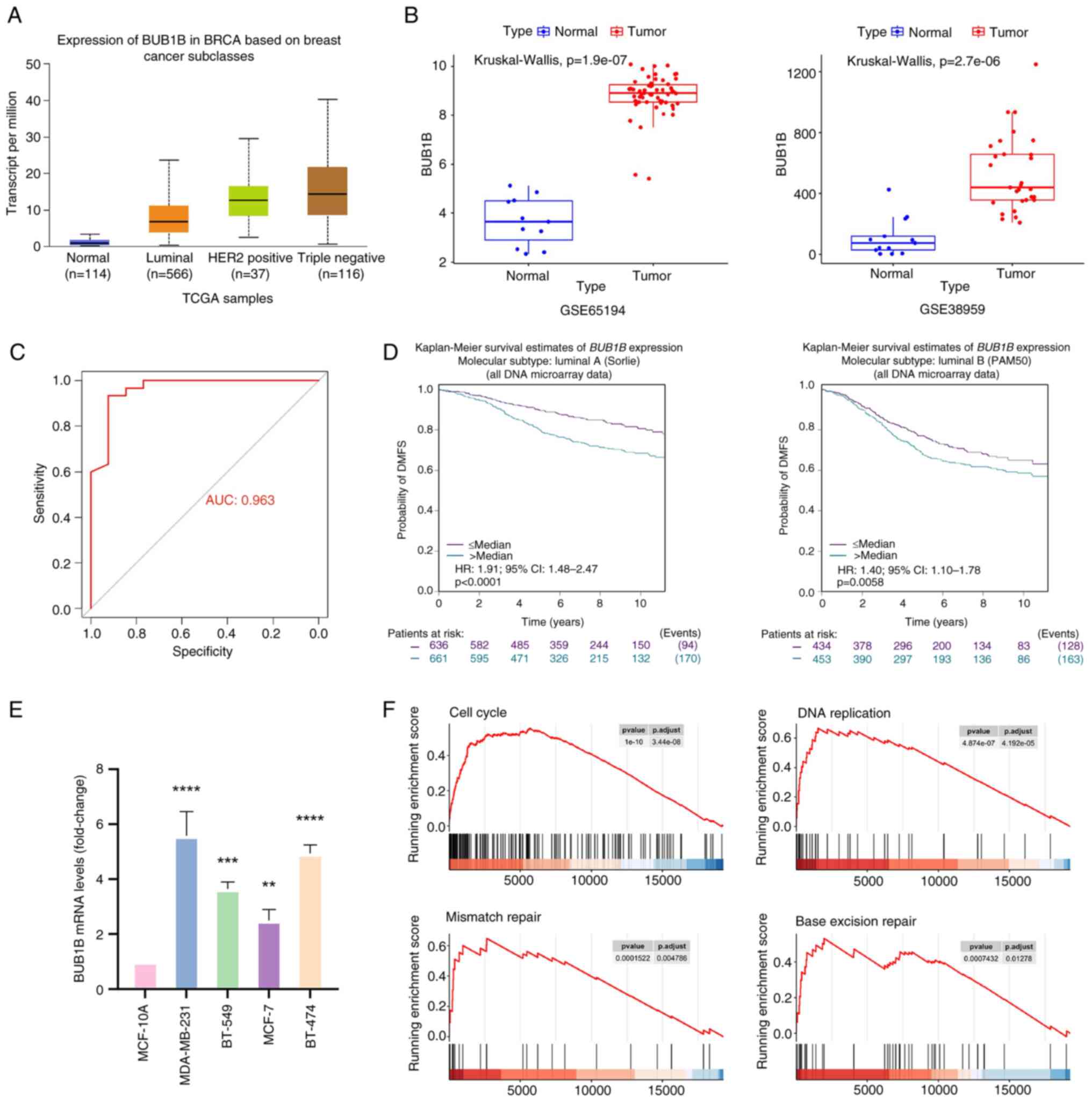
Figure 1

BUB1B is highly expressed in breast
cancer and is associated with a poor prognosis. (A) BUB1B
expression in healthy and breast cancer tissues in the UALCAN
database. Compared with the Normal group, the P-values for Luminal,
HER2-positive and triple-negative groups were all <0.001. (B)
Expression levels of BUB1B in GSE38959 and GSE65194 datasets. (C)
Receiver operating characteristic curve based on BUB1B mRNA
expression levels. (D) bc-GenExMiner website was used to evaluate
the association between BUB1B and DMFS. (E) mRNA expression levels
of BUB1B in normal mammary epithelial and breast cancer cells. Data
are presented as the mean ± SD, n=3. **P<0.01, ***P<0.001,
****P<0.0001 vs. MCF-10A (one-way ANOVA followed by Dunnett's
post hoc test). (F) Comparative GSEA was conducted using
transcriptomics data from the GSE38959 dataset. Four representative
plots of GSEA enrichment have been demonstrated. AUC, area under
the curve; BUB1B, BUB1 mitotic checkpoint serine/threonine kinase
B; DMFS, distant metastasis-free survival; GSEA, gene set
enrichment analysis; TCGA, The Cancer Genome Atlas.

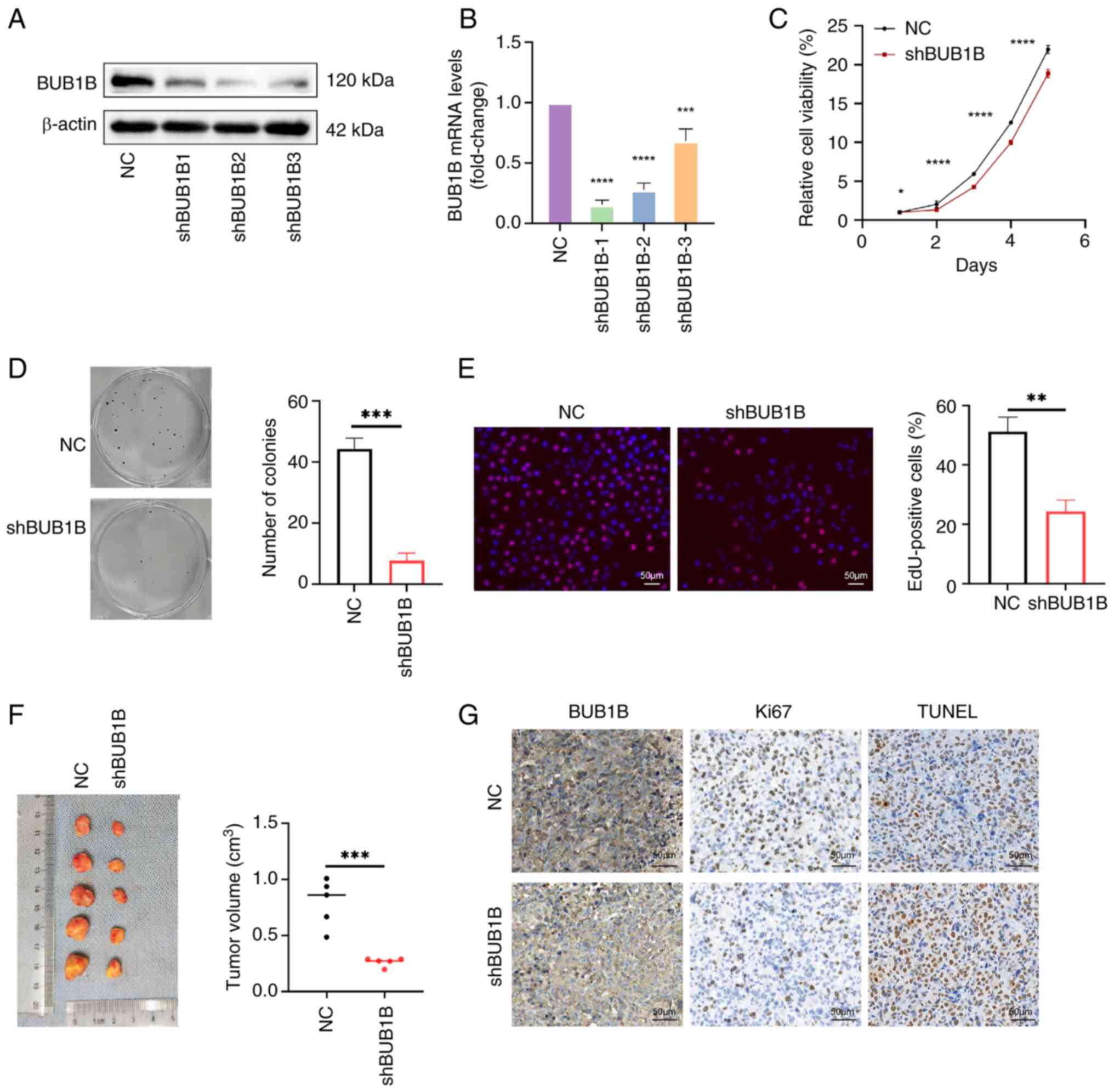
Figure 2

BUB1B promotes the proliferation of
MDA-MB-231 cells in vivo and in vitro. BUB1B
expression in MDA-MB-231 cells stably infected with NC or shBUB1B
was detected by (A) western blotting and (B) reverse
transcription-quantitative PCR. ***P<0.001, ****P<0.0001 vs.
NC (one-way ANOVA followed by Dunnett's post hoc test). (C) Cell
Counting Kit-8 assay was used to detect the proliferation of
MDA-MB-231 cells. *P<0.05, ****P<0.0001 vs. NC (two-way ANOVA
followed by Bonferroni's multiple comparisons test). (D) Colony
formation assay was used to detect the colony-forming ability of
MDA-MB-231 cells. ***P<0.001 vs. NC (unpaired Student's t-test).
(E) EdU assay of DNA replication in MDA-MB-231 cells. Scale bar, 50
µm; magnification, ×200. **P<0.01 vs. NC (unpaired Student's
t-test). (B-E) Data are presented as the mean ± SD, n=3. (F)
Xenograft tumor assay validated the effect of BUB1B on cell
proliferation in vivo. Data are presented as the mean ± SD,
n=5. ***P<0.001 vs. NC (unpaired Student's t-test). (G) TUNEL
and Ki67 were detected by immunohistochemical staining in tumor
tissues. Scale bar, 50 µm; magnification, ×200. BUB1B, BUB1 mitotic
checkpoint serine/threonine kinase B; NC, negative control; sh,
short hairpin.

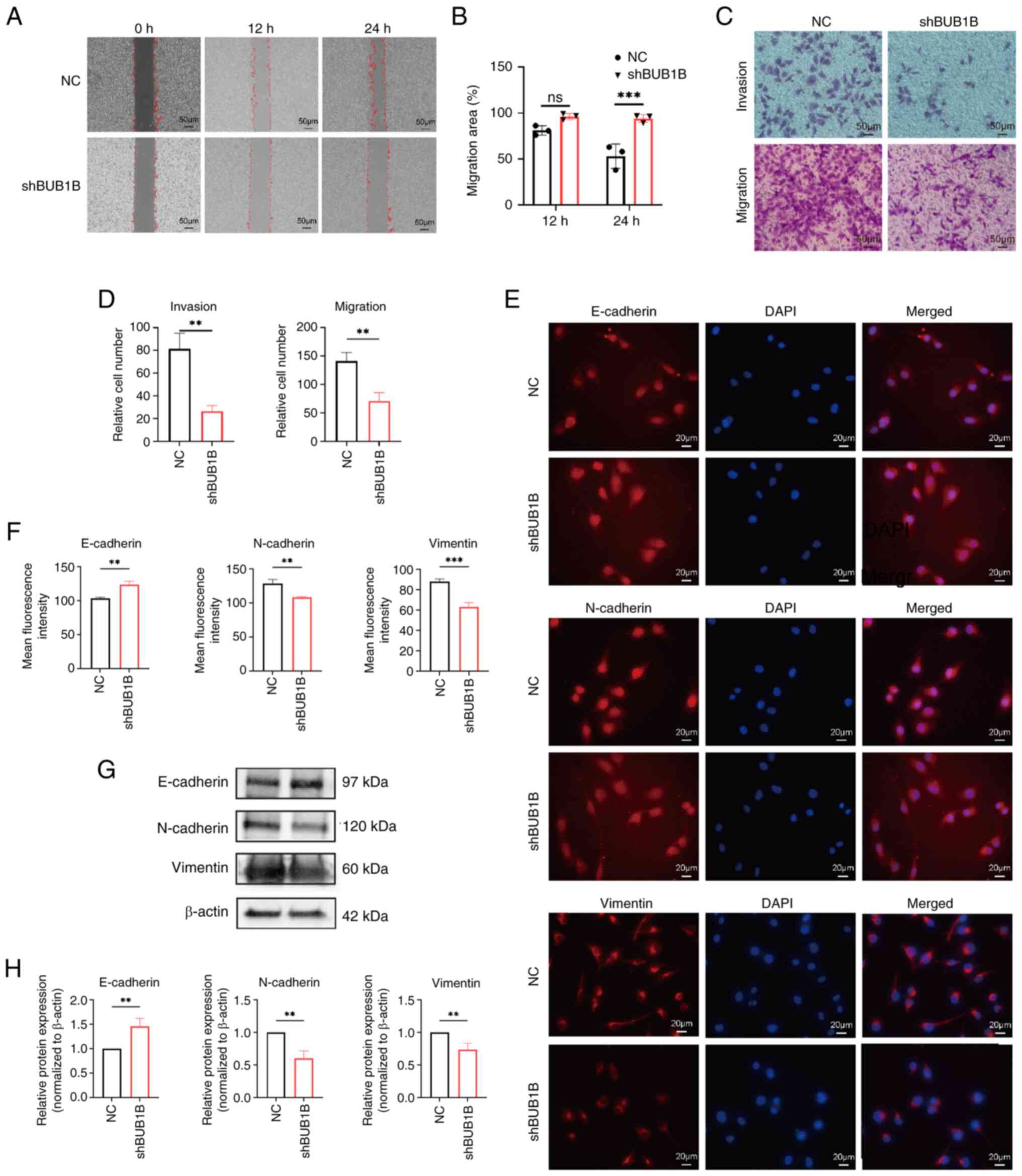
Figure 3

BUB1B promotes the migration and
invasion of MDA-MB-231 cells. (A) Representative images and (B)
quantitative analysis of cell migration assessed using the gap
closure assay. Scale bar, 50 µm; magnification, ×200. ***P<0.001
vs. NC (two-way ANOVA followed by Bonferroni's multiple comparisons
test). (C) Representative images and (D) quantitative analysis of
migratory and invasive capacity of cells detected by Transwell
assay. Scale bar, 50 µm; magnification, ×200. **P<0.01 vs. NC
(unpaired Student's t-test). (E) Representative immunofluorescence
staining images of the EMT markers E-cadherin, N-cadherin and
vimentin. (F) Semi-quantitative analysis of NC and shBUB1B cells
after irradiation. Scale bar, 20 µm; magnification, ×400.
**P<0.01, ***P<0.001 vs. NC (unpaired Student's t-test). (G)
Representative images and (H) semi-quantitative analysis of the EMT
markers E-cadherin, N-cadherin and vimentin detected by western
blot analysis. **P<0.01 vs. NC (unpaired Students' t-test). All
data are presented as the mean ± SD, n=3. BUB1B, BUB1 mitotic
checkpoint serine/threonine kinase B; NC, negative control; sh,
short hairpin.

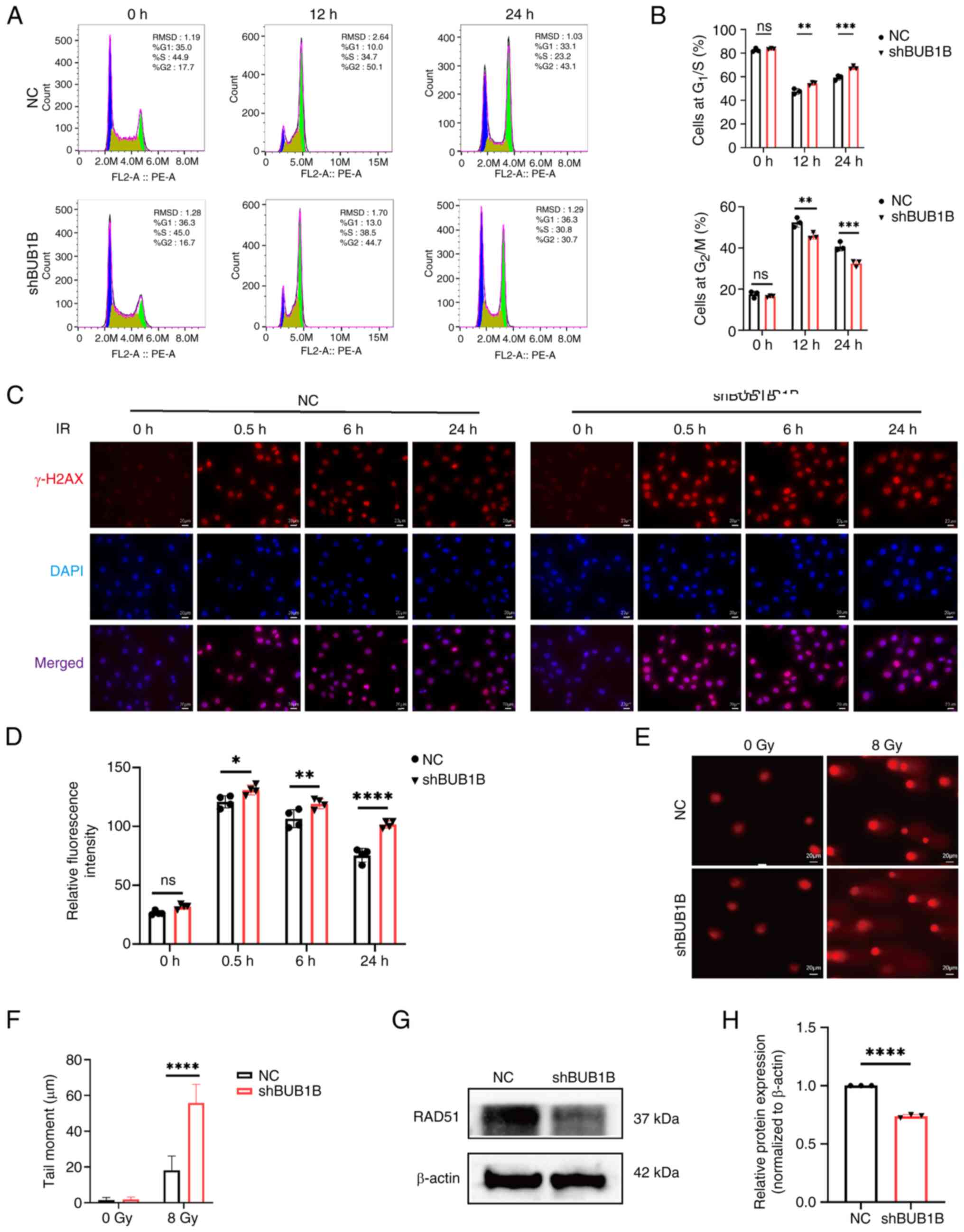
Figure 4

BUB1B serves an importatn role in the
cell cycle arrest and DNA damage repair after irradiation. (A)
Representative flow cytometry plots of cell cycle analysis and (B)
quantitative analysis of NC and shBUB1B cells after irradiation.
**P<0.01, ***P<0.001 vs. NC (two-way ANOVA followed by
Bonferroni's multiple comparisons test). (C) Representative γ-H2AX
immunofluorescence images and (D) semi-quantitative analysis of NC
and shBUB1B cells after irradiation. Scale bar, 20 µm;
magnification, ×400. *P<0.05, **P<0.01, ****P<0.0001 vs.
NC (two-way ANOVA followed by Bonferroni's multiple comparisons
test). (A-D) Data are presented as the mean ± SD, n=3. (E)
Representative images of the comet assay and (F) tail moment
quantification analysis in MDA-MB-231 cells in the NC and shBUB1B
groups after irradiation. Data are presented as the mean ± SD,
n=20. Scale bar, 20 µm; magnification, ×400. ****P<0.0001 vs. NC
(unpaired Student's t-test). (G) Representative images and (H)
semi-quantitative analysis of RAD51 protein levels detected by
western blot analysis. ****P<0.0001 vs. NC (unpaired Student's
t-test). All data are presented as the mean ± SD, n=3. BUB1B, BUB1
mitotic checkpoint serine/threonine kinase B; IR, ionizing
radiation; NC, negative control; sh, short hairpin.

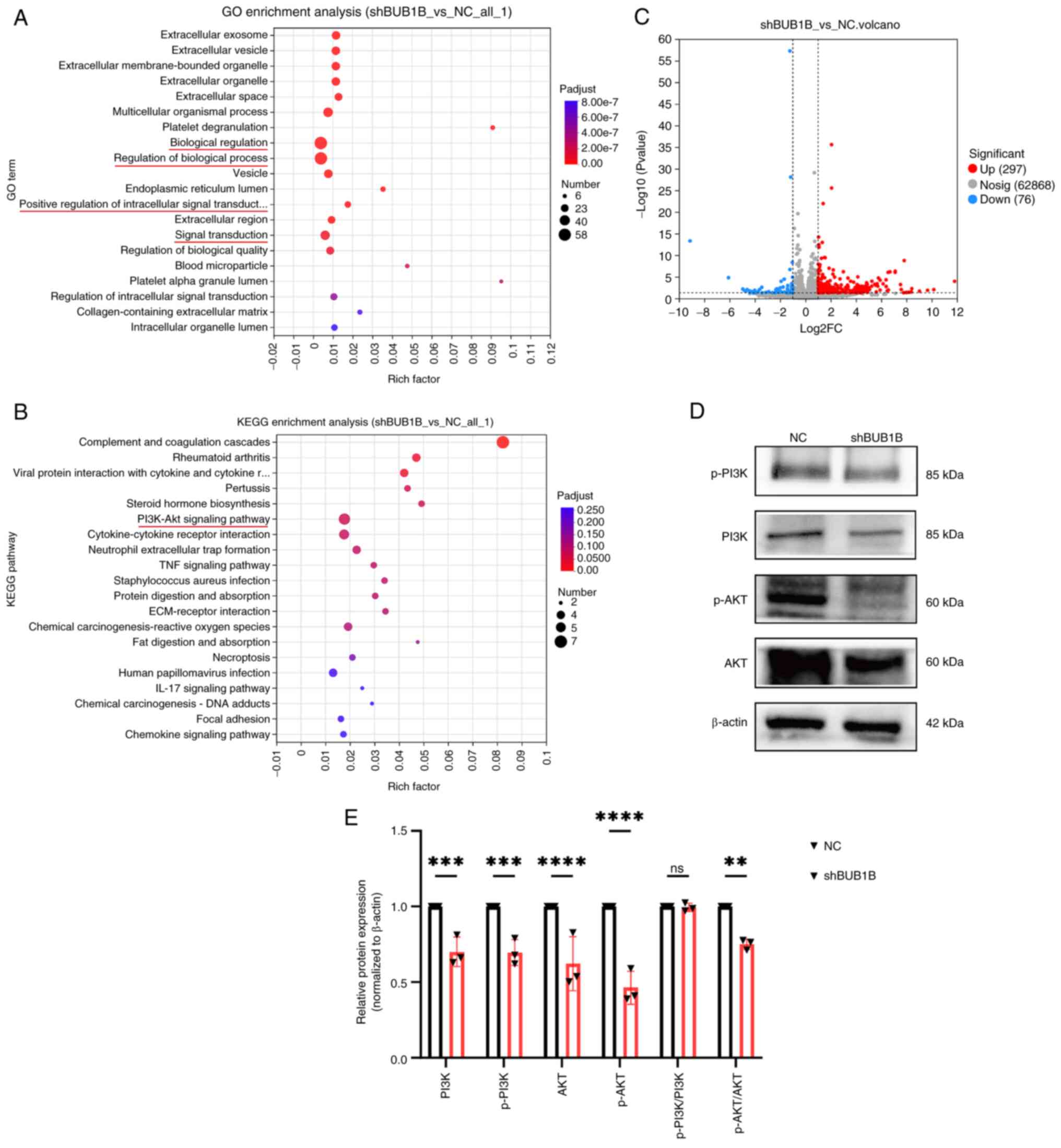
Figure 5

BUB1B regulates the PI3K/AKT
signaling pathway. (A) GO and (B) KEGG enrichment analyses of
differentially expressed genes in irradiated shBUB1B MDA-MB-231
cells vs. irradiated NC MDA-MB-231 cells. (C) After irradiation, a
volcano plot of the genes that were differentially expressed in
irradiated shBUB1B MDA-MB-231 cells vs. irradiated NC MDA-MB-231
cells was generated (P<0.05, |log2FC|≥1). (D) Representative
images and (E) semi-quantitative analysis of the protein levels in
the PI3K/AKT signaling pathway determined by western blotting. Data
are presented as the mean ± SD, n=3. **P<0.01, ***P<0.001,
****P<0.0001 vs. NC (two-way ANOVA followed by Bonferroni's
multiple comparisons test. BUB1B, BUB1 mitotic checkpoint
serine/threonine kinase B; GO, Gene Ontology; IR, ionizing
radiation; KEGG, Kyoto Encyclopedia of Genes and Genomes; NC,
negative control; ns, not significant; p-, phosphorylated; sh,
short hairpin.
View References

1 

Filho AM, Laversanne M, Ferlay J, Colombet M, Piñeros M, Znaor A, Parkin DM, Soerjomataram I and Bray F: The GLOBOCAN 2022 cancer estimates: Data sources, methods, and a snapshot of the cancer burden worldwide. Int J Cancer. 156:1336–1346. 2025. View Article : Google Scholar : PubMed/NCBI

2 

Peng L, Jiang J, Tang B, Nice EC, Zhang YY and Xie N: Managing therapeutic resistance in breast cancer: From the lncRNAs perspective. Theranostics. 10:10360–10377. 2020. View Article : Google Scholar : PubMed/NCBI

3 

Chen S, Paul MR, Sterner CJ, Belka GK, Wang D, Xu P, Sreekumar A, Pan T, Pant DK, Makhlin I, et al: PAQR8 promotes breast cancer recurrence and confers resistance to multiple therapies. Breast Cancer Res. 25:12023. View Article : Google Scholar : PubMed/NCBI

4 

Azria D, Brengues M, Gourgou S and Bourgier C: Personalizing breast cancer irradiation using biology: From bench to the accelerator. Front Oncol. 8:832018. View Article : Google Scholar : PubMed/NCBI

5 

Vaidya JS, Bulsara M, Baum M, Wenz F, Massarut S, Pigorsch S, Alvarado M, Douek M, Saunders C, Flyger HL, et al: Long term survival and local control outcomes from single dose targeted intraoperative radiotherapy during lumpectomy (TARGIT-IORT) for early breast cancer: TARGIT-A randomised clinical trial. BMJ. 370:m28362020. View Article : Google Scholar : PubMed/NCBI

6 

Sousa C, Cruz M, Neto A, Pereira K, Peixoto M, Bastos J, Henriques M, Roda D, Marques R, Miranda C, et al: Neoadjuvant radiotherapy in the approach of locally advanced breast cancer. ESMO Open. 4 (Suppl 2):e0006402020. View Article : Google Scholar : PubMed/NCBI

7 

Huang RX and Zhou PK: DNA damage response signaling pathways and targets for radiotherapy sensitization in cancer. Signal Transduct Target Ther. 5:602020. View Article : Google Scholar : PubMed/NCBI

8 

Wu Y, Song Y, Wang R and Wang T: Molecular mechanisms of tumor resistance to radiotherapy. Mol Cancer. 22:962023. View Article : Google Scholar : PubMed/NCBI

9 

Liu J, Bi K, Yang R, Li H, Nikitaki Z and Chang L: Role of DNA damage and repair in radiation cancer therapy: A current update and a look to the future. Int J Radiat Biol. 96:1329–1338. 2020. View Article : Google Scholar : PubMed/NCBI

10 

Piotto C, Biscontin A, Millino C and Mognato M: Functional validation of miRNAs targeting genes of DNA double-strand break repair to radiosensitize non-small lung cancer cells. Biochim Biophys Acta Gene Regul Mech. 1861:1102–1118. 2018. View Article : Google Scholar : PubMed/NCBI

11 

Santivasi WL and Xia F: Ionizing radiation-induced DNA damage, response, and repair. Antioxid Redox Signal. 21:251–259. 2014. View Article : Google Scholar : PubMed/NCBI

12 

van Oorschot B, Granata G, Di Franco S, Ten Cate R, Rodermond HM, Todaro M, Medema JP and Franken NAP: Targeting DNA double strand break repair with hyperthermia and DNA-PKcs inhibition to enhance the effect of radiation treatment. Oncotarget. 7:65504–65513. 2016. View Article : Google Scholar : PubMed/NCBI

13 

Dietlein F, Thelen L and Reinhardt HC: Cancer-specific defects in DNA repair pathways as targets for personalized therapeutic approaches. Trends Genet. 30:326–339. 2014. View Article : Google Scholar : PubMed/NCBI

14 

Mekonnen N, Yang H and Shin YK: Homologous recombination deficiency in ovarian, breast, colorectal, pancreatic, non-small cell lung and prostate cancers, and the mechanisms of resistance to PARP inhibitors. Front Oncol. 12:8806432022. View Article : Google Scholar : PubMed/NCBI

15 

Panier S and Boulton SJ: Double-strand break repair: 53BP1 comes into focus. Nat Rev Mol Cell Biol. 15:7–18. 2014. View Article : Google Scholar : PubMed/NCBI

16 

Tian J, Wen M, Gao P, Feng M and Wei G: RUVBL1 ubiquitination by DTL promotes RUVBL1/2-β-catenin-mediated transcriptional regulation of NHEJ pathway and enhances radiation resistance in breast cancer. Cell Death Dis. 15:2592024. View Article : Google Scholar : PubMed/NCBI

17 

Chan Wah Hak CML, Rullan A, Patin EC, Pedersen M, Melcher AA and Harrington KJ: Enhancing anti-tumour innate immunity by targeting the DNA damage response and pattern recognition receptors in combination with radiotherapy. Front Oncol. 12:9719592022. View Article : Google Scholar : PubMed/NCBI

18 

Karess RE, Wassmann K and Rahmani Z: New insights into the role of BubR1 in mitosis and beyond. Int Rev Cell Mol Biol. 306:223–273. 2013. View Article : Google Scholar : PubMed/NCBI

19 

Jiao CY, Feng QC, Li CX, Wang D, Han S, Zhang YD, Jiang WJ, Chang J, Wang X and Li XC: BUB1B promotes extrahepatic cholangiocarcinoma progression via JNK/c-Jun pathways. Cell Death Dis. 12:632021. View Article : Google Scholar : PubMed/NCBI

20 

Zhou X, Yuan Y, Kuang H, Tang B, Zhang H and Zhang M: BUB1B (BUB1 mitotic checkpoint serine/threonine kinase B) promotes lung adenocarcinoma by interacting with zinc finger protein ZNF143 and regulating glycolysis. Bioengineered. 13:2471–2485. 2022. View Article : Google Scholar : PubMed/NCBI

21 

Yan HC and Xiang C: Aberrant expression of BUB1B contributes to the progression of thyroid carcinoma and predicts poor outcomes for patients. J Cancer. 13:2336–2351. 2022. View Article : Google Scholar : PubMed/NCBI

22 

Ma Q, Liu Y, Shang L, Yu J and Qu Q: The FOXM1/BUB1B signaling pathway is essential for the tumorigenicity and radioresistance of glioblastoma. Oncol Rep. 38:3367–3375. 2017.PubMed/NCBI

23 

Komura K, Inamoto T, Tsujino T, Matsui Y, Konuma T, Nishimura K, Uchimoto T, Tsutsumi T, Matsunaga T, Maenosono R, et al: Increased BUB1B/BUBR1 expression contributes to aberrant DNA repair activity leading to resistance to DNA-damaging agents. Oncogene. 40:6210–6222. 2021. View Article : Google Scholar : PubMed/NCBI

24 

Tang X, Guo M, Ding P, Deng Z, Ke M, Yuan Y, Zhou Y, Lin Z, Li M, Gu C, et al: BUB1B and circBUB1B_544aa aggravate multiple myeloma malignancy through evoking chromosomal instability. Signal Transduct Target Ther. 6:3612021. View Article : Google Scholar : PubMed/NCBI

25 

Komatsu M, Yoshimaru T, Matsuo T, Kiyotani K, Miyoshi Y, Tanahashi T, Rokutan K, Yamaguchi R, Saito A, Imoto S, et al: Molecular features of triple negative breast cancer cells by genome-wide gene expression profiling analysis. Int J Oncol. 42:478–506. 2013. View Article : Google Scholar : PubMed/NCBI

26 

Maubant S, Tesson B, Maire V, Ye M, Rigaill G, Gentien D, Cruzalegui F, Tucker GC, Roman-Roman S and Dubois T: Transcriptome analysis of Wnt3a-treated triple-negative breast cancer cells. PLoS One. 10:e01223332015. View Article : Google Scholar : PubMed/NCBI

27 

Livak KJ and Schmittgen TD: Analysis of relative gene expression data using real-time quantitative PCR and the 2(−Delta Delta C(T)) method. Methods. 25:402–408. 2001. View Article : Google Scholar : PubMed/NCBI

28 

Końca K, Lankoff A, Banasik A, Lisowska H, Kuszewski T, Góźdź S, Koza Z and Wojcik A: A cross-platform public domain PC image-analysis program for the comet assay. Mutat Res. 534:15–20. 2003. View Article : Google Scholar : PubMed/NCBI

29 

Ho SY, Wu WS, Lin LC, Wu YH, Chiu HW, Yeh YL, Huang BM and Wang YJ: Cordycepin enhances radiosensitivity in oral squamous carcinoma cells by inducing autophagy and apoptosis through cell cycle arrest. Int J Mol Sci. 20:53662019. View Article : Google Scholar : PubMed/NCBI

30 

Liu T, Wang H, Chen Y, Wan Z, Du Z, Shen H, Yu Y, Ma S, Xu Y, Li Z, et al: SENP5 promotes homologous recombination-mediated DNA damage repair in colorectal cancer cells through H2AZ deSUMOylation. J Exp Clin Cancer Res. 42:2342023. View Article : Google Scholar : PubMed/NCBI

31 

Qiu J, Zhang S, Wang P, Wang H, Sha B, Peng H, Ju Z, Rao J and Lu L: BUB1B promotes hepatocellular carcinoma progression via activation of the mTORC1 signaling pathway. Cancer Med. 9:8159–8172. 2020. View Article : Google Scholar : PubMed/NCBI

32 

Sekino Y, Han X, Kobayashi G, Babasaki T, Miyamoto S, Kobatake K, Kitano H, Ikeda K, Goto K, Inoue S, et al: BUB1B overexpression is an independent prognostic marker and associated with CD44, p53, and PD-L1 in renal cell carcinoma. Oncology. 99:240–250. 2021. View Article : Google Scholar : PubMed/NCBI

33 

Koyuncu D, Sharma U, Goka ET and Lippman ME: Spindle assembly checkpoint gene BUB1B is essential in breast cancer cell survival. Breast Cancer Res Treat. 185:331–341. 2021. View Article : Google Scholar : PubMed/NCBI

34 

Mladenov E, Mladenova V, Stuschke M and Iliakis G: New facets of DNA double strand break repair: Radiation dose as key determinant of HR versus c-NHEJ engagement. Int J Mol Sci. 24:149562023. View Article : Google Scholar : PubMed/NCBI

35 

Hu C, Bugbee T, Dacus D, Palinski R and Wallace N: Beta human papillomavirus 8 E6 allows colocalization of non-homologous end joining and homologous recombination repair factors. PLoS Pathog. 18:e10102752022. View Article : Google Scholar : PubMed/NCBI

36 

Zhou K, Wu C, Cheng W, Zhang B, Wei R, Cheng D, Li Y, Cao Y, Zhang W, Yao Z and Zhang X: Transglutaminase 3 regulates cutaneous squamous carcinoma differentiation and inhibits progression via PI3K-AKT signaling pathway-mediated Keratin 14 degradation. Cell Death Dis. 15:2522024. View Article : Google Scholar : PubMed/NCBI

37 

Zheng D, Zhu G, Liao S, Yi W, Luo G, He J, Pei Z, Li G and Zhou Y: Dysregulation of the PI3K/Akt signaling pathway affects cell cycle and apoptosis of side population cells in nasopharyngeal carcinoma. Oncol Lett. 10:182–188. 2015. View Article : Google Scholar : PubMed/NCBI

38 

Dong J, Ru Y, Zhai L, Gao Y, Guo X, Chen B and Lv X: LMNB1 deletion in ovarian cancer inhibits the proliferation and metastasis of tumor cells through PI3K/Akt pathway. Exp Cell Res. 426:1135732023. View Article : Google Scholar : PubMed/NCBI

39 

Dong C, Wu J, Chen Y, Nie J and Chen C: Activation of PI3K/AKT/mTOR pathway causes drug resistance in breast cancer. Front Pharmacol. 12:6286902021. View Article : Google Scholar : PubMed/NCBI

40 

Chen Q, Zheng W, Zhu L, Yao D, Wang C, Song Y, Hu S, Liu H, Bai Y, Pan Y, et al: ANXA6 contributes to radioresistance by promoting autophagy via inhibiting the PI3K/AKT/mTOR signaling pathway in nasopharyngeal carcinoma. Front Cell Dev Biol. 8:2322020. View Article : Google Scholar : PubMed/NCBI

41 

Chen K, Shang Z, Dai AL and Dai PL: Novel PI3K/Akt/mTOR pathway inhibitors plus radiotherapy: Strategy for non-small cell lung cancer with mutant RAS gene. Life Sci. 255:1178162020. View Article : Google Scholar : PubMed/NCBI

42 

Yu CC, Hung SK, Lin HY, Chiou WY, Lee MS, Liao HF, Huang HB, Ho HC and Su YC: Targeting the PI3K/AKT/mTOR signaling pathway as an effectively radiosensitizing strategy for treating human oral squamous cell carcinoma in vitro and in vivo. Oncotarget. 8:68641–68653. 2017. View Article : Google Scholar : PubMed/NCBI

43 

Gil del Alcazar CR, Hardebeck MC, Mukherjee B, Tomimatsu N, Gao X, Yan J, Xie XJ, Bachoo R, Li L, Habib AA and Burma S: Inhibition of DNA double-strand break repair by the dual PI3K/mTOR inhibitor NVP-BEZ235 as a strategy for radiosensitization of glioblastoma. Clin Cancer Res. 20:1235–1248. 2014. View Article : Google Scholar : PubMed/NCBI

44 

Kao GD, Jiang Z, Fernandes AM, Gupta AK and Maity A: Inhibition of phosphatidylinositol-3-OH kinase/Akt signaling impairs DNA repair in glioblastoma cells following ionizing radiation. J Biol Chem. 282:21206–21212. 2007. View Article : Google Scholar : PubMed/NCBI

45 

No M, Choi EJ and Kim IA: Targeting HER2 signaling pathway for radiosensitization: Alternative strategy for therapeutic resistance. Cancer Biol Ther. 8:2351–2361. 2009. View Article : Google Scholar : PubMed/NCBI

46 

Sun Y, Dong D, Xia Y, Hao L, Wang W and Zhao C: YTHDF1 promotes breast cancer cell growth, DNA damage repair and chemoresistance. Cell Death Dis. 13:2302022. View Article : Google Scholar : PubMed/NCBI

Related Articles

  • Abstract
  • View
  • Download
  • Twitter
Copy and paste a formatted citation
Spandidos Publications style
Luo X, Wei Y, Lin H, Xiao N and Zhao W: BUB1B promotes homologous recombination‑mediated DNA damage repair in breast cancer cells through the PI3K/AKT signaling pathway. Oncol Rep 54: 147, 2025.
APA
Luo, X., Wei, Y., Lin, H., Xiao, N., & Zhao, W. (2025). BUB1B promotes homologous recombination‑mediated DNA damage repair in breast cancer cells through the PI3K/AKT signaling pathway. Oncology Reports, 54, 147. https://doi.org/10.3892/or.2025.8980
MLA
Luo, X., Wei, Y., Lin, H., Xiao, N., Zhao, W."BUB1B promotes homologous recombination‑mediated DNA damage repair in breast cancer cells through the PI3K/AKT signaling pathway". Oncology Reports 54.5 (2025): 147.
Chicago
Luo, X., Wei, Y., Lin, H., Xiao, N., Zhao, W."BUB1B promotes homologous recombination‑mediated DNA damage repair in breast cancer cells through the PI3K/AKT signaling pathway". Oncology Reports 54, no. 5 (2025): 147. https://doi.org/10.3892/or.2025.8980
Copy and paste a formatted citation
x
Spandidos Publications style
Luo X, Wei Y, Lin H, Xiao N and Zhao W: BUB1B promotes homologous recombination‑mediated DNA damage repair in breast cancer cells through the PI3K/AKT signaling pathway. Oncol Rep 54: 147, 2025.
APA
Luo, X., Wei, Y., Lin, H., Xiao, N., & Zhao, W. (2025). BUB1B promotes homologous recombination‑mediated DNA damage repair in breast cancer cells through the PI3K/AKT signaling pathway. Oncology Reports, 54, 147. https://doi.org/10.3892/or.2025.8980
MLA
Luo, X., Wei, Y., Lin, H., Xiao, N., Zhao, W."BUB1B promotes homologous recombination‑mediated DNA damage repair in breast cancer cells through the PI3K/AKT signaling pathway". Oncology Reports 54.5 (2025): 147.
Chicago
Luo, X., Wei, Y., Lin, H., Xiao, N., Zhao, W."BUB1B promotes homologous recombination‑mediated DNA damage repair in breast cancer cells through the PI3K/AKT signaling pathway". Oncology Reports 54, no. 5 (2025): 147. https://doi.org/10.3892/or.2025.8980
Follow us
  • Twitter
  • LinkedIn
  • Facebook
About
  • Spandidos Publications
  • Careers
  • Cookie Policy
  • Privacy Policy
How can we help?
  • Help
  • Live Chat
  • Contact
  • Email to our Support Team