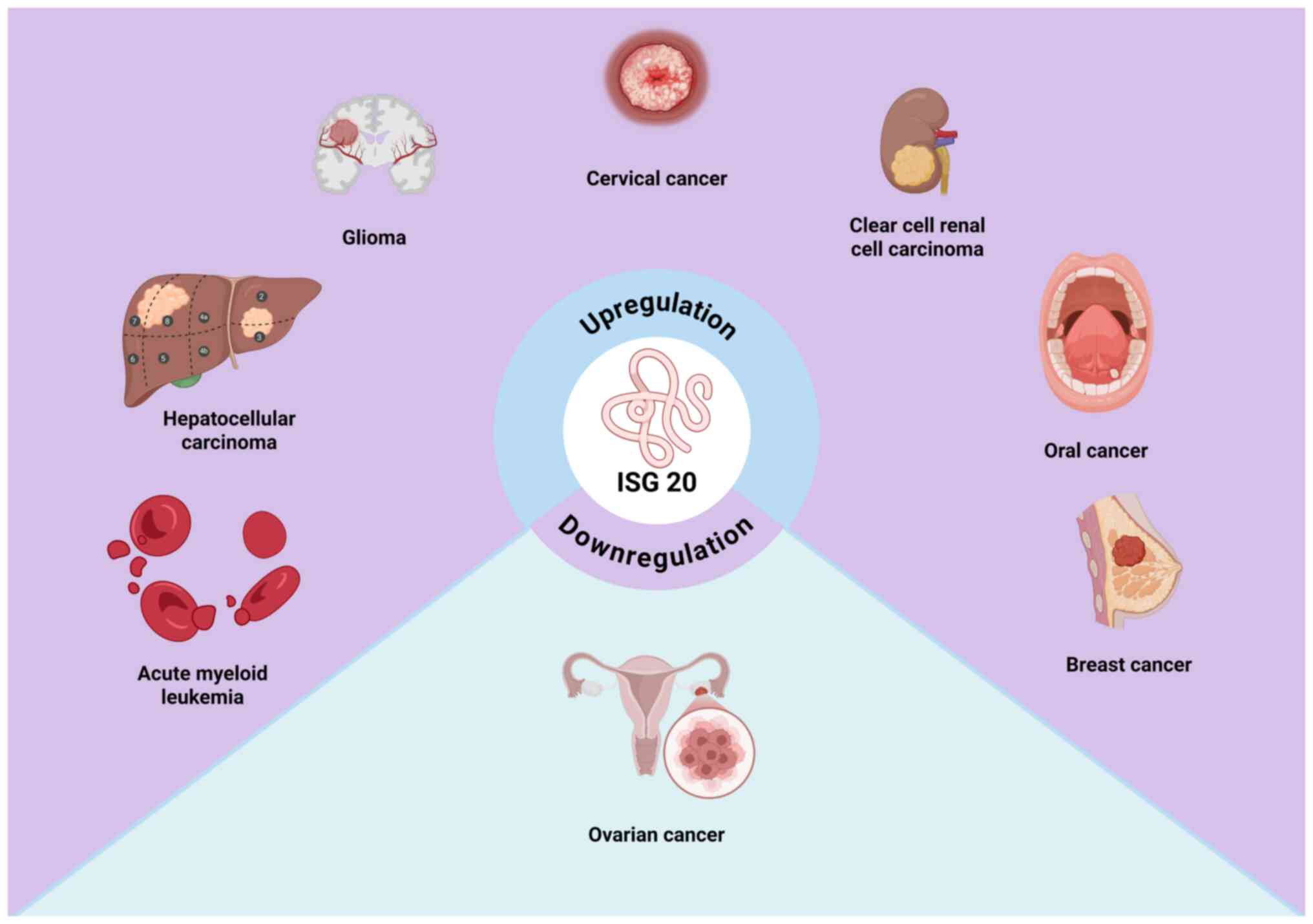
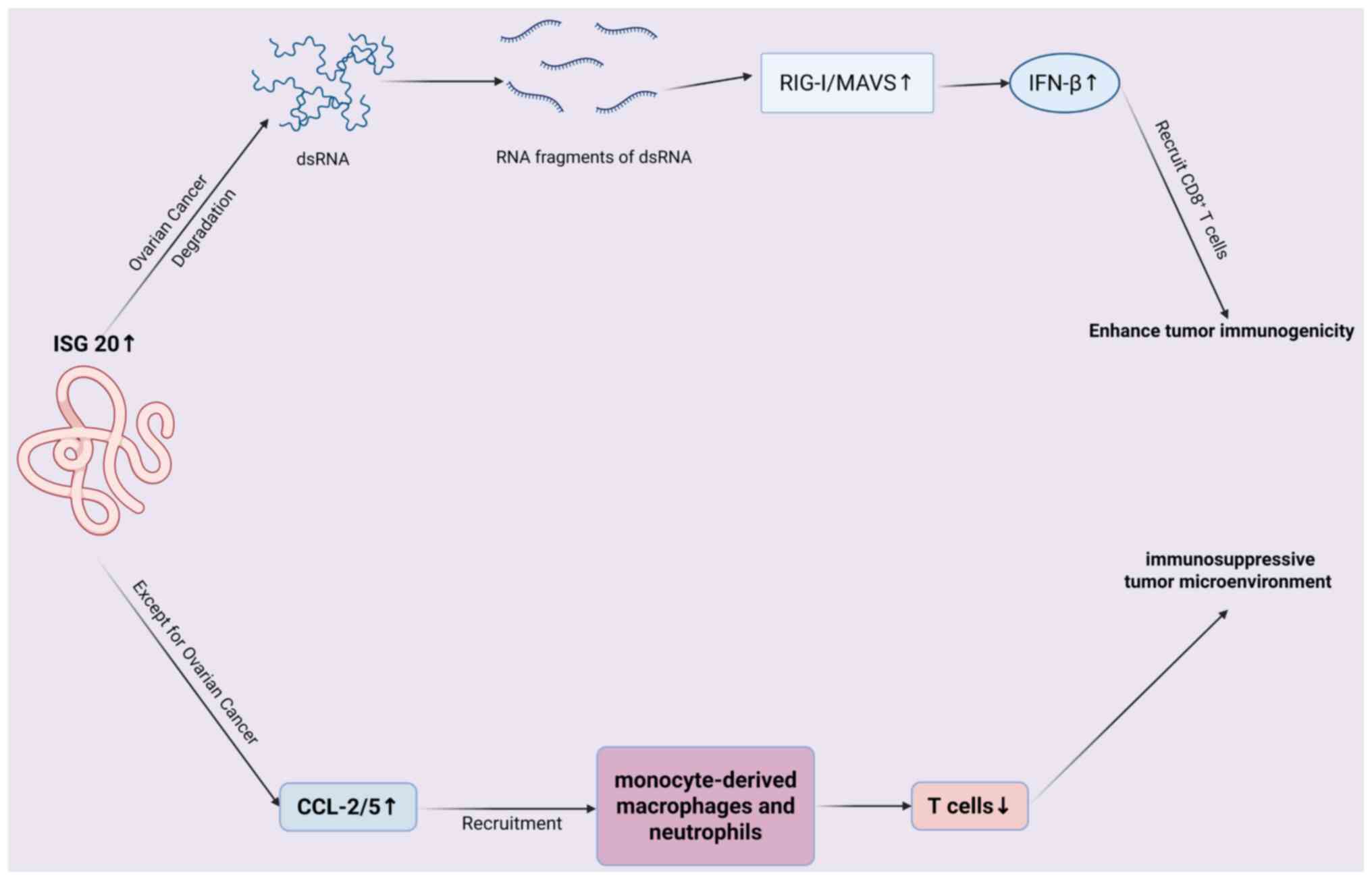
|
1
|
Zhang X, Yang W, Wang X, Zhang X, Tian H,
Deng H, Zhang L and Gao G: Identification of new type I
interferon-stimulated genes and investigation of their involvement
in IFN-β activation. Protein Cell. 9:799–807. 2018. View Article : Google Scholar : PubMed/NCBI
|
|
2
|
Negishi H, Taniguchi T and Yanai H: The
interferon (IFN) class of cytokines and the IFN regulatory factor
(IRF) transcription factor family. Cold Spring Harb Perspect Biol.
10:a0284232017. View Article : Google Scholar : PubMed/NCBI
|
|
3
|
LaFleur DW, Nardelli B, Tsareva T, Mather
D, Feng P, Semenuk M, Taylor K, Buergin M, Chinchilla D, Roshke V,
et al: Interferon-kappa, a novel type I interferon expressed in
human keratinocytes. J Biol Chem. 276:39765–39771. 2001. View Article : Google Scholar : PubMed/NCBI
|
|
4
|
Bach EA, Aguet M and Schreiber RD: The IFN
gamma receptor: A paradigm for cytokine receptor signaling. Annu
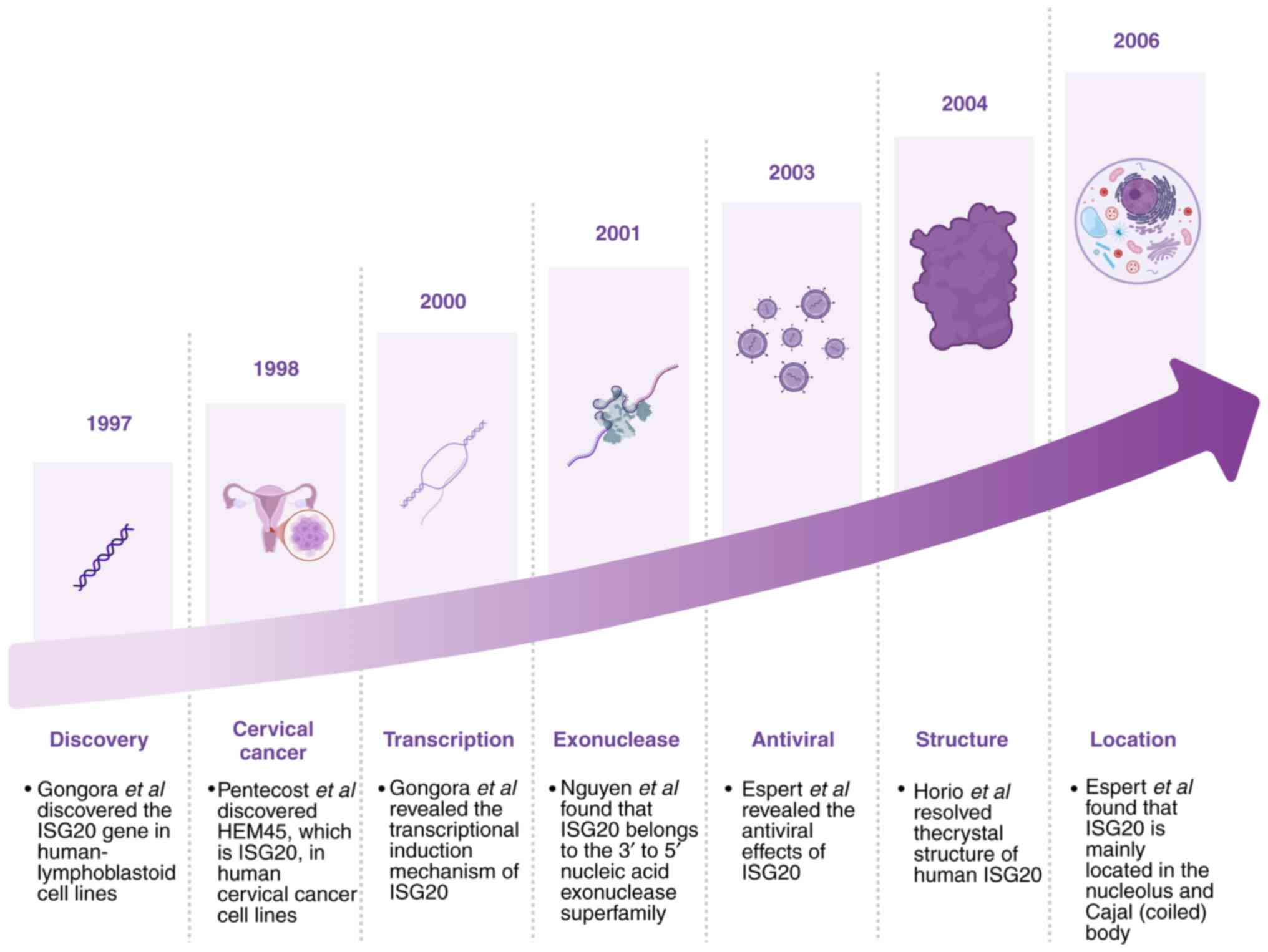
Rev Immunol. 15:563–591. 1997. View Article : Google Scholar : PubMed/NCBI
|
|
5
|
Schroder K, Hertzog PJ, Ravasi T and Hume
DA: Interferon-gamma: An overview of signals, mechanisms and
functions. J Leukoc Biol. 75:163–189. 2004. View Article : Google Scholar : PubMed/NCBI
|
|
6
|
Kotenko SV, Gallagher G, Baurin VV,
Lewis-Antes A, Shen M, Shah NK, Langer JA, Sheikh F, Dickensheets H
and Donnelly RP: IFN-lambdas mediate antiviral protection through a
distinct class II cytokine receptor complex. Nat Immunol. 4:69–77.
2003. View Article : Google Scholar : PubMed/NCBI
|
|
7
|
Ank N, Iversen MB, Bartholdy C, Staeheli
P, Hartmann R, Jensen UB, Dagnaes-Hansen F, Thomsen AR, Chen Z,
Haugen H, et al: An important role for type III interferon
(IFN-lambda/IL-28) in TLR-induced antiviral activity. J Immunol.
180:2474–2485. 2008. View Article : Google Scholar : PubMed/NCBI
|
|
8
|
Schoggins JW: Interferon-stimulated genes:
What do they all do? Annu Rev Virol. 6:567–584. 2019. View Article : Google Scholar : PubMed/NCBI
|
|
9
|
Moser MJ, Holley WR, Chatterjee A and Mian
IS: The proofreading domain of Escherichia coli DNA polymerase I
and other DNA and/or RNA exonuclease domains. Nucleic Acids Res.
25:5110–5118. 1997. View Article : Google Scholar : PubMed/NCBI
|
|
10
|
Zuo Y and Deutscher MP: Exoribonuclease
superfamilies: Structural analysis and phylogenetic distribution.
Nucleic Acids Res. 29:1017–1026. View Article : Google Scholar : PubMed/NCBI
|
|
11
|
Zheng Z, Wang L and Pan J:
Interferon-stimulated gene 20-kDa protein (ISG20) in infection and
disease: Review and outlook. Intractable Rare Dis Res. 6:35–40.
2017. View Article : Google Scholar : PubMed/NCBI
|
|
12
|
Weiss CM, Trobaugh DW, Sun C, Lucas TM,
Diamond MS, Ryman KD and Klimstra WB: The Interferon-Induced
exonuclease ISG20 exerts antiviral activity through upregulation of
type I interferon response proteins. mSphere. 3:e00209–18. 2018.
View Article : Google Scholar : PubMed/NCBI
|
|
13
|
Wang Y, Suo J, Wang Z, Ran K, Tian Y, Han
W, Liu Y and Peng X: The PTPRZ1-MET/STAT3/ISG20 axis in glioma
stem-like cells modulates Tumor-associated macrophage polarization.
Cell Signal. 120:1111912024. View Article : Google Scholar : PubMed/NCBI
|
|
14
|
Gao M, Lin Y, Liu X, Li Y, Zhang C, Wang
Z, Wang Z, Wang Y and Guo Z: ISG20 promotes local tumor immunity
and contributes to poor survival in human glioma. Oncoimmunology.
8:e15340382018. View Article : Google Scholar : PubMed/NCBI
|
|
15
|
Zhong R, Li JQ, Wu SW, He XM, Xuan JC,
Long H and Liu HQ: Transcriptome analysis reveals possible
antitumor mechanism of Chlorella exopolysaccharide. Gene.
779:1454942021. View Article : Google Scholar : PubMed/NCBI
|
|
16
|
Shou Y, Yang L, Yang Y, Zhu X, Li F and Xu
J: Determination of hypoxia signature to predict prognosis and the
tumor immune microenvironment in melanoma. Mol Omics. 17:307–316.
2021. View Article : Google Scholar : PubMed/NCBI
|
|
17
|
Wei C, Liu X, Wang Q, Li Q and Xie M:
Identification of hypoxia signature to assess the tumor immune
microenvironment and predict prognosis in patients with ovarian
cancer. Int J Endocrinol. 2021:41561872021. View Article : Google Scholar : PubMed/NCBI
|
|
18
|
Rajkumar T, Sabitha K, Vijayalakshmi N,
Shirley S, Bose MV, Gopal G and Selvaluxmy G: Identification and
validation of genes involved in cervical tumourigenesis. BMC
Cancer. 11:802011. View Article : Google Scholar : PubMed/NCBI
|
|
19
|
Xiong H, Zhang X, Chen X, Liu Y, Duan J
and Huang C: High expression of ISG20 predicts a poor prognosis in
acute myeloid leukemia. Cancer Biomark. 31:255–261. 2021.
View Article : Google Scholar : PubMed/NCBI
|
|
20
|
Jiang Z, Xu J, Zhang S, Lan H and Bao Y: A
pairwise immune gene model for predicting overall survival and
stratifying subtypes of colon adenocarcinoma. J Cancer Res Clin
Oncol. 149:10813–10829. 2023. View Article : Google Scholar : PubMed/NCBI
|
|
21
|
Bishara I, Liu X, Griffiths Jl, Cosgrove
PA, McQuerry JR, Liu J, Ihle KK, Bacon ER, Chi F, Wallet P, et al:
Abstract 5133: End-stage breast cancer metastases manifest as two
subtypes with distinct dissemination patterns, proliferation/EMT
signatures, and immune microenvironments. Cancer Res. 85 (Suppl
1):S51332025. View Article : Google Scholar
|
|
22
|
Chen Z, Yin M, Jia H, Chen Q and Zhang H:
ISG20 stimulates anti-tumor immunity via a double-stranded
RNA-induced interferon response in ovarian cancer. Front Immunol.
14:11761032023. View Article : Google Scholar : PubMed/NCBI
|
|
23
|
Xu T, Ruan H, Gao S, Liu J, Liu Y, Song Z,
Cao Q, Wang K, Bao L, Liu D, et al: ISG20 serves as a potential
biomarker and drives tumor progression in clear cell renal cell
carcinoma. Aging (Albany NY). 12:1808–1827. 2020. View Article : Google Scholar : PubMed/NCBI
|
|
24
|
Peng Y, Liu H, Wu Q, Wang L, Yu Y, Yin F,
Feng C, Ren X, Liu T, Chen L and Zhu H: Integrated bioinformatics
analysis and experimental validation reveal ISG20 as a novel
prognostic indicator expressed on M2 macrophage in glioma. BMC
Cancer. 23:5962023. View Article : Google Scholar : PubMed/NCBI
|
|
25
|
Wu J, Jiang L, Wang S, Peng L, Zhang R and
Liu Z: TGF β1 promotes the polarization of M2-type macrophages and
activates PI3K/mTOR signaling pathway by inhibiting ISG20 to
sensitize ovarian cancer to cisplatin. Int Immunopharmacol.
134:1122352024. View Article : Google Scholar : PubMed/NCBI
|
|
26
|
Miyashita H and Fukumoto M, Kuwahara Y,
Takahashi T and Fukumoto M: ISG20 is overexpressed in clinically
relevant radioresistant oral cancer cells. Int J Clin Exp Pathol.
13:1633–1639. 2020.PubMed/NCBI
|
|
27
|
Lin H, Zhou Z, Sun H, Li C, Lu Y, Wu Z,
Zhou L, Wang Y, Pu Z, Mou L and Yang MM: Mapping the role of
cytokine signaling at single-cell and structural resolution in
uveal melanoma. Genes Immun. Jun 9–2025.doi:
10.1038/s41435-025-00337-3 (Epub ahead of print). View Article : Google Scholar
|
|
28
|
Wang T, Liu Y, Wu X, Wang X, Shi S, Song
X, Ma Y, Zhang Z, Gao J, Sun R and Song G: Multi-omics reveals
miR-181a-5p regulates PPAR-driven lipid metabolism in Oral squamous
cell carcinoma: Insights from CRISPR/Cas9 knockout models. J
Proteomics. 319:1054802025. View Article : Google Scholar : PubMed/NCBI
|
|
29
|
Gongora C, David G, Pintard L, Tissot C,
Hua TD, Dejean A and Mechti N: Molecular cloning of a new
Interferon-induced PML nuclear Body-associated Protein. J Biol
Chem. 272:19457–19463. 1997. View Article : Google Scholar : PubMed/NCBI
|
|
30
|
Pentecost BT: Expression and estrogen
regulation of the HEM45 MRNA in human tumor lines and in the rat
uterus. J Steroid Biochem Mol Biol. 64:25–33. 1998. View Article : Google Scholar : PubMed/NCBI
|
|
31
|
Gongora C, Degols G, Espert L, Hua TD and
Mechti N: A unique ISRE, in the TATA-less human Isg20 promoter,
confers IRF-1-mediated responsiveness to both interferon type I and
type II. Nucleic Acids Res. 28:2333–2341. 2000. View Article : Google Scholar : PubMed/NCBI
|
|
32
|
Nguyen LH, Espert L, Mechti N and Wilson
DM III: The human interferon- and estrogen-regulated ISG20/HEM45
gene product degrades single-stranded RNA and DNA in vitro.
Biochemistry. 40:7174–7179. 2001. View Article : Google Scholar : PubMed/NCBI
|
|
33
|
Espert L, Degols G, Gongora C, Blondel D,
Williams BR, Silverman RH and Mechti N: ISG20, a new
interferon-induced RNase specific for single-stranded RNA, defines
an alternative antiviral pathway against RNA genomic viruses. J
Biol Chem. 278:16151–16158. 2003. View Article : Google Scholar : PubMed/NCBI
|
|
34
|
Espert L, Rey C, Gonzalez L, Degols G,
Chelbi-Alix MK, Mechti N and Gongora C: The exonuclease ISG20 is
directly induced by synthetic dsRNA via NF-kappaB and IRF1
activation. Oncogene. 23:4636–4640. 2004. View Article : Google Scholar : PubMed/NCBI
|
|
35
|
Horio T, Murai M, Inoue T, Hamasaki T,
Tanaka T and Ohgi T: Crystal structure of human ISG20, an
interferon-induced antiviral ribonuclease. FEBS Lett. 577:111–116.
2004. View Article : Google Scholar : PubMed/NCBI
|
|
36
|
Espert L, Eldin P, Gongora C, Bayard B,
Harper F, Chelbi-Alix MK, Bertrand E, Degols G and Mechti N: The
exonuclease ISG20 mainly localizes in the nucleolus and the Cajal
(Coiled) bodies and is associated with nuclear SMN
protein-containing complexes. J Cell Biochem. 98:1320–1333. 2006.
View Article : Google Scholar : PubMed/NCBI
|
|
37
|
Karasawa T, Sato R, Imaizumi T, Fujita M,
Aizawa T, Tsugawa K, Mattinzoli D, Kawaguchi S, Seya K, Terui K, et
al: Expression of interferon-stimulated gene 20 (ISG20), an
antiviral effector protein, in glomerular endothelial cells:
Possible involvement of ISG20 in lupus nephritis. Ren Fail.
45:22248902023. View Article : Google Scholar : PubMed/NCBI
|
|
38
|
Jia M, Li L, Chen R, Du J, Qiao Z, Zhou D,
Liu M, Wang X, Wu J, Xie Y, et al: Targeting RNA oxidation by
ISG20-mediated degradation is a potential therapeutic strategy for
acute kidney injury. Mol Ther. 31:3034–3051. 2023. View Article : Google Scholar : PubMed/NCBI
|
|
39
|
Louvat C, Deymier S, Nguyen XN, Labaronne
E, Noy K, Cariou M, Corbin A, Mateo M, Ricci EP, Fiorini F and
Cimarelli A: Stable structures or PABP1 loading protects cellular
and viral RNAs against ISG20-mediated decay. Life Sci Alliance.
7:e2023022332024. View Article : Google Scholar : PubMed/NCBI
|
|
40
|
Viswanathan M and Lovett ST: Exonuclease X
of Escherichia coli. A novel 3′-5′ DNase and Dnaq superfamily
member involved in DNA repair. J Biol Chem. 274:30094–31100. 1999.
View Article : Google Scholar : PubMed/NCBI
|
|
41
|
Liu Y, Nie H, Mao R, Mitra B, Cai D, Yan
R, Guo JT, Block TM, Mechti N and Guo H: Interferon-inducible
ribonuclease ISG20 inhibits hepatitis B virus replication through
directly binding to the epsilon stem-loop structure of viral RNA.
PLoS Pathog. 13:e10062962017. View Article : Google Scholar : PubMed/NCBI
|
|
42
|
Pollack JR and Ganem D: An RNA stem-loop
structure directs hepatitis B virus genomic RNA encapsidation. J
Virol. 67:3254–3263. 1993. View Article : Google Scholar : PubMed/NCBI
|
|
43
|
Alsheikh HAM, Metge BJ, Pruitt HC,
Kammerud SC, Chen D, Wei S, Shevde LA and Samant RS: Disruption of
STAT5A and NMI signaling axis leads to ISG20-driven metastatic
mammary tumors. Oncogenesis. 10:452021. View Article : Google Scholar : PubMed/NCBI
|
|
44
|
Qu X, Shi Z, Guo J, Guo C, Qiu J and Hua
K: Identification of a novel six-gene signature with potential
prognostic and therapeutic value in cervical cancer. Cancer Med.
10:6881–6896. 2021. View Article : Google Scholar : PubMed/NCBI
|
|
45
|
Yu J, Liu TT, Liang LL, Liu J, Cai HQ,
Zeng J, Wang TT, Li J, Xiu L, Li N and Wu LY: Identification and
validation of a novel glycolysis-related gene signature for
predicting the prognosis in ovarian cancer. Cancer Cell Int.
21:3532021. View Article : Google Scholar : PubMed/NCBI
|
|
46
|
Wu N, Nguyen XN, Wang L, Appourchaux R,
Zhang C, Panthu B, Gruffat H, Journo C, Alais S, Qin J, et al: The
interferon stimulated gene 20 protein (ISG20) is an innate defense
antiviral factor that discriminates self versus Non-self
translation. PLoS Pathog. 15:e10080932019. View Article : Google Scholar : PubMed/NCBI
|
|
47
|
El Kazzi P, Rabah N, Chamontin C, Poulain
L, Ferron F, Debart F, Rossi S, Bribes I, Rouilly L, Simonin Y, et
al: Internal RNA 2′O-methylation in the HIV-1 genome counteracts
ISG20 nuclease-mediated antiviral effect. Nucleic Acids Res.
51:2501–2515. 2023. View Article : Google Scholar : PubMed/NCBI
|
|
48
|
Deymier S, Louvat C, Fiorini F and
Cimarelli A: ISG20: An enigmatic antiviral RNase targeting multiple
viruses. FEBS Open Bio. 12:1096–1111. 2022. View Article : Google Scholar : PubMed/NCBI
|
|
49
|
Kang D, Gao S, Tian Z, Zhang G, Guan G,
Liu G, Luo J, Du J and Yin H: ISG20 inhibits bluetongue virus
replication. Virol Sin. 37:521–530. 2022. View Article : Google Scholar : PubMed/NCBI
|
|
50
|
Espert L, Degols G, Lin YL, Vincent T,
Benkirane M and Mechti N: Interferon-induced exonuclease ISG20
exhibits an antiviral activity against human immunodeficiency virus
type 1. J Gen Virol. 86:2221–2229. 2005. View Article : Google Scholar : PubMed/NCBI
|
|
51
|
Decker CJ and Parker R: P-bodies and
stress granules: possible roles in the control of translation and
mRNA degradation. Cold Spring Harb Perspect Biol. 4:a0122862012.
View Article : Google Scholar : PubMed/NCBI
|
|
52
|
Hehl M, Scherer M, Raubuch EM, Ploil C,
Rummel T, Kirchner P, Kottmann N, Reichel A, Katharina R, König AC,
et al: Exonuclease ISG20 inhibits human cytomegalovirus replication
by inducing an innate immune defense signature. bioRxiv. Feb
10–2025.doi: 10.1101/2025.02.10.637376.
|
|
53
|
Xing L, Meng G, Chen T, Zhang X, Bai D and
Xu H: Crosstalk between RNA-Binding proteins and immune
microenvironment revealed Two RBP regulatory patterns with distinct
immunophenotypes in periodontitis. J Immunol Res. 2021:55884292021.
View Article : Google Scholar : PubMed/NCBI
|
|
54
|
Staege H, Brauchlin A, Schoedon G and
Schaffner A: Two novel genes FIND and LIND differentially expressed
in deactivated and Listeria-infected human macrophages.
Immunogenetics. 53:105–113. 2001. View Article : Google Scholar : PubMed/NCBI
|
|
55
|
Chaussabel D, Semnani RT, McDowell MA,
Sacks D, Sher A and Nutman TB: Unique gene expression profiles of
human macrophages and dendritic cells to phylogenetically distinct
parasites. Blood. 102:672–681. 2003. View Article : Google Scholar : PubMed/NCBI
|
|
56
|
Rodríguez-Galán A, Dosil SG, Hrčková A,
Fernández-Messina L, Feketová Z, Pokorná J, Fernández-Delgado I,
Camafeita E, Gómez MJ, Ramírez-Huesca M, et al: ISG20L2: An RNA
nuclease regulating T cell activation. Cell Mol Life Sci.
80:2732023. View Article : Google Scholar : PubMed/NCBI
|
|
57
|
Budhwani M, Mazzieri R and Dolcetti R:
Plasticity of Type I Interferon-mediated responses in cancer
therapy: From Anti-tumor immunity to resistance. Front Oncol.
8:3222018. View Article : Google Scholar : PubMed/NCBI
|
|
58
|
Dunn GP, Koebel CM and Schreiber RD:
Interferons, immunity and cancer immunoediting. Nat Rev Immunol.
6:836–848. 2006. View Article : Google Scholar : PubMed/NCBI
|
|
59
|
Hervas-Stubbs S, Perez-Gracia JL, Rouzaut
A, Sanmamed MF, Le Bon A and Melero I: Direct effects of type I
interferons on cells of the immune system. Clin Cancer Res.
17:2619–2627. 2011. View Article : Google Scholar : PubMed/NCBI
|
|
60
|
Brinckerhoff CE and Matrisian LM: Matrix
metalloproteinases: A tail of a frog that became a prince. Nat Rev
Mol Cell Biol. 3:207–214. 2002. View
Article : Google Scholar : PubMed/NCBI
|
|
61
|
Baeriswyl V and Christofori G: The
angiogenic switch in carcinogenesis. Semin Cancer Biol. 19:329–337.
2009. View Article : Google Scholar : PubMed/NCBI
|
|
62
|
Zhou L, Isenberg JS, Cao Z and Roberts DD:
Type I collagen is a molecular target for inhibition of
angiogenesis by endogenous thrombospondin-1. Oncogene. 25:536–545.
2005. View Article : Google Scholar
|
|
63
|
Herbert SP and Stainier DYR: Molecular
control of endothelial cell behaviour during blood vessel
morphogenesis. Nat Rev Mol Cell Biol. 12:551–564. 2011. View Article : Google Scholar : PubMed/NCBI
|
|
64
|
Taylor KL, Leaman DW, Grane R, Mechti N,
Borden EC and Lindner DJ: Identification of
interferon-beta-stimulated genes that inhibit angiogenesis in
vitro. J Interferon Cytokine Res. 28:733–740. 2008. View Article : Google Scholar : PubMed/NCBI
|
|
65
|
Lin SL, Wu SM, Chung IH, Lin YH, Chen CY,
Chi HC, Lin TK, Yeh CT and Lin KH: Stimulation of
Interferon-stimulated gene 20 by thyroid hormone enhances
angiogenesis in liver cancer. Neoplasia. 20:57–68. 2018. View Article : Google Scholar : PubMed/NCBI
|
|
66
|
Waugh DJ and Wilson C: The interleukin-8
pathway in cancer. Clin Cancer Res. 14:6735–6741. 2008. View Article : Google Scholar : PubMed/NCBI
|
|
67
|
Mun JY, Leem SH, Lee JH and Kim HS: Dual
relationship between stromal cells and immune cells in the tumor
microenvironment. Front Immunol. 13:8647392022. View Article : Google Scholar : PubMed/NCBI
|
|
68
|
Shah DD, Chorawala MR, Raghani NR, Patel
R, Fareed M, Kashid VA and Prajapati BG: Tumor microenvironment:
Recent advances in understanding and its role in modulating cancer
therapies. Med Oncol. 42:1172025. View Article : Google Scholar : PubMed/NCBI
|
|
69
|
Du H, Sun J, Wang X, Zhao L, Liu X, Zhang
C, Wang F and Wu J: FOSL2-mediated transcription of ISG20 induces
M2 polarization of macrophages and enhances tumorigenic ability of
glioblastoma cells. J Neurooncol. 169:659–670. 2024. View Article : Google Scholar : PubMed/NCBI
|
|
70
|
Peng K, Wang N, Liu Q, Wang L, Duan X, Xie
G, Li J and Ding D: Identification of disulfidptosis-related
subtypes and development of a prognosis model based on stacking
framework in renal clear cell carcinoma. J Cancer Res Clin Oncol.
149:13793–13810. 2023. View Article : Google Scholar : PubMed/NCBI
|
|
71
|
Meng K, Li YY, Liu DY, Hu LL, Pan YL,
Zhang CZ and He QY: A five-protein prognostic signature with GBP2
functioning in immune cell infiltration of clear cell renal cell
carcinoma. Comput Struct Biotechnol J. 21:2621–2630. 2023.
View Article : Google Scholar : PubMed/NCBI
|
|
72
|
Geng H, Zhang H, Cheng L and Dong S:
Corrigendum to ‘Sivelestat ameliorates sepsis-induced myocardial
dysfunction by activating the PI3K/AKT/mTOR signaling pathway’
[Int. Immunopharmacol. 128 (2024) https://doi.org/10.1016/j.intimp.2023.111466simplehttps://doi.org/10.1016/j.intimp.2023.111466].
Int Immunopharmacol. 131:1118732024. View Article : Google Scholar : PubMed/NCBI
|
|
73
|
Banstola A, Jeong JH and Yook S:
Immunoadjuvants for cancer immunotherapy: A review of recent
developments. Acta Biomater. 114:16–30. 2020. View Article : Google Scholar : PubMed/NCBI
|
|
74
|
Moehler M, Delic M, Goepfert K, Aust D,
Grabsch HI, Halama N, Heinrich B, Julie C, Lordick F, Lutz MP, et
al: Immunotherapy in gastrointestinal cancer: Recent results,
current studies and future perspectives. Eur J Cancer. 59:160–170.
2016. View Article : Google Scholar : PubMed/NCBI
|
|
75
|
Yang M, Cui M, Sun Y, Liu S and Jiang W:
Mechanisms, combination therapy, and biomarkers in cancer
immunotherapy resistance. Cell Commun Signal. 22:3382024.
View Article : Google Scholar : PubMed/NCBI
|