Spandidos Publications Logo
  • About
    • About Spandidos
    • Aims and Scopes
    • Abstracting and Indexing
    • Editorial Policies
    • Reprints and Permissions
    • Job Opportunities
    • Terms and Conditions
    • Contact
  • Journals
    • All Journals
    • Oncology Letters
      • Oncology Letters
      • Information for Authors
      • Editorial Policies
      • Editorial Board
      • Aims and Scope
      • Abstracting and Indexing
      • Bibliographic Information
      • Archive
    • International Journal of Oncology
      • International Journal of Oncology
      • Information for Authors
      • Editorial Policies
      • Editorial Board
      • Aims and Scope
      • Abstracting and Indexing
      • Bibliographic Information
      • Archive
    • Molecular and Clinical Oncology
      • Molecular and Clinical Oncology
      • Information for Authors
      • Editorial Policies
      • Editorial Board
      • Aims and Scope
      • Abstracting and Indexing
      • Bibliographic Information
      • Archive
    • Experimental and Therapeutic Medicine
      • Experimental and Therapeutic Medicine
      • Information for Authors
      • Editorial Policies
      • Editorial Board
      • Aims and Scope
      • Abstracting and Indexing
      • Bibliographic Information
      • Archive
    • International Journal of Molecular Medicine
      • International Journal of Molecular Medicine
      • Information for Authors
      • Editorial Policies
      • Editorial Board
      • Aims and Scope
      • Abstracting and Indexing
      • Bibliographic Information
      • Archive
    • Biomedical Reports
      • Biomedical Reports
      • Information for Authors
      • Editorial Policies
      • Editorial Board
      • Aims and Scope
      • Abstracting and Indexing
      • Bibliographic Information
      • Archive
    • Oncology Reports
      • Oncology Reports
      • Information for Authors
      • Editorial Policies
      • Editorial Board
      • Aims and Scope
      • Abstracting and Indexing
      • Bibliographic Information
      • Archive
    • Molecular Medicine Reports
      • Molecular Medicine Reports
      • Information for Authors
      • Editorial Policies
      • Editorial Board
      • Aims and Scope
      • Abstracting and Indexing
      • Bibliographic Information
      • Archive
    • World Academy of Sciences Journal
      • World Academy of Sciences Journal
      • Information for Authors
      • Editorial Policies
      • Editorial Board
      • Aims and Scope
      • Abstracting and Indexing
      • Bibliographic Information
      • Archive
    • International Journal of Functional Nutrition
      • International Journal of Functional Nutrition
      • Information for Authors
      • Editorial Policies
      • Editorial Board
      • Aims and Scope
      • Abstracting and Indexing
      • Bibliographic Information
      • Archive
    • International Journal of Epigenetics
      • International Journal of Epigenetics
      • Information for Authors
      • Editorial Policies
      • Editorial Board
      • Aims and Scope
      • Abstracting and Indexing
      • Bibliographic Information
      • Archive
    • Medicine International
      • Medicine International
      • Information for Authors
      • Editorial Policies
      • Editorial Board
      • Aims and Scope
      • Abstracting and Indexing
      • Bibliographic Information
      • Archive
  • Articles
  • Information
    • Information for Authors
    • Information for Reviewers
    • Information for Librarians
    • Information for Advertisers
    • Conferences
  • Language Editing
Spandidos Publications Logo
  • About
    • About Spandidos
    • Aims and Scopes
    • Abstracting and Indexing
    • Editorial Policies
    • Reprints and Permissions
    • Job Opportunities
    • Terms and Conditions
    • Contact
  • Journals
    • All Journals
    • Biomedical Reports
      • Information for Authors
      • Editorial Policies
      • Editorial Board
      • Aims and Scope
      • Abstracting and Indexing
      • Bibliographic Information
      • Archive
    • Experimental and Therapeutic Medicine
      • Information for Authors
      • Editorial Policies
      • Editorial Board
      • Aims and Scope
      • Abstracting and Indexing
      • Bibliographic Information
      • Archive
    • International Journal of Epigenetics
      • Information for Authors
      • Editorial Policies
      • Editorial Board
      • Aims and Scope
      • Abstracting and Indexing
      • Bibliographic Information
      • Archive
    • International Journal of Functional Nutrition
      • Information for Authors
      • Editorial Policies
      • Editorial Board
      • Aims and Scope
      • Abstracting and Indexing
      • Bibliographic Information
      • Archive
    • International Journal of Molecular Medicine
      • Information for Authors
      • Editorial Policies
      • Editorial Board
      • Aims and Scope
      • Abstracting and Indexing
      • Bibliographic Information
      • Archive
    • International Journal of Oncology
      • Information for Authors
      • Editorial Policies
      • Editorial Board
      • Aims and Scope
      • Abstracting and Indexing
      • Bibliographic Information
      • Archive
    • Medicine International
      • Information for Authors
      • Editorial Policies
      • Editorial Board
      • Aims and Scope
      • Abstracting and Indexing
      • Bibliographic Information
      • Archive
    • Molecular and Clinical Oncology
      • Information for Authors
      • Editorial Policies
      • Editorial Board
      • Aims and Scope
      • Abstracting and Indexing
      • Bibliographic Information
      • Archive
    • Molecular Medicine Reports
      • Information for Authors
      • Editorial Policies
      • Editorial Board
      • Aims and Scope
      • Abstracting and Indexing
      • Bibliographic Information
      • Archive
    • Oncology Letters
      • Information for Authors
      • Editorial Policies
      • Editorial Board
      • Aims and Scope
      • Abstracting and Indexing
      • Bibliographic Information
      • Archive
    • Oncology Reports
      • Information for Authors
      • Editorial Policies
      • Editorial Board
      • Aims and Scope
      • Abstracting and Indexing
      • Bibliographic Information
      • Archive
    • World Academy of Sciences Journal
      • Information for Authors
      • Editorial Policies
      • Editorial Board
      • Aims and Scope
      • Abstracting and Indexing
      • Bibliographic Information
      • Archive
  • Articles
  • Information
    • For Authors
    • For Reviewers
    • For Librarians
    • For Advertisers
    • Conferences
  • Language Editing
Login Register Submit
  • This site uses cookies
  • You can change your cookie settings at any time by following the instructions in our Cookie Policy. To find out more, you may read our Privacy Policy.

    I agree
Search articles by DOI, keyword, author or affiliation
Search
Advanced Search
presentation
Oncology Reports
Join Editorial Board Propose a Special Issue
Print ISSN: 1021-335X Online ISSN: 1791-2431
Journal Cover
November-2025 Volume 54 Issue 5

Full Size Image

Sign up for eToc alerts
Recommend to Library

Journals

International Journal of Molecular Medicine

International Journal of Molecular Medicine

International Journal of Molecular Medicine is an international journal devoted to molecular mechanisms of human disease.

International Journal of Oncology

International Journal of Oncology

International Journal of Oncology is an international journal devoted to oncology research and cancer treatment.

Molecular Medicine Reports

Molecular Medicine Reports

Covers molecular medicine topics such as pharmacology, pathology, genetics, neuroscience, infectious diseases, molecular cardiology, and molecular surgery.

Oncology Reports

Oncology Reports

Oncology Reports is an international journal devoted to fundamental and applied research in Oncology.

Experimental and Therapeutic Medicine

Experimental and Therapeutic Medicine

Experimental and Therapeutic Medicine is an international journal devoted to laboratory and clinical medicine.

Oncology Letters

Oncology Letters

Oncology Letters is an international journal devoted to Experimental and Clinical Oncology.

Biomedical Reports

Biomedical Reports

Explores a wide range of biological and medical fields, including pharmacology, genetics, microbiology, neuroscience, and molecular cardiology.

Molecular and Clinical Oncology

Molecular and Clinical Oncology

International journal addressing all aspects of oncology research, from tumorigenesis and oncogenes to chemotherapy and metastasis.

World Academy of Sciences Journal

World Academy of Sciences Journal

Multidisciplinary open-access journal spanning biochemistry, genetics, neuroscience, environmental health, and synthetic biology.

International Journal of Functional Nutrition

International Journal of Functional Nutrition

Open-access journal combining biochemistry, pharmacology, immunology, and genetics to advance health through functional nutrition.

International Journal of Epigenetics

International Journal of Epigenetics

Publishes open-access research on using epigenetics to advance understanding and treatment of human disease.

Medicine International

Medicine International

An International Open Access Journal Devoted to General Medicine.

Journal Cover
November-2025 Volume 54 Issue 5

Full Size Image

Sign up for eToc alerts
Recommend to Library

  • Article
  • Citations
    • Cite This Article
    • Download Citation
    • Create Citation Alert
    • Remove Citation Alert
    • Cited By
  • Similar Articles
    • Related Articles (in Spandidos Publications)
    • Similar Articles (Google Scholar)
    • Similar Articles (PubMed)
  • Download PDF
  • Download XML
  • View XML

  • Supplementary Files
    • Supplementary_Data1.pdf
    • Supplementary_Data2.pdf
Article Open Access

Novel tetravalent bispecific antibody, PSMA/TRAIL‑R2 REGULGENT™, induces selective tumor cell apoptosis without hepatotoxicity

  • Authors:
    • Makoto Nakayama
    • Sayaka Takagi‑Maeda
    • Yusuke Machino
    • Kaito Nihira
    • Miho Inoue
    • Nobuaki Takahashi
    • Katsuaki Usami
  • View Affiliations / Copyright

    Affiliations: Core Research Laboratories, Bio‑Pharmaceutical Center, Research Division, Kyowa Kirin Co., Ltd., Tokyo 194‑8533, Japan, Project and Product Management Group 3, CMC Development, Manufacturing, Kyowa Kirin Co., Ltd., Tokyo 100‑0004, Japan, Global Operational Transformation Kyowa Kirin International Plc., Marlow SL7 1HZ, UK, Innovation Center, Research Division, Kyowa Kirin Co., Ltd., Tokyo 194‑8533, Japan
    Copyright: © Nakayama et al. This is an open access article distributed under the terms of Creative Commons Attribution License.
  • Article Number: 155
    |
    Published online on: September 15, 2025
       https://doi.org/10.3892/or.2025.8988
  • Expand metrics +
Metrics: Total Views: 0 (Spandidos Publications: | PMC Statistics: )
Metrics: Total PDF Downloads: 0 (Spandidos Publications: | PMC Statistics: )
Cited By (CrossRef): 0 citations Loading Articles...

This article is mentioned in:


Abstract

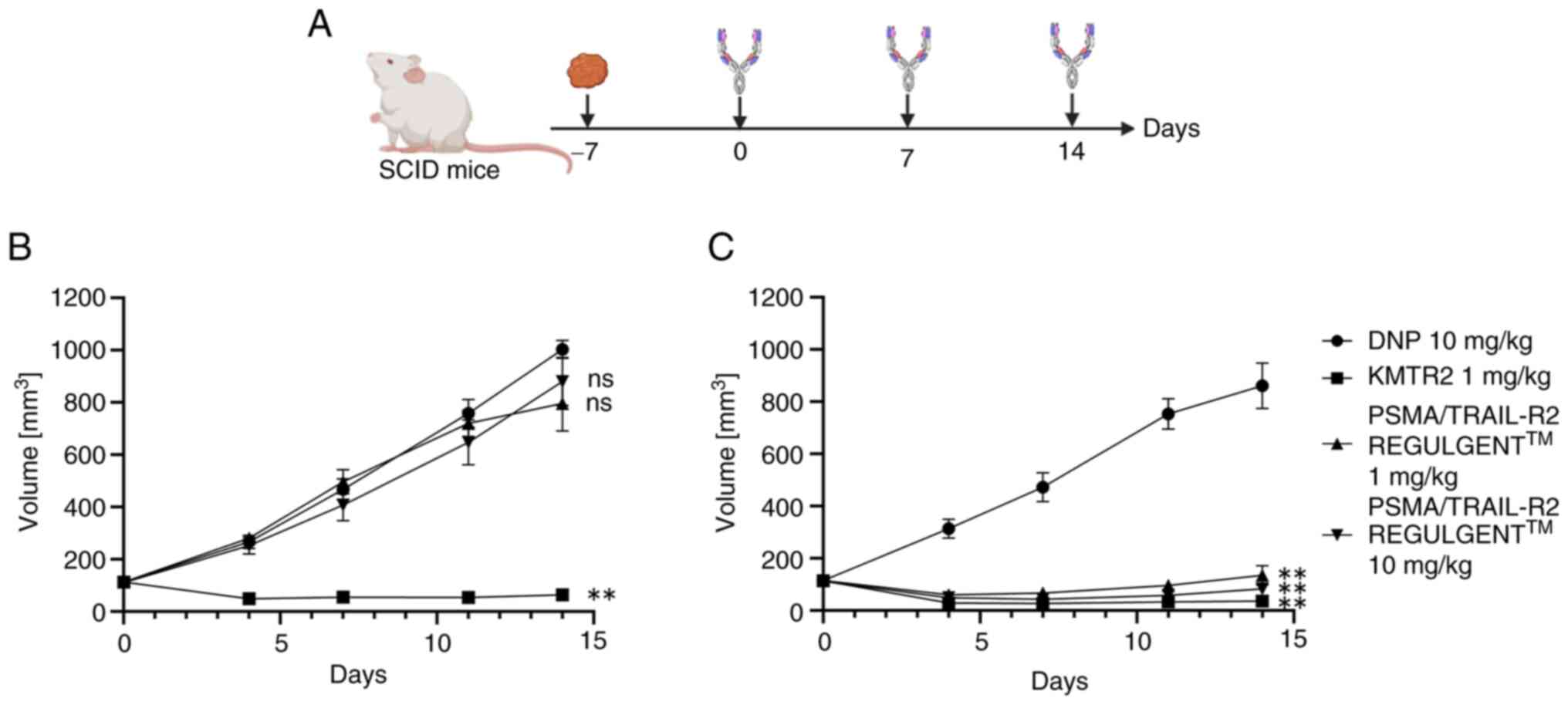
Tumor necrosis factor‑related apoptosis‑inducing ligand‑receptor 2 (TRAIL‑R2) can induce apoptosis in various tumors through the oligomerization of TRAIL. Several TRAIL‑R2 agonistic monoclonal antibodies have been tested in clinical trials but have failed owing to a lack of efficacy or severe hepatotoxicity. Although bispecific constructs have been developed to improve TRAIL‑R2 targeting and enhance efficacy against tumors while reducing adverse effects on hepatocytes, the risk of hepatotoxicity still persists. The present study used a TRAIL‑R2 antibody, E11, that does not trigger apoptosis in the absence of crosslinking and constructed a novel tetravalent bispecific IgG4‑based antibody, REGULGENT™, comprised of E11 and a clone that binds to prostate‑specific membrane antigen (PSMA), a specific marker for prostate tumors. PSMA/TRAIL‑R2 REGULGENT™ selectively induced death in PSMA/TRAIL‑R2 double‑positive cells but not in TRAIL‑R2 single‑positive cells in vitro and in vivo. By contrast, a bivalent bispecific antibody did not result in tumor cell death, indicating that tetravalent bispecific antibodies have an important role in inducing tumor cell apoptosis by binding to TRAIL‑R2 in a bivalent manner. Moreover, the present study demonstrated, for the first time to the best of the authors' knowledge, that PSMA/TRAIL‑R2 REGULGENT™ is not hepatotoxic in vitro (primary human hepatocytes) or in vivo (chimeric human hepatocyte‑transplanted PXB mouse model). This finding suggests that tetravalent bispecific therapeutics such as REGULGENT™ can be promising therapeutic agents for TRAIL‑R2‑positive tumors by exerting tumor‑specific activity while avoiding toxicity.
View Figures

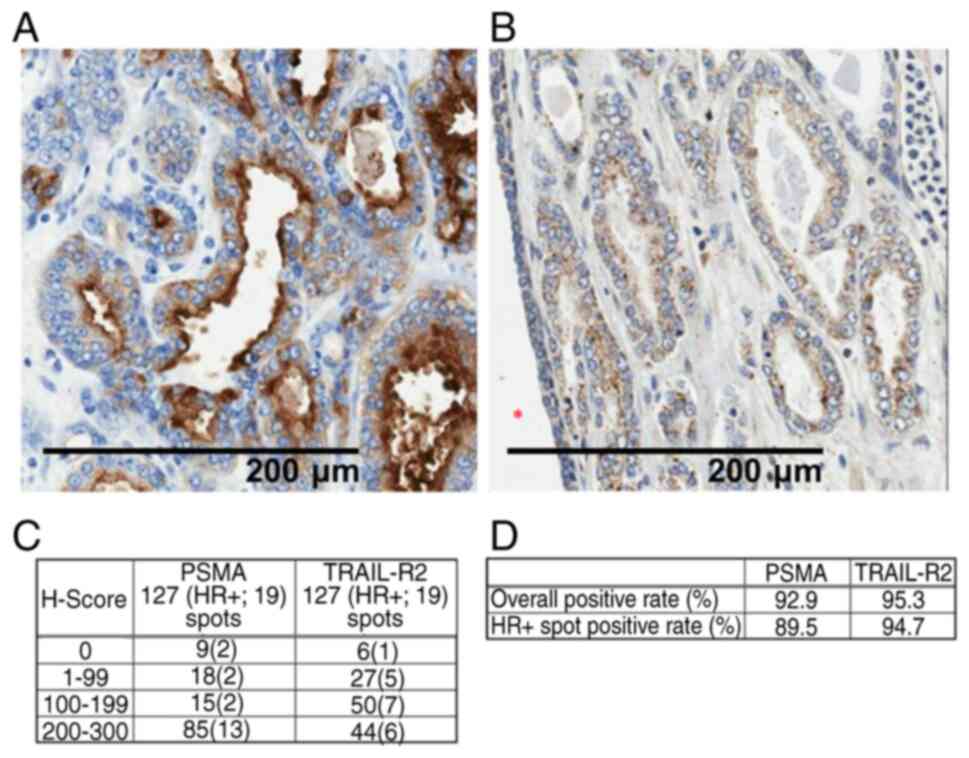
Figure 1

PSMA and TRAIL-R2 expression in
patients with prostate cancer. Representative staining of prostate
cancer tissue microarrays. (A) PSMA expression and (B) TRAIL-R
expression. The H scores were calculated based on percent
positivity and intensity score for (C) all spots and (D) spots in
hormone-resistant prostate cancers. The red asterisk represents a
normal gland/duct. PSMA, prostate-specific membrane antigen;
TRAIL-R2, tumor necrosis factor-related apoptosis-inducing
ligand-receptor 2.

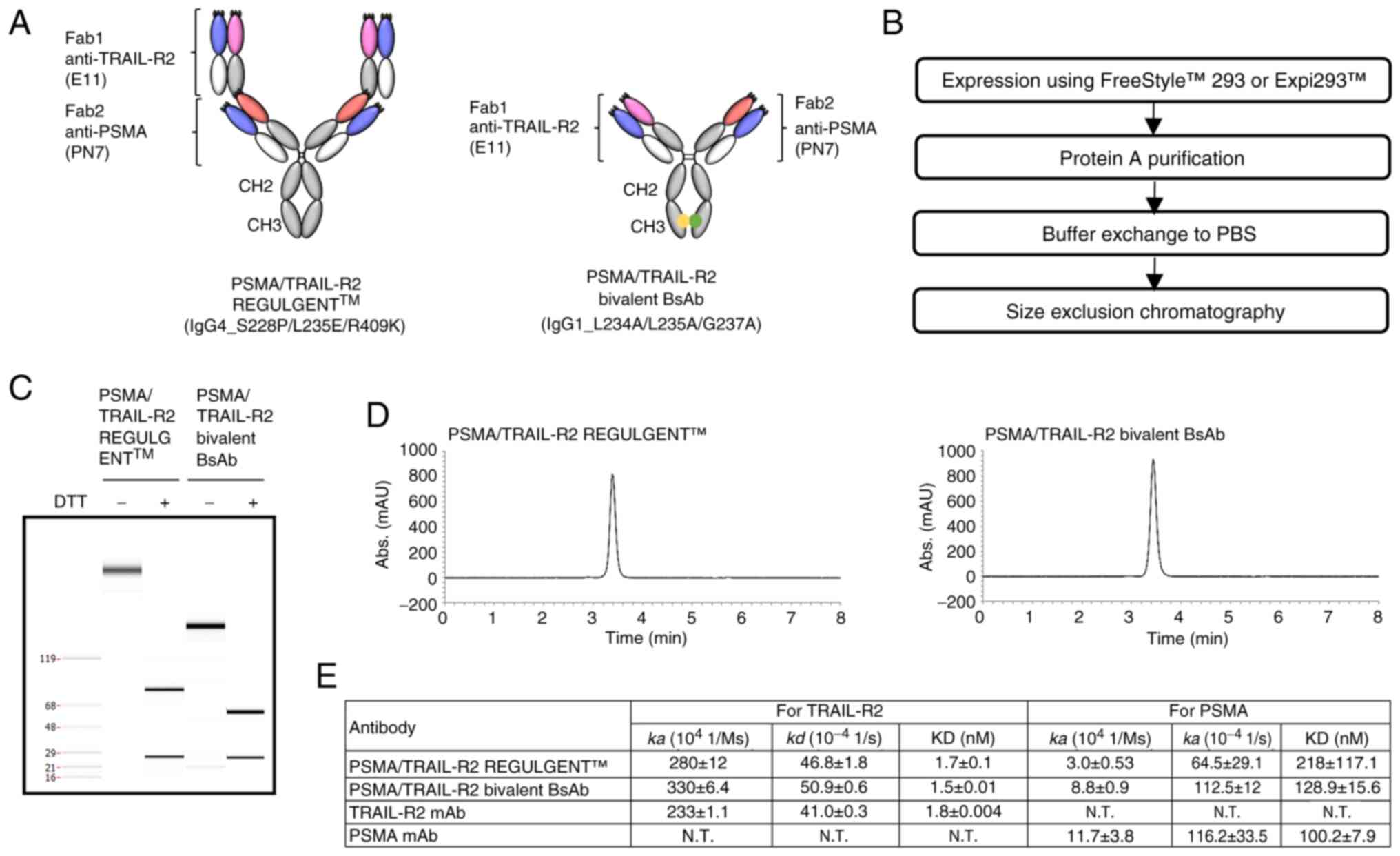
Figure 2

Design and production of
prostate-specific membrane antigen and tumor necrosis
factor-related apoptosis-inducing ligand-receptor 2 (PSMA/TRAIL-R2)
bispecific antibodies. (A) Schematic of the Fab-based tetravalent
bispecific antibody (REGULGENT™) and bivalent bispecific antibody
designs. (B) Flowchart of expression and purification of REGULGENT™
and bivalent bispecific antibody. Analytical data of REGULGENT™ and
bivalent bispecific antibody after expression in 293F cells and a
single-step protein A purification using (C) LabChip and (D) size
exclusion chromatography. (E) PSMA or TRAIL-R2 binding of generated
antibodies to recombinant proteins as analyzed by Biacore surface
plasmon resonance. PSMA, prostate-specific membrane antigen;
TRAIL-R2, tumor necrosis factor-related apoptosis-inducing
ligand-receptor 2.

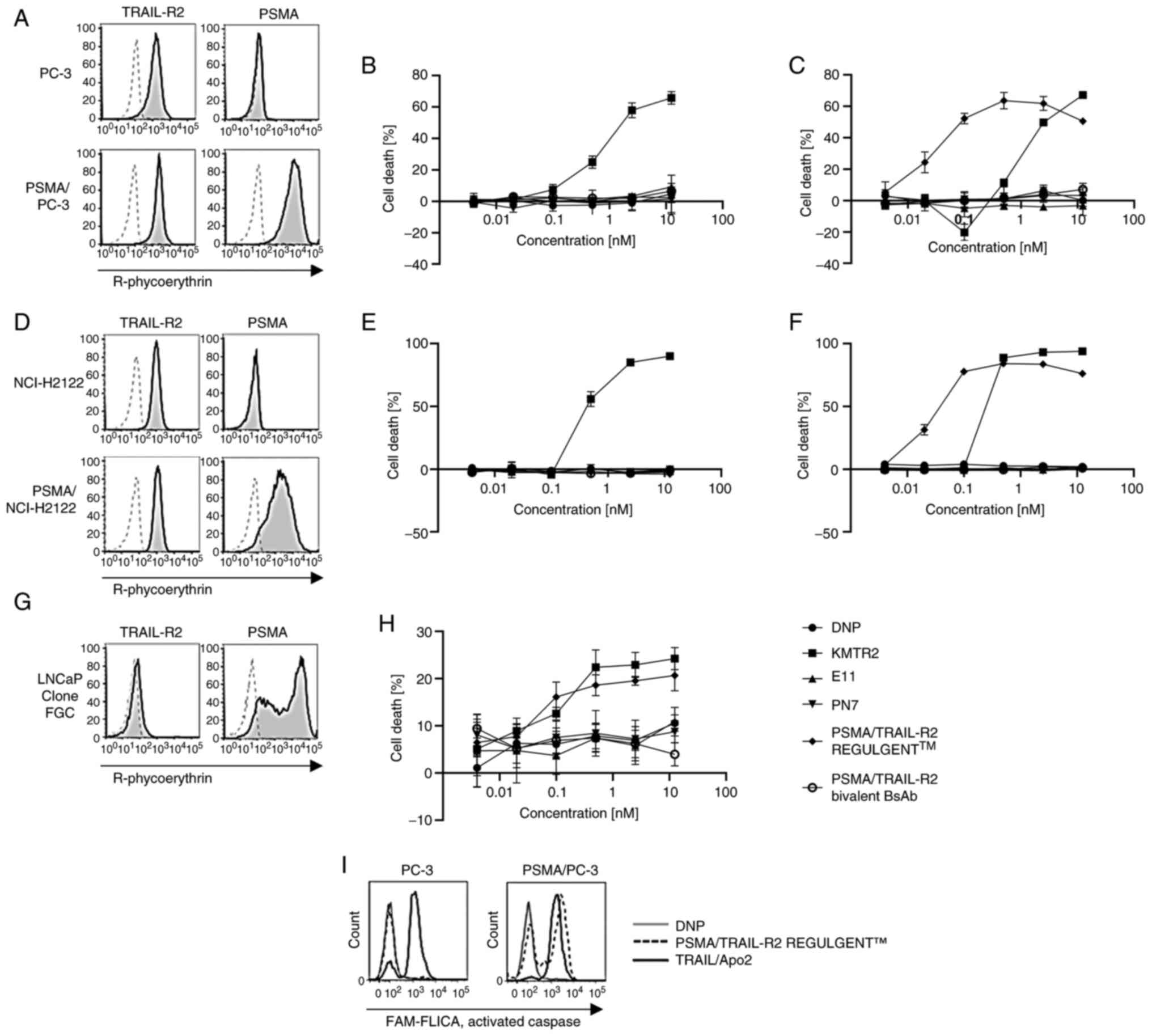
Figure 3

Cancer cell death induced by
prostate-specific membrane antigen and tumor necrosis
factor-related apoptosis-inducing ligand-receptor 2 (PSMA/TRAIL-R2)
bispecific antibodies. (A, D and G) Evaluation of PSMA and TRAIL-R2
expression in various cell lines using flow cytometry. (B, C, E, F
and H) Viability of human tumor cell lines in response to treatment
with PSMA/TRAIL-R2 bispecific antibodies (REGULGENT™ and bivalent
bispecific antibody) in a 96-well cell proliferation assay using
the (B) PC-3 and (E) NCI-H2122 cell lines
(PSMA−TRAIL-R+), (C) PSMA/PC-3 and (F) a
PSMA/NCI-H2122 transfectants and (H) the LNCaP clone FGC cell line
(PSMA+TRAIL-R+). Antibodies were tested in
fivefold dilutions starting at 12.5 nM to 0.004 nM. Data represent
quadruplicate experiments and are shown as means ± SE. The vertical
axes represent cell death (%) and the horizontal axes represent the
antibody concentration (nM). An anti-DNP antibody was used as the
negative control. (I) Caspase activation in PC-3 or PSMA/PC-3 cells
by the TRAIL/Apo2 ligand and PSMA/TRAIL-R2 REGULGENT™ using the
FAM-FLICA Poly Caspase Assay. The solid line shows caspase
activation by the TRAIL/Apo2 ligand, the dotted line shows caspase
activation by TRAIL-R2/PSMA REGULGENT™ and the gray line shows
caspase activation by the anti-DNP antibody used as the negative
control. PSMA, prostate-specific membrane antigen; TRAIL-R2, tumor
necrosis factor-related apoptosis-inducing ligand-receptor 2; DNP,
2,4-dinitrophenol.

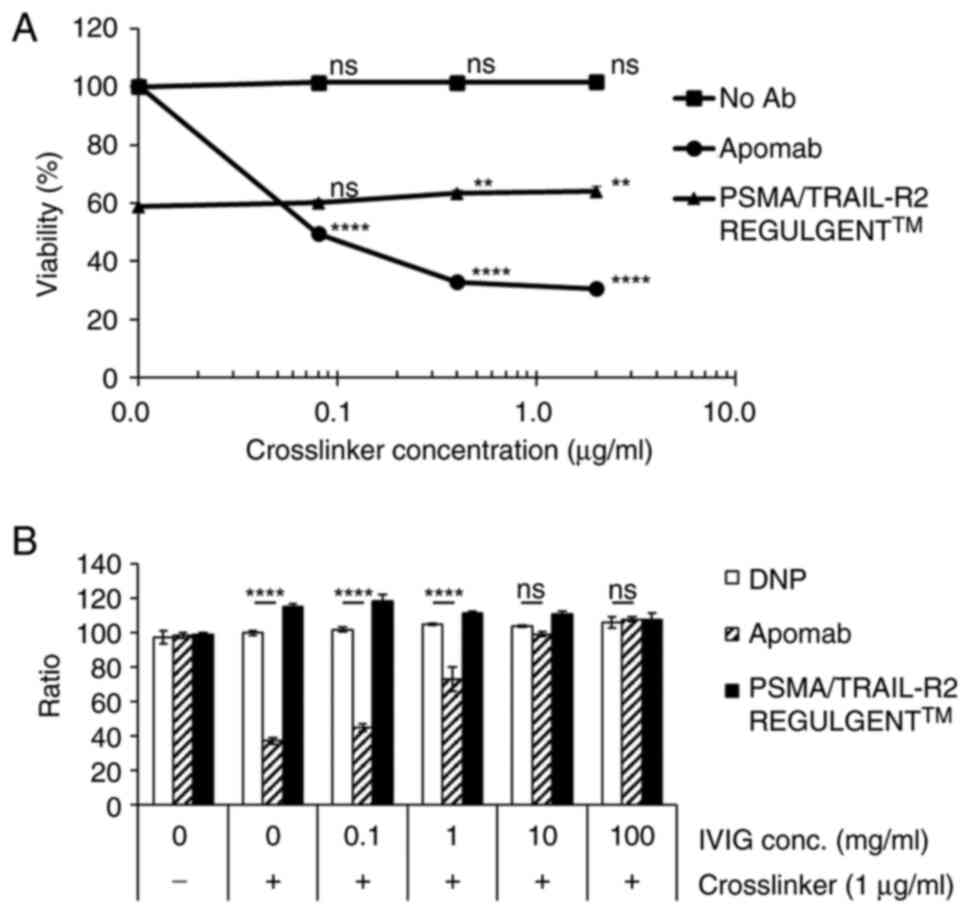
Figure 4

Effect of crosslinker and IVIG on
tumor cell death induced by the prostate-specific membrane antigen
and the tumor necrosis factor-related apoptosis-inducing
ligand-receptor 2 (PSMA/TRAIL-R2) bispecific antibody (REGULGENT™).
(A) PSMA/PC-3 cells were seeded onto 96 well plates. Then apomab
and PSMA/TRAIL-R2 REGULGENT™ were added and cultured with
crosslinkers for 3 days. Statistical analysis was performed using
one-way ANOVA with Dunnett's post hoc test to compare each
treatment group at a given concentration with the corresponding
no-antibody (no Ab) control group. **P<0.01, ****P<0.0001,
ns, no significance. (B) IVIG affected the efficacy of crosslinked
apomab and PSMA/TRAIL-R2 REGULGENT™ in a concentration-dependent
manner. Statistical analysis was performed using twowayANOVA with
Bonferroni post hoc test. ****P<0.0001, ns, no significance.
IVIG, intravenous immunoglobulin; PSMA, prostate-specific membrane
antigen; TRAIL-R2, tumor necrosis factor-related apoptosis-inducing
ligand-receptor 2; DNP, 2,4-dinitrophenol.

Figure 5

In vivo PSMA-dependent
antitumor activity of the PSMA/TRAIL-R2 bispecific antibody
(REGULGENT™). (A) Schedule of antibody administration and tumor
measurement in a xenograft model. (B) NCI-H2122 and (C)
PSMA/NCI-H2122 transfectant cells were transplanted subcutaneously
into SCID mice. The mice were grouped 7 days after transplantation
to start receiving the anti-2,4-dinitrophenol (DNP) antibody,
anti-TRAIL-R2 agonistic antibody KMTR2, or PSMA/TRAIL-R2
REGULGENT™. The vertical axes indicate tumor size (mm3)
and the horizontal axes indicate the time (days) after the start of
antibody administration. Plotted values are the means (SEM) of
duplicates of four independent experiments. To determine the
statistical significance, an RM one-way ANOVA with Tukey's multiple
comparisons was performed (**P<0.01, ns, no significance). PSMA,
prostate-specific membrane antigen; TRAIL-R2, tumor necrosis
factor-related apoptosis-inducing ligand-receptor 2; DNP,
2,4-dinitrophenol.

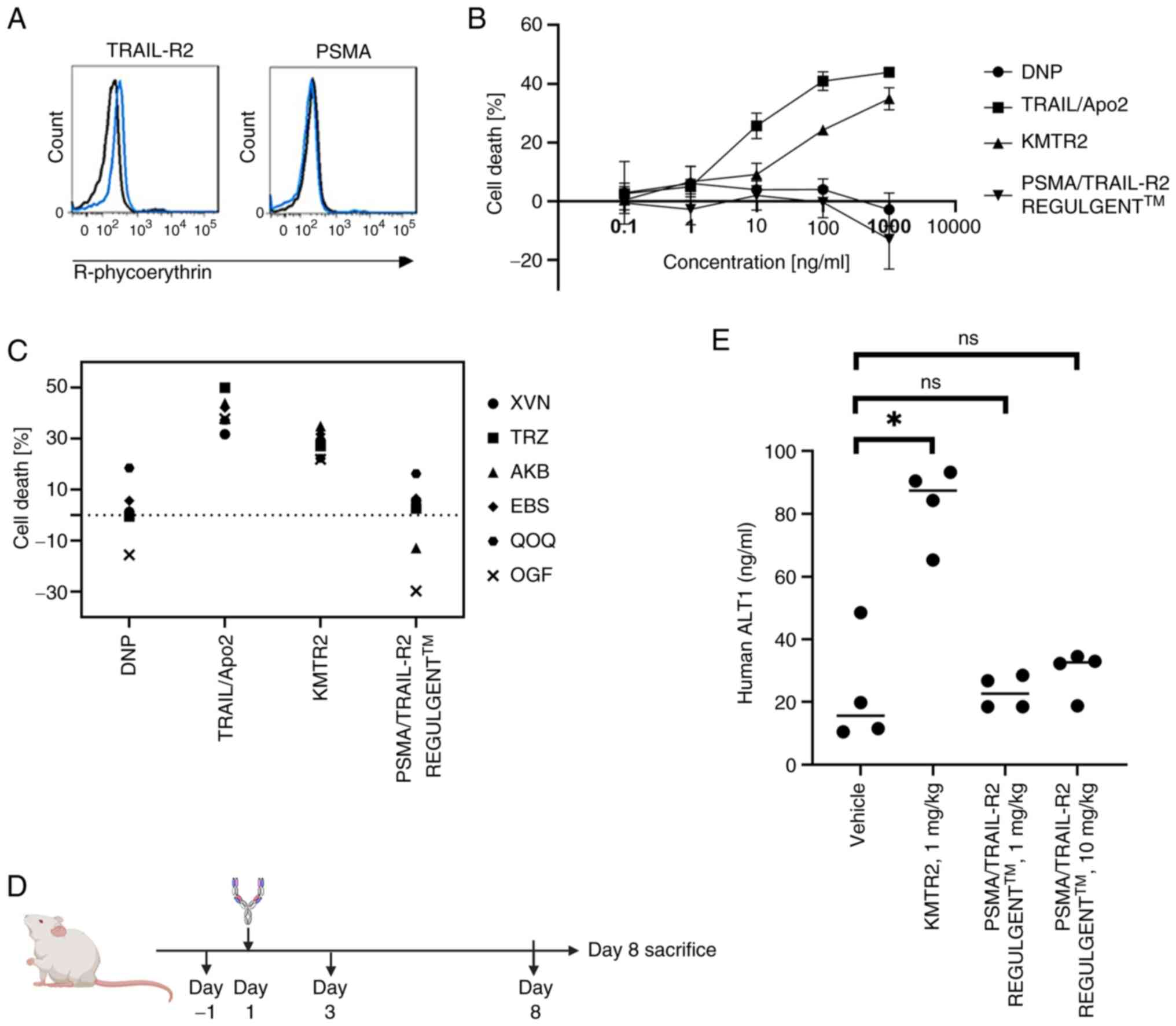
Figure 6

In vitro/in vivo liver
toxicity of prostate-specific membrane antigen and tumor necrosis
factor-related apoptosis-inducing ligand-receptor 2 (PSMA/TRAIL-R2)
bispecific antibodies. (A) PSMA and TRAIL-R2 expression in
hepatocytes was determined using flow cytometry. (B) Hepatocytes
were treated with serially diluted antibodies anti-DNP,
anti-TRAIL-R2 agonistic KMTR2, anti-TRAIL-R2 non-agonistic E11, or
PSMA/TRAIL-R2 REGULGENT™) and incubated for 96 h. Cell viability
was determined using Cell Counting Kit-8. (C) Antibody-induced
toxicity in human primary hepatocytes from six donors (lot numbers:
XVN, TRZ, AKB, EBS, QOQ and OGF). (D) Schedule of in vivo
safety assessment using PXB mice. (E) Serum human ALT1
concentrations in response to anti-TRAIL-R2 agonistic antibody
KMTR2 and PSMA/TRAIL-R2 REGULGENT™ treatment. *P<0.05, ns, no
significance. PSMA, prostate-specific membrane antigen; TRAIL-R2,
tumor necrosis factor-related apoptosis-inducing ligand-receptor 2;
DNP, 2,4-dinitrophenol; ALT, alanine aminotransferase.
View References

1 

Ashkenazi A, Pai RC, Fong S, Leung S, Lawrence DA, Marsters SA, Blackie C, Chang L, McMurtrey AE, Hebert A, et al: Safety and antitumor activity of recombinant soluble Apo2 ligand. J Clin Invest. 104:155–162. 1999. View Article : Google Scholar : PubMed/NCBI

2 

Snajdauf M, Havlova K, Vachtenheim J Jr, Ozaniak A, Lischke R, Bartunkova J, Smrz D and Strizova Z: The TRAIL in the treatment of human cancer: An update on clinical trials. Front Mol Biosci. 8:6283322021. View Article : Google Scholar : PubMed/NCBI

3 

Yada A, Yazawa M, Ishida S, Yoshida H, Ichikawa K, Kurakata S and Fujiwara K: A novel humanized anti-human death receptor 5 antibody CS-1008 induces apoptosis in tumor cells without toxicity in hepatocytes. Ann Oncol. 19:1060–1067. 2008. View Article : Google Scholar : PubMed/NCBI

4 

Fuchs CS, Fakih M, Schwartzberg L, Cohn AL, Yee L, Dreisbach L, Kozloff MF, Hei YJ, Galimi F, Pan Y, et al: TRAIL receptor agonist conatumumab with modified FOLFOX6 plus bevacizumab for first-line treatment of metastatic colorectal cancer: A randomized phase 1b/2 trial. Cancer. 119:4290–4298. 2013. View Article : Google Scholar : PubMed/NCBI

5 

Motoki K, Mori E, Matsumoto A, Thomas M, Tomura T, Humphreys R, Albert V, Muto M, Yoshida H Aoki, et al: Enhanced apoptosis and tumor regression induced by a direct agonist antibody to tumor necrosis factor-related apoptosis-inducing ligand receptor 2. Clin Cancer Res. 11:3126–3135. 2005. View Article : Google Scholar : PubMed/NCBI

6 

Nihira K, Nan-Ya KI, Kakuni M, Ono Y, Yoshikawa Y, Ota T, Hiura M and Yoshinari K: Chimeric mice with humanized livers demonstrate human-specific hepatotoxicity caused by a therapeutic antibody against TRAIL-receptor 2/death receptor 5. Toxicol Sci. 167:190–201. 2018. View Article : Google Scholar : PubMed/NCBI

7 

Papadopoulos KP, Isaacs R, Bilic S, Kentsch K, Huet HA, Hofmann M, Rasco D, Kundamal N, Tang Z, Cooksey J and Mahipal A: Unexpected hepatotoxicity in a phase I study of TAS266, a novel tetravalent agonistic Nanobody® targeting the DR5 receptor. Cancer Chemother Pharmacol. 75:887–895. 2015. View Article : Google Scholar : PubMed/NCBI

8 

Hutt M, Fellermeier-Kopf S, Seifert O, Schmitt LC, Pfizenmaier K and Kontermann RE: Targeting scFv-Fc-scTRAIL fusion proteins to tumor cells. Oncotarget. 9:11322–11335. 2018. View Article : Google Scholar : PubMed/NCBI

9 

Zhu Y, Bassoff N, Reinshagen C, Bhere D, Nowicki MO, Lawler SE, Roux J and Shah K: Bi-specific molecule against EGFR and death receptors simultaneously targets proliferation and death pathways in tumors. Sci Rep. 7:26022017. View Article : Google Scholar : PubMed/NCBI

10 

Brünker P, Wartha K, Friess T, Grau-Richards S, Waldhauer I, Koller CF, Weiser B, Majety M, Runza V, Niu H, et al: RG7386, a novel tetravalent FAP-DR5 antibody, effectively triggers FAP-dependent, avidity-driven DR5 hyperclustering and tumor cell apoptosis. Mol Cancer Ther. 15:946–957. 2016. View Article : Google Scholar : PubMed/NCBI

11 

Shivange G, Urbanek K, Przanowski P, Perry JSA, Jones J, Haggart R, Kostka C, Patki T, Stelow E, Petrova Y, et al: A single-agent dual-specificity targeting of FOLR1 and DR5 as an effective strategy for ovarian cancer. Cancer Cell. 34:331–345.e311. 2018. View Article : Google Scholar : PubMed/NCBI

12 

García-Martínez JM, Wang S, Weishaeupl C, Wernitznig A, Chetta P, Pinto C, Ho J, Dutcher D, Gorman PN, Kroe-Barrett R, et al: Selective tumor cell apoptosis and tumor regression in CDH17-positive colorectal cancer models using BI 905711, a novel liver-sparing TRAILR2 agonist. Mol Cancer Ther. 20:96–108. 2021. View Article : Google Scholar : PubMed/NCBI

13 

Goldmacher VS, Gershteyn I, Chari R and Kovtun Y: A bispecific anti-MUC16/anti-death receptor 5 antibody achieves effective and tumor-selective death receptor 5-mediated tumor regression. Sci Rep. 15:99092025. View Article : Google Scholar : PubMed/NCBI

14 

Minner S, Wittmer C, Graefen M, Salomon G, Steuber T, Haese A, Huland H, Bokemeyer C, Yekebas E, Dierlamm J, et al: High level PSMA expression is associated with early PSA recurrence in surgically treated prostate cancer. Prostate. 71:281–288. 2011. View Article : Google Scholar : PubMed/NCBI

15 

Wang HL, Wang SS, Song WH, Pan Y, Yu HP, Si TG, Liu Y, Cui XN and Guo Z: Expression of prostate-specific membrane antigen in lung cancer cells and tumor neovasculature endothelial cells and its clinical significance. PLoS One. 10:e01259242015. View Article : Google Scholar : PubMed/NCBI

16 

Tolkach Y, Gevensleben H, Bundschuh R, Koyun A, Huber D, Kehrer C, Hecking T, Keyver-Paik MD, Kaiser C, Ahmadzadehfar H, et al: Prostate-specific membrane antigen in breast cancer: A comprehensive evaluation of expression and a case report of radionuclide therapy. Breast Cancer Res Treat. 169:447–455. 2018. View Article : Google Scholar : PubMed/NCBI

17 

Andryszak N, Kurzawa P, Krzyżaniak M, Nowicki M, Ruchała M, Iżycki D and Czepczyński R: Evaluation of prostate-specific membrane antigen (PSMA) immunohistochemical expression in early-stage breast cancer ubtypes. Int J Mol Sci. 25:65192024. View Article : Google Scholar : PubMed/NCBI

18 

Milowsky MI, Nanus DM, Kostakoglu L, Sheehan CE, Vallabhajosula S, Goldsmith SJ, Ross JS and Bander NH: Vascular targeted therapy with anti-prostate-specific membrane antigen monoclonal antibody J591 in advanced solid tumors. J Clin Oncol. 25:540–547. 2007. View Article : Google Scholar : PubMed/NCBI

19 

Tolmachev V, Malmberg J, Estrada S, Eriksson O and Orlova A: Development of a 124I-labeled version of the anti-PSMA monoclonal antibody capromab for immunoPET staging of prostate cancer: Aspects of labeling chemistry and biodistribution. Int J Oncol. 44:1998–2008. 2014. View Article : Google Scholar : PubMed/NCBI

20 

Jiang Z, Guo J, Hu L, Yang S, Meng B and Tang Q; Diagnostic performance of (18)F-DCFPyL PET vs. (68)Ga-PSMA PET/CT in patients with suspected prostate cancer, : A systemic review and meta-analysis. Oncol Lett. 2024.27:188 View Article : Google Scholar : PubMed/NCBI

21 

Simon H, Henkel D, Chiron P and Helissey C: New perspectives on metabolic imaging in the management of prostate cancer in 2022: A focus on radiolabeled PSMA-PET/CT (Review). Mol Clin Oncol. 19:512023. View Article : Google Scholar : PubMed/NCBI

22 

Petrylak DP, Vogelzang NJ, Chatta K, Fleming MT, Smith DC, Appleman LJ, Hussain A, Modiano M, Singh P, Tagawa ST, et al: PSMA ADC monotherapy in patients with progressive metastatic castration-resistant prostate cancer following abiraterone and/or enzalutamide: efficacy and safety in open-label single-arm phase 2 study. Prostate. 80:99–108. 2020. View Article : Google Scholar : PubMed/NCBI

23 

Saga T, Nakamoto Y, Ishimori T, Inoue T, Shimizu Y, Kimura H, Akamatsu S, Goto T, Watanabe H, Kitaguchi K, et al: Initial evaluation of PET/CT with (18) F-FSU-880 targeting prostate-specific membrane antigen in prostate cancer patients. Cancer Sci. 110:742–750. 2019. View Article : Google Scholar : PubMed/NCBI

24 

Hou H, Lin Y, Pan Y, Ma Y, Hou G, Sun X and Gao F: Synthesis and preclinical evaluation of (68)Ga-labeled PSMA tracers with improved pharmacological properties. Eur J Med Chem. 274:1165452024. View Article : Google Scholar : PubMed/NCBI

25 

Droghetti M, Bianchi L, Presutti M, Vetrone L, Farolfi A, Mei R, Giunchi F, Degiovanni A, Mottaran A, Piazza P, et al: Immunohistochemistry analysis of PSMA expression at prostatic biopsy in high-risk prostate cancer: Potential implications for PSMA-PET patient selection. Front Oncol. 14:13246312024. View Article : Google Scholar : PubMed/NCBI

26 

Mori E, Thomas M, Motoki K, Nakazawa K, Tahara T, Tomizuka K, Ishida I and Kataoka S: Human normal hepatocytes are susceptible to apoptosis signal mediated by both TRAIL-R1 and TRAIL-R2. Cell Death Differ. 11:203–207. 2004. View Article : Google Scholar : PubMed/NCBI

27 

Krah S, Schröter C, Eller C, Rhiel L, Rasche N, Beck J, Sellmann C, Günther R, Toleikis L, Hock B, et al: Generation of human bispecific common light chain antibodies by combining animal immunization and yeast display. Protein Eng Des Sel. 30:291–301. 2017.PubMed/NCBI

28 

Ishida I, Tomizuka K, Yoshida H, Tahara T, Takahashi N, Ohguma A, Tanaka S, Umehashi M, Maeda H, Nozaki C, et al: Production of human monoclonal and polyclonal antibodies in TransChromo animals. Cloning Stem Cells. 4:91–102. 2002. View Article : Google Scholar : PubMed/NCBI

29 

Namisaki H, Saito S, Hiraishi K, Haba T, Tanaka Y, Yoshida H, Iida S and Takahashi N: R409K mutation prevents acid-induced aggregation of human IgG4. PLoS One. 15:e02290272020. View Article : Google Scholar : PubMed/NCBI

30 

Merchant AM, Zhu Z, Yuan JQ, Goddard A, Adams CW, Presta LG and Carter P: An efficient route to human bispecific IgG. Nat Biotechnol. 16:677–681. 1998. View Article : Google Scholar : PubMed/NCBI

31 

Hezareh M, Hessell AJ, Jensen RC, van de Winkel JG and Parren PW: Effector function activities of a panel of mutants of a broadly neutralizing antibody against human immunodeficiency virus type 1. J Virol. 75:12161–12168. 2001. View Article : Google Scholar : PubMed/NCBI

32 

Camidge DR: Apomab: An agonist monoclonal antibody directed against death receptor 5/TRAIL-receptor 2 for use in the treatment of solid tumors. Expert Opin Biol Ther. 8:1167–1176. 2008. View Article : Google Scholar : PubMed/NCBI

33 

Zinonos I, Labrinidis A, Lee M, Liapis V, Hay S, Ponomarev V, Diamond P, Zannettino AC, Findlay DM and Evdokiou A: Apomab, a fully human agonistic antibody to DR5, exhibits potent antitumor activity against primary and metastatic breast cancer. Mol Cancer Ther. 8:2969–2980. 2009. View Article : Google Scholar : PubMed/NCBI

34 

Tateno C, Iwanari H, Shimada T, Kimura T, Iwasaki Y, Yamasaki C, Kakuni M and Ishida Y: Detection of human hepatic toxicity in chimeric mice with humanized liver by human ALT1 ELISA system. The 53rd Annual Meeting of the Society of Toxicology Phoenix, AZ: 2014

35 

Mori E, Thomas M, Motoki K and Kataika S: Distinct function of monoclonal antibody to TRAIL-R2 as potentiator or inhibitor of the ligand TRAIL-induced apoptosis. FEBS Lett. 579:5379–5384. 2005. View Article : Google Scholar : PubMed/NCBI

36 

Saito S, Nakayama M, Yamazaki K, Miyamoto Y, Hiraishi K, Tomioka D, Takagi-Maeda S, Usami K, Takahashi N, Nara S and Imai E: Engineering and physicochemical characterization of a novel, stable, symmetric bispecific antibody with dual target-binding using a common light chain. Protein Sci. 33:e51212024. View Article : Google Scholar : PubMed/NCBI

37 

Cieślewicz M, Andryszak N, Pełka K, Szczepanek-Parulska E, Ruchała M, Kunikowska J and Czepczyński R: Evaluation of prostate-specific membrane antigen (PSMA) immunohistochemical expression in early-stage breast cancer subtype. Int J Mol Sci. 25:65192024. View Article : Google Scholar

38 

Harding JJ, Hofheinz RD, Elez E, Kuboki Y, Rasco DW, Cecchini M, Shen L, He M, Archuadze S, Chhaya N and Pant S: A phase Ia/b first-in-human, open-label, multicenter study of BI 905711, a bispecific TRAILR2 agonist, in patients with advanced gastrointestinal cancers. J Clin Oncol. 41:115. 2023. View Article : Google Scholar

39 

Irmler M, Thome M, Hahne M, Schneider P, Hofmann K, Steiner V, Bodmer JL, Schröter M, Burns K, Mattmann C, et al: Inhibition of death receptor signals by cellular FLIP. Nature. 388:190–195. 1997. View Article : Google Scholar : PubMed/NCBI

40 

Shankar S, Chen X and Srivastava RK: Effects of sequential treatments with chemotherapeutic drugs followed by TRAIL on prostate cancer in vitro and in vivo. Prostate. 62:165–186. 2005. View Article : Google Scholar : PubMed/NCBI

41 

Nazim UM, Yin H and Park SY: Neferine treatment enhances the TRAIL-induced apoptosis of human prostate cancer cells via autophagic flux and the JNK pathway. Int J Oncol. 56:1152–1161. 2020.PubMed/NCBI

42 

Koschny R, Ganten TM, Sykora J, Haas TL, Sprick MR, Kolb A, Stremmel W and Walczak H: TRAIL/bortezomib cotreatment is potentially hepatotoxic but induces cancer-specific apoptosis within a therapeutic window. Hepatology. 45:649–658. 2007. View Article : Google Scholar : PubMed/NCBI

43 

Wang J, Xiu M, Wang J, Gao Y and Li Y: Proteasome inhibition sensitizes hepatocellular carcinoma cells, but not human hepatocytes, to TRAIL. Hepatology. 42:588–597. 2005. View Article : Google Scholar

44 

Koschny R, Holland H, Sykora J, Erdal H, Krupp W, Bauer M, Bockmuehl U, Ahnert P, Meixensberger J, Stremmel W, et al: Bortezomib sensitizes primary human esthesioneuroblastoma cells to TRAIL-induced apoptosis. J Neurooncol. 97:171–185. 2010. View Article : Google Scholar : PubMed/NCBI

45 

Huang FJ, Steeg PS, Price JE, Chiu WT, Chou PC, Xie K, Sawaya R and Huang S: Molecular basis for the critical role of suppressor of cytokine signaling-1 in melanoma brain metastasis. Cancer Res. 68:9634–9642. 2008. View Article : Google Scholar : PubMed/NCBI

46 

Cristofanon S and Fulda S: ABT-737 promotes tBid mitochondrial accumulation to enhance TRAIL-induced apoptosis in glioblastoma cells. Cell Death Dis. 3:e4322012. View Article : Google Scholar : PubMed/NCBI

47 

Lemke J, von Karstedt S, Zinngrebe J and Walczak H: Getting TRAIL back on track for cancer therapy. Cell Death Differ. 21:1350–1364. 2014. View Article : Google Scholar : PubMed/NCBI

48 

Montinaro A, Areso Zubiaur I, Saggau J, Kretz AL, Ferreira RMM, Hassan O, Kitzig E, Müller I, El-Bahrawy MA, von Karstedt S, et al: Potent pro-apoptotic combination therapy is highly effective in a broad range of cancers. Cell Death Differ. 29:492–503. 2022. View Article : Google Scholar : PubMed/NCBI

49 

Xiuhan S, Xiangyu H and Bao TZ: Role of mitochondrial reactive oxygen species in chemically-induced ferroptosis. Free Radic Biol Med. 223:473–492. 2024. View Article : Google Scholar : PubMed/NCBI

50 

Suzuki-Karasaki M, Ochiai T and Suzuki-Karasaki Y: Crosstalk between mitochondrial ROS and depolarization in the potentiation of TRAIL-induced apoptosis in human tumor cells. Int J Oncol. 44:616–628. 2014. View Article : Google Scholar : PubMed/NCBI

51 

Kaur M, Rüger K, Chen EC, Rangaswamy US, Davison LM, Arteaga SM, Smith I, Chu R, Chattopadhyay S, Rickert M, et al: Potency-optimized CD28-activating bispecific antibody for the targeted treatment of Nectin-4 positive cancers. J Immunother Cancer. 13:e0113232025. View Article : Google Scholar : PubMed/NCBI

Related Articles

  • Abstract
  • View
  • Download
  • Twitter
Copy and paste a formatted citation
Spandidos Publications style
Nakayama M, Takagi‑Maeda S, Machino Y, Nihira K, Inoue M, Takahashi N and Usami K: Novel tetravalent bispecific antibody, PSMA/TRAIL‑R2 REGULGENT&trade;, induces selective tumor cell apoptosis without hepatotoxicity. Oncol Rep 54: 155, 2025.
APA
Nakayama, M., Takagi‑Maeda, S., Machino, Y., Nihira, K., Inoue, M., Takahashi, N., & Usami, K. (2025). Novel tetravalent bispecific antibody, PSMA/TRAIL‑R2 REGULGENT&trade;, induces selective tumor cell apoptosis without hepatotoxicity. Oncology Reports, 54, 155. https://doi.org/10.3892/or.2025.8988
MLA
Nakayama, M., Takagi‑Maeda, S., Machino, Y., Nihira, K., Inoue, M., Takahashi, N., Usami, K."Novel tetravalent bispecific antibody, PSMA/TRAIL‑R2 REGULGENT&trade;, induces selective tumor cell apoptosis without hepatotoxicity". Oncology Reports 54.5 (2025): 155.
Chicago
Nakayama, M., Takagi‑Maeda, S., Machino, Y., Nihira, K., Inoue, M., Takahashi, N., Usami, K."Novel tetravalent bispecific antibody, PSMA/TRAIL‑R2 REGULGENT&trade;, induces selective tumor cell apoptosis without hepatotoxicity". Oncology Reports 54, no. 5 (2025): 155. https://doi.org/10.3892/or.2025.8988
Copy and paste a formatted citation
x
Spandidos Publications style
Nakayama M, Takagi‑Maeda S, Machino Y, Nihira K, Inoue M, Takahashi N and Usami K: Novel tetravalent bispecific antibody, PSMA/TRAIL‑R2 REGULGENT&trade;, induces selective tumor cell apoptosis without hepatotoxicity. Oncol Rep 54: 155, 2025.
APA
Nakayama, M., Takagi‑Maeda, S., Machino, Y., Nihira, K., Inoue, M., Takahashi, N., & Usami, K. (2025). Novel tetravalent bispecific antibody, PSMA/TRAIL‑R2 REGULGENT&trade;, induces selective tumor cell apoptosis without hepatotoxicity. Oncology Reports, 54, 155. https://doi.org/10.3892/or.2025.8988
MLA
Nakayama, M., Takagi‑Maeda, S., Machino, Y., Nihira, K., Inoue, M., Takahashi, N., Usami, K."Novel tetravalent bispecific antibody, PSMA/TRAIL‑R2 REGULGENT&trade;, induces selective tumor cell apoptosis without hepatotoxicity". Oncology Reports 54.5 (2025): 155.
Chicago
Nakayama, M., Takagi‑Maeda, S., Machino, Y., Nihira, K., Inoue, M., Takahashi, N., Usami, K."Novel tetravalent bispecific antibody, PSMA/TRAIL‑R2 REGULGENT&trade;, induces selective tumor cell apoptosis without hepatotoxicity". Oncology Reports 54, no. 5 (2025): 155. https://doi.org/10.3892/or.2025.8988
Follow us
  • Twitter
  • LinkedIn
  • Facebook
About
  • Spandidos Publications
  • Careers
  • Cookie Policy
  • Privacy Policy
How can we help?
  • Help
  • Live Chat
  • Contact
  • Email to our Support Team