Spandidos Publications Logo
  • About
    • About Spandidos
    • Aims and Scopes
    • Abstracting and Indexing
    • Editorial Policies
    • Reprints and Permissions
    • Job Opportunities
    • Terms and Conditions
    • Contact
  • Journals
    • All Journals
    • Oncology Letters
      • Oncology Letters
      • Information for Authors
      • Editorial Policies
      • Editorial Board
      • Aims and Scope
      • Abstracting and Indexing
      • Bibliographic Information
      • Archive
    • International Journal of Oncology
      • International Journal of Oncology
      • Information for Authors
      • Editorial Policies
      • Editorial Board
      • Aims and Scope
      • Abstracting and Indexing
      • Bibliographic Information
      • Archive
    • Molecular and Clinical Oncology
      • Molecular and Clinical Oncology
      • Information for Authors
      • Editorial Policies
      • Editorial Board
      • Aims and Scope
      • Abstracting and Indexing
      • Bibliographic Information
      • Archive
    • Experimental and Therapeutic Medicine
      • Experimental and Therapeutic Medicine
      • Information for Authors
      • Editorial Policies
      • Editorial Board
      • Aims and Scope
      • Abstracting and Indexing
      • Bibliographic Information
      • Archive
    • International Journal of Molecular Medicine
      • International Journal of Molecular Medicine
      • Information for Authors
      • Editorial Policies
      • Editorial Board
      • Aims and Scope
      • Abstracting and Indexing
      • Bibliographic Information
      • Archive
    • Biomedical Reports
      • Biomedical Reports
      • Information for Authors
      • Editorial Policies
      • Editorial Board
      • Aims and Scope
      • Abstracting and Indexing
      • Bibliographic Information
      • Archive
    • Oncology Reports
      • Oncology Reports
      • Information for Authors
      • Editorial Policies
      • Editorial Board
      • Aims and Scope
      • Abstracting and Indexing
      • Bibliographic Information
      • Archive
    • Molecular Medicine Reports
      • Molecular Medicine Reports
      • Information for Authors
      • Editorial Policies
      • Editorial Board
      • Aims and Scope
      • Abstracting and Indexing
      • Bibliographic Information
      • Archive
    • World Academy of Sciences Journal
      • World Academy of Sciences Journal
      • Information for Authors
      • Editorial Policies
      • Editorial Board
      • Aims and Scope
      • Abstracting and Indexing
      • Bibliographic Information
      • Archive
    • International Journal of Functional Nutrition
      • International Journal of Functional Nutrition
      • Information for Authors
      • Editorial Policies
      • Editorial Board
      • Aims and Scope
      • Abstracting and Indexing
      • Bibliographic Information
      • Archive
    • International Journal of Epigenetics
      • International Journal of Epigenetics
      • Information for Authors
      • Editorial Policies
      • Editorial Board
      • Aims and Scope
      • Abstracting and Indexing
      • Bibliographic Information
      • Archive
    • Medicine International
      • Medicine International
      • Information for Authors
      • Editorial Policies
      • Editorial Board
      • Aims and Scope
      • Abstracting and Indexing
      • Bibliographic Information
      • Archive
  • Articles
  • Information
    • Information for Authors
    • Information for Reviewers
    • Information for Librarians
    • Information for Advertisers
    • Conferences
  • Language Editing
Spandidos Publications Logo
  • About
    • About Spandidos
    • Aims and Scopes
    • Abstracting and Indexing
    • Editorial Policies
    • Reprints and Permissions
    • Job Opportunities
    • Terms and Conditions
    • Contact
  • Journals
    • All Journals
    • Biomedical Reports
      • Information for Authors
      • Editorial Policies
      • Editorial Board
      • Aims and Scope
      • Abstracting and Indexing
      • Bibliographic Information
      • Archive
    • Experimental and Therapeutic Medicine
      • Information for Authors
      • Editorial Policies
      • Editorial Board
      • Aims and Scope
      • Abstracting and Indexing
      • Bibliographic Information
      • Archive
    • International Journal of Epigenetics
      • Information for Authors
      • Editorial Policies
      • Editorial Board
      • Aims and Scope
      • Abstracting and Indexing
      • Bibliographic Information
      • Archive
    • International Journal of Functional Nutrition
      • Information for Authors
      • Editorial Policies
      • Editorial Board
      • Aims and Scope
      • Abstracting and Indexing
      • Bibliographic Information
      • Archive
    • International Journal of Molecular Medicine
      • Information for Authors
      • Editorial Policies
      • Editorial Board
      • Aims and Scope
      • Abstracting and Indexing
      • Bibliographic Information
      • Archive
    • International Journal of Oncology
      • Information for Authors
      • Editorial Policies
      • Editorial Board
      • Aims and Scope
      • Abstracting and Indexing
      • Bibliographic Information
      • Archive
    • Medicine International
      • Information for Authors
      • Editorial Policies
      • Editorial Board
      • Aims and Scope
      • Abstracting and Indexing
      • Bibliographic Information
      • Archive
    • Molecular and Clinical Oncology
      • Information for Authors
      • Editorial Policies
      • Editorial Board
      • Aims and Scope
      • Abstracting and Indexing
      • Bibliographic Information
      • Archive
    • Molecular Medicine Reports
      • Information for Authors
      • Editorial Policies
      • Editorial Board
      • Aims and Scope
      • Abstracting and Indexing
      • Bibliographic Information
      • Archive
    • Oncology Letters
      • Information for Authors
      • Editorial Policies
      • Editorial Board
      • Aims and Scope
      • Abstracting and Indexing
      • Bibliographic Information
      • Archive
    • Oncology Reports
      • Information for Authors
      • Editorial Policies
      • Editorial Board
      • Aims and Scope
      • Abstracting and Indexing
      • Bibliographic Information
      • Archive
    • World Academy of Sciences Journal
      • Information for Authors
      • Editorial Policies
      • Editorial Board
      • Aims and Scope
      • Abstracting and Indexing
      • Bibliographic Information
      • Archive
  • Articles
  • Information
    • For Authors
    • For Reviewers
    • For Librarians
    • For Advertisers
    • Conferences
  • Language Editing
Login Register Submit
  • This site uses cookies
  • You can change your cookie settings at any time by following the instructions in our Cookie Policy. To find out more, you may read our Privacy Policy.

    I agree
Search articles by DOI, keyword, author or affiliation
Search
Advanced Search
presentation
Oncology Reports
Join Editorial Board Propose a Special Issue
Print ISSN: 1021-335X Online ISSN: 1791-2431
Journal Cover
January-2026 Volume 55 Issue 1

Full Size Image

Sign up for eToc alerts
Recommend to Library

Journals

International Journal of Molecular Medicine

International Journal of Molecular Medicine

International Journal of Molecular Medicine is an international journal devoted to molecular mechanisms of human disease.

International Journal of Oncology

International Journal of Oncology

International Journal of Oncology is an international journal devoted to oncology research and cancer treatment.

Molecular Medicine Reports

Molecular Medicine Reports

Covers molecular medicine topics such as pharmacology, pathology, genetics, neuroscience, infectious diseases, molecular cardiology, and molecular surgery.

Oncology Reports

Oncology Reports

Oncology Reports is an international journal devoted to fundamental and applied research in Oncology.

Experimental and Therapeutic Medicine

Experimental and Therapeutic Medicine

Experimental and Therapeutic Medicine is an international journal devoted to laboratory and clinical medicine.

Oncology Letters

Oncology Letters

Oncology Letters is an international journal devoted to Experimental and Clinical Oncology.

Biomedical Reports

Biomedical Reports

Explores a wide range of biological and medical fields, including pharmacology, genetics, microbiology, neuroscience, and molecular cardiology.

Molecular and Clinical Oncology

Molecular and Clinical Oncology

International journal addressing all aspects of oncology research, from tumorigenesis and oncogenes to chemotherapy and metastasis.

World Academy of Sciences Journal

World Academy of Sciences Journal

Multidisciplinary open-access journal spanning biochemistry, genetics, neuroscience, environmental health, and synthetic biology.

International Journal of Functional Nutrition

International Journal of Functional Nutrition

Open-access journal combining biochemistry, pharmacology, immunology, and genetics to advance health through functional nutrition.

International Journal of Epigenetics

International Journal of Epigenetics

Publishes open-access research on using epigenetics to advance understanding and treatment of human disease.

Medicine International

Medicine International

An International Open Access Journal Devoted to General Medicine.

Journal Cover
January-2026 Volume 55 Issue 1

Full Size Image

Sign up for eToc alerts
Recommend to Library

  • Article
  • Citations
    • Cite This Article
    • Download Citation
    • Create Citation Alert
    • Remove Citation Alert
    • Cited By
  • Similar Articles
    • Related Articles (in Spandidos Publications)
    • Similar Articles (Google Scholar)
    • Similar Articles (PubMed)
  • Download PDF
  • Download XML
  • View XML
Article Open Access

LRRC59 inhibits perk pathway‑induced apoptosis and promotes cell proliferation, migration and invasion in colorectal cancer cells

  • Authors:
    • Xingdong Hou
    • Yuting Wang
    • Yuzhuo Chen
    • Peiyan Zhong
    • Guangzhi Wang
    • Baicheng Li
    • Bowei Lu
    • Hanyu Jiang
    • Shili Ning
  • View Affiliations / Copyright

    Affiliations: Department of Gastrointestinal Surgery, The Second Affiliated Hospital of Dalian Medical University, Dalian, Liaoning 116027, P.R. China, Department of Thoracic Surgery, Binzhou People's Hospital, Binzhou, Shandong 256610, P.R. China, Department of Clinical Nutrition, The Second Affiliated Hospital of Dalian Medical University, Dalian, Liaoning 116027, P.R. China, Department of Thyroid Surgery, The Second Affiliated Hospital of Dalian Medical University, Dalian, Liaoning 116027, P.R. China, Department of Oncology, The First Affiliated Hospital of Dalian Medical University, Dalian, Liaoning 116000, P.R. China
    Copyright: © Hou et al. This is an open access article distributed under the terms of Creative Commons Attribution License.
  • Article Number: 5
    |
    Published online on: October 23, 2025
       https://doi.org/10.3892/or.2025.9010
  • Expand metrics +
Metrics: Total Views: 0 (Spandidos Publications: | PMC Statistics: )
Metrics: Total PDF Downloads: 0 (Spandidos Publications: | PMC Statistics: )
Cited By (CrossRef): 0 citations Loading Articles...

This article is mentioned in:


Abstract

Leucine‑rich repeat‑containing protein 59 (LRRC59), a 244‑amino‑acid endoplasmic reticulum membrane protein, is implicated in the tumorigenesis of multiple malignancies. However, its functional significance in colorectal cancer (CRC) remains poorly understood. In the present study, LRRC59 expression in CRC tissues was evaluated using immunohistochemistry and western blotting. Colony formation, Cell Counting Kit‑8, wound healing and Transwell assays, in in vivo xenograft models, were used to evaluate the effect of LRRC59 on CRC progression. Apoptosis was analyzed using flow cytometry and western blotting. The interaction between LRRC59 and the protein kinase RNA‑like endoplasmic reticulum kinase (PERK) pathway was verified using the starBase database and western blotting. It was found that LRRC59 expression was significantly higher in CRC tissues than in normal tissues. LRRC59 knockdown in HCT116 and LoVo cells inhibited proliferation, migration and invasion and promoted apoptosis, and the PERK pathway was significantly activated. In vivo subcutaneous tumorigenesis assays corroborated these in vitro findings. Treatment with a PERK pathway‑specific inhibitor reduced the apoptosis of HCT116 and LoVo cells with LRRC59 knockdown. These findings suggest that LRRC59 is not only significantly upregulated in CRC but also mechanistically drives tumor progression by coordinating pro‑oncogenic processes, including enhanced proliferation, migration and invasion. Importantly, mechanistic evidence was provided that LRRC59 inhibits apoptosis by suppressing the PERK signaling axis, identifying this molecule a target in the development of CRC therapeutic strategies.
View Figures

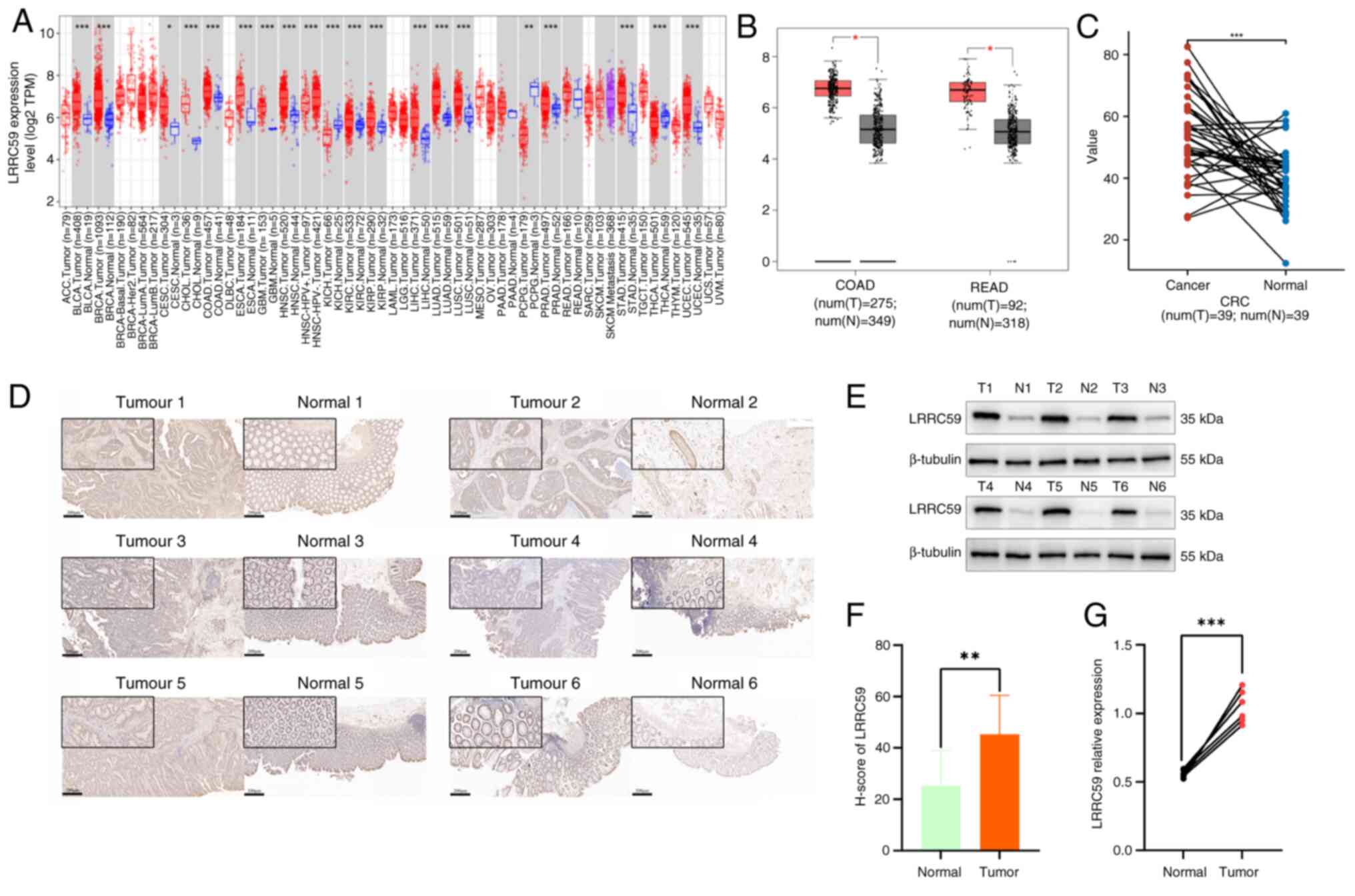
Figure 1

LRRC59 upregulation in CRC tissues.
(A-C) mRNA expression of LRRC59 in CRC tissues was analyzed using
(A) the TIMER2.0, (B) GEPIA and (C) The Cancer Genome Atlas
databases. (D) Immunohistochemistry and (F) H-score of LRRC59 in
normal versus CRC tissues. (E and G) Western blot analysis of
LRRC59 protein in CRC and normal tissues. Scale bars, 50 and 200
µm. *P<0.05, **P<0.01 and ***P<0.001. CRC, colorectal
cancer; COAD, colon adenocarcinoma; READ, rectum
adenocarcinoma.

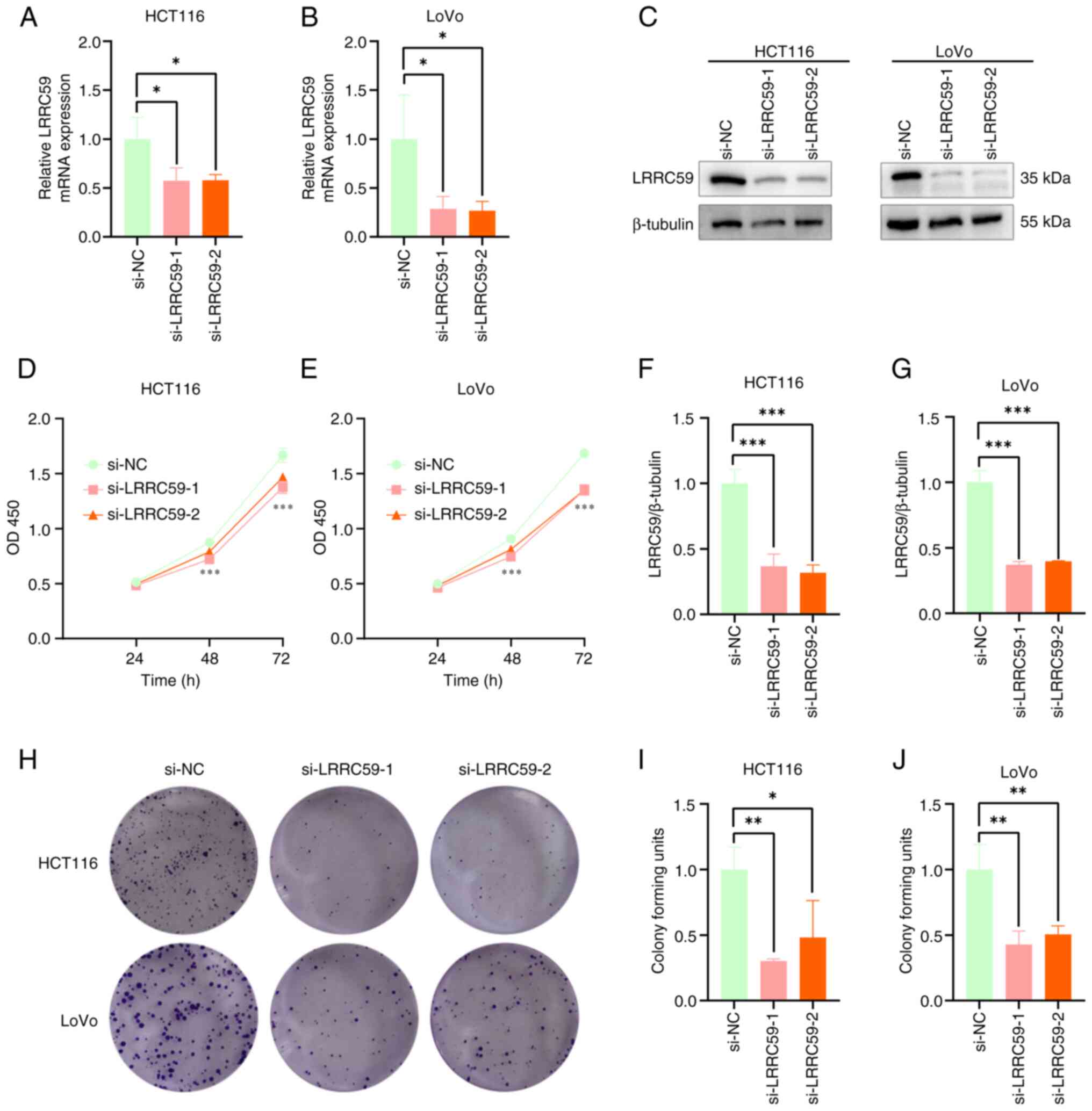
Figure 2

LRRC59 enhances CRC cell
proliferation. (A and B) Efficiency of si-LRRC59 transfection in
HCT116 and LoVo cells confirmed by reverse
transcription-quantitative PCR. (C, F and G) Western blot analysis
of LRRC59 expression in si-NC and si-LRRC59 transfected cells. (D
and E) Cell proliferation rates were evaluated using the Cell
Counting Kit-8 assay on days 1, 2, and 3 following transfections.
(H-J) Colony formation assays evaluating the tumorigenic potential
of CRC cells. *P<0.05, **P<0.01 and ***P<0.001. CRC,
colorectal cancer; si-, small interfering; NC, negative
control.

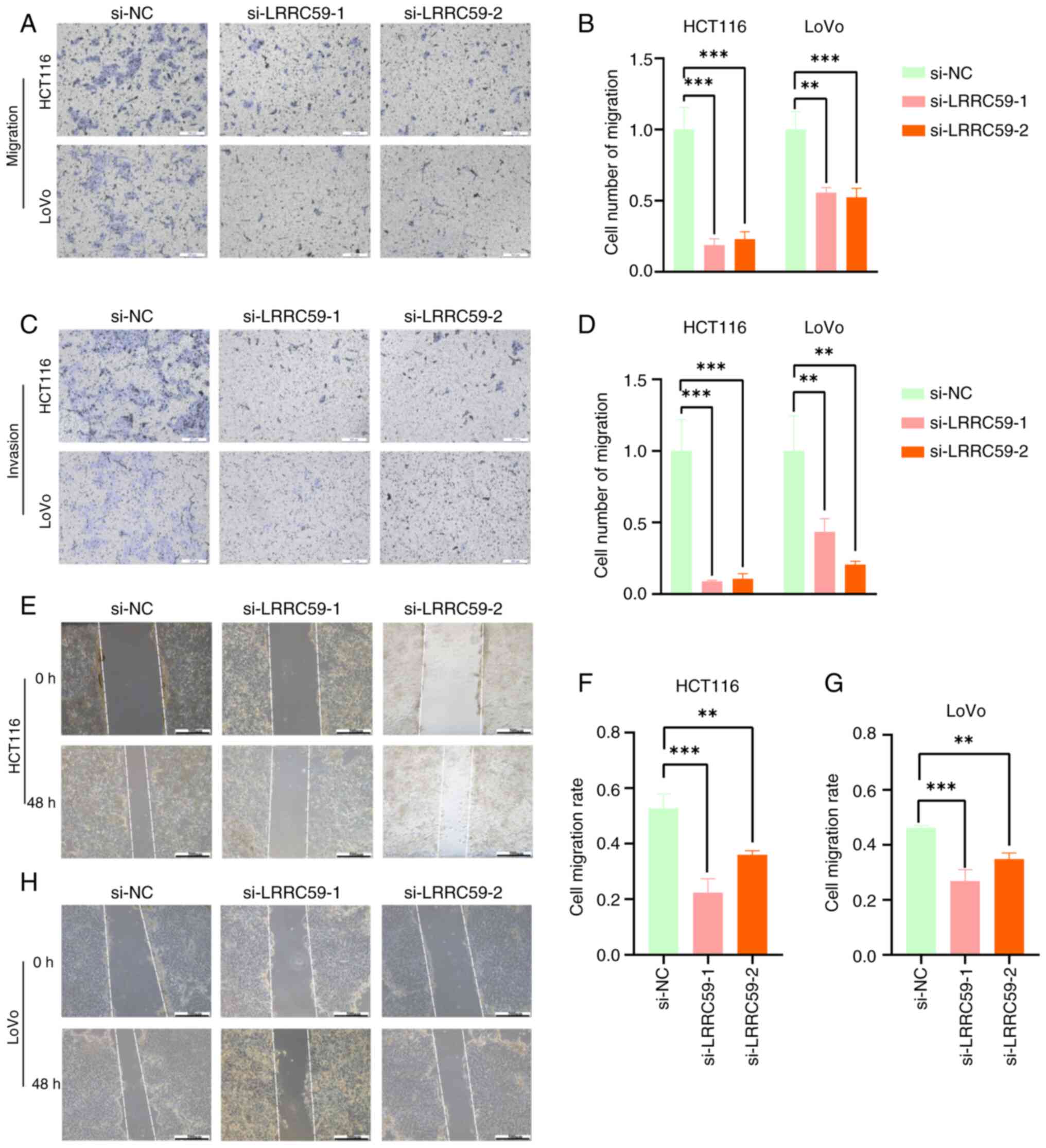
Figure 3

LRRC59 facilitates migration and
invasion in colorectal cancer cells. (A, B and E-H) Migratory
potential evaluated using Transwell and wound healing assays. (C
and D) Invasive capacity was assessed through Transwell assays with
Matrigel. Scale bars, 200 and 500 µm. **P<0.01 and
***P<0.001. si-, small interfering; NC, negative control.

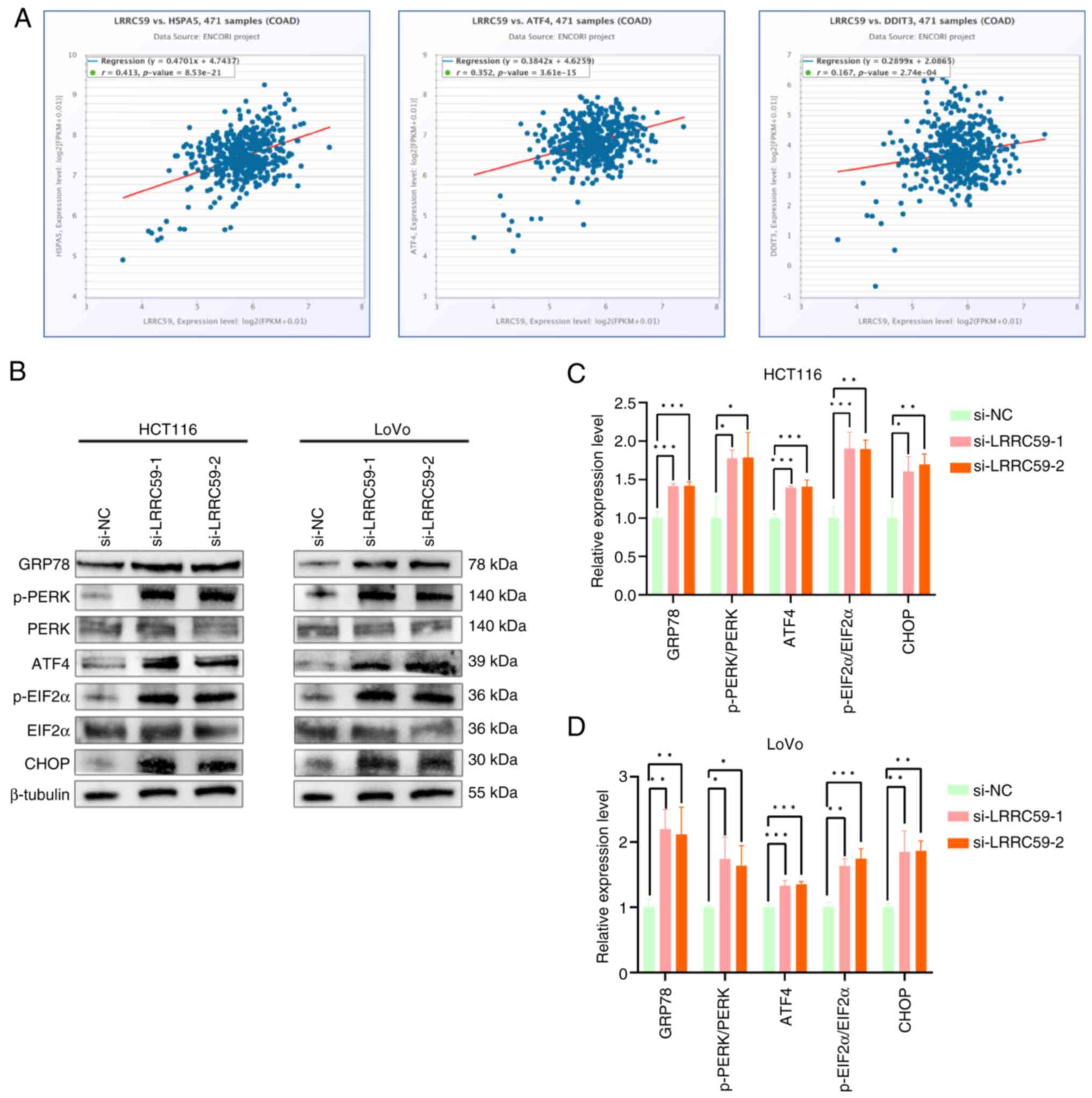
Figure 4

LRRC59 regulates the PERK-mediated
ERS signaling pathway. (A) According to the starBase database,
LRRC59 is associated with ERS pathway key genes GRP78, ATF4, and
CHOP in colorectal cancer. (B-D) Western blot analysis of PERK
pathway-related proteins (GRP78, p-PERK, PERK, ATF4, p-EIF2α, EIF2α
and CHOP). *P<0.05, **P<0.01 and ***P<0.001. ER,
endoplasmic reticulum; PERK, protein kinase RNA-like ER kinase;
ERS, ER stress; p-, phosphorylated; si-, small interfering; NC,
negative control; COAD, colon adenocarcinoma.

Figure 5

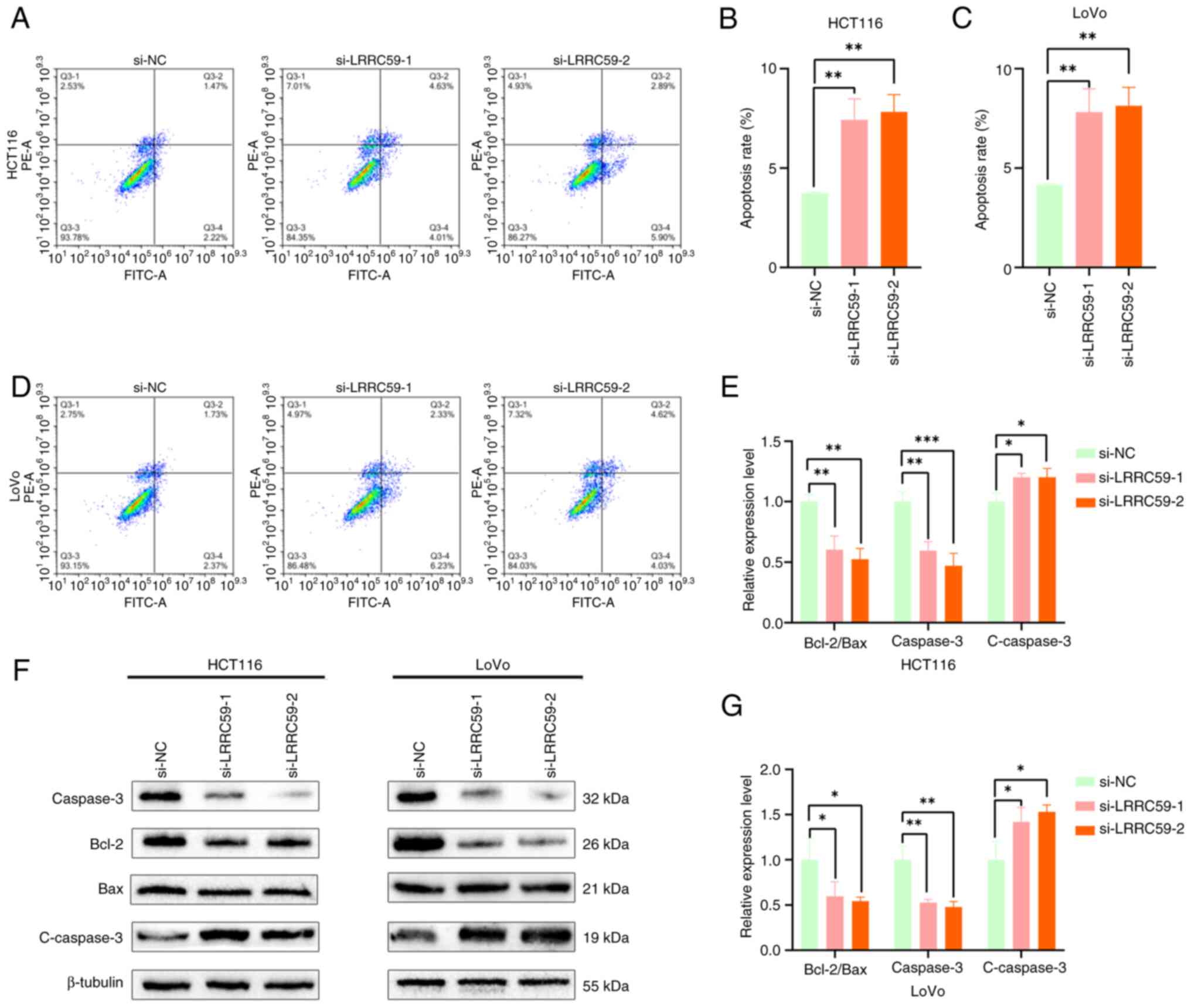
LRRC59 suppresses apoptosis in
colorectal cancer cells. (A-D) Flow cytometry of apoptosis in
LRRC59 knockdown HCT116 and LoVo cells. (E-G) Western blot analysis
of apoptosis-related proteins (Bcl-2, Bax, Caspase3 and
active-caspase3) in transfected cells. *P<0.05, **P<0.01 and
***P<0.001. si-, small interfering; NC, negative control.

Figure 6

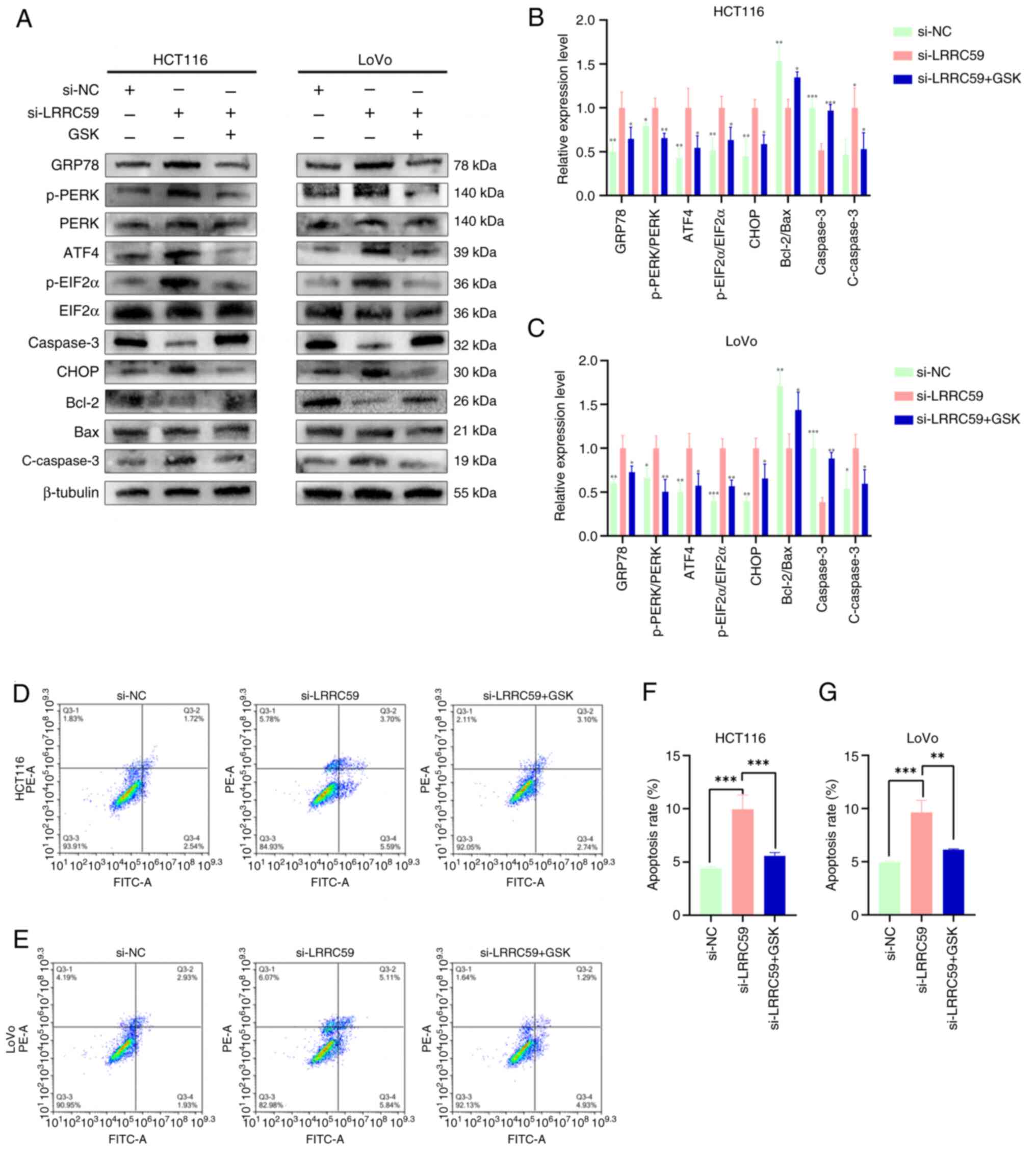
LRRC59 inhibits apoptosis in
colorectal cancer cells by suppressing the PERK-mediated ERS
signaling pathway. LRRC59 knockdown HCT116 and LoVo cells were
treated with GSK (1 µM). (A-C) Expression of PERK-mediated ERS
signaling proteins and apoptosis-related proteins was detected by
western blot analysis. (D-G) Flow cytometric analysis of apoptosis.
*P<0.05, **P<0.01 and ***P<0.001. ER, endoplasmic
reticulum; PERK, protein kinase RNA-like ER kinase; ERS, ER stress;
p-, phosphorylated; si-, small interfering; NC, negative
control.

Figure 7

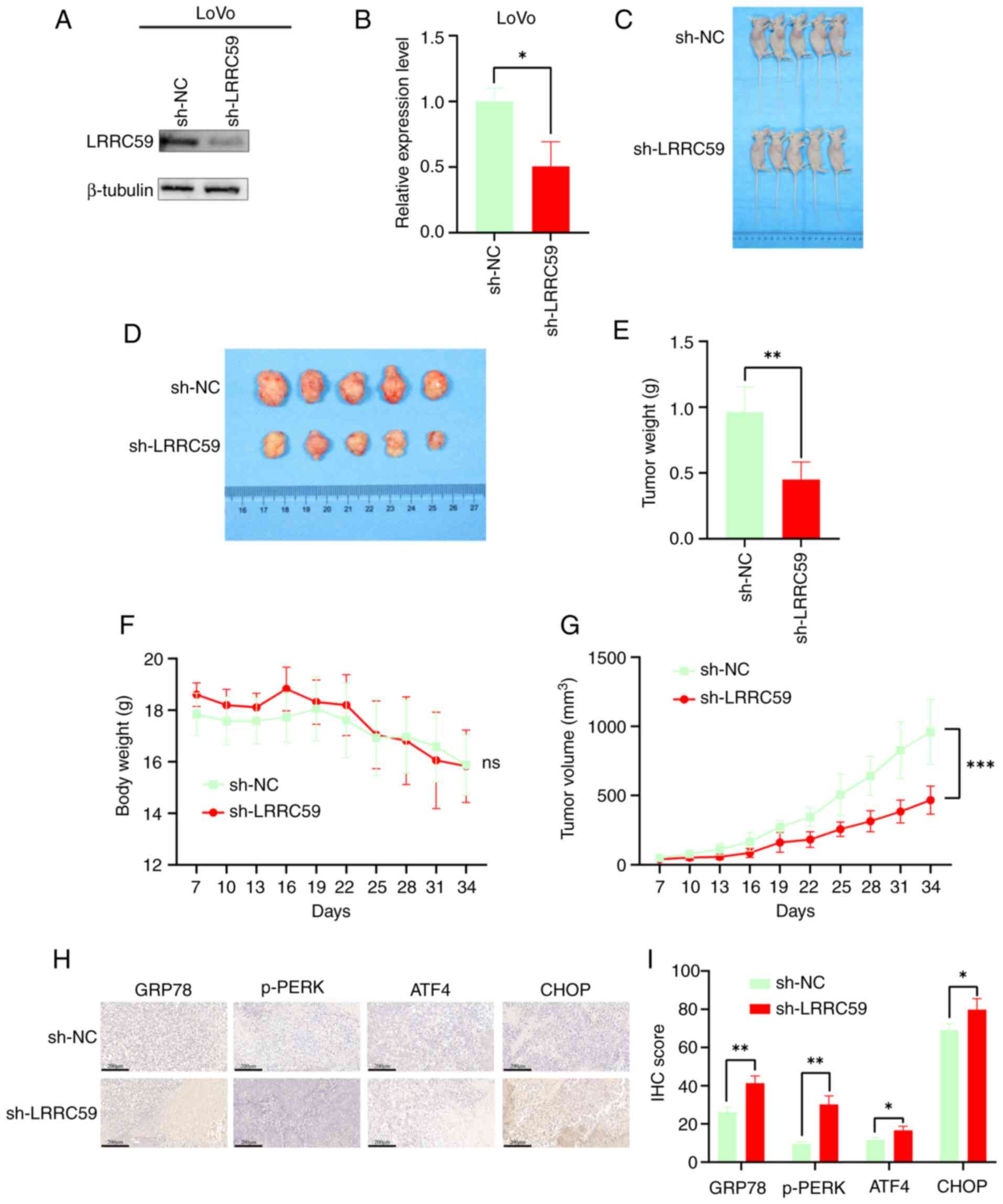
LRRC59 enhances colorectal cancer
progression in mouse models. (A and B) Western blot analysis of
LRRC59 expression in sh-NC and sh-LRRC59 LoVo cells. (C and D)
Images of mice and tumors from sh-NC and sh-LRRC59 groups. (E and
G) Tumor volumes measured every 3 days; final tumor weights
recorded after 34 days. (F) Body weight trends remained unchanged.
(H and I) Immunohistochemistry analysis of PERK pathway activation.
Scale bar, 200 µm. *P<0.05, **P<0.01 and ***P<0.001. ER,
endoplasmic reticulum; PERK, protein kinase RNA-like ER kinase;
sh-, short hairpin; NC, negative control; p-, phosphorylated; ns,
non-significant.
View References

1 

Siegel RL, Wagle NS, Cercek A, Smith RA and Jemal A: Colorectal cancer statistics, 2023. CA Cancer J Clin. 73:233–254. 2023.PubMed/NCBI

2 

Morgan E, Arnold M, Gini A, Lorenzoni V, Cabasag CJ, Laversanne M, Vignat J, Ferlay J, Murphy N and Bray F: Global burden of colorectal cancer in 2020 and 2040: Incidence and mortality estimates from GLOBOCAN. Gut. 72:338–344. 2023. View Article : Google Scholar : PubMed/NCBI

3 

Leowattana W, Leowattana P and Leowattana T: Systemic treatment for metastatic colorectal cancer. World J Gastroenterol. 29:1569–1588. 2023. View Article : Google Scholar : PubMed/NCBI

4 

Ichimura T, Shindo Y, Uda Y, Ohsumi T, Omata S and Sugano H: Anti-(p34 protein) antibodies inhibit ribosome binding to and protein translocation across the rough microsomal membrane. FEBS Lett. 326:241–245. 1993. View Article : Google Scholar : PubMed/NCBI

5 

Ohsumi T, Ichimura T, Sugano H, Omata S, Isobe T and Kuwano R: Ribosome-binding protein p34 is a member of the leucine-rich-repeat-protein superfamily. Biochem J. 294:465–472. 1993. View Article : Google Scholar : PubMed/NCBI

6 

Ichimura T, Ohsumi T, Shindo Y, Ohwada T, Yagame H, Momose Y, Omata S and Sugano H: Isolation and some properties of a 34-kDa-membrane protein that may be responsible for ribosome binding in rat liver rough microsomes. FEBS Lett. 296:7–10. 1992. View Article : Google Scholar : PubMed/NCBI

7 

Pallai R, Bhaskar A, Barnett-Bernodat N, Gallo-Ebert C, Pusey M, Nickels JT Jr and Rice LM: Leucine-rich repeat-containing protein 59 mediates nuclear import of cancerous inhibitor of PP2A in prostate cancer cells. Tumour Biol. 36:6383–6390. 2015. View Article : Google Scholar : PubMed/NCBI

8 

Li D, Xing Y, Tian T, Guo Y and Qian J: Overexpression of LRRC59 is associated with poor prognosis and promotes cell proliferation and invasion in lung adenocarcinoma. Onco Targets Ther. 13:6453–6463. 2020. View Article : Google Scholar : PubMed/NCBI

9 

Pei L, Zhu Q, Zhuang X, Ruan H, Zhao Z, Qin H and Lin Q: Identification of leucine-rich repeat-containing protein 59 (LRRC59) located in the endoplasmic reticulum as a novel prognostic factor for urothelial carcinoma. Transl Oncol. 23:1014742022. View Article : Google Scholar : PubMed/NCBI

10 

Chen X and Cubillos-Ruiz JR: Endoplasmic reticulum stress signals in the tumour and its microenvironment. Nat Rev Cancer. 21:71–88. 2021. View Article : Google Scholar : PubMed/NCBI

11 

Walter P and Ron D: The unfolded protein response: From stress pathway to homeostatic regulation. Science. 334:1081–1086. 2011. View Article : Google Scholar : PubMed/NCBI

12 

Hetz C, Zhang K and Kaufman RJ: Mechanisms, regulation and functions of the unfolded protein response. Nat Rev Mol Cell Biol. 21:421–438. 2020. View Article : Google Scholar : PubMed/NCBI

13 

Shore GC, Papa FR and Oakes SA: Signaling cell death from the endoplasmic reticulum stress response. Curr Opin Cell Biol. 23:143–149. 2011. View Article : Google Scholar : PubMed/NCBI

14 

Long D, Chen K, Yang Y and Tian X: Unfolded protein response activated by endoplasmic reticulum stress in pancreatic cancer: Potential therapeutical target. Front Biosci (Landmark Ed). 26:1689–1696. 2021. View Article : Google Scholar : PubMed/NCBI

15 

Song M and Cubillos-Ruiz JR: Endoplasmic reticulum stress responses in intratumoral immune cells: Implications for cancer immunotherapy. Trends Immunol. 40:128–141. 2019. View Article : Google Scholar : PubMed/NCBI

16 

Geng J, Guo Y, Xie M, Li Z, Wang P, Zhu D, Li J and Cui X: Characteristics of endoplasmic reticulum stress in colorectal cancer for predicting prognosis and developing treatment options. Cancer Med. 12:12000–12017. 2023. View Article : Google Scholar : PubMed/NCBI

17 

Zhou F, Gao H, Shang L, Li J, Zhang M, Wang S, Li R, Ye L and Yang S: Oridonin promotes endoplasmic reticulum stress via TP53-repressed TCF4 transactivation in colorectal cancer. J Exp Clin Cancer Res. 42:1502023. View Article : Google Scholar : PubMed/NCBI

18 

Li F, Dong Q, Kai Z, Pan Q and Liu C: CYP8B1 is a prognostic biomarker with important functional implications in hepatocellular carcinoma. Oncol Rep. 54:1042025. View Article : Google Scholar : PubMed/NCBI

19 

Ma H, Suleman M, Zhang F, Cao T, Wen S, Sun D, Chen L, Jiang B, Wang Y, Lin F, et al: Pirin inhibits FAS-mediated apoptosis to support colorectal cancer survival. Adv Sci (Weinh). 11:e23014762024. View Article : Google Scholar : PubMed/NCBI

20 

Livak KJ and Schmittgen TD: Analysis of relative gene expression data using real-time quantitative PCR and the 2(−Delta Delta C(T)) method. Methods. 25:402–408. 2001. View Article : Google Scholar : PubMed/NCBI

21 

Xu H, Wang T, Nie H, Sun Q, Jin C, Yang S, Chen Z, Wang X, Tang J, Feng Y and Sun Y: USP36 promotes colorectal cancer progression through inhibition of p53 signaling pathway via stabilizing RBM28. Oncogene. 43:3442–3455. 2024. View Article : Google Scholar : PubMed/NCBI

22 

Zhao L, Sun X, Hou C, Yang Y, Wang P, Xu Z, Chen Z, Zhang X, Wu G, Chen H, et al: CPNE7 promotes colorectal tumorigenesis by interacting with NONO to initiate ZFP42 transcription. Cell Death Dis. 15:8962024. View Article : Google Scholar : PubMed/NCBI

23 

Kim J, Jeong Y, Shin YM, Kim SE and Shin SJ: FL118 enhances therapeutic efficacy in colorectal cancer by inhibiting the homologous recombination repair pathway through survivin-RAD51 downregulation. Cancers (Basel). 16:33852024. View Article : Google Scholar : PubMed/NCBI

24 

Zhang Z, Wang L, Zhao L, Wang Q, Yang C, Zhang M, Wang B, Jiang K, Ye Y, Wang S and Shen Z: N6-methyladenosine demethylase ALKBH5 suppresses colorectal cancer progression potentially by decreasing PHF20 mRNA methylation. Clin Transl Med. 12:e9402022. View Article : Google Scholar : PubMed/NCBI

25 

Wu H, Zheng S, Zhang J, Xu S and Miao Z: Cadmium induces endoplasmic reticulum stress-mediated apoptosis in pig pancreas via the increase of Th1 cells. Toxicology. 457:1527902021. View Article : Google Scholar : PubMed/NCBI

26 

Lee H, Lee YS, Harenda Q, Pietrzak S, Oktay HZ, Schreiber S, Liao Y, Sonthalia S, Ciecko AE, Chen YG, et al: Beta cell dedifferentiation induced by IRE1α deletion prevents type 1 diabetes. Cell Metab. 31:822–836.e825. 2020. View Article : Google Scholar : PubMed/NCBI

27 

Kim TW, Lee SY, Kim M, Cheon C and Ko SG: Kaempferol induces autophagic cell death via IRE1-JNK-CHOP pathway and inhibition of G9a in gastric cancer cells. Cell Death Dis. 9:8752018. View Article : Google Scholar : PubMed/NCBI

28 

Pallai R, Bhaskar A, Barnett-Bernodat N, Gallo-Ebert C, Nickels JT Jr and Rice LM: Cancerous inhibitor of protein phosphatase 2A promotes premature chromosome segregation and aneuploidy in prostate cancer cells through association with shugoshin. Tumour Biol. 36:6067–6074. 2015. View Article : Google Scholar : PubMed/NCBI

29 

Maurizio E, Wiśniewski JR, Ciani Y, Amato A, Arnoldo L, Penzo C, Pegoraro S, Giancotti V, Zambelli A, Piazza S, et al: Translating proteomic into functional data: An high mobility group A1 (HMGA1) proteomic signature has prognostic value in breast cancer. Mol Cell Proteomics. 15:109–123. 2016. View Article : Google Scholar : PubMed/NCBI

30 

Pan B, Cheng J, Tan W, Wu X, Fan Q, Fan L, Jiang M, Yu R, Cheng X and Deng Y: Pan-cancer analysis of LRRC59 with a focus on prognostic and immunological roles in hepatocellular carcinoma. Aging (Albany NY). 16:8171–8197. 2024.PubMed/NCBI

31 

Chen H, Zhao T, Fan J, Yu Z, Ge Y, Zhu H, Dong P, Zhang F, Zhang L, Xue X and Lin X: Construction of a prognostic model for colorectal adenocarcinoma based on Zn transport-related genes identified by single-cell sequencing and weighted co-expression network analysis. Front Oncol. 13:12074992023. View Article : Google Scholar : PubMed/NCBI

32 

Xian H, Yang S, Jin S, Zhang Y and Cui J: LRRC59 modulates type I interferon signaling by restraining the SQSTM1/p62-mediated autophagic degradation of pattern recognition receptor DDX58/RIG-I. Autophagy. 16:408–418. 2020. View Article : Google Scholar : PubMed/NCBI

33 

Zhen Y, Sørensen V, Skjerpen CS, Haugsten EM, Jin Y, Wälchli S, Olsnes S and Wiedlocha A: Nuclear import of exogenous FGF1 requires the ER-protein LRRC59 and the importins Kpnα1 and Kpnβ1. Traffic. 13:650–664. 2012. View Article : Google Scholar : PubMed/NCBI

34 

Liu N, Zhang J, Sun S, Yang L, Zhou Z, Sun Q and Niu J: Expression and clinical significance of fibroblast growth factor 1 in gastric adenocarcinoma. Onco Targets Ther. 8:615–621. 2015.PubMed/NCBI

35 

Oakes SA: Endoplasmic reticulum stress signaling in cancer cells. Am J Pathol. 190:934–946. 2020. View Article : Google Scholar : PubMed/NCBI

36 

Huang J, Pan H, Wang J, Wang T, Huo X, Ma Y, Lu Z, Sun B and Jiang H: Unfolded protein response in colorectal cancer. Cell Biosci. 11:262021. View Article : Google Scholar : PubMed/NCBI

37 

Urra H, Dufey E, Avril T, Chevet E and Hetz C: Endoplasmic reticulum stress and the hallmarks of cancer. Trends Cancer. 2:252–262. 2016. View Article : Google Scholar : PubMed/NCBI

38 

Harding HP, Novoa I, Zhang Y, Zeng H, Wek R, Schapira M and Ron D: Regulated translation initiation controls stress-induced gene expression in mammalian cells. Mol Cell. 6:1099–1108. 2000. View Article : Google Scholar : PubMed/NCBI

39 

Han D, Lerner AG, Vande Walle L, Upton JP, Xu W, Hagen A, Backes BJ, Oakes SA and Papa FR: IRE1alpha kinase activation modes control alternate endoribonuclease outputs to determine divergent cell fates. Cell. 138:562–575. 2009. View Article : Google Scholar : PubMed/NCBI

40 

4Hollien J, Lin JH, Li H, Stevens N, Walter P and Weissman JS: Regulated Ire1-dependent decay of messenger RNAs in mammalian cells. J Cell Biol. 186:323–331. 2009. View Article : Google Scholar : PubMed/NCBI

41 

Hollien J and Weissman JS: Decay of endoplasmic reticulum-localized mRNAs during the unfolded protein response. Science. 313:104–107. 2006. View Article : Google Scholar : PubMed/NCBI

42 

Lee AH, Iwakoshi NN and Glimcher LH: XBP-1 regulates a subset of endoplasmic reticulum resident chaperone genes in the unfolded protein response. Mol Cell Biol. 23:7448–7459. 2003. View Article : Google Scholar : PubMed/NCBI

43 

Ameri K and Harris AL: Activating transcription factor 4. Int J Biochem Cell Biol. 40:14–21. 2008. View Article : Google Scholar : PubMed/NCBI

44 

Shi Y, Jiang B and Zhao J: Induction mechanisms of autophagy and endoplasmic reticulum stress in intestinal ischemia-reperfusion injury, inflammatory bowel disease, and colorectal cancer. Biomed Pharmacother. 170:1159842024. View Article : Google Scholar : PubMed/NCBI

45 

Sisinni L, Pietrafesa M, Lepore S, Maddalena F, Condelli V, Esposito F and Landriscina M: Endoplasmic reticulum stress and unfolded protein response in breast cancer: The balance between apoptosis and autophagy and its role in drug resistance. Int J Mol Sci. 20:8572019. View Article : Google Scholar : PubMed/NCBI

46 

Ji X, Chen Z, Lin W, Wu Q, Wu Y, Hong Y, Tong H, Wang C and Zhang Y: Esculin induces endoplasmic reticulum stress and drives apoptosis and ferroptosis in colorectal cancer via PERK regulating eIF2α/CHOP and Nrf2/HO-1 cascades. J Ethnopharmacol. 328:1181392024. View Article : Google Scholar : PubMed/NCBI

47 

Qu J, Zeng C, Zou T, Chen X, Yang X and Lin Z: Autophagy induction by trichodermic acid attenuates endoplasmic reticulum stress-mediated apoptosis in colon cancer cells. Int J Mol Sci. 22:55662021. View Article : Google Scholar : PubMed/NCBI

48 

Wang G, Han J, Wang G, Wu X, Huang Y, Wu M and Chen Y: ERO1α mediates endoplasmic reticulum stress-induced apoptosis via microRNA-101/EZH2 axis in colon cancer RKO and HT-29 cells. Hum Cell. 34:932–944. 2021. View Article : Google Scholar : PubMed/NCBI

49 

Piao MJ, Han X, Kang KA, Fernando PDSM, Herath HMUL and Hyun JW: The endoplasmic reticulum stress response mediates shikonin-induced apoptosis of 5-fluorouracil-resistant colorectal cancer cells. Biomol Ther (Seoul). 30:265–273. 2022. View Article : Google Scholar : PubMed/NCBI

50 

Quan JH, Gao FF, Chu JQ, Cha GH, Yuk JM, Wu W and Lee YH: Silver nanoparticles induce apoptosis via NOX4-derived mitochondrial reactive oxygen species and endoplasmic reticulum stress in colorectal cancer cells. Nanomedicine (Lond). 16:1357–1375. 2021. View Article : Google Scholar : PubMed/NCBI

51 

Urano F, Wang X, Bertolotti A, Zhang Y, Chung P, Harding HP and Ron D: Coupling of stress in the ER to activation of JNK protein kinases by transmembrane protein kinase IRE1. Science. 287:664–666. 2000. View Article : Google Scholar : PubMed/NCBI

52 

Tabas I and Ron D: Integrating the mechanisms of apoptosis induced by endoplasmic reticulum stress. Nat Cell Biol. 13:184–190. 2011. View Article : Google Scholar : PubMed/NCBI

53 

Zhou R, Wang W, Li B, Li Z, Huang J and Li X: Endo-plasmic reticulum stress in cancer. MedComm (2020). 6:e702632025. View Article : Google Scholar : PubMed/NCBI

54 

Guo YJ, Zhu MY, Wang ZY, Chen HY, Qing YJ, Wang HZ, Xu JY, Hui H and Li H: Therapeutic effect of V8 affecting mitophagy and endoplasmic reticulum stress in acute myeloid leukemia mediated by ROS and CHOP signaling. FASEB J. 39:e706222025. View Article : Google Scholar : PubMed/NCBI

55 

Zhang P, Liu H, Yu Y, Peng S, Zeng A and Song L: Terpenoids mediated cell apoptotsis in cervical cancer: Mechanisms, advances and prospects. Fitoterapia. 180:1063232024. View Article : Google Scholar : PubMed/NCBI

56 

Zhou N, Liu Q, Wang X, He L, Zhang T, Zhou H, Zhu X, Zhou T, Deng G and Qiu C: The combination of hydroxychloroquine and 2-deoxyglucose enhances apoptosis in breast cancer cells by blocking protective autophagy and sustaining endoplasmic reticulum stress. Cell Death Discov. 8:2862022. View Article : Google Scholar : PubMed/NCBI

57 

Liang L, Zhu Z, Jiang X, Tang Y, Li J, Zhang Z, Ding B, Li X, Yu M and Gan Y: Endoplasmic reticulum-targeted strategies for programmed cell death in cancer therapy: Approaches and prospects. J Control Release. 385:1140592025. View Article : Google Scholar : PubMed/NCBI

58 

Liu Z, Deng X, Wang Z, Guo Y, Hameed MMA, El-Newehy M, Zhang J, Shi X and Shen M: A biomimetic therapeutic nanovaccine based on dendrimer-drug conjugates coated with metal-phenolic networks for combination therapy of nasopharyngeal carcinoma: An in vitro investigation. J Mater Chem B. 13:5440–5452. 2025. View Article : Google Scholar : PubMed/NCBI

59 

Yeap JW, Ali IAH, Ibrahim B and Tan ML: Chronic obstructive pulmonary disease and emerging ER stress-related therapeutic targets. Pulm Pharmacol Ther. 81:1022182023. View Article : Google Scholar : PubMed/NCBI

60 

Harding HP, Zeng H, Zhang Y, Jungries R, Chung P, Plesken H, Sabatini DD and Ron D: Diabetes mellitus and exocrine pancreatic dysfunction in perk-/- mice reveals a role for translational control in secretory cell survival. Mol Cell. 7:1153–1163. 2001. View Article : Google Scholar : PubMed/NCBI

61 

Zhang P, McGrath B, Li S, Frank A, Zambito F, Reinert J, Gannon M, Ma K, McNaughton K and Cavener DR: The PERK eukaryotic initiation factor 2 alpha kinase is required for the development of the skeletal system, postnatal growth, and the function and viability of the pancreas. Mol Cell Biol. 22:3864–3874. 2002. View Article : Google Scholar : PubMed/NCBI

62 

Yuan Z, Wang Y, Xu S, Zhang M and Tang J: Construction of a prognostic model for colon cancer by combining endoplasmic reticulum stress responsive genes. J Proteomics. 309:1052842024. View Article : Google Scholar : PubMed/NCBI

Related Articles

  • Abstract
  • View
  • Download
  • Twitter
Copy and paste a formatted citation
Spandidos Publications style
Hou X, Wang Y, Chen Y, Zhong P, Wang G, Li B, Lu B, Jiang H and Ning S: LRRC59 inhibits perk pathway‑induced apoptosis and promotes cell proliferation, migration and invasion in colorectal cancer cells. Oncol Rep 55: 5, 2026.
APA
Hou, X., Wang, Y., Chen, Y., Zhong, P., Wang, G., Li, B. ... Ning, S. (2026). LRRC59 inhibits perk pathway‑induced apoptosis and promotes cell proliferation, migration and invasion in colorectal cancer cells. Oncology Reports, 55, 5. https://doi.org/10.3892/or.2025.9010
MLA
Hou, X., Wang, Y., Chen, Y., Zhong, P., Wang, G., Li, B., Lu, B., Jiang, H., Ning, S."LRRC59 inhibits perk pathway‑induced apoptosis and promotes cell proliferation, migration and invasion in colorectal cancer cells". Oncology Reports 55.1 (2026): 5.
Chicago
Hou, X., Wang, Y., Chen, Y., Zhong, P., Wang, G., Li, B., Lu, B., Jiang, H., Ning, S."LRRC59 inhibits perk pathway‑induced apoptosis and promotes cell proliferation, migration and invasion in colorectal cancer cells". Oncology Reports 55, no. 1 (2026): 5. https://doi.org/10.3892/or.2025.9010
Copy and paste a formatted citation
x
Spandidos Publications style
Hou X, Wang Y, Chen Y, Zhong P, Wang G, Li B, Lu B, Jiang H and Ning S: LRRC59 inhibits perk pathway‑induced apoptosis and promotes cell proliferation, migration and invasion in colorectal cancer cells. Oncol Rep 55: 5, 2026.
APA
Hou, X., Wang, Y., Chen, Y., Zhong, P., Wang, G., Li, B. ... Ning, S. (2026). LRRC59 inhibits perk pathway‑induced apoptosis and promotes cell proliferation, migration and invasion in colorectal cancer cells. Oncology Reports, 55, 5. https://doi.org/10.3892/or.2025.9010
MLA
Hou, X., Wang, Y., Chen, Y., Zhong, P., Wang, G., Li, B., Lu, B., Jiang, H., Ning, S."LRRC59 inhibits perk pathway‑induced apoptosis and promotes cell proliferation, migration and invasion in colorectal cancer cells". Oncology Reports 55.1 (2026): 5.
Chicago
Hou, X., Wang, Y., Chen, Y., Zhong, P., Wang, G., Li, B., Lu, B., Jiang, H., Ning, S."LRRC59 inhibits perk pathway‑induced apoptosis and promotes cell proliferation, migration and invasion in colorectal cancer cells". Oncology Reports 55, no. 1 (2026): 5. https://doi.org/10.3892/or.2025.9010
Follow us
  • Twitter
  • LinkedIn
  • Facebook
About
  • Spandidos Publications
  • Careers
  • Cookie Policy
  • Privacy Policy
How can we help?
  • Help
  • Live Chat
  • Contact
  • Email to our Support Team