Spandidos Publications Logo
  • About
    • About Spandidos
    • Aims and Scopes
    • Abstracting and Indexing
    • Editorial Policies
    • Reprints and Permissions
    • Job Opportunities
    • Terms and Conditions
    • Contact
  • Journals
    • All Journals
    • Oncology Letters
      • Oncology Letters
      • Information for Authors
      • Editorial Policies
      • Editorial Board
      • Aims and Scope
      • Abstracting and Indexing
      • Bibliographic Information
      • Archive
    • International Journal of Oncology
      • International Journal of Oncology
      • Information for Authors
      • Editorial Policies
      • Editorial Board
      • Aims and Scope
      • Abstracting and Indexing
      • Bibliographic Information
      • Archive
    • Molecular and Clinical Oncology
      • Molecular and Clinical Oncology
      • Information for Authors
      • Editorial Policies
      • Editorial Board
      • Aims and Scope
      • Abstracting and Indexing
      • Bibliographic Information
      • Archive
    • Experimental and Therapeutic Medicine
      • Experimental and Therapeutic Medicine
      • Information for Authors
      • Editorial Policies
      • Editorial Board
      • Aims and Scope
      • Abstracting and Indexing
      • Bibliographic Information
      • Archive
    • International Journal of Molecular Medicine
      • International Journal of Molecular Medicine
      • Information for Authors
      • Editorial Policies
      • Editorial Board
      • Aims and Scope
      • Abstracting and Indexing
      • Bibliographic Information
      • Archive
    • Biomedical Reports
      • Biomedical Reports
      • Information for Authors
      • Editorial Policies
      • Editorial Board
      • Aims and Scope
      • Abstracting and Indexing
      • Bibliographic Information
      • Archive
    • Oncology Reports
      • Oncology Reports
      • Information for Authors
      • Editorial Policies
      • Editorial Board
      • Aims and Scope
      • Abstracting and Indexing
      • Bibliographic Information
      • Archive
    • Molecular Medicine Reports
      • Molecular Medicine Reports
      • Information for Authors
      • Editorial Policies
      • Editorial Board
      • Aims and Scope
      • Abstracting and Indexing
      • Bibliographic Information
      • Archive
    • World Academy of Sciences Journal
      • World Academy of Sciences Journal
      • Information for Authors
      • Editorial Policies
      • Editorial Board
      • Aims and Scope
      • Abstracting and Indexing
      • Bibliographic Information
      • Archive
    • International Journal of Functional Nutrition
      • International Journal of Functional Nutrition
      • Information for Authors
      • Editorial Policies
      • Editorial Board
      • Aims and Scope
      • Abstracting and Indexing
      • Bibliographic Information
      • Archive
    • International Journal of Epigenetics
      • International Journal of Epigenetics
      • Information for Authors
      • Editorial Policies
      • Editorial Board
      • Aims and Scope
      • Abstracting and Indexing
      • Bibliographic Information
      • Archive
    • Medicine International
      • Medicine International
      • Information for Authors
      • Editorial Policies
      • Editorial Board
      • Aims and Scope
      • Abstracting and Indexing
      • Bibliographic Information
      • Archive
  • Articles
  • Information
    • Information for Authors
    • Information for Reviewers
    • Information for Librarians
    • Information for Advertisers
    • Conferences
  • Language Editing
Spandidos Publications Logo
  • About
    • About Spandidos
    • Aims and Scopes
    • Abstracting and Indexing
    • Editorial Policies
    • Reprints and Permissions
    • Job Opportunities
    • Terms and Conditions
    • Contact
  • Journals
    • All Journals
    • Biomedical Reports
      • Information for Authors
      • Editorial Policies
      • Editorial Board
      • Aims and Scope
      • Abstracting and Indexing
      • Bibliographic Information
      • Archive
    • Experimental and Therapeutic Medicine
      • Information for Authors
      • Editorial Policies
      • Editorial Board
      • Aims and Scope
      • Abstracting and Indexing
      • Bibliographic Information
      • Archive
    • International Journal of Epigenetics
      • Information for Authors
      • Editorial Policies
      • Editorial Board
      • Aims and Scope
      • Abstracting and Indexing
      • Bibliographic Information
      • Archive
    • International Journal of Functional Nutrition
      • Information for Authors
      • Editorial Policies
      • Editorial Board
      • Aims and Scope
      • Abstracting and Indexing
      • Bibliographic Information
      • Archive
    • International Journal of Molecular Medicine
      • Information for Authors
      • Editorial Policies
      • Editorial Board
      • Aims and Scope
      • Abstracting and Indexing
      • Bibliographic Information
      • Archive
    • International Journal of Oncology
      • Information for Authors
      • Editorial Policies
      • Editorial Board
      • Aims and Scope
      • Abstracting and Indexing
      • Bibliographic Information
      • Archive
    • Medicine International
      • Information for Authors
      • Editorial Policies
      • Editorial Board
      • Aims and Scope
      • Abstracting and Indexing
      • Bibliographic Information
      • Archive
    • Molecular and Clinical Oncology
      • Information for Authors
      • Editorial Policies
      • Editorial Board
      • Aims and Scope
      • Abstracting and Indexing
      • Bibliographic Information
      • Archive
    • Molecular Medicine Reports
      • Information for Authors
      • Editorial Policies
      • Editorial Board
      • Aims and Scope
      • Abstracting and Indexing
      • Bibliographic Information
      • Archive
    • Oncology Letters
      • Information for Authors
      • Editorial Policies
      • Editorial Board
      • Aims and Scope
      • Abstracting and Indexing
      • Bibliographic Information
      • Archive
    • Oncology Reports
      • Information for Authors
      • Editorial Policies
      • Editorial Board
      • Aims and Scope
      • Abstracting and Indexing
      • Bibliographic Information
      • Archive
    • World Academy of Sciences Journal
      • Information for Authors
      • Editorial Policies
      • Editorial Board
      • Aims and Scope
      • Abstracting and Indexing
      • Bibliographic Information
      • Archive
  • Articles
  • Information
    • For Authors
    • For Reviewers
    • For Librarians
    • For Advertisers
    • Conferences
  • Language Editing
Login Register Submit
  • This site uses cookies
  • You can change your cookie settings at any time by following the instructions in our Cookie Policy. To find out more, you may read our Privacy Policy.

    I agree
Search articles by DOI, keyword, author or affiliation
Search
Advanced Search
presentation
Oncology Reports
Join Editorial Board Propose a Special Issue
Print ISSN: 1021-335X Online ISSN: 1791-2431
Journal Cover
January-2026 Volume 55 Issue 1

Full Size Image

Sign up for eToc alerts
Recommend to Library

Journals

International Journal of Molecular Medicine

International Journal of Molecular Medicine

International Journal of Molecular Medicine is an international journal devoted to molecular mechanisms of human disease.

International Journal of Oncology

International Journal of Oncology

International Journal of Oncology is an international journal devoted to oncology research and cancer treatment.

Molecular Medicine Reports

Molecular Medicine Reports

Covers molecular medicine topics such as pharmacology, pathology, genetics, neuroscience, infectious diseases, molecular cardiology, and molecular surgery.

Oncology Reports

Oncology Reports

Oncology Reports is an international journal devoted to fundamental and applied research in Oncology.

Experimental and Therapeutic Medicine

Experimental and Therapeutic Medicine

Experimental and Therapeutic Medicine is an international journal devoted to laboratory and clinical medicine.

Oncology Letters

Oncology Letters

Oncology Letters is an international journal devoted to Experimental and Clinical Oncology.

Biomedical Reports

Biomedical Reports

Explores a wide range of biological and medical fields, including pharmacology, genetics, microbiology, neuroscience, and molecular cardiology.

Molecular and Clinical Oncology

Molecular and Clinical Oncology

International journal addressing all aspects of oncology research, from tumorigenesis and oncogenes to chemotherapy and metastasis.

World Academy of Sciences Journal

World Academy of Sciences Journal

Multidisciplinary open-access journal spanning biochemistry, genetics, neuroscience, environmental health, and synthetic biology.

International Journal of Functional Nutrition

International Journal of Functional Nutrition

Open-access journal combining biochemistry, pharmacology, immunology, and genetics to advance health through functional nutrition.

International Journal of Epigenetics

International Journal of Epigenetics

Publishes open-access research on using epigenetics to advance understanding and treatment of human disease.

Medicine International

Medicine International

An International Open Access Journal Devoted to General Medicine.

Journal Cover
January-2026 Volume 55 Issue 1

Full Size Image

Sign up for eToc alerts
Recommend to Library

  • Article
  • Citations
    • Cite This Article
    • Download Citation
    • Create Citation Alert
    • Remove Citation Alert
    • Cited By
  • Similar Articles
    • Related Articles (in Spandidos Publications)
    • Similar Articles (Google Scholar)
    • Similar Articles (PubMed)
  • Download PDF
  • Download XML
  • View XML

  • Supplementary Files
    • Supplementary_Data.pdf
Article Open Access

CD44 knockdown and TGF‑β inhibition modulate cell proliferation and invasion in claudin‑low breast cancer cells

  • Authors:
    • Ryoichi Matsunuma
    • Kazuo Kinoshita
    • Sae Imada
    • Shoko Sato
    • Ryosuke Hayami
    • Michiko Tsuneizumi
  • View Affiliations / Copyright

    Affiliations: Department of Breast Surgery, Shizuoka General Hospital, Shizuoka, Shizuoka 420‑8527, Japan, Evolutionary Medicine, Shizuoka Graduate University of Public Health, Shizuoka, Shizuoka 420‑0881, Japan
    Copyright: © Matsunuma et al. This is an open access article distributed under the terms of Creative Commons Attribution License.
  • Article Number: 7
    |
    Published online on: October 30, 2025
       https://doi.org/10.3892/or.2025.9012
  • Expand metrics +
Metrics: Total Views: 0 (Spandidos Publications: | PMC Statistics: )
Metrics: Total PDF Downloads: 0 (Spandidos Publications: | PMC Statistics: )
Cited By (CrossRef): 0 citations Loading Articles...

This article is mentioned in:


Abstract

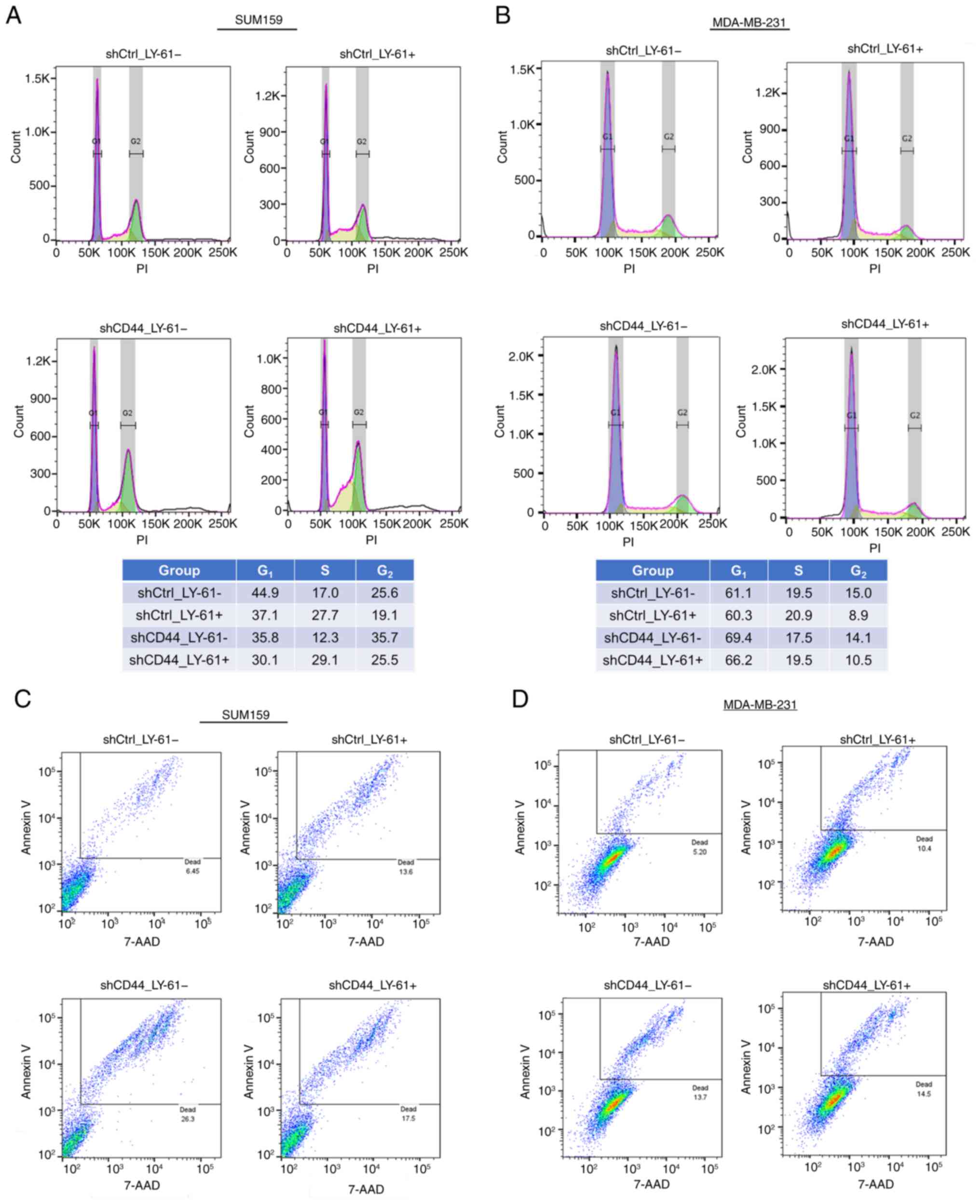
CD44 serves a dual role in supporting tumor survival and promoting invasion. Claudin‑low breast cancer, characterized by a CD44+/CD24‑ phenotype and epithelial‑mesenchymal transition (EMT), displays aggressive behavior. The present study investigated the interaction between CD44 and TGF‑β signaling, and assessed the cellular effects of their combined inhibition. CD44 was knocked down in claudin‑low breast cancer cell lines (SUM159 and MDA‑MB‑231), and the TGF‑β receptor (TGFBR) inhibitor LY2109761 (LY‑61) was applied for treatment. Cell viability (MTT assay), apoptosis (annexin V assay), invasion (Transwell assay), colony formation and Smad2 phosphorylation (western blotting) were evaluated. CD44 knockdown reduced viability and increased apoptosis but did not markedly suppress invasion. Although TGF‑β stimulation enhanced Smad2 phosphorylation, CD44 knockdown alone did not increase Smad2 activation, indicating that it does not directly regulate Smad2. However, LY‑61 inhibited TGF‑β‑induced Smad2 phosphorylation, effectively counteracting pro‑invasive signaling. Notably, while CD44 knockdown alone had a negligible impact on invasion, its combination with LY‑61 markedly reduced the invasive capacity and colony formation of cells compared with the control (control cells transduced with non‑targeting short hairpin RNA without LY‑61 treatment). LY‑61 induced S phase accumulation, which was more pronounced in SUM159 cells than in MDA‑MB‑231 cells, indicating cell line‑specific effects on cell‑cycle regulation. Clinical data indicated that low CD44 expression was associated with improved survival in patients with claudin‑low breast cancer, despite its potential to enhance EMT signaling. These findings suggested that CD44 knockdown enhanced the response to TGFBR inhibition. Although CD44 depletion may increase EMT‑related signaling, invasion was primarily suppressed by TGF‑β blockade, and the combination with CD44 knockdown further enhanced the inhibition of proliferative phenotypes compared with either treatment alone. This dual‑targeting approach warrants further investigation in claudin‑low breast cancer.
View Figures

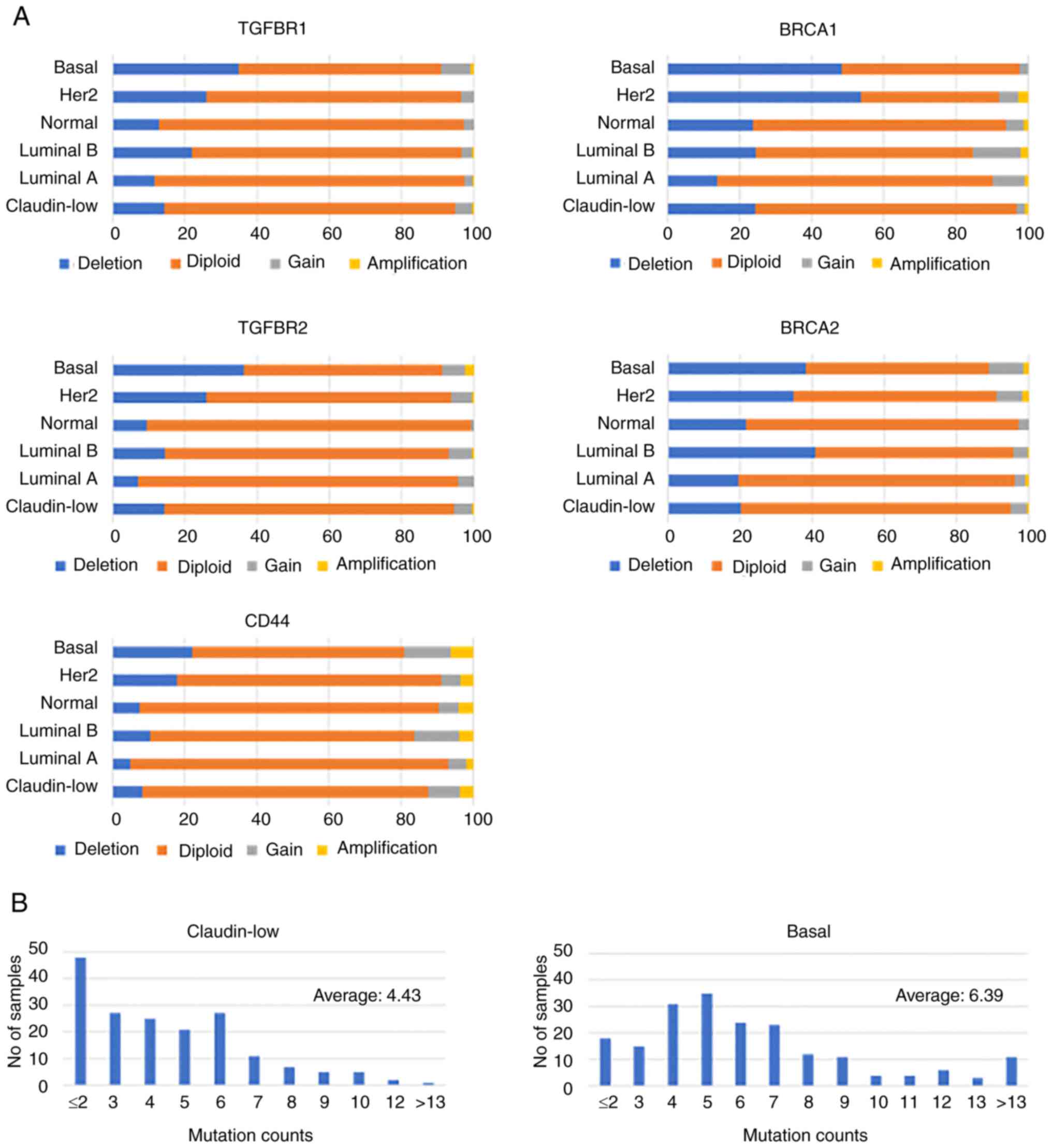
Figure 1

CNAs and mutation burden across
breast cancer subtypes (METABRIC dataset). (A) Bar plots showing
the distribution of CNAs for TGFBR1, TGFBR2, CD44, BRCA1 and BRCA2
across breast cancer subtypes (claudin-low, luminal A, luminal B,
Her2-enriched, basal and normal-like) based on the METABRIC
dataset. CNAs were categorized as deletions (blue), diploid
(orange), gains (gray) and amplifications (yellow). (B) Histogram
representing the distribution of mutation counts in claudin-low
(n=179) and basal (n=197) breast cancer samples based on the
METABRIC dataset. Claudin-low tumors exhibited a significantly
lower mutational burden (mean ± SD, 4.43±2.70) compared with basal
tumors (mean ± SD, 6.39±3.84) (Mann-Whitney U test; P<0.0001).
CNA, copy number alteration; TGFBR, TGF-β receptor.

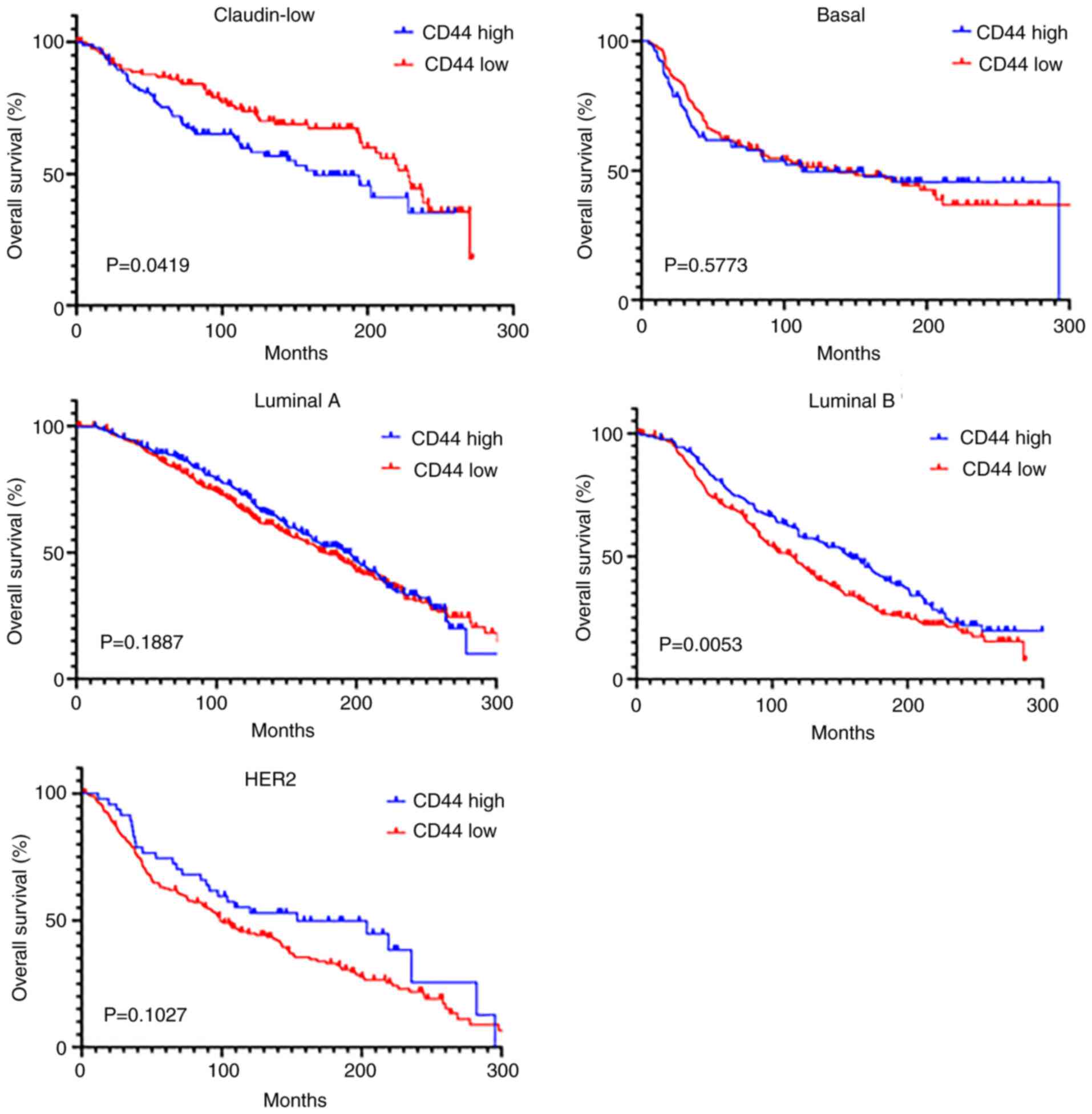
Figure 2

Kaplan-Meier survival curves for
overall survival based on CD44 expression across breast cancer
subtypes (METABRIC dataset). Kaplan-Meier curves showing overall
survival based on CD44 expression levels (high, blue; low, red)
across breast cancer subtypes. Statistical comparisons were
performed using the log-rank test. Significant differences in
survival were observed in the claudin-low (P=0.0419) and luminal B
(P=0.0053) subtypes. No statistically significant differences were
noted in the basal, luminal A and HER2-enriched subtypes.

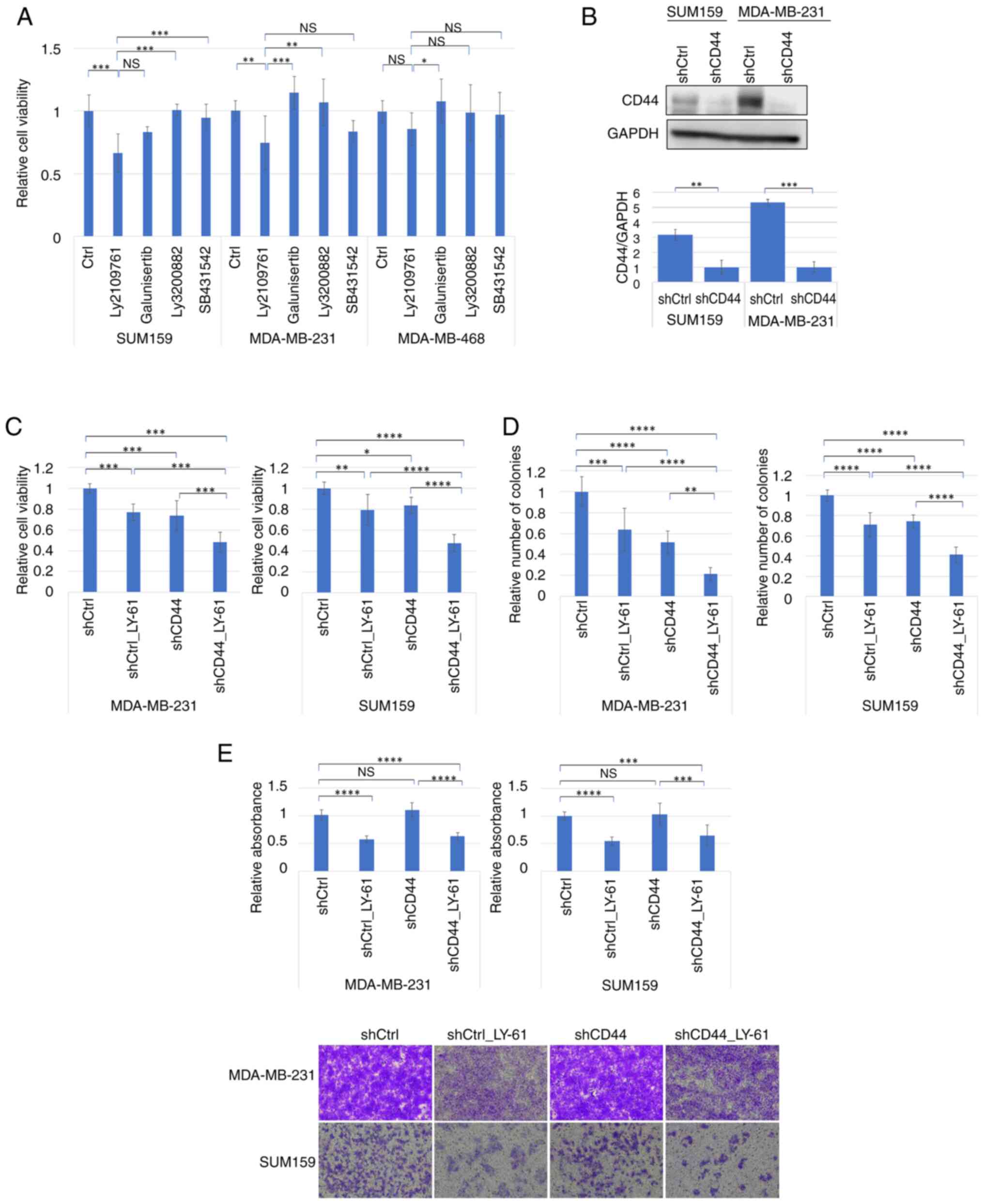
Figure 3

Additive antitumor effects of LY-61
and CD44 knockdown in claudin-low breast cancer cell lines. (A)
Relative viability of breast cancer cell lines (SUM159, MDA-MB-231
and MDA-MB-468) following treatment with TGF-β receptor inhibitors
(LY-61, Ly3200882, SB431542 and Galunisertib; all at 10 µM). Cells
(1,000 per well) were plated in 96-well plates, and drugs were
added 24 h after plating. Cell viability was measured using the MTT
assay on day 5 after plating. Statistical comparisons were made
using one-way ANOVA followed by Tukey's multiple comparisons test
for each cell line. (B) Western blot analysis of CD44 expression in
SUM159 and MDA-MB-231 cells following shRNA transduction.
Densitometric semi-quantification of CD44 protein levels relative
to GAPDH is shown below the blots (n=3). Data are presented as the
mean ± SD. Statistical comparisons were performed using unpaired
two-tailed t-tests. (C) Relative viability of MDA-MB-231 and SUM159
cells following CD44 knockdown (shCD44) and/or treatment with LY-61
(10 µM). Cells (1,000 per well) were plated in 96-well plates, and
LY-61 was added 24 h after plating. Cell viability was determined
using an MTT assay on day 5 after plating. Statistical significance
was assessed using two-way ANOVA followed by Tukey's multiple
comparisons test. (D) Colony formation assays showing relative
colony numbers in MDA-MB-231 and SUM159 cells following CD44
knockdown and/or LY-61 treatment. Statistical comparisons were
performed using two-way ANOVA followed by Tukey's multiple
comparisons test. (E) Invasion assays in SUM159 and MDA-MB-231
cells showing the relative absorbance and representative microscopy
images of invaded cells stained on the underside of basement
membrane matrix-coated inserts. Cells were treated with LY-61
and/or subjected to CD44 knockdown. Statistical analysis was
performed using two-way ANOVA followed by Tukey's multiple
comparisons test. Representative images are shown at a
magnification of ×100. (A and C-E) Data are presented as the mean ±
SD of three independent experiments (n=3). *P<0.05; **P<0.01;
***P<0.001; ****P<0.0001. Ctrl, control; LY-61, LY2109761;
NS, not significant; sh/shRNA, short hairpin RNA.

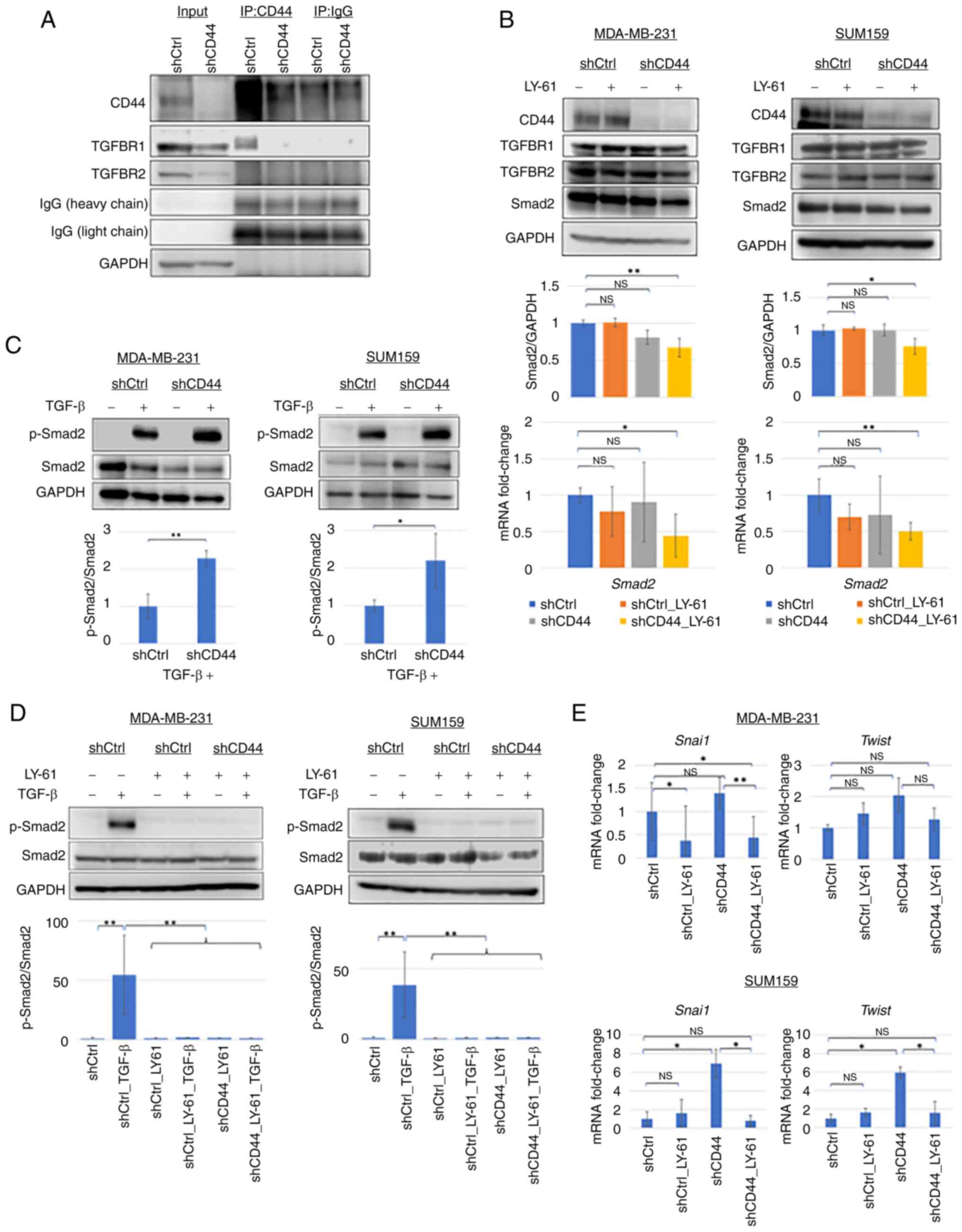
Figure 4

Effects of LY-61 and CD44 knockdown
on the TGF-β/Smad2 pathway in claudin-low breast cancer cell lines.
(A) Co-immunoprecipitation assays showing that CD44 co-precipitated
with TGFBR1 in MDA-MB-231 cells. The CD44-TGFBR1 interaction signal
was reduced in shCD44 cells. No detectable co-precipitation was
observed between CD44 and TGFBR2. (B) Western blotting and RT-qPCR
showing Smad2 protein and mRNA levels in MDA-MB-231 and SUM159
cells following CD44 knockdown and/or LY-61 treatment.
Representative western blots (top), densitometric
semi-quantification of Smad2 protein levels (middle) and mRNA
expression levels determined by RT-qPCR (bottom) are shown. Data
are presented as the mean ± SD from three independent experiments
(n=3). (C) Western blot analysis of p-Smad2 and total Smad2 protein
levels after TGF-β stimulation in MDA-MB-231 and SUM159 cells with
or without CD44 knockdown. The semi-quantification of Smad2
phosphorylation was performed by calculating the p-Smad2/Smad2
ratio. CD44 knockdown increased TGF-β-induced p-Smad2 levels in
both cell lines. (D) Western blotting showing the effect of LY-61
treatment on p-Smad2 levels in MDA-MB-231 and SUM159 cells.
Densitometric semi-quantification of the p-Smad2/Smad2 ratio from
three independent experiments (n=3) is shown below the blots. (E)
Relative mRNA expression levels of Snai1 and Twist in
SUM159 and MDA-MB-231 cells following CD44 knockdown and/or LY-61
treatment, as determined using RT-qPCR. Data are presented as the
mean ± SD from three independent experiments (n=3). Statistical
significance was assessed using one-way ANOVA followed by (B)
Dunnett's or (D and E) Tukey's multiple comparisons test, or (C)
unpaired two-tailed Student's t-test. *P<0.05; **P<0.01.
Ctrl, control; LY-61, LY2109761; NS, not significant; p-,
phosphorylated; RT-qPCR, reverse transcription-quantitative PCR;
sh, short hairpin RNA; Snai1, snail family transcriptional
repressor 1; TGFBR, TGF-β receptor; IP, immunoprecipitation.

Figure 5

Effects of LY-61 and CD44 knockdown
on cell cycle progression and apoptosis in claudin-low breast
cancer cells. (A and B) Flow cytometry analysis of cell cycle
distribution in (A) SUM159 and (B) MDA-MB-231 cells treated with
LY-61 and/or CD44 knockdown. LY-61 treatment induced S phase
accumulation, most prominently in SUM159 cells. In SUM159 cells,
CD44 knockdown increased G2 phase accumulation,
suggesting delayed progression through the cell cycle. By contrast,
in MDA-MB-231 cells, the proportion of cells in the G2
phase remained relatively unchanged. The tables summarize the
percentages of cells in each phase. Percentages may not total
exactly 100% due to the exclusion of sub-G1 and debris
populations and rounding errors (values were rounded to one decimal
place after calculation from two decimal places, which may cause
minor deviations such as totals slightly >100%). (C and D)
Apoptosis analysis using annexin V/7-AAD staining in (C) SUM159 and
(D) MDA-MB-231 cells following CD44 knockdown and/or LY-61
treatment. CD44 knockdown increased apoptosis, whereas LY-61
treatment alone had a minimal effect. 7-AAD, 7-aminoactinomycin D;
Ctrl, control; LY-61, LY2109761; sh, short hairpin RNA.
View References

1 

Dai X, Li T, Bai Z, Yang Y, Liu X, Zhan J and Shi B: Breast cancer intrinsic subtype classification, clinical use and future trends. Am J Cancer Res. 5:2929–2943. 2015.PubMed/NCBI

2 

Perou CM, Sørlie T, Eisen MB, van de Rijn M, Jeffrey SS, Rees CA, Pollack JR, Ross DT, Johnsen H, Akslen LA, et al: Molecular portraits of human breast tumours. Nature. 406:747–752. 2000. View Article : Google Scholar : PubMed/NCBI

3 

Sørlie T, Perou CM, Tibshirani R, Aas T, Geisler S, Johnsen H, Hastie T, Eisen MB, van de Rijn M, Jeffrey SS, et al: Gene expression patterns of breast carcinomas distinguish tumor subclasses with clinical implications. Proc Natl Acad Sci USA. 98:10869–10874. 2001. View Article : Google Scholar : PubMed/NCBI

4 

Xiong X, Zheng LW, Ding Y, Chen YF, Cai YW, Wang LP, Huang L, Liu CC, Shao ZM and Yu KD: Breast cancer: Pathogenesis and treatments. Signal Transduct Target Ther. 10:492025. View Article : Google Scholar : PubMed/NCBI

5 

Herschkowitz JI, Simin K, Weigman VJ, Mikaelian I, Usary J, Hu Z, Rasmussen KE, Jones LP, Assefnia S, Chandrasekharan S, et al: Identification of conserved gene expression features between murine mammary carcinoma models and human breast tumors. Genome Biol. 8:R762007. View Article : Google Scholar : PubMed/NCBI

6 

Prat A, Parker JS, Karginova O, Fan C, Livasy C, Herschkowitz JI, He X and Perou CM: Phenotypic and molecular characterization of the claudin-low intrinsic subtype of breast cancer. Breast Cancer Res. 12:R682010. View Article : Google Scholar : PubMed/NCBI

7 

Sabatier R, Finetti P, Guille A, Adelaide J, Chaffanet M, Viens P, Birnbaum D and Bertucci F: Claudin-low breast cancers: Clinical, pathological, molecular and prognostic characterization. Mol Cancer. 13:2282014. View Article : Google Scholar : PubMed/NCBI

8 

Fougner C, Bergholtz H, Norum JH and Sørlie T: Re-definition of claudin-low as a breast cancer phenotype. Nat Commun. 11:17872020. View Article : Google Scholar : PubMed/NCBI

9 

Garrido-Castro AC, Lin NU and Polyak K: Insights into molecular classifications of triple-negative breast cancer: Improving patient selection for treatment. Cancer Discov. 9:176–198. 2019. View Article : Google Scholar : PubMed/NCBI

10 

Hassn Mesrati M, Syafruddin SE, Mohtar MA and Syahir A: CD44: A multifunctional mediator of cancer progression. Biomolecules. 11:18502021. View Article : Google Scholar : PubMed/NCBI

11 

Kim KJ, Godarova A, Seedle K, Kim MH, Ince TA, Wells SI, Driscoll JJ and Godar S: Rb suppresses collective invasion, circulation and metastasis of breast cancer cells in CD44-dependent manner. PLoS One. 8:e805902013. View Article : Google Scholar : PubMed/NCBI

12 

Dehbokri SG, Noorolyai S, Baghbani E, Moghaddamneshat N, Javaheri T and Baradaran B: Effects of CD44 siRNA on inhibition, survival, and apoptosis of breast cancer cell lines (MDA-MB-231 and 4T1). Mol Biol Rep. 51:6462024. View Article : Google Scholar : PubMed/NCBI

13 

Nam K, Oh S, Lee KM, Yoo SA and Shin I: CD44 regulates cell proliferation, migration, and invasion via modulation of c-Src transcription in human breast cancer cells. Cell Signal. 27:1882–1894. 2015. View Article : Google Scholar : PubMed/NCBI

14 

Yang Z, Chen D, Nie J, Zhou S, Wang J, Tang Q and Yang X: MicroRNA-143 targets CD44 to inhibit breast cancer progression and stem cell-like properties. Mol Med Rep. 13:5193–5199. 2016. View Article : Google Scholar : PubMed/NCBI

15 

Montgomery N, Hill A, McFarlane S, Neisen J, O'Grady A, Conlon S, Jirstrom K, Kay EW and Waugh DJ: CD44 enhances invasion of basal-like breast cancer cells by upregulating serine protease and collagen-degrading enzymatic expression and activity. Breast Cancer Res. 14:R842012. View Article : Google Scholar : PubMed/NCBI

16 

Ouhtit A, Madani S, Gupta I, Shanmuganathan S, Abdraboh ME, Al-Riyami H, Al-Farsi YM and Raj MH: TGF-β2: A novel target of CD44-promoted breast cancer invasion. J Cancer. 4:566–572. 2013. View Article : Google Scholar : PubMed/NCBI

17 

Xu H, Niu M, Yuan X, Wu K and Liu A: CD44 as a tumor biomarker and therapeutic target. Exp Hematol Oncol. 9:362020. View Article : Google Scholar : PubMed/NCBI

18 

Zhou L, Sheng D, Deng Q, Wang D and Liu S: Development of a novel method for rapid cloning of shRNA vectors, which successfully knocked down CD44 in mesenchymal triple-negative breast cancer cells. Cancer Commun (Lond). 38:572018.PubMed/NCBI

19 

Huang P, Chen A, He W, Li Z, Zhang G, Liu Z, Liu G, Liu X, He S, Xiao G, et al: BMP-2 induces EMT and breast cancer stemness through Rb and CD44. Cell Death Discov. 3:170392017. View Article : Google Scholar : PubMed/NCBI

20 

Gao F, Zhang G, Liu Y, He Y, Sheng Y, Sun X, Du Y and Yang C: Activation of CD44 signaling in leader cells induced by tumor-associated macrophages drives collective detachment in luminal breast carcinomas. Cell Death Dis. 13:5402022. View Article : Google Scholar : PubMed/NCBI

21 

Pan C, Xu A, Ma X, Yao Y, Zhao Y, Wang C and Chen C: Research progress of Claudin-low breast cancer. Front Oncol. 13:12261182023. View Article : Google Scholar : PubMed/NCBI

22 

Pommier RM, Sanlaville A, Tonon L, Kielbassa J, Thomas E, Ferrari A, Sertier AS, Hollande F, Martinez P, Tissier A, et al: Comprehensive characterization of claudin-low breast tumors reflects the impact of the cell-of-origin on cancer evolution. Nature Commun. 11:34312020. View Article : Google Scholar : PubMed/NCBI

23 

Gooding AJ and Schiemann WP: Epithelial-mesenchymal transition programs and cancer stem cell phenotypes: Mediators of breast cancer therapy resistance. Mol Cancer Res. 18:1257–1270. 2020. View Article : Google Scholar : PubMed/NCBI

24 

Akhurst RJ and Hata A: Targeting the TGFβ signalling pathway in disease. Nat Revi Drug Discov. 11:790–811. 2012. View Article : Google Scholar : PubMed/NCBI

25 

Matsunuma R, Chan DW, Kim BJ, Singh P, Han A, Saltzman AB, Cheng C, Lei JT, Wang J, Roberto da Silva L, et al: DPYSL3 modulates mitosis, migration, and epithelial-to-mesenchymal transition in claudin-low breast cancer. Proc Natl Acad Sci USA. 115:E11978–E11987. 2018. View Article : Google Scholar : PubMed/NCBI

26 

Porsch H, Mehić M, Olofsson B, Heldin P and Heldin CH: Platelet-derived growth factor β-receptor, transforming growth factor β type I receptor, and CD44 protein modulate each other's signaling and stability. J Biol Chem. 289:19747–19757. 2014. View Article : Google Scholar : PubMed/NCBI

27 

Yang K and Yi T: Tumor cell stemness in gastrointestinal cancer: Regulation and targeted therapy. Front Mol Biosci. 10:12976112023. View Article : Google Scholar : PubMed/NCBI

28 

Chen C, Zhao S, Karnad A and Freeman JW: The biology and role of CD44 in cancer progression: Therapeutic implications. J Hematol Oncol. 11:642018. View Article : Google Scholar : PubMed/NCBI

29 

Flanagan L, Van Weelden K, Ammerman C, Ethier SP and Welsh J: SUM-159PT cells: A novel estrogen independent human breast cancer model system. Breast Cancer Res Treat. 58:193–204. 1999. View Article : Google Scholar : PubMed/NCBI

30 

Livak KJ and Schmittgen TD: Analysis of relative gene expression data using real-time quantitative PCR and the 2(−Delta Delta C(T)) Method. Methods. 25:402–408. 2001. View Article : Google Scholar : PubMed/NCBI

31 

Chan DW, Mody CH, Ting NS and Lees-Miller SP: Purification and characterization of the double-stranded DNA-activated protein kinase, DNA-PK, from human placenta. Biochem Cell Biol. 74:67–73. 1996. View Article : Google Scholar : PubMed/NCBI

32 

Curtis C, Shah SP, Chin SF, Turashvili G, Rueda OM, Dunning MJ, Speed D, Lynch AG, Samarajiwa S, Yuan Y, et al: The genomic and transcriptomic architecture of 2,000 breast tumours reveals novel subgroups. Nature. 486:346–352. 2012. View Article : Google Scholar : PubMed/NCBI

33 

Szklarczyk D, Gable AL, Lyon D, Junge A, Wyder S, Huerta-Cepas J, Simonovic M, Doncheva NT, Morris JH, Bork P, et al: STRING v11: Protein-protein association networks with increased coverage, supporting functional discovery in genome-wide experimental datasets. Nucleic Acids Res. 47:D607–D613. 2019. View Article : Google Scholar : PubMed/NCBI

34 

Voutsadakis IA: Molecular characteristics and therapeutic vulnerabilities of claudin-low breast cancers derived from cell line models. Cancer Genomics Proteomics. 20:5392023. View Article : Google Scholar : PubMed/NCBI

35 

Donovan J and Slingerland J: Transforming growth factor-beta and breast cancer: Cell cycle arrest by transforming growth factor-beta and its disruption in cancer. Breast Cancer Res. 2:116–124. 2000. View Article : Google Scholar : PubMed/NCBI

36 

Wang X, Eichhorn PJA and Thiery JP: TGF-β, EMT, and resistance to anti-cancer treatment. Semin Cancer Biol. 97:1–11. 2023. View Article : Google Scholar : PubMed/NCBI

37 

Fougner C, Bergholtz H, Kuiper R, Norum JH and Sørlie T: Claudin-low-like mouse mammary tumors show distinct transcriptomic patterns uncoupled from genomic drivers. Breast Cancer Res. 21:852019. View Article : Google Scholar : PubMed/NCBI

38 

Barcellos-Hoff MH and Gulley JL: Molecular pathways and mechanisms of TGFβ in cancer therapy. Clin Cancer Res. 29:2025–2033. 2023. View Article : Google Scholar : PubMed/NCBI

39 

Kwei KA, Kung Y, Salari K, Holcomb IN and Pollack JR: Genomic instability in breast cancer: Pathogenesis and clinical implications. Mol Oncol. 4:255–266. 2010. View Article : Google Scholar : PubMed/NCBI

40 

Xu H, Tian Y, Yuan X, Wu H, Liu Q, Pestell RG and Wu K: The role of CD44 in epithelial-mesenchymal transition and cancer development. Onco Targets Ther. 8:3783–3792. 2015.PubMed/NCBI

41 

Li L, Qi L, Liang Z, Song W, Liu Y, Wang Y, Sun B, Zhang B and Cao W: Transforming growth factor-β1 induces EMT by the transactivation of epidermal growth factor signaling through HA/CD44 in lung and breast cancer cells. Int J Mol Med. 36:113–122. 2015. View Article : Google Scholar : PubMed/NCBI

42 

Gao Y, Ruan B, Liu W, Wang J, Yang X, Zhang Z, Li X, Duan J, Zhang F, Ding R, et al: Knockdown of CD44 inhibits the invasion and metastasis of hepatocellular carcinoma both in vitro and in vivo by reversing epithelial-mesenchymal transition. Oncotarget. 6:7828–7837. 2015. View Article : Google Scholar : PubMed/NCBI

43 

Deng Z, Fan T, Xiao C, Tian H, Zheng Y, Li C and He J: TGF-β signaling in health, disease and therapeutics. Signal Transduct Target Ther. 9:612024. View Article : Google Scholar : PubMed/NCBI

44 

Chanmee T, Ontong P, Mochizuki N, Kongtawelert P, Konno K and Itano N: Excessive hyaluronan production promotes acquisition of cancer stem cell signatures through the coordinated regulation of Twist and the transforming growth factor β (TGF-β)-Snail signaling axis. J Biol Chem. 289:26038–26056. 2014. View Article : Google Scholar : PubMed/NCBI

45 

Zhang K, Liu X, Hao F, Dong A and Chen D: Targeting TGF-β1 inhibits invasion of anaplastic thyroid carcinoma cell through SMAD2-dependent S100A4-MMP-2/9 signalling. Am J Transl Res. 8:2196–2209. 2016.PubMed/NCBI

46 

Katsuno Y, Meyer DS, Zhang Z, Shokat KM, Akhurst RJ, Miyazono K and Derynck R: Chronic TGF-β exposure drives stabilized EMT, tumor stemness, and cancer drug resistance with vulnerability to bitopic mTOR inhibition. Sci Signal. 12:eaau85442019. View Article : Google Scholar : PubMed/NCBI

47 

Ouhtit A, Madani S, Gupta I, Shanmuganathan S, Abdraboh ME, Al-Riyami H, Al-Farsi YM and Raj MH: TGF-β2: A novel target of CD44-promoted breast cancer invasion. J Cancer. 4:566–572. 2013. View Article : Google Scholar : PubMed/NCBI

48 

Park NR, Cha JH, Jang JW, Bae SH, Jang B, Kim JH, Hur W, Choi JY and Yoon SK: Synergistic effects of CD44 and TGF-β1 through AKT/GSK-3β/β-catenin signaling during epithelial-mesenchymal transition in liver cancer cells. Biochem Biophys Res Commun. 477:568–574. 2016. View Article : Google Scholar : PubMed/NCBI

49 

Hao Y, Baker D and Ten Dijke P: TGF-β-mediated epithelial-mesenchymal transition and cancer metastasis. Int J Mol Sci. 20:27672019. View Article : Google Scholar : PubMed/NCBI

50 

Voutsadakis IA: EMT Features in Claudin-Low versus Claudin-Non-Suppressed Breast Cancers and the Role of Epigenetic Modifications. Curr Issues Mol Biol. 45:6040–6054. 2023. View Article : Google Scholar : PubMed/NCBI

51 

Werden SJ, Sphyris N, Sarkar TR, Paranjape AN, LaBaff AM, Taube JH, Hollier BG, Ramirez-Peña EQ, Soundararajan R, den Hollander P, et al: Phosphorylation of serine 367 of FOXC2 by p38 regulates ZEB1 and breast cancer metastasis, without impacting primary tumor growth. Oncogene. 35:5977–5988. 2016. View Article : Google Scholar : PubMed/NCBI

52 

Taube JH, Herschkowitz JI, Komurov K, Zhou AY, Gupta S, Yang J, Hartwell K, Onder TT, Gupta PB, Evans KW, et al: Core epithelial-to-mesenchymal transition interactome gene-expression signature is associated with claudin-low and metaplastic breast cancer subtypes. Proc Natl Acad Sci USA. 107:15449–15454. 2010. View Article : Google Scholar : PubMed/NCBI

53 

Liang H, Benard O, Kumar V, Griffen A, Ren Z, Sivalingam K, Wang J, de Simone Benito E, Zhang X, Zhang J, et al: Wnt/ERK/CDK4/6 activation in the partial EMT state coordinates mammary cancer stemness with self-renewal and inhibition of differentiation. Br J Cancer. 133:986–1002. 2025. View Article : Google Scholar : PubMed/NCBI

Related Articles

  • Abstract
  • View
  • Download
  • Twitter
Copy and paste a formatted citation
Spandidos Publications style
Matsunuma R, Kinoshita K, Imada S, Sato S, Hayami R and Tsuneizumi M: CD44 knockdown and TGF‑&beta; inhibition modulate cell proliferation and invasion in claudin‑low breast cancer cells. Oncol Rep 55: 7, 2026.
APA
Matsunuma, R., Kinoshita, K., Imada, S., Sato, S., Hayami, R., & Tsuneizumi, M. (2026). CD44 knockdown and TGF‑&beta; inhibition modulate cell proliferation and invasion in claudin‑low breast cancer cells. Oncology Reports, 55, 7. https://doi.org/10.3892/or.2025.9012
MLA
Matsunuma, R., Kinoshita, K., Imada, S., Sato, S., Hayami, R., Tsuneizumi, M."CD44 knockdown and TGF‑&beta; inhibition modulate cell proliferation and invasion in claudin‑low breast cancer cells". Oncology Reports 55.1 (2026): 7.
Chicago
Matsunuma, R., Kinoshita, K., Imada, S., Sato, S., Hayami, R., Tsuneizumi, M."CD44 knockdown and TGF‑&beta; inhibition modulate cell proliferation and invasion in claudin‑low breast cancer cells". Oncology Reports 55, no. 1 (2026): 7. https://doi.org/10.3892/or.2025.9012
Copy and paste a formatted citation
x
Spandidos Publications style
Matsunuma R, Kinoshita K, Imada S, Sato S, Hayami R and Tsuneizumi M: CD44 knockdown and TGF‑&beta; inhibition modulate cell proliferation and invasion in claudin‑low breast cancer cells. Oncol Rep 55: 7, 2026.
APA
Matsunuma, R., Kinoshita, K., Imada, S., Sato, S., Hayami, R., & Tsuneizumi, M. (2026). CD44 knockdown and TGF‑&beta; inhibition modulate cell proliferation and invasion in claudin‑low breast cancer cells. Oncology Reports, 55, 7. https://doi.org/10.3892/or.2025.9012
MLA
Matsunuma, R., Kinoshita, K., Imada, S., Sato, S., Hayami, R., Tsuneizumi, M."CD44 knockdown and TGF‑&beta; inhibition modulate cell proliferation and invasion in claudin‑low breast cancer cells". Oncology Reports 55.1 (2026): 7.
Chicago
Matsunuma, R., Kinoshita, K., Imada, S., Sato, S., Hayami, R., Tsuneizumi, M."CD44 knockdown and TGF‑&beta; inhibition modulate cell proliferation and invasion in claudin‑low breast cancer cells". Oncology Reports 55, no. 1 (2026): 7. https://doi.org/10.3892/or.2025.9012
Follow us
  • Twitter
  • LinkedIn
  • Facebook
About
  • Spandidos Publications
  • Careers
  • Cookie Policy
  • Privacy Policy
How can we help?
  • Help
  • Live Chat
  • Contact
  • Email to our Support Team