Spandidos Publications Logo
  • About
    • About Spandidos
    • Aims and Scopes
    • Abstracting and Indexing
    • Editorial Policies
    • Reprints and Permissions
    • Job Opportunities
    • Terms and Conditions
    • Contact
  • Journals
    • All Journals
    • Oncology Letters
      • Oncology Letters
      • Information for Authors
      • Editorial Policies
      • Editorial Board
      • Aims and Scope
      • Abstracting and Indexing
      • Bibliographic Information
      • Archive
    • International Journal of Oncology
      • International Journal of Oncology
      • Information for Authors
      • Editorial Policies
      • Editorial Board
      • Aims and Scope
      • Abstracting and Indexing
      • Bibliographic Information
      • Archive
    • Molecular and Clinical Oncology
      • Molecular and Clinical Oncology
      • Information for Authors
      • Editorial Policies
      • Editorial Board
      • Aims and Scope
      • Abstracting and Indexing
      • Bibliographic Information
      • Archive
    • Experimental and Therapeutic Medicine
      • Experimental and Therapeutic Medicine
      • Information for Authors
      • Editorial Policies
      • Editorial Board
      • Aims and Scope
      • Abstracting and Indexing
      • Bibliographic Information
      • Archive
    • International Journal of Molecular Medicine
      • International Journal of Molecular Medicine
      • Information for Authors
      • Editorial Policies
      • Editorial Board
      • Aims and Scope
      • Abstracting and Indexing
      • Bibliographic Information
      • Archive
    • Biomedical Reports
      • Biomedical Reports
      • Information for Authors
      • Editorial Policies
      • Editorial Board
      • Aims and Scope
      • Abstracting and Indexing
      • Bibliographic Information
      • Archive
    • Oncology Reports
      • Oncology Reports
      • Information for Authors
      • Editorial Policies
      • Editorial Board
      • Aims and Scope
      • Abstracting and Indexing
      • Bibliographic Information
      • Archive
    • Molecular Medicine Reports
      • Molecular Medicine Reports
      • Information for Authors
      • Editorial Policies
      • Editorial Board
      • Aims and Scope
      • Abstracting and Indexing
      • Bibliographic Information
      • Archive
    • World Academy of Sciences Journal
      • World Academy of Sciences Journal
      • Information for Authors
      • Editorial Policies
      • Editorial Board
      • Aims and Scope
      • Abstracting and Indexing
      • Bibliographic Information
      • Archive
    • International Journal of Functional Nutrition
      • International Journal of Functional Nutrition
      • Information for Authors
      • Editorial Policies
      • Editorial Board
      • Aims and Scope
      • Abstracting and Indexing
      • Bibliographic Information
      • Archive
    • International Journal of Epigenetics
      • International Journal of Epigenetics
      • Information for Authors
      • Editorial Policies
      • Editorial Board
      • Aims and Scope
      • Abstracting and Indexing
      • Bibliographic Information
      • Archive
    • Medicine International
      • Medicine International
      • Information for Authors
      • Editorial Policies
      • Editorial Board
      • Aims and Scope
      • Abstracting and Indexing
      • Bibliographic Information
      • Archive
  • Articles
  • Information
    • Information for Authors
    • Information for Reviewers
    • Information for Librarians
    • Information for Advertisers
    • Conferences
  • Language Editing
Spandidos Publications Logo
  • About
    • About Spandidos
    • Aims and Scopes
    • Abstracting and Indexing
    • Editorial Policies
    • Reprints and Permissions
    • Job Opportunities
    • Terms and Conditions
    • Contact
  • Journals
    • All Journals
    • Biomedical Reports
      • Information for Authors
      • Editorial Policies
      • Editorial Board
      • Aims and Scope
      • Abstracting and Indexing
      • Bibliographic Information
      • Archive
    • Experimental and Therapeutic Medicine
      • Information for Authors
      • Editorial Policies
      • Editorial Board
      • Aims and Scope
      • Abstracting and Indexing
      • Bibliographic Information
      • Archive
    • International Journal of Epigenetics
      • Information for Authors
      • Editorial Policies
      • Editorial Board
      • Aims and Scope
      • Abstracting and Indexing
      • Bibliographic Information
      • Archive
    • International Journal of Functional Nutrition
      • Information for Authors
      • Editorial Policies
      • Editorial Board
      • Aims and Scope
      • Abstracting and Indexing
      • Bibliographic Information
      • Archive
    • International Journal of Molecular Medicine
      • Information for Authors
      • Editorial Policies
      • Editorial Board
      • Aims and Scope
      • Abstracting and Indexing
      • Bibliographic Information
      • Archive
    • International Journal of Oncology
      • Information for Authors
      • Editorial Policies
      • Editorial Board
      • Aims and Scope
      • Abstracting and Indexing
      • Bibliographic Information
      • Archive
    • Medicine International
      • Information for Authors
      • Editorial Policies
      • Editorial Board
      • Aims and Scope
      • Abstracting and Indexing
      • Bibliographic Information
      • Archive
    • Molecular and Clinical Oncology
      • Information for Authors
      • Editorial Policies
      • Editorial Board
      • Aims and Scope
      • Abstracting and Indexing
      • Bibliographic Information
      • Archive
    • Molecular Medicine Reports
      • Information for Authors
      • Editorial Policies
      • Editorial Board
      • Aims and Scope
      • Abstracting and Indexing
      • Bibliographic Information
      • Archive
    • Oncology Letters
      • Information for Authors
      • Editorial Policies
      • Editorial Board
      • Aims and Scope
      • Abstracting and Indexing
      • Bibliographic Information
      • Archive
    • Oncology Reports
      • Information for Authors
      • Editorial Policies
      • Editorial Board
      • Aims and Scope
      • Abstracting and Indexing
      • Bibliographic Information
      • Archive
    • World Academy of Sciences Journal
      • Information for Authors
      • Editorial Policies
      • Editorial Board
      • Aims and Scope
      • Abstracting and Indexing
      • Bibliographic Information
      • Archive
  • Articles
  • Information
    • For Authors
    • For Reviewers
    • For Librarians
    • For Advertisers
    • Conferences
  • Language Editing
Login Register Submit
  • This site uses cookies
  • You can change your cookie settings at any time by following the instructions in our Cookie Policy. To find out more, you may read our Privacy Policy.

    I agree
Search articles by DOI, keyword, author or affiliation
Search
Advanced Search
presentation
Oncology Reports
Join Editorial Board Propose a Special Issue
Print ISSN: 1021-335X Online ISSN: 1791-2431
Journal Cover
January-2026 Volume 55 Issue 1

Full Size Image

Sign up for eToc alerts
Recommend to Library

Journals

International Journal of Molecular Medicine

International Journal of Molecular Medicine

International Journal of Molecular Medicine is an international journal devoted to molecular mechanisms of human disease.

International Journal of Oncology

International Journal of Oncology

International Journal of Oncology is an international journal devoted to oncology research and cancer treatment.

Molecular Medicine Reports

Molecular Medicine Reports

Covers molecular medicine topics such as pharmacology, pathology, genetics, neuroscience, infectious diseases, molecular cardiology, and molecular surgery.

Oncology Reports

Oncology Reports

Oncology Reports is an international journal devoted to fundamental and applied research in Oncology.

Experimental and Therapeutic Medicine

Experimental and Therapeutic Medicine

Experimental and Therapeutic Medicine is an international journal devoted to laboratory and clinical medicine.

Oncology Letters

Oncology Letters

Oncology Letters is an international journal devoted to Experimental and Clinical Oncology.

Biomedical Reports

Biomedical Reports

Explores a wide range of biological and medical fields, including pharmacology, genetics, microbiology, neuroscience, and molecular cardiology.

Molecular and Clinical Oncology

Molecular and Clinical Oncology

International journal addressing all aspects of oncology research, from tumorigenesis and oncogenes to chemotherapy and metastasis.

World Academy of Sciences Journal

World Academy of Sciences Journal

Multidisciplinary open-access journal spanning biochemistry, genetics, neuroscience, environmental health, and synthetic biology.

International Journal of Functional Nutrition

International Journal of Functional Nutrition

Open-access journal combining biochemistry, pharmacology, immunology, and genetics to advance health through functional nutrition.

International Journal of Epigenetics

International Journal of Epigenetics

Publishes open-access research on using epigenetics to advance understanding and treatment of human disease.

Medicine International

Medicine International

An International Open Access Journal Devoted to General Medicine.

Journal Cover
January-2026 Volume 55 Issue 1

Full Size Image

Sign up for eToc alerts
Recommend to Library

  • Article
  • Citations
    • Cite This Article
    • Download Citation
    • Create Citation Alert
    • Remove Citation Alert
    • Cited By
  • Similar Articles
    • Related Articles (in Spandidos Publications)
    • Similar Articles (Google Scholar)
    • Similar Articles (PubMed)
  • Download PDF
  • Download XML
  • View XML

  • Supplementary Files
    • Supplementary_Data1.pdf
    • Supplementary_Data2.pdf
Article Open Access

C‑terminal HSP90 inhibitor NCT‑58 impairs the cancer stem‑like phenotype and enhances chemotherapy efficacy in TNBC

  • Authors:
    • Eunsun Jung
    • Yoon-Jae Kim
    • Kyoungmin Lee
    • Seojin Jang
    • Soeun Park
    • Eunhye Oh
    • Minsu Park
    • Seongjae Kim
    • Dongmi Ko
    • Yong Koo Kang
    • Kee Dal Nam
    • Lee Farrand
    • Cong-Truong Nguyen
    • Minh Thanh La
    • Jihyae Ann
    • Jeewoo Lee
    • Ji Young Kim
    • Jae Hong Seo
  • View Affiliations / Copyright

    Affiliations: Division of Medical Oncology, Department of Internal Medicine, Korea University College of Medicine, Korea University, Seoul 152‑703, Republic of Korea, Division of Medical Oncology, Department of Internal Medicine, Korea University College of Medicine, Korea University, Seoul 152‑703, Republic of Kore, Adelaide Medical School, Faculty of Health and Medical Sciences, The University of Adelaide, Adelaide, South Australia 5000, Australia, Laboratory of Medicinal Chemistry, College of Pharmacy, Seoul National University, Seoul 08826, Republic of Korea
    Copyright: © Jung et al. This is an open access article distributed under the terms of Creative Commons Attribution License.
  • Article Number: 13
    |
    Published online on: November 11, 2025
       https://doi.org/10.3892/or.2025.9018
  • Expand metrics +
Metrics: Total Views: 0 (Spandidos Publications: | PMC Statistics: )
Metrics: Total PDF Downloads: 0 (Spandidos Publications: | PMC Statistics: )
Cited By (CrossRef): 0 citations Loading Articles...

This article is mentioned in:


Abstract

Treatment options for triple‑negative breast cancer (TNBC) are limited because they typically harbor a high cancer stem‑like population and exhibit a relatively aggressive metastatic phenotype. Heat shock protein 90 (HSP90), a molecular chaperone that regulates diverse oncogenic client proteins, has emerged as a compelling therapeutic target owing to its involvement in key tumor‑promoting processes, such as uncontrolled proliferation, angiogenesis and metastasis. Owing to the undesirable induction of a compensatory heat shock response (HSR) and systemic toxicity, classical N‑terminal inhibitors of HSP90 have failed in clinical trials. The impact of a rationally designed novel inhibitor of the HSP90 C‑terminus in TNBC cells was investigated. NCT‑58 eliminates rapidly proliferating tumor cells accompanied by simultaneous degradation of AKT, MEK and STAT3, and effectively eradicates the cancer stem‑like population (breast cancer stem cells) in both human MDA‑MB‑231 and murine 4T1 cells. The latter phenomenon is accompanied by reductions in the activity of ALDH1 and the CD44high/CD24low stem‑like population, as well as impairment of mammosphere formation. Furthermore, NCT‑58 markedly impairs cell migration, coinciding with the collapse of HSP90 client cytoskeletal proteins, including vimentin and F‑actin, in MDA‑MB‑231 cells in vitro. A synergistic effect was observed when NCT‑58 was combined with paclitaxel or doxorubicin in MDA‑MB‑231 cells. Collectively, these findings indicated that targeting the C‑terminal domain of HSP90 with NCT‑58 is a promising therapeutic strategy for the treatment of molecularly heterogeneous TNBC.
View Figures

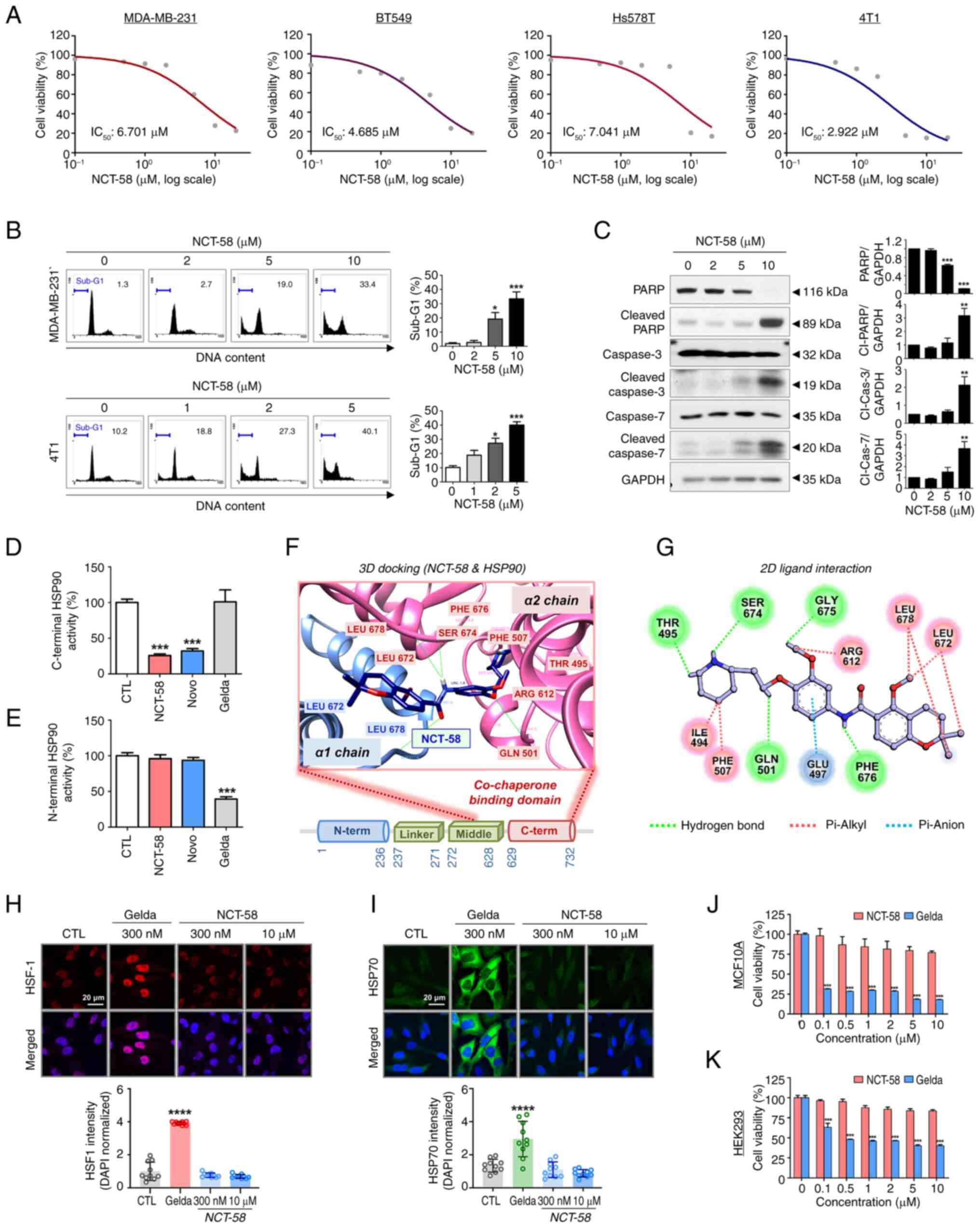
Figure 1

NCT-58 exerts anti-proliferative
effect in TNBC cells by targeting the C-terminal domain of HSP90.
(A) Four TNBC cell lines, MDA-MB-231, BT549, Hs578T and 4T1 cells
were treated with various concentrations of NCT-58 (0–20 µM) for 72
h. Cell viability was assessed using MTS assay, and IC50
values were calculated using non-linear regression with a sigmoidal
dose-response curve. (B) MDA-MB-231 and 4T1 cells were treated at
the indicated concentrations of NCT-58 (0–10 µM) for 72 h.
Apoptosis was determined through sub-G1-DNA analysis using flow
cytometry. (C) Immunoblot analyses of PARP, cleaved-PARP,
caspase-3, cleaved caspase-3, caspase-7 and cleaved caspase-7
protein expression in MDA-MB-231 cells after treatment with NCT-58
(0–10 µM, 72 h). GAPDH was used as an internal loading control.
Quantitative graphs of these protein levels. The results are
presented as the mean ± SEM of at least three independent
experiments and analyzed using one-way ANOVA followed by
Bonferroni's post hoc test. (D) Effect of NCT-58 on C-terminal
HSP90 binding activity. The inhibitory effect of HSP90 inhibitors
(NCT-58, novobiocin or geldanamycin, 500 µM) on the interaction
between HSP90α (C-terminal) and its co-chaperone peptidylprolyl
isomerase was determined using an HSP90α (C-terminal) inhibitor
screening assay. (E) Influence of NCT-58 on N-terminal HSP90
binding activity. The competitive HSP90α binding activity of HSP90
inhibitors (NCT-58, novobiocin or geldanamycin, 1 µM) with
FITC-labeled geldanamycin was determined using an HSP90α N-terminal
domain assay. (F and G) Molecular docking analysis of NCT-58
binding to the CTD of HSP90 (PDB ID: 7RY1). (F) The binding pose of
NCT-58 at the dimerization interface is displayed as a
space-filling model. The α1 chain of HSP90 is rendered in a blue
ribbon, and the α2 chain in a pink ribbon. Connolly surface
representation of the HSP90 CTD, with NCT-58 modeled within the
binding interface (docking score=−9.5). (G) A 2D interaction
diagram of NCT-58 with key residues in the HSP90 CTD. Hydrogen
bonds and π-anion interactions are indicated by dashed green and
blue lines, respectively. (H and I) Comparison of the effects of
NCT-58 and the N-terminal HSP90 inhibitor geldanamycin on HSF-1 and
HSP70 expression. MDA-MB-231 cells were treated with NCT-58 (300 nM
and 10 µM) or geldanamycin (300 nM) for 24 h. Cells were
immuno-stained for HSF-1 (red, H) or HSP70 (green, I) using DAPI
(nuclei, blue). Images were acquired using a confocal microscope,
and quantification of immunofluorescence intensity was performed
using ImageJ software. Nuclear HSF1 intensity was expressed as the
HSF1/DAPI ratio, and cytoplasmic HSP70 intensity was expressed as
corrected total cell fluorescence normalized to DAPI. (J and K)
Effect of NCT-58 and geldanamycin on cytotoxicity in non-malignant
cells. Normal human mammary epithelial MCF10A (J) and 293 (K) cells
were treated with various concentrations (0.1–10 µM) of NCT-58 or
geldanamycin for 72 h. Cell viability was determined using MTS
assay (***P<0.001). *P<0.05, **P<0.01,
***P<0.001 and ****P<0.0001. TNBC, triple-negative breast
cancer; Gelda, geldanamycin; Novo, novobiocin; CTD, C-terminal
domain.

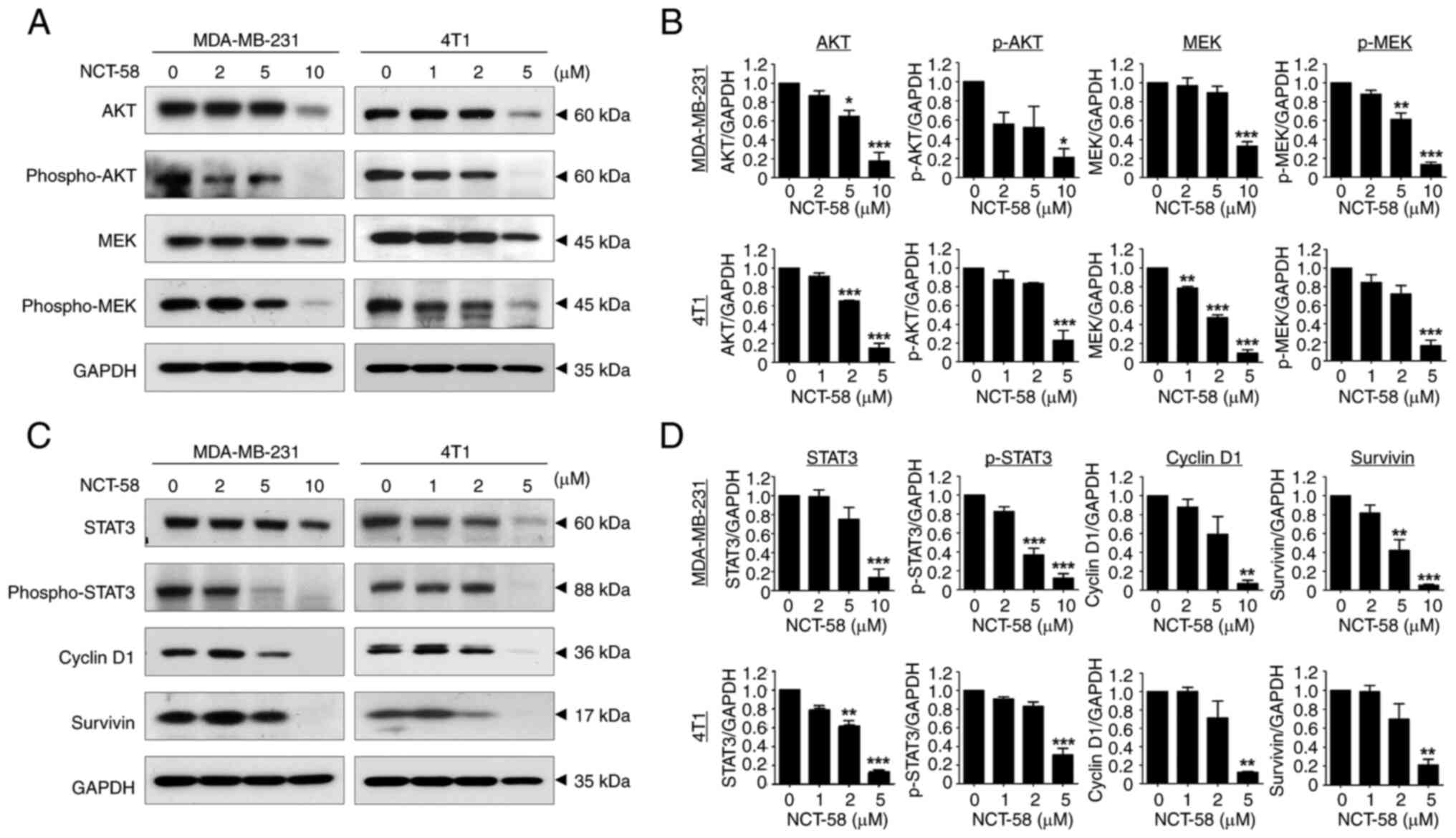
Figure 2

NCT-58 downregulates expression of
pro-survival client proteins in triple-negative breast cancer
cells. (A) MDA-MB-231 and 4T1 cells were cultured in the presence
or absence of NCT-58 (0–10 µM) for 72 h. Expression levels of HSP90
client proteins such as AKT, phospho-AKT (Ser473), MEK and
phospho-MEK (Ser218/222) were detected through immunoblotting.
GAPDH was used as a loading control. (B) Quantitative graphs
represent the ratio of expression of these proteins relative to
GAPDH expression after treatment with NCT-58. (C) Immunoblot
analyses of STAT3, phospho-STAT3 (Tyr705), protein levels of cyclin
D1 and survivin in MDA-MB-231 and 4T1 cells after treatment with
NCT-58 (0–10 µM, 72 h). (D) Quantitative graphs of these proteins
levels. The results are presented as the mean ± SEM of at least
three independent experiments and analyzed using one-way ANOVA
followed by Bonferroni's post hoc test. *P<0.05,
**P<0.01 and ***P<0.001.

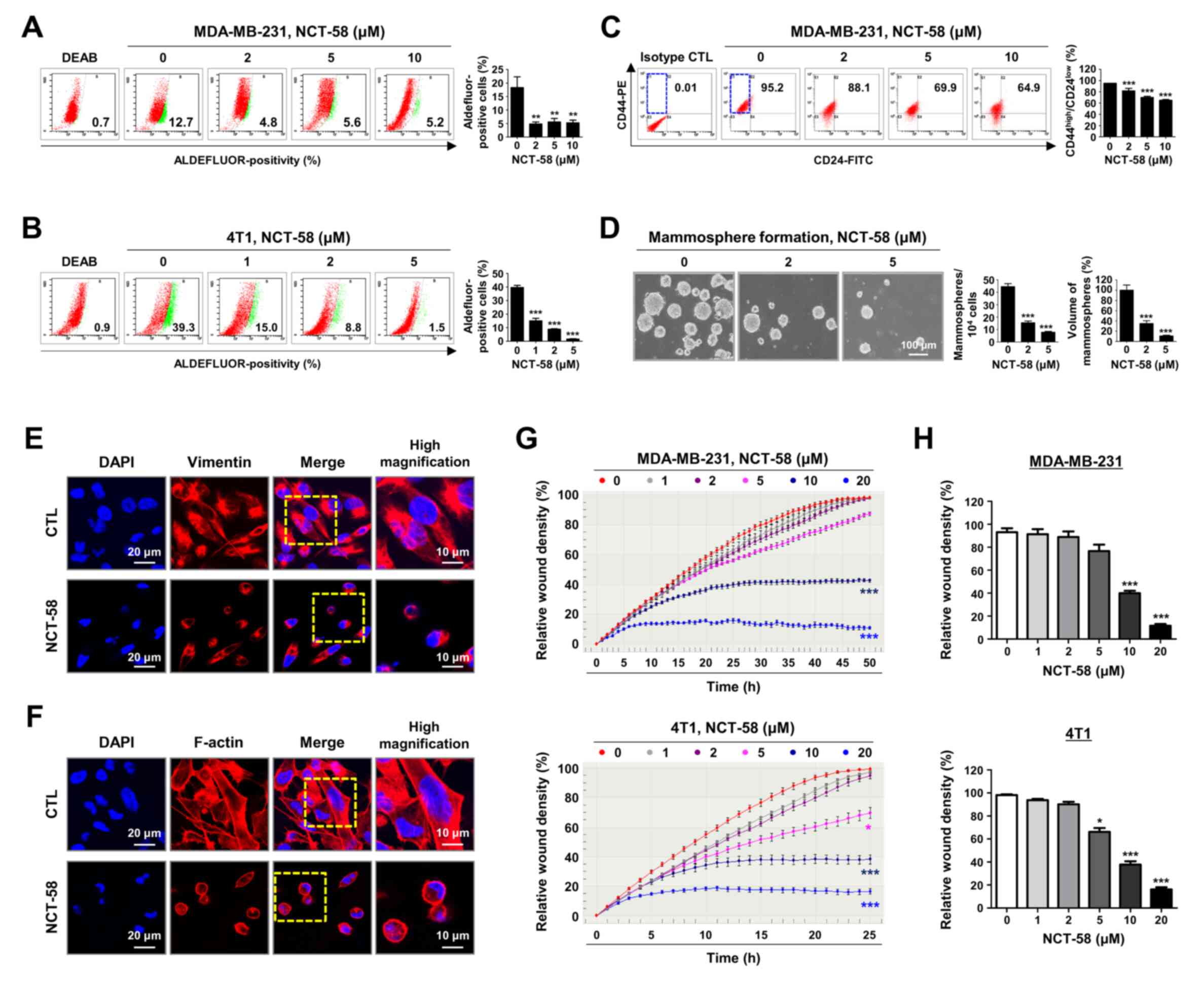
Figure 3

NCT-58 suppresses cancer stem-like
properties and migratory activity in TNBC cells. (A and B) Effect
of NCT-58 (0–10 µM, 72 h) on ALDH1 activity in (A) MDA-MB-231 and
(B) 4T1 cells. The specific inhibitor diethyl-amino-benzaldehyde
was used to define the Aldefluor-positive population.
Aldefluor-positive cells were quantified using flow cytometry
(right panel). (C) Effect of NCT-58 (0–10 µM, 72 h) on the
CD44high/CD24low stem-like population in
MDA-MB-231 cells. The CD44high/CD24low
population was quantified through flow cytometry. (D) Effect of
NCT-58 on mammosphere formation in vitro. 4T1 cells
(5×10⁴ cells/ml) were cultured in ultralow attachment
plates in the presence or absence of NCT-58 (2–5 µM, 5 days). The
number and volume of mammospheres were quantified using optical
microscopy. (E and F) After exposure to NCT-58 (10 µM) for 48 h,
MDA-MB-231 cells were immuno-stained for vimentin (1:100, E) and
F-actin (1:100, Texas Red-X phalloidin, F) with DAPI nuclear stain
(blue). (G and H) Effect of NCT-58 on TNBC cell migration. (G)
After exposure to NCT-58 (0–20 µM) in MDA-MB-231 and 4T1 cells,
kinetic analysis of cell migration was determined using the
IncuCyte™ Live-Cell Imaging System and quantified for
the indicated time duration. The kinetic graphs of cell migration
represent the relative wound density. (H) Relative wound density
(%) in MDA-MB-231 cells at 50 h and in 4T1 cells at 25 h,
respectively. The results are presented as the mean ± SEM of at
least three independent experiments and analyzed using one- or
two-way ANOVA followed by Bonferroni's post hoc test.
*P<0.05, **P<0.01 and ***P<0.001. TNBC,
triple-negative breast cancer.

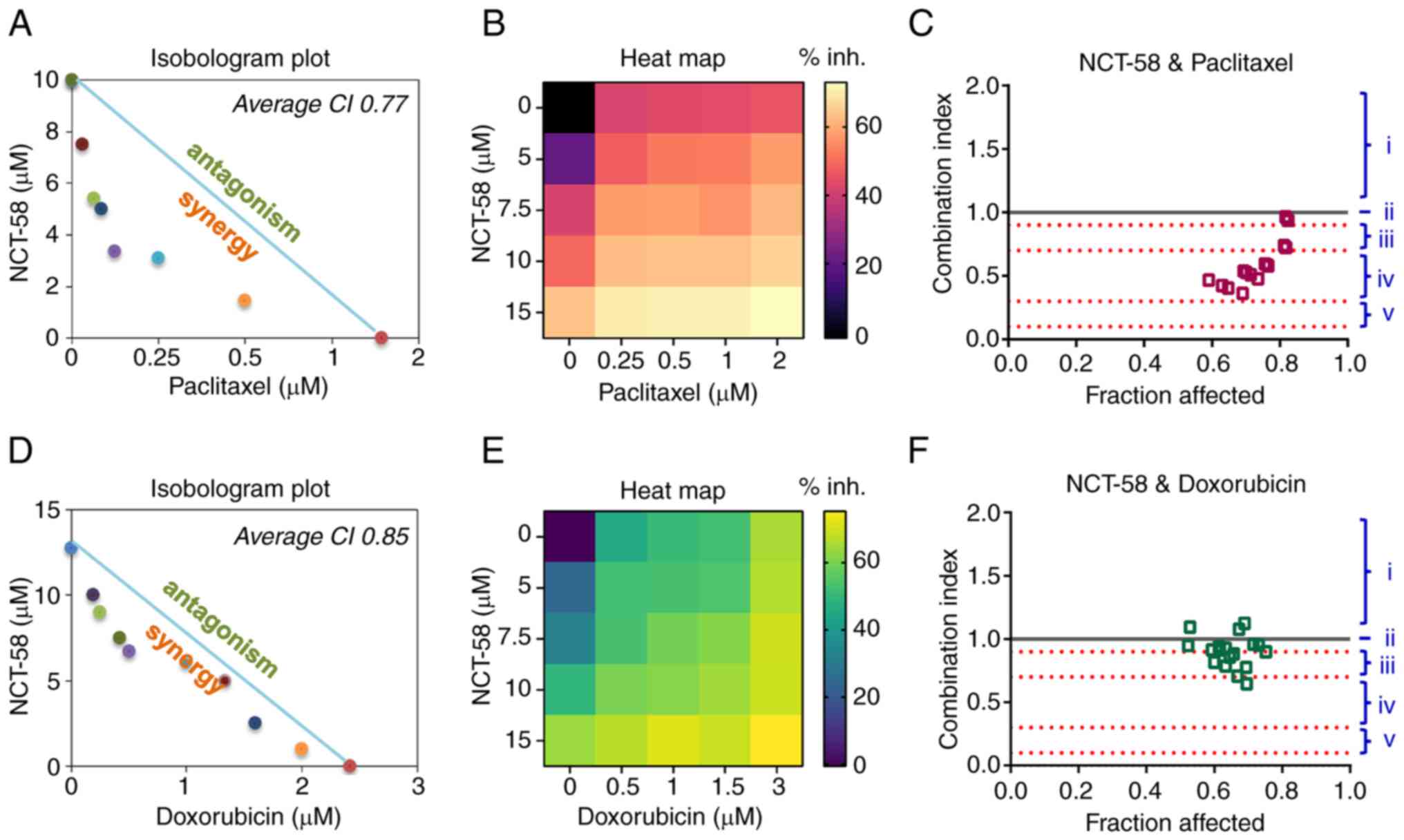
Figure 4

Synergistic effects of combining
NCT-58 with paclitaxel or doxorubicin in triple-negative breast
cancer cells. (A-F) MDA-MB-231 cells were treated with the
indicated concentrations of NCT-58 (0–15 µM) and paclitaxel (0–2
µM, A-C) or doxorubicin (0–3 µM, D-F) for 72 h and cell viability
was assessed using MTS assay. The isobologram plot, heat map (%
inh., Inhibition rate), and CI were analyzed to assess the
drug-drug synergy of various dose combinations of NCT-58 with
paclitaxel or doxorubicin. Isobologram plot and average CI values
were generated using the CompuSyn software to quantify drug
interactions, where CI<1 indicates synergism, CI=1 indicates an
additive effect, and CI>1 indicates antagonism. (i, antagonism;
ii, addictive effect; iii, moderate synergism; iv, synergism; and
v, strong synergism). The heat map depicts relative cell viability
compared with the DMSO control. CI, combination index.
View References

1 

Zagami P and Carey LA: Triple negative breast cancer: Pitfalls and progress. NPJ Breast Cancer. 8:952022. View Article : Google Scholar : PubMed/NCBI

2 

Ferrarini M, Heltai S, Zocchi MR and Rugarli C: Unusual expression and localization of heat-shock proteins in human tumor cells. Int J Cancer. 51:613–619. 1992. View Article : Google Scholar : PubMed/NCBI

3 

Pick E, Kluger Y, Giltnane JM, Moeder C, Camp RL, Rimm DL and Kluger HM: High HSP90 expression is associated with decreased survival in breast cancer. Cancer Res. 67:2932–2937. 2007. View Article : Google Scholar : PubMed/NCBI

4 

Isaacs JS, Xu W and Neckers L: Heat shock protein 90 as a molecular target for cancer therapeutics. Cancer Cell. 3:213–217. 2003. View Article : Google Scholar : PubMed/NCBI

5 

Bocchini CE, Kasembeli MM, Roh SH and Tweardy DJ: Contribution of chaperones to STAT pathway signaling. JAKSTAT. 3:e9704592014.PubMed/NCBI

6 

Streicher JM: The role of heat shock proteins in regulating receptor signal transduction. Mol Pharmacol. 95:468–474. 2019. View Article : Google Scholar : PubMed/NCBI

7 

Edkins AL: Hsp90 co-chaperones as drug targets in cancer: Current perspectives. Heat Shock Protein Inhibitors. McAlpine S and Edkins A: Topics in Medicinal Chemistry, 19. Springer; Cham: pp. 21–54. 2016, View Article : Google Scholar

8 

Collina F, Di Bonito M, Li Bergolis V, De Laurentiis M, Vitagliano C, Cerrone M, Nuzzo F, Cantile M and Botti G: Prognostic value of cancer stem cells markers in triple-negative breast cancer. Biomed Res Int. 2015:1586822015. View Article : Google Scholar : PubMed/NCBI

9 

Kabakov A, Yakimova A and Matchuk O: Molecular chaperones in cancer stem cells: Determinants of stemness and potential targets for antitumor therapy. Cells. 9:8922020. View Article : Google Scholar : PubMed/NCBI

10 

Cho TM, Kim JY, Kim YJ, Sung D, Oh E, Jang S, Farrand L, Hoang VH, Nguyen CT, Ann J, et al: C-terminal HSP90 inhibitor L80 elicits anti-metastatic effects in triple-negative breast cancer via STAT3 inhibition. Cancer Lett. 447:141–153. 2019. View Article : Google Scholar : PubMed/NCBI

11 

Park JM, Kim YJ, Park S, Park M, Farrand L, Nguyen CT, Ann J, Nam G, Park HJ, Lee J, et al: A novel HSP90 inhibitor targeting the C-terminal domain attenuates trastuzumab resistance in HER2-positive breast cancer. Mol Cancer. 19:1612020. View Article : Google Scholar : PubMed/NCBI

12 

Park M, Jung E, Park JM, Park S, Ko D, Seo J, Kim S, Nam KD, Kang YK, Farrand L, et al: The HSP90 inhibitor HVH-2930 exhibits potent efficacy against trastuzumab-resistant HER2-positive breast cancer. Theranostics. 14:2442–2463. 2024. View Article : Google Scholar : PubMed/NCBI

13 

Hoter A, El-Sabban ME and Naim HY: The HSP90 family: Structure, regulation, function, and implications in health and disease. Int J Mol Sci. 19:25602018. View Article : Google Scholar : PubMed/NCBI

14 

Garcia-Carbonero R, Carnero A and Paz-Ares L: Inhibition of HSP90 molecular chaperones: Moving into the clinic. Lancet Oncol. 14:e358–e369. 2013. View Article : Google Scholar : PubMed/NCBI

15 

Wang Y and McAlpine SR: N-terminal and C-terminal modulation of Hsp90 produce dissimilar phenotypes. Chem Commun (Camb). 51:1410–1413. 2015. View Article : Google Scholar : PubMed/NCBI

16 

Park S, Kim YJ, Park JM, Park M, Nam KD, Farrand L, Nguyen CT, La MT, Ann J, Lee J, et al: The C-terminal HSP90 inhibitor NCT-58 kills trastuzumab-resistant breast cancer stem-like cells. Cell Death Discov. 7:3542021. View Article : Google Scholar : PubMed/NCBI

17 

Nguyen CT, Ann J, Sahu R, Byun WS, Lee S, Nam G, Park HJ, Park S, Kim YJ, Kim JY, et al: Discovery of novel anti-breast cancer agents derived from deguelin as inhibitors of heat shock protein 90 (HSP90). Bioorg Med Chem Lett. 30:1273742020. View Article : Google Scholar : PubMed/NCBI

18 

Kim JY, Cho TM, Park JM, Park S, Park M, Nam KD, Ko D, Seo J, Kim S, Jung E, et al: A novel HSP90 inhibitor SL-145 suppresses metastatic triple-negative breast cancer without triggering the heat shock response. Oncogene. 41:3289–3297. 2022. View Article : Google Scholar : PubMed/NCBI

19 

Donnelly A and Blagg BSJ: Novobiocin and additional inhibitors of the Hsp90 C-terminal nucleotide-binding pocket. Curr Med Chem. 15:2702–2717. 2008. View Article : Google Scholar : PubMed/NCBI

20 

Stebbins CE, Russo AA, Schneider C, Rosen N, Hartl FU and Pavletich NP: Crystal structure of an Hsp90-geldanamycin complex: Targeting of a protein chaperone by an antitumor agent. Cell. 89:239–250. 1997. View Article : Google Scholar : PubMed/NCBI

21 

Gooljarsingh LT, Fernandes C, Yan K, Zhang H, Grooms M, Johanson K, Sinnamon RH, Kirkpatrick RB, Kerrigan J, Lewis T, et al: A biochemical rationale for the anticancer effects of Hsp90 inhibitors: Slow, tight binding inhibition by geldanamycin and its analogues. Proc Natl Acad Sci USA. 103:7625–7630. 2006. View Article : Google Scholar : PubMed/NCBI

22 

Wu J, Liu T, Rios Z, Mei Q, Lin X and Cao S: Heat shock proteins and cancer. Trends Pharmacol Sci. 38:226–256. 2017. View Article : Google Scholar : PubMed/NCBI

23 

Neckers L, Blagg B, Haystead T, Trepel JB, Whitesell L and Picard D: Methods to validate Hsp90 inhibitor specificity, to identify off-target effects, and to rethink approaches for further clinical development. Cell Stress Chaperones. 23:467–482. 2018. View Article : Google Scholar : PubMed/NCBI

24 

Qin JJ, Yan L, Zhang J and Zhang WD: STAT3 as a potential therapeutic target in triple negative breast cancer: A systematic review. J Exp Clin Cancer Res. 38:1952019. View Article : Google Scholar : PubMed/NCBI

25 

Wang H, Wang L, Song Y, Wang S, Huang X, Xuan Q, Kang X and Zhang Q: CD44+/CD24− phenotype predicts a poor prognosis in triple-negative breast cancer. Oncol Lett. 14:5890–5898. 2017.PubMed/NCBI

26 

Mani SA, Guo W, Liao MJ, Eaton EN, Ayyanan A, Zhou AY, Brooks M, Reinhard F, Zhang CC, Shipitsin M, et al: The epithelial-mesenchymal transition generates cells with properties of stem cells. Cell. 133:704–715. 2008. View Article : Google Scholar : PubMed/NCBI

27 

Oh E, Kim YJ, An H, Sung D, Cho TM, Farrand L, Jang S, Seo JH and Kim JY: Flubendazole elicits anti-metastatic effects in triple-negative breast cancer via STAT3 inhibition. Int J Cancer. 143:1978–1993. 2018. View Article : Google Scholar : PubMed/NCBI

28 

Zhang MH, Lee JS, Kim HJ, Jin DI, Kim JI, Lee KJ and Seo JS: HSP90 protects apoptotic cleavage of vimentin in geldanamycin-induced apoptosis. Mol Cell Biochem. 281:111–121. 2006. View Article : Google Scholar : PubMed/NCBI

29 

Yamashita N, Tokunaga E, Kitao H, Hisamatsu Y, Taketani K, Akiyoshi S, Okada S, Aishima S, Morita M and Maehara Y: Vimentin as a poor prognostic factor for triple-negative breast cancer. J Cancer Res Clin Oncol. 139:739–746. 2013. View Article : Google Scholar : PubMed/NCBI

30 

Sirkisoon SR, Carpenter RL, Rimkus T, Anderson A, Harrison A, Lange AM, Jin G, Watabe K and Lo HW: Interaction between STAT3 and GLI1/tGLI1 oncogenic transcription factors promotes the aggressiveness of triple-negative breast cancers and HER2-enriched breast cancer. Oncogene. 37:2502–2514. 2018. View Article : Google Scholar : PubMed/NCBI

31 

Ginestier C, Hur MH, Charafe-Jauffret E, Monville F, Dutcher J, Brown M, Jacquemier J, Viens P, Kleer CG, Liu S, et al: ALDH1 is a marker of normal and malignant human mammary stem cells and a predictor of poor clinical outcome. Cell Stem Cell. 1:555–567. 2007. View Article : Google Scholar : PubMed/NCBI

32 

Wei Y, Li Y, Chen Y, Liu P, Huang S, Zhang Y, Sun Y, Wu Z, Hu M, Wu Q, et al: ALDH1: A potential therapeutic target for cancer stem cells in solid tumors. Front Oncol. 12:10262782022. View Article : Google Scholar : PubMed/NCBI

33 

Clark DW and Palle K: Aldehyde dehydrogenases in cancer stem cells: Potential as therapeutic targets. Ann Transl Med. 4:5182016. View Article : Google Scholar : PubMed/NCBI

34 

Sládek NE: Aldehyde dehydrogenase-mediated cellular relative insensitivity to the oxazaphosphorines. Curr Pharm Des. 5:607–625. 1999. View Article : Google Scholar : PubMed/NCBI

35 

Sladek NE: Metabolism of oxazaphosphorines. Pharmacol Ther. 37:301–355. 1988. View Article : Google Scholar : PubMed/NCBI

36 

Moreb JS: Aldehyde dehydrogenase as a marker for stem cells. Curr Stem Cell Res Ther. 3:237–246. 2008. View Article : Google Scholar : PubMed/NCBI

37 

Schrörs B, Boegel S, Albrecht C, Bukur T, Bukur V, Holtsträter C, Ritzel C, Manninen K, Tadmor AD, Vormehr M, et al: Multi-omics characterization of the 4T1 murine mammary gland tumor model. Front Oncol. 10:11952020. View Article : Google Scholar : PubMed/NCBI

38 

Herndon ME, Ayers M, Gibson-Corley KN, Wendt MK, Wallrath LL, Henry MD and Stipp CS: The highly metastatic 4T1 breast carcinoma model possesses features of a hybrid epithelial/mesenchymal phenotype. Dis Model Mech. 17:dmm0507712024. View Article : Google Scholar : PubMed/NCBI

39 

Tao K, Fang M, Alroy J and Sahagian GG: Imagable 4T1 model for the study of late stage breast cancer. BMC Cancer. 8:2282008. View Article : Google Scholar : PubMed/NCBI

40 

Satelli A and Li S: Vimentin in cancer and its potential as a molecular target for cancer therapy. Cell Mol Life Sci. 68:3033–3046. 2011. View Article : Google Scholar : PubMed/NCBI

41 

Thiery JP, Acloque H, Huang RYJ and Nieto MA: Epithelial-mesenchymal transitions in development and disease. Cell. 139:871–890. 2009. View Article : Google Scholar : PubMed/NCBI

42 

Lu W and Kang Y: Epithelial-mesenchymal plasticity in cancer progression and metastasis. Dev Cell. 49:361–374. 2019. View Article : Google Scholar : PubMed/NCBI

43 

Zagouri F, Bournakis E, Koutsoukos K and Papadimitriou CA: Heat shock protein 90 (hsp90) expression and breast cancer. Pharmaceuticals (Basel). 5:1008–1020. 2012. View Article : Google Scholar : PubMed/NCBI

44 

Wei H, Zhang Y, Jia Y, Chen X, Niu T, Chatterjee A, He P and Hou G: Heat shock protein 90: Biological functions, diseases, and therapeutic targets. MedComm (2020). 5:e4702024. View Article : Google Scholar : PubMed/NCBI

45 

Gradishar WJ, Moran MS, Abraham J, Abramson V, Aft R, Agnese D, Allison KH, Anderson B, Burstein HJ, Chew H, et al: NCCN guidelines® insights: Breast cancer, version 4.2023. J Natl Compr Canc Netw. 21:594–608. 2023. View Article : Google Scholar : PubMed/NCBI

46 

Cortes J, Rugo HS, Cescon DW, Im SA, Yusof MM, Gallardo C, Lipatov O, Barrios CH, Perez-Garcia J, Iwata H, et al: Pembrolizumab plus chemotherapy in advanced triple-negative breast cancer. N Engl J Med. 387:217–226. 2022. View Article : Google Scholar : PubMed/NCBI

47 

Xie J, Li S, Li Y and Li J: Cost-effectiveness of sacituzumab govitecan versus chemotherapy in patients with relapsed or refractory metastatic triple-negative breast cancer. BMC Health Serv Res. 23:7062023. View Article : Google Scholar : PubMed/NCBI

48 

Coates JT, Sun S, Leshchiner I, Thimmiah N, Martin EE, McLoughlin D, Danysh BP, Slowik K, Jacobs RA, Rhrissorrakrai K, et al: Parallel genomic alterations of antigen and payload targets mediate polyclonal acquired clinical resistance to sacituzumab govitecan in triple-negative breast cancer. Cancer Discov. 11:2436–2445. 2021. View Article : Google Scholar : PubMed/NCBI

Related Articles

  • Abstract
  • View
  • Download
  • Twitter
Copy and paste a formatted citation
Spandidos Publications style
Jung E, Kim Y, Lee K, Jang S, Park S, Oh E, Park M, Kim S, Ko D, Kang YK, Kang YK, et al: C‑terminal HSP90 inhibitor NCT‑58 impairs the cancer stem‑like phenotype and enhances chemotherapy efficacy in TNBC. Oncol Rep 55: 13, 2026.
APA
Jung, E., Kim, Y., Lee, K., Jang, S., Park, S., Oh, E. ... Seo, J.H. (2026). C‑terminal HSP90 inhibitor NCT‑58 impairs the cancer stem‑like phenotype and enhances chemotherapy efficacy in TNBC. Oncology Reports, 55, 13. https://doi.org/10.3892/or.2025.9018
MLA
Jung, E., Kim, Y., Lee, K., Jang, S., Park, S., Oh, E., Park, M., Kim, S., Ko, D., Kang, Y. K., Nam, K. D., Farrand, L., Nguyen, C., La, M. T., Ann, J., Lee, J., Kim, J. Y., Seo, J. H."C‑terminal HSP90 inhibitor NCT‑58 impairs the cancer stem‑like phenotype and enhances chemotherapy efficacy in TNBC". Oncology Reports 55.1 (2026): 13.
Chicago
Jung, E., Kim, Y., Lee, K., Jang, S., Park, S., Oh, E., Park, M., Kim, S., Ko, D., Kang, Y. K., Nam, K. D., Farrand, L., Nguyen, C., La, M. T., Ann, J., Lee, J., Kim, J. Y., Seo, J. H."C‑terminal HSP90 inhibitor NCT‑58 impairs the cancer stem‑like phenotype and enhances chemotherapy efficacy in TNBC". Oncology Reports 55, no. 1 (2026): 13. https://doi.org/10.3892/or.2025.9018
Copy and paste a formatted citation
x
Spandidos Publications style
Jung E, Kim Y, Lee K, Jang S, Park S, Oh E, Park M, Kim S, Ko D, Kang YK, Kang YK, et al: C‑terminal HSP90 inhibitor NCT‑58 impairs the cancer stem‑like phenotype and enhances chemotherapy efficacy in TNBC. Oncol Rep 55: 13, 2026.
APA
Jung, E., Kim, Y., Lee, K., Jang, S., Park, S., Oh, E. ... Seo, J.H. (2026). C‑terminal HSP90 inhibitor NCT‑58 impairs the cancer stem‑like phenotype and enhances chemotherapy efficacy in TNBC. Oncology Reports, 55, 13. https://doi.org/10.3892/or.2025.9018
MLA
Jung, E., Kim, Y., Lee, K., Jang, S., Park, S., Oh, E., Park, M., Kim, S., Ko, D., Kang, Y. K., Nam, K. D., Farrand, L., Nguyen, C., La, M. T., Ann, J., Lee, J., Kim, J. Y., Seo, J. H."C‑terminal HSP90 inhibitor NCT‑58 impairs the cancer stem‑like phenotype and enhances chemotherapy efficacy in TNBC". Oncology Reports 55.1 (2026): 13.
Chicago
Jung, E., Kim, Y., Lee, K., Jang, S., Park, S., Oh, E., Park, M., Kim, S., Ko, D., Kang, Y. K., Nam, K. D., Farrand, L., Nguyen, C., La, M. T., Ann, J., Lee, J., Kim, J. Y., Seo, J. H."C‑terminal HSP90 inhibitor NCT‑58 impairs the cancer stem‑like phenotype and enhances chemotherapy efficacy in TNBC". Oncology Reports 55, no. 1 (2026): 13. https://doi.org/10.3892/or.2025.9018
Follow us
  • Twitter
  • LinkedIn
  • Facebook
About
  • Spandidos Publications
  • Careers
  • Cookie Policy
  • Privacy Policy
How can we help?
  • Help
  • Live Chat
  • Contact
  • Email to our Support Team