Spandidos Publications Logo
  • About
    • About Spandidos
    • Aims and Scopes
    • Abstracting and Indexing
    • Editorial Policies
    • Reprints and Permissions
    • Job Opportunities
    • Terms and Conditions
    • Contact
  • Journals
    • All Journals
    • Oncology Letters
      • Oncology Letters
      • Information for Authors
      • Editorial Policies
      • Editorial Board
      • Aims and Scope
      • Abstracting and Indexing
      • Bibliographic Information
      • Archive
    • International Journal of Oncology
      • International Journal of Oncology
      • Information for Authors
      • Editorial Policies
      • Editorial Board
      • Aims and Scope
      • Abstracting and Indexing
      • Bibliographic Information
      • Archive
    • Molecular and Clinical Oncology
      • Molecular and Clinical Oncology
      • Information for Authors
      • Editorial Policies
      • Editorial Board
      • Aims and Scope
      • Abstracting and Indexing
      • Bibliographic Information
      • Archive
    • Experimental and Therapeutic Medicine
      • Experimental and Therapeutic Medicine
      • Information for Authors
      • Editorial Policies
      • Editorial Board
      • Aims and Scope
      • Abstracting and Indexing
      • Bibliographic Information
      • Archive
    • International Journal of Molecular Medicine
      • International Journal of Molecular Medicine
      • Information for Authors
      • Editorial Policies
      • Editorial Board
      • Aims and Scope
      • Abstracting and Indexing
      • Bibliographic Information
      • Archive
    • Biomedical Reports
      • Biomedical Reports
      • Information for Authors
      • Editorial Policies
      • Editorial Board
      • Aims and Scope
      • Abstracting and Indexing
      • Bibliographic Information
      • Archive
    • Oncology Reports
      • Oncology Reports
      • Information for Authors
      • Editorial Policies
      • Editorial Board
      • Aims and Scope
      • Abstracting and Indexing
      • Bibliographic Information
      • Archive
    • Molecular Medicine Reports
      • Molecular Medicine Reports
      • Information for Authors
      • Editorial Policies
      • Editorial Board
      • Aims and Scope
      • Abstracting and Indexing
      • Bibliographic Information
      • Archive
    • World Academy of Sciences Journal
      • World Academy of Sciences Journal
      • Information for Authors
      • Editorial Policies
      • Editorial Board
      • Aims and Scope
      • Abstracting and Indexing
      • Bibliographic Information
      • Archive
    • International Journal of Functional Nutrition
      • International Journal of Functional Nutrition
      • Information for Authors
      • Editorial Policies
      • Editorial Board
      • Aims and Scope
      • Abstracting and Indexing
      • Bibliographic Information
      • Archive
    • International Journal of Epigenetics
      • International Journal of Epigenetics
      • Information for Authors
      • Editorial Policies
      • Editorial Board
      • Aims and Scope
      • Abstracting and Indexing
      • Bibliographic Information
      • Archive
    • Medicine International
      • Medicine International
      • Information for Authors
      • Editorial Policies
      • Editorial Board
      • Aims and Scope
      • Abstracting and Indexing
      • Bibliographic Information
      • Archive
  • Articles
  • Information
    • Information for Authors
    • Information for Reviewers
    • Information for Librarians
    • Information for Advertisers
    • Conferences
  • Language Editing
Spandidos Publications Logo
  • About
    • About Spandidos
    • Aims and Scopes
    • Abstracting and Indexing
    • Editorial Policies
    • Reprints and Permissions
    • Job Opportunities
    • Terms and Conditions
    • Contact
  • Journals
    • All Journals
    • Biomedical Reports
      • Information for Authors
      • Editorial Policies
      • Editorial Board
      • Aims and Scope
      • Abstracting and Indexing
      • Bibliographic Information
      • Archive
    • Experimental and Therapeutic Medicine
      • Information for Authors
      • Editorial Policies
      • Editorial Board
      • Aims and Scope
      • Abstracting and Indexing
      • Bibliographic Information
      • Archive
    • International Journal of Epigenetics
      • Information for Authors
      • Editorial Policies
      • Editorial Board
      • Aims and Scope
      • Abstracting and Indexing
      • Bibliographic Information
      • Archive
    • International Journal of Functional Nutrition
      • Information for Authors
      • Editorial Policies
      • Editorial Board
      • Aims and Scope
      • Abstracting and Indexing
      • Bibliographic Information
      • Archive
    • International Journal of Molecular Medicine
      • Information for Authors
      • Editorial Policies
      • Editorial Board
      • Aims and Scope
      • Abstracting and Indexing
      • Bibliographic Information
      • Archive
    • International Journal of Oncology
      • Information for Authors
      • Editorial Policies
      • Editorial Board
      • Aims and Scope
      • Abstracting and Indexing
      • Bibliographic Information
      • Archive
    • Medicine International
      • Information for Authors
      • Editorial Policies
      • Editorial Board
      • Aims and Scope
      • Abstracting and Indexing
      • Bibliographic Information
      • Archive
    • Molecular and Clinical Oncology
      • Information for Authors
      • Editorial Policies
      • Editorial Board
      • Aims and Scope
      • Abstracting and Indexing
      • Bibliographic Information
      • Archive
    • Molecular Medicine Reports
      • Information for Authors
      • Editorial Policies
      • Editorial Board
      • Aims and Scope
      • Abstracting and Indexing
      • Bibliographic Information
      • Archive
    • Oncology Letters
      • Information for Authors
      • Editorial Policies
      • Editorial Board
      • Aims and Scope
      • Abstracting and Indexing
      • Bibliographic Information
      • Archive
    • Oncology Reports
      • Information for Authors
      • Editorial Policies
      • Editorial Board
      • Aims and Scope
      • Abstracting and Indexing
      • Bibliographic Information
      • Archive
    • World Academy of Sciences Journal
      • Information for Authors
      • Editorial Policies
      • Editorial Board
      • Aims and Scope
      • Abstracting and Indexing
      • Bibliographic Information
      • Archive
  • Articles
  • Information
    • For Authors
    • For Reviewers
    • For Librarians
    • For Advertisers
    • Conferences
  • Language Editing
Login Register Submit
  • This site uses cookies
  • You can change your cookie settings at any time by following the instructions in our Cookie Policy. To find out more, you may read our Privacy Policy.

    I agree
Search articles by DOI, keyword, author or affiliation
Search
Advanced Search
presentation
Oncology Reports
Join Editorial Board Propose a Special Issue
Print ISSN: 1021-335X Online ISSN: 1791-2431
Journal Cover
January-2026 Volume 55 Issue 1

Full Size Image

Sign up for eToc alerts
Recommend to Library

Journals

International Journal of Molecular Medicine

International Journal of Molecular Medicine

International Journal of Molecular Medicine is an international journal devoted to molecular mechanisms of human disease.

International Journal of Oncology

International Journal of Oncology

International Journal of Oncology is an international journal devoted to oncology research and cancer treatment.

Molecular Medicine Reports

Molecular Medicine Reports

Covers molecular medicine topics such as pharmacology, pathology, genetics, neuroscience, infectious diseases, molecular cardiology, and molecular surgery.

Oncology Reports

Oncology Reports

Oncology Reports is an international journal devoted to fundamental and applied research in Oncology.

Experimental and Therapeutic Medicine

Experimental and Therapeutic Medicine

Experimental and Therapeutic Medicine is an international journal devoted to laboratory and clinical medicine.

Oncology Letters

Oncology Letters

Oncology Letters is an international journal devoted to Experimental and Clinical Oncology.

Biomedical Reports

Biomedical Reports

Explores a wide range of biological and medical fields, including pharmacology, genetics, microbiology, neuroscience, and molecular cardiology.

Molecular and Clinical Oncology

Molecular and Clinical Oncology

International journal addressing all aspects of oncology research, from tumorigenesis and oncogenes to chemotherapy and metastasis.

World Academy of Sciences Journal

World Academy of Sciences Journal

Multidisciplinary open-access journal spanning biochemistry, genetics, neuroscience, environmental health, and synthetic biology.

International Journal of Functional Nutrition

International Journal of Functional Nutrition

Open-access journal combining biochemistry, pharmacology, immunology, and genetics to advance health through functional nutrition.

International Journal of Epigenetics

International Journal of Epigenetics

Publishes open-access research on using epigenetics to advance understanding and treatment of human disease.

Medicine International

Medicine International

An International Open Access Journal Devoted to General Medicine.

Journal Cover
January-2026 Volume 55 Issue 1

Full Size Image

Sign up for eToc alerts
Recommend to Library

  • Article
  • Citations
    • Cite This Article
    • Download Citation
    • Create Citation Alert
    • Remove Citation Alert
    • Cited By
  • Similar Articles
    • Related Articles (in Spandidos Publications)
    • Similar Articles (Google Scholar)
    • Similar Articles (PubMed)
  • Download PDF
  • Download XML
  • View XML
Article Open Access

Oxaliplatin resistance in pancreatic ductal adenocarcinoma is non‑significantly mediated by diminished drug uptake but is highly linked to a poor apoptotic response to the cytotoxic threat

  • Authors:
    • Hellen Röttgen
    • Lana Theurer
    • Teresa Peccerella
    • Ketaki Sandu
    • Johanna Weiss
    • Jürgen Burhenne
    • John P. Neoptolemos
    • Beate Köberle
    • Dirk Theile
  • View Affiliations / Copyright

    Affiliations: Internal Medicine IX‑Department of Clinical Pharmacology and Pharmacoepidemiology, Heidelberg University, Medical Faculty Heidelberg, Heidelberg University Hospital, D‑69120 Heidelberg, Germany, Department of Food Chemistry and Toxicology, Karlsruhe Institute of Technology, D‑76131 Karlsruhe, Germany, Department of General, Visceral, and Transplantation Surgery, Heidelberg University, Medical Faculty Heidelberg, Heidelberg University Hospital, D‑69120 Heidelberg, Germany
    Copyright: © Röttgen et al. This is an open access article distributed under the terms of Creative Commons Attribution License.
  • Article Number: 22
    |
    Published online on: November 19, 2025
       https://doi.org/10.3892/or.2025.9027
  • Expand metrics +
Metrics: Total Views: 0 (Spandidos Publications: | PMC Statistics: )
Metrics: Total PDF Downloads: 0 (Spandidos Publications: | PMC Statistics: )
Cited By (CrossRef): 0 citations Loading Articles...

This article is mentioned in:


Abstract

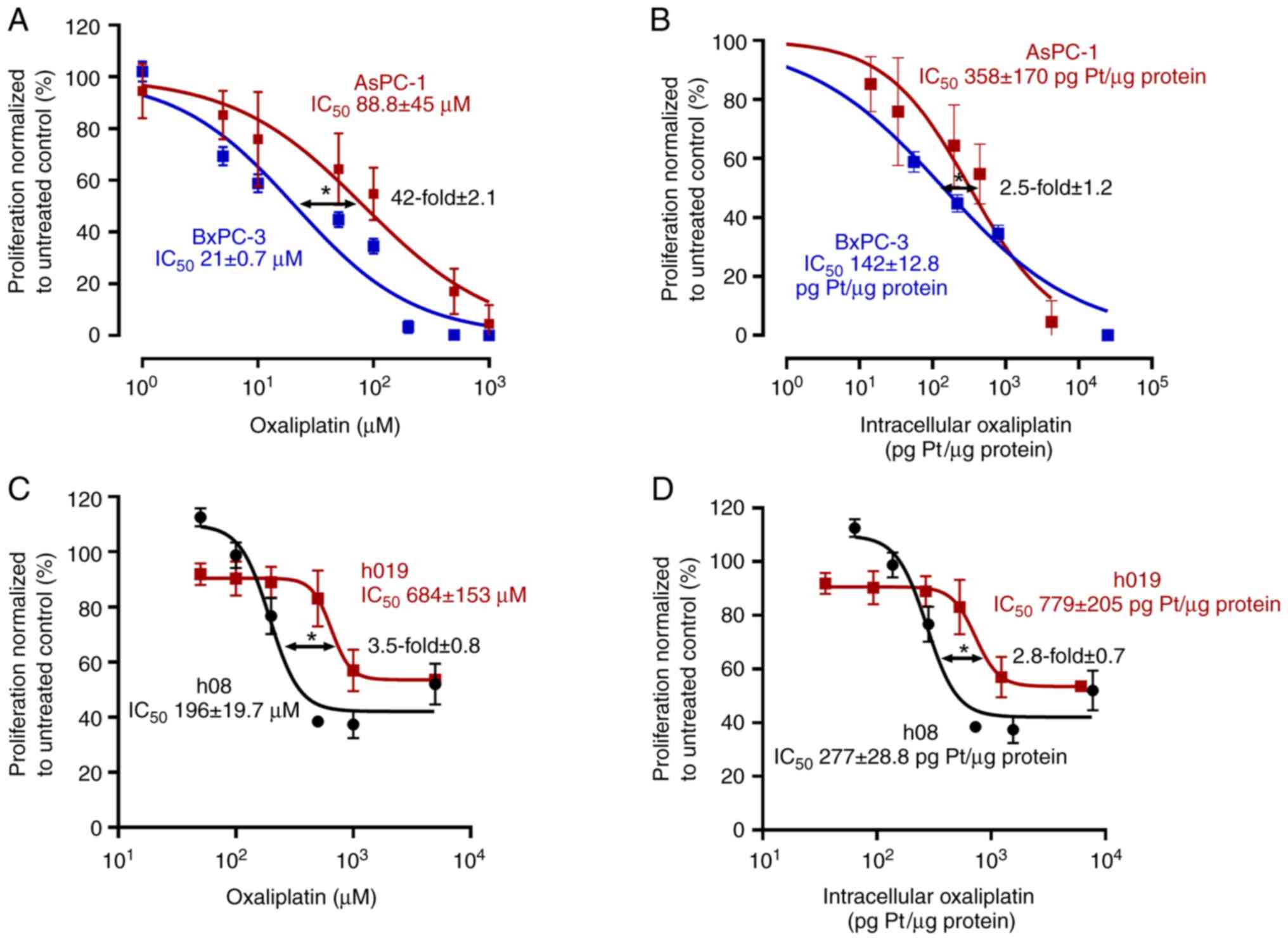
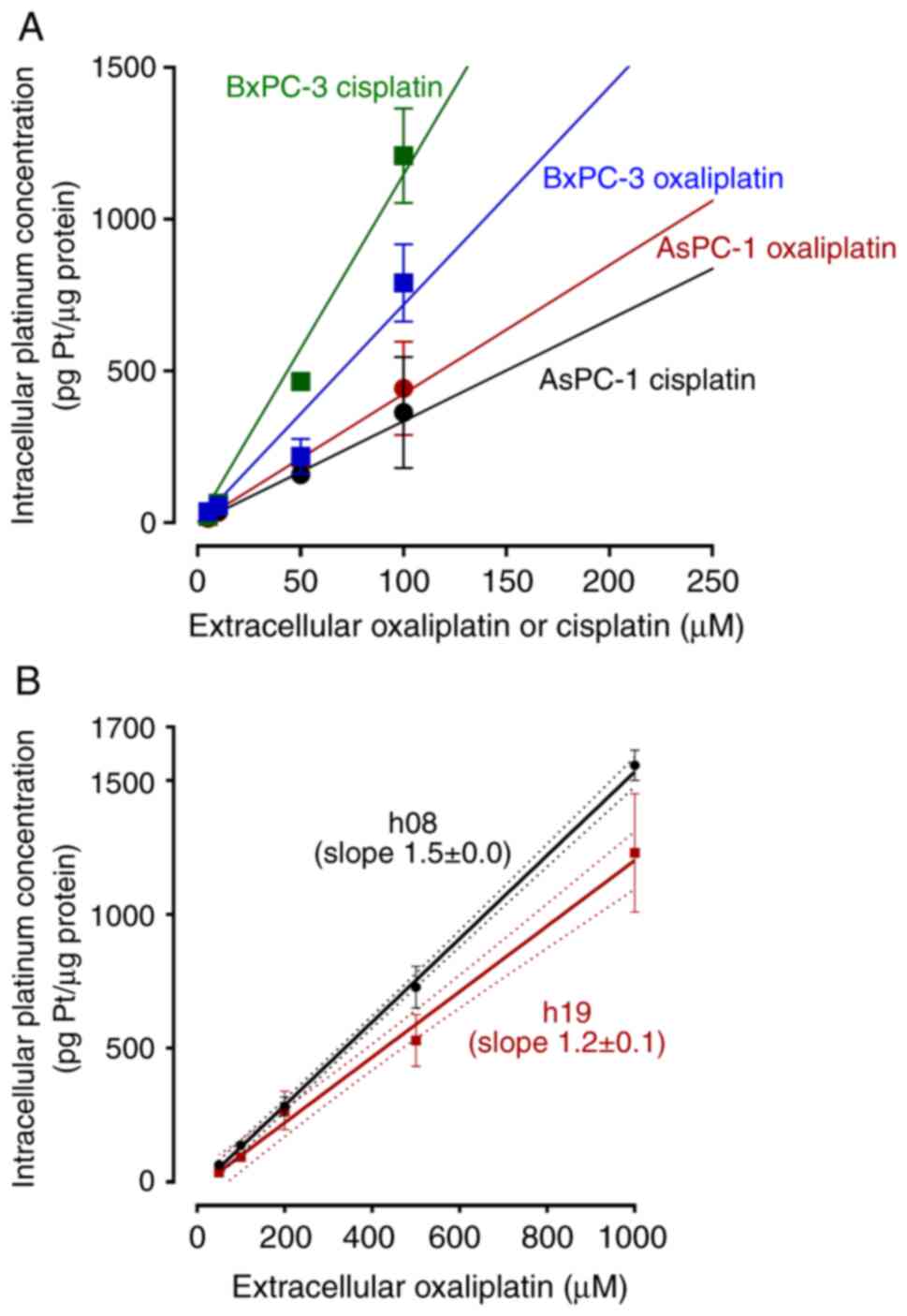
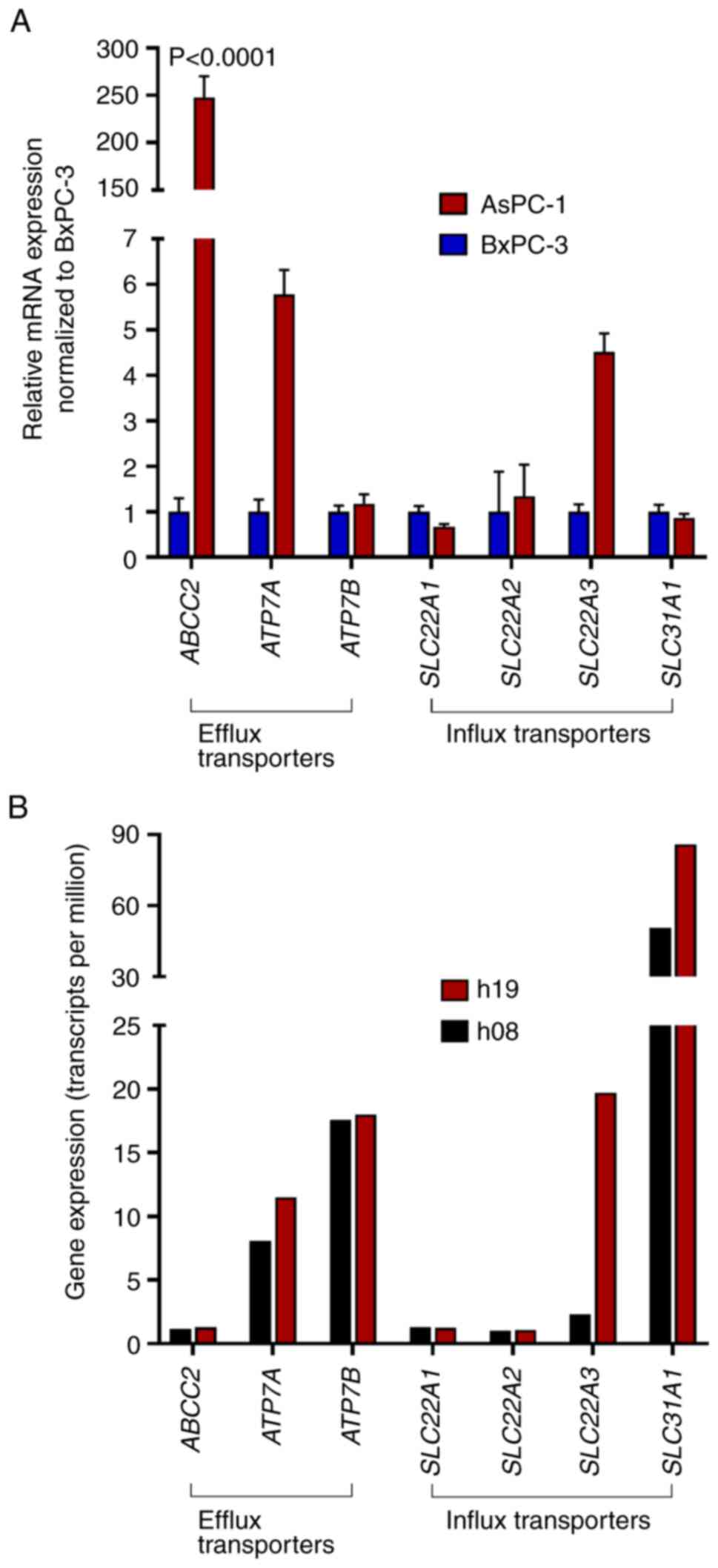
Pancreatic ductal adenocarcinoma (PDAC) resistance to oxaliplatin is associated with diminished drug uptake and a poor molecular apoptotic response; however, the relative contribution of each of these modes of resistance remains unclear. Accordingly, PDAC cell lines (AsPC‑1 and BxPC‑3) and human patient‑derived organoids (hPDOs; h08 and h19) were assessed in the present study, with proliferation assays, atomic absorption spectroscopy‑based quantification of intracellular oxaliplatin, luminogenic caspase 3/7 assays, PCR array‑based transcriptomic analysis and RNA sequencing performed to scrutinize the oxaliplatin resistance phenotype. Notably, AsPC‑1 cells [half maximal inhibitory concentration (IC50), 88.8±45 µM were 4.2‑fold more oxaliplatin resistant than BxPC‑3 cells (IC50, 21±0.7 µM; P=0.02)]. In addition, when normalized to intracellular platinum levels, AsPC‑1 cells remained 2.5‑fold more resistant than BxPC‑3 (the fold difference was decreased by 40% from 4.2‑fold to 2.5‑fold; P=0.21). In hPDOs, resistant h19 took up oxaliplatin 22% less efficiently than sensitive h08, and the nominal resistance difference was 3.5‑fold, and it remained at 2.8‑fold after controlling for drug accumulation (the fold difference was decreased by 20% from 3.5‑fold to 2.8‑fold; P=0.34). These findings indicated that diminished drug uptake non‑significantly contributed to oxaliplatin resistance, which was in agreement with the rather minor differences in drug transporter expression levels (including ATP7A and ATP7B). Furthermore, when challenged with identical intracellular oxaliplatin levels, AsPC‑1 cells exhibited delayed caspase 3/7 activity initiation, weaker induction of pro‑apoptotic genes BBC3 (1.7‑fold vs. 5‑fold) and PMAIP (2.5‑fold vs. 6‑fold), but stronger enhancement of anti‑apoptotic Jun expression (7‑fold vs. 3‑fold) than BxPC‑3 cells. Taken together, oxaliplatin resistance in PDAC models may be highly linked to a poor apoptotic response, whereas drug uptake seems to be of minor relevance.
View Figures

Figure 1

Anti-proliferative pharmacodynamics
of oxaliplatin. Concentration-dependent proliferation inhibition in
(A and B) AsPC-1 and BxPC-3 cells, and (C and D) h08 and h19 hPDOs,
in response to (A and C) nominal extracellular exposure
concentrations or (B and D) resulting total intracellular
concentrations. Data are presented as the mean ± SD of four (cell
lines) or three (hPDOs) independent experiments with technical
octuplets each. Data were fitted to a sigmoidal dose-response curve
with variable slope of the log-transformed data. *P<0.05. hPDOs,
human patient-derived organoids.

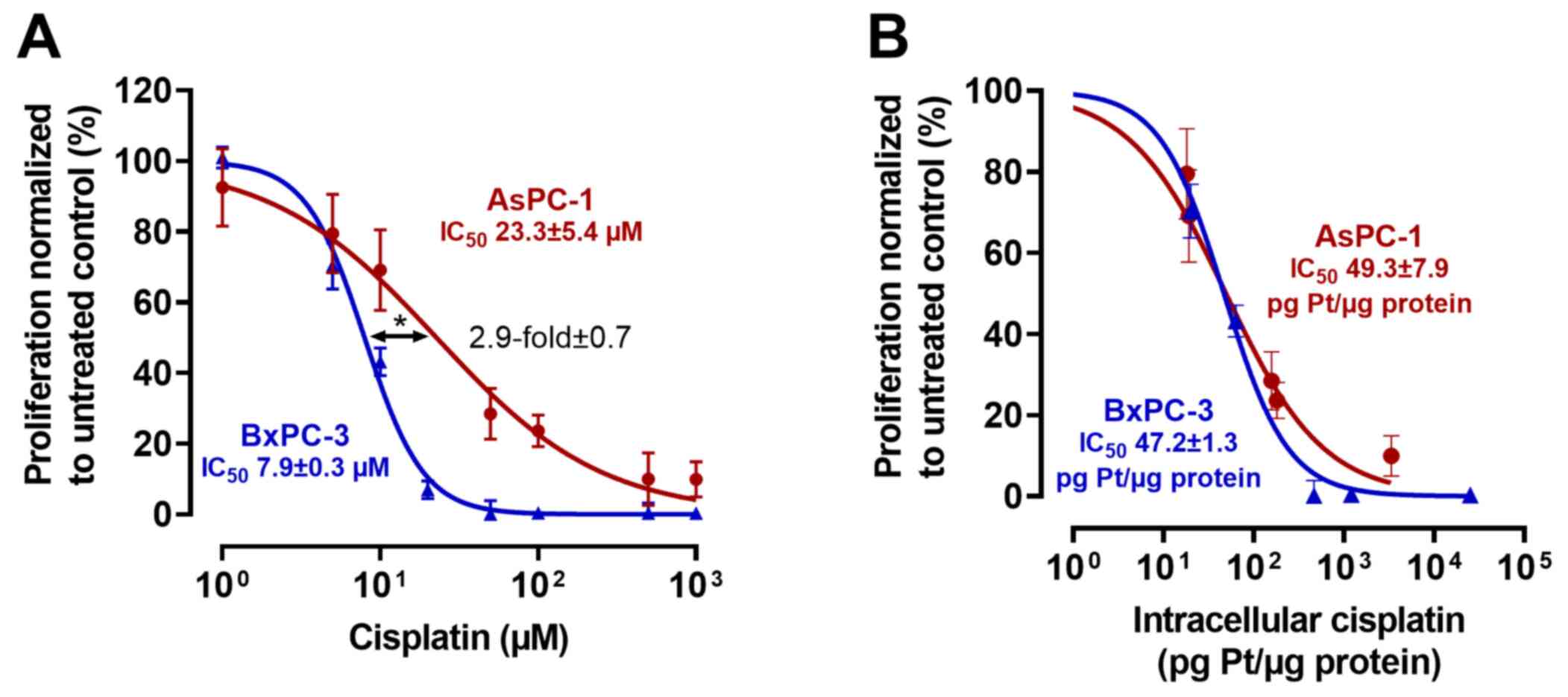
Figure 2

Anti-proliferative pharmacodynamics
of the control drug cisplatin. Concentration-dependent
proliferation inhibition in AsPC-1 and BxPC-3, in response to (A)
nominal extracellular exposure concentrations or (B) resulting
total intracellular concentrations. Data are presented as the mean
± SD of four independent experiments with technical octuplets each.
Data were fitted to a sigmoidal dose-response curve with variable
slope of the log-transformed data. *P<0.05.

Figure 3

Uptake characteristics of platinum
drugs. (A) Uptake of oxaliplatin or cisplatin into AsPC-1 and
BxPC-3 cells, or (B) oxaliplatin uptake into h08 and h19 human
patient-derived organoids. Data are presented as the mean ± SD of
four independent experiments. Data were fitted to a linear
regression, including the 95% confidence interval values for h08
and h19, which are presented as dotted lines.

Figure 4

mRNA expression levels of major
platinum drug transporters in untreated pancreatic ductal
adenocarcinoma models. (A) Relative mRNA expression levels in
AsPC-1 cells, normalized to the levels in BxPC-3 cells. Data are
presented as the mean ± SD of three independent experiments with
technical duplicates each (PCR runs). (B) mRNA expression levels in
h19 and h08 human patient-derived organoids. The number of
transcripts per million are shown, extracted from RNA sequencing
data.

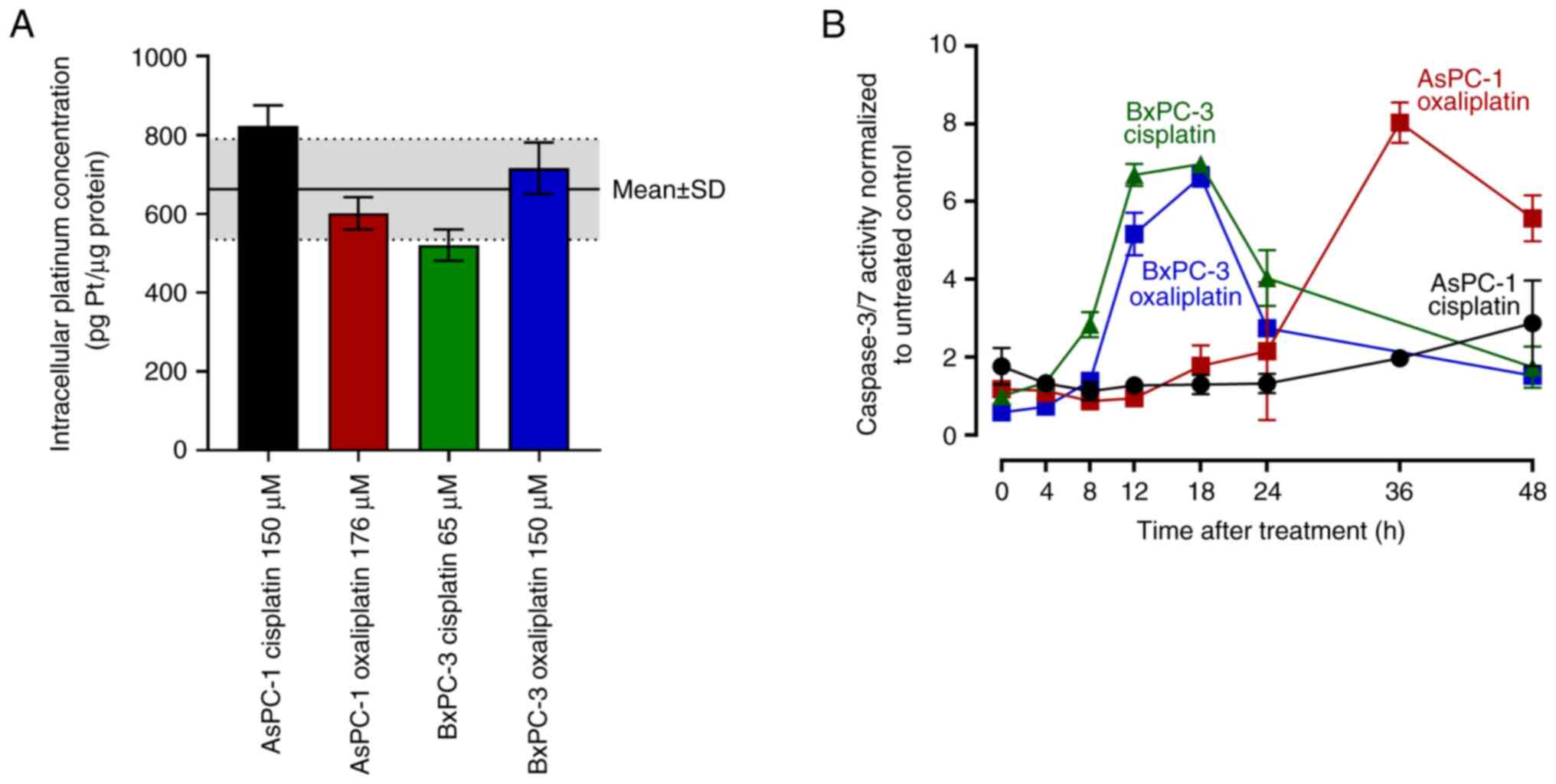
Figure 5

Caspase 3/7 activity upon similar
platinum drug challenge. (A) Validation of similar total
intracellular platinum concentrations in AsPC-1 and BxPC-3 cells
after treatment with respective drug concentrations. Data are
presented as the mean ± SD of four to five independent experiments.
The black line represents the mean total intracellular platinum
concentration of the four groups with the SD (gray area). (B)
Kinetics of caspase 3/7 activity in cells after treatment with
respective extracellular concentrations leading to similar total
intracellular platinum concentrations. Data are presented as the
mean ± SD of three to six independent experiments, normalized to
the untreated control at the respective time point.

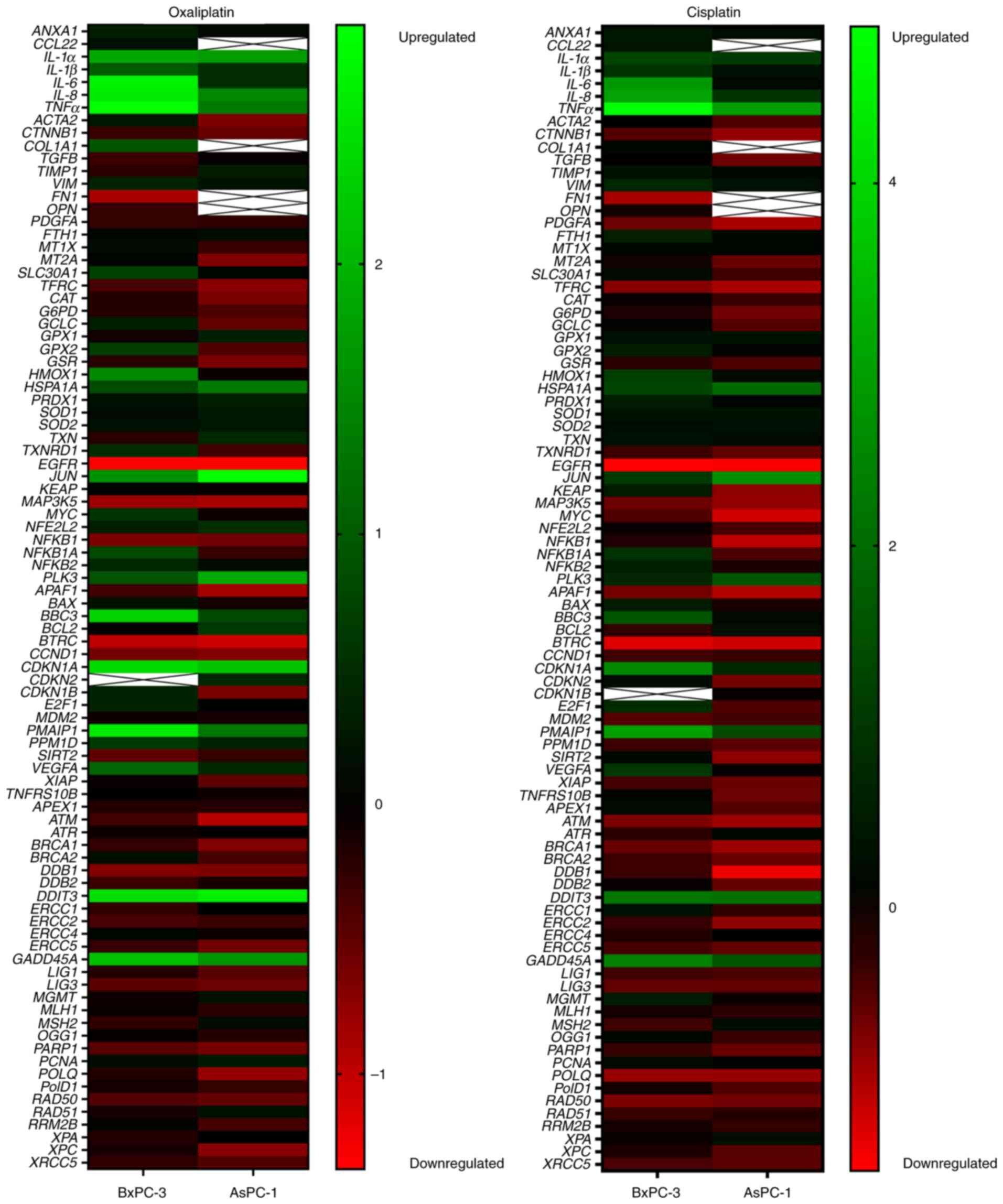
Figure 6

Treatment-related gene expression
alterations. Heatmap of gene expression profiling of AsPC-1 and
BxPC-3 cells after treatment with oxaliplatin or cisplatin
concentrations that led to identical total intracellular platinum
concentrations each. The log2 mean values of three independent
experiments (with technical duplicates each) are shown, normalized
to the untreated control set to 0. Missing values are indicated by
white boxes.

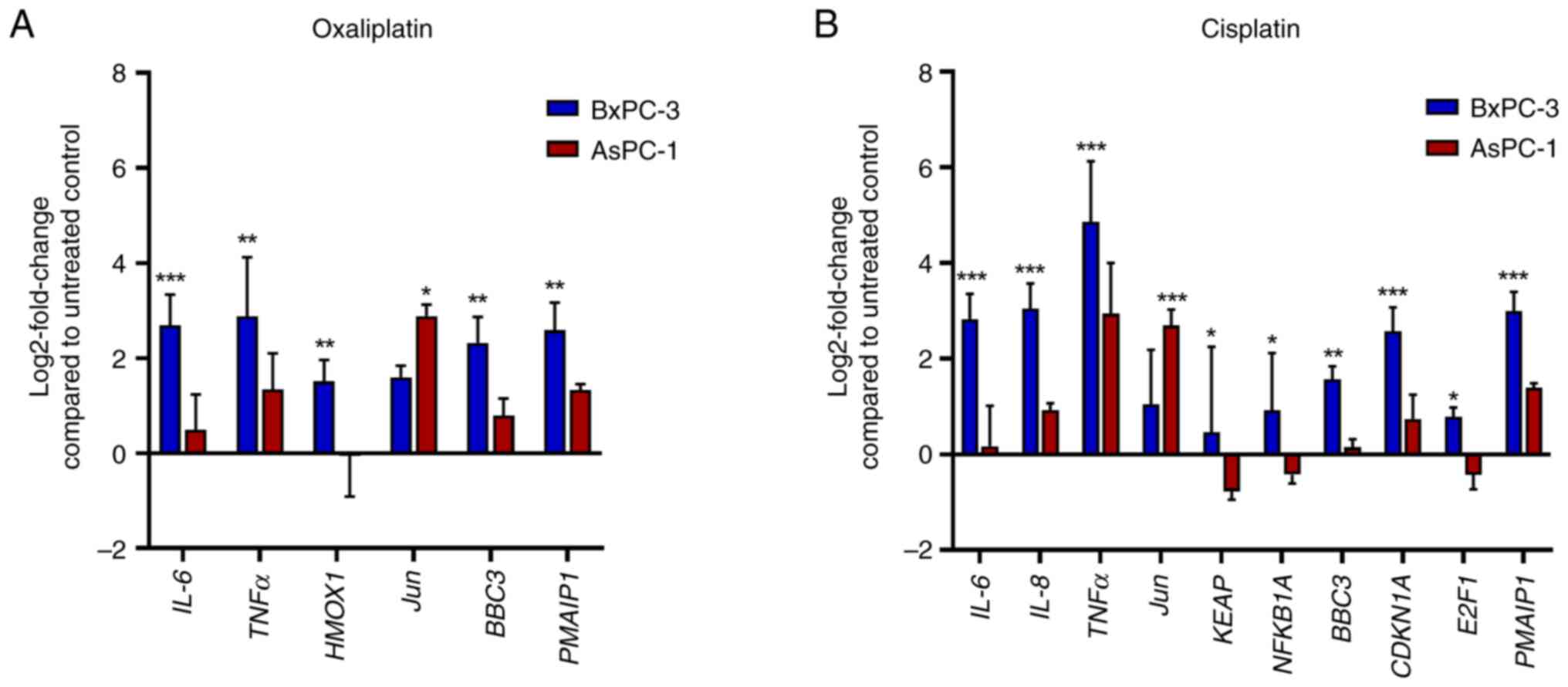
Figure 7

Treatment-related significant gene
expression alterations. Statistically significant log2-fold changes
of expression levels after exposure of AsPC-1 or BxPC-3 cells to
(A) oxaliplatin or (B) cisplatin, which led to identical total
intracellular platinum concentrations each. The log2 mean values ±
SD of three independent experiments (with technical duplicates
each) are shown, normalized to the untreated control set to 0.
*P<0.01, **P<0.001, ***P<0.0001 indicates a significant
difference of gene expression between AsPC-1 and BxPC-3 and is
placed above the cell line with higher mRNA expression.

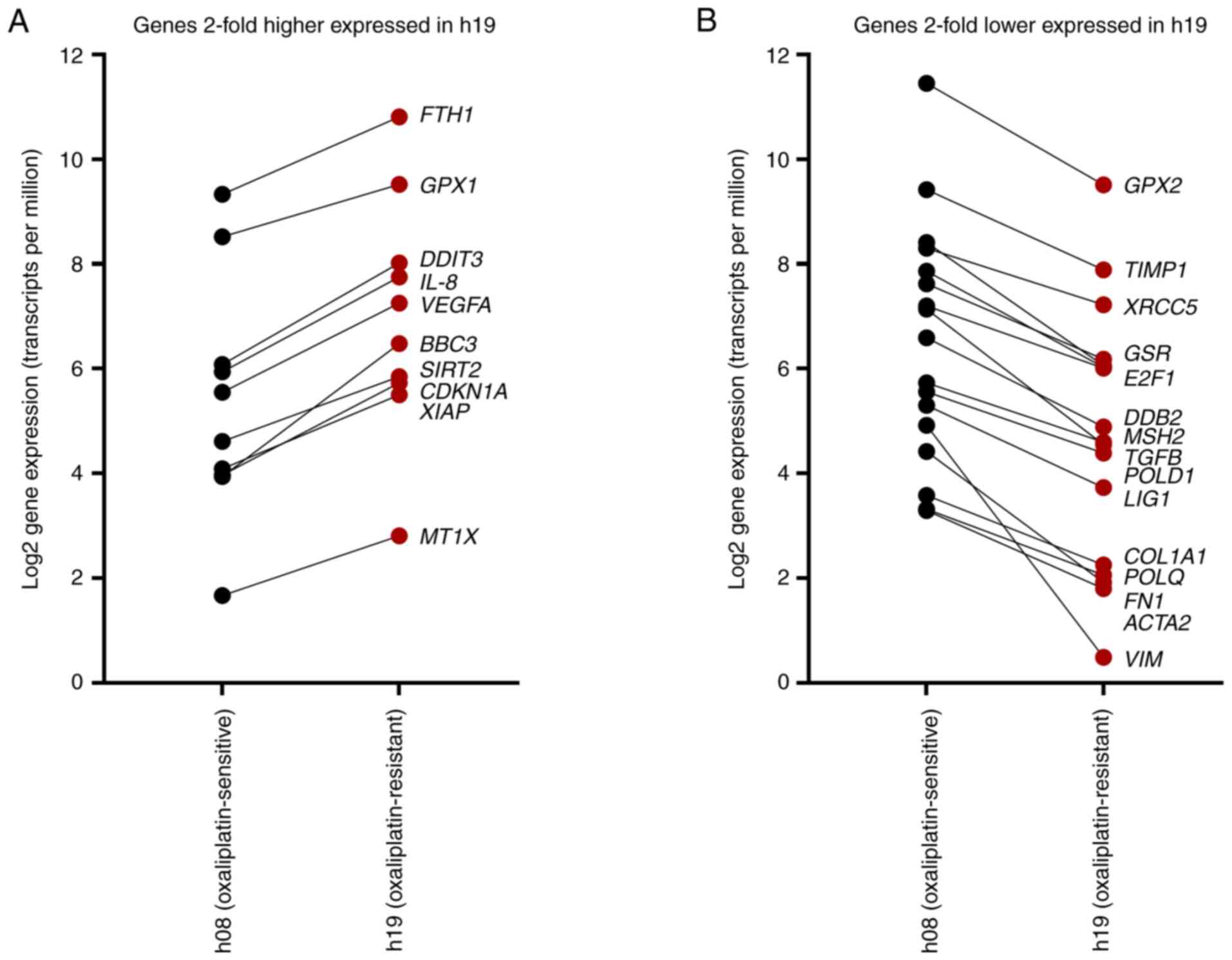
Figure 8

Relative gene expression levels in
human patient-derived organoids. Genes with (A) 2-fold higher or
(B) 2-fold lower expression levels in h19 (red) compared with h08
(black). Log2 gene expression is shown as transcripts per
million.
View References

1 

Neoptolemos JP, Kleeff J, Michl P, Costello E, Greenhalf W and Palmer DH: Therapeutic developments in pancreatic cancer: Current and future perspectives. Nat Rev Gastroenterol Hepatol. 15:333–348. 2018. View Article : Google Scholar : PubMed/NCBI

2 

Hu ZI and O'Reilly EM: Therapeutic developments in pancreatic cancer. Nat Rev Gastroenterol Hepatol. 21:7–24. 2024. View Article : Google Scholar : PubMed/NCBI

3 

Gresham GK, Wells GA, Gill S, Cameron C and Jonker DJ: Chemotherapy regimens for advanced pancreatic cancer: A systematic review and network Meta-analysis. BMC Cancer. 27:4712014. View Article : Google Scholar : PubMed/NCBI

4 

Chan K, Shah K, Lien K, Coyle D, Lam H and Ko YJ: A Bayesian meta–analysis of multiple treatment comparisons of systemic regimens for advanced pancreatic cancer. PLoS One. 9:e1087492014. View Article : Google Scholar : PubMed/NCBI

5 

Springfeld C, Jäger D, Büchler MW, Strobel O, Hackert T, Palmer DH and Neoptolemos JP: Chemotherapy for pancreatic cancer. Presse Med. 48:e159–e174. 2019. View Article : Google Scholar : PubMed/NCBI

6 

Martinez-Balibrea E, Martínez-Cardús A, Ginés A, Ruiz de Porras V, Moutinho C, Layos L, Manzano JL, Bugés C, Bystrup S, Esteller M and Abad A: Tumor-related molecular mechanisms of oxaliplatin resistance. Mol Cancer Ther. 14:1767–1776. 2015. View Article : Google Scholar : PubMed/NCBI

7 

Burger H, Loos WJ, Eechoute K, Verweij J, Mathijssen RH and Wiemer EA: Drug transporters of Platinum-based anticancer agents and their clinical significance. Drug Resist Updat. 14:22–34. 2011. View Article : Google Scholar : PubMed/NCBI

8 

Buß I, Hamacher A, Sarin N, Kassack MU and Kalayda GV: Relevance of copper transporter 1 and organic cation transporters 1–3 for oxaliplatin uptake and drug resistance in colorectal cancer cells. Metallomics. 10:414–425. 2018. View Article : Google Scholar

9 

Martin LP, Hamilton TC and Schilder RJ: Platinum resistance: The role of DNA repair pathways. Clin Cancer Res. 14:1291–1295. 2008. View Article : Google Scholar : PubMed/NCBI

10 

Grierson PM, Dodhiawala PB, Cheng Y, Chen TH, Khawar IA, Wei Q, Zhang D, Li L, Herndon J, Monahan JB, et al: The MK2/Hsp27 axis is a major survival mechanism for pancreatic ductal adenocarcinoma under genotoxic stress. Sci Transl Med. 13:eabb54452021.PubMed/NCBI

11 

Melisi D, Xia Q, Paradiso G, Ling J, Moccia T, Carbone C, Budillon A, Abbruzzese JL and Chiao PJ: Modulation of pancreatic cancer chemoresistance by inhibition of TAK1. J Natl Cancer Inst. 103:1190–1204. 2011. View Article : Google Scholar : PubMed/NCBI

12 

Muniz VP, Askeland RW, Zhang X, Reed SM, Tompkins VS, Hagen J, McDowell BD, Button A, Smith BJ, Weydert JA, et al: RABL6A promotes oxaliplatin resistance in tumor cells and is a new marker of survival for resected pancreatic ductal adenocarcinoma patients. Genes Cancer. 4:273–284. 2013. View Article : Google Scholar : PubMed/NCBI

13 

Jing W, Song N, Liu Y, Qu X, Hou K, Yang X and Che X: DNA methyltransferase 3a modulates chemosensitivity to gemcitabine and oxaliplatin via CHK1 and AKT in p53-deficient pancreatic cancer cells. Mol Med Rep. 17:117–124. 2018.PubMed/NCBI

14 

Pishvaian MJ, Biankin AV, Bailey P, Chang DK, Laheru D, Wolfgang CL and Brody JR: BRCA2 secondary mutation-mediated resistance to platinum and PARP Inhibitor-based therapy in pancreatic cancer. Br J Cancer. 116:1021–1026. 2017. View Article : Google Scholar : PubMed/NCBI

15 

Lal S, Burkhart RA, Beeharry N, Bhattacharjee V, Londin ER, Cozzitorto JA, Romeo C, Jimbo M, Norris ZA, Yeo CJ, et al: HuR posttranscriptionally regulates WEE1: Implications for the DNA damage response in pancreatic cancer cells. Cancer Res. 74:1128–1140. 2014. View Article : Google Scholar : PubMed/NCBI

16 

Xia R, Hu C, Ye Y, Zhang X, Li T, He R, Zheng S, Wen X and Chen R: HNF1A regulates oxaliplatin resistance in pancreatic cancer by targeting 53BP1. Int J Oncol. 62:452023. View Article : Google Scholar : PubMed/NCBI

17 

An J, Kurilov R, Peccerella T, Bergmann F, Edderkaoui M, Lim A, Zhou X, Pfütze K, Schulz A, Wolf S, et al: Metavert synergises with standard cytotoxics in human PDAC organoids and is associated with transcriptomic signatures of therapeutic response. Transl Oncol. 49:1021092024. View Article : Google Scholar : PubMed/NCBI

18 

Peters T, Lindenmaier H, Haefeli WE and Weiss J: Interaction of the mitotic kinesin Eg5 inhibitor monastrol with P-glycoprotein. Naunyn Schmiedebergs Arch Pharmacol. 372:291–299. 2006. View Article : Google Scholar : PubMed/NCBI

19 

Fischer BM, Neumann D, Piberger AL, Risnes SF, Köberle B and Hartwig A: Use of high-throughput RT-qPCR to assess modulations of gene expression profiles related to genomic stability and interactions by cadmium. Arch Toxicol. 90:2745–2761. 2016. View Article : Google Scholar : PubMed/NCBI

20 

Rose F, Köberle B, Honnen S, Bay C, Burhenne J, Weiss J, Haefeli WE and Theile D: RNA is a pro-apoptotic target of cisplatin in cancer cell lines and C. elegans. Biomed Pharmacother. 173:1164502024. View Article : Google Scholar : PubMed/NCBI

21 

Pfaffl MW: A new mathematical model for relative quantification in real-time RT-PCR. Nucleic Acids Res. 29:e452001. View Article : Google Scholar : PubMed/NCBI

22 

Albermann N, Schmitz-Winnenthal FH, Z'graggen K, Volk C, Hoffmann MM, Haefeli WE and Weiss J: Expression of the drug transporters MDR1/ABCB1, MRP1/ABCC1, MRP2/ABCC2, BCRP/ABCG2, and PXR in peripheral blood mononuclear cells and their relationship with the expression in intestine and liver. Biochem Pharmacol. 70:949–958. 2005. View Article : Google Scholar : PubMed/NCBI

23 

Weiss J, Herzog M and Haefeli WE: Differential modulation of the expression of important drug metabolising enzymes and transporters by endothelin-1 receptor antagonists ambrisentan and bosentan in vitro. Eur J Pharmacol. 660:298–304. 2011. View Article : Google Scholar : PubMed/NCBI

24 

Theile D, Ketabi-Kiyanvash N, Herold-Mende C, Dyckhoff G, Efferth T, Bertholet V, Haefeli WE and Weiss J: Evaluation of drug transporters' significance for multidrug resistance in head and neck squamous cell carcinoma. Head Neck. 33:959–968. 2011. View Article : Google Scholar : PubMed/NCBI

25 

Vandesompele J, De Preter K, Pattyn F, Poppe B, Van Roy N, De Paepe A and Speleman F: Accurate normalization of Real-time quantitative RT-PCR data by geometric averaging of multiple internal control genes. Genome Biol. 3:RESEARCH00342002. View Article : Google Scholar : PubMed/NCBI

26 

Kuo SH, Yang SH, Wei MF, Lee HW, Tien YW, Cheng AL and Yeh KH: Contribution of nuclear BCL10 expression to tumor progression and poor prognosis of advanced and/or metastatic pancreatic ductal adenocarcinoma by activating NF-κB-related signaling. Cancer Cell Int. 21:4362021. View Article : Google Scholar : PubMed/NCBI

27 

Lee JH, Lee SH, Lee SK, Choi JH, Lim S, Kim MS, Lee KM, Lee MW, Ku JL, Kim DH, et al: Antiproliferative activity of krukovine by regulating transmembrane protein 139 (TMEM139) in Oxaliplatin-resistant pancreatic cancer cells. Cancers (Basel). 15:26422023. View Article : Google Scholar : PubMed/NCBI

28 

Noordhuis P, Laan AC, van de Born K, Honeywell RJ and Peters GJ: Coexisting molecular determinants of acquired oxaliplatin resistance in human colorectal and ovarian cancer cell lines. Int J Mol Sci. 20:36192019. View Article : Google Scholar : PubMed/NCBI

29 

Biswas R, Bugde P, He J, Merien F, Lu J, Liu DX, Myint K, Liu J, McKeage M and Li Y: Transport-mediated oxaliplatin resistance associated with endogenous overexpression of MRP2 in Caco-2 and PANC-1 Cells. Cancers (Basel). 11:13302019. View Article : Google Scholar : PubMed/NCBI

30 

Myint K, Biswas R, Li Y, Jong N, Jamieson S, Liu J, Han C, Squire C, Merien F, Lu J, et al: Identification of MRP2 as a targetable factor limiting oxaliplatin accumulation and response in gastrointestinal cancer. Sci Rep. 9:22452019. View Article : Google Scholar : PubMed/NCBI

31 

Mohelnikova-Duchonova B, Brynychova V, Hlavac V, Kocik M, Oliverius M, Hlavsa J, Honsova E, Mazanec J, Kala Z, Melichar B and Soucek P: The association between the expression of solute carrier transporters and the prognosis of pancreatic cancer. Cancer Chemother Pharmacol. 72:669–682. 2013. View Article : Google Scholar : PubMed/NCBI

32 

Cervenkova L, Vycital O, Bruha J, Rosendorf J, Palek R, Liska V, Daum O, Mohelnikova-Duchonova B and Soucek P: Protein expression of ABCC2 and SLC22A3 associates with prognosis of pancreatic adenocarcinoma. Sci Rep. 9:197822019. View Article : Google Scholar : PubMed/NCBI

33 

Deer EL, González-Hernández J, Coursen JD, Shea JE, Ngatia J, Scaife CL, Firpo MA and Mulvihill SJ: Phenotype and genotype of pancreatic cancer cell lines. Pancreas. 39:425–435. 2010. View Article : Google Scholar : PubMed/NCBI

34 

Sugimoto H, Nakamura M, Yoda H, Hiraoka K, Shinohara K, Sang M, Fujiwara K, Shimozato O, Nagase H and Ozaki T: Silencing of RUNX2 enhances gemcitabine sensitivity of p53-deficient human pancreatic cancer AsPC-1 cells through the stimulation of TAp63-mediated cell death. Cell Death Dis. 6:e19142015. View Article : Google Scholar : PubMed/NCBI

35 

Detjen KM, Farwig K, Welzel M, Wiedenmann B and Rosewicz S: Interferon gamma inhibits growth of human pancreatic carcinoma cells via caspase-1 dependent induction of apoptosis. Gut. 49:251–262. 2001. View Article : Google Scholar : PubMed/NCBI

Related Articles

  • Abstract
  • View
  • Download
  • Twitter
Copy and paste a formatted citation
Spandidos Publications style
Röttgen H, Theurer L, Peccerella T, Sandu K, Weiss J, Burhenne J, Neoptolemos JP, Köberle B and Theile D: Oxaliplatin resistance in pancreatic ductal adenocarcinoma is non‑significantly mediated by diminished drug uptake but is highly linked to a poor apoptotic response to the cytotoxic threat. Oncol Rep 55: 22, 2026.
APA
Röttgen, H., Theurer, L., Peccerella, T., Sandu, K., Weiss, J., Burhenne, J. ... Theile, D. (2026). Oxaliplatin resistance in pancreatic ductal adenocarcinoma is non‑significantly mediated by diminished drug uptake but is highly linked to a poor apoptotic response to the cytotoxic threat. Oncology Reports, 55, 22. https://doi.org/10.3892/or.2025.9027
MLA
Röttgen, H., Theurer, L., Peccerella, T., Sandu, K., Weiss, J., Burhenne, J., Neoptolemos, J. P., Köberle, B., Theile, D."Oxaliplatin resistance in pancreatic ductal adenocarcinoma is non‑significantly mediated by diminished drug uptake but is highly linked to a poor apoptotic response to the cytotoxic threat". Oncology Reports 55.1 (2026): 22.
Chicago
Röttgen, H., Theurer, L., Peccerella, T., Sandu, K., Weiss, J., Burhenne, J., Neoptolemos, J. P., Köberle, B., Theile, D."Oxaliplatin resistance in pancreatic ductal adenocarcinoma is non‑significantly mediated by diminished drug uptake but is highly linked to a poor apoptotic response to the cytotoxic threat". Oncology Reports 55, no. 1 (2026): 22. https://doi.org/10.3892/or.2025.9027
Copy and paste a formatted citation
x
Spandidos Publications style
Röttgen H, Theurer L, Peccerella T, Sandu K, Weiss J, Burhenne J, Neoptolemos JP, Köberle B and Theile D: Oxaliplatin resistance in pancreatic ductal adenocarcinoma is non‑significantly mediated by diminished drug uptake but is highly linked to a poor apoptotic response to the cytotoxic threat. Oncol Rep 55: 22, 2026.
APA
Röttgen, H., Theurer, L., Peccerella, T., Sandu, K., Weiss, J., Burhenne, J. ... Theile, D. (2026). Oxaliplatin resistance in pancreatic ductal adenocarcinoma is non‑significantly mediated by diminished drug uptake but is highly linked to a poor apoptotic response to the cytotoxic threat. Oncology Reports, 55, 22. https://doi.org/10.3892/or.2025.9027
MLA
Röttgen, H., Theurer, L., Peccerella, T., Sandu, K., Weiss, J., Burhenne, J., Neoptolemos, J. P., Köberle, B., Theile, D."Oxaliplatin resistance in pancreatic ductal adenocarcinoma is non‑significantly mediated by diminished drug uptake but is highly linked to a poor apoptotic response to the cytotoxic threat". Oncology Reports 55.1 (2026): 22.
Chicago
Röttgen, H., Theurer, L., Peccerella, T., Sandu, K., Weiss, J., Burhenne, J., Neoptolemos, J. P., Köberle, B., Theile, D."Oxaliplatin resistance in pancreatic ductal adenocarcinoma is non‑significantly mediated by diminished drug uptake but is highly linked to a poor apoptotic response to the cytotoxic threat". Oncology Reports 55, no. 1 (2026): 22. https://doi.org/10.3892/or.2025.9027
Follow us
  • Twitter
  • LinkedIn
  • Facebook
About
  • Spandidos Publications
  • Careers
  • Cookie Policy
  • Privacy Policy
How can we help?
  • Help
  • Live Chat
  • Contact
  • Email to our Support Team