Spandidos Publications Logo
  • About
    • About Spandidos
    • Aims and Scopes
    • Abstracting and Indexing
    • Editorial Policies
    • Reprints and Permissions
    • Job Opportunities
    • Terms and Conditions
    • Contact
  • Journals
    • All Journals
    • Oncology Letters
      • Oncology Letters
      • Information for Authors
      • Editorial Policies
      • Editorial Board
      • Aims and Scope
      • Abstracting and Indexing
      • Bibliographic Information
      • Archive
    • International Journal of Oncology
      • International Journal of Oncology
      • Information for Authors
      • Editorial Policies
      • Editorial Board
      • Aims and Scope
      • Abstracting and Indexing
      • Bibliographic Information
      • Archive
    • Molecular and Clinical Oncology
      • Molecular and Clinical Oncology
      • Information for Authors
      • Editorial Policies
      • Editorial Board
      • Aims and Scope
      • Abstracting and Indexing
      • Bibliographic Information
      • Archive
    • Experimental and Therapeutic Medicine
      • Experimental and Therapeutic Medicine
      • Information for Authors
      • Editorial Policies
      • Editorial Board
      • Aims and Scope
      • Abstracting and Indexing
      • Bibliographic Information
      • Archive
    • International Journal of Molecular Medicine
      • International Journal of Molecular Medicine
      • Information for Authors
      • Editorial Policies
      • Editorial Board
      • Aims and Scope
      • Abstracting and Indexing
      • Bibliographic Information
      • Archive
    • Biomedical Reports
      • Biomedical Reports
      • Information for Authors
      • Editorial Policies
      • Editorial Board
      • Aims and Scope
      • Abstracting and Indexing
      • Bibliographic Information
      • Archive
    • Oncology Reports
      • Oncology Reports
      • Information for Authors
      • Editorial Policies
      • Editorial Board
      • Aims and Scope
      • Abstracting and Indexing
      • Bibliographic Information
      • Archive
    • Molecular Medicine Reports
      • Molecular Medicine Reports
      • Information for Authors
      • Editorial Policies
      • Editorial Board
      • Aims and Scope
      • Abstracting and Indexing
      • Bibliographic Information
      • Archive
    • World Academy of Sciences Journal
      • World Academy of Sciences Journal
      • Information for Authors
      • Editorial Policies
      • Editorial Board
      • Aims and Scope
      • Abstracting and Indexing
      • Bibliographic Information
      • Archive
    • International Journal of Functional Nutrition
      • International Journal of Functional Nutrition
      • Information for Authors
      • Editorial Policies
      • Editorial Board
      • Aims and Scope
      • Abstracting and Indexing
      • Bibliographic Information
      • Archive
    • International Journal of Epigenetics
      • International Journal of Epigenetics
      • Information for Authors
      • Editorial Policies
      • Editorial Board
      • Aims and Scope
      • Abstracting and Indexing
      • Bibliographic Information
      • Archive
    • Medicine International
      • Medicine International
      • Information for Authors
      • Editorial Policies
      • Editorial Board
      • Aims and Scope
      • Abstracting and Indexing
      • Bibliographic Information
      • Archive
  • Articles
  • Information
    • Information for Authors
    • Information for Reviewers
    • Information for Librarians
    • Information for Advertisers
    • Conferences
  • Language Editing
Spandidos Publications Logo
  • About
    • About Spandidos
    • Aims and Scopes
    • Abstracting and Indexing
    • Editorial Policies
    • Reprints and Permissions
    • Job Opportunities
    • Terms and Conditions
    • Contact
  • Journals
    • All Journals
    • Biomedical Reports
      • Information for Authors
      • Editorial Policies
      • Editorial Board
      • Aims and Scope
      • Abstracting and Indexing
      • Bibliographic Information
      • Archive
    • Experimental and Therapeutic Medicine
      • Information for Authors
      • Editorial Policies
      • Editorial Board
      • Aims and Scope
      • Abstracting and Indexing
      • Bibliographic Information
      • Archive
    • International Journal of Epigenetics
      • Information for Authors
      • Editorial Policies
      • Editorial Board
      • Aims and Scope
      • Abstracting and Indexing
      • Bibliographic Information
      • Archive
    • International Journal of Functional Nutrition
      • Information for Authors
      • Editorial Policies
      • Editorial Board
      • Aims and Scope
      • Abstracting and Indexing
      • Bibliographic Information
      • Archive
    • International Journal of Molecular Medicine
      • Information for Authors
      • Editorial Policies
      • Editorial Board
      • Aims and Scope
      • Abstracting and Indexing
      • Bibliographic Information
      • Archive
    • International Journal of Oncology
      • Information for Authors
      • Editorial Policies
      • Editorial Board
      • Aims and Scope
      • Abstracting and Indexing
      • Bibliographic Information
      • Archive
    • Medicine International
      • Information for Authors
      • Editorial Policies
      • Editorial Board
      • Aims and Scope
      • Abstracting and Indexing
      • Bibliographic Information
      • Archive
    • Molecular and Clinical Oncology
      • Information for Authors
      • Editorial Policies
      • Editorial Board
      • Aims and Scope
      • Abstracting and Indexing
      • Bibliographic Information
      • Archive
    • Molecular Medicine Reports
      • Information for Authors
      • Editorial Policies
      • Editorial Board
      • Aims and Scope
      • Abstracting and Indexing
      • Bibliographic Information
      • Archive
    • Oncology Letters
      • Information for Authors
      • Editorial Policies
      • Editorial Board
      • Aims and Scope
      • Abstracting and Indexing
      • Bibliographic Information
      • Archive
    • Oncology Reports
      • Information for Authors
      • Editorial Policies
      • Editorial Board
      • Aims and Scope
      • Abstracting and Indexing
      • Bibliographic Information
      • Archive
    • World Academy of Sciences Journal
      • Information for Authors
      • Editorial Policies
      • Editorial Board
      • Aims and Scope
      • Abstracting and Indexing
      • Bibliographic Information
      • Archive
  • Articles
  • Information
    • For Authors
    • For Reviewers
    • For Librarians
    • For Advertisers
    • Conferences
  • Language Editing
Login Register Submit
  • This site uses cookies
  • You can change your cookie settings at any time by following the instructions in our Cookie Policy. To find out more, you may read our Privacy Policy.

    I agree
Search articles by DOI, keyword, author or affiliation
Search
Advanced Search
presentation
Oncology Reports
Join Editorial Board Propose a Special Issue
Print ISSN: 1021-335X Online ISSN: 1791-2431
Journal Cover
February-2026 Volume 55 Issue 2

Full Size Image

Sign up for eToc alerts
Recommend to Library

Journals

International Journal of Molecular Medicine

International Journal of Molecular Medicine

International Journal of Molecular Medicine is an international journal devoted to molecular mechanisms of human disease.

International Journal of Oncology

International Journal of Oncology

International Journal of Oncology is an international journal devoted to oncology research and cancer treatment.

Molecular Medicine Reports

Molecular Medicine Reports

Covers molecular medicine topics such as pharmacology, pathology, genetics, neuroscience, infectious diseases, molecular cardiology, and molecular surgery.

Oncology Reports

Oncology Reports

Oncology Reports is an international journal devoted to fundamental and applied research in Oncology.

Experimental and Therapeutic Medicine

Experimental and Therapeutic Medicine

Experimental and Therapeutic Medicine is an international journal devoted to laboratory and clinical medicine.

Oncology Letters

Oncology Letters

Oncology Letters is an international journal devoted to Experimental and Clinical Oncology.

Biomedical Reports

Biomedical Reports

Explores a wide range of biological and medical fields, including pharmacology, genetics, microbiology, neuroscience, and molecular cardiology.

Molecular and Clinical Oncology

Molecular and Clinical Oncology

International journal addressing all aspects of oncology research, from tumorigenesis and oncogenes to chemotherapy and metastasis.

World Academy of Sciences Journal

World Academy of Sciences Journal

Multidisciplinary open-access journal spanning biochemistry, genetics, neuroscience, environmental health, and synthetic biology.

International Journal of Functional Nutrition

International Journal of Functional Nutrition

Open-access journal combining biochemistry, pharmacology, immunology, and genetics to advance health through functional nutrition.

International Journal of Epigenetics

International Journal of Epigenetics

Publishes open-access research on using epigenetics to advance understanding and treatment of human disease.

Medicine International

Medicine International

An International Open Access Journal Devoted to General Medicine.

Journal Cover
February-2026 Volume 55 Issue 2

Full Size Image

Sign up for eToc alerts
Recommend to Library

  • Article
  • Citations
    • Cite This Article
    • Download Citation
    • Create Citation Alert
    • Remove Citation Alert
    • Cited By
  • Similar Articles
    • Related Articles (in Spandidos Publications)
    • Similar Articles (Google Scholar)
    • Similar Articles (PubMed)
  • Download PDF
  • Download XML
  • View XML
Article Open Access

Saikosaponin D overcomes gemcitabine resistance in pancreatic cancer via AKT/mTOR pathway inhibition and synergistic induction of apoptosis and autophagy

  • Authors:
    • Rui Zheng
    • Yusi Liu
    • Sen Zhou
    • Guimei Liu
    • Xiaobin Liu
    • Yiyuan Yang
    • Yufu Zhang
  • View Affiliations / Copyright

    Affiliations: Department of Medical Immunology, Yan'an Medical College, Yan'an University, Yan'an, Shaanxi 716000, P.R. China, Department of Clinical Laboratory, The Affiliated Hospital of Yan'an University, Yan'an, Shaanxi 716000, P.R. China, Department of Hepatobiliary and Pancreatic Surgery, The Affiliated Hospital of Yan'an University, Yan'an, Shaanxi 716000, P.R. China
    Copyright: © Zheng et al. This is an open access article distributed under the terms of Creative Commons Attribution License.
  • Article Number: 28
    |
    Published online on: December 4, 2025
       https://doi.org/10.3892/or.2025.9033
  • Expand metrics +
Metrics: Total Views: 0 (Spandidos Publications: | PMC Statistics: )
Metrics: Total PDF Downloads: 0 (Spandidos Publications: | PMC Statistics: )
Cited By (CrossRef): 0 citations Loading Articles...

This article is mentioned in:


Abstract

Gemcitabine (GEM) is the first‑line chemotherapy drug for pancreatic cancer, but its efficacy is often limited by inherent drug resistance. Saikosaponin D (SSD), a bioactive triterpenoid saponin derived from the Bupleurum chinense root, exhibits anti‑inflammatory and antitumor properties; however, to the best of our knowledge, its role in pancreatic cancer and GEM sensitization remains unclear. The present study investigated the effects of SSD on the proliferation, apoptosis and autophagy of pancreatic cancer cells, and evaluated whether SSD can overcome GEM resistance to enhance its antitumor effects. Using MIA PaCa‑2 and AsPC‑1 cells, the sensitivity to SSD and GEM was assessed using Cell Counting Kit‑8 assays, H&E staining and colony formation assays. Optimal sub‑lethal concentrations of GEM (0.25 µmol/l), SSD (4 µmol/l) and their combination (0.25 µmol/l GEM + 4 µmol/l SSD) were identified. Apoptosis was evaluated through Hoechst 33258 staining and TUNEL assays, while autophagy was measured using the monodasylcadaverine method. Western blotting and immunocytochemical staining were used to analyze the expression levels of proteins related to apoptosis, AKT/mTOR signaling and autophagy. The results demonstrated that the SSD + GEM combination significantly inhibited pancreatic cancer cell proliferation in both MIA PaCa‑2 and AsPC‑1 cell lines, with proliferation being suppressed by nearly half. Similarly, the combination treatment induced apoptosis and enhanced autophagosome formation, suggesting potential synergistic effects when compared with GEM monotherapy. In conclusion, SSD synergistically enhanced the antitumor effects of GEM by inhibiting pancreatic cancer cell proliferation, and inducing apoptosis and autophagy. SSD may overcome GEM resistance by sensitizing cells through AKT/mTOR pathway inhibition.
View Figures

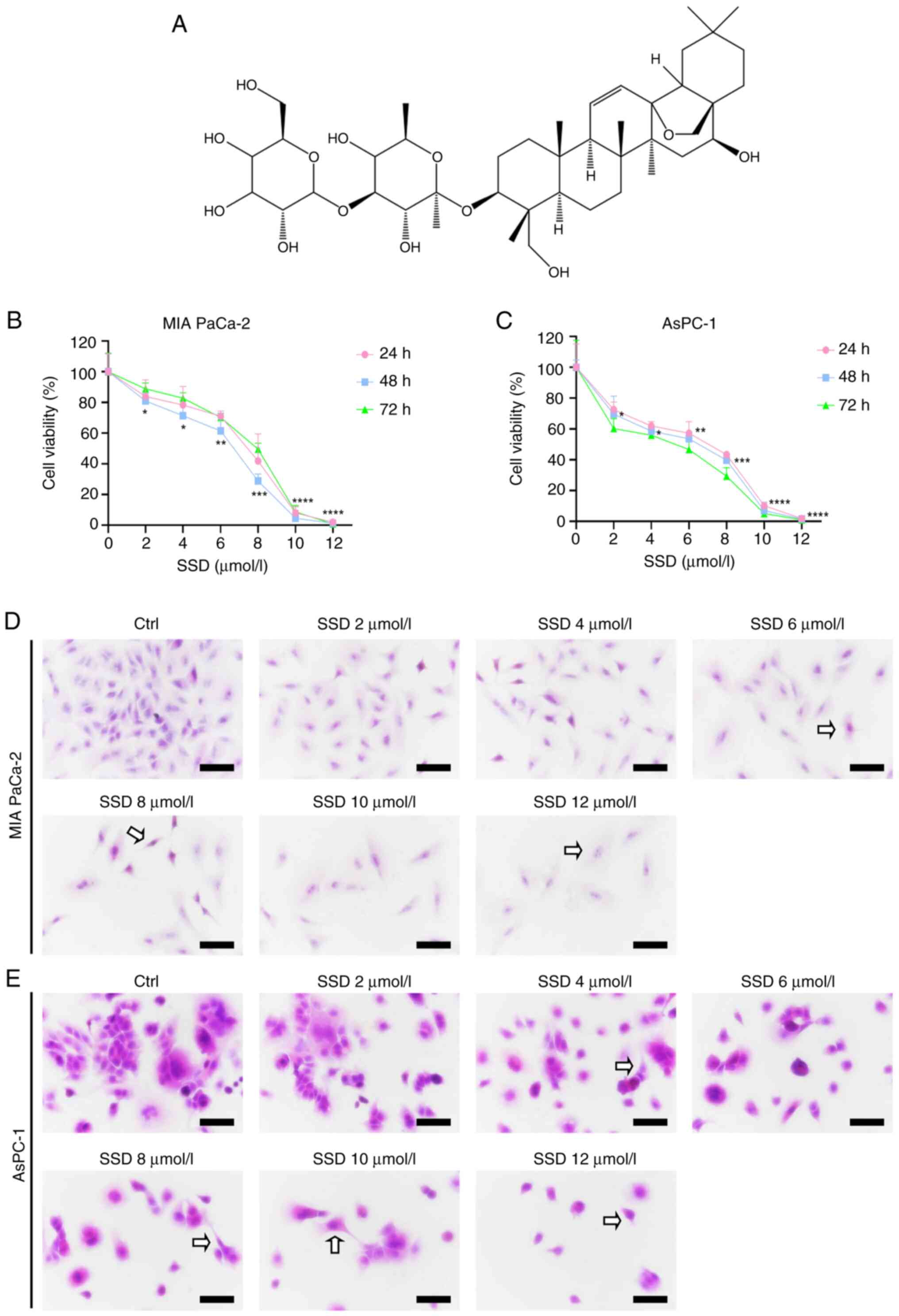
Figure 1

Dose-dependent effects of SSD on
pancreatic cancer cells. (A) Chemical structure of SSD. (B) MIA
PaCa-2 and (C) AsPC-1 cell viability after treatment with various
concentrations of SSD (0–12 µmol/l; 24–72 h; Cell Counting Kit-8
assay). The Ctrl group was treated with 0 µmol/l SSD. Morphological
changes in (D) MIA PaCa-2 and (E) AsPC-1 cells based on H&E
staining (magnification, ×40). Arrows point to SSD-induced
apoptotic alterations, including nuclear condensation, cytoplasmic
shrinkage and apoptotic bodies. Data are presented as the mean ± SD
(n=5). At the 48-h mark, S12 sharply reduced cell viability in MIA
PaCa-2 cells. The same effect was observed in AsPC-1 cells, where
S12 also significantly inhibited cell proliferation. The
statistical details for S12 are as follows: MIA PaCa-2 cells,
Padj<0.0001; η2=0.73; and AsPC-1 cells,
Padj<0.0001; η2=0.81. All P-values were
adjusted using the Benjamini–Hochberg method. Scale bar, 50 µm. The
significance indicators in (B and C) (*P<0.05, **P<0.01,
***P<0.001, ****P<0.0001) represent the comparison between
each SSD-treated group and the Ctrl group (0 µmol/l). Statistical
analysis was performed using one-way ANOVA followed by Tukey's post
hoc test. Ctrl, control; SSD, Saikosaponin D.

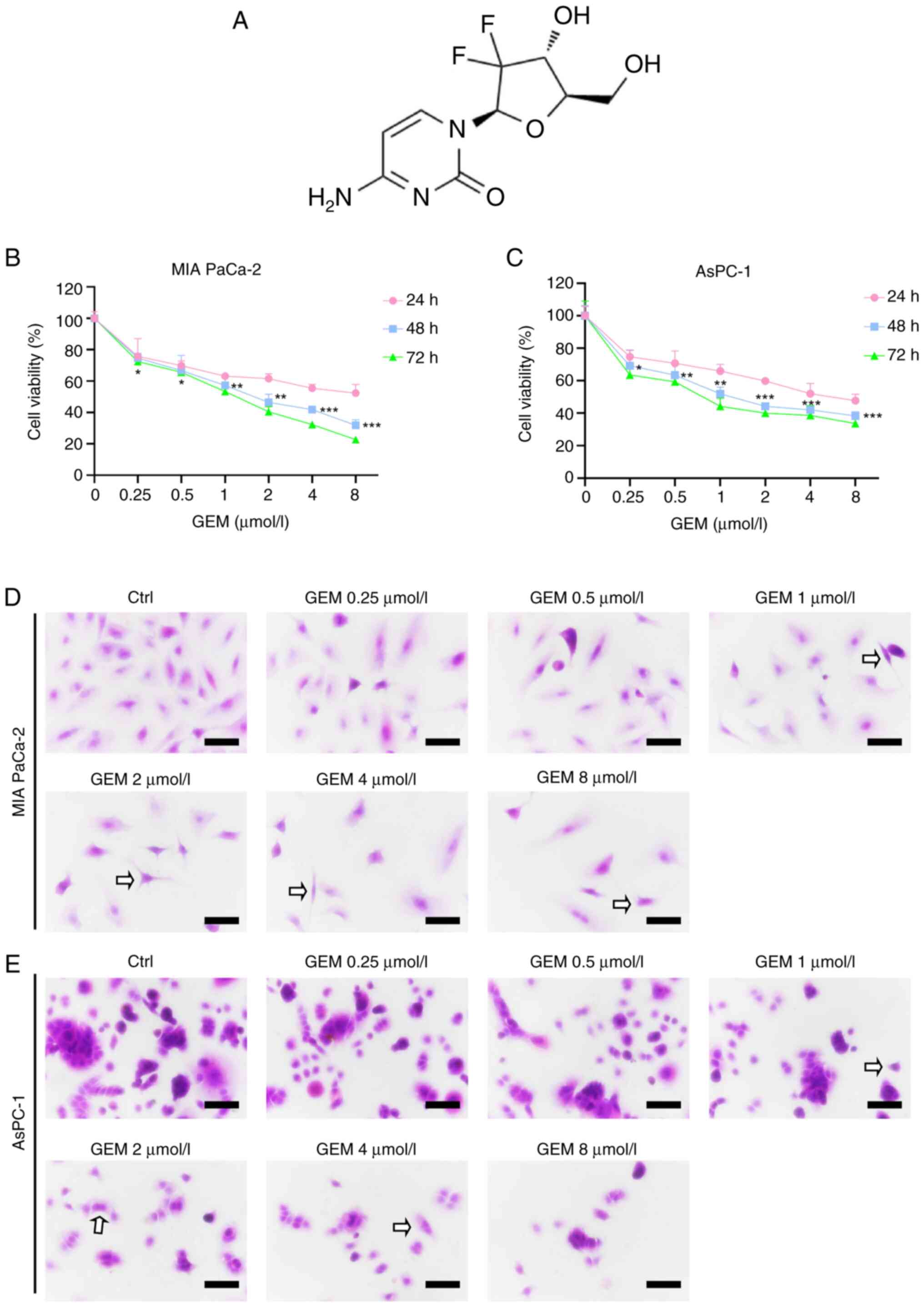
Figure 2

Dose- and time-dependent effects of
GEM on pancreatic cancer cells. (A) Chemical structure of GEM.
Viability of (B) MIA PaCa-2 and (C) AsPC-1 cells treated with
various concentrations of GEM (0–8 µmol/l; 24–72 h; Cell Counting
Kit-8 assay). The Ctrl group was treated with 0 µmol/l GEM.
Representative H&E staining images of (D) MIA PaCa-2 and (E)
AsPC-1 cells (magnification, ×40). Arrows indicate GEM-induced
morphological alterations characteristic of apoptosis. Data are
presented as the mean ± SD (n=5). All P-values were adjusted using
the Benjamini-Hochberg method. The significance indicators in (B
and C) (*P<0.05, **P<0.01, ***P<0.001) represent the
comparison between each GEM-treated group and the Ctrl group (0
µmol/l) at the same time point. Statistical analysis was performed
using one-way ANOVA followed by Tukey's post hoc test. Scale bar,
50 µm. Ctrl, control; GEM, gemcitabine.

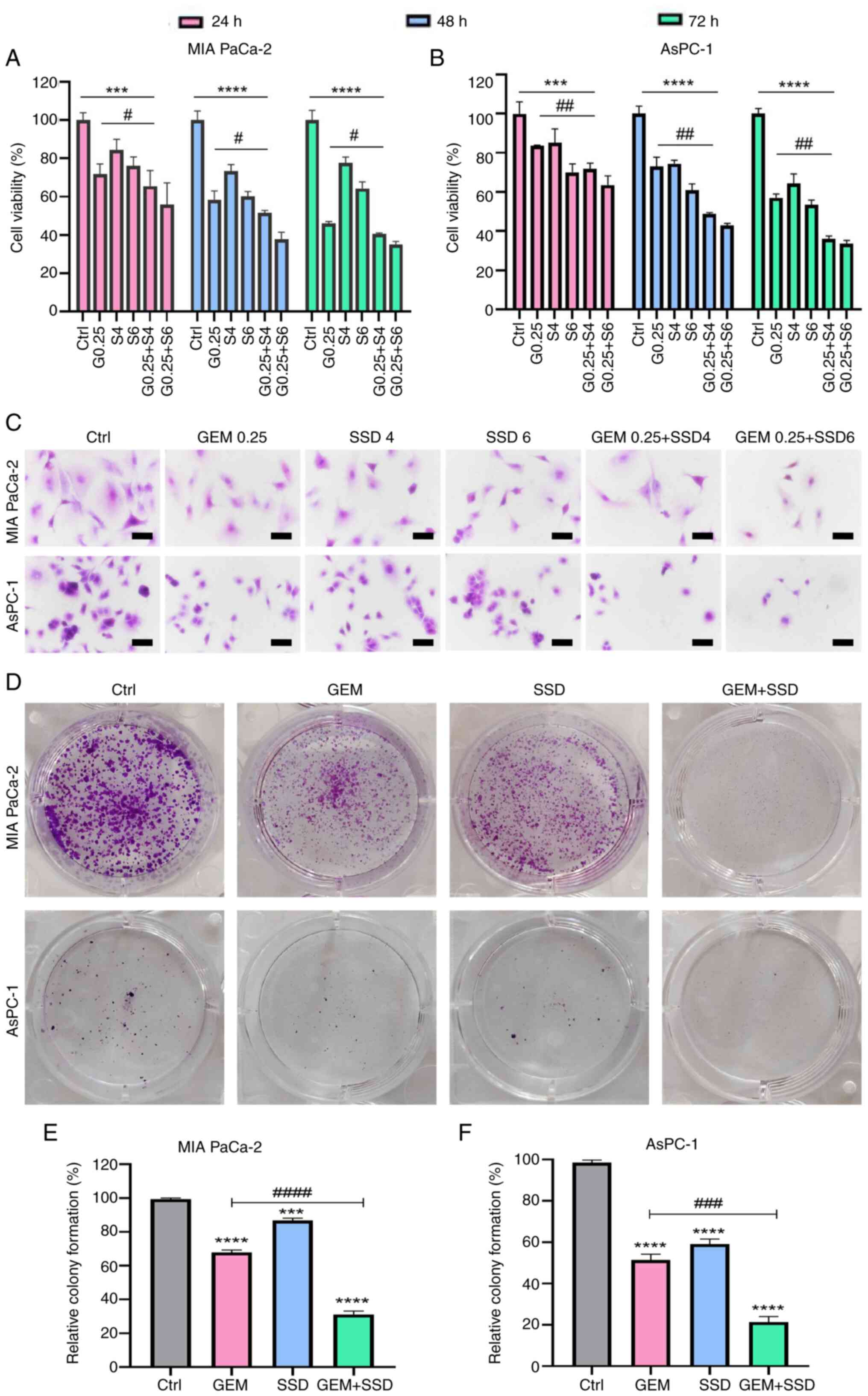
Figure 3

Combinatorial effects of GEM and SSD
on pancreatic cancer cells. Viability of (A) MIA PaCa-2 and (B)
AsPC-1 cells treated with G0.25, S4, S6 or combinations (G0.25 +
S4/S6) for 24–72 h. (C) H&E staining showing morphological
changes (magnification, ×40). Scale bar, 50 µm. (D-F) Colony
formation assays. (D) Representative images, and quantification in
(E) MIA PaCa-2 and (F) AsPC-1 cells. (D-F) GEM, 0.25 µmol/l and
SSD, 4 µmol/l. The colony formation rate for each group is
expressed as a percentage relative to the untreated control (Ctrl)
group, which was set to 100%. Note that the absolute colony-forming
capacity of the Ctrl group under baseline culture conditions was
defined as the reference point. Data are presented as the mean ± SD
(n=5). The data demonstrate that the combination treatment (G0.25 +
S4) resulted in significantly enhanced antitumor effects compared
with GEM monotherapy (G0.25). With regard to cell viability, the
combination was significantly more effective
(Padj=0.003; effect size: η2=0.62; 95% CI,
0.41–0.79). A strong synergistic effect was also observed in the
colony formation assay, where the combination treatment led to a
marked reduction in clonogenic survival (Padj=0.001;
effect size, η2=0.68; 95% CI, 0.46–0.83). All P-values
are Benjamini-Hochberg-adjusted. ***P<0.001, ****P<0.0001 for
comparisons vs. Ctrl; #P<0.05,
##P<0.01, ###P<0.001,
####P<0.0001 for G0.25 + S4 vs. G0.25. Statistical
analysis was performed using two-way ANOVA with Tukey's post hoc
test (A and B) and one-way ANOVA with Tukey's post hoc test (E and
F). Ctrl, control; GEM, gemcitabine; SSD, Saikosaponin D; G0.25,
0.25 µmol/l GEM; SX, X µmol/l SSD.

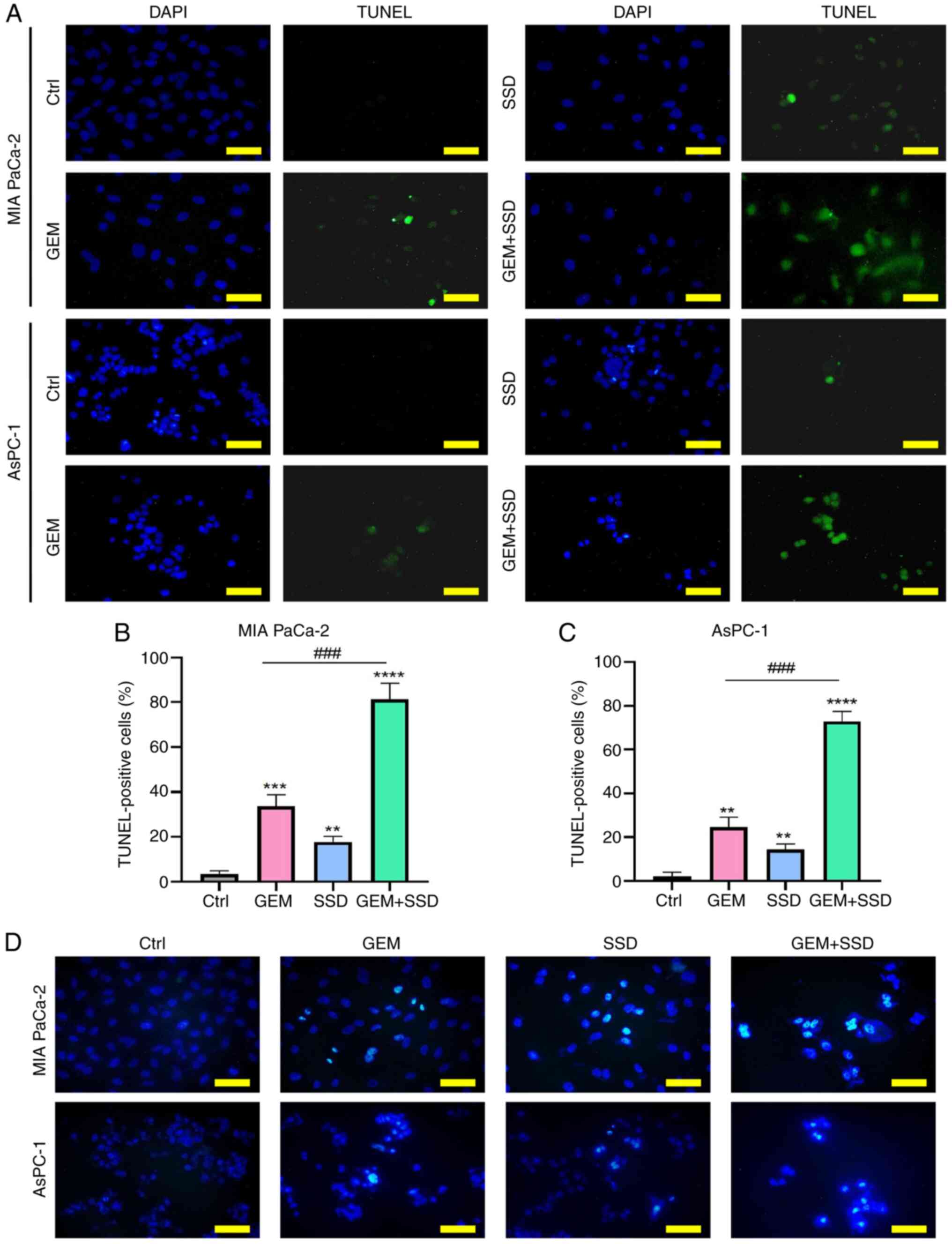
Figure 4

Apoptosis induction by GEM and SSD
combination therapy. (A) Representative TUNEL/DAPI staining images
(green, apoptotic cells; blue, nuclei) in MIA PaCa-2 (top) and
AsPC-1 (bottom) cells treated with Ctrl, G0.25, S4 or the
combination (G0.25 + S4). Quantification of TUNEL-positive cells in
(B) MIA PaCa-2 and (C) AsPC-1 cells. (D) Hoechst 33258 staining
showing apoptotic nuclei with condensed chromatin. In the figure,
GEM represents 0.25 µmol/l GEM and SSD represents 4 µmol/l SSD.
Data are presented as the mean ± SD (n=5). The data show that the
combination treatment (G0.25 + S4) significantly enhanced the
induction of apoptosis compared with GEM monotherapy (G0.25). The
combination treatment significantly increased apoptosis, evidenced
by a substantial rise in TUNEL-positive cells
(Padj=0.002; η2=0.59; 95% CI, 0.36–0.77) and
a corresponding increase in condensed chromatin, a hallmark of
apoptosis, as shown by Hoechst 33258 staining
(Padj=0.004; η2=0.55; 95% CI, 0.31–0.74). All
P-values are Benjamini-Hochberg-adjusted. Scale bar, 50 µm.
**P<0.01, ***P<0.001, ****P<0.0001 for comparisons vs.
Ctrl; ###P<0.001 for G0.25 + S4 vs. G0.25.
Statistical analysis was performed using one-way ANOVA with Tukey's
post hoc test for multiple comparisons. Ctrl, control; GEM,
gemcitabine; SSD, Saikosaponin D.

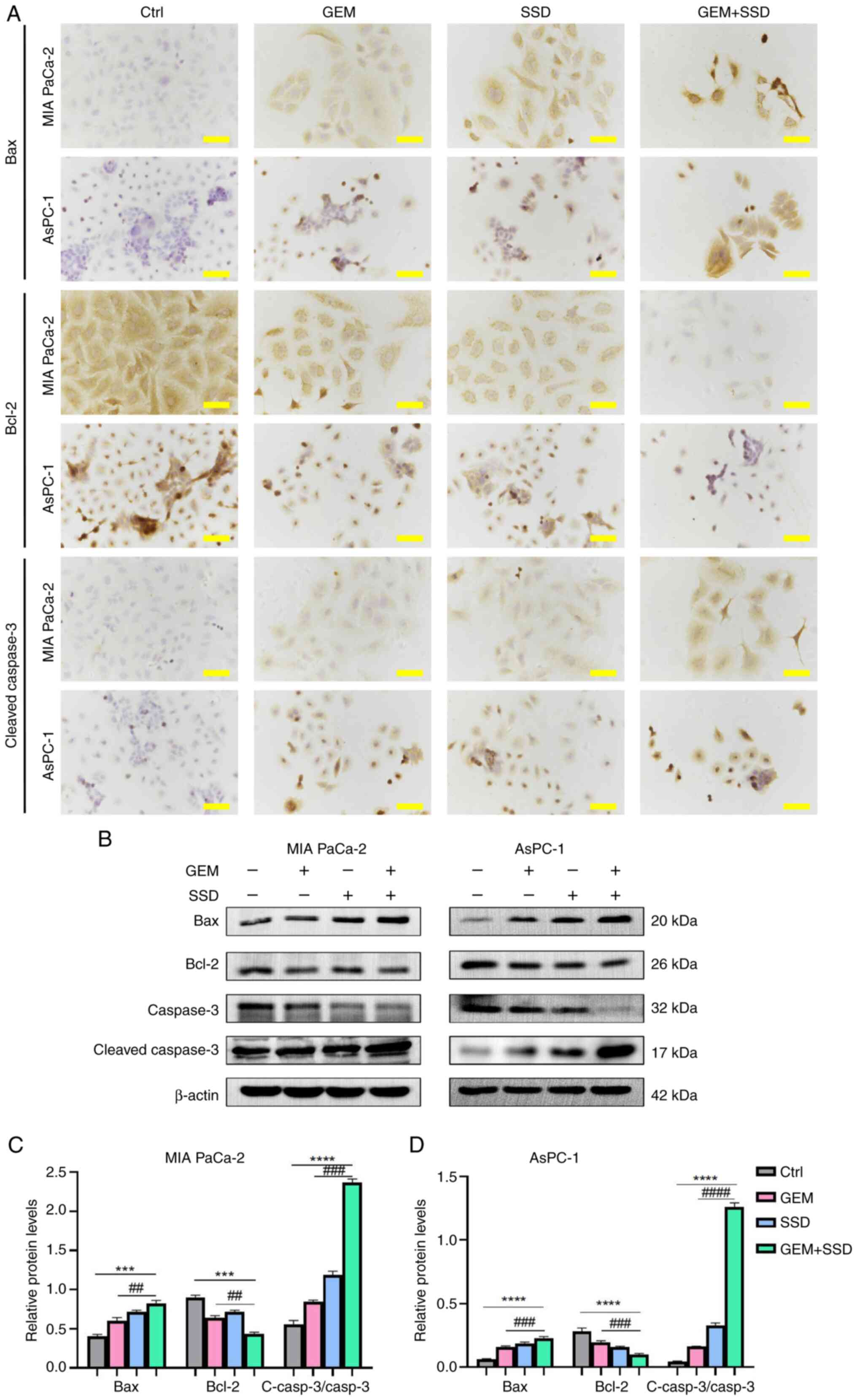
Figure 5

Molecular mechanisms of apoptosis
induction by GEM and SSD combination treatment. (A)
Immunocytochemistry of MIA PaCa-2 and AsPC-1 cells treated with
Ctrl, G0.25, S4 or the combination (G0.25 + S4; magnification,
×40). Scale bar, 50 µm. (B) Western blot analysis of apoptosis
markers Bax (20 kDa), Bcl-2 (26 kDa), caspase-3 (32 kDa) and
cleaved caspase-3 (17 kDa), and β-actin (42 kDa).
Semi-quantification of immunoblots for (C) MIA PaCa-2 and (D)
AsPC-1 cells. In the figure, GEM represents 0.25 µmol/l GEM and SSD
represents 4 µmol/l SSD. Data are presented as the mean ± SD (n=5).
The combination treatment (G0.25 + S4) increased the expression of
pro-apoptotic Bax and cleaved caspase-3, and elevated the
c-Casp3/Casp3 ratio, while decreasing the expression of
anti-apoptotic Bcl-2 compared with GEM monotherapy (G0.25).
Specifically, Bax expression increased by 2.3-fold in MIA PaCa-2
cells and 3.1-fold in AsPC-1 cells. Conversely, Bcl-2 expression
was reduced to 45 and 38% of GEM monotherapy levels in MIA PaCa-2
and AsPC-1 cells, respectively. The c-Casp3/Casp3 ratio was
significantly enhanced by the combination treatment, indicating
robust activation of the apoptotic executioner pathway. All
P-values are Benjamini-Hochberg-adjusted. ***P<0.001,
****P<0.0001 for G0.25 + S4 vs. Ctrl; ##P<0.01,
###P<0.001, ####P<0.0001 for G0.25 + S4
vs. G0.25. Statistical analysis was performed using one-way ANOVA
with Tukey's post hoc test for multiple comparisons. Ctrl, control;
GEM, gemcitabine; SSD, Saikosaponin D; Casp3, caspase-3; c-Casp3,
cleaved caspase-3.

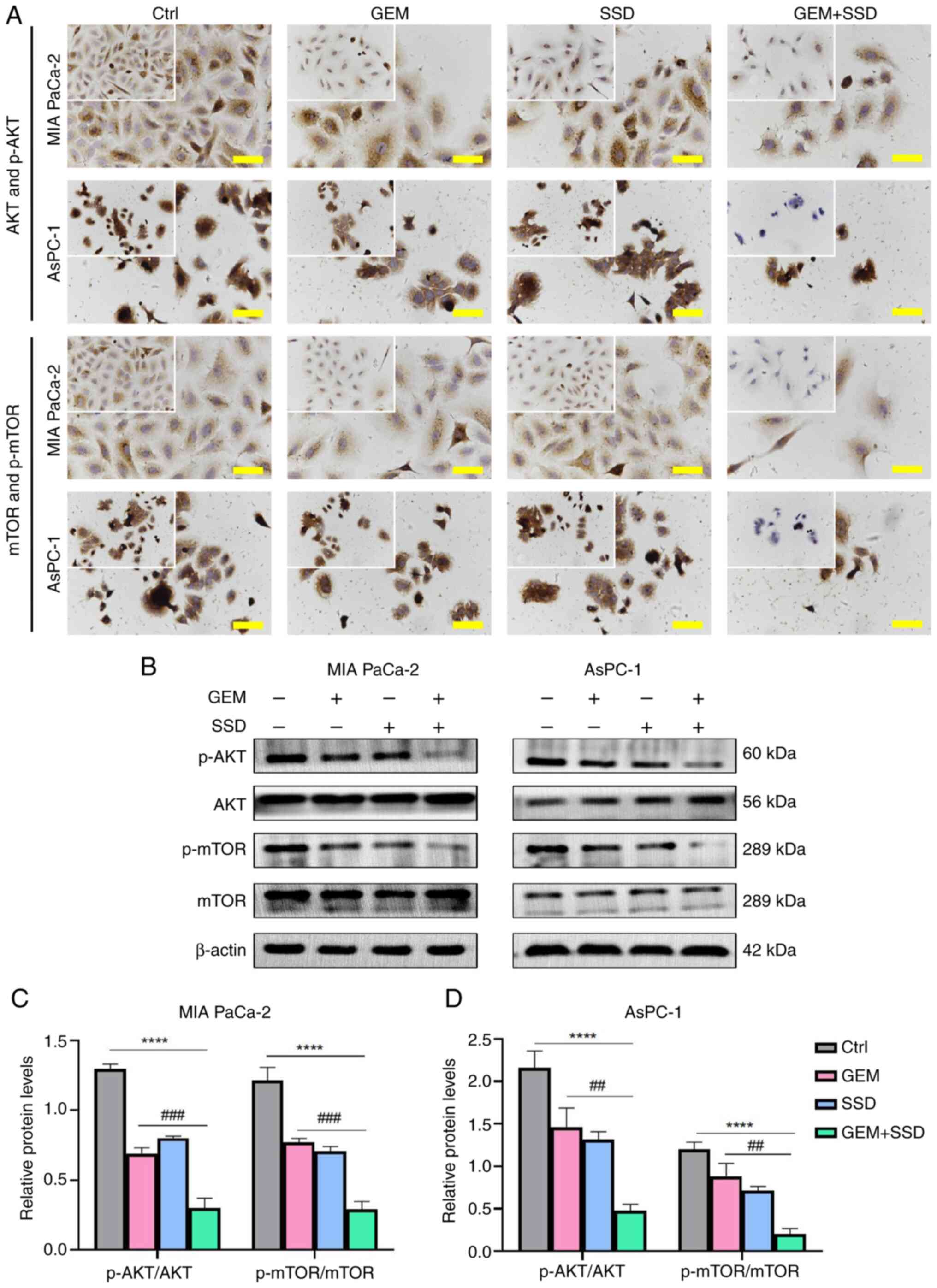
Figure 6

AKT/mTOR pathway inhibition by GEM
and SSD combination therapy. (A) Immunocytochemistry staining of
AKT/mTOR signaling proteins in MIA PaCa-2 and AsPC-1 cells treated
with Ctrl, G0.25, S4 or the combination (G0.25 + S4; magnification,
×40; insets show phosphoprotein details). Scale bar, 50 µm. (B)
Western blot analysis of p-AKT (60 kDa), AKT (56 kDa), p-mTOR (289
kDa), mTOR (289 kDa) and β-actin (42 kDa). Semi-quantification of
phosphorylation ratios in (C) MIA PaCa-2 and (D) AsPC-1 cells. In
the figure, GEM represents 0.25 µmol/l GEM and SSD represents 4
µmol/l SSD. Data are presented as the mean ± SD (n=5). Compared
with GEM monotherapy, the G0.25 + S4 combination led to a greater
reduction in both p-AKT/AKT and p-mTOR/mTOR ratios (both
Padj<0.0001), with large effect sizes
(η2=0.73 and 0.81, respectively). All P-values are
Benjamini-Hochberg-adjusted. ****P<0.0001 for G0.25 + S4 vs.
Ctrl; ##P<0.01, ###P<0.001 for G0.25 +
S4 vs. G0.25. Statistical analysis was performed using one-way
ANOVA with Tukey's post hoc test. Ctrl, control; GEM, gemcitabine;
SSD, Saikosaponin D; p-, phosphorylated.

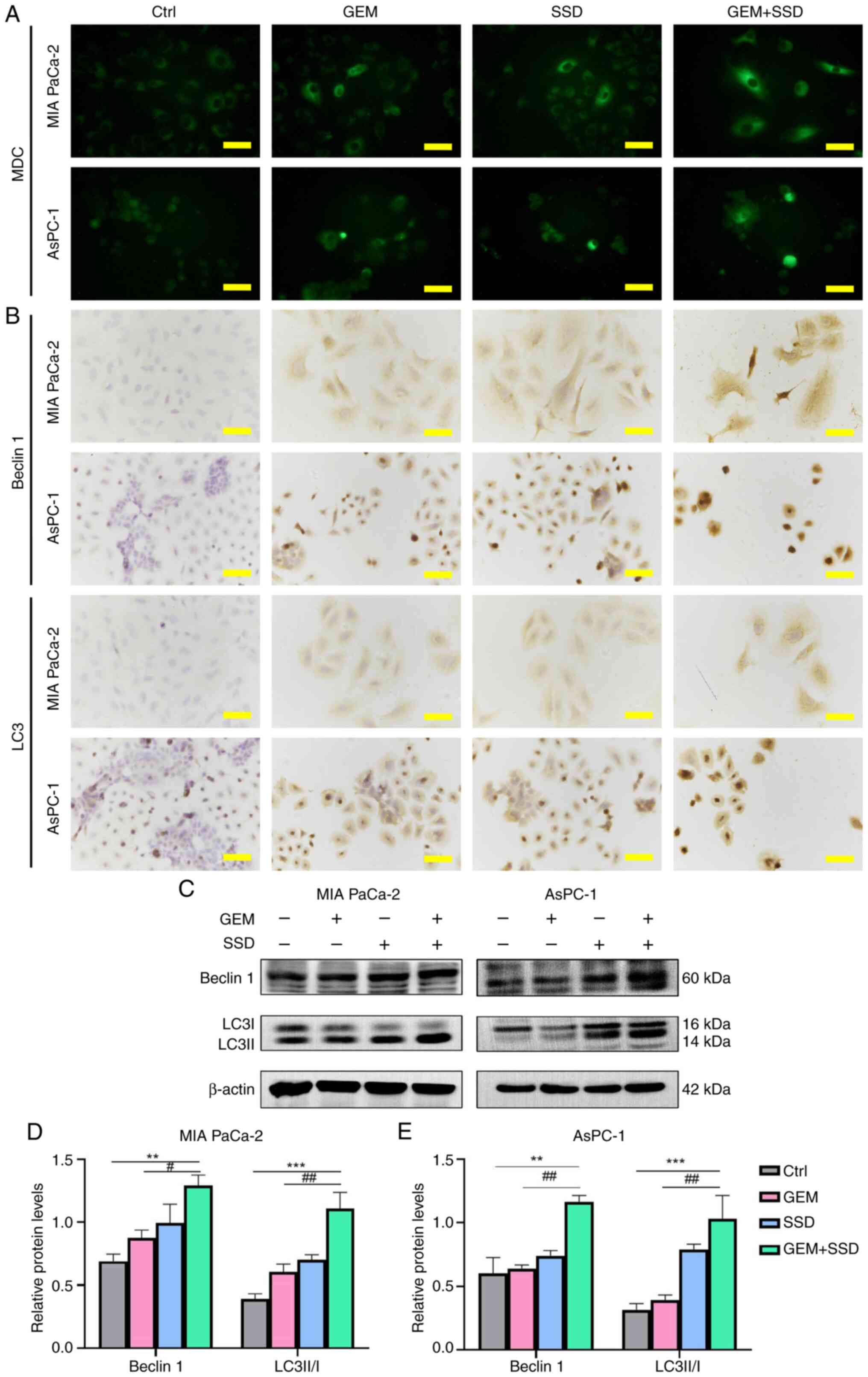
Figure 7

Autophagy induction by GEM and SSD
combination treatment. (A) MDC staining (green) showing
autophagosome accumulation in MIA PaCa-2 and AsPC-1 cells treated
with Ctrl, G0.25, S4 or the combination (G0.25 + S4; magnification,
×40). (B) Immunocytochemistry of autophagy markers. (C) Western
blot analysis of Beclin 1 (60 kDa), LC3I (16 kDa), LC3II (14 kDa)
and β-actin (42 kDa). Semi-quantification of autophagy markers in
(D) MIA PaCa-2 and (E) AsPC-1 cells. In the figure, GEM represents
0.25 µmol/l GEM and SSD represents 4 µmol/l SSD. Data are presented
as the mean ± SD (n=5). Compared with GEM monotherapy, the G0.25 +
S4 combination significantly increased the LC3-II/I ratio
(Padj=0.001; η2=0.65; 95% CI, 0.43–0.81) and
Beclin 1 levels (Padj=0.002; η2=0.61; 95% CI,
0.38–0.78), indicating strong induction of autophagy. All P-values
are Benjamini-Hochberg-adjusted. Scale bar, 50 µm. **P<0.01,
***P<0.001 for G0.25 + S4 vs. Ctrl; #P<0.05,
##P<0.01 for G0.25 + S4 vs. G0.25. Statistical
analysis was performed using one-way ANOVA with Tukey's post hoc
test. Ctrl, control; GEM, gemcitabine; SSD, Saikosaponin D; MDC,
monodasylcadaverine.

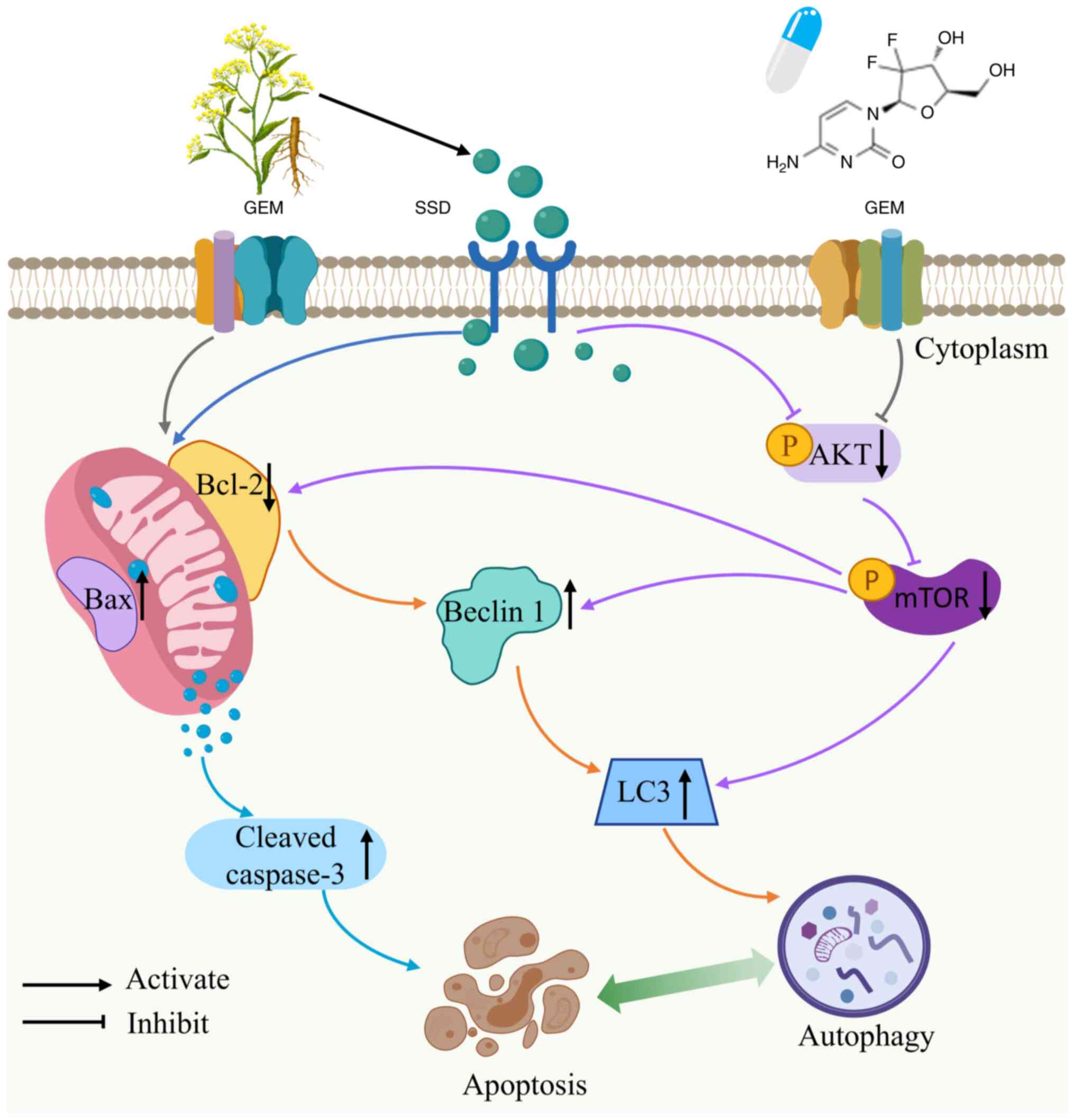
Figure 8

Proposed mechanism of GEM and SSD
combination therapy. Co-treatment with GEM and SSD synergistically
inhibits the AKT/mTOR pathway, concurrently inducing apoptosis (via
Bax/Bcl-2 modulation and caspase-3 activation) and autophagy (via
Beclin 1 activation and LC3 conversion), thereby overcoming GEM
resistance in pancreatic cancer cells. GEM, gemcitabine; P,
phosphorylated; SSD, Saikosaponin D.
View References

1 

Cai J, Chen H, Lu M, Zhang Y, Lu B, You L, Zhang T, Dai M and Zhao Y: Advances in the epidemiology of pancreatic cancer: Trends, risk factors, screening, and prognosis. Cancer Lett. 520:1–11. 2021. View Article : Google Scholar : PubMed/NCBI

2 

Klatte DCF, Wallace MB, Löhr M, Bruno MJ and van Leerdam ME: Hereditary pancreatic cancer. Best Pract Res Clin Gastroenterol. 58-59:1017832022. View Article : Google Scholar : PubMed/NCBI

3 

Domagała-Haduch M, Gorzelak-Magiera A, Michalecki Ł and Gisterek-Grocholska I: Radiochemotherapy in pancreatic cancer. Curr Oncol. 31:3291–3300. 2024. View Article : Google Scholar : PubMed/NCBI

4 

Brozos-Vázquez E, Toledano-Fonseca M, Costa-Fraga N, García-Ortiz MV, Díaz-Lagares Á, Rodríguez-Ariza A, Aranda E and López-López R: Pancreatic cancer biomarkers: A pathway to advance in personalized treatment selection. Cancer Treat Rev. 125:1027192024. View Article : Google Scholar : PubMed/NCBI

5 

Miao H, Chen X and Luan Y: Small molecular gemcitabine prodrugs for cancer therapy. Curr Med Chem. 27:5562–5582. 2020. View Article : Google Scholar : PubMed/NCBI

6 

Pandit B and Royzen M: Recent development of prodrugs of gemcitabine. Genes (Basel). 13:4662022. View Article : Google Scholar : PubMed/NCBI

7 

Cui J, Guo Y, Yin T, Gou S, Xiong J, Liang X, Lu C and Peng T: USP8 promotes gemcitabine resistance of pancreatic cancer via deubiquitinating and stabilizing Nrf2. Biomed Pharmacother. 166:1153592023. View Article : Google Scholar : PubMed/NCBI

8 

Shu X, Zhan PP, Sun LX, Yu L, Liu J, Sun LC, Yang ZH, Ran YL and Sun YM: BCAT1 activates PI3K/AKT/mTOR pathway and contributes to the angiogenesis and tumorigenicity of gastric cancer. Front Cell Dev Biol. 9:6592602021. View Article : Google Scholar : PubMed/NCBI

9 

Yu L, Wei J and Liu P: Attacking the PI3K/Akt/mTOR signaling pathway for targeted therapeutic treatment in human cancer. Semin Cancer Biol. 85:69–94. 2022. View Article : Google Scholar : PubMed/NCBI

10 

Rahaman A, Chaudhuri A, Sarkar A, Chakraborty S, Bhattacharjee S and Mandal DP: Eucalyptol targets PI3K/Akt/mTOR pathway to inhibit skin cancer metastasis. Carcinogenesis. 43:571–583. 2022. View Article : Google Scholar : PubMed/NCBI

11 

Zhou X, Zhao J, Yan T, Ye D, Wang Y, Zhou B, Liu D, Wang X, Zheng W, Zheng B, et al: ANXA9 facilitates S100A4 and promotes breast cancer progression through modulating STAT3 pathway. Cell Death Dis. 15:2602024. View Article : Google Scholar : PubMed/NCBI

12 

Jiang Q, Guan Y, Zheng J and Lu H: TBK1 promotes thyroid cancer progress by activating the PI3K/Akt/mTOR signaling pathway. Immun Inflamm Dis. 11:e7962023. View Article : Google Scholar : PubMed/NCBI

13 

Wang S, Cheng Z, Cui Y, Xu S, Luan Q, Jing S, Du B, Li X and Li Y: PTPRH promotes the progression of non-small cell lung cancer via glycolysis mediated by the PI3K/AKT/mTOR signaling pathway. J Transl Med. 21:8192023. View Article : Google Scholar : PubMed/NCBI

14 

Wang S, Zhang C, Xu Z, Chen MH, Yu H, Wang L and Liu R: Differential impact of PI3K/AKT/mTOR signaling on tumor initiation and progression in animal models of prostate cancer. Prostate. 83:97–108. 2023. View Article : Google Scholar : PubMed/NCBI

15 

Mortazavi M, Moosavi F, Martini M, Giovannetti E and Firuzi O: Prospects of targeting PI3K/AKT/mTOR pathway in pancreatic cancer. Crit Rev Oncol Hematol. 176:1037492022. View Article : Google Scholar : PubMed/NCBI

16 

Huang L, Sun J, Ma Y, Chen H, Tian C and Dong M: MSI2 regulates NLK-mediated EMT and PI3K/AKT/mTOR pathway to promote pancreatic cancer progression. Cancer Cell Int. 24:2732024. View Article : Google Scholar : PubMed/NCBI

17 

Shimia M, Amini M, Ravari AO, Tabnak P, Valizadeh A, Ghaheri M and Yousefi B: Thymoquinone reversed doxorubicin resistance in U87 glioblastoma cells via targeting PI3K/Akt/mTOR signaling. Chem Biol Drug Des. 104:e145872024. View Article : Google Scholar : PubMed/NCBI

18 

Wang M, Xue W, Yuan H, Wang Z and Yu L: Nano-drug delivery systems targeting CAFs: A promising treatment for pancreatic cancer. Int J Nanomedicine. 19:2823–2849. 2024. View Article : Google Scholar : PubMed/NCBI

19 

Zhang Y, Xu H, Li Y, Sun Y and Peng X: Advances in the treatment of pancreatic cancer with traditional Chinese medicine. Front Pharmacol. 14:10892452023. View Article : Google Scholar : PubMed/NCBI

20 

Manoharan S, Deivendran B and Perumal E: Chemotherapeutic potential of saikosaponin D: Experimental evidence. J Xenobiot. 12:378–405. 2022. View Article : Google Scholar : PubMed/NCBI

21 

Liu G, Guan Y, Liu Y, Wang Y, Zhang J, Liu Y and Liu X: Saikosaponin D inducing apoptosis and autophagy through the activation of endoplasmic reticulum stress in glioblastoma. Biomed Res Int. 2022:54895532022. View Article : Google Scholar : PubMed/NCBI

22 

Tang JC, Long F, Zhao J, Hang J, Ren YG, Chen JY and Mu B: The effects and mechanisms by which saikosaponin-D enhances the sensitivity of human non-small cell lung cancer cells to gefitinib. J Cancer. 10:6666–6672. 2019. View Article : Google Scholar : PubMed/NCBI

23 

Hu J, Li P, Shi B and Tie J: Effects and mechanisms of saikosaponin d improving the sensitivity of human gastric cancer cells to cisplatin. ACS Omega. 6:18745–18755. 2021. View Article : Google Scholar : PubMed/NCBI

24 

Zhang CY, Jiang ZM, Ma XF, Li Y, Liu XZ, Li LL, Wu WH and Wang T: Saikosaponin-d inhibits the hepatoma cells and enhances chemosensitivity through SENP5-dependent inhibition of gli1 sumoylation under hypoxia. Front Pharmacol. 10:10392019. View Article : Google Scholar : PubMed/NCBI

25 

Liang J, Sun J, Liu A, Chen L, Ma X, Liu X and Zhang C: Saikosaponin D improves chemosensitivity of glioblastoma by reducing the its stemness maintenance. Biochem Biophys Rep. 32:1013422022.PubMed/NCBI

26 

Tang TT, Jiang L, Zhong Q, Ni ZJ, Thakur K, Khan MR and Wei ZJ: Saikosaponin D exerts cytotoxicity on human endometrial cancer ishikawa cells by inducing apoptosis and inhibiting metastasis through MAPK pathways. Food Chem Toxicol. 177:1138152023. View Article : Google Scholar : PubMed/NCBI

27 

Chou TC: Drug combination studies and their synergy quantification using the Chou-Talalay method. Cancer Res. 70:440–446. 2010. View Article : Google Scholar : PubMed/NCBI

28 

Xi H, Wang S, Wang B, Hong X, Liu X, Li M, Shen R and Dong Q: The role of interaction between autophagy and apoptosis in tumorigenesis (Review). Oncol Rep. 48:2082022. View Article : Google Scholar : PubMed/NCBI

29 

Sorice M: Crosstalk of autophagy and apoptosis. Cells. 11:14792022. View Article : Google Scholar : PubMed/NCBI

30 

Liu S, Yao S, Yang H, Liu S and Wang Y: Autophagy: Regulator of cell death. Cell Death Dis. 14:6482023. View Article : Google Scholar : PubMed/NCBI

31 

Niu X, You Q, Hou K, Tian Y, Wei P, Zhu Y, Gao B, Ashrafizadeh M, Aref AR, Kalbasi A, et al: Autophagy in cancer development, immune evasion, and drug resistance. Drug Resist Updat. 78:1011702025. View Article : Google Scholar : PubMed/NCBI

32 

Liu J, Wu Y, Meng S, Xu P, Li S, Li Y, Hu X, Ouyang L and Wang G: Selective autophagy in cancer: mechanisms, therapeutic implications, and future perspectives. Mol Cancer. 23:222024. View Article : Google Scholar : PubMed/NCBI

33 

Zhao Y, Tang J, Jiang K, Liu SY, Aicher A and Heeschen C: Liquid biopsy in pancreatic cancer-current perspective and future outlook. Biochim Biophys Acta Rev Cancer. 1878:1888682023. View Article : Google Scholar : PubMed/NCBI

34 

Zhong BH, Ma YT, Sun J, Tang JT and Dong M: Transcription factor FOXF2 promotes the development and progression of pancreatic cancer by targeting MSI2. Oncol Rep. 52:932024. View Article : Google Scholar : PubMed/NCBI

35 

Chen J, Hua Q, Wang H, Zhang D, Zhao L, Yu D, Pi G, Zhang T and Lin Z: Meta-analysis and indirect treatment comparison of modified FOLFIRINOX and gemcitabine plus nab-paclitaxel as first-line chemotherapy in advanced pancreatic cancer. BMC Cancer. 21:8532021. View Article : Google Scholar : PubMed/NCBI

36 

Ji J, Wen Q, Yu Y, Xiong F, Zheng X and Ruan S: Personalized traditional Chinese medicine in oncology: Bridging the macro state with micro targets. Am J Chin Med. 14:1–34. 2025.

37 

Ke Y, Pan Y, Huang X, Bai X, Liu X, Zhang M, Wei Y, Jiang T and Zhang G: Efficacy and safety of traditional Chinese medicine (TCM) combined with immune checkpoint inhibitors (ICIs) for the treatment of cancer: a systematic review and meta-analysis. Front Pharmacol. 31:16615032025. View Article : Google Scholar : PubMed/NCBI

38 

Okuno K, Xu C, Pascual-Sabater S, Tokunaga M, Han H, Fillat C, Kinugas Y and Goel A: Berberine overcomes gemcitabine-associated chemoresistance through regulation of Rap1/PI3K-Akt signaling in pancreatic ductal adenocarcinoma. Pharmaceuticals (Basel). 15:11992022. View Article : Google Scholar : PubMed/NCBI

39 

Bhattacharyya S, Ghosh H, Covarrubias-Zambrano O, Jain K, Swamy KV, Kasi A, Hamza A, Anant S, Van Saun M, Weir SJ, et al: Anticancer activity of novel difluorinated curcumin analog and its inclusion complex with 2-hydroxypropyl-β-cyclodextrin against pancreatic cancer. Int J Mol Sci. 24:63362023. View Article : Google Scholar : PubMed/NCBI

40 

Ashour ML and Wink M: Genus bupleurum: A review of its phytochemistry, pharmacology and modes of action. J Pharm Pharmacol. 63:305–321. 2011. View Article : Google Scholar : PubMed/NCBI

41 

Cheng Y, Liu G, Li Z, Zhou Y and Gao N: Screening saikosaponin d (SSd)-producing endophytic fungi from Bupleurum scorzonerifolium Willd. World J Microbiol Biotechnol. 38:2422022. View Article : Google Scholar : PubMed/NCBI

42 

Lai M, Ge Y, Chen M, Sun S, Chen J and Cheng R: Saikosaponin D inhibits proliferation and promotes apoptosis through activation of MKK4-JNK signaling pathway in pancreatic cancer cells. Onco Targets Ther. 13:9465–9479. 2020. View Article : Google Scholar : PubMed/NCBI

43 

Conroy T, Castan F, Lopez A, Turpin A, Ben Abdelghani M, Wei AC, Mitry E, Biagi JJ, Evesque L, Artru P, et al: Five-year outcomes of FOLFIRINOX vs. gemcitabine as adjuvant therapy for pancreatic cancer: A randomized clinical trial. JAMA Oncol. 8:1571–1578. 2022. View Article : Google Scholar : PubMed/NCBI

44 

Sun EJ, Wankell M, Palamuthusingam P, McFarlane C and Hebbard L: Targeting the PI3K/Akt/mTOR pathway in hepatocellular carcinoma. Biomedicines. 9:16392021. View Article : Google Scholar : PubMed/NCBI

45 

Kale J, Kutuk O, Brito GC, Andrews TS, Leber B, Letai A and Andrews DW: Phosphorylation switches Bax from promoting to inhibiting apoptosis thereby increasing drug resistance. EMBO Rep. 19:e452352018. View Article : Google Scholar : PubMed/NCBI

46 

Li X, He S and Ma B: Autophagy and autophagy-related proteins in cancer. Mol Cancer. 19:122020. View Article : Google Scholar : PubMed/NCBI

47 

Mehra S, Deshpande N and Nagathihalli N: Targeting PI3K pathway in pancreatic ductal adenocarcinoma: Rationale and progress. Cancers (Basel). 13:44342021. View Article : Google Scholar : PubMed/NCBI

48 

Sheng W, Shi X, Lin Y, Tang J, Jia C, Cao R, Sun J, Wang G, Zhou L and Dong M: Musashi2 promotes EGF-induced EMT in pancreatic cancer via ZEB1-ERK/MAPK signaling. J Exp Clin Cancer Res. 39:162020. View Article : Google Scholar : PubMed/NCBI

49 

Johnson DE, O'Keefe RA and Grandis JR: Targeting the IL-6/JAK/STAT3 signalling axis in cancer. Nat Rev Clin Oncol. 15:234–248. 2018. View Article : Google Scholar : PubMed/NCBI

50 

Deer EL, González-Hernández J, Coursen JD, Shea JE, Ngatia J, Scaife CL, Firpo MA and Mulvihill SJ: Phenotype and genotype of pancreatic cancer cell lines. Pancreas. 39:425–435. 2010. View Article : Google Scholar : PubMed/NCBI

51 

Fianco G, Mongiardi MP, Levi A, De Luca T, Desideri M, Trisciuoglio D, Del Bufalo D, Cinà I, Di Benedetto A, Mottolese M, et al: Caspase-8 contributes to angiogenesis and chemotherapy resistance in glioblastoma. Elife. 6:e225932017. View Article : Google Scholar : PubMed/NCBI

52 

Wei S, Han C, Mo S, Huang H and Luo X: Advancements in programmed cell death research in antitumor therapy: A comprehensive overview. Apoptosis. 30:401–421. 2025. View Article : Google Scholar : PubMed/NCBI

53 

Das S, Shukla N, Singh SS, Kushwaha S and Shrivastava R: Mechanism of interaction between autophagy and apoptosis in cancer. Apoptosis. 26:512–533. 2021. View Article : Google Scholar : PubMed/NCBI

54 

Hajdú B, Holczer M, Horváth G, Szederkényi G and Kapuy O: Fine-tuning of mTORC1-ULK1-PP2A regulatory triangle is crucial for robust autophagic response upon cellular stress. Biomolecules. 12:15872022. View Article : Google Scholar : PubMed/NCBI

55 

Fujiwara N, Usui T and Nagai H: Regulation of the Beclin 1/VPS34 complex by post-translational modifications. Biochem Biophys Res Commun. 566:155–161. 2021.PubMed/NCBI

56 

Pareek G and Kundu M: Physiological functions of ULK1/2. J Mol Biol. 436:1684722024. View Article : Google Scholar : PubMed/NCBI

57 

Lu G, Wu Z, Shang J, Xie Z, Chen C and Zhang C: The effects of metformin on autophagy. Biomed Pharmacother. 137:1112862021. View Article : Google Scholar : PubMed/NCBI

58 

Fujiwara N, Shibutani S, Ohama T and Sato K: Protein phosphatase 6 dissociates the beclin 1/Vps34 complex and inhibits autophagy. Biochem Biophys Res Commun. 552:191–195. 2021. View Article : Google Scholar : PubMed/NCBI

59 

Bekker M, Abrahams S, Loos B and Bardien S: Can the interplay between autophagy and apoptosis be targeted as a novel therapy for Parkinson's disease? Neurobiol Aging. 100:91–105. 2021. View Article : Google Scholar : PubMed/NCBI

60 

Vujić N, Bradić I, Goeritzer M, Kuentzel KB, Rainer S, Kratky D and Radović B: ATG7 is dispensable for LC3-PE conjugation in thioglycolate-elicited mouse peritoneal macrophages. Autophagy. 17:3402–3407. 2021. View Article : Google Scholar : PubMed/NCBI

61 

Foucquier J and Guedj M: Analysis of drug combinations: Current methodological landscape. Pharmacol Res Perspect. 3:e001492015. View Article : Google Scholar : PubMed/NCBI

Related Articles

  • Abstract
  • View
  • Download
  • Twitter
Copy and paste a formatted citation
Spandidos Publications style
Zheng R, Liu Y, Zhou S, Liu G, Liu X, Yang Y and Zhang Y: Saikosaponin D overcomes gemcitabine resistance in pancreatic cancer via AKT/mTOR pathway inhibition and synergistic induction of apoptosis and autophagy. Oncol Rep 55: 28, 2026.
APA
Zheng, R., Liu, Y., Zhou, S., Liu, G., Liu, X., Yang, Y., & Zhang, Y. (2026). Saikosaponin D overcomes gemcitabine resistance in pancreatic cancer via AKT/mTOR pathway inhibition and synergistic induction of apoptosis and autophagy. Oncology Reports, 55, 28. https://doi.org/10.3892/or.2025.9033
MLA
Zheng, R., Liu, Y., Zhou, S., Liu, G., Liu, X., Yang, Y., Zhang, Y."Saikosaponin D overcomes gemcitabine resistance in pancreatic cancer via AKT/mTOR pathway inhibition and synergistic induction of apoptosis and autophagy". Oncology Reports 55.2 (2026): 28.
Chicago
Zheng, R., Liu, Y., Zhou, S., Liu, G., Liu, X., Yang, Y., Zhang, Y."Saikosaponin D overcomes gemcitabine resistance in pancreatic cancer via AKT/mTOR pathway inhibition and synergistic induction of apoptosis and autophagy". Oncology Reports 55, no. 2 (2026): 28. https://doi.org/10.3892/or.2025.9033
Copy and paste a formatted citation
x
Spandidos Publications style
Zheng R, Liu Y, Zhou S, Liu G, Liu X, Yang Y and Zhang Y: Saikosaponin D overcomes gemcitabine resistance in pancreatic cancer via AKT/mTOR pathway inhibition and synergistic induction of apoptosis and autophagy. Oncol Rep 55: 28, 2026.
APA
Zheng, R., Liu, Y., Zhou, S., Liu, G., Liu, X., Yang, Y., & Zhang, Y. (2026). Saikosaponin D overcomes gemcitabine resistance in pancreatic cancer via AKT/mTOR pathway inhibition and synergistic induction of apoptosis and autophagy. Oncology Reports, 55, 28. https://doi.org/10.3892/or.2025.9033
MLA
Zheng, R., Liu, Y., Zhou, S., Liu, G., Liu, X., Yang, Y., Zhang, Y."Saikosaponin D overcomes gemcitabine resistance in pancreatic cancer via AKT/mTOR pathway inhibition and synergistic induction of apoptosis and autophagy". Oncology Reports 55.2 (2026): 28.
Chicago
Zheng, R., Liu, Y., Zhou, S., Liu, G., Liu, X., Yang, Y., Zhang, Y."Saikosaponin D overcomes gemcitabine resistance in pancreatic cancer via AKT/mTOR pathway inhibition and synergistic induction of apoptosis and autophagy". Oncology Reports 55, no. 2 (2026): 28. https://doi.org/10.3892/or.2025.9033
Follow us
  • Twitter
  • LinkedIn
  • Facebook
About
  • Spandidos Publications
  • Careers
  • Cookie Policy
  • Privacy Policy
How can we help?
  • Help
  • Live Chat
  • Contact
  • Email to our Support Team