Spandidos Publications Logo
  • About
    • About Spandidos
    • Aims and Scopes
    • Abstracting and Indexing
    • Editorial Policies
    • Reprints and Permissions
    • Job Opportunities
    • Terms and Conditions
    • Contact
  • Journals
    • All Journals
    • Oncology Letters
      • Oncology Letters
      • Information for Authors
      • Editorial Policies
      • Editorial Board
      • Aims and Scope
      • Abstracting and Indexing
      • Bibliographic Information
      • Archive
    • International Journal of Oncology
      • International Journal of Oncology
      • Information for Authors
      • Editorial Policies
      • Editorial Board
      • Aims and Scope
      • Abstracting and Indexing
      • Bibliographic Information
      • Archive
    • Molecular and Clinical Oncology
      • Molecular and Clinical Oncology
      • Information for Authors
      • Editorial Policies
      • Editorial Board
      • Aims and Scope
      • Abstracting and Indexing
      • Bibliographic Information
      • Archive
    • Experimental and Therapeutic Medicine
      • Experimental and Therapeutic Medicine
      • Information for Authors
      • Editorial Policies
      • Editorial Board
      • Aims and Scope
      • Abstracting and Indexing
      • Bibliographic Information
      • Archive
    • International Journal of Molecular Medicine
      • International Journal of Molecular Medicine
      • Information for Authors
      • Editorial Policies
      • Editorial Board
      • Aims and Scope
      • Abstracting and Indexing
      • Bibliographic Information
      • Archive
    • Biomedical Reports
      • Biomedical Reports
      • Information for Authors
      • Editorial Policies
      • Editorial Board
      • Aims and Scope
      • Abstracting and Indexing
      • Bibliographic Information
      • Archive
    • Oncology Reports
      • Oncology Reports
      • Information for Authors
      • Editorial Policies
      • Editorial Board
      • Aims and Scope
      • Abstracting and Indexing
      • Bibliographic Information
      • Archive
    • Molecular Medicine Reports
      • Molecular Medicine Reports
      • Information for Authors
      • Editorial Policies
      • Editorial Board
      • Aims and Scope
      • Abstracting and Indexing
      • Bibliographic Information
      • Archive
    • World Academy of Sciences Journal
      • World Academy of Sciences Journal
      • Information for Authors
      • Editorial Policies
      • Editorial Board
      • Aims and Scope
      • Abstracting and Indexing
      • Bibliographic Information
      • Archive
    • International Journal of Functional Nutrition
      • International Journal of Functional Nutrition
      • Information for Authors
      • Editorial Policies
      • Editorial Board
      • Aims and Scope
      • Abstracting and Indexing
      • Bibliographic Information
      • Archive
    • International Journal of Epigenetics
      • International Journal of Epigenetics
      • Information for Authors
      • Editorial Policies
      • Editorial Board
      • Aims and Scope
      • Abstracting and Indexing
      • Bibliographic Information
      • Archive
    • Medicine International
      • Medicine International
      • Information for Authors
      • Editorial Policies
      • Editorial Board
      • Aims and Scope
      • Abstracting and Indexing
      • Bibliographic Information
      • Archive
  • Articles
  • Information
    • Information for Authors
    • Information for Reviewers
    • Information for Librarians
    • Information for Advertisers
    • Conferences
  • Language Editing
Spandidos Publications Logo
  • About
    • About Spandidos
    • Aims and Scopes
    • Abstracting and Indexing
    • Editorial Policies
    • Reprints and Permissions
    • Job Opportunities
    • Terms and Conditions
    • Contact
  • Journals
    • All Journals
    • Biomedical Reports
      • Information for Authors
      • Editorial Policies
      • Editorial Board
      • Aims and Scope
      • Abstracting and Indexing
      • Bibliographic Information
      • Archive
    • Experimental and Therapeutic Medicine
      • Information for Authors
      • Editorial Policies
      • Editorial Board
      • Aims and Scope
      • Abstracting and Indexing
      • Bibliographic Information
      • Archive
    • International Journal of Epigenetics
      • Information for Authors
      • Editorial Policies
      • Editorial Board
      • Aims and Scope
      • Abstracting and Indexing
      • Bibliographic Information
      • Archive
    • International Journal of Functional Nutrition
      • Information for Authors
      • Editorial Policies
      • Editorial Board
      • Aims and Scope
      • Abstracting and Indexing
      • Bibliographic Information
      • Archive
    • International Journal of Molecular Medicine
      • Information for Authors
      • Editorial Policies
      • Editorial Board
      • Aims and Scope
      • Abstracting and Indexing
      • Bibliographic Information
      • Archive
    • International Journal of Oncology
      • Information for Authors
      • Editorial Policies
      • Editorial Board
      • Aims and Scope
      • Abstracting and Indexing
      • Bibliographic Information
      • Archive
    • Medicine International
      • Information for Authors
      • Editorial Policies
      • Editorial Board
      • Aims and Scope
      • Abstracting and Indexing
      • Bibliographic Information
      • Archive
    • Molecular and Clinical Oncology
      • Information for Authors
      • Editorial Policies
      • Editorial Board
      • Aims and Scope
      • Abstracting and Indexing
      • Bibliographic Information
      • Archive
    • Molecular Medicine Reports
      • Information for Authors
      • Editorial Policies
      • Editorial Board
      • Aims and Scope
      • Abstracting and Indexing
      • Bibliographic Information
      • Archive
    • Oncology Letters
      • Information for Authors
      • Editorial Policies
      • Editorial Board
      • Aims and Scope
      • Abstracting and Indexing
      • Bibliographic Information
      • Archive
    • Oncology Reports
      • Information for Authors
      • Editorial Policies
      • Editorial Board
      • Aims and Scope
      • Abstracting and Indexing
      • Bibliographic Information
      • Archive
    • World Academy of Sciences Journal
      • Information for Authors
      • Editorial Policies
      • Editorial Board
      • Aims and Scope
      • Abstracting and Indexing
      • Bibliographic Information
      • Archive
  • Articles
  • Information
    • For Authors
    • For Reviewers
    • For Librarians
    • For Advertisers
    • Conferences
  • Language Editing
Login Register Submit
  • This site uses cookies
  • You can change your cookie settings at any time by following the instructions in our Cookie Policy. To find out more, you may read our Privacy Policy.

    I agree
Search articles by DOI, keyword, author or affiliation
Search
Advanced Search
presentation
Oncology Reports
Join Editorial Board Propose a Special Issue
Print ISSN: 1021-335X Online ISSN: 1791-2431
Journal Cover
February-2026 Volume 55 Issue 2

Full Size Image

Sign up for eToc alerts
Recommend to Library

Journals

International Journal of Molecular Medicine

International Journal of Molecular Medicine

International Journal of Molecular Medicine is an international journal devoted to molecular mechanisms of human disease.

International Journal of Oncology

International Journal of Oncology

International Journal of Oncology is an international journal devoted to oncology research and cancer treatment.

Molecular Medicine Reports

Molecular Medicine Reports

Covers molecular medicine topics such as pharmacology, pathology, genetics, neuroscience, infectious diseases, molecular cardiology, and molecular surgery.

Oncology Reports

Oncology Reports

Oncology Reports is an international journal devoted to fundamental and applied research in Oncology.

Experimental and Therapeutic Medicine

Experimental and Therapeutic Medicine

Experimental and Therapeutic Medicine is an international journal devoted to laboratory and clinical medicine.

Oncology Letters

Oncology Letters

Oncology Letters is an international journal devoted to Experimental and Clinical Oncology.

Biomedical Reports

Biomedical Reports

Explores a wide range of biological and medical fields, including pharmacology, genetics, microbiology, neuroscience, and molecular cardiology.

Molecular and Clinical Oncology

Molecular and Clinical Oncology

International journal addressing all aspects of oncology research, from tumorigenesis and oncogenes to chemotherapy and metastasis.

World Academy of Sciences Journal

World Academy of Sciences Journal

Multidisciplinary open-access journal spanning biochemistry, genetics, neuroscience, environmental health, and synthetic biology.

International Journal of Functional Nutrition

International Journal of Functional Nutrition

Open-access journal combining biochemistry, pharmacology, immunology, and genetics to advance health through functional nutrition.

International Journal of Epigenetics

International Journal of Epigenetics

Publishes open-access research on using epigenetics to advance understanding and treatment of human disease.

Medicine International

Medicine International

An International Open Access Journal Devoted to General Medicine.

Journal Cover
February-2026 Volume 55 Issue 2

Full Size Image

Sign up for eToc alerts
Recommend to Library

  • Article
  • Citations
    • Cite This Article
    • Download Citation
    • Create Citation Alert
    • Remove Citation Alert
    • Cited By
  • Similar Articles
    • Related Articles (in Spandidos Publications)
    • Similar Articles (Google Scholar)
    • Similar Articles (PubMed)
  • Download PDF
  • Download XML
  • View XML

  • Supplementary Files
    • Supplementary_Data.pdf
Article Open Access

Inhibition of primary ciliogenesis enhances efficacy of EGFR‑TKIs against non‑small cell lung cancer cells

  • Authors:
    • Liangliang Jin
    • Li Wei
    • Junrui Hua
    • Rong Zhang
    • Jiaxin Chen
    • Jinpeng He
    • Yanli Yang
  • View Affiliations / Copyright

    Affiliations: Department of Pathology, The 940th Hospital of Joint Logistics Support Force of Chinese People's Liberation Army, Lanzhou, Gansu 730050, P.R. China, NHC Key Laboratory of Diagnosis and Therapy of Gastrointestinal Tumor & Clinical Lab, Gansu Provincial Hospital, Lanzhou, Gansu 730000, P.R. China, Key Laboratory of Space Radiobiology of Gansu, Institute of Modern Physics, Chinese Academy of Sciences, Lanzhou, Gansu 73000, P.R. China, School of Basic Medical Sciences & School of Public Health, Gansu University of Chinese Medicine, Lanzhou, Gansu 730000, P.R. China
    Copyright: © Jin et al. This is an open access article distributed under the terms of Creative Commons Attribution License.
  • Article Number: 30
    |
    Published online on: December 4, 2025
       https://doi.org/10.3892/or.2025.9035
  • Expand metrics +
Metrics: Total Views: 0 (Spandidos Publications: | PMC Statistics: )
Metrics: Total PDF Downloads: 0 (Spandidos Publications: | PMC Statistics: )
Cited By (CrossRef): 0 citations Loading Articles...

This article is mentioned in:


Abstract

Primary cilia are antenna‑like organelles on almost all human cells that sense and transduce extracellular cues into cellular response. Primary cilia have been reported to be implicated in drug resistance in several cancer types, but their roles in cellular response to epidermal growth factor receptor (EGFR)‑tyrosine kinase inhibitors (TKIs) in non‑small cell lung cancer (NSCLC) are still not fully understood. In the present study, it was reported that primary cilia are more prevalent in EGFR‑TKI‑insensitive A549 and H23 cells compared with the drug‑sensitive HCC827 and PC9 cells by immunofluorescence staining assay. Importantly, treatment with EGFR‑TKIs (gefitinib and dacomitinib) results in a dose‑dependent increase in cilia number and length in A549 and H23 cells, an effect not observed in HCC827 and PC9 cells. Upon administration of gefitinib, A549 cells predominantly arrest in the G1 phase detected by flow cytometric analysis, with a minority undergoing cell death and the majority entering senescence. Inhibition of ciliogenesis through the knockdown of IFT88 or ARL13B by targeted small interfering RNAs markedly enhances the sensitivity of A549 cells to EGFR‑TKIs by promoting a shift from senescence to cell death. Furthermore, it was demonstrated by immunoblotting and immunofluorescence colocalization analysis that both the expression and ciliary localization of adenylate cyclase 3 (AC3) are significantly upregulated following EGFR‑TKIs treatment, and the reduction of AC3 expression effectively mitigates cellular drug resistance in A549 cells. These findings highlight a critical role for the cilia‑AC3 axis in modulating cellular response to EGFR‑TKIs, suggesting it as a potential therapeutic target for the treatment of NSCLC.
View Figures

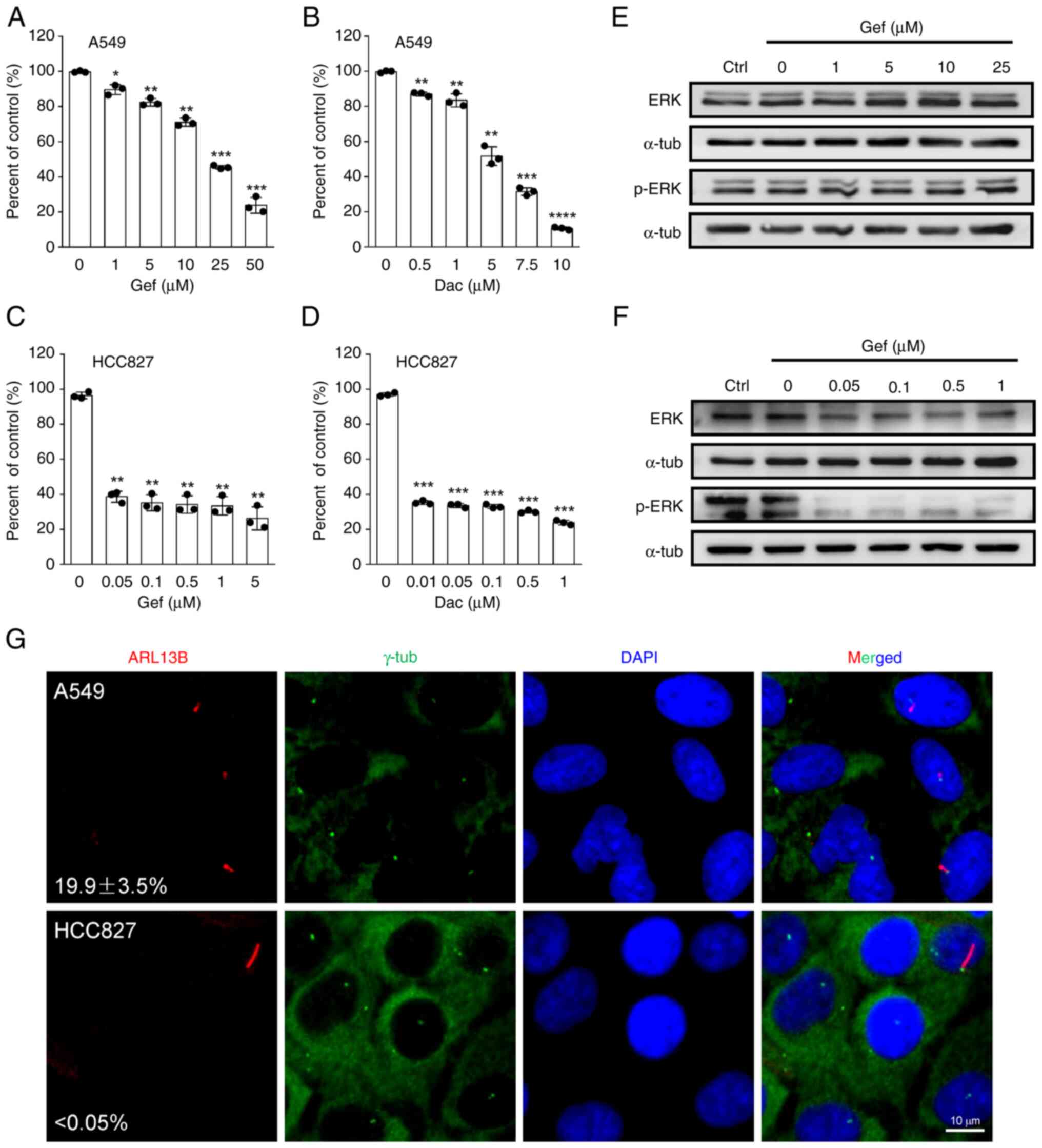
Figure 1

Epidermal growth factor
receptor-tyrosine kinase inhibitor-insensitive A549 cells harbor
high cilia incidence. (A and B) A549 cells were treated with
increasing concentrations of (A) Gef or (B) Dac, and the cell
viability related to untreated control (Ctrl) was measured at 48 h
post-treatment. (C and D) HCC827 cells were treated with increasing
concentrations of (C) Gef or (D) Dac, and the cell viability
related to untreated control was measured at 48 h post-treatment.
(E and F) A549 and HCC827 cells were exposed to increasing
concentrations of Gef for 48 h, and the immunoblotting analysis was
performed to measure the protein expression levels of ERK and p-ERK
at Thr202/Tyr204. α-tubulin (α-tub) was used as a loading control.
(G) Representative images of primary cilia labeled with ARL13B
(red) and basal bodies labeled with γ-tub (green) in A549 and
HCC827 cells, and the cilia incidence was calculated. The nuclei
were counterstained with DAPI (blue). Scale bar, 10 µm. All
quantitative data were obtained from three replicates and shown as
the mean ± SD. Error bars, ± SD. *P<0.05, **P<0.01,
***P<0.001 and ****P<0.0001 compared with 0 µM (0.1% DMSO).
Gef, gefitinib; Dac, dacomitinib; p-, phosphorylated; SD, standard
deviation.

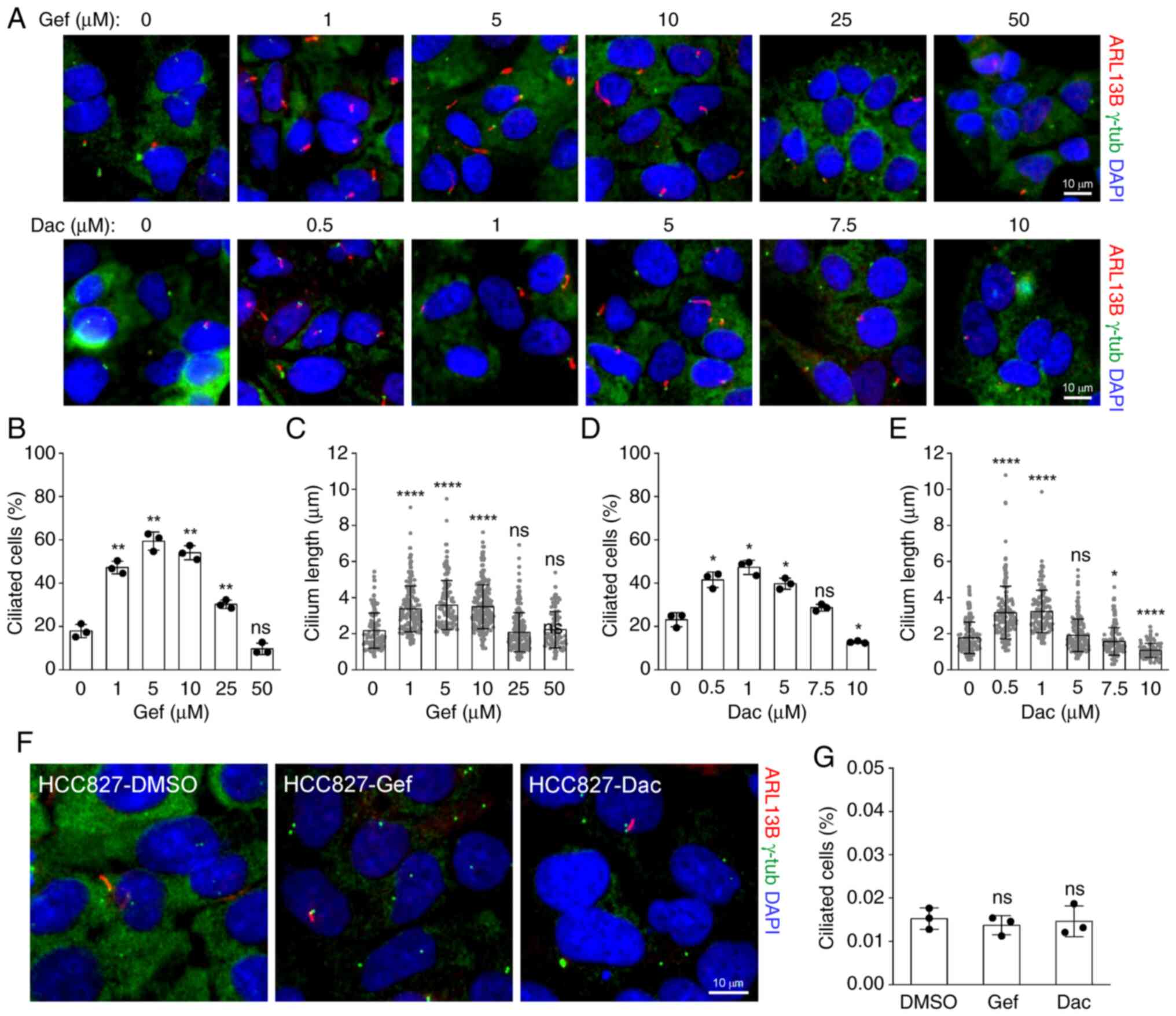
Figure 2

Epidermal growth factor
receptor-tyrosine kinase inhibitors promote ciliogenesis in
dose-dependent manner in A549 but not HCC827 cells. (A)
Representative images of primary cilia labeled with ARL13B (red)
and basal bodies labeled with γ-tub (green) in A549 cells treated
with increasing doses of Gef or Dac for 48 h. (B and C)
Quantification of (B) ciliated cells and the (C) cilium length of
A549 cells treated with 0 (n=117), 1 (n=176), 5 (n=133), 10
(n=216), 25 (n=210), 50 (n=95) µM Gef for 48 h. **P<0.01 and
****P<0.0001 compared with 0 µM; ns, not significant. (D and E)
Quantification of (D) ciliated cells and the (E) cilium length of
A549 cells treated with 0 (n=133), 0.5 (n=153), 1 (n=138), 5
(n=163), 7.5 (n=130), 10 (n=80) µM Dac for 48 h. *P<0.05 and
****P<0.0001 compared with 0 µM; ns, not significant. (F)
Representative images of primary cilia labeled with ARL13B (red)
and basal bodies labeled with γ-tub (green) in HCC827 cells treated
with 0.01 µM Gef or 0.001 µM Dac for 48 h. (G) Quantification of
ciliated cells in HCC827 cells in (F). ns, not significant compared
with DMSO. The nuclei were counterstained with DAPI (blue). Scale
bar, 10 µm. All quantitative data were obtained from three
replicates and shown as the mean ± SD. Error bars, ± SD. Gef,
gefitinib; Dac, dacomitinib; p-, phosphorylated; SD, standard
deviation; ns, not significant.

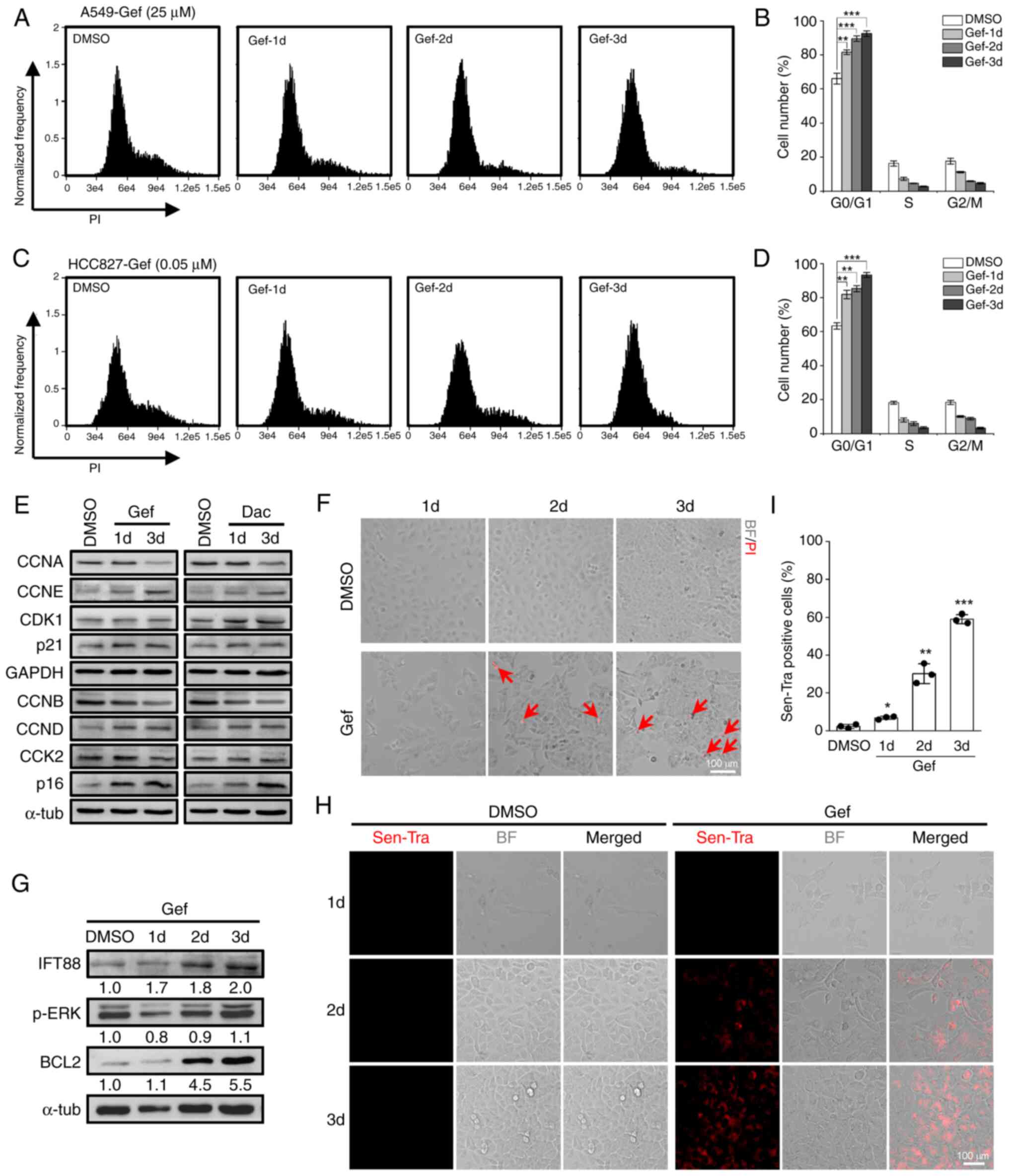
Figure 3

Gef treatment leads to G1 phase
arrest and senescence. (A and B) Cell cycle distribution assay of
A549 cells treated with DMSO (0.1%) or 25 µM Gef for 1, 2, and 3
days (d) by flow cytometry with (A) PI staining; (B) quantification
data. (C and D) Cell cycle distribution assay of HCC827 cells
treated with DMSO (0.1%) or 0.05 µM Gef for 1, 2, and 3 days by
flow cytometry with (C) PI staining; (D) quantification data. (E)
Immunoblotting analysis of the expression levels of CCNA, CCNB,
CCND, CCNE, CDK1, CDK2, p16 and p21 in A549 cells treated with
DMSO, Gef (25 µM), or Dac (5 µM) for 1 and 3 days. α-tubulin
(α-tub) and GAPDH were used as loading controls. (F) Representative
PI staining images of A549 cells exposed to DMSO (0.1%) or Gef (25
µM) for 1, 2, 3 days, the dead cells (red) were stained with PI and
indicated with red arrows. Scale bar, 100 µm. (G) Immunoblotting
analysis of the expression levels of IFT88, p-ERK (Thr202/Tyr204)
and BCL2 in A549 cells treated with DMSO (0.1%) or Gef (25 µM) for
1, 2, 3 days. α-tubulin (α-tub) was used as a loading control. The
values under the immunoblot bands indicate the quantitative
densitometry value measured using ImageJ software. (H and I) The
(H) cellular senescence assay of A549 cells treated with DMSO
(0.1%) or Gef (25 µM) for 1–3 d labeling by senescence-tracker
(Sen-Tra) fluorescence probe, and the (I) quantification data.
Scale bar, 100 µm. Data are expressed as the mean ± SD. Error bars,
± SD. *P<0.05, **P<0.01 and ***P<0.001 compared with DMSO.
Gef, gefitinib; PI, propidium iodide; CCNA, Cyclin A2; CCNB, Cyclin
B1; CCND, Cyclin D1; CCNE, Cyclin E1; Dac, dacomitinib; BF, bright
field; p-, phosphorylated; SD, standard deviation.

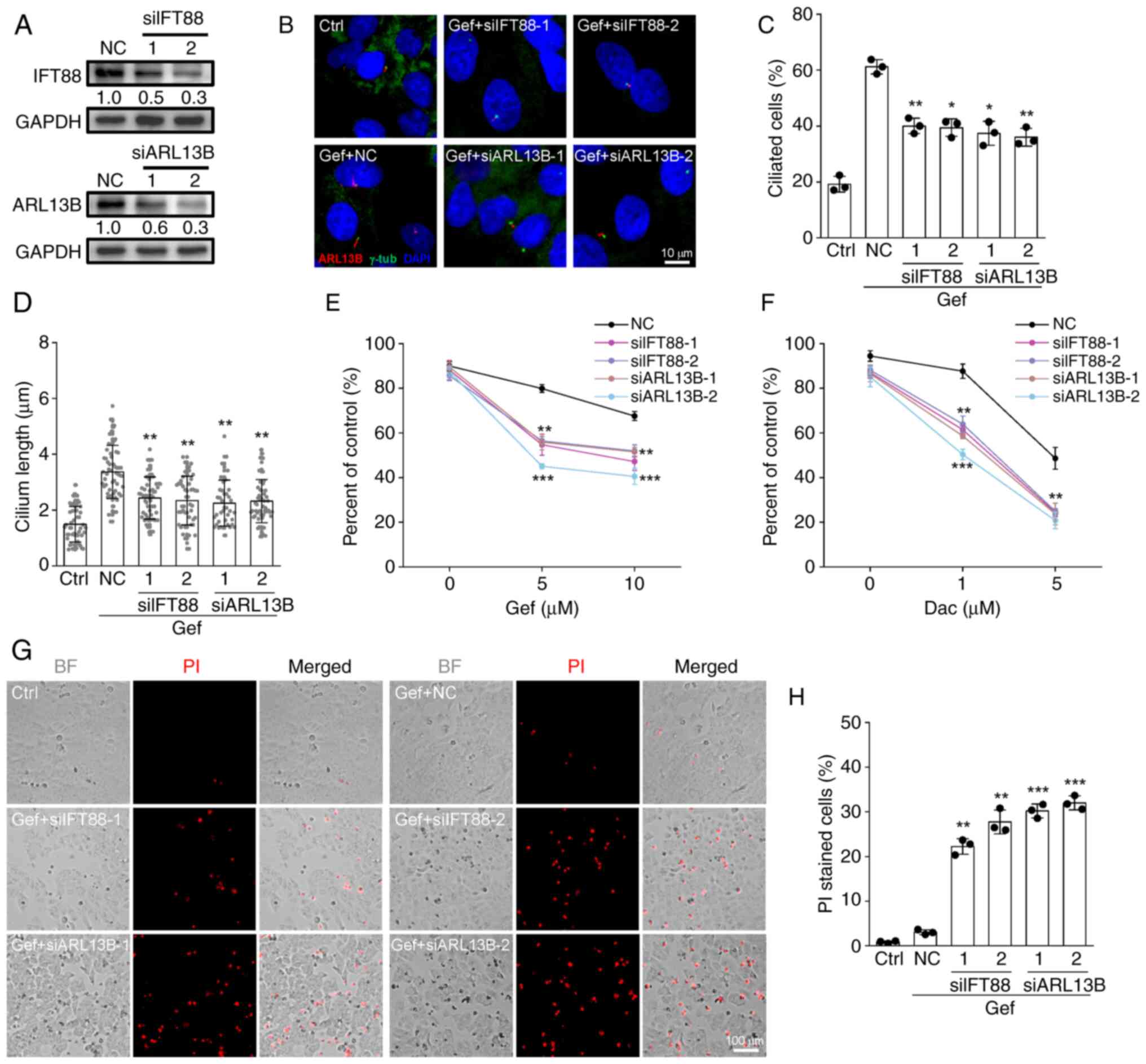
Figure 4

Inhibition of ciliogenesis sensitizes
A549 cells to epidermal growth factor receptor-tyrosine kinase
inhibitors. (A) Immunoblotting analysis of the protein expression
levels of IFT88 and ARL13B in A549 cells transfected with siRNAs
against IFT88 (siIFT88-1/2), ARL13B (siARL13B-1/2), or NC. GAPDH
was employed as a loading control. The values under the immunoblot
bands indicate the quantitative densitometry value measured using
ImageJ software. (B-D) Immunofluorescence labeling of primary cilia
(ARL13B, red) and basal bodies (γ-tub, green) in A549 control cells
(Ctrl) and cells transfected with siIFT88-1/2, siARL13B-1/2, or NC
following treated with 10 µM Gef for 48 h, (C) the proportion of
ciliated cells and (D) cilium length in each group. Ctrl, n=52;
Gef-NC, n=59; Gef-siIFT88-1, n=57; Gef-siIFT88-2, n=64;
Gef-siARL13B-1, n=56; Gef-siARL13B-2, n=69. The nuclei were stained
with DAPI (blue). (E and F) A549 cells transfected with NC,
siIFT88-1/2, or ARL13B-1/2 siRNAs were exposed to (E) Gef (0, 5, 10
µM) or (F) Dac (0, 1, 5 µM) for 48 h, the cell viability related to
untreated control was measured. (G and H) A549 cells transfected
with indicated siRNAs were exposed 10 µM Gef for 48 h and stained
with PI to detect the dead cells and quantification data for each
group. Scale bar, 100 µm. Data are expressed as the mean ± SD.
Error bars, ± SD. *P<0.05, **P<0.01 and ***P<0.001
compared with NC. siRNA, small interfering RNA; NC, negative
control; Gef, gefitinib; Dac, dacomitinib; BF, bright field; SD,
standard deviation.

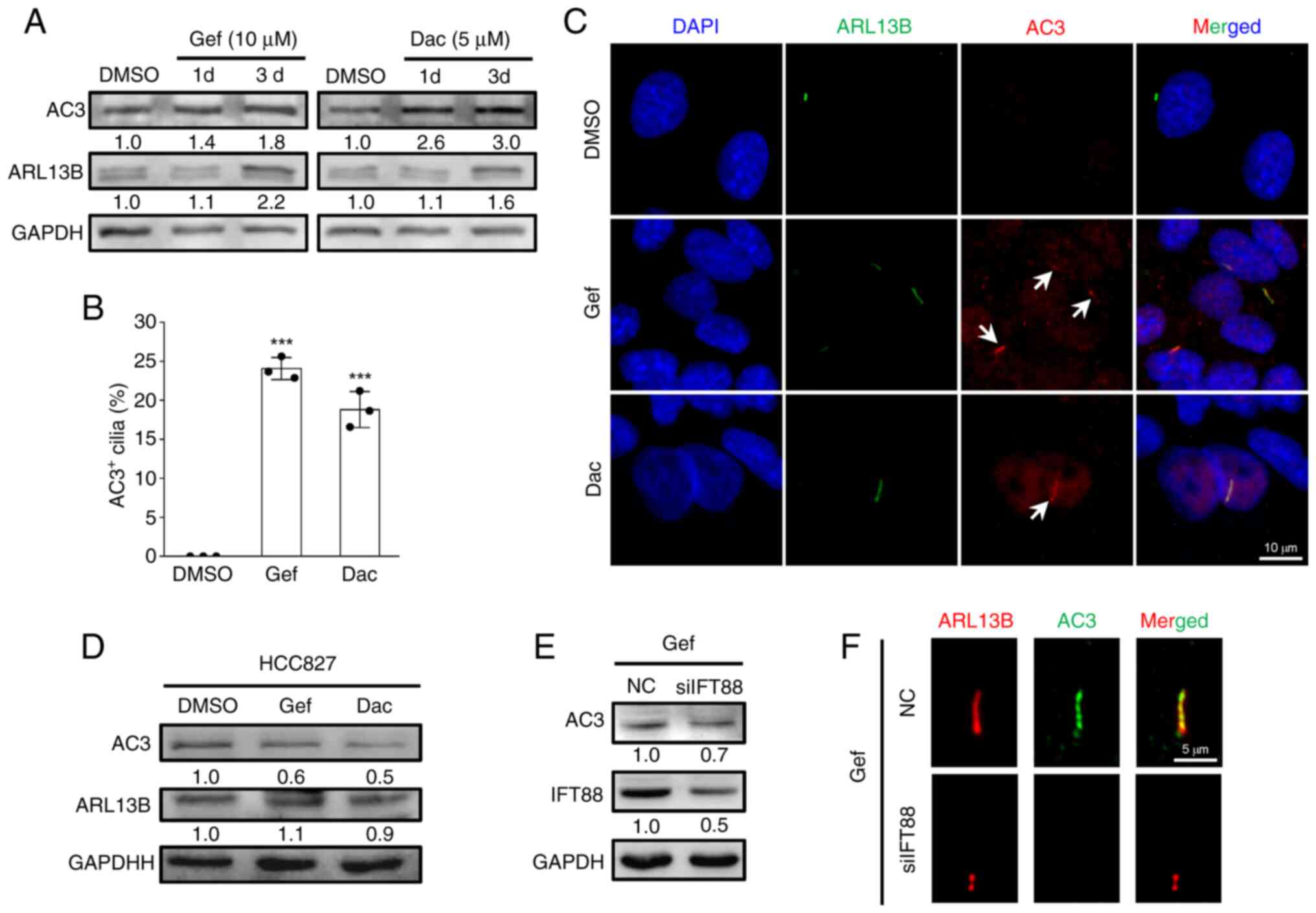
Figure 5

Epidermal growth factor
receptor-tyrosine kinase inhibitors induce AC3 expression and
ciliary localization. (A) Immunoblotting analysis of the expression
levels of AC3 and ARL13B in A549 cells exposed to DMSO (0.1%), Gef
(10 µM) and Dac (5 µM) for 1 and 3 days. (B and C)
Immunofluorescence labeling of primary cilia (Arl13b, green) and
AC3 (red, indicated by white arrows) in A549 cells administrated
with DMSO (0.1%), Gef (10 µM), and Dac (5 µM) for 3 days, and
quantification of AC3 positive (AC3+) cilia in each
group. The nuclei were stained with DAPI (blue). Scale bar, 10 µm.
Data are expressed as the mean ± SD. Error bars, ± SD.
***P<0.001 compared with DMSO. (D) Immunoblotting analysis of
the expression levels of AC3 and ARL13B in HCC827 cells exposed to
DMSO (0.1%), Gef (0.05 µM) and Dac (0.01 µM) for 3 days. (E)
Immunoblotting analysis of the protein expression levels of AC3 and
IFT88 in Gef-treated A549 cells transfected with siIFT88-1
(siIFT88) or NC siRNA for 3 days. (F) Immunofluorescence labeling
of primary cilia (Arl13b, red) and AC3 (green) in cells in (E).
Scale bar, 5 µm. GAPDH was used as a loading control; the values
under the immunoblot bands indicate the quantitative densitometry
value measured using ImageJ software. Gef, gefitinib; Dac,
dacomitinib; SD, standard deviation; si-, small interfering; NC,
negative control; AC3, adenylate cyclase 3.

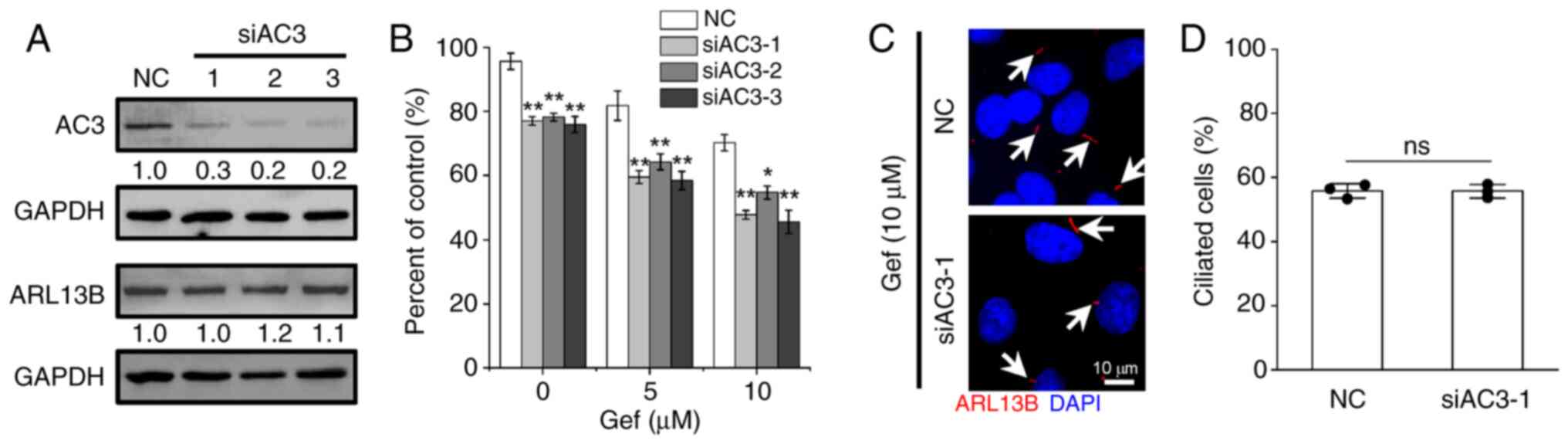
Figure 6

Silencing AC3 expression enhances
cellular sensitivity to Gef. (A) Immunoblotting analysis of the
expression levels of AC3 and ARL13B in A549 cells transfected with
siRNAs targeting AC3 (siAC3-1/2/3) or NC for 48 h. GAPDH was used
as a loading control. The values under the immunoblot bands
indicate the quantitative densitometry value measured using ImageJ
software. (B) A549 cells transfected NC or siAC3-1/2/3 were exposed
to Gef (0, 5, 10 µM) for 48 h, the cell viability related to
untreated control was measured. (C and D) Immunofluorescence
labeling of primary cilia (Arl13b, red, indicated by white arrows)
in A549 cells transfected with NC and siAC3-1 following
administrated with Gef (10 µM) for 3 days, and quantification of
ciliated cells in each group. The nuclei were stained with DAPI
(blue). Scale bar, 10 µm. Data are expressed as the mean ± SD.
Error bars, ± SD. *P<0.05 and **P<0.01 compared with NC. AC3,
adenylate cyclase 3; Gef, gefitinib; si-, small interfering; NC,
negative control; SD, standard deviation; ns, not significant.
View References

1 

Bray F, Laversanne M, Sung H, Ferlay J, Siegel RL, Soerjomataram I and Jemal A: Global cancer statistics 2022: GLOBOCAN estimates of incidence and mortality worldwide for 36 cancers in 185 countries. CA Cancer J Clin. 74:229–263. 2024.PubMed/NCBI

2 

Hendriks LEL, Remon J, Faivre-Finn C, Garassino MC, Heymach JV, Kerr KM, Tan DSW, Veronesi G and Reck M: Non-small-cell lung cancer. Nat Rev Dis Primers. 10:712024. View Article : Google Scholar : PubMed/NCBI

3 

Pao W and Chmielecki J: Rational, biologically based treatment of EGFR-mutant non-small-cell lung cancer. Nat Rev Cancer. 10:760–774. 2010. View Article : Google Scholar : PubMed/NCBI

4 

Inoue A, Suzuki T, Fukuhara T, Maemondo M, Kimura Y, Morikawa N, Watanabe H, Saijo Y and Nukiwa T: Prospective phase II study of gefitinib for chemotherapy-naive patients with advanced non-small-cell lung cancer with epidermal growth factor receptor gene mutations. J Clin Oncol. 24:3340–3346. 2006. View Article : Google Scholar : PubMed/NCBI

5 

Cappuzzo F, Ciuleanu T, Stelmakh L, Cicenas S, Szczésna A, Juhász E, Esteban E, Molinier O, Brugger W, Melezínek I, et al: Erlotinib as maintenance treatment in advanced non-small-cell lung cancer: A multicentre, randomised, placebo-controlled phase 3 study. Lancet Oncol. 11:521–529. 2010. View Article : Google Scholar : PubMed/NCBI

6 

Du Z, Kan H, Sun J, Liu Y, Gu J, Akemujiang S, Zou Y, Jiang L, Wang Q, Li C, et al: Molecular mechanisms of acquired resistance to EGFR tyrosine kinase inhibitors in non-small cell lung cancer. Drug Resist Updat. 82:1012662025. View Article : Google Scholar : PubMed/NCBI

7 

Satir P, Pedersen LB and Christensen ST: The primary cilium at a glance. J Cell Sci. 123:499–503. 2010. View Article : Google Scholar : PubMed/NCBI

8 

Anvarian Z, Mykytyn K, Mukhopadhyay S, Pedersen LB and Christensen ST: Cellular signalling by primary cilia in development, organ function and disease. Nat Rev Nephrol. 15:199–219. 2019. View Article : Google Scholar : PubMed/NCBI

9 

Kiseleva AA, Nikonova AS and Golemis EA: Patterns of ciliation and ciliary signaling in cancer. Rev Physiol Biochem Pharmacol. 185:87–105. 2023. View Article : Google Scholar : PubMed/NCBI

10 

Shireman JM, Atashi F, Lee G, Ali ES, Saathoff MR, Park CH, Savchuk S, Baisiwala S, Miska J, Lesniak MS, et al: De novo purine biosynthesis is a major driver of chemoresistance in glioblastoma. Brain. 144:1230–1246. 2021. View Article : Google Scholar : PubMed/NCBI

11 

Chao YY, Huang BM, Peng IC, Lee PR, Lai YS, Chiu WT, Lin YS, Lin SC, Chang JH, Chen PS, et al: ATM- and ATR-induced primary ciliogenesis promotes cisplatin resistance in pancreatic ductal adenocarcinoma. J Cell Physiol. 237:4487–4503. 2022. View Article : Google Scholar : PubMed/NCBI

12 

Wei L, Ma W, Cai H, Peng SP, Tian HB, Wang JF, Gao L and He JP: Inhibition of ciliogenesis enhances the cellular sensitivity to temozolomide and ionizing radiation in human glioblastoma cells. Biomed Environ Sci. 35:419–436. 2022.PubMed/NCBI

13 

Ma W, Wei L, Jin L, Ma Q, Zhang T, Zhao Y, Hua J, Zhang Y, Wei W, Ding N, et al: YAP/Aurora A-mediated ciliogenesis regulates ionizing radiation-induced senescence via Hedgehog pathway in tumor cells. Biochim Biophys Acta Mol Basis Dis. 1870:1670622024. View Article : Google Scholar : PubMed/NCBI

14 

Jenks AD, Vyse S, Wong JP, Kostaras E, Keller D, Burgoyne T, Shoemark A, Tsalikis A, de la Roche M, Michaelis M, et al: Primary cilia mediate diverse kinase inhibitor resistance mechanisms in cancer. Cell Rep. 23:3042–3055. 2018. View Article : Google Scholar : PubMed/NCBI

15 

Lee C, Yi J, Park J, Ahn B, Won YW, Jeon J, Lee BJ, Cho WJ and Park JW: Hedgehog signalling is involved in acquired resistance to KRASG12C inhibitors in lung cancer cells. Cell Death Dis. 15:562024. View Article : Google Scholar : PubMed/NCBI

16 

Khan NA, Willemarck N, Talebi A, Marchand A, Binda MM, Dehairs J, Rueda-Rincon N, Daniels VW, Bagadi M, Thimiri Govinda Raj DB, et al: Identification of drugs that restore primary cilium expression in cancer cells. Oncotarget. 7:9975–9992. 2016. View Article : Google Scholar : PubMed/NCBI

17 

Guo R, Liu T, Shasaltaneh MD, Wang X, Imani S and Wen Q: Targeting adenylate cyclase family: New concept of targeted cancer therapy. Front Oncol. 12:8292122022. View Article : Google Scholar : PubMed/NCBI

18 

Johnson JLF and Leroux MR: cAMP and cGMP signaling: Sensory systems with prokaryotic roots adopted by eukaryotic cilia. Trends Cell Biol. 20:435–444. 2010. View Article : Google Scholar : PubMed/NCBI

19 

Brewer KK, Brewer KM, Terry TT, Caspary T, Vaisse C and Berbari NF: Postnatal dynamic ciliary ARL13B and ADCY3 localization in the mouse brain. Cells. 13:2592024. View Article : Google Scholar : PubMed/NCBI

20 

Ou Y, Ruan Y, Cheng M, Moser JJ, Rattner JB and van der Hoorn FA: Adenylate cyclase regulates elongation of mammalian primary cilia. Exp Cell Res. 315:2802–2817. 2009. View Article : Google Scholar : PubMed/NCBI

21 

Hong SH, Goh SH, Lee SJ, Hwang JA, Lee J, Choi IJ, Seo H, Park JH, Suzuki H, Yamamoto E, et al: Upregulation of adenylate cyclase 3 (ADCY3) increases the tumorigenic potential of cells by activating the CREB pathway. Oncotarget. 4:1791–1803. 2013. View Article : Google Scholar : PubMed/NCBI

22 

Quinn SN, Graves SH, Dains-McGahee C, Friedman EM, Hassan H, Witkowski P and Sabbatini ME: Adenylyl cyclase 3/adenylyl cyclase-associated protein 1 (CAP1) complex mediates the anti-migratory effect of forskolin in pancreatic cancer cells. Mol Carcinog. 56:1344–1360. 2017. View Article : Google Scholar : PubMed/NCBI

23 

Hu L, Dong C, Wang Z, He S, Yang Y, Zi M, Li H, Zhang Y, Chen C, Zheng R, et al: A rationally designed fluorescence probe achieves highly specific and long-term detection of senescence in vitro and in vivo. Aging Cell. 22:e138962023. View Article : Google Scholar : PubMed/NCBI

24 

Yang Y, Li S, Wang Y, Zhao Y and Li Q: Protein tyrosine kinase inhibitor resistance in malignant tumors: Molecular mechanisms and future perspective. Signal Transduct Target Ther. 7:3292022. View Article : Google Scholar : PubMed/NCBI

25 

Kim SO, Kim BY and Lee KH: Synergistic effect of anticancer drug resistance and Wnt3a on primary ciliogenesis in A549 cell-derived anticancer drug-resistant subcell lines. Biochem Biophys Res Commun. 635:1–11. 2022. View Article : Google Scholar : PubMed/NCBI

26 

Duffy MP, Sup ME and Guo XE: Adenylyl cyclase 3 regulates osteocyte mechanotransduction and primary cilium. Biochem Biophys Res Commun. 573:145–150. 2021. View Article : Google Scholar : PubMed/NCBI

27 

Sterpka A and Chen X: Neuronal and astrocytic primary cilia in the mature brain. Pharmacol Res. 137:114–121. 2018. View Article : Google Scholar : PubMed/NCBI

28 

Hilgendorf KI, Myers BR and Reiter JF: Emerging mechanistic understanding of cilia function in cellular signalling. Nat Rev Mol Cell Biol. 25:555–573. 2024. View Article : Google Scholar : PubMed/NCBI

29 

Kiseleva AA, Korobeynikov VA, Nikonova AS, Zhang P, Makhov P, Deneka AY, Einarson MB, Serebriiskii IG, Liu H, Peterson JR and Golemis EA: Unexpected activities in regulating ciliation contribute to off-target effects of targeted drugs. Clin Cancer Res. 25:4179–4193. 2019. View Article : Google Scholar : PubMed/NCBI

30 

Guen VJ and Prigent C: Targeting Primary ciliogenesis with small-molecule inhibitors. Cell Chem Biol. 27:1224–1228. 2020. View Article : Google Scholar : PubMed/NCBI

31 

Collinson R and Tanos B: Primary cilia and cancer: A tale of many faces. Oncogene. 44:1551–1566. 2025. View Article : Google Scholar : PubMed/NCBI

32 

Saito M, Otsu W, Miyadera K and Nishimura Y: Recent advances in the understanding of cilia mechanisms and their applications as therapeutic targets. Front Mol Biosci. 10:12321882023. View Article : Google Scholar : PubMed/NCBI

33 

Pant K, Richard S, Peixoto E, Baral S, Yang R, Ren Y, Masyuk TV, LaRusso NF and Gradilone SA: Cholangiocyte ciliary defects induce sustained epidermal growth factor receptor signaling. Hepatology. 81:1132–1145. 2025. View Article : Google Scholar : PubMed/NCBI

34 

Yin F, Chen Q, Shi Y, Xu H, Huang J, Qing M, Zhong L, Li J, Xie L and Zeng X: Activation of EGFR-Aurora A induces loss of primary cilia in oral squamous cell carcinoma. Oral Dis. 28:621–630. 2022. View Article : Google Scholar : PubMed/NCBI

35 

Kasahara K, Aoki H, Kiyono T, Wang S, Kagiwada H, Yuge M, Tanaka T, Nishimura Y, Mizoguchi A, Goshima N and Inagaki M: EGF receptor kinase suppresses ciliogenesis through activation of USP8 deubiquitinase. Nat Commun. 9:7582018. View Article : Google Scholar : PubMed/NCBI

36 

Tsai YC, Kuo TN, Chao YY, Lee PR, Lin RC, Xiao XY, Huang BM and Wang CY: PDGF-AA activates AKT and ERK signaling for testicular interstitial Leydig cell growth via primary cilia. J Cell Biochem. 124:89–102. 2023. View Article : Google Scholar : PubMed/NCBI

37 

Lee JE, Park HS, Lee D, Yoo G, Kim T, Jeon H, Yeo MK, Lee CS, Moon JY, Jung SS, et al: Hippo pathway effector YAP inhibition restores the sensitivity of EGFR-TKI in lung adenocarcinoma having primary or acquired EGFR-TKI resistance. Biochem Biophys Res Commun. 474:154–160. 2016. View Article : Google Scholar : PubMed/NCBI

38 

Guo Y, Dupart M, Irondelle M, Peraldi P, Bost F and Mazure NM: YAP1 modulation of primary cilia-mediated ciliogenesis in 2D and 3D prostate cancer models. FEBS Lett. 598:3071–3086. 2024. View Article : Google Scholar : PubMed/NCBI

39 

Lee J, Park KC, Sul HJ, Hong HJ, Kim KH, Kero J and Shong M: Loss of primary cilia promotes mitochondria-dependent apoptosis in thyroid cancer. Sci Rep. 11:41812021. View Article : Google Scholar : PubMed/NCBI

40 

Jeffries EP, Di Filippo M and Galbiati F: Failure to reabsorb the primary cilium induces cellular senescence. FASEB J. 33:4866–4882. 2019. View Article : Google Scholar : PubMed/NCBI

41 

Ma X, Zhang Y, Zhang Y, Zhang X, Huang Y, He K, Chen C, Hao J, Zhao D, LeBrasseur NK, et al: A stress-induced cilium-to-PML-NB route drives senescence initiation. Nat Commun. 14:18402023. View Article : Google Scholar : PubMed/NCBI

42 

Breslin L, Prosser SL, Cuffe S and Morrison CG: Ciliary abnormalities in senescent human fibroblasts impair proliferative capacity. Cell Cycle. 13:2773–2779. 2014. View Article : Google Scholar : PubMed/NCBI

43 

Teng YN, Chang HC, Chao YY, Cheng HL, Lien WC and Wang CY: Etoposide triggers cellular senescence by inducing multiple centrosomes and primary cilia in adrenocortical tumor cells. Cells. 10:14662021. View Article : Google Scholar : PubMed/NCBI

44 

Liu X, Wei L, Zhang R, Chen J, Zhang T, Hua J, Wang J, He J and Xie X: The DNA-PKcs-primary cilia axis maintains ionizing radiation-induced senescence in tumor cells. Acta Biochim Biophys Sin. 2025.Doi: 10.3724/abbs.2025168. View Article : Google Scholar

45 

Zhang H, Liu Y, Liu J, Chen J, Wang J, Hua H and Jiang Y: cAMP-PKA/EPAC signaling and cancer: The interplay in tumor microenvironment. J Hematol Oncol. 17:52024. View Article : Google Scholar : PubMed/NCBI

46 

Ginsberg G, Angle K, Guyton K and Sonawane B: Polymorphism in the DNA repair enzyme XRCC1: Utility of current database and implications for human health risk assessment. Mutat Res. 727:1–15. 2011. View Article : Google Scholar : PubMed/NCBI

47 

Zou T, Liu J, She L, Chen J, Zhu T, Yin J, Li X, Li X, Zhou H and Liu Z: A perspective profile of ADCY1 in cAMP signaling with drug-resistance in lung cancer. J Cancer. 10:6848–6857. 2019. View Article : Google Scholar : PubMed/NCBI

Related Articles

  • Abstract
  • View
  • Download
  • Twitter
Copy and paste a formatted citation
Spandidos Publications style
Jin L, Wei L, Hua J, Zhang R, Chen J, He J and Yang Y: Inhibition of primary ciliogenesis enhances efficacy of EGFR‑TKIs against non‑small cell lung cancer cells. Oncol Rep 55: 30, 2026.
APA
Jin, L., Wei, L., Hua, J., Zhang, R., Chen, J., He, J., & Yang, Y. (2026). Inhibition of primary ciliogenesis enhances efficacy of EGFR‑TKIs against non‑small cell lung cancer cells. Oncology Reports, 55, 30. https://doi.org/10.3892/or.2025.9035
MLA
Jin, L., Wei, L., Hua, J., Zhang, R., Chen, J., He, J., Yang, Y."Inhibition of primary ciliogenesis enhances efficacy of EGFR‑TKIs against non‑small cell lung cancer cells". Oncology Reports 55.2 (2026): 30.
Chicago
Jin, L., Wei, L., Hua, J., Zhang, R., Chen, J., He, J., Yang, Y."Inhibition of primary ciliogenesis enhances efficacy of EGFR‑TKIs against non‑small cell lung cancer cells". Oncology Reports 55, no. 2 (2026): 30. https://doi.org/10.3892/or.2025.9035
Copy and paste a formatted citation
x
Spandidos Publications style
Jin L, Wei L, Hua J, Zhang R, Chen J, He J and Yang Y: Inhibition of primary ciliogenesis enhances efficacy of EGFR‑TKIs against non‑small cell lung cancer cells. Oncol Rep 55: 30, 2026.
APA
Jin, L., Wei, L., Hua, J., Zhang, R., Chen, J., He, J., & Yang, Y. (2026). Inhibition of primary ciliogenesis enhances efficacy of EGFR‑TKIs against non‑small cell lung cancer cells. Oncology Reports, 55, 30. https://doi.org/10.3892/or.2025.9035
MLA
Jin, L., Wei, L., Hua, J., Zhang, R., Chen, J., He, J., Yang, Y."Inhibition of primary ciliogenesis enhances efficacy of EGFR‑TKIs against non‑small cell lung cancer cells". Oncology Reports 55.2 (2026): 30.
Chicago
Jin, L., Wei, L., Hua, J., Zhang, R., Chen, J., He, J., Yang, Y."Inhibition of primary ciliogenesis enhances efficacy of EGFR‑TKIs against non‑small cell lung cancer cells". Oncology Reports 55, no. 2 (2026): 30. https://doi.org/10.3892/or.2025.9035
Follow us
  • Twitter
  • LinkedIn
  • Facebook
About
  • Spandidos Publications
  • Careers
  • Cookie Policy
  • Privacy Policy
How can we help?
  • Help
  • Live Chat
  • Contact
  • Email to our Support Team