Spandidos Publications Logo
  • About
    • About Spandidos
    • Aims and Scopes
    • Abstracting and Indexing
    • Editorial Policies
    • Reprints and Permissions
    • Job Opportunities
    • Terms and Conditions
    • Contact
  • Journals
    • All Journals
    • Oncology Letters
      • Oncology Letters
      • Information for Authors
      • Editorial Policies
      • Editorial Board
      • Aims and Scope
      • Abstracting and Indexing
      • Bibliographic Information
      • Archive
    • International Journal of Oncology
      • International Journal of Oncology
      • Information for Authors
      • Editorial Policies
      • Editorial Board
      • Aims and Scope
      • Abstracting and Indexing
      • Bibliographic Information
      • Archive
    • Molecular and Clinical Oncology
      • Molecular and Clinical Oncology
      • Information for Authors
      • Editorial Policies
      • Editorial Board
      • Aims and Scope
      • Abstracting and Indexing
      • Bibliographic Information
      • Archive
    • Experimental and Therapeutic Medicine
      • Experimental and Therapeutic Medicine
      • Information for Authors
      • Editorial Policies
      • Editorial Board
      • Aims and Scope
      • Abstracting and Indexing
      • Bibliographic Information
      • Archive
    • International Journal of Molecular Medicine
      • International Journal of Molecular Medicine
      • Information for Authors
      • Editorial Policies
      • Editorial Board
      • Aims and Scope
      • Abstracting and Indexing
      • Bibliographic Information
      • Archive
    • Biomedical Reports
      • Biomedical Reports
      • Information for Authors
      • Editorial Policies
      • Editorial Board
      • Aims and Scope
      • Abstracting and Indexing
      • Bibliographic Information
      • Archive
    • Oncology Reports
      • Oncology Reports
      • Information for Authors
      • Editorial Policies
      • Editorial Board
      • Aims and Scope
      • Abstracting and Indexing
      • Bibliographic Information
      • Archive
    • Molecular Medicine Reports
      • Molecular Medicine Reports
      • Information for Authors
      • Editorial Policies
      • Editorial Board
      • Aims and Scope
      • Abstracting and Indexing
      • Bibliographic Information
      • Archive
    • World Academy of Sciences Journal
      • World Academy of Sciences Journal
      • Information for Authors
      • Editorial Policies
      • Editorial Board
      • Aims and Scope
      • Abstracting and Indexing
      • Bibliographic Information
      • Archive
    • International Journal of Functional Nutrition
      • International Journal of Functional Nutrition
      • Information for Authors
      • Editorial Policies
      • Editorial Board
      • Aims and Scope
      • Abstracting and Indexing
      • Bibliographic Information
      • Archive
    • International Journal of Epigenetics
      • International Journal of Epigenetics
      • Information for Authors
      • Editorial Policies
      • Editorial Board
      • Aims and Scope
      • Abstracting and Indexing
      • Bibliographic Information
      • Archive
    • Medicine International
      • Medicine International
      • Information for Authors
      • Editorial Policies
      • Editorial Board
      • Aims and Scope
      • Abstracting and Indexing
      • Bibliographic Information
      • Archive
  • Articles
  • Information
    • Information for Authors
    • Information for Reviewers
    • Information for Librarians
    • Information for Advertisers
    • Conferences
  • Language Editing
Spandidos Publications Logo
  • About
    • About Spandidos
    • Aims and Scopes
    • Abstracting and Indexing
    • Editorial Policies
    • Reprints and Permissions
    • Job Opportunities
    • Terms and Conditions
    • Contact
  • Journals
    • All Journals
    • Biomedical Reports
      • Information for Authors
      • Editorial Policies
      • Editorial Board
      • Aims and Scope
      • Abstracting and Indexing
      • Bibliographic Information
      • Archive
    • Experimental and Therapeutic Medicine
      • Information for Authors
      • Editorial Policies
      • Editorial Board
      • Aims and Scope
      • Abstracting and Indexing
      • Bibliographic Information
      • Archive
    • International Journal of Epigenetics
      • Information for Authors
      • Editorial Policies
      • Editorial Board
      • Aims and Scope
      • Abstracting and Indexing
      • Bibliographic Information
      • Archive
    • International Journal of Functional Nutrition
      • Information for Authors
      • Editorial Policies
      • Editorial Board
      • Aims and Scope
      • Abstracting and Indexing
      • Bibliographic Information
      • Archive
    • International Journal of Molecular Medicine
      • Information for Authors
      • Editorial Policies
      • Editorial Board
      • Aims and Scope
      • Abstracting and Indexing
      • Bibliographic Information
      • Archive
    • International Journal of Oncology
      • Information for Authors
      • Editorial Policies
      • Editorial Board
      • Aims and Scope
      • Abstracting and Indexing
      • Bibliographic Information
      • Archive
    • Medicine International
      • Information for Authors
      • Editorial Policies
      • Editorial Board
      • Aims and Scope
      • Abstracting and Indexing
      • Bibliographic Information
      • Archive
    • Molecular and Clinical Oncology
      • Information for Authors
      • Editorial Policies
      • Editorial Board
      • Aims and Scope
      • Abstracting and Indexing
      • Bibliographic Information
      • Archive
    • Molecular Medicine Reports
      • Information for Authors
      • Editorial Policies
      • Editorial Board
      • Aims and Scope
      • Abstracting and Indexing
      • Bibliographic Information
      • Archive
    • Oncology Letters
      • Information for Authors
      • Editorial Policies
      • Editorial Board
      • Aims and Scope
      • Abstracting and Indexing
      • Bibliographic Information
      • Archive
    • Oncology Reports
      • Information for Authors
      • Editorial Policies
      • Editorial Board
      • Aims and Scope
      • Abstracting and Indexing
      • Bibliographic Information
      • Archive
    • World Academy of Sciences Journal
      • Information for Authors
      • Editorial Policies
      • Editorial Board
      • Aims and Scope
      • Abstracting and Indexing
      • Bibliographic Information
      • Archive
  • Articles
  • Information
    • For Authors
    • For Reviewers
    • For Librarians
    • For Advertisers
    • Conferences
  • Language Editing
Login Register Submit
  • This site uses cookies
  • You can change your cookie settings at any time by following the instructions in our Cookie Policy. To find out more, you may read our Privacy Policy.

    I agree
Search articles by DOI, keyword, author or affiliation
Search
Advanced Search
presentation
Oncology Reports
Join Editorial Board Propose a Special Issue
Print ISSN: 1021-335X Online ISSN: 1791-2431
Journal Cover
March-2026 Volume 55 Issue 3

Full Size Image

Sign up for eToc alerts
Recommend to Library

Journals

International Journal of Molecular Medicine

International Journal of Molecular Medicine

International Journal of Molecular Medicine is an international journal devoted to molecular mechanisms of human disease.

International Journal of Oncology

International Journal of Oncology

International Journal of Oncology is an international journal devoted to oncology research and cancer treatment.

Molecular Medicine Reports

Molecular Medicine Reports

Covers molecular medicine topics such as pharmacology, pathology, genetics, neuroscience, infectious diseases, molecular cardiology, and molecular surgery.

Oncology Reports

Oncology Reports

Oncology Reports is an international journal devoted to fundamental and applied research in Oncology.

Experimental and Therapeutic Medicine

Experimental and Therapeutic Medicine

Experimental and Therapeutic Medicine is an international journal devoted to laboratory and clinical medicine.

Oncology Letters

Oncology Letters

Oncology Letters is an international journal devoted to Experimental and Clinical Oncology.

Biomedical Reports

Biomedical Reports

Explores a wide range of biological and medical fields, including pharmacology, genetics, microbiology, neuroscience, and molecular cardiology.

Molecular and Clinical Oncology

Molecular and Clinical Oncology

International journal addressing all aspects of oncology research, from tumorigenesis and oncogenes to chemotherapy and metastasis.

World Academy of Sciences Journal

World Academy of Sciences Journal

Multidisciplinary open-access journal spanning biochemistry, genetics, neuroscience, environmental health, and synthetic biology.

International Journal of Functional Nutrition

International Journal of Functional Nutrition

Open-access journal combining biochemistry, pharmacology, immunology, and genetics to advance health through functional nutrition.

International Journal of Epigenetics

International Journal of Epigenetics

Publishes open-access research on using epigenetics to advance understanding and treatment of human disease.

Medicine International

Medicine International

An International Open Access Journal Devoted to General Medicine.

Journal Cover
March-2026 Volume 55 Issue 3

Full Size Image

Sign up for eToc alerts
Recommend to Library

  • Article
  • Citations
    • Cite This Article
    • Download Citation
    • Create Citation Alert
    • Remove Citation Alert
    • Cited By
  • Similar Articles
    • Related Articles (in Spandidos Publications)
    • Similar Articles (Google Scholar)
    • Similar Articles (PubMed)
  • Download PDF
  • Download XML
  • View XML

  • Supplementary Files
    • Supplementary_Data.pdf
Article Open Access

CDK1 depletion suppresses glioma malignancy through cell cycle pathway regulation: Mechanistic insights from functional and molecular profiling

  • Authors:
    • Yu Wang
    • Huandi Zhou
    • Xuetao Han
    • Dongdong Zhang
    • Liubing Hou
    • Haonan Li
    • Tianyi Fan
    • Sijie Li
    • Xiaoying Xue
  • View Affiliations / Copyright

    Affiliations: Department of Radiotherapy, The Second Hospital of Hebei Medical University, Shijiazhuang, Hebei 050000, P.R. China
    Copyright: © Wang et al. This is an open access article distributed under the terms of Creative Commons Attribution License.
  • Article Number: 41
    |
    Published online on: January 12, 2026
       https://doi.org/10.3892/or.2026.9046
  • Expand metrics +
Metrics: Total Views: 0 (Spandidos Publications: | PMC Statistics: )
Metrics: Total PDF Downloads: 0 (Spandidos Publications: | PMC Statistics: )
Cited By (CrossRef): 0 citations Loading Articles...

This article is mentioned in:


Abstract

Glioblastoma remains a lethal malignancy with limited therapeutic advancements. Emerging evidence implicates cell cycle dysregulation in glioma pathogenesis, yet the mechanistic role of cyclin‑dependent kinase 1 (CDK1) remains underexplored. The present study systematically evaluated the clinical relevance and functional impact of CDK1 in glioma progression through multi‑modal experimental approaches. CDK1 expression was analyzed using public datasets and then verified by western blotting using patient tissue samples (n=37) from the Second Hospital of Hebei Medical University (Shijiazhuang, China). Survival analysis was performed using Chinese Glioma Genome Atlas and The Cancer Genome Atlas datasets, alongside multivariate Cox regression to evaluate prognostic independence. Functional assays, including small interfering RNA‑mediated CDK1 knockdown, were conducted in glioma cell lines to assess proliferation (Cell Counting Kit‑8 and EdU), migration/invasion (Transwell), apoptosis (acridine orange/ethidium bromide staining and flow cytometry) and radiosensitivity (γ‑H2AX foci quantification post‑irradiation). The expression levels of downstream cell cycle regulators were quantified via quantitative PCR. The results indicated that CDK1 was significantly upregulated in glioma tissues compared with normal controls, with expression levels escalating with tumor grade. High CDK1 expression correlated with a reduced overall survival and served as an independent prognostic marker. CDK1 knockdown attenuated glioma cell proliferation, migration and invasion, while enhancing apoptosis and radiosensitivity. Mechanistically, CDK1 knockdown downregulated cell cycle regulators proliferating cell nuclear antigen, minichromosome maintenance complex component 2‑4 (MCM2‑4), MCM6, polo‑like kinase 1, TTK protein kinase and mitotic arrest deficient 2 like 1, implicating mitotic dysregulation as a central pathway. The present study established CDK1 as a master regulator of glioma progression through coordinated control of proliferation, DNA repair and metastatic potential. The robust association between CDK1 expression, tumor grade and survival, coupled with functional validation across complementary assays, positions CDK1 inhibition as a promising therapeutic strategy. The mechanistic elucidation of its cell cycle network provides a novel framework for targeting glioma‑specific therapeutic targets.

View Figures

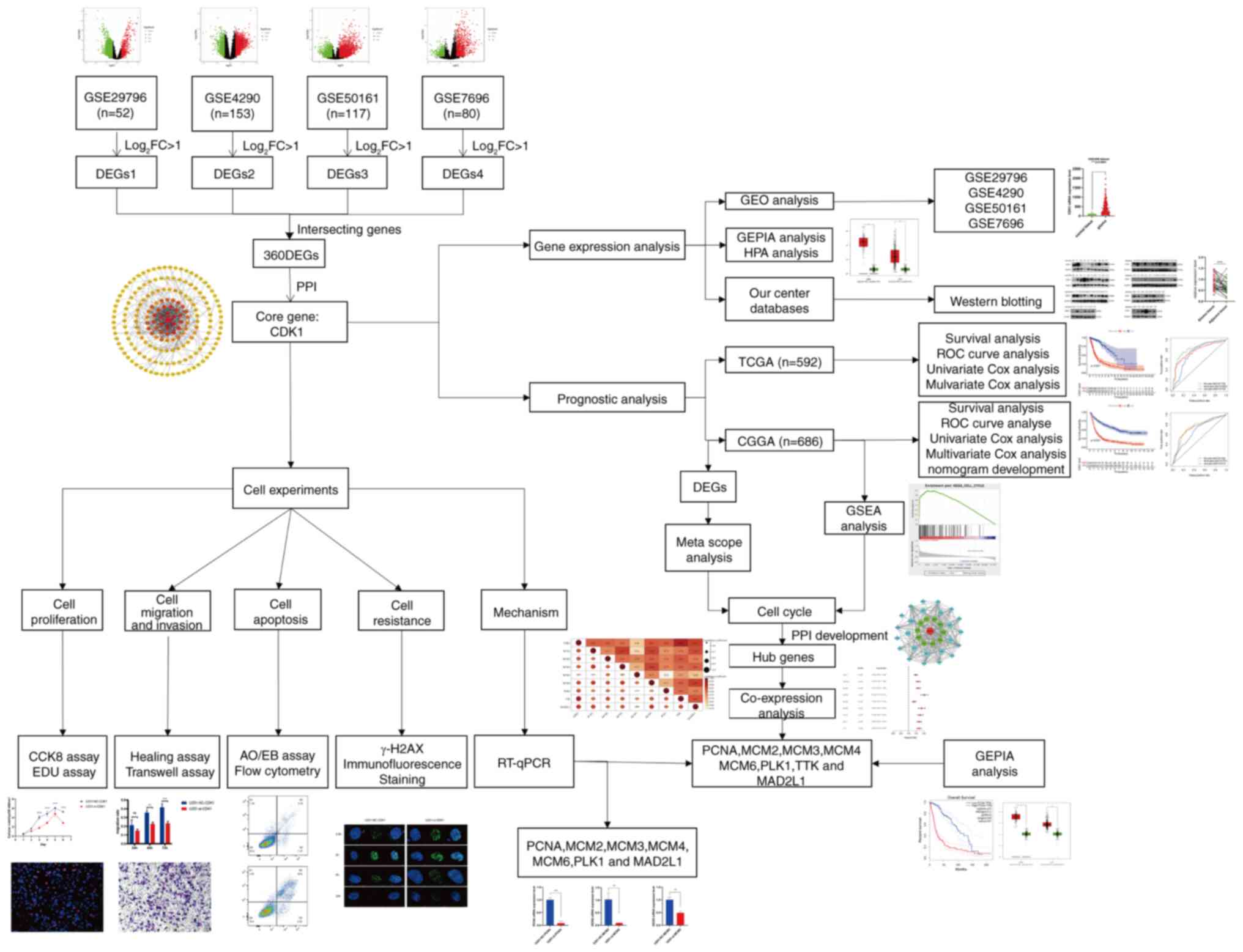
Figure 1

Workflow of the whole study. FC, fold
change; DEGs, differentially expressed genes; CDK1,
cyclin-dependent kinase 1; GEPIA, Gene Expression Profiling
Interactive Analysis; N, normal tissue; T, tumor; CGGA, Chinese
Glioma Genome Atlas; TCGA, The Cancer Genome Atlas; ROC, receiver
operating characteristic; AUC, area under the curve; PRS,
prognostic risk score; IDH, isocitrate dehydrogenase; MGMT,
O-6-methylguanine-DNA methyltransferase; OS, overall survival; WHO,
World Health Organization; NC, negative control; si, small
interfering RNA; OD, optical density; AO/EB, acridine
orange/ethidium bromide; GSEA, Gene Set Enrichment Analysis; PPI,
protein-protein interaction; PCNA, proliferating cell nuclear
antigen; MCM2/3/4/6, minichromosome maintenance complex component
2/3/4/6; PLK1, polo-like kinase 1; MAD2L1, mitotic arrest deficient
2 like 1; GBM, glioblastoma; LGG, low-grade glioma.

Figure 2

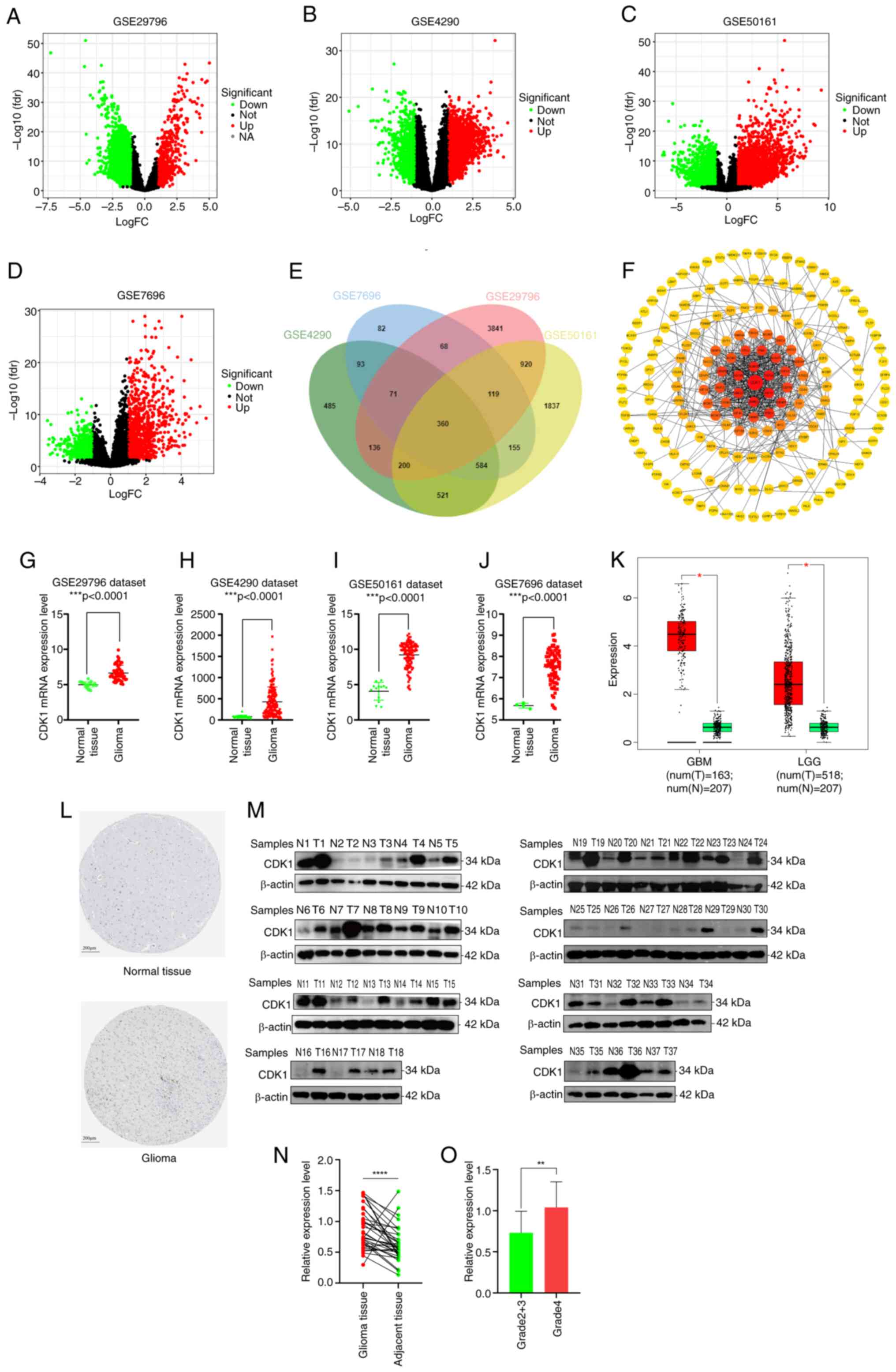
Core gene and its expression levels
in normal tissue and glioma were retrieved. (A) Volcano plots of
the 5,715 DEGs in the GSE29796 dataset (599 upregulated and 5,116
downregulated). (B) Volcano plots of the 2,450 DEGs in the GSE4290
dataset (1,425 upregulated and 1,025 downregulated). (C) Volcano
plots of the 4,696 DEG in the GSE50161 dataset (2,320 upregulated
and 2,376 downregulated). (D) Volcano plots of the 1,532 DEGs in
the GSE7696 dataset (915 upregulated and 617 downregulated). The
red nodes represent the significantly upregulated genes with
log2FC>1 and P<0.05. The green nodes represent the
significantly downregulated genes with log2FC<-1 and P<0.05.
(E) Intersecting genes of the four groups of DEGs are displayed by
Venn diagram. (F) Protein-protein interaction network was
constructed and the core protein with the highest degree of
topology value was screened out, based on the STRING website and
Cytoscape visualization software. Comparison of CDK1 mRNA
expression levels in normal tissue and glioma using the (G)
GSE29796, (H) GSE4290, (I) GSE50161 and (J) GSE7696 datasets. (K)
CDK1 expression levels in normal tissue and glioma via GEPIA
analysis. (L) The protein levels of CDK1 in normal (intensity:
negative; quantity: none) and glioma (intensity: strong; quantity:
<25%) tissue from the Human Protein Atlas. (M) Western blot
assay and (N) Wilcoxon matched-pairs signed rank test (P<0.0001)
of 37 pairs of glioma and adjacent tissues. (O) Data from the
internal cohort showed that CDK1 expression was a statistically
significant difference between Grade 2+3 gliomas (n=20) and Grade 4
gliomas (n=17) (P=0.0018). Data are presented as mean ± SD.
*P<0.05, **P<0.01, ***P<0.001, ****P<0.0001.
Statistical significance was calculated using unpaired t-test, Mann
Whitney test or Wilcoxon matched-pairs signed rank test. FC, fold
change; DEGs, differentially expressed genes; CDK1,
cyclin-dependent kinase 1; GEPIA, Gene Expression Profiling
Interactive Analysis; N, normal tissue; T, tumor.

Figure 3

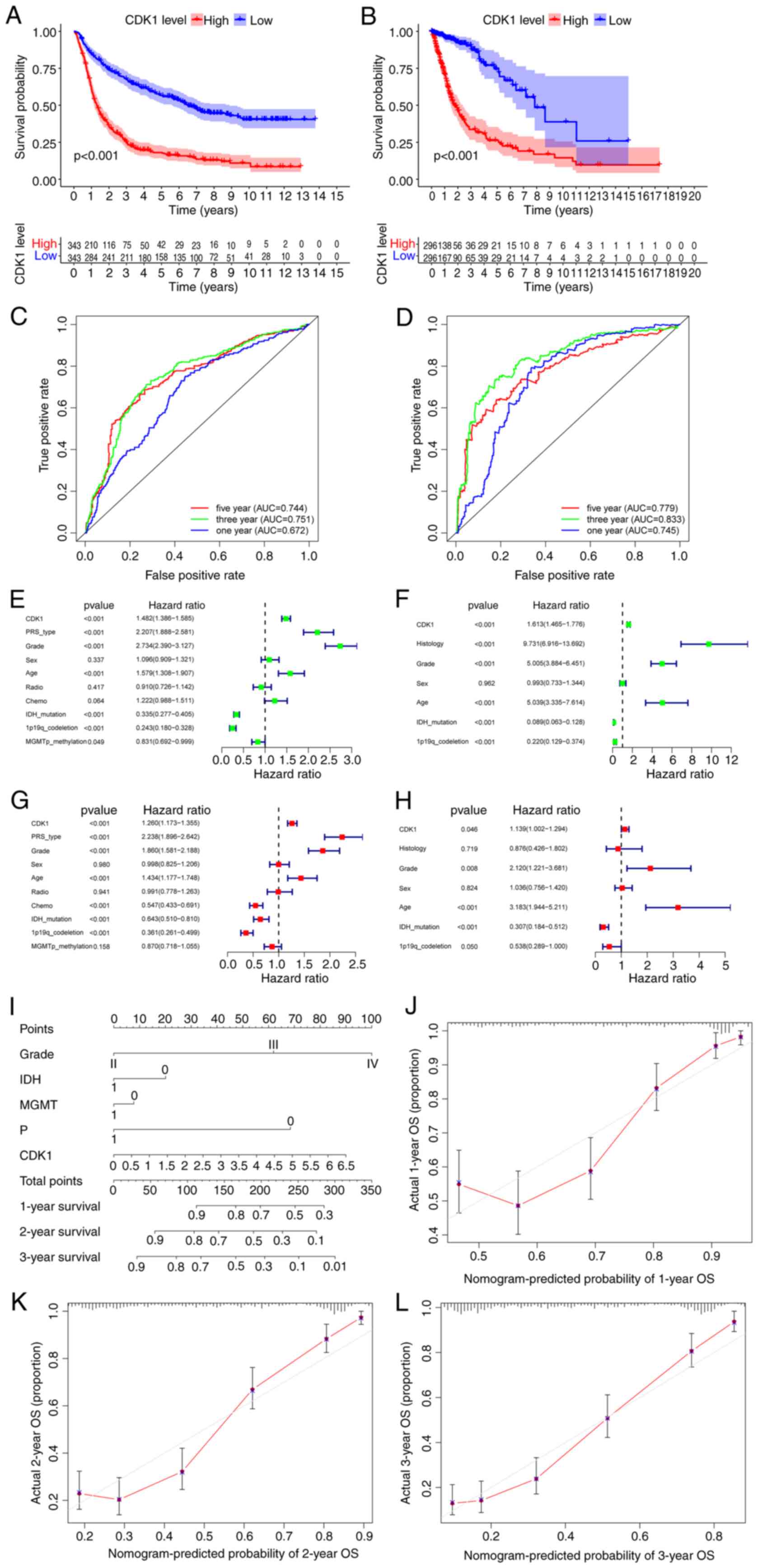
Survival analysis and independent
prognostic analysis of CDK1 based on bioinformatics analysis.
Survival analysis of the high and low CDK1 groups in patients with
glioma from the (A) CGGA and (B) TCGA datasets. The ROC curves of
CDK1 at 1, 3 and 5 year survival in the (C) CGGA and (D) TCGA
datasets. Univariate analysis of CDK1 in the (E) CGGA and (F) TCGA
datasets. Multivariate analysis of CDK1 in the (G) CGGA and (H)
TCGA datasets. (I) Prognostic nomogram constructed based on the
CGGA dataset including clinical information to predict the survival
of patients with glioma. Calibration curves of the nomogram
constructed based on the CGGA dataset to predict survival at (J) 1
year, (K) 2 years and (L) 3 years. CDK1, cyclin-dependent kinase 1;
CGGA, Chinese Glioma Genome Atlas; TCGA, The Cancer Genome Atlas;
ROC, receiver operating characteristic; AUC, area under the curve;
PRS, prognostic risk score; IDH, isocitrate dehydrogenase; MGMT,
O-6-methylguanine-DNA methyltransferase; OS, overall survival.

Figure 4

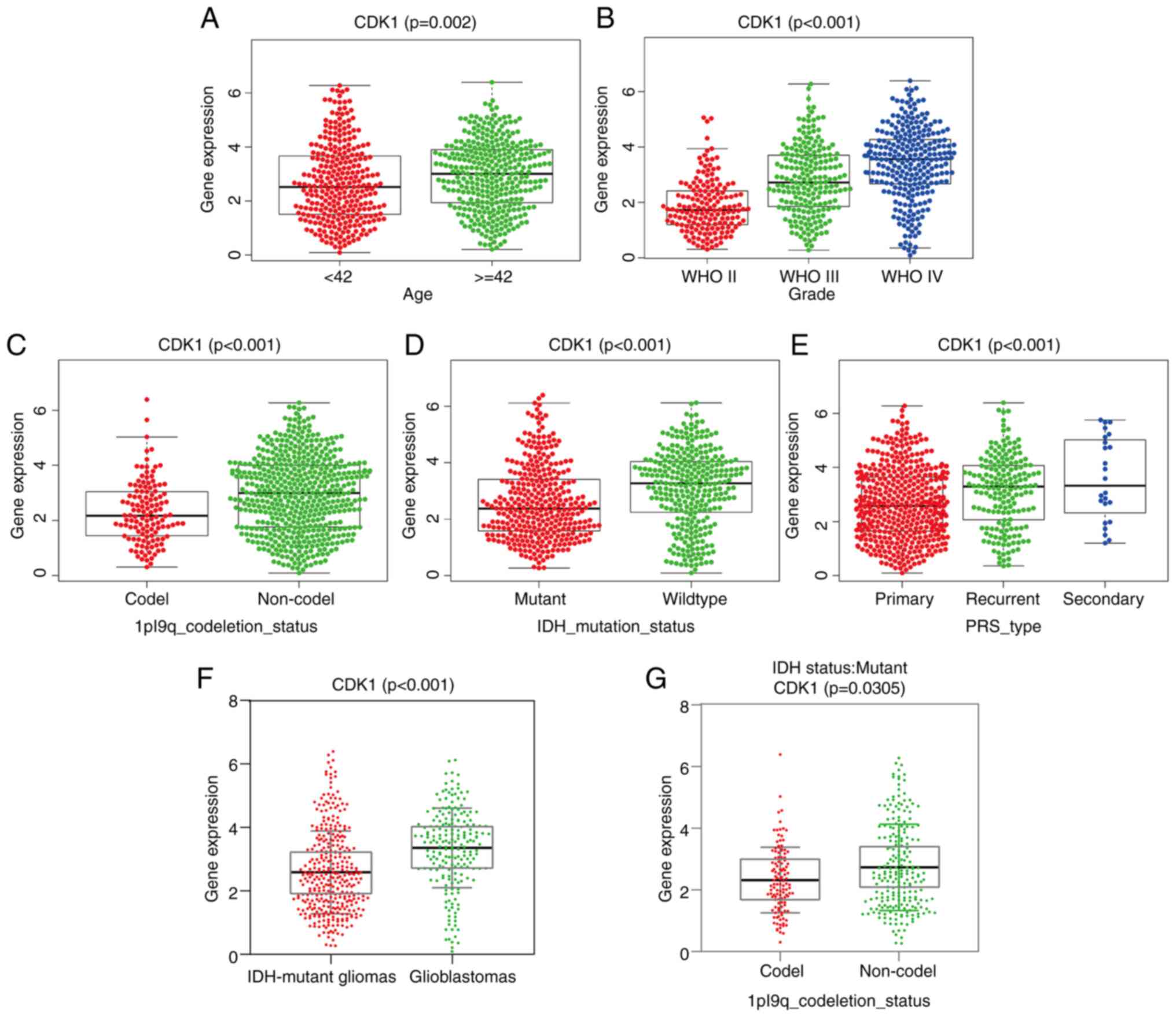
Association between CDK1 and the
clinicopathological characteristics of patients with glioma in the
Chinese Glioma Genome Atlas dataset. (A) The CDK1 expression level
by age (≥42 vs. <42 years; P=0.002). (B) The CDK1 expression
level by glioma grade (WHO II, III and IV; P<0.001). (C) The
CDK1 expression level by 1p19q codeletion status (codel vs.
non-codel; P<0.001). (D) The CDK1 expression level by IDH
mutation state (mutant vs. wild-type; P<0.001). (E) The CDK1
expression level by glioma type (primary, recurrent and secondary;
P<0.001). (F) The CDK1 expression level in IDH-wildtype
glioblastoma vs. IDH-mutant astrocytoma and oligodendroglioma
(P<0.001). (G) The CDK1 expression level in IDH-mutant
astrocytoma (1p/19q non-codel) vs. IDH-mutant oligodendroglioma
(1p/19q code) (P=0.0305). Data are presented as mean ± SD.
Statistical significance was calculated using unpaired t-test or
Mann Whitney test. CDK1, cyclin-dependent kinase 1; WHO, World
Health Organization; IDH, isocitrate dehydrogenase.

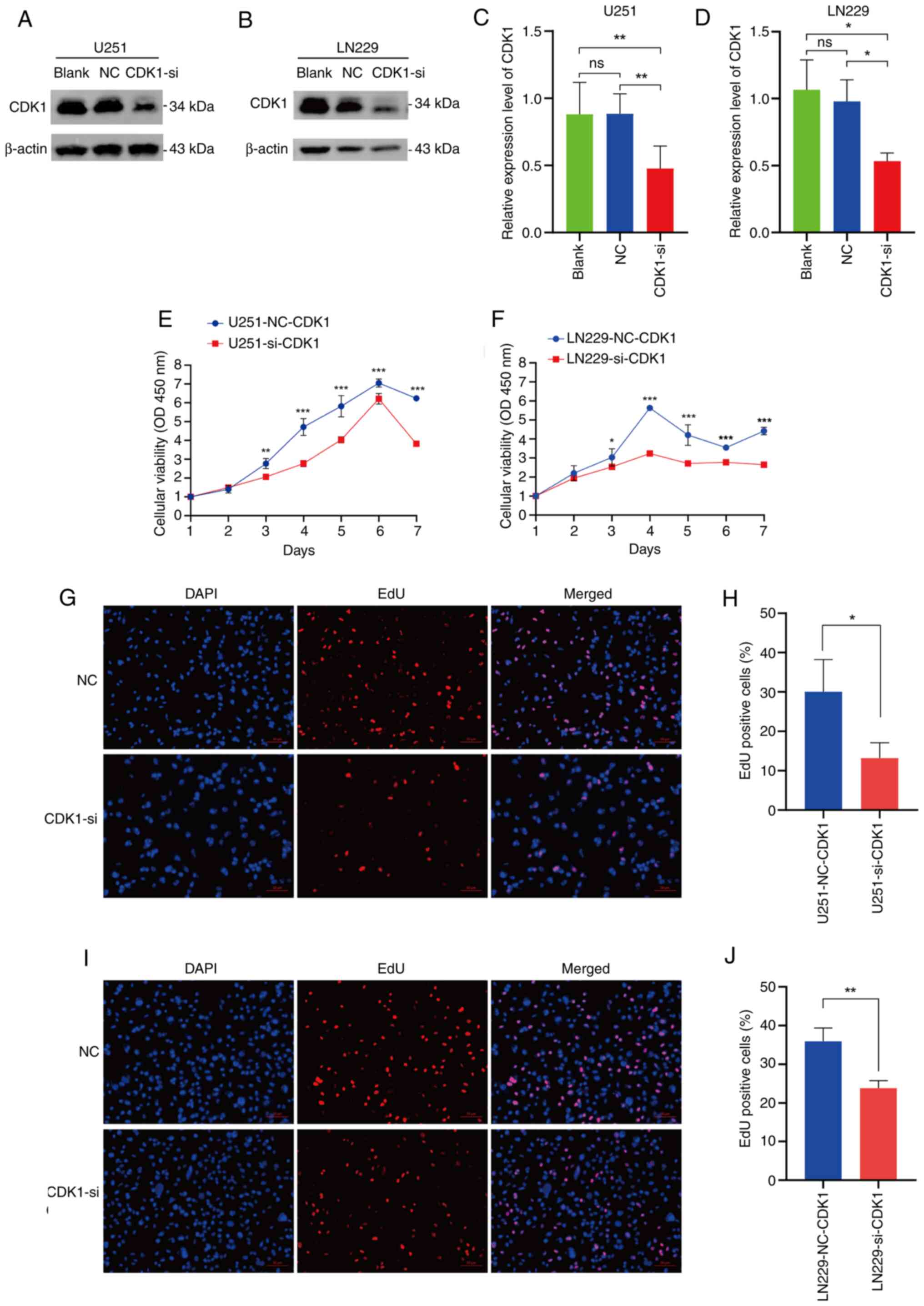
Figure 5

Verification of CDK1 knockdown and
its role in the proliferative ability of glioma cells. Validation
of CDK1 knockdown was achieved through western blot analysis in the
(A) U251MG and (B) LN229 glioma cell lines. (C and D) Statistical
comparisons of the western blot data for the (C) U251MG (Blank vs.
NC, P=0.9992; Blank vs. CDK1-si, P=0.0057; NC vs. CDK1-si,
P=0.0053) and LN229 (Blank vs. NC, P=0.7960; Blank vs. CDK1-si,
P=0.0161; NC vs. CDK1-si, P=0.0343) cell lines (n=3, each group).
(E and F) Cell Counting Kit-8 cell viability assays demonstrated a
decrease in proliferation potential upon CDK1 knockdown in (E)
U251MG and (F) LN229 cells (n=4, each group). (G) Representative
images (magnification, ×10) and (H) quantitative analysis of the
EdU assay performed in the U251MG cell line (NC vs. CDK1-si,
P=0.0325; n=3, each group). (I) Representative images
(magnification, ×10) and (J) quantitative analysis of the EdU assay
performed in the LN229 cell line (NC vs. CDK1-si, P=0.0057; n=3,
each group). Data are presented as mean ± SD. Statistical
significance was calculated using one-way analysis of variance
followed by Tukey's multiple comparisons test, unpaired t-test or
one-way analysis of variance followed by Sidak's multiple
comparisons test. *P<0.05, **P<0.01, ***P<0.001. CDK1,
cyclin-dependent kinase 1; NC, negative control; si, small
interfering (RNA); OD, optical density.

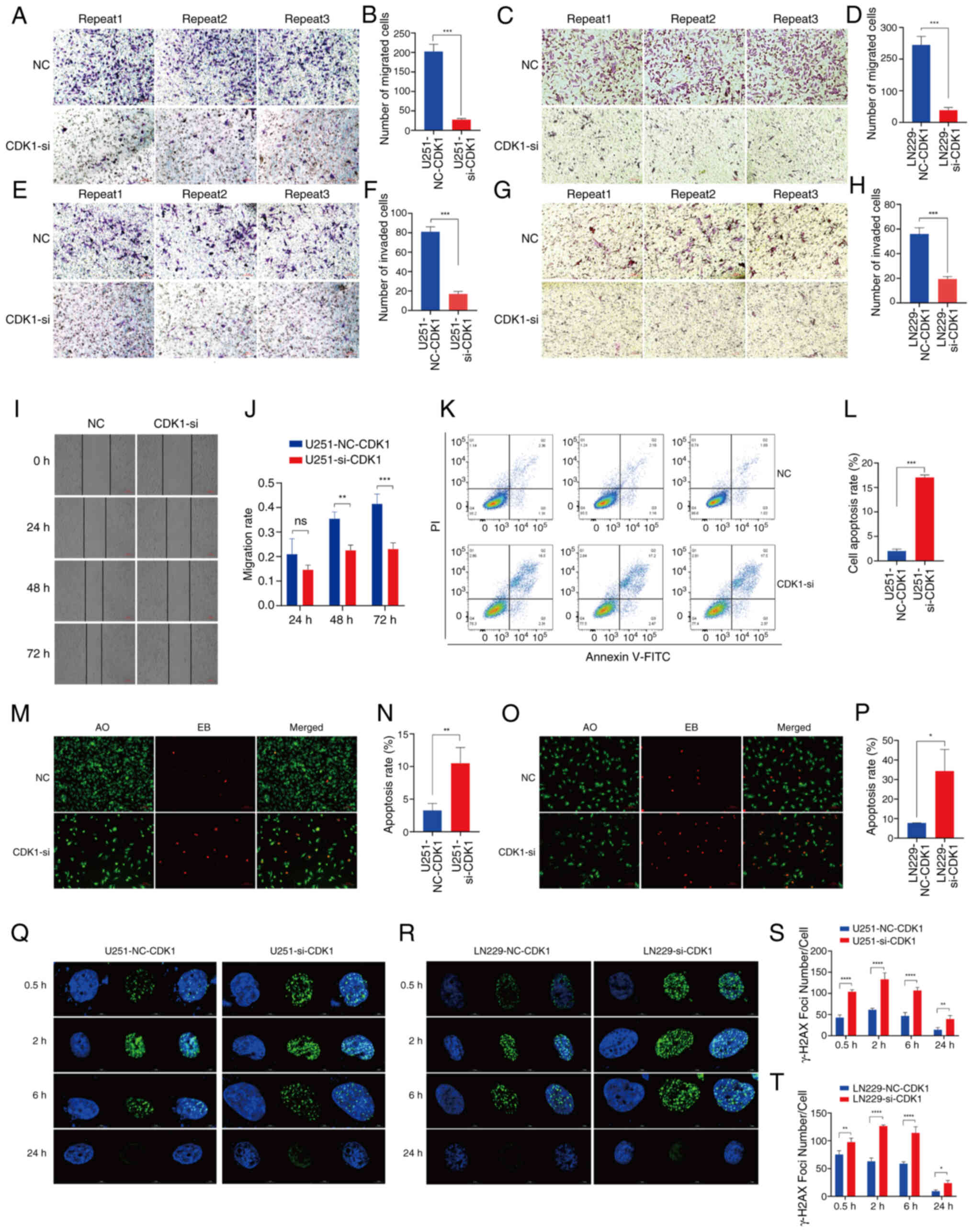
Figure 6

Impact of CDK1 on the
migration/invasion capability and DNA damage repair ability of
glioma cells. (A) Representative images of the U251MG cell
Transwell migration assay (magnification, ×10) and the (B)
quantitative analysis of the number of migrated cells (NC vs.
CDK1-si, P<0.001; n=3). (C) Representative images of the LN229
cell Transwell migration assay (magnification, ×10) and the (D)
quantitative analysis of the number of migrated cells (NC vs.
CDK1-si, P=0.0002; n=3). (E) Representative images of the U251MG
cell Transwell invasion assay (magnification, ×10) and the (F)
quantitative analysis (NC vs. CDK1-si, P<0.001; n=3). (G)
Representative images of the LN229 cell Transwell invasion assay
(magnification, ×10) and the (H) quantitative analysis (NC vs.
CDK1-si, P=0.0003; n=3). (I) The assessment of cell migration via
scratch experiments demonstrated a significant effect of CDK1
knockdown on reducing glioma cell motility. (J) Statistical results
of the U251MG cell line migration assay (NC vs. CDK1-si, 24 h
P=0.1445; 48 h P=0.0027; 72 h P=0.0001; n=3). (K and L) Analysis of
apoptosis by flow cytometry using Annexin V-FITC and PI staining in
U251MG cells. (K) Representative dot plots and (L) quantitative
analysis (NC vs. CDK1-si, P<0.001; n=3). (M and N) Detection of
apoptosis by AO/EB fluorescence staining in U251MG cells. (M)
Representative fluorescence images (magnification, ×10) and the (N)
quantitative analysis (NC vs. CDK1-si, P=0.0089; n=3). (O and P)
Detection of apoptosis by AO/EB fluorescence staining in LN229
cells. (O) Representative fluorescence images (magnification, ×10)
and the (P) quantitative analysis (NC vs. CDK1-si, P=0.0143; n=3).
Images of γ-H2AX foci formed in (Q) U251MG and (R) LN229 cell lines
at 0.5, 2, 6 and 24 h after 5 Gy radiation. The statistical
analysis of γ-H2AX foci formed in (S) U251MG and (T) LN229 cell
lines (NC vs. CDK1-si; n=3). Data are presented as mean ± SD.
Statistical significance was calculated using unpaired t-test or
one-way analysis of variance followed by Sidak's multiple
comparisons test. *P<0.05, **P<0.01, ***P<0.001,
****P<0.0001. ns, not significant. CDK1, cyclin-dependent kinase
1; NC, negative control; si, small interfering (RNA); AO/EB,
acridine orange/ethidium bromide.

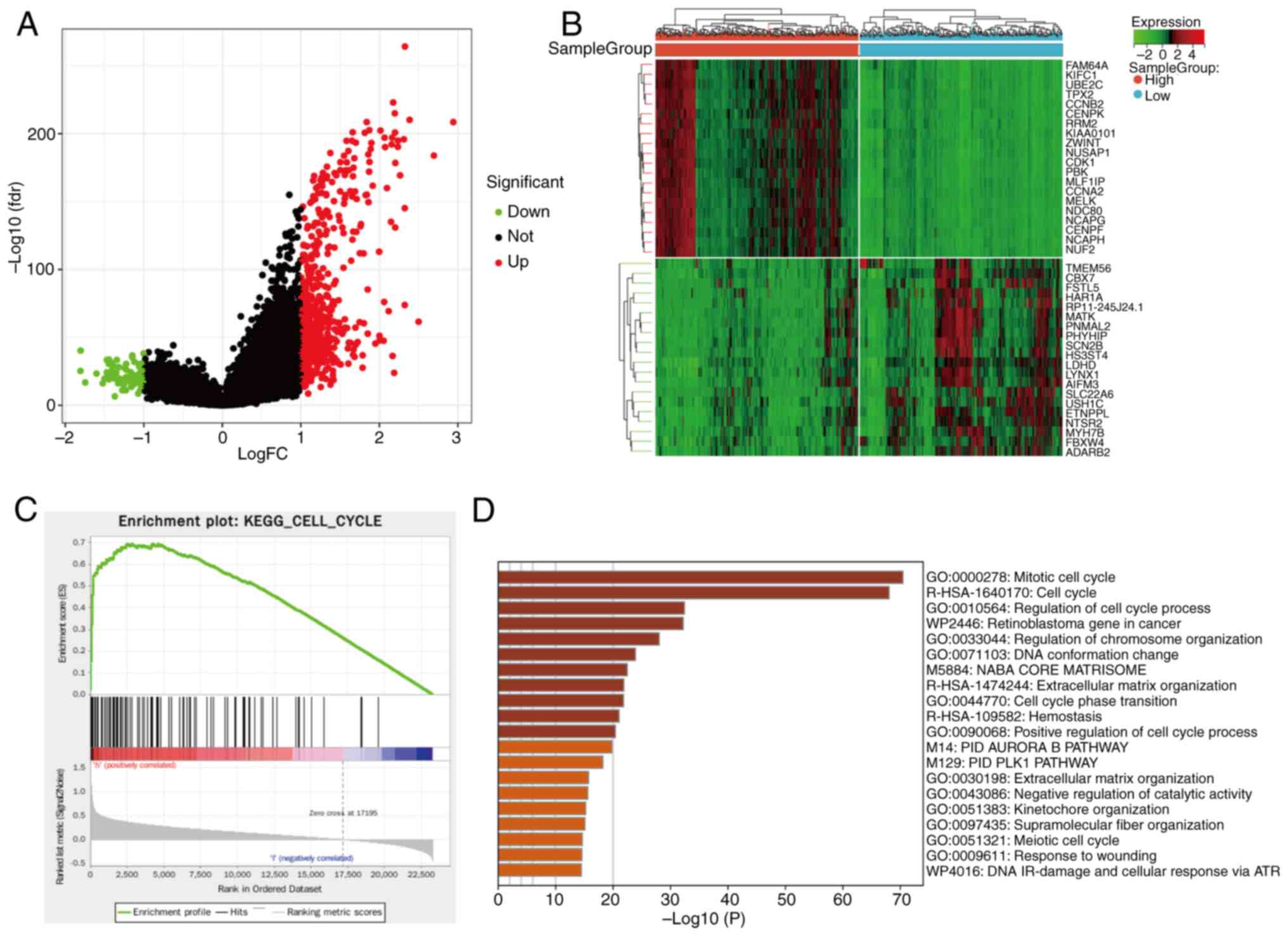
Figure 7

DEG analysis and pathway enrichment
analysis of the CDK1 gene based on Chinese Glioma Genome Atlas
dataset. (A) Volcano plots of DEGs. The red nodes represent the
significantly upregulated genes with log2FC>1 and P<0.05. The
green nodes represent the significantly downregulated genes with
log2FC<-1 and P<0.05. (B) Heatmap of DEGs indicating the
significantly upregulated and significantly downregulated DEGs. (C)
Enriched cell cycle signaling pathway by Gene Set Enrichment
Analysis. (D) Heatmap of pathway enrichment analysis across DEGs
based on Metascape analysis. FC, fold change; DEG, differentially
expressed gene; CDK1, cyclin-dependent kinase 1.

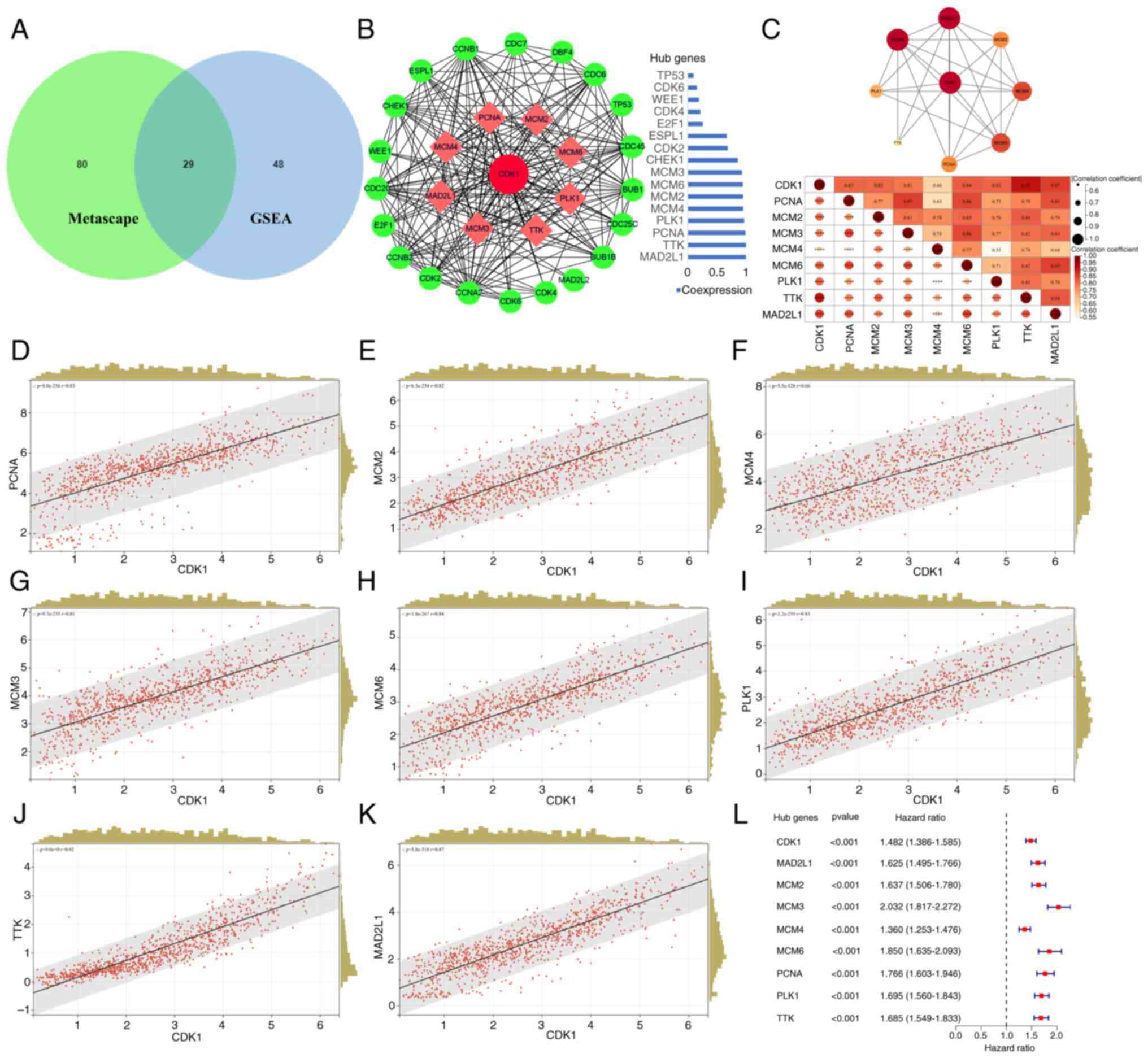
Figure 8

Association analysis between CDK1 and
cell cycle hub genes. (A) Intersecting genes of the cell cycle
signaling pathway-related genes from Metascape analysis and GSEA
are displayed by the Venn diagram. (B) CDK1 PPI network was
constructed and the top 8 hub proteins with a co-expression value
of >0.9 were screened out based on the STRING website and
Cytoscape visualization software. (C) STRING-based PPI analysis
among the top 8 hub proteins (top). Matrix correlation analysis and
visualization of CDK1 and hub genes (bottom). Scatter plot analysis
of the correlation between CDK1 and hub genes expression: (D) PCNA,
(E) MCM2, (F) MCM4, (G) MCM3, (H) MCM6, (I) PLK1, (J) TTK and (K)
MAD2L1. (L) Univariate regression analysis of the top 8 Hub genes.
Statistical significance was calculated using Pearson's correlation
coefficient. CDK1, cyclin-dependent kinase 1; GSEA, Gene Set
Enrichment Analysis; PPI, protein-protein interaction; PCNA,
proliferating cell nuclear antigen; MCM2/3/4/6, minichromosome
maintenance complex component 2/3/4/6; PLK1, polo-like kinase 1;
MAD2L1, mitotic arrest deficient 2 like 1.

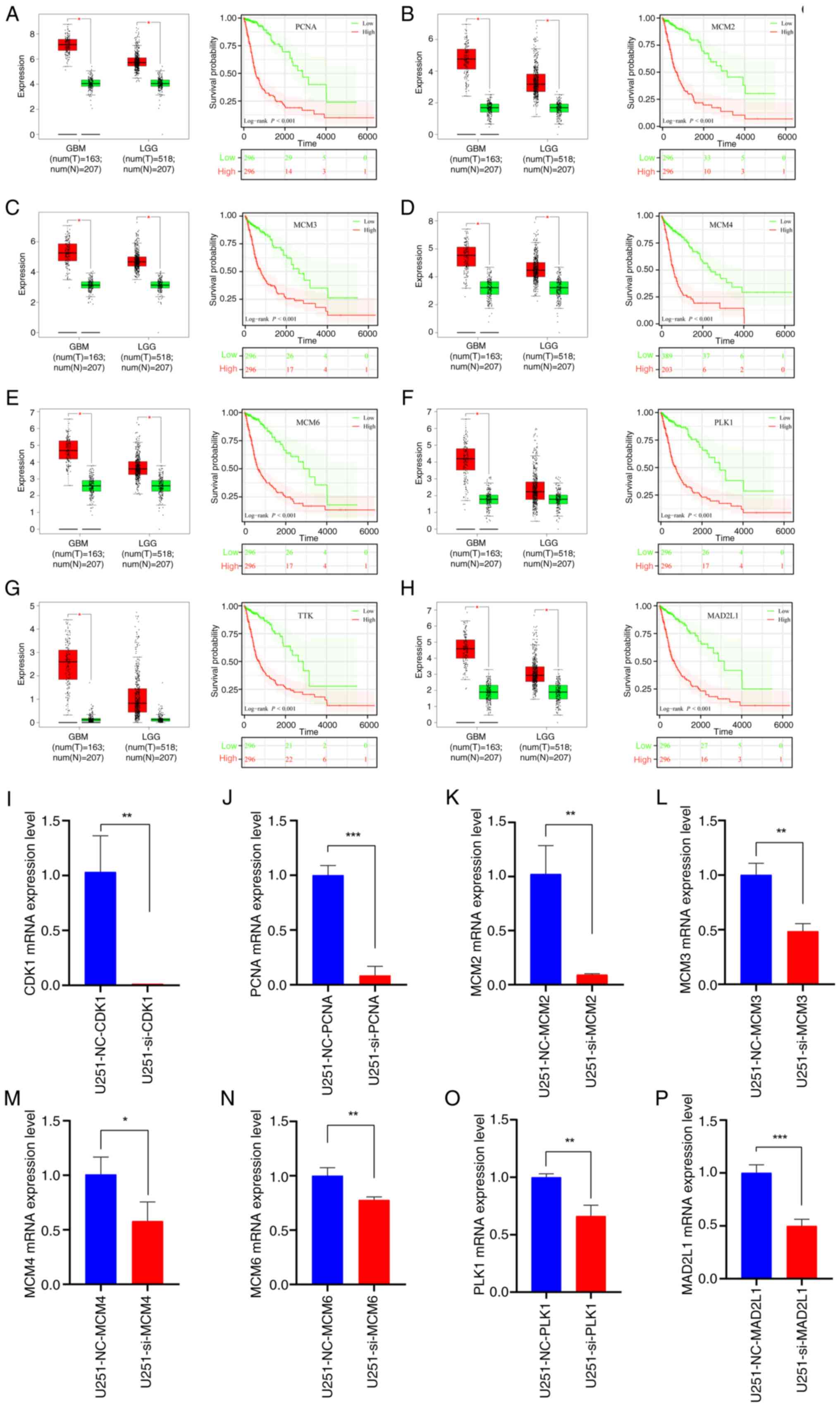
Figure 9

Expression of the top 8 hub genes and
prognostic analysis. Expression level of the hub genes in glioma
and normal tissues based on the TCGA dataset alongside survival
analysis curves for (A) PCNA, (B) MCM2, (C) MCM3, (D) MCM4, (E)
MCM6, (F) PLK1, (G) TTK and (H) MAD2L1. (I-P) Quantitative PCR
results following CDK1 knock down (n=3) of (I) CDK1, (J) PCNA, (K)
MCM2, (L) MCM3, (M) MCM4, (N) MCM6, (O) PLK1 and (P) MAD2L1. Data
are presented as mean ± SD. Statistical significance was calculated
using log-rank test or Student's t-test. *P<0.05, **P<0.01,
***P<0.001. PCNA, proliferating cell nuclear antigen;
MCM2/3/4/6, minichromosome maintenance complex component 2/3/4/6;
PLK1, polo-like kinase 1; MAD2L1, mitotic arrest deficient 2 like
1; GBM, glioblastoma; LGG, low-grade glioma; NC, negative control;
si, small interfering (RNA); CDK1, cyclin-dependent kinase 1.
View References

1 

Ostrom QT, Gittleman H, Truitt G, Boscia A, Kruchko C and Barnholtz-Sloan JS: CBTRUS statistical report: Primary brain and other central nervous system tumors diagnosed in the United States in 2011–2015. Neuro Oncol. 20:iv1–iv86. 2018. View Article : Google Scholar : PubMed/NCBI

2 

Rong L, Li N and Zhang Z: Emerging therapies for glioblastoma: Current state and future directions. J Exp Clin Cancer Res. 41:1422022. View Article : Google Scholar : PubMed/NCBI

3 

Yu MW and Quail DF: Immunotherapy for glioblastoma: Current progress and challenges. Front Immunol. 12:6763012021. View Article : Google Scholar : PubMed/NCBI

4 

Louis DN, Perry A, Reifenberger G, von Deimling A, Figarella-Branger D, Cavenee WK, Ohgaki H, Wiestler OD, Kleihues P and Ellison DW: The 2016 world health organization classification of tumors of the central nervous system: A summary. Acta Neuropathol. 131:803–820. 2016. View Article : Google Scholar : PubMed/NCBI

5 

Louis DN, Perry A, Wesseling P, Brat DJ, Cree IA, Figarella-Branger D, Hawkins C, Ng HK, Pfister SM, Reifenberger G, et al: The 2021 WHO classification of tumors of the central nervous system: A summary. Neuro Oncol. 23:1231–1251. 2021. View Article : Google Scholar : PubMed/NCBI

6 

Bruford EA, Braschi B, Denny P, Jones TEM, Seal RL and Tweedie S: Guidelines for human gene nomenclature. Nat Genet. 52:754–758. 2020. View Article : Google Scholar : PubMed/NCBI

7 

Śledzińska P, Bebyn MG, Furtak J, Kowalewski J and Lewandowska MA: Prognostic and predictive biomarkers in gliomas. Int J Mol Sci. 22:103732021. View Article : Google Scholar : PubMed/NCBI

8 

Qu S, Huang C, Zhu T, Wang K, Zhang H, Wang L, Xu R, Zheng H, Yuan X, Liu G, et al: OLFML3, as a potential predictor of prognosis and therapeutic target for glioma, is closely related to immune cell infiltration. VIEW. 4:202200522023. View Article : Google Scholar

9 

Alleman K, Knecht E, Huang J, Zhang L, Lam S and DeCuypere M: Multimodal deep learning-based prognostication in glioma patients: A systematic review. Cancers (Basel). 15:5452023. View Article : Google Scholar : PubMed/NCBI

10 

Yuan Y, Zhang X, Wang Y, Li H, Qi Z, Du Z, Chu YH, Feng D, Hu J, Xie Q, et al: Multimodal data integration using deep learning predicts overall survival of patients with glioma. VIEW. 5:202400012024. View Article : Google Scholar

11 

Xu S, Tang L, Li X, Fan F and Liu Z: Immunotherapy for glioma: Current management and future application. Cancer Lett. 476:1–12. 2020. View Article : Google Scholar : PubMed/NCBI

12 

Yang K, Wu Z, Zhang H, Zhang N, Wu W, Wang Z, Dai Z, Zhang X, Zhang L, Peng Y, et al: Glioma targeted therapy: Insight into future of molecular approaches. Mol Cancer. 21:392022. View Article : Google Scholar : PubMed/NCBI

13 

Le Rhun E, Preusser M, Roth P, Reardon DA, van den Bent M, Wen P, Reifenberger G and Weller M: Molecular targeted therapy of glioblastoma. Cancer Treat Rev. 80:1018962019. View Article : Google Scholar : PubMed/NCBI

14 

Malumbres M: Cyclin-dependent kinases. Genome Biol. 15:1222014. View Article : Google Scholar : PubMed/NCBI

15 

Malumbres M and Barbacid M: Cell cycle, CDKs and cancer: A changing paradigm. Nat Rev Cancer. 9:153–166. 2009. View Article : Google Scholar : PubMed/NCBI

16 

Han Z, Jia Q, Zhang J, Chen M, Wang L, Tong K, He W, Zhang Y, Zhu W, Qin J, et al: Deubiquitylase YOD1 regulates CDK1 stability and drives triple-negative breast cancer tumorigenesis. J Exp Clin Cancer Res. 42:2282023. View Article : Google Scholar : PubMed/NCBI

17 

Zeng K, Li W, Wang Y, Zhang Z, Zhang L, Zhang W, Xing Y and Zhou C: Inhibition of CDK1 overcomes oxaliplatin resistance by regulating ACSL4-mediated ferroptosis in colorectal cancer. Adv Sci (Weinh). 10:e23010882023. View Article : Google Scholar : PubMed/NCBI

18 

Shen J, Gong X, Tan S, Zhang Y, Xia R, Xu S, Wang S, Zhou H, Jiang Y, Zhao T, et al: CDK1 acts as a prognostic biomarker associated with immune infiltration in pan-cancer, especially in gastrointestinal tumors. Curr Med Chem. 32:4836–4857. 2024. View Article : Google Scholar : PubMed/NCBI

19 

Xue J, Song Y, Xu W and Zhu Y: The CDK1-related lncRNA and CXCL8 mediated immune resistance in lung adenocarcinoma. Cells. 11:26882022. View Article : Google Scholar : PubMed/NCBI

20 

Sung WW, Lin YM, Wu PR, Yen HH, Lai HW, Su TC, Huang RH, Wen CK, Chen CY, Chen CJ and Yeh KT: High nuclear/cytoplasmic ratio of Cdk1 expression predicts poor prognosis in colorectal cancer patients. BMC Cancer. 14:9512014. View Article : Google Scholar : PubMed/NCBI

21 

Xi Q, Huang M, Wang Y, Zhong J, Liu R, Xu G, Jiang L, Wang J, Fang Z and Yang S: The expression of CDK1 is associated with proliferation and can be a prognostic factor in epithelial ovarian cancer. Tumour Biol. 36:4939–4948. 2015. View Article : Google Scholar : PubMed/NCBI

22 

Zhang C, Elkahloun AG, Robertson M, Gills JJ, Tsurutani J, Shih JH, Fukuoka J, Hollander MC, Harris CC, Travis WD, et al: Loss of cytoplasmic CDK1 predicts poor survival in human lung cancer and confers chemotherapeutic resistance. PLoS One. 6:e238492011. View Article : Google Scholar : PubMed/NCBI

23 

van Nes JG, Smit VT, Putter H, Kuppen PJ, Kim SJ, Daito M, Ding J, Shibayama M, Numada S, Gohda K, et al: Validation study of the prognostic value of cyclin-dependent kinase (CDK)-based risk in Caucasian breast cancer patients. Br J Cancer. 100:494–500. 2009. View Article : Google Scholar : PubMed/NCBI

24 

Piao J, Zhu L, Sun J, Li N, Dong B, Yang Y and Chen L: High expression of CDK1 and BUB1 predicts poor prognosis of pancreatic ductal adenocarcinoma. Gene. 701:15–22. 2019. View Article : Google Scholar : PubMed/NCBI

25 

Jones MJ and Jones MC: Cell cycle control by cell-matrix interactions. Curr Opin Cell Biol. 86:1022882024. View Article : Google Scholar : PubMed/NCBI

26 

Lemmens B, Hegarat N, Akopyan K, Sala-Gaston J, Bartek J, Hochegger H and Lindqvist A: DNA replication determines timing of mitosis by restricting CDK1 and PLK1 activation. Mol Cell. 71:117–128.e113. 2018. View Article : Google Scholar : PubMed/NCBI

27 

Ci M, Zhao G, Li C, Liu R, Hu X, Pan J, Shen Y, Zhang G, Li Y, Zhang L, et al: OTUD4 promotes the progression of glioblastoma by deubiquitinating CDK1 and activating MAPK signaling pathway. Cell Death Dis. 15:1792024. View Article : Google Scholar : PubMed/NCBI

28 

Shi YX, Zhu T, Zou T, Zhuo W, Chen YX, Huang MS, Zheng W, Wang CJ, Li X, Mao XY, et al: Prognostic and predictive values of CDK1 and MAD2L1 in lung adenocarcinoma. Oncotarget. 7:85235–85243. 2016. View Article : Google Scholar : PubMed/NCBI

29 

Faienza F, Polverino F, Rajendraprasad G, Milletti G, Hu Z, Colella B, Gargano D, Strappazzon F, Rizza S, Vistesen MV, et al: AMBRA1 phosphorylation by CDK1 and PLK1 regulates mitotic spindle orientation. Cell Mol Life Sci. 80:2512023. View Article : Google Scholar : PubMed/NCBI

30 

Auvergne RM, Sim FJ, Wang S, Chandler-Militello D, Burch J, Al Fanek Y, Davis D, Benraiss A, Walter K, Achanta P, et al: Transcriptional differences between normal and glioma-derived glial progenitor cells identify a core set of dysregulated genes. Cell Rep. 3:2127–2141. 2013. View Article : Google Scholar : PubMed/NCBI

31 

Sun L, Hui AM, Su Q, Vortmeyer A, Kotliarov Y, Pastorino S, Passaniti A, Menon J, Walling J, Bailey R, et al: Neuronal and glioma-derived stem cell factor induces angiogenesis within the brain. Cancer Cell. 9:287–300. 2006. View Article : Google Scholar : PubMed/NCBI

32 

Griesinger AM, Birks DK, Donson AM, Amani V, Hoffman LM, Waziri A, Wang M, Handler MH and Foreman NK: Characterization of distinct immunophenotypes across pediatric brain tumor types. J Immunol. 191:4880–4888. 2013. View Article : Google Scholar : PubMed/NCBI

33 

Lambiv WL, Vassallo I, Delorenzi M, Shay T, Diserens AC, Misra A, Feuerstein B, Murat A, Migliavacca E, Hamou MF, et al: The Wnt inhibitory factor 1 (WIF1) is targeted in glioblastoma and has a tumor suppressing function potentially by induction of senescence. Neuro Oncol. 13:736–747. 2011. View Article : Google Scholar : PubMed/NCBI

34 

Zhao Z, Zhang KN, Wang Q, Li G, Zeng F, Zhang Y, Wu F, Chai R, Wang Z, Zhang C, et al: Chinese glioma genome atlas (CGGA): A comprehensive resource with functional genomic data from Chinese glioma patients. Genomics Proteomics Bioinformatics. 19:1–12. 2021. View Article : Google Scholar : PubMed/NCBI

35 

Cancer Genome Atlas Research Network, . Comprehensive genomic characterization defines human glioblastoma genes and core pathways. Nature. 455:1061–1068. 2008. View Article : Google Scholar : PubMed/NCBI

36 

Brat DJ, Verhaak RG, Aldape KD, Yung WK, Salama SR, Cooper LAD, Rheinbay E, Miller CR, Vitucci M, Morozova O, et al: Comprehensive, integrative genomic analysis of diffuse lower-grade gliomas. N Engl J Med. 372:2481–2498. 2015. View Article : Google Scholar : PubMed/NCBI

37 

Ritchie ME, Phipson B, Wu D, Hu Y, Law CW, Shi W and Smyth GK: Limma powers differential expression analyses for RNA-sequencing and microarray studies. Nucleic Acids Res. 43:e472015. View Article : Google Scholar : PubMed/NCBI

38 

Livak KJ and Schmittgen TD: Analysis of relative gene expression data using real-time quantitative PCR and the 2(−Delta Delta C(T)) method. Methods. 25:402–408. 2001. View Article : Google Scholar : PubMed/NCBI

39 

Zhou Y, Zhou B, Pache L, Chang M, Khodabakhshi AH, Tanaseichuk O, Benner C and Chanda SK: Metascape provides a biologist-oriented resource for the analysis of systems-level datasets. Nat Commun. 10:15232019. View Article : Google Scholar : PubMed/NCBI

40 

Wu L, Chai R, Zhao Z, Wang Q and Jiang T: Role of the tumor microenvironment in shaping IDH-wildtype glioma plasticity, and potential therapeutic strategies. Cancer Biol Med. 19:1423–1427. 2022. View Article : Google Scholar : PubMed/NCBI

41 

Weller M and Le Rhun E: How did lomustine become standard of care in recurrent glioblastoma? Cancer Treat Rev. 87:1020292020. View Article : Google Scholar : PubMed/NCBI

42 

Nabors LB, Portnow J, Ahluwalia M, Baehring J, Brem H, Brem S, Butowski N, Campian JL, Clark SW, Fabiano AJ, et al: Central nervous system cancers, Version 3.2020, NCCN Clinical practice guidelines in oncology. J Natl Compr Canc Netw. 18:1537–1570. 2020. View Article : Google Scholar : PubMed/NCBI

43 

Humphrey PA, Moch H, Cubilla AL, Ulbright TM and Reuter VE: The 2016 WHO classification of tumours of the urinary system and male genital organs-part B: Prostate and bladder tumours. Eur Urol. 70:106–119. 2016. View Article : Google Scholar : PubMed/NCBI

44 

Li K, Wang R, Gu Z, Weng W, Liu W, Huang Y, Wu J, Zhang Z, Yang S, Su J, et al: Serum metabolic profiling enables diagnosis, prognosis, and monitoring for brainstem gliomas. Nat Commun. 16:61082025. View Article : Google Scholar : PubMed/NCBI

45 

Chen R, Smith-Cohn M, Cohen AL and Colman H: Glioma subclassifications and their clinical significance. Neurotherapeutics. 14:284–297. 2017. View Article : Google Scholar : PubMed/NCBI

46 

Xie B, Wang S, Jiang N and Li JJ: Cyclin B1/CDK1-regulated mitochondrial bioenergetics in cell cycle progression and tumor resistance. Cancer Lett. 443:56–66. 2019. View Article : Google Scholar : PubMed/NCBI

47 

Guan T, Li M, Song Y, Chen J, Tang J, Zhang C, Wen Y, Yang X, Huang L, Zhu Y, et al: Phosphorylation of USP29 by CDK1 governs TWIST1 stability and oncogenic functions. Adv Sci (Weinh). 10:e22058732023. View Article : Google Scholar : PubMed/NCBI

48 

López-Otín C, Blasco MA, Partridge L, Serrano M and Kroemer G: Hallmarks of aging: An expanding universe. Cell. 186:243–278. 2023. View Article : Google Scholar : PubMed/NCBI

49 

Chatsirisupachai K, Lesluyes T, Paraoan L, Van Loo P and de Magalhães JP: An integrative analysis of the age-associated multi-omic landscape across cancers. Nat Commun. 12:23452021. View Article : Google Scholar : PubMed/NCBI

50 

Wang HY, Tang K, Liang TY, Zhang WZ, Li JY, Wang W, Hu HM, Li MY, Wang HQ, He XZ, et al: The comparison of clinical and biological characteristics between IDH1 and IDH2 mutations in gliomas. J Exp Clin Cancer Res. 35:862016. View Article : Google Scholar : PubMed/NCBI

51 

Nambirajan A, Suri V, Kedia S, Goyal K, Malgulwar PB, Khanna G, Panda PK, Gulati S, Garg A and Sharma MC: Paediatric diffuse leptomeningeal tumor with glial and neuronal differentiation harbouring chromosome 1p/19q co-deletion and H3.3 K27M mutation: Unusual molecular profile and its therapeutic implications. Brain Tumor Pathol. 35:186–191. 2018. View Article : Google Scholar : PubMed/NCBI

52 

Wang Q, Bode AM and Zhang T: Targeting CDK1 in cancer: Mechanisms and implications. NPJ Precis Oncol. 7:582023. View Article : Google Scholar : PubMed/NCBI

53 

Liu Y, Zhou F, Ali H, Lathia JD and Chen P: Immunotherapy for glioblastoma: Current state, challenges, and future perspectives. Cell Mol Immunol. 21:1354–1375. 2024. View Article : Google Scholar : PubMed/NCBI

54 

Pećina-Šlaus N, Zottel A, Škripek Ž, Puljko B, Dumančić F, Bukovac A, Jovčevska I and Kafka A: In silico analysis reveals distinct changes in markers of epithelial to mesenchymal transition in glioma subtypes. Biomol Biomed. 25:2712–2736. 2025. View Article : Google Scholar : PubMed/NCBI

55 

Chen H, Hu K, Xie Y, Qi Y, Li W, He Y, Fan S, Liu W and Li C: CDK1 promotes epithelial-mesenchymal transition and migration of head and neck squamous carcinoma cells by repressing ∆Np63α-mediated transcriptional regulation. Int J Mol Sci. 23:73852022. View Article : Google Scholar : PubMed/NCBI

56 

Ren L, Yang Y, Li W, Zheng X, Liu J, Li S, Yang H, Zhang Y, Ge B, Zhang S, et al: CDK1 serves as a therapeutic target of adrenocortical carcinoma via regulating epithelial-mesenchymal transition, G2/M phase transition, and PANoptosis. J Transl Med. 20:4442022. View Article : Google Scholar : PubMed/NCBI

57 

Ferretti LP, Lafranchi L and Sartori AA: Controlling DNA-end resection: A new task for CDKs. Front Genet. 4:992013. View Article : Google Scholar : PubMed/NCBI

58 

Tozaki Y, Aoki H, Kato R, Toriuchi K, Arame S, Inoue Y, Hayashi H, Kubota E, Kataoka H and Aoyama M: The combination of ATM and Chk1 inhibitors induces synthetic lethality in colorectal cancer cells. Cancers (Basel). 15:7352023. View Article : Google Scholar : PubMed/NCBI

59 

Liao H, Ji F, Geng X, Xing M, Li W, Chen Z, Shen H and Ying S: CDK1 promotes nascent DNA synthesis and induces resistance of cancer cells to DNA-damaging therapeutic agents. Oncotarget. 8:90662–90673. 2017. View Article : Google Scholar : PubMed/NCBI

60 

Suski JM, Braun M, Strmiska V and Sicinski P: Targeting cell-cycle machinery in cancer. Cancer Cell. 39:759–778. 2021. View Article : Google Scholar : PubMed/NCBI

61 

Masai H, Taniyama C, Ogino K, Matsui E, Kakusho N, Matsumoto S, Kim JM, Ishii A, Tanaka T, Kobayashi T, et al: Phosphorylation of MCM4 by Cdc7 kinase facilitates its interaction with Cdc45 on the chromatin. J Biol Chem. 281:39249–39261. 2006. View Article : Google Scholar : PubMed/NCBI

62 

de Cárcer G, Venkateswaran SV, Salgueiro L, El Bakkali A, Somogyi K, Rowald K, Montañés P, Sanclemente M, Escobar B, de Martino A, et al: Plk1 overexpression induces chromosomal instability and suppresses tumor development. Nat Commun. 9:30122018. View Article : Google Scholar : PubMed/NCBI

63 

Pierantoni GM, Conte A, Rinaldo C, Tornincasa M, Gerlini R, Valente D, Izzo A and Fusco A: Hmga1 null mouse embryonic fibroblasts display downregulation of spindle assembly checkpoint gene expression associated to nuclear and karyotypic abnormalities. Cell Cycle. 15:812–818. 2016. View Article : Google Scholar : PubMed/NCBI

64 

Yang S, Yuan Y, Ren W, Wang H, Zhao Z, Zhao H, Zhao Q, Chen X, Jiang X and Zhang L: MCM4 is a novel prognostic biomarker and promotes cancer cell growth in glioma. Front Oncol. 12:10043242022. View Article : Google Scholar : PubMed/NCBI

65 

Li X, Tao Z, Wang H, Deng Z, Zhou Y and Du Z: Dual inhibition of Src and PLK1 regulate stemness and induce apoptosis through Notch1-SOX2 signaling in EGFRvIII positive glioma stem cells (GSCs). Exp Cell Res. 396:1122612020. View Article : Google Scholar : PubMed/NCBI

66 

Deng S, Lu X, Wang X, Liang B, Xu H, Yang D, Cui G, Yonemura A, Paine H, Zhou Y, et al: Overexpression of TBX3 suppresses tumorigenesis in experimental and human cholangiocarcinoma. Cell Death Dis. 15:4412024. View Article : Google Scholar : PubMed/NCBI

67 

Reda M, Ngamcherdtrakul W, Nelson MA, Siriwon N, Wang R, Zaidan HY, Bejan DS, Reda S, Hoang NH, Crumrine NA, et al: Development of a nanoparticle-based immunotherapy targeting PD-L1 and PLK1 for lung cancer treatment. Nat Commun. 13:42612022. View Article : Google Scholar : PubMed/NCBI

68 

Roskoski R Jr: Cyclin-dependent protein serine/threonine kinase inhibitors as anticancer drugs. Pharmacol Res. 139:471–488. 2019. View Article : Google Scholar : PubMed/NCBI

69 

Gao JJ, Cheng J, Bloomquist E, Sanchez J, Wedam SB, Singh H, Amiri-Kordestani L, Ibrahim A, Sridhara R, Goldberg KB, et al: CDK4/6 inhibitor treatment for patients with hormone receptor-positive, HER2-negative, advanced or metastatic breast cancer: A US food and drug administration pooled analysis. Lancet Oncol. 21:250–260. 2020. View Article : Google Scholar : PubMed/NCBI

70 

Curigliano G and Loibl S: CDK4/6 inhibitors in breast cancer: One more step towards reduced mortality. Lancet Oncol. 21:191–192. 2020. View Article : Google Scholar : PubMed/NCBI

Related Articles

  • Abstract
  • View
  • Download
  • Twitter
Copy and paste a formatted citation
Spandidos Publications style
Wang Y, Zhou H, Han X, Zhang D, Hou L, Li H, Fan T, Li S and Xue X: <p>CDK1 depletion suppresses glioma malignancy through cell cycle pathway regulation: Mechanistic insights from functional and molecular profiling</p>. Oncol Rep 55: 41, 2026.
APA
Wang, Y., Zhou, H., Han, X., Zhang, D., Hou, L., Li, H. ... Xue, X. (2026). <p>CDK1 depletion suppresses glioma malignancy through cell cycle pathway regulation: Mechanistic insights from functional and molecular profiling</p>. Oncology Reports, 55, 41. https://doi.org/10.3892/or.2026.9046
MLA
Wang, Y., Zhou, H., Han, X., Zhang, D., Hou, L., Li, H., Fan, T., Li, S., Xue, X."<p>CDK1 depletion suppresses glioma malignancy through cell cycle pathway regulation: Mechanistic insights from functional and molecular profiling</p>". Oncology Reports 55.3 (2026): 41.
Chicago
Wang, Y., Zhou, H., Han, X., Zhang, D., Hou, L., Li, H., Fan, T., Li, S., Xue, X."<p>CDK1 depletion suppresses glioma malignancy through cell cycle pathway regulation: Mechanistic insights from functional and molecular profiling</p>". Oncology Reports 55, no. 3 (2026): 41. https://doi.org/10.3892/or.2026.9046
Copy and paste a formatted citation
x
Spandidos Publications style
Wang Y, Zhou H, Han X, Zhang D, Hou L, Li H, Fan T, Li S and Xue X: <p>CDK1 depletion suppresses glioma malignancy through cell cycle pathway regulation: Mechanistic insights from functional and molecular profiling</p>. Oncol Rep 55: 41, 2026.
APA
Wang, Y., Zhou, H., Han, X., Zhang, D., Hou, L., Li, H. ... Xue, X. (2026). <p>CDK1 depletion suppresses glioma malignancy through cell cycle pathway regulation: Mechanistic insights from functional and molecular profiling</p>. Oncology Reports, 55, 41. https://doi.org/10.3892/or.2026.9046
MLA
Wang, Y., Zhou, H., Han, X., Zhang, D., Hou, L., Li, H., Fan, T., Li, S., Xue, X."<p>CDK1 depletion suppresses glioma malignancy through cell cycle pathway regulation: Mechanistic insights from functional and molecular profiling</p>". Oncology Reports 55.3 (2026): 41.
Chicago
Wang, Y., Zhou, H., Han, X., Zhang, D., Hou, L., Li, H., Fan, T., Li, S., Xue, X."<p>CDK1 depletion suppresses glioma malignancy through cell cycle pathway regulation: Mechanistic insights from functional and molecular profiling</p>". Oncology Reports 55, no. 3 (2026): 41. https://doi.org/10.3892/or.2026.9046
Follow us
  • Twitter
  • LinkedIn
  • Facebook
About
  • Spandidos Publications
  • Careers
  • Cookie Policy
  • Privacy Policy
How can we help?
  • Help
  • Live Chat
  • Contact
  • Email to our Support Team