Spandidos Publications Logo
  • About
    • About Spandidos
    • Aims and Scopes
    • Abstracting and Indexing
    • Editorial Policies
    • Reprints and Permissions
    • Job Opportunities
    • Terms and Conditions
    • Contact
  • Journals
    • All Journals
    • Oncology Letters
      • Oncology Letters
      • Information for Authors
      • Editorial Policies
      • Editorial Board
      • Aims and Scope
      • Abstracting and Indexing
      • Bibliographic Information
      • Archive
    • International Journal of Oncology
      • International Journal of Oncology
      • Information for Authors
      • Editorial Policies
      • Editorial Board
      • Aims and Scope
      • Abstracting and Indexing
      • Bibliographic Information
      • Archive
    • Molecular and Clinical Oncology
      • Molecular and Clinical Oncology
      • Information for Authors
      • Editorial Policies
      • Editorial Board
      • Aims and Scope
      • Abstracting and Indexing
      • Bibliographic Information
      • Archive
    • Experimental and Therapeutic Medicine
      • Experimental and Therapeutic Medicine
      • Information for Authors
      • Editorial Policies
      • Editorial Board
      • Aims and Scope
      • Abstracting and Indexing
      • Bibliographic Information
      • Archive
    • International Journal of Molecular Medicine
      • International Journal of Molecular Medicine
      • Information for Authors
      • Editorial Policies
      • Editorial Board
      • Aims and Scope
      • Abstracting and Indexing
      • Bibliographic Information
      • Archive
    • Biomedical Reports
      • Biomedical Reports
      • Information for Authors
      • Editorial Policies
      • Editorial Board
      • Aims and Scope
      • Abstracting and Indexing
      • Bibliographic Information
      • Archive
    • Oncology Reports
      • Oncology Reports
      • Information for Authors
      • Editorial Policies
      • Editorial Board
      • Aims and Scope
      • Abstracting and Indexing
      • Bibliographic Information
      • Archive
    • Molecular Medicine Reports
      • Molecular Medicine Reports
      • Information for Authors
      • Editorial Policies
      • Editorial Board
      • Aims and Scope
      • Abstracting and Indexing
      • Bibliographic Information
      • Archive
    • World Academy of Sciences Journal
      • World Academy of Sciences Journal
      • Information for Authors
      • Editorial Policies
      • Editorial Board
      • Aims and Scope
      • Abstracting and Indexing
      • Bibliographic Information
      • Archive
    • International Journal of Functional Nutrition
      • International Journal of Functional Nutrition
      • Information for Authors
      • Editorial Policies
      • Editorial Board
      • Aims and Scope
      • Abstracting and Indexing
      • Bibliographic Information
      • Archive
    • International Journal of Epigenetics
      • International Journal of Epigenetics
      • Information for Authors
      • Editorial Policies
      • Editorial Board
      • Aims and Scope
      • Abstracting and Indexing
      • Bibliographic Information
      • Archive
    • Medicine International
      • Medicine International
      • Information for Authors
      • Editorial Policies
      • Editorial Board
      • Aims and Scope
      • Abstracting and Indexing
      • Bibliographic Information
      • Archive
  • Articles
  • Information
    • Information for Authors
    • Information for Reviewers
    • Information for Librarians
    • Information for Advertisers
    • Conferences
  • Language Editing
Spandidos Publications Logo
  • About
    • About Spandidos
    • Aims and Scopes
    • Abstracting and Indexing
    • Editorial Policies
    • Reprints and Permissions
    • Job Opportunities
    • Terms and Conditions
    • Contact
  • Journals
    • All Journals
    • Biomedical Reports
      • Information for Authors
      • Editorial Policies
      • Editorial Board
      • Aims and Scope
      • Abstracting and Indexing
      • Bibliographic Information
      • Archive
    • Experimental and Therapeutic Medicine
      • Information for Authors
      • Editorial Policies
      • Editorial Board
      • Aims and Scope
      • Abstracting and Indexing
      • Bibliographic Information
      • Archive
    • International Journal of Epigenetics
      • Information for Authors
      • Editorial Policies
      • Editorial Board
      • Aims and Scope
      • Abstracting and Indexing
      • Bibliographic Information
      • Archive
    • International Journal of Functional Nutrition
      • Information for Authors
      • Editorial Policies
      • Editorial Board
      • Aims and Scope
      • Abstracting and Indexing
      • Bibliographic Information
      • Archive
    • International Journal of Molecular Medicine
      • Information for Authors
      • Editorial Policies
      • Editorial Board
      • Aims and Scope
      • Abstracting and Indexing
      • Bibliographic Information
      • Archive
    • International Journal of Oncology
      • Information for Authors
      • Editorial Policies
      • Editorial Board
      • Aims and Scope
      • Abstracting and Indexing
      • Bibliographic Information
      • Archive
    • Medicine International
      • Information for Authors
      • Editorial Policies
      • Editorial Board
      • Aims and Scope
      • Abstracting and Indexing
      • Bibliographic Information
      • Archive
    • Molecular and Clinical Oncology
      • Information for Authors
      • Editorial Policies
      • Editorial Board
      • Aims and Scope
      • Abstracting and Indexing
      • Bibliographic Information
      • Archive
    • Molecular Medicine Reports
      • Information for Authors
      • Editorial Policies
      • Editorial Board
      • Aims and Scope
      • Abstracting and Indexing
      • Bibliographic Information
      • Archive
    • Oncology Letters
      • Information for Authors
      • Editorial Policies
      • Editorial Board
      • Aims and Scope
      • Abstracting and Indexing
      • Bibliographic Information
      • Archive
    • Oncology Reports
      • Information for Authors
      • Editorial Policies
      • Editorial Board
      • Aims and Scope
      • Abstracting and Indexing
      • Bibliographic Information
      • Archive
    • World Academy of Sciences Journal
      • Information for Authors
      • Editorial Policies
      • Editorial Board
      • Aims and Scope
      • Abstracting and Indexing
      • Bibliographic Information
      • Archive
  • Articles
  • Information
    • For Authors
    • For Reviewers
    • For Librarians
    • For Advertisers
    • Conferences
  • Language Editing
Login Register Submit
  • This site uses cookies
  • You can change your cookie settings at any time by following the instructions in our Cookie Policy. To find out more, you may read our Privacy Policy.

    I agree
Search articles by DOI, keyword, author or affiliation
Search
Advanced Search
presentation
Oncology Reports
Join Editorial Board Propose a Special Issue
Print ISSN: 1021-335X Online ISSN: 1791-2431
Journal Cover
April-2026 Volume 55 Issue 4

Full Size Image

Sign up for eToc alerts
Recommend to Library

Journals

International Journal of Molecular Medicine

International Journal of Molecular Medicine

International Journal of Molecular Medicine is an international journal devoted to molecular mechanisms of human disease.

International Journal of Oncology

International Journal of Oncology

International Journal of Oncology is an international journal devoted to oncology research and cancer treatment.

Molecular Medicine Reports

Molecular Medicine Reports

Covers molecular medicine topics such as pharmacology, pathology, genetics, neuroscience, infectious diseases, molecular cardiology, and molecular surgery.

Oncology Reports

Oncology Reports

Oncology Reports is an international journal devoted to fundamental and applied research in Oncology.

Experimental and Therapeutic Medicine

Experimental and Therapeutic Medicine

Experimental and Therapeutic Medicine is an international journal devoted to laboratory and clinical medicine.

Oncology Letters

Oncology Letters

Oncology Letters is an international journal devoted to Experimental and Clinical Oncology.

Biomedical Reports

Biomedical Reports

Explores a wide range of biological and medical fields, including pharmacology, genetics, microbiology, neuroscience, and molecular cardiology.

Molecular and Clinical Oncology

Molecular and Clinical Oncology

International journal addressing all aspects of oncology research, from tumorigenesis and oncogenes to chemotherapy and metastasis.

World Academy of Sciences Journal

World Academy of Sciences Journal

Multidisciplinary open-access journal spanning biochemistry, genetics, neuroscience, environmental health, and synthetic biology.

International Journal of Functional Nutrition

International Journal of Functional Nutrition

Open-access journal combining biochemistry, pharmacology, immunology, and genetics to advance health through functional nutrition.

International Journal of Epigenetics

International Journal of Epigenetics

Publishes open-access research on using epigenetics to advance understanding and treatment of human disease.

Medicine International

Medicine International

An International Open Access Journal Devoted to General Medicine.

Journal Cover
April-2026 Volume 55 Issue 4

Full Size Image

Sign up for eToc alerts
Recommend to Library

  • Article
  • Citations
    • Cite This Article
    • Download Citation
    • Create Citation Alert
    • Remove Citation Alert
    • Cited By
  • Similar Articles
    • Related Articles (in Spandidos Publications)
    • Similar Articles (Google Scholar)
    • Similar Articles (PubMed)
  • Download PDF
  • Download XML
  • View XML

  • Supplementary Files
    • Supplementary_Data1.pdf
    • Supplementary_Data2.pdf
Article Open Access

NR4A1 mediates chemotherapy‑induced senescence via the PI3K/AKT pathway in gastric cancer cells

  • Authors:
    • Tingyu Zhang
    • Yue Wang
    • Jiuna Zhang
    • Xueshuai Ye
    • Yanfeng Shen
    • Zhiwei Zhang
  • View Affiliations / Copyright

    Affiliations: School of Clinical Medicine, Hebei University of Engineering, Handan, Hebei 056000, P.R. China, Department of Gastroenterology, The Affiliated Hospital of Hebei University of Engineering, Handan, Hebei 056000, P.R. China, Central Laboratory, The Affiliated Hospital of Hebei University of Engineering, Handan, Hebei 056000, P.R. China, Department of Oncology, The Affiliated Hospital of Hebei University of Engineering, Handan, Hebei 056000, P.R. China
    Copyright: © Zhang et al. This is an open access article distributed under the terms of Creative Commons Attribution License.
  • Article Number: 75
    |
    Published online on: February 18, 2026
       https://doi.org/10.3892/or.2026.9080
  • Expand metrics +
Metrics: Total Views: 0 (Spandidos Publications: | PMC Statistics: )
Metrics: Total PDF Downloads: 0 (Spandidos Publications: | PMC Statistics: )
Cited By (CrossRef): 0 citations Loading Articles...

This article is mentioned in:


Abstract

Gastric cancer (GC) remains among the cancers with extremely high morbidity and mortality rates worldwide, and chemotherapy resistance limits its therapeutic efficacy. Therapy‑induced senescence (TIS) is vital for inducing chemotherapy resistance and promoting tumor progression, highlighting the need to explore its regulatory mechanisms. To investigate oxaliplatin (OXA)‑induced senescence in GC cells, cellular senescence was assessed by senescence‑associated β‑galactosidase (SA‑β‑Gal) staining, western blotting, immunofluorescence, and reverse transcription‑quantitative polymerase chain reaction for the senescence‑associated secretory phenotype (SASP) factors. Moreover, multi‑omics integration including transcriptomic, proteomic and untargeted metabolomic, was used to identify key regulators and pathways. OXA induced a senescent phenotype characterized by p21 upregulation, SA‑β‑Gal staining, cell cycle arrest and SASP secretion. Integrative multi‑omics analysis revealed that NR4A1 is a central upstream regulator, and the PI3K/AKT pathway is suppressed in OXA‑induced senescence. Notably, survival analysis verified that NR4A1 expression was correlated with the prognosis of patients in GC. Functional studies demonstrated that NR4A1 knockdown attenuated OXA‑induced senescence, restored PI3K/AKT activity, and reduced SASP expression. Metabolomic profiling revealed that OXA‑induced senescence induced metabolic reprogramming, including glycolysis enhancement and oxidative phosphorylation suppression. Notably, NR4A1 knockdown reversed these metabolic alterations. The present study identified NR4A1 as a key regulated gene in chemotherapy‑induced senescence in GC and verified that the NR4A1/AKT‑metabolism axis is vital for the pivotal mechanism of TIS. These findings may provide a novel therapeutic strategy to optimize chemotherapy and develop ‘one‑two punch’ approaches targeting senescent tumor cells.
View Figures

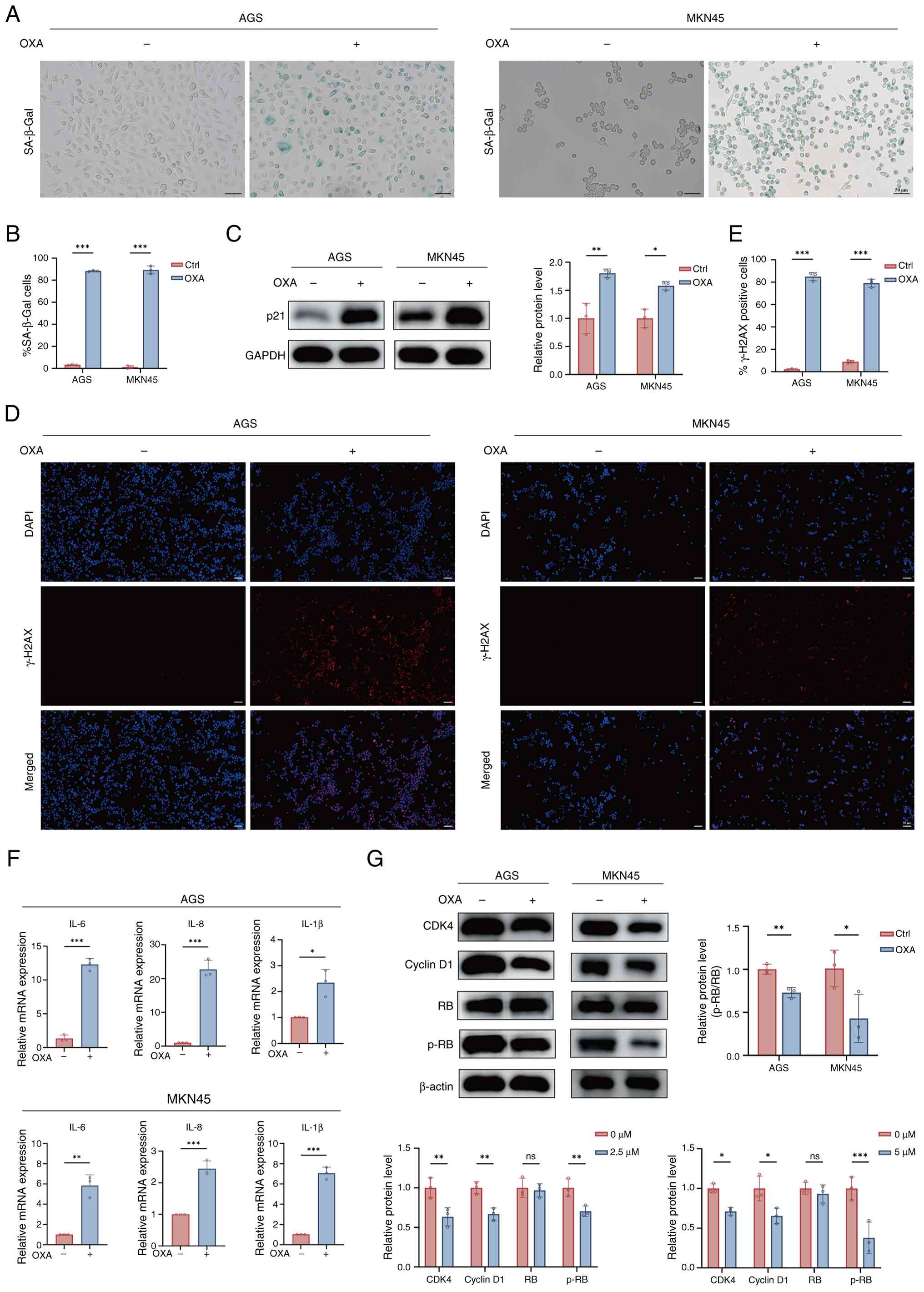
Figure 1

OXA induces senescence was verified
in gastric cancer cells. (A and B) SA-β-Gal staining of Ctrl and
OXA groups and quantification of SA-β-Gal positive cells in AGS and
MKN45 cells. (C) p21 protein expression and quantification. (D and
E) Immunofluorescence of γ-H2AX and quantification. Red
fluorescence indicates γ-H2AX staining, and blue fluorescence
reflects nuclear staining with DAPI. (F) mRNA levels of the
senescence-associated secretory phenotype factors. (G) CDK4, cyclin
D1, RB, p-RB protein expression, and quantification in the two
groups. Data represent the mean ± SD of at least three independent
experiments. *P<0.05, **P<0.01 and ***P<0.001. OXA,
oxaliplatin; SA-β-Gal, senescence-associated β-galactosidase; p-,
phosphorylated.

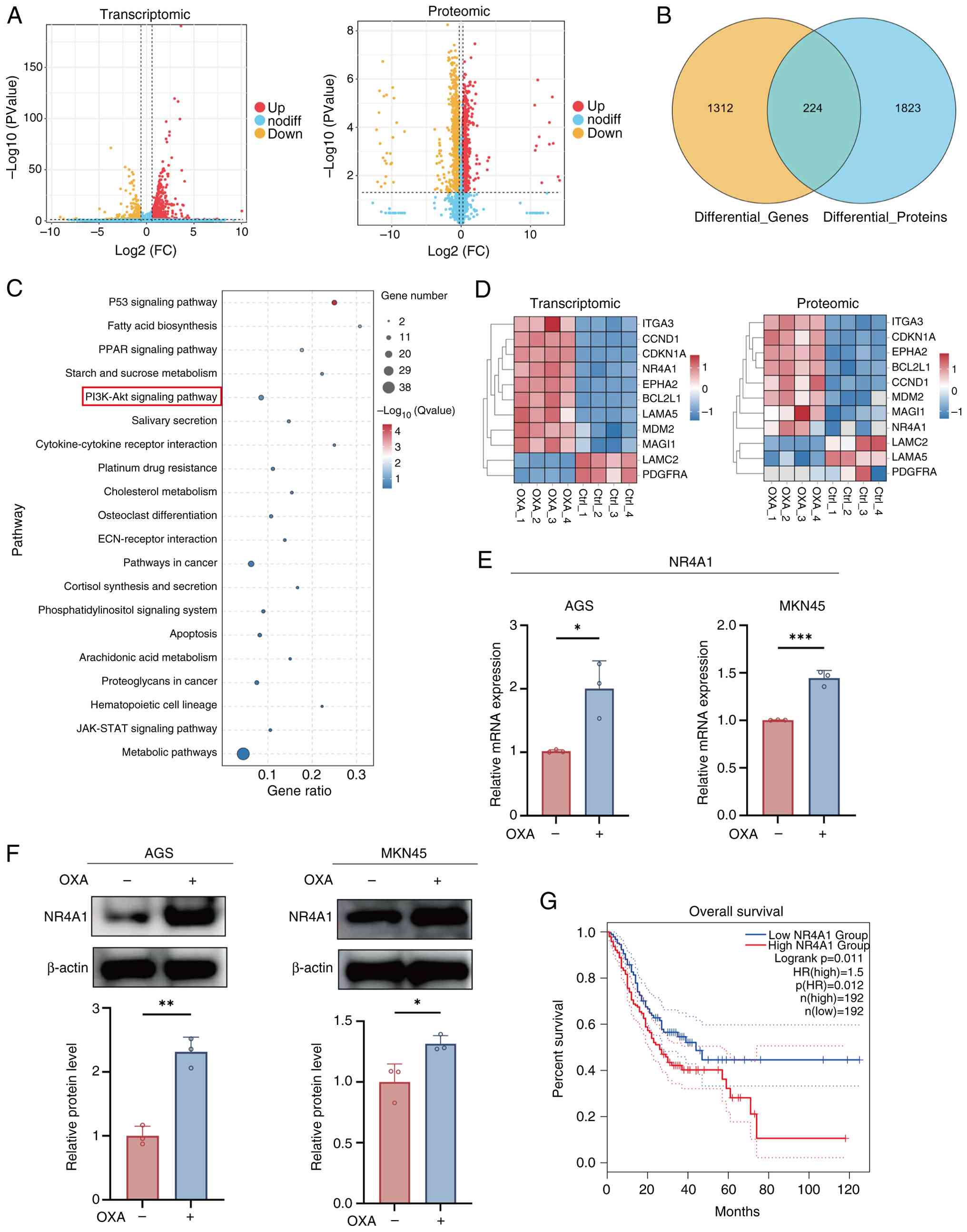
Figure 2

Integrated analyses of transcriptomic
and proteomic data identify the NR4A1-PI3K/AKT axis in
chemotherapy-induced senescence. (A and B) Volcano plot of
RNA-sequencing data illustrating differentially expressed genes and
proteins between Ctrl and OXA groups. (C) Kyoto Encyclopedia of
Genes and Genomes enrichment analysis of the same differentially
expressed molecules at both the omics levels. (D) Heatmaps exhibit
transcriptomic and proteomic expression patterns of genes and
proteins associated with the PI3K/AKT pathway. (E and F) NR4A1
expression is validated by reverse transcription-quantitative PCR
and western blotting with quantitative analysis. (G) Kaplan-Meier
survival analysis of NR4A1 in patients with gastric cancer based on
GEPIA2. Data represent the mean ± SD of at least three independent
experiments. *P<0.05, **P<0.01 and ***P<0.001. OXA,
oxaliplatin; HR, hazard ratio.

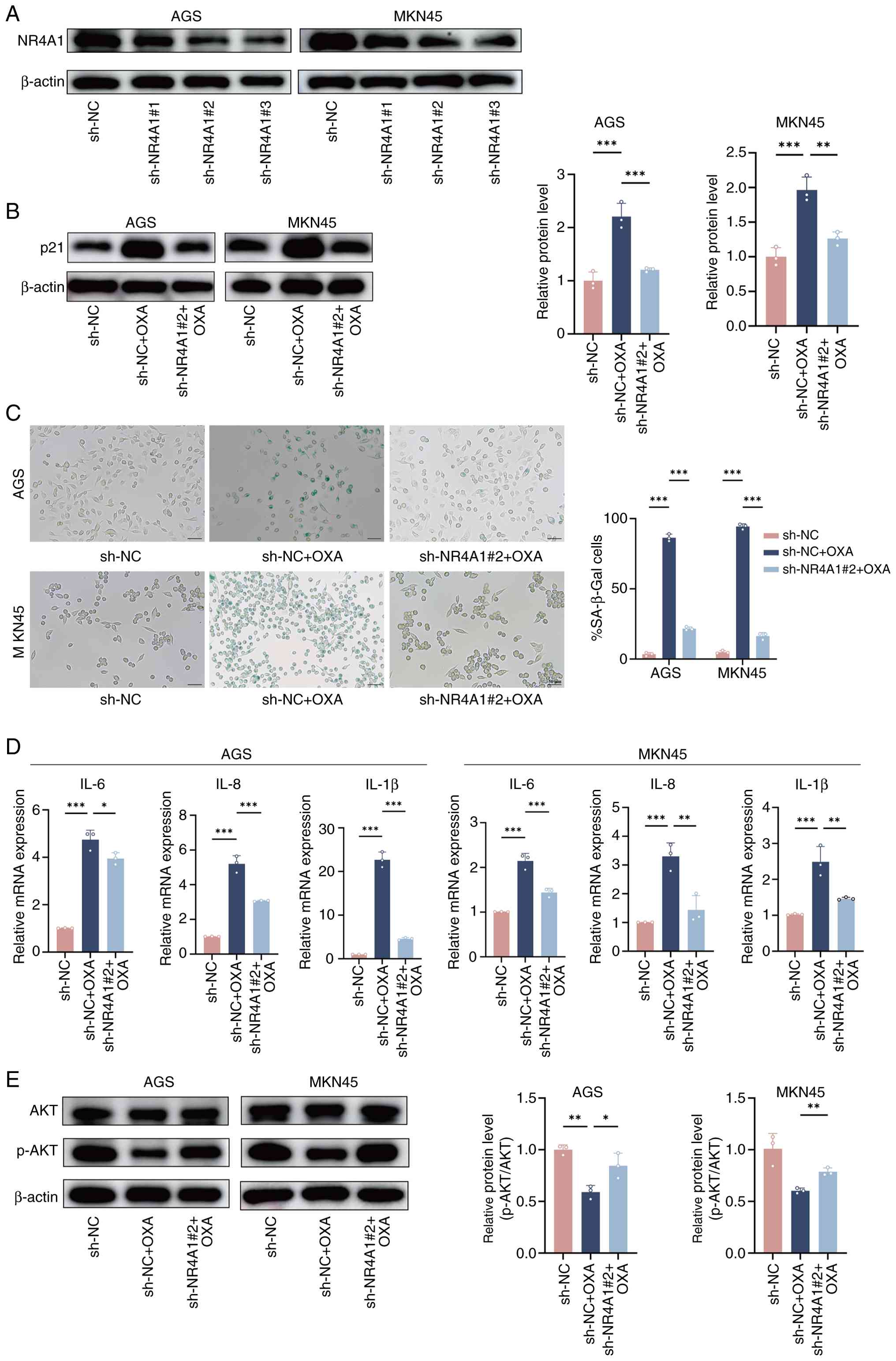
Figure 3

NR4A1 is identified as a key
regulator of senescence, and the NR4A1-PI3K/AKT axis modulates
OXA-induced senescence of gastric cancer cells. (A) Western
blotting confirmed the efficiency of NR4A1 knockdown. (B and C)
Western blotting and quantitative analysis of p21 expression and
PI3K/AKT signaling activity (p-AKT/AKT ratio) in sh-NC, sh-NC +
OXA, and sh-NR4A1#2 + OXA groups. (D) SA-β-gal staining and
quantitative analysis of the positive cells. (E) Reverse
transcription-quantitative PCR analysis of senescence-associated
secretory phenotype factor expression across the experimental
groups. Data represent the mean ± SD of at least three independent
experiments. *P<0.05, **P<0.01 and ***P<0.001. OXA,
oxaliplatin; sh-, short hairpin; NC, negative control; p-,
phosphorylated.

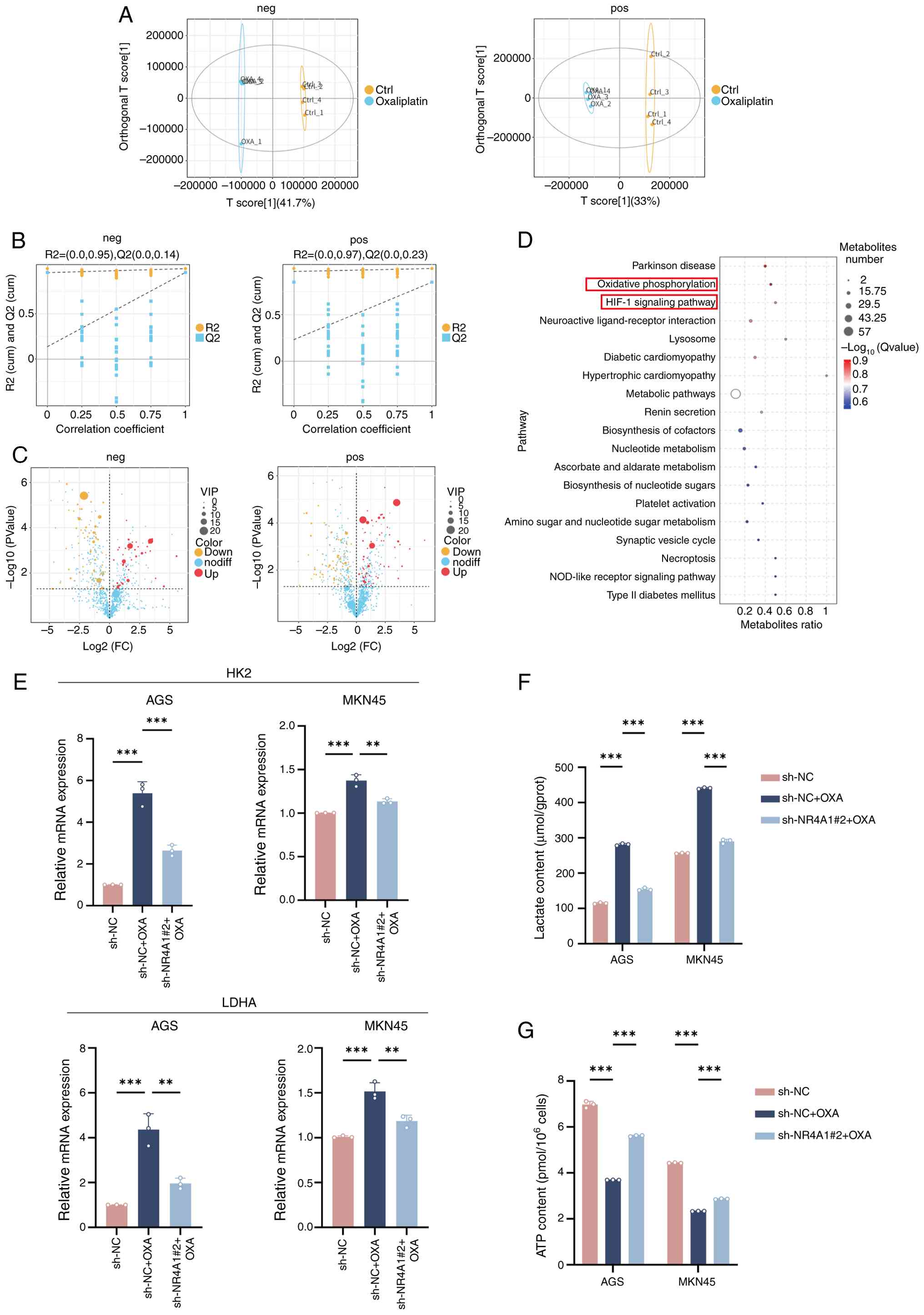
Figure 4

NR4A1-PI3K/AKT axis drives metabolic
reprogramming in gastric cancer cells. (A) Score plots from
multivariate statistical analysis of the neg and pos ion modes. (B)
Permutation test plots validated the statistical model in neg and
pos modes. (C) Volcano plots of differential metabolites in neg and
pos modes. (D) Kyoto Encyclopedia of Genes and Genomes pathway
enrichment analysis of metabolites in the combination of neg and
pos modes. (E) Reverse transcription-quantitative PCR analysis of
glycolytic genes LDHA and HK2, (F) lactate content assay and (G)
ATP content assay in sh-NC, sh-NC + OXA and sh-NR4A1#2 + OXA
groups. Data represent the mean ± SD of at least three independent
experiments. **P<0.01 and ***P<0.001. LDHA, lactate
dehydrogenase A; HK 2, hexokinase 2; OXA, oxaliplatin; sh-, short
hairpin; NC, negative control.

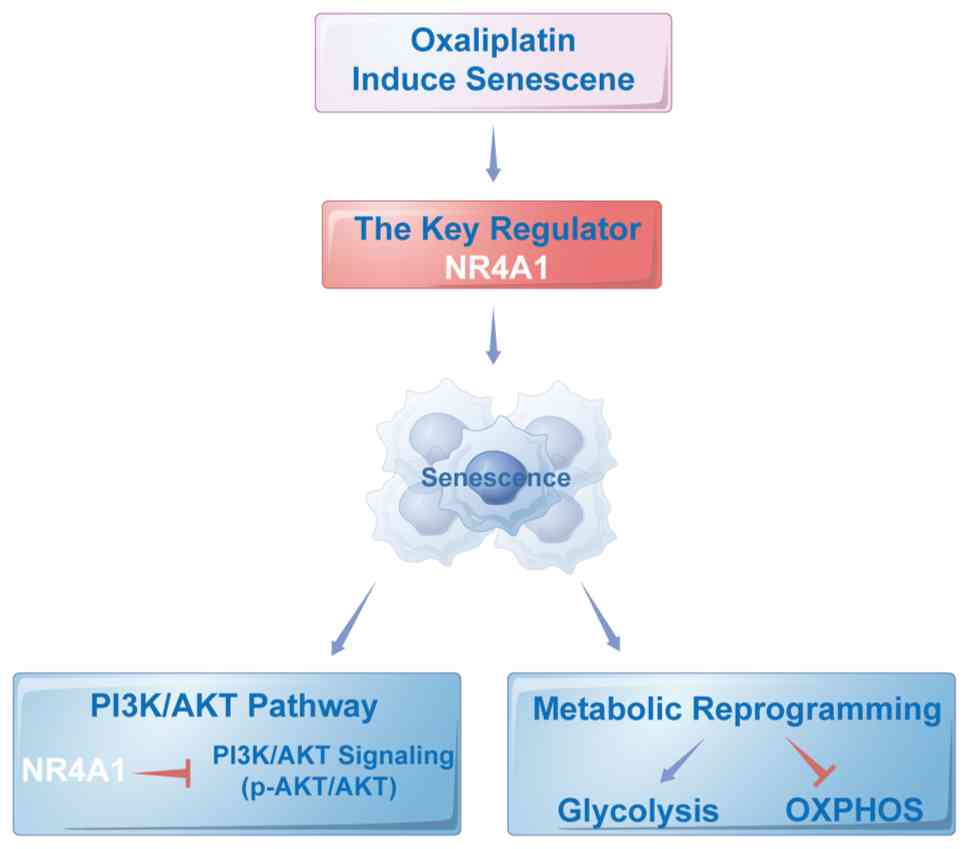
Figure 5

Schematic illustration of the
NR4A1-PI3K/AKT-metabolic axis in chemotherapy-induced senescence of
GC. This schematic diagram summarizes the molecular mechanism by
which the NR4A1-PI3K/AKT-metabolic axis mediates
chemotherapy-induced senescence in GC cells. GC, gastric cancer;
OXPHOS, oxidative phosphorylation; p-, phosphorylated.
View References

1 

Bray F, Laversanne M, Sung H, Ferlay J, Siegel RL, Soerjomataram I and Jemal A: Global cancer statistics 2022: GLOBOCAN estimates of incidence and mortality worldwide for 36 cancers in 185 countries. CA Cancer J Clin. 74:229–263. 2024.PubMed/NCBI

2 

Mikula-Pietrasik J, Niklas A, Uruski P, Tykarski A and Ksiazek K: Mechanisms and significance of therapy-induced and spontaneous senescence of cancer cells. Cell Mol Life Sci. 77:213–229. 2020. View Article : Google Scholar : PubMed/NCBI

3 

Faheem MM, Seligson ND, Ahmad SM, Rasool RU, Gandhi SG, Bhagat M and Goswami A: Convergence of therapy-induced senescence (TIS) and EMT in multistep carcinogenesis: Current opinions and emerging perspectives. Cell Death Discov. 6:512020. View Article : Google Scholar : PubMed/NCBI

4 

Takasugi M, Yoshida Y and Ohtani N: Cellular senescence and the tumour microenvironment. Mol Oncol. 16:3333–3351. 2022. View Article : Google Scholar : PubMed/NCBI

5 

Wang L, Lankhorst L and Bernards R: Exploiting senescence for the treatment of cancer. Nat Rev Cancer. 22:340–355. 2022. View Article : Google Scholar : PubMed/NCBI

6 

McHugh D, Duran I and Gil J: Senescence as a therapeutic target in cancer and age-related diseases. Nat Rev Drug Discov. 24:57–71. 2025. View Article : Google Scholar : PubMed/NCBI

7 

Pan W, Tan Y, Chen X, Zeng L, Lv Y and Yang J: miRNA-204-5p acts as a tumor suppressor in gastric cancer by inhibiting cell migration, invasion, and glycolysis via the RAB22A/PI3K/AKT axis. Sci Rep. 15:295362025. View Article : Google Scholar : PubMed/NCBI

8 

Yan S, Hu X, Wu Y, Ye W, Zhu Y, He Y, Zhan F, Wu W and Ma Z: ITGA4 contributes to 5-fluorouracil resistance by Up-Regulating PI3K/AKT signaling: evidence from network pharmacology, molecular docking and experimental verification. Drug Des Devel Ther. 19:4105–4122. 2025. View Article : Google Scholar : PubMed/NCBI

9 

Fontana F, Giannitti G, Marchesi S and Limonta P: The PI3K/Akt pathway and glucose metabolism: A dangerous liaison in cancer. Int J Biol Sci. 20:3113–3125. 2024. View Article : Google Scholar : PubMed/NCBI

10 

Zhang CY, Tan XH, Yang HH, Jin L, Hong JR, Zhou Y and Huang XT: COX-2/sEH dual inhibitor alleviates hepatocyte senescence in NAFLD mice by restoring autophagy through Sirt1/PI3K/AKT/mTOR. Int J Mol Sci. 23:82672022. View Article : Google Scholar : PubMed/NCBI

11 

Tang Q, Markby GR, MacNair AJ, Tang K, Tkacz M, Parys M, Phadwal K, MacRae VE and Corcoran BM: TGF-β-induced PI3K/AKT/mTOR pathway controls myofibroblast differentiation and secretory phenotype of valvular interstitial cells through the modulation of cellular senescence in a naturally occurring in vitro canine model of myxomatous mitral valve disease. Cell Prolif. 56:e134352023. View Article : Google Scholar : PubMed/NCBI

12 

Efimova EV, Appelbe OK, Ricco N, Lee SS, Liu Y, Wolfgeher DJ, Collins TN, Flor AC, Ramamurthy A, Warrington S, et al: O-GlcNAcylation enhances double-strand break repair, promotes cancer cell proliferation, and prevents therapy-induced senescence in irradiated tumors. Mol Cancer Res. 17:1338–1350. 2019. View Article : Google Scholar : PubMed/NCBI

13 

Gu J, Wang J, Liu X, Sai K, Mai J, Xing F, Chen Z, Yang X, Lu W, Guo C, et al: IL-6 derived from therapy-induced senescence facilitates the glycolytic phenotype in glioblastoma cells. Am J Cancer Res. 11:458–478. 2021.PubMed/NCBI

14 

Mikula-Pietrasik J, Witucka A, Pakula M, Uruski P, Begier-Krasinska B, Niklas A, Tykarski A and Ksiazek K: Comprehensive review on how platinum- and taxane-based chemotherapy of ovarian cancer affects biology of normal cells. Cell Mol Life Sci. 76:681–697. 2019. View Article : Google Scholar : PubMed/NCBI

15 

Melones-Herrero J, Alcala S, Ruiz-Canas L, Benitez-Buelga C, Batres-Ramos S, Cales C, Lorenzo O, Perona R, Quiroga AG, Sainz B Jr and Sanchez-Perez I: Platinum iodido drugs show potential anti-tumor activity, affecting cancer cell metabolism and inducing ROS and senescence in gastrointestinal cancer cells. Commun Biol. 7:3532024. View Article : Google Scholar : PubMed/NCBI

16 

Livak KJ and Schmittgen TD: Analysis of relative gene expression data using real-time quantitative PCR and the 2(−Delta Delta C(T)) Method. Methods. 25:402–408. 2001. View Article : Google Scholar : PubMed/NCBI

17 

Tang Z, Kang B, Li C, Chen T and Zhang Z: GEPIA2: an enhanced web server for large-scale expression profiling and interactive analysis. Nucleic Acids Res. 47((W1)): W556–W560. 2019. View Article : Google Scholar : PubMed/NCBI

18 

Lee BY, Han JA, Im JS, Morrone A, Johung K, Goodwin EC, Kleijer WJ, DiMaio D and Hwang ES: Senescence-associated beta-galactosidase is lysosomal beta-galactosidase. Aging Cell. 5:187–195. 2006. View Article : Google Scholar : PubMed/NCBI

19 

Yan J, Chen S, Yi Z, Zhao R, Zhu J, Ding S and Wu J: The role of p21 in cellular senescence and aging-related diseases. Mol Cells. 47:1001132024. View Article : Google Scholar : PubMed/NCBI

20 

Biran A, Zada L, Abou Karam P, Vadai E, Roitman L, Ovadya Y, Porat Z and Krizhanovsky V: Quantitative identification of senescent cells in aging and disease. Aging Cell. 16:661–671. 2017. View Article : Google Scholar : PubMed/NCBI

21 

Dong Z, Luo Y, Yuan Z, Tian Y, Jin T and Xu F: Cellular senescence and SASP in tumor progression and therapeutic opportunities. Mol Cancer. 23:1812024. View Article : Google Scholar : PubMed/NCBI

22 

Gorgoulis V, Adams PD, Alimonti A, Bennett DC, Bischof O, Bishop C, Campisi J, Collado M, Evangelou K, Ferbeyre G, et al: Cellular senescence: Defining a path forward. Cell. 179:813–827. 2019. View Article : Google Scholar : PubMed/NCBI

23 

Ma YL, Kong CY, Guo Z, Wang MY, Wang P, Liu FY, Yang D, Yang Z and Tang QZ: Semaglutide ameliorates cardiac remodeling in male mice by optimizing energy substrate utilization through the Creb5/NR4a1 axis. Nat Commun. 15:47572024. View Article : Google Scholar : PubMed/NCBI

24 

Li JM, Song ZH, Li Y, Chen HW, Li H, Yuan L, Li J, Lv WY, Liu L and Wang N: NR4A1 silencing alleviates high-glucose-stimulated HK-2 cells pyroptosis and fibrosis via hindering NLRP3 activation and PI3K/AKT pathway. World J Diabetes. 16:975442025.PubMed/NCBI

25 

Kallenbach J, Atri Roozbahani G, Heidari Horestani M and Baniahmad A: Distinct mechanisms mediating therapy-induced cellular senescence in prostate cancer. Cell Biosci. 12:2002022. View Article : Google Scholar : PubMed/NCBI

26 

Zhang D, Zhang JW, Xu H, Chen X, Gao Y, Jiang HG, Wang Y, Wu H, Yang L, Wang WB, et al: Therapy-induced senescent tumor cell-derived extracellular vesicles promote colorectal cancer progression through SERPINE1-mediated NF-ĸB p65 nuclear translocation. Mol Cancer. 23:702024. View Article : Google Scholar : PubMed/NCBI

27 

Wang H, Wei Z, Xu C, Fang F, Wang Z, Zhong Y and Wang X: Nuclear receptor 4A1 ameliorates UUO-induced renal fibrosis by inhibiting the PI3K/AKT pathway. Sci Rep. 14:247872024. View Article : Google Scholar : PubMed/NCBI

28 

Lei L, Guo Q, Cheng Y, Gui Y, Li W, Zhao Y, Xu Z, Luo Y, Wu G, Wang JZ, et al: Age-dependent elevation of Nr4a1 attenuates PI3K/AKT/GSK3beta pathway and mediates tau hyperphosphorylation and cognitive impairments. J Adv Res. S2090-1232(25)00442-4. 2025.(Epub ahead of print).

29 

Kirkland JL and Tchkonia T: Cellular senescence: A translational perspective. EBioMedicine. 21:21–28. 2017. View Article : Google Scholar : PubMed/NCBI

30 

Herranz N and Gil J: Mechanisms and functions of cellular senescence. J Clin Invest. 128:1238–1246. 2018. View Article : Google Scholar : PubMed/NCBI

31 

Safe S and Karki K: The paradoxical roles of orphan nuclear receptor 4A (NR4A) in cancer. Mol Cancer Res. 19:180–191. 2021. View Article : Google Scholar : PubMed/NCBI

32 

Ma QX, Yin M and Lei QY: A nucleotide regulates NR4A1 status in gastric cancer. Mol Cell. 85:4299–4300. 2025. View Article : Google Scholar : PubMed/NCBI

33 

Faget DV, Ren Q and Stewart SA: Unmasking senescence: Context-dependent effects of SASP in cancer. Nat Rev Cancer. 19:439–453. 2019. View Article : Google Scholar : PubMed/NCBI

34 

Wang C, Vegna S, Jin H, Benedict B, Lieftink C, Ramirez C, de Oliveira RL, Morris B, Gadiot J, Wang W, et al: Inducing and exploiting vulnerabilities for the treatment of liver cancer. Nature. 574:268–272. 2019. View Article : Google Scholar : PubMed/NCBI

35 

Qing Y, Li H, Zhao Y, Hu P, Wang X, Yu X, Zhu M, Wang H, Wang Z, Guo Q and Hui H: One-Two punch therapy for the treatment of T-Cell malignancies involving p53-dependent cellular senescence. Oxid Med Cell Longev. 2021:55295182021. View Article : Google Scholar : PubMed/NCBI

36 

Wang T, Liu W, Shen Q, Tao R, Li C, Shen Q, Lin Y, Huang Y, Yang L, Xie G, et al: Combination of PARP inhibitor and CDK4/6 inhibitor modulates cGAS/STING-dependent therapy-induced senescence and provides ‘one-two punch’ opportunity with anti-PD-L1 therapy in colorectal cancer. Cancer Sci. 114:4184–4201. 2023. View Article : Google Scholar : PubMed/NCBI

Related Articles

  • Abstract
  • View
  • Download
  • Twitter
Copy and paste a formatted citation
Spandidos Publications style
Zhang T, Wang Y, Zhang J, Ye X, Shen Y and Zhang Z: NR4A1 mediates chemotherapy‑induced senescence via the PI3K/AKT pathway in gastric cancer cells. Oncol Rep 55: 75, 2026.
APA
Zhang, T., Wang, Y., Zhang, J., Ye, X., Shen, Y., & Zhang, Z. (2026). NR4A1 mediates chemotherapy‑induced senescence via the PI3K/AKT pathway in gastric cancer cells. Oncology Reports, 55, 75. https://doi.org/10.3892/or.2026.9080
MLA
Zhang, T., Wang, Y., Zhang, J., Ye, X., Shen, Y., Zhang, Z."NR4A1 mediates chemotherapy‑induced senescence via the PI3K/AKT pathway in gastric cancer cells". Oncology Reports 55.4 (2026): 75.
Chicago
Zhang, T., Wang, Y., Zhang, J., Ye, X., Shen, Y., Zhang, Z."NR4A1 mediates chemotherapy‑induced senescence via the PI3K/AKT pathway in gastric cancer cells". Oncology Reports 55, no. 4 (2026): 75. https://doi.org/10.3892/or.2026.9080
Copy and paste a formatted citation
x
Spandidos Publications style
Zhang T, Wang Y, Zhang J, Ye X, Shen Y and Zhang Z: NR4A1 mediates chemotherapy‑induced senescence via the PI3K/AKT pathway in gastric cancer cells. Oncol Rep 55: 75, 2026.
APA
Zhang, T., Wang, Y., Zhang, J., Ye, X., Shen, Y., & Zhang, Z. (2026). NR4A1 mediates chemotherapy‑induced senescence via the PI3K/AKT pathway in gastric cancer cells. Oncology Reports, 55, 75. https://doi.org/10.3892/or.2026.9080
MLA
Zhang, T., Wang, Y., Zhang, J., Ye, X., Shen, Y., Zhang, Z."NR4A1 mediates chemotherapy‑induced senescence via the PI3K/AKT pathway in gastric cancer cells". Oncology Reports 55.4 (2026): 75.
Chicago
Zhang, T., Wang, Y., Zhang, J., Ye, X., Shen, Y., Zhang, Z."NR4A1 mediates chemotherapy‑induced senescence via the PI3K/AKT pathway in gastric cancer cells". Oncology Reports 55, no. 4 (2026): 75. https://doi.org/10.3892/or.2026.9080
Follow us
  • Twitter
  • LinkedIn
  • Facebook
About
  • Spandidos Publications
  • Careers
  • Cookie Policy
  • Privacy Policy
How can we help?
  • Help
  • Live Chat
  • Contact
  • Email to our Support Team