Spandidos Publications Logo
  • About
    • About Spandidos
    • Aims and Scopes
    • Abstracting and Indexing
    • Editorial Policies
    • Reprints and Permissions
    • Job Opportunities
    • Terms and Conditions
    • Contact
  • Journals
    • All Journals
    • Oncology Letters
      • Oncology Letters
      • Information for Authors
      • Editorial Policies
      • Editorial Board
      • Aims and Scope
      • Abstracting and Indexing
      • Bibliographic Information
      • Archive
    • International Journal of Oncology
      • International Journal of Oncology
      • Information for Authors
      • Editorial Policies
      • Editorial Board
      • Aims and Scope
      • Abstracting and Indexing
      • Bibliographic Information
      • Archive
    • Molecular and Clinical Oncology
      • Molecular and Clinical Oncology
      • Information for Authors
      • Editorial Policies
      • Editorial Board
      • Aims and Scope
      • Abstracting and Indexing
      • Bibliographic Information
      • Archive
    • Experimental and Therapeutic Medicine
      • Experimental and Therapeutic Medicine
      • Information for Authors
      • Editorial Policies
      • Editorial Board
      • Aims and Scope
      • Abstracting and Indexing
      • Bibliographic Information
      • Archive
    • International Journal of Molecular Medicine
      • International Journal of Molecular Medicine
      • Information for Authors
      • Editorial Policies
      • Editorial Board
      • Aims and Scope
      • Abstracting and Indexing
      • Bibliographic Information
      • Archive
    • Biomedical Reports
      • Biomedical Reports
      • Information for Authors
      • Editorial Policies
      • Editorial Board
      • Aims and Scope
      • Abstracting and Indexing
      • Bibliographic Information
      • Archive
    • Oncology Reports
      • Oncology Reports
      • Information for Authors
      • Editorial Policies
      • Editorial Board
      • Aims and Scope
      • Abstracting and Indexing
      • Bibliographic Information
      • Archive
    • Molecular Medicine Reports
      • Molecular Medicine Reports
      • Information for Authors
      • Editorial Policies
      • Editorial Board
      • Aims and Scope
      • Abstracting and Indexing
      • Bibliographic Information
      • Archive
    • World Academy of Sciences Journal
      • World Academy of Sciences Journal
      • Information for Authors
      • Editorial Policies
      • Editorial Board
      • Aims and Scope
      • Abstracting and Indexing
      • Bibliographic Information
      • Archive
    • International Journal of Functional Nutrition
      • International Journal of Functional Nutrition
      • Information for Authors
      • Editorial Policies
      • Editorial Board
      • Aims and Scope
      • Abstracting and Indexing
      • Bibliographic Information
      • Archive
    • International Journal of Epigenetics
      • International Journal of Epigenetics
      • Information for Authors
      • Editorial Policies
      • Editorial Board
      • Aims and Scope
      • Abstracting and Indexing
      • Bibliographic Information
      • Archive
    • Medicine International
      • Medicine International
      • Information for Authors
      • Editorial Policies
      • Editorial Board
      • Aims and Scope
      • Abstracting and Indexing
      • Bibliographic Information
      • Archive
  • Articles
  • Information
    • Information for Authors
    • Information for Reviewers
    • Information for Librarians
    • Information for Advertisers
    • Conferences
  • Language Editing
Spandidos Publications Logo
  • About
    • About Spandidos
    • Aims and Scopes
    • Abstracting and Indexing
    • Editorial Policies
    • Reprints and Permissions
    • Job Opportunities
    • Terms and Conditions
    • Contact
  • Journals
    • All Journals
    • Biomedical Reports
      • Information for Authors
      • Editorial Policies
      • Editorial Board
      • Aims and Scope
      • Abstracting and Indexing
      • Bibliographic Information
      • Archive
    • Experimental and Therapeutic Medicine
      • Information for Authors
      • Editorial Policies
      • Editorial Board
      • Aims and Scope
      • Abstracting and Indexing
      • Bibliographic Information
      • Archive
    • International Journal of Epigenetics
      • Information for Authors
      • Editorial Policies
      • Editorial Board
      • Aims and Scope
      • Abstracting and Indexing
      • Bibliographic Information
      • Archive
    • International Journal of Functional Nutrition
      • Information for Authors
      • Editorial Policies
      • Editorial Board
      • Aims and Scope
      • Abstracting and Indexing
      • Bibliographic Information
      • Archive
    • International Journal of Molecular Medicine
      • Information for Authors
      • Editorial Policies
      • Editorial Board
      • Aims and Scope
      • Abstracting and Indexing
      • Bibliographic Information
      • Archive
    • International Journal of Oncology
      • Information for Authors
      • Editorial Policies
      • Editorial Board
      • Aims and Scope
      • Abstracting and Indexing
      • Bibliographic Information
      • Archive
    • Medicine International
      • Information for Authors
      • Editorial Policies
      • Editorial Board
      • Aims and Scope
      • Abstracting and Indexing
      • Bibliographic Information
      • Archive
    • Molecular and Clinical Oncology
      • Information for Authors
      • Editorial Policies
      • Editorial Board
      • Aims and Scope
      • Abstracting and Indexing
      • Bibliographic Information
      • Archive
    • Molecular Medicine Reports
      • Information for Authors
      • Editorial Policies
      • Editorial Board
      • Aims and Scope
      • Abstracting and Indexing
      • Bibliographic Information
      • Archive
    • Oncology Letters
      • Information for Authors
      • Editorial Policies
      • Editorial Board
      • Aims and Scope
      • Abstracting and Indexing
      • Bibliographic Information
      • Archive
    • Oncology Reports
      • Information for Authors
      • Editorial Policies
      • Editorial Board
      • Aims and Scope
      • Abstracting and Indexing
      • Bibliographic Information
      • Archive
    • World Academy of Sciences Journal
      • Information for Authors
      • Editorial Policies
      • Editorial Board
      • Aims and Scope
      • Abstracting and Indexing
      • Bibliographic Information
      • Archive
  • Articles
  • Information
    • For Authors
    • For Reviewers
    • For Librarians
    • For Advertisers
    • Conferences
  • Language Editing
Login Register Submit
  • This site uses cookies
  • You can change your cookie settings at any time by following the instructions in our Cookie Policy. To find out more, you may read our Privacy Policy.

    I agree
Search articles by DOI, keyword, author or affiliation
Search
Advanced Search
presentation
Oncology Reports
Join Editorial Board Propose a Special Issue
Print ISSN: 1021-335X Online ISSN: 1791-2431
Journal Cover
May-2026 Volume 55 Issue 5

Full Size Image

Sign up for eToc alerts
Recommend to Library

Journals

International Journal of Molecular Medicine

International Journal of Molecular Medicine

International Journal of Molecular Medicine is an international journal devoted to molecular mechanisms of human disease.

International Journal of Oncology

International Journal of Oncology

International Journal of Oncology is an international journal devoted to oncology research and cancer treatment.

Molecular Medicine Reports

Molecular Medicine Reports

Covers molecular medicine topics such as pharmacology, pathology, genetics, neuroscience, infectious diseases, molecular cardiology, and molecular surgery.

Oncology Reports

Oncology Reports

Oncology Reports is an international journal devoted to fundamental and applied research in Oncology.

Experimental and Therapeutic Medicine

Experimental and Therapeutic Medicine

Experimental and Therapeutic Medicine is an international journal devoted to laboratory and clinical medicine.

Oncology Letters

Oncology Letters

Oncology Letters is an international journal devoted to Experimental and Clinical Oncology.

Biomedical Reports

Biomedical Reports

Explores a wide range of biological and medical fields, including pharmacology, genetics, microbiology, neuroscience, and molecular cardiology.

Molecular and Clinical Oncology

Molecular and Clinical Oncology

International journal addressing all aspects of oncology research, from tumorigenesis and oncogenes to chemotherapy and metastasis.

World Academy of Sciences Journal

World Academy of Sciences Journal

Multidisciplinary open-access journal spanning biochemistry, genetics, neuroscience, environmental health, and synthetic biology.

International Journal of Functional Nutrition

International Journal of Functional Nutrition

Open-access journal combining biochemistry, pharmacology, immunology, and genetics to advance health through functional nutrition.

International Journal of Epigenetics

International Journal of Epigenetics

Publishes open-access research on using epigenetics to advance understanding and treatment of human disease.

Medicine International

Medicine International

An International Open Access Journal Devoted to General Medicine.

Journal Cover
May-2026 Volume 55 Issue 5

Full Size Image

Sign up for eToc alerts
Recommend to Library

  • Article
  • Citations
    • Cite This Article
    • Download Citation
    • Create Citation Alert
    • Remove Citation Alert
    • Cited By
  • Similar Articles
    • Related Articles (in Spandidos Publications)
    • Similar Articles (Google Scholar)
    • Similar Articles (PubMed)
  • Download PDF
  • Download XML
  • View XML

  • Supplementary Files
    • Supplementary_Data.xlsx
Article Open Access

ACSBG1‑driven lipid reprogramming unveiled: A fatty acid metabolism‑associated prognostic model for lung adenocarcinoma

  • Authors:
    • Panxin Hu
    • Anan Li
  • View Affiliations / Copyright

    Affiliations: Department of Emergency Medicine, The First People's Hospital of Taizhou, Taizhou, Zhejiang 318020, P.R. China, Department of Cardiothoracic Surgery, The First People's Hospital of Taizhou, Taizhou, Zhejiang 318020, P.R. China
    Copyright: © Hu et al. This is an open access article distributed under the terms of Creative Commons Attribution License.
  • Article Number: 82
    |
    Published online on: February 27, 2026
       https://doi.org/10.3892/or.2026.9087
  • Expand metrics +
Metrics: Total Views: 0 (Spandidos Publications: | PMC Statistics: )
Metrics: Total PDF Downloads: 0 (Spandidos Publications: | PMC Statistics: )
Cited By (CrossRef): 0 citations Loading Articles...

This article is mentioned in:


Abstract

Lung adenocarcinoma (LUAD) remains a leading cause of cancer‑associated mortality with limited prognostic biomarkers. Fatty acid metabolism (FAM) reprogramming serves a pivotal role in tumor progression; however, the functional importance of specific FAM genes, such as ACSBG1, in LUAD remains elusive. In the present study, transcriptomics data from The Cancer Genome Atlas (n=517) and Gene Expression Omnibus‑GSE13213 (n=117) were analyzed to identify FAM‑related differentially expressed genes (DEGs). Least Absolute Shrinkage and Selection Operator regression and Shapley Additive Explanations (SHAP) interpretable analyses established a prognostic model, and in vitro experiments using A549 and H1299 cell lines with ACSBG1 overexpression (OE) and knockdown. Functional assays included Cell Counting Kit‑8, EdU, Transwell and apoptosis analyses. A total of 35 FAM‑related DEGs were identified, which were enriched in PPAR signaling and fatty acid degradation pathways (false discovery rate <0.05). Subsequently, a seven‑gene prognostic model was established, and demonstrated strong predictive power for 1‑, 3‑ and 5‑year survival (area under the curve values: 0.767, 0.769 and 0.700, respectively). SHAP analysis prioritized ACSBG1 as the dominant protective factor, and its low expression was associated with advanced Tumor‑Node‑Metastasis stages and poor survival. Mechanistically, ACSBG1 OE suppressed proliferation, migration and invasion, and promoted apoptosis. Immune profiling revealed ACSBG1 expression was positively correlated with the infiltration of CD4+ T cells, CD8+ T cells and B cells, suggesting its immunomodulatory potential. In conclusion, to the best of our knowledge, the present study established the first FAM‑based prognostic model for LUAD, and identified ACSBG1 as a novel tumor suppressor through dual mechanisms of metabolic regulation and immune microenvironment modulation. The risk score system established in the current study provides a clinically actionable tool for precision oncology, and ACSBG1‑targeted therapy represents a promising strategy against LUAD progression.
View Figures

Figure 1

Screening and functional enrichment
of differentially expressed genes related to fatty acid metabolism
in lung adenocarcinoma. (A) Heat map. (B) Volcano map. Red dots
indicate upregulated genes and green dots indicate downregulated
genes. Results of (C) Gene Ontology and (D) Kyoto Encyclopedia of
Genes and Genomes pathway enrichment analyses. BP, biological
process; CC, cellular component; FC, fold change; FDR; false
discovery rate; MF, molecular function.

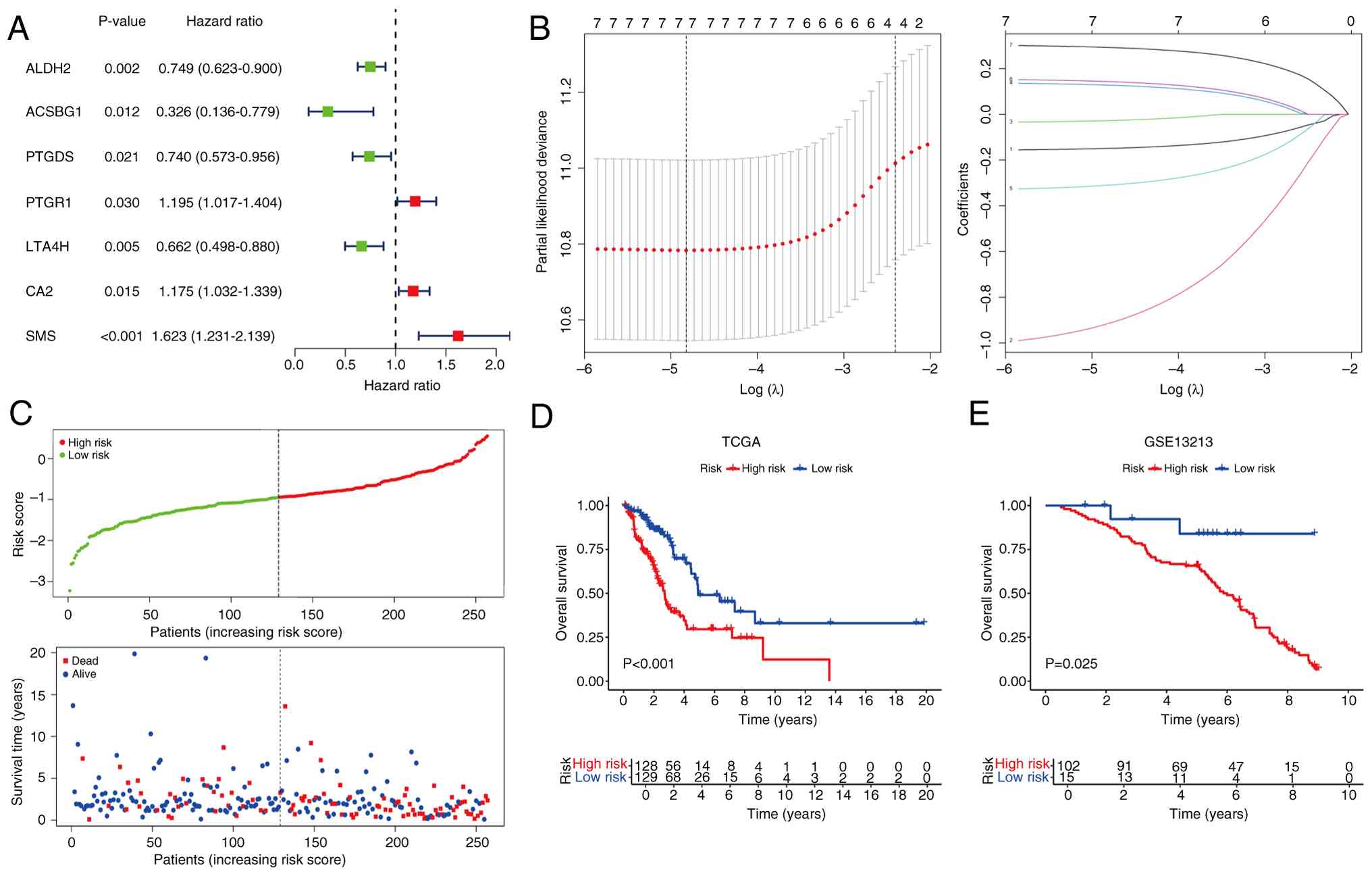
Figure 2

Construction and evaluation of
prognostic models. (A) Forest plot showing the overall
survival-related fatty acid metabolism genes in LUAD. (B) Least
Absolute Shrinkage and Selection Operator regression analysis. (C)
Distribution of risk scores in patients with LUAD. Kaplan-Meier
curves show the difference in survival between low- and high-risk
patients in (D) TCGA and (E) GSE13213 datasets. LUAD, lung
adenocarcinoma; TCGA, The Cancer Genome Atlas.

Figure 3

Verification of the accuracy of the
prognostic scoring model. (A) Univariate and (B) multivariate
independent prognostic analyses. (C) ROC curves for 1-, 3- and
5-year OS. (D) ROC curves for clinical characteristics and risk
scores. (E) Heat map of clinically relevant features. *P<0.05,
**P<0.01, ***P<0.001. (F) Nomogram integrates multiple
clinicopathological characteristics, including sex, age, T stage
and risk grade, to provide individualized predictions of patient
survival probability at different time points. (G) Calibration plot
predicting the agreement between observed and predicted rates of OS
at 1, 3 and 5 years. AUC, area under the curve; OS, overall
survival; ROC, receiver operating characteristic.

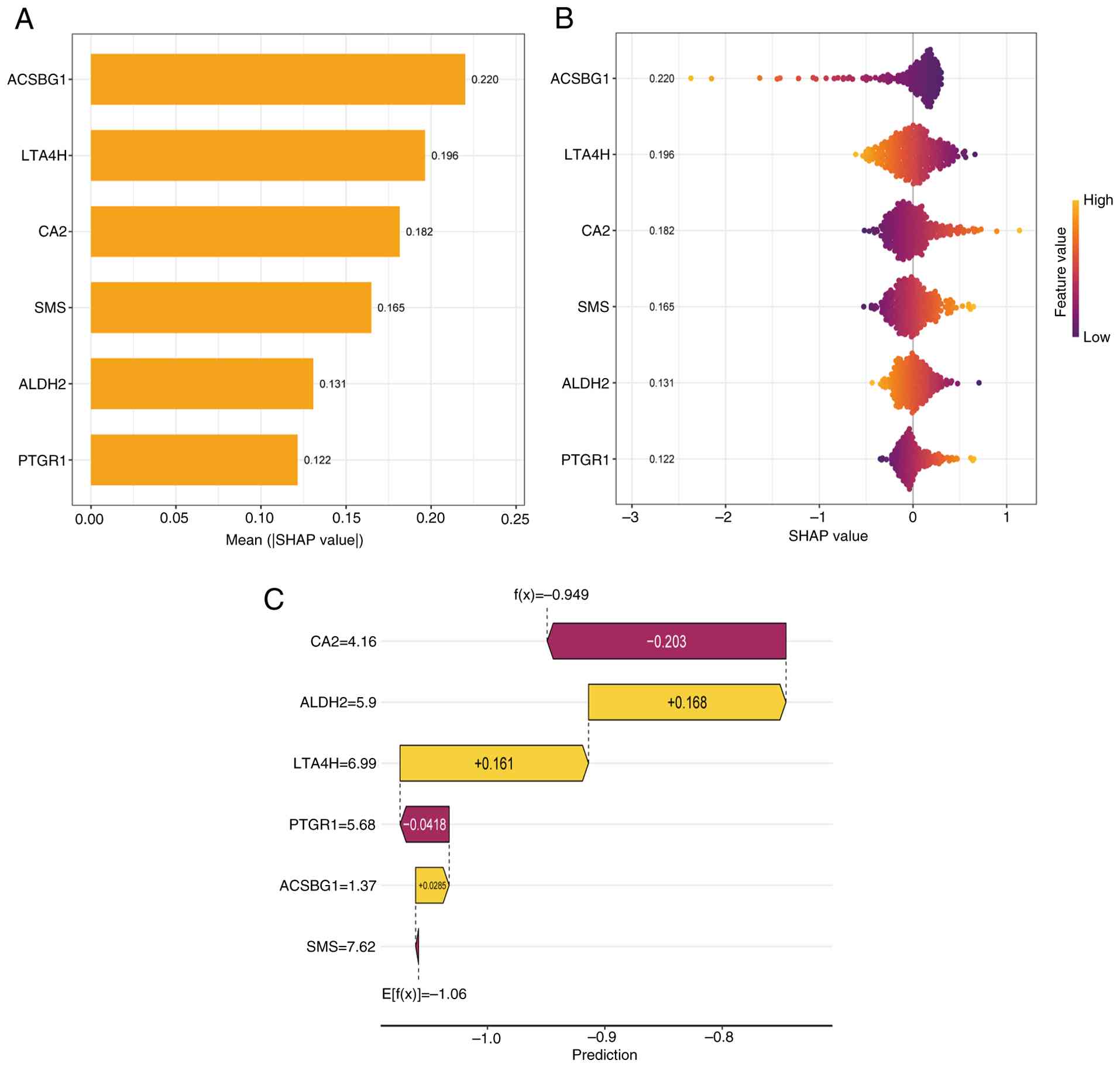
Figure 4

SHAP interpretable analysis of the
contribution degree and direction of each gene feature on the
prediction results of the prognostic model. (A) Feature importance
bar chart shows the overall influence intensity of each gene
feature on the model output, ranked by the average absolute SHAP
value. The longer the bar, the more important the feature. (B)
Feature dependency swarm plot: Each point represents a sample,
showing the distribution relationship between the specific gene
feature value and its SHAP value. The more dispersed the points or
the more gradient of colors, the stronger the nonlinear effect of
the feature on the prediction result. (C) Local explanation
waterfall chart: Taking a single sample as an example, it shows how
each gene feature pushes its predicted value from the baseline to
the final output. The yellow bar represents the positive
contribution that increases the prediction risk, and the purple bar
represents the negative contribution that reduces the risk. SHAP,
Shapley Additive Explanations.

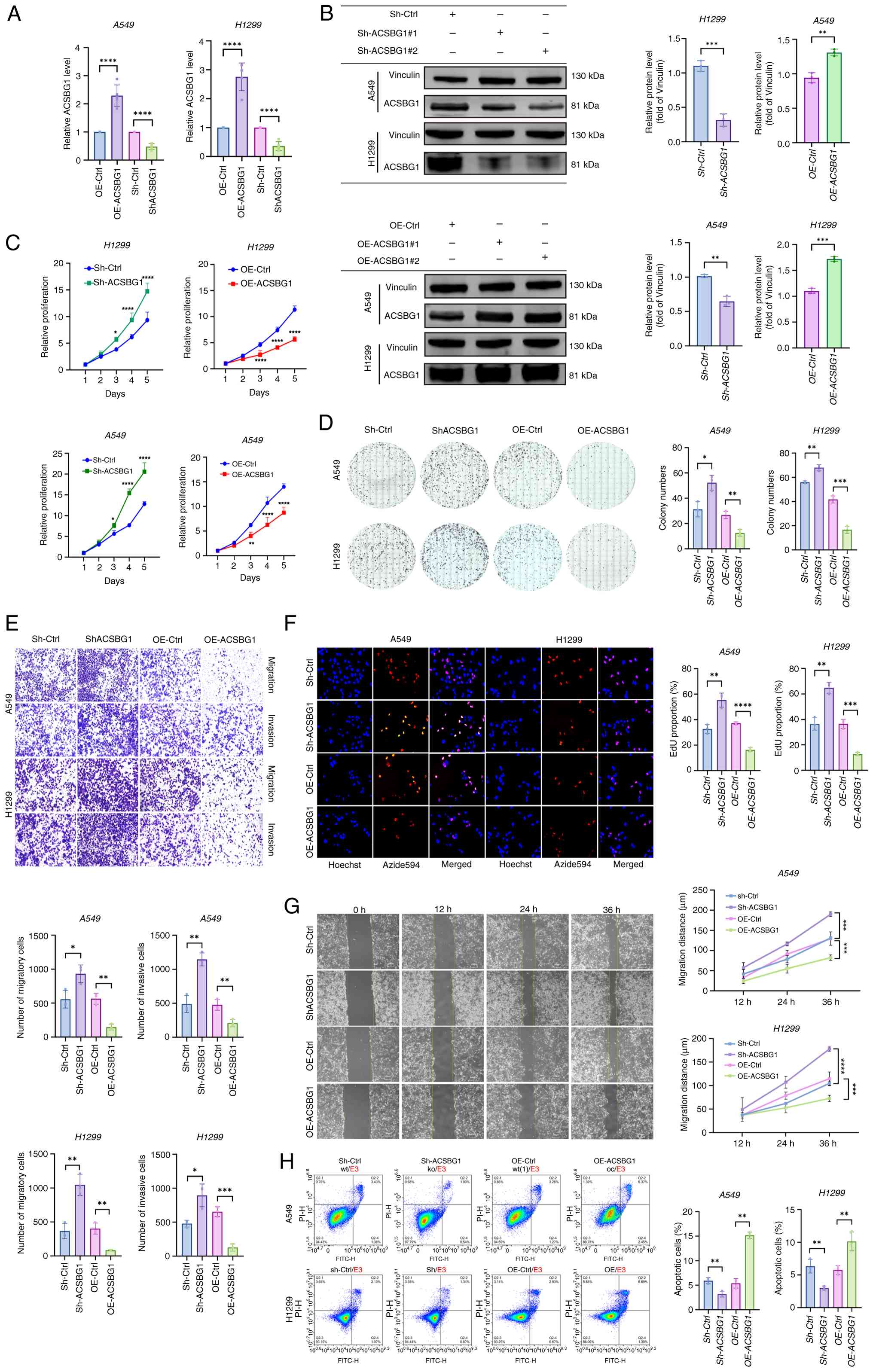
Figure 5

Functional role of ACSBG1 in
modulating cellular phenotypes. (A) mRNA and (B) protein expression
level verification post-transfection. (C) Cell Counting Kit-8 assay
was used to analyze the proliferation of cells. (D) Colony
formation assay verified the colony-forming ability of cells (×40
magnification). (E) Transwell assays verified the migration and
invasion of cells (×200 magnification). (F) EdU assay was used to
analyze the proliferation of cells (×200 magnification). (G) Wound
healing assays verified the migration of the cells (×10
magnification). (H) Annexin V-FITC/PI cell apoptosis assay verified
the apoptosis rate of cells. Ctrl, control; OE, overexpression; Sh,
short hairpin. *P<0.05; **P<0.01; ***P<0.001;
****P<0.0001.

Figure 6

Immune infiltration analysis of the
ACSBG1 gene in LUAD. (A) CD4+ T cells, (B)
CD8+ T cells, (C) B cells, (D) M2 macrophages, (E)
cancer-associated fibroblasts and (F) NK cells. LUAD, lung
adenocarcinoma; NK, natural killer; TPM, transcripts per
million.
View References

1 

Dubey AK, Gupta U and Jain S: Epidemiology of lung cancer and approaches for its prediction: A systematic review and analysis. Chin J Cancer. 35:712016. View Article : Google Scholar : PubMed/NCBI

2 

Yang D, Liu Y, Bai C, Wang X and Powell CA: Epidemiology of lung cancer and lung cancer screening programs in China and the United States. Cancer Lett. 468:82–87. 2020. View Article : Google Scholar : PubMed/NCBI

3 

Zhou J, Liu B, Li Z, Li Y, Chen X, Ma Y, Yan S, Yang X, Zhong L and Wu N: Proteomic analyses identify differentially expressed proteins and pathways between Low-risk and High-risk subtypes of Early-stage lung adenocarcinoma and their prognostic impacts. Mol Cell Proteomics. 20:1000152021. View Article : Google Scholar : PubMed/NCBI

4 

Röhrig F and Schulze A: The multifaceted roles of fatty acid synthesis in cancer. Nat Rev Cancer. 16:732–749. 2016. View Article : Google Scholar : PubMed/NCBI

5 

Santos CR and Schulze A: Lipid metabolism in cancer. FEBS J. 279:2610–2623. 2012. View Article : Google Scholar : PubMed/NCBI

6 

Winkelkotte AM, Al-Shami K, Chaves-Filho AB, Vogel FCE and Schulze A: Interactions of fatty acid and cholesterol metabolism with cellular stress response pathways in cancer. Cold Spring Harb Perspect Med. 15:a0415482025. View Article : Google Scholar : PubMed/NCBI

7 

Angeles-Lopez QD, Rodriguez-Lopez J, Agudelo Garcia P, Calyeca J, Álvarez D, Bueno M, Tu LN, Salazar-Terreros M, Vanegas-Avendaño N, Krull JE, et al: Regulation of lung progenitor plasticity and repair by fatty acid oxidation. JCI Insight. 10:e1658372025. View Article : Google Scholar : PubMed/NCBI

8 

Zhang L, Liu X, Liu Y, Yan F, Zeng Y, Song Y, Fang H, Song D and Wang X: Lysophosphatidylcholine inhibits lung cancer cell proliferation by regulating fatty acid metabolism enzyme long-chain acyl-coenzyme A synthase 5. Clin Transl Med. 13:e11802023. View Article : Google Scholar : PubMed/NCBI

9 

Chen Z, Gong Y, Chen F, Lee HJ, Qian J, Zhao J, Zhang W, Li Y, Zhou Y, Xu Q, et al: Orchestrated desaturation reprogramming from stearoyl-CoA desaturase to fatty acid desaturase 2 in cancer epithelial-mesenchymal transition and metastasis. Cancer Commun (Lond). 45:245–280. 2025. View Article : Google Scholar : PubMed/NCBI

10 

Li H, Sun J, Hu H and Wang Y: Transcription factor E2F8 activates PDK1-Mediated DNA damage repair to enhance cisplatin resistance in lung adenocarcinoma. Pharmacology. 109:341–356. 2024.PubMed/NCBI

11 

Chen J, Alduais Y, Zhang K, Zhu X and Chen B: CCAT1/FABP5 promotes tumour progression through mediating fatty acid metabolism and stabilizing PI3K/AKT/mTOR signalling in lung adenocarcinoma. J Cell Mol Med. 25:9199–9213. 2021. View Article : Google Scholar : PubMed/NCBI

12 

Chen Z, Hu Z, Sui Q, Huang Y, Zhao M, Li M, Liang J, Lu T, Zhan C, Lin Z, et al: LncRNA FAM83A-AS1 facilitates tumor proliferation and the migration via the HIF-1α/glycolysis axis in lung adenocarcinoma. Int J Biol Sci. 18:522–535. 2022. View Article : Google Scholar : PubMed/NCBI

13 

Binnewies M, Roberts EW, Kersten K, Chan V, Fearon DF, Merad M, Coussens LM, Gabrilovich DI, Ostrand-Rosenberg S, Hedrick CC, et al: Understanding the tumor immune microenvironment (TIME) for effective therapy. Nat Med. 24:541–550. 2018. View Article : Google Scholar : PubMed/NCBI

14 

Luo Y, Wang H, Liu B and Wei J: Fatty acid metabolism and cancer immunotherapy. Curr Oncol Rep. 24:659–670. 2022. View Article : Google Scholar : PubMed/NCBI

15 

Tomida S, Takeuchi T, Shimada Y, Arima C, Matsuo K, Mitsudomi T, Yatabe Y and Takahashi T: Relapse-related molecular signature in lung adenocarcinomas identifies patients with dismal prognosis. J Clin Oncol. 27:2793–2799. 2009. View Article : Google Scholar : PubMed/NCBI

16 

Ritchie ME, Phipson B, Wu D, Hu Y, Law CW, Shi W and Smyth GK: limma powers differential expression analyses for RNA-sequencing and microarray studies. Nucleic Acids Res. 43:e472015. View Article : Google Scholar : PubMed/NCBI

17 

Friedman J, Hastie T and Tibshirani R: Regularization paths for generalized linear models via coordinate descent. J Stat Softw. 33:1–22. 2010. View Article : Google Scholar : PubMed/NCBI

18 

Lee BK, Mayhew EJ, Sanchez-Lengeling B, Wei JN, Qian WW, Little KA, Andres M, Nguyen BB, Moloy T, Yasonik J, et al: A principal odor map unifies diverse tasks in olfactory perception. Science. 381:999–1006. 2023. View Article : Google Scholar : PubMed/NCBI

19 

Helmreich JE: Regression modeling strategies with applications to linear models, logistic and ordinal regression and survival analysis (2nd edition). J Statistical Software Book Rev. 70:1–3. 2016.

20 

Livak KJ and Schmittgen TD: Analysis of relative gene expression data using real-time quantitative PCR and the 2(−Delta Delta C(T)) method. Methods. 25:402–408. 2001. View Article : Google Scholar : PubMed/NCBI

21 

Koundouros N and Poulogiannis G: Reprogramming of fatty acid metabolism in cancer. Br J Cancer. 122:4–22. 2020. View Article : Google Scholar : PubMed/NCBI

22 

Eltayeb K, La Monica S, Tiseo M, Alfieri R and Fumarola C: Reprogramming of lipid metabolism in lung cancer: An overview with focus on EGFR-Mutated Non-small cell lung cancer. Cells. 11:4132022. View Article : Google Scholar : PubMed/NCBI

23 

Petiti J, Arpinati L, Menga A and Carrà G: The influence of fatty acid metabolism on T cell function in lung cancer. FEBS J. 292:3596–3615. 2025. View Article : Google Scholar : PubMed/NCBI

24 

Lu S, Pan X, Volckova E, Shinde A, Fuller SR, Egan R, Ma J, Kung J, Ott CJ, Hata AN, et al: Targeting monounsaturated fatty acid metabolism for radiosensitization of KRAS mutant 3D lung cancer models. Mol Cancer Ther. 24:920–930. 2025. View Article : Google Scholar : PubMed/NCBI

25 

Relat J, Blancafort A, Oliveras G, Cufí S, Haro D, Marrero PF and Puig T: Different fatty acid metabolism effects of (−)-epigallocatechin-3-gallate and C75 in adenocarcinoma lung cancer. BMC Cancer. 12:2802012. View Article : Google Scholar : PubMed/NCBI

26 

Huang D, Tang E, Zhang T and Xu G: Characteristics of fatty acid metabolism in lung adenocarcinoma to guide clinical treatment. Front Immunol. 13:9162842022. View Article : Google Scholar : PubMed/NCBI

27 

Fang X, Li J, Pang H, Zheng H, Shi X, Feng L, Hu K and Zhou T: Xingxiao pills suppresses lung adenocarcinoma progression by modulating lipid metabolism and inhibiting the PLA2G4A-GLI1-SOX2 Axis. Phytomedicine. 143:1568262025. View Article : Google Scholar : PubMed/NCBI

28 

Zhang J, Song Y, Shi Q and Fu L: Research progress on FASN and MGLL in the regulation of abnormal lipid metabolism and the relationship between tumor invasion and metastasis. Front Med. 15:649–656. 2021. View Article : Google Scholar : PubMed/NCBI

29 

Ali A, Levantini E, Teo JT, Goggi J, Clohessy JG, Wu CS, Chen L, Yang H, Krishnan I, Kocher O, et al: Fatty acid synthase mediates EGFR palmitoylation in EGFR mutated non-small cell lung cancer. EMBO Mol Med. 10:e83132018. View Article : Google Scholar : PubMed/NCBI

30 

Vitale I, Manic G, Coussens LM, Kroemer G and Galluzzi L: Macrophages and metabolism in the tumor microenvironment. Cell Metab. 30:36–50. 2019. View Article : Google Scholar : PubMed/NCBI

31 

Wu L, Zhang X, Zheng L, Zhao H, Yan G, Zhang Q, Zhou Y, Lei J, Zhang J, Wang J, et al: RIPK3 orchestrates fatty acid metabolism in Tumor-associated macrophages and hepatocarcinogenesis. Cancer Immunol Res. 8:710–721. 2020. View Article : Google Scholar : PubMed/NCBI

32 

Chen Y, Zhou Y, Ren R, Chen Y, Lei J and Li Y: Harnessing lipid metabolism modulation for improved immunotherapy outcomes in lung adenocarcinoma. J Immunother Cancer. 12:e0088112024. View Article : Google Scholar : PubMed/NCBI

33 

Zhu M, Zeng Q, Fan T, Lei Y, Wang F, Zheng S, Wang X, Zeng H, Tan F, Sun N, et al: Clinical significance and immunometabolism landscapes of a novel Recurrence-associated lipid metabolism signature in Early-stage lung adenocarcinoma: A comprehensive analysis. Front Immunol. 13:7834952022. View Article : Google Scholar : PubMed/NCBI

34 

Kanno T, Nakajima T, Kawashima Y, Yokoyama S, Asou HK, Sasamoto S, Hayashizaki K, Kinjo Y, Ohara O, Nakayama T and Endo Y: Acsbg1-dependent mitochondrial fitness is a metabolic checkpoint for tissue Treg cell homeostasis. Cell Rep. 37:1099212021. View Article : Google Scholar : PubMed/NCBI

35 

Maguire OA, Ackerman SE, Szwed SK, Maganti AV, Marchildon F, Huang X, Kramer DJ, Rosas-Villegas A, Gelfer RG, Turner LE, et al: Creatine-mediated crosstalk between adipocytes and cancer cells regulates obesity-driven breast cancer. Cell Metab. 33:499–512.e6. 2021. View Article : Google Scholar : PubMed/NCBI

36 

Zhou S, Sung E, Prakosa A, Aronis KN, Chrispin J, Tandri H, AbdelWahab A, Horáček BM, Sapp JL and Trayanova NA: Feasibility study shows concordance between image-based virtual-heart ablation targets and predicted ECG-based arrhythmia exit-sites. Pacing Clin Electrophysiol. 44:432–441. 2021. View Article : Google Scholar : PubMed/NCBI

Related Articles

  • Abstract
  • View
  • Download
  • Twitter
Copy and paste a formatted citation
Spandidos Publications style
Hu P and Li A: ACSBG1‑driven lipid reprogramming unveiled: A fatty acid metabolism‑associated prognostic model for lung adenocarcinoma. Oncol Rep 55: 82, 2026.
APA
Hu, P., & Li, A. (2026). ACSBG1‑driven lipid reprogramming unveiled: A fatty acid metabolism‑associated prognostic model for lung adenocarcinoma. Oncology Reports, 55, 82. https://doi.org/10.3892/or.2026.9087
MLA
Hu, P., Li, A."ACSBG1‑driven lipid reprogramming unveiled: A fatty acid metabolism‑associated prognostic model for lung adenocarcinoma". Oncology Reports 55.5 (2026): 82.
Chicago
Hu, P., Li, A."ACSBG1‑driven lipid reprogramming unveiled: A fatty acid metabolism‑associated prognostic model for lung adenocarcinoma". Oncology Reports 55, no. 5 (2026): 82. https://doi.org/10.3892/or.2026.9087
Copy and paste a formatted citation
x
Spandidos Publications style
Hu P and Li A: ACSBG1‑driven lipid reprogramming unveiled: A fatty acid metabolism‑associated prognostic model for lung adenocarcinoma. Oncol Rep 55: 82, 2026.
APA
Hu, P., & Li, A. (2026). ACSBG1‑driven lipid reprogramming unveiled: A fatty acid metabolism‑associated prognostic model for lung adenocarcinoma. Oncology Reports, 55, 82. https://doi.org/10.3892/or.2026.9087
MLA
Hu, P., Li, A."ACSBG1‑driven lipid reprogramming unveiled: A fatty acid metabolism‑associated prognostic model for lung adenocarcinoma". Oncology Reports 55.5 (2026): 82.
Chicago
Hu, P., Li, A."ACSBG1‑driven lipid reprogramming unveiled: A fatty acid metabolism‑associated prognostic model for lung adenocarcinoma". Oncology Reports 55, no. 5 (2026): 82. https://doi.org/10.3892/or.2026.9087
Follow us
  • Twitter
  • LinkedIn
  • Facebook
About
  • Spandidos Publications
  • Careers
  • Cookie Policy
  • Privacy Policy
How can we help?
  • Help
  • Live Chat
  • Contact
  • Email to our Support Team