Spandidos Publications Logo
  • About
    • About Spandidos
    • Aims and Scopes
    • Abstracting and Indexing
    • Editorial Policies
    • Reprints and Permissions
    • Job Opportunities
    • Terms and Conditions
    • Contact
  • Journals
    • All Journals
    • Oncology Letters
      • Oncology Letters
      • Information for Authors
      • Editorial Policies
      • Editorial Board
      • Aims and Scope
      • Abstracting and Indexing
      • Bibliographic Information
      • Archive
    • International Journal of Oncology
      • International Journal of Oncology
      • Information for Authors
      • Editorial Policies
      • Editorial Board
      • Aims and Scope
      • Abstracting and Indexing
      • Bibliographic Information
      • Archive
    • Molecular and Clinical Oncology
      • Molecular and Clinical Oncology
      • Information for Authors
      • Editorial Policies
      • Editorial Board
      • Aims and Scope
      • Abstracting and Indexing
      • Bibliographic Information
      • Archive
    • Experimental and Therapeutic Medicine
      • Experimental and Therapeutic Medicine
      • Information for Authors
      • Editorial Policies
      • Editorial Board
      • Aims and Scope
      • Abstracting and Indexing
      • Bibliographic Information
      • Archive
    • International Journal of Molecular Medicine
      • International Journal of Molecular Medicine
      • Information for Authors
      • Editorial Policies
      • Editorial Board
      • Aims and Scope
      • Abstracting and Indexing
      • Bibliographic Information
      • Archive
    • Biomedical Reports
      • Biomedical Reports
      • Information for Authors
      • Editorial Policies
      • Editorial Board
      • Aims and Scope
      • Abstracting and Indexing
      • Bibliographic Information
      • Archive
    • Oncology Reports
      • Oncology Reports
      • Information for Authors
      • Editorial Policies
      • Editorial Board
      • Aims and Scope
      • Abstracting and Indexing
      • Bibliographic Information
      • Archive
    • Molecular Medicine Reports
      • Molecular Medicine Reports
      • Information for Authors
      • Editorial Policies
      • Editorial Board
      • Aims and Scope
      • Abstracting and Indexing
      • Bibliographic Information
      • Archive
    • World Academy of Sciences Journal
      • World Academy of Sciences Journal
      • Information for Authors
      • Editorial Policies
      • Editorial Board
      • Aims and Scope
      • Abstracting and Indexing
      • Bibliographic Information
      • Archive
    • International Journal of Functional Nutrition
      • International Journal of Functional Nutrition
      • Information for Authors
      • Editorial Policies
      • Editorial Board
      • Aims and Scope
      • Abstracting and Indexing
      • Bibliographic Information
      • Archive
    • International Journal of Epigenetics
      • International Journal of Epigenetics
      • Information for Authors
      • Editorial Policies
      • Editorial Board
      • Aims and Scope
      • Abstracting and Indexing
      • Bibliographic Information
      • Archive
    • Medicine International
      • Medicine International
      • Information for Authors
      • Editorial Policies
      • Editorial Board
      • Aims and Scope
      • Abstracting and Indexing
      • Bibliographic Information
      • Archive
  • Articles
  • Information
    • Information for Authors
    • Information for Reviewers
    • Information for Librarians
    • Information for Advertisers
    • Conferences
  • Language Editing
Spandidos Publications Logo
  • About
    • About Spandidos
    • Aims and Scopes
    • Abstracting and Indexing
    • Editorial Policies
    • Reprints and Permissions
    • Job Opportunities
    • Terms and Conditions
    • Contact
  • Journals
    • All Journals
    • Biomedical Reports
      • Information for Authors
      • Editorial Policies
      • Editorial Board
      • Aims and Scope
      • Abstracting and Indexing
      • Bibliographic Information
      • Archive
    • Experimental and Therapeutic Medicine
      • Information for Authors
      • Editorial Policies
      • Editorial Board
      • Aims and Scope
      • Abstracting and Indexing
      • Bibliographic Information
      • Archive
    • International Journal of Epigenetics
      • Information for Authors
      • Editorial Policies
      • Editorial Board
      • Aims and Scope
      • Abstracting and Indexing
      • Bibliographic Information
      • Archive
    • International Journal of Functional Nutrition
      • Information for Authors
      • Editorial Policies
      • Editorial Board
      • Aims and Scope
      • Abstracting and Indexing
      • Bibliographic Information
      • Archive
    • International Journal of Molecular Medicine
      • Information for Authors
      • Editorial Policies
      • Editorial Board
      • Aims and Scope
      • Abstracting and Indexing
      • Bibliographic Information
      • Archive
    • International Journal of Oncology
      • Information for Authors
      • Editorial Policies
      • Editorial Board
      • Aims and Scope
      • Abstracting and Indexing
      • Bibliographic Information
      • Archive
    • Medicine International
      • Information for Authors
      • Editorial Policies
      • Editorial Board
      • Aims and Scope
      • Abstracting and Indexing
      • Bibliographic Information
      • Archive
    • Molecular and Clinical Oncology
      • Information for Authors
      • Editorial Policies
      • Editorial Board
      • Aims and Scope
      • Abstracting and Indexing
      • Bibliographic Information
      • Archive
    • Molecular Medicine Reports
      • Information for Authors
      • Editorial Policies
      • Editorial Board
      • Aims and Scope
      • Abstracting and Indexing
      • Bibliographic Information
      • Archive
    • Oncology Letters
      • Information for Authors
      • Editorial Policies
      • Editorial Board
      • Aims and Scope
      • Abstracting and Indexing
      • Bibliographic Information
      • Archive
    • Oncology Reports
      • Information for Authors
      • Editorial Policies
      • Editorial Board
      • Aims and Scope
      • Abstracting and Indexing
      • Bibliographic Information
      • Archive
    • World Academy of Sciences Journal
      • Information for Authors
      • Editorial Policies
      • Editorial Board
      • Aims and Scope
      • Abstracting and Indexing
      • Bibliographic Information
      • Archive
  • Articles
  • Information
    • For Authors
    • For Reviewers
    • For Librarians
    • For Advertisers
    • Conferences
  • Language Editing
Login Register Submit
  • This site uses cookies
  • You can change your cookie settings at any time by following the instructions in our Cookie Policy. To find out more, you may read our Privacy Policy.

    I agree
Search articles by DOI, keyword, author or affiliation
Search
Advanced Search
presentation
Oncology Reports
Join Editorial Board Propose a Special Issue
Print ISSN: 1021-335X Online ISSN: 1791-2431
Journal Cover
May-2026 Volume 55 Issue 5

Full Size Image

Sign up for eToc alerts
Recommend to Library

Journals

International Journal of Molecular Medicine

International Journal of Molecular Medicine

International Journal of Molecular Medicine is an international journal devoted to molecular mechanisms of human disease.

International Journal of Oncology

International Journal of Oncology

International Journal of Oncology is an international journal devoted to oncology research and cancer treatment.

Molecular Medicine Reports

Molecular Medicine Reports

Covers molecular medicine topics such as pharmacology, pathology, genetics, neuroscience, infectious diseases, molecular cardiology, and molecular surgery.

Oncology Reports

Oncology Reports

Oncology Reports is an international journal devoted to fundamental and applied research in Oncology.

Experimental and Therapeutic Medicine

Experimental and Therapeutic Medicine

Experimental and Therapeutic Medicine is an international journal devoted to laboratory and clinical medicine.

Oncology Letters

Oncology Letters

Oncology Letters is an international journal devoted to Experimental and Clinical Oncology.

Biomedical Reports

Biomedical Reports

Explores a wide range of biological and medical fields, including pharmacology, genetics, microbiology, neuroscience, and molecular cardiology.

Molecular and Clinical Oncology

Molecular and Clinical Oncology

International journal addressing all aspects of oncology research, from tumorigenesis and oncogenes to chemotherapy and metastasis.

World Academy of Sciences Journal

World Academy of Sciences Journal

Multidisciplinary open-access journal spanning biochemistry, genetics, neuroscience, environmental health, and synthetic biology.

International Journal of Functional Nutrition

International Journal of Functional Nutrition

Open-access journal combining biochemistry, pharmacology, immunology, and genetics to advance health through functional nutrition.

International Journal of Epigenetics

International Journal of Epigenetics

Publishes open-access research on using epigenetics to advance understanding and treatment of human disease.

Medicine International

Medicine International

An International Open Access Journal Devoted to General Medicine.

Journal Cover
May-2026 Volume 55 Issue 5

Full Size Image

Sign up for eToc alerts
Recommend to Library

  • Article
  • Citations
    • Cite This Article
    • Download Citation
    • Create Citation Alert
    • Remove Citation Alert
    • Cited By
  • Similar Articles
    • Related Articles (in Spandidos Publications)
    • Similar Articles (Google Scholar)
    • Similar Articles (PubMed)
  • Download PDF
  • Download XML
  • View XML

  • Supplementary Files
    • Supplementary_Data1.pdf
    • Supplementary_Data2.pdf
Article Open Access

Cellular and inflammatory characteristics of patient‑derived glioblastoma organoids during in vitro cultivation

  • Authors:
    • Jessica Nojszewski
    • Nils Oliver Schröder
    • Jacqueline Clüver
    • Jonna Holler
    • Hajrullah Ahmeti
    • Michael Synowitz
    • Janka Held-Feindt
  • View Affiliations / Copyright

    Affiliations: Department of Neurosurgery, University Medical Center Schleswig‑Holstein (UKSH), Campus Kiel, D‑24105 Kiel, Germany
    Copyright: © Nojszewski et al. This is an open access article distributed under the terms of Creative Commons Attribution License.
  • Article Number: 85
    |
    Published online on: March 2, 2026
       https://doi.org/10.3892/or.2026.9090
  • Expand metrics +
Metrics: Total Views: 0 (Spandidos Publications: | PMC Statistics: )
Metrics: Total PDF Downloads: 0 (Spandidos Publications: | PMC Statistics: )
Cited By (CrossRef): 0 citations Loading Articles...

This article is mentioned in:


Abstract

Glioblastomas are characterized by extensive intra‑ and intertumoral heterogeneity, which drives their rapid invasive growth and frequent recurrence. As a result, prognosis remains poor, and developing effective treatments continues to be a major challenge. The survival and growth of glioblastomas are supported by a specific, protective tumor microenvironment (TME) that influences tumor morphology, growth rate, therapy resistance and recurrence. To better represent the complex TME with its immune cells and inflammatory mediators and the tumor heterogeneity, including glioma stem‑like cells (GSCs), realistic in vitro preclinical models are required. Patient‑derived glioblastoma organoids (GBOs), directly derived from tumor tissue obtained after surgical resection, were generated in the present study. Preserving the original tumor state in organoids, particularly regarding the TME and heterogeneity, is crucial. The present study evaluates the long‑term preservation of key tumor properties in cultivated GBOs, including glial structural proteins, GSCs, immune cells, endothelial cells, proliferation marker, and inflammatory mediators such as cytokines and chemokines. Expression levels of these components were measured at five defined time points in 10 independent GBO preparations, at both the mRNA and protein level, and statistical correlation analyses were performed. The findings of the present study indicate that the key components were generally maintained over a one‑month cultivation period. However, some markers showed reduced expression at later time points or recovered after an initial drop at early cultivation time points. Therefore, the optimal time window for employing patient‑derived organoids as an advanced preclinical model for glioblastoma research appears to be between 7‑14 days of cultivation.
View Figures

Figure 1

GBO preparation based on Jakob et
al (26). The process is shown
from day 0 to day 28. At day 0, the resected tumor tissue is
displayed on the left, with smaller dissected pieces in the center
of the image. GBO morphology was observed on days 4, 7, 14, and 28
using light microscopy. The scale bar at day 0 represents 1 cm;
scale bars for days 4, 7, 14, and 28 represent 1 mm. GBO,
glioblastoma organoid.

Figure 2

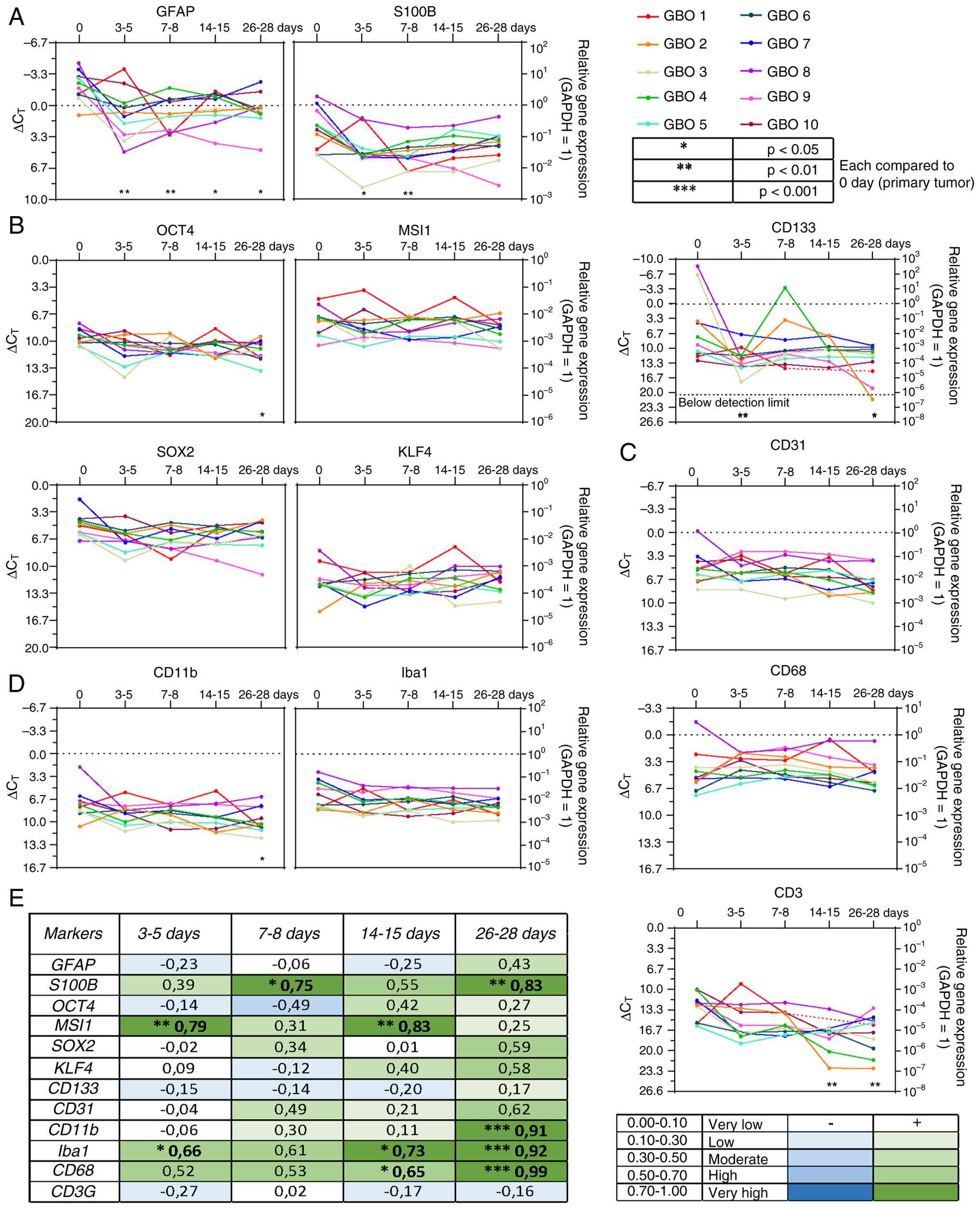
Reverse transcription-quantitative
PCR and correlation analysis of glial structural proteins,
stemness, vessel, and immune cell markers. Gene expression levels
are shown across the entire cultivation period for 10 independent
GBO preparations (n=10) at five time points: days 0, 3–5, 7–8,
14–15, and 26–28. The x-axis represents days, the left y-axis shows
∆CT values, and the right y-axis displays the
logarithmic scale of expression relative to GAPDH as the
housekeeping gene (GAPDH expression=1). (A) Glial structural
proteins. (B) Stemness markers. (C) Vessel marker. (D) Immune cell
markers. (E) Correlation analysis. Correlations are indicated by a
color gradient: Dark green represents a high positive correlation,
light green a low positive correlation, dark blue a high negative
correlation, and light blue a low negative correlation. Statistical
analysis was performed using one-way ANOVA with Dunnett's multiple
comparisons post hoc test. *P<0.05, **P<0.01 and
***P<0.001. GBO, glioblastoma organoid; GAPDH,
glyceraldehyde-3-phosphate dehydrogenase; GFAP, glial fibrillary
acidic protein; S100B, S100 calcium-binding protein B; OCT4,
octamer-binding transcription factor 4; MSI1, Musashi RNA-binding
protein 1; SOX2, SRY-box transcription factor 2; KLF4, Krüppel-like
factor 4; CD133, cluster of differentiation 133; CD31, cluster of
differentiation 31; CD11b, cluster of differentiation 11b; Iba1,
ionized calcium-binding adapter molecule 1; CD68, cluster of
differentiation 68; CD3, cluster of differentiation 3.

Figure 3

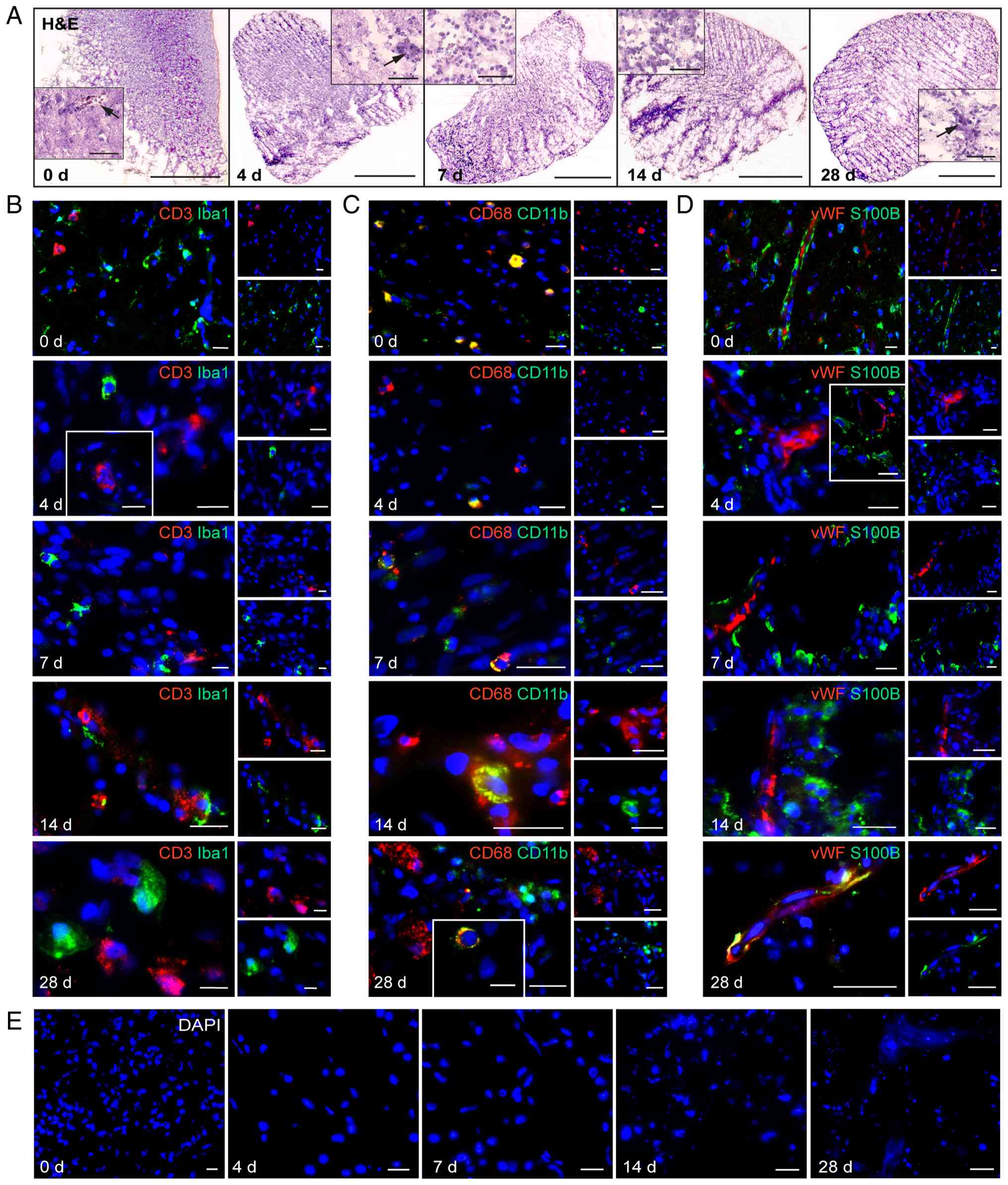
H&E staining and
immunofluorescence double-staining images of an exemplary GBO
preparation at five time points: days 0, 4, 7, 14, and 28. Selected
insets were taken from two additional GBO preparations (total n=3).
(A) H&E staining images with low (×2,5)- and high
(×40)-magnification; black arrows indicate blood vessels. (B and C)
Immune cell markers. (D) Vessel marker. (E) Areas with cell death
in one GBO preparation during the cultivation period. Scale bars: 1
mm for whole-organism H&E images, 50 µm for the corresponding
H&E-insets, 20 µm for immunofluorescence images. GBO,
glioblastoma organoid; DAPI, 4′,6-diamidino-2-phenylindole; vWF,
von Willebrand factor; CD11b, cluster of differentiation 11b; Iba1,
ionized calcium-binding adapter molecule 1; CD68, cluster of
differentiation 68; CD3, cluster of differentiation 3; S100B, S100
calcium-binding protein B.

Figure 4

Immunofluorescence double-staining
images of an exemplary GBO preparation at five time points: Days 0,
4, 7, 14, and 28. Selected insets were taken from two additional
GBO preparations (total n=3). (A-D) Stemness markers. (E) Exemplary
Apotome image of KLF4 at day 28. GBO, glioblastoma organoid; GFAP,
glial fibrillary acidic protein; S100B, S100 calcium-binding
protein B; OCT4, octamer-binding transcription factor 4; MSI1,
Musashi RNA-binding protein 1; SOX2, SRY-box transcription factor
2; CD133, cluster of differentiation 133.

Figure 5

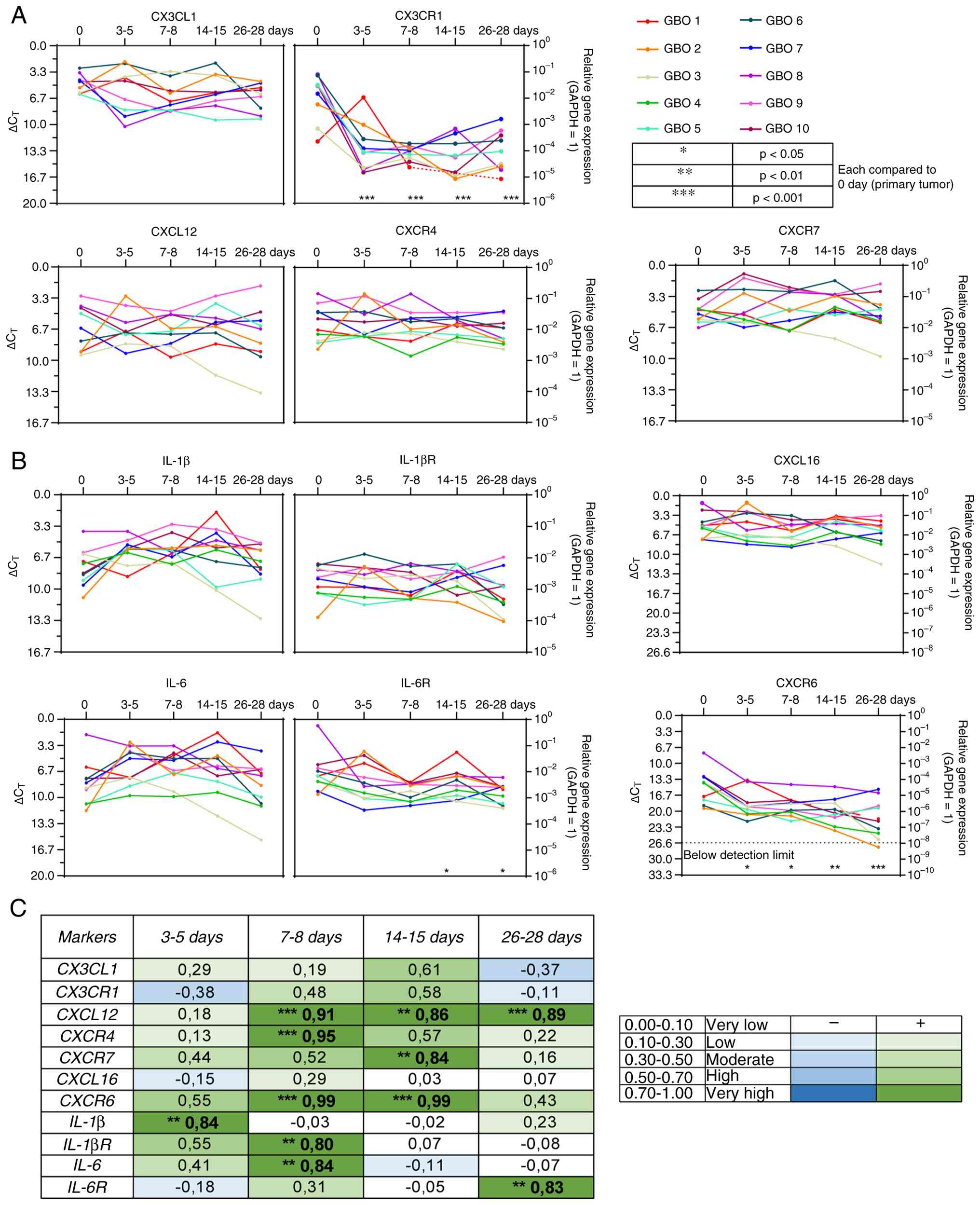
Reverse transcription-quantitative
PCR and correlation analysis of chemokines and cytokines with their
respective receptors. Gene expression levels are shown across the
entire cultivation period for 10 different glioblastoma organoid
preparations (n=10) at five time points: days 0, 3–5, 7–8, 14–15,
and 26–28. The x-axis represents days, the left y-axis shows
∆CT values, and the right y-axis displays the
logarithmic scale of expression relative to GAPDH as the
housekeeping gene (GAPDH expression=1). (A) Chemokines and
chemokine receptors. (B) Cytokines and cytokine receptors. (C)
Correlation analysis. Correlations are indicated by a color
gradient: Dark green represents a high positive correlation, light
green a low positive correlation, dark blue a high negative
correlation, and light blue a low negative correlation. Statistical
analysis was performed using one-way ANOVA with Dunnett's multiple
comparisons post hoc test. *P<0.05, **P<0.01 and
***P<0.001. GAPDH, glyceraldehyde-3-phosphate dehydrogenase;
CX3CL1, C-X3-C motif chemokine ligand 1; CX3CR1, C-X3-C motif
chemokine receptor 1; CXCL12, C-X-C motif chemokine ligand 12;
CXCR4, C-X-C motif chemokine receptor 4; CXCR7, C-X-C motif
chemokine receptor 7; CXCL16, C-X-C motif chemokine ligand 16;
CXCR6, C-X-C motif chemokine receptor 6; IL-1β, interleukin-1 beta;
IL-1βR, interleukin-1 beta receptor; IL-6, interleukin-6; IL-6R,
interleukin-6 receptor.

Figure 6

Immunofluorescence double-staining
images of three glioblastoma organoid preparations at three time
points (days 0, 4, and 28). (A-G) Chemokines and chemokine
receptors. (A-C) CXCL12-CXCR4-CXCR7 axis. (D and E) CXCL16-CXCR6
axis. (F and G) CX3CL1-CX3CR1 axis. Scale bars: 20 µm. CXCL12,
C-X-C motif chemokine ligand 12; CXCR4, C-X-C motif chemokine
receptor 4; CXCR7, C-X-C motif chemokine receptor 7; CXCL16, C-X-C
motif chemokine ligand 16; CXCR6, C-X-C motif chemokine receptor 6;
CX3CL1, C-X3-C motif chemokine ligand 1; CX3CR1, C-X3-C motif
chemokine receptor 1; GFAP, glial fibrillary acidic protein; S100B,
S100 calcium-binding protein B; MSI1, Musashi RNA-binding protein
1; SOX2, SRY-box transcription factor 2; Iba1, ionized
calcium-binding adapter molecule 1.

Figure 7

Cytokines and cytokine receptors were
visualized using immunofluorescence double-staining at three time
points (days 0, 4, and 28), exemplified for one glioblastoma
organoid preparation. (A and B) IL-1β and IL-1βR. (C and D) IL-6
and IL-6R. Scale bars, 20 µm. IL-1β, interleukin-1 beta; IL-1βR,
IL-1β receptor; IL-6, interleukin-6; IL-6R, IL-6 receptor; Iba1,
ionized calcium-binding adapter molecule 1; CD11b, cluster of
differentiation 11b.
View References

1 

Schaff LR and Mellinghoff IK: Glioblastoma and other primary brain malignancies in adults: A review. JAMA. 329:5742023. View Article : Google Scholar : PubMed/NCBI

2 

Tan AC, Ashley DM, López GY, Malinzak M, Friedman HS and Khasraw M: Management of glioblastoma: State of the art and future directions. CA Cancer J Clin. 70:299–312. 2020.PubMed/NCBI

3 

Stupp R, Weller M, Belanger K, Bogdahn U, Ludwin SK, Lacombe D and Mirimanoff RO: Radiotherapy plus concomitant and adjuvant temozolomide for glioblastoma. N Engl J Med. 352:987–996. 2005. View Article : Google Scholar : PubMed/NCBI

4 

Alves ALV, Gomes INF, Carloni AC, Rosa MN, da Silva LS, Evangelista AF, Reis RM and Silva VAO: Role of glioblastoma stem cells in cancer therapeutic resistance: A perspective on antineoplastic agents from natural sources and chemical derivatives. Stem Cell Res Ther. 12:2062021. View Article : Google Scholar : PubMed/NCBI

5 

Zhang P, Xia Q, Liu L, Li S and Dong L: Current opinion on molecular characterization for GBM classification in guiding clinical diagnosis, prognosis, and therapy. Front Mol Biosci. 7:5627982020. View Article : Google Scholar : PubMed/NCBI

6 

Sottoriva A, Spiteri I, Piccirillo SG, Touloumis A, Collins VP, Marioni JC, Curtis C, Watts C and Tavaré S: Intratumor heterogeneity in human glioblastoma reflects cancer evolutionary dynamics. Proc Natl Acad Sci. 110:4009–4014. 2013. View Article : Google Scholar : PubMed/NCBI

7 

Dirkse A, Golebiewska A, Buder T, Nazarov PV, Muller A, Poovathingal S, Brons NHC, Leite S, Sauvageot N, Sarkisjan D, et al: Stem cell-associated heterogeneity in Glioblastoma results from intrinsic tumor plasticity shaped by the microenvironment. Nat Commun. 10:17872019. View Article : Google Scholar : PubMed/NCBI

8 

Barthel L, Hadamitzky M, Dammann P, Schedlowski M, Sure U, Thakur BK and Hetze S: Glioma: Molecular signature and crossroads with tumor microenvironment. Cancer Metastasis Rev. 41:53–75. 2022. View Article : Google Scholar : PubMed/NCBI

9 

Gieryng A, Pszczolkowska D, Walentynowicz KA, Rajan WD and Kaminska B: Immune microenvironment of gliomas. Lab Invest. 97:498–518. 2017. View Article : Google Scholar : PubMed/NCBI

10 

Nagarsheth N, Wicha MS and Zou W: Chemokines in the cancer microenvironment and their relevance in cancer immunotherapy. Nat Rev Immunol. 17:559–572. 2017. View Article : Google Scholar : PubMed/NCBI

11 

Corsaro A, Tremonti B, Bajetto A, Barbieri F, Thellung S and Florio T: Chemokine signaling in tumors: Potential role of CXC chemokines and their receptors as glioblastoma therapeutic targets. Expert Opin Ther Targets. 28:937–952. 2024. View Article : Google Scholar : PubMed/NCBI

12 

Dai Y, Yu C, Zhou L, Cheng L, Ni H and Liang W: Chemokine receptor CXCR4 interacts with nuclear receptor Nur77 and promote glioma invasion and progression. Brain Res. 1822:1486472024. View Article : Google Scholar : PubMed/NCBI

13 

Detchou D and Barrie U: Interleukin 6 and cancer resistance in glioblastoma multiforme. Neurosurg Rev. 47:5412024. View Article : Google Scholar : PubMed/NCBI

14 

Narasimhappagari J, Liu L, Balasubramaniam M, Ayyadevara S, Aboud O and Griffin WST: The seminal role of the proinflammatory cytokine IL-1β and its signaling cascade in glioblastoma pathogenesis and the therapeutic effect of Interleukin-1β receptor antagonist (IL-1RA) and tolcapone. Int J Mol Sci. 26:68932025. View Article : Google Scholar : PubMed/NCBI

15 

Mentlein R, Hattermann K and Held-Feindt J: Migration, metastasis, and more: The role of chemokines in the proliferation, spreading, and metastasis of tumors. Trends in Stem Cell Proliferation and Cancer Research. Resende RR and Ulrich H: Springer Netherlands; Dordrecht: pp. 339–358. 2013, View Article : Google Scholar

16 

Klein E, Hau AC, Oudin A, Golebiewska A and Niclou SP: Glioblastoma organoids: Pre-Clinical applications and challenges in the context of immunotherapy. Front Oncol. 10:6041212020. View Article : Google Scholar : PubMed/NCBI

17 

Pernik MN, Bird CE, Traylor JI, Shi DD, Richardson TE, McBrayer SK and Abdullah KG: Patient-derived cancer organoids for precision oncology treatment. J Pers Med. 11:4232021. View Article : Google Scholar : PubMed/NCBI

18 

Zhang C, Jin M, Zhao J, Chen J and Jin W: Organoid models of glioblastoma: Advances, applications and challenges. Am J Cancer Res. 10:2242–2257. 2020.PubMed/NCBI

19 

Xu X, Li L, Luo L, Shu L, Si X, Chen Z, Xia W, Huang J, Liu Y, Shao A and Ke Y: Opportunities and challenges of glioma organoids. Cell Commun Signal. 19:1022021. View Article : Google Scholar : PubMed/NCBI

20 

Pawlowski KD, Duffy JT, Babak MV and Balyasnikova IV: Modeling glioblastoma complexity with organoids for personalized treatments. Trends Mol Med. 29:282–296. 2023. View Article : Google Scholar : PubMed/NCBI

21 

Wang X, Sun Y, Zhang DY, Ming G and Song H: Glioblastoma modeling with 3D organoids: Progress and challenges. Oxf Open Neurosci. 2:kvad0082023. View Article : Google Scholar : PubMed/NCBI

22 

Xu C, Yuan X, Hou P, Li Z, Wang C, Fang C and Tan Y: Development of glioblastoma organoids and their applications in personalized therapy. Cancer Biol Med. 20:353–368. 2023. View Article : Google Scholar : PubMed/NCBI

23 

Lancaster MA, Renner M, Martin CA, Wenzel D, Bicknell LS, Hurles ME, Homfray T, Penninger JM, Jackson AP and Knoblich JA: Cerebral organoids model human brain development and microcephaly. Nature. 501:373–379. 2013. View Article : Google Scholar : PubMed/NCBI

24 

Soubéran A and Tchoghandjian A: Practical review on preclinical human 3D glioblastoma models: Advances and challenges for clinical translation. Cancers. 12:23472020. View Article : Google Scholar : PubMed/NCBI

25 

Hubert CG, Rivera M, Spangler LC, Wu Q, Mack SC, Prager BC, Couce M, McLendon RE, Sloan AE and Rich JN: A Three-dimensional organoid culture system derived from human glioblastomas recapitulates the hypoxic gradients and cancer stem cell heterogeneity of tumors found in vivo. Cancer Res. 76:2465–2477. 2016. View Article : Google Scholar : PubMed/NCBI

26 

Jacob F, Salinas RD, Zhang DY, Nguyen PTT, Schnoll JG, Wong SZH, Thokala R, Sheikh S, Saxena D, Prokop S, et al: A Patient-derived glioblastoma organoid model and biobank recapitulates Inter- and Intra-tumoral heterogeneity. Cell. 180:188–204.e22. 2020. View Article : Google Scholar : PubMed/NCBI

27 

Hellmold D, Johanning L, Clüver J, Holler J, Schröder NO, Bayler F, Ahmeti H, Kubelt-Kwamin C, Wieker S, Helmers AK, et al: Effect of focused ultrasound-induced mechanical ablation on stemness and dormancy properties of residual/peri-focally localized glioblastoma cells. Neurooncol Adv. 7:vdaf1842025.PubMed/NCBI

28 

Qiang J, Wei Z, Xiao-guang Q and Wei Y: Gene expression profiling reveals Ki-67 associated proliferation signature in human glioblastoma. Chin Med J (Engl). 124:2584–2588. 2022.PubMed/NCBI

29 

Jung CS, Foerch C, Schanzer A, Heck A, Plate KH, Seifert V, Steinmetz H, Raabe A and Sitzer M: Serum GFAP is a diagnostic marker for glioblastoma multiforme. Brain. 130:3336–3341. 2007. View Article : Google Scholar : PubMed/NCBI

30 

Wang H, Zhang L, Zhang IY, Chen X, Da Fonseca A, Wu S, Ren H, Badie S, Sadeghi S, Ouyang M, et al: S100B promotes glioma growth through chemoattraction of Myeloid-derived macrophages. Clin Cancer Res. 19:3764–3775. 2013. View Article : Google Scholar : PubMed/NCBI

31 

Wang P, Zhao L, Gong S, Xiong S, Wang J, Zou D, Pan J, Deng Y, Yan Q, Wu N and Liao B: HIF1α/HIF2α-Sox2/Klf4 promotes the malignant progression of glioblastoma via the EGFR-PI3K/AKT signalling pathway with positive feedback under hypoxia. Cell Death Dis. 12:3122021. View Article : Google Scholar : PubMed/NCBI

32 

Polat B, Wohlleben G, Kosmala R, Lisowski D, Mantel F, Lewitzki V, Löhr M, Blum R, Herud P, Flentje M and Monoranu CM: Differences in stem cell marker and osteopontin expression in primary and recurrent glioblastoma. Cancer Cell Int. 22:872022. View Article : Google Scholar : PubMed/NCBI

33 

Noorani I, Petty G, Grundy PL, Sharpe G, Willaime-Morawek S, Harris S, Thomas GJ, Nicoll JA and Boche D: Novel association between microglia and stem cells in human gliomas: A contributor to tumour proliferation? J Pathol Clin Res. 1:67–75. 2015. View Article : Google Scholar : PubMed/NCBI

34 

Kmiecik J, Poli A, Brons NH, Waha A, Eide GE, Enger PØ, Zimmer J and Chekenya M: Elevated CD3+ and CD8+ tumor-infiltrating immune cells correlate with prolonged survival in glioblastoma patients despite integrated immunosuppressive mechanisms in the tumor microenvironment and at the systemic level. J Neuroimmunol. 264:71–83. 2013. View Article : Google Scholar : PubMed/NCBI

35 

Lu-Emerson C, Snuderl M, Kirkpatrick ND, Goveia J, Davidson C, Huang Y, Riedemann L, Taylor J, Ivy P, Duda DG, et al: Increase in tumor-associated macrophages after antiangiogenic therapy is associated with poor survival among patients with recurrent glioblastoma. Neuro Oncol. 15:1079–1087. 2013. View Article : Google Scholar : PubMed/NCBI

36 

Mei X, Chen YS, Chen FR, Xi SY and Chen ZP: Glioblastoma stem cell differentiation into endothelial cells evidenced through live-cell imaging. Neuro-Oncol. 19:1109–1118. 2017. View Article : Google Scholar : PubMed/NCBI

37 

Wang S, Chen C, Li J, Xu X, Chen W and Li F: The CXCL12/ CXCR4 axis confers temozolomide resistance to human glioblastoma cells via up-regulation of FOXM1. J Neurol Sci. 414:1168372020. View Article : Google Scholar : PubMed/NCBI

38 

Hattermann K, Held-Feindt J, Lucius R, Müerköster SS, Penfold MET, Schall TJ and Mentlein R: The chemokine receptor CXCR7 is highly expressed in human glioma cells and mediates antiapoptotic effects. Cancer Res. 70:3299–3308. 2010. View Article : Google Scholar : PubMed/NCBI

39 

Deng L, Zheng W, Dong X, Liu J, Zhu C, Lu D, Zhang J, Song L, Wang Y and Deng D: Chemokine receptor CXCR7 is an independent prognostic biomarker in glioblastoma. Cancer Biomark. 20:1–6. 2017. View Article : Google Scholar : PubMed/NCBI

40 

Adamski V, Mentlein R, Lucius R, Synowitz M, Held-Feindt J and Hattermann K: The chemokine receptor CXCR6 evokes reverse signaling via the transmembrane chemokine CXCL16. Int J Mol Sci. 18:14682017. View Article : Google Scholar : PubMed/NCBI

41 

Chia TY, Billingham LK, Boland L, Katz JL, Arrieta VA, Shireman J, Rosas AL, DeLay SL, Zillinger K, Geng Y, et al: The CXCL16-CXCR6 axis in glioblastoma modulates T-cell activity in a spatiotemporal context. Front Immunol. 14:13312872024. View Article : Google Scholar : PubMed/NCBI

42 

Lee S, Latha K, Manyam G, Yang Y, Rao A and Rao G: Role of CX3CR1 signaling in malignant transformation of gliomas. Neuro Oncol. 22:1463–1473. 2020. View Article : Google Scholar : PubMed/NCBI

43 

Hattermann K, Held-Feindt J, Ludwig A and Mentlein R: The CXCL16-CXCR6 chemokine axis in glial tumors. J Neuroimmunol. 260:47–54. 2013. View Article : Google Scholar : PubMed/NCBI

44 

Ehtesham M, Mapara KY, Stevenson CB and Thompson RC: CXCR4 mediates the proliferation of glioblastoma progenitor cells. Cancer Lett. 274:305–312. 2009. View Article : Google Scholar : PubMed/NCBI

45 

Sciumè G, Soriani A, Piccoli M, Frati L, Santoni A and Bernardini G: CX3CR1/CX3CL1 axis negatively controls glioma cell invasion and is modulated by transforming growth factor-beta1. Neuro Oncol. 12:701–710. 2010. View Article : Google Scholar : PubMed/NCBI

46 

Hattermann K, Sebens S, Helm O, Schmitt AD, Mentlein R, Mehdorn HM and Held-Feindt J: Chemokine expression profile of freshly isolated human glioblastoma-associated macrophages/microglia. Oncol Rep. 32:270–276. 2014. View Article : Google Scholar : PubMed/NCBI

47 

Ludwig A, Schulte A, Schnack C, Hundhausen C, Reiss K, Brodway N, Held-Feindt J and Mentlein R: Enhanced expression and shedding of the transmembrane chemokine CXCL16 by reactive astrocytes and glioma cells. J Neurochem. 93:1293–1303. 2005. View Article : Google Scholar : PubMed/NCBI

48 

Kai K, Komohara Y, Esumi S, Fujiwara Y, Yamamoto T, Uekawa K, Ohta K, Takezaki T, Kuroda J, Shinojima N, et al: Macrophage/microglia-derived IL-1β induces glioblastoma growth via the STAT3/NF-κB pathway. Hum Cell. 35:226–237. 2022. View Article : Google Scholar : PubMed/NCBI

49 

Kim S, Kim KH, Jung H, Jeong EO, Lee HJ, Kwon J, Kwon HJ, Choi SW, Koh HS and Kim SH: Elevated serum IL-6 as a negative prognostic biomarker in glioblastoma: Integrating bioinformatics and clinical validation. J Cancer. 16:802–811. 2025. View Article : Google Scholar : PubMed/NCBI

50 

Chen R, Nishimura MC, Bumbaca SM, Kharbanda S, Forrest WF, Kasman IM, Greve JM, Soriano RH, Gilmour LL and Rivers CS: A hierarchy of Self-renewing Tumor-initiating cell types in glioblastoma. Cancer Cell. 17:362–375. 2010. View Article : Google Scholar : PubMed/NCBI

Related Articles

  • Abstract
  • View
  • Download
  • Twitter
Copy and paste a formatted citation
Spandidos Publications style
Nojszewski J, Schröder NO, Clüver J, Holler J, Ahmeti H, Synowitz M and Held-Feindt J: Cellular and inflammatory characteristics of patient‑derived glioblastoma organoids during <em>in vitro</em> cultivation. Oncol Rep 55: 85, 2026.
APA
Nojszewski, J., Schröder, N.O., Clüver, J., Holler, J., Ahmeti, H., Synowitz, M., & Held-Feindt, J. (2026). Cellular and inflammatory characteristics of patient‑derived glioblastoma organoids during <em>in vitro</em> cultivation. Oncology Reports, 55, 85. https://doi.org/10.3892/or.2026.9090
MLA
Nojszewski, J., Schröder, N. O., Clüver, J., Holler, J., Ahmeti, H., Synowitz, M., Held-Feindt, J."Cellular and inflammatory characteristics of patient‑derived glioblastoma organoids during <em>in vitro</em> cultivation". Oncology Reports 55.5 (2026): 85.
Chicago
Nojszewski, J., Schröder, N. O., Clüver, J., Holler, J., Ahmeti, H., Synowitz, M., Held-Feindt, J."Cellular and inflammatory characteristics of patient‑derived glioblastoma organoids during <em>in vitro</em> cultivation". Oncology Reports 55, no. 5 (2026): 85. https://doi.org/10.3892/or.2026.9090
Copy and paste a formatted citation
x
Spandidos Publications style
Nojszewski J, Schröder NO, Clüver J, Holler J, Ahmeti H, Synowitz M and Held-Feindt J: Cellular and inflammatory characteristics of patient‑derived glioblastoma organoids during <em>in vitro</em> cultivation. Oncol Rep 55: 85, 2026.
APA
Nojszewski, J., Schröder, N.O., Clüver, J., Holler, J., Ahmeti, H., Synowitz, M., & Held-Feindt, J. (2026). Cellular and inflammatory characteristics of patient‑derived glioblastoma organoids during <em>in vitro</em> cultivation. Oncology Reports, 55, 85. https://doi.org/10.3892/or.2026.9090
MLA
Nojszewski, J., Schröder, N. O., Clüver, J., Holler, J., Ahmeti, H., Synowitz, M., Held-Feindt, J."Cellular and inflammatory characteristics of patient‑derived glioblastoma organoids during <em>in vitro</em> cultivation". Oncology Reports 55.5 (2026): 85.
Chicago
Nojszewski, J., Schröder, N. O., Clüver, J., Holler, J., Ahmeti, H., Synowitz, M., Held-Feindt, J."Cellular and inflammatory characteristics of patient‑derived glioblastoma organoids during <em>in vitro</em> cultivation". Oncology Reports 55, no. 5 (2026): 85. https://doi.org/10.3892/or.2026.9090
Follow us
  • Twitter
  • LinkedIn
  • Facebook
About
  • Spandidos Publications
  • Careers
  • Cookie Policy
  • Privacy Policy
How can we help?
  • Help
  • Live Chat
  • Contact
  • Email to our Support Team