Spandidos Publications Logo
  • About
    • About Spandidos
    • Aims and Scopes
    • Abstracting and Indexing
    • Editorial Policies
    • Reprints and Permissions
    • Job Opportunities
    • Terms and Conditions
    • Contact
  • Journals
    • All Journals
    • Oncology Letters
      • Oncology Letters
      • Information for Authors
      • Editorial Policies
      • Editorial Board
      • Aims and Scope
      • Abstracting and Indexing
      • Bibliographic Information
      • Archive
    • International Journal of Oncology
      • International Journal of Oncology
      • Information for Authors
      • Editorial Policies
      • Editorial Board
      • Aims and Scope
      • Abstracting and Indexing
      • Bibliographic Information
      • Archive
    • Molecular and Clinical Oncology
      • Molecular and Clinical Oncology
      • Information for Authors
      • Editorial Policies
      • Editorial Board
      • Aims and Scope
      • Abstracting and Indexing
      • Bibliographic Information
      • Archive
    • Experimental and Therapeutic Medicine
      • Experimental and Therapeutic Medicine
      • Information for Authors
      • Editorial Policies
      • Editorial Board
      • Aims and Scope
      • Abstracting and Indexing
      • Bibliographic Information
      • Archive
    • International Journal of Molecular Medicine
      • International Journal of Molecular Medicine
      • Information for Authors
      • Editorial Policies
      • Editorial Board
      • Aims and Scope
      • Abstracting and Indexing
      • Bibliographic Information
      • Archive
    • Biomedical Reports
      • Biomedical Reports
      • Information for Authors
      • Editorial Policies
      • Editorial Board
      • Aims and Scope
      • Abstracting and Indexing
      • Bibliographic Information
      • Archive
    • Oncology Reports
      • Oncology Reports
      • Information for Authors
      • Editorial Policies
      • Editorial Board
      • Aims and Scope
      • Abstracting and Indexing
      • Bibliographic Information
      • Archive
    • Molecular Medicine Reports
      • Molecular Medicine Reports
      • Information for Authors
      • Editorial Policies
      • Editorial Board
      • Aims and Scope
      • Abstracting and Indexing
      • Bibliographic Information
      • Archive
    • World Academy of Sciences Journal
      • World Academy of Sciences Journal
      • Information for Authors
      • Editorial Policies
      • Editorial Board
      • Aims and Scope
      • Abstracting and Indexing
      • Bibliographic Information
      • Archive
    • International Journal of Functional Nutrition
      • International Journal of Functional Nutrition
      • Information for Authors
      • Editorial Policies
      • Editorial Board
      • Aims and Scope
      • Abstracting and Indexing
      • Bibliographic Information
      • Archive
    • International Journal of Epigenetics
      • International Journal of Epigenetics
      • Information for Authors
      • Editorial Policies
      • Editorial Board
      • Aims and Scope
      • Abstracting and Indexing
      • Bibliographic Information
      • Archive
    • Medicine International
      • Medicine International
      • Information for Authors
      • Editorial Policies
      • Editorial Board
      • Aims and Scope
      • Abstracting and Indexing
      • Bibliographic Information
      • Archive
  • Articles
  • Information
    • Information for Authors
    • Information for Reviewers
    • Information for Librarians
    • Information for Advertisers
    • Conferences
  • Language Editing
Spandidos Publications Logo
  • About
    • About Spandidos
    • Aims and Scopes
    • Abstracting and Indexing
    • Editorial Policies
    • Reprints and Permissions
    • Job Opportunities
    • Terms and Conditions
    • Contact
  • Journals
    • All Journals
    • Biomedical Reports
      • Information for Authors
      • Editorial Policies
      • Editorial Board
      • Aims and Scope
      • Abstracting and Indexing
      • Bibliographic Information
      • Archive
    • Experimental and Therapeutic Medicine
      • Information for Authors
      • Editorial Policies
      • Editorial Board
      • Aims and Scope
      • Abstracting and Indexing
      • Bibliographic Information
      • Archive
    • International Journal of Epigenetics
      • Information for Authors
      • Editorial Policies
      • Editorial Board
      • Aims and Scope
      • Abstracting and Indexing
      • Bibliographic Information
      • Archive
    • International Journal of Functional Nutrition
      • Information for Authors
      • Editorial Policies
      • Editorial Board
      • Aims and Scope
      • Abstracting and Indexing
      • Bibliographic Information
      • Archive
    • International Journal of Molecular Medicine
      • Information for Authors
      • Editorial Policies
      • Editorial Board
      • Aims and Scope
      • Abstracting and Indexing
      • Bibliographic Information
      • Archive
    • International Journal of Oncology
      • Information for Authors
      • Editorial Policies
      • Editorial Board
      • Aims and Scope
      • Abstracting and Indexing
      • Bibliographic Information
      • Archive
    • Medicine International
      • Information for Authors
      • Editorial Policies
      • Editorial Board
      • Aims and Scope
      • Abstracting and Indexing
      • Bibliographic Information
      • Archive
    • Molecular and Clinical Oncology
      • Information for Authors
      • Editorial Policies
      • Editorial Board
      • Aims and Scope
      • Abstracting and Indexing
      • Bibliographic Information
      • Archive
    • Molecular Medicine Reports
      • Information for Authors
      • Editorial Policies
      • Editorial Board
      • Aims and Scope
      • Abstracting and Indexing
      • Bibliographic Information
      • Archive
    • Oncology Letters
      • Information for Authors
      • Editorial Policies
      • Editorial Board
      • Aims and Scope
      • Abstracting and Indexing
      • Bibliographic Information
      • Archive
    • Oncology Reports
      • Information for Authors
      • Editorial Policies
      • Editorial Board
      • Aims and Scope
      • Abstracting and Indexing
      • Bibliographic Information
      • Archive
    • World Academy of Sciences Journal
      • Information for Authors
      • Editorial Policies
      • Editorial Board
      • Aims and Scope
      • Abstracting and Indexing
      • Bibliographic Information
      • Archive
  • Articles
  • Information
    • For Authors
    • For Reviewers
    • For Librarians
    • For Advertisers
    • Conferences
  • Language Editing
Login Register Submit
  • This site uses cookies
  • You can change your cookie settings at any time by following the instructions in our Cookie Policy. To find out more, you may read our Privacy Policy.

    I agree
Search articles by DOI, keyword, author or affiliation
Search
Advanced Search
presentation
Oncology Reports
Join Editorial Board Propose a Special Issue
Print ISSN: 1021-335X Online ISSN: 1791-2431
Journal Cover
August-2026 Volume 56 Issue 2

Full Size Image

Sign up for eToc alerts
Recommend to Library

Journals

International Journal of Molecular Medicine

International Journal of Molecular Medicine

International Journal of Molecular Medicine is an international journal devoted to molecular mechanisms of human disease.

International Journal of Oncology

International Journal of Oncology

International Journal of Oncology is an international journal devoted to oncology research and cancer treatment.

Molecular Medicine Reports

Molecular Medicine Reports

Covers molecular medicine topics such as pharmacology, pathology, genetics, neuroscience, infectious diseases, molecular cardiology, and molecular surgery.

Oncology Reports

Oncology Reports

Oncology Reports is an international journal devoted to fundamental and applied research in Oncology.

Experimental and Therapeutic Medicine

Experimental and Therapeutic Medicine

Experimental and Therapeutic Medicine is an international journal devoted to laboratory and clinical medicine.

Oncology Letters

Oncology Letters

Oncology Letters is an international journal devoted to Experimental and Clinical Oncology.

Biomedical Reports

Biomedical Reports

Explores a wide range of biological and medical fields, including pharmacology, genetics, microbiology, neuroscience, and molecular cardiology.

Molecular and Clinical Oncology

Molecular and Clinical Oncology

International journal addressing all aspects of oncology research, from tumorigenesis and oncogenes to chemotherapy and metastasis.

World Academy of Sciences Journal

World Academy of Sciences Journal

Multidisciplinary open-access journal spanning biochemistry, genetics, neuroscience, environmental health, and synthetic biology.

International Journal of Functional Nutrition

International Journal of Functional Nutrition

Open-access journal combining biochemistry, pharmacology, immunology, and genetics to advance health through functional nutrition.

International Journal of Epigenetics

International Journal of Epigenetics

Publishes open-access research on using epigenetics to advance understanding and treatment of human disease.

Medicine International

Medicine International

An International Open Access Journal Devoted to General Medicine.

Journal Cover
August-2026 Volume 56 Issue 2

Full Size Image

Sign up for eToc alerts
Recommend to Library

  • Article
  • Citations
    • Cite This Article
    • Download Citation
    • Create Citation Alert
    • Remove Citation Alert
    • Cited By
  • Similar Articles
    • Related Articles (in Spandidos Publications)
    • Similar Articles (Google Scholar)
    • Similar Articles (PubMed)
  • Download PDF
  • Download XML
  • View XML
Article Open Access

Acylglycerol kinase contributes to cell proliferation by activating NF‑κB signaling pathway in pancreatic cancer

  • Authors:
    • Kunkun Han
    • Qianyun Zhang
    • Shengnan Gao
    • Jigang Zhang
    • Xiao Mei
    • Fei Li
    • Xin Xu
    • Shu Li
    • Guodong Chen
  • View Affiliations / Copyright

    Affiliations: School of Basic Medical Sciences, Wannan Medical College, Wuhu, Anhui 241002, P.R. China, Department of Emergency Medicine, The First Affiliated Hospital of Soochow University, Suzhou, Jiangsu 215006, P.R. China, Center for Self‑Propelled Nanotechnologies, College of Biotechnology, Suzhou Industrial Park Institute of Services Outsourcing, Suzhou, Jiangsu 215125, P.R. China
    Copyright: © Han et al. This is an open access article distributed under the terms of Creative Commons Attribution License.
  • Article Number: 140
    |
    Published online on: May 29, 2026
       https://doi.org/10.3892/or.2026.9145
  • Expand metrics +
Metrics: Total Views: 0 (Spandidos Publications: | PMC Statistics: )
Metrics: Total PDF Downloads: 0 (Spandidos Publications: | PMC Statistics: )
Cited By (CrossRef): 0 citations Loading Articles...

This article is mentioned in:


Abstract

Pancreatic cancer mortality remains high due to late diagnosis and therapeutic resistance. The present study investigated acylglycerol kinase (AGK), which has been implicated in other tumors, in pancreatic cancer. Quantitative PCR, western blotting and immunohistochemistry analyses showed that AGK was markedly upregulated in pancreatic cancer tissues and cell lines and its expression associated with poor prognosis. Furthermore, functional studies using AGK knockdown and overexpression models demonstrated that AGK promoted cancer cell proliferation by upregulating proliferation‑associated genes, such as MYC, MKI67 and CCNB1. Mechanistically, AGK activates NF‑κB signaling pathway by facilitating p65 nuclear translocation and enhancing its phosphorylation. Additionally, CCK‑8 and colony formation assays further indicated that elevated AGK levels reduced sensitivity to therapeutic drugs and irradiation in pancreatic cancer cells. These findings revealed the critical role of AGK in pancreatic cancer progression and treatment resistance, identifying it as a potential novel therapeutic target and diagnostic marker.
View Figures

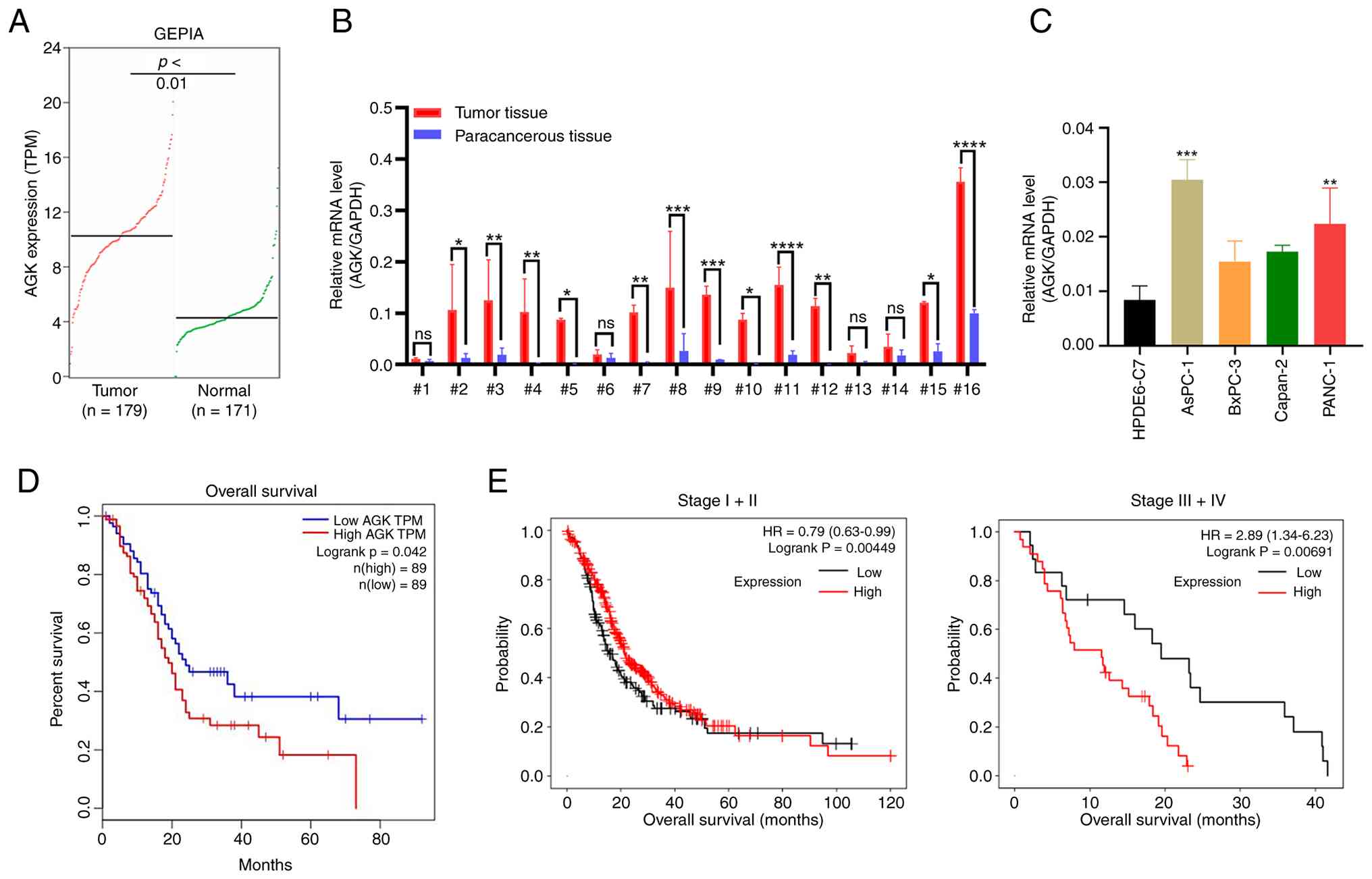
Figure 1

AGK is upregulated in pancreatic
cancer and correlates with poor prognosis. (A) AGK expression in
PAAD and normal tissues was analyzed using the GEPIA database. (B)
AGK expression were detected in sixteen pairs of tumorous and
adjacent non-tumor tissues by qPCR, with GAPDH as an internal
control. (C) AGK expression was measured in a normal human
pancreatic ductal epithelial cell line (HPDE6-C7) and four
pancreatic cancer cell lines using qPCR. (D) Overall survival
analysis was performed using the GEPIA online database. (E)
Kaplan-Meier overall survival curves of pancreatic cancer patients
stratified by AGK expression level (low vs. high) and tumor stage.
Left panel: Early-stage (Stage I+II) disease; right panel:
Advanced-stage (Stage III+IV) disease. Data are mean ± SD,
*P<0.05, **P<0.01, ***P<0.001, ****P<0.0001. AGK,
acylglycerol kinase; PAAD, pancreatic adenocarcinoma; GEPIA, Gene
Expression Profiling Interactive Analysis; qPCR, quantitative PCR;
HR, hazard ratio.

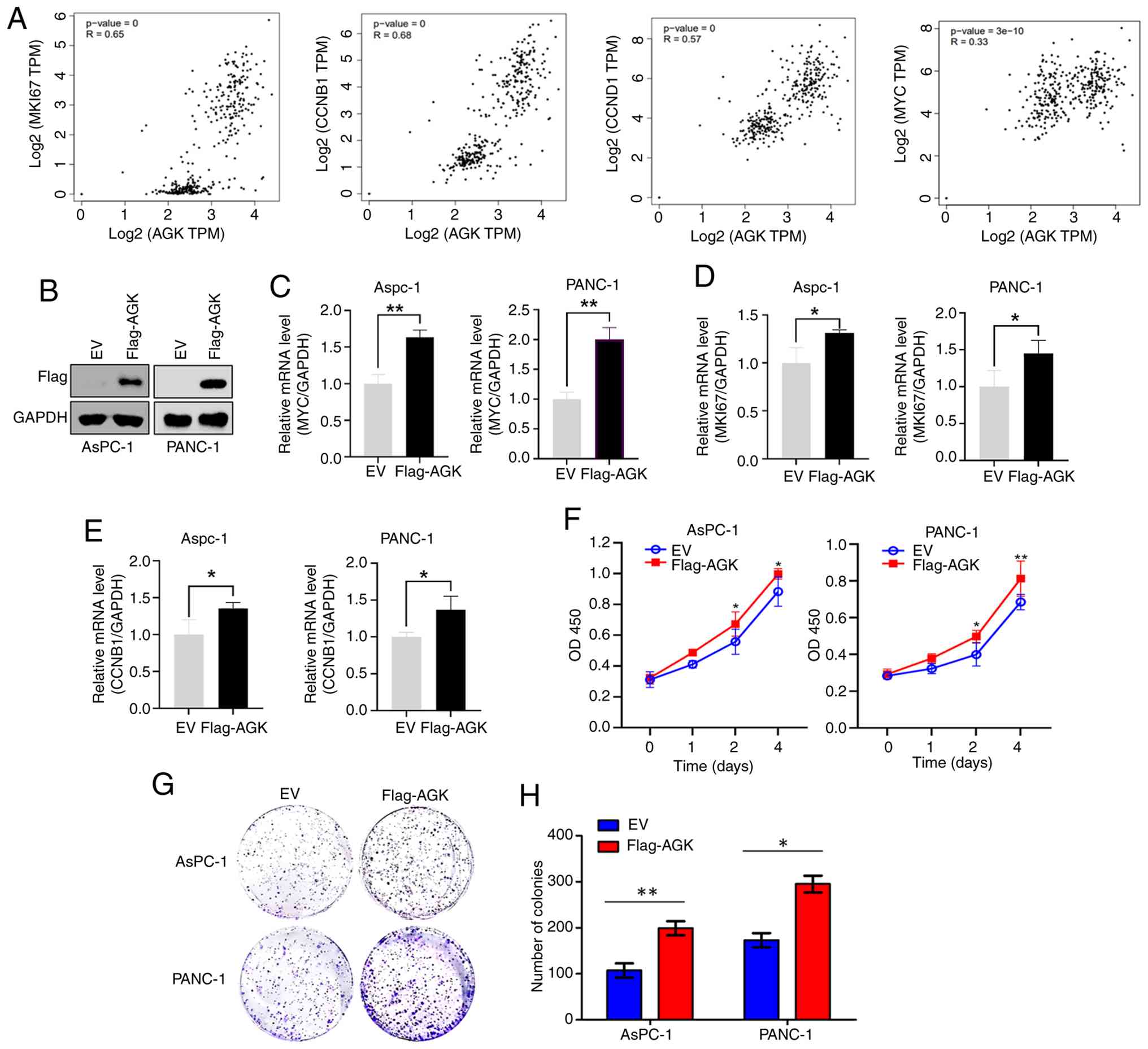
Figure 2

AGK promotes the proliferation of
pancreatic cancer cells. (A) Correlation analysis between AGK
expression and MKI67, CCNB1, CCND1 or MYC was
performed using the GEPIA database. (B) AGK protein levels were
measured in AsPC-1 and PANC-1 cells transfected with EV or
AGK-overexpressing plasmids (Flag-AGK) by western blot analysis
using an anti-Flag antibody. GAPDH served as a loading control.
AsPC-1 and PANC-1 cells were transfected with EV or Flag-AGK
plasmids for 48 h, followed by qPCR analysis of (C) MYC, (D)
MKI67 and (E) CCNB1 expression. GAPDH was used as an
internal control. (F) The viability of AsPC-1 and PANC-1 cells
transfected with indicated plasmids was assessed at indicated time
points by CCK-8 assay. (G) Representative crystal violet-stained
colonies of AsPC-1 and PANC-1 cells transfected with EV or
Flag-AGK. (H) Quantification of colony numbers from three
independent experiments (mean ± SD). Data are representative of
three independent experiments. *P<0.05, **P<0.01. AGK,
acylglycerol kinase; GEPIA, Gene Expression Profiling Interactive
Analysis; EV, empty vector; qPCR, quantitative PCR.

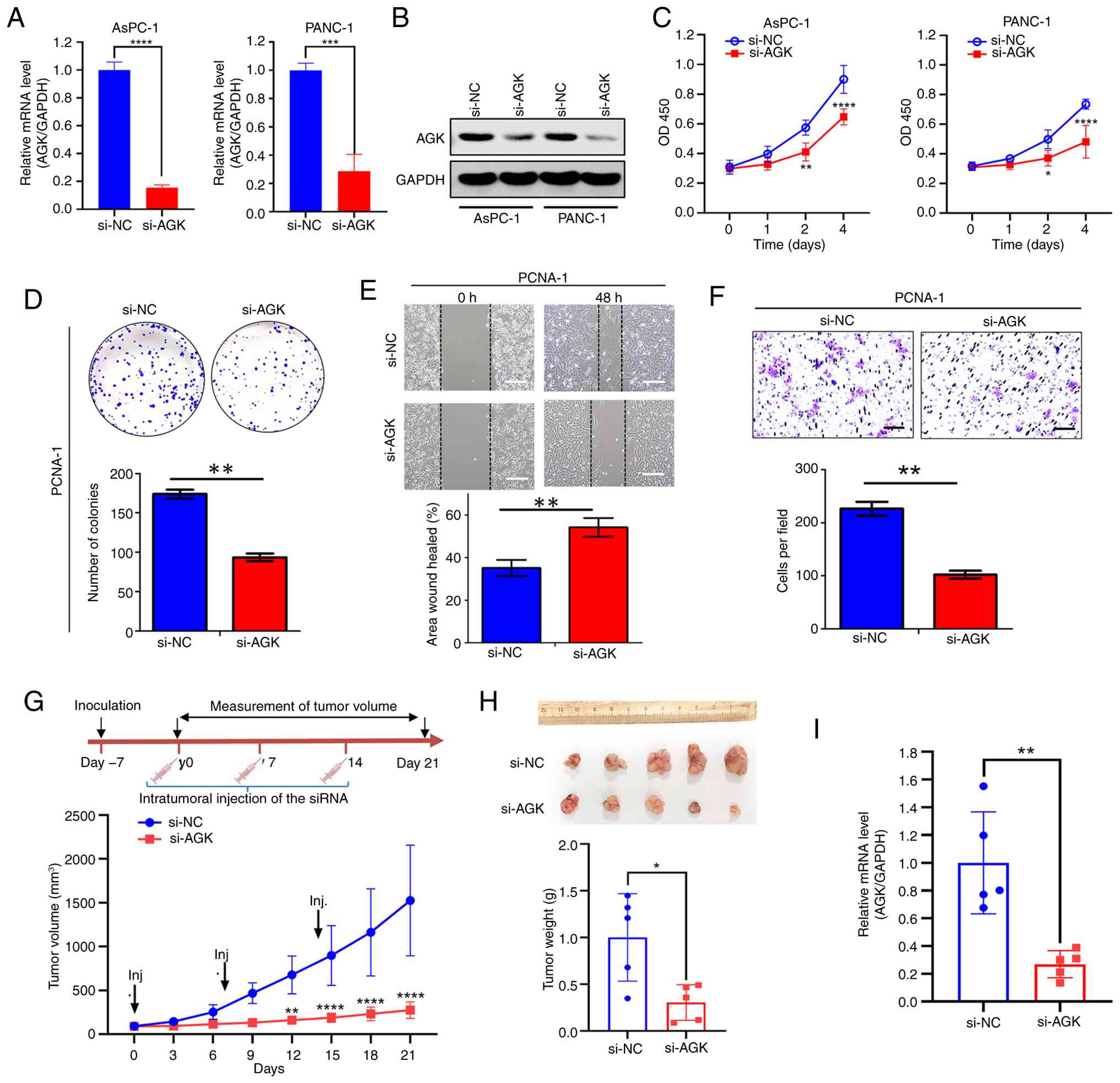
Figure 3

Knockdown of AGK inhibits cell growth
of pancreatic cancer. AGK knockdown efficiency was validated in
AsPC-1 and PANC-1 cells transfected with control (si-NC) or
AGK-targeting (si-AGK) siRNAs by (A) qPCR and (B) western blot
analyses. (C) Cell viability was measured by CCK-8 assay in AsPC-1
and PANC-1 cells after AGK knockdown. (D) Colony formation assay of
PANC-1 cells transfected with si-NC or si-AGK. Upper:
representative crystal violet staining images; lower:
quantification of colony numbers. (E) Wound healing assay for
migration of PANC-1 cells with or without AGK knockdown. Upper:
Representative wound images at 0 h and 48 h; lower: Quantification
of wound healing percentage. Scale bars, 200 µm. (F) Transwell
invasion assay of PANC-1 cells transfected with si-NC or si-AGK.
Upper: Representative staining images of invaded cells; lower:
Quantification of invaded cells per field. Scale bars, 200 µm. (G)
In vivo tumor growth assay. PANC-1 ×enograft-bearing mice
were intratumorally injected with si-NC or si-AGK on days 0, 7, and
14 (arrows). Tumor volumes were measured every three days. (H)
Tumors were excised and weighed at the endpoint (day 21). (I) AGK
mRNA levels in harvested tumors were analyzed by qPCR. Data are
mean ± SD, *P<0.05, **P<0.01, ***P<0.001, ****P<0.0001.
AGK, acylglycerol kinase; si, short interfering; NC, negative
control; qPCR, quantitative PCR.

Figure 4

AGK exerts its function by regulating
NF-κB signaling. AsPC-1 and PANC-1 cells harboring NF-κB-driven
luciferase reporter were transfected with (A) AGK-overexpressing
plasmids or (B) AGK-targeting siRNAs for 48 h, followed by
dual-luciferase assay. (C) Representative western blots showing
Flag-AGK, p-IKKα/β, total IKKα/β, p-IκBα, total IκBα, and GAPDH in
AsPC-1 (left) and PANC-1 (right) cells transfected with EV or
Flag-AGK. (D) Quantitative analysis of the normalized ratio of
phosphorylated IKKα/β (p-IKKα/β) to total IKKα/β from panel C. (E)
Representative western blots showing p65 subcellular localization
in cytoplasmic and nuclear fractions of cells transfected with EV
or Flag-AGK. GAPDH (cytosolic) and H3 (nuclear) served as loading
controls. (F) Representative western blotting results of p-p65 and
total p65 in AGK-overexpressing AsPC-1 and PANC-1 cells. (G)
Quantitative analysis of the normalized ratio of phosphorylated p65
(p-p65) to total p65 from panel F. (H) Representative western
blotting results of p-p65 and total p65 in AGK-knockdown AsPC-1 and
PANC-1 cells. (I) Quantitative analysis of the normalized ratio of
phosphorylated p65 (p-p65) to total p65 from panel H. (J) Western
blot showing that p65 knockdown (si-p65) abolishes AGK-induced p65
phosphorylation. (K) Quantitative analysis of the normalized ratio
of phosphorylated p65 (p-p65) to total p65 from panel J. (L) qPCR
analysis showing that AGK-mediated upregulation of MYC mRNA is
dependent on p65. (M) CCK-8 assay demonstrating that p65 knockdown
attenuated AGK-induced cell proliferation. (N) AsPC-1 and (O)
PANC-1 cells overexpressed with AGK were incubated with vehicle or
0.5 µM QNZ for 48 h, followed by CCK-8 assay. Data were presented
as mean ± SD. *P<0.05, **P<0.01, ***P<0.001,
****P<0.0001. AGK, acylglycerol kinase; p-, phosphorylated; EV,
empty vector; si, short interfering; NC, negative control; qPCR,
quantitative PCR; QNZ.,
N4-[2-(4-phenoxyphenyl)ethyl]-1,2-dihydroquinazoline-4,6-diamine.

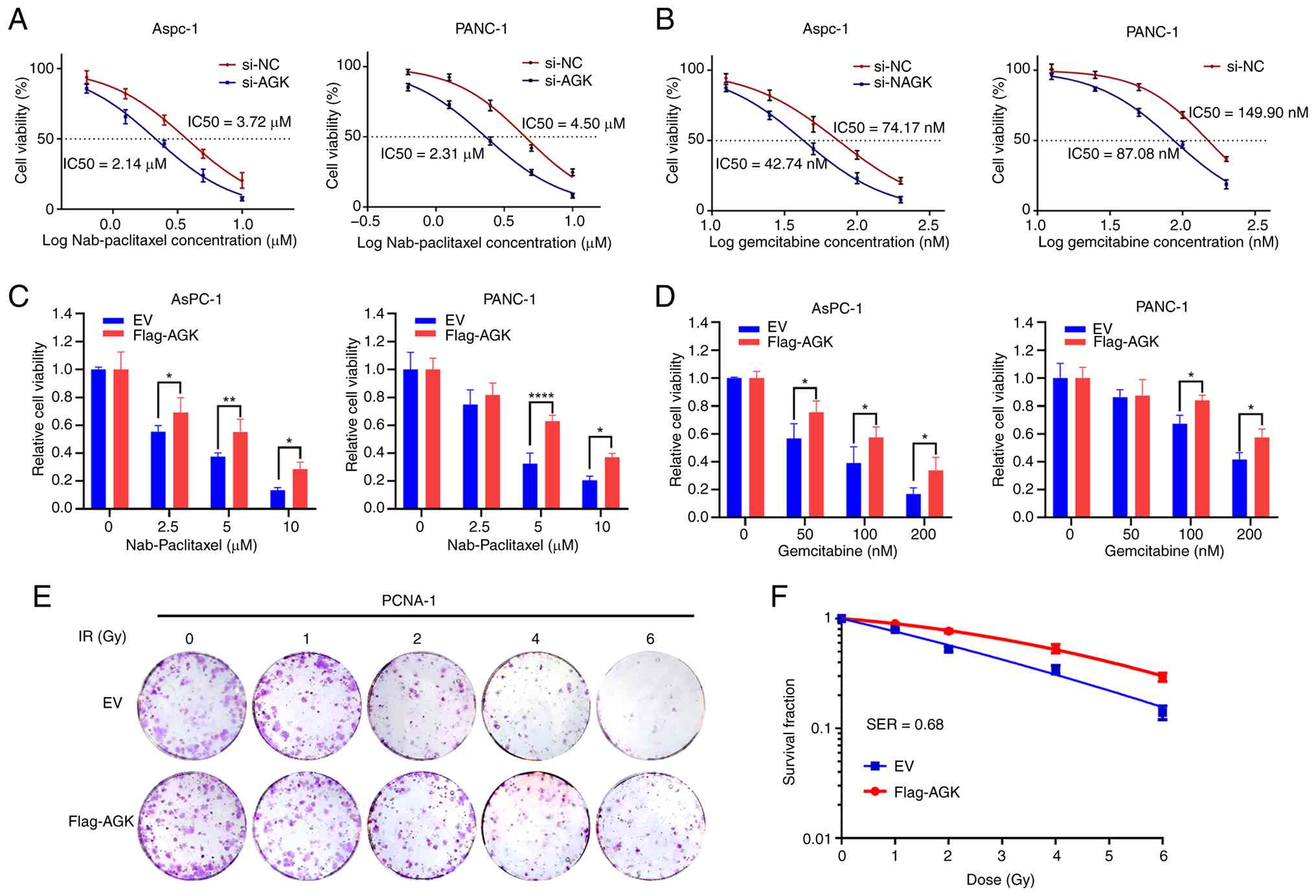
Figure 5

Response to therapeutic drugs in
human pancreatic cancer cells. AsPC-1 (left) and PANC-1 (right)
cells were transfected with si-NC or si-AGK, and dose-response
curves along with IC50 values for (A) nab-paclitaxel and (B)
gemcitabine were determined. The viability of AsPC-1 and PANC-1
cells overexpressing AGK was assessed after treatment with
increasing concentrations of (C) nab-paclitaxel and (D) gemcitabine
for 72 h by CCK-8 assay. (E) Representative images of clonogenic
survival assays are shown for PANC-1 cells transfected with EV or
Flag-AGK and exposure to the indicated doses of X-ray irradiation.
F. Clonogenic survival fractions were calculated based on the data
from (E) Data are presented as mean ± SD (n=3). *P<0.05,
**P<0.01, ****P<0.0001. si, short interfering; NC, negative
control; AGK, acylglycerol kinase; EV, empty vector.

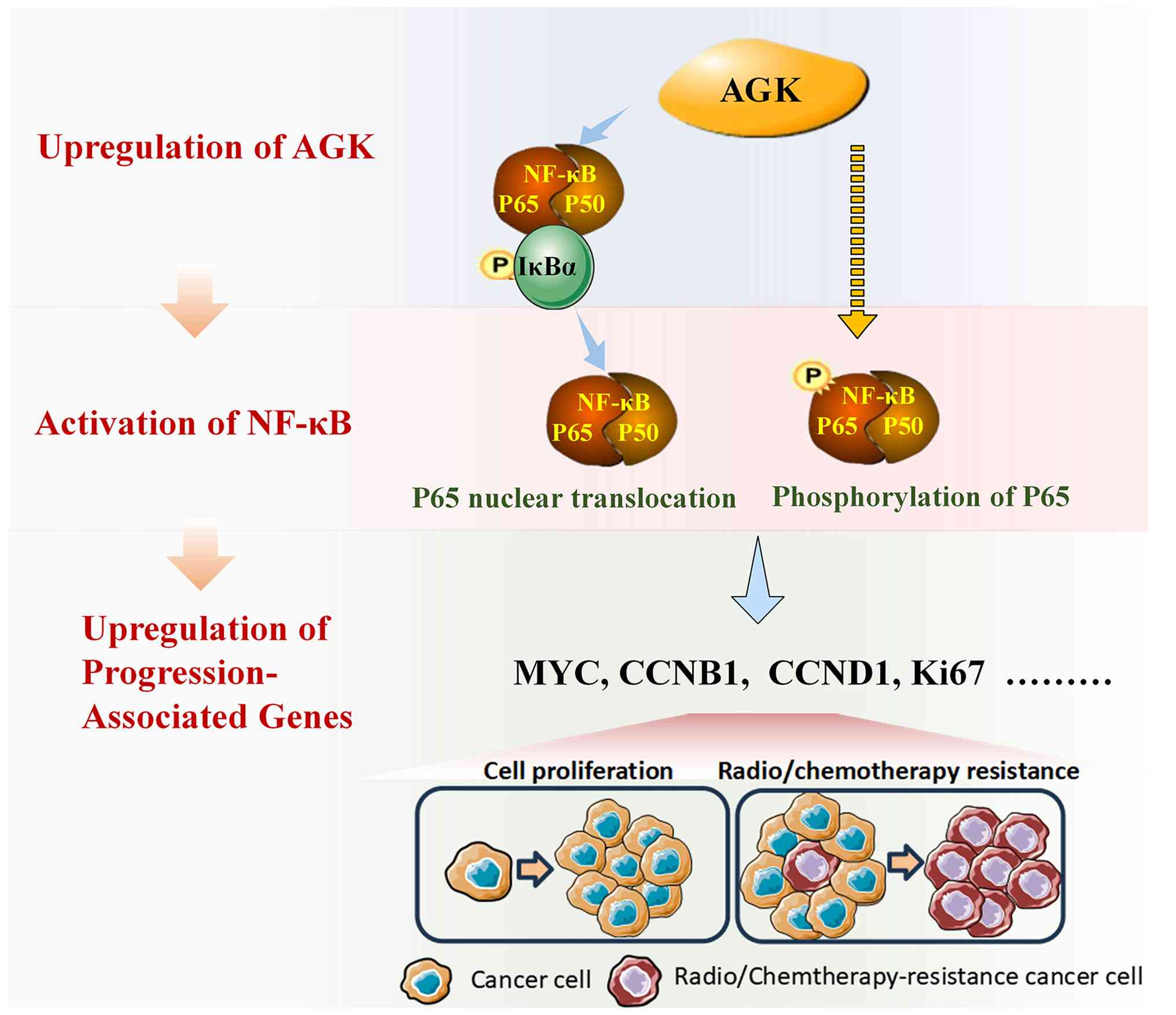
Figure 6

Schematic illustration of
AGK-mediated cellular proliferation and radio/chemoresistance
mechanisms. AGK upregulation promotes p65 phosphorylation at Ser536
and nuclear translocation, thereby activating NF-κB pathway.
Subsequently, NF-κB pathway activation induces the expression of
MYC, CCNB1 and CCND1, which promotes tumor
proliferation and confers resistance of chemotherapy and
radiotherapy by enhancing cell cycle progression and survival
mechanisms. AGK, acylglycerol kinase;
View References

1 

Park W, Chawla A and O'Reilly EM: Pancreatic cancer: A review. JAMA. 326:851–862. 2021. View Article : Google Scholar : PubMed/NCBI

2 

Li Q, Feng Z, Miao R, Liu X, Liu C and Liu Z: Prognosis and survival analysis of patients with pancreatic cancer: Retrospective experience of a single institution. World J Surg Oncol. 20:112022. View Article : Google Scholar : PubMed/NCBI

3 

Saad AM, Turk T, Al-Husseini MJ and Abdel-Rahman O: Trends in pancreatic adenocarcinoma incidence and mortality in the United States in the last four decades; a SEER-based study. BMC Cancer. 18:6882018. View Article : Google Scholar : PubMed/NCBI

4 

Chen J, Chen H, Zhang T, Yin X, Man J, Yang X and Lu M: Burden of pancreatic cancer along with attributable risk factors in China from 1990 to 2019, and projections until 2030. Pancreatology. 22:608–618. 2022. View Article : Google Scholar : PubMed/NCBI

5 

Lee HS and Park SW: Systemic chemotherapy in advanced pancreatic cancer. Gut Liver. 10:340–347. 2016. View Article : Google Scholar : PubMed/NCBI

6 

Lin QJ, Yang F, Jin C and Fu DL: Current status and progress of pancreatic cancer in China. World J Gastroenterol. 21:7988–8003. 2015. View Article : Google Scholar : PubMed/NCBI

7 

Liu B, Chen Z, Li Z, Zhao X, Zhang W, Zhang A, Wen L, Wang X, Zhou S and Qian D: Hsp90α promotes chemoresistance in pancreatic cancer by regulating Keap1-Nrf2 axis and inhibiting ferroptosis. Acta Biochim Biophys Sin (Shanghai). 57:295–309. 2024. View Article : Google Scholar : PubMed/NCBI

8 

Bektas M, Payne SG, Liu H, Goparaju S, Milstien S and Spiegel S: A novel acylglycerol kinase that produces lysophosphatidic acid modulates cross talk with EGFR in prostate cancer cells. J Cell Biol. 169:801–811. 2005. View Article : Google Scholar : PubMed/NCBI

9 

Chu B, Hong Z and Zheng X: Acylglycerol Kinase-targeted therapies in oncology. Front Cell Dev Biol. 9:6591582021. View Article : Google Scholar : PubMed/NCBI

10 

Zhu Q, Cao SM, Lin HX, Yang Q, Liu SL and Guo L: Overexpression of acylglycerol kinase is associated with poorer prognosis and lymph node metastasis in nasopharyngeal carcinoma. Tumour Biol. 37:3349–3357. 2016. View Article : Google Scholar : PubMed/NCBI

11 

Ray U, Roy SS and Chowdhury SR: Lysophosphatidic acid promotes epithelial to mesenchymal transition in ovarian cancer cells by repressing SIRT1. Cell Physiol Biochem. 41:795–805. 2017. View Article : Google Scholar : PubMed/NCBI

12 

Zhu Q, Zhong AL, Hu H, Zhao JJ, Weng DS, Tang Y, Pan QZ, Zhou ZQ, Song MJ, Yang JY, et al: Acylglycerol kinase promotes tumour growth and metastasis via activating the PI3K/AKT/GSK3beta signalling pathway in renal cell carcinoma. J Hematol Oncol. 13:22020. View Article : Google Scholar : PubMed/NCBI

13 

Chen X, Ying Z, Lin X, Lin H, Wu J, Li M and Song L: Acylglycerol kinase augments JAK2/STAT3 signaling in esophageal squamous cells. J Clin Invest. 123:2576–2589. 2013. View Article : Google Scholar : PubMed/NCBI

14 

Hu Z, Qu G, Yu X, Jiang H, Teng XL, Ding L, Hu Q, Guo X, Zhou Y, Wang F, et al: Acylglycerol kinase maintains metabolic state and immune responses of CD8+ T cells. Cell Metab. 30:290–302.e5. 2019. View Article : Google Scholar : PubMed/NCBI

15 

Livak K and Schmittgen TD: Analysis of relative gene expression data using real-time quantitative PCR and the 2(−Delta Delta C(T)) method. Methods. 25:402–408. 2001. View Article : Google Scholar : PubMed/NCBI

16 

Xu X, Wu G, Han K, Cui X, Feng Y, Mei X, Yang P, You W and Yang Y: Inhibition of OTUB2 suppresses colorectal cancer cell growth by regulating β-Catenin signaling. Am J Cancer Res. 13:5382–5393. 2023.PubMed/NCBI

17 

Li Q, Zhang L, Sun Y, Du Z, Xu S, Wang X, Wei S, Tao Y, Li B, Jiang J, et al: p53 Modulates the Gut-Liver Axis via PI3K/AKT/Wnt Signaling Pathways in Type 2 Diabetes. FASEB J. 39:e708982025. View Article : Google Scholar : PubMed/NCBI

18 

Wang X, Sun T, Fan J, Zuo X and Mao J: Gastrin-related circRNA_0017065 promotes the proliferation and metastasis of colorectal cancer through the miR-3174/RBFOX2 axis. Biol Direct. 19:752024. View Article : Google Scholar : PubMed/NCBI

19 

Yang X, Liu J, Wang C, Cheng KK, Xu H, Li Q, Hua T, Jiang X, Sheng L, Mao J and Liu Z: miR-18a promotes glioblastoma development by down-regulating ALOXE3-mediated ferroptotic and anti-migration activities. Oncogenesis. 10:152021. View Article : Google Scholar : PubMed/NCBI

20 

Zhu X, Wu X, Yang H, Xu Q, Zhang M, Liu X and Lv K: m6A-mediated upregulation of LINC01003 regulates cell migration by targeting the CAV1/FAK signaling pathway in glioma. Biol Direct. 18:272023. View Article : Google Scholar : PubMed/NCBI

21 

Carbone C and Melisi D: NF-κB as a target for pancreatic cancer therapy. Expert Opin Ther Targets. 16 (Suppl 2):S1–S10. 2012. View Article : Google Scholar : PubMed/NCBI

22 

Viatour P, Merville MP, Bours V and Chariot A: Phosphorylation of NF-kappaB and IkappaB proteins: Implications in cancer and inflammation. Trends Biochem Sci. 30:43–52. 2005. View Article : Google Scholar : PubMed/NCBI

23 

Corrie PG, Qian W, Basu B, Valle JW, Falk S, Lwuji C, Wasan H, Palmer D, Scott-Brown M, Wadsley J, et al: Scheduling nab-paclitaxel combined with gemcitabine as first-line treatment for metastatic pancreatic adenocarcinoma. Br J Cancer. 122:1760–1768. 2020. View Article : Google Scholar : PubMed/NCBI

24 

Huang S, Cao Y, Guo H, Yao Y, Li L, Chen J, Li J, Xiang X, Deng J and Xiong J: Up-regulated acylglycerol kinase (AGK) expression associates with gastric cancer progression through the formation of a novel YAP1-AGK-positive loop. J Cell Mol Med. 24:11133–11145. 2020. View Article : Google Scholar : PubMed/NCBI

25 

Cui Y, Lin C, Wu Z, Liu A, Zhang X, Zhu J, Wu G, Wu J, Li M, Li J and Song L: AGK enhances angiogenesis and inhibits apoptosis via activation of the NF-κB signaling pathway in hepatocellular carcinoma. Oncotarget. 5:12057–12069. 2014. View Article : Google Scholar : PubMed/NCBI

26 

Shimoda M, Kubota K, Shimizu T and Katoh M: Randomized clinical trial of adjuvant chemotherapy with S-1 versus gemcitabine after pancreatic cancer resection. Br J Surg. 102:746–754. 2015. View Article : Google Scholar : PubMed/NCBI

27 

Long J, Zhang Y, Yu X, Yang J, LeBrun DG, Chen C, Yao Q and Li M: Overcoming drug resistance in pancreatic cancer. Expert Opin Ther Targets. 15:817–828. 2011. View Article : Google Scholar : PubMed/NCBI

28 

Jin L, Qian D, Tang X, Huang Y, Zou J and Wu Z: SMYD2 imparts gemcitabine resistance to pancreatic adenocarcinoma cells by upregulating EVI2A. Mol Biotechnol. 66:2920–2933. 2024. View Article : Google Scholar : PubMed/NCBI

29 

Zhao C, Chen HY, Zhao F, Feng HJ and Su JP: Acylglycerol kinase promotes paclitaxel resistance in nasopharyngeal carcinoma cells by regulating FOXM1 via the JAK2/STAT3 pathway. Cytokine. 148:1555952021. View Article : Google Scholar : PubMed/NCBI

30 

Sun Y, Zhu L, Liu P, Zhang H, Guo F and Jin X: ZDHHC2-Mediated AGK palmitoylation activates AKT-mTOR signaling to reduce sunitinib sensitivity in renal cell carcinoma. Cancer Res. 83:2034–2051. 2023. View Article : Google Scholar : PubMed/NCBI

31 

Dang CV, O'Donnell KA, Zeller KI, Nguyen T, Osthus RC and Li F: The c-Myc target gene network. Semin Cancer Biol. 16:253–264. 2006. View Article : Google Scholar : PubMed/NCBI

32 

Dolcet X, Llobet D, Pallares J and Matias-Guiu X: NF-kB in development and progression of human cancer. Virchows Arch. 446:475–482. 2005. View Article : Google Scholar : PubMed/NCBI

33 

Chi H: miR-194 regulated AGK and inhibited cell proliferation of oral squamous cell carcinoma by reducing PI3K-Akt-FoxO3a signaling. Biomed Pharmacother. 71:53–57. 2015. View Article : Google Scholar : PubMed/NCBI

34 

Long Y, Li C and Zhu B: Circ_0008068 facilitates the oral squamous cell carcinoma development by microRNA-153-3p/acylgycerol kinase (AGK) axis. Bioengineered. 13:13055–13069. 2022. View Article : Google Scholar : PubMed/NCBI

Related Articles

  • Abstract
  • View
  • Download
  • Twitter
Copy and paste a formatted citation
Spandidos Publications style
Han K, Zhang Q, Gao S, Zhang J, Mei X, Li F, Xu X, Li S and Chen G: Acylglycerol kinase contributes to cell proliferation by activating NF‑&kappa;B signaling pathway in pancreatic cancer. Oncol Rep 56: 140, 2026.
APA
Han, K., Zhang, Q., Gao, S., Zhang, J., Mei, X., Li, F. ... Chen, G. (2026). Acylglycerol kinase contributes to cell proliferation by activating NF‑&kappa;B signaling pathway in pancreatic cancer. Oncology Reports, 56, 140. https://doi.org/10.3892/or.2026.9145
MLA
Han, K., Zhang, Q., Gao, S., Zhang, J., Mei, X., Li, F., Xu, X., Li, S., Chen, G."Acylglycerol kinase contributes to cell proliferation by activating NF‑&kappa;B signaling pathway in pancreatic cancer". Oncology Reports 56.2 (2026): 140.
Chicago
Han, K., Zhang, Q., Gao, S., Zhang, J., Mei, X., Li, F., Xu, X., Li, S., Chen, G."Acylglycerol kinase contributes to cell proliferation by activating NF‑&kappa;B signaling pathway in pancreatic cancer". Oncology Reports 56, no. 2 (2026): 140. https://doi.org/10.3892/or.2026.9145
Copy and paste a formatted citation
x
Spandidos Publications style
Han K, Zhang Q, Gao S, Zhang J, Mei X, Li F, Xu X, Li S and Chen G: Acylglycerol kinase contributes to cell proliferation by activating NF‑&kappa;B signaling pathway in pancreatic cancer. Oncol Rep 56: 140, 2026.
APA
Han, K., Zhang, Q., Gao, S., Zhang, J., Mei, X., Li, F. ... Chen, G. (2026). Acylglycerol kinase contributes to cell proliferation by activating NF‑&kappa;B signaling pathway in pancreatic cancer. Oncology Reports, 56, 140. https://doi.org/10.3892/or.2026.9145
MLA
Han, K., Zhang, Q., Gao, S., Zhang, J., Mei, X., Li, F., Xu, X., Li, S., Chen, G."Acylglycerol kinase contributes to cell proliferation by activating NF‑&kappa;B signaling pathway in pancreatic cancer". Oncology Reports 56.2 (2026): 140.
Chicago
Han, K., Zhang, Q., Gao, S., Zhang, J., Mei, X., Li, F., Xu, X., Li, S., Chen, G."Acylglycerol kinase contributes to cell proliferation by activating NF‑&kappa;B signaling pathway in pancreatic cancer". Oncology Reports 56, no. 2 (2026): 140. https://doi.org/10.3892/or.2026.9145
Follow us
  • Twitter
  • LinkedIn
  • Facebook
About
  • Spandidos Publications
  • Careers
  • Cookie Policy
  • Privacy Policy
How can we help?
  • Help
  • Live Chat
  • Contact
  • Email to our Support Team