Spandidos Publications Logo
  • About
    • About Spandidos
    • Aims and Scopes
    • Abstracting and Indexing
    • Editorial Policies
    • Reprints and Permissions
    • Job Opportunities
    • Terms and Conditions
    • Contact
  • Journals
    • All Journals
    • Oncology Letters
      • Oncology Letters
      • Information for Authors
      • Editorial Policies
      • Editorial Board
      • Aims and Scope
      • Abstracting and Indexing
      • Bibliographic Information
      • Archive
    • International Journal of Oncology
      • International Journal of Oncology
      • Information for Authors
      • Editorial Policies
      • Editorial Board
      • Aims and Scope
      • Abstracting and Indexing
      • Bibliographic Information
      • Archive
    • Molecular and Clinical Oncology
      • Molecular and Clinical Oncology
      • Information for Authors
      • Editorial Policies
      • Editorial Board
      • Aims and Scope
      • Abstracting and Indexing
      • Bibliographic Information
      • Archive
    • Experimental and Therapeutic Medicine
      • Experimental and Therapeutic Medicine
      • Information for Authors
      • Editorial Policies
      • Editorial Board
      • Aims and Scope
      • Abstracting and Indexing
      • Bibliographic Information
      • Archive
    • International Journal of Molecular Medicine
      • International Journal of Molecular Medicine
      • Information for Authors
      • Editorial Policies
      • Editorial Board
      • Aims and Scope
      • Abstracting and Indexing
      • Bibliographic Information
      • Archive
    • Biomedical Reports
      • Biomedical Reports
      • Information for Authors
      • Editorial Policies
      • Editorial Board
      • Aims and Scope
      • Abstracting and Indexing
      • Bibliographic Information
      • Archive
    • Oncology Reports
      • Oncology Reports
      • Information for Authors
      • Editorial Policies
      • Editorial Board
      • Aims and Scope
      • Abstracting and Indexing
      • Bibliographic Information
      • Archive
    • Molecular Medicine Reports
      • Molecular Medicine Reports
      • Information for Authors
      • Editorial Policies
      • Editorial Board
      • Aims and Scope
      • Abstracting and Indexing
      • Bibliographic Information
      • Archive
    • World Academy of Sciences Journal
      • World Academy of Sciences Journal
      • Information for Authors
      • Editorial Policies
      • Editorial Board
      • Aims and Scope
      • Abstracting and Indexing
      • Bibliographic Information
      • Archive
    • International Journal of Functional Nutrition
      • International Journal of Functional Nutrition
      • Information for Authors
      • Editorial Policies
      • Editorial Board
      • Aims and Scope
      • Abstracting and Indexing
      • Bibliographic Information
      • Archive
    • International Journal of Epigenetics
      • International Journal of Epigenetics
      • Information for Authors
      • Editorial Policies
      • Editorial Board
      • Aims and Scope
      • Abstracting and Indexing
      • Bibliographic Information
      • Archive
    • Medicine International
      • Medicine International
      • Information for Authors
      • Editorial Policies
      • Editorial Board
      • Aims and Scope
      • Abstracting and Indexing
      • Bibliographic Information
      • Archive
  • Articles
  • Information
    • Information for Authors
    • Information for Reviewers
    • Information for Librarians
    • Information for Advertisers
    • Conferences
  • Language Editing
Spandidos Publications Logo
  • About
    • About Spandidos
    • Aims and Scopes
    • Abstracting and Indexing
    • Editorial Policies
    • Reprints and Permissions
    • Job Opportunities
    • Terms and Conditions
    • Contact
  • Journals
    • All Journals
    • Biomedical Reports
      • Information for Authors
      • Editorial Policies
      • Editorial Board
      • Aims and Scope
      • Abstracting and Indexing
      • Bibliographic Information
      • Archive
    • Experimental and Therapeutic Medicine
      • Information for Authors
      • Editorial Policies
      • Editorial Board
      • Aims and Scope
      • Abstracting and Indexing
      • Bibliographic Information
      • Archive
    • International Journal of Epigenetics
      • Information for Authors
      • Editorial Policies
      • Editorial Board
      • Aims and Scope
      • Abstracting and Indexing
      • Bibliographic Information
      • Archive
    • International Journal of Functional Nutrition
      • Information for Authors
      • Editorial Policies
      • Editorial Board
      • Aims and Scope
      • Abstracting and Indexing
      • Bibliographic Information
      • Archive
    • International Journal of Molecular Medicine
      • Information for Authors
      • Editorial Policies
      • Editorial Board
      • Aims and Scope
      • Abstracting and Indexing
      • Bibliographic Information
      • Archive
    • International Journal of Oncology
      • Information for Authors
      • Editorial Policies
      • Editorial Board
      • Aims and Scope
      • Abstracting and Indexing
      • Bibliographic Information
      • Archive
    • Medicine International
      • Information for Authors
      • Editorial Policies
      • Editorial Board
      • Aims and Scope
      • Abstracting and Indexing
      • Bibliographic Information
      • Archive
    • Molecular and Clinical Oncology
      • Information for Authors
      • Editorial Policies
      • Editorial Board
      • Aims and Scope
      • Abstracting and Indexing
      • Bibliographic Information
      • Archive
    • Molecular Medicine Reports
      • Information for Authors
      • Editorial Policies
      • Editorial Board
      • Aims and Scope
      • Abstracting and Indexing
      • Bibliographic Information
      • Archive
    • Oncology Letters
      • Information for Authors
      • Editorial Policies
      • Editorial Board
      • Aims and Scope
      • Abstracting and Indexing
      • Bibliographic Information
      • Archive
    • Oncology Reports
      • Information for Authors
      • Editorial Policies
      • Editorial Board
      • Aims and Scope
      • Abstracting and Indexing
      • Bibliographic Information
      • Archive
    • World Academy of Sciences Journal
      • Information for Authors
      • Editorial Policies
      • Editorial Board
      • Aims and Scope
      • Abstracting and Indexing
      • Bibliographic Information
      • Archive
  • Articles
  • Information
    • For Authors
    • For Reviewers
    • For Librarians
    • For Advertisers
    • Conferences
  • Language Editing
Login Register Submit
  • This site uses cookies
  • You can change your cookie settings at any time by following the instructions in our Cookie Policy. To find out more, you may read our Privacy Policy.

    I agree
Search articles by DOI, keyword, author or affiliation
Search
Advanced Search
presentation
Oncology Reports
Join Editorial Board Propose a Special Issue
Print ISSN: 1021-335X Online ISSN: 1791-2431
Journal Cover
September-2026 Volume 56 Issue 3

Full Size Image

Sign up for eToc alerts
Recommend to Library

Journals

International Journal of Molecular Medicine

International Journal of Molecular Medicine

International Journal of Molecular Medicine is an international journal devoted to molecular mechanisms of human disease.

International Journal of Oncology

International Journal of Oncology

International Journal of Oncology is an international journal devoted to oncology research and cancer treatment.

Molecular Medicine Reports

Molecular Medicine Reports

Covers molecular medicine topics such as pharmacology, pathology, genetics, neuroscience, infectious diseases, molecular cardiology, and molecular surgery.

Oncology Reports

Oncology Reports

Oncology Reports is an international journal devoted to fundamental and applied research in Oncology.

Experimental and Therapeutic Medicine

Experimental and Therapeutic Medicine

Experimental and Therapeutic Medicine is an international journal devoted to laboratory and clinical medicine.

Oncology Letters

Oncology Letters

Oncology Letters is an international journal devoted to Experimental and Clinical Oncology.

Biomedical Reports

Biomedical Reports

Explores a wide range of biological and medical fields, including pharmacology, genetics, microbiology, neuroscience, and molecular cardiology.

Molecular and Clinical Oncology

Molecular and Clinical Oncology

International journal addressing all aspects of oncology research, from tumorigenesis and oncogenes to chemotherapy and metastasis.

World Academy of Sciences Journal

World Academy of Sciences Journal

Multidisciplinary open-access journal spanning biochemistry, genetics, neuroscience, environmental health, and synthetic biology.

International Journal of Functional Nutrition

International Journal of Functional Nutrition

Open-access journal combining biochemistry, pharmacology, immunology, and genetics to advance health through functional nutrition.

International Journal of Epigenetics

International Journal of Epigenetics

Publishes open-access research on using epigenetics to advance understanding and treatment of human disease.

Medicine International

Medicine International

An International Open Access Journal Devoted to General Medicine.

Journal Cover
September-2026 Volume 56 Issue 3

Full Size Image

Sign up for eToc alerts
Recommend to Library

  • Article
  • Citations
    • Cite This Article
    • Download Citation
    • Create Citation Alert
    • Remove Citation Alert
    • Cited By
  • Similar Articles
    • Related Articles (in Spandidos Publications)
    • Similar Articles (Google Scholar)
    • Similar Articles (PubMed)
  • Download PDF
  • Download XML
  • View XML

  • Supplementary Files
    • Supplementary_Data1.pdf
    • Supplementary_Data2.xlsx
Article Open Access

Identification of RRM2 as a key regulator of malignant epithelial cells in gastric cancer through single‑cell transcriptomics

  • Authors:
    • Xinzhen Cai
    • Yun He
    • Lili Kang
    • Dongli Zhou
    • Mengmeng Wang
    • Tianyu Ma
  • View Affiliations / Copyright

    Affiliations: Department of Rheumatology and Immunology, Gaoyou People's Hospital, Gaoyou, Jiangsu 225600, P.R. China, Department of Oncology, Changshu Hospital Affiliated to Nanjing University of Chinese Medicine, Changshu, Jiangsu 215500, P.R. China, Department of Oncology, Gaoyou People's Hospital, Gaoyou, Jiangsu 225600, P.R. China
    Copyright: © Cai et al. This is an open access article distributed under the terms of Creative Commons Attribution License.
  • Article Number: 154
    |
    Published online on: July 3, 2026
       https://doi.org/10.3892/or.2026.9159
  • Expand metrics +
Metrics: Total Views: 0 (Spandidos Publications: | PMC Statistics: )
Metrics: Total PDF Downloads: 0 (Spandidos Publications: | PMC Statistics: )
Cited By (CrossRef): 0 citations Loading Articles...

This article is mentioned in:


Abstract

Gastric cancer (GC) is one of the most prevalent and life‑threatening malignancies of the digestive tract worldwide. Ribonucleotide reductase regulatory subunit M2 (RRM2), a rate‑limiting subunit in deoxyribonucleotide synthesis, is overexpressed and is associated with a poor prognosis in various solid tumors. However, its functional role and mechanisms in GC‑specific malignant epithelial cell populations remain unclear. Single‑cell transcriptomic data from GC and adjacent normal tissues were analyzed. Key malignant epithelial cell populations were identified using inferCNV, pseudotime trajectory analysis, and weighted gene co‑expression network analysis. RRM2 was identified as a core gene by integrating data from TCGA‑STAD, GSE66229, and GSE84433 datasets and analyzing its clinical relevance. To evaluate the biological effects of RRM2, functional assays, including colony formation, apoptosis, Transwell migration, and wound healing assays, were performed using AGS and HGC‑27 GC cells with RRM2 knockdown. DNA damage was assessed using the alkaline comet assay and phosphorylated histone H2AX (γH2AX) immunofluorescence, and the expression of DNA damage repair‑related proteins [including γH2AX, phosphorylated tumor protein p53 (p‑p53), RAD51 recombinase (RAD51), poly(ADP‑ribose) polymerase 1 (PARP‑1), and X‑ray repair cross‑complementing protein 1 (XRCC1)] was examined using western blotting. Through analysis of gastric epithelial cell populations, a major malignant epithelial effector population in GC was identified, enriched in cells with active DNA replication and repair. Differentially expressed genes specific to this population were intersected with prognostic genes from GEO GC datasets, resulting in the identification of RRM2 as a key effector gene. Transcriptomic analysis revealed that high RRM2 expression was associated with an active immune microenvironment. Functional assays showed that RRM2 knockdown significantly inhibited GC cell proliferation and migration while promoting apoptosis. In addition, RRM2 knockdown exacerbated DNA damage, upregulated p‑p53, and downregulated RAD51, with no significant effects on PARP‑1 or XRCC1 expression. Collectively, RRM2 was shown to be a crucial regulator of the malignant phenotype of gastric epithelial cells. It promoted GC cell proliferation, invasion, and migration and modulated DNA damage and homologous recombination repair. In addition, RRM2 influenced the tumor immune microenvironment, highlighting its potential as a driver of malignant progression and a promising target for immunotherapy in GC.
View Figures

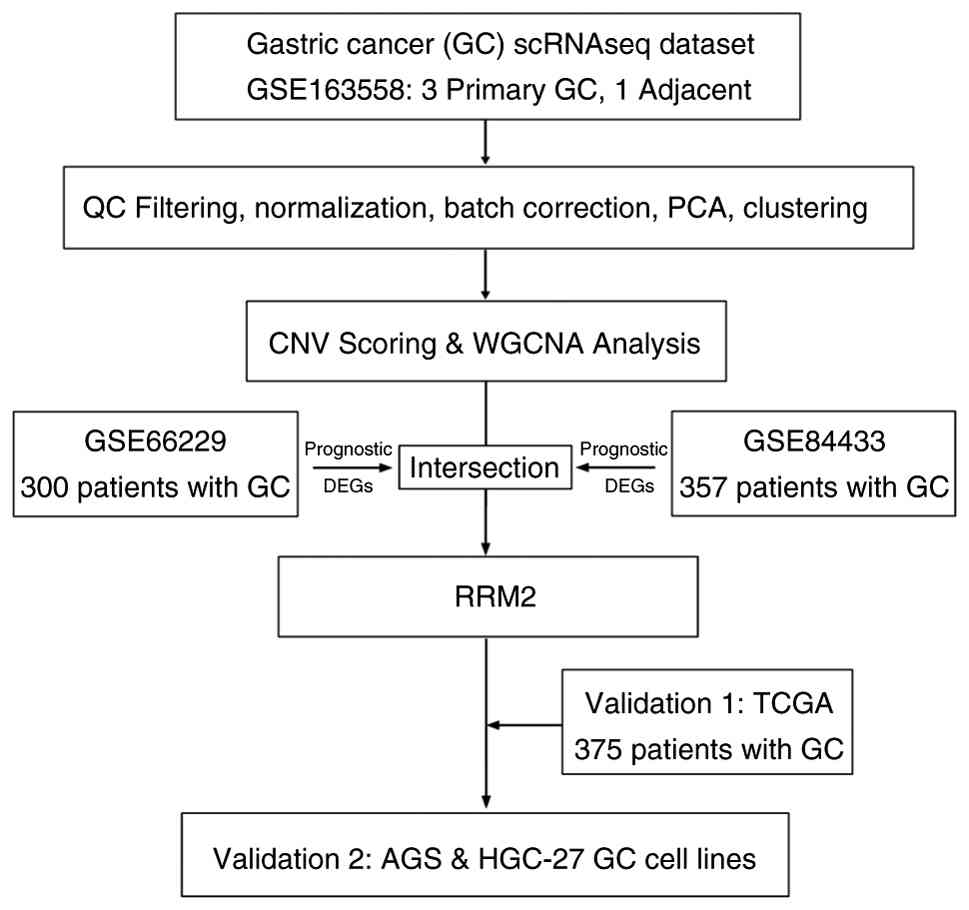
Figure 1

Flowchart of the analysis of the
present study. GC, gastric cancer; scRNAseq, single-cell RNA
sequencing; QC, quality control; PCA, principal component analysis;
CNV, copy number variation; WGCNA, Weighted Gene Co-expression
Network Analysis; DEGs, differentially expressed genes; RRM2,
ribonucleotide reductase regulatory subunit M2; TCGA, The Cancer
Genome Atlas.

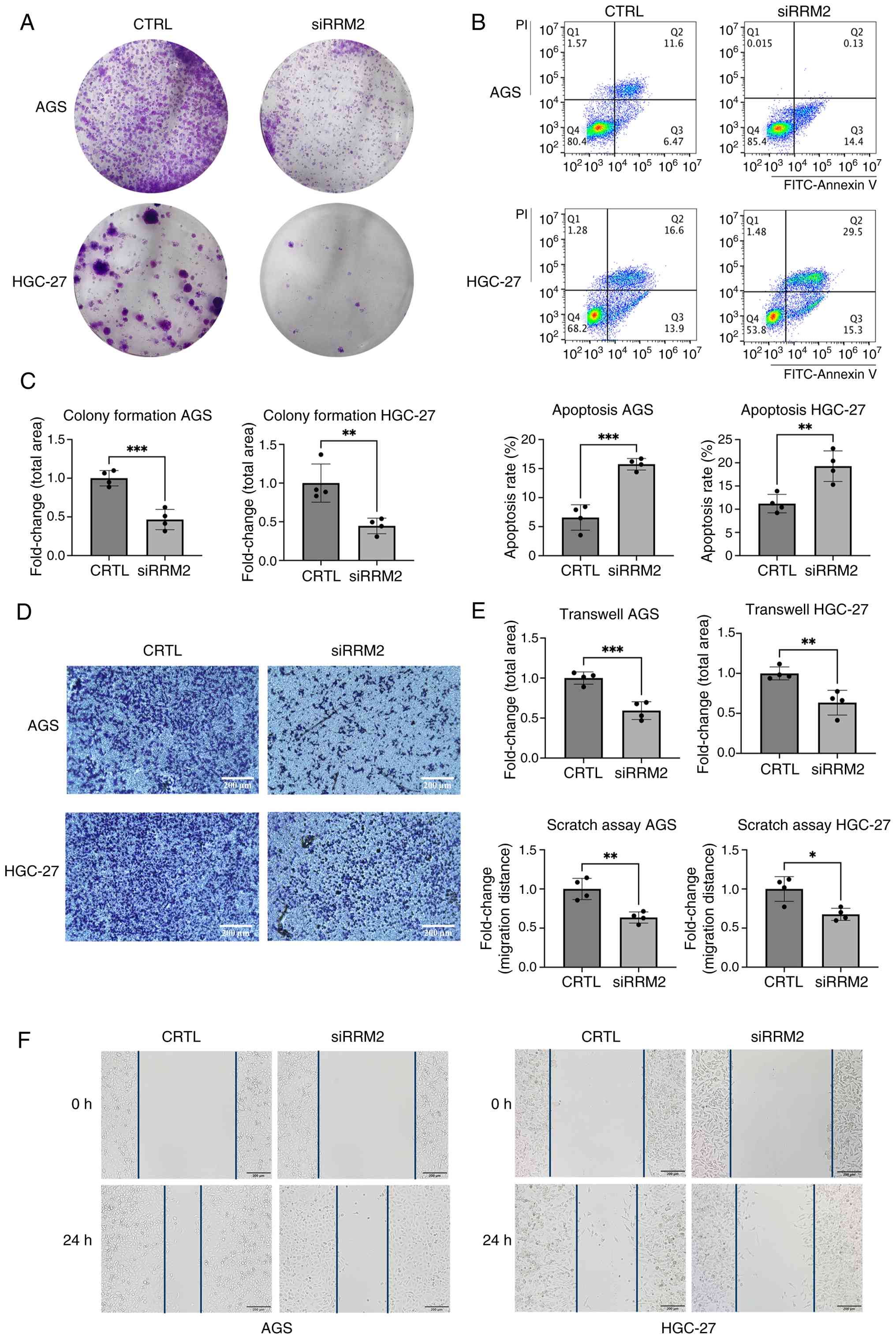
Figure 2

Functional validation of RRM2 in GC
cells. (A) Colony formation assay of the two GC cell lines in the
control and siRRM2 groups. (B) Apoptosis analysis of the two GC
cell lines in the control and siRRM2 groups. (C) Quantification of
the colony formation and apoptosis assay results. (D) Transwell
migration assays of the two GC cell lines in the control and siRRM2
groups. Scale bar, 200 µm. (E) Quantification of the Transwell and
wound healing assay results. (F) Wound healing assay of the two GC
cell lines in the control and siRRM2 groups. In these experiments,
each condition consisted of n=4 biological replicates, with each
replicate analyzed in technical triplicate. RRM2, ribonucleotide
reductase regulatory subunit M2; GC, gastric cancer; siRRM2,
RRM2-targeting siRNA. *P<0.05, **P<0.01, ***P<0.001.

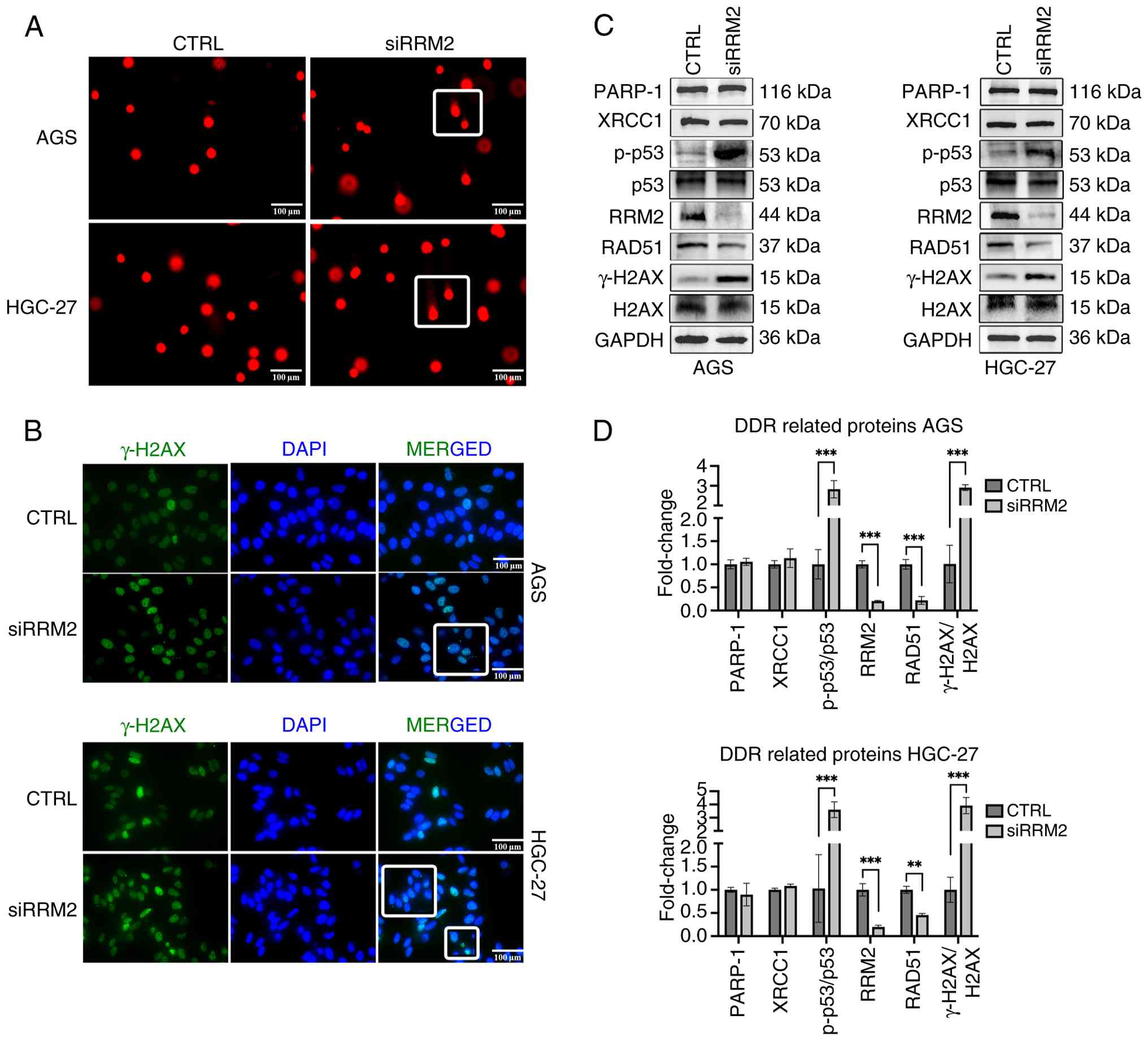
Figure 3

RRM2 induces DNA damage and impairs
DNA repair capacity in GC cells. (A) Compared with the CTRL group,
the siRRM2 group showed pronounced comet tails and an increased
tail DNA content. Scale bar, 100 µm. (B) RRM2 knockdown markedly
increased γH2AX expression in GC cells. Scale bar, 100 µm. (C and
D) Compared with the CTRL group, the siRRM2 group showed
significantly higher expression levels of γH2AX and p-p53 and lower
expression levels of RAD51. No significant changes were observed in
PARP-1 and XRCC1 expression. In these experiments, each condition
consisted of n=3 biological replicates, with each replicate
analyzed in technical triplicate. RRM2, ribonucleotide reductase
regulatory subunit M2; GC, gastric cancer; CTRL, control; siRRM2,
RRM2-targeting siRNA; γH2AX, phosphorylated histone H2AX; p-p53,
phosphorylated tumor protein p53; RAD51, RAD51 recombinase; PARP-1,
poly(ADP-ribose) polymerase 1; XRCC1, X-ray repair
cross-complementing protein 1. **P<0.01, ***P<0.001.

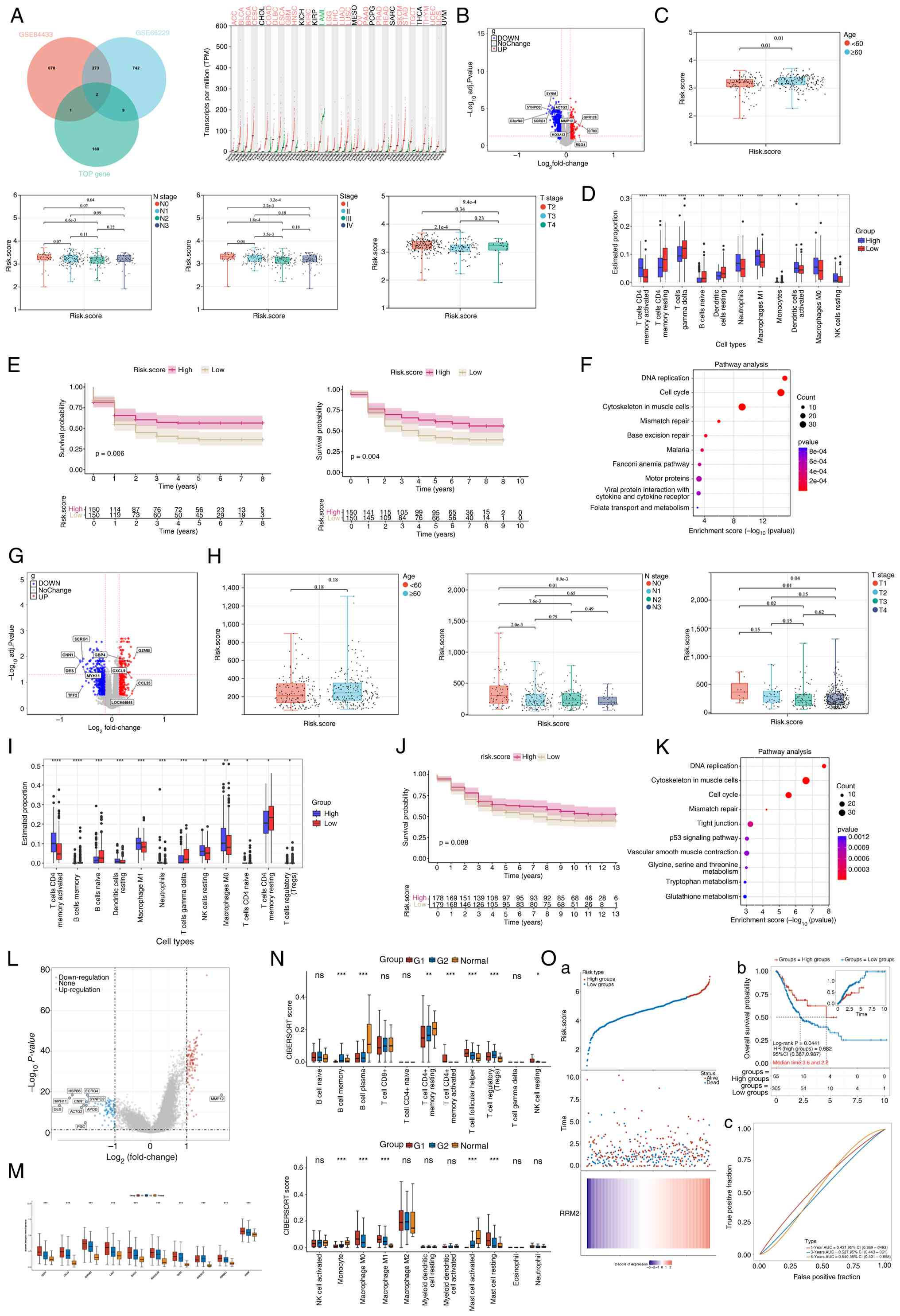
Figure 4

Identification of RRM2 as a key
molecular target in GC based on transcriptomic data. (A) RRM2 was
identified as a hub gene by intersecting prognosis-related DEGs
from the GSE66229 and GSE84433 datasets with WGCNA-derived module
genes. Its expression in tumor versus adjacent normal tissues
across pan-cancer datasets is shown. (B, G and L) DEGs between the
high- and low-RRM2-expression groups in the GSE66229, GSE84433, and
TCGA-STAD datasets. (C and H) Association of RRM2 expression with
age and TNM stage. (D, I and N) Association between RRM2 expression
and immune cell infiltration. (E, J and O) Kaplan-Meier survival
analyses indicating the prognostic significance of RRM2 in GC. (F
and K) KEGG enrichment analysis showing RRM2-related pathways in
GC. (M) Association between the expression of RRM2 and immune
checkpoint genes. RRM2, ribonucleotide reductase regulatory subunit
M2; GC, gastric cancer; DEGs, differentially expressed genes;
WGCNA, Weighted Gene Co-expression Network Analysis; TCGA, The
Cancer Genome Atlas; STAD, stomach adenocarcinoma; KEGG, Kyoto
Encyclopedia of Genes and Genomes. *P<0.05, **p<0.01,
***P<0.001, ****P<0.0001.

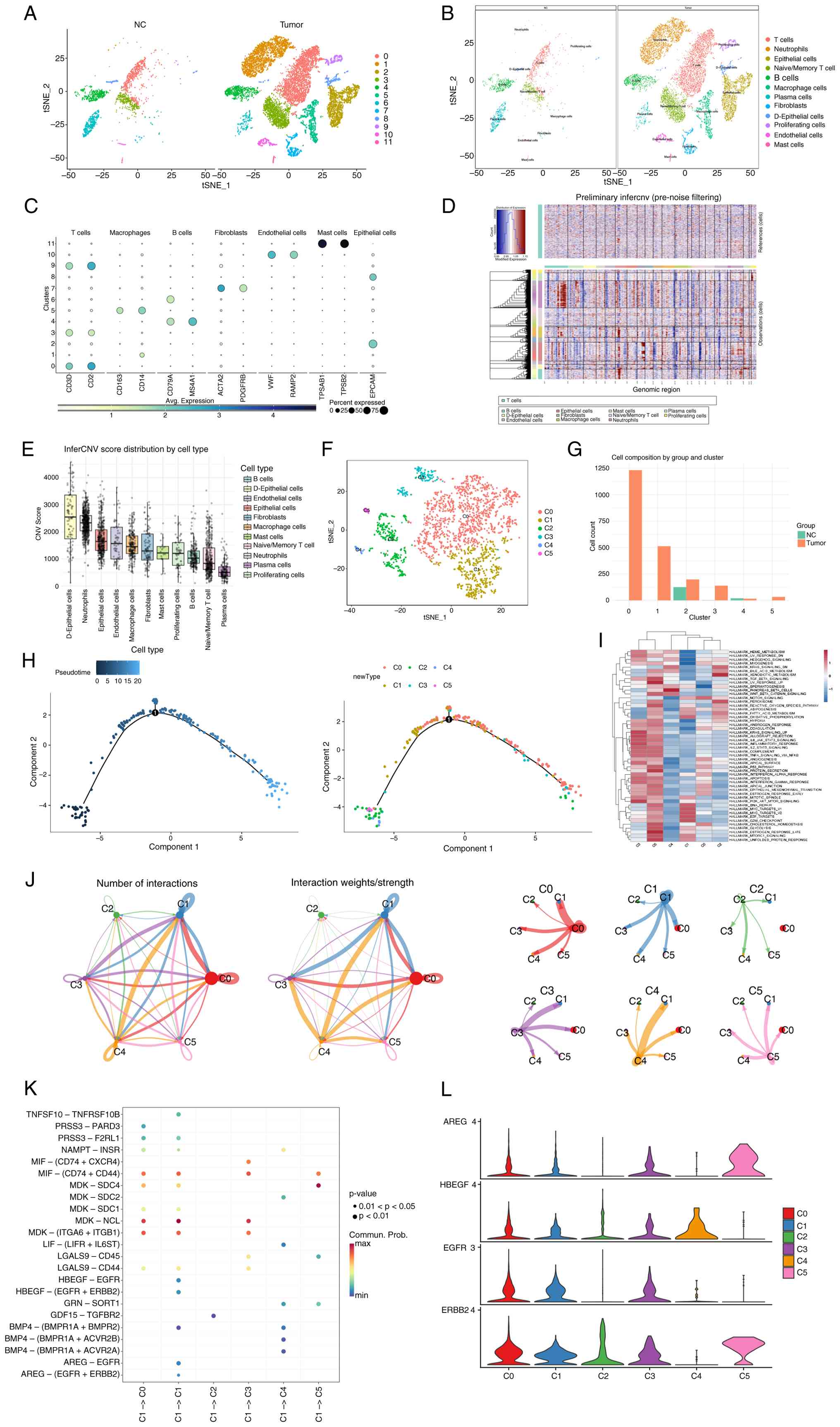
Figure 5

Single-cell analysis reveals the
crucial role of epithelial cells in GC progression. (A and B) The
single-cell dataset (GSE163558) was divided into normal and tumor
groups and each cell cluster was annotated. (C) Expression patterns
of marker genes in each cluster. (D) CNVs in each cell cluster were
analyzed using the inferCNV algorithm. (E) D-epithelial cells and
epithelial cell clusters exhibited a high frequency of CNVs. (F and
G) Classification of D-epithelial and epithelial cells into six
subgroups and their distributions in tumor and normal tissues. (H)
Pseudotime trajectory analysis showing the developmental
progression of each subgroup. (I) GSEA results showing gene
functions enriched in the six subgroups. (J) Cell-cell
communication analysis results showing interaction networks among
the six subgroups. (K) Ligand-receptor interactions between cluster
1 and other clusters. (L) Expression patterns of the EGFR signaling
pathway across the six subgroups. GC, gastric cancer; CNV, copy
number variation; GSEA, gene set enrichment analysis; EGFR,
epidermal growth factor receptor.

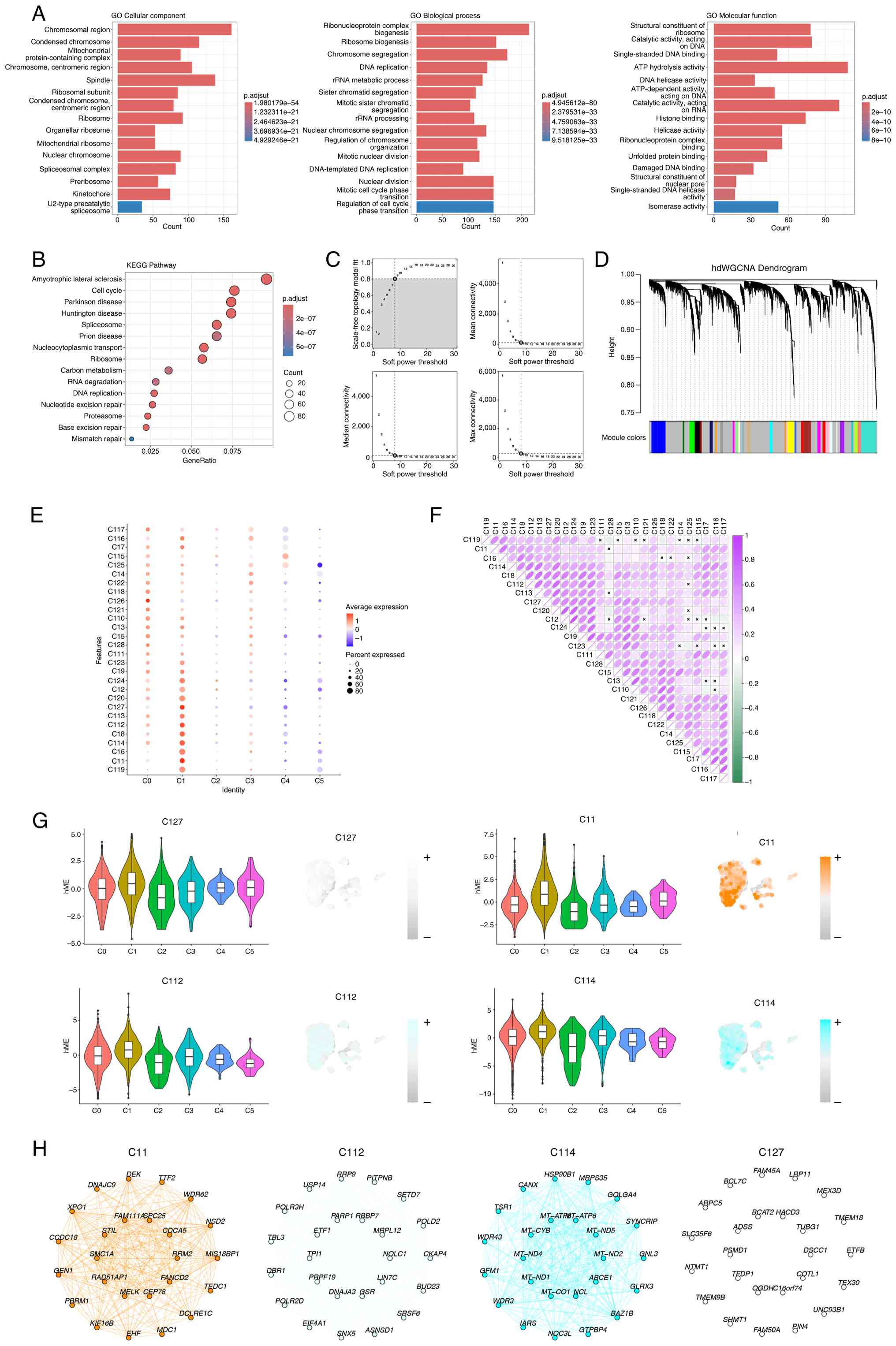
Figure 6

Identification and characterization
of key effector cell populations within epithelial cell clusters.
(A and B) GO and KEGG enrichment analyses of C1 to annotate its
biological functions. (C) Selection of soft-threshold power for
WGCNA. (D) Cluster dendrogram generated through WGCNA. (E)
Expression patterns of WGCNA-derived gene modules in clusters 0–5
(C0-C5). (F) Association heatmap of WGCNA-derived gene modules. (G)
Identification of C11, C127, C112, and C114 as the subclusters most
closely associated with C1 and exhibiting the highest gene
expression levels. (H) Hub genes in C11, C112, C114, and C127. GO,
Gene Ontology; KEGG, Kyoto Encyclopedia of Genes and Genomes;
WGCNA, Weighted Gene Co-expression Network Analysis.
View References

1 

Sundar R, Nakayama I, Markar SR, Shitara K, van Laarhoven HWM, Janjigian YY and Smyth EC: Gastric cancer. Lancet. 405:2087–2102. 2025. View Article : Google Scholar : PubMed/NCBI

2 

Yang X, Zhang J, Ma J, Huang J, Wang Y, Wang P, Wang F and Tang X: GPER governs the immune infiltration of gastric cancer and activates the NF-κB/ROS/Apoptosis pathway in gastric mucosal epithelium. Int Immunopharmacol. 122:1106412023. View Article : Google Scholar : PubMed/NCBI

3 

Bray F, Laversanne M, Sung H, Ferlay J, Siegel RL, Soerjomataram I and Jemal A: Global cancer statistics 2022: GLOBOCAN estimates of incidence and mortality worldwide for 36 cancers in 185 countries. CA Cancer J Clin. 74:229–263. 2024.PubMed/NCBI

4 

Lordick F, Carneiro F, Cascinu S, Fleitas T, Haustermans K, Piessen G, Vogel A and Smyth EC; ESMO Guidelines Committee. Electronic address, : simpleclinicalguidelines@esmo.org: Gastric cancer: ESMO clinical practice guideline for diagnosis, treatment and follow-up. Ann Oncol. 33:1005–1020. 2022. View Article : Google Scholar : PubMed/NCBI

5 

Zhao L, Huang H, Zhang C, Luan X, Niu P, Zhu Y, Xiong Y, Wang W, Han X, Huang D, et al: Temporospatial variation in environmental risk factors and related gastric cancer incidence: A registry-based study in an area with the largest gastric cancer burden in China. J Glob Health. 15:040832025. View Article : Google Scholar : PubMed/NCBI

6 

Zhou L, Han B, Yuan Y, Dong Z, Shi Y and Zheng R: The global burden of stomach cancer and its risk factors from 1990 to 2021: Findings from the global burden of disease study 2021. BMC Public Health. 25:26782025. View Article : Google Scholar : PubMed/NCBI

7 

Petrillo A and Smyth EC: Biomarkers for precision treatment in gastric cancer. Visc Med. 36:364–372. 2020. View Article : Google Scholar : PubMed/NCBI

8 

Gao YX, Guo XJ, Lin B, Huang XB, Tu RH, Lin M, Cao LL, Chen QY, Wang JB, Xie JW, et al: Targeting LHPP in neoadjuvant chemotherapy resistance of gastric cancer: Insights from single-cell and multi-omics data on tumor immune microenvironment and stemness characteristics. Cell Death Dis. 16:3062025. View Article : Google Scholar : PubMed/NCBI

9 

Zhou J, Li J, Chen J, Lan X, Ai Y, Liu P, Peng J, Pan X, Zhang Y, Zhang H, et al: Decoding inflammatory mediators in the Correa's cascade: From chronic gastritis to carcinogenesis and targeted therapies. Int Immunopharmacol. 162:1151912025. View Article : Google Scholar : PubMed/NCBI

10 

Shi Y, Jia E, Wu X and Wang F: Upregulation of MFAP5 enhances COL1A1 expression, promoting epithelial-mesenchymal transition in gastric cancer cells. Discov Med. 36:2079–2087. 2024. View Article : Google Scholar : PubMed/NCBI

11 

Coorens THH, Collord G, Jung H, Wang Y, Moore L, Hooks Y, Mahbubani K, Law SYK, Yan HHN, Yuen ST, et al: The somatic mutation landscape of normal gastric epithelium. Nature. 640:418–426. 2025. View Article : Google Scholar : PubMed/NCBI

12 

Liu B, Liu H, Ren F, Liu H, Bukhari I, Fu Y, Wu W, Zhao M, Zhu S, Mo H, et al: cGAS regulates the DNA damage response to maintain proliferative signaling in gastric cancer cells. Oncol Res. 29:87–103. 2021. View Article : Google Scholar : PubMed/NCBI

13 

Hu H, Yang H, Fan S, Jia X, Zhao Y and Li H: LncRNA HOTAIR promotes DNA damage repair and radioresistance by targeting ATR in colorectal cancer. Oncol Res. 32:1335–1346. 2024. View Article : Google Scholar : PubMed/NCBI

14 

Kaiser L, Ondrus M, Slavetinska LP, Raindlova V and Hocek M: Polymerase synthesis of hypermodified DNA displaying a combination of thiol, hydroxyl, carboxylate, and imidazole functional groups in the major groove. Chemistry. 31:e2025010342025. View Article : Google Scholar : PubMed/NCBI

15 

Garzon J, Rodriguez R, Kong Z, Chabes A, Rodriguez-Acebes S, Mendez J, Moreno S and García-Higuera I: Shortage of dNTPs underlies altered replication dynamics and DNA breakage in the absence of the APC/C cofactor Cdh1. Oncogene. 36:5808–5818. 2017. View Article : Google Scholar : PubMed/NCBI

16 

Long MJC, Van Hall-Beauvais A and Aye Y: The more the merrier: How homo-oligomerization alters the interactome and function of ribonucleotide reductase. Curr Opin Chem Biol. 54:10–18. 2020. View Article : Google Scholar : PubMed/NCBI

17 

Guo L, Zhao Y, Bai X, Wang X, Tuoheti K, Cao Y, Zuo Y, Zhang X and Liu T: RRM2 is a putative biomarker and promotes bladder cancer progression via PI3K/AKT/mTOR pathway. J Cell Physiol. 240:e315012025. View Article : Google Scholar : PubMed/NCBI

18 

Liu K, Wang L, Lou Z, Guo L, Xu Y, Qi H, Fang Z, Mei L, Chen X, Zhang X, et al: E2F8 exerts cancer-promoting effects by transcriptionally activating RRM2 and E2F8 knockdown synergizes with WEE1 inhibition in suppressing lung adenocarcinoma. Biochem Pharmacol. 218:1158542023. View Article : Google Scholar : PubMed/NCBI

19 

Mao G, Li L, Shan C, Liang B, Ma L and Zhang S: High expression of RRM2 mediated by non-coding RNAs correlates with poor prognosis and tumor immune infiltration of hepatocellular carcinoma. Front Med (Lausanne). 9:8333012022. View Article : Google Scholar : PubMed/NCBI

20 

Shi SC, Zhang Y and Wang T: High RRM2 expression has poor prognosis in specific types of breast cancer. PLoS One. 17:e02651952022. View Article : Google Scholar : PubMed/NCBI

21 

Abdel-Rahman MA, Mahfouz M and Habashy HO: RRM2 expression in different molecular subtypes of breast cancer and its prognostic significance. Diagn Pathol. 17:12022. View Article : Google Scholar : PubMed/NCBI

22 

Oh SC, Sohn BH, Cheong JH, Kim SB, Lee JE, Park KC, Lee SH, Park JL, Park YY, Lee HS, et al: Clinical and genomic landscape of gastric cancer with a mesenchymal phenotype. Nat Commun. 9:17772018. View Article : Google Scholar : PubMed/NCBI

23 

Cheong JH, Yang HK, Kim H, Kim WH, Kim YW, Kook MC, Park YK, Kim HH, Lee HS, Lee KH, et al: Predictive test for chemotherapy response in resectable gastric cancer: A multi-cohort, retrospective analysis. Lancet Oncol. 19:629–638. 2018. View Article : Google Scholar : PubMed/NCBI

24 

Jiang H, Yu D, Yang P, Guo R, Kong M, Gao Y, Yu X, Lu X and Fan X: Revealing the transcriptional heterogeneity of organ-specific metastasis in human gastric cancer using single-cell RNA Sequencing. Clin Transl Med. 12:e7302022. View Article : Google Scholar : PubMed/NCBI

25 

Liang CC, Park AY and Guan JL: In vitro scratch assay: A convenient and inexpensive method for analysis of cell migration in vitro. Nat Protoc. 2:329–333. 2007. View Article : Google Scholar : PubMed/NCBI

26 

Zhan Y, Jiang L, Jin X, Ying S, Wu Z, Wang L, Yu W, Tong J, Zhang L, Lou Y and Qiu Y: Inhibiting RRM2 to enhance the anticancer activity of chemotherapy. Biomed Pharmacother. 133:1109962021. View Article : Google Scholar : PubMed/NCBI

27 

Zuo Z, Zhou Z, Chang Y, Liu Y, Shen Y, Li Q and Zhang L: Ribonucleotide reductase M2 (RRM2): Regulation, function and targeting strategy in human cancer. Genes Dis. 11:218–233. 2024. View Article : Google Scholar : PubMed/NCBI

28 

Wang XJ, Huo YX, Yang PJ, Gao J and Hu WD: Significance of ribonucleoside-diphosphate reductase subunit M2 in lung adenocarcinoma. Curr Gene Ther. 25:136–156. 2025. View Article : Google Scholar : PubMed/NCBI

29 

Han P, Chen RH, Wang F, Zeng JY, Yu ST, Xu LH, Cai Q, Liang FY, Xia TL, Lin ZR, et al: Novel chimeric transcript RRM2-c2orf48 promotes metastasis in nasopharyngeal carcinoma. Cell Death Dis. 8:e30472017. View Article : Google Scholar : PubMed/NCBI

30 

Liu Q, Song C, Li J, Liu M, Fu L, Jiang J, Zeng Z and Zhu H: E2F2 enhances the chemoresistance of pancreatic cancer to gemcitabine by regulating the cell cycle and upregulating the expression of RRM2. Med Oncol. 39:1242022. View Article : Google Scholar : PubMed/NCBI

31 

Perrault EN, Shireman JM, Ali ES, Lin P, Preddy I, Park C, Budhiraja S, Baisiwala S, Dixit K, James CD, et al: Ribonucleotide reductase regulatory subunit M2 drives glioblastoma TMZ resistance through modulation of dNTP production. Sci Adv. 9:eade72362023. View Article : Google Scholar : PubMed/NCBI

32 

Ma C, Luo H, Cao J, Gao C, Fa X and Wang G: Independent prognostic implications of RRM2 in lung adenocarcinoma. J Cancer. 11:7009–7022. 2020. View Article : Google Scholar : PubMed/NCBI

33 

Wang J, Yi Y, Chen Y, Xiong Y and Zhang W: Potential mechanism of RRM2 for promoting cervical cancer based on weighted gene co-expression network analysis. Int J Med Sci. 17:2362–2372. 2020. View Article : Google Scholar : PubMed/NCBI

34 

Cheng B, Li L, Wu Y, Luo T, Tang C, Wang Q, Zhou Q, Wu J, Lai Y, Zhu D, et al: The key cellular senescence related molecule RRM2 regulates prostate cancer progression and resistance to docetaxel treatment. Cell Biosci. 13:2112023. View Article : Google Scholar : PubMed/NCBI

35 

Zhou Z, Song Q, Yang Y, Wang L and Wu Z: Comprehensive landscape of RRM2 with immune infiltration in pan-cancer. Cancers (Basel). 14:29382022. View Article : Google Scholar : PubMed/NCBI

36 

Lee SK, Hwang Y, Han JH, Haam S, Lee HW and Koh YW: Characteristics of the immune microenvironment associated with RRM2 expression and its application to PD-L1/PD-1 inhibitors in lung adenocarcinoma. Am J Cancer Res. 13:5443–5454. 2023.PubMed/NCBI

37 

Wu L, Yin L, Ma L, Yang J, Yang F, Sun B and Nianzeng X: Comprehensive bioinformatics analysis of ribonucleoside diphosphate reductase subunit M2(RRM2) gene correlates with prognosis and tumor immunotherapy in pan-cancer. Aging (Albany NY). 14:7890–7905. 2022. View Article : Google Scholar : PubMed/NCBI

38 

Wang Y, Chen R, Zhang J and Zeng P: A comprehensive analysis of ribonucleotide reductase subunit M2 for carcinogenesis in pan-cancer. PLoS One. 19:e02999492024. View Article : Google Scholar : PubMed/NCBI

39 

Tan J, Wang W, Liu X, Xu J, Che Y, Liu Y, Hu J, Hu L, Li J and Zhou Q: C11orf54 promotes DNA repair via blocking CMA-mediated degradation of HIF1A. Commun Biol. 6:6062023. View Article : Google Scholar : PubMed/NCBI

40 

Morikawa T, Hino R, Uozaki H, Maeda D, Ushiku T, Shinozaki A, Sakatani T and Fukayama M: Expression of ribonucleotide reductase M2 subunit in gastric cancer and effects of RRM2 inhibition in vitro. Hum Pathol. 41:1742–1748. 2010. View Article : Google Scholar : PubMed/NCBI

41 

Ping S, Jia X and Tian Y: Integration of scRNA-seq and ST-seq identifies hyperproliferative RRM2+ cells features and therapeutic targets in gastric cancer. J Transl Med. 23:7952025. View Article : Google Scholar : PubMed/NCBI

42 

Sun X, Duan K, Shen X, Dong C, Zhou Y, Chen T, Li W, Li P, Wang P, Li D and Zhou J: Construction and validation of a nomogram model for predicting peritoneal metastasis in gastric cancer based on ferroptosis-relate genes and clinicopathological features. J Gastrointest Oncol. 16:264–280. 2025. View Article : Google Scholar : PubMed/NCBI

43 

Giang LH, Wu KS, Lee WC, Chu SS, Do AD, Huang MH, Lin YL, Hsieh CL, Sung SY, Yen Y, et al: RRM2 inhibition alters cell cycle through ATM/Rb/E2F1 pathway in atypical teratoid rhabdoid tumor. Neoplasia. 58:1010752024. View Article : Google Scholar : PubMed/NCBI

44 

Luo XJ, Lu YX, Wang Y, Huang R, Liu J, Jin Y, Liu ZK, Liu ZX, Huang QT, Pu HY, et al: M6A-modified lncRNA FAM83H-AS1 promotes colorectal cancer progression through PTBP1. Cancer Lett. 598:2170852024. View Article : Google Scholar : PubMed/NCBI

45 

Vriend LE, Jasin M and Krawczyk PM: Assaying break and nick-induced homologous recombination in mammalian cells using the DR-GFP reporter and Cas9 nucleases. Methods Enzymol. 546:175–191. 2014. View Article : Google Scholar : PubMed/NCBI

46 

Zhang N, Tian YN, Zhou LN, Li MZ, Chen HD, Song SS, Huan XJ, Bao XB, Zhang A, Miao ZH and He JX: Glycogen synthase kinase 3beta inhibition synergizes with PARP inhibitors through the induction of homologous recombination deficiency in colorectal cancer. Cell Death Dis. 12:1832021. View Article : Google Scholar : PubMed/NCBI

Related Articles

  • Abstract
  • View
  • Download
  • Twitter
Copy and paste a formatted citation
Spandidos Publications style
Cai X, He Y, Kang L, Zhou D, Wang M and Ma T: Identification of RRM2 as a key regulator of malignant epithelial cells in gastric cancer through single‑cell transcriptomics. Oncol Rep 56: 154, 2026.
APA
Cai, X., He, Y., Kang, L., Zhou, D., Wang, M., & Ma, T. (2026). Identification of RRM2 as a key regulator of malignant epithelial cells in gastric cancer through single‑cell transcriptomics. Oncology Reports, 56, 154. https://doi.org/10.3892/or.2026.9159
MLA
Cai, X., He, Y., Kang, L., Zhou, D., Wang, M., Ma, T."Identification of RRM2 as a key regulator of malignant epithelial cells in gastric cancer through single‑cell transcriptomics". Oncology Reports 56.3 (2026): 154.
Chicago
Cai, X., He, Y., Kang, L., Zhou, D., Wang, M., Ma, T."Identification of RRM2 as a key regulator of malignant epithelial cells in gastric cancer through single‑cell transcriptomics". Oncology Reports 56, no. 3 (2026): 154. https://doi.org/10.3892/or.2026.9159
Copy and paste a formatted citation
x
Spandidos Publications style
Cai X, He Y, Kang L, Zhou D, Wang M and Ma T: Identification of RRM2 as a key regulator of malignant epithelial cells in gastric cancer through single‑cell transcriptomics. Oncol Rep 56: 154, 2026.
APA
Cai, X., He, Y., Kang, L., Zhou, D., Wang, M., & Ma, T. (2026). Identification of RRM2 as a key regulator of malignant epithelial cells in gastric cancer through single‑cell transcriptomics. Oncology Reports, 56, 154. https://doi.org/10.3892/or.2026.9159
MLA
Cai, X., He, Y., Kang, L., Zhou, D., Wang, M., Ma, T."Identification of RRM2 as a key regulator of malignant epithelial cells in gastric cancer through single‑cell transcriptomics". Oncology Reports 56.3 (2026): 154.
Chicago
Cai, X., He, Y., Kang, L., Zhou, D., Wang, M., Ma, T."Identification of RRM2 as a key regulator of malignant epithelial cells in gastric cancer through single‑cell transcriptomics". Oncology Reports 56, no. 3 (2026): 154. https://doi.org/10.3892/or.2026.9159
Follow us
  • Twitter
  • LinkedIn
  • Facebook
About
  • Spandidos Publications
  • Careers
  • Cookie Policy
  • Privacy Policy
How can we help?
  • Help
  • Live Chat
  • Contact
  • Email to our Support Team