Spandidos Publications Logo
  • About
    • About Spandidos
    • Aims and Scopes
    • Abstracting and Indexing
    • Editorial Policies
    • Reprints and Permissions
    • Job Opportunities
    • Terms and Conditions
    • Contact
  • Journals
    • All Journals
    • Oncology Letters
      • Oncology Letters
      • Information for Authors
      • Editorial Policies
      • Editorial Board
      • Aims and Scope
      • Abstracting and Indexing
      • Bibliographic Information
      • Archive
    • International Journal of Oncology
      • International Journal of Oncology
      • Information for Authors
      • Editorial Policies
      • Editorial Board
      • Aims and Scope
      • Abstracting and Indexing
      • Bibliographic Information
      • Archive
    • Molecular and Clinical Oncology
      • Molecular and Clinical Oncology
      • Information for Authors
      • Editorial Policies
      • Editorial Board
      • Aims and Scope
      • Abstracting and Indexing
      • Bibliographic Information
      • Archive
    • Experimental and Therapeutic Medicine
      • Experimental and Therapeutic Medicine
      • Information for Authors
      • Editorial Policies
      • Editorial Board
      • Aims and Scope
      • Abstracting and Indexing
      • Bibliographic Information
      • Archive
    • International Journal of Molecular Medicine
      • International Journal of Molecular Medicine
      • Information for Authors
      • Editorial Policies
      • Editorial Board
      • Aims and Scope
      • Abstracting and Indexing
      • Bibliographic Information
      • Archive
    • Biomedical Reports
      • Biomedical Reports
      • Information for Authors
      • Editorial Policies
      • Editorial Board
      • Aims and Scope
      • Abstracting and Indexing
      • Bibliographic Information
      • Archive
    • Oncology Reports
      • Oncology Reports
      • Information for Authors
      • Editorial Policies
      • Editorial Board
      • Aims and Scope
      • Abstracting and Indexing
      • Bibliographic Information
      • Archive
    • Molecular Medicine Reports
      • Molecular Medicine Reports
      • Information for Authors
      • Editorial Policies
      • Editorial Board
      • Aims and Scope
      • Abstracting and Indexing
      • Bibliographic Information
      • Archive
    • World Academy of Sciences Journal
      • World Academy of Sciences Journal
      • Information for Authors
      • Editorial Policies
      • Editorial Board
      • Aims and Scope
      • Abstracting and Indexing
      • Bibliographic Information
      • Archive
    • International Journal of Functional Nutrition
      • International Journal of Functional Nutrition
      • Information for Authors
      • Editorial Policies
      • Editorial Board
      • Aims and Scope
      • Abstracting and Indexing
      • Bibliographic Information
      • Archive
    • International Journal of Epigenetics
      • International Journal of Epigenetics
      • Information for Authors
      • Editorial Policies
      • Editorial Board
      • Aims and Scope
      • Abstracting and Indexing
      • Bibliographic Information
      • Archive
    • Medicine International
      • Medicine International
      • Information for Authors
      • Editorial Policies
      • Editorial Board
      • Aims and Scope
      • Abstracting and Indexing
      • Bibliographic Information
      • Archive
  • Articles
  • Information
    • Information for Authors
    • Information for Reviewers
    • Information for Librarians
    • Information for Advertisers
    • Conferences
  • Language Editing
Spandidos Publications Logo
  • About
    • About Spandidos
    • Aims and Scopes
    • Abstracting and Indexing
    • Editorial Policies
    • Reprints and Permissions
    • Job Opportunities
    • Terms and Conditions
    • Contact
  • Journals
    • All Journals
    • Biomedical Reports
      • Information for Authors
      • Editorial Policies
      • Editorial Board
      • Aims and Scope
      • Abstracting and Indexing
      • Bibliographic Information
      • Archive
    • Experimental and Therapeutic Medicine
      • Information for Authors
      • Editorial Policies
      • Editorial Board
      • Aims and Scope
      • Abstracting and Indexing
      • Bibliographic Information
      • Archive
    • International Journal of Epigenetics
      • Information for Authors
      • Editorial Policies
      • Editorial Board
      • Aims and Scope
      • Abstracting and Indexing
      • Bibliographic Information
      • Archive
    • International Journal of Functional Nutrition
      • Information for Authors
      • Editorial Policies
      • Editorial Board
      • Aims and Scope
      • Abstracting and Indexing
      • Bibliographic Information
      • Archive
    • International Journal of Molecular Medicine
      • Information for Authors
      • Editorial Policies
      • Editorial Board
      • Aims and Scope
      • Abstracting and Indexing
      • Bibliographic Information
      • Archive
    • International Journal of Oncology
      • Information for Authors
      • Editorial Policies
      • Editorial Board
      • Aims and Scope
      • Abstracting and Indexing
      • Bibliographic Information
      • Archive
    • Medicine International
      • Information for Authors
      • Editorial Policies
      • Editorial Board
      • Aims and Scope
      • Abstracting and Indexing
      • Bibliographic Information
      • Archive
    • Molecular and Clinical Oncology
      • Information for Authors
      • Editorial Policies
      • Editorial Board
      • Aims and Scope
      • Abstracting and Indexing
      • Bibliographic Information
      • Archive
    • Molecular Medicine Reports
      • Information for Authors
      • Editorial Policies
      • Editorial Board
      • Aims and Scope
      • Abstracting and Indexing
      • Bibliographic Information
      • Archive
    • Oncology Letters
      • Information for Authors
      • Editorial Policies
      • Editorial Board
      • Aims and Scope
      • Abstracting and Indexing
      • Bibliographic Information
      • Archive
    • Oncology Reports
      • Information for Authors
      • Editorial Policies
      • Editorial Board
      • Aims and Scope
      • Abstracting and Indexing
      • Bibliographic Information
      • Archive
    • World Academy of Sciences Journal
      • Information for Authors
      • Editorial Policies
      • Editorial Board
      • Aims and Scope
      • Abstracting and Indexing
      • Bibliographic Information
      • Archive
  • Articles
  • Information
    • For Authors
    • For Reviewers
    • For Librarians
    • For Advertisers
    • Conferences
  • Language Editing
Login Register Submit
  • This site uses cookies
  • You can change your cookie settings at any time by following the instructions in our Cookie Policy. To find out more, you may read our Privacy Policy.

    I agree
Search articles by DOI, keyword, author or affiliation
Search
Advanced Search
presentation
Oncology Reports
Join Editorial Board Propose a Special Issue
Print ISSN: 1021-335X Online ISSN: 1791-2431
Journal Cover
November-2026 Volume 56 Issue 5

Full Size Image

Sign up for eToc alerts
Recommend to Library

Journals

International Journal of Molecular Medicine

International Journal of Molecular Medicine

International Journal of Molecular Medicine is an international journal devoted to molecular mechanisms of human disease.

International Journal of Oncology

International Journal of Oncology

International Journal of Oncology is an international journal devoted to oncology research and cancer treatment.

Molecular Medicine Reports

Molecular Medicine Reports

Covers molecular medicine topics such as pharmacology, pathology, genetics, neuroscience, infectious diseases, molecular cardiology, and molecular surgery.

Oncology Reports

Oncology Reports

Oncology Reports is an international journal devoted to fundamental and applied research in Oncology.

Experimental and Therapeutic Medicine

Experimental and Therapeutic Medicine

Experimental and Therapeutic Medicine is an international journal devoted to laboratory and clinical medicine.

Oncology Letters

Oncology Letters

Oncology Letters is an international journal devoted to Experimental and Clinical Oncology.

Biomedical Reports

Biomedical Reports

Explores a wide range of biological and medical fields, including pharmacology, genetics, microbiology, neuroscience, and molecular cardiology.

Molecular and Clinical Oncology

Molecular and Clinical Oncology

International journal addressing all aspects of oncology research, from tumorigenesis and oncogenes to chemotherapy and metastasis.

World Academy of Sciences Journal

World Academy of Sciences Journal

Multidisciplinary open-access journal spanning biochemistry, genetics, neuroscience, environmental health, and synthetic biology.

International Journal of Functional Nutrition

International Journal of Functional Nutrition

Open-access journal combining biochemistry, pharmacology, immunology, and genetics to advance health through functional nutrition.

International Journal of Epigenetics

International Journal of Epigenetics

Publishes open-access research on using epigenetics to advance understanding and treatment of human disease.

Medicine International

Medicine International

An International Open Access Journal Devoted to General Medicine.

Journal Cover
November-2026 Volume 56 Issue 5

Full Size Image

Sign up for eToc alerts
Recommend to Library

  • Article
  • Citations
    • Cite This Article
    • Download Citation
    • Create Citation Alert
    • Remove Citation Alert
    • Cited By
  • Similar Articles
    • Related Articles (in Spandidos Publications)
    • Similar Articles (Google Scholar)
    • Similar Articles (PubMed)
  • Download PDF
  • Download XML
  • View XML

  • Supplementary Files
    • Supplementary_Data1.xlsx
    • Supplementary_Data2.pdf
    • Supplementary_Data3.xlsx
    • Supplementary_Data4.xlsx
Article Open Access

PINK1 promotes the progression of lung squamous cell carcinoma through the FAK/AKT/RhoA/vinculin pathway

  • Authors:
    • Xu Li
    • Yuhui Ma
  • View Affiliations / Copyright

    Affiliations: Department of Thoracic Surgery, Shanxi Bethune Hospital, Shanxi Academy of Medical Sciences, Third Hospital of Shanxi Medical University, Tongji Shanxi Hospital, Taiyuan, Shanxi 030032, P.R. China, Department of Cancer Center, Shanxi Bethune Hospital, Shanxi Academy of Medical Sciences, Third Hospital of Shanxi Medical University, Tongji Shanxi Hospital, Taiyuan, Shanxi 030032, P.R. China
    Copyright: © Li et al. This is an open access article distributed under the terms of Creative Commons Attribution License.
  • Article Number: 195
    |
    Published online on: September 29, 2026
       https://doi.org/10.3892/or.2026.9201
  • Expand metrics +
Metrics: Total Views: 0 (Spandidos Publications: | PMC Statistics: )
Metrics: Total PDF Downloads: 0 (Spandidos Publications: | PMC Statistics: )
Cited By (CrossRef): 0 citations Loading Articles...

This article is mentioned in:


Abstract

Lung squamous cell carcinoma (LUSC) is an aggressive malignancy with a poor prognosis. Given the association between mitochondrial dysregulation and LUSC, the aim of the present study was to identify mitochondrial unfolded protein response (UPRmt)‑related candidate genes associated with LUSC and to explore their potential functional relevance. In the present study, differential expression, univariate Cox and survival analyses were combined to identify a UPRmt‑associated key gene in LUSC. Gene set enrichment analysis was then performed, and overexpression (OE) and knockdown cell lines were used to clarify its function using western blotting, Cell Counting Kit‑8, colony formation and Transwell® invasion assays. Using bioinformatics tools and a review of the literature, PTEN‑induced kinase 1 (PINK1) was singled out as a key gene in LUSC samples. Elevated PINK1 expression was associated with worse survival outcomes. A total of 117 pathways were enriched by PINK1, with the top 5 including ‘focal adhesion’ and ‘mitogen‑activated protein kinase signaling pathway’. Using experimental analysis, it was observed that PINK1 significantly enhanced the proliferative, migratory, invasive and colony forming abilities of tumor cells, thereby exacerbating LUSC. Furthermore, these enhancements were diminished by the application of focal adhesion kinase (FAK) inhibitor. It was also noted that the expression levels of protein kinase B (AKT), p‑AKT, Ras homolog family member A (RhoA) and vinculin were all elevated in OE‑PINK1 cells. Collectively, these findings indicated that PINK1 exerted its influence on LUSC through the FAK/AKT/RhoA/vinculin pathway. The present study identified PINK1 as a key gene in LUSC, exerting its influence through the FAK/AKT/RhoA/vinculin pathway, thereby presenting a potential novel therapeutic target for the treatment of LUSC in the future.
View Figures

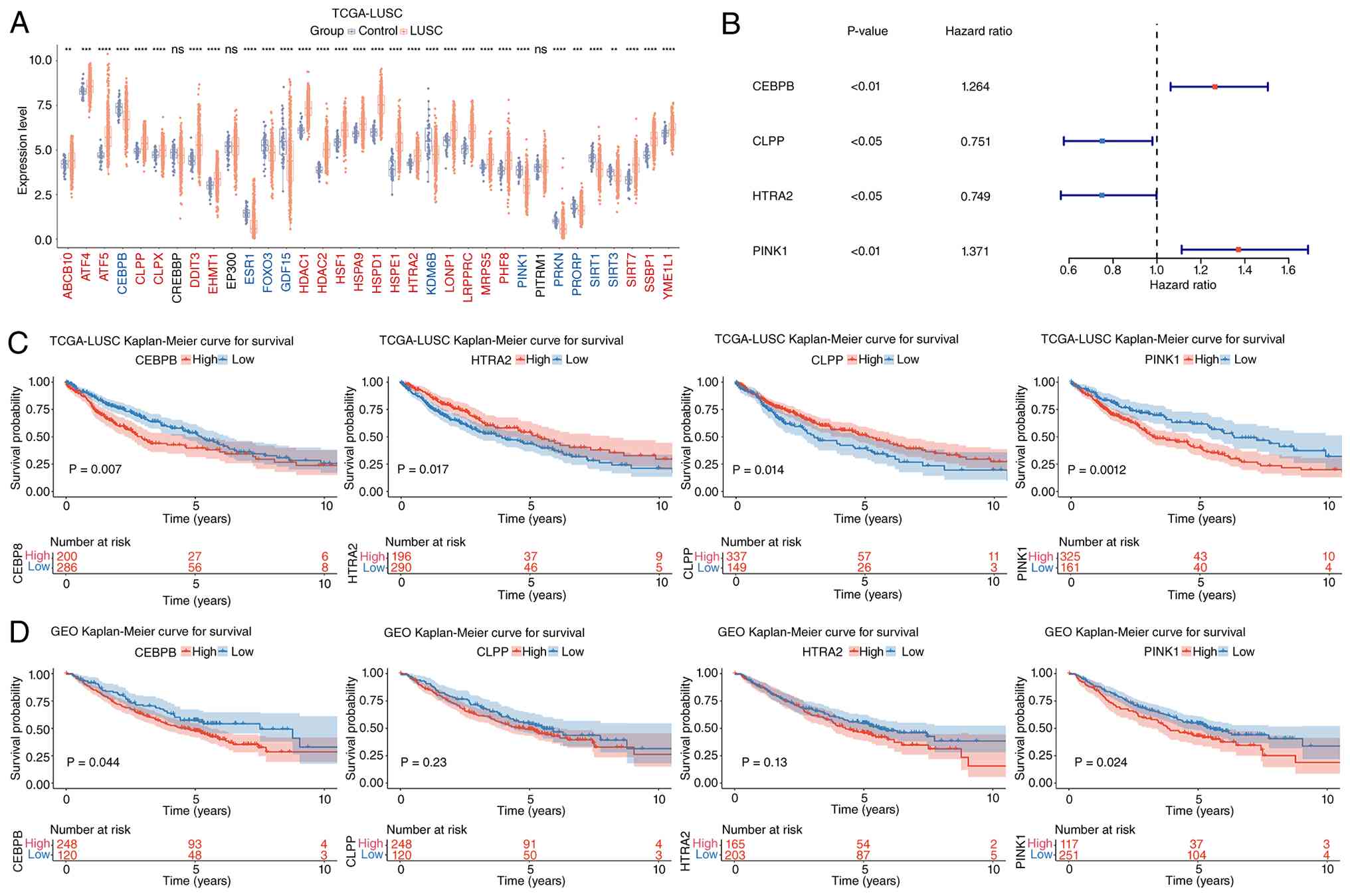
Figure 1

PINK1 was selected as a key gene in
LUSC. (A) Differential expression levels of mitochondrial unfolded
protein response-related genes between LUSC and control samples.
(B) Analysis of LUSC survival-associated genes. Survival difference
of genes in (C) training and (D) validation sets. **P<0.01,
***P<0.001 and ****P<0.0001. ns, no significance; PINK1,
PTEN-induced kinase 1; LUSC, lung squamous cell carcinoma; TCGA,
The Cancer Genome Atlas; GEO, Gene Expression Omnibus; CEBPB,
CCAAT/enhancer-binding protein β; CLPP, caseinolytic mitochondrial
matrix peptidase proteolytic subunit; HTRA2, high-temperature
requirement A2.

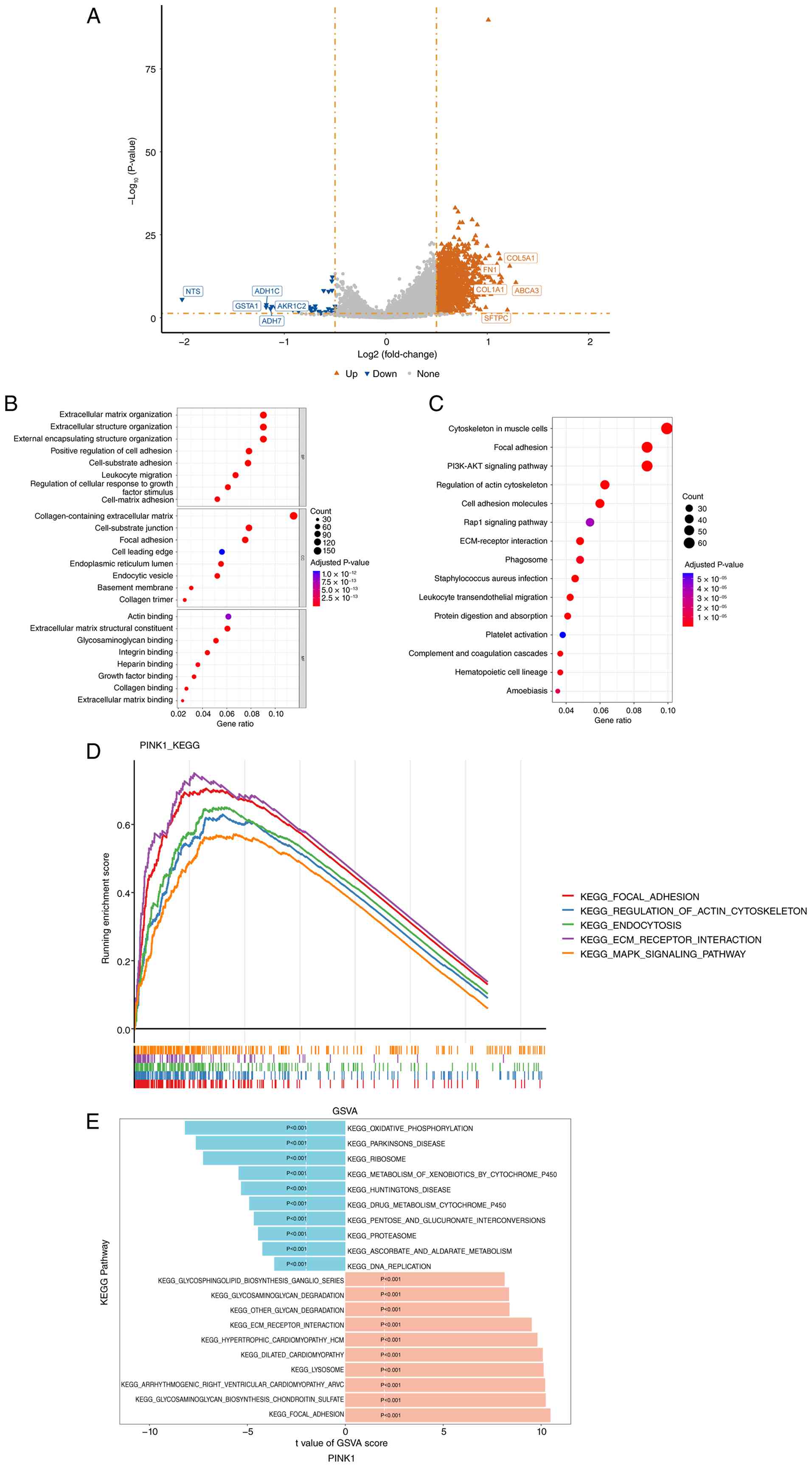
Figure 2

Potential functions of PINK1
expression in LUSC. (A) DEGs between PINK1 high- and low-expression
groups. (B) Gene Ontology and (C) KEGG enrichment analysis of DEGs.
(D) Gene set enrichment analysis of DEGs. (E) GSVA between high-
and low-expression groups. PINK1, PTEN-induced kinase 1; LUSC, lung
squamous cell carcinoma; DEGs, differentially expressed genes;
KEGG, Kyoto Encyclopedia of Genes and Genomes; GSVA, gene set
variation analysis; ARVC, arrhythmogenic right ventricular
cardiomyopathy; ECM, extracellular matrix.

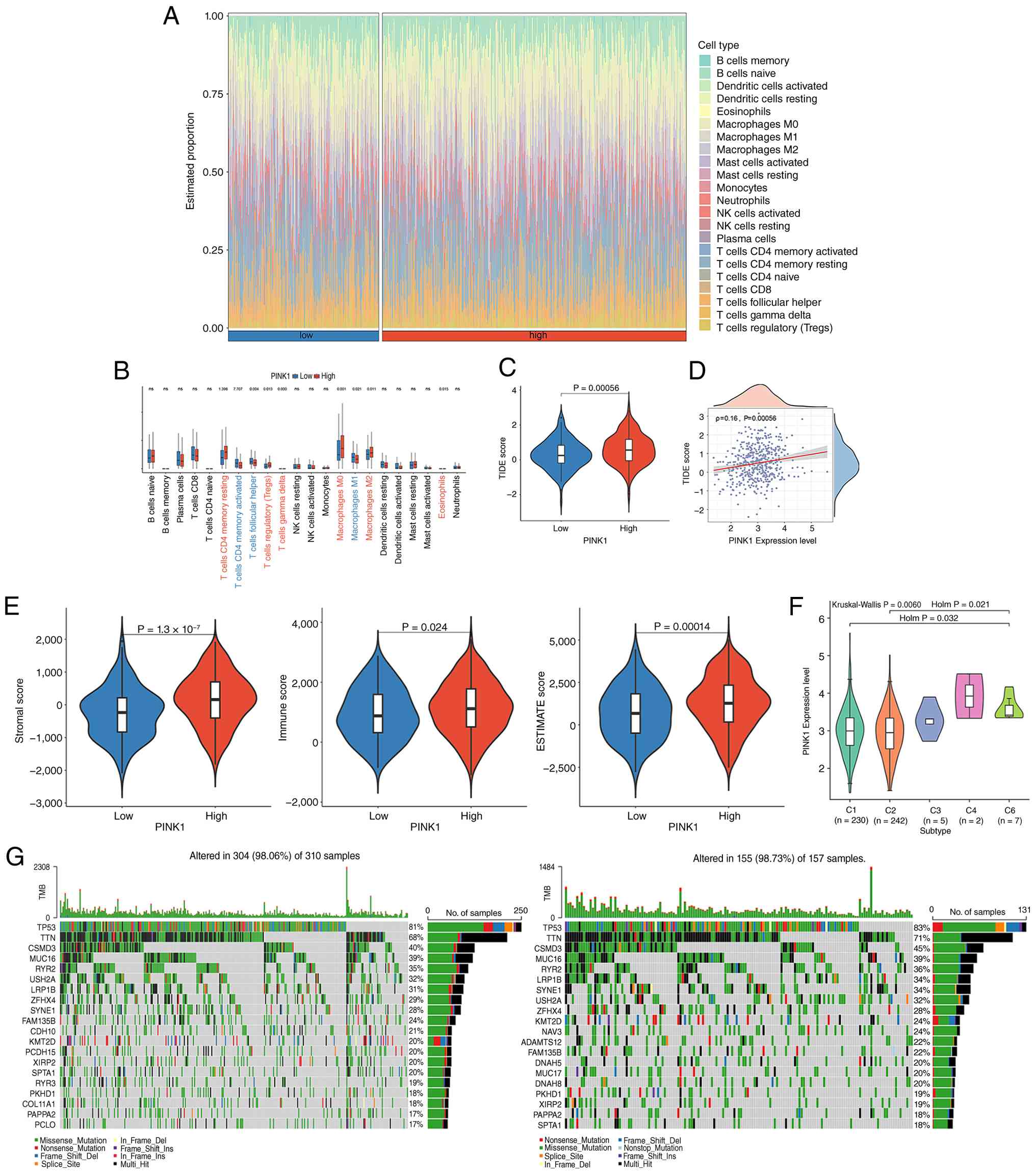
Figure 3

Immune and mutation landscape between
high- and low-expression groups. (A) Immune landscape in distinct
expression groups. (B) Difference in immune cell infiltration
between high- and low-expression groups. (C) Difference and (D)
correlation of the TIDE score between high- and low-expression
groups. (E) Difference in immune, stromal and ESTIMATE scores
between high- and low-expression groups. (F) Expression levels of
PINK1 among different immune cell subtypes. Statistical
significance was assessed using the Kruskal-Wallis test followed by
Dunn's post hoc multiple comparisons test with Holm correction for
multiple comparisons. (G) Mutation landscape of genes (left,
high-expression group; right, low-expression group). ns, no
significance; TIDE, tumor immune dysfunction and exclusion; PINK1,
PTEN-induced kinase 1; TMB, tumor mutation burden; TIDE, Tumor
Immune Dysfunction and Exclusion; NK, natural killer; ESTIMATE,
Estimation of STromal and Immune cells in MAlignant Tumor tissues
using Expression data.

Figure 4

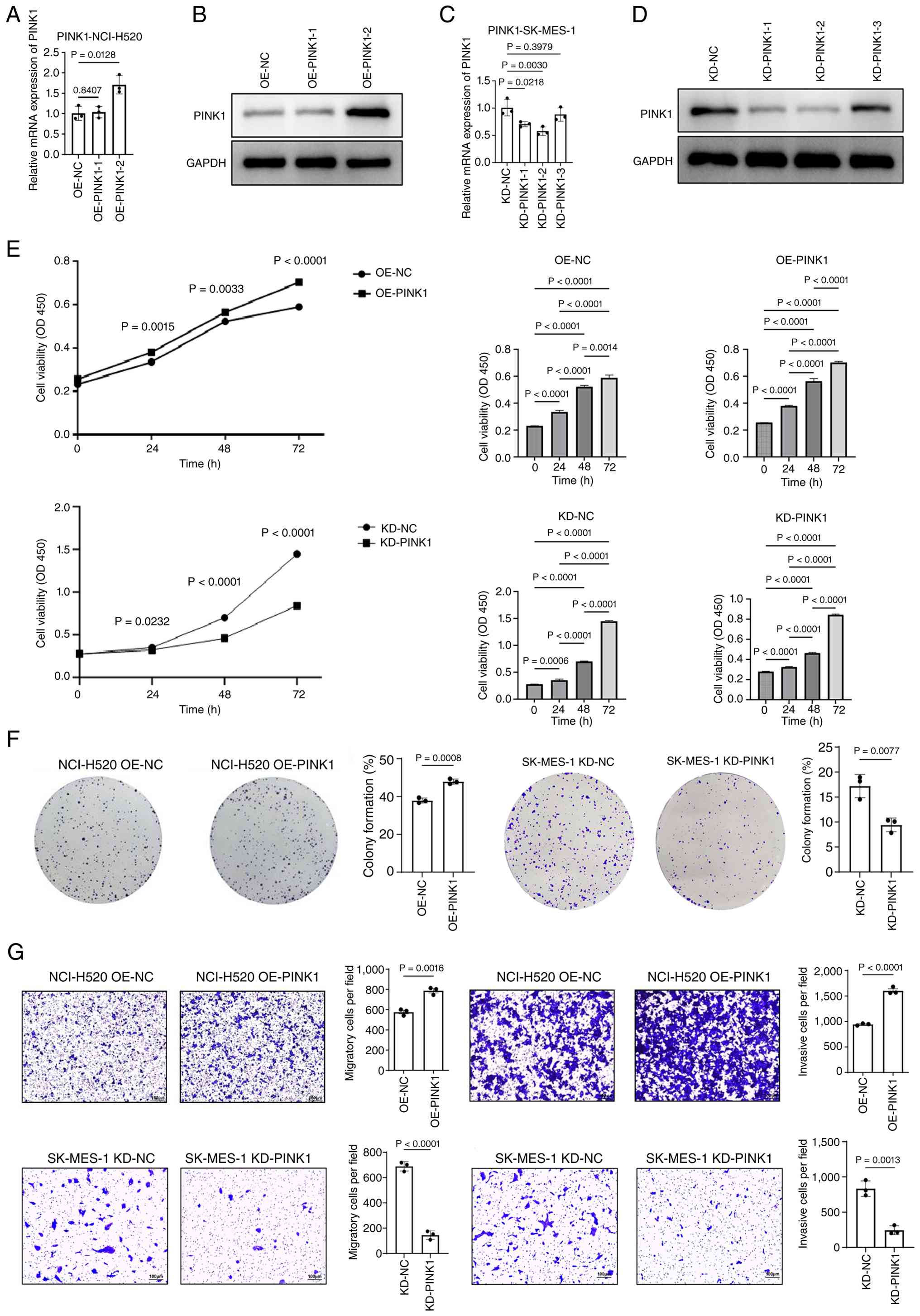
PINK1 expression is associated with
mutation landscape and chemotherapy resistance in lung squamous
cell carcinoma. Expression levels of OE-PINK1 at the (A) mRNA and
(B) protein levels. Expression levels of sh-PINK1 at the (C) mRNA
and (D) protein levels. (E) Cell activity of OE- and sh-PINK1. (F)
Colony formation of OE- and sh-PINK1. (G) Migration and invasion of
OE- and sh-PINK1. PINK1, PTEN-induced kinase 1; shRNA/sh, short
hairpin RNA; OE, overexpression; NC, negative control; KD,
knockdown.

Figure 5

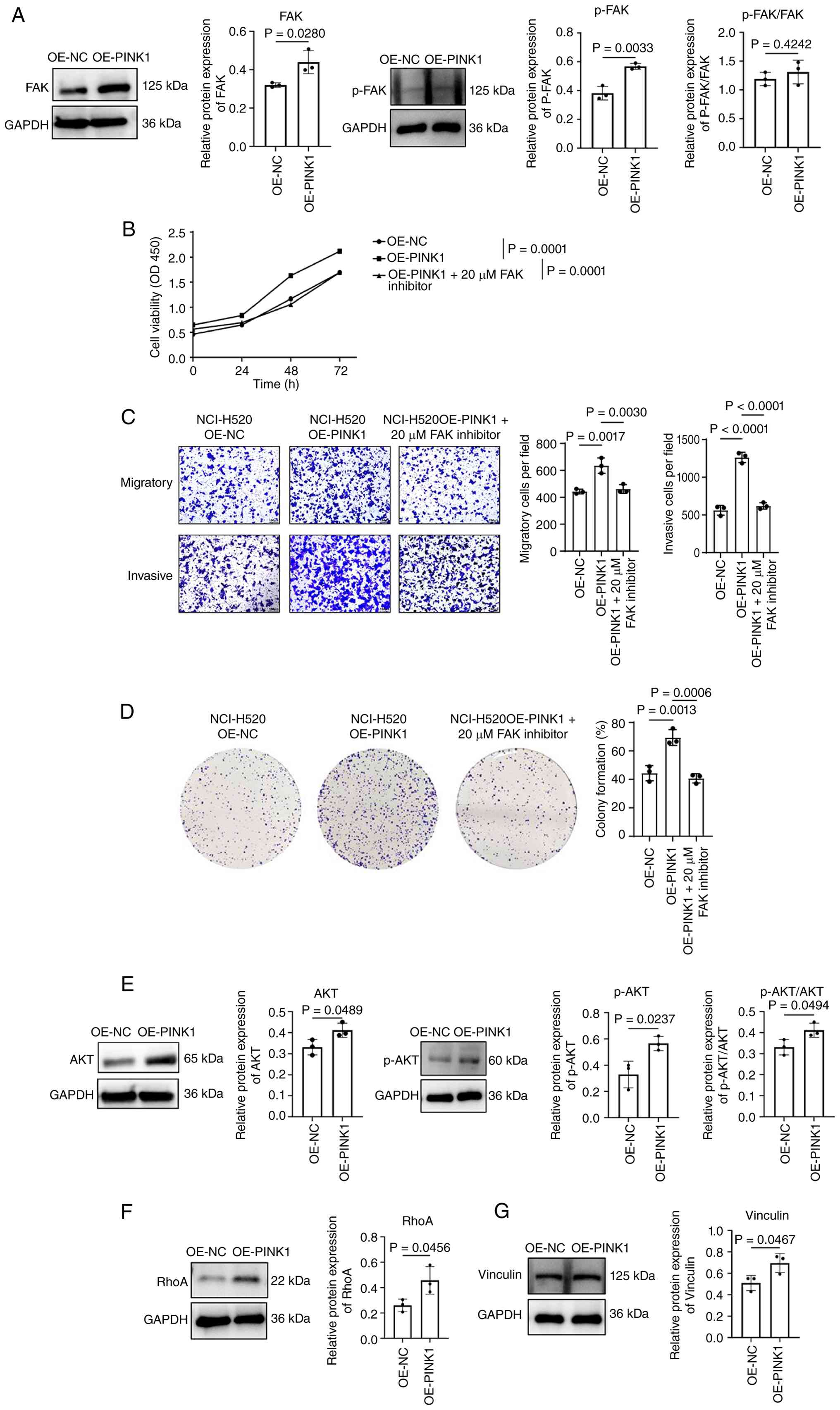
PINK1 promotes lung squamous cell
carcinoma through the FAK/AKT/RhoA/vinculin pathway. (A) Protein
expression levels of FAK and p-FAK, as well as the p-FAK/FAK ratio.
(B) Cell activity with FAK inhibitor. (C) Migration and invasion
with FAK inhibitor. (D) Colony formation with FAK inhibitor.
Protein expression levels of (E) AKT and p-AKT (and the p-AKT/AKT
ratio), (F) RhoA and (G) vinculin. PINK1, PTEN-induced kinase 1;
FAK/AKT/RhoA, focal adhesion kinase/protein kinase B/Ras homolog
family member A; p, phosphorylated; OE, overexpression; NC,
negative control.
View References

1 

Sung H, Filho AM, Laversanne M, Ferlay J, Siegel RL, Soerjomataram I, Jemal A and Bray F: Global cancer statistics 2024: GLOBOCAN estimates of incidence and mortality worldwide for 34 cancers in 186 countries. CA cancer J Clin. 76:e700902026.PubMed/NCBI

2 

Wang Z, Shen N, Wang Z, Yu L, Yang S, Wang Y, Liu Y, Han G and Zhang Q: TRIM3 facilitates ferroptosis in non-small cell lung cancer through promoting SLC7A11/xCT K11-linked ubiquitination and degradation. Cell Death Differ. 31:53–64. 2024. View Article : Google Scholar : PubMed/NCBI

3 

Zhang L, Wang D, Zeng L, Chen S, Li K, Yuan T, Wang J, Ma X, Zhu S and Wu Y: FHL2 facilitates LUSC growth and therapy resistance through PI3K/AKT/mTOR activation. J Biol Chem. 301:1103322025. View Article : Google Scholar : PubMed/NCBI

4 

Yi C, Zang N, Gao L and Ren F: THY1 is a prognostic-related biomarker via mediating immune infiltration in lung squamous cell carcinoma (LUSC). Aging (Albany NY). 16:9498–9517. 2024. View Article : Google Scholar : PubMed/NCBI

5 

Yu X, Liu J, Xie R, Chang M, Xu B, Zhu Y, Xie Y and Yang S: Construction of a prognostic model for lung squamous cell carcinoma based on seven N6-methylandenosine-related autophagy genes. Math Biosci Eng. 18:6709–6723. 2021. View Article : Google Scholar : PubMed/NCBI

6 

Luo L, Deng J and Tang Q: A four-gene autophagy-related prognostic model signature and its association with immune phenotype in lung squamous cell carcinoma. Cancer Rep (Hoboken). 7:e700002024.PubMed/NCBI

7 

Liu BH, Xu CZ, Liu Y, Lu ZL, Fu TL, Li GR, Deng Y, Luo GQ, Ding S, Li N and Geng Q: Mitochondrial quality control in human health and disease. Mil Med Res. 11:322024.PubMed/NCBI

8 

Roca-Portoles A and Tait SWG: Mitochondrial quality control: From molecule to organelle. Cell Mol Life Sci. 78:3853–3866. 2021. View Article : Google Scholar : PubMed/NCBI

9 

Tang C, Cai J, Yin XM, Weinberg JM, Venkatachalam MA and Dong Z: Mitochondrial quality control in kidney injury and repair. Nat Rev Nephrol. 17:299–318. 2021. View Article : Google Scholar : PubMed/NCBI

10 

Youle RJ and van der Bliek AM: Mitochondrial fission, fusion, and stress. Science. 337:1062–1065. 2012. View Article : Google Scholar : PubMed/NCBI

11 

Broda M, Millar AH and Van Aken O: Mitophagy: A mechanism for plant growth and survival. Trends Plant Sci. 23:434–450. 2018. View Article : Google Scholar : PubMed/NCBI

12 

Hernando-Rodríguez B and Artal-Sanz M: Mitochondrial quality control mechanisms and the PHB (Prohibitin) complex. Cells. 7:2382018. View Article : Google Scholar : PubMed/NCBI

13 

Tran HC and Van Aken O: Mitochondrial unfolded protein-related responses across kingdoms: Similar problems, different regulators. Mitochondrion. 53:166–177. 2020. View Article : Google Scholar : PubMed/NCBI

14 

Zheng X, Xu H, Gong L, Cao D, Jin T, Wang Y, Pi J, Yang Y, Yi X, Liao D, et al: Vinculin orchestrates prostate cancer progression by regulating tumor cell invasion, migration, and proliferation. Prostate. 81:347–356. 2021. View Article : Google Scholar : PubMed/NCBI

15 

Roth KG, Mambetsariev I, Kulkarni P and Salgia R: The mitochondrion as an emerging therapeutic target in cancer. Trends Mol Med. 26:119–134. 2020. View Article : Google Scholar : PubMed/NCBI

16 

Zhu L, Wu W, Jiang S, Yu S, Yan Y, Wang K, He J, Ren Y and Wang B: Pan-cancer analysis of the mitophagy-related protein PINK1 as a biomarker for the immunological and prognostic role. Front Oncol. 10:5698872020. View Article : Google Scholar : PubMed/NCBI

17 

Bueno M and Rojas M: Lost in translation: endoplasmic reticulum-mitochondria crosstalk in idiopathic pulmonary fibrosis. Am J Respir Cell Mol Biol. 63:408–409. 2020. View Article : Google Scholar : PubMed/NCBI

18 

Jiang D, Cui H, Xie N, Banerjee S, Liu RM, Dai H, Thannickal VJ and Liu G: ATF4 mediates mitochondrial unfolded protein response in alveolar epithelial cells. Am J Respir Cell Mol Biol. 63:478–489. 2020. View Article : Google Scholar : PubMed/NCBI

19 

Hou J, Aerts J, den Hamer B, van Ijcken W, den Bakker M, Riegman P, van der Leest C, van der Spek P, Foekens JA, Hoogsteden HC, et al: Gene expression-based classification of non-small cell lung carcinomas and survival prediction. PLoS one. 5:e103122010. View Article : Google Scholar : PubMed/NCBI

20 

Bueno R, Richards WG, Harpole DH, Ballman KV, Tsao MS, Chen Z, Wang X, Chen G, Chirieac LR, Chui MH, et al: Multi-institutional prospective validation of prognostic mRNA signatures in early stage squamous lung cancer (Alliance). J Thorac Oncol. 15:1748–1757. 2020. View Article : Google Scholar : PubMed/NCBI

21 

Botling J, Edlund K, Lohr M, Hellwig B, Holmberg L, Lambe M, Berglund A, Ekman S, Bergqvist M, Pontén F, et al: Biomarker discovery in non-small cell lung cancer: Integrating gene expression profiling, meta-analysis, and tissue microarray validation. Clin Cancer Res. 19:194–204. 2013. View Article : Google Scholar : PubMed/NCBI

22 

Der SD, Sykes J, Pintilie M, Zhu CQ, Strumpf D, Liu N, Jurisica I, Shepherd FA and Tsao MS: Validation of a histology-independent prognostic gene signature for early-stage, non-small-cell lung cancer including stage IA patients. J Thorac Oncol. 9:59–64. 2014. View Article : Google Scholar : PubMed/NCBI

23 

Xie Y, Xiao G, Coombes KR, Behrens C, Solis LM, Raso G, Girard L, Erickson HS, Roth J, Heymach JV, et al: Robust gene expression signature from formalin-fixed paraffin-embedded samples predicts prognosis of non-small-cell lung cancer patients. Clin Cancer Res. 17:5705–5714. 2011. View Article : Google Scholar : PubMed/NCBI

24 

Zhang S, Guo H, Wang H, Liu X, Wang M, Liu X, Fan Y and Tan K: A novel mitochondrial unfolded protein response-related risk signature to predict prognosis, immunotherapy and sorafenib sensitivity in hepatocellular carcinoma. Apoptosis. 29:768–784. 2024. View Article : Google Scholar : PubMed/NCBI

25 

Cao T, Li Q, Huang Y and Li A: plotnineSeqSuite: A python package for visualizing sequence data using ggplot2 style. BMC Genomics. 24:5852023. View Article : Google Scholar : PubMed/NCBI

26 

Leek JT, Johnson WE, Parker HS, Jaffe AE and Storey JD: The sva package for removing batch effects and other unwanted variation in high-throughput experiments. Bioinformatics. 28:882–883. 2012. View Article : Google Scholar : PubMed/NCBI

27 

Yi S, Qi X, Luo F, Wang D, Feng Z, Ma L, Yu W, Wang C, Tian H and Lu M: TFIIB-related factor 2 inhibits lung squamous carcinoma cell apoptosis through SLC8A3-mediated mitochondrial homeostasis. Cell Death Dis. 16:4912025. View Article : Google Scholar : PubMed/NCBI

28 

Ritchie ME, Phipson B, Wu D, Hu Y, Law CW, Shi W and Smyth GK: limma powers differential expression analyses for RNA-sequencing and microarray studies. Nucleic Acids Res. 43:e472015. View Article : Google Scholar : PubMed/NCBI

29 

Wu T, Hu E, Xu S, Chen M, Guo P, Dai Z, Feng T, Zhou L, Tang W, Zhan L, et al: clusterProfiler 4.0: A universal enrichment tool for interpreting omics data. Innovation (Camb). 2:1001412021.PubMed/NCBI

30 

Newman AM, Liu CL, Green MR, Gentles AJ, Feng W, Xu Y, Hoang CD, Diehn M and Alizadeh AA: Robust enumeration of cell subsets from tissue expression profiles. Nat Methods. 12:453–457. 2015. View Article : Google Scholar : PubMed/NCBI

31 

Jiang P, Gu S, Pan D, Fu J, Sahu A, Hu X, Li Z, Traugh N, Bu X, Li B, et al: Signatures of T cell dysfunction and exclusion predict cancer immunotherapy response. Nat Med. 24:1550–1558. 2018. View Article : Google Scholar : PubMed/NCBI

32 

Li H, Luo B, Tulufu Y, Wang X and Yue D: A super-enhancer-related gene signature predicts prognosis and immune microenvironment features in glioma. Cell Mol Biol (Noisy-le-Grand). 71:102–109. 2025. View Article : Google Scholar : PubMed/NCBI

33 

Mayakonda A, Lin DC, Assenov Y, Plass C and Koeffler HP: Maftools: Efficient and comprehensive analysis of somatic variants in cancer. Genome Res. 28:1747–1756. 2018. View Article : Google Scholar : PubMed/NCBI

34 

Maeser D, Gruener RF and Huang RS: oncoPredict: An R package for predicting in vivo or cancer patient drug response and biomarkers from cell line screening data. Brief Bioinform. 22:bbab2602021. View Article : Google Scholar : PubMed/NCBI

35 

Liang L, Wang X, Sun B, Sun Y, Chen J, Jiang J, Meng L, He S, Li R and Wang F: Almonertinib inhibits liver cancer progression by triggering autophagy-dependent ferroptosis through inhibition of the PI3K/Akt1/mTOR pathway. Biochem Pharmacol. 245:1176282026. View Article : Google Scholar : PubMed/NCBI

36 

Livak KJ and Schmittgen TD: Analysis of relative gene expression data using real-time quantitative PCR and the 2(−Delta Delta C(T)) method. Methods. 25:402–408. 2001. View Article : Google Scholar : PubMed/NCBI

37 

Gu MM, Gao D, Yao PA, Yu L, Yang XD, Xing CG, Zhou J, Shang ZF and Li M: p53-inducible gene 3 promotes cell migration and invasion by activating the FAK/Src pathway in lung adenocarcinoma. Cancer Sci. 109:3783–3793. 2018. View Article : Google Scholar : PubMed/NCBI

38 

Wang DG, Wang J, Gao J, Ao YQ, Long X, Zhu SQ, Zeng ZH, Zhang LX, Chen SW, Pei X and Wu YB: Circ_0002638 drives squamous cell lung cancer (LUSC) progression and chemotherapy resistance by inhibiting ferroptosis via SENP1-mediated deSUMOylation of ACSL4. Life Sci. 376:1237282025. View Article : Google Scholar : PubMed/NCBI

39 

Deng P and Haynes CM: Mitochondrial dysfunction in cancer: Potential roles of ATF5 and the mitochondrial UPR. Semin Cancer Biol. 47:43–49. 2017. View Article : Google Scholar : PubMed/NCBI

40 

Lai C, Zhang J, Tan Z, Shen LF, Zhou RR and Zhang YY: Maf1 suppression of ATF5-dependent mitochondrial unfolded protein response contributes to rapamycin-induced radio-sensitivity in lung cancer cell line A549. Aging (Albany NY). 13:7300–7313. 2021. View Article : Google Scholar : PubMed/NCBI

41 

Anderson NS and Haynes CM: Folding the mitochondrial UPR into the integrated stress response. Trends Cell Biol. 30:428–439. 2020. View Article : Google Scholar : PubMed/NCBI

42 

Chen H, Zhang DM, Zhang ZP, Li MZ and Wu HF: SIRT3-mediated mitochondrial unfolded protein response weakens breast cancer sensitivity to cisplatin. Genes Genomics. 43:1433–1444. 2021. View Article : Google Scholar : PubMed/NCBI

43 

Kumar R, Chaudhary AK, Woytash J, Inigo JR, Gokhale AA, Bshara W, Attwood K, Wang J, Spernyak JA, Rath E, et al: A mitochondrial unfolded protein response inhibitor suppresses prostate cancer growth in mice via HSP60. J Clin Invest. 132:e1499062022. View Article : Google Scholar : PubMed/NCBI

44 

Zeng C, Zhong L, Liu W, Zhang Y, Yu X, Wang X, Zhang R, Kang T and Liao D: Targeting the lysosomal degradation of Rab22a-NeoF1 fusion protein for osteosarcoma lung metastasis. Adv Sci (Weinh). 10:e22054832023. View Article : Google Scholar : PubMed/NCBI

45 

Agnihotri S, Golbourn B, Huang X, Remke M, Younger S, Cairns RA, Chalil A, Smith CA, Krumholtz SL, Mackenzie D, et al: PINK1 is a negative regulator of growth and the warburg effect in glioblastoma. Cancer Res. 76:4708–4719. 2016. View Article : Google Scholar : PubMed/NCBI

46 

Liu L, Zuo Z, Lu S, Wang L, Liu A and Liu X: Silencing of PINK1 represses cell growth, migration and induces apoptosis of lung cancer cells. Biomed Pharmacother. 106:333–341. 2018. View Article : Google Scholar : PubMed/NCBI

47 

Rose K, Herrmann E, Kakudji E, Lizarrondo J, Celebi AY, Wilfling F, Lewis SC and Hurley JH: In situ cryo-ET visualization of mitochondrial depolarization and mitophagic engulfment. Proc Natl Acad Sci USA. 122:e25118901222025. View Article : Google Scholar : PubMed/NCBI

48 

Li Y, Qiu L, Liu X, Hou Z and Yu B: PINK1 alleviates myocardial hypoxia-reoxygenation injury by ameliorating mitochondrial dysfunction. Biochem Biophys Res Commun. 484:118–124. 2017. View Article : Google Scholar : PubMed/NCBI

49 

Zhang R, Gu J, Chen J, Ni J, Hung J, Wang Z, Zhang X, Feng J and Ji L: High expression of PINK1 promotes proliferation and chemoresistance of NSCLC. Oncol Rep. 37:2137–2146. 2017. View Article : Google Scholar : PubMed/NCBI

50 

Hu HH, Wang SQ, Shang HL, Lv HF, Chen BB, Gao SG and Chen XB: Roles and inhibitors of FAK in cancer: Current advances and future directions. Front Pharmacol. 15:12742092024. View Article : Google Scholar : PubMed/NCBI

51 

Chuang HH, Zhen YY, Tsai YC, Chuang CH, Hsiao M, Huang MS and Yang CJ: FAK in cancer: From mechanisms to therapeutic strategies. Int J Mol Sci. 23:17262022. View Article : Google Scholar : PubMed/NCBI

52 

Dawson JC, Serrels A, Stupack DG, Schlaepfer DD and Frame MC: Targeting FAK in anticancer combination therapies. Nat Rev Cancer. 21:313–324. 2021. View Article : Google Scholar : PubMed/NCBI

53 

Canel M, Sławińska AD, Lonergan DW, Kallor AA, Upstill-Goddard R, Davidson C, von Kriegsheim A, Biankin AV, Byron A, Alfaro J and Serrels A: FAK suppresses antigen processing and presentation to promote immune evasion in pancreatic cancer. Gut. 73:131–155. 2023. View Article : Google Scholar : PubMed/NCBI

54 

Zhang P, Cao X, Guan M, Li D, Xiang H, Peng Q, Zhou Y, Weng C, Fang X, Liu X, et al: CPNE8 promotes gastric cancer metastasis by modulating focal adhesion pathway and tumor microenvironment. Int J Biol Sci. 18:4932–4949. 2022. View Article : Google Scholar : PubMed/NCBI

55 

Zhang C, Yu Z, Yang S, Liu Y, Song J, Mao J, Li M and Zhao Y: ZNF460-mediated circRPPH1 promotes TNBC progression through ITGA5-induced FAK/PI3K/AKT activation in a ceRNA manner. Mol Cancer. 23:332024. View Article : Google Scholar : PubMed/NCBI

56 

Paul R, Luo M, Mo X, Lu J, Yeo SK and Guan JL: FAK activates AKT-mTOR signaling to promote the growth and progression of MMTV-Wnt1-driven basal-like mammary tumors. Breast Cancer Res. 22:592020. View Article : Google Scholar : PubMed/NCBI

57 

Roudsari NM, Lashgari NA, Momtaz S, Abaft S, Jamali F, Safaiepour P, Narimisa K, Jackson G, Bishayee A, Rezaei N, et al: Inhibitors of the PI3K/Akt/mTOR pathway in prostate cancer chemoprevention and intervention. Pharmaceutics. 13:11952021. View Article : Google Scholar : PubMed/NCBI

58 

Dong C, Wu J, Chen Y, Nie J and Chen C: Activation of PI3K/AKT/mTOR pathway causes drug resistance in breast cancer. Front Pharmacol. 12:6286902021. View Article : Google Scholar : PubMed/NCBI

59 

Zhang B, Li S, Ding J, Guo J, Ma Z and Duan H: Rho-GTPases subfamily: Cellular defectors orchestrating viral infection. Cell Mol Biol Lett. 30:552025. View Article : Google Scholar : PubMed/NCBI

60 

Tseliou M, Al-Qahtani A, Alarifi S, Alkahtani SH, Stournaras C and Sourvinos G: The role of RhoA, RhoB and RhoC GTPases in Cell morphology, proliferation and migration in human cytomegalovirus (HCMV) infected glioblastoma cells. Cell Physiol Biochem. 38:94–109. 2016. View Article : Google Scholar : PubMed/NCBI

61 

Merkel CD, Li Y, Raza Q, Stolz DB and Kwiatkowski AV: Vinculin anchors contractile actin to the cardiomyocyte adherens junction. Mol Biol Cell. 30:2639–2650. 2019. View Article : Google Scholar : PubMed/NCBI

62 

Lim J, Kang M, Ahn YH, Cho MS, Lee JH, Kang JL and Choi YH: Comprehensive profiling of serum exosomes by a multi-omics approach reveals potential diagnostic markers for brain metastasis in lung cancer. Cancers (Basel). 17:19292025. View Article : Google Scholar : PubMed/NCBI

Related Articles

  • Abstract
  • View
  • Download
  • Twitter
Copy and paste a formatted citation
Spandidos Publications style
Li X and Ma Y: PINK1 promotes the progression of lung squamous cell carcinoma through the FAK/AKT/RhoA/vinculin pathway. Oncol Rep 56: 195, 2026.
APA
Li, X., & Ma, Y. (2026). PINK1 promotes the progression of lung squamous cell carcinoma through the FAK/AKT/RhoA/vinculin pathway. Oncology Reports, 56, 195. https://doi.org/10.3892/or.2026.9201
MLA
Li, X., Ma, Y."PINK1 promotes the progression of lung squamous cell carcinoma through the FAK/AKT/RhoA/vinculin pathway". Oncology Reports 56.5 (2026): 195.
Chicago
Li, X., Ma, Y."PINK1 promotes the progression of lung squamous cell carcinoma through the FAK/AKT/RhoA/vinculin pathway". Oncology Reports 56, no. 5 (2026): 195. https://doi.org/10.3892/or.2026.9201
Copy and paste a formatted citation
x
Spandidos Publications style
Li X and Ma Y: PINK1 promotes the progression of lung squamous cell carcinoma through the FAK/AKT/RhoA/vinculin pathway. Oncol Rep 56: 195, 2026.
APA
Li, X., & Ma, Y. (2026). PINK1 promotes the progression of lung squamous cell carcinoma through the FAK/AKT/RhoA/vinculin pathway. Oncology Reports, 56, 195. https://doi.org/10.3892/or.2026.9201
MLA
Li, X., Ma, Y."PINK1 promotes the progression of lung squamous cell carcinoma through the FAK/AKT/RhoA/vinculin pathway". Oncology Reports 56.5 (2026): 195.
Chicago
Li, X., Ma, Y."PINK1 promotes the progression of lung squamous cell carcinoma through the FAK/AKT/RhoA/vinculin pathway". Oncology Reports 56, no. 5 (2026): 195. https://doi.org/10.3892/or.2026.9201
Follow us
  • Twitter
  • LinkedIn
  • Facebook
About
  • Spandidos Publications
  • Careers
  • Cookie Policy
  • Privacy Policy
How can we help?
  • Help
  • Live Chat
  • Contact
  • Email to our Support Team