Spandidos Publications Logo
  • About
    • About Spandidos
    • Aims and Scopes
    • Abstracting and Indexing
    • Editorial Policies
    • Reprints and Permissions
    • Job Opportunities
    • Terms and Conditions
    • Contact
  • Journals
    • All Journals
    • Oncology Letters
      • Oncology Letters
      • Information for Authors
      • Editorial Policies
      • Editorial Board
      • Aims and Scope
      • Abstracting and Indexing
      • Bibliographic Information
      • Archive
    • International Journal of Oncology
      • International Journal of Oncology
      • Information for Authors
      • Editorial Policies
      • Editorial Board
      • Aims and Scope
      • Abstracting and Indexing
      • Bibliographic Information
      • Archive
    • Molecular and Clinical Oncology
      • Molecular and Clinical Oncology
      • Information for Authors
      • Editorial Policies
      • Editorial Board
      • Aims and Scope
      • Abstracting and Indexing
      • Bibliographic Information
      • Archive
    • Experimental and Therapeutic Medicine
      • Experimental and Therapeutic Medicine
      • Information for Authors
      • Editorial Policies
      • Editorial Board
      • Aims and Scope
      • Abstracting and Indexing
      • Bibliographic Information
      • Archive
    • International Journal of Molecular Medicine
      • International Journal of Molecular Medicine
      • Information for Authors
      • Editorial Policies
      • Editorial Board
      • Aims and Scope
      • Abstracting and Indexing
      • Bibliographic Information
      • Archive
    • Biomedical Reports
      • Biomedical Reports
      • Information for Authors
      • Editorial Policies
      • Editorial Board
      • Aims and Scope
      • Abstracting and Indexing
      • Bibliographic Information
      • Archive
    • Oncology Reports
      • Oncology Reports
      • Information for Authors
      • Editorial Policies
      • Editorial Board
      • Aims and Scope
      • Abstracting and Indexing
      • Bibliographic Information
      • Archive
    • Molecular Medicine Reports
      • Molecular Medicine Reports
      • Information for Authors
      • Editorial Policies
      • Editorial Board
      • Aims and Scope
      • Abstracting and Indexing
      • Bibliographic Information
      • Archive
    • World Academy of Sciences Journal
      • World Academy of Sciences Journal
      • Information for Authors
      • Editorial Policies
      • Editorial Board
      • Aims and Scope
      • Abstracting and Indexing
      • Bibliographic Information
      • Archive
    • International Journal of Functional Nutrition
      • International Journal of Functional Nutrition
      • Information for Authors
      • Editorial Policies
      • Editorial Board
      • Aims and Scope
      • Abstracting and Indexing
      • Bibliographic Information
      • Archive
    • International Journal of Epigenetics
      • International Journal of Epigenetics
      • Information for Authors
      • Editorial Policies
      • Editorial Board
      • Aims and Scope
      • Abstracting and Indexing
      • Bibliographic Information
      • Archive
    • Medicine International
      • Medicine International
      • Information for Authors
      • Editorial Policies
      • Editorial Board
      • Aims and Scope
      • Abstracting and Indexing
      • Bibliographic Information
      • Archive
  • Articles
  • Information
    • Information for Authors
    • Information for Reviewers
    • Information for Librarians
    • Information for Advertisers
    • Conferences
  • Language Editing
Spandidos Publications Logo
  • About
    • About Spandidos
    • Aims and Scopes
    • Abstracting and Indexing
    • Editorial Policies
    • Reprints and Permissions
    • Job Opportunities
    • Terms and Conditions
    • Contact
  • Journals
    • All Journals
    • Biomedical Reports
      • Information for Authors
      • Editorial Policies
      • Editorial Board
      • Aims and Scope
      • Abstracting and Indexing
      • Bibliographic Information
      • Archive
    • Experimental and Therapeutic Medicine
      • Information for Authors
      • Editorial Policies
      • Editorial Board
      • Aims and Scope
      • Abstracting and Indexing
      • Bibliographic Information
      • Archive
    • International Journal of Epigenetics
      • Information for Authors
      • Editorial Policies
      • Editorial Board
      • Aims and Scope
      • Abstracting and Indexing
      • Bibliographic Information
      • Archive
    • International Journal of Functional Nutrition
      • Information for Authors
      • Editorial Policies
      • Editorial Board
      • Aims and Scope
      • Abstracting and Indexing
      • Bibliographic Information
      • Archive
    • International Journal of Molecular Medicine
      • Information for Authors
      • Editorial Policies
      • Editorial Board
      • Aims and Scope
      • Abstracting and Indexing
      • Bibliographic Information
      • Archive
    • International Journal of Oncology
      • Information for Authors
      • Editorial Policies
      • Editorial Board
      • Aims and Scope
      • Abstracting and Indexing
      • Bibliographic Information
      • Archive
    • Medicine International
      • Information for Authors
      • Editorial Policies
      • Editorial Board
      • Aims and Scope
      • Abstracting and Indexing
      • Bibliographic Information
      • Archive
    • Molecular and Clinical Oncology
      • Information for Authors
      • Editorial Policies
      • Editorial Board
      • Aims and Scope
      • Abstracting and Indexing
      • Bibliographic Information
      • Archive
    • Molecular Medicine Reports
      • Information for Authors
      • Editorial Policies
      • Editorial Board
      • Aims and Scope
      • Abstracting and Indexing
      • Bibliographic Information
      • Archive
    • Oncology Letters
      • Information for Authors
      • Editorial Policies
      • Editorial Board
      • Aims and Scope
      • Abstracting and Indexing
      • Bibliographic Information
      • Archive
    • Oncology Reports
      • Information for Authors
      • Editorial Policies
      • Editorial Board
      • Aims and Scope
      • Abstracting and Indexing
      • Bibliographic Information
      • Archive
    • World Academy of Sciences Journal
      • Information for Authors
      • Editorial Policies
      • Editorial Board
      • Aims and Scope
      • Abstracting and Indexing
      • Bibliographic Information
      • Archive
  • Articles
  • Information
    • For Authors
    • For Reviewers
    • For Librarians
    • For Advertisers
    • Conferences
  • Language Editing
Login Register Submit
  • This site uses cookies
  • You can change your cookie settings at any time by following the instructions in our Cookie Policy. To find out more, you may read our Privacy Policy.

    I agree
Search articles by DOI, keyword, author or affiliation
Search
Advanced Search
presentation
Oncology Reports
Join Editorial Board Propose a Special Issue
Print ISSN: 1021-335X Online ISSN: 1791-2431
Journal Cover
November-2026 Volume 56 Issue 5

Full Size Image

Sign up for eToc alerts
Recommend to Library

Journals

International Journal of Molecular Medicine

International Journal of Molecular Medicine

International Journal of Molecular Medicine is an international journal devoted to molecular mechanisms of human disease.

International Journal of Oncology

International Journal of Oncology

International Journal of Oncology is an international journal devoted to oncology research and cancer treatment.

Molecular Medicine Reports

Molecular Medicine Reports

Covers molecular medicine topics such as pharmacology, pathology, genetics, neuroscience, infectious diseases, molecular cardiology, and molecular surgery.

Oncology Reports

Oncology Reports

Oncology Reports is an international journal devoted to fundamental and applied research in Oncology.

Experimental and Therapeutic Medicine

Experimental and Therapeutic Medicine

Experimental and Therapeutic Medicine is an international journal devoted to laboratory and clinical medicine.

Oncology Letters

Oncology Letters

Oncology Letters is an international journal devoted to Experimental and Clinical Oncology.

Biomedical Reports

Biomedical Reports

Explores a wide range of biological and medical fields, including pharmacology, genetics, microbiology, neuroscience, and molecular cardiology.

Molecular and Clinical Oncology

Molecular and Clinical Oncology

International journal addressing all aspects of oncology research, from tumorigenesis and oncogenes to chemotherapy and metastasis.

World Academy of Sciences Journal

World Academy of Sciences Journal

Multidisciplinary open-access journal spanning biochemistry, genetics, neuroscience, environmental health, and synthetic biology.

International Journal of Functional Nutrition

International Journal of Functional Nutrition

Open-access journal combining biochemistry, pharmacology, immunology, and genetics to advance health through functional nutrition.

International Journal of Epigenetics

International Journal of Epigenetics

Publishes open-access research on using epigenetics to advance understanding and treatment of human disease.

Medicine International

Medicine International

An International Open Access Journal Devoted to General Medicine.

Journal Cover
November-2026 Volume 56 Issue 5

Full Size Image

Sign up for eToc alerts
Recommend to Library

  • Article
  • Citations
    • Cite This Article
    • Download Citation
    • Create Citation Alert
    • Remove Citation Alert
    • Cited By
  • Similar Articles
    • Related Articles (in Spandidos Publications)
    • Similar Articles (Google Scholar)
    • Similar Articles (PubMed)
  • Download PDF
  • Download XML
  • View XML

  • Supplementary Files
    • Supplementary_Data1.pdf
    • Supplementary_Data2.xlsx
Article Open Access

Targeting the DNHD1‑HDAC6 axis inactivates prostate cancer cell aggressiveness in vitro, suggesting potential therapeutic vulnerability

  • Authors:
    • An Ni Lee
    • Chia Chang Wu
    • Su Wei Hu
    • Chih Heng Chen
    • Yi Te Chiang
    • Wei Tang Kao
    • Kai Yi Tzou
    • Chia Hung Liu
    • Shao Wei Dong
    • Yu Ting Wang
    • Yueh Lin Lee
    • Siou Bi Li
    • Che An Wu
    • Chiao Chun Liao
    • Ming Hsien Chan
    • Po Han Chiu
    • Chien Hsiu Li
  • View Affiliations / Copyright

    Affiliations: Department of Urology, Shuang Ho Hospital, Taipei Medical University, New Taipei City, Taiwan 23561, R.O.C., Department of Tropical Medicine, School of Medicine, College of Medicine, National Yang Ming Chiao Tung University, Taipei, Taiwan 300093, R.O.C., Department of Biomedical Imaging and Radiological Sciences, National Yang Ming Chiao Tung University, Taipei 112, Taiwan 300093, R.O.C.
    Copyright: © Lee et al. This is an open access article distributed under the terms of Creative Commons Attribution License [CC BY 4.0].
  • Article Number: 198
    |
    Published online on: September 30, 2026
       https://doi.org/10.3892/or.2026.9204
  • Expand metrics +
Metrics: Total Views: 0 (Spandidos Publications: | PMC Statistics: )
Metrics: Total PDF Downloads: 0 (Spandidos Publications: | PMC Statistics: )
Cited By (CrossRef): 0 citations Loading Articles...

This article is mentioned in:


Abstract

Prostate cancer progression toward an aggressive, therapy‑resistant disease state remains a major clinical challenge, indicating a need to identify novel molecular drivers of such progression and actionable therapeutic targets. The present study analyzed the role of dynein heavy chain domain 1 (DNHD1), a previously uncharacterized regulator of malignancy, in prostate cancer. Integrative transcriptomic analyses across The Cancer Genome Atlas and independent clinical cohorts revealed that DNHD1 is markedly upregulated in advanced‑stage prostate cancer and positively correlated with increasing Gleason scores. Elevated DNHD1 expression was associated with poor overall survival and disease‑free survival, which supports its clinical relevance as a prognostic biomarker. Functional analyses demonstrated that DNHD1 promoted tumor cell proliferation, colony formation, migration and invasion in vitro. Molecular correlation modeling and pathway analyses revealed histone deacetylase 6 (HDAC6) as a key downstream effector of DNHD1. DNHD1 expression was positively correlated with and regulated HDAC6 expression in clinical datasets. Gain‑of‑function and loss‑of‑function experiments further revealed that HDAC6 is required for DNHD1‑mediated oncogenic phenotypes in prostate cancer, positioning HDAC6 as a functional mediator downstream of DNHD1. The DNHD1‑HDAC6 axis was associated with cilium assembly‑related pathways, suggesting a previously unrecognized association between ciliary regulation and prostate cancer progression. HDAC6 inhibition with tubastatin A effectively suppressed DNHD1‑driven tumor growth and motility, as well as increased acetylated α‑tubulin and decreased androgen receptor signaling. These findings indicated a potential therapeutic vulnerability within the DNHD1‑HDAC6 axis. They implied that in prostate cancer, the DNHD1‑HDAC6 axis, a novel regulatory pathway, promotes aggressiveness and that HDAC6 is a targetable mediator of DNHD1‑driven malignancy. This axis can be considered a prognostic indicator and mechanistic foundation for developing targeted therapeutic strategies for advanced prostate cancer.
View Figures

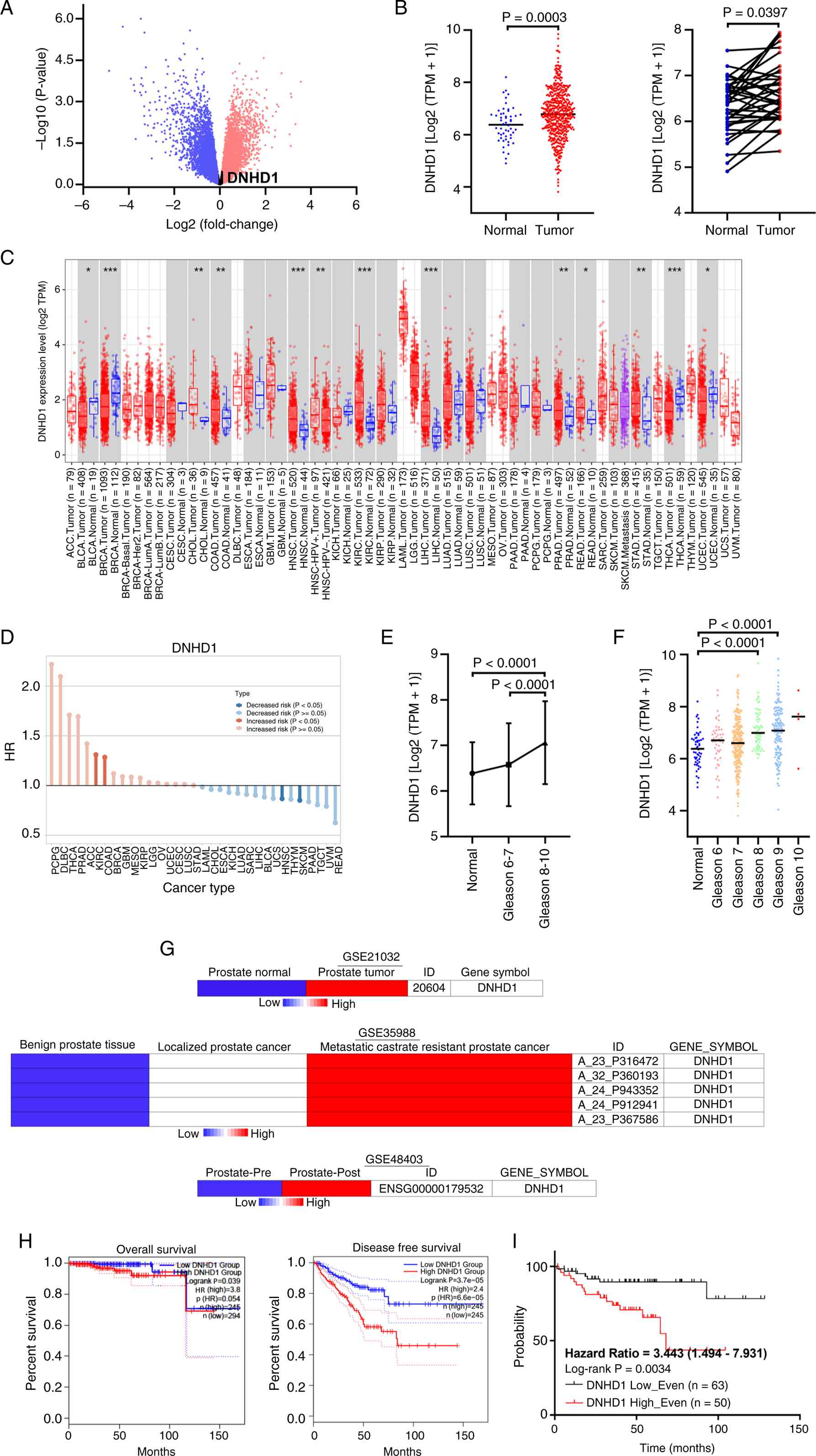
Figure 1

Dysregulation of DNHD1
expression is associated with prostate cancer progression and
unfavorable clinical outcomes. (A) Differential expression analysis
of TCGA-PRAD transcriptomic profiles stratified by pathological
stage (T2a vs. T4), indicating DNHD1 as one of the
transcripts markedly enriched in advanced prostate cancer. (B)
DNHD1 expression levels in paired prostate tumor and
adjacent nontumor tissues from the TCGA-PRAD cohort, indicating
increased DNHD1 expression in tumor specimens. (C) Pancancer
expression profiling of DNHD1 across TCGA-PRAD cohorts,
indicating differential expression patterns among multiple human
cancer types. (D) Pancancer prognostic analyses of association
between DNHD1 expression and clinical outcome across
distinct tumor types, indicating that PRAD, KIRC and COAD are tumor
entities with significant DNHD1-associated prognostic
stratification. (E) Αnalysis between DNHD1 expression and
Gleason score in prostate cancer specimens. (F) Distribution of
DNHD1 expression across stratified Gleason grade score in
the TCGA-PRAD cohort. (G) Validation of DNHD1 expression
patterns in independent prostate cancer cohorts (GSE21032, GSE35988
and GSE48403), including benign prostate tissues as well as
localized prostate cancer, mCRPC and ADT-associated prostate cancer
tissues. (H) Kaplan-Meier survival analyses of OS and DFS according
to DNHD1 expression status in the TCGA-PRAD cohort. (I)
Independent validation of prognostic significance of DNHD1
expression for DFS in GSE21032. *P<0.05, **P<0.01,
***P<0.001. DNHD1, dynein heavy chain domain 1; TCGA, The Cancer
Genome Atlas; TPM, transcripts per million; mCRPC, metastatic
castration-resistant prostate cancer; ADT, androgen deprivation
therapy; OS, overall survival; DFS, disease-free survival; HR,
hazard ratio; GEO, Gene Expression Omnibus; ACC, Adrenocortical
Carcinoma; BLCA, Bladder Urothelial Carcinoma; BRCA, Breast
Invasive Carcinoma; CESC, Cervical Squamous Cell Carcinoma and
Endocervical Adenocarcinoma; CHOL, Cholangiocarcinoma; COAD, Colon
Adenocarcinoma; DLBC, Lymphoid Neoplasm Diffuse Large B-cell
Lymphoma; ESCA, Esophageal Carcinoma; GBM, Glioblastoma Multiforme;
HNSC, Head and Neck Squamous Cell Carcinoma; KICH, Kidney
Chromophobe; KIRC, Kidney Renal Clear Cell Carcinoma; KIRP, Kidney
Renal Papillary Cell Carcinoma; LAML, Acute Myeloid Leukemia; LGG,
Brain Lower Grade Glioma; LIHC, Liver Hepatocellular Carcinoma;
LUAD, Lung Adenocarcinoma; LUSC, Lung Squamous Cell Carcinoma;
MESO, Mesothelioma; OV, Ovarian Serous Cystadenocarcinoma; PAAD,
Pancreatic Adenocarcinoma; PCPG, Pheochromocytoma and
Paraganglioma; PRAD, Prostate Adenocarcinoma; READ, Rectum
Adenocarcinoma; SARC, Sarcoma; SKCM, Skin Cutaneous Melanoma; STAD,
Stomach Adenocarcinoma; TGCT, Testicular Germ Cell Tumors; THCA,
Thyroid Carcinoma; THYM, Thymoma; UCEC, Uterine Corpus Endometrial
Carcinoma; UCS, Uterine Carcinosarcoma; UVM, Uveal Melanoma.

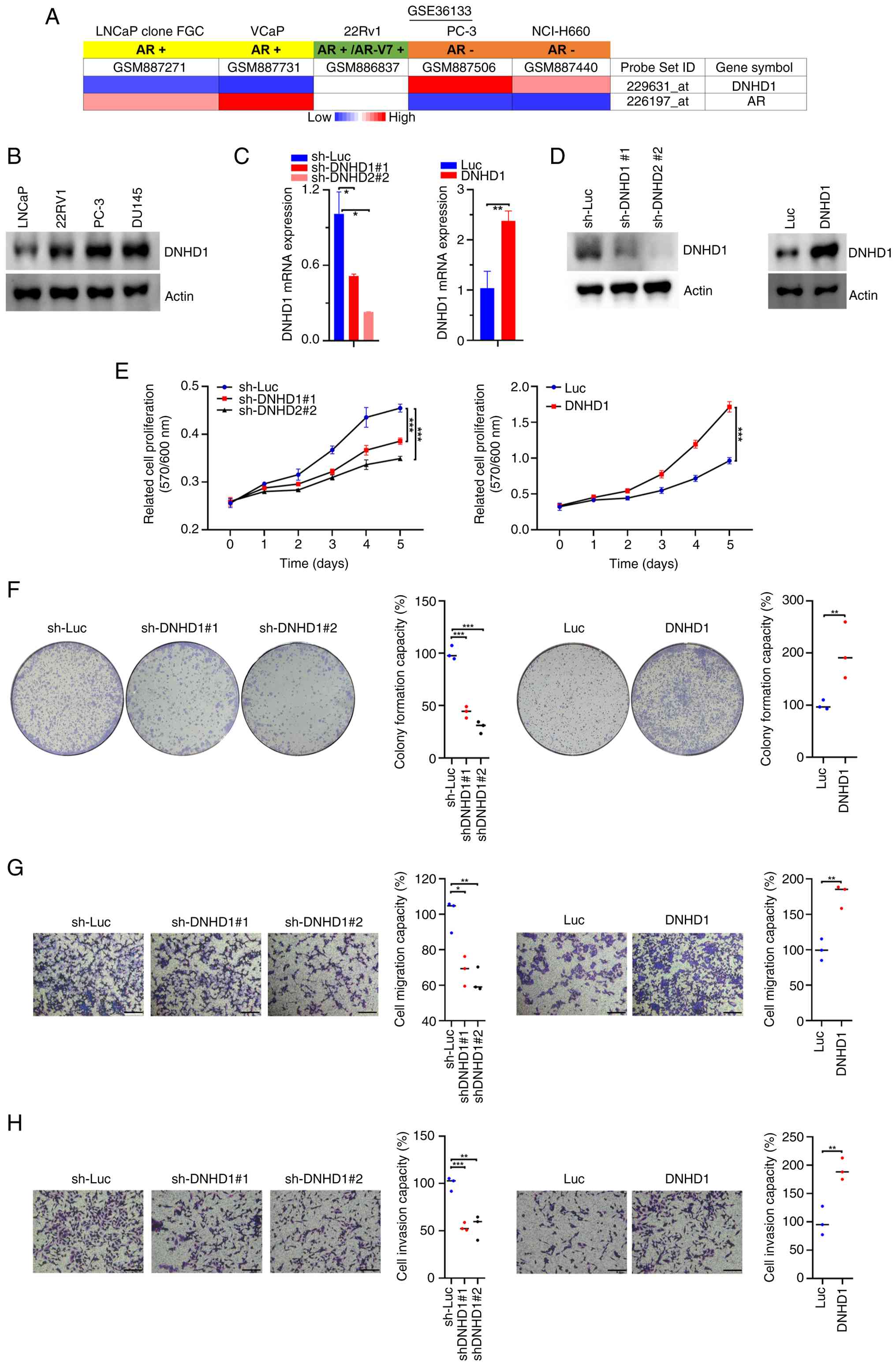
Figure 2

DNHD1 facilitates prostate
cancer cell growth and metastatic behavior. (A) Analysis of
DNHD1 expression across prostate cancer cell lines from the
CCLE dataset (GSE36133), including AR-positive (LNCaP and 22RV1)
and AR-negative (PC-3 and DU145) cell models. (B) Immunoblotting of
DNHD1 expression in a panel of prostate cancer cell lines. (C and
D) Establishment and validation of DNHD1 gain-of-function
and loss-of-function models. DNHD1 overexpression in LNCaP
cells and DNHD1 knockdown in PC-3 cells were confirmed
through qPCR and immunoblotting. (E) Alamar Blue proliferation
assays indicating effects of DNHD1 overexpression in LNCaP
cells and DNHD1 knockdown in PC-3 cells on cell growth. (F)
Colony formation assays assessing clonogenic capacity after
DNHD1 overexpression in LNCaP cells or DNHD1
knockdown in PC-3 cells. (G) Boyden chamber migration assays for
migratory activity in DNHD1-overexpressing LNCaP cells and
DNHD1-knockdown PC-3 cells. (H) Matrigel invasion assays for
invasive capacity of DNHD1-overexpressing LNCaP cells and
DNHD1-knockdown PC-3 cells. (Scale bar, 100 µm). *P<0.05,
**P<0.01, ***P<0.001. DNHD1, dynein heavy chain domain 1;
CCLE, Cancer Cell Line Encyclopedia; AR, androgen receptor; qPCR,
quantitative polymerase chain reaction; shRNA, short hairpin RNA;
sh-Luc, short hairpin RNA targeting luciferase (control); Luc,
luciferase; AR-V7, androgen receptor splice variant 7; GSE, Gene
Expression Omnibus Series.

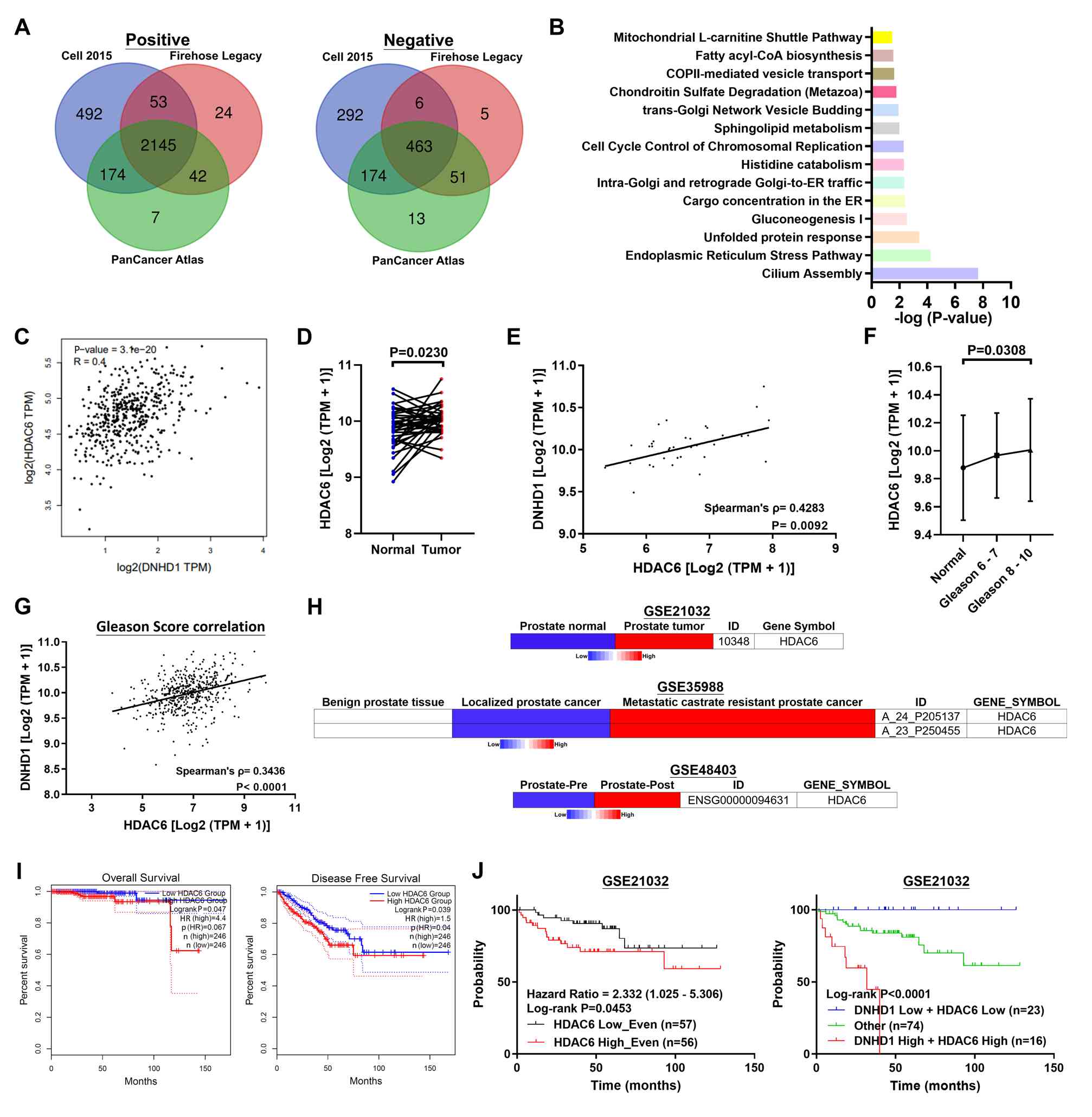
Figure 3

HDAC6 is a key downstream
effector within the DNHD1-associated oncogenic network in
prostate cancer. (A) Integrative correlation analysis across the
TCGA-PRAD, Cell 2015, Firehose Legacy and PanCancer Atlas cohorts
to identify genes consistently associated with DNHD1
expression (Spearman's ρ≥0.3 or Spearman's ρ≤-0.3), generating a
high-confidence DNHD1-associated transcriptional network.
(B) IPA of DNHD1-associated genes revealing significant
enrichment of biological processes related to cytoskeletal
organization, vesicular transport, organelle dynamics and metabolic
regulation. Cilium assembly appeared to be one of the most
consistently enriched pathways, implicating DNHD1 in
structural signaling programs associated with prostate cancer
progression. (C and D) Transcriptomic analyses of TCGA-PRAD
specimens demonstrating increased HDAC6 expression in
prostate cancer tissues relative to normal prostate tissues.
Representative comparisons and quantitative analyses are presented.
(E) Correlation analysis in the TCGA-PRAD cohort. The significant
positive association between DNHD1 and HDAC6
expression confirmed a coordinated transcriptional relationship
between these genes in clinical prostate cancer specimens. (F)
Clinicopathological analysis revealing a positive association
between HDAC6 expression and Gleason score, thereby
indicating progressive upregulation of HDAC6 expression with
increasing histological aggressiveness. (G) Independent validation
within prostate cancer patient cohorts, confirming a significant
positive correlation between DNHD1 and HDAC6
expression levels, supporting the robustness of the DNHD1-HDAC6
axis. (H) Validation across independent clinical datasets,
demonstrating elevated HDAC6 expression in localized
prostate cancer, mCRPC and ADT-treated prostate cancer tissues,
indicating its association with disease progression and
therapy-adaptive tumor states. (I) Kaplan-Meier survival analyses
demonstrating that upregulated HDAC6 expression is
associated with inferior OS and DFS in patients with prostate
cancer, supporting its prognostic relevance. (J) Combined
stratification based on DNHD1 and HDAC6 expression. A
high-risk molecular subgroup with the poorest clinical outcome was
noted, confirming the additive prognostic value of the DNHD1-HDAC6
axis. HDAC6, histone deacetylase 6; DNHD1, dynein heavy chain
domain 1; TCGA, The Cancer Genome Atlas; PRAD, prostate
adenocarcinoma; IPA, Ingenuity Pathway Analysis; COPII, coat
protein complex II; ER, endoplasmic reticulum; TPM, transcripts per
million; mCRPC, metastatic castration-resistant prostate cancer;
ADT, androgen deprivation therapy; OS, overall survival; DFS,
disease-free survival; HR, hazard ratio; GEO, Gene Expression
Omnibus; GSE, Gene Expression Omnibus Series.

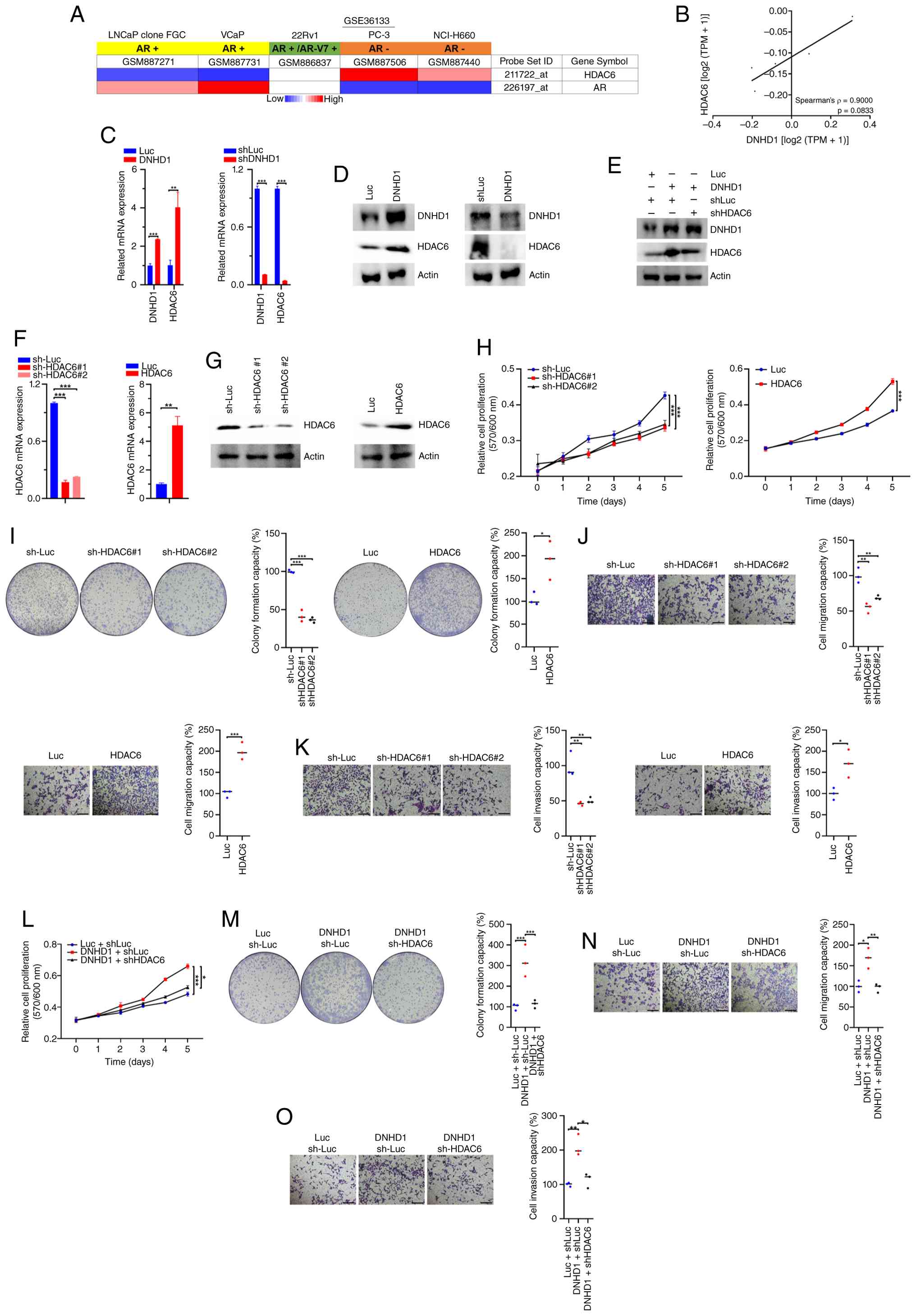
Figure 4

DNHD1 promotes malignancy in
prostate cancer cells through HDAC6-dependent regulatory
mechanisms. (A) Analysis of the CCLE-derived prostate cancer
transcriptomic dataset GSE36133, demonstrating a lineage-associated
distribution pattern of HDAC6 expression, with lower
expression observed in AR-positive luminal-like prostate cancer
cell lines relative to AR-negative cell lines. (B) Correlation
analysis across prostate cancer datasets, revealing a strong
positive association between DNHD1 and HDAC6
expression (Spearman's ρ=0.90), confirming a coordinated
transcriptional relationship between these two molecules. (C and D)
Positive regulatory effect of DNHD1 on HDAC6
transcript and protein expression. Ectopic expression of
DNHD1 in LNCaP cells increased HDAC6 expression,
whereas DNHD1 knockdown in PC-3 cells reduced HDAC6
mRNA and protein expression, as determined through qPCR and
immunoblotting. (E) Reciprocal perturbation analyses demonstrating
that modulating HDAC6 expression did not alter DNHD1
expression, indicating a unidirectional regulatory relationship in
which DNHD1 functions as an upstream regulator of
HDAC6. (F and G) Establishment and validation of
HDAC6 gain-of-function and loss-of-function models in
prostate cancer cells. HDAC6 overexpression in LNCaP cells
and HDAC6 knockdown in PC-3 cells were confirmed through
qPCR and immunoblotting. Functional analyses demonstrating that
HDAC6 contributes to prostate cancer cell growth and
clonogenic capacity. HDAC6 overexpression (H) enhanced
proliferative and (I) colony-forming ability in LNCaP cells,
whereas HDAC6 knockdown suppressed these phenotypes in PC-3
cells. (J and K) Boyden chamber migration and Matrigel invasion
assays demonstrating that HDAC6 positively regulates
prostate cancer cell motility and invasive behavior. Ectopic
HDAC6 expression increased migratory and invasive capacities
in LNCaP cells, whereas HDAC6 knockdown markedly impaired
these phenotypes in PC-3 cells. (L-O) Epistasis analyses in
DNHD1-overexpressing LNCaP cells indicating that
HDAC6 is required for DNHD1-driven oncogenic phenotypes.
DNHD1 promoted cell proliferation, clonogenic growth,
migration and invasion, whereas concurrent HDAC6 silencing
markedly attenuated these tumor-promoting effects (Scale bar, 100
µm). *P<0.05, **P<0.01, ***P<0.001. DNHD1, dynein heavy
chain domain 1; HDAC6, histone deacetylase 6; CCLE, Cancer Cell
Line Encyclopedia; AR, androgen receptor; AR-V7, androgen receptor
splice variant 7; TPM, transcripts per million; qPCR, quantitative
polymerase chain reaction; mRNA, messenger RNA; shRNA, short
hairpin RNA; sh-Luc, short hairpin RNA targeting luciferase
(control); Luc, luciferase; shHDAC6, short hairpin RNA targeting
histone deacetylase 6; GSE, Gene Expression Omnibus Series.

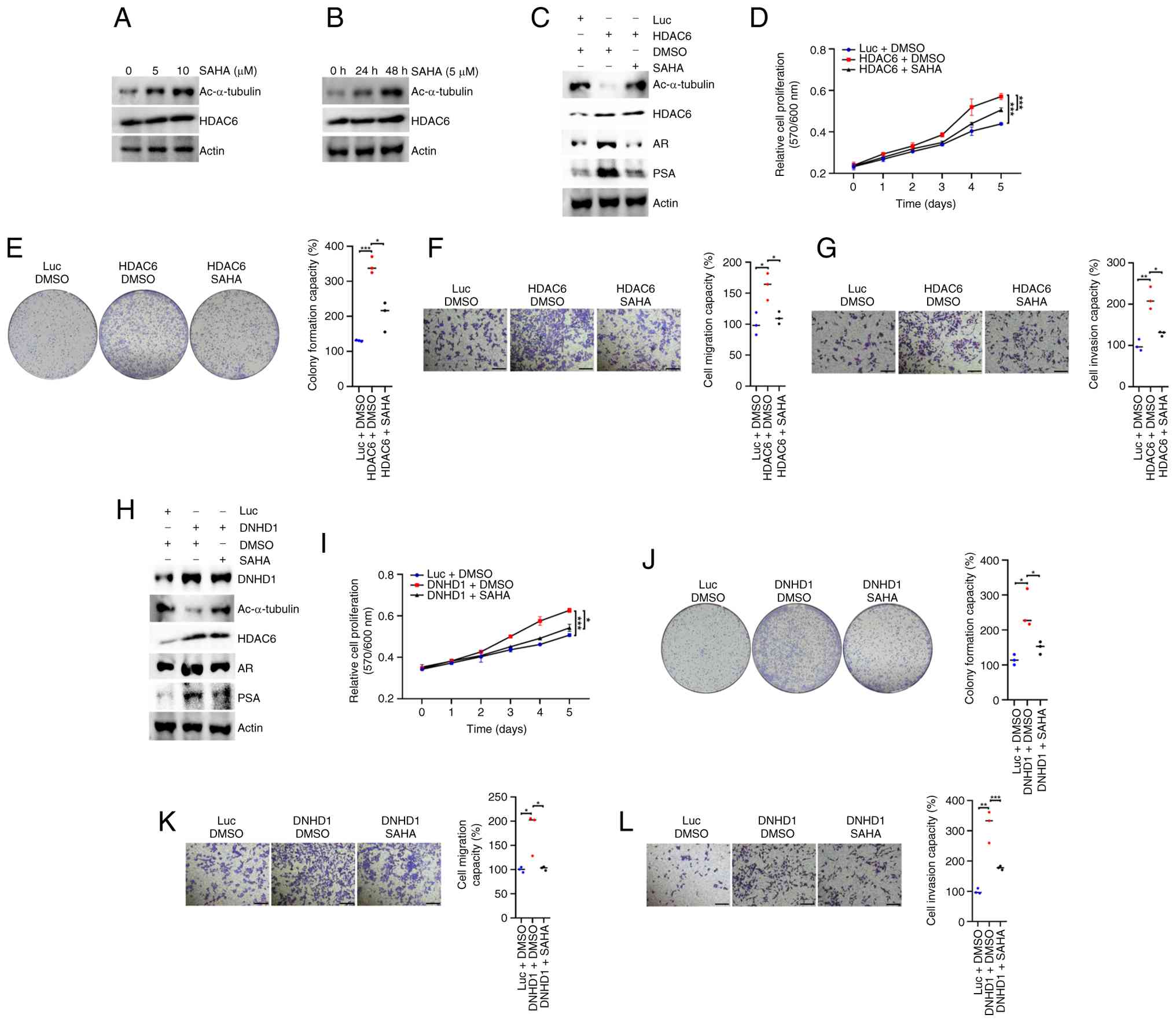
Figure 5

Pharmacological inhibition of
HDAC6 suppresses DNHD1-driven oncogenic phenotypes in
prostate cancer. (A) Immunoblotting of LNCaP cells treated with
increasing concentrations of the selective HDAC6 inhibitor
tubastatin A. The results indicate dose-dependent accumulation of
acetylated α-tubulin, confirming inhibition of HDAC6 deacetylase
activity. (B) Time-course analysis in LNCaP cells demonstrating
sustained increase in acetylated α-tubulin levels after tubastatin
A treatment, thereby indicating prolonged suppression of
HDAC6-dependent deacetylation. (C) Pharmacological
inhibition of HDAC6. The results demonstrate reduced AR and
PSA expression in LNCaP cells, consistent with suppression of AR
signaling activity. (D-G) Functional analyses in LNCaP cells
demonstrating that tubastatin A treatment markedly inhibited cell
viability, clonogenic growth, migratory capacity and invasive
behavior. (H) Immunoblotting in DNHD1-overexpressing LNCaP
cells. The results indicate that tubastatin A treatment suppressed
DNHD1-associated HDAC6 expression and concomitantly
reduced AR and PSA expression. (I-L) Functional epistasis analyses
in DNHD1-overexpressing LNCaP cells. The results
demonstrated that pharmacological inhibition of HDAC6 markedly
attenuates DNHD1-induced enhancements in cell proliferation,
colony formation, migration and invasion, indicating that HDAC6
activity is required for DNHD1-mediated oncogenic effects in
prostate cancer. (Scale bar, 100 µm). *P<0.05, **P<0.01,
***P<0.001. DNHD1, dynein heavy chain domain 1; HDAC6, histone
deacetylase 6; Ac-α-tubulin, acetylated α-tubulin; SAHA,
suberoylanilide hydroxamic acid (vorinostat); AR, androgen
receptor; PSA, prostate-specific antigen; DMSO, dimethyl sulfoxide;
Luc, luciferase; sh-Luc, short hairpin RNA targeting luciferase
(control); shHDAC6, short hairpin RNA targeting histone deacetylase
6.

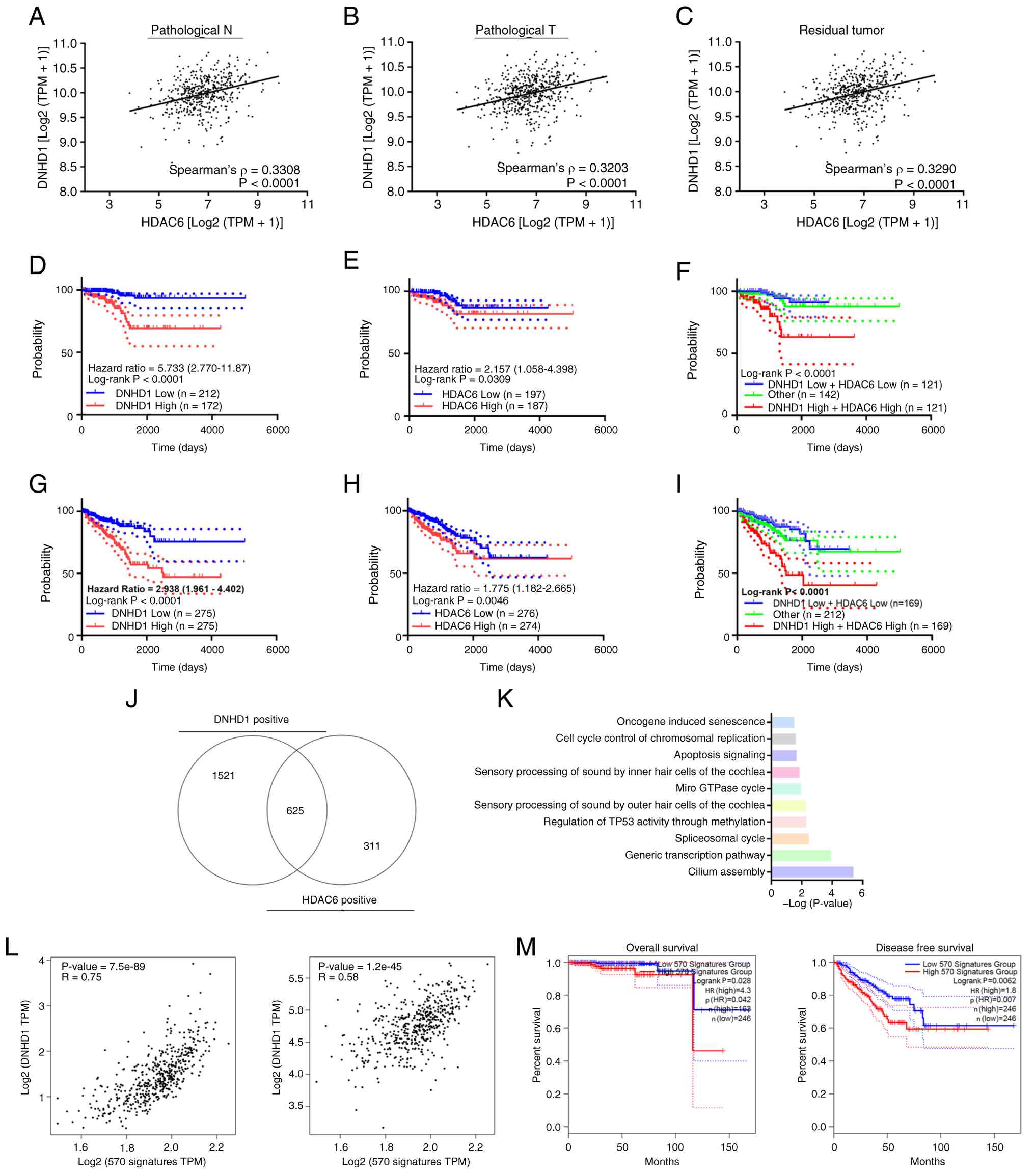
Figure 6

The DNHD1-HDAC6 axis is a
transcriptionally coordinated program associated with prostate
cancer progression and adverse clinical outcomes. Correlation
analyses of the relationship between DNHD1 and HDAC6
expression across distinct clinicopathological contexts within the
TCGA-PRAD cohort. Positive associations between DNHD1 and
HDAC6 expression were observed in tumors stratified by
pathological (A) N and (B) T stages and (C) residual tumor status,
confirming the maintenance of the regulatory relationship between
DNHD1 and HDAC6 during disease progression and
posttreatment prostate cancer states. Kaplan-Meier analyses of DFI
by (D) DNHD1 and (E) HDAC6 expression in patients
from the TCGA-PRAD cohort. Patients were stratified into high- and
low-expression groups on the basis of predefined cutoff criteria.
(F) Integrated prognostic stratification of DFI based on combined
DNHD1 and HDAC6 expression status. Coexpression
analysis revealed a patient subgroup exhibiting the most
unfavorable clinical outcomes. Kaplan-Meier analyses of PFI
according to (G) DNHD1 or (H) HDAC6 expression levels
in the TCGA-PRAD cohort. (I) Combined PFI analysis based on
DNHD1-HDAC6 coexpression status demonstrating enhanced prognostic
discrimination compared with single-gene stratification. (J)
Venn-based integration of DNHD1- and HDAC6-associated
transcriptional networks indicating a shared set of positively
correlated genes that represent the common downstream regulatory
program of the DNHD1-HDAC6 axis. (K) Functional enrichment analysis
of the shared gene set associated with the DNHD1-HDAC6 axis. After
exclusion of non-protein-coding transcripts, a refined 570-gene
signature was established, with cilium assembly emerging as the
most markedly enriched biological process. (L) Correlation analyses
demonstrating significant positive associations between the
DNHD1-HDAC6 downstream transcriptional signature and expression
levels of DNHD1 or HDAC6 in PRAD specimens,
confirming coordinated transcriptional coupling of the
axis-associated gene program. (M) Kaplan-Meier analyses of OS and
DFS according to the DNHD1-HDAC6 downstream transcriptional
signature. Patients were stratified into high- and low-signature
groups on the basis of predefined cutoff criteria, demonstrating
the prognostic relevance of the shared DNHD1-HDAC6 gene program.
DNHD1, dynein heavy chain domain 1; HDAC6, histone deacetylase 6;
TCGA, The Cancer Genome Atlas; PRAD, prostate adenocarcinoma; TPM,
transcripts per million; DFI, disease-free interval; PFI,
progression-free interval; OS, overall survival; DFS, disease-free
survival; HR, hazard ratio.
View References

1 

Kelly BD, Miller N, Sweeney KJ, Durkan GC, Rogers E, Walsh K and Kerin MJ: A circulating MicroRNA signature as a biomarker for prostate cancer in a high risk group. J Clin Med. 4:1369–1379. 2015. View Article : Google Scholar : PubMed/NCBI

2 

Siegel RL, Giaquinto AN and Jemal A: Cancer statistics, 2024. CA Cancer J Clin. 74:12–49. 2024.PubMed/NCBI

3 

Salinas CA, Tsodikov A, Ishak-Howard M and Cooney KA: Prostate cancer in young men: An important clinical entity. Nat Rev Urol. 11:317–323. 2014. View Article : Google Scholar : PubMed/NCBI

4 

Rebello RJ, Oing C, Knudsen KE, Loeb S, Johnson DC, Reiter RE, Gillessen S, Van der Kwast T and Bristow RG: Prostate cancer. Nat Rev Dis Primers. 7:92021. View Article : Google Scholar : PubMed/NCBI

5 

Siegel RL, Kratzer TB, Wagle NS, Sung H and Jemal A: Cancer statistics, 2026. CA Cancer J Clin. 76:e700432026.PubMed/NCBI

6 

Pron G: Prostate-specific antigen (PSA)-based population screening for prostate cancer: An evidence-based analysis. Ont Health Technol Assess Ser. 15:1–64. 2015.

7 

Kang BJ, Jeun M, Jang GH, Song SH, Jeong IG, Kim CS, Searson PC and Lee KH: Diagnosis of prostate cancer via nanotechnological approach. Int J Nanomedicine. 10:6555–6569. 2015.PubMed/NCBI

8 

Cuzick J, Thorat MA, Andriole G, Brawley OW, Brown PH, Culig Z, Eeles RA, Ford LG, Hamdy FC, Holmberg L, et al: Prevention and early detection of prostate cancer. Lancet Oncol. 15:e484–e492. 2014. View Article : Google Scholar : PubMed/NCBI

9 

Hyldgård VB, Laursen KR, Poulsen J and Søgaard R: Robot-assisted surgery in a broader healthcare perspective: A difference-in-difference-based cost analysis of a national prostatectomy cohort. BMJ Open. 7:e0155802017. View Article : Google Scholar : PubMed/NCBI

10 

Hohwü L, Borre M, Ehlers L and Venborg Pedersen K: A short-term cost-effectiveness study comparing robot-assisted laparoscopic and open retropubic radical prostatectomy. J Med Econ. 14:403–409. 2011. View Article : Google Scholar : PubMed/NCBI

11 

Burkhard P, Stetefeld J and Strelkov SV: Coiled coils: A highly versatile protein folding motif. Trends Cell Biol. 11:82–88. 2001. View Article : Google Scholar : PubMed/NCBI

12 

Anazi S, Maddirevula S, Faqeih E, Alsedairy H, Alzahrani F, Shamseldin HE, Patel N, Hashem M, Ibrahim N, Abdulwahab F, et al: Clinical genomics expands the morbid genome of intellectual disability and offers a high diagnostic yield. Mol Psychiatry. 22:615–624. 2017. View Article : Google Scholar : PubMed/NCBI

13 

Meier N, Bruder E, Lapaire O, Hoesli I, Kang A, Hench J, Hoeller S, De Geyter J, Miny P, Heinimann K, et al: Exome sequencing of fetal anomaly syndromes: Novel phenotype-genotype discoveries. Eur J Hum Genet. 27:730–737. 2019. View Article : Google Scholar : PubMed/NCBI

14 

Tan C, Meng L, Lv M, He X, Sha Y, Tang D, Tan Y, Hu T, He W, Tu C, et al: Bi-allelic variants in DNHD1 cause flagellar axoneme defects and asthenoteratozoospermia in humans and mice. Am J Hum Genet. 109:157–171. 2022. View Article : Google Scholar : PubMed/NCBI

15 

Martinez G, Barbotin AL, Cazin C, Wehbe Z, Boursier A, Amiri-Yekta A, Daneshipour A, Hosseini SH, Rives N, Feraille A, et al: New mutations in DNHD1 cause multiple morphological abnormalities of the sperm flagella. Int J Mol Sci. 24:25592023. View Article : Google Scholar : PubMed/NCBI

16 

Wu S, Hivert MF, Cardenas A, Zhong J, Rifas-Shiman SL, Agha G, Colicino E, Just AC, Amarasiriwardena C, Lin X, et al: Exposure to low levels of lead in utero and umbilical cord blood DNA methylation in project viva: An epigenome-wide association study. Environ Health Perspect. 125:0870192017. View Article : Google Scholar : PubMed/NCBI

17 

Schiavo G, Greensmith L, Hafezparast M and Fisher EMC: Cytoplasmic dynein heavy chain: The servant of many masters. Trends Neurosci. 36:641–651. 2013. View Article : Google Scholar : PubMed/NCBI

18 

Ung C, Sanchez AV, Shen L, Davoudi S, Ahmadi T, Navarro-Gomez D, Chen CJ, Hancock H, Penman A, Hoadley S, et al: Whole exome sequencing identification of novel candidate genes in patients with proliferative diabetic retinopathy. Vision Res. 139:168–176. 2017. View Article : Google Scholar : PubMed/NCBI

19 

Jones AC, Patki A, Claas SA, Tiwari HK, Chaudhary NS, Absher DM, Lange LA, Lange EM, Zhao W, Ratliff SM, et al: Differentially methylated DNA regions and left ventricular hypertrophy in african americans: A HyperGEN study. Genes (Basel). 13:17002022. View Article : Google Scholar : PubMed/NCBI

20 

Liu S, Wei W, Wang P, Liu C, Jiang X, Li T, Li F, Wu Y, Chen S, Sun K and Xu R: LOF variants identifying candidate genes of laterality defects patients with congenital heart disease. PLoS Genet. 18:e10105302022. View Article : Google Scholar : PubMed/NCBI

21 

Xu MD, Liu SL, Feng YZ, Liu Q, Shen M, Zhi Q, Liu Z, Gu DM, Yu J, Shou LM, et al: Genomic characteristics of pancreatic squamous cell carcinoma, an investigation by using high throughput sequencing after in-solution hybrid capture. Oncotarget. 8:14620–14635. 2017. View Article : Google Scholar : PubMed/NCBI

22 

Lin Z, Xu H, Yang R, Li Z, Zheng H, Zhang Z, Peng J, Zhang X, Qi S, Liu Y and Huang G: Effective treatment of a BRAF V600E-mutant epithelioid glioblastoma patient by vemurafenib: A case report. Anticancer Drugs. 33:100–104. 2022. View Article : Google Scholar : PubMed/NCBI

23 

Huang L, Zou T, Liang W, Mo C, Wei J, Deng Y and Ou M: High-throughput sequencing reveals that rotundine inhibits colorectal cancer by regulating prognosis-related genes. J Pers Med. 13:5502023. View Article : Google Scholar : PubMed/NCBI

24 

Li ZT, Zhu H, Wang XJ, Zhang LH and Zhang L: Histone deacetylase 6: A potential therapeutic target for drug development. Bioorg Chem. 165:1089322025. View Article : Google Scholar : PubMed/NCBI

25 

Liang Y, Wang Y, Xing J, Li J and Zhang K: The regulatory mechanisms and treatment of HDAC6 in immune dysregulation diseases. Front Immunol. 16:16535882025. View Article : Google Scholar : PubMed/NCBI

26 

Ran J, Yang Y, Li D, Liu M and Zhou J: Deacetylation of α-tubulin and cortactin is required for HDAC6 to trigger ciliary disassembly. Sci Rep. 5:129172015. View Article : Google Scholar : PubMed/NCBI

27 

Zhou M, Zheng H, Li Y, Huang H, Min X, Dai S, Zhou W, Chen Z, Xu G and Chen Y: Discovery of a novel AR/HDAC6 dual inhibitor for prostate cancer treatment. Aging (Albany NY). 13:6982–6998. 2021. View Article : Google Scholar : PubMed/NCBI

28 

Gibbs A, Schwartzman J, Deng V and Alumkal J: Sulforaphane destabilizes the androgen receptor in prostate cancer cells by inactivating histone deacetylase 6. Proc Natl Acad Sci USA. 106:16663–16668. 2009. View Article : Google Scholar : PubMed/NCBI

29 

Ai J, Wang Y, Dar JA, Liu J, Liu L, Nelson JB and Wang Z: HDAC6 regulates androgen receptor hypersensitivity and nuclear localization via modulating Hsp90 acetylation in castration-resistant prostate cancer. Mol Endocrinol. 23:1963–1972. 2009. View Article : Google Scholar : PubMed/NCBI

30 

Peng J, Xie F, Qin P, Liu Y, Niu H, Sun J, Xue H, Zhao Q, Liu J and Wu J: Recent development of selective inhibitors targeting the HDAC6 as anti-cancer drugs: Structure, function and design. Bioorg Chem. 138:1066222023. View Article : Google Scholar : PubMed/NCBI

31 

Pulya S, Amin SA, Adhikari N, Biswas S, Jha T and Ghosh B: HDAC6 as privileged target in drug discovery: A perspective. Pharmacol Res. 163:1052742021. View Article : Google Scholar : PubMed/NCBI

32 

Hu SW, Wu CC, Dong SW, Tzou KY, Chen CH, Wang YH, Liu YN, Liao CC and Li CH: Implications of the KHDC4-TRAF2 axis in the context of prostate cancer prognosis. Aging (Albany NY). 17:1544–1570. 2025.PubMed/NCBI

33 

Wu CC, Hu SW, Dong SW, Tzou KY and Li CH: The prognostic and neuroendocrine implications of SLC25A29-mediated biomass signature in prostate cancer. Geroscience. 47:4711–4732. 2025. View Article : Google Scholar : PubMed/NCBI

34 

Livak KJ and Schmittgen TD: Analysis of relative gene expression data using real-time quantitative PCR and the 2(−Delta Delta C(T)) method. Methods. 25:402–408. 2001. View Article : Google Scholar : PubMed/NCBI

35 

Li CH, Chan MH and Chang YC: The role of fructose 1,6-bisphosphate-mediated glycolysis/gluconeogenesis genes in cancer prognosis. Aging (Albany NY). 14:3233–3258. 2022. View Article : Google Scholar : PubMed/NCBI

36 

Li CH, Chan MH, Chang YC and Hsiao M: The CHST11 gene is linked to lung cancer and pulmonary fibrosis. J Gene Med. 24:e34512022. View Article : Google Scholar : PubMed/NCBI

37 

Li CH, Fang CY, Chan MH, Chen CL, Chang YC and Hsiao M: The cytoplasmic expression of FSTL3 correlates with colorectal cancer progression, metastasis status and prognosis. J Cell Mol Med. 27:672–686. 2023. View Article : Google Scholar : PubMed/NCBI

38 

Li CH, Fang CY, Chan MH, Lu PJ, Ger LP, Chu JS, Chang YC, Chen CL and Hsiao M: The activation of EP300 by F11R leads to EMT and acts as a prognostic factor in triple-negative breast cancers. J Pathol Clin Res. 9:165–181. 2023. View Article : Google Scholar : PubMed/NCBI

39 

Kim S, Lee K, Choi JH, Ringstad N and Dynlacht BD: Nek2 activation of Kif24 ensures cilium disassembly during the cell cycle. Nat Commun. 6:80872015. View Article : Google Scholar : PubMed/NCBI

40 

Valenzuela-Fernández A, Cabrero JR, Serrador JM and Sánchez-Madrid F: HDAC6: A key regulator of cytoskeleton, cell migration and cell-cell interactions. Trends Cell Biol. 18:291–297. 2008. View Article : Google Scholar : PubMed/NCBI

41 

Chen P and Zhang YL: Role of HDAC6 in carcinomas. Discov Oncol. 17:2402026. View Article : Google Scholar : PubMed/NCBI

42 

Godbole AM and Njar VCO: New insights into the androgen-targeted therapies and epigenetic therapies in prostate cancer. Prostate Cancer. 2011:9187072011. View Article : Google Scholar : PubMed/NCBI

43 

Ye PC, Leu WJ, Yeh TY, Hsu YT, Lin YC, Wei ZY, Chen YC, Chiang YC, Hsu JL, Chan SH, et al: A novel HDAC6 inhibitor interferes microtubule dynamics and spindle assembly checkpoint and sensitizes cisplatin-induced apoptosis in castration-resistant prostate cancer. Prostate. 84:605–619. 2024. View Article : Google Scholar : PubMed/NCBI

44 

Pramanik SD, Kumar Halder A, Mukherjee U, Kumar D, Dey YN and R M: Potential of histone deacetylase inhibitors in the control and regulation of prostate, breast and ovarian cancer. Front Chem. 10:9482172022. View Article : Google Scholar : PubMed/NCBI

45 

Eguether T and Hahne M: Mixed signals from the cell's antennae: Primary cilia in cancer. EMBO Rep. 19:e465892018. View Article : Google Scholar : PubMed/NCBI

46 

Mill P, Christensen ST and Pedersen LB: Primary cilia as dynamic and diverse signalling hubs in development and disease. Nat Rev Genet. 24:421–441. 2023. View Article : Google Scholar : PubMed/NCBI

47 

Kiseleva AA, Nikonova AS and Golemis EA: Patterns of ciliation and ciliary signaling in cancer. Rev Physiol Biochem Pharmacol. 185:87–105. 2023. View Article : Google Scholar : PubMed/NCBI

48 

Zheng M, Zhou J and Wang Y: Primary cilia in cancer: Structures, functions, mechanisms, and therapeutic implications. Cancer Biol Med. 22:1455–1472. 2025.PubMed/NCBI

49 

Collinson R and Tanos B: Primary cilia and cancer: A tale of many faces. Oncogene. 44:1551–1566. 2025. View Article : Google Scholar : PubMed/NCBI

50 

Kaushal JB, Seshacharyulu P, Batra SK and Muniyan S: Multifaceted role of primary cilia and ciliary proteins: A potential nexus for hedgehog signaling and prostate cancer. Biochim Biophys Acta Mol Basis Dis. 1872:1681202026. View Article : Google Scholar : PubMed/NCBI

51 

O'Toole SM and Chapple JP: Primary cilia: A link between hormone signalling and endocrine-related cancers? Biochem Soc Trans. 44:1227–1234. 2016. View Article : Google Scholar : PubMed/NCBI

52 

Matissek SJ and Elsawa SF: GLI3: A mediator of genetic diseases, development and cancer. Cell Commun Signal. 18:542020. View Article : Google Scholar : PubMed/NCBI

53 

Gao L and Alumkal J: Epigenetic regulation of androgen receptor signaling in prostate cancer. Epigenetics. 5:100–104. 2010. View Article : Google Scholar : PubMed/NCBI

54 

Tran HY, Lin CL, Lin HY, Shen CJ, Sharma R, Liou JP and Hsu TI: A dual CYP17A1/HDAC6 inhibitor for targeted prostate cancer therapy. FASEB J. 39:e711522025. View Article : Google Scholar : PubMed/NCBI

Related Articles

  • Abstract
  • View
  • Download
  • Twitter
Copy and paste a formatted citation
Spandidos Publications style
Lee AN, Wu CC, Hu SW, Chen CH, Chiang YT, Kao WT, Tzou KY, Liu CH, Dong SW, Wang YT, Wang YT, et al: Targeting the DNHD1‑HDAC6 axis inactivates prostate&nbsp;cancer cell aggressiveness <em>in vitro</em>, suggesting potential therapeutic vulnerability. Oncol Rep 56: 198, 2026.
APA
Lee, A.N., Wu, C.C., Hu, S.W., Chen, C.H., Chiang, Y.T., Kao, W.T. ... Li, C.H. (2026). Targeting the DNHD1‑HDAC6 axis inactivates prostate&nbsp;cancer cell aggressiveness <em>in vitro</em>, suggesting potential therapeutic vulnerability. Oncology Reports, 56, 198. https://doi.org/10.3892/or.2026.9204
MLA
Lee, A. N., Wu, C. C., Hu, S. W., Chen, C. H., Chiang, Y. T., Kao, W. T., Tzou, K. Y., Liu, C. H., Dong, S. W., Wang, Y. T., Lee, Y. L., Li, S. B., Wu, C. A., Liao, C. C., Chan, M. H., Chiu, P. H., Li, C. H."Targeting the DNHD1‑HDAC6 axis inactivates prostate&nbsp;cancer cell aggressiveness <em>in vitro</em>, suggesting potential therapeutic vulnerability". Oncology Reports 56.5 (2026): 198.
Chicago
Lee, A. N., Wu, C. C., Hu, S. W., Chen, C. H., Chiang, Y. T., Kao, W. T., Tzou, K. Y., Liu, C. H., Dong, S. W., Wang, Y. T., Lee, Y. L., Li, S. B., Wu, C. A., Liao, C. C., Chan, M. H., Chiu, P. H., Li, C. H."Targeting the DNHD1‑HDAC6 axis inactivates prostate&nbsp;cancer cell aggressiveness <em>in vitro</em>, suggesting potential therapeutic vulnerability". Oncology Reports 56, no. 5 (2026): 198. https://doi.org/10.3892/or.2026.9204
Copy and paste a formatted citation
x
Spandidos Publications style
Lee AN, Wu CC, Hu SW, Chen CH, Chiang YT, Kao WT, Tzou KY, Liu CH, Dong SW, Wang YT, Wang YT, et al: Targeting the DNHD1‑HDAC6 axis inactivates prostate&nbsp;cancer cell aggressiveness <em>in vitro</em>, suggesting potential therapeutic vulnerability. Oncol Rep 56: 198, 2026.
APA
Lee, A.N., Wu, C.C., Hu, S.W., Chen, C.H., Chiang, Y.T., Kao, W.T. ... Li, C.H. (2026). Targeting the DNHD1‑HDAC6 axis inactivates prostate&nbsp;cancer cell aggressiveness <em>in vitro</em>, suggesting potential therapeutic vulnerability. Oncology Reports, 56, 198. https://doi.org/10.3892/or.2026.9204
MLA
Lee, A. N., Wu, C. C., Hu, S. W., Chen, C. H., Chiang, Y. T., Kao, W. T., Tzou, K. Y., Liu, C. H., Dong, S. W., Wang, Y. T., Lee, Y. L., Li, S. B., Wu, C. A., Liao, C. C., Chan, M. H., Chiu, P. H., Li, C. H."Targeting the DNHD1‑HDAC6 axis inactivates prostate&nbsp;cancer cell aggressiveness <em>in vitro</em>, suggesting potential therapeutic vulnerability". Oncology Reports 56.5 (2026): 198.
Chicago
Lee, A. N., Wu, C. C., Hu, S. W., Chen, C. H., Chiang, Y. T., Kao, W. T., Tzou, K. Y., Liu, C. H., Dong, S. W., Wang, Y. T., Lee, Y. L., Li, S. B., Wu, C. A., Liao, C. C., Chan, M. H., Chiu, P. H., Li, C. H."Targeting the DNHD1‑HDAC6 axis inactivates prostate&nbsp;cancer cell aggressiveness <em>in vitro</em>, suggesting potential therapeutic vulnerability". Oncology Reports 56, no. 5 (2026): 198. https://doi.org/10.3892/or.2026.9204
Follow us
  • Twitter
  • LinkedIn
  • Facebook
About
  • Spandidos Publications
  • Careers
  • Cookie Policy
  • Privacy Policy
How can we help?
  • Help
  • Live Chat
  • Contact
  • Email to our Support Team