Spandidos Publications Logo
  • About
    • About Spandidos
    • Aims and Scopes
    • Abstracting and Indexing
    • Editorial Policies
    • Reprints and Permissions
    • Job Opportunities
    • Terms and Conditions
    • Contact
  • Journals
    • All Journals
    • Oncology Letters
      • Oncology Letters
      • Information for Authors
      • Editorial Policies
      • Editorial Board
      • Aims and Scope
      • Abstracting and Indexing
      • Bibliographic Information
    • International Journal of Oncology
      • International Journal of Oncology
      • Information for Authors
      • Editorial Policies
      • Editorial Board
      • Aims and Scope
      • Abstracting and Indexing
      • Bibliographic Information
    • Molecular and Clinical Oncology
      • Molecular and Clinical Oncology
      • Information for Authors
      • Editorial Policies
      • Editorial Board
      • Aims and Scope
      • Abstracting and Indexing
      • Bibliographic Information
    • Experimental and Therapeutic Medicine
      • Experimental and Therapeutic Medicine
      • Information for Authors
      • Editorial Policies
      • Editorial Board
      • Aims and Scope
      • Abstracting and Indexing
      • Bibliographic Information
    • International Journal of Molecular Medicine
      • International Journal of Molecular Medicine
      • Information for Authors
      • Editorial Policies
      • Editorial Board
      • Aims and Scope
      • Abstracting and Indexing
      • Bibliographic Information
    • Biomedical Reports
      • Biomedical Reports
      • Information for Authors
      • Editorial Policies
      • Editorial Board
      • Aims and Scope
      • Abstracting and Indexing
      • Bibliographic Information
    • Oncology Reports
      • Oncology Reports
      • Information for Authors
      • Editorial Policies
      • Editorial Board
      • Aims and Scope
      • Abstracting and Indexing
      • Bibliographic Information
    • Molecular Medicine Reports
      • Molecular Medicine Reports
      • Information for Authors
      • Editorial Policies
      • Editorial Board
      • Aims and Scope
      • Abstracting and Indexing
      • Bibliographic Information
    • World Academy of Sciences Journal
      • World Academy of Sciences Journal
      • Information for Authors
      • Editorial Policies
      • Editorial Board
      • Aims and Scope
      • Abstracting and Indexing
      • Bibliographic Information
    • International Journal of Functional Nutrition
      • International Journal of Functional Nutrition
      • Information for Authors
      • Editorial Policies
      • Editorial Board
      • Aims and Scope
      • Abstracting and Indexing
      • Bibliographic Information
    • International Journal of Epigenetics
      • International Journal of Epigenetics
      • Information for Authors
      • Editorial Policies
      • Editorial Board
      • Aims and Scope
      • Abstracting and Indexing
      • Bibliographic Information
    • Medicine International
      • Medicine International
      • Information for Authors
      • Editorial Policies
      • Editorial Board
      • Aims and Scope
      • Abstracting and Indexing
      • Bibliographic Information
  • Articles
  • Information
    • Information for Authors
    • Information for Reviewers
    • Information for Librarians
    • Information for Advertisers
    • Conferences
  • Language Editing
Spandidos Publications Logo
  • About
    • About Spandidos
    • Aims and Scopes
    • Abstracting and Indexing
    • Editorial Policies
    • Reprints and Permissions
    • Job Opportunities
    • Terms and Conditions
    • Contact
  • Journals
    • All Journals
    • Biomedical Reports
      • Information for Authors
      • Editorial Policies
      • Editorial Board
      • Aims and Scope
      • Abstracting and Indexing
      • Bibliographic Information
    • Experimental and Therapeutic Medicine
      • Information for Authors
      • Editorial Policies
      • Editorial Board
      • Aims and Scope
      • Abstracting and Indexing
      • Bibliographic Information
    • International Journal of Epigenetics
      • Information for Authors
      • Editorial Policies
      • Editorial Board
      • Aims and Scope
      • Abstracting and Indexing
      • Bibliographic Information
    • International Journal of Functional Nutrition
      • Information for Authors
      • Editorial Policies
      • Editorial Board
      • Aims and Scope
      • Abstracting and Indexing
      • Bibliographic Information
    • International Journal of Molecular Medicine
      • Information for Authors
      • Editorial Policies
      • Editorial Board
      • Aims and Scope
      • Abstracting and Indexing
      • Bibliographic Information
    • International Journal of Oncology
      • Information for Authors
      • Editorial Policies
      • Editorial Board
      • Aims and Scope
      • Abstracting and Indexing
      • Bibliographic Information
    • Medicine International
      • Information for Authors
      • Editorial Policies
      • Editorial Board
      • Aims and Scope
      • Abstracting and Indexing
      • Bibliographic Information
    • Molecular and Clinical Oncology
      • Information for Authors
      • Editorial Policies
      • Editorial Board
      • Aims and Scope
      • Abstracting and Indexing
      • Bibliographic Information
    • Molecular Medicine Reports
      • Information for Authors
      • Editorial Policies
      • Editorial Board
      • Aims and Scope
      • Abstracting and Indexing
      • Bibliographic Information
    • Oncology Letters
      • Information for Authors
      • Editorial Policies
      • Editorial Board
      • Aims and Scope
      • Abstracting and Indexing
      • Bibliographic Information
    • Oncology Reports
      • Information for Authors
      • Editorial Policies
      • Editorial Board
      • Aims and Scope
      • Abstracting and Indexing
      • Bibliographic Information
    • World Academy of Sciences Journal
      • Information for Authors
      • Editorial Policies
      • Editorial Board
      • Aims and Scope
      • Abstracting and Indexing
      • Bibliographic Information
  • Articles
  • Information
    • For Authors
    • For Reviewers
    • For Librarians
    • For Advertisers
    • Conferences
  • Language Editing
Login Register Submit
  • This site uses cookies
  • You can change your cookie settings at any time by following the instructions in our Cookie Policy. To find out more, you may read our Privacy Policy.

    I agree
Search articles by DOI, keyword, author or affiliation
Search
Advanced Search
presentation
World Academy of Sciences Journal
Join Editorial Board Propose a Special Issue
Print ISSN: 2632-2900 Online ISSN: 2632-2919
Journal Cover
January-February 2024 Volume 6 Issue 1

Full Size Image

Sign up for eToc alerts
Recommend to Library

Journals

International Journal of Molecular Medicine

International Journal of Molecular Medicine

International Journal of Molecular Medicine is an international journal devoted to molecular mechanisms of human disease.

International Journal of Oncology

International Journal of Oncology

International Journal of Oncology is an international journal devoted to oncology research and cancer treatment.

Molecular Medicine Reports

Molecular Medicine Reports

Covers molecular medicine topics such as pharmacology, pathology, genetics, neuroscience, infectious diseases, molecular cardiology, and molecular surgery.

Oncology Reports

Oncology Reports

Oncology Reports is an international journal devoted to fundamental and applied research in Oncology.

Experimental and Therapeutic Medicine

Experimental and Therapeutic Medicine

Experimental and Therapeutic Medicine is an international journal devoted to laboratory and clinical medicine.

Oncology Letters

Oncology Letters

Oncology Letters is an international journal devoted to Experimental and Clinical Oncology.

Biomedical Reports

Biomedical Reports

Explores a wide range of biological and medical fields, including pharmacology, genetics, microbiology, neuroscience, and molecular cardiology.

Molecular and Clinical Oncology

Molecular and Clinical Oncology

International journal addressing all aspects of oncology research, from tumorigenesis and oncogenes to chemotherapy and metastasis.

World Academy of Sciences Journal

World Academy of Sciences Journal

Multidisciplinary open-access journal spanning biochemistry, genetics, neuroscience, environmental health, and synthetic biology.

International Journal of Functional Nutrition

International Journal of Functional Nutrition

Open-access journal combining biochemistry, pharmacology, immunology, and genetics to advance health through functional nutrition.

International Journal of Epigenetics

International Journal of Epigenetics

Publishes open-access research on using epigenetics to advance understanding and treatment of human disease.

Medicine International

Medicine International

An International Open Access Journal Devoted to General Medicine.

Journal Cover
January-February 2024 Volume 6 Issue 1

Full Size Image

Sign up for eToc alerts
Recommend to Library

  • Article
  • Citations
    • Cite This Article
    • Download Citation
    • Create Citation Alert
    • Remove Citation Alert
    • Cited By
  • Similar Articles
    • Related Articles (in Spandidos Publications)
    • Similar Articles (Google Scholar)
    • Similar Articles (PubMed)
  • Download PDF
  • Download XML
  • View XML
Article Open Access

Correlation between body mass index and apnea‑hypopnea index, and the Epworth sleepiness scale: An epidemiological study on sleep

  • Authors:
    • Hazhar M. Wahbi Abdalhakim
    • Hadi Mohammed Abdullah
    • Shaho F. Ahmed
    • Fattah H. Fattah
    • Kamaran Amin Omer Karadakhy
    • Fahmi H. Kakamad
    • Sasan M. Ahmed
    • Hiwa O. Abdullah
    • Berun A. Abdalla
    • Sabah Jalal Hasan
    • Sanaa O. Karim
    • Shvan H. Mohammed
  • View Affiliations

    Affiliations: Department of Medicine, Shar Teaching Hospital, Sulaimani, Kurdistan 46001, Iraq, Department of Medicine, German Hospital, Sulaimani, Kurdistan 46001, Iraq, Department of Scientific Affairs, Smart Health Tower, Sulaimani, Kurdistan 46001, Iraq, Kscien Organization, Sulaimani, Kurdistan 46001, Iraq
  • Published online on: January 10, 2024     https://doi.org/10.3892/wasj.2024.223
  • Article Number: 8
  • Copyright : © Wahbi Abdalhakim et al. This is an open access article distributed under the terms of Creative Commons Attribution License [CC BY 4.0].

Metrics: Total Views: 0 (Spandidos Publications: | PMC Statistics: )
Metrics: Total PDF Downloads: 0 (Spandidos Publications: | PMC Statistics: )
Cited By (CrossRef): 0 citations Loading Articles...

This article is mentioned in:


Abstract

Obstructive sleep apnea (OSA) is a common sleep disorder leading to the disruption of breathing and sleeping. Body mass index (BMI) and the apnea‑hypopnea index (AHI) are frequent measures used to evaluate the severity of OSA. The present study investigated the correlation between body mass and apnea‑hypopnea indices using the Epworth sleepiness scale (ESS). The present study included 150 participants who had undergone a sleep assessment. The collected data included age, BMI, ESS scores and AHI. The ESS ranged from 0 to 24, with a score >10 indicating abnormal levels of daytime sleepiness. A BMI >25 kg/m2 was regarded as overweight. The sex distribution was equal and the age ranged from 18 to 79 years in males, and 31 to 82 years in females. A statistical variation was observed between the age (P=0.001) and BMI (P<0.001) of males and females, whereas the ESS was found to be comparable in both groups. No association was found between ESS and AHI in females (P=0.834); however, a correlation was found in males (P=0.001). When the information of both sexes was assessed collectively (P=0.003), a significant association was discovered between BMI and AHI in both sexes and also in the combined data of both sexes (P=0.016). The data of the present study demonstrated that there was a significant correlation between BMI and AHI, indicating that the severity of sleep apnea worsens with higher BMI levels.

Introduction

Obstructive sleep apnea (OSA) is a common sleep disorder characterized by repetitive partial or complete obstruction of the upper airway during sleep, leading to the disruption of breathing and sleeping. Body mass index (BMI) and the apnea-hypopnea index (AHI) are frequent measures used to evaluate the severity of OSA (1). The Epworth sleepiness scale (ESS) is a commonly used questionnaire to assess subjective daytime sleepiness in patients with sleep disorders. This questionnaire asks individuals to rate their likelihood of falling asleep during eight different daily situations on a scale of 0 to 3 for each question. The scoring range of the ESS is from 0 to 24, and a higher score implies a more pronounced tendency for daytime sleepiness (2). BMI is a measure of body mass based on height and weight, while AHI measures the number of apneas and hypopneas per hour of sleep (3). As defined, apnea is when the flow of air is ceased for a minimum of 10 sec, while hypopnea denotes a decrease in airflow below the threshold outlined in the definition of apnea (4). Obesity is a chronic disease that is complex and multifactorial in nature, and it is the most prevalent condition of fat metabolism among humans. This condition arises due to a combination of genetic and environmental factors (5). Insufficient sleep, poor sleep quality and delayed bedtime are linked with the overconsumption of food, inferior dietary habits and the development of obesity (6).

The aim of the present epidemiological study on sleep was to determine the possible correlation between BMI and the AHI index, and the ESS in an Iraqi population.

Subjects and methods

Study design

The present study was a cross-sectional study conducted between February, 2019 and March, 2021. The study was written in line with the STROCSS 2019 Guideline (7).

Study setting

The data for the present study were obtained by evaluating the records of 150 consecutive participants who underwent sleep assessments at a community-based healthcare facility (Faruq Medical City, Sulaimani, Iraq) from 2019 to 2021.

The collected data included various parameters, such as the age, BMI and ESS scores of the participants, as well as the presence or absence of excessive daytime sleepiness and AHI. BMI was computed by dividing the body weight in kilograms by the height in meters squared. The ESS scores ranged from 0 to 24, with scores >10 indicating abnormal levels of daytime sleepiness. A BMI >25 kg/m2 was regarded as overweight for both males and females. AHI was assessed through the utilization of an ambulatory sleep study known as ApneaLink Plus (ALP) Polygraphy (ResMed UK Ltd.). Sleep apnea refers to the temporary and often recurring cessation of breath or significant reduction in airflow for ≥10 sec during sleep. This type of apnea occurs when the upper airway is partially or completely blocked, which is known as OSA. Hypopnea represents a partial loss or reduction in airflow of breath for ≥10 sec during sleep, typically associated with slow breathing, which is common in sleep apnea, particularly in OSA (with a noticeable reduction of at least 50%). To calculate AHI, the total count of apneas and hypopneas was measured and then divided this sum by the total duration of sleep (in hours).

Eligibility criteria

The inclusion criteria included individuals who experienced sleep-related breathing issues (snoring with or without apneic attacks) and/or excessive daytime sleepiness (hypersomnolence). The ESS score was used as an objective measure of daytime sleepiness, and participants with a score >10 or <10 who still reported sleep-related breathing problems and excessive daytime sleepiness were also included.

Statistical analysis

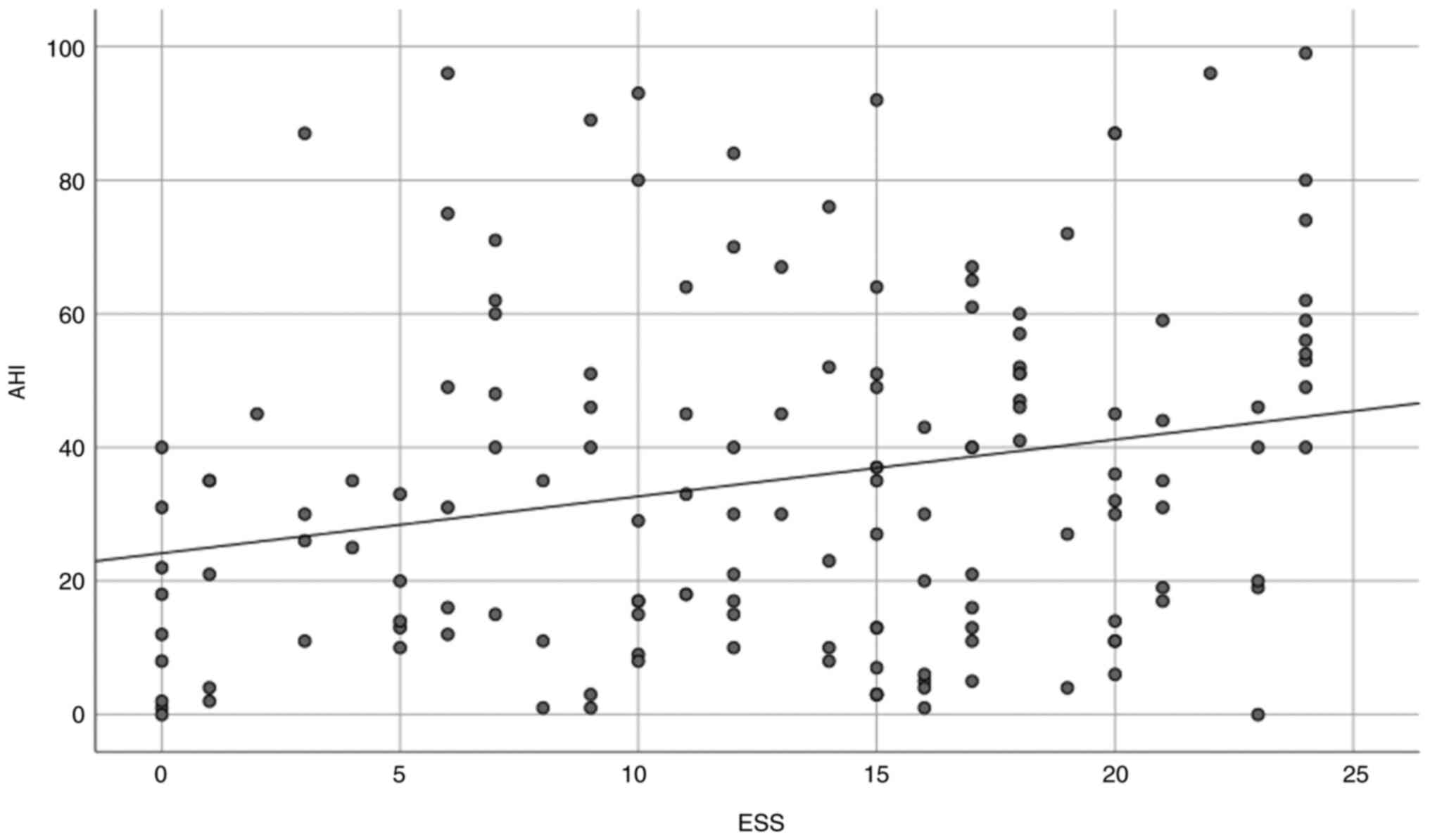
Statistical analysis was performed using SPSS software version 26 (IBM Corp.), and the outcomes are presented as the mean ± standard deviation. Continuous variables were analyzed using one-way ANOVA and numerical data were analyzed using the Chi-squared test. Pearson's and Spearman's correlation analyses were utilized to measure the degree of correlation between the variables (presenting as R or Rho values, respectively). A value of P<0.05 was considered to indicate a statistically significant difference. A regression estimation graph was utilized to illustrate the association between ESS and AHI.

Results

The present study included a total of 150 cases with an equal sex distribution. The age of the participants ranged from 18 to 79 years in males, and it was between 31 and 82 years in females. A statistical variation was observed between the age (P=0.001) and BMI (P=0.001) of the males and females, whereas the ESS was found to be comparable in both groups. Furthermore, no statistically significant difference was observed between sex and AHI (P=0.180; Table I). No correlation was found between ESS and AHI in females (Rho=0.025, P=0.834); however, a correlation was found in males (Rho=0.468, P=0.001) and when the information of both sexes was assessed collectively (Rho=0.244, P=0.003; Table II and Fig. 1).

Figure 1

Regression estimation curve of elevated ESS plotted against AHI. ESS, Epworth sleepiness scale; AHI, apnea-hypopnea index.

Table I

Distribution of the demographic data of the study subjects.

Table I

Distribution of the demographic data of the study subjects.

CharacteristicMales (n=75)Females (n=75)Total (n=150)P-value
Mean age (years)49.04±13.74360.9±11.58154.97±13.9950.001a
Mean BMI (kg/m2)34.99±8.21643.32±10.16639.15±10.116 <0.001a
Mean ESS12.07±7.13613.85±6.77212.96±6.991P=0.424b
Mean AHI37.99±17.01132.37±12.28835.18±15.058P=0.180a

[i] Data were analyzed using

[ii] aone-way ANOVA or

[iii] bthe Chi-squared test. Values in bold font indicate statistically significant differences (P<0.05). BMI, body mass index; ESS, Epworth sleepiness scale.

Table II

Results of the correlation analyses between BMI, ESS and AHI.

Table II

Results of the correlation analyses between BMI, ESS and AHI.

Correlations examinedMales (n=75)Females (n=75)Total (n=150)
ESS and AHIRho=0.468Rho=0.025Rho=0.244
 P=0.001aP=0.834P=0.003a
BMI and AHIR=0.294R=0.254R=0.197
 P=0.011aP=0.028aP=0.016a
ESS and BMIRho=0.077Rho=0.132Rho=0.170
 P=0.510P=0.260P=0.037

[i] aIndicates a significant correlation (P<0.05). R, Pearson's correlation coefficient; Rho, Spearman's correlation coefficient; P, P-value.

A significant correlation was discovered between BMI and AHI in both sexes (males: R=0.294, P=0.011; females: R=0.254, P=0.028), as well as in the combined data of both sexes (R=0.197, P=0.016) (Table II).

Of note, no correlation was found between ESS and BMI in males (Rho=0.077, P=0.510), females (Rho=0.132, P=0.260). However, a significant correlation was found when the data of both sexes was assessed collectively (Rho=0.170, P=0.037) (Table II).

Discussion

The correlation between BMI, AHI and ESS is a key topic in the field of sleep medicine. The ESS is a self-report questionnaire that is widely used to assess daytime sleepiness, while BMI is a measure of body weight relative to height and AHI is a measure of the severity of sleep-disordered breathing (3,8). Individuals who are overweight or obese have a higher prevalence of obstructive sleep apnea, which occurs when the upper airway of an individual becomes narrowed or blocked during sleep due to the accumulation of fat in the neck region, known as pharyngeal fat. This can cause snoring as air has to squeeze through the restricted airway, and dietary habits play a crucial role in OSA; some authors have demonstrated a negative association between fiber-rich nutrients and OSA severity, while a positive association with high-fat food consumption has been demonstrated (3,9).

The present study found a significant positive correlation between ESS and AHI, indicating that a higher AHI severity is associated with higher ESS scores. This association was noted in males when data from both sexes were analyzed separately. It was previously observed that in females, correlations between ESS and AHI were only observed in severe sleep-disordered breathing; however, this correlation was notably weaker compared to males (10). However, as one of the limitations of the present study, sleep-disordered breathing was not concluded in the participants examined herein. The finding of the present study is in accordance with that of a cross-sectional study conducted by Lipford et al (10). Sleep deprivation has been linked to increases in the levels of ghrelin, a hormone that stimulates appetite. As a result, individuals may experience an increase in cravings for high-calorie foods (7,11). Further evidence indicates that not getting a sufficient amount of sleep can result in excessive eating and obesity and a decrease in the amount of fat that is lost during calorie restriction (12).

The present study did not find any association between ESS and BMI, which is in line with the findings of the study by Roure et al (8). However, when the data for both sexes were collectively analyzed, a statistically significant correlation was found between ESS and BMI. This finding aligns with the hypothesis presented in the study by Basta and Vgontzas (11), which indicated that metabolic factors may not have a significant influence on ESS. Furthermore, excess body fat around the abdomen can lead to the compression of the chest wall, resulting in a decrease in lung volume. This reduction in airflow can cause the upper airway to collapse during sleep, increasing the likelihood of OSA. The risk of developing this condition increases as BMI increases. Even a 10% increase in weight can elevate the risk of OSA by up to 6-fold. Ciavarella et al (3) found no correlation between BMI and AHI, and Basta and Vgontzas (11) claimed that obesity-related objective daytime sleepiness was less associated with OSA and these findings are in contrast with those of the present study; herein, a correlation was found between these two factors. However, this finding is consistent with the findings of the study by Soylu et al (13); their study demonstrated that an increase in BMI, waist circumference and neck circumference was associated with a greater severity of OSA (13). It is important to note that the present study study was limited first by its sample size, which may limit the generalizability of the findings to larger populations. Second, the present study did not include data regarding the comorbidities of the participants in the questionnaire.

In conclusion, the present study found a clear correlation between being overweight or obese and AHI; the majority of the study subjects with AHI had a BMI >25 kg/m2. The correlation analysis revealed a significant correlation between BMI and AHI, indicating that the severity of sleep apnea worsens with higher BMI values. This correlation was observed in both males and females.

Acknowledgements

Not applicable.

Funding

Funding: No funding was received.

Availability of data and materials

The datasets used and/or analyzed during the current study are available from the corresponding author on reasonable request.

Authors' contributions

HMWA and HMA were major contributors to the conception of the study, as well as in the literature search for related studies. HOA, SMA and FHK were involved in the literature review, in the writing of the manuscript and in the design of the study. SFA, FHF, BAA and KAOK were involved in the literature review, in the design of the study, in the critical revision of the manuscript and in the processing of the figure. FHK and HMWA confirm the authenticity of all the raw data. SJH, SOK and SHM were involved in data collection and analysis. All authors have read and approved the final manuscript.

Ethics approval and consent to participate

Written informed consent was obtained from all the study subjects for their participation in the present study. Ethical approval was obtained from the Ethics Committee of the University of Sulaimani (Sulaimani, Iraq; reference no. 88).

Patient consent for publication

Not applicable.

Competing interests

The authors declare that they have no competing interests.

References

1 

Ip MS, Lam BI, Ng MMT, Lam WK, Tsang KWT and Lam KSL: Obstructive sleep apnea is independently associated with insulin resistance. Am J Respir Crit Care Med. 165:670–676. 2002.PubMed/NCBI View Article : Google Scholar

2 

Johns MW: A new method for measuring daytime sleepiness: The Epworth sleepiness scale. Sleep. 14:540–545. 1991.PubMed/NCBI View Article : Google Scholar

3 

Ciavarella D, Tepedino M, Chimenti C, Troiano G, Mazzotta M, Foschino Barbaro MP, Lo Muzio L and Cassano M: Correlation between body mass index and obstructive sleep apnea severity indexes-a retrospective study. Am J Otolaryngol. 39:388–391. 2018.PubMed/NCBI View Article : Google Scholar

4 

Gulotta G, Iannella G, Vicini C, Polimeni A, Greco A, de Vincentiis M, Visconti IC, Meccariello G, Cammaroto G, De Vito A, et al: Risk factors for obstructive sleep apnea syndrome in children: State of the art. Int J Environ Res Public Health. 16(3235)2019.PubMed/NCBI View Article : Google Scholar

5 

Gullvåg M, Gjeilo KH, Fålun N, Norekvål TM, Mo R and Broström A: Sleepless nights and sleepy days: A qualitative study exploring the experiences of patients with chronic heart failure and newly verified sleep-disordered breathing. Scand J Caring Sci. 33:750–759. 2019.PubMed/NCBI View Article : Google Scholar

6 

Papaconstantinou E, Quick V, Vogel E, Coffey S, Miller A and Zitzelsberger H: Exploring relationships of sleep duration with eating and physical activity behaviors among Canadian university students. Clocks Sleep. 2:194–207. 2020.PubMed/NCBI View Article : Google Scholar

7 

Agha R, Abdall-Razak A, Crossley E, Dowlut N, Iosifidis C and Mathew G: STROCSS Group. STROCSS 2019 guideline: Strengthening the reporting of cohort studies in surgery. Int J Surg. 72:156–165. 2019.PubMed/NCBI View Article : Google Scholar

8 

Roure N, Gomez S, Mediano O, Duran J, de la Peña M, Capote F, Capote F, Teran J, Masa JF, Alonso ML, et al: Daytime sleepiness and polysomnography in obstructive sleep apnea patients. Sleep Med. 9:727–731. 2008.PubMed/NCBI View Article : Google Scholar

9 

Lin YC: The predictive relationship of health related quality of life on objectively-measured sleep in children: A comparison across BMI ranges. Front Neurosci. 13(1003)2019.PubMed/NCBI View Article : Google Scholar

10 

Lipford MC, Wahner-Roedler DL, Welsh GA, Mandrekar J, Thapa P and Olson EJ: Correlation of the Epworth sleepiness scale and sleep-disordered breathing in men and women. J Clin Sleep Med. 15:33–38. 2019.PubMed/NCBI View Article : Google Scholar

11 

Basta M and Vgontzas AN: Metabolic abnormalities in obesity and sleep apnea are in a continuum. Sleep Med. 1:5–7. 2007.PubMed/NCBI View Article : Google Scholar

12 

Sun Y, Ning Y, Huang L, Lei F, Li Z, Zhou G and Tang X: Polysomnographic characteristics of daytime sleepiness in obstructive sleep apnea syndrome. Sleep Breath. 16:375–381. 2012.PubMed/NCBI View Article : Google Scholar

13 

Soylu AC, Levent E, Sarıman N, Yurtlu Ş, Alparslan S and Saygı A: Obstructive sleep apnea syndrome and anthropometric obesity indexes. Sleep Breath. 16:1151–1158. 2012.PubMed/NCBI View Article : Google Scholar

Related Articles

  • Abstract
  • View
  • Download
Copy and paste a formatted citation
Spandidos Publications style
Wahbi Abdalhakim HM, Abdullah HM, Ahmed SF, Fattah FH, Karadakhy KA, Kakamad FH, Ahmed SM, Abdullah HO, Abdalla BA, Hasan SJ, Hasan SJ, et al: Correlation between body mass index and apnea‑hypopnea index, and the Epworth sleepiness scale: An epidemiological study on sleep. World Acad Sci J 6: 8, 2024.
APA
Wahbi Abdalhakim, H.M., Abdullah, H.M., Ahmed, S.F., Fattah, F.H., Karadakhy, K.A., Kakamad, F.H. ... Mohammed, S.H. (2024). Correlation between body mass index and apnea‑hypopnea index, and the Epworth sleepiness scale: An epidemiological study on sleep. World Academy of Sciences Journal, 6, 8. https://doi.org/10.3892/wasj.2024.223
MLA
Wahbi Abdalhakim, H. M., Abdullah, H. M., Ahmed, S. F., Fattah, F. H., Karadakhy, K. A., Kakamad, F. H., Ahmed, S. M., Abdullah, H. O., Abdalla, B. A., Hasan, S. J., Karim, S. O., Mohammed, S. H."Correlation between body mass index and apnea‑hypopnea index, and the Epworth sleepiness scale: An epidemiological study on sleep". World Academy of Sciences Journal 6.1 (2024): 8.
Chicago
Wahbi Abdalhakim, H. M., Abdullah, H. M., Ahmed, S. F., Fattah, F. H., Karadakhy, K. A., Kakamad, F. H., Ahmed, S. M., Abdullah, H. O., Abdalla, B. A., Hasan, S. J., Karim, S. O., Mohammed, S. H."Correlation between body mass index and apnea‑hypopnea index, and the Epworth sleepiness scale: An epidemiological study on sleep". World Academy of Sciences Journal 6, no. 1 (2024): 8. https://doi.org/10.3892/wasj.2024.223
Copy and paste a formatted citation
x
Spandidos Publications style
Wahbi Abdalhakim HM, Abdullah HM, Ahmed SF, Fattah FH, Karadakhy KA, Kakamad FH, Ahmed SM, Abdullah HO, Abdalla BA, Hasan SJ, Hasan SJ, et al: Correlation between body mass index and apnea‑hypopnea index, and the Epworth sleepiness scale: An epidemiological study on sleep. World Acad Sci J 6: 8, 2024.
APA
Wahbi Abdalhakim, H.M., Abdullah, H.M., Ahmed, S.F., Fattah, F.H., Karadakhy, K.A., Kakamad, F.H. ... Mohammed, S.H. (2024). Correlation between body mass index and apnea‑hypopnea index, and the Epworth sleepiness scale: An epidemiological study on sleep. World Academy of Sciences Journal, 6, 8. https://doi.org/10.3892/wasj.2024.223
MLA
Wahbi Abdalhakim, H. M., Abdullah, H. M., Ahmed, S. F., Fattah, F. H., Karadakhy, K. A., Kakamad, F. H., Ahmed, S. M., Abdullah, H. O., Abdalla, B. A., Hasan, S. J., Karim, S. O., Mohammed, S. H."Correlation between body mass index and apnea‑hypopnea index, and the Epworth sleepiness scale: An epidemiological study on sleep". World Academy of Sciences Journal 6.1 (2024): 8.
Chicago
Wahbi Abdalhakim, H. M., Abdullah, H. M., Ahmed, S. F., Fattah, F. H., Karadakhy, K. A., Kakamad, F. H., Ahmed, S. M., Abdullah, H. O., Abdalla, B. A., Hasan, S. J., Karim, S. O., Mohammed, S. H."Correlation between body mass index and apnea‑hypopnea index, and the Epworth sleepiness scale: An epidemiological study on sleep". World Academy of Sciences Journal 6, no. 1 (2024): 8. https://doi.org/10.3892/wasj.2024.223
Follow us
  • Twitter
  • LinkedIn
  • Facebook
About
  • Spandidos Publications
  • Careers
  • Cookie Policy
  • Privacy Policy
How can we help?
  • Help
  • Live Chat
  • Contact
  • Email to our Support Team