Spandidos Publications Logo
  • About
    • About Spandidos
    • Aims and Scopes
    • Abstracting and Indexing
    • Editorial Policies
    • Reprints and Permissions
    • Job Opportunities
    • Terms and Conditions
    • Contact
  • Journals
    • All Journals
    • Oncology Letters
      • Oncology Letters
      • Information for Authors
      • Editorial Policies
      • Editorial Board
      • Aims and Scope
      • Abstracting and Indexing
      • Bibliographic Information
      • Archive
    • International Journal of Oncology
      • International Journal of Oncology
      • Information for Authors
      • Editorial Policies
      • Editorial Board
      • Aims and Scope
      • Abstracting and Indexing
      • Bibliographic Information
      • Archive
    • Molecular and Clinical Oncology
      • Molecular and Clinical Oncology
      • Information for Authors
      • Editorial Policies
      • Editorial Board
      • Aims and Scope
      • Abstracting and Indexing
      • Bibliographic Information
      • Archive
    • Experimental and Therapeutic Medicine
      • Experimental and Therapeutic Medicine
      • Information for Authors
      • Editorial Policies
      • Editorial Board
      • Aims and Scope
      • Abstracting and Indexing
      • Bibliographic Information
      • Archive
    • International Journal of Molecular Medicine
      • International Journal of Molecular Medicine
      • Information for Authors
      • Editorial Policies
      • Editorial Board
      • Aims and Scope
      • Abstracting and Indexing
      • Bibliographic Information
      • Archive
    • Biomedical Reports
      • Biomedical Reports
      • Information for Authors
      • Editorial Policies
      • Editorial Board
      • Aims and Scope
      • Abstracting and Indexing
      • Bibliographic Information
      • Archive
    • Oncology Reports
      • Oncology Reports
      • Information for Authors
      • Editorial Policies
      • Editorial Board
      • Aims and Scope
      • Abstracting and Indexing
      • Bibliographic Information
      • Archive
    • Molecular Medicine Reports
      • Molecular Medicine Reports
      • Information for Authors
      • Editorial Policies
      • Editorial Board
      • Aims and Scope
      • Abstracting and Indexing
      • Bibliographic Information
      • Archive
    • World Academy of Sciences Journal
      • World Academy of Sciences Journal
      • Information for Authors
      • Editorial Policies
      • Editorial Board
      • Aims and Scope
      • Abstracting and Indexing
      • Bibliographic Information
      • Archive
    • International Journal of Functional Nutrition
      • International Journal of Functional Nutrition
      • Information for Authors
      • Editorial Policies
      • Editorial Board
      • Aims and Scope
      • Abstracting and Indexing
      • Bibliographic Information
      • Archive
    • International Journal of Epigenetics
      • International Journal of Epigenetics
      • Information for Authors
      • Editorial Policies
      • Editorial Board
      • Aims and Scope
      • Abstracting and Indexing
      • Bibliographic Information
      • Archive
    • Medicine International
      • Medicine International
      • Information for Authors
      • Editorial Policies
      • Editorial Board
      • Aims and Scope
      • Abstracting and Indexing
      • Bibliographic Information
      • Archive
  • Articles
  • Information
    • Information for Authors
    • Information for Reviewers
    • Information for Librarians
    • Information for Advertisers
    • Conferences
  • Language Editing
Spandidos Publications Logo
  • About
    • About Spandidos
    • Aims and Scopes
    • Abstracting and Indexing
    • Editorial Policies
    • Reprints and Permissions
    • Job Opportunities
    • Terms and Conditions
    • Contact
  • Journals
    • All Journals
    • Biomedical Reports
      • Information for Authors
      • Editorial Policies
      • Editorial Board
      • Aims and Scope
      • Abstracting and Indexing
      • Bibliographic Information
      • Archive
    • Experimental and Therapeutic Medicine
      • Information for Authors
      • Editorial Policies
      • Editorial Board
      • Aims and Scope
      • Abstracting and Indexing
      • Bibliographic Information
      • Archive
    • International Journal of Epigenetics
      • Information for Authors
      • Editorial Policies
      • Editorial Board
      • Aims and Scope
      • Abstracting and Indexing
      • Bibliographic Information
      • Archive
    • International Journal of Functional Nutrition
      • Information for Authors
      • Editorial Policies
      • Editorial Board
      • Aims and Scope
      • Abstracting and Indexing
      • Bibliographic Information
      • Archive
    • International Journal of Molecular Medicine
      • Information for Authors
      • Editorial Policies
      • Editorial Board
      • Aims and Scope
      • Abstracting and Indexing
      • Bibliographic Information
      • Archive
    • International Journal of Oncology
      • Information for Authors
      • Editorial Policies
      • Editorial Board
      • Aims and Scope
      • Abstracting and Indexing
      • Bibliographic Information
      • Archive
    • Medicine International
      • Information for Authors
      • Editorial Policies
      • Editorial Board
      • Aims and Scope
      • Abstracting and Indexing
      • Bibliographic Information
      • Archive
    • Molecular and Clinical Oncology
      • Information for Authors
      • Editorial Policies
      • Editorial Board
      • Aims and Scope
      • Abstracting and Indexing
      • Bibliographic Information
      • Archive
    • Molecular Medicine Reports
      • Information for Authors
      • Editorial Policies
      • Editorial Board
      • Aims and Scope
      • Abstracting and Indexing
      • Bibliographic Information
      • Archive
    • Oncology Letters
      • Information for Authors
      • Editorial Policies
      • Editorial Board
      • Aims and Scope
      • Abstracting and Indexing
      • Bibliographic Information
      • Archive
    • Oncology Reports
      • Information for Authors
      • Editorial Policies
      • Editorial Board
      • Aims and Scope
      • Abstracting and Indexing
      • Bibliographic Information
      • Archive
    • World Academy of Sciences Journal
      • Information for Authors
      • Editorial Policies
      • Editorial Board
      • Aims and Scope
      • Abstracting and Indexing
      • Bibliographic Information
      • Archive
  • Articles
  • Information
    • For Authors
    • For Reviewers
    • For Librarians
    • For Advertisers
    • Conferences
  • Language Editing
Login Register Submit
  • This site uses cookies
  • You can change your cookie settings at any time by following the instructions in our Cookie Policy. To find out more, you may read our Privacy Policy.

    I agree
Search articles by DOI, keyword, author or affiliation
Search
Advanced Search
presentation
World Academy of Sciences Journal
Join Editorial Board Propose a Special Issue
Print ISSN: 2632-2900 Online ISSN: 2632-2919
Journal Cover
November-December 2025 Volume 7 Issue 6

Full Size Image

Sign up for eToc alerts
Recommend to Library

Journals

International Journal of Molecular Medicine

International Journal of Molecular Medicine

International Journal of Molecular Medicine is an international journal devoted to molecular mechanisms of human disease.

International Journal of Oncology

International Journal of Oncology

International Journal of Oncology is an international journal devoted to oncology research and cancer treatment.

Molecular Medicine Reports

Molecular Medicine Reports

Covers molecular medicine topics such as pharmacology, pathology, genetics, neuroscience, infectious diseases, molecular cardiology, and molecular surgery.

Oncology Reports

Oncology Reports

Oncology Reports is an international journal devoted to fundamental and applied research in Oncology.

Experimental and Therapeutic Medicine

Experimental and Therapeutic Medicine

Experimental and Therapeutic Medicine is an international journal devoted to laboratory and clinical medicine.

Oncology Letters

Oncology Letters

Oncology Letters is an international journal devoted to Experimental and Clinical Oncology.

Biomedical Reports

Biomedical Reports

Explores a wide range of biological and medical fields, including pharmacology, genetics, microbiology, neuroscience, and molecular cardiology.

Molecular and Clinical Oncology

Molecular and Clinical Oncology

International journal addressing all aspects of oncology research, from tumorigenesis and oncogenes to chemotherapy and metastasis.

World Academy of Sciences Journal

World Academy of Sciences Journal

Multidisciplinary open-access journal spanning biochemistry, genetics, neuroscience, environmental health, and synthetic biology.

International Journal of Functional Nutrition

International Journal of Functional Nutrition

Open-access journal combining biochemistry, pharmacology, immunology, and genetics to advance health through functional nutrition.

International Journal of Epigenetics

International Journal of Epigenetics

Publishes open-access research on using epigenetics to advance understanding and treatment of human disease.

Medicine International

Medicine International

An International Open Access Journal Devoted to General Medicine.

Journal Cover
November-December 2025 Volume 7 Issue 6

Full Size Image

Sign up for eToc alerts
Recommend to Library

  • Article
  • Citations
    • Cite This Article
    • Download Citation
    • Create Citation Alert
    • Remove Citation Alert
    • Cited By
  • Similar Articles
    • Related Articles (in Spandidos Publications)
    • Similar Articles (Google Scholar)
    • Similar Articles (PubMed)
  • Download PDF
  • Download XML
  • View XML
Article Open Access

Regenerative therapeutic effects of conditioned medium from human umbilical cord‑derived mesenchymal stem cells as an adjuvant to insulin therapy in a rat model of type 2 diabetes

  • Authors:
    • Siufui Hendrawan
    • Jennifer Lheman
    • Olivia Marcelina
    • Lydia Tantoso
    • Hans Ulrich Baer
    • Shirly Gunawan
  • View Affiliations / Copyright

    Affiliations: Department of Biochemistry and Molecular Biology, Faculty of Medicine, Tarumanagara University, Jakarta 11440, Indonesia, Tarumanagara Human Cell Technology Laboratory, Faculty of Medicine, Tarumanagara University, Jakarta 11440, Indonesia, Department of Internal Medicine, Faculty of Medicine, Tarumanagara University, Jakarta 11440, Indonesia, Baermed, Center of Abdominal Surgery, Hirslanden Clinic, 8032 Zürich, Switzerland, Department of Visceral and Transplantation Surgery, University of Bern, 3012 Bern, Switzerland
    Copyright: © Hendrawan et al. This is an open access article distributed under the terms of Creative Commons Attribution License [CC BY 4.0].
  • Article Number: 116
    |
    Published online on: October 6, 2025
       https://doi.org/10.3892/wasj.2025.404
  • Expand metrics +
Metrics: Total Views: 0 (Spandidos Publications: | PMC Statistics: )
Metrics: Total PDF Downloads: 0 (Spandidos Publications: | PMC Statistics: )
Cited By (CrossRef): 0 citations Loading Articles...

This article is mentioned in:


Abstract

Standard therapies for type 2 diabetes (T2DM) that utilize anti‑diabetic drugs and insulin are well established; nevertheless, the incidence of complications and mortality associated with the disease remain relatively high. Conditioned medium (CM) from human umbilical cord‑derived mesenchymal stem cells (hUC‑MSCs) has demonstrated regenerative effects, although these have yet to be properly investigated for the purposes of managing T2DM. Therefore, the present study aimed to evaluate the therapeutic potential of CM from hUC‑MSCs in various animal models of T2DM. T2DM was established in rats using a high‑fat diet and streptozotocin, and the rats were subsequently injected with insulin, CM or insulin + CM two times per week (subcutaneously for insulin; intraperitoneally for CM) over a 4‑week period. Blood glucose levels were measured prior to each treatment up until 2 weeks after the final injection. At the end of the experiment, glucose tolerance, insulin sensitivity and the levels of glycated hemoglobin (HbA1c), serum insulin and insulin‑like growth factor‑1 (IGF‑1) were measured. Histological analyses of pancreatic tissues were also performed, and the findings were compared among the groups. The CM‑treated group was found to exhibit significantly improved levels of blood glucose, glucose tolerance and insulin sensitivity, whereas administering a combination of CM and insulin therapy to the rats led to even more robust effects in terms of blood glucose level management and reducing the level of HbA1c compared with the other treatment groups. CM treatment also led to an improvement in the IGF‑1 serum level, although this was found to be reduced in the other diabetic groups. Furthermore, both the numbers of β‑cells and their capability to secrete insulin were enhanced in the CM‑treated group. Taken together, these findings underscore the regenerative effect of CM from hUC‑MSCs in terms of T2DM therapy.
View Figures

Figure 1

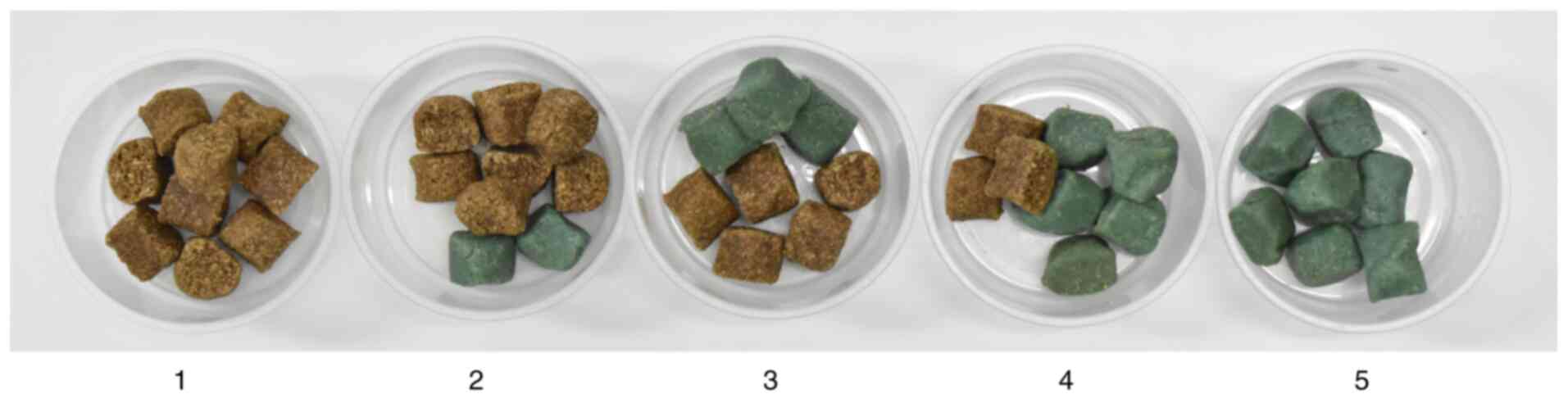
Standard feed and HFD feed. 1, 100%
standard feed; 2, 75% standard feed:25% HFD; 3, 50% standard
feed:50% HFD; 4, 25% standard feed:75% HFD; 5, 100% HFD. HFD,
high-fat diet.

Figure 2

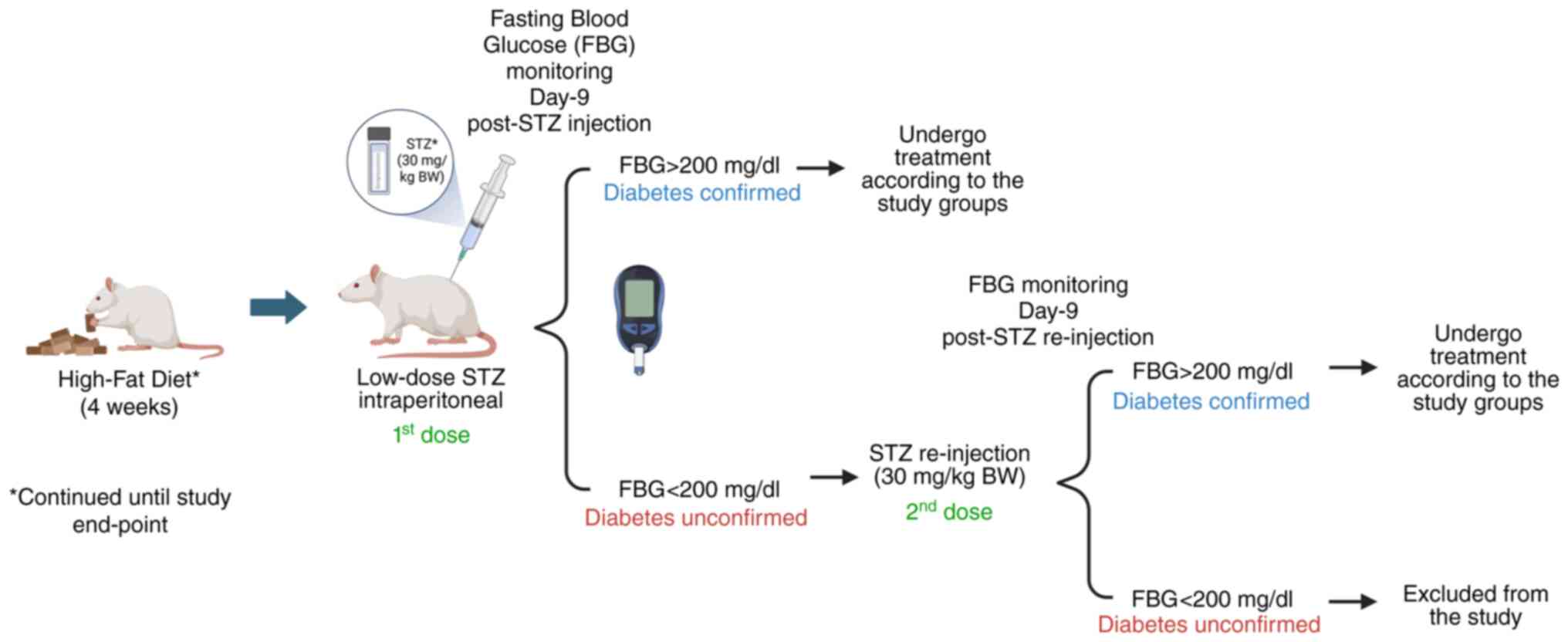
Schematic diagram of type 2 diabetes
animal model development. STZ, streptozotocin; FBG, fasting blood
glucose; BW, body weight.

Figure 3

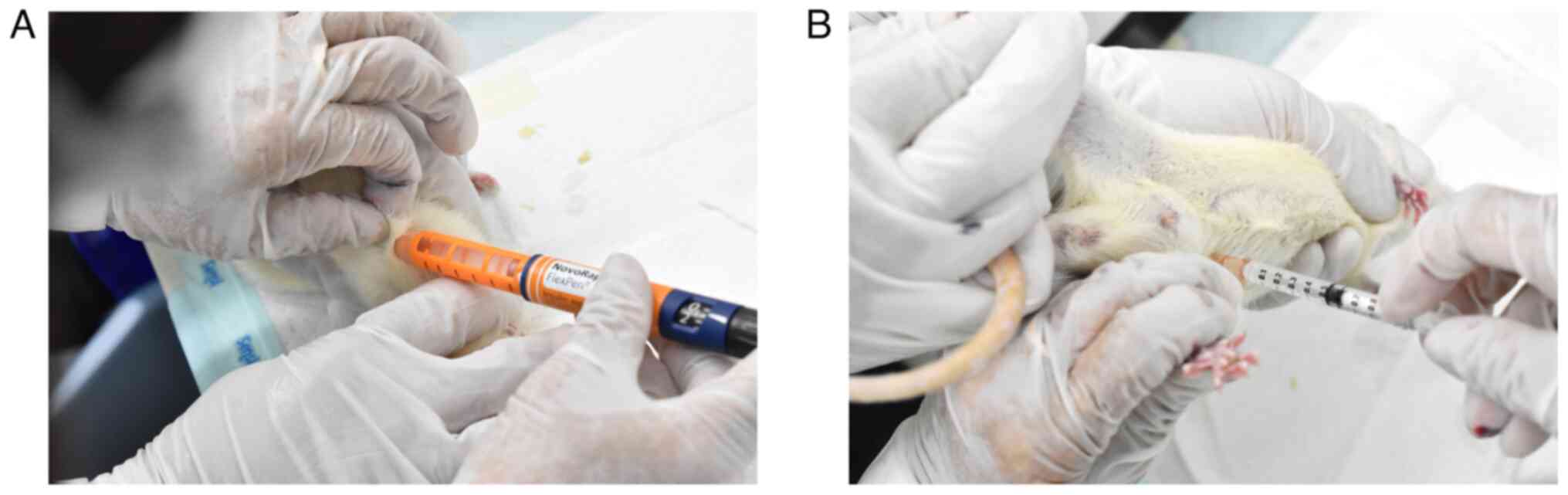
Administration of treatments
according to the study groups. (A) Subcutaneous administration of
insulin and (B) intraperitoneal injection of serum-free media or
conditioned medium.

Figure 4

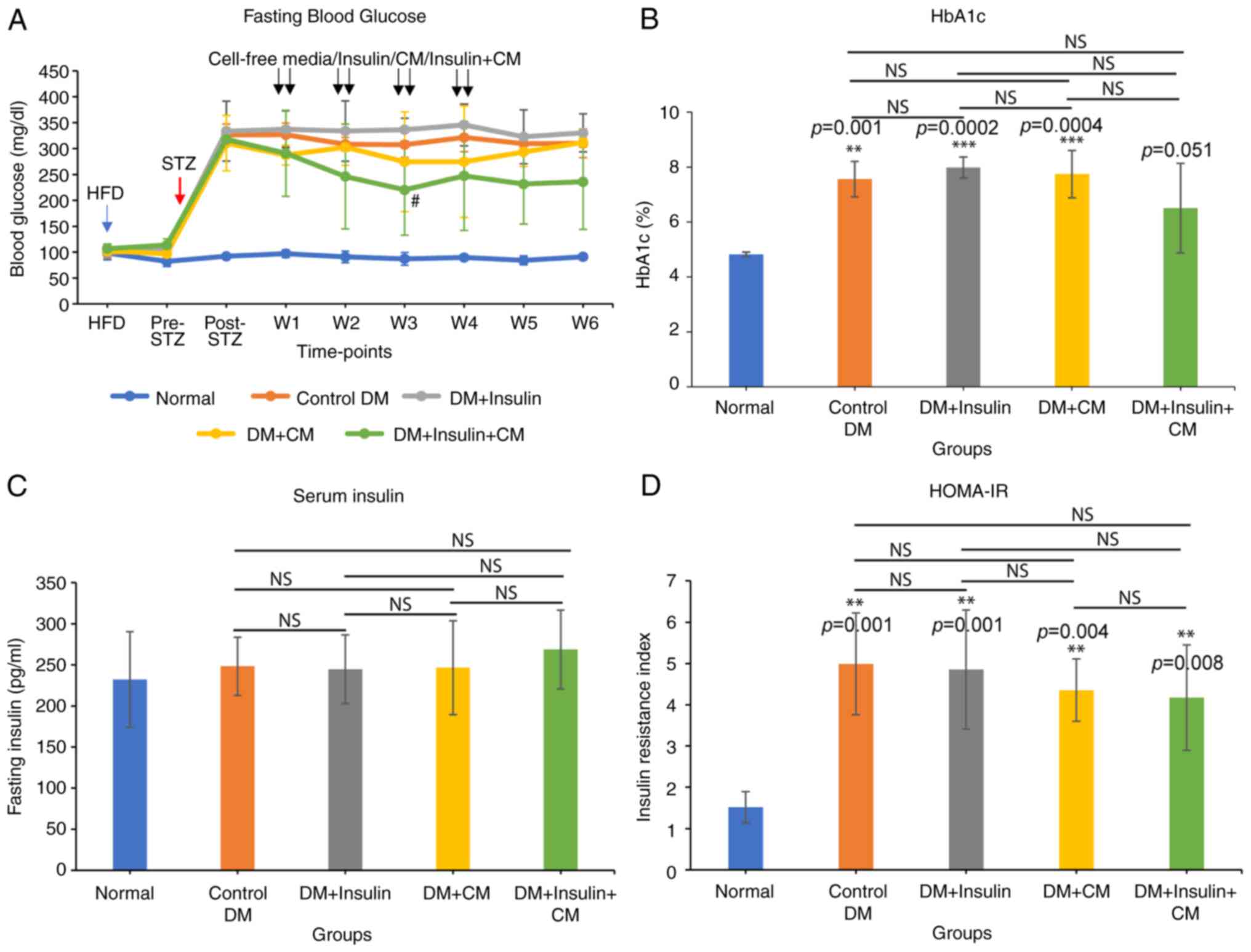
CM positively regulated blood glucose
levels in rats with diabetes. Comparison of (A) fasting blood
glucose levels, (B) HbA1c, (C) fasting serum insulin level, and (D)
insulin resistance index between groups. HFD indicates the starting
point of HFD feed; Pre-STZ represents 4 weeks post-HFD and before
the STZ injection; Post-STZ represents diabetes confirmation; W1-W4
represents weeks 1-4 of treatment; W5-W6 represents weeks 5-6 (2
weeks after the final treatment). Data are expressed as the mean ±
SD (n=5/group). #P<0.05, significant difference
compared to the DM + insulin group, **P<0.01 and
***P<0.001, significant difference compared to the
normal group (P-values are indicated above the bars); NS, not
significant. Statistical analysis was determined using (A) repeated
measures ANOVA and (B-D) one-way ANOVA. DM, diabetes mellitus; CM,
conditioned medium; HFD, high-fat diet; HbA1c, glycated
hemoglobin.

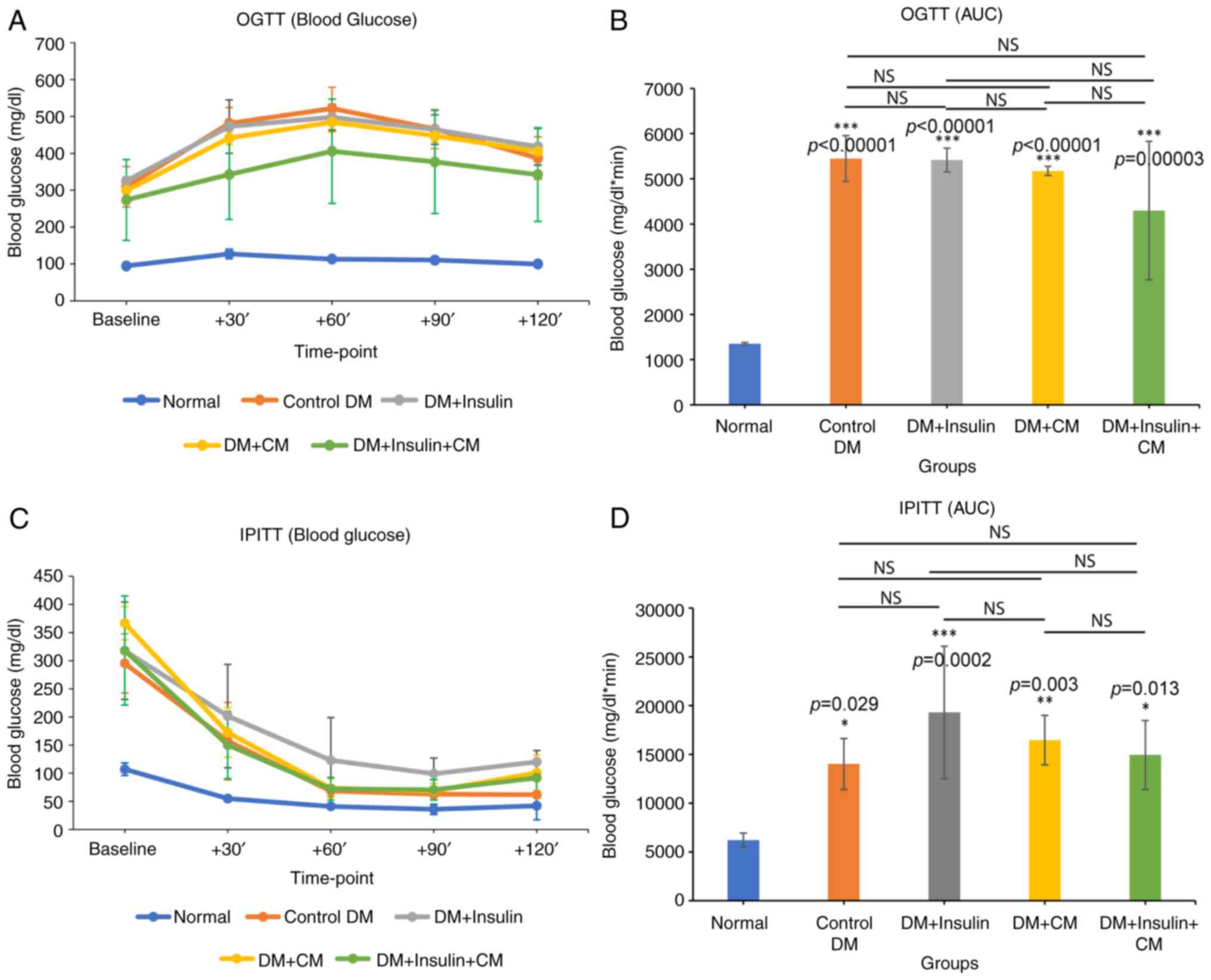
Figure 5

The glucose tolerance test and
insulin sensitivity test. (A) OGTT of each group was determined at
0, 30, 60, 90 and 120 min post-glucose administration. (B) Area
under the curve of OGTT. (C) IPITT of each group was determined at
0, 30, 60, 90 and 120 min post-insulin administration. (D) Area
under the curve of IPITT. Data are expressed as the mean ± SD
(n=5/group). *P<0.05, **P<0.01 and
***P<0.001, significant difference compared to the
normal group (P-values are indicated above the bars); NS, not
significant. Statistical analysis was determined using (A and C)
repeated measures ANOVA and (B and D) one-way ANOVA. OGTT, oral
glucose tolerance test; IPITT, intraperitoneal insulin tolerance
test; DM, diabetes mellitus; CM, conditioned medium.

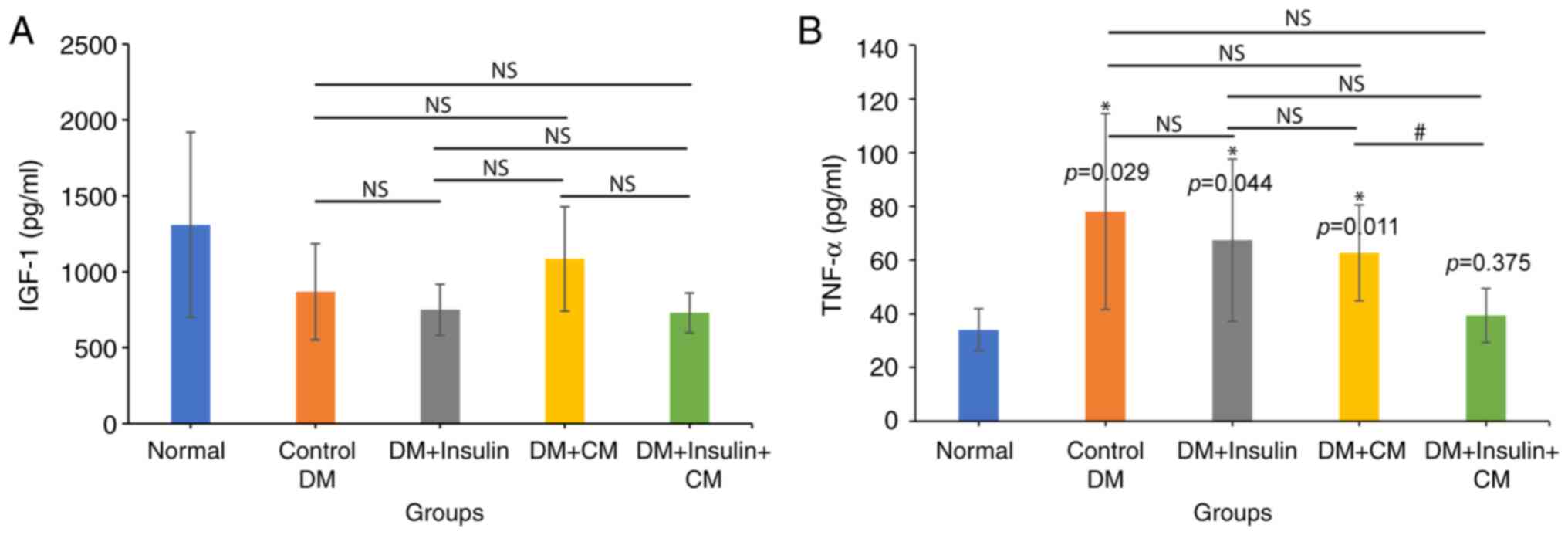
Figure 6

Measurement of serum IGF-1 and
hepatic TNF-α protein levels. (A) Serum IGF-1 and (B) hepatic TNF-α
protein levels were measured at the study endpoint using ELISA.
Data are expressed as the mean ± SD (n=5/group).
*P<0.05, compared to the normal group (P-values are
indicated above the bars); #P<0.05, compared between
indicated groups; NS, not significant. Statistical analysis was
performed using one-way ANOVA. IGF-1, insulin growth factor-1;
TNF-α, tumor necrosis factor-α; DM, diabetes mellitus; CM,
conditioned medium.

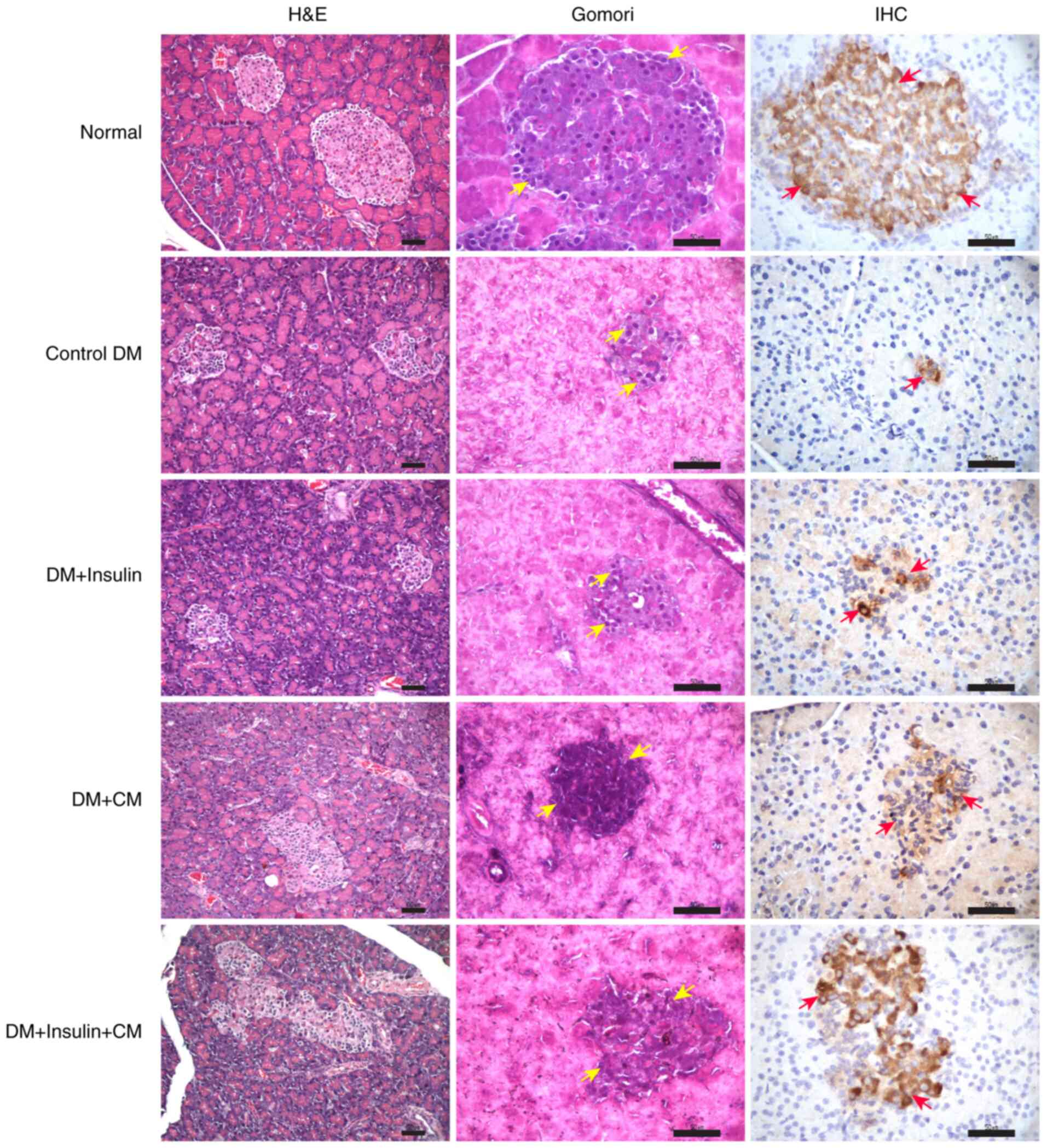
Figure 7

Histopathological analysis of islets
of Langerhans on pancreatic tissue section stained with H&E and
Gomori staining, and IHC for insulin. β-cells are represented as a
dark blue color (yellow arrows) and insulin-positive cells are
represented as brown colorization (red arrows). Magnification: x200
for H&E staining, and x400 for Gomori staining and IHC. Scale
bars, 50 µm. H&E, hematoxylin and eosin. IHC,
immunohistochemistry; DM, diabetes mellitus; CM, conditioned
medium.
View References

1 

Lin X, Xu Y, Pan X, Xu J, Ding Y, Sun X, Song X, Ren Y and Shan PF: Global, regional, and national burden and trend of diabetes in 195 countries and territories: An analysis from 1990 to 2025. Sci Rep. 10:1–11. 2020.PubMed/NCBI View Article : Google Scholar

2 

Magliano DJ and Boyko EJ: IDF diabetes atlas. 10th ed. International Diabetes Federation, Brussels, 2021.

3 

Ohiagu FO, Chikezie PC and Chikezie CM: Pathophysiology of diabetes mellitus complications: Metabolic events and control. Biomed Res Ther. 8:4243–4257. 2021.

4 

Galicia-Garcia U, Benito-Vicente A, Jebari S, Larrea-Sebal A, Siddiqi H, Uribe KB, Ostolaza H and Martín C: Pathophysiology of type 2 diabetes mellitus. Int J Mol Sci. 21:1–34. 2020.PubMed/NCBI View Article : Google Scholar

5 

Halban PA, Polonsky KS, Bowden DW, Hawkins MA, Ling C, Mather KJ, Powers AC, Rhodes CJ, Sussel L and Weir GC: β-Cell failure in type 2 diabetes: Postulated mechanisms and prospects for prevention and treatment. J Clin Endocrinol Metab. 99:1983–1992. 2014.PubMed/NCBI View Article : Google Scholar

6 

Christensen AA and Gannon M: The beta cell in type 2 diabetes. Curr Diab Rep. 19(81)2019.PubMed/NCBI View Article : Google Scholar

7 

Pradhan AD, Manson JE, Rifai N, Buring JE and Ridker PM: C-reactive protein, interleukin 6, and risk of developing type 2 diabetes mellitus. J Am Med Assoc. 286:327–334. 2001.PubMed/NCBI View Article : Google Scholar

8 

Esser N, Legrand-Poels S, Piette J, Scheen AJ and Paquot N: Inflammation as a link between obesity, metabolic syndrome and type 2 diabetes. Diabetes Res Clin Pract. 105:141–150. 2014.PubMed/NCBI View Article : Google Scholar

9 

Bunney PE, Zink AN, Holm AA, Billington CJ and Kotz CM: Orexin activation counteracts decreases in nonexercise activity thermogenesis (NEAT) caused by high-fat diet. Physiol Behav. 176:139–148. 2017.PubMed/NCBI View Article : Google Scholar

10 

Huang B, Cheng X, Wang H, Huang W, la Ga hu Z, Wang D, Zhang K, Zhang H, Xue Z, Da Y, et al: Mesenchymal stem cells and their secreted molecules predominantly ameliorate fulminant hepatic failure and chronic liver fibrosis in mice respectively. J Transl Med. 14(45)2016.PubMed/NCBI View Article : Google Scholar

11 

Fan CG, Zhang QJ and Zhou JR: Therapeutic potentials of mesenchymal stem cells derived from human umbilical cord. Stem Cell Rev Rep. 7:195–207. 2011.PubMed/NCBI View Article : Google Scholar

12 

Pawitan JA: Prospect of stem cell conditioned medium in regenerative medicine. Biomed Res Int. 2014:7–9. 2014.PubMed/NCBI View Article : Google Scholar

13 

Kim HO, Choi SM and Kim HS: Mesenchymal stem cell-derived secretome and microvesicles as a cell-free therapeutics for neurodegenerative disorders. Tissue Eng Regen Med. 10:93–101. 2013.

14 

Isildar B, Ozkan S and Koyuturk M: Therapeutic potential of mesenchymal stem cell-derived conditioned medium for diabetes mellitus and related complications. Adv Ther. 6(2300216)2023.

15 

Nagaishi K, Ataka K, Echizen E, Arimura Y and Fujimiya M: Mesenchymal stem cell therapy ameliorates diabetic hepatocyte damage in mice by inhibiting infiltration of bone marrow-derived cells. Hepatology. 59:1816–1829. 2014.PubMed/NCBI View Article : Google Scholar

16 

Ormazabal V, Nova-Lampeti E, Rojas D, Zúñiga FA, Escudero C, Lagos P, Moreno A, Pavez Y, Reyes C, Yáñez M, et al: Secretome from human mesenchymal stem cells-derived endothelial cells promotes wound healing in a type-2 diabetes mouse model. Int J Mol Sci. 23(941)2022.PubMed/NCBI View Article : Google Scholar

17 

Sun Y, Shi H, Yin S, Ji C, Zhang X, Zhang B, Wu P, Shi Y, Mao F, Yan Y, et al: Human mesenchymal stem cell derived exosomes alleviate type 2 diabetes mellitus by reversing peripheral insulin resistance and relieving β-cell destruction. ACS Nano. 12:7613–7628. 2018.PubMed/NCBI View Article : Google Scholar

18 

Hendrawan S, Marcelina O, Tan ST and Baer HU: Immobilization of hUC-MSCs conditioned medium on 3D PLLA collagen-coated matrix enhances diabetic wound healing progression. Eng Regen. 5:421–431. 2024.

19 

Charan J and Kantharia N: How to calculate sample size in animal studies? J Pharmacol Pharmacother. 4:303–306. 2013.PubMed/NCBI View Article : Google Scholar

20 

Arifin WN and Zahiruddin WM: Sample size calculation in animal studies using resource equation approach. Malaysian J Med Sci. 24:101–105. 2017.PubMed/NCBI View Article : Google Scholar

21 

Gunawan S, Aulia A and Soetikno V: Development of rat metabolic syndrome models: A review. Vet World. 14:1774–1783. 2021.PubMed/NCBI View Article : Google Scholar

22 

Gunawan S, Munika E, Wulandari ET, Ferdinal F, Purwaningsih EH, Wuyung PE, Louisa M and Soetikno V: 6-gingerol ameliorates weight gain and insulin resistance in metabolic syndrome rats by regulating adipocytokines. Saudi Pharm J. 31:351–358. 2023.PubMed/NCBI View Article : Google Scholar

23 

GBD 2017 Disease and Injury Incidence and Prevalence Collaborators: Global, regional, and national incidence, prevalence, and years lived with disability for 354 diseases and injuries for 195 countries and territories, 1990-2017: A systematic analysis for the global burden of disease study 2017. Lancet. 392:1789–1858. 2018.PubMed/NCBI View Article : Google Scholar

24 

Kume E, Fujimura H, Matsuki N, Ito M, Aruga C, Toriumi W, Kitamura K and Doi K: Hepatic changes in the acute phase of streptozotocin (SZ)-induced diabetes in mice. Exp Toxicol Pathol. 55:467–480. 2004.PubMed/NCBI View Article : Google Scholar

25 

Karimi Z, Daryabor G and Masjedi F: Effects of conditioned media derived from human Wharton's jelly mesenchymal stem cells on diabetic nephropathy and hepatopathy via modulating TGF-β and apelin signaling pathways in male rats. BMC Endocr Disord. 24:1–15. 2024.PubMed/NCBI View Article : Google Scholar

26 

Utami A, Putra A, Wibowo JW, Amalina ND and Irawan RCS: Hypoxic secretome mesenchymal stem cells inhibiting interleukin-6 expression prevent oxidative stress in type 1 diabetes mellitus. Med Glas. 20:148–155. 2023.PubMed/NCBI View Article : Google Scholar

27 

Leng YP, Qiu N, Fang WJ, Zhang M, He ZM and Xiong Y: Involvement of increased endogenous asymmetric dimethylarginine in the hepatic endoplasmic reticulum stress of type 2 diabetic rats. PLoS One. 9(e97125)2014.PubMed/NCBI View Article : Google Scholar

28 

Wallace TM, Levy JC and Matthews DR: Use and abuse of HOMA modeling. Diabetes Care. 27:1487–1495. 2004.PubMed/NCBI View Article : Google Scholar

29 

Biadgo B, Tamir W and Ambachew S: Insulin-like growth factor and its therapeutic potential for diabetes complications mechanisms and metabolic links: A review. Rev Diabet Stud. 16:24–34. 2020.PubMed/NCBI View Article : Google Scholar

30 

Liu TY, Shi CX, Gao R, Sun HJ, Xiong XQ, Ding L, Chen Q, Li YH, Wang JJ, Kang YM and Zhu GQ: Irisin inhibits hepatic gluconeogenesis and increases glycogen synthesis via the PI3K/Akt pathway in type 2 diabetic mice and hepatocytes. Clin Sci (Lond). 129:839–850. 2015.PubMed/NCBI View Article : Google Scholar

31 

Lee SH, Park SY and Choi CS: Insulin resistance: From mechanisms to therapeutic strategies. Diabetes Metab J. 46:15–37. 2022.PubMed/NCBI View Article : Google Scholar

32 

Campbell JE and Newgard CB: Mechanisms controlling pancreatic islet cell function in insulin secretion. Nat Rev Mol Cell Biol. 22:142–158. 2021.PubMed/NCBI View Article : Google Scholar

33 

De la Cruz Concepción B, Flores-Cortez YA, Barragán-Bonilla MI, Mendoza-Bello JM and Espinoza-Rojo M: Insulin: A connection between pancreatic β cells and the hypothalamus. World J Diabetes. 14:76–91. 2023.PubMed/NCBI View Article : Google Scholar

34 

Tangvarasittichai S: Oxidative stress, insulin resistance, dyslipidemia and type 2 diabetes mellitus. World J Diabetes. 6:456–480. 2015.PubMed/NCBI View Article : Google Scholar

35 

Mauricio D, Alonso N and Gratacòs M: Chronic diabetes complications: The need to move beyond classical concepts. Trends Endocrinol Metab. 31:287–295. 2020.PubMed/NCBI View Article : Google Scholar

36 

Mendez CE, Walker RJ, Eiler CR, Mishriky BM and Egede LE: Insulin therapy in patients with type 2 diabetes and high insulin resistance is associated with increased risk of complications and mortality. Postgrad Med. 131:376–382. 2019.PubMed/NCBI View Article : Google Scholar

37 

Mitrousis N, Fokina A and Shoichet MS: Biomaterials for cell transplantation. Nat Rev Mater. 3:441–456. 2018.

38 

Sortwell CE, Pitzer MR and Collier TJ: Time course of apoptotic cell death within mesencephalic cell suspension grafts: Implications for improving grafted dopamine neuron survival. Exp Neurol. 165:268–277. 2000.PubMed/NCBI View Article : Google Scholar

39 

Hsiao STF, Asgari A, Lokmic Z, Sinclair R, Dusting GJ, Lim SY and Dilley RJ: Comparative analysis of paracrine factor expression in human adult mesenchymal stem cells derived from bone marrow, adipose, and dermal tissue. Stem Cells Dev. 21:2189–2203. 2012.PubMed/NCBI View Article : Google Scholar

40 

Li S, Liu J, Liu S, Jiao W and Wang X: Chitosan oligosaccharides packaged into rat adipose mesenchymal stem cells-derived extracellular vesicles facilitating cartilage injury repair and alleviating osteoarthritis. J Nanobiotechnology. 19(343)2021.PubMed/NCBI View Article : Google Scholar

41 

Li S, Liu J, Liu S, Jiao W and Wang X: Mesenchymal stem cell-derived extracellular vesicles prevent the development of osteoarthritis via the circHIPK3/miR-124-3p/MYH9 axis. J Nanobiotechnology. 19(194)2021.PubMed/NCBI View Article : Google Scholar

42 

Cheng H, Chang S, Xu R, Chen L, Song X, Wu J, Qian J, Zou Y and Ma J: Hypoxia-challenged MSC-derived exosomes deliver miR-210 to attenuate post-infarction cardiac apoptosis. Stem Cell Res Ther. 11(224)2020.PubMed/NCBI View Article : Google Scholar

43 

Zhu D, Liu S, Huang K, Wang Z, Hu S, Li J, Li Z and Cheng K: Intrapericardial exosome therapy dampens cardiac injury via activating Foxo3. Circ Res. 131:e135–e150. 2022.PubMed/NCBI View Article : Google Scholar

44 

Kandeel M, Morsy MA, Alkhodair KM and Alhojaily S: Mesenchymal stem cell-derived extracellular vesicles: An emerging diagnostic and therapeutic biomolecules for neurodegenerative disabilities. Biomolecules. 13(1250)2023.PubMed/NCBI View Article : Google Scholar

45 

Wu B, Feng J, Guo J, Wang J, Xiu G and Xu J, Ning K, Ling B, Fu Q and Xu J: ADSCs-derived exosomes ameliorate hepatic fibrosis by suppressing stellate cell activation and remodeling hepatocellular glutamine synthetase-mediated glutamine and ammonia homeostasis. Stem Cell Res Ther. 13(494)2022.PubMed/NCBI View Article : Google Scholar

46 

Allan D, Tieu A, Lalu M and Burger D: Mesenchymal stromal cell-derived extracellular vesicles for regenerative therapy and immune modulation: Progress and challenges toward clinical application. Stem Cells Transl Med. 9:39–46. 2020.PubMed/NCBI View Article : Google Scholar

47 

Li W, Jin L, Cui Y and Xie N: Human umbilical cord mesenchymal stem cells-derived exosomal microRNA-17-3p ameliorates inflammatory reaction and antioxidant injury of mice with diabetic retinopathy via targeting STAT1. Int Immunopharmacol. 90(107010)2021.PubMed/NCBI View Article : Google Scholar

48 

Yang J, Chen Z, Pan D, Li H and Shen J: umbilical cord-derived mesenchymal stem cell-derived exosomes combined pluronic F127 hydrogel promote chronic diabetic wound healing and complete skin regeneration. Int J Nanomedicine. 15:5911–5926. 2020.PubMed/NCBI View Article : Google Scholar

49 

Masithoh DBH, Fibrianto YH, Anggita M, Nugroho WS and Budipitojo T: Mesenchymal stem cell-conditioned medium improve the recovery of pancreatic α and β cells in type 1 diabetes mellitus. In: Proceedings of the 20th FAVA Congress and the 15th KIVNAS PDHI. Bali, Nov 1-3, pp 172–174, 2018. https://journal.ipb.ac.id/hemera/article/view/23814/15670.

50 

Liu X, Zheng P, Wang X, Dai G, Cheng H, Zhang Z, Hua R, Niu X, Shi J and An Y: A preliminary evaluation of efficacy and safety of Wharton's jelly mesenchymal stem cell transplantation in patients with type 2 diabetes mellitus. Stem Cell Res Ther. 5(57)2014.PubMed/NCBI View Article : Google Scholar

51 

Zang L, Hao H, Liu J, Li Y, Han W and Mu Y: Mesenchymal stem cell therapy in type 2 diabetes mellitus. Diabetol Metab Syndr. 9:1–11. 2017.PubMed/NCBI View Article : Google Scholar

52 

Kim KS, Choi YK, Kim MJ, Hwang JW, Min K, Jung SY, Kim SK, Choi YS and Cho YW: Umbilical cord-mesenchymal stem cell-conditioned medium improves insulin resistance in c2c12 cell. Diabetes Metab J. 44:260–269. 2020.PubMed/NCBI View Article : Google Scholar

53 

Zhang X, Li Z, Liu D, Xu X, Shen W and Mei Z: Effects of probucol on hepatic tumor necrosis factor-α, interleukin-6 and adiponectin receptor-2 expression in diabetic rats. J Gastroenterol Hepatol. 24:1058–1063. 2009.PubMed/NCBI View Article : Google Scholar

54 

Klover PJ, Zimmers TA, Koniaris LG and Mooney RA: Chronic exposure to interleukin-6 causes hepatic insulin resistance in mice. Diabetes. 52:2784–2789. 2003.PubMed/NCBI View Article : Google Scholar

55 

Shalaby MS, Abdel-Reheim ES, Almanaa TN, Alhaber LA, Nabil A, Ahmed OM, Elwan M and Abdel-Moneim A: Therapeutic effects of mesenchymal stem cell conditioned media on streptozotocin-induced diabetes in Wistar rats. Regen Ther. 28:1–11. 2025.PubMed/NCBI View Article : Google Scholar

56 

Kuo FY, Cheng KC, Li Y and Cheng JT: Oral glucose tolerance test in diabetes, the old method revisited. World J Diabetes. 12:786–793. 2021.PubMed/NCBI View Article : Google Scholar

57 

Liu KF, Niu CS, Tsai JC, Yang CL, Peng WH and Niu HS: Comparison of area under the curve in various models of diabetic rats receiving chronic medication. Arch Med Sci. 18:1078–1087. 2022.PubMed/NCBI View Article : Google Scholar

58 

Kasprzak A: Insulin-like growth factor 1 (IGF-1) signaling in glucose metabolism in colorectal cancer. Int J Mol Sci. 22(6434)2021.PubMed/NCBI View Article : Google Scholar

59 

Kim SH and Park MJ: Effects of growth hormone on glucose metabolism and insulin resistance in human. Ann Pediatr Endocrinol Metab. 22:145–152. 2017.PubMed/NCBI View Article : Google Scholar

60 

Clemmons DR: Role of insulin-like growth factor iin maintaining normal glucose homeostasis. Horm Res Paediatr. 62:77–82. 2004.PubMed/NCBI View Article : Google Scholar

61 

Van Dijk PR, Logtenberg SJJ, Chisalita SI, Hedman CA, Groenier KH, Gans ROB, Kleefstra N, Arnqvist HJ and Bilo HJG: Different effects of intraperitoneal and subcutaneous insulin administration on the GH-IGF-1 axis in type 1 diabetes. J Clin Endocrinol Metab. 101:2493–2501. 2016.PubMed/NCBI View Article : Google Scholar

62 

Nijenhuis-Noort EC, Berk KA, Neggers SJCMM and van der Lely AJ: The fascinating interplay between growth hormone, insulin-like growth factor-1, and insulin. Endocrinol Metab (Seoul). 39:83–89. 2024.PubMed/NCBI View Article : Google Scholar

63 

Li N, Guenancia C, Rigal E, Hachet O, Chollet P, Desmoulins L, Leloup C, Rochette L and Vergely C: Short-term moderate diet restriction in adulthood can reverse oxidative, cardiovascular and metabolic alterations induced by postnatal overfeeding in mice. Sci Rep. 6(30817)2016.PubMed/NCBI View Article : Google Scholar

64 

Su W, Yu S, Yin Y, Li B, Xue J, Wang J, Gu Y, Zhang H, Lyu Z, Mu Y and Cheng Y: Diabetic microenvironment preconditioning of adipose tissue-derived mesenchymal stem cells enhances their anti-diabetic, anti-long-term complications, and anti-inflammatory effects in type 2 diabetic rats. Stem Cell Res Ther. 13:1–14. 2022.PubMed/NCBI View Article : Google Scholar

65 

Zeinhom A, Fadallah SA and Mahmoud M: Human mesenchymal stem/stromal cell based-therapy in diabetes mellitus: Experimental and clinical perspectives. Stem Cell Res Ther. 15(384)2024.PubMed/NCBI View Article : Google Scholar

66 

Kono TM, Sims EK, Moss DR, Yamamoto W, Ahn G, Diamond J, Tong X, Day KH, Territo PR, Hanenberg H, et al: Human adipose-derived stromal/stem cells protect against STZ-induced hyperglycemia: Analysis of hASC-derived paracrine effectors. Stem Cells. 32:1831–1842. 2014.PubMed/NCBI View Article : Google Scholar

67 

El-Kersh AOFO, El-Akabawy G and Al-Serwi RH: Transplantation of human dental pulp stem cells in streptozotocin-induced diabetic rats. Anat Sci Int. 95:523–539. 2020.PubMed/NCBI View Article : Google Scholar

68 

Yang M, Chen J and Chen L: The roles of mesenchymal stem cell-derived exosomes in diabetes mellitus and its related complications. Front Endocrinol (Lausanne). 13:1–16. 2022.PubMed/NCBI View Article : Google Scholar

69 

Yap SK, Tan KL, Rahaman NY, Hamid NF, Ooi DJ, Tor YS, Looi QH, Tan LK, How CW and Foo JB: Human umbilical cord mesenchymal stem cell-derived small extracellular vesicles ameliorated insulin resistance in type 2 diabetes mellitus rats. Pharmaceutics. 14(649)2022.PubMed/NCBI View Article : Google Scholar

70 

Kim JE, Lee JW, Cha GD and Yoon JK: The potential of mesenchymal stem cell-derived exosomes to treat diabetes mellitus. Biomimetics (Basel). 10(49)2025.PubMed/NCBI View Article : Google Scholar

71 

Keshtkar S, Azarpira N and Ghahremani MH: Mesenchymal stem cell-derived extracellular vesicles: Novel frontiers in regenerative medicine. Stem Cell Res Ther. 9(63)2018.PubMed/NCBI View Article : Google Scholar

72 

Abu-Rmeileh NME, Husseini A, Capewell S and O'Flaherty M: MEDCHAMPS project. Preventing type 2 diabetes among Palestinians: Comparing five future policy scenarios. BMJ Open. 3(e003558)2013.PubMed/NCBI View Article : Google Scholar

73 

Laggner M, Gugerell A, Bachmann C, Hofbauer H, Vorstandlechner V, Seibold M, Lechner GG, Peterbauer A, Madlener S, Demyanets S, et al: Reproducibility of GMP-compliant production of therapeutic stressed peripheral blood mononuclear cell-derived secretomes, a novel class of biological medicinal products. Stem Cell Res Ther. 11:1–16. 2020.PubMed/NCBI View Article : Google Scholar

Related Articles

  • Abstract
  • View
  • Download
Copy and paste a formatted citation
Spandidos Publications style
Hendrawan S, Lheman J, Marcelina O, Tantoso L, Baer HU and Gunawan S: Regenerative therapeutic effects of conditioned medium from human umbilical cord‑derived mesenchymal stem cells as an adjuvant to insulin therapy in a rat model of type 2 diabetes. World Acad Sci J 7: 116, 2025.
APA
Hendrawan, S., Lheman, J., Marcelina, O., Tantoso, L., Baer, H.U., & Gunawan, S. (2025). Regenerative therapeutic effects of conditioned medium from human umbilical cord‑derived mesenchymal stem cells as an adjuvant to insulin therapy in a rat model of type 2 diabetes. World Academy of Sciences Journal, 7, 116. https://doi.org/10.3892/wasj.2025.404
MLA
Hendrawan, S., Lheman, J., Marcelina, O., Tantoso, L., Baer, H. U., Gunawan, S."Regenerative therapeutic effects of conditioned medium from human umbilical cord‑derived mesenchymal stem cells as an adjuvant to insulin therapy in a rat model of type 2 diabetes". World Academy of Sciences Journal 7.6 (2025): 116.
Chicago
Hendrawan, S., Lheman, J., Marcelina, O., Tantoso, L., Baer, H. U., Gunawan, S."Regenerative therapeutic effects of conditioned medium from human umbilical cord‑derived mesenchymal stem cells as an adjuvant to insulin therapy in a rat model of type 2 diabetes". World Academy of Sciences Journal 7, no. 6 (2025): 116. https://doi.org/10.3892/wasj.2025.404
Copy and paste a formatted citation
x
Spandidos Publications style
Hendrawan S, Lheman J, Marcelina O, Tantoso L, Baer HU and Gunawan S: Regenerative therapeutic effects of conditioned medium from human umbilical cord‑derived mesenchymal stem cells as an adjuvant to insulin therapy in a rat model of type 2 diabetes. World Acad Sci J 7: 116, 2025.
APA
Hendrawan, S., Lheman, J., Marcelina, O., Tantoso, L., Baer, H.U., & Gunawan, S. (2025). Regenerative therapeutic effects of conditioned medium from human umbilical cord‑derived mesenchymal stem cells as an adjuvant to insulin therapy in a rat model of type 2 diabetes. World Academy of Sciences Journal, 7, 116. https://doi.org/10.3892/wasj.2025.404
MLA
Hendrawan, S., Lheman, J., Marcelina, O., Tantoso, L., Baer, H. U., Gunawan, S."Regenerative therapeutic effects of conditioned medium from human umbilical cord‑derived mesenchymal stem cells as an adjuvant to insulin therapy in a rat model of type 2 diabetes". World Academy of Sciences Journal 7.6 (2025): 116.
Chicago
Hendrawan, S., Lheman, J., Marcelina, O., Tantoso, L., Baer, H. U., Gunawan, S."Regenerative therapeutic effects of conditioned medium from human umbilical cord‑derived mesenchymal stem cells as an adjuvant to insulin therapy in a rat model of type 2 diabetes". World Academy of Sciences Journal 7, no. 6 (2025): 116. https://doi.org/10.3892/wasj.2025.404
Follow us
  • Twitter
  • LinkedIn
  • Facebook
About
  • Spandidos Publications
  • Careers
  • Cookie Policy
  • Privacy Policy
How can we help?
  • Help
  • Live Chat
  • Contact
  • Email to our Support Team