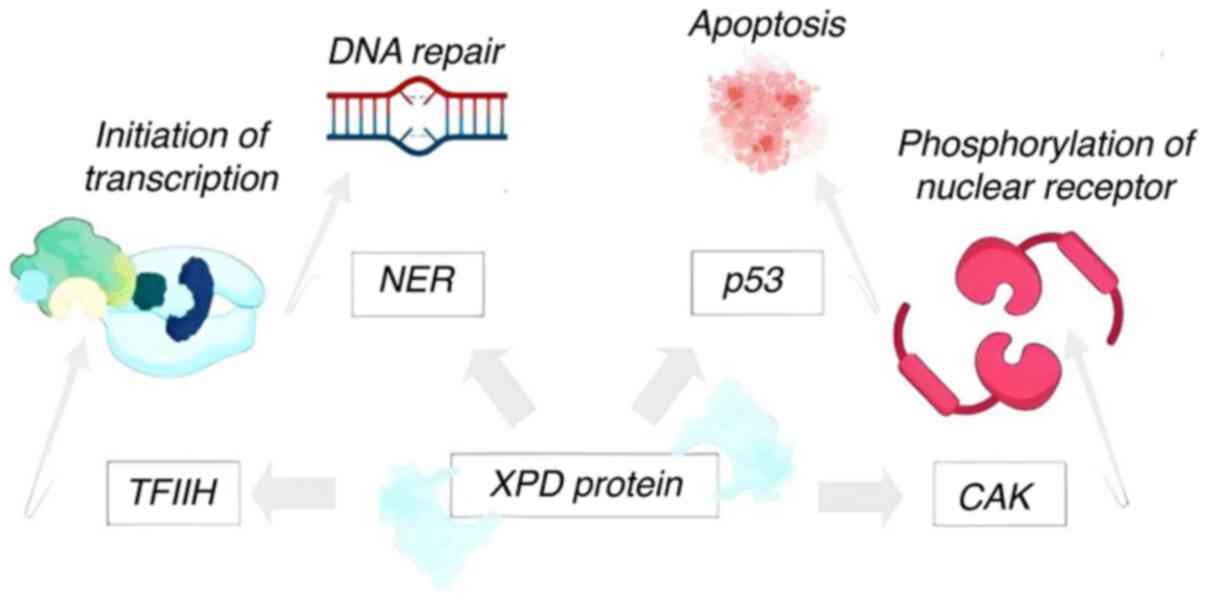
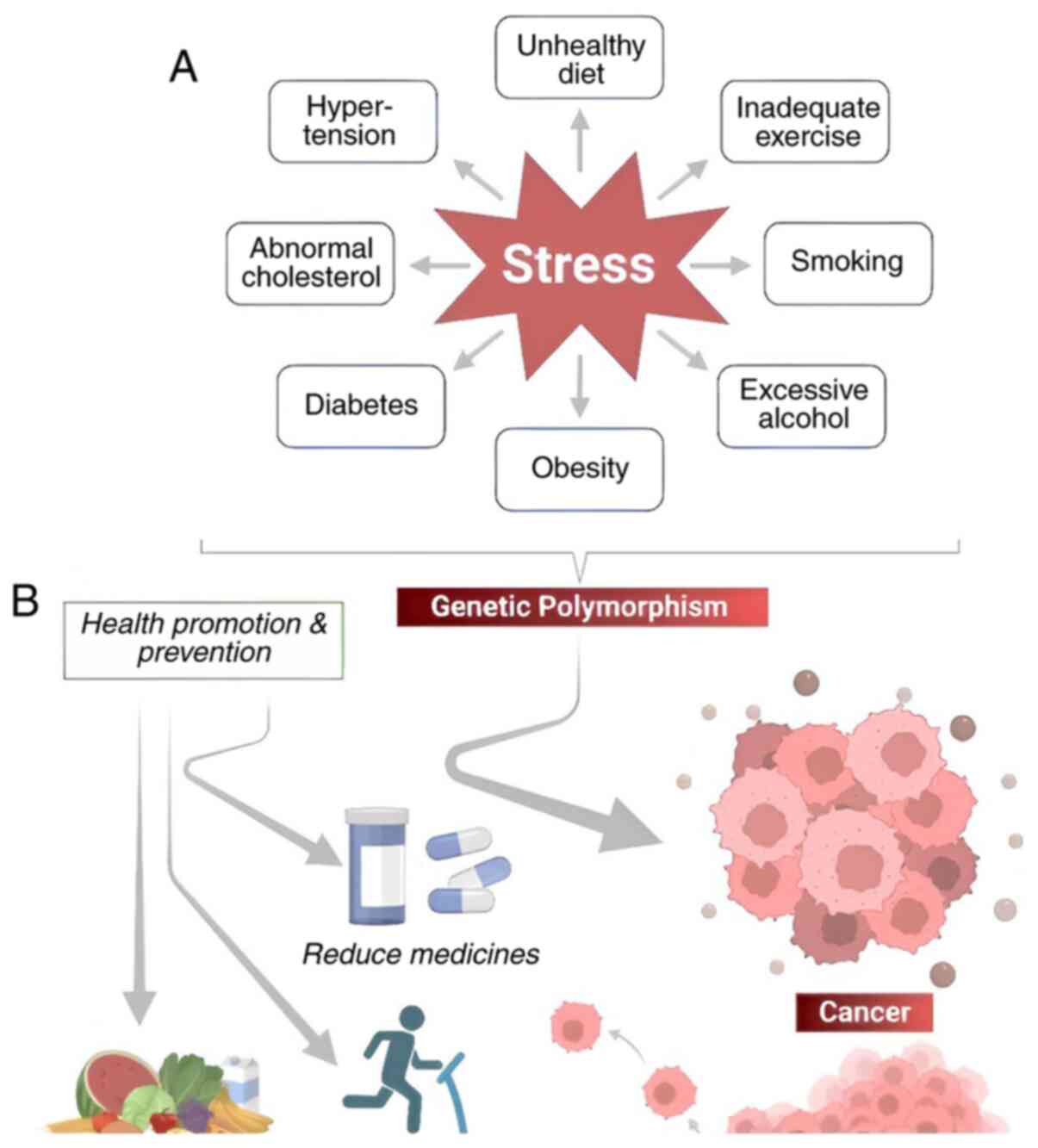
|
1
|
Lander ES, Linton LM, Birren B, Nusbaum C,
Zody MC, Baldwin J, Devon K, Dewar K, Doyle M, FitzHugh W, et al:
Initial sequencing and analysis of the human genome. Nature.
409:860–921. 2001.PubMed/NCBI View
Article : Google Scholar
|
|
2
|
Venter JC, Adams MD, Myers EW, Li PW,
Mural RJ, Sutton GG, Smith HO, Yandell M, Evans CA, Holt RA, et al:
The sequence of the human genome. Science. 291:1304–1351.
2001.PubMed/NCBI View Article : Google Scholar
|
|
3
|
International Human Genome Sequencing
Consortium: Finishing the euchromatic sequence of the human genome.
Nature. 431:931–945. 2004.PubMed/NCBI View Article : Google Scholar
|
|
4
|
International HapMap Consortium: The
international HapMap project. Nature. 426:789–796. 2003.PubMed/NCBI View Article : Google Scholar
|
|
5
|
Lin BK, Clyne M, Walsh M, Gomez O, Yu W,
Gwinn M and Khoury MJ: Tracking the epidemiology of human genes in
the literature: The HuGE published literature database. Am J
Epidemiol. 164:1–4. 2006.PubMed/NCBI View Article : Google Scholar
|
|
6
|
Schumacher FR, Al Olama AA, Berndt SI,
Benlloch S, Ahmed M, Saunders EJ, Dadaev T, Leongamornlert D,
Anokian E, Cieza-Borrella C, et al: Association analyses of more
than 140,000 men identify 63 new prostate cancer susceptibility
loci. Nat Genet. 50:928–936. 2018.PubMed/NCBI View Article : Google Scholar
|
|
7
|
Breast Cancer Association Consortium.
Dorling L, Carvalho S, Allen J, González-Neira A, Luccarini C,
Wahlström C, Pooley KA, Parsons MT, Fortuno C, et al: Breast cancer
risk genes-association analysis in more than 113,000 women. N Engl
J Med. 384:428–439. 2021.PubMed/NCBI View Article : Google Scholar
|
|
8
|
Ioannidis JP, Ntzani EE, Trikalinos TA and
Contopoulos-Ioannidis DG: Replication validity of genetic
association studies. Nat Genet. 29:306–309. 2001.PubMed/NCBI View
Article : Google Scholar
|
|
9
|
Morgan TM, Krumholz HM, Lifton RP and
Spertus JA: Nonvalidation of reported genetic risk factors for
acute coronary syndrome in a large-scale replication study. JAMA.
297:1551–1561. 2007.PubMed/NCBI View Article : Google Scholar
|
|
10
|
Dickersin K and Berlin JA: Meta-analysis:
State-of-the-science. Epidemiol Rev. 14:154–176. 1992.PubMed/NCBI View Article : Google Scholar
|
|
11
|
Mosteller F and Colditz GA: Understanding
research synthesis (meta-analysis). Annu Rev Public Health.
17:1–23. 1996.PubMed/NCBI View Article : Google Scholar
|
|
12
|
Morris RD: Meta-analysis in cancer
epidemiology. Environ Health Perspect. 102 (Suppl 8):S61–S66.
1994.PubMed/NCBI View Article : Google Scholar
|
|
13
|
Chen J, Jiang CC, Jin L and Zhang XD:
Regulation of PD-L1: A novel role of pro-survival signalling in
cancer Ann. Oncol. 27:409–416. 2016.PubMed/NCBI View Article : Google Scholar
|
|
14
|
Bardhan K, Anagnostou T and Boussiotis VA:
The PD1:PD-L1/2 pathway from discovery to clinical implementation.
Front Immunol. 7(550)2016.PubMed/NCBI View Article : Google Scholar
|
|
15
|
Wang Q, Lin W, Tang X, Li S, Guo L, Lin Y
and Kwok HF: The roles of microRNAs in regulating the expression of
PD-1/PD-L1 immune checkpoint. Int J Mol Sci.
18(2540)2017.PubMed/NCBI View Article : Google Scholar
|
|
16
|
Keir ME, Butte MJ, Freeman GJ and Sharpe
AH: PD-1 and its ligands in tolerance and immunity. Annu Rev
Immunol. 26:677–704. 2008.PubMed/NCBI View Article : Google Scholar
|
|
17
|
Tang Y, Fang W, Zhang Y, Hong S, Kang S,
Yan Y, Chen N, Zhan J, He X, Qin T, et al: The association between
PD-L1 and EGFR status and the prognostic value of PD-L1 in advanced
non-small cell lung cancer patients treated with EGFR-TKIs.
Oncotarget. 6:14209–14219. 2015.PubMed/NCBI View Article : Google Scholar
|
|
18
|
Cretella D, Digiacomo G, Giovannetti E and
Cavazzoni A: PTEN Alterations as a Potential Mechanism for Tumor
Cell Escape from PD-1/PD-L1 Inhibition. Cancers (Basel).
11(1318)2019.PubMed/NCBI View Article : Google Scholar
|
|
19
|
Suzuki A, Nakano T, Mak TW and Sasaki T:
Portrait of PTEN: Messages from mutant mice. Cancer Sci.
99:209–213. 2008.PubMed/NCBI View Article : Google Scholar
|
|
20
|
Marzec M, Zhang Q, Goradia A, Raghunath
PN, Liu X, Paessler M, Wang HY, Wysocka M, Cheng M, Ruggeri BA and
Wasik MA: Oncogenic kinase NPM/ALK induces through STAT3 expression
of immunosuppressive protein CD274 (PD-L1, B7-H1). Proc Natl Acad
Sci USA. 105:20852–20857. 2008.PubMed/NCBI View Article : Google Scholar
|
|
21
|
Lin H, Wei S, Hurt EM, Green MD, Zhao L,
Vatan L, Szeliga W, Herbst R, Harms PW, Fecher LA, et al: Host
expression of PD-L1 determines efficacy of PD-L1 pathway
blockade-mediated tumor regression. J Clin Invest. 128:805–815.
2018.PubMed/NCBI View Article : Google Scholar : Erratum in: J Clin
Invest 128: 1708, 2018.
|
|
22
|
McDonnell AM and Dang CH: . Basic review
of the cytochrome p450 system. J Adv Pract Oncol. 4:263–268.
2013.PubMed/NCBI View Article : Google Scholar
|
|
23
|
Chan CWH, Li C, Xiao EJ, Li M, Phiri PGM,
Yan T and Chan JYW: Association between genetic polymorphisms in
cytochrome P450 enzymes and survivals in women with breast cancer
receiving adjuvant endocrine therapy: a systematic review and
meta-analysis. Expert Rev Mol Med. 24(e1)2022.PubMed/NCBI View Article : Google Scholar
|
|
24
|
Datkhile KD, Durgawale PP, Gudur RA, Gudur
AK and Patil SR: CYP2D6 and CYP2E1 gene polymorphisms and their
association with cervical cancer susceptibility: A hospital based
case-control study from South-Western Maharashtra. Asian Pac J
Cancer Prev. 23:2591–2597. 2022.PubMed/NCBI View Article : Google Scholar
|
|
25
|
Agundez JAG: Cytochrome P450 gene
polymorphism and cancer. Curr Drug Metab. 5:211–224.
2004.PubMed/NCBI View Article : Google Scholar
|
|
26
|
Tan EY, Bharwani L, Chia YH, Soong RCT,
Lee SSY, Chen JJC and Chan PMY: . Impact of cytochrome P450 2D6
polymorphisms on decision-making and clinical outcomes in adjuvant
hormonal therapy for breast cancer. World J Clin Oncol. 13:712–724.
2022.PubMed/NCBI View Article : Google Scholar
|
|
27
|
Jiang O, Zhou R, Wu D, Liu Y, Wu W and
Cheng N: CYP2E1 polymorphisms and colorectal cancer risk: a HuGE
systematic review and meta-analysis. Tumor Biol. 34:1215–1224.
2013.PubMed/NCBI View Article : Google Scholar
|
|
28
|
Holick MF: Sunlight and vitamin D for bone
health and prevention of autoimmune diseases, cancers, and
cardiovascular disease. Am J Clin Nutr. 80 (6 Suppl):1678S–1688S.
2004.PubMed/NCBI View Article : Google Scholar
|
|
29
|
Mathieu C and Badenhoop K: Vitamin D and
type 1 diabetes mellitus: State of the art. Trends Endocrinol
Metab. 16:261–266. 2005.PubMed/NCBI View Article : Google Scholar
|
|
30
|
Misra M, Pacaud D, Petryk A,
Collett-Solberg PF and Kappy M: Drug and Therapeutics Committee of
the Lawson Wilkins Pediatric Endocrine Society. Vitamin D
deficiency in children and its management: Review of current
knowledge and recommendations. Pediatrics. 122:398–417.
2008.PubMed/NCBI View Article : Google Scholar
|
|
31
|
Handono K, Sidarta YO, Pradana BA, Nugroho
RA, Hartono IA, Kalim H and Endharti AT: Vitamin D prevents
endothelial damage induced by increased neutrophil extracellular
traps formation in patients with systemic lupus erythematosus. Acta
Med Indones. 46:189–198. 2014.PubMed/NCBI
|
|
32
|
Van Belle TL, Vanherwegen AS, Feyaerts D,
De Clercq P, Verstuyf A, Korf H, Gysemans C and Mathieu C:
1,25-Dihydroxyvitamin D3 and its analog TX527 promote a stable
regulatory T cell phenotype in T cells from type 1 diabetes
patients. PLoS One. 9(e109194)2014.PubMed/NCBI View Article : Google Scholar
|
|
33
|
Reddy KK: Reply to Glossmann: Vitamin D
compounds and oral supplementation methods. J Invest Dermatol.
133(2649)2013.PubMed/NCBI View Article : Google Scholar
|
|
34
|
Takahashi H, Hatta Y, Iriyama N, Hasegawa
Y, Uchida H, Nakagawa M, Makishima M, Takeuchi J and Takei M:
Induced differentiation of human myeloid leukemia cells into M2
macrophages by combined treatment with retinoic acid and
1α,25-dihydroxyvitamin D3. PLoS One. 9(e113722)2014.PubMed/NCBI View Article : Google Scholar
|
|
35
|
Zhang Z, Zhang H, Hu Z, Wang P, Wan J and
Li B: Synergy of 1,25-dihydroxyvitamin D3 and carboplatin in growth
suppression of SKOV-3 cells. Oncol Lett. 8:1348–1354.
2014.PubMed/NCBI View Article : Google Scholar
|
|
36
|
Henry HL: Regulation of vitamin D
metabolism. Best Pract Res Clin Endocrinol Metab. 25:531–541.
2011.PubMed/NCBI View Article : Google Scholar
|
|
37
|
Hossein-nezhad A and Holick MF: Vitamin D
for health: A global perspective. Mayo Clin Proc. 88:720–755.
2013.PubMed/NCBI View Article : Google Scholar
|
|
38
|
Cantorna MT, Zhu Y, Froicu M and Wittke A:
Vitamin D status, 1,25-dihydroxyvitamin D3, and the immune system.
Am J Clin Nutr. 80 (6 Suppl):1717S–1720S. 2004.PubMed/NCBI View Article : Google Scholar
|
|
39
|
Weinstein SJ, Purdue MP, Smith-Warner SA,
Mondul AM, Black A, Ahn J, Huang WY, Horst RL, Kopp W, Rager H, et
al: Serum 25-hydroxyvitamin D, vitamin D binding protein and risk
of colorectal cancer in the prostate, lung, colorectal and ovarian
cancer screening trial. Int J Cancer. 136:E654–E664.
2015.PubMed/NCBI View Article : Google Scholar
|
|
40
|
Slominski AT, Kim TK, Janjetovic Z,
Slominski RM, Li W, Jetten AM, Indra AK, Mason RS and Tuckey RC:
Biological effects of CYP11A1-derived vitamin D and lumisterol
metabolites in the skin. J Invest Dermatol. 144:2145–2161.
2024.PubMed/NCBI View Article : Google Scholar
|
|
41
|
Slominski AT, Tuckey RC, Jenkinson C, Li W
and Jetten AM: Alternative pathways for vitamin D metabolism. In:
Hewison M, Bouillon R, Giovanucci E, Goltzman D, Meyer M and Welsh
J (eds.), Feldman and Pike's Vitamin D: Volume One: Biochemistry,
Physiology and Diagnostics. 5th edition. Academic Press, pp85-109,
2024.
|
|
42
|
Hoeijmakers JH: Genome maintenance
mechanisms for preventing cancer. Nature. 411:366–374.
2001.PubMed/NCBI View Article : Google Scholar
|
|
43
|
Stary A and Sarasin A: The genetics of the
hereditary xeroderma pigmentosum syndrome. Biochimie. 84:49–60.
2002.PubMed/NCBI View Article : Google Scholar
|
|
44
|
Cleaver JE: Defective repair replication
of DNA in xeroderma pigmentosum. Nature. 218:652–656.
1968.PubMed/NCBI View Article : Google Scholar
|
|
45
|
Kraemer KH, Levy DD, Parris CN, Gozukara
EM, Moriwaki S, Adelberg S and Seidman MM: Xeroderma pigmentosum
and related disorders: Examining the linkage between defective DNA
repair and cancer. J Invest Dermatol. 103 (5 Suppl):96S–101S.
1994.PubMed/NCBI View Article : Google Scholar
|
|
46
|
Wood RD: DNA damage recognition during
nucleotide excision repair in mammalian cells. Biochimie. 81:39–44.
1999.PubMed/NCBI View Article : Google Scholar
|
|
47
|
de Boer J and Hoeijmakers JH: Nucleotide
excision repair and human syndromes. Carcinogenesis. 21:453–460.
2000.PubMed/NCBI View Article : Google Scholar
|
|
48
|
Friedberg EC, Feaver WJ and Gerlach VL:
The many faces of DNA polymerases: Strategies for mutagenesis and
for mutational avoidance. Proc Natl Acad Sci USA. 97:5681–5683.
2000.PubMed/NCBI View Article : Google Scholar
|
|
49
|
Whitlock JP Jr: Induction of cytochrome
P4501A1. Annu Rev Pharmacol Toxicol. 39:103–125. 1999.PubMed/NCBI View Article : Google Scholar
|
|
50
|
Iba MM, Scholl H, Fung J, Thomas PE and
Alam J: Induction of pulmonary CYP1A1 by nicotine. Xenobiotica.
28:827–843. 1998.PubMed/NCBI View Article : Google Scholar
|
|
51
|
San Jose C, Cabanillas A, Benitez J,
Carrillo JA, Jimenez M and Gervasini G: CYP1A1 gene polymorphisms
increase lung cancer risk in a high-incidence region of Spain: A
case control study. BMC Cancer. 10(463)2010.PubMed/NCBI View Article : Google Scholar
|
|
52
|
Johansson I, Xanthopoulou EM, Zhou Y,
Sanchez-Spitman A, van der Lee M, Wollmann BM, Størset E, Swen JJ,
Guchelaar HJ, Molden E, et al: Improved prediction of CYP2D6
catalyzed drug metabolism by taking variant substrate specificities
and novel polymorphic haplotypes into account. Clin Pharmacol Ther.
118:218–231. 2025.PubMed/NCBI View Article : Google Scholar
|
|
53
|
Wolf CR and Smith G: Cytochrome P450
CYP2D6. In: Metabolic Polymorphisms and Susceptibility to Cancer.
Vol 148. International Agency for Research on Cancer, Lyon,
pp209-229, 1999.
|
|
54
|
Crespi CL, Penman BW, Gelboin HV and
Gonzalez FJ: A tobacco smoke-derived nitrosamine,
4-(methylnitrosamino)-1-(3- pyridyl)-1-butanone, is activated by
multiple human cytochrome P450s including the polymorphic human
cytochrome P4502D6,. Carcinogenesis. 12:1197–1201. 1991.PubMed/NCBI View Article : Google Scholar
|
|
55
|
Lorenzo-Pouso AI, Silva FFE, Pérez-Jardón
A, Chamorro-Petronacci CM, Oliveira-Alves MG,
Álvarez-Calderón-Iglesias Ó, Caponio VCA, Pinti M, Perrotti V and
Pérez-Sayáns M: Overexpression of E-cadherin is a favorable
prognostic biomarker in oral squamous cell carcinoma: A systematic
review and meta-analysis. Biology (Basel). 12(239)2023.PubMed/NCBI View Article : Google Scholar
|
|
56
|
Chen CY, Chen J, He L and Stiles BL: PTEN:
Tumor Suppressor and Metabolic Regulator. Front Endocrinol
(Lausanne). 9(338)2018.PubMed/NCBI View Article : Google Scholar
|
|
57
|
Song MS, Salmena L and Pandolfi PP: The
functions and regulation of the PTEN tumour suppressor. Nat Rev Mol
Cell Biol. 13:283–296. 2012.PubMed/NCBI View Article : Google Scholar
|
|
58
|
Han F, Hu R, Yang H, Liu J, Sui J, Xiang
X, Wang F, Chu L and Song S: PTEN gene mutations correlate
to poor prognosis in glioma patients: a meta-analysis. Onco Targets
Ther. 9:3485–3492. 2016.PubMed/NCBI View Article : Google Scholar
|
|
59
|
Aubrey BJ, Kelly GL, Janic A, Herold MJ
and Strasser A: How does p53 induce apoptosis and how does this
relate to p53-mediated tumour suppression? Cell Death Differ.
25:104–113. 2018.PubMed/NCBI View Article : Google Scholar
|
|
60
|
Vaddavalli P and Schumacher B: The p53
network: Cellular and systemic DNA damage responses in cancer and
aging. Trends Genet. 38:598–612. 2022.PubMed/NCBI View Article : Google Scholar
|
|
61
|
Bouaoun L, Sonkin D, Ardin M, Hollstein M,
Byrnes G, Zavadil J and Olivier M: TP53 variations in human
cancers: New lessons from the IARC TP53 database and genomics data.
Hum Mutat. 37:865–876. 2016.PubMed/NCBI View Article : Google Scholar
|
|
62
|
Mantovani F, Collavin L and Del Sal G:
Mutant p53 as a guardian of the cancer cell. Cell Death Differ.
26:199–212. 2019.PubMed/NCBI View Article : Google Scholar
|
|
63
|
Keriel A, Stary A, Sarasin A,
Rochette-Egly C and Egly JM: XPD mutations prevent TFIIH-dependent
transactivation by nuclear receptors and phosphorylation of
RARalpha. Cell. 109:125–135. 2002.PubMed/NCBI View Article : Google Scholar
|
|
64
|
Coin F, Marinoni JC, Rodolfo C, Fribourg
S, Pedrini AM and Egly JM: Mutations in the XPD helicase gene
result in XP and TTD phenotypes, preventing interaction between XPD
and the p44 subunit of TFIIH. Nat Genet. 20:184–188.
1998.PubMed/NCBI View
Article : Google Scholar
|
|
65
|
Lunn RM, Helzlsouer KJ, Parshad R, Umbach
DM, Harris EL, Sanford KK and Bell DA: XPD polymorphisms: Effects
on DNA repair proficiency. Carcinogenesis. 21:551–555.
2000.PubMed/NCBI View Article : Google Scholar
|
|
66
|
Mohamed NS, Ali Albsheer MM, Abdelbagi H,
Siddig EE, Mohamed MA, Ahmed AE, Omer RA, Muneer MS, Ahmed A, Osman
HA, et al: Genetic polymorphism of the N-terminal region in
circumsporozoite surface protein of Plasmodium falciparum field
isolates from Sudan. Malar J. 18(333)2019.PubMed/NCBI View Article : Google Scholar
|
|
67
|
Ju HL, Kang JM, Moon SU, Kim JY, Lee HW,
Lin K, Sohn WM, Lee JS, Kim TS and Na BK: Genetic polymorphism and
natural selection of Duffy binding protein of Plasmodium vivax
Myanmar isolates. Malar J. 11:1–110. 2012.PubMed/NCBI View Article : Google Scholar
|
|
68
|
Thompson EE, Sun Y, Nicolae D and Ober C:
Shades of gray: A comparison of linkage disequilibrium between
Hutterites and Europeans. Genet Epidemiol. 34:133–139.
2010.PubMed/NCBI View Article : Google Scholar
|
|
69
|
Tibayrenc M: Human genetic diversity and
the epidemiology of parasitic and other transmissible diseases. Adv
Parasitol. 64:377–422. 2007.PubMed/NCBI View Article : Google Scholar
|
|
70
|
Guo CY, DeStefano AL, Lunetta KL, Dupuis J
and Cupples LA: Expectation maximization algorithm based haplotype
relative risk (EM-HRR): Test of linkage disequilibrium using
incomplete case-parents trios. Hum Hered. 59:125–135.
2005.PubMed/NCBI View Article : Google Scholar
|
|
71
|
Silverman EK, Chapman HA, Drazen JM, Weiss
ST, Rosner B, Campbell EJ, O'Donnell WJ, Reilly JJ, Ginns L,
Mentzer S, et al: Genetic epidemiology of severe, early-onset
chronic obstructive pulmonary disease. Risk to relatives for
airflow obstruction and chronic bronchitis. Am J Respir Crit Care
Med. 157:1770–1778. 1998.PubMed/NCBI View Article : Google Scholar
|
|
72
|
Karahalil B, Bohr VA and Wilson DM III:
Impact of DNA polymorphisms in key DNA base excision repair
proteins on cancer risk. Hum Exp Toxicol. 31:981–1005.
2012.PubMed/NCBI View Article : Google Scholar
|
|
73
|
Bookman EB, McAllister K, Gillanders E,
Wanke K, Balshaw D, Rutter J, Reedy J, Shaughnessy D, Agurs-Collins
T, Paltoo D, et al: Gene-environment interplay in common complex
diseases: Forging an integrative model-recommendations from an NIH
workshop. Genet Epidemiol. 35:217–225. 2011.PubMed/NCBI View Article : Google Scholar
|
|
74
|
Daly AK: Pharmacogenetics and human
genetic polymorphisms. Biochem J. 429:435–449. 2010.PubMed/NCBI View Article : Google Scholar
|
|
75
|
Mathur R, Rana BS and Jha AK: Single
nucleotide polymorphism (SNP). In: Vonk J, Shackelford T (eds).
Encyclopedia of Animal Cognition and Behavior. Springer, Cham,
pp1-4, 2018.
|
|
76
|
Ando Y, Saka H, Ando M, Sawa T, Muro K,
Ueoka H, Yokoyama A, Saitoh S, Shimokata K and Hasegawa Y:
Polymorphisms of UDP-glucuronosyltransferase gene and irinotecan
toxicity: A pharmacogenetic analysis. Cancer Res. 60:6921–6926.
2000.PubMed/NCBI
|
|
77
|
Mallal S, Phillips E, Carosi G, Molina JM,
Workman C, Tomazic J, Jägel-Guedes E, Rugina S, Kozyrev O, Cid JF,
et al: HLA-B*5701 screening for hypersensitivity to abacavir. N
Engl J Med. 358:568–579. 2008.PubMed/NCBI View Article : Google Scholar
|
|
78
|
Halder I and Shriver MD: Measuring and
using admixture to study the genetics of complex diseases. Hum
Genomics. 1:52–62. 2003.PubMed/NCBI View Article : Google Scholar
|
|
79
|
Hu D and Ziv E: Confounding in genetic
association studies and its solutions. Methods Mol Biol. 448:31–39.
2008.PubMed/NCBI View Article : Google Scholar
|
|
80
|
Hettiarachchi G and Komar AA: GWAS to
identify SNPs associated with common diseases and individual risk:
Genome wide association studies (GWAS) to identify SNPs associated
with common diseases and individual risk. In: Sauna ZE,
Kimchi-Sarfaty C (eds). Single Nucleotide Polymorphisms. Springer,
Cham, pp51-76, 2022.
|
|
81
|
Uffelmann E, Huang QQ, Munung NS, De Vries
J, Okada Y, Martin AR, Martin HC, Lappalainen T and Posthuma D:
Genome-wide association studies. Nat Rev Methods Primers.
1(59)2021.
|
|
82
|
Umeno M, McBride OW, Yang CS, Gelboin HV
and Gonzalez FJ: Human ethanol-inducible P450IIE1: Complete gene
sequence, promoter characterization, chromosome mapping, and
cDNA-directed expression. Biochemistry. 27:9006–9013.
1988.PubMed/NCBI View Article : Google Scholar
|
|
83
|
Guengerich FP, Kim DH and Iwasaki M: Role
of human cytochrome P-450 IIE1 in the oxidation of many low
molecular weight cancer suspects. Chem Res Toxicol. 4:168–179.
1991.PubMed/NCBI View Article : Google Scholar
|
|
84
|
Nakajima T and Aoyama T: Polymorphism of
drug-metabolizing enzymes in relation to individual susceptibility
to industrial chemicals. Ind Health. 38:143–152. 2000.PubMed/NCBI View Article : Google Scholar
|
|
85
|
Wang AH, Sun CS, Li LS, Huang JY and Chen
QS: Relationship of tobacco smoking CYP1A1 GSTM1 gene polymorphism
and esophageal cancer in Xi'an. World J Gastroenterol. 8:49–53.
2002.PubMed/NCBI View Article : Google Scholar
|
|
86
|
Bartsch H, Nair U, Risch A, Rojas M,
Wikman H and Alexandrov K: Genetic polymorphism of CYP genes, alone
or in combination, as a risk modifier of tobacco-related cancers.
Cancer Epidemiol Biomarkers Prev. 9:3–28. 2000.PubMed/NCBI
|
|
87
|
Itoga S, Nomura F, Makino Y, Tomonaga T,
Shimada H, Ochiai T, Iizasa T, Baba M, Fujisawa T and Harada S:
Tandem repeat polymorphism of the CYP2E1 gene: An association study
with esophageal cancer and lung cancer. Alcohol Clin Exp Res. 26 (8
Suppl):15S–19S. 2002.PubMed/NCBI View Article : Google Scholar
|
|
88
|
Danko IM and Chaschin NA: Association of
CYP2E1 gene polymorphism with predisposition to cancer development.
Exp Oncol. 27:248–256. 2005.PubMed/NCBI
|
|
89
|
Hayashi S, Watanabe J and Kawajiri K:
Genetic polymorphisms in the 5'-flanking region change
transcriptional regulation of the human cytochrome P450IIE1 gene. J
Biochem. 110:559–565. 1991.PubMed/NCBI View Article : Google Scholar
|
|
90
|
Watanabe M: Polymorphic CYP genes and
disease predisposition-what have the studies shown so far? Toxicol
Lett. 102-103:167–171. 1998.PubMed/NCBI View Article : Google Scholar
|
|
91
|
Yang B, O'Reilly DA, Demaine AG and
Kingsnorth AN: Study of polymorphisms in the CYP2E1 gene in
patients with alcoholic pancreatitis. Alcohol. 23:91–97.
2001.PubMed/NCBI View Article : Google Scholar
|
|
92
|
Yu SZ, Huang XE, Koide T, Cheng G, Chen
GC, Harada K, Ueno Y, Sueoka E, Oda H, Tashiro F, et al: Hepatitis
B and C viruses infection, lifestyle and genetic polymorphisms as
risk factors for hepatocellular carcinoma in Haimen, China. Jpn J
Cancer Res. 93:1287–1292. 2002.PubMed/NCBI View Article : Google Scholar
|
|
93
|
Munaka M, Kohshi K, Kawamoto T, Takasawa
S, Nagata N, Itoh H, Oda S and Katoh T: Genetic polymorphisms of
tobacco- and alcohol-related metabolizing enzymes and the risk of
hepatocellular carcinoma. J Cancer Res Clin Oncol. 129:355–360.
2003.PubMed/NCBI View Article : Google Scholar
|
|
94
|
Norton ID, Apte MV, Haber PS, McCaughan
GW, Pirola RC and Wilson JS: Cytochrome P4502E1 is present in rat
pancreas and is induced by chronic ethanol administration. Gut.
42:426–430. 1998.PubMed/NCBI View Article : Google Scholar
|
|
95
|
Catanzaro I, Naselli F, Saverini M,
Giacalone A, Montalto G and Caradonna F: Cytochrome P450 2E1
variable number tandem repeat polymorphisms and health risks: A
genotype-phenotype study in cancers associated with drinking and/or
smoking. Mol Med Rep. 6:416–420. 2012.PubMed/NCBI View Article : Google Scholar
|
|
96
|
Christiani DC, Mehta AJ and Yu CL: Genetic
susceptibility to occupational exposures. Occup Environ Med.
65:430–436, 436, 397. 2008.PubMed/NCBI View Article : Google Scholar
|
|
97
|
Pizzino G, Bitto A, Interdonato M, Galfo
F, Irrera N, Mecchio A, Pallio G, Ramistella V, De Luca F, Minutoli
L, et al: Oxidative stress and DNA repair and detoxification gene
expression in adolescents exposed to heavy metals living in the
Milazzo-Valle del Mela area (Sicily, Italy). Redox Biol. 2:686–693.
2014.PubMed/NCBI View Article : Google Scholar
|
|
98
|
Kringel D, Lippmann C, Parnham MJ, Kalso
E, Ultsch A and Lötsch J: A machine-learned analysis of human gene
polymorphisms modulating persisting pain points to major roles of
neuroimmune processes. Eur J Pain. 22:1735–1756. 2018.PubMed/NCBI View Article : Google Scholar
|
|
99
|
Pandiyan A, Lari S, Vanka J, Kumar BS,
Ghosh S, Jee B and Jonnalagadda PR: Genetic polymorphism in
xenobiotic metabolising genes and increased oxidative stress among
pesticides exposed agricultural workers diagnosed with cancers.
Asian Pac J Cancer Prev. 24:3795–3804. 2023.PubMed/NCBI View Article : Google Scholar
|
|
100
|
Rothman N, Wacholder S, Caporaso NE,
Garcia-Closas M, Buetow K and Fraumeni JF Jr: The use of common
genetic polymorphisms to enhance the epidemiologic study of
environmental carcinogens. Biochim Biophys Acta. 1471:C1–C10.
2001.PubMed/NCBI View Article : Google Scholar
|
|
101
|
Kelada SN, Eaton DL, Wang SS, Rothman NR
and Khoury MJ: The role of genetic polymorphisms in environmental
health. Environ Health Perspect. 111:1055–1064. 2003.PubMed/NCBI View Article : Google Scholar
|
|
102
|
Carr BA and Franklin MR: Drug-metabolizing
enzyme induction by 2,2'-dipyridyl, 1,7-phenanthroline,
7,8-benzoquinoline and oltipraz in mouse. Xenobiotica. 28:949–956.
1998.PubMed/NCBI View Article : Google Scholar
|
|
103
|
Langouët S, Coles B, Morel F, Becquemont
L, Beaune P, Guengerich FP, Ketterer B and Guillouzo A: Inhibition
of CYP1A2 and CYP3A4 by oltipraz results in reduction of aflatoxin
B1 metabolism in human hepatocytes in primary culture. Cancer Res.
55:5574–5579. 1995.PubMed/NCBI
|
|
104
|
Kensler TW, Egner PA, Wang JB, Zhu YR,
Zhang BC, Lu PX, Chen JG, Qian GS, Kuang SY, Jackson PE, et al:
Chemoprevention of hepatocellular carcinoma in aflatoxin endemic
areas. Gastroenterology. 127 (5 Suppl 1):S310–S318. 2004.PubMed/NCBI View Article : Google Scholar
|
|
105
|
Schulte P and Howard J: Genetic
susceptibility and the setting of occupational health standards.
Annu Rev Public Health. 32:149–159. 2011.PubMed/NCBI View Article : Google Scholar
|
|
106
|
Naselli F, Catanzaro I, Bellavia D, Perez
A, Sposito L and Caradonna F: Role and importance of polymorphisms
with respect to DNA methylation for the expression of CYP2E1
enzyme. Gene. 536:29–39. 2014.PubMed/NCBI View Article : Google Scholar
|
|
107
|
Sharma S, Sambyal V, Guleria K, Manjari M,
Sudan M, Uppal MS, Singh NR, Bansal D and Gupta A: TP53
polymorphisms in sporadic North Indian breast cancer patients.
Asian Pac J Cancer Prev. 15:6871–6879. 2014.PubMed/NCBI View Article : Google Scholar
|
|
108
|
Petrucelli N, Daly MB and Pal T: BRCA1-
and BRCA2-associated hereditary breast and ovarian cancer. 1998 Sep
4 [Updated 2025 Mar 20]. In: Adam MP, Feldman J, Mirzaa GM, Pagon
RA, Wallace SE and Amemiya A (eds). GeneReviews®
[Internet]. Seattle (WA): University of Washington, Seattle,
1993.
|
|
109
|
Slominski RM, Raman C, Chen JY and
Slominski AT: How cancer hijacks the body's homeostasis through the
neuroendocrine system. Trends Neurosci. 46:263–275. 2023.PubMed/NCBI View Article : Google Scholar
|