Spandidos Publications Logo
  • About
    • About Spandidos
    • Aims and Scopes
    • Abstracting and Indexing
    • Editorial Policies
    • Reprints and Permissions
    • Job Opportunities
    • Terms and Conditions
    • Contact
  • Journals
    • All Journals
    • Oncology Letters
      • Oncology Letters
      • Information for Authors
      • Editorial Policies
      • Editorial Board
      • Aims and Scope
      • Abstracting and Indexing
      • Bibliographic Information
      • Archive
    • International Journal of Oncology
      • International Journal of Oncology
      • Information for Authors
      • Editorial Policies
      • Editorial Board
      • Aims and Scope
      • Abstracting and Indexing
      • Bibliographic Information
      • Archive
    • Molecular and Clinical Oncology
      • Molecular and Clinical Oncology
      • Information for Authors
      • Editorial Policies
      • Editorial Board
      • Aims and Scope
      • Abstracting and Indexing
      • Bibliographic Information
      • Archive
    • Experimental and Therapeutic Medicine
      • Experimental and Therapeutic Medicine
      • Information for Authors
      • Editorial Policies
      • Editorial Board
      • Aims and Scope
      • Abstracting and Indexing
      • Bibliographic Information
      • Archive
    • International Journal of Molecular Medicine
      • International Journal of Molecular Medicine
      • Information for Authors
      • Editorial Policies
      • Editorial Board
      • Aims and Scope
      • Abstracting and Indexing
      • Bibliographic Information
      • Archive
    • Biomedical Reports
      • Biomedical Reports
      • Information for Authors
      • Editorial Policies
      • Editorial Board
      • Aims and Scope
      • Abstracting and Indexing
      • Bibliographic Information
      • Archive
    • Oncology Reports
      • Oncology Reports
      • Information for Authors
      • Editorial Policies
      • Editorial Board
      • Aims and Scope
      • Abstracting and Indexing
      • Bibliographic Information
      • Archive
    • Molecular Medicine Reports
      • Molecular Medicine Reports
      • Information for Authors
      • Editorial Policies
      • Editorial Board
      • Aims and Scope
      • Abstracting and Indexing
      • Bibliographic Information
      • Archive
    • World Academy of Sciences Journal
      • World Academy of Sciences Journal
      • Information for Authors
      • Editorial Policies
      • Editorial Board
      • Aims and Scope
      • Abstracting and Indexing
      • Bibliographic Information
      • Archive
    • International Journal of Functional Nutrition
      • International Journal of Functional Nutrition
      • Information for Authors
      • Editorial Policies
      • Editorial Board
      • Aims and Scope
      • Abstracting and Indexing
      • Bibliographic Information
      • Archive
    • International Journal of Epigenetics
      • International Journal of Epigenetics
      • Information for Authors
      • Editorial Policies
      • Editorial Board
      • Aims and Scope
      • Abstracting and Indexing
      • Bibliographic Information
      • Archive
    • Medicine International
      • Medicine International
      • Information for Authors
      • Editorial Policies
      • Editorial Board
      • Aims and Scope
      • Abstracting and Indexing
      • Bibliographic Information
      • Archive
  • Articles
  • Information
    • Information for Authors
    • Information for Reviewers
    • Information for Librarians
    • Information for Advertisers
    • Conferences
  • Language Editing
Spandidos Publications Logo
  • About
    • About Spandidos
    • Aims and Scopes
    • Abstracting and Indexing
    • Editorial Policies
    • Reprints and Permissions
    • Job Opportunities
    • Terms and Conditions
    • Contact
  • Journals
    • All Journals
    • Biomedical Reports
      • Information for Authors
      • Editorial Policies
      • Editorial Board
      • Aims and Scope
      • Abstracting and Indexing
      • Bibliographic Information
      • Archive
    • Experimental and Therapeutic Medicine
      • Information for Authors
      • Editorial Policies
      • Editorial Board
      • Aims and Scope
      • Abstracting and Indexing
      • Bibliographic Information
      • Archive
    • International Journal of Epigenetics
      • Information for Authors
      • Editorial Policies
      • Editorial Board
      • Aims and Scope
      • Abstracting and Indexing
      • Bibliographic Information
      • Archive
    • International Journal of Functional Nutrition
      • Information for Authors
      • Editorial Policies
      • Editorial Board
      • Aims and Scope
      • Abstracting and Indexing
      • Bibliographic Information
      • Archive
    • International Journal of Molecular Medicine
      • Information for Authors
      • Editorial Policies
      • Editorial Board
      • Aims and Scope
      • Abstracting and Indexing
      • Bibliographic Information
      • Archive
    • International Journal of Oncology
      • Information for Authors
      • Editorial Policies
      • Editorial Board
      • Aims and Scope
      • Abstracting and Indexing
      • Bibliographic Information
      • Archive
    • Medicine International
      • Information for Authors
      • Editorial Policies
      • Editorial Board
      • Aims and Scope
      • Abstracting and Indexing
      • Bibliographic Information
      • Archive
    • Molecular and Clinical Oncology
      • Information for Authors
      • Editorial Policies
      • Editorial Board
      • Aims and Scope
      • Abstracting and Indexing
      • Bibliographic Information
      • Archive
    • Molecular Medicine Reports
      • Information for Authors
      • Editorial Policies
      • Editorial Board
      • Aims and Scope
      • Abstracting and Indexing
      • Bibliographic Information
      • Archive
    • Oncology Letters
      • Information for Authors
      • Editorial Policies
      • Editorial Board
      • Aims and Scope
      • Abstracting and Indexing
      • Bibliographic Information
      • Archive
    • Oncology Reports
      • Information for Authors
      • Editorial Policies
      • Editorial Board
      • Aims and Scope
      • Abstracting and Indexing
      • Bibliographic Information
      • Archive
    • World Academy of Sciences Journal
      • Information for Authors
      • Editorial Policies
      • Editorial Board
      • Aims and Scope
      • Abstracting and Indexing
      • Bibliographic Information
      • Archive
  • Articles
  • Information
    • For Authors
    • For Reviewers
    • For Librarians
    • For Advertisers
    • Conferences
  • Language Editing
Login Register Submit
  • This site uses cookies
  • You can change your cookie settings at any time by following the instructions in our Cookie Policy. To find out more, you may read our Privacy Policy.

    I agree
Search articles by DOI, keyword, author or affiliation
Search
Advanced Search
presentation
Oncology Letters
Join Editorial Board Propose a Special Issue
Print ISSN: 1792-1074 Online ISSN: 1792-1082
Journal Cover
July-2016 Volume 12 Issue 1

Full Size Image

Sign up for eToc alerts
Recommend to Library

Journals

International Journal of Molecular Medicine

International Journal of Molecular Medicine

International Journal of Molecular Medicine is an international journal devoted to molecular mechanisms of human disease.

International Journal of Oncology

International Journal of Oncology

International Journal of Oncology is an international journal devoted to oncology research and cancer treatment.

Molecular Medicine Reports

Molecular Medicine Reports

Covers molecular medicine topics such as pharmacology, pathology, genetics, neuroscience, infectious diseases, molecular cardiology, and molecular surgery.

Oncology Reports

Oncology Reports

Oncology Reports is an international journal devoted to fundamental and applied research in Oncology.

Experimental and Therapeutic Medicine

Experimental and Therapeutic Medicine

Experimental and Therapeutic Medicine is an international journal devoted to laboratory and clinical medicine.

Oncology Letters

Oncology Letters

Oncology Letters is an international journal devoted to Experimental and Clinical Oncology.

Biomedical Reports

Biomedical Reports

Explores a wide range of biological and medical fields, including pharmacology, genetics, microbiology, neuroscience, and molecular cardiology.

Molecular and Clinical Oncology

Molecular and Clinical Oncology

International journal addressing all aspects of oncology research, from tumorigenesis and oncogenes to chemotherapy and metastasis.

World Academy of Sciences Journal

World Academy of Sciences Journal

Multidisciplinary open-access journal spanning biochemistry, genetics, neuroscience, environmental health, and synthetic biology.

International Journal of Functional Nutrition

International Journal of Functional Nutrition

Open-access journal combining biochemistry, pharmacology, immunology, and genetics to advance health through functional nutrition.

International Journal of Epigenetics

International Journal of Epigenetics

Publishes open-access research on using epigenetics to advance understanding and treatment of human disease.

Medicine International

Medicine International

An International Open Access Journal Devoted to General Medicine.

Journal Cover
July-2016 Volume 12 Issue 1

Full Size Image

Sign up for eToc alerts
Recommend to Library

  • Article
  • Citations
    • Cite This Article
    • Download Citation
    • Create Citation Alert
    • Remove Citation Alert
    • Cited By
  • Similar Articles
    • Related Articles (in Spandidos Publications)
    • Similar Articles (Google Scholar)
    • Similar Articles (PubMed)
  • Download PDF
  • Download XML
  • View XML
Case Report Open Access

Spontaneous hematoma in the setting of dual anti-platelet therapy with ticagrelor: A case report

  • Authors:
    • Chunguang Feng
    • Linguang Wang
    • Lulu Wang
  • View Affiliations / Copyright

    Affiliations: Department of Cardiology, Central Hospital of Xuzhou, Xuzhou Institute of Cardiovascular Disease, Xuzhou, Jiangsu 221009, P.R. China
    Copyright: © Feng et al. This is an open access article distributed under the terms of Creative Commons Attribution License.
  • Pages: 144-146
    |
    Published online on: May 9, 2016
       https://doi.org/10.3892/ol.2016.4552
  • Expand metrics +
Metrics: Total Views: 0 (Spandidos Publications: | PMC Statistics: )
Metrics: Total PDF Downloads: 0 (Spandidos Publications: | PMC Statistics: )
Cited By (CrossRef): 0 citations Loading Articles...

This article is mentioned in:


Abstract

A 69-year-old male patient was admitted to hospital because a lump was discovered, accompanied with pain lasting 5 h under his right scapula. Two months earlier, he had undergone a double-stent insertion operation due to lesions on the end of the left main coronary artery, the opening of left circumflex artery, and the opening of the anterior descending branch. After the operation, he was administered with dual anti‑platelet therapy (DAPT) with aspirin and ticagrelor and was diagnosed with hematoma under his right scapula through ultrasonic inspection. It was established that no other factor, except DAPT, was responsible for his spontaneous hematoma.

Introduction

The basis of preventive treatment for stent thrombosis is the best percutaneous intervention (PCI) performance including good expansion and apposition of the stent, otherwise, dual anti-platelet therapy (DAPT) is the cornerstone of medical therapy after PCI (1,2). Based on data from Platelet Inhibition and Patient Outcomes (3), the newer platelet inhibitors such as ticagrelor have been accepted in the current American College of Cardiology guidelines (4). However, bleeding consituted an issue as compared with clopidogrel (3).

In the present study, we describe a case of spontaneous hematoma in a patient administered ticagrelor following PCI.

Case report

The patient was a 69-year-old man who was admitted to the Central Hospital of Xuzhou (Jiangsu, China) because a lump was discovered, accompanied with pain under his right scapula. He had a 12-year history of hypertension and 6-month history of coronary heart disease, without history of trauma, diabetes, stroke, or alimentary tract hemorrhage. Six months earlier, the patient felt dyspnea and chest discomfort after certain activities. After resting for a few minutes, such symptoms disappeared; however, 2 months prior to admission, the symptoms became aggravated, and the patient presented to the hospital for a check-up. Coronary angiogram showed that the end of left main coronary artery had 50% local stenosis, the opening to the proximal segment of anterior descending branch had 70–90% stenosis, and the opening to the proximal segment of circumflex artery had 80% stenosis. A 3.5×24 mm resolute stent was implanted between the proximal segment of the anterior descending branch and the end of left main coronary artery. A 4.0×18 mm resolute stent was implanted between the proximal segment of circumflex artery and the end of left main coronary artery. The operation method used was cullote.

After the operation, the patient was administered 100 mg aspirin (Bayer, Beijing, China) once a day, 90 mg ticagrelor (AstraZeneca, Shanghai, China) twice a day, combined with normal medication of rosuvastatin (AstraZeneca, Shanghai, China), amlodipine besylate tablet (Pfizer, Dalian, China), and metoprolol succinate sustained-release tablet (AstraZeneca, Shanghai, China). At 5 h prior to admission, while the patient was sleeping, he experienced sudden pain under the right scapula and considered that the lump was getting larger gradually. Therefore, he was admitted for emergency treatment. Two months prior to admission, ecchymosis was found on all his limbs, waist and abdomen, but since he did not experience any discomfort, he was not treated. In the course of disease, no symptoms, such as chest pains, shortage of breath, fever, or infection were evident. A physical examination on admission indicated the following: temperature (T) 36.6°C, pulse (P) 82 times/min, respiration (R) 18 times/min, blood pressure (BP) 135/85 mmHg, clear consciousness, no cyanosis, soft neck, no distension of jugular vein, 8×10 cm enclosed mass under the right scapula, normal complexion, obvious tenderness, clear breathing sounds in both lungs, without dry or moist rale, medium heart border under percussion, heart rate of 82 times/min, regular, no murmur in auscultatory valve areas, a large bruise in the right waist and abdomen, no obvious enclosed mass, no pressing pains, soft abdomen, no pressing pains or rebound tenderness, no touch to liver, spleen or subcostal, and no edema on the limbs. Physiological reflection existed and pathologic reflex was not drawn out.

The auxiliary examination included: blood routine test showing red blood cells 3.23×10¹²/l [reference value: (4.0–5.5)x1012/l], hemoglobin 98 g/l (reference value: 120–160 g/l), hematocrit 30.2% (reference value: 40–50%), and blood platelet 140×109/l [reference value: (100–300)x109/l]. The coagulation function was: prothrombin time (PT) 11.8 sec (reference value: 9–13 sec), active partial PT (APTT) 22.5 sec (reference value: 21–34 sec), and PT international normalized ratio (INR) 0.99 (reference value: 0.9–1.1 sec). Cardiac troponin I had a value of 0.02 (reference value: 0–0.08 ng/ml). Liver function and renal function were normal. The patient underwent a thrombelastogram examination on the first day of admission, and the following were indicated: R time 5.1 min (reference value: 5–10 min), K time 1.9 min (reference value: 1–3 min), MA 62.5 mm (reference value: 50–70 mm), CI 0.7 (reference value: −3-3), LY30 0.1% (reference value: 0–8%), AA inhibition rate 98.3%, and adenosine diphosphate (ADP) inhibition rate 88.8%. Electrocardiogram and color Doppler ultrasound showed no abnormality. The admitting diagnosis for the patient was spontaneous edema under the right scapula.

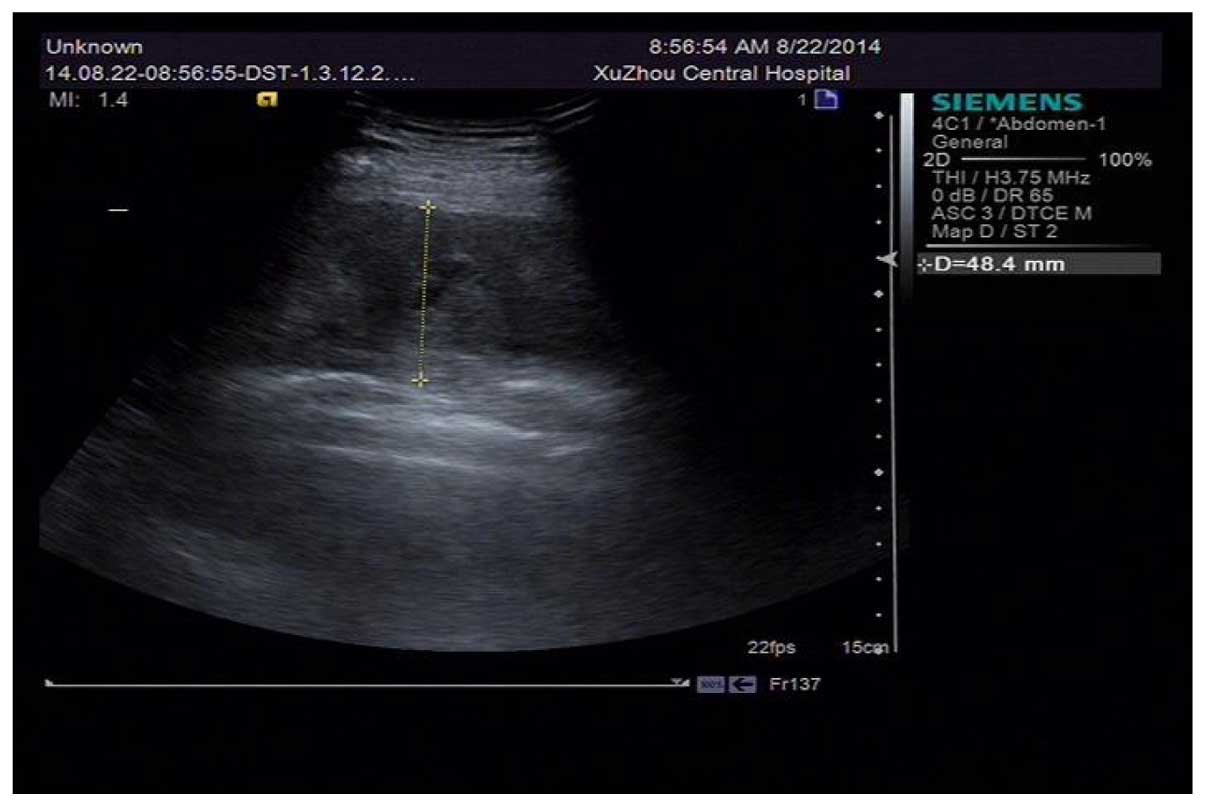
A B ultrasonic examination was conducted on the day of admission indicating liquid anechoic area under right scapula, D 48.4 mm (Fig. 1).

Figure 1.

Liquid anechoic area under right scapula shown by ultrasonic examination.

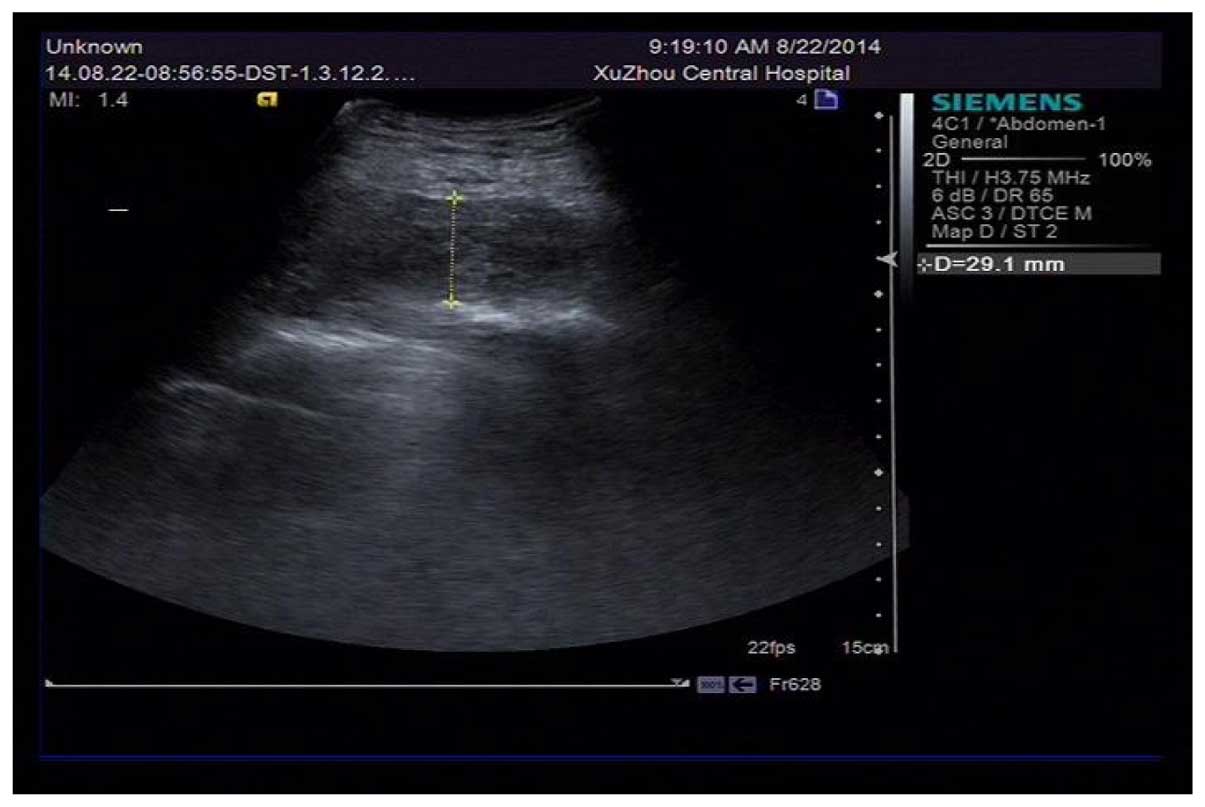
Puncture drainage by syringe was conducted on the skin in an enclosed mass following disinfection, draining out 105 ml of incoagulable blood, and the liquid anechoic area turned to D 29.1 mm (Fig. 2). A pressure bandage was subsequently applied.

Figure 2.

Liquid anechoic area reduced after puncture drainage by syringe.

Coagulation disorders and an abnormal quantity of blood platelets were excluded according to the result of the patient's PT, APTT, INR and thrombelastogram examination. The thrombelastogram showed that the AA and ADP inhibition rate increased significantly, indicating that the patient had a high response towards dual antiplatelet drugs, and since the patient had undergone implantation of double stents 2 months earlier due to left main coronary artery lesion, anterior descending branch lesion, and circumflex artery bifurcation lesion, and had used aspirin 6 months earlier, no significant abnormality was evident. Ticagrelor was used after the PCI operation and the patient denied any trauma, thus it was deemed that spontaneous edema was relevant to oral administration of ticagrelor.

Aspirin was continued, stopping ticagrelor for one day and changing to clopidogrel 75 mg QD. Pressure bandaging, combined with coronary artery-dilating medicine (isosorbide mononitrate), lipid lowering to stabilize plaque (atorvastatin) and depressurization (amlodipine besylate) treatment were applied. After 6 days, thrombelastogram examination was again conducted and the values identified were: R time 7.3 min (reference value: 5–10 min), K time 1.9 min (reference value: 1–3 min), MA 68.4 mm (reference value: 50–70 mm), CI 0.1 (reference value: −3-3), LY30 0.1% (reference value: 0–8%), AA inhibition rate 74.3%, ADP inhibition rate 81.3%, and hemoglobin 95 g/l. The enclosed mass in the affected part wsa gradually absorbed. At 9 days after the onset of disease, the patient had a hemoglobin of 102 g/l. The patient was discharged from hospital. After DAPT with aspirin and ticagrelor and a follow-up of 10 months, no hematoma recurred and no skin ecchymosis was evident.

Discussion

Anti-platelet therapy is the cornerstone of treatment for PCI. DAPT combined with clopidogrel (4) and aspirin has obvious limitations in treatment, and patients have the risk of cardiovascular sudden death and stent thrombosis. Patients in Asia, due to gene polymorphism, have resistance or low reaction towards clopidogrel (5). A high dose of clopidogrel is unable to effectively avoid the risk of stent thrombosis on acute coronary syndrome (ACS) patients after PCI treatment (3). Ticagrelor is a new type of oral anti-platelet drug, which reversibly interacts with P2Y12 receptor of platelet ADP, blocks signal transduction and platelet activation (6). Compared with clopidogrel, it does not need metabolic activation, and it may be quickly absorbed by the human body, and takes effect faster, inhibiting platelets significantly during the treatment period of maintenance dose. After the last medication, the drug therapeutic effect decreases significantly (7). Ticagrelor was the first oral anti-platelet drug that was confirmed to be able to reduce cardiovascular deaths and total deaths of ACS patients, and it was also able to significantly reduce the risks of cardiovascular events; thus, it has become widely used in the clinic (8). In terms of the safety of blood loss, the ticagrelor and clopidogrel groups had no significant difference in terms of massive hemorrhage, fatal massive hemorrhage, TIMI massive hemorrhage and the need of infusion of erythrocyte. However, fatal intracranial hemorrhage and non-coronary-artery bypass grafting-related hemorrhage in the ticagrelor group increased (9). Notably, the FDA, while authorizing ticagrelor stated that ticagrelor, as in the case of other anti-platelet drugs, occasionally results in fatal hemorrhage (10). Consequently, it could not be used in patients with a history of active pathological or intracranial hemorrhage (10). Particularly, clopidogrel was deemed safer than ticagrelor on various hemorrhage indexes (11). Most of the subcutaneous hematomas on scapula were relevant to trauma and diseases of the blood system. Only few spontaneous edemas were relevant to dual anti-platelet drugs. Two months earlier, the patient in our study was diagnosed with ACS. Radiography showed that lesions appeared in the left main coronary artery, anterior descending branch, and circumflex artery. Double stents were implanted. In the Guideline for the Management of Patients with Non-ST-Elevation Acute Coronary Syndromes (4) suggested using the more effective anti-platelet drug ticagrelor on the basis of aspirin. Compared with the independent use of aspirin, skin ecchymosis on the patient increased significantly, and spontaneous edema appeared under the right scapula, which under the laboratory examination, was confirmed as the result of the patient's high response towards ticagrelor. After changing ticagrelor for clopidogrel, such symptoms disappeared and no recurrence was detected during the follow-up period.

This case suggests that with the appearance of new anti-platelet drugs, there is a stronger anti-thrombotic effect, but also an increase in rare bleeding conditions, leading to new issues that are to be resolved: i) for example, whether, as the guideline suggests, all the ACS patients after operation should use more effective anti-platelet drugs; ii) or whether certain blood platelet detection methods, such as thrombelastogram, used to verify the outcome, may be used as conventional auxiliary methods to determine the type of anti-platelet drugs to be employed.

References

1 

Lemesle G, Delhaye C, Bonello L, de Labriolle A, Waksman R and Pichard A: Stent thrombosis in 2008: definition, predictors, prognosis and treatment. Arch Cardiovasc Dis. 101:769–777. 2008. View Article : Google Scholar : PubMed/NCBI

2 

Kurz DJ and Eberli FR: Medical therapy of coronary artery disease after percutaneous intervention. Curr Opin Pharmacol. 13:287–293. 2013. View Article : Google Scholar : PubMed/NCBI

3 

Wallentin L, Becker RC, Budaj A, et al: Ticagrelor versus clopidogrel in patients with acute coronary syndromes. N Eng J Med. 361:1045–1057. 2009. View Article : Google Scholar

4 

Amsterdam EA, Wenger NK, Brindis RG, Casey DE Jr, Ganiats TG, Holmes DR Jr, Jaffe AS, Jneid H, Kelly RF, Kontos MC, et al: American Association for Clinical Chemistry: 22014 AHA/ACC Guideline for the Management of Patients with Non-ST-Elevation Acute Coronary Syndromes: a report of the American College of Cardiology/American Heart Association Task Force on Practice Guidelines. J Am Coll Cardiol. 64:e139–e228. 2014. View Article : Google Scholar : PubMed/NCBI

5 

Kubica AI, Kozinski M, Grzesk G, Fabiszak T, Navarese EP and Goch A: Genetic determinants of platelet response to clopidogrel. J Thromb Thrombolysis. 32:459–466. 2011. View Article : Google Scholar : PubMed/NCBI

6 

Husted S and van Giezen JJ: Ticagrelor: the first reversibly binding oral P2Y12 receptor antagonist. Cardiovasc Ther. 27:259–274. 2009. View Article : Google Scholar : PubMed/NCBI

7 

Gurbel PA, Bliden KP, Butler K, Tantry US, Gesheff T, Wei C, Teng R, Antonino MJ, Patil SB, Karunakaran A, et al: Randomized double-blind assessment of the ONSET and OFFSET of the antiplatelet effects of ticagrelor versus clopidogrel in patients with stable coronary artery disease: The ONSET/OFFSET study. Circulation. 120:2577–2585. 2009. View Article : Google Scholar : PubMed/NCBI

8 

Juneja S, Gupta K and Kaushal S: Ticagrelor: An emerging oral antiplatelet agent. J Pharmacol Pharmacother. 4:78–80. 2013. View Article : Google Scholar : PubMed/NCBI

9 

Wallentin L, Becker RC, Budaj A, Cannon CP, Emanuelsson H, Held C, Horrow J, Husted S, James S, Katus H, et al: PLATO Investigators: Ticagrelor versus clopidogrel in patients with acute coronary syndromes. N Engl J Med. 361:1045–1057. 2009. View Article : Google Scholar : PubMed/NCBI

10 

Gaglia MA Jr and Waksman R: Overview of the 2010 Food and Drug Administration Cardiovascular and Renal Drugs Advisory Committee meeting regarding ticagrelor. Circulation. 123:451–456. 2011. View Article : Google Scholar : PubMed/NCBI

11 

DiNicolantonio JJ, D'Ascenzo F, Tomek A, Chatterjee S, Niazi AK and Biondi-Zoccai G: Clopidogrel is safer than ticagrelor in regard to bleeds: a closer look at the PLATO trial. Int J Cardiol. 168:1739–1744. 2013. View Article : Google Scholar : PubMed/NCBI

Related Articles

  • Abstract
  • View
  • Download
  • Twitter
Copy and paste a formatted citation
Spandidos Publications style
Feng C, Wang L and Wang L: Spontaneous hematoma in the setting of dual anti-platelet therapy with ticagrelor: A case report. Oncol Lett 12: 144-146, 2016.
APA
Feng, C., Wang, L., & Wang, L. (2016). Spontaneous hematoma in the setting of dual anti-platelet therapy with ticagrelor: A case report. Oncology Letters, 12, 144-146. https://doi.org/10.3892/ol.2016.4552
MLA
Feng, C., Wang, L., Wang, L."Spontaneous hematoma in the setting of dual anti-platelet therapy with ticagrelor: A case report". Oncology Letters 12.1 (2016): 144-146.
Chicago
Feng, C., Wang, L., Wang, L."Spontaneous hematoma in the setting of dual anti-platelet therapy with ticagrelor: A case report". Oncology Letters 12, no. 1 (2016): 144-146. https://doi.org/10.3892/ol.2016.4552
Copy and paste a formatted citation
x
Spandidos Publications style
Feng C, Wang L and Wang L: Spontaneous hematoma in the setting of dual anti-platelet therapy with ticagrelor: A case report. Oncol Lett 12: 144-146, 2016.
APA
Feng, C., Wang, L., & Wang, L. (2016). Spontaneous hematoma in the setting of dual anti-platelet therapy with ticagrelor: A case report. Oncology Letters, 12, 144-146. https://doi.org/10.3892/ol.2016.4552
MLA
Feng, C., Wang, L., Wang, L."Spontaneous hematoma in the setting of dual anti-platelet therapy with ticagrelor: A case report". Oncology Letters 12.1 (2016): 144-146.
Chicago
Feng, C., Wang, L., Wang, L."Spontaneous hematoma in the setting of dual anti-platelet therapy with ticagrelor: A case report". Oncology Letters 12, no. 1 (2016): 144-146. https://doi.org/10.3892/ol.2016.4552
Follow us
  • Twitter
  • LinkedIn
  • Facebook
About
  • Spandidos Publications
  • Careers
  • Cookie Policy
  • Privacy Policy
How can we help?
  • Help
  • Live Chat
  • Contact
  • Email to our Support Team