Spandidos Publications Logo
  • About
    • About Spandidos
    • Aims and Scopes
    • Abstracting and Indexing
    • Editorial Policies
    • Reprints and Permissions
    • Job Opportunities
    • Terms and Conditions
    • Contact
  • Journals
    • All Journals
    • Oncology Letters
      • Oncology Letters
      • Information for Authors
      • Editorial Policies
      • Editorial Board
      • Aims and Scope
      • Abstracting and Indexing
      • Bibliographic Information
      • Archive
    • International Journal of Oncology
      • International Journal of Oncology
      • Information for Authors
      • Editorial Policies
      • Editorial Board
      • Aims and Scope
      • Abstracting and Indexing
      • Bibliographic Information
      • Archive
    • Molecular and Clinical Oncology
      • Molecular and Clinical Oncology
      • Information for Authors
      • Editorial Policies
      • Editorial Board
      • Aims and Scope
      • Abstracting and Indexing
      • Bibliographic Information
      • Archive
    • Experimental and Therapeutic Medicine
      • Experimental and Therapeutic Medicine
      • Information for Authors
      • Editorial Policies
      • Editorial Board
      • Aims and Scope
      • Abstracting and Indexing
      • Bibliographic Information
      • Archive
    • International Journal of Molecular Medicine
      • International Journal of Molecular Medicine
      • Information for Authors
      • Editorial Policies
      • Editorial Board
      • Aims and Scope
      • Abstracting and Indexing
      • Bibliographic Information
      • Archive
    • Biomedical Reports
      • Biomedical Reports
      • Information for Authors
      • Editorial Policies
      • Editorial Board
      • Aims and Scope
      • Abstracting and Indexing
      • Bibliographic Information
      • Archive
    • Oncology Reports
      • Oncology Reports
      • Information for Authors
      • Editorial Policies
      • Editorial Board
      • Aims and Scope
      • Abstracting and Indexing
      • Bibliographic Information
      • Archive
    • Molecular Medicine Reports
      • Molecular Medicine Reports
      • Information for Authors
      • Editorial Policies
      • Editorial Board
      • Aims and Scope
      • Abstracting and Indexing
      • Bibliographic Information
      • Archive
    • World Academy of Sciences Journal
      • World Academy of Sciences Journal
      • Information for Authors
      • Editorial Policies
      • Editorial Board
      • Aims and Scope
      • Abstracting and Indexing
      • Bibliographic Information
      • Archive
    • International Journal of Functional Nutrition
      • International Journal of Functional Nutrition
      • Information for Authors
      • Editorial Policies
      • Editorial Board
      • Aims and Scope
      • Abstracting and Indexing
      • Bibliographic Information
      • Archive
    • International Journal of Epigenetics
      • International Journal of Epigenetics
      • Information for Authors
      • Editorial Policies
      • Editorial Board
      • Aims and Scope
      • Abstracting and Indexing
      • Bibliographic Information
      • Archive
    • Medicine International
      • Medicine International
      • Information for Authors
      • Editorial Policies
      • Editorial Board
      • Aims and Scope
      • Abstracting and Indexing
      • Bibliographic Information
      • Archive
  • Articles
  • Information
    • Information for Authors
    • Information for Reviewers
    • Information for Librarians
    • Information for Advertisers
    • Conferences
  • Language Editing
Spandidos Publications Logo
  • About
    • About Spandidos
    • Aims and Scopes
    • Abstracting and Indexing
    • Editorial Policies
    • Reprints and Permissions
    • Job Opportunities
    • Terms and Conditions
    • Contact
  • Journals
    • All Journals
    • Biomedical Reports
      • Information for Authors
      • Editorial Policies
      • Editorial Board
      • Aims and Scope
      • Abstracting and Indexing
      • Bibliographic Information
      • Archive
    • Experimental and Therapeutic Medicine
      • Information for Authors
      • Editorial Policies
      • Editorial Board
      • Aims and Scope
      • Abstracting and Indexing
      • Bibliographic Information
      • Archive
    • International Journal of Epigenetics
      • Information for Authors
      • Editorial Policies
      • Editorial Board
      • Aims and Scope
      • Abstracting and Indexing
      • Bibliographic Information
      • Archive
    • International Journal of Functional Nutrition
      • Information for Authors
      • Editorial Policies
      • Editorial Board
      • Aims and Scope
      • Abstracting and Indexing
      • Bibliographic Information
      • Archive
    • International Journal of Molecular Medicine
      • Information for Authors
      • Editorial Policies
      • Editorial Board
      • Aims and Scope
      • Abstracting and Indexing
      • Bibliographic Information
      • Archive
    • International Journal of Oncology
      • Information for Authors
      • Editorial Policies
      • Editorial Board
      • Aims and Scope
      • Abstracting and Indexing
      • Bibliographic Information
      • Archive
    • Medicine International
      • Information for Authors
      • Editorial Policies
      • Editorial Board
      • Aims and Scope
      • Abstracting and Indexing
      • Bibliographic Information
      • Archive
    • Molecular and Clinical Oncology
      • Information for Authors
      • Editorial Policies
      • Editorial Board
      • Aims and Scope
      • Abstracting and Indexing
      • Bibliographic Information
      • Archive
    • Molecular Medicine Reports
      • Information for Authors
      • Editorial Policies
      • Editorial Board
      • Aims and Scope
      • Abstracting and Indexing
      • Bibliographic Information
      • Archive
    • Oncology Letters
      • Information for Authors
      • Editorial Policies
      • Editorial Board
      • Aims and Scope
      • Abstracting and Indexing
      • Bibliographic Information
      • Archive
    • Oncology Reports
      • Information for Authors
      • Editorial Policies
      • Editorial Board
      • Aims and Scope
      • Abstracting and Indexing
      • Bibliographic Information
      • Archive
    • World Academy of Sciences Journal
      • Information for Authors
      • Editorial Policies
      • Editorial Board
      • Aims and Scope
      • Abstracting and Indexing
      • Bibliographic Information
      • Archive
  • Articles
  • Information
    • For Authors
    • For Reviewers
    • For Librarians
    • For Advertisers
    • Conferences
  • Language Editing
Login Register Submit
  • This site uses cookies
  • You can change your cookie settings at any time by following the instructions in our Cookie Policy. To find out more, you may read our Privacy Policy.

    I agree
Search articles by DOI, keyword, author or affiliation
Search
Advanced Search
presentation
Biomedical Reports
Join Editorial Board Propose a Special Issue
Print ISSN: 2049-9434 Online ISSN: 2049-9442
Journal Cover
December-2025 Volume 23 Issue 6

Full Size Image

Sign up for eToc alerts
Recommend to Library

Journals

International Journal of Molecular Medicine

International Journal of Molecular Medicine

International Journal of Molecular Medicine is an international journal devoted to molecular mechanisms of human disease.

International Journal of Oncology

International Journal of Oncology

International Journal of Oncology is an international journal devoted to oncology research and cancer treatment.

Molecular Medicine Reports

Molecular Medicine Reports

Covers molecular medicine topics such as pharmacology, pathology, genetics, neuroscience, infectious diseases, molecular cardiology, and molecular surgery.

Oncology Reports

Oncology Reports

Oncology Reports is an international journal devoted to fundamental and applied research in Oncology.

Experimental and Therapeutic Medicine

Experimental and Therapeutic Medicine

Experimental and Therapeutic Medicine is an international journal devoted to laboratory and clinical medicine.

Oncology Letters

Oncology Letters

Oncology Letters is an international journal devoted to Experimental and Clinical Oncology.

Biomedical Reports

Biomedical Reports

Explores a wide range of biological and medical fields, including pharmacology, genetics, microbiology, neuroscience, and molecular cardiology.

Molecular and Clinical Oncology

Molecular and Clinical Oncology

International journal addressing all aspects of oncology research, from tumorigenesis and oncogenes to chemotherapy and metastasis.

World Academy of Sciences Journal

World Academy of Sciences Journal

Multidisciplinary open-access journal spanning biochemistry, genetics, neuroscience, environmental health, and synthetic biology.

International Journal of Functional Nutrition

International Journal of Functional Nutrition

Open-access journal combining biochemistry, pharmacology, immunology, and genetics to advance health through functional nutrition.

International Journal of Epigenetics

International Journal of Epigenetics

Publishes open-access research on using epigenetics to advance understanding and treatment of human disease.

Medicine International

Medicine International

An International Open Access Journal Devoted to General Medicine.

Journal Cover
December-2025 Volume 23 Issue 6

Full Size Image

Sign up for eToc alerts
Recommend to Library

  • Article
  • Citations
    • Cite This Article
    • Download Citation
    • Create Citation Alert
    • Remove Citation Alert
    • Cited By
  • Similar Articles
    • Related Articles (in Spandidos Publications)
    • Similar Articles (Google Scholar)
    • Similar Articles (PubMed)
  • Download PDF
  • Download XML
  • View XML

  • Supplementary Files
    • Supplementary_Data.pdf
Article Open Access

High glucose promotes cisplatin chemoresistance in MDA‑MB‑231 breast cancer derived cells through changes in gene expression and multiple signaling pathways

  • Authors:
    • Araceli Rubí Viedma‑Rodríguez
    • María Guadalupe Martínez‑Hernández
    • Luis Antonio Flores‑López
    • Miguel Ángel Velázquez‑Flores
    • Ruth Ruiz Esparza‑Garrido
    • Javier Rodrigo Prado‑Baeza
    • Luis Arturo Baiza‑Gutman
  • View Affiliations / Copyright

    Affiliations: Unit of Morphology and Function, Faculty of Higher Studies‑Iztacala, National Autonomous University of Mexico, Tlalnepantla, State of Mexico 54090, Mexico, Secretary of Science, Humanities, Technology and Innovation, National Institute of Pediatrics, Ministry of Health, Mexico City 04530, Mexico, Non‑coding RNAs Laboratory, Medical Research Unit in Human Genetics, Children's Hospital ‘Dr. Silvestre Frenk Freund’, National Medical Center XXI Century, Mexican Institute of Social Security, Ciudad 06720, Mexico, Researchers for Mexico Program, Non‑coding RNAs Laboratory, Medical Research Unit in Human Genetics, Children's Hospital ‘Dr. Silvestre Frenk Freund’, National Medical Center XXI Century, Mexican Institute of Social Security, Ciudad 06720, Mexico, National Cancer Institute of Mexico, Mexico City 14080, Mexico
    Copyright: © Viedma‑Rodríguez et al. This is an open access article distributed under the terms of Creative Commons Attribution License.
  • Article Number: 186
    |
    Published online on: October 2, 2025
       https://doi.org/10.3892/br.2025.2064
  • Expand metrics +
Metrics: Total Views: 0 (Spandidos Publications: | PMC Statistics: )
Metrics: Total PDF Downloads: 0 (Spandidos Publications: | PMC Statistics: )
Cited By (CrossRef): 0 citations Loading Articles...

This article is mentioned in:


Abstract

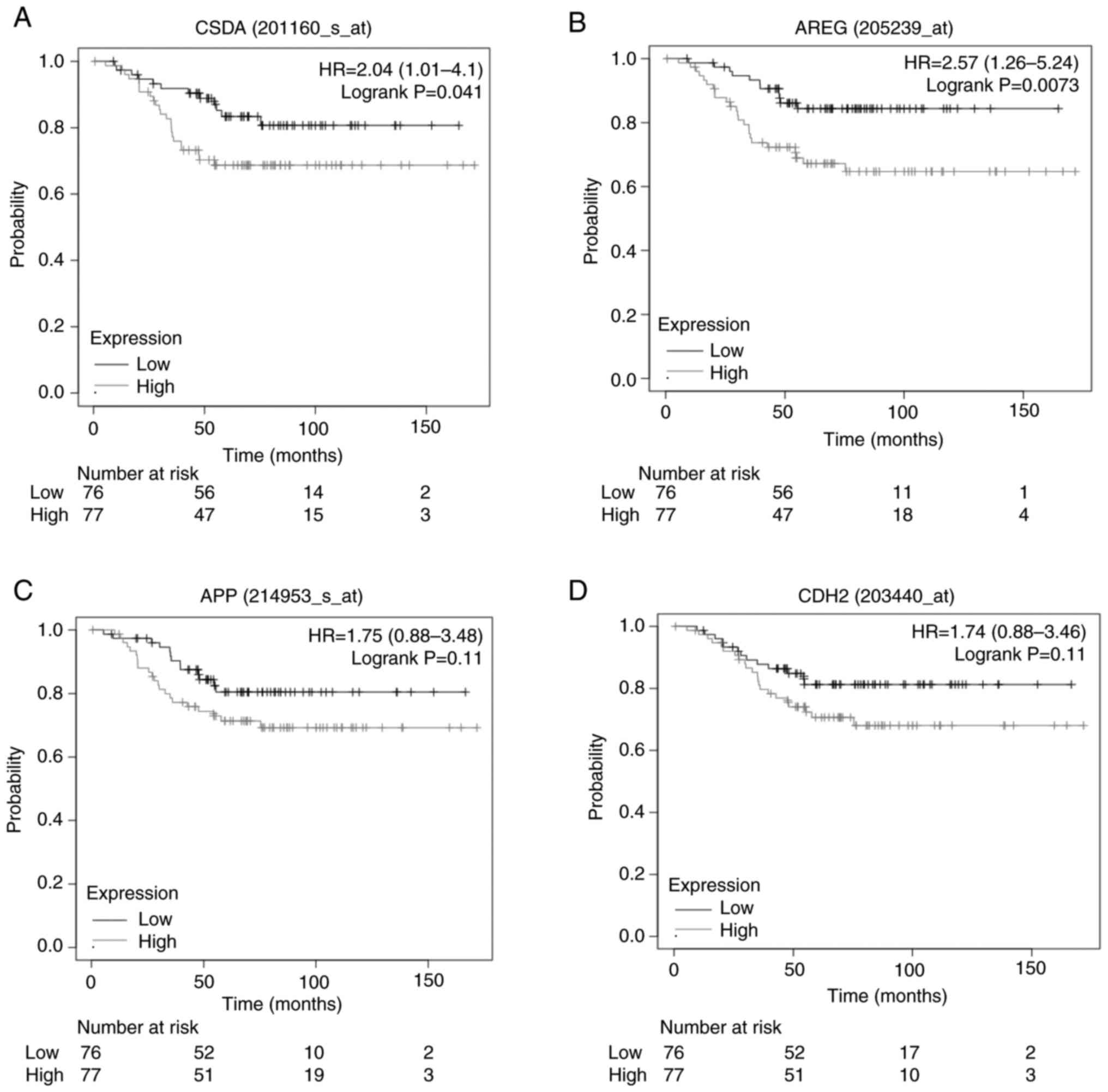
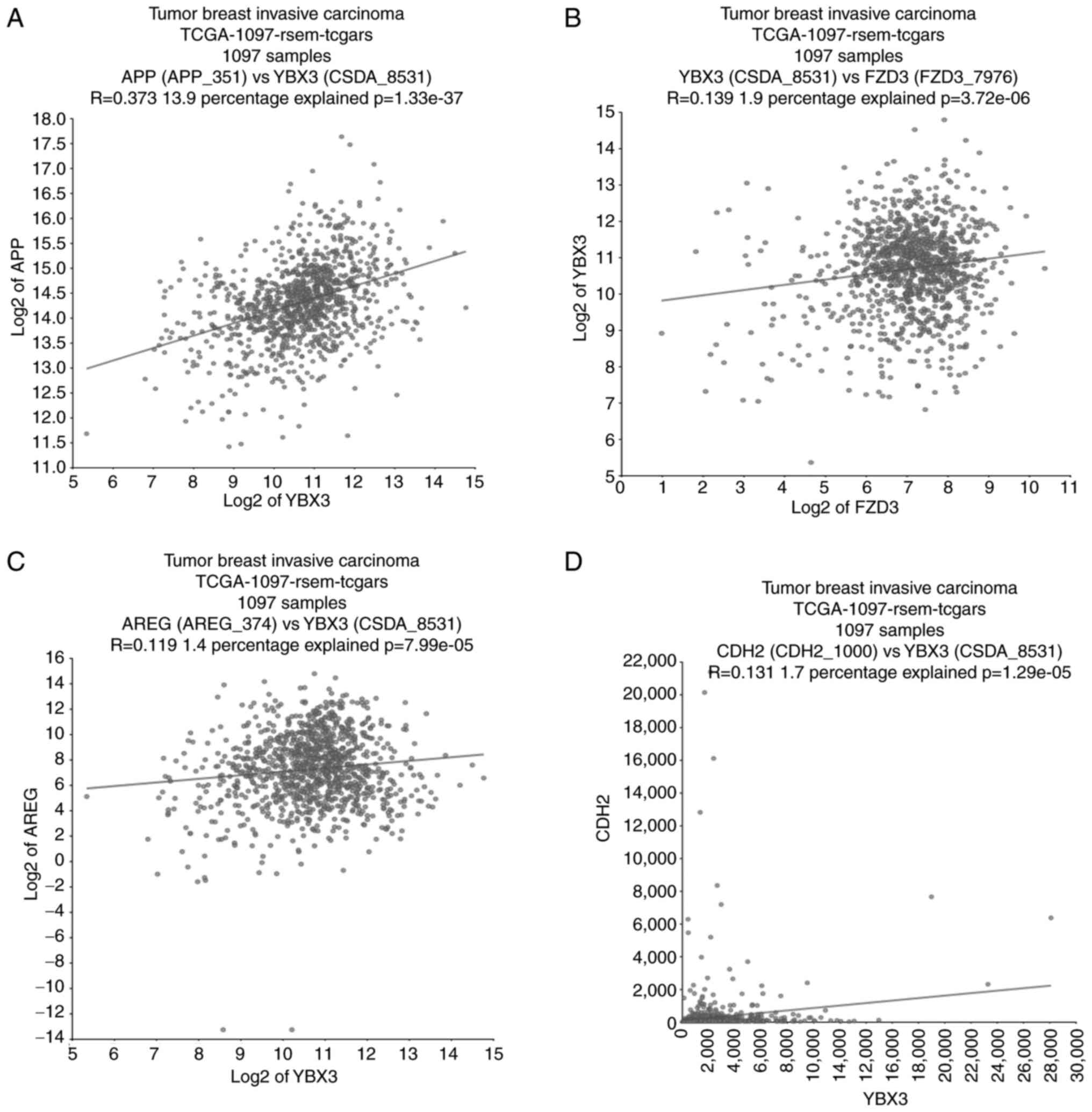
Epidemiological and experimental evidence indicate that hyperglycemia, transient hyperinsulinemia and insulin‑like growth factor‑1 promote an aggressive phenotype of breast tumor cells during diabetes mellitus. The present study evaluated the effect of high glucose (HG) concentration (30 mmol/l) on cisplatin sensitivity and gene expression in MDA‑MB‑231 triple‑negative breast cancer (TNBC)‑derived cells. Cisplatin cytotoxicity was assessed by the MTT assay and was attenuated by HG. This effect was accompanied by reduced caspase‑3 activation, indicating impaired apoptosis. Differentially expressed genes between HG and normal glucose (5.6 mmol/l) conditions were analyzed by microarray. The upregulation of tetraspanin 1 (TSPAN1) and frizzled 3 (FZD3) was validated by reverse transcription‑quantitative PCR. HG promotes cisplatin chemoresistance by preventing apoptosis. Additionally, HG altered the expression of genes involved in glucose, glycerophospholipid, purine and pyrimidine metabolism. Regulatory pathways affected included Wnt/β‑catenin, p53 network, NF‑κB survival and DNA damage response. Candidate genes potentially associated with HG‑induced chemoresistance included SLC6A6, TSPAN1, TNFSF7, PDE4B, RPS13, COX4I1, RAD17, LRP8, SMARCA2, EHD1, LEF1 and EIF4G2. Survival analysis using the KM‑Plotter platform revealed that YBX3 and amphiregulin expression were significantly associated with poor prognosis. By contrast, amyloid precursor protein (APP) and N‑cadherin (CDH2) showed non‑significant trends. Coexpression analyses demonstrated that APP and CDH2 were positively correlated with YBX3. This suggests they may contribute to tumor aggressiveness as part of YBX3‑driven regulatory networks, rather than as independent prognostic markers. Collectively, the present findings demonstrated that HG promotes cisplatin resistance and aggressive features in TNBC cells through multiple metabolic and signaling pathways. Notably, these include the Wnt/β‑catenin axis. Candidate biomarkers with potential prognostic and therapeutic relevance in diabetic breast cancer (BC) were also identified.
View Figures

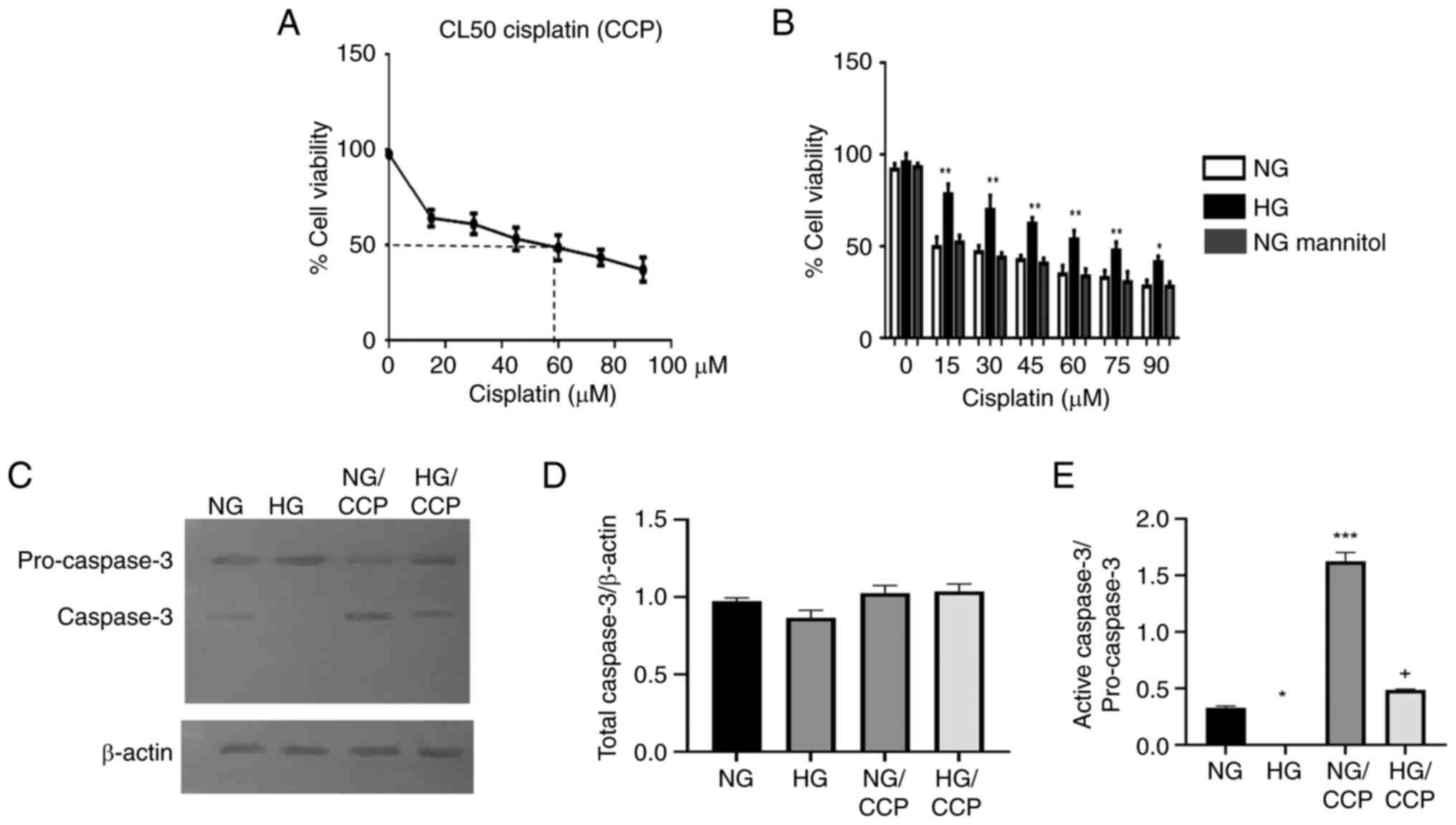
Figure 1

HG attenuates the effect of cisplatin
on the cell population and prevents apoptosis. (A and B) MDA-MB-231
cells were treated for 48 h with CCP. The growth of the cell
population was evaluated by the MTT assay in standard, (NG), HG,
and mannitol osmotic control (NG Mannitol) culture conditions.
*P≤0.01 and **P≤0.001 vs. the respective NG
for each cisplatin concentration. No significant differences were
observed between the NG and mannitol-treated groups. (C-E)
Additionally, the activation of caspase 3 was evaluated by western
blotting and densitometry in lysates of cells cultured for 48 h, in
NG and HG conditions, and treated with cisplatin (NG/CCP and
HG/CCP). The intensities of the bands were calculated after
background subtraction, and the sum of the bands (total caspase 3)
and active caspase 3 were normalized to (D) β-actin and (E)
procaspase 3, respectively. Data are presented as the mean ± SD of
three independent experiments. *P≤0.05 and
***P≤0.001 vs. NG, and + P≤0.001 vs. HG.
HG, high glucose; NG, normal glucose; CCP, cisplatin.

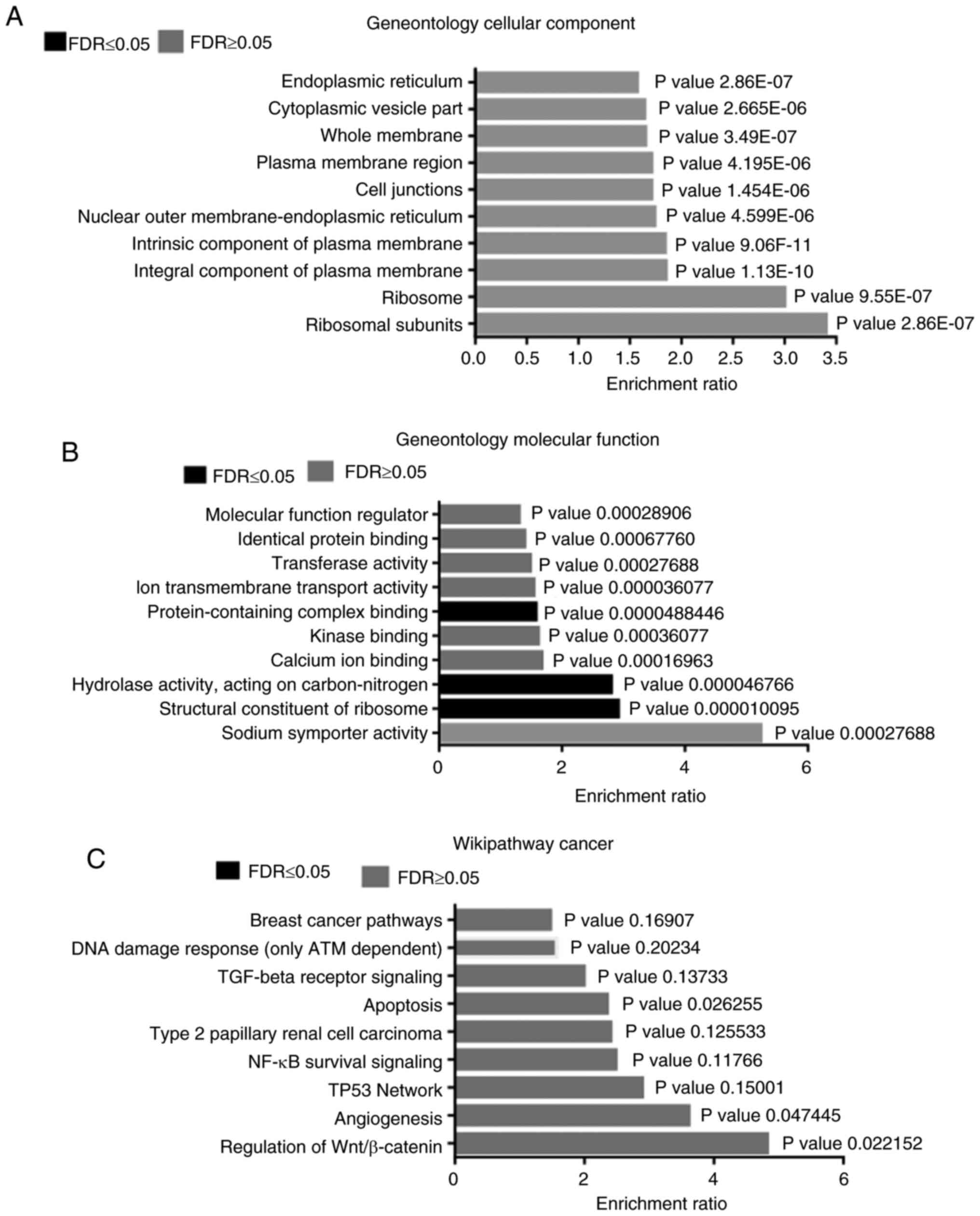
Figure 2

Gene enrichment analysis. (A and B)
Gene Ontology terms of the significantly upregulated and
downregulated genes for (A) the cellular components and (B)
molecular function categories. (C) Wikipathways gene enrichment
analysis in a hyperglycemia microenvironment.

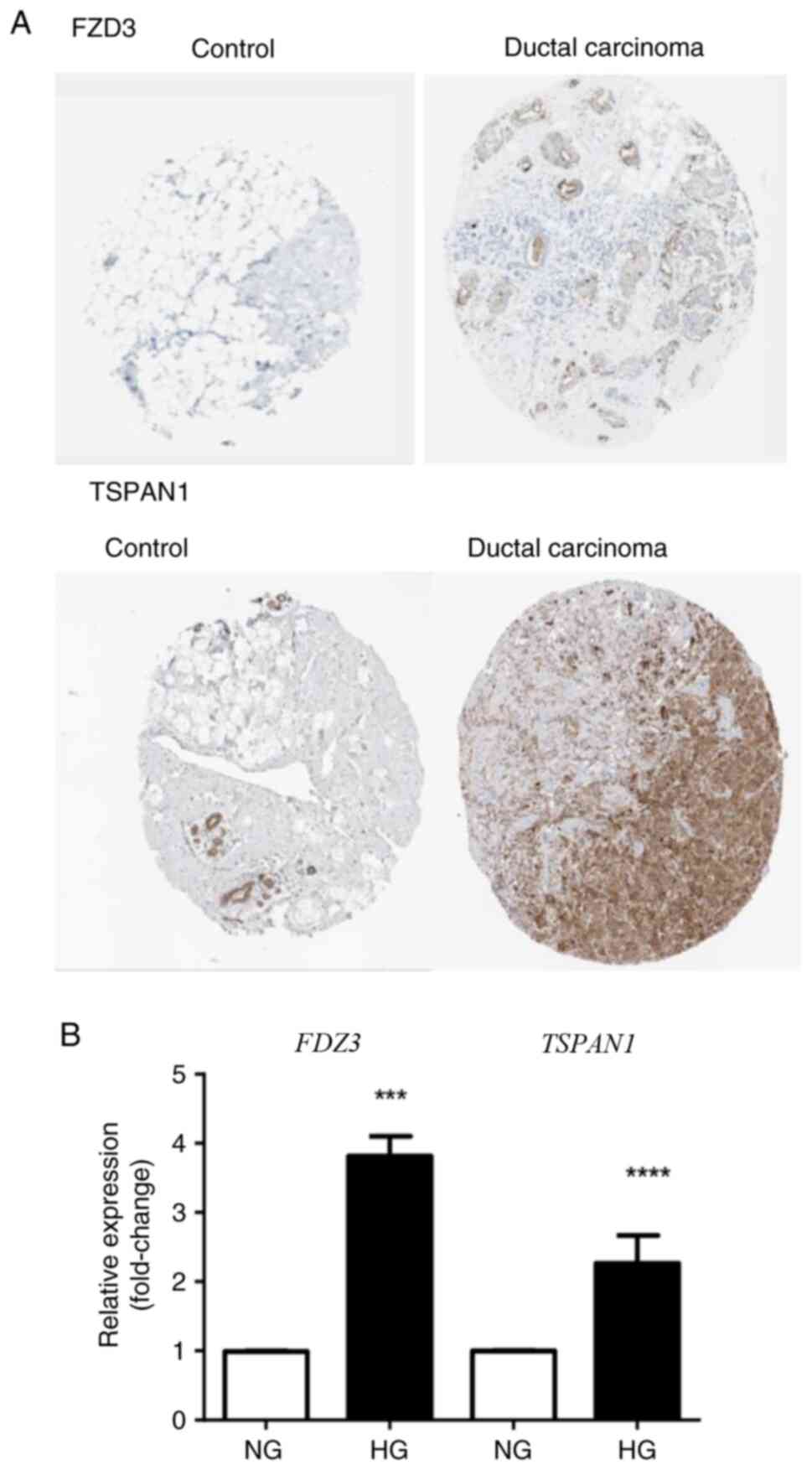
Figure 3

Expression of FZD3 and TSPAN1 in
breast cancer by IHC and RT-qPCR. (A) Expression of FZD3 and TSPAN1
was analyzed by IHC using images obtained from the Human Protein
Atlas. Brown staining indicates the presence of FZD3 and TSPAN1,
showing higher expression in ductal carcinoma compared with control
groups, including adenoma and normal breast tissue. (B) MDA-MB-231
cells were cultured in NG and HG. Total RNA was isolated 48 h after
treatment, and mRNA was evaluated by RT-qPCR. These results are
consistent with the microarray data. Media ± standard deviation of
three experiments with two replicates each.
***P≤0.001 vs. NG. IHC, immunochemistry; RT-qPCR,
reverse transcription-quantitative PCR; HG, high glucose; NG,
normal glucose.

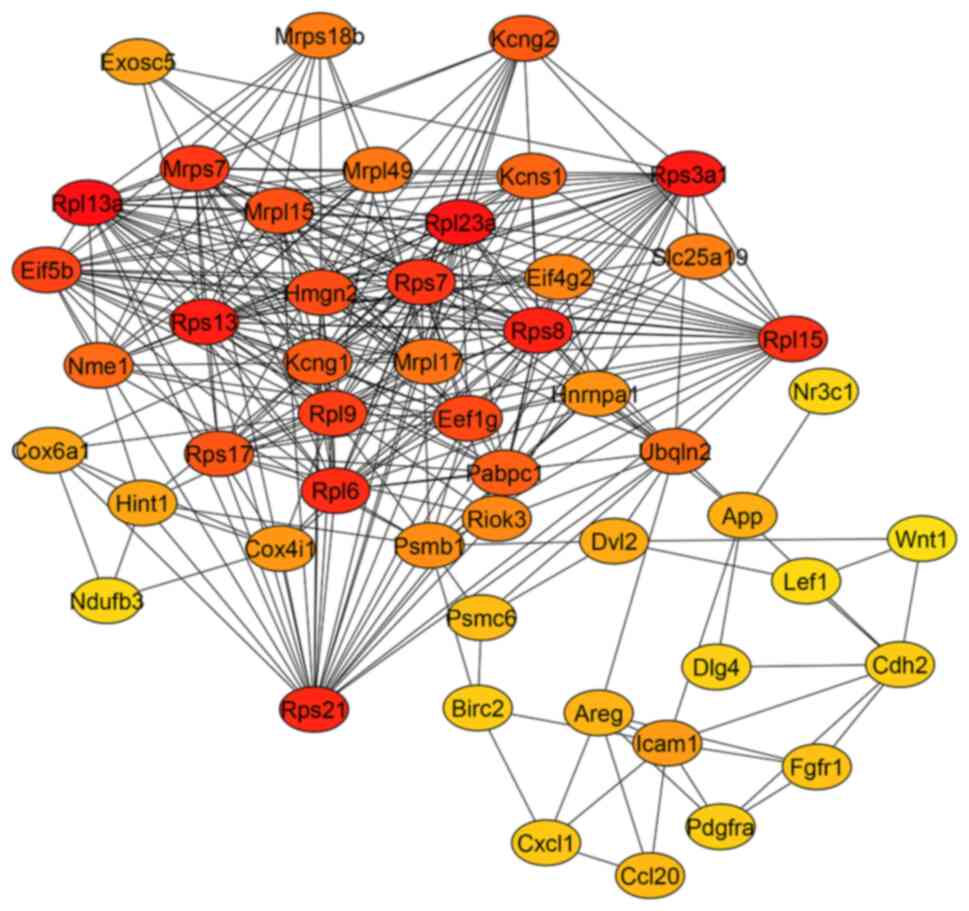
Figure 4

Major 50 hub genes interaction. These
genes were selected using the String network of protein-protein
interaction, considering those overexpressed with a fold change
>1.5, followed by hub selection using Cytohubba. The nodes with
major degree scores are shown in a decreasing scale from red to
yellow. Data show gene hubs such as BIRC2, DVL-2, WNT1 and
ATM, which have regulatory functions associated with the
WNT/β-catenin signaling pathways, apoptosis, and ATM-dependent DNA
damage repair.

Figure 5

Prognostic biomarkers in
hyperglycemia. (A-D) KM survival curves were performed using the
KM-plotter platform, considering the mRNA expression levels of (A)
CSDA (YBX3), (B) AREG, (C) APP and (D)
CDH2 for patients with breast cancer, negative to estrogen,
progesterone, and HER2 receptors for IHC and microarrays. KM,
Kaplan-Meier; HR, hazard ratio.

Figure 6

Correlation analysis of gene hubs.
(A-D) Correlation analysis of gene expression was performed using
the R2 Genomics platform (http://r2.amc.nl) in a cohort of 1,097 patients
diagnosed with breast invasive carcinoma (TCGA), aged 26 to 90
years, with heterogeneous hormone receptor status (ER+
71.7%, ER- 22%, PR+ 63.7%, PR-
31.4%, HER2+ 14%, and HER2- 51.3%), and
metastatic condition (M0 82.6%, MX 14.8% and M1 2%). Scatter plots
show the relationships between (A) APP and YBX3, (B)
YBX3 and FZD3, (C) AREG and YBX3, and
(D) CDH2 and YBX3. Each plot includes a regression
line, the Pearson correlation coefficient (R), and the statistical
significance (P-value). TCGA, The Cancer Genome Atlas.
View References

1 

Ryu TY, Park J and Scherer PE: Hyperglycemia as a risk factor for cancer progression. Diabetes Metab J. 38:330–336. 2014.PubMed/NCBI View Article : Google Scholar

2 

Varghese E, Samuel SM, Líšková A, Samec M, Kubatka P and Büsselberg D: Targeting glucose metabolism to overcome resistance to anticancer chemotherapy in breast cancer. Cancers (Basel). 12(2252)2020.PubMed/NCBI View Article : Google Scholar

3 

Qiu J, Zheng Q and Meng X: Hyperglycemia and chemoresistance in breast cancer: From cellular mechanisms to treatment response. Front Oncol. 11(628359)2021.PubMed/NCBI View Article : Google Scholar

4 

Flores-López LA, Martínez-Hernández MG, Viedma-Rodríguez R, Díaz-Flores M and Baiza-Gutman LA: High glucose and insulin enhance uPA expression, ROS formation and invasiveness in breast cancer-derived cells. Cell Oncol (Dordr). 39:365–378. 2016.PubMed/NCBI View Article : Google Scholar

5 

Bergandi L, Mungo E, Morone R, Bosco O, Rolando B and Doublier S: Hyperglycemia promotes chemoresistance through the reduction of the mitochondrial DNA damage, the Bax/Bcl-2 and Bax/Bcl-XL ratio, and the cells in sub-G1 phase due to antitumoral drugs induced-cytotoxicity in human colon adenocarcinoma cells. Front Pharmacol. 9(866)2018.PubMed/NCBI View Article : Google Scholar

6 

Viedma-Rodríguez R, Martínez-Hernández MG, Flores-López LA and Baiza-Gutman LA: Epsilon-aminocaproic acid prevents high glucose and insulin induced-invasiveness in MDA-MB-231 breast cancer cells, modulating the plasminogen activator system. Mol Cell Biochem. 437:65–80. 2018.PubMed/NCBI View Article : Google Scholar

7 

Huang Y, Hong W and Wei X: The molecular mechanisms and therapeutic strategies of EMT in tumor progression and metastasis. J Hematol Oncol. 15(129)2022.PubMed/NCBI View Article : Google Scholar

8 

Panigrahi G, Candia J, Dorsey TH, Tang W, Ohara Y, Byun JS, Minas TZ, Zhang AL, Ajao A, Cellini A, et al: Diabetes-associated breast cancer is molecularly distinct and shows a DNA damage repair deficiency. JCI Insight. 8(e170105)2023.PubMed/NCBI View Article : Google Scholar

9 

Ashrafizadeh M, Zarrabi A, Hushmandi K, Kalantari M, Mohammadinejad R, Javaheri T and Sethi G: Association of the epithelial-mesenchymal transition (EMT) with cisplatin resistance. Int J Mol Sci. 21(4002)2020.PubMed/NCBI View Article : Google Scholar

10 

Frossard M, Blank D, Joukhadar Ch, Bayegan K, Schmid R, Luger A and Müller M: Interstitial glucose in skeletal muscle of diabetic patients during an oral glucose tolerance test. Diabet Med. 22:56–60. 2005.PubMed/NCBI View Article : Google Scholar

11 

Schmittgen TD and Livak KJ: Analyzing real-time PCR data by the comparative C(T) method. Nat Protoc. 3:1101–1108. 2008.PubMed/NCBI View Article : Google Scholar

12 

Gorji-Bahri G, Moradtabrizi N, Vakhshiteh F and Hashemi A: Validation of common reference genes stability in exosomal mRNA-isolated from liver and breast cancer cell lines. Cell Biol Int. 45:1098–1110. 2021.PubMed/NCBI View Article : Google Scholar

13 

Liu X, Xie J, Liu Z, Gong Q, Tian R and Su G: Identification and validation of reference genes for quantitative RT-PCR analysis of retinal pigment epithelium cells under hypoxia and/or hyperglycemia. Gene. 580:41–46. 2016.PubMed/NCBI View Article : Google Scholar

14 

Doncheva NT, Morris JH, Gorodkin J and Jensen LJ: Cytoscape StringApp: Network analysis and visualization of proteomics data. J Proteome Res. 18:623–632. 2019.PubMed/NCBI View Article : Google Scholar

15 

Chin CH, Chen SH, Wu HH, Ho CW, Ko MT and Lin CY: cytoHubba: identifying hub objects and sub-networks from complex interactome. BMC Syst Biol. 8 (Suppl 4)(S11)2014.PubMed/NCBI View Article : Google Scholar

16 

Yasunaga M and Matsumura Y: Role of SLC6A6 in promoting the survival and multidrug resistance of colorectal cancer. Sci Rep. 4(4852)2014.PubMed/NCBI View Article : Google Scholar

17 

Shi Y, Zhai H, Wang X, Han Z, Liu C, Lan M, Du J, Guo C, Zhang Y, Wu K and Fan D: Ribosomal proteins S13 and L23 promote multidrug resistance in gastric cancer cells by suppressing drug-induced apoptosis. Exp Cell Res. 296:337–346. 2004.PubMed/NCBI View Article : Google Scholar

18 

Garcia-Mayea Y, Mir C, Carballo L, Sánchez-García A, Bataller M and ME LL: TSPAN1, a novel tetraspanin member highly involved in carcinogenesis and chemoresistance. Biochim Biophys Acta Rev Cancer. 1877(188674)2022.PubMed/NCBI View Article : Google Scholar

19 

Tong C, Qu K, Wang G, Liu R, Duan B, Wang X and Liu C: Knockdown of DNA-binding protein A enhances the chemotherapy sensitivity of colorectal cancer via suppressing the Wnt/β-catenin/Chk1 pathway. Cell Biol Int. 44:2075–2085. 2020.PubMed/NCBI View Article : Google Scholar

20 

Lánczky A and Győrffy B: Web-based survival analysis tool tailored for medical research (KMplot): Development and implementation. J Med Internet Res. 23(e27633)2021.PubMed/NCBI View Article : Google Scholar

21 

Liu N, Sheng X, Liu Y, Zhang X and Yu J: Increased CD70 expression is associated with clinical resistance to cisplatin-based chemotherapy and poor survival in advanced ovarian carcinomas. Onco Targets Ther. 6:615–619. 2013.PubMed/NCBI View Article : Google Scholar

22 

Hartman ML and Czyz M: BCL-w: Apoptotic and non-apoptotic role in health and disease. Cell Death Dis. 11(260)2020.PubMed/NCBI View Article : Google Scholar

23 

Bano D and Prehn JHM: Apoptosis-inducing factor (AIF) in physiology and disease: The tale of a repented natural born killer. EBioMedicine. 30:29–37. 2018.PubMed/NCBI View Article : Google Scholar

24 

Zheng HC: The molecular mechanisms of chemoresistance in cancers. Oncotarget. 8:59950–59964. 2017.PubMed/NCBI View Article : Google Scholar

25 

Gozuacik D, Bialik S, Raveh T, Mitou G, Shohat G, Sabanay H, Mizushima N, Yoshimori T and Kimchi A: DAP-kinase is a mediator of endoplasmic reticulum stress-induced caspase activation and autophagic cell death. Cell Death Differ. 15:1875–1886. 2008.PubMed/NCBI View Article : Google Scholar

26 

Porter AG and Jänicke RU: Emerging roles of caspase-3 in apoptosis. Cell Death Differ. 6:99–104. 1999.PubMed/NCBI View Article : Google Scholar

27 

Viedma-Rodríguez R, Martínez-Hernández MG, Martínez-Torres DI and Baiza-Gutman LA: Epithelial mesenchymal transition and progression of breast cancer promoted by diabetes mellitus in mice are associated with increased expression of glycolytic and proteolytic enzymes. Horm Cancer. 11:170–181. 2020.PubMed/NCBI View Article : Google Scholar

28 

Vaughn AE and Deshmukh M: Glucose metabolism inhibits apoptosis in neurons and cancer cells by redox inactivation of cytochrome c. Nat Cell Biol. 10:1477–1483. 2008.PubMed/NCBI View Article : Google Scholar

29 

Wu DM, Liu T, Deng SH, Han R and Xu Y: SLC39A4 expression is associated with enhanced cell migration, cisplatin resistance, and poor survival in non-small cell lung cancer. Sci Rep. 7(7211)2017.PubMed/NCBI View Article : Google Scholar

30 

Ren X, Cui H, Wu J, Zhou R, Wang N, Liu D, Xie X, Zhang H, Liu D, Ma X, et al: Identification of a combined apoptosis and hypoxia gene signature for predicting prognosis and immune infiltration in breast cancer. Cancer Med. 11:3886–3901. 2022.PubMed/NCBI View Article : Google Scholar

31 

Wen P, Wang R, Xing Y, Ouyang W, Yuan Y, Zhang S, Liu Y and Peng Z: The prognostic value of the GPAT/AGPAT gene family in hepatocellular carcinoma and its role in the tumor immune microenvironment. Front Immunol. 14(1026669)2023.PubMed/NCBI View Article : Google Scholar

32 

Wu Y, Chen W, Gong Y, Liu H and Zhang B: Tetraspanin 1 (TSPAN1) promotes growth and transferation of breast cancer cells via mediating PI3K/Akt pathway. Bioengineered. 12:10761–10770. 2021.PubMed/NCBI View Article : Google Scholar

33 

Merikhian P, Eisavand MR and Farahmand L: Triple-negative breast cancer: Understanding Wnt signaling in drug resistance. Cancer Cell Int. 21(419)2021.PubMed/NCBI View Article : Google Scholar

34 

Wong GT, Gavin BJ and McMahon AP: Differential transformation of mammary epithelial cells by Wnt genes. Mol Cell Biol. 14:6278–6286. 1994.PubMed/NCBI View Article : Google Scholar

35 

Ayyanan A, Civenni G, Ciarloni L, Morel C, Mueller N, Lefort K, Mandinova A, Raffoul W, Fiche M, Dotto GP and Brisken C: Increased Wnt signaling triggers oncogenic conversion of human breast epithelial cells by a Notch-dependent mechanism. Proc Natl Acad Sci USA. 103:3799–3804. 2006.PubMed/NCBI View Article : Google Scholar

36 

Jin X, Jeon HY, Joo KM, Kim JK, Jin J, Kim SH, Kang BG, Beck S, Lee SJ, Kim JK, et al: Frizzled 4 regulates stemness and invasiveness of migrating glioma cells established by serial intracranial transplantation. Cancer Res. 71:3066–3075. 2011.PubMed/NCBI View Article : Google Scholar

37 

Lin CC, Lo MC, Moody R, Jiang H, Harouaka R, Stevers N, Tinsley S, Gasparyan M, Wicha M and Sun D: Targeting LRP8 inhibits breast cancer stem cells in triple-negative breast cancer. Cancer Lett. 438:165–173. 2018.PubMed/NCBI View Article : Google Scholar

38 

Prieto-Vila M, Shimomura I, Kogure A, Usuba W, Takahashi RU, Ochiya T and Yamamoto Y: Quercetin inhibits Lef1 and resensitizes docetaxel-resistant breast cancer cells. Molecules. 25(2576)2020.PubMed/NCBI View Article : Google Scholar

39 

Tümen D, Heumann P, Huber J, Hahn N, Macek C, Ernst M, Kandulski A, Kunst C and Gülow K: Unraveling cancer's Wnt signaling: Dynamic control through protein kinase regulation. Cancers (Basel). 16(2686)2024.PubMed/NCBI View Article : Google Scholar

40 

Galland L, Ballot E, Mananet H, Boidot R, Lecuelle J, Albuisson J, Arnould L, Desmoulins I, Mayeur D, Kaderbhai C, et al: Efficacy of platinum-based chemotherapy in metastatic breast cancer and HRD biomarkers: Utility of exome sequencing. NPJ Breast Cancer. 8(28)2022.PubMed/NCBI View Article : Google Scholar

41 

Wang C, You Z, He Y and Chen X: Identification of RNA-binding protein YBX3 as an oncogene in clear cell renal cell carcinoma. Funct Integr Genomics. 23(225)2023.PubMed/NCBI View Article : Google Scholar

42 

Sun Y, Li Z, Wang W, Zhang X, Li W, Du G, Yin J, Xiao W and Yang H: Identification and verification of YBX3 and its regulatory gene HEIH as an oncogenic system: A multidimensional analysis in colon cancer. Front Immunol. 13(957865)2022.PubMed/NCBI View Article : Google Scholar

43 

Panupinthu N, Yu S, Zhang D, Zhang F, Gagea M, Lu Y, Grandis JR, Dunn SE, Lee HY and Mills GB: Self-reinforcing loop of amphiregulin and Y-box binding protein-1 contributes to poor outcomes in ovarian cancer. Oncogene. 33:2846–2856. 2014.PubMed/NCBI View Article : Google Scholar

44 

Bolitho C, Moscova M, Baxter RC and Marsh DJ: Amphiregulin increases migration and proliferation of epithelial ovarian cancer cells by inducing its own expression via PI3-kinase signaling. Mol Cell Endocrinol. 533(111338)2021.PubMed/NCBI View Article : Google Scholar

45 

Wu X, Chen S and Lu C: Amyloid precursor protein promotes the migration and invasion of breast cancer cells by regulating the MAPK signaling pathway. Int J Mol Med. 45:162–174. 2020.PubMed/NCBI View Article : Google Scholar

46 

Cao ZQ, Wang Z and Leng P: Aberrant N-cadherin expression in cancer. Biomed Pharmacother. 118(109320)2019.PubMed/NCBI View Article : Google Scholar

47 

Ge R, Wang Z, Wu S, Zhuo Y, Otsetov AG, Cai C, Zhong W, Wu CL and Olumi AF: Metformin represses cancer cells via alternate pathways in N-cadherin expressing vs N-cadherin deficient cells. Oncotarget. 6:28973–28987. 2015.PubMed/NCBI View Article : Google Scholar

48 

Townsend MH, Felsted AM, Ence ZE, Piccolo SR, Robison RA and O'Neill KL: Falling from grace: HPRT is not suitable as an endogenous control for cancer-related studies. Mol Cell Oncol. 6(1575691)2019.PubMed/NCBI View Article : Google Scholar

Related Articles

  • Abstract
  • View
  • Download
  • Twitter
Copy and paste a formatted citation
Spandidos Publications style
Viedma‑Rodríguez AR, Martínez‑Hernández MG, Flores‑López LA, Velázquez‑Flores MÁ, Esparza‑Garrido RR, Prado‑Baeza JR and Baiza‑Gutman LA: High glucose promotes cisplatin chemoresistance in MDA‑MB‑231 breast cancer derived cells through changes in gene expression and multiple signaling pathways. Biomed Rep 23: 186, 2025.
APA
Viedma‑Rodríguez, A.R., Martínez‑Hernández, M.G., Flores‑López, L.A., Velázquez‑Flores, M.Á., Esparza‑Garrido, R.R., Prado‑Baeza, J.R., & Baiza‑Gutman, L.A. (2025). High glucose promotes cisplatin chemoresistance in MDA‑MB‑231 breast cancer derived cells through changes in gene expression and multiple signaling pathways. Biomedical Reports, 23, 186. https://doi.org/10.3892/br.2025.2064
MLA
Viedma‑Rodríguez, A. R., Martínez‑Hernández, M. G., Flores‑López, L. A., Velázquez‑Flores, M. Á., Esparza‑Garrido, R. R., Prado‑Baeza, J. R., Baiza‑Gutman, L. A."High glucose promotes cisplatin chemoresistance in MDA‑MB‑231 breast cancer derived cells through changes in gene expression and multiple signaling pathways". Biomedical Reports 23.6 (2025): 186.
Chicago
Viedma‑Rodríguez, A. R., Martínez‑Hernández, M. G., Flores‑López, L. A., Velázquez‑Flores, M. Á., Esparza‑Garrido, R. R., Prado‑Baeza, J. R., Baiza‑Gutman, L. A."High glucose promotes cisplatin chemoresistance in MDA‑MB‑231 breast cancer derived cells through changes in gene expression and multiple signaling pathways". Biomedical Reports 23, no. 6 (2025): 186. https://doi.org/10.3892/br.2025.2064
Copy and paste a formatted citation
x
Spandidos Publications style
Viedma‑Rodríguez AR, Martínez‑Hernández MG, Flores‑López LA, Velázquez‑Flores MÁ, Esparza‑Garrido RR, Prado‑Baeza JR and Baiza‑Gutman LA: High glucose promotes cisplatin chemoresistance in MDA‑MB‑231 breast cancer derived cells through changes in gene expression and multiple signaling pathways. Biomed Rep 23: 186, 2025.
APA
Viedma‑Rodríguez, A.R., Martínez‑Hernández, M.G., Flores‑López, L.A., Velázquez‑Flores, M.Á., Esparza‑Garrido, R.R., Prado‑Baeza, J.R., & Baiza‑Gutman, L.A. (2025). High glucose promotes cisplatin chemoresistance in MDA‑MB‑231 breast cancer derived cells through changes in gene expression and multiple signaling pathways. Biomedical Reports, 23, 186. https://doi.org/10.3892/br.2025.2064
MLA
Viedma‑Rodríguez, A. R., Martínez‑Hernández, M. G., Flores‑López, L. A., Velázquez‑Flores, M. Á., Esparza‑Garrido, R. R., Prado‑Baeza, J. R., Baiza‑Gutman, L. A."High glucose promotes cisplatin chemoresistance in MDA‑MB‑231 breast cancer derived cells through changes in gene expression and multiple signaling pathways". Biomedical Reports 23.6 (2025): 186.
Chicago
Viedma‑Rodríguez, A. R., Martínez‑Hernández, M. G., Flores‑López, L. A., Velázquez‑Flores, M. Á., Esparza‑Garrido, R. R., Prado‑Baeza, J. R., Baiza‑Gutman, L. A."High glucose promotes cisplatin chemoresistance in MDA‑MB‑231 breast cancer derived cells through changes in gene expression and multiple signaling pathways". Biomedical Reports 23, no. 6 (2025): 186. https://doi.org/10.3892/br.2025.2064
Follow us
  • Twitter
  • LinkedIn
  • Facebook
About
  • Spandidos Publications
  • Careers
  • Cookie Policy
  • Privacy Policy
How can we help?
  • Help
  • Live Chat
  • Contact
  • Email to our Support Team