Spandidos Publications Logo
  • About
    • About Spandidos
    • Aims and Scopes
    • Abstracting and Indexing
    • Editorial Policies
    • Reprints and Permissions
    • Job Opportunities
    • Terms and Conditions
    • Contact
  • Journals
    • All Journals
    • Oncology Letters
      • Oncology Letters
      • Information for Authors
      • Editorial Policies
      • Editorial Board
      • Aims and Scope
      • Abstracting and Indexing
      • Bibliographic Information
      • Archive
    • International Journal of Oncology
      • International Journal of Oncology
      • Information for Authors
      • Editorial Policies
      • Editorial Board
      • Aims and Scope
      • Abstracting and Indexing
      • Bibliographic Information
      • Archive
    • Molecular and Clinical Oncology
      • Molecular and Clinical Oncology
      • Information for Authors
      • Editorial Policies
      • Editorial Board
      • Aims and Scope
      • Abstracting and Indexing
      • Bibliographic Information
      • Archive
    • Experimental and Therapeutic Medicine
      • Experimental and Therapeutic Medicine
      • Information for Authors
      • Editorial Policies
      • Editorial Board
      • Aims and Scope
      • Abstracting and Indexing
      • Bibliographic Information
      • Archive
    • International Journal of Molecular Medicine
      • International Journal of Molecular Medicine
      • Information for Authors
      • Editorial Policies
      • Editorial Board
      • Aims and Scope
      • Abstracting and Indexing
      • Bibliographic Information
      • Archive
    • Biomedical Reports
      • Biomedical Reports
      • Information for Authors
      • Editorial Policies
      • Editorial Board
      • Aims and Scope
      • Abstracting and Indexing
      • Bibliographic Information
      • Archive
    • Oncology Reports
      • Oncology Reports
      • Information for Authors
      • Editorial Policies
      • Editorial Board
      • Aims and Scope
      • Abstracting and Indexing
      • Bibliographic Information
      • Archive
    • Molecular Medicine Reports
      • Molecular Medicine Reports
      • Information for Authors
      • Editorial Policies
      • Editorial Board
      • Aims and Scope
      • Abstracting and Indexing
      • Bibliographic Information
      • Archive
    • World Academy of Sciences Journal
      • World Academy of Sciences Journal
      • Information for Authors
      • Editorial Policies
      • Editorial Board
      • Aims and Scope
      • Abstracting and Indexing
      • Bibliographic Information
      • Archive
    • International Journal of Functional Nutrition
      • International Journal of Functional Nutrition
      • Information for Authors
      • Editorial Policies
      • Editorial Board
      • Aims and Scope
      • Abstracting and Indexing
      • Bibliographic Information
      • Archive
    • International Journal of Epigenetics
      • International Journal of Epigenetics
      • Information for Authors
      • Editorial Policies
      • Editorial Board
      • Aims and Scope
      • Abstracting and Indexing
      • Bibliographic Information
      • Archive
    • Medicine International
      • Medicine International
      • Information for Authors
      • Editorial Policies
      • Editorial Board
      • Aims and Scope
      • Abstracting and Indexing
      • Bibliographic Information
      • Archive
  • Articles
  • Information
    • Information for Authors
    • Information for Reviewers
    • Information for Librarians
    • Information for Advertisers
    • Conferences
  • Language Editing
Spandidos Publications Logo
  • About
    • About Spandidos
    • Aims and Scopes
    • Abstracting and Indexing
    • Editorial Policies
    • Reprints and Permissions
    • Job Opportunities
    • Terms and Conditions
    • Contact
  • Journals
    • All Journals
    • Biomedical Reports
      • Information for Authors
      • Editorial Policies
      • Editorial Board
      • Aims and Scope
      • Abstracting and Indexing
      • Bibliographic Information
      • Archive
    • Experimental and Therapeutic Medicine
      • Information for Authors
      • Editorial Policies
      • Editorial Board
      • Aims and Scope
      • Abstracting and Indexing
      • Bibliographic Information
      • Archive
    • International Journal of Epigenetics
      • Information for Authors
      • Editorial Policies
      • Editorial Board
      • Aims and Scope
      • Abstracting and Indexing
      • Bibliographic Information
      • Archive
    • International Journal of Functional Nutrition
      • Information for Authors
      • Editorial Policies
      • Editorial Board
      • Aims and Scope
      • Abstracting and Indexing
      • Bibliographic Information
      • Archive
    • International Journal of Molecular Medicine
      • Information for Authors
      • Editorial Policies
      • Editorial Board
      • Aims and Scope
      • Abstracting and Indexing
      • Bibliographic Information
      • Archive
    • International Journal of Oncology
      • Information for Authors
      • Editorial Policies
      • Editorial Board
      • Aims and Scope
      • Abstracting and Indexing
      • Bibliographic Information
      • Archive
    • Medicine International
      • Information for Authors
      • Editorial Policies
      • Editorial Board
      • Aims and Scope
      • Abstracting and Indexing
      • Bibliographic Information
      • Archive
    • Molecular and Clinical Oncology
      • Information for Authors
      • Editorial Policies
      • Editorial Board
      • Aims and Scope
      • Abstracting and Indexing
      • Bibliographic Information
      • Archive
    • Molecular Medicine Reports
      • Information for Authors
      • Editorial Policies
      • Editorial Board
      • Aims and Scope
      • Abstracting and Indexing
      • Bibliographic Information
      • Archive
    • Oncology Letters
      • Information for Authors
      • Editorial Policies
      • Editorial Board
      • Aims and Scope
      • Abstracting and Indexing
      • Bibliographic Information
      • Archive
    • Oncology Reports
      • Information for Authors
      • Editorial Policies
      • Editorial Board
      • Aims and Scope
      • Abstracting and Indexing
      • Bibliographic Information
      • Archive
    • World Academy of Sciences Journal
      • Information for Authors
      • Editorial Policies
      • Editorial Board
      • Aims and Scope
      • Abstracting and Indexing
      • Bibliographic Information
      • Archive
  • Articles
  • Information
    • For Authors
    • For Reviewers
    • For Librarians
    • For Advertisers
    • Conferences
  • Language Editing
Login Register Submit
  • This site uses cookies
  • You can change your cookie settings at any time by following the instructions in our Cookie Policy. To find out more, you may read our Privacy Policy.

    I agree
Search articles by DOI, keyword, author or affiliation
Search
Advanced Search
presentation
Experimental and Therapeutic Medicine
Join Editorial Board Propose a Special Issue
Print ISSN: 1792-0981 Online ISSN: 1792-1015
Journal Cover
May-2015 Volume 9 Issue 5

Full Size Image

Sign up for eToc alerts
Recommend to Library

Journals

International Journal of Molecular Medicine

International Journal of Molecular Medicine

International Journal of Molecular Medicine is an international journal devoted to molecular mechanisms of human disease.

International Journal of Oncology

International Journal of Oncology

International Journal of Oncology is an international journal devoted to oncology research and cancer treatment.

Molecular Medicine Reports

Molecular Medicine Reports

Covers molecular medicine topics such as pharmacology, pathology, genetics, neuroscience, infectious diseases, molecular cardiology, and molecular surgery.

Oncology Reports

Oncology Reports

Oncology Reports is an international journal devoted to fundamental and applied research in Oncology.

Experimental and Therapeutic Medicine

Experimental and Therapeutic Medicine

Experimental and Therapeutic Medicine is an international journal devoted to laboratory and clinical medicine.

Oncology Letters

Oncology Letters

Oncology Letters is an international journal devoted to Experimental and Clinical Oncology.

Biomedical Reports

Biomedical Reports

Explores a wide range of biological and medical fields, including pharmacology, genetics, microbiology, neuroscience, and molecular cardiology.

Molecular and Clinical Oncology

Molecular and Clinical Oncology

International journal addressing all aspects of oncology research, from tumorigenesis and oncogenes to chemotherapy and metastasis.

World Academy of Sciences Journal

World Academy of Sciences Journal

Multidisciplinary open-access journal spanning biochemistry, genetics, neuroscience, environmental health, and synthetic biology.

International Journal of Functional Nutrition

International Journal of Functional Nutrition

Open-access journal combining biochemistry, pharmacology, immunology, and genetics to advance health through functional nutrition.

International Journal of Epigenetics

International Journal of Epigenetics

Publishes open-access research on using epigenetics to advance understanding and treatment of human disease.

Medicine International

Medicine International

An International Open Access Journal Devoted to General Medicine.

Journal Cover
May-2015 Volume 9 Issue 5

Full Size Image

Sign up for eToc alerts
Recommend to Library

  • Article
  • Citations
    • Cite This Article
    • Download Citation
    • Create Citation Alert
    • Remove Citation Alert
    • Cited By
  • Similar Articles
    • Related Articles (in Spandidos Publications)
    • Similar Articles (Google Scholar)
    • Similar Articles (PubMed)
  • Download PDF
  • Download XML
  • View XML
Case Report

Severe airflow obstruction in a patient with ulcerative colitis and toxic epidermal necrolysis: A case report

  • Authors:
    • Shijima Taguchi
    • Junichi Furuta
    • Gen Ohara
    • Katsunori Kagohashi
    • Hiroaki Satoh
  • View Affiliations / Copyright

    Affiliations: Division of Dermatology, Mito Medical Center, University of Tsukuba, Mito, Ibaraki 310-0015, Japan, Department of Dermatology, Faculty of Medicine, University of Tsukuba, Tsukuba, Ibaraki 305-8575, Japan, Division of Respiratory Medicine, Mito Medical Center, University of Tsukuba, Mito, Ibaraki 310‑0015, Japan
  • Pages: 1944-1946
    |
    Published online on: February 24, 2015
       https://doi.org/10.3892/etm.2015.2307
  • Expand metrics +
Metrics: Total Views: 0 (Spandidos Publications: | PMC Statistics: )
Metrics: Total PDF Downloads: 0 (Spandidos Publications: | PMC Statistics: )
Cited By (CrossRef): 0 citations Loading Articles...

This article is mentioned in:


Abstract

Bronchiolitis is a rare condition mainly affecting the intralobular conducting and transitional small airways. The present study describes a case of severe airflow limitation in a patient with ulcerative colitis who developed toxic epidermal necrolysis following mesalazine therapy. Forced expiratory volume in one second was decreased and a flow‑volume curve showed airflow limitation, but the single‑breath diffusing capacity of the lung for carbon monoxide (DLCO) and DLCO divided by alveolar volume (DLCO/VA) were not decreased. This rare clinical condition should be considered as a differential diagnosis for subjects presenting with sub‑acutely developed airflow obstruction if the findings in chest computed tomography scans demonstrate hyperinflation but few low‑attenuation areas. Relatively well‑preserved DLCO and DLCO/VA provide a clue to establishing the correct diagnosis.

Introduction

Obstructive bronchiolitis (OB) is a rare disease and affects small airways of the lung and is associated with restriction of the airways (1). OB must be considered as a potential diagnosis in patients with obstructive respiratory impairment, the most common symptom of which is dyspnea (1). This inflammatory process is associated with various conditions, including ulcerative colitis (UC) and toxic epidermal necrolysis (TEN). UC is a chronic relapsing inflammatory bowel disease of uncertain etiology. UC may occur at any age, but is most commonly diagnosed in late adolescence or early adulthood (2). The incidence of UC has increased worldwide over recent decades, particularly in developing nations (2). Typical symptoms of UC include, bloody diarrhea, abdominal pain, urinary urgency and tenesmus (2). TEN is acute drug-induced condition associated with severe blistering, skin peeling and multi-organ damage, and is classed in the same spectrum of diseases as Stevens-Johnson syndrome (3,4). TEN symptoms typically resemble severe scalding, with ≥30% top layer of skin detaching from the lower dermis (3). OB must be considered as a differential diagnosis in patients with obstructive respiratory impairment (4). In the case reported in the present study a patient with ulcerative colitis (UC), who developed toxic epidermal necrolysis (TEN) (5) following mesalazine therapy, presented with severe airflow limitation.

Case report

A 53-year-old male was received at the Mito Medical Center (Mito, Japan) with a two-month history of exertional dyspnea, which was not accompanied by a dry cough, fever, chill or chest pain. There was no history of antecedent respiratory tract infection. The patient had a 15-pack-year smoking history, having stopped 20 years previously, and no allergies. There was no recognized history of exposure to fumes or mineral dusts. The patient had been diagnosed as having UC 25 years previously and was given mesalazine therapy, since therapy with prednisolone had not led to any improvement in the UC. Following an increase in the dose of mesalazine to 2,250 mg/day, the patient developed a high fever (>38°C) and a large number of red papules and erythemas. The eruptions rapidly spread to the whole body and changed to erythroderma in one week. The eruptions additionally caused blistering, epidermolysis and erosion of >10% of the body's surfaces a few days later. No findings suggested staphylococcal scalded skin syndrome. Based on the skin symptoms and clinical course, the patient was diagnosed with TEN due to the mesalazine. The patient received several courses of steroid pulse therapy with methylprednisolone and plasma exchange therapy. The patient recovered from the TEN as a result of these intensive therapies, although scars and pigmentation in the trunk and extremities remained. Informed consent was obtained from the patient.

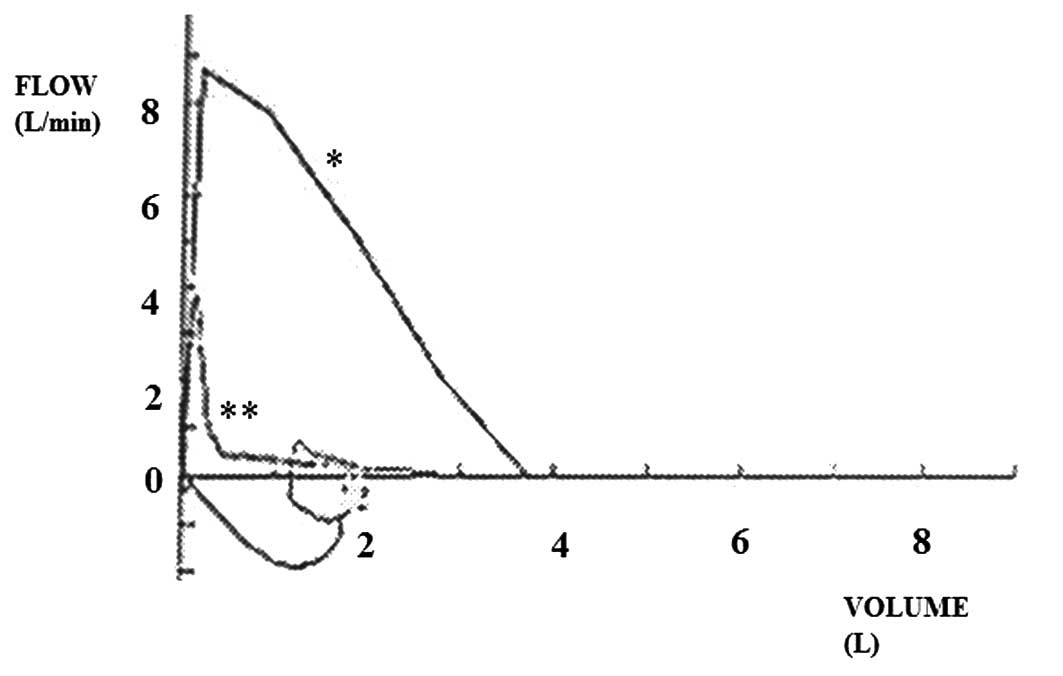
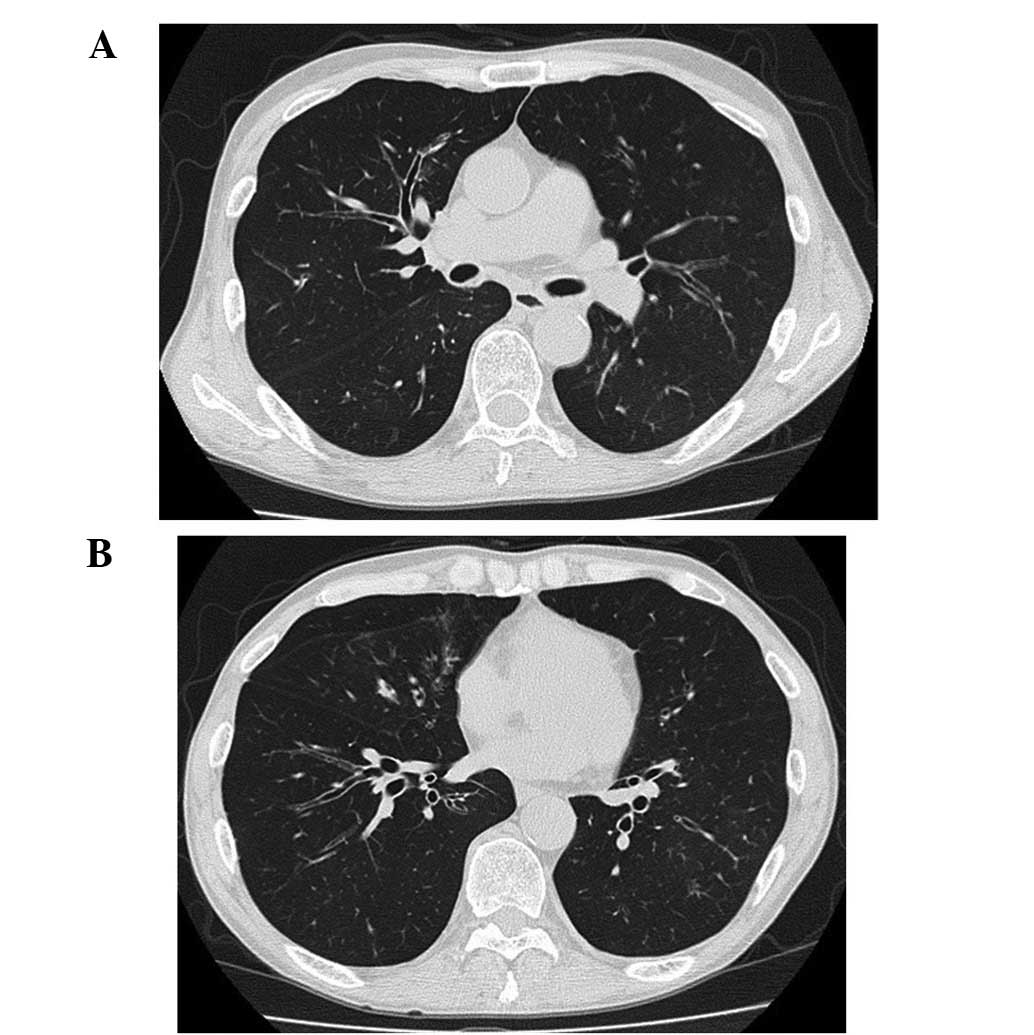
On admission, the respiratory rate of the patient was 18 beats/min and his breath sound was diminished, without any expiratory rhonchi. Clubbing was absent. The forced expiratory volume in one second (FEV1.0) was 0.77 liters (36.4% of predicted) and the forced vital capacity was 2.97 liters (80.1% of predicted). A flow-volume curve showed airflow limitation (Fig. 1). The residual volume was 2.57 liters (153% of predicted), the functional residual capacity was 3.97 liters (97% of predicted) and the single-breath diffusing capacity of the lung for carbon monoxide (DLCO) and DLCO divided by alveolar volume (DLCO/VA) were 105 and 93% of the predicted values, respectively. A chest radiograph showed scarce hyperinflation. No improvement in the FEV1.0 was observed following inhalation of a β-stimulant. A chest computed tomography (CT) scan showed only a small number of low-attenuation areas and bullae and demonstrated central bronchiectasis and a mosaic pattern, which intensified on expiration (Fig. 2). These findings were not consistent with pulmonary emphysema as a cause of severe airflow limitation. The results, including a respiratory function test and radiological examination, were highly suggestive of OB. Inhalation of corticosteroid and anticholinergic agents, oral theophylline and inhaled corticosteroid were not effective in this patient. Respiratory rehabilitation and long-acting β2-agonist/inhaled corticosteroid appeared to cause a slight reduction in his exertional dyspnea; however, the potential role of these therapies requires further examination. The patient did not recover completely. Twenty-six months following disease onset the patient remained alive and was discharged from the outpatient clinic.

Figure 1.

Flow-volume curve at the time of presentation to the hospital with dyspnea on effort. *Predicted curve; **measured curve.

Figure 2.

Slices (A) and (B) of chest computed tomography scan display bronchiectasis and thickening of the walls of the central bronchi in both lungs.

Discussion

OB is an inflammatory process that primarily affects small conducting airways of the lungs, resulting in differing levels of airflow limitation (2). This inflammatory process is associated with numerous conditions, including UC (5–7), bullous skin disease (8), Stevens-Johnson syndrome (9–14), graft versus host disease following a lung or bone marrow transplant (15–18) and certain drugs (1,6). The current patient was a middle-aged ex-smoker who complained of sub-acutely developed exertional dyspnea. Early-onset chronic obstructive pulmonary disease was initially suspected from the patient's symptoms and severe irreversible airway limitation; however, the chest CT scan was not consistent with smoking-induced centrilobular emphysema in this case, although the diagnosis of panlobular emphysema could not be refuted. It is generally accepted that decreases in DLCO and DLCO/VA are useful indicators of pulmonary emphysema (19,20); therefore, these parameters were evaluated, but no decreases were found despite severe irreversible airflow limitation. A mosaic pattern and bronchiectasis have been reported to be the typical findings in OB, although there have been cases demonstrating only diffuse hyperinflation, bronchial wall thickening and bronchiectasis, or even normal findings on a CT scan (21,22). In the present patient, a chest CT scan showed bronchiectasis and thickening of the walls of the central bronchi in both lungs.

In the present case, the patient had UC and had received plasma exchange for the treatment of TEN, which are known causes of OB (1,4–6,23). TEN and Stevens-Johnson syndrome are defined as drug-related dermatopathies on the same spectrum (4), and a case of severe OB associated with TEN has been previously reported (24). We speculated that the OB in the present case may have developed as a result of an impairment of the respiratory mucous membrane, as observed in Stevens-Johnson syndrome, and that there was a high probability that this severe airflow limitation had an association with the development of TEN due to mesalazine therapy. Thus, if drugs were directly responsible for the development of OB in this patient, mesalazine would be a highly probable candidate.

Regarding adverse events due to mesalazine, certain pulmonary toxicities have already been reported (5,6,25). Notably, two previous reports have described OB in patients with UC receiving mesalazine (6,7), as observed in the present case; however, the cause and precise mechanism of OB resulting from mesalazine treatment is not currently known.

Pathological examination of the affected bronchioles is important to the diagnosis of OB (1,26). The narrowing of bronchioles by necrotic and fibrotic changes are the main pathogeneses of OB (1,26); however, the majority of the patients with OB have exertional dyspnea with airflow limitation and it may, therefore, be challenging to obtain sufficient specimens from these individuals. The present patient declined a surgical approach, and the lung specimen could not be obtained.

In conclusion, the present study describes a case of OB in a patient with UC who developed TEN following mesalazine therapy. This rare clinical combination should be considered as a differential diagnosis, even for middle-aged, ex-smoking subjects presenting with sub-acutely developed airflow obstruction, if the findings in the chest CT scan demonstrate hyperinflation but few low-attenuation areas. Relatively well-preserved DLCO and DLCO/VA can provide a clue to establishing a correct diagnosis.

References

1 

Burgel PR, Bergeron A, de Blic J, et al: Small airways diseases, excluding asthma and COPD: An overview. Eur Respir Rev. 22:131–147. 2013. View Article : Google Scholar : PubMed/NCBI

2 

Feuerstein JD and Cheifetz AS: Ulcerative colitis: Epidemiology, diagnosis, and management. Mayo Clin Proc. 89:1553–1563. 2014. View Article : Google Scholar : PubMed/NCBI

3 

Mawson AR, Eriator I and Karre S: Stevens-Johnson syndrome and Toxic Epidermal Necrolysis (SJS/TEN): Could retinoids play a causative role? Med Sci Monit. 21:133–143. 2015. View Article : Google Scholar : PubMed/NCBI

4 

Letko E, Papaliodis DN, Papaliodis GN, Daoud YJ, Ahmed AR and Foster CS: Stevens-Johnson syndrome and toxic epidermal necrolysis: A review of the literature. Ann Allergy Asthma Immunol. 94:419–436. 2005. View Article : Google Scholar : PubMed/NCBI

5 

Nanayakkara PW, de Jong E and Postmus PE: Bilateral pulmonary infiltrates in a patient with ulcerative colitis receiving mesalazine. Eur J Intern Med. 15:470–472. 2004. View Article : Google Scholar : PubMed/NCBI

6 

Haralambou G, Teirstein AS, Gil J and Present DH: Bronchiolitis obliterans in a patient with ulcerative colitis receiving mesalazine. Mt Sinai J Med. 68:384–388. 2001.PubMed/NCBI

7 

Sakamoto N, Ishimatsu Y, Koyama H, et al: Bronchiolitis in a patient with ulcerative colitis treated with erythromycin. Intern Med. 53:875–877. 2014. View Article : Google Scholar : PubMed/NCBI

8 

Oshikawa K, Sugiyama Y and Kitamura S: Diffuse panbronchioliltis associated with bullous pemphigoid. Nihon Kyobu Shikkan Gakkai Zasshi. 33:1019–1023. 1995.[(In Japanese)]. PubMed/NCBI

9 

Tsunoda N, Iwanaga T, Saito T, Kitamura S and Saito K: Rapidly progressive bronchiolitis obliterans associated with Stevens-Johnson syndrome. Chest. 98:243–245. 1990. View Article : Google Scholar : PubMed/NCBI

10 

Shah AP, Xu H, Sime PJ and Trawick DR: Severe airflow obstruction and eosinophilic lung disease after Stevens-Johnson syndrome. Eur Respir J. 28:1276–1279. 2006. View Article : Google Scholar : PubMed/NCBI

11 

Basker M, Cherian T and Raghupathy P: Chronic lung disease following Stevens-Johnson syndrome. Indian Pediatr. 34:831–835. 1997.PubMed/NCBI

12 

Yatsunami J, Nakanishi Y, Matsuki H, et al: Chronic bronchobronchiolitis obliterans associated with Stevens-Johnson syndrome. Intern Med. 34:772–775. 1995. View Article : Google Scholar : PubMed/NCBI

13 

de la Rocha Reyes S, Leonard JC and Demetriou E: Potential permanent respiratory sequela of Stevens-Johnson syndrome in an adolescent. J Adolesc Health Care. 6:220–223. 1985. View Article : Google Scholar : PubMed/NCBI

14 

Virant FS, Redding GJ and Novack AH: Multiple pulmonary complications in a patient with Stevens-Johnson syndrome. Clin Pediatr (Phila). 23:412–414. 1984. View Article : Google Scholar : PubMed/NCBI

15 

Ryu JH, Myers JL and Swensen SJ: Bronchiolar disorders. Am J Respir Crit Care Med. 168:1277–1292. 2003. View Article : Google Scholar : PubMed/NCBI

16 

Epler GR: Bronchiolitis obliterans and airways obstruction associated with graft-versus-host disease. Clin Chest Med. 9:551–556. 1988.PubMed/NCBI

17 

Wyatt SE, Nunn P, Hows JM, et al: Airways obstruction associated with graft versus host disease after bone marrow transplantation. Thorax. 39:887–894. 1984. View Article : Google Scholar : PubMed/NCBI

18 

Ralph DD, Springmeyer SC, Sullivan KM, Hackman RC, Storb R and Thomas ED: Rapidly progressive air-flow obstruction in marrow transplant recipients. Possible association between obliterative bronchiolitis and chronic graft-versus-host disease. Am Rev Respir Dis. 129:641–644. 1984.PubMed/NCBI

19 

Morrison NJ, Abboud RT, Ramadan F, et al: Comparison of single breath carbon monoxide diffusing capacity and pressure-volume curves in detecting emphysema. Am Rev Respir Dis. 139:1179–1187. 1989. View Article : Google Scholar : PubMed/NCBI

20 

Biernacki W, Gould GA, Whyte KF and Flenley DC: Pulmonary hemodynamics, gas exchange and the severity of emphysema as assessed by quantitative CT scan in chronic bronchitis and emphysema. Am Rev Respir Dis. 139:1509–1515. 1989. View Article : Google Scholar : PubMed/NCBI

21 

Tsujino I, Nishimura M, Ohira K, Yoshimura H, Fukuda Y and Kawakami Y: A case of idiopathic constrictive bronchiolitis in a middle-aged male smoker. Respirology. 5:305–307. 2000. View Article : Google Scholar : PubMed/NCBI

22 

Karadag F, Ozhan MH, Akçiçek E, Günel O, Alper H and Veral A: Is it possible to detect ulcerative colitis-related respiratory syndrome early? Respirology. 6:341–346. 2001. View Article : Google Scholar : PubMed/NCBI

23 

Ishida T, Yokoyama E, Muto M, et al: A case of paraneoplastic pemphigus associated with bronchiolitis obliterans-like respiratory symptoms in the absence of a known neoplasm. Nishi Nihon Hifuka. 66:236–240. 2004.[(In Japanese)]. View Article : Google Scholar

24 

Kamada N, Kinoshita K, Togawa Y, et al: Chronic pulmonary complications associated with toxic epidermal necrolysis: Report of a severe case with anti-Ro/SS-A and a review of the published work. J Dermatol. 33:616–622. 2006. View Article : Google Scholar : PubMed/NCBI

25 

Kim JH, Lee JH, Koh ES, et al: Acute eosinophilic pneumonia related to a mesalazine suppository. Asia Pac Allergy. 3:136–139. 2013. View Article : Google Scholar : PubMed/NCBI

26 

Allen TC: Pathology of small airways disease. Arch Pathol Lab Med. 134:702–718. 2010.PubMed/NCBI

Related Articles

  • Abstract
  • View
  • Download
  • Twitter
Copy and paste a formatted citation
Spandidos Publications style
Taguchi S, Furuta J, Ohara G, Kagohashi K and Satoh H: Severe airflow obstruction in a patient with ulcerative colitis and toxic epidermal necrolysis: A case report. Exp Ther Med 9: 1944-1946, 2015.
APA
Taguchi, S., Furuta, J., Ohara, G., Kagohashi, K., & Satoh, H. (2015). Severe airflow obstruction in a patient with ulcerative colitis and toxic epidermal necrolysis: A case report. Experimental and Therapeutic Medicine, 9, 1944-1946. https://doi.org/10.3892/etm.2015.2307
MLA
Taguchi, S., Furuta, J., Ohara, G., Kagohashi, K., Satoh, H."Severe airflow obstruction in a patient with ulcerative colitis and toxic epidermal necrolysis: A case report". Experimental and Therapeutic Medicine 9.5 (2015): 1944-1946.
Chicago
Taguchi, S., Furuta, J., Ohara, G., Kagohashi, K., Satoh, H."Severe airflow obstruction in a patient with ulcerative colitis and toxic epidermal necrolysis: A case report". Experimental and Therapeutic Medicine 9, no. 5 (2015): 1944-1946. https://doi.org/10.3892/etm.2015.2307
Copy and paste a formatted citation
x
Spandidos Publications style
Taguchi S, Furuta J, Ohara G, Kagohashi K and Satoh H: Severe airflow obstruction in a patient with ulcerative colitis and toxic epidermal necrolysis: A case report. Exp Ther Med 9: 1944-1946, 2015.
APA
Taguchi, S., Furuta, J., Ohara, G., Kagohashi, K., & Satoh, H. (2015). Severe airflow obstruction in a patient with ulcerative colitis and toxic epidermal necrolysis: A case report. Experimental and Therapeutic Medicine, 9, 1944-1946. https://doi.org/10.3892/etm.2015.2307
MLA
Taguchi, S., Furuta, J., Ohara, G., Kagohashi, K., Satoh, H."Severe airflow obstruction in a patient with ulcerative colitis and toxic epidermal necrolysis: A case report". Experimental and Therapeutic Medicine 9.5 (2015): 1944-1946.
Chicago
Taguchi, S., Furuta, J., Ohara, G., Kagohashi, K., Satoh, H."Severe airflow obstruction in a patient with ulcerative colitis and toxic epidermal necrolysis: A case report". Experimental and Therapeutic Medicine 9, no. 5 (2015): 1944-1946. https://doi.org/10.3892/etm.2015.2307
Follow us
  • Twitter
  • LinkedIn
  • Facebook
About
  • Spandidos Publications
  • Careers
  • Cookie Policy
  • Privacy Policy
How can we help?
  • Help
  • Live Chat
  • Contact
  • Email to our Support Team