Introduction
In the early stage of open fractures, bacteria from
the open environment are attracted to the superficial layer of the
wound surface and, if not removed promptly, rapidly propagate
leading to wound infection. Management of wound infection often
requires additional hospitalization, surgeries, and the systemic
use of antibiotics, which substantial impact the patients’ recovery
process, quality of live, and the overall cost to the healthcare
system (1). Therefore, efficient
removal of bacteria from the wound surface, as the first line of
treatment, is paramount to wound healing by preventing bacterial
infection and minimizing inflammatory reactions (2). Wound infection is one of the oldest
medical problems. In order to prevent wound infection, wound
cleansing with various types of irrigation solutions has been
widely performed since ancient times (3). As early as about 2000 years ago, the
four principal signs of inflammation were described and the use of
antiseptic solutions for wound cleaning. Additionally, the
management of wounds had been significantly worked out (4). Among various irrigation solutions used
in modern times, antiseptics such as iodophor and hydrogen peroxide
have been thought to be better alternatives based on the perception
that they can effectively eliminate most of the bacteria from a
wound surface (5). However, it is
also known that these antiseptics irritate wounded tissues leading
to delayed wound healing. Therefore, it is necessary to have an
irrigation solution that is both effective in bacteria elimination
and favors wound healing. Different irrigation solutions are
currently being used clinically for debridement (6); however, their efficacies have not yet
been comprehensively investigated. In the present study, this issue
was addressed by comparing the effects of normal saline, iodophor
and hydrogen peroxide as irrigation solutions on the early
debridement of open fractures in rat models. The present study
aimed to find an effective, yet cheap and simple irrigation method,
which would have a significant impact in trauma clinics, as well as
in field medicine.
Materials and methods
Animals and grouping
A total of 45 healthy adult male Sprague Dawley (SD)
rats, weighing between 210 and 230 g, were provided by the Center
of Laboratory Animals, Jiangsu University (Zhenjiang, China). The
45 rats were randomly divided into a normal saline group (group A,
n=15), an iodophor group (group B, n=15) and a hydrogen peroxide
group (group C, n=15). The number of rats used in each group was
estimated for the significant statistical power using G*power
software (Heinrich-Heine University of Düsseldorf, Düsseldorf,
Germany).
Apparatus and irrigation
solutions
The gravitational impact device (1 kg × 30 cm) was
self-made. Injection needles, syringes, a bench board, blades,
scissors, hemostatic forceps, needle holders and a small wire
retractor were purchased from local vendors. Sterile normal saline
was obtained from Nanjing Xiaoying Pharmaceutical Group Co., Ltd
(Nanjing, China); iodophor (containing 0.5% iodine) was purchased
from Shanghai Likang Disinfectant Hi-Tech Co., Ltd (Shanghai,
China); and 0.3% hydrogen peroxide was a product of Hebei Jianning
Pharmaceutical Factory (Shijiazhuang, China).
Preparation of open femur fracture
models
The study design was approved by the Ethic and
Animal Use Committee of Jiangsu University. Specifically, healthy
adult male SD rats were anesthetized by an intraperitoneal
injection of 10% chloral hydrate at a dose of 0.5 ml/100 g body
weight, and then fixed on a bench board in a prone position.
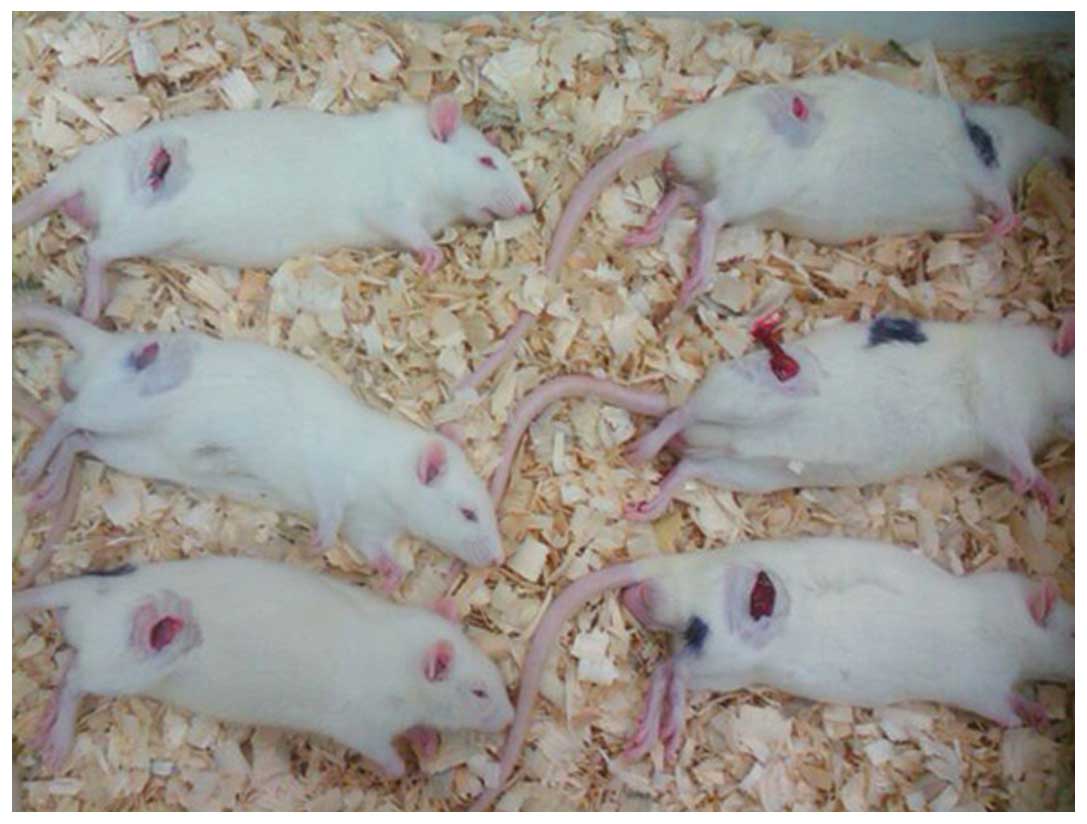
Following skin preparation, the right thigh was struck with the
self-made impact device to form fractures. A 2.0-cm incision was
then made on the right thigh (Fig.
1), and the muscle tissue was separated to expose the broken
ends of the fractured bone. The post-trauma rats were then
uniformly placed in clean, non-sterile cages for 2 h, allowing the
open wounds to be exposed to the open air to mimic the situation in
trauma patients.
Debridement
Two hours after the establishment of the models, the
rats were fixed on the bench board. Prior to debridement, a sterile
cotton swab was rolled twice on the wound surface and then placed
in a sterile tube containing 1 ml sterile saline for a bacterial
culture. In group A, 25 ml sterile normal saline was used to
irrigate the wound surface and the broken ends of the fractured
bone using a syringe. In group B, 20 ml iodophor was used to
irrigate the wound surface and the broken ends of the fractured
bone via syringe. The wound was subsequently rinsed further with 5
ml sterile normal saline. In group C, 20 ml hydrogen peroxide was
used to irrigate the wound surface and the broken ends of the
fractured bone, prior to rinsing with 5 ml sterile normal saline.
Following debridement, a sterile cotton swab was rolled twice on
the wound surface to collect bacteria for the culture. A
0.5-cm2 sample of wound surface tissue was cut out and
placed in neutral formalin for pathological examination. Finally,
following the repositioning of the fractures, a sterile injection
needle with a diameter of 1.2 mm and a length of 30 mm was
retrogradely inserted into the femoral condyles for primary wound
closure.
Postoperative treatment
Following debridement, the rat models in the three
groups were separately caged and given access to food and water
ad libitum. Each rat was administered an intramuscular
injection of 50,000 units penicillin per day for three consecutive
days, and any possible wound dehiscences, redness and swelling,
exudation and other health issues were closely monitored and
recorded.
Bacterial culture and count
Normal saline (10 µl) taken from the tube was
inoculated onto agar plates, and then incubated at 37°C.
Twenty-four hours later, the colony-forming units (CFU) from the
samples collected prior and subsequent to debridement were counted
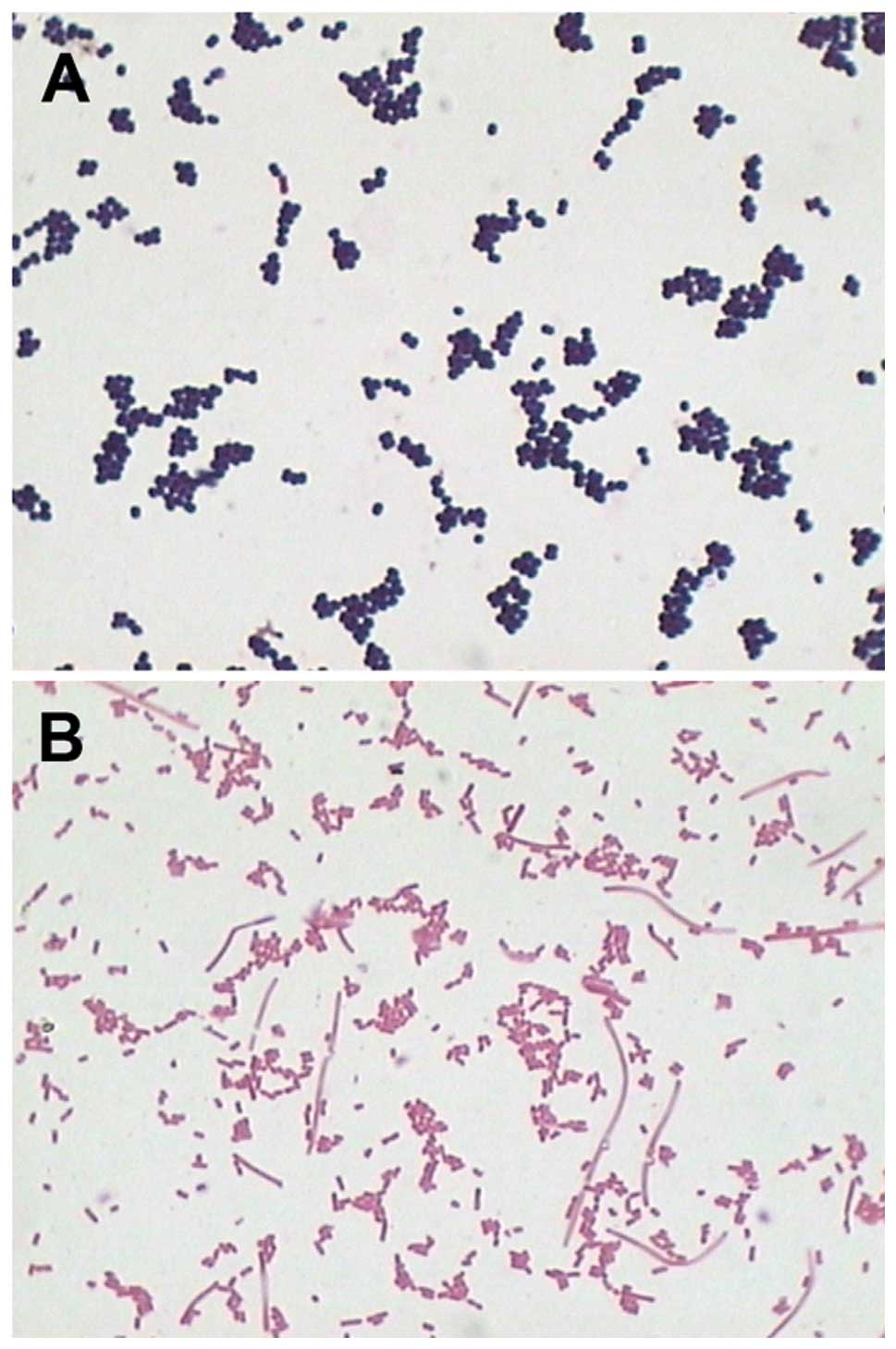
and calculated for bacterial clearance. A number of colonies were
randomly selected for Gram staining, and then the bacteria were
microscopically identified as Gram-positive (G+) cocci
or Gram-negative (G−) bacilli bacteria.
Pathological examination
Tissue samples were fixed with neutral formalin for
24 h, and sectioned at a thickness of 4 µm followed by hematoxylin
and eosin staining for the identification of inflammatory
reactions.
Statistical analysis
Statistical analysis was performed with SPSS
software, version 17.0 (SPSS, Inc., Chicago, IL, USA). Data are
presented as the mean ± standard deviation. χ2 was used
for the comparisons. Differences were considered to be
statistically significant at P<0.05.
Results
General postoperative
observations
A total of 45 rats were used during the study
period. No animal deaths occurred and all wounds healed well.
Furthermore, no wound dehiscence, redness and swelling or exudation
were identified, and stitches were removed on schedule.
Pathological changes
Open femur fracture was established virtually
identically in all animals (Fig. 1).
Two hours after the wound establishment, debridement was performed
on the animals with normal saline, iodophor or hydrogen peroxide as
respective irrigation solutions. Their effects on bacterial removal
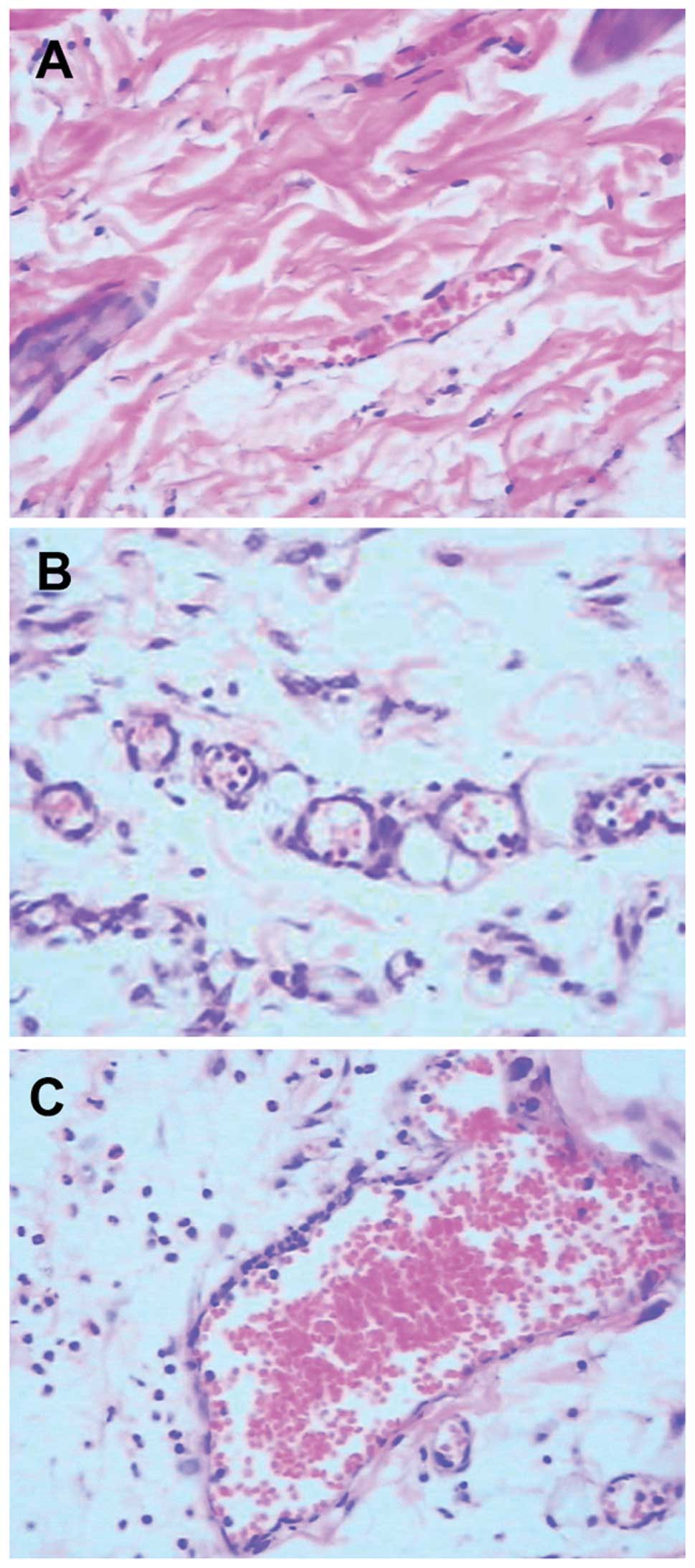
and wound inflammation were compared. As demonstrated by
pathological changes in the tissue sections (Fig. 2), it was found that animals irrigated
with normal saline exhibited the mildest inflammatory reactions, as
judged by occasional mild vasodilatation and vasocongestion but not
infiltration of inflammatory cells (Fig.
2A), while the animals washed with hydrogen peroxide showed
evident inflammatory reactions, exhibiting severe vasodilation,
vasocongestion and exudation, along with the infiltration of
inflammatory cells in interstitial tissues (Fig. 2B). Finally, irrigation with iodophor
produced some modest yet clearly visible vasodilation,
vasocongestion, exudation and infiltration of inflammatory cells
(Fig. 2C).
Bacterial clearance
Since the main purpose of irrigation is to
decontaminate the wound surface from bacteria, the effects of these
three solutions on bacterial removal were assessed. As shown in
Table I, all three solutions were
effective in removing >99.9% of bacteria from the wound surface,
as determined by CFU counts from samples collected before and after
debridement. The differences in bacterial clearance were not
statistically significant among the three groups (P>0.05)
(Table I). Bacterial culture
revealed that most bacteria were G+ cocci and
G− bacilli (Fig. 3).
 | Table I.Bacterial count before and after
debridement. |
Table I.
Bacterial count before and after
debridement.
| Groups | Before debridement
(CFU/ml) | After debridement
(CFU/ml, mean ± SD) | Bacterial clearance
(%) |
|---|
| A: Saline |
>105 | 70.00±29.03 | 99.93 |
| B: Iodophor |
>105 | 15.00±12.25 | 99.98 |
| C:
H2O2 |
>105 | 10.00±7.07 | 99.99 |
Discussion
Traffic accidents are the leading traumatic events
in Western countries and are becoming one of the leading types of
accidents in China (7). Open bone
fracture, often seen in these traffic accidents, is first treated
with debridement by irrigation of a wound surface with irrigation
solutions in order to remove bacteria from contaminated tissues
(8–10); therefore, it is medically significant
for the most effective irrigation solutions, which cause the least
inflammation in the debridement treatment, to be identified.
It is clear that the wound infection rate is
positively correlated with the number of bacteria retained
following debridement (11). Maximal
removal of bacteria from the contaminated wound surface is one of
the most important measures to prevent wound infection. We believe
that in the early stages of open fractures bacteria only exist on
wound surfaces and have not yet had the opportunity to propagate
rapidly; therefore, efficient removal of the majority of the
bacteria by irrigation is critical to infection prevention. This
study showed a statistically identical 99.9% effectiveness in
bacterial removal in the three groups, suggesting that those
bacteria were likely to have been washed away by irrigation rather
than being killed by these solutions.
Currently, among the various irrigation solutions,
normal saline, iodophor and hydrogen peroxide are all used in the
clinic (12). It has been reported
that the iodine in iodophor can kill bacteria, improve
microcirculation at the wound surface, promote wound healing and
release iodine compounds with anti-inflammatory effects (13–15);
however, iodophor has toxic effects on in vitro-cultured
human skin fibroblasts and immunocytes. In addition, iodine can
induce and aggravate hyperthyroidism and hypothyroidism, and iodine
at high concentrations can promote apoptosis, which is
disadvantageous to wound healing. Hydrogen peroxide, a strong
oxidant, can immediately release free oxygen upon contact with
catalase in tissue. Free oxygen has anti-bacterial and disinfectant
properties. Hydrogen peroxide may also cause apoptosis that is
associated with neurotrophic factor, tumor necrosis factor and Fas.
Catalase widely exists in tissues and can rapidly decompose
hydrogen peroxide, releasing high-energy oxygen and causing
chemical burn. The mechanical effects of free oxygen may allow
bacterial emboli to desquamate; and then bacterial toxins,
cytotoxins and gas bubbles may enter the bloodstream to activate
histamine, 5-hydroxytryptamine and bradykinin, leading to
hypersensitivity and even shock. A large amount of free oxygen may
result in local high pressure, which allows partial bacterial
toxins and gas bubbles to enter the blood through ruptures in
arterioles, venules and capillaries, leading to pulmonary embolism
with dyspnea, cyanosis, acute right ventricular and respiratory
failure, and even mortality. It has been reported that sterile
water used for irrigation in the early stages of a wound also
obtains good clinical results; however, it is only suitable for
superficial wounds (16). The
present study indicated that normal saline resulted in the mildest
inflammatory reactions among the three groups; therefore, it should
be recommended as the choice of irrigation solution for early-stage
open bone fracture.
In conclusion, normal saline, iodophor and hydrogen
peroxide are all effective irrigation solutions in bacterial
clearance following debridement, while normal saline resulted in
little inflammatory reaction compared with the other two solutions.
It is, therefore, conceivable to recommend using normal saline
alone as the irrigation solution for the debridement of early-stage
wounds in trauma clinics as well as in earthquake relief work.
References
|
1
|
Whitehouse JD, Friedman DN, Kirkland KB,
Richardson WJ and Sexton DJ: The impact of surgical-site infections
following orthopedic surgery at a community hospital and a
university hospital: adverse quality of life, excess length of
stay, and extra cost. Infect Control Hosp Epidemiol. 23:183–189.
2002. View
Article : Google Scholar : PubMed/NCBI
|
|
2
|
Ennis WJ, Valdes W, Salzman S, Fishman D
and Meneses P: Trauma and wound careMorison MJ, Ovington LG and
Wilkie K: A Problem-Based Learning Approach. Chapter. 17Mosby
Elsevier Limited; London: pp. 291–307. 2004
|
|
3
|
Flanagan M: Wound cleansingNursing
Management of Chronic Wounds. Morison M, Moffat C, Bridel-Nixon J
and Bale S: Mosby; London: pp. 221–244. 1997
|
|
4
|
Honey BJ: Lizard dung and pigeons' blood.
Nurs Times. 80:36–38. 1984.
|
|
5
|
Platt J and Bucknall RA: An experimental
evaluation of antiseptic wound irrigation. J Hosp Infect.
5:181–188. 1984. View Article : Google Scholar : PubMed/NCBI
|
|
6
|
Gabriel A: Wound Irrigation. Schraga ED:
Medscape. http://emedicine.medscape.com/article/1895071-overviewAccessed.
April 2–2014
|
|
7
|
Dormans JP, Fisher RC and Pill SG:
Orthopaedics in the developing world: present and future concerns.
J Am Acad Orthop Surg. 9:289–296. 2001.PubMed/NCBI
|
|
8
|
Anglen JO: Wound irrigation in
musculoskeletal injury. J Am Acad Orthop Surg. 9:219–226.
2001.PubMed/NCBI
|
|
9
|
Bhandari M, Guyatt GH, Swiontkowski MF and
Schemitsch EH: Treatment of open fractures of the shaft of the
tibia. J Bone Joint Surg Br. 83:62–68. 2001. View Article : Google Scholar : PubMed/NCBI
|
|
10
|
Spencer J, Smith A and Woods D: The effect
of time delay on infection in open long-bone fractures: a 5-year
prospective audit from a district general hospital. Ann R Coll Surg
Engl. 86:108–112. 2004. View Article : Google Scholar : PubMed/NCBI
|
|
11
|
McDonald WS and Nichter LS: Debridement of
bacterial and particulate-contaminated wounds. Ann Plast Surg.
33:142–147. 1994. View Article : Google Scholar : PubMed/NCBI
|
|
12
|
Anglen JO: Comparison of soap and
antibiotic solutions for irrigation of lower-limb open fracture
wounds. A prospective, randomized study. J Bone Joint Surg Am.
87:1415–1422. 2005. View Article : Google Scholar : PubMed/NCBI
|
|
13
|
Mueller S, Vogt PM, Steinau HU, Leuner C,
Hopp M, Bosse B, Fleischer W and Reimer K: Repithel: removing the
barriers to wound healing. Dermatology. 212:Suppl 1. 77–81. 2006.
View Article : Google Scholar : PubMed/NCBI
|
|
14
|
Beukelman CJ, van den Berg AJ, Hoekstra
MJ, Uhl R, Reimer K and Mueller S: Anti-inflammatory properties of
a liposomal hydrogel with povidone-iodine (Repithel) for wound
healing in vitro. Burns. 34:845–855. 2008. View Article : Google Scholar : PubMed/NCBI
|
|
15
|
Langer S, Botteck NM, Bosse B, Reimer K,
Vogt PM, Steinau HU and Mueller S: Effect of
polyvinylpyrrolidone-iodine liposomal hydrogel on wound
microcirculation in SKH1-hr hairless mice. Eur Surg Res. 38:27–34.
2006. View Article : Google Scholar : PubMed/NCBI
|
|
16
|
Trevillion N: Cleaning wounds with saline
or tap water. Emerg Nurse. 16:24–26. 2008.PubMed/NCBI
|