Spandidos Publications Logo
  • About
    • About Spandidos
    • Aims and Scopes
    • Abstracting and Indexing
    • Editorial Policies
    • Reprints and Permissions
    • Job Opportunities
    • Terms and Conditions
    • Contact
  • Journals
    • All Journals
    • Oncology Letters
      • Oncology Letters
      • Information for Authors
      • Editorial Policies
      • Editorial Board
      • Aims and Scope
      • Abstracting and Indexing
      • Bibliographic Information
      • Archive
    • International Journal of Oncology
      • International Journal of Oncology
      • Information for Authors
      • Editorial Policies
      • Editorial Board
      • Aims and Scope
      • Abstracting and Indexing
      • Bibliographic Information
      • Archive
    • Molecular and Clinical Oncology
      • Molecular and Clinical Oncology
      • Information for Authors
      • Editorial Policies
      • Editorial Board
      • Aims and Scope
      • Abstracting and Indexing
      • Bibliographic Information
      • Archive
    • Experimental and Therapeutic Medicine
      • Experimental and Therapeutic Medicine
      • Information for Authors
      • Editorial Policies
      • Editorial Board
      • Aims and Scope
      • Abstracting and Indexing
      • Bibliographic Information
      • Archive
    • International Journal of Molecular Medicine
      • International Journal of Molecular Medicine
      • Information for Authors
      • Editorial Policies
      • Editorial Board
      • Aims and Scope
      • Abstracting and Indexing
      • Bibliographic Information
      • Archive
    • Biomedical Reports
      • Biomedical Reports
      • Information for Authors
      • Editorial Policies
      • Editorial Board
      • Aims and Scope
      • Abstracting and Indexing
      • Bibliographic Information
      • Archive
    • Oncology Reports
      • Oncology Reports
      • Information for Authors
      • Editorial Policies
      • Editorial Board
      • Aims and Scope
      • Abstracting and Indexing
      • Bibliographic Information
      • Archive
    • Molecular Medicine Reports
      • Molecular Medicine Reports
      • Information for Authors
      • Editorial Policies
      • Editorial Board
      • Aims and Scope
      • Abstracting and Indexing
      • Bibliographic Information
      • Archive
    • World Academy of Sciences Journal
      • World Academy of Sciences Journal
      • Information for Authors
      • Editorial Policies
      • Editorial Board
      • Aims and Scope
      • Abstracting and Indexing
      • Bibliographic Information
      • Archive
    • International Journal of Functional Nutrition
      • International Journal of Functional Nutrition
      • Information for Authors
      • Editorial Policies
      • Editorial Board
      • Aims and Scope
      • Abstracting and Indexing
      • Bibliographic Information
      • Archive
    • International Journal of Epigenetics
      • International Journal of Epigenetics
      • Information for Authors
      • Editorial Policies
      • Editorial Board
      • Aims and Scope
      • Abstracting and Indexing
      • Bibliographic Information
      • Archive
    • Medicine International
      • Medicine International
      • Information for Authors
      • Editorial Policies
      • Editorial Board
      • Aims and Scope
      • Abstracting and Indexing
      • Bibliographic Information
      • Archive
  • Articles
  • Information
    • Information for Authors
    • Information for Reviewers
    • Information for Librarians
    • Information for Advertisers
    • Conferences
  • Language Editing
Spandidos Publications Logo
  • About
    • About Spandidos
    • Aims and Scopes
    • Abstracting and Indexing
    • Editorial Policies
    • Reprints and Permissions
    • Job Opportunities
    • Terms and Conditions
    • Contact
  • Journals
    • All Journals
    • Biomedical Reports
      • Information for Authors
      • Editorial Policies
      • Editorial Board
      • Aims and Scope
      • Abstracting and Indexing
      • Bibliographic Information
      • Archive
    • Experimental and Therapeutic Medicine
      • Information for Authors
      • Editorial Policies
      • Editorial Board
      • Aims and Scope
      • Abstracting and Indexing
      • Bibliographic Information
      • Archive
    • International Journal of Epigenetics
      • Information for Authors
      • Editorial Policies
      • Editorial Board
      • Aims and Scope
      • Abstracting and Indexing
      • Bibliographic Information
      • Archive
    • International Journal of Functional Nutrition
      • Information for Authors
      • Editorial Policies
      • Editorial Board
      • Aims and Scope
      • Abstracting and Indexing
      • Bibliographic Information
      • Archive
    • International Journal of Molecular Medicine
      • Information for Authors
      • Editorial Policies
      • Editorial Board
      • Aims and Scope
      • Abstracting and Indexing
      • Bibliographic Information
      • Archive
    • International Journal of Oncology
      • Information for Authors
      • Editorial Policies
      • Editorial Board
      • Aims and Scope
      • Abstracting and Indexing
      • Bibliographic Information
      • Archive
    • Medicine International
      • Information for Authors
      • Editorial Policies
      • Editorial Board
      • Aims and Scope
      • Abstracting and Indexing
      • Bibliographic Information
      • Archive
    • Molecular and Clinical Oncology
      • Information for Authors
      • Editorial Policies
      • Editorial Board
      • Aims and Scope
      • Abstracting and Indexing
      • Bibliographic Information
      • Archive
    • Molecular Medicine Reports
      • Information for Authors
      • Editorial Policies
      • Editorial Board
      • Aims and Scope
      • Abstracting and Indexing
      • Bibliographic Information
      • Archive
    • Oncology Letters
      • Information for Authors
      • Editorial Policies
      • Editorial Board
      • Aims and Scope
      • Abstracting and Indexing
      • Bibliographic Information
      • Archive
    • Oncology Reports
      • Information for Authors
      • Editorial Policies
      • Editorial Board
      • Aims and Scope
      • Abstracting and Indexing
      • Bibliographic Information
      • Archive
    • World Academy of Sciences Journal
      • Information for Authors
      • Editorial Policies
      • Editorial Board
      • Aims and Scope
      • Abstracting and Indexing
      • Bibliographic Information
      • Archive
  • Articles
  • Information
    • For Authors
    • For Reviewers
    • For Librarians
    • For Advertisers
    • Conferences
  • Language Editing
Login Register Submit
  • This site uses cookies
  • You can change your cookie settings at any time by following the instructions in our Cookie Policy. To find out more, you may read our Privacy Policy.

    I agree
Search articles by DOI, keyword, author or affiliation
Search
Advanced Search
presentation
Experimental and Therapeutic Medicine
Join Editorial Board Propose a Special Issue
Print ISSN: 1792-0981 Online ISSN: 1792-1015
Journal Cover
December-2015 Volume 10 Issue 6

Full Size Image

Sign up for eToc alerts
Recommend to Library

Journals

International Journal of Molecular Medicine

International Journal of Molecular Medicine

International Journal of Molecular Medicine is an international journal devoted to molecular mechanisms of human disease.

International Journal of Oncology

International Journal of Oncology

International Journal of Oncology is an international journal devoted to oncology research and cancer treatment.

Molecular Medicine Reports

Molecular Medicine Reports

Covers molecular medicine topics such as pharmacology, pathology, genetics, neuroscience, infectious diseases, molecular cardiology, and molecular surgery.

Oncology Reports

Oncology Reports

Oncology Reports is an international journal devoted to fundamental and applied research in Oncology.

Experimental and Therapeutic Medicine

Experimental and Therapeutic Medicine

Experimental and Therapeutic Medicine is an international journal devoted to laboratory and clinical medicine.

Oncology Letters

Oncology Letters

Oncology Letters is an international journal devoted to Experimental and Clinical Oncology.

Biomedical Reports

Biomedical Reports

Explores a wide range of biological and medical fields, including pharmacology, genetics, microbiology, neuroscience, and molecular cardiology.

Molecular and Clinical Oncology

Molecular and Clinical Oncology

International journal addressing all aspects of oncology research, from tumorigenesis and oncogenes to chemotherapy and metastasis.

World Academy of Sciences Journal

World Academy of Sciences Journal

Multidisciplinary open-access journal spanning biochemistry, genetics, neuroscience, environmental health, and synthetic biology.

International Journal of Functional Nutrition

International Journal of Functional Nutrition

Open-access journal combining biochemistry, pharmacology, immunology, and genetics to advance health through functional nutrition.

International Journal of Epigenetics

International Journal of Epigenetics

Publishes open-access research on using epigenetics to advance understanding and treatment of human disease.

Medicine International

Medicine International

An International Open Access Journal Devoted to General Medicine.

Journal Cover
December-2015 Volume 10 Issue 6

Full Size Image

Sign up for eToc alerts
Recommend to Library

  • Article
  • Citations
    • Cite This Article
    • Download Citation
    • Create Citation Alert
    • Remove Citation Alert
    • Cited By
  • Similar Articles
    • Related Articles (in Spandidos Publications)
    • Similar Articles (Google Scholar)
    • Similar Articles (PubMed)
  • Download PDF
  • Download XML
  • View XML
Article

Neonatal capsaicin treatment in rats induces chronic hyperthermia resulting in infectious disease

  • Authors:
    • Keun‑Yeong Jeong
    • Hwan Mook Kim
  • View Affiliations / Copyright

    Affiliations: College of Pharmacy, Gachon Institute of Pharmaceutical Sciences, Gachon University, Incheon 406‑840, Republic of Korea
  • Pages: 2417-2423
    |
    Published online on: October 23, 2015
       https://doi.org/10.3892/etm.2015.2829
  • Expand metrics +
Metrics: Total Views: 0 (Spandidos Publications: | PMC Statistics: )
Metrics: Total PDF Downloads: 0 (Spandidos Publications: | PMC Statistics: )
Cited By (CrossRef): 0 citations Loading Articles...

This article is mentioned in:


Abstract

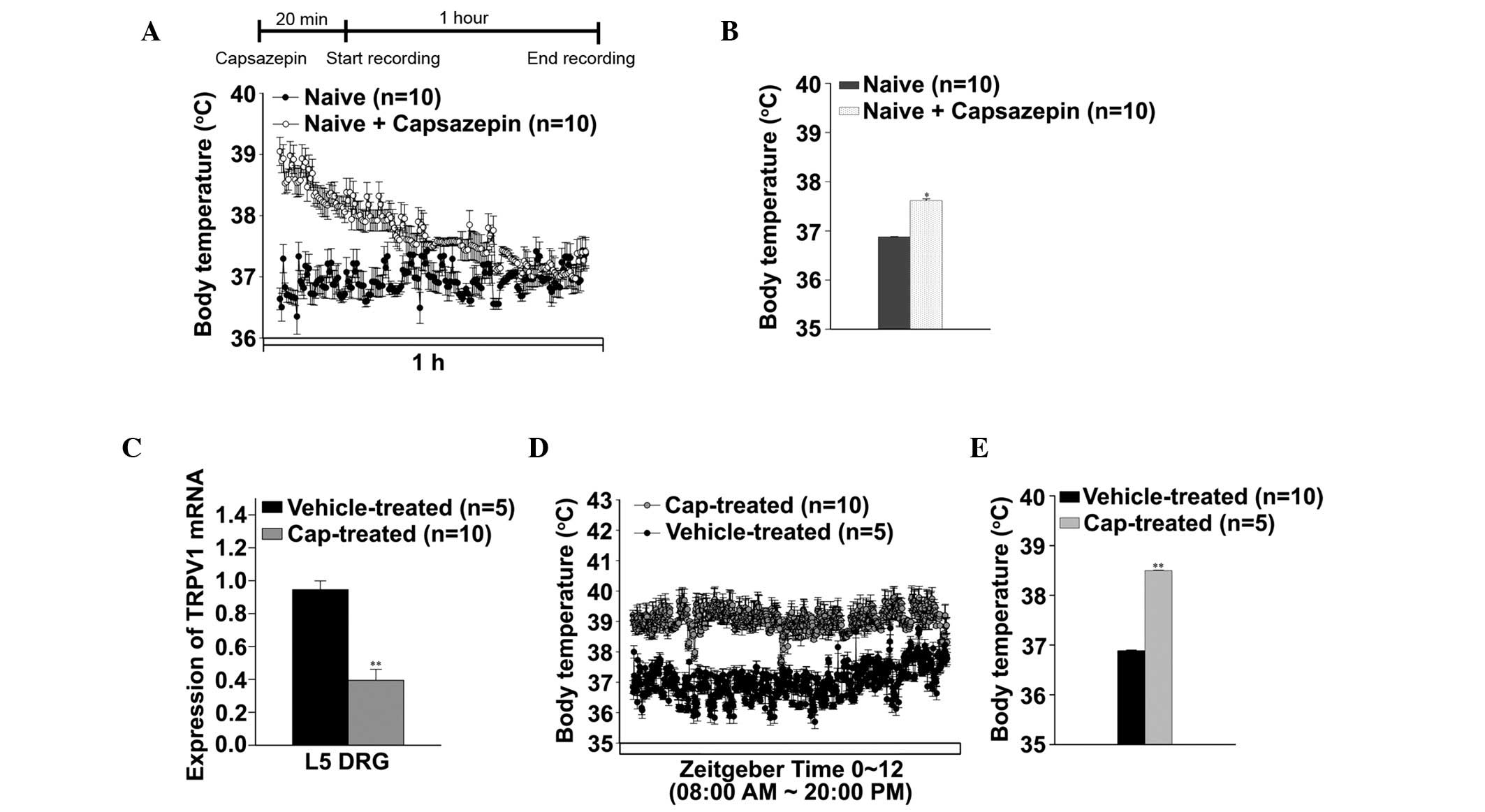
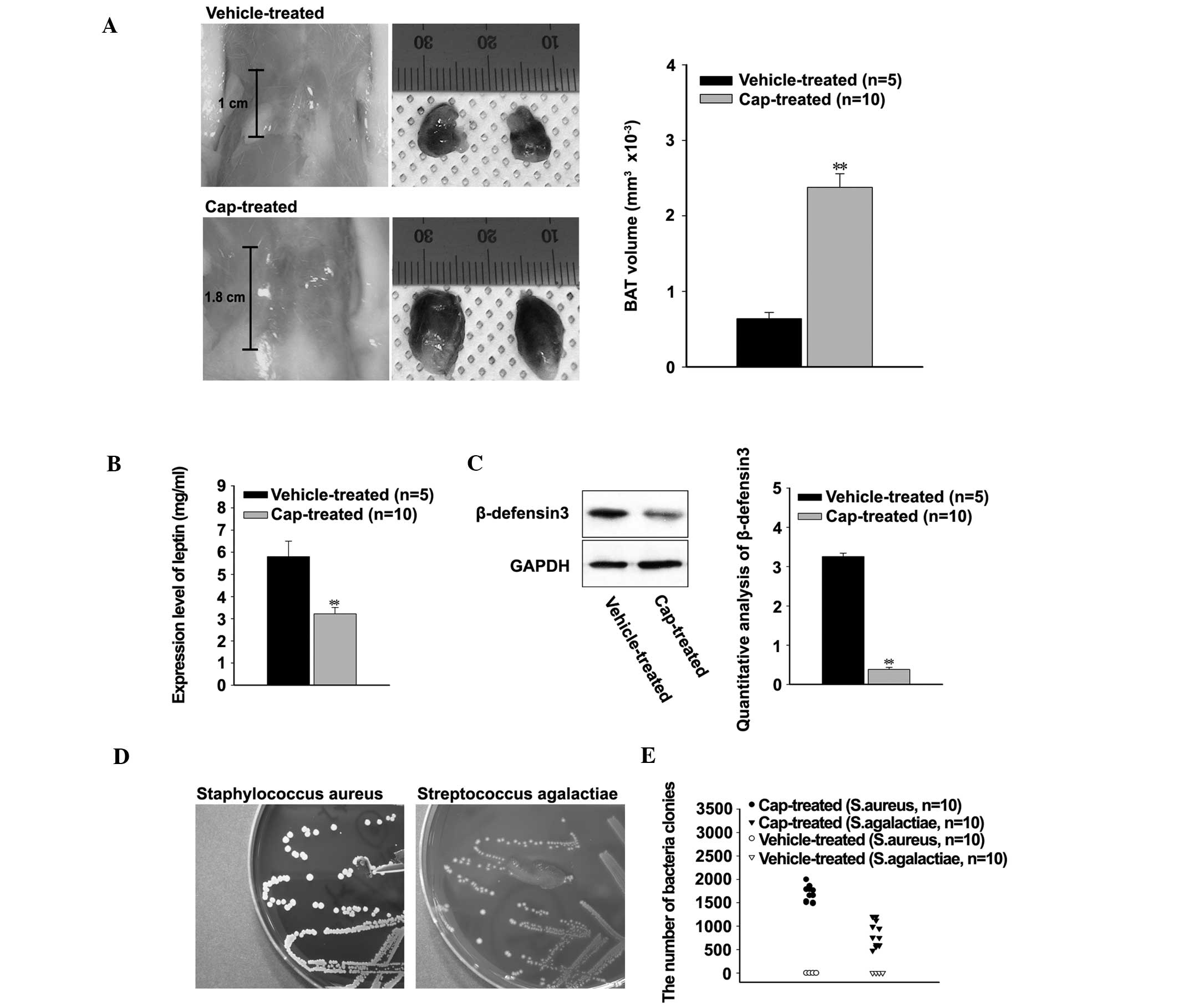
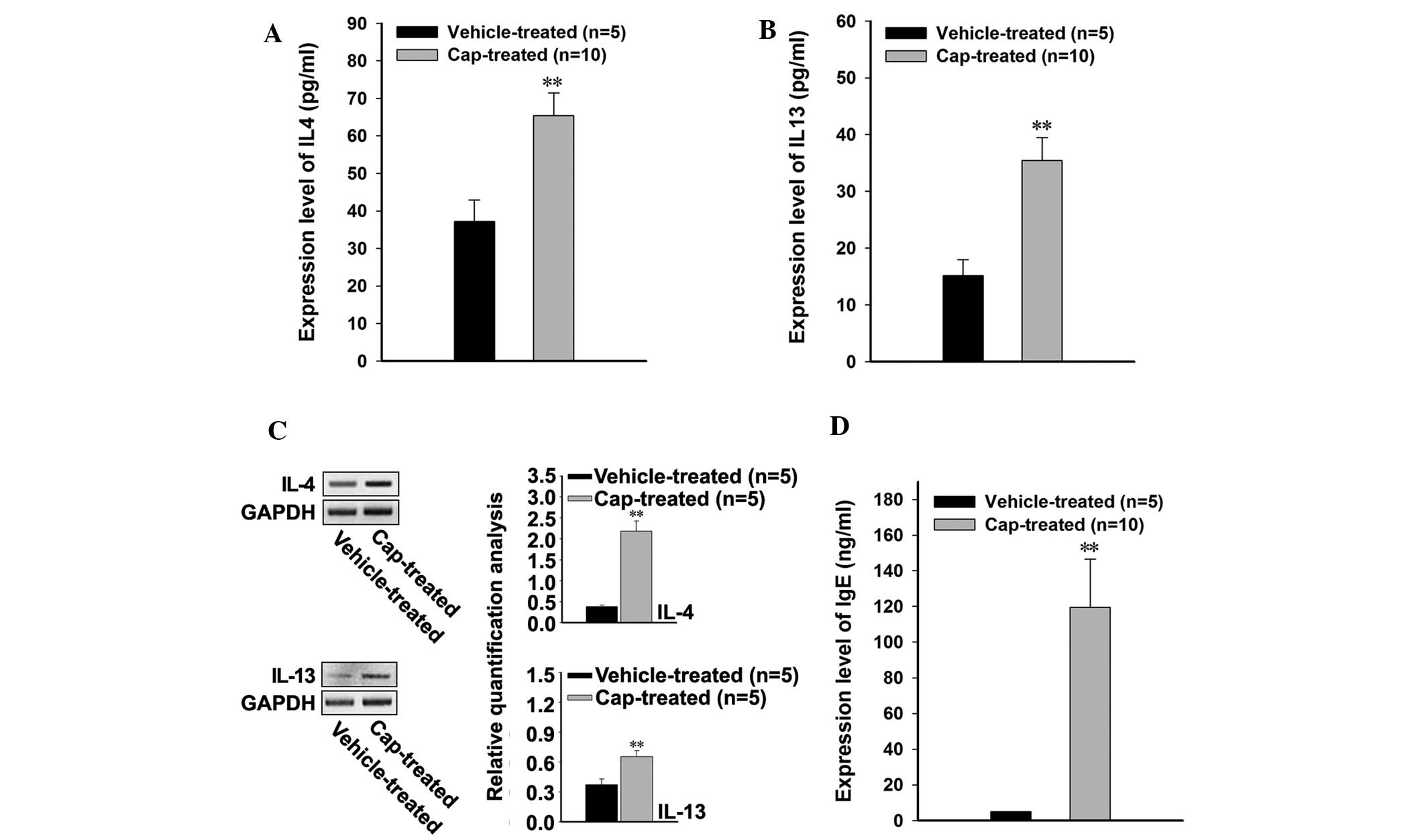
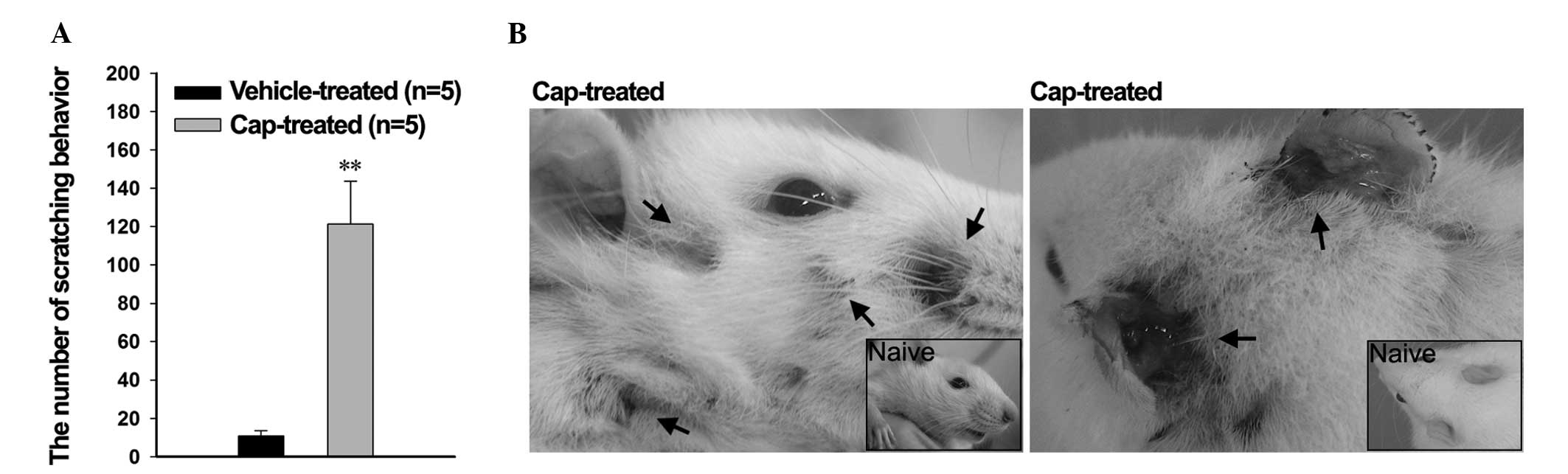
Treatment of neonatal animals with capsaicin has previously been associated with long‑lasting hyperthermia and severe cutaneous lesions. The present study analyzed the effects of capsaicin‑induced hyperthermia on the occurrence of infectious disease and pruritic dermatitis in a rat model. Pregnant Sprague‑Dawley (SD) rats were obtained 1 week prior to parturition. Pups from each litter were randomly assigned to the following experimental groups: Capsaicin‑treated (cap‑treated; n=10) or vehicle‑treated (n=5). Capsaicin (50 mg/kg) or vehicle were systemically administered to the SD rat pups (age, 48 h), after which body temperature was measured using a biotelemetry system, and the effects of hyperthermia on the ability of the rat pups to resist bacterial infection were analyzed. Furthermore, pruritus‑induced scratching behavior and dermatitis were assessed, and changes in interleukin (IL)‑4‑ and IL‑13‑induced immunoglobulin E expression were measured. Treatment of neonatal rats with capsaicin resulted in chronic hyperthermia, which had negative effects on the host immune defense response. The expression levels of T‑helper type 2 cell‑associated cytokines were significantly increased (P<0.01) in the cap‑treated rats following bacterial infection with Staphylococcus aureus or Streptococcus agalactiae. Furthermore, cap‑treated rats exhibited pruritus‑induced scratching behavior and dermatitis. The results of the present study suggested that treatment of neonatal rats with capsaicin induces chronic hyperthermia and decreases the effectiveness of the host defense system. Therefore, a cap‑treated neonatal rat model may be considered useful when investigating the association between hyperthermia and infectious disease.
View Figures

Figure 1

Figure 2

Figure 3

Figure 4

View References

1 

Morrison SF, Madden CJ and Tupone D: Central neural regulation of brown adipose tissue thermogenesis and energy expenditure. Cell Metab. 19:741–756. 2014. View Article : Google Scholar : PubMed/NCBI

2 

Desruisseaux MS, Trujillo Nagajyothi ME, Tanowitz HB and Scherer PE: Adipocyte, adipose tissue, and infectious disease. Infect Immun. 75:1066–1078. 2007. View Article : Google Scholar : PubMed/NCBI

3 

Lateef DM, Abreu-Vieira G, Xiao C and Reitman ML: Regulation of body temperature and brown adipose tissue thermogenesis by bombesin receptor subtype-3. Am J Physiol Endocrinol Metab. 306:E681–E687. 2014. View Article : Google Scholar : PubMed/NCBI

4 

Wen JJ, Nagajyothi F, Machado FS, Weiss LM, Scherer PE, Tanowitz HB and Garg NJ: Markers of oxidative stress in adipose tissue during Trypanosoma cruzi infection. Parasitol Res. 113:3159–3165. 2014. View Article : Google Scholar : PubMed/NCBI

5 

Szallasi A, Cortright DN, Blum CA and Eid SR: The vanilloid receptor TRPV1: 10 years from channel cloning to antagonist proof-of-concept. Nat Rev Drug Discov. 6:357–372. 2007. View Article : Google Scholar : PubMed/NCBI

6 

Tékus V, Bölcskei K, Kis-Varga A, Dézsi L, Szentirmay E, Visegrády A, Horváth C, Szolcsányi J and Petho G: Effect of transient receptor potential vanilloid 1 (TRPV1) receptor antagonist compounds SB705498, BCTC and AMG9810 in rat models of thermal hyperalgesia measured with an increasing-temperature water bath. Eur J Pharmacol. 641:135–141. 2010. View Article : Google Scholar : PubMed/NCBI

7 

Gavva NR, Bannon AW, Hovland DN Jr, Lehto SG, Klionsky L, Surapaneni S, Immke DC, Henley C, Arik L, Bak A, et al: Repeated administration of vanilloid receptor TRPV1 antagonists attenuates hyperthermia elicited by TRPV1 blockade. J Pharmacol Exp Ther. 323:128–137. 2007. View Article : Google Scholar : PubMed/NCBI

8 

Szelényi Z, Hummel Z, Szolcsányi J and Davis JB: Daily body temperature rhythm and heat tolerance in TRPV1 knockout and capsaicin pretreated mice. Eur J Neurosci. 19:1421–1424. 2004. View Article : Google Scholar : PubMed/NCBI

9 

Gavva NR, Bannon AW, Surapaneni S, Hovland DN Jr, Lehto SG, Gore A, Juan T, Deng H, Han B and Klionsky L: The vanilloid receptor TRPV1 is tonically activated in vivo and involved in body temperature regulation. J Neurosci. 27:3366–3374. 2007. View Article : Google Scholar : PubMed/NCBI

10 

Caterina MJ, Schumacher MA, Tominaga M, Rosen TA, Levine JD and Julius D: The capsaicin receptor: A heat-activated ion channel in the pain pathway. Nature. 389:816–824. 1997. View Article : Google Scholar : PubMed/NCBI

11 

Lambert DG: Capsaicin receptor antagonists: A promising new addition to the pain clinic. Br J Anaesth. 102:153–155. 2009. View Article : Google Scholar : PubMed/NCBI

12 

Valenzano KJ and Sun Q: Current perspectives on the therapeutic utility of VR1 antagonists. Curr Med Chem. 11:3185–3202. 2004. View Article : Google Scholar : PubMed/NCBI

13 

Hiura A: Neuroanatomical effects of capsaicin on the primary afferent neurons. Arch Histol Cytol. 63:199–215. 2000. View Article : Google Scholar : PubMed/NCBI

14 

Benham CD, Davis JB and Randall AD: Vanilloid and TRP channels: A family of lipid-gated cation channels. Neuropharmacology. 42:873–888. 2002. View Article : Google Scholar : PubMed/NCBI

15 

Tominaga M: Function of TRP channel as a thermal receptor. Nihon Seirigaku Zasshi. 65:130–137. 2003.(In Japanese). PubMed/NCBI

16 

Leung DY and Bieber T: Atopic dermatitis. Lancet. 361:151–160. 2003. View Article : Google Scholar : PubMed/NCBI

17 

Mancuso P, Gottschalk A, Phare SM, Peters-Golden M, Lukacs NW and Huffnagle GB: Leptin-deficient mice exhibit impaired host defense in Gram-negative pneumonia. J Immunol. 168:4018–4024. 2002. View Article : Google Scholar : PubMed/NCBI

18 

Kim YI, Na HS, Han JS and Hong SK: Critical role of the capsaicin-sensitive nerve fibers in the development of the causalgic symptoms produced by transecting some but not all of the nerves innervating the rat tail. J Neurosci. 15:4133–4139. 1995.PubMed/NCBI

19 

Livak KJ and Schmittgen TD: Analysis of relative gene expression data using real-time quantitative PCR and the 2(−Delta Delta C(T)) Method. Methods. 25:402–408. 2001. View Article : Google Scholar : PubMed/NCBI

20 

Raymond EA and Traub WH: Identification of staphylococci isolated from clinical material. Appl Microbiol. 19:919–922. 1970.PubMed/NCBI

21 

Cuenca-Estrella M, Gomez-Lopez A, Alastruey-Izquierdo A, Bernal-Martinez L, Cuseta I and Buitrago MJ: Comparison of the Vitek 2 antifungal susceptibility system with the clinical and laboratory standards institute (CLSI) and European Committee on Antimicrobial Susceptibility Testing (EUCAST) Broth Microdilution Reference Methods and with the Sensititre YeastOne and Etest techniques for in vitro detection of antifungal resistance in yeast isolates. J Clin Microbiol. 48:1782–1786. 2010. View Article : Google Scholar : PubMed/NCBI

22 

Brandt MR, Beyer CE and Stahl SM: TRPV1 Antagonists and chronic pain: Beyond thermal perception. Pharmaceuticals (Basel). 5:114–132. 2012. View Article : Google Scholar : PubMed/NCBI

23 

Nedergaard J, Bengtsson T and Cannon B: Unexpected evidence for active brown adipose tissue in adult humans. Am J Physiol Endocrinol Metab. 293:E444–E452. 2007. View Article : Google Scholar : PubMed/NCBI

24 

King VL, Dwoskin LP and Cassis LA: Cold exposure regulates the norepinephrine uptake transporter in rat brown adipose tissue. Am J Physiol. 276:R143–R151. 1999.PubMed/NCBI

25 

Williamson JR, Prusiner S, Olson MS and Fukami M: Control of metabolism in brown adipose tissue. Lipids. 5:1–14. 1970. View Article : Google Scholar : PubMed/NCBI

26 

Dessolin S, Schalling M, Champigny O, Lönnqvist F, Ailhaud G, Dani C and Ricquier D: Leptin gene is expressed in rat brown adipose tissue at birth. FASEB J. 11:382–387. 1997.PubMed/NCBI

27 

Bennett BD, Solar GP, Yuan JQ, Mathias J, Thomas GR and Matthews W: A role for leptin and its cognate receptor in hematopoiesis. Curr Biol. 6:1170–1180. 1996. View Article : Google Scholar : PubMed/NCBI

28 

Sarraf P, Frederich RC, Turner EM, Ma G, Jaskowiak NT, Rivet DJ III, Flier JS, Lowell BB, Fraker DL and Alexander HR: Multiple cytokines and acute inflammation raise mouse leptin levels: Potential role in inflammatory anorexia. J Exp Med. 185:171–175. 1997. View Article : Google Scholar : PubMed/NCBI

29 

Lord GM, Matarese G, Howard JK, Baker RJ, Bloom SR and Lechler RI: Leptin modulates the T-cell immune response and reverses starvation-induced immunosuppression. Nature. 394:897–901. 1998. View Article : Google Scholar : PubMed/NCBI

30 

Wieland CW, Stegenga ME, Florquin S, Fantuzzi G and van der Poll T: Leptin and host defense against Gram-positive and Gram-negative pneumonia in mice. Shock. 25:414–419. 2006. View Article : Google Scholar : PubMed/NCBI

31 

Kanda N and Watanabe S: Leptin enhances human beta-defensin-2 production in human keratinocytes. Endocrinology. 149:5189–5198. 2008. View Article : Google Scholar : PubMed/NCBI

32 

de Jongh GJ, Zeeuwen PL, Kucharekova M, Pfundt R, van der Valk PG, Blokx W, Dogan A, Hiemstra PS, van de Kerkhof PC and Schalkwijk J: High expression levels of keratinocyte antimicrobial proteins in psoriasis compared with atopic dermatitis. J Invest Dermatol. 125:1163–1173. 2005. View Article : Google Scholar : PubMed/NCBI

33 

Dhople V, Krukemeyer A and Ramamoorthy A: The human beta-defensin-3, an antibacterial peptide with multiple biological functions. Biochim Biophys Acta. 1758:1499–1512. 2006. View Article : Google Scholar : PubMed/NCBI

34 

Namkung JH, Lee JE, Kim E, Kim HJ, Seo EY, Jang HY, Shin ES, Cho EY and Yang JM: Association of polymorphisms in genes encoding IL-4, IL-13 and their receptors with atopic dermatitis in a Korean population. Exp Dermatol. 20:915–919. 2011. View Article : Google Scholar : PubMed/NCBI

35 

Varin A, Mukhopadhyay S, Herbein G and Gordon S: Alternative activation of macrophages by IL-4 impairs phagocytosis of pathogens but potentiates microbial-induced signalling and cytokine secretion. Blood. 115:353–362. 2010. View Article : Google Scholar : PubMed/NCBI

36 

Janković BD, Popesković L, Janezić A and Lukić ML: Brown adipose tissue: Effect on immune reactions in the rat. Naturwissenschaften. 61:361974. View Article : Google Scholar : PubMed/NCBI

37 

Himms-Hagen J: Brown adipose tissue thermogenesis: Interdisciplinary studies. FASEB J. 4:2890–2898. 1990.PubMed/NCBI

Related Articles

  • Abstract
  • View
  • Download
  • Twitter
Copy and paste a formatted citation
Spandidos Publications style
Jeong KY and Kim HM: Neonatal capsaicin treatment in rats induces chronic hyperthermia resulting in infectious disease. Exp Ther Med 10: 2417-2423, 2015.
APA
Jeong, K., & Kim, H.M. (2015). Neonatal capsaicin treatment in rats induces chronic hyperthermia resulting in infectious disease. Experimental and Therapeutic Medicine, 10, 2417-2423. https://doi.org/10.3892/etm.2015.2829
MLA
Jeong, K., Kim, H. M."Neonatal capsaicin treatment in rats induces chronic hyperthermia resulting in infectious disease". Experimental and Therapeutic Medicine 10.6 (2015): 2417-2423.
Chicago
Jeong, K., Kim, H. M."Neonatal capsaicin treatment in rats induces chronic hyperthermia resulting in infectious disease". Experimental and Therapeutic Medicine 10, no. 6 (2015): 2417-2423. https://doi.org/10.3892/etm.2015.2829
Copy and paste a formatted citation
x
Spandidos Publications style
Jeong KY and Kim HM: Neonatal capsaicin treatment in rats induces chronic hyperthermia resulting in infectious disease. Exp Ther Med 10: 2417-2423, 2015.
APA
Jeong, K., & Kim, H.M. (2015). Neonatal capsaicin treatment in rats induces chronic hyperthermia resulting in infectious disease. Experimental and Therapeutic Medicine, 10, 2417-2423. https://doi.org/10.3892/etm.2015.2829
MLA
Jeong, K., Kim, H. M."Neonatal capsaicin treatment in rats induces chronic hyperthermia resulting in infectious disease". Experimental and Therapeutic Medicine 10.6 (2015): 2417-2423.
Chicago
Jeong, K., Kim, H. M."Neonatal capsaicin treatment in rats induces chronic hyperthermia resulting in infectious disease". Experimental and Therapeutic Medicine 10, no. 6 (2015): 2417-2423. https://doi.org/10.3892/etm.2015.2829
Follow us
  • Twitter
  • LinkedIn
  • Facebook
About
  • Spandidos Publications
  • Careers
  • Cookie Policy
  • Privacy Policy
How can we help?
  • Help
  • Live Chat
  • Contact
  • Email to our Support Team