Spandidos Publications Logo
  • About
    • About Spandidos
    • Aims and Scopes
    • Abstracting and Indexing
    • Editorial Policies
    • Reprints and Permissions
    • Job Opportunities
    • Terms and Conditions
    • Contact
  • Journals
    • All Journals
    • Oncology Letters
      • Oncology Letters
      • Information for Authors
      • Editorial Policies
      • Editorial Board
      • Aims and Scope
      • Abstracting and Indexing
      • Bibliographic Information
      • Archive
    • International Journal of Oncology
      • International Journal of Oncology
      • Information for Authors
      • Editorial Policies
      • Editorial Board
      • Aims and Scope
      • Abstracting and Indexing
      • Bibliographic Information
      • Archive
    • Molecular and Clinical Oncology
      • Molecular and Clinical Oncology
      • Information for Authors
      • Editorial Policies
      • Editorial Board
      • Aims and Scope
      • Abstracting and Indexing
      • Bibliographic Information
      • Archive
    • Experimental and Therapeutic Medicine
      • Experimental and Therapeutic Medicine
      • Information for Authors
      • Editorial Policies
      • Editorial Board
      • Aims and Scope
      • Abstracting and Indexing
      • Bibliographic Information
      • Archive
    • International Journal of Molecular Medicine
      • International Journal of Molecular Medicine
      • Information for Authors
      • Editorial Policies
      • Editorial Board
      • Aims and Scope
      • Abstracting and Indexing
      • Bibliographic Information
      • Archive
    • Biomedical Reports
      • Biomedical Reports
      • Information for Authors
      • Editorial Policies
      • Editorial Board
      • Aims and Scope
      • Abstracting and Indexing
      • Bibliographic Information
      • Archive
    • Oncology Reports
      • Oncology Reports
      • Information for Authors
      • Editorial Policies
      • Editorial Board
      • Aims and Scope
      • Abstracting and Indexing
      • Bibliographic Information
      • Archive
    • Molecular Medicine Reports
      • Molecular Medicine Reports
      • Information for Authors
      • Editorial Policies
      • Editorial Board
      • Aims and Scope
      • Abstracting and Indexing
      • Bibliographic Information
      • Archive
    • World Academy of Sciences Journal
      • World Academy of Sciences Journal
      • Information for Authors
      • Editorial Policies
      • Editorial Board
      • Aims and Scope
      • Abstracting and Indexing
      • Bibliographic Information
      • Archive
    • International Journal of Functional Nutrition
      • International Journal of Functional Nutrition
      • Information for Authors
      • Editorial Policies
      • Editorial Board
      • Aims and Scope
      • Abstracting and Indexing
      • Bibliographic Information
      • Archive
    • International Journal of Epigenetics
      • International Journal of Epigenetics
      • Information for Authors
      • Editorial Policies
      • Editorial Board
      • Aims and Scope
      • Abstracting and Indexing
      • Bibliographic Information
      • Archive
    • Medicine International
      • Medicine International
      • Information for Authors
      • Editorial Policies
      • Editorial Board
      • Aims and Scope
      • Abstracting and Indexing
      • Bibliographic Information
      • Archive
  • Articles
  • Information
    • Information for Authors
    • Information for Reviewers
    • Information for Librarians
    • Information for Advertisers
    • Conferences
  • Language Editing
Spandidos Publications Logo
  • About
    • About Spandidos
    • Aims and Scopes
    • Abstracting and Indexing
    • Editorial Policies
    • Reprints and Permissions
    • Job Opportunities
    • Terms and Conditions
    • Contact
  • Journals
    • All Journals
    • Biomedical Reports
      • Information for Authors
      • Editorial Policies
      • Editorial Board
      • Aims and Scope
      • Abstracting and Indexing
      • Bibliographic Information
      • Archive
    • Experimental and Therapeutic Medicine
      • Information for Authors
      • Editorial Policies
      • Editorial Board
      • Aims and Scope
      • Abstracting and Indexing
      • Bibliographic Information
      • Archive
    • International Journal of Epigenetics
      • Information for Authors
      • Editorial Policies
      • Editorial Board
      • Aims and Scope
      • Abstracting and Indexing
      • Bibliographic Information
      • Archive
    • International Journal of Functional Nutrition
      • Information for Authors
      • Editorial Policies
      • Editorial Board
      • Aims and Scope
      • Abstracting and Indexing
      • Bibliographic Information
      • Archive
    • International Journal of Molecular Medicine
      • Information for Authors
      • Editorial Policies
      • Editorial Board
      • Aims and Scope
      • Abstracting and Indexing
      • Bibliographic Information
      • Archive
    • International Journal of Oncology
      • Information for Authors
      • Editorial Policies
      • Editorial Board
      • Aims and Scope
      • Abstracting and Indexing
      • Bibliographic Information
      • Archive
    • Medicine International
      • Information for Authors
      • Editorial Policies
      • Editorial Board
      • Aims and Scope
      • Abstracting and Indexing
      • Bibliographic Information
      • Archive
    • Molecular and Clinical Oncology
      • Information for Authors
      • Editorial Policies
      • Editorial Board
      • Aims and Scope
      • Abstracting and Indexing
      • Bibliographic Information
      • Archive
    • Molecular Medicine Reports
      • Information for Authors
      • Editorial Policies
      • Editorial Board
      • Aims and Scope
      • Abstracting and Indexing
      • Bibliographic Information
      • Archive
    • Oncology Letters
      • Information for Authors
      • Editorial Policies
      • Editorial Board
      • Aims and Scope
      • Abstracting and Indexing
      • Bibliographic Information
      • Archive
    • Oncology Reports
      • Information for Authors
      • Editorial Policies
      • Editorial Board
      • Aims and Scope
      • Abstracting and Indexing
      • Bibliographic Information
      • Archive
    • World Academy of Sciences Journal
      • Information for Authors
      • Editorial Policies
      • Editorial Board
      • Aims and Scope
      • Abstracting and Indexing
      • Bibliographic Information
      • Archive
  • Articles
  • Information
    • For Authors
    • For Reviewers
    • For Librarians
    • For Advertisers
    • Conferences
  • Language Editing
Login Register Submit
  • This site uses cookies
  • You can change your cookie settings at any time by following the instructions in our Cookie Policy. To find out more, you may read our Privacy Policy.

    I agree
Search articles by DOI, keyword, author or affiliation
Search
Advanced Search
presentation
Experimental and Therapeutic Medicine
Join Editorial Board Propose a Special Issue
Print ISSN: 1792-0981 Online ISSN: 1792-1015
Journal Cover
February-2026 Volume 31 Issue 2

Full Size Image

Sign up for eToc alerts
Recommend to Library

Journals

International Journal of Molecular Medicine

International Journal of Molecular Medicine

International Journal of Molecular Medicine is an international journal devoted to molecular mechanisms of human disease.

International Journal of Oncology

International Journal of Oncology

International Journal of Oncology is an international journal devoted to oncology research and cancer treatment.

Molecular Medicine Reports

Molecular Medicine Reports

Covers molecular medicine topics such as pharmacology, pathology, genetics, neuroscience, infectious diseases, molecular cardiology, and molecular surgery.

Oncology Reports

Oncology Reports

Oncology Reports is an international journal devoted to fundamental and applied research in Oncology.

Experimental and Therapeutic Medicine

Experimental and Therapeutic Medicine

Experimental and Therapeutic Medicine is an international journal devoted to laboratory and clinical medicine.

Oncology Letters

Oncology Letters

Oncology Letters is an international journal devoted to Experimental and Clinical Oncology.

Biomedical Reports

Biomedical Reports

Explores a wide range of biological and medical fields, including pharmacology, genetics, microbiology, neuroscience, and molecular cardiology.

Molecular and Clinical Oncology

Molecular and Clinical Oncology

International journal addressing all aspects of oncology research, from tumorigenesis and oncogenes to chemotherapy and metastasis.

World Academy of Sciences Journal

World Academy of Sciences Journal

Multidisciplinary open-access journal spanning biochemistry, genetics, neuroscience, environmental health, and synthetic biology.

International Journal of Functional Nutrition

International Journal of Functional Nutrition

Open-access journal combining biochemistry, pharmacology, immunology, and genetics to advance health through functional nutrition.

International Journal of Epigenetics

International Journal of Epigenetics

Publishes open-access research on using epigenetics to advance understanding and treatment of human disease.

Medicine International

Medicine International

An International Open Access Journal Devoted to General Medicine.

Journal Cover
February-2026 Volume 31 Issue 2

Full Size Image

Sign up for eToc alerts
Recommend to Library

  • Article
  • Citations
    • Cite This Article
    • Download Citation
    • Create Citation Alert
    • Remove Citation Alert
    • Cited By
  • Similar Articles
    • Related Articles (in Spandidos Publications)
    • Similar Articles (Google Scholar)
    • Similar Articles (PubMed)
  • Download PDF
  • Download XML
  • View XML
Article Open Access

Analysis of PANoptosis‑related genes in septic cardiomyopathy by bioinformatics, machine learning and experimental validation

  • Authors:
    • Yiheng Yang
    • Jiahao Zou
    • Peng Yang
    • Zhenzhong Zheng
    • Qingshan Tian
  • View Affiliations / Copyright

    Affiliations: Department of Cardiology, The First Affiliated Hospital, Jiangxi Medical College, Nanchang University, Nanchang, Jiangxi 330006, P.R. China
    Copyright: © Yang et al. This is an open access article distributed under the terms of Creative Commons Attribution License.
  • Article Number: 56
    |
    Published online on: December 16, 2025
       https://doi.org/10.3892/etm.2025.13050
  • Expand metrics +
Metrics: Total Views: 0 (Spandidos Publications: | PMC Statistics: )
Metrics: Total PDF Downloads: 0 (Spandidos Publications: | PMC Statistics: )
Cited By (CrossRef): 0 citations Loading Articles...

This article is mentioned in:


Abstract

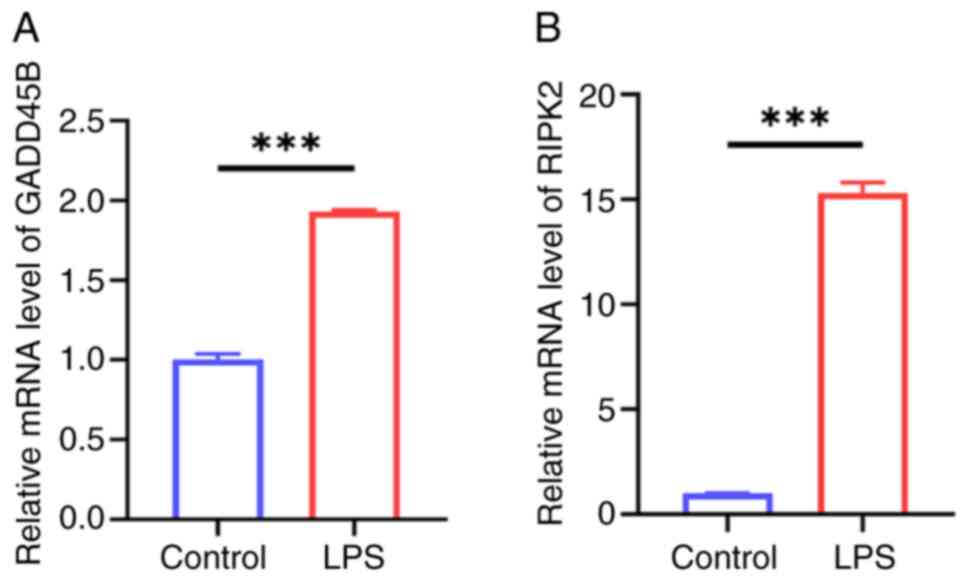
The mechanisms underlying the pathogenesis of septic cardiomyopathy (SCM) are intricate and incompletely understood. PANoptosis is a novel type of programmed cell death, and in the present study, bioinformatics, machine learning and experimental validation were used to identify key PANoptosis‑related genes (PRGs) associated with SCM. Differentially expressed genes were obtained through analysis of the Gene Expression Omnibus dataset, and these genes were intersected with the PRGs to obtain the differentially expressed PRGs. Three machine learning algorithms were used to screen key PRGs; CIBERSORT was used for immune infiltration analysis and the diagnostic value of key PRGs was evaluated by plotting receiver operating characteristic curves. Additionally, a competitive endogenous (ce)RNA regulatory network analysis was conducted, and drug prediction analysis was performed. Finally, the expression of key PRGs was verified via quantitative PCR. A total of 157 differentially expressed genes and 21 differentially expressed PRGs were screened. In addition, two key PRGs (RIPK2 and GADD45B) were screened using least absolute shrinkage and selection operator regression, the support vector machine‑recursive feature elimination algorithm and the random forest algorithm, with both genes demonstrating a high diagnostic value. RIPK2 and GADD45B were positively correlated with neutrophils. The ceRNA regulatory network included two mRNAs, eight microRNAs and 16 long noncoding RNAs and 10 drugs/molecular compounds were predicted. Finally, quantitative PCR results revealed that the expression of both RIPK2 and GADD45B was upregulated in the lipopolysaccharide‑induced HL‑1 cell injury model. In conclusion, the present study identified two key PRGs (RIPK2 and GADD45B) associated with SCM; these findings may lead to the development of novel diagnostic and therapeutic approaches for SCM.
View Figures

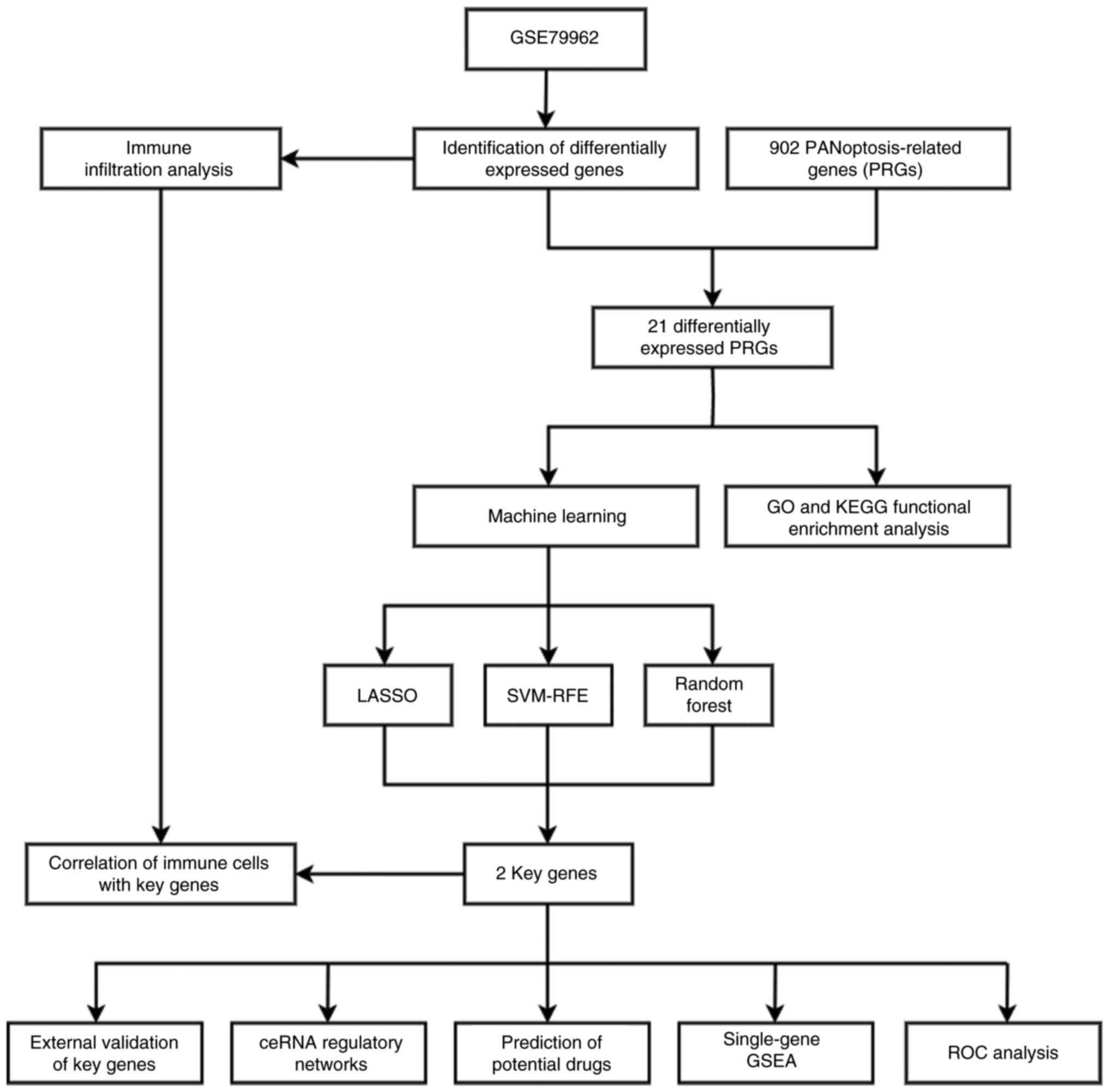
Figure 1

Flow chart of the present study.
PRGs, PANoptosis-related genes; GO, Gene Ontology; KEGG, Kyoto
Encyclopedia of Genes and Genomes; LASSO, least absolute shrinkage
and selection operator; SVM-RFE, support vector machine-recursive
feature elimination; ceRNA, competitive endogenous RNA; GSEA, gene
set enrichment analysis; ROC, receiver operating
characteristic.

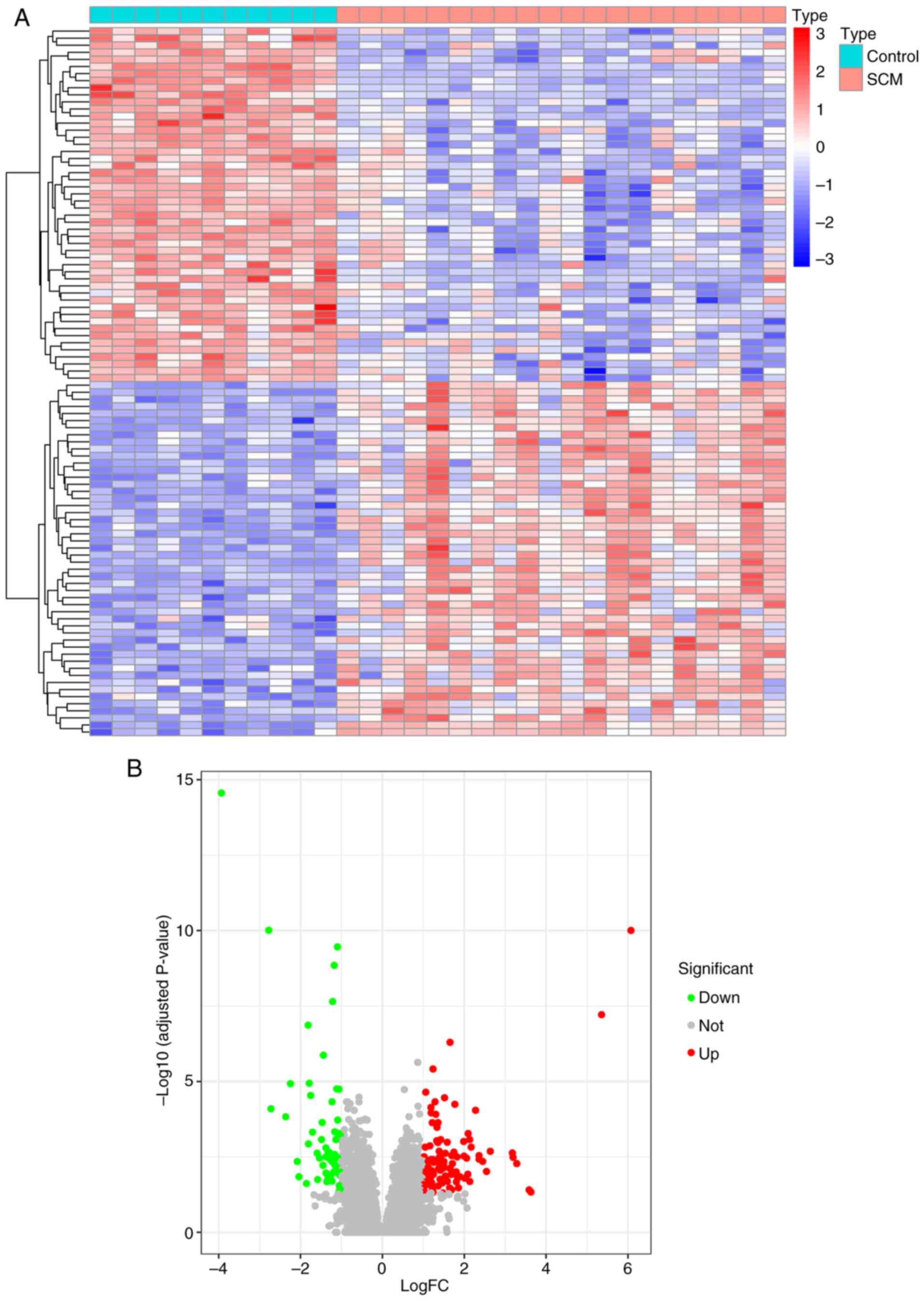
Figure 2

Screening of DEGs. (A) Heatmap of
DEGs in GSE79962, the expression of genes from low to high is shown
in blue to red. (B) Volcano plot of DEGs in GSE79962. Green dots
represent significantly down-regulated genes. Red dots represent
significantly up-regulated genes. Gray dots represent genes with no
significant differential expression. DEGs, differentially expressed
genes; FC, fold change.

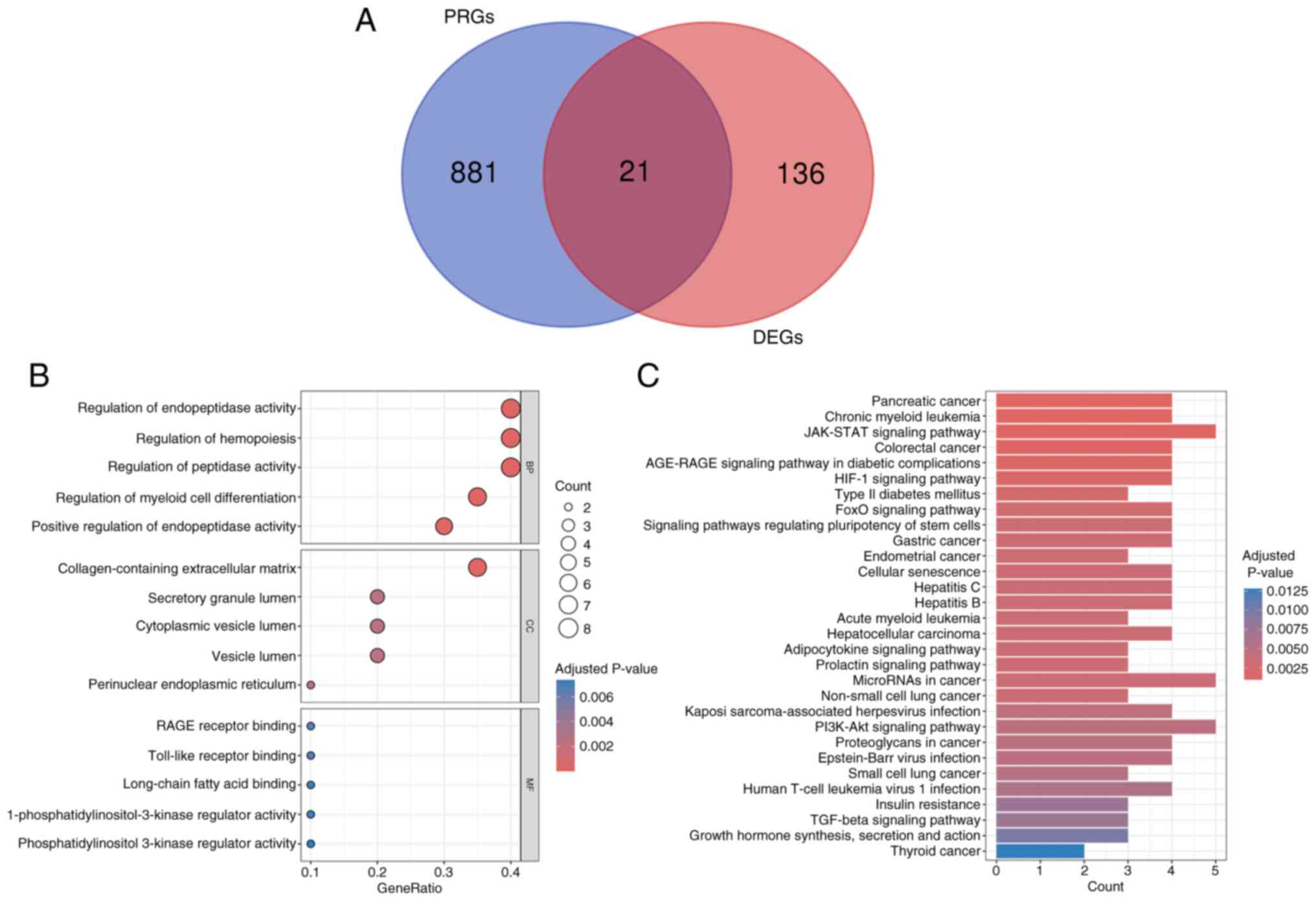
Figure 3

Identification of differentially
expressed PRGs and GO/KEGG enrichment analysis. (A) Venn diagrams
were used to show genes where DEGs intersected with PRGs. (B)
Differentially expressed PRGs were used for GO analysis. The top
five functional terms in the categories biological process,
cellular component and molecular function were visualized using
bubble plots. Larger bubbles indicate a higher number of enriched
genes. (C) The top 30 KEGG pathways of differentially expressed
PRGs were shown using bar plots. A redder color indicates a higher
enrichment significance. PRGs, PANoptosis-related genes; GO, Gene
Ontology; KEGG, Kyoto Encyclopedia of Genes and Genomes; DEGs,
differentially expressed genes.

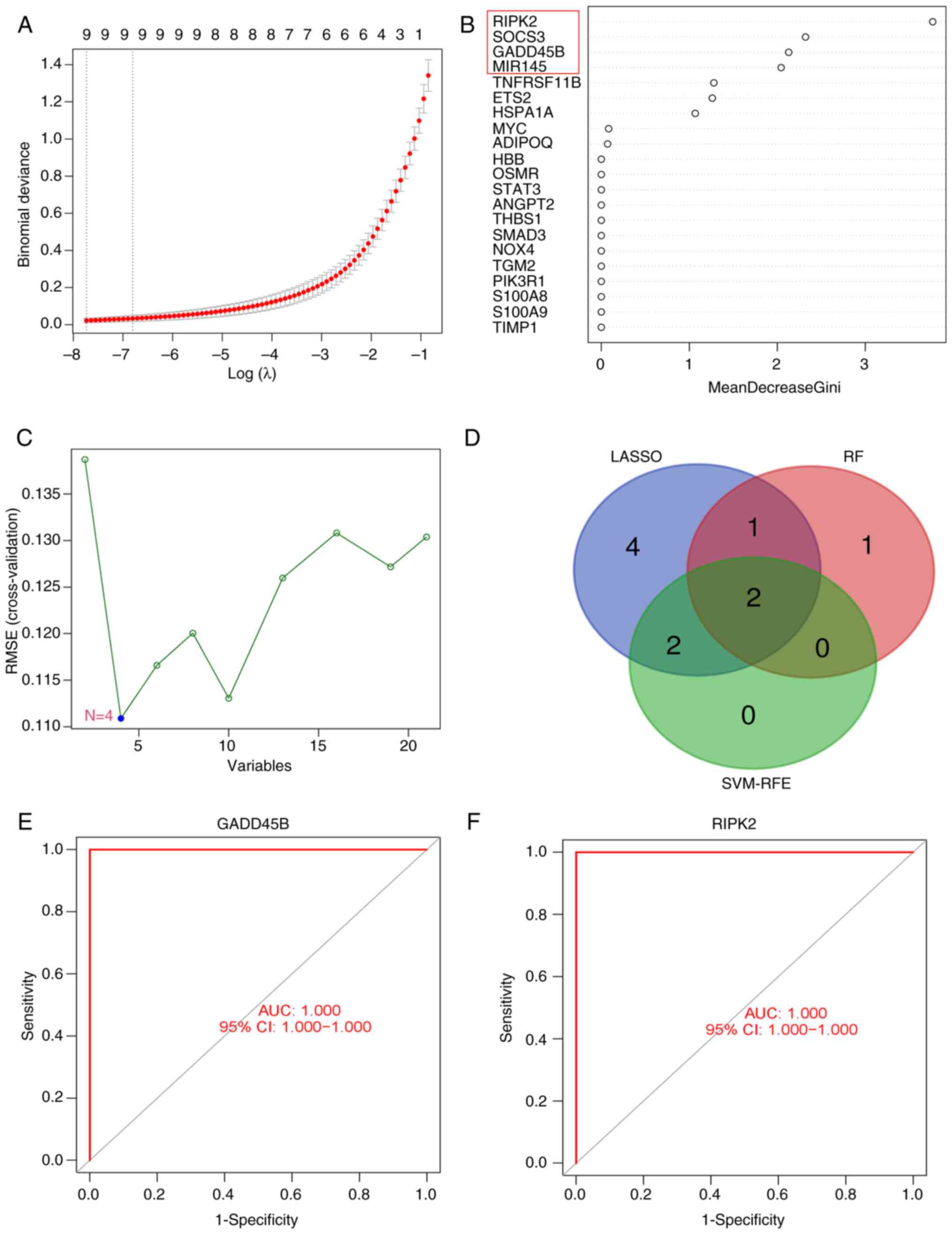
Figure 4

Identification of key genes by three
machine learning algorithms and evaluation of the diagnostic value
of key genes. (A) Nine differentially expressed PRGs were obtained
using LASSO regression analysis. (B) Four differentially expressed
PRGs were obtained using the RF algorithm (indicated by the red
box). (C) Four differentially expressed PRGs were obtained using
the SVM-RFE algorithm. (D) The two key genes (RIPK2 and GADD45B)
were obtained by intersecting the results of LASSO regression, RF
and SVM-RFE. The Venn diagram showed the results of the
intersection. (E and F) Receiver operating characteristic curves
were used to assess the diagnostic efficacy of key genes (E)
GADD45B and (F) RIPK2. PRGs, PANoptosis-related genes; LASSO, least
absolute shrinkage and selection operator; RF, random forest;
SVM-RFE, support vector machine-recursive feature elimination; AUC,
area under the curve; CI, confidence interval; RMSE, root mean
square error.

Figure 5

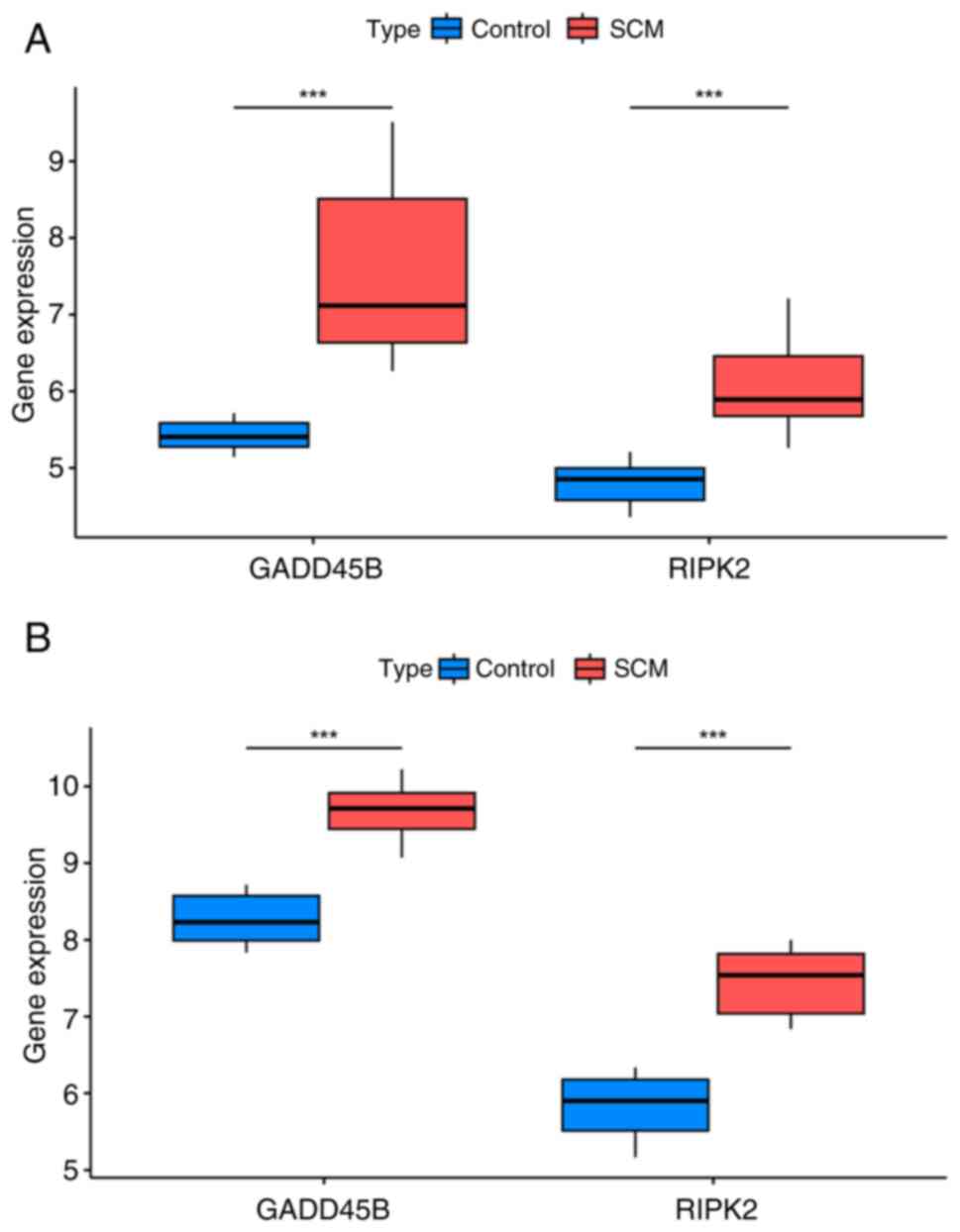
External dataset validation of key
gene expression. (A) Comparison of key gene expression between the
control group and the SCM group in the GSE79962 dataset. (B) In the
validation set (combined from GSE53007 and GSE142615), the
comparison of the expression of key genes between the control group
and the SCM group. The above results were presented in box plots.
***P<0.001. SCM, septic cardiomyopathy.

Figure 6

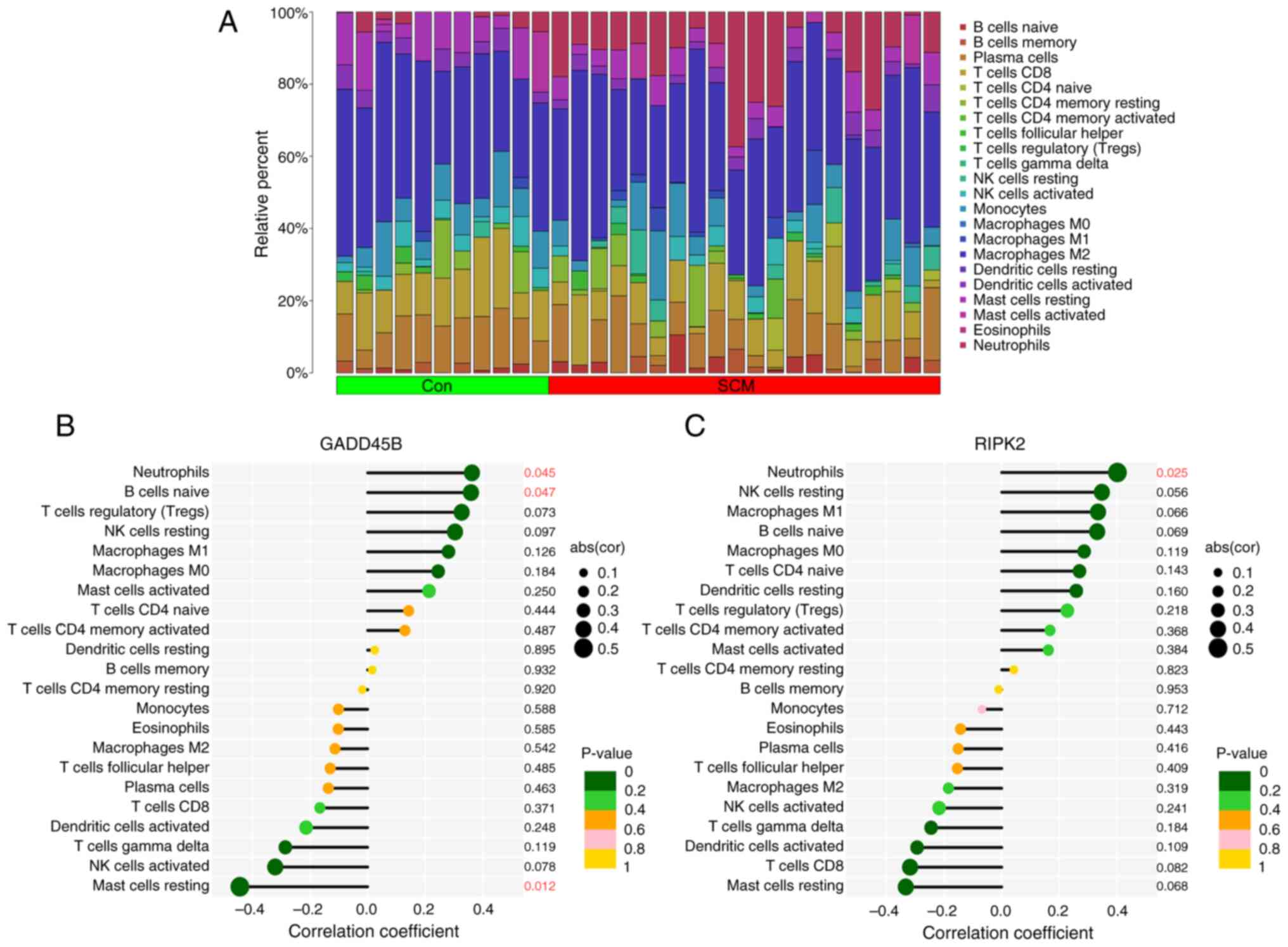
Assessment of immune cell
infiltration and correlation of key genes with immune cells. (A) A
bar-plot diagram was used to show the percentage of 22 immune cell
types in each sample. Each color represents the corresponding type
of cell. (B) A lollipop plot was used to show the correlation
between GADD45B and the 22 immune cell types. (C) A lollipop plot
was used to show the correlation between RIPK2 and the 22 immune
cell types. The size of the dots reflects the strength of the
correlation. Con, control; SCM, septic cardiomyopathy; abs(cor),
absolute value of correlation coefficient.

Figure 7

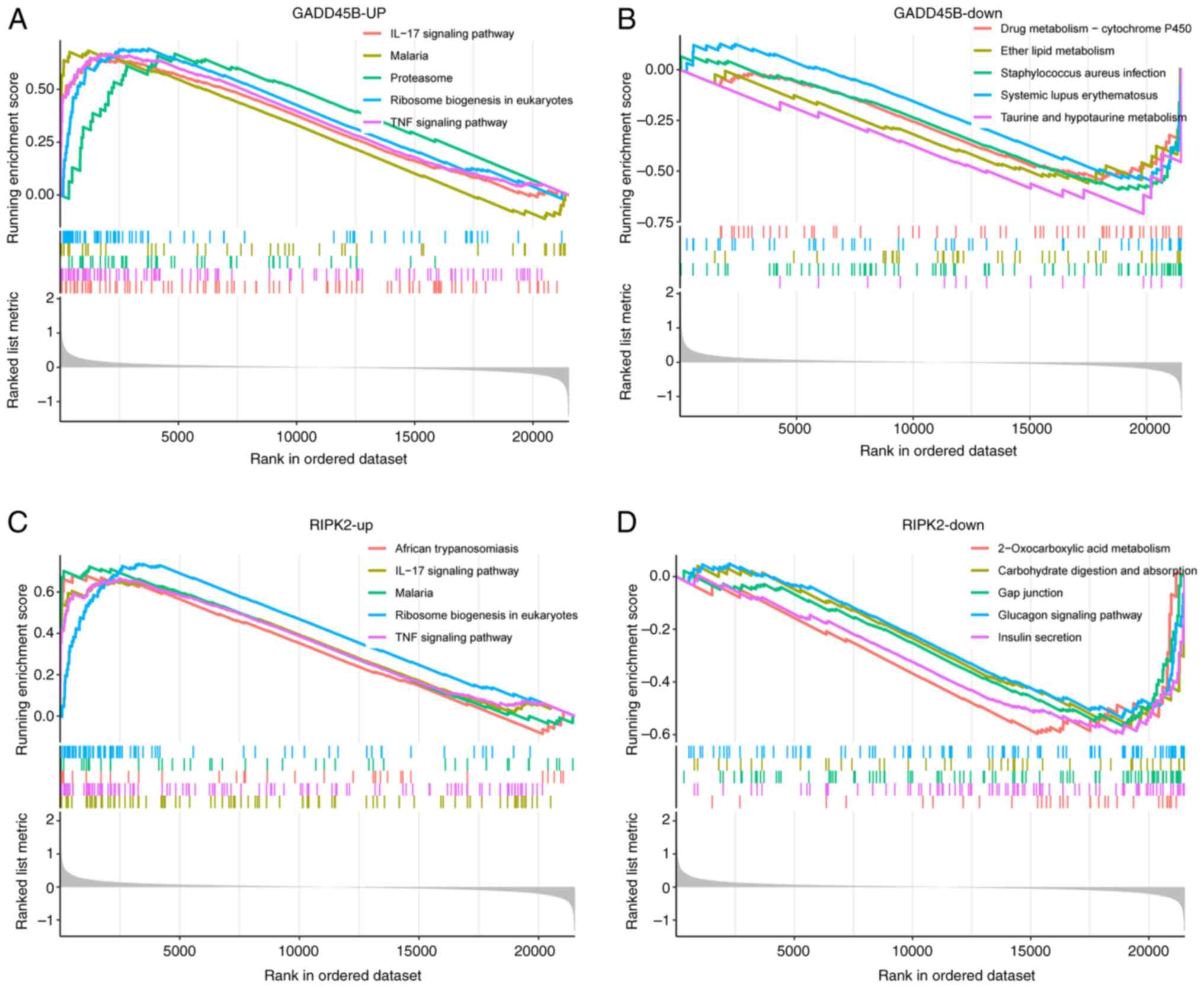
GSEA analysis of key genes. (A and B)
GSEA analysis of (A) GADD45B-up and (B) GADD45B-down. (C and D)
GSEA analysis of (C) RIPK2-up and (D) RIPK2-down. Enrichment plots
were used to display the five most significantly upregulated or
downregulated pathways. GSEA, gene set enrichment analysis.

Figure 8

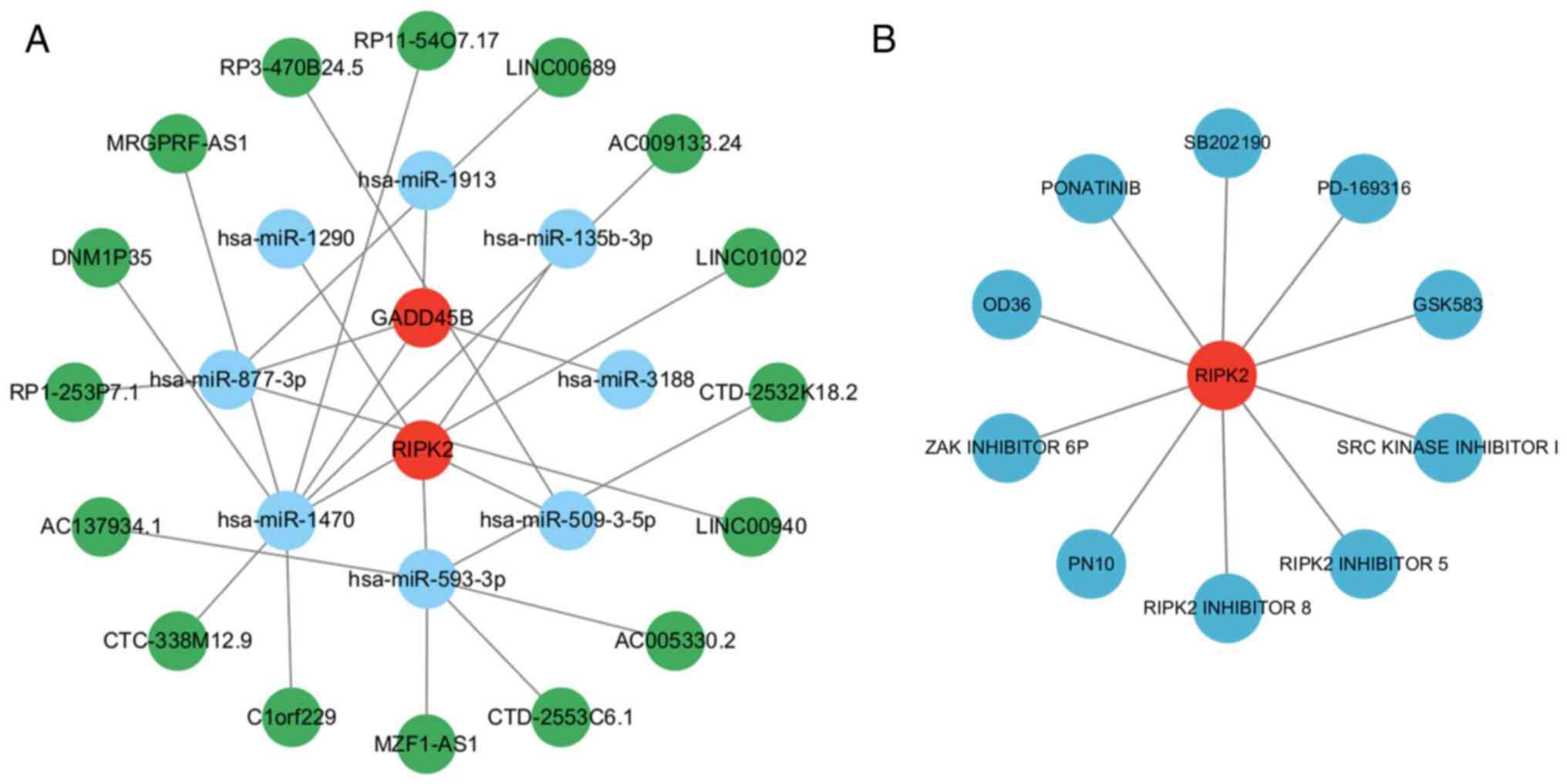
Key gene-based ceRNA regulatory
networks and potential therapeutic agents. (A) Construction of
ceRNA networks based on key genes. The ceRNA network consists of
two mRNAs, eight miRs and 16 long non-coding RNAs. (B) Potential
drug prediction based on key genes. 10 drugs or molecular compounds
related to RIPK2 were obtained from the Drug-Gene Interaction
Database. ceRNA, competitive endogenous RNA. miR, microRNA.

Figure 9

Reverse transcription quantitative
PCR to verify the expression of key PRGs. (A) Comparison of GADD45B
expression in the control and LPS-induced HL-1 cell injury group.
(B) Comparison of RIPK2 expression in the control and LPS-induced
HL-1 cell injury group. ***P<0.001. PRGs,
PANoptosis-related genes; LPS, lipopolysaccharide.
View References

1 

Zhang YY and Ning BT: Signaling pathways and intervention therapies in sepsis. Signal Transduct Target Ther. 6(407)2021.PubMed/NCBI View Article : Google Scholar

2 

Fleischmann-Struzek C and Rudd K: Challenges of assessing the burden of sepsis. Med Klin Intensivmed Notfmed. 118 (Suppl 2):S68–S74. 2023.PubMed/NCBI View Article : Google Scholar

3 

Zaky A, Deem S, Bendjelid K and Treggiari MM: Characterization of cardiac dysfunction in sepsis: An ongoing challenge. Shock. 41:12–24. 2014.PubMed/NCBI View Article : Google Scholar

4 

Hollenberg SM: Sepsis-associated cardiomyopathy: Long-term prognosis, management, and Guideline-directed medical therapy. Curr Cardiol Rep. 27(5)2025.PubMed/NCBI View Article : Google Scholar

5 

Hasegawa D, Ishisaka Y, Maeda T, Prasitlumkum N, Nishida K, Dugar S and Sato R: Prevalence and prognosis of Sepsis-induced cardiomyopathy: A systematic review and Meta-analysis. J Intensive Care Med. 38:797–808. 2023.PubMed/NCBI View Article : Google Scholar

6 

Li Y, Ge S, Peng Y and Chen X: Inflammation and cardiac dysfunction during sepsis, muscular dystrophy, and myocarditis. Burns Trauma. 1:109–121. 2013.PubMed/NCBI View Article : Google Scholar

7 

Dickson K and Lehmann C: Inflammatory response to different toxins in experimental sepsis models. Int J Mol Sci. 20(4341)2019.PubMed/NCBI View Article : Google Scholar

8 

van der Slikke EC, Star BS, van Meurs M, Henning RH, Moser J and Bouma HR: Sepsis is associated with mitochondrial DNA damage and a reduced mitochondrial mass in the kidney of patients with sepsis-AKI. Crit Care. 25(36)2021.PubMed/NCBI View Article : Google Scholar

9 

Oliveira F, Assreuy J and Sordi R: The role of nitric oxide in sepsis-associated kidney injury. Biosci Rep. 42(BSR20220093)2022.PubMed/NCBI View Article : Google Scholar

10 

Jiang L, Zhang L, Yang J, Shi H, Zhu H, Zhai M, Lu L, Wang X, Li XY, Yu S, et al: 1-Deoxynojirimycin attenuates septic cardiomyopathy by regulating oxidative stress, apoptosis, and inflammation via the JAK2/STAT6 signaling pathway. Biomed Pharmacother. 155(113648)2022.PubMed/NCBI View Article : Google Scholar

11 

Malireddi RKS, Kesavardhana S and Kanneganti TD: ZBP1 and TAK1: Master Regulators of NLRP3 Inflammasome/Pyroptosis, Apoptosis, and Necroptosis (PAN-optosis). Front Cell Infect Microbiol. 9(406)2019.PubMed/NCBI View Article : Google Scholar

12 

Christgen S, Tweedell RE and Kanneganti TD: Programming inflammatory cell death for therapy. Pharmacol Ther. 232(108010)2022.PubMed/NCBI View Article : Google Scholar

13 

Zhu P, Ke ZR, Chen JX, Li SJ, Ma TL and Fan XL: Advances in mechanism and regulation of PANoptosis: Prospects in disease treatment. Front Immunol. 14(1120034)2023.PubMed/NCBI View Article : Google Scholar

14 

He YQ, Deng JL, Zhou CC, Jiang SG, Zhang F, Tao X and Chen WS: Ursodeoxycholic acid alleviates sepsis-induced lung injury by blocking PANoptosis via STING pathway. Int Immunopharmacol. 125(111161)2023.PubMed/NCBI View Article : Google Scholar

15 

Zhou R, Ying J, Qiu X, Yu L, Yue Y, Liu Q, Shi J, Li X, Qu Y and Mu D: A new cell death program regulated by toll-like receptor 9 through p38 mitogen-activated protein kinase signaling pathway in a neonatal rat model with sepsis associated encephalopathy. Chin Med J (Engl). 135:1474–1485. 2022.PubMed/NCBI View Article : Google Scholar

16 

Matkovich SJ, Al Khiami B, Efimov IR, Evans S, Vader J, Jain A, Brownstein BH, Hotchkiss RS and Mann DL: Widespread Down-regulation of cardiac mitochondrial and sarcomeric genes in patients with sepsis. Crit Care Med. 45:407–414. 2017.PubMed/NCBI View Article : Google Scholar

17 

Zhu H, Wu J, Li C, Zeng Z, He T, Liu X, Wang Q, Hu X, Lu Z and Cai H: Transcriptome analysis reveals the mechanism of pyroptosis-related genes in septic cardiomyopathy. PeerJ. 11(e16214)2023.PubMed/NCBI View Article : Google Scholar

18 

Shi Y, Zheng X, Zheng M, Wang L, Chen Y and Shen Y: Identification of mitochondrial function-associated lncRNAs in septic mice myocardium. J Cell Biochem. 122:53–68. 2021.PubMed/NCBI View Article : Google Scholar

19 

Ritchie ME, Phipson B, Wu D, Hu Y, Law CW, Shi W and Smyth GK: limma powers differential expression analyses for RNA-sequencing and microarray studies. Nucleic Acids Res. 43(e47)2015.PubMed/NCBI View Article : Google Scholar

20 

Gustavsson EK, Zhang D, Reynolds RH, Garcia-Ruiz S and Ryten M: ggtranscript: An R package for the visualization and interpretation of transcript isoforms using ggplot2. Bioinformatics. 38:3844–3846. 2022.PubMed/NCBI View Article : Google Scholar

21 

Zhang X, Chao P, Zhang L, Xu L, Cui X, Wang S, Wusiman M, Jiang H and Lu C: Single-cell RNA and transcriptome sequencing profiles identify immune-associated key genes in the development of diabetic kidney disease. Front Immunol. 14(1030198)2023.PubMed/NCBI View Article : Google Scholar

22 

Sun W, Li P, Wang M, Xu Y, Shen D, Zhang X and Liu Y: Molecular characterization of PANoptosis-related genes with features of immune dysregulation in systemic lupus erythematosus. Clin Immunol. 253(109660)2023.PubMed/NCBI View Article : Google Scholar

23 

The Gene Ontology Consortium. The gene ontology resource: 20 years and still GOing strong. Nucleic Acids Res. 47:D330–D338. 2019.PubMed/NCBI View Article : Google Scholar

24 

Kanehisa M and Goto S: KEGG: Kyoto encyclopedia of genes and genomes. Nucleic Acids Res. 28:27–30. 2000.PubMed/NCBI View Article : Google Scholar

25 

Wu T, Hu E, Xu S, Chen M, Guo P, Dai Z, Feng T, Zhou L, Tang W, Zhan L, et al: clusterProfiler 4.0: A universal enrichment tool for interpreting omics data. Innovation (Camb). 2(100141)2021.PubMed/NCBI View Article : Google Scholar

26 

Li Y, Yu J, Li R, Zhou H and Chang X: New insights into the role of mitochondrial metabolic dysregulation and immune infiltration in septic cardiomyopathy by integrated bioinformatics analysis and experimental validation. Cell Mol Biol Lett. 29(21)2024.PubMed/NCBI View Article : Google Scholar

27 

Chen G, Qi H, Jiang L, Sun S, Zhang J, Yu J, Liu F, Zhang Y and Du S: Integrating single-cell RNA-Seq and machine learning to dissect tryptophan metabolism in ulcerative colitis. J Transl Med. 22(1121)2024.PubMed/NCBI View Article : Google Scholar

28 

Engebretsen S and Bohlin J: Statistical predictions with glmnet. Clin Epigenetics. 11(123)2019.PubMed/NCBI View Article : Google Scholar

29 

Wang Q and Liu X: Screening of feature genes in distinguishing different types of breast cancer using support vector machine. Onco Targets Ther. 8:2311–2317. 2015.PubMed/NCBI View Article : Google Scholar

30 

Kuhn M: Building predictive models in R using the caret package. J Stat Software. 28:1–26. 2008.

31 

Scharl T, Grü B and Leisch F: Mixtures of regression models for time course gene expression data: Evaluation of initialization and random effects. Bioinformatics. 26:370–377. 2010.PubMed/NCBI View Article : Google Scholar

32 

Alderden J, Pepper GA, Wilson A, Whitney JD, Richardson S, Butcher R, Jo Y and Cummins MR: Predicting pressure injury in critical care patients: A Machine-learning model. Am J Crit Care. 27:461–468. 2018.PubMed/NCBI View Article : Google Scholar

33 

Robin X, Turck N, Hainard A, Tiberti N, Lisacek F, Sanchez JC and Müller M: pROC: An open-source package for R and S+ to analyze and compare ROC curves. BMC Bioinformatics. 12(77)2011.PubMed/NCBI View Article : Google Scholar

34 

Li J, Zhang Y, Lu T, Liang R, Wu Z, Liu M, Qin L, Chen H, Yan X, Deng S, et al: Identification of diagnostic genes for both Alzheimer's disease and Metabolic syndrome by the machine learning algorithm. Front Immunol. 13(1037318)2022.PubMed/NCBI View Article : Google Scholar

35 

Zhang WY, Chen ZH, An XX, Li H, Zhang HL, Wu SJ, Guo YQ, Zhang K, Zeng CL and Fang XM: Analysis and validation of diagnostic biomarkers and immune cell infiltration characteristics in pediatric sepsis by integrating bioinformatics and machine learning. World J Pediatr. 19:1094–1103. 2023.PubMed/NCBI View Article : Google Scholar

36 

Newman AM, Liu CL, Green MR, Gentles AJ, Feng W, Xu Y, Hoang CD, Diehn M and Alizadeh AA: Robust enumeration of cell subsets from tissue expression profiles. Nat Methods. 12:453–457. 2015.PubMed/NCBI View Article : Google Scholar

37 

Peng H, Hu Q, Zhang X, Huang J, Luo S, Zhang Y, Jiang B and Sun D: Identifying therapeutic targets and potential drugs for diabetic retinopathy: Focus on oxidative stress and immune infiltration. J Inflamm Res. 18:2205–2227. 2025.PubMed/NCBI View Article : Google Scholar

38 

Zheng Z, Li K, Yang Z, Wang X, Shen C, Zhang Y, Lu H, Yin Z, Sha M, Ye J and Zhu L: Transcriptomic analysis reveals molecular characterization and immune landscape of PANoptosis-related genes in atherosclerosis. Inflamm Res. 73:961–678. 2024.PubMed/NCBI View Article : Google Scholar

39 

Huang X, Liu J and Huang W: Identification of S100A8 as a common diagnostic biomarkers and exploring potential pathogenesis for osteoarthritis and metabolic syndrome. Front Immunol. 14(1185275)2023.PubMed/NCBI View Article : Google Scholar

40 

John B, Enright AJ, Aravin A, Tuschl T, Sander C and Marks DS: Human MicroRNA targets. PLoS Biol. 2(e363)2004.PubMed/NCBI View Article : Google Scholar

41 

Chen Y and Wang X: miRDB: An online database for prediction of functional microRNA targets. Nucleic Acids Res. 48:D127–D131. 2020.PubMed/NCBI View Article : Google Scholar

42 

Sticht C, De La Torre C, Parveen A and Gretz N: miRWalk: An online resource for prediction of microRNA binding sites. PLoS One. 13(e0206239)2018.PubMed/NCBI View Article : Google Scholar

43 

Lewis BP, Burge CB and Bartel DP: Conserved seed pairing, often flanked by adenosines, indicates that thousands of human genes are microRNA targets. Cell. 120:15–20. 2005.PubMed/NCBI View Article : Google Scholar

44 

Furió-Tarí P, Tarazona S, Gabaldón T, Enright AJ and Conesa A: spongeScan: A web for detecting microRNA binding elements in lncRNA sequences. Nucleic Acids Res. 44:W176–W180. 2016.PubMed/NCBI View Article : Google Scholar

45 

Livak KJ and Schmittgen TD: Analysis of relative gene expression data using real-time quantitative PCR and the 2(-Delta Delta C(T)) method. Methods. 25:402–408. 2001.PubMed/NCBI View Article : Google Scholar

46 

Deutschman CS and Tracey KJ: Sepsis: Current dogma and new perspectives. Immunity. 40:463–475. 2014.PubMed/NCBI View Article : Google Scholar

47 

Lu JS, Wang JH, Han K and Li N: Nicorandil regulates ferroptosis and mitigates septic cardiomyopathy via TLR4/SLC7A11 signaling pathway. Inflammation. 47:975–988. 2024.PubMed/NCBI View Article : Google Scholar

48 

Yuan X, Chen G, Guo D, Xu L and Gu Y: Polydatin alleviates septic myocardial injury by promoting SIRT6-Mediated autophagy. Inflammation. 43:785–795. 2020.PubMed/NCBI View Article : Google Scholar

49 

Han X, Liu X, Zhao X, Wang X, Sun Y, Qu C, Liang J and Yang B: Dapagliflozin ameliorates sepsis-induced heart injury by inhibiting cardiomyocyte apoptosis and electrical remodeling through the PI3K/Akt pathway. Eur J Pharmacol. 955(175930)2023.PubMed/NCBI View Article : Google Scholar

50 

Salvador JM, Brown-Clay JD and Fornace AJ Jr: Gadd45 in stress signaling, cell cycle control, and apoptosis. Adv Exp Med Biol. 793:1–19. 2013.PubMed/NCBI View Article : Google Scholar

51 

Xu W, Jiang T, Shen K, Zhao D, Zhang M, Zhu W, Liu Y and Xu C: GADD45B regulates the carcinogenesis process of chronic atrophic gastritis and the metabolic pathways of gastric cancer. Front Endocrinol (Lausanne). 14(1224832)2023.PubMed/NCBI View Article : Google Scholar

52 

Xie M, Xie R, Huang P, Yap DYH and Wu P: GADD45A and GADD45B as novel biomarkers associated with chromatin regulators in renal Ischemia-reperfusion injury. Int J Mol Sci. 24(11304)2003.PubMed/NCBI View Article : Google Scholar

53 

Kim MY, Seo EJ, Lee DH, Kim EJ, Kim HS, Cho HY, Chung EY, Lee SH, Baik EJ, Moon CH and Jung YS: Gadd45beta is a novel mediator of cardiomyocyte apoptosis induced by ischaemia/hypoxia. Cardiovasc Res. 87:119–126. 2010.PubMed/NCBI View Article : Google Scholar

54 

Sheng M, Huang Z, Pan L, Yu M, Yi C, Teng L, He L, Gu C, Xu C and Li J: SOCS2 exacerbates myocardial injury induced by ischemia/reperfusion in diabetic mice and H9c2 cells through inhibiting the JAK-STAT-IGF-1 pathway. Life Sci. 188:101–109. 2017.PubMed/NCBI View Article : Google Scholar

55 

Tigno-Aranjuez JT, Asara JM and Abbott DW: Inhibition of RIP2's tyrosine kinase activity limits NOD2-driven cytokine responses. Genes Dev. 24:2666–2677. 2010.PubMed/NCBI View Article : Google Scholar

56 

Tian E, Zhou C, Quan S, Su C, Zhang G, Yu Q, Li J and Zhang J: RIPK2 inhibitors for disease therapy: Current status and perspectives. Eur J Med Chem. 259(115683)2023.PubMed/NCBI View Article : Google Scholar

57 

Zhao W, Leng RX and Ye DQ: RIPK2 as a promising druggable target for autoimmune diseases. Int Immunopharmacol. 118(110128)2023.PubMed/NCBI View Article : Google Scholar

58 

Pham AT, Ghilardi AF and Sun L: Recent advances in the development of RIPK2 modulators for the treatment of inflammatory diseases. Front Pharmacol. 14(1127722)2023.PubMed/NCBI View Article : Google Scholar

59 

You J, Wang Y, Chen H and Jin F: RIPK2: A promising target for cancer treatment. Front Pharmacol. 14(1192970)2023.PubMed/NCBI View Article : Google Scholar

60 

Zhao CH, Ma X, Guo HY, Li P and Liu HY: RIP2 deficiency attenuates cardiac hypertrophy, inflammation and fibrosis in pressure overload induced mice. Biochem Biophys Res Commun. 493:1151–1158. 2017.PubMed/NCBI View Article : Google Scholar

61 

Andersson L, Scharin Täng M, Lundqvist A, Lindbom M, Mardani I, Fogelstrand P, Shahrouki P, Redfors B, Omerovic E, Levin M, et al: Rip2 modifies VEGF-induced signalling and vascular permeability in myocardial ischaemia. Cardiovasc Res. 107:478–486. 2015.PubMed/NCBI View Article : Google Scholar

62 

Zhang J, Wang M, Ye J, Liu J, Xu Y, Wang Z, Ye D, Zhao M and Wan J: The Anti-inflammatory mediator resolvin E1 protects mice against Lipopolysaccharide-Induced heart injury. Front Pharmacol. 11(203)2020.PubMed/NCBI View Article : Google Scholar

63 

Brown KA, Brain SD, Pearson JD, Edgeworth JD, Lewis SM and Treacher DF: Neutrophils in development of multiple organ failure in sepsis. Lancet. 368:157–169. 2006.PubMed/NCBI View Article : Google Scholar

64 

Li J, Xiao F, Lin B, Huang Z, Wu M, Ma H, Dou R, Song X, Wang Z, Cai C, et al: Ferrostatin-1 improves acute sepsis-induced cardiomyopathy via inhibiting neutrophil infiltration through impaired chemokine axis. Front Cell Dev Biol. 12(1510232)2024.PubMed/NCBI View Article : Google Scholar

65 

Zhou S, Xu Y, Tu J and Zhang M: Inhibiting NLRP3/Caspase-1/GSDMD-mediated pyroptosis: A new role of GADD45B's role in hypertriglyceridemia-induced acute pancreatitis. Discov Med. 37:1105–1116. 2025.PubMed/NCBI View Article : Google Scholar

66 

Goh FY, Cook KL, Upton N, Tao L, Lah LC, Leung BP and Wong WS: Receptor-interacting protein 2 gene silencing attenuates allergic airway inflammation. J of Immunol. 191:2691–2699. 2013.PubMed/NCBI View Article : Google Scholar

67 

Chen XS, Wang SH, Liu CY, Gao YL, Meng XL, Wei W, Shou ST, Liu YC and Chai YF: Losartan attenuates sepsis-induced cardiomyopathy by regulating macrophage polarization via TLR4-mediated NF-κB and MAPK signaling. Pharmacol Res. 185(106473)2022.PubMed/NCBI View Article : Google Scholar

68 

Yang Y, Li XY, Li LC, Xiao J, Zhu YM, Tian Y, Sheng YM, Chen Y, Wang JG and Jin SW: γδ T/Interleukin-17A contributes to the effect of maresin conjugates in tissue regeneration 1 on Lipopolysaccharide-induced cardiac injury. Front Immunol. 12(674542)2021.PubMed/NCBI View Article : Google Scholar

69 

Csiszar A and Ungvari Z: Synergistic effects of vascular IL-17 and TNFalpha may promote coronary artery disease. Med Hypotheses. 63:696–698. 2004.PubMed/NCBI View Article : Google Scholar

70 

Ahmad S, Ahmed MM, Hasan PMZ, Sharma A, Bilgrami AL, Manda K, Ishrat R and Syed MA: Identification and validation of Potential miRNAs, as biomarkers for sepsis and associated lung injury: A Network-based approach. Genes (Basel). 11(1327)2020.PubMed/NCBI View Article : Google Scholar

71 

Wu K, Hu M, Chen Z, Xiang F, Chen G, Yan W, Peng Q and Chen X: Asiatic acid enhances survival of human AC16 cardiomyocytes under hypoxia by upregulating miR-1290. IUBMB Life. 69:660–667. 2017.PubMed/NCBI View Article : Google Scholar

72 

Tigno-Aranjuez JT, Benderitter P, Rombouts F, Deroose F, Bai X, Mattioli B, Cominelli F, Pizarro TT, Hoflack J and Abbott DW: In vivo inhibition of RIPK2 kinase alleviates inflammatory disease. J Biol Chem. 289:29651–2964. 2014.PubMed/NCBI View Article : Google Scholar

Related Articles

  • Abstract
  • View
  • Download
  • Twitter
Copy and paste a formatted citation
Spandidos Publications style
Yang Y, Zou J, Yang P, Zheng Z and Tian Q: Analysis of PANoptosis‑related genes in septic cardiomyopathy by bioinformatics, machine learning and experimental validation. Exp Ther Med 31: 56, 2026.
APA
Yang, Y., Zou, J., Yang, P., Zheng, Z., & Tian, Q. (2026). Analysis of PANoptosis‑related genes in septic cardiomyopathy by bioinformatics, machine learning and experimental validation. Experimental and Therapeutic Medicine, 31, 56. https://doi.org/10.3892/etm.2025.13050
MLA
Yang, Y., Zou, J., Yang, P., Zheng, Z., Tian, Q."Analysis of PANoptosis‑related genes in septic cardiomyopathy by bioinformatics, machine learning and experimental validation". Experimental and Therapeutic Medicine 31.2 (2026): 56.
Chicago
Yang, Y., Zou, J., Yang, P., Zheng, Z., Tian, Q."Analysis of PANoptosis‑related genes in septic cardiomyopathy by bioinformatics, machine learning and experimental validation". Experimental and Therapeutic Medicine 31, no. 2 (2026): 56. https://doi.org/10.3892/etm.2025.13050
Copy and paste a formatted citation
x
Spandidos Publications style
Yang Y, Zou J, Yang P, Zheng Z and Tian Q: Analysis of PANoptosis‑related genes in septic cardiomyopathy by bioinformatics, machine learning and experimental validation. Exp Ther Med 31: 56, 2026.
APA
Yang, Y., Zou, J., Yang, P., Zheng, Z., & Tian, Q. (2026). Analysis of PANoptosis‑related genes in septic cardiomyopathy by bioinformatics, machine learning and experimental validation. Experimental and Therapeutic Medicine, 31, 56. https://doi.org/10.3892/etm.2025.13050
MLA
Yang, Y., Zou, J., Yang, P., Zheng, Z., Tian, Q."Analysis of PANoptosis‑related genes in septic cardiomyopathy by bioinformatics, machine learning and experimental validation". Experimental and Therapeutic Medicine 31.2 (2026): 56.
Chicago
Yang, Y., Zou, J., Yang, P., Zheng, Z., Tian, Q."Analysis of PANoptosis‑related genes in septic cardiomyopathy by bioinformatics, machine learning and experimental validation". Experimental and Therapeutic Medicine 31, no. 2 (2026): 56. https://doi.org/10.3892/etm.2025.13050
Follow us
  • Twitter
  • LinkedIn
  • Facebook
About
  • Spandidos Publications
  • Careers
  • Cookie Policy
  • Privacy Policy
How can we help?
  • Help
  • Live Chat
  • Contact
  • Email to our Support Team