Spandidos Publications Logo
  • About
    • About Spandidos
    • Aims and Scopes
    • Abstracting and Indexing
    • Editorial Policies
    • Reprints and Permissions
    • Job Opportunities
    • Terms and Conditions
    • Contact
  • Journals
    • All Journals
    • Oncology Letters
      • Oncology Letters
      • Information for Authors
      • Editorial Policies
      • Editorial Board
      • Aims and Scope
      • Abstracting and Indexing
      • Bibliographic Information
      • Archive
    • International Journal of Oncology
      • International Journal of Oncology
      • Information for Authors
      • Editorial Policies
      • Editorial Board
      • Aims and Scope
      • Abstracting and Indexing
      • Bibliographic Information
      • Archive
    • Molecular and Clinical Oncology
      • Molecular and Clinical Oncology
      • Information for Authors
      • Editorial Policies
      • Editorial Board
      • Aims and Scope
      • Abstracting and Indexing
      • Bibliographic Information
      • Archive
    • Experimental and Therapeutic Medicine
      • Experimental and Therapeutic Medicine
      • Information for Authors
      • Editorial Policies
      • Editorial Board
      • Aims and Scope
      • Abstracting and Indexing
      • Bibliographic Information
      • Archive
    • International Journal of Molecular Medicine
      • International Journal of Molecular Medicine
      • Information for Authors
      • Editorial Policies
      • Editorial Board
      • Aims and Scope
      • Abstracting and Indexing
      • Bibliographic Information
      • Archive
    • Biomedical Reports
      • Biomedical Reports
      • Information for Authors
      • Editorial Policies
      • Editorial Board
      • Aims and Scope
      • Abstracting and Indexing
      • Bibliographic Information
      • Archive
    • Oncology Reports
      • Oncology Reports
      • Information for Authors
      • Editorial Policies
      • Editorial Board
      • Aims and Scope
      • Abstracting and Indexing
      • Bibliographic Information
      • Archive
    • Molecular Medicine Reports
      • Molecular Medicine Reports
      • Information for Authors
      • Editorial Policies
      • Editorial Board
      • Aims and Scope
      • Abstracting and Indexing
      • Bibliographic Information
      • Archive
    • World Academy of Sciences Journal
      • World Academy of Sciences Journal
      • Information for Authors
      • Editorial Policies
      • Editorial Board
      • Aims and Scope
      • Abstracting and Indexing
      • Bibliographic Information
      • Archive
    • International Journal of Functional Nutrition
      • International Journal of Functional Nutrition
      • Information for Authors
      • Editorial Policies
      • Editorial Board
      • Aims and Scope
      • Abstracting and Indexing
      • Bibliographic Information
      • Archive
    • International Journal of Epigenetics
      • International Journal of Epigenetics
      • Information for Authors
      • Editorial Policies
      • Editorial Board
      • Aims and Scope
      • Abstracting and Indexing
      • Bibliographic Information
      • Archive
    • Medicine International
      • Medicine International
      • Information for Authors
      • Editorial Policies
      • Editorial Board
      • Aims and Scope
      • Abstracting and Indexing
      • Bibliographic Information
      • Archive
  • Articles
  • Information
    • Information for Authors
    • Information for Reviewers
    • Information for Librarians
    • Information for Advertisers
    • Conferences
  • Language Editing
Spandidos Publications Logo
  • About
    • About Spandidos
    • Aims and Scopes
    • Abstracting and Indexing
    • Editorial Policies
    • Reprints and Permissions
    • Job Opportunities
    • Terms and Conditions
    • Contact
  • Journals
    • All Journals
    • Biomedical Reports
      • Information for Authors
      • Editorial Policies
      • Editorial Board
      • Aims and Scope
      • Abstracting and Indexing
      • Bibliographic Information
      • Archive
    • Experimental and Therapeutic Medicine
      • Information for Authors
      • Editorial Policies
      • Editorial Board
      • Aims and Scope
      • Abstracting and Indexing
      • Bibliographic Information
      • Archive
    • International Journal of Epigenetics
      • Information for Authors
      • Editorial Policies
      • Editorial Board
      • Aims and Scope
      • Abstracting and Indexing
      • Bibliographic Information
      • Archive
    • International Journal of Functional Nutrition
      • Information for Authors
      • Editorial Policies
      • Editorial Board
      • Aims and Scope
      • Abstracting and Indexing
      • Bibliographic Information
      • Archive
    • International Journal of Molecular Medicine
      • Information for Authors
      • Editorial Policies
      • Editorial Board
      • Aims and Scope
      • Abstracting and Indexing
      • Bibliographic Information
      • Archive
    • International Journal of Oncology
      • Information for Authors
      • Editorial Policies
      • Editorial Board
      • Aims and Scope
      • Abstracting and Indexing
      • Bibliographic Information
      • Archive
    • Medicine International
      • Information for Authors
      • Editorial Policies
      • Editorial Board
      • Aims and Scope
      • Abstracting and Indexing
      • Bibliographic Information
      • Archive
    • Molecular and Clinical Oncology
      • Information for Authors
      • Editorial Policies
      • Editorial Board
      • Aims and Scope
      • Abstracting and Indexing
      • Bibliographic Information
      • Archive
    • Molecular Medicine Reports
      • Information for Authors
      • Editorial Policies
      • Editorial Board
      • Aims and Scope
      • Abstracting and Indexing
      • Bibliographic Information
      • Archive
    • Oncology Letters
      • Information for Authors
      • Editorial Policies
      • Editorial Board
      • Aims and Scope
      • Abstracting and Indexing
      • Bibliographic Information
      • Archive
    • Oncology Reports
      • Information for Authors
      • Editorial Policies
      • Editorial Board
      • Aims and Scope
      • Abstracting and Indexing
      • Bibliographic Information
      • Archive
    • World Academy of Sciences Journal
      • Information for Authors
      • Editorial Policies
      • Editorial Board
      • Aims and Scope
      • Abstracting and Indexing
      • Bibliographic Information
      • Archive
  • Articles
  • Information
    • For Authors
    • For Reviewers
    • For Librarians
    • For Advertisers
    • Conferences
  • Language Editing
Login Register Submit
  • This site uses cookies
  • You can change your cookie settings at any time by following the instructions in our Cookie Policy. To find out more, you may read our Privacy Policy.

    I agree
Search articles by DOI, keyword, author or affiliation
Search
Advanced Search
presentation
International Journal of Molecular Medicine
Join Editorial Board Propose a Special Issue
Print ISSN: 1107-3756 Online ISSN: 1791-244X
Journal Cover
March 2013 Volume 31 Issue 3

Full Size Image

Sign up for eToc alerts
Recommend to Library

Journals

International Journal of Molecular Medicine

International Journal of Molecular Medicine

International Journal of Molecular Medicine is an international journal devoted to molecular mechanisms of human disease.

International Journal of Oncology

International Journal of Oncology

International Journal of Oncology is an international journal devoted to oncology research and cancer treatment.

Molecular Medicine Reports

Molecular Medicine Reports

Covers molecular medicine topics such as pharmacology, pathology, genetics, neuroscience, infectious diseases, molecular cardiology, and molecular surgery.

Oncology Reports

Oncology Reports

Oncology Reports is an international journal devoted to fundamental and applied research in Oncology.

Experimental and Therapeutic Medicine

Experimental and Therapeutic Medicine

Experimental and Therapeutic Medicine is an international journal devoted to laboratory and clinical medicine.

Oncology Letters

Oncology Letters

Oncology Letters is an international journal devoted to Experimental and Clinical Oncology.

Biomedical Reports

Biomedical Reports

Explores a wide range of biological and medical fields, including pharmacology, genetics, microbiology, neuroscience, and molecular cardiology.

Molecular and Clinical Oncology

Molecular and Clinical Oncology

International journal addressing all aspects of oncology research, from tumorigenesis and oncogenes to chemotherapy and metastasis.

World Academy of Sciences Journal

World Academy of Sciences Journal

Multidisciplinary open-access journal spanning biochemistry, genetics, neuroscience, environmental health, and synthetic biology.

International Journal of Functional Nutrition

International Journal of Functional Nutrition

Open-access journal combining biochemistry, pharmacology, immunology, and genetics to advance health through functional nutrition.

International Journal of Epigenetics

International Journal of Epigenetics

Publishes open-access research on using epigenetics to advance understanding and treatment of human disease.

Medicine International

Medicine International

An International Open Access Journal Devoted to General Medicine.

Journal Cover
March 2013 Volume 31 Issue 3

Full Size Image

Sign up for eToc alerts
Recommend to Library

  • Article
  • Citations
    • Cite This Article
    • Download Citation
    • Create Citation Alert
    • Remove Citation Alert
    • Cited By
  • Similar Articles
    • Related Articles (in Spandidos Publications)
    • Similar Articles (Google Scholar)
    • Similar Articles (PubMed)
  • Download PDF
  • Download XML
  • View XML
Article Open Access

Nitric oxide activates intradomain disulfide bond formation in the kinase loop of Akt1/PKBα after burn injury

  • Authors:
    • X.-M. Lu
    • R. G. Tompkins
    • A. J. Fischman
  • View Affiliations / Copyright

    Affiliations: Surgical Service, Massachusetts General Hospital, Boston, MA, USA, Shriners Hospital for Children, Boston, MA 02114, USA
    Copyright: © Lu et al. This is an open access article distributed under the terms of Creative Commons Attribution License [CC BY_NC 3.0].
  • Pages: 740-750
    |
    Published online on: January 11, 2013
       https://doi.org/10.3892/ijmm.2013.1241
  • Expand metrics +
Metrics: Total Views: 0 (Spandidos Publications: | PMC Statistics: )
Metrics: Total PDF Downloads: 0 (Spandidos Publications: | PMC Statistics: )
Cited By (CrossRef): 0 citations Loading Articles...

This article is mentioned in:


Abstract

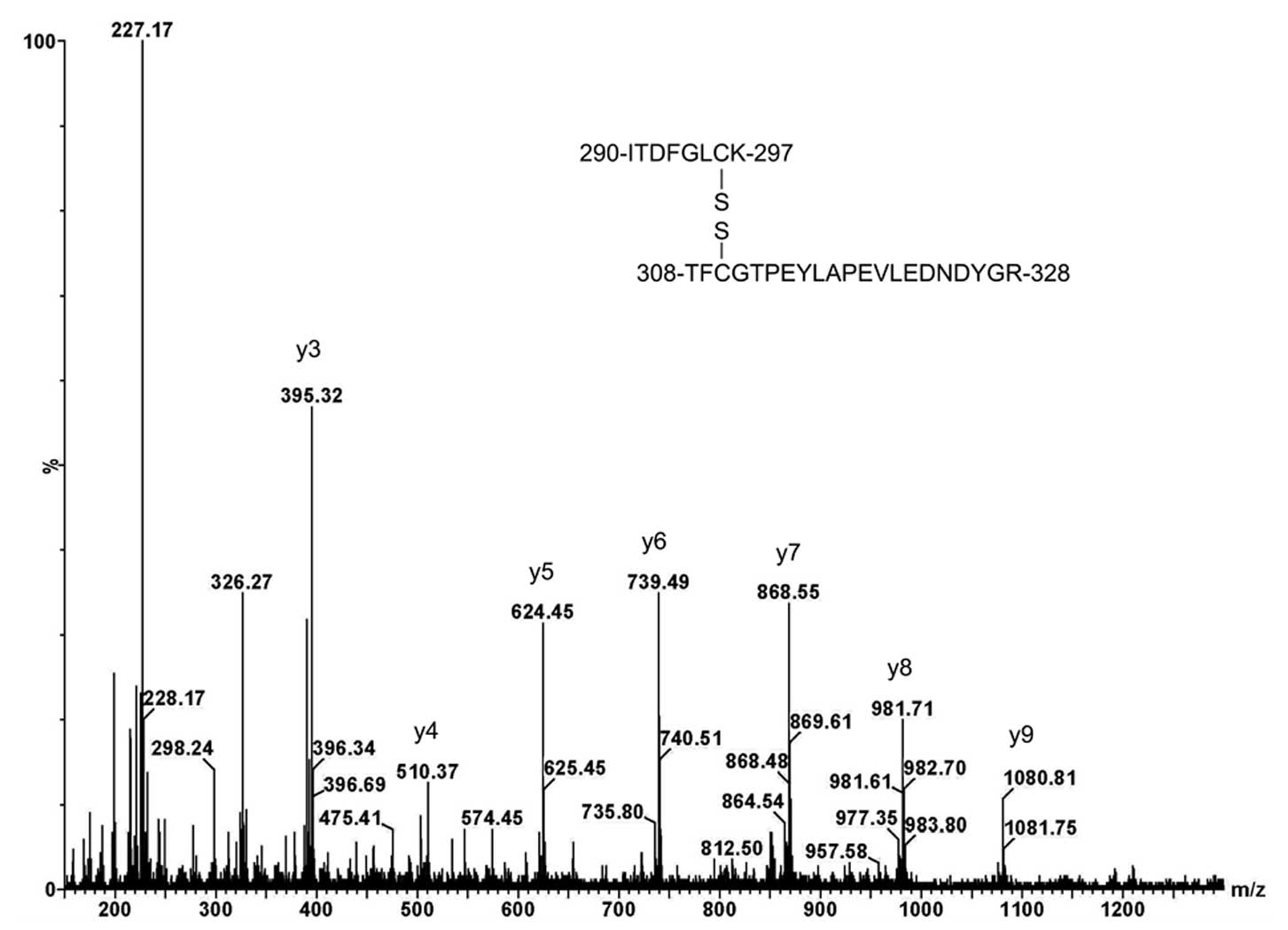
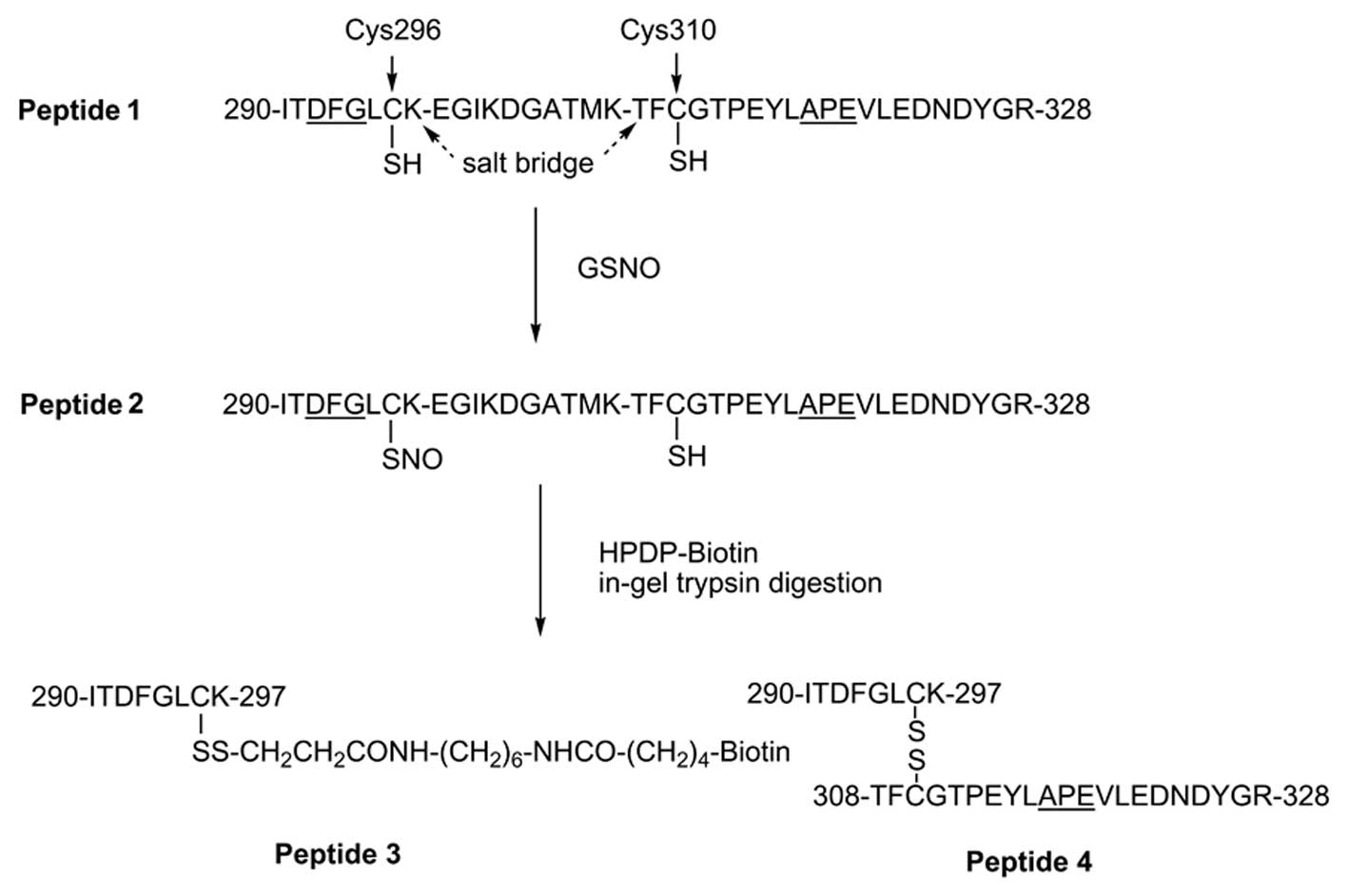
Severe burn injury is an acute inflammatory state with massive alterations in gene expression and levels of growth factors, cytokines and free radicals. During the catabolic processes, changes in insulin sensitivity and skeletal muscle wasting (unintended loss of 5-15% of lean body mass) are observed clinically. Here, we reveal a novel molecular mechanism of Akt1/protein kinase Bα (Akt1/PKBα) regulated via cross-talking between dephosphorylation of Thr308 and S-nitrosylation of Cys296 post severe burn injury, which were characterized using nano-LC interfaced with tandem quadrupole time-of-fight mass spectrometry (Q-TOF)micro tandem mass spectrometry in both in vitro and in vivo studies. For the in vitro studies, Akt1/PKBα was S-nitrosylated with S-nitrosoglutathione and derivatized by three methods. The derivatives were isolated by SDS-PAGE, trypsinized and analyzed by the tandem MS. For the in vivo studies, Akt1/PKBα in muscle lysates from burned rats was immunoprecipitated, derivatized with HPDP-Biotin and analyzed as above. The studies demonstrated that the NO free radical reacts with the free thiol of Cys296 to produce a Cys296-SNO intermediate which accelerates interaction with Cys310 to form Cys296-Cys310 in the kinase loop. MS/MS sequence analysis indicated that the dipeptide, linked via Cys296-Cys310, underwent dephosphorylation at Thr308. These effects were not observed in lysates from sham animals. As a result of this dual effect of burn injury, the loose conformation that is slightly stabilized by the Lys297-Thr308 salt bridge may be replaced by a more rigid structure which may block substrate access. Together with the findings of our previous report concerning mild IRS-1 integrity changes post burn, it is reasonable to conclude that the impaired Akt1/PKBα has a major impact on FOXO3 subcellular distribution and activities.
View Figures

Figure 1

Figure 2

Figure 3

Figure 4

Figure 5

Figure 6

View References

1 

Biolo G, Fleming RY, Maggi SP, Nguye TT, Herndon DN and Wolfe RR: Inverse regulation of protein turnover and amino acid transport in skeletal muscle of hypercatabolic patients. J Clin Endocrinol Metab. 87:3378–3384. 2002. View Article : Google Scholar : PubMed/NCBI

2 

Bodine SC, Stitt TN, Gonzalez M, Kline WO, Stover GL, Bauerlein R, Zlotchenko E, Scrimgeour A, Lawrence JC, Glass DJ and Yancopoulos GD: Akt/mTOR pathway is a crucial regulator of skeletal muscle hypertrophy and can prevent muscle atrophy in vivo. Nat Cell Biol. 3:1014–1019. 2001. View Article : Google Scholar : PubMed/NCBI

3 

Bruning JC, Winnay J, Cheatham B and Kahn CR: Differential signaling by insulin receptor substrate 1 (IRS-1) and IRS-2 in IRS-1-deficient cells. Mol Cell Biol. 17:1513–1521. 1997.PubMed/NCBI

4 

Carvalho E, Rondinone C and Smith U: Insulin resistance in fat cells from obese Zucker rats - evidence for an impaired activation and translocation of protein kinase B and glucose transporter 4. Mol Cell Biochem. 206:7–16. 2000. View Article : Google Scholar : PubMed/NCBI

5 

Araki E, Lipes MA, Patti ME, Bruning JC, Haag B, Johnson RS and Kahn CR: Alternative pathway of insulin signaling in mice with targeted disruption of the IRS-1 gene. Nature. 372:186–190. 1994. View Article : Google Scholar : PubMed/NCBI

6 

Khoury W, Klausner JM, Ben-Abraham R and Szold O: Glucose control by insulin for critically ill surgical patients. J Trauma. 57:1132–1138. 2004. View Article : Google Scholar : PubMed/NCBI

7 

Carter EA, Burks D, Fischman AJ, White M and Tompkins RG: Insulin resistance in thermally-injured rats is associated with post-receptor alterations in skeletal muscle, liver and adipose tissue. Int J Mol Med. 14:653–658. 2004.PubMed/NCBI

8 

Johan Groeneveld AB, Beishuizen A and Visser FC: Insulin: a wonder drug in the critically ill? Crit Care. 6:102–105. 2002.PubMed/NCBI

9 

Ikezu T, Okamato T, Yonezawa K, Tompkins RG and Martyn JA: Analysis of thermal injury-induced insulin resistance in rodents. J Biol Chem. 272:25289–25295. 1997. View Article : Google Scholar : PubMed/NCBI

10 

White MF: Insulin signaling in health and disease. Science. 302:1710–1711. 2003. View Article : Google Scholar : PubMed/NCBI

11 

Zhang Q, Carter EA, Ma BY, White M, Fischman AF and Tompkins RG: Molecular mechanism(s) of burn-induced insulin resistance in murine skeletal muscle: role of IRS phosphorylation. Life Sci. 77:3068–3077. 2005. View Article : Google Scholar : PubMed/NCBI

12 

Ishiki M and Klip A: Minireview: recent developments in the regulation of glucose transporter-4 traffic: new signals, locations, and partners. Endocrinology. 146:5071–5078. 2005. View Article : Google Scholar : PubMed/NCBI

13 

Kaneki M, Shimizu N, Yamada D and Chang K: Nitrosative stress and pathogenesis of insulin resistance. Antioxid Redox Signal. 9:1–11. 2007.

14 

Song G, Quyang G and Bao S: The activation of Akt/PKB signaling pathway and cell survival. J Cell Mol Med. 9:59–71. 2005. View Article : Google Scholar : PubMed/NCBI

15 

Neels JG and Olefsky JM: Cell signaling. A new way to burn fat. Science. 312:1756–1758. 2006. View Article : Google Scholar : PubMed/NCBI

16 

Tian R: Another role for celebrity: Akt and insulin resistance. Circ Res. 96:139–140. 2005. View Article : Google Scholar : PubMed/NCBI

17 

Lawlor MA and Alessi DR: PKB/Akt: a key mediator of cell proliferation, survival and insulin responses? J Cell Sci. 114:2903–2910. 2001.PubMed/NCBI

18 

Yang J, Cron P, Thompson V, Good VM, Hess D, Hemmings BA and Barford D: Molecular mechanism for the regulation of protein kinase B/Akt by hydrophobic motif phosphorylation. Mol Cell. 9:1227–1240. 2002. View Article : Google Scholar : PubMed/NCBI

19 

Yang J, Cron P, Good VM, Thompson V, Hemmings BA and Barford D: Crystal structure of an activated Akt/protein kinase B ternary complex with GSK3-peptide and AMP-PNP. Nat Struct Biol. 9:940–944. 2002. View Article : Google Scholar : PubMed/NCBI

20 

Huang X, Begley M, Morgenstern KA, Gu Y, Rose P, Zhao H and Zhu X: Crystal structure of an inactive Akt2 kinase domain. Structure. 11:21–30. 2003. View Article : Google Scholar : PubMed/NCBI

21 

Kumar CC and Madison V: Akt crystal structure and Akt-specific inhibitors. Oncogene. 24:7493–7501. 2005. View Article : Google Scholar : PubMed/NCBI

22 

Fayard E, Tintignac LA, Baudry A and Hemmings BA: Protein kinase B/Akt at a glance. J Cell Sci. 118:5675–5678. 2005. View Article : Google Scholar : PubMed/NCBI

23 

Brazil DP, Yang ZZ and Hemmings BA: Advances in protein kinase B signaling: AKTion on multiple fronts. Trends Biochem Sci. 29:233–242. 2004. View Article : Google Scholar : PubMed/NCBI

24 

Brazil DP, Park J and Hemmings BA: PKB binding proteins: getting in on the Akt. Cell. 111:293–303. 2002. View Article : Google Scholar : PubMed/NCBI

25 

Huang BX and Kim HY: Interdomain conformational changes in Akt activation revealed by chemical cross-linking and tandem mass spectrometry. Mol Cell Proteomics. 5:1045–1053. 2006. View Article : Google Scholar : PubMed/NCBI

26 

Sugita H, Kaneki M, Sugita M, Yasukawa T, Yasuhara S and Martyn JA: Burn injury impairs insulin-stimulated Akt/PKB activation in skeletal muscle. Am J Physiol Endocrinol Metab. 288:E585–E591. 2004. View Article : Google Scholar : PubMed/NCBI

27 

Carvalho-Filho MA, Ueno M, Hirabara SM, Seabra AB, Carvalheira JB, de Oliveira MG, Velloso LA, Curi R and Saad MJ: S-nitrosation of the insulin receptor, insulin receptor substrate 1, and protein kinase B/Akt: novel mechanism of insulin resistance. Diabetes. 54:959–967. 2005. View Article : Google Scholar : PubMed/NCBI

28 

Yasukawa T, Tokunaga E, Ota H, Sugita H, Martyn JA and Kaneki M: S-Nitrosylation-dependent inactivation of Akt/protein kinase B in insulin resistance. J Biol Chem. 280:7511–7518. 2005. View Article : Google Scholar : PubMed/NCBI

29 

Carter EA, Derojas-Walker T, Tamir S, Tannenbaum SR, Yu YM and Tompkins RG: Nitric oxide production is intensely and persistently increased in tissue by thermal injury. Biochem J. 304:201–204. 1994.PubMed/NCBI

30 

Auguin D, Barthe P, Auge-Senegas MT, Stern MH, Noguchi M and Roumestand C: Solution structure and backbone dynamics of the Pleckstrin homology domain of the human protein kinase B (PKB/Akt). Interaction with inositol phosphates. J Biomol NMR. 28:137–155. 2004. View Article : Google Scholar : PubMed/NCBI

31 

Murata H, Ihara Y, Nakamura H, Yodoi J, Sumikawa K and Kondo T: Glotaredoxin exerts an antiapoptotic effect by regulating the redox state of Akt. J Biol Chem. 278:50226–50233. 2003. View Article : Google Scholar : PubMed/NCBI

32 

Lu XM, Lu MY, Fischman AJ and Tompkins RG: A new approach for sequencing human IRS1 phosphotyrosine-containing peptides using CapLC-Q-TOF(micro). J Mass Spectrom. 40:599–607. 2005. View Article : Google Scholar : PubMed/NCBI

33 

Lu XM, Lu M, Tompkins RG and Fischman AJ: Site-specific detection of S-nitrosylated PKBa/Akt1 from rat soleus muscle using CapLC-Q-TOF(micro) mass spectrometry. J Mass Spectrom. 40:1140–1148. 2005. View Article : Google Scholar : PubMed/NCBI

34 

Jaffrey SR, Erdjument-Bromage H, Ferris CD, Tempst P and Snyder SH: Protein S-nitrosylation: a physiological signal for neuronal nitric oxide. Nat Cell Biol. 3:193–197. 2001. View Article : Google Scholar : PubMed/NCBI

35 

Jaffrey SR and Snyder SH: The biotin switch method for detection of S-nitrosylated proteins. Science STKE. 86:1–9. 2001.

36 

Greco TM, Hodara R, Parastatidis I, Heijnen HFG, Dennehy MK, Liebler DC and Ischiropoulos H: Identification of S-nitrosylation motifs by site-specific mapping of the S-nitrosocysteine proteome in human vascular smooth muscle cells. Proc Natl Acad Sci USA. 103:7420–7425. 2006. View Article : Google Scholar : PubMed/NCBI

37 

Hao G, Derakhshan B, Shi L, Campagne F and Gross SS: SNOSID, a proteomic method for identification of cysteine S-nitrosylation sites in complex protein mixtures. Proc Natl Acad Sci USA. 103:1012–1017. 2006. View Article : Google Scholar : PubMed/NCBI

38 

Kuncewicz T, Sheta EA, Goldknopf IL and Kone BC: Proteomic analysis of S-nitrosylated proteins in mesangial cell. Mol Cell Proteomics. 2:156–163. 2003. View Article : Google Scholar : PubMed/NCBI

39 

Martinez-Ruiz A and Lamas S: Detection and proteomic identification of S-nitrosylated proteins in endothelial cells. Arch Biochem Biophys. 423:192–199. 2004. View Article : Google Scholar : PubMed/NCBI

40 

Gan HT and Chen JDZ: Roles of nitric oxide and prostaglandins in pathogenesis of delayed colonic transit after burn injury in rats. Am J Physiol Regul Integr Comp Physiol. 288:R1316–R1324. 2005. View Article : Google Scholar : PubMed/NCBI

41 

Torres SH, De Sanctis JB, de L Briceno M, Hernandez N and Finol HJ: Inflammation and nitric oxide production in skeletal muscle of type 2 diabetic patients. J Endocrinol. 181:419–427. 2004. View Article : Google Scholar : PubMed/NCBI

42 

Benhar M, Forrester MT and Stamler JS: Nitrosative stress in the ER: a new role for S-nitrosylation in neurodegenerative diseases. ACS Chem Biol. 1:355–358. 2006. View Article : Google Scholar : PubMed/NCBI

43 

Tannenbaum SR and White FM: Regulation and specificity of S-nitrosylation and denitrosylation. ACS Chem Biol. 1:615–618. 2006. View Article : Google Scholar : PubMed/NCBI

44 

Hogg N: The biochemistry and physiology of S-nitrosothiols. Ann Rev Pharmacol Toxicol. 42:585–600. 2002. View Article : Google Scholar : PubMed/NCBI

45 

Arnelle DR and Stamler JS: NO+, NO•, and NO− donation by S-nitrosothiols: implications for regulation of physiological functions by S-nitrosylation and acceleration of disulfide formation. Arch Biochem Biophys. 318:279–285. 1995.

46 

Carvalho-Filho MA, Ueno M, Carvalheira JB, Velloso LA and Saad MJ: Targeted disruption of iNOS prevents LPS-induced S-nitrosation of IRbeta/IRS-1 and Akt and insulin resistance in muscle of mice. Am J Physiol Endocrinol Metab. 291:E476–E482. 2006. View Article : Google Scholar : PubMed/NCBI

47 

Wu WI, Voegtli WC, Sturgis HL, Dizon FP, Vigers GP and Brandhuber BJ: Crystal structure of human AKT1 with an allosteric inhibitor reveals a new mode of kinase inhibition. PLos One. 5:e129132010. View Article : Google Scholar : PubMed/NCBI

48 

Kloet DE and Burgering BM: The PKB/FOXO switch in aging and cancer. Biochim Biophys Acta. 1813:1926–1937. 2011. View Article : Google Scholar : PubMed/NCBI

Related Articles

  • Abstract
  • View
  • Download
  • Twitter
Copy and paste a formatted citation
Spandidos Publications style
Lu X, Tompkins RG and Fischman AJ: Nitric oxide activates intradomain disulfide bond formation in the kinase loop of Akt1/PKBα after burn injury. Int J Mol Med 31: 740-750, 2013.
APA
Lu, X., Tompkins, R.G., & Fischman, A.J. (2013). Nitric oxide activates intradomain disulfide bond formation in the kinase loop of Akt1/PKBα after burn injury. International Journal of Molecular Medicine, 31, 740-750. https://doi.org/10.3892/ijmm.2013.1241
MLA
Lu, X., Tompkins, R. G., Fischman, A. J."Nitric oxide activates intradomain disulfide bond formation in the kinase loop of Akt1/PKBα after burn injury". International Journal of Molecular Medicine 31.3 (2013): 740-750.
Chicago
Lu, X., Tompkins, R. G., Fischman, A. J."Nitric oxide activates intradomain disulfide bond formation in the kinase loop of Akt1/PKBα after burn injury". International Journal of Molecular Medicine 31, no. 3 (2013): 740-750. https://doi.org/10.3892/ijmm.2013.1241
Copy and paste a formatted citation
x
Spandidos Publications style
Lu X, Tompkins RG and Fischman AJ: Nitric oxide activates intradomain disulfide bond formation in the kinase loop of Akt1/PKBα after burn injury. Int J Mol Med 31: 740-750, 2013.
APA
Lu, X., Tompkins, R.G., & Fischman, A.J. (2013). Nitric oxide activates intradomain disulfide bond formation in the kinase loop of Akt1/PKBα after burn injury. International Journal of Molecular Medicine, 31, 740-750. https://doi.org/10.3892/ijmm.2013.1241
MLA
Lu, X., Tompkins, R. G., Fischman, A. J."Nitric oxide activates intradomain disulfide bond formation in the kinase loop of Akt1/PKBα after burn injury". International Journal of Molecular Medicine 31.3 (2013): 740-750.
Chicago
Lu, X., Tompkins, R. G., Fischman, A. J."Nitric oxide activates intradomain disulfide bond formation in the kinase loop of Akt1/PKBα after burn injury". International Journal of Molecular Medicine 31, no. 3 (2013): 740-750. https://doi.org/10.3892/ijmm.2013.1241
Follow us
  • Twitter
  • LinkedIn
  • Facebook
About
  • Spandidos Publications
  • Careers
  • Cookie Policy
  • Privacy Policy
How can we help?
  • Help
  • Live Chat
  • Contact
  • Email to our Support Team