Spandidos Publications Logo
  • About
    • About Spandidos
    • Aims and Scopes
    • Abstracting and Indexing
    • Editorial Policies
    • Reprints and Permissions
    • Job Opportunities
    • Terms and Conditions
    • Contact
  • Journals
    • All Journals
    • Oncology Letters
      • Oncology Letters
      • Information for Authors
      • Editorial Policies
      • Editorial Board
      • Aims and Scope
      • Abstracting and Indexing
      • Bibliographic Information
      • Archive
    • International Journal of Oncology
      • International Journal of Oncology
      • Information for Authors
      • Editorial Policies
      • Editorial Board
      • Aims and Scope
      • Abstracting and Indexing
      • Bibliographic Information
      • Archive
    • Molecular and Clinical Oncology
      • Molecular and Clinical Oncology
      • Information for Authors
      • Editorial Policies
      • Editorial Board
      • Aims and Scope
      • Abstracting and Indexing
      • Bibliographic Information
      • Archive
    • Experimental and Therapeutic Medicine
      • Experimental and Therapeutic Medicine
      • Information for Authors
      • Editorial Policies
      • Editorial Board
      • Aims and Scope
      • Abstracting and Indexing
      • Bibliographic Information
      • Archive
    • International Journal of Molecular Medicine
      • International Journal of Molecular Medicine
      • Information for Authors
      • Editorial Policies
      • Editorial Board
      • Aims and Scope
      • Abstracting and Indexing
      • Bibliographic Information
      • Archive
    • Biomedical Reports
      • Biomedical Reports
      • Information for Authors
      • Editorial Policies
      • Editorial Board
      • Aims and Scope
      • Abstracting and Indexing
      • Bibliographic Information
      • Archive
    • Oncology Reports
      • Oncology Reports
      • Information for Authors
      • Editorial Policies
      • Editorial Board
      • Aims and Scope
      • Abstracting and Indexing
      • Bibliographic Information
      • Archive
    • Molecular Medicine Reports
      • Molecular Medicine Reports
      • Information for Authors
      • Editorial Policies
      • Editorial Board
      • Aims and Scope
      • Abstracting and Indexing
      • Bibliographic Information
      • Archive
    • World Academy of Sciences Journal
      • World Academy of Sciences Journal
      • Information for Authors
      • Editorial Policies
      • Editorial Board
      • Aims and Scope
      • Abstracting and Indexing
      • Bibliographic Information
      • Archive
    • International Journal of Functional Nutrition
      • International Journal of Functional Nutrition
      • Information for Authors
      • Editorial Policies
      • Editorial Board
      • Aims and Scope
      • Abstracting and Indexing
      • Bibliographic Information
      • Archive
    • International Journal of Epigenetics
      • International Journal of Epigenetics
      • Information for Authors
      • Editorial Policies
      • Editorial Board
      • Aims and Scope
      • Abstracting and Indexing
      • Bibliographic Information
      • Archive
    • Medicine International
      • Medicine International
      • Information for Authors
      • Editorial Policies
      • Editorial Board
      • Aims and Scope
      • Abstracting and Indexing
      • Bibliographic Information
      • Archive
  • Articles
  • Information
    • Information for Authors
    • Information for Reviewers
    • Information for Librarians
    • Information for Advertisers
    • Conferences
  • Language Editing
Spandidos Publications Logo
  • About
    • About Spandidos
    • Aims and Scopes
    • Abstracting and Indexing
    • Editorial Policies
    • Reprints and Permissions
    • Job Opportunities
    • Terms and Conditions
    • Contact
  • Journals
    • All Journals
    • Biomedical Reports
      • Information for Authors
      • Editorial Policies
      • Editorial Board
      • Aims and Scope
      • Abstracting and Indexing
      • Bibliographic Information
      • Archive
    • Experimental and Therapeutic Medicine
      • Information for Authors
      • Editorial Policies
      • Editorial Board
      • Aims and Scope
      • Abstracting and Indexing
      • Bibliographic Information
      • Archive
    • International Journal of Epigenetics
      • Information for Authors
      • Editorial Policies
      • Editorial Board
      • Aims and Scope
      • Abstracting and Indexing
      • Bibliographic Information
      • Archive
    • International Journal of Functional Nutrition
      • Information for Authors
      • Editorial Policies
      • Editorial Board
      • Aims and Scope
      • Abstracting and Indexing
      • Bibliographic Information
      • Archive
    • International Journal of Molecular Medicine
      • Information for Authors
      • Editorial Policies
      • Editorial Board
      • Aims and Scope
      • Abstracting and Indexing
      • Bibliographic Information
      • Archive
    • International Journal of Oncology
      • Information for Authors
      • Editorial Policies
      • Editorial Board
      • Aims and Scope
      • Abstracting and Indexing
      • Bibliographic Information
      • Archive
    • Medicine International
      • Information for Authors
      • Editorial Policies
      • Editorial Board
      • Aims and Scope
      • Abstracting and Indexing
      • Bibliographic Information
      • Archive
    • Molecular and Clinical Oncology
      • Information for Authors
      • Editorial Policies
      • Editorial Board
      • Aims and Scope
      • Abstracting and Indexing
      • Bibliographic Information
      • Archive
    • Molecular Medicine Reports
      • Information for Authors
      • Editorial Policies
      • Editorial Board
      • Aims and Scope
      • Abstracting and Indexing
      • Bibliographic Information
      • Archive
    • Oncology Letters
      • Information for Authors
      • Editorial Policies
      • Editorial Board
      • Aims and Scope
      • Abstracting and Indexing
      • Bibliographic Information
      • Archive
    • Oncology Reports
      • Information for Authors
      • Editorial Policies
      • Editorial Board
      • Aims and Scope
      • Abstracting and Indexing
      • Bibliographic Information
      • Archive
    • World Academy of Sciences Journal
      • Information for Authors
      • Editorial Policies
      • Editorial Board
      • Aims and Scope
      • Abstracting and Indexing
      • Bibliographic Information
      • Archive
  • Articles
  • Information
    • For Authors
    • For Reviewers
    • For Librarians
    • For Advertisers
    • Conferences
  • Language Editing
Login Register Submit
  • This site uses cookies
  • You can change your cookie settings at any time by following the instructions in our Cookie Policy. To find out more, you may read our Privacy Policy.

    I agree
Search articles by DOI, keyword, author or affiliation
Search
Advanced Search
presentation
International Journal of Molecular Medicine
Join Editorial Board Propose a Special Issue
Print ISSN: 1107-3756 Online ISSN: 1791-244X
Journal Cover
November 2013 Volume 32 Issue 5

Full Size Image

Sign up for eToc alerts
Recommend to Library

Journals

International Journal of Molecular Medicine

International Journal of Molecular Medicine

International Journal of Molecular Medicine is an international journal devoted to molecular mechanisms of human disease.

International Journal of Oncology

International Journal of Oncology

International Journal of Oncology is an international journal devoted to oncology research and cancer treatment.

Molecular Medicine Reports

Molecular Medicine Reports

Covers molecular medicine topics such as pharmacology, pathology, genetics, neuroscience, infectious diseases, molecular cardiology, and molecular surgery.

Oncology Reports

Oncology Reports

Oncology Reports is an international journal devoted to fundamental and applied research in Oncology.

Experimental and Therapeutic Medicine

Experimental and Therapeutic Medicine

Experimental and Therapeutic Medicine is an international journal devoted to laboratory and clinical medicine.

Oncology Letters

Oncology Letters

Oncology Letters is an international journal devoted to Experimental and Clinical Oncology.

Biomedical Reports

Biomedical Reports

Explores a wide range of biological and medical fields, including pharmacology, genetics, microbiology, neuroscience, and molecular cardiology.

Molecular and Clinical Oncology

Molecular and Clinical Oncology

International journal addressing all aspects of oncology research, from tumorigenesis and oncogenes to chemotherapy and metastasis.

World Academy of Sciences Journal

World Academy of Sciences Journal

Multidisciplinary open-access journal spanning biochemistry, genetics, neuroscience, environmental health, and synthetic biology.

International Journal of Functional Nutrition

International Journal of Functional Nutrition

Open-access journal combining biochemistry, pharmacology, immunology, and genetics to advance health through functional nutrition.

International Journal of Epigenetics

International Journal of Epigenetics

Publishes open-access research on using epigenetics to advance understanding and treatment of human disease.

Medicine International

Medicine International

An International Open Access Journal Devoted to General Medicine.

Journal Cover
November 2013 Volume 32 Issue 5

Full Size Image

Sign up for eToc alerts
Recommend to Library

  • Article
  • Citations
    • Cite This Article
    • Download Citation
    • Create Citation Alert
    • Remove Citation Alert
    • Cited By
  • Similar Articles
    • Related Articles (in Spandidos Publications)
    • Similar Articles (Google Scholar)
    • Similar Articles (PubMed)
  • Download PDF
  • Download XML
  • View XML
Article

Diffusion tensor and volumetric magnetic resonance imaging using an MR-compatible hand-induced robotic device suggests training-induced neuroplasticity in patients with chronic stroke

  • Authors:
    • Asimina Lazaridou
    • Loukas Astrakas
    • Dionyssios Mintzopoulos
    • Azadeh Khanicheh
    • Aneesh B. Singhal
    • Michael A. Moskowitz
    • Bruce Rosen
    • Aria A. Tzika
  • View Affiliations / Copyright

    Affiliations: NMR Surgical Laboratory, Department of Surgery, Massachusetts General Hospital and Shriners Burn Institute, Harvard Medical School, Boston, MA, USA, Department of Mechanical Engineering, Northeastern University, Boston, MA, USA, Department of Neurology, Stroke Research Center, Massachusetts General Hospital, Harvard Medical School, Boston, MA, USA, Department of Radiology, Athinoula A. Martinos Center for Biomedical Imaging, Massachusetts General Hospital, Harvard Medical School, Boston, MA, USA
  • Pages: 995-1000
    |
    Published online on: August 27, 2013
       https://doi.org/10.3892/ijmm.2013.1476
  • Expand metrics +
Metrics: Total Views: 0 (Spandidos Publications: | PMC Statistics: )
Metrics: Total PDF Downloads: 0 (Spandidos Publications: | PMC Statistics: )
Cited By (CrossRef): 0 citations Loading Articles...

This article is mentioned in:


Abstract

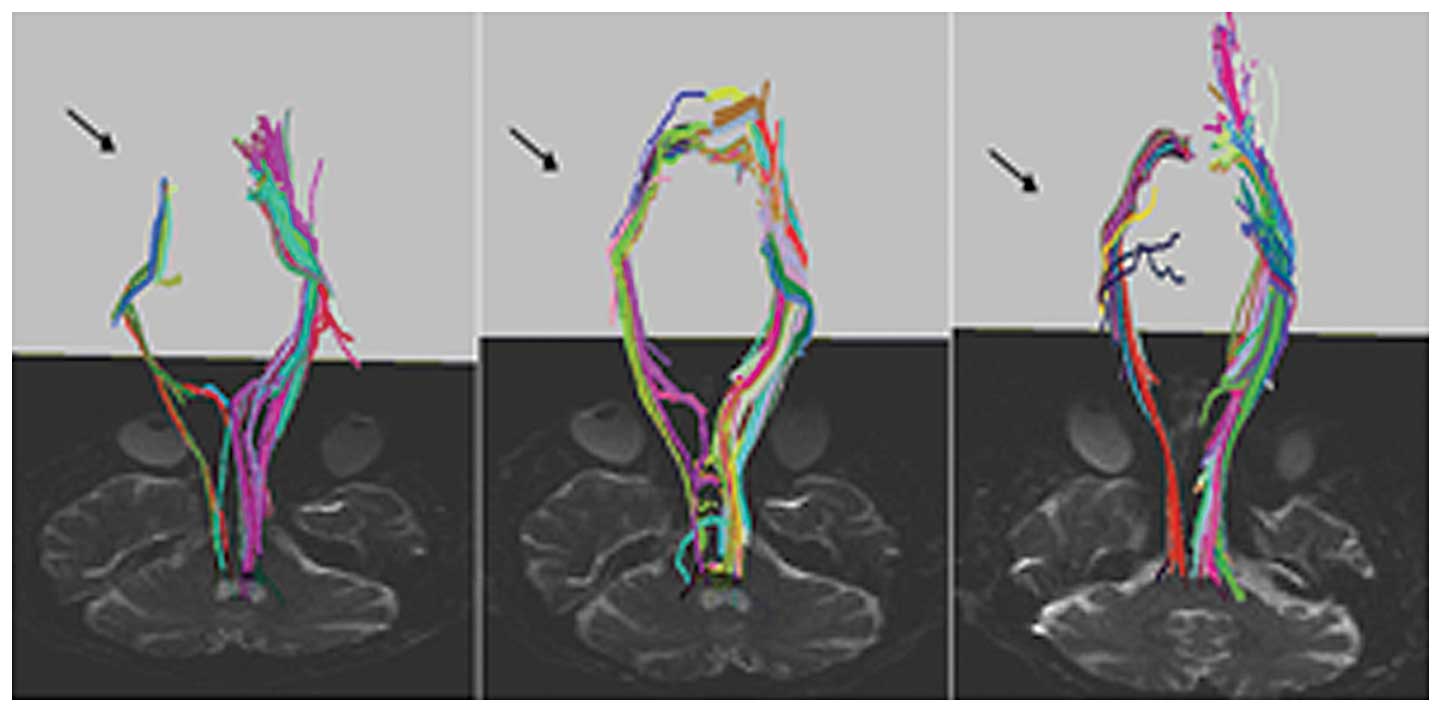
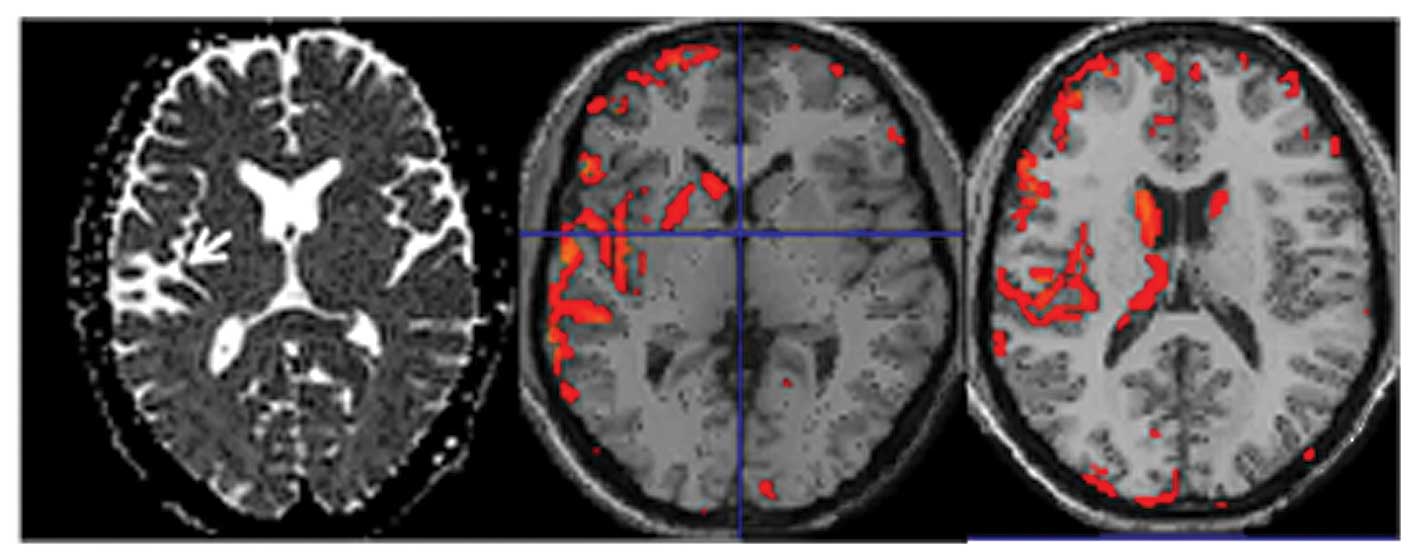
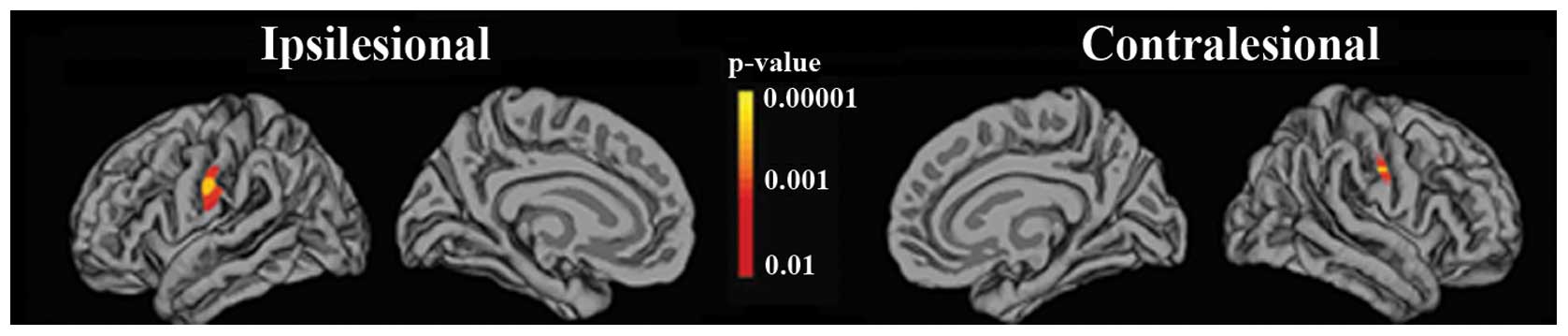
Stroke is the third leading cause of mortality and a frequent cause of long-term adult impairment. Improved strategies to enhance motor function in individuals with chronic disability from stroke are thus required. Post‑stroke therapy may improve rehabilitation and reduce long‑term disability; however, objective methods for evaluating the specific impact of rehabilitation are rare. Brain imaging studies on patients with chronic stroke have shown evidence for reorganization of areas showing functional plasticity after a stroke. In this study, we hypothesized that brain mapping using a novel magnetic resonance (MR)-compatible hand device in conjunction with state‑of‑the‑art magnetic resonance imaging (MRI) can serve as a novel biomarker for brain plasticity induced by rehabilitative motor training in patients with chronic stroke. This hypothesis is based on the premises that robotic devices, by stimulating brain plasticity, can assist in restoring movement compromised by stroke‑induced pathological changes in the brain and that these changes can then be monitored by advanced MRI. We serially examined 15 healthy controls and 4 patients with chronic stroke. We employed a combination of diffusion tensor imaging (DTI) and volumetric MRI using a 3‑tesla (3T) MRI system using a 12‑channel Siemens Tim coil and a novel MR‑compatible hand‑induced robotic device. DTI data revealed that the number of fibers and the average tract length significantly increased after 8 weeks of hand training by 110% and 64%, respectively (p<0.001). New corticospinal tract  (CST) fibers projecting progressively closer to the motor cortex appeared during training. Volumetric data analysis showed a statistically significant increase in the cortical thickness of the ventral postcentral gyrus areas of patients after training relative to pre‑training cortical thickness (p<0.001). We suggest that rehabilitation is possible for a longer period of time after stroke than previously thought, showing that structural plasticity is possible even after 6 months due to retained neuroplasticity. Our study is an example of personalized medicine using advanced neuroimaging methods in conjunction with robotics in the molecular medicine era.
View Figures

Figure 1

Figure 2

Figure 3

View References

1 

Towfighi A, Markovic D and Ovbiagele B: Impact of a healthy lifestyle on all-cause and cardiovascular mortality after stroke in the USA. J Neurol Neurosurg Psychiatry. 83:146–151. 2012. View Article : Google Scholar : PubMed/NCBI

2 

Cho HM, Choi BY, Chang CH, et al: The clinical characteristics of motor function in chronic hemiparetic stroke patients with complete corticospinal tract injury. NeuroRehabilitation. 31:207–213. 2012.

3 

Han C, Wang Q, Meng PP and Qi MZ: Effects of intensity of arm training on hemiplegic upper extremity motor recovery in stroke patients: a randomized controlled trial. Clin Rehabil. 27:75–81. 2013. View Article : Google Scholar : PubMed/NCBI

4 

Notturno F, Sepe R, Caulo M, Uncini A and Committeri G: Pseudocortical and dissociate discriminative sensory dysfunction in a thalamic stroke. Cortex. 49:336–339. 2013. View Article : Google Scholar : PubMed/NCBI

5 

Pahlman U, Savborg M and Tarkowski E: Cognitive dysfunction and physical activity after stroke: the Gothenburg cognitive stroke study in the elderly. J Stroke Cerebrovasc Dis. 21:652–658. 2012. View Article : Google Scholar : PubMed/NCBI

6 

Carter AR, Patel KR, Astafiev SV, et al: Upstream dysfunction of somatomotor functional connectivity after corticospinal damage in stroke. Neurorehabil Neural Repair. 26:7–19. 2012. View Article : Google Scholar : PubMed/NCBI

7 

Indredavik B, Slordahl SA, Bakke F, Rokseth R and Haheim LL: Stroke unit treatment. Long-term effects. Stroke. 28:1861–1866. 1997. View Article : Google Scholar : PubMed/NCBI

8 

Liepert J, Miltner WH, Bauder H, et al: Motor cortex plasticity during constraint-induced movement therapy in stroke patients. Neurosci Lett. 250:5–8. 1998. View Article : Google Scholar : PubMed/NCBI

9 

Kopp B, Kunkel A, Muhlnickel W, Villringer K, Taub E and Flor H: Plasticity in the motor system related to therapy-induced improvement of movement after stroke. Neuroreport. 10:807–810. 1999. View Article : Google Scholar : PubMed/NCBI

10 

Liepert J, Bauder H, Wolfgang HR, Miltner WH, Taub E and Weiller C: Treatment-induced cortical reorganization after stroke in humans. Stroke. 31:1210–1216. 2000. View Article : Google Scholar : PubMed/NCBI

11 

Nelles G, Jentzen W, Jueptner M, Muller S and Diener HC: Arm training induced brain plasticity in stroke studied with serial positron emission tomography. Neuroimage. 13:1146–1154. 2001. View Article : Google Scholar : PubMed/NCBI

12 

Johansen-Berg H, Dawes H, Guy C, Smith SM, Wade DT and Matthews PM: Correlation between motor improvements and altered fMRI activity after rehabilitative therapy. Brain. 125:2731–2742. 2002. View Article : Google Scholar : PubMed/NCBI

13 

Schaechter JD, Kraft E, Hilliard TS, et al: Motor recovery and cortical reorganization after constraint-induced movement therapy in stroke patients: a preliminary study. Neurorehabil Neural Repair. 16:326–338. 2002. View Article : Google Scholar

14 

Dijkhuizen RM, Singhal AB, Mandeville JB, et al: Correlation between brain reorganization, ischemic damage, and neurologic status after transient focal cerebral ischemia in rats: a functional magnetic resonance imaging study. J Neurosci. 23:510–517. 2003.

15 

Mountz JM, Liu HG and Deutsch G: Neuroimaging in cerebrovascular disorders: measurement of cerebral physiology after stroke and assessment of stroke recovery. Semin Nucl Med. 33:56–76. 2003. View Article : Google Scholar : PubMed/NCBI

16 

Carmichael ST: Cellular and molecular mechanisms of neural repair after stroke: making waves. Ann Neurol. 59:735–742. 2006. View Article : Google Scholar : PubMed/NCBI

17 

Lindenberg R, Renga V, Zhu LL, Betzler F, Alsop D and Schlaug G: Structural integrity of corticospinal motor fibers predicts motor impairment in chronic stroke. Neurology. 74:280–287. 2010. View Article : Google Scholar : PubMed/NCBI

18 

Lee JS, Han MK, Kim SH, Kwon OK and Kim JH: Fiber tracking by diffusion tensor imaging in corticospinal tract stroke: Topographical correlation with clinical symptoms. Neuroimage. 26:771–776. 2005. View Article : Google Scholar : PubMed/NCBI

19 

Stinear CM, Barber PA, Smale PR, Coxon JP, Fleming MK and Byblow WD: Functional potential in chronic stroke patients depends on corticospinal tract integrity. Brain. 130:170–180. 2007. View Article : Google Scholar : PubMed/NCBI

20 

Rossini PM, Altamura C, Ferreri F, et al: Neuroimaging experimental studies on brain plasticity in recovery from stroke. Eura Medicophys. 43:241–254. 2007.PubMed/NCBI

21 

Nudo RJ: Mechanisms for recovery of motor function following cortical damage. Curr Opin Neurobiol. 16:638–644. 2006. View Article : Google Scholar : PubMed/NCBI

22 

Vaina LM, Sikoglu EM, Soloviev S, et al: Functional and anatomical profile of visual motion impairments in stroke patients correlate with fMRI in normal subjects. J Neuropsychol. 4:121–145. 2010. View Article : Google Scholar : PubMed/NCBI

23 

Krainik A, Duffau H, Capelle L, et al: Role of the healthy hemisphere in recovery after resection of the supplementary motor area. Neurology. 62:1323–1332. 2004. View Article : Google Scholar : PubMed/NCBI

24 

Duffau H, Lopes M, Sichez JP, Bitar A and Capelle L: A new device for electrical stimulation mapping of the brainstem and spinal cord. Minim Invasive Neurosurg. 46:61–64. 2003. View Article : Google Scholar : PubMed/NCBI

25 

Aisen ML, Krebs HI, Hogan N, McDowell F and Volpe BT: The effect of robot-assisted therapy and rehabilitative training on motor recovery following stroke. Arch Neurol. 54:443–446. 1997. View Article : Google Scholar : PubMed/NCBI

26 

Volpe BT, Krebs HI, Hogan N, Edelstein OL, Diels C and Aisen M: A novel approach to stroke rehabilitation: robot-aided sensorimotor stimulation. Neurology. 54:1938–1944. 2000. View Article : Google Scholar : PubMed/NCBI

27 

Volpe BT, Krebs HI, Hogan N, Edelsteinn L, Diels CM and Aisen ML: Robot training enhanced motor outcome in patients with stroke maintained over 3 years. Neurology. 53:1874–1876. 1999.PubMed/NCBI

28 

Volpe BT, Krebs HI and Hogan N: Is robot-aided sensorimotor training in stroke rehabilitation a realistic option? Curr Opin Neurol. 14:745–752. 2001. View Article : Google Scholar : PubMed/NCBI

29 

Volpe BT, Ferraro M, Lynch D, et al: Robotics and other devices in the treatment of patients recovering from stroke. Curr Neurol Neurosci Rep. 5:465–470. 2005. View Article : Google Scholar : PubMed/NCBI

30 

Volpe BT, Ferraro M, Krebs HI and Hogan N: Robotics in the rehabilitation treatment of patients with stroke. Curr Atheroscler Rep. 4:270–276. 2002. View Article : Google Scholar : PubMed/NCBI

31 

Ferraro M, Palazzolo JJ, Krol J, Krebs HI, Hogan N and Volpe BT: Robot-aided sensorimotor arm training improves outcome in patients with chronic stroke. Neurology. 61:1604–1607. 2003. View Article : Google Scholar : PubMed/NCBI

32 

Fasoli SE, Krebs HI, Stein J, Frontera WR, Hughes R and Hogan N: Robotic therapy for chronic motor impairments after stroke: follow-up results. Arch Phys Med Rehabil. 85:1106–1111. 2004. View Article : Google Scholar : PubMed/NCBI

33 

Daly JJ, Hogan N, Perepezko EM, et al: Response to upper-limb robotics and functional neuromuscular stimulation following stroke. J Rehabil Res Dev. 42:723–736. 2005. View Article : Google Scholar : PubMed/NCBI

34 

Macclellan LR, Bradham DD, Whitall J, et al: Robotic upper-limb neurorehabilitation in chronic stroke patients. J Rehabil Res Dev. 42:717–722. 2005. View Article : Google Scholar : PubMed/NCBI

35 

Finley MA, Fasoli SE, Dipietro L, et al: Short-duration robotic therapy in stroke patients with severe upper-limb motor impairment. J Rehabil Res Dev. 42:683–692. 2005. View Article : Google Scholar : PubMed/NCBI

36 

Prange GB, Jannink MJ, Groothuis-Oudshoorn CG, Hermens HJ and Ijzerman MJ: Systematic review of the effect of robot-aided therapy on recovery of the hemiparetic arm after stroke. J Rehabil Res Dev. 43:171–184. 2006. View Article : Google Scholar : PubMed/NCBI

37 

Reinkensmeyer DJ: Robotic assistance for upper extremity training after stroke. Stud Health Technol Inform. 145:25–39. 2009.PubMed/NCBI

38 

Kwakkel G, Kollen BJ and Krebs HI: Effects of robot-assisted therapy on upper limb recovery after stroke: a systematic review. Neurorehabil Neural Repair. 22:111–121. 2008. View Article : Google Scholar : PubMed/NCBI

39 

Astrakas LG, Naqvi SH, Kateb B and Tzika AA: Functional MRI using robotic MRI compatible devices for monitoring rehabilitation from chronic stroke in the molecular medicine era (Review). Int J Mol Med. 29:963–973. 2012.PubMed/NCBI

40 

Crafton KR, Mark AN and Cramer SC: Improved understanding of cortical injury by incorporating measures of functional anatomy. Brain. 126:1650–1659. 2003. View Article : Google Scholar : PubMed/NCBI

41 

Huang VS and Krakauer JW: Robotic neurorehabilitation: a computational motor learning perspective. J Neuroeng Rehabil. 6:52009. View Article : Google Scholar : PubMed/NCBI

42 

Carey LM and Seitz RJ: Functional neuroimaging in stroke recovery and neurorehabilitation: conceptual issues and perspectives. Int J Stroke. 2:245–264. 2007. View Article : Google Scholar : PubMed/NCBI

43 

Karl JM, Alaverdashvili M, Cross AR and Whishaw IQ: Thinning, movement, and volume loss of residual cortical tissue occurs after stroke in the adult rat as identified by histological and magnetic resonance imaging analysis. Neuroscience. 170:123–137. 2010.

44 

Khanicheh A, Muto A, Triantafyllou C, et al: fMRI-compatible rehabilitation hand device. J Neuroeng Rehabl. 3:242006. View Article : Google Scholar : PubMed/NCBI

45 

Khanicheh A, Muto A, Triantafyllou C, Astrakas LG, Mavroidis C and Tzika A: MR compatible erf-based robotic device for hand rehabilitation after stroke. Proc Intl Soc Mag Reson Med. 13:11102005.

46 

Tzika A, Khanicheh A, Muto A, Triantafyllou C, Astrakas LG and Mavroidis C: Novel rehabilitation hand robots and fMRI in Stroke [Abstract]. Eur Radiol. 16(Suppl 1): 1832006.

47 

Khanicheh A, Mintzopoulos D, Weinberg B, Tzika AA and Mavroidis C: MR_CHIROD v.2: A fMRI Compatible Mechatronic Hand Rehabilitation device. In: Proceedings of the 2007 IEEE 10th International Conference on Rehabilitation Robotics; Noodwijk, The Netherlands. pp. 883–889. 2007

48 

Khanicheh A, Mintzopoulos D, Weinberg B, Tzika AA and Mavroidis C: MR_CHIROD v.2: magnetic resonance compatible smart hand rehabilitation device for brain imaging. IEEE Trans Neural Syst Rehabil Eng. 16:91–98. 2008. View Article : Google Scholar : PubMed/NCBI

49 

Lazar M, Weinstein DM, Tsuruda JS, et al: White matter tractography using diffusion tensor deflection. Hum Brain Mapp. 18:306–321. 2003. View Article : Google Scholar : PubMed/NCBI

50 

Schaechter JD, Moore CI, Connell BD, Rosen BR and Dijkhuizen RM: Structural and functional plasticity in the somatosensory cortex of chronic stroke patients. Brain. 129:2722–2733. 2006. View Article : Google Scholar : PubMed/NCBI

51 

Koganemaru S, Mima T, Thabit MN, et al: Recovery of upper-limb function due to enhanced use-dependent plasticity in chronic stroke patients. Brain. 133:3373–3384. 2010. View Article : Google Scholar : PubMed/NCBI

52 

Cauraugh JH and Summers JJ: Neural plasticity and bilateral movements: a rehabilitation approach for chronic stroke. Prog Neurobiol. 75:309–320. 2005. View Article : Google Scholar : PubMed/NCBI

53 

Jack D, Boian R, Merians A, et al: Virtual reality-enhanced stroke rehabilitation. IEEE Trans Neural Syst Rehabil Eng. 9:308–318. 2001. View Article : Google Scholar : PubMed/NCBI

54 

Hesse S, Schulte-Tigges G, Konrad M, Bardeleben A and Werner C: Robot-assisted arm trainer for the passive and active practice of bilateral forearm and wrist movements in hemiparetic subjects. Arch Phys Med Rehabil. 84:915–920. 2003. View Article : Google Scholar : PubMed/NCBI

55 

Shelton FN and Reding MJ: Effect of lesion location on upper limb motor recovery after stroke. Stroke. 32:107–112. 2001. View Article : Google Scholar : PubMed/NCBI

56 

Smania N, Picelli A, Gandolfi M, Fiaschi A and Tinazzi M: Rehabilitation of sensorimotor integration deficits in balance impairment of patients with stroke hemiparesis: a before/after pilot study. Neurol Sci. 29:313–319. 2008. View Article : Google Scholar : PubMed/NCBI

57 

Xerri C, Merzenich MM, Peterson BE and Jenkins W: Plasticity of primary somatosensory cortex paralleling sensorimotor skill recovery from stroke in adult monkeys. J Neurophysiol. 79:2119–2148. 1998.PubMed/NCBI

58 

Kleim JA, Barbay S, Cooper NR, et al: Motor learning-dependent synaptogenesis is localized to functionally reorganized motor cortex. Neurobiol Learn Mem. 77:63–77. 2002. View Article : Google Scholar : PubMed/NCBI

59 

Hickmott PW and Steen PA: Large-scale changes in dendritic structure during reorganization of adult somatosensory cortex. Nat Neurosci. 8:140–142. 2005. View Article : Google Scholar : PubMed/NCBI

60 

Carmichael ST, Archibeque I, Luke L, Nolan T, Momiy J and Li S: Growth-associated gene expression after stroke: evidence for a growth-promoting region in peri-infarct cortex. Exp Neurol. 193:291–311. 2005. View Article : Google Scholar : PubMed/NCBI

61 

Dijkhuizen RM, Ren J, Mandeville JB, et al: Functional magnetic resonance imaging of reorganization in rat brain after stroke. Proc Natl Acad Sci USA. 98:12766–12771. 2001. View Article : Google Scholar : PubMed/NCBI

62 

Heller SL, Heier LA, Watts R, et al: Evidence of cerebral reorganization following perinatal stroke demonstrated with fMRI and DTI tractography. Clin Imaging. 29:283–287. 2005. View Article : Google Scholar : PubMed/NCBI

63 

Lum P, Reinkensmeyer D, Mahoney R, Rymer WZ and Burgar C: Robotic devices for movement therapy after stroke: current status and challenges to clinical acceptance. Top Stroke Rehabil. 8:40–53. 2002. View Article : Google Scholar : PubMed/NCBI

64 

Granziera C, Schmahmann JD, Hadjikhani N, et al: Diffusion spectrum imaging shows the structural basis of functional cerebellar circuits in the human cerebellum in vivo. PLoS One. 4:e51012009. View Article : Google Scholar : PubMed/NCBI

65 

Thuen M, Olsen O, Berry M, et al: Combination of Mn(2+)-enhanced and diffusion tensor MR imaging gives complementary information about injury and regeneration in the adult rat optic nerve. J Magn Reson Imaging. 29:39–51. 2009.

66 

Carmichael ST: Plasticity of cortical projections after stroke. Neuroscientist. 9:64–75. 2003. View Article : Google Scholar : PubMed/NCBI

67 

Dietrichs E: Brain plasticity after stroke-implications for post-stroke rehabilitation. Tidsskr Nor Laegeforen. 127:1228–1231. 2007.(In Norwegian).

68 

O’Dell MW, Lin CC and Harrison V: Stroke rehabilitation: strategies to enhance motor recovery. Annu Rev Med. 60:55–68. 2009.

69 

Ward NS: Mechanisms underlying recovery of motor function after stroke. Postgrad Med J. 81:510–514. 2005. View Article : Google Scholar : PubMed/NCBI

70 

Desmurget M, Bonnetblanc F and Duffau H: Contrasting acute and slow-growing lesions: a new door to brain plasticity. Brain. 130:898–914. 2007. View Article : Google Scholar : PubMed/NCBI

Related Articles

  • Abstract
  • View
  • Download
  • Twitter
Copy and paste a formatted citation
Spandidos Publications style
Lazaridou A, Astrakas L, Mintzopoulos D, Khanicheh A, Singhal AB, Moskowitz MA, Rosen B and Tzika AA: Diffusion tensor and volumetric magnetic resonance imaging using an MR-compatible hand-induced robotic device suggests training-induced neuroplasticity in patients with chronic stroke. Int J Mol Med 32: 995-1000, 2013.
APA
Lazaridou, A., Astrakas, L., Mintzopoulos, D., Khanicheh, A., Singhal, A.B., Moskowitz, M.A. ... Tzika, A.A. (2013). Diffusion tensor and volumetric magnetic resonance imaging using an MR-compatible hand-induced robotic device suggests training-induced neuroplasticity in patients with chronic stroke. International Journal of Molecular Medicine, 32, 995-1000. https://doi.org/10.3892/ijmm.2013.1476
MLA
Lazaridou, A., Astrakas, L., Mintzopoulos, D., Khanicheh, A., Singhal, A. B., Moskowitz, M. A., Rosen, B., Tzika, A. A."Diffusion tensor and volumetric magnetic resonance imaging using an MR-compatible hand-induced robotic device suggests training-induced neuroplasticity in patients with chronic stroke". International Journal of Molecular Medicine 32.5 (2013): 995-1000.
Chicago
Lazaridou, A., Astrakas, L., Mintzopoulos, D., Khanicheh, A., Singhal, A. B., Moskowitz, M. A., Rosen, B., Tzika, A. A."Diffusion tensor and volumetric magnetic resonance imaging using an MR-compatible hand-induced robotic device suggests training-induced neuroplasticity in patients with chronic stroke". International Journal of Molecular Medicine 32, no. 5 (2013): 995-1000. https://doi.org/10.3892/ijmm.2013.1476
Copy and paste a formatted citation
x
Spandidos Publications style
Lazaridou A, Astrakas L, Mintzopoulos D, Khanicheh A, Singhal AB, Moskowitz MA, Rosen B and Tzika AA: Diffusion tensor and volumetric magnetic resonance imaging using an MR-compatible hand-induced robotic device suggests training-induced neuroplasticity in patients with chronic stroke. Int J Mol Med 32: 995-1000, 2013.
APA
Lazaridou, A., Astrakas, L., Mintzopoulos, D., Khanicheh, A., Singhal, A.B., Moskowitz, M.A. ... Tzika, A.A. (2013). Diffusion tensor and volumetric magnetic resonance imaging using an MR-compatible hand-induced robotic device suggests training-induced neuroplasticity in patients with chronic stroke. International Journal of Molecular Medicine, 32, 995-1000. https://doi.org/10.3892/ijmm.2013.1476
MLA
Lazaridou, A., Astrakas, L., Mintzopoulos, D., Khanicheh, A., Singhal, A. B., Moskowitz, M. A., Rosen, B., Tzika, A. A."Diffusion tensor and volumetric magnetic resonance imaging using an MR-compatible hand-induced robotic device suggests training-induced neuroplasticity in patients with chronic stroke". International Journal of Molecular Medicine 32.5 (2013): 995-1000.
Chicago
Lazaridou, A., Astrakas, L., Mintzopoulos, D., Khanicheh, A., Singhal, A. B., Moskowitz, M. A., Rosen, B., Tzika, A. A."Diffusion tensor and volumetric magnetic resonance imaging using an MR-compatible hand-induced robotic device suggests training-induced neuroplasticity in patients with chronic stroke". International Journal of Molecular Medicine 32, no. 5 (2013): 995-1000. https://doi.org/10.3892/ijmm.2013.1476
Follow us
  • Twitter
  • LinkedIn
  • Facebook
About
  • Spandidos Publications
  • Careers
  • Cookie Policy
  • Privacy Policy
How can we help?
  • Help
  • Live Chat
  • Contact
  • Email to our Support Team