Spandidos Publications Logo
  • About
    • About Spandidos
    • Aims and Scopes
    • Abstracting and Indexing
    • Editorial Policies
    • Reprints and Permissions
    • Job Opportunities
    • Terms and Conditions
    • Contact
  • Journals
    • All Journals
    • Oncology Letters
      • Oncology Letters
      • Information for Authors
      • Editorial Policies
      • Editorial Board
      • Aims and Scope
      • Abstracting and Indexing
      • Bibliographic Information
      • Archive
    • International Journal of Oncology
      • International Journal of Oncology
      • Information for Authors
      • Editorial Policies
      • Editorial Board
      • Aims and Scope
      • Abstracting and Indexing
      • Bibliographic Information
      • Archive
    • Molecular and Clinical Oncology
      • Molecular and Clinical Oncology
      • Information for Authors
      • Editorial Policies
      • Editorial Board
      • Aims and Scope
      • Abstracting and Indexing
      • Bibliographic Information
      • Archive
    • Experimental and Therapeutic Medicine
      • Experimental and Therapeutic Medicine
      • Information for Authors
      • Editorial Policies
      • Editorial Board
      • Aims and Scope
      • Abstracting and Indexing
      • Bibliographic Information
      • Archive
    • International Journal of Molecular Medicine
      • International Journal of Molecular Medicine
      • Information for Authors
      • Editorial Policies
      • Editorial Board
      • Aims and Scope
      • Abstracting and Indexing
      • Bibliographic Information
      • Archive
    • Biomedical Reports
      • Biomedical Reports
      • Information for Authors
      • Editorial Policies
      • Editorial Board
      • Aims and Scope
      • Abstracting and Indexing
      • Bibliographic Information
      • Archive
    • Oncology Reports
      • Oncology Reports
      • Information for Authors
      • Editorial Policies
      • Editorial Board
      • Aims and Scope
      • Abstracting and Indexing
      • Bibliographic Information
      • Archive
    • Molecular Medicine Reports
      • Molecular Medicine Reports
      • Information for Authors
      • Editorial Policies
      • Editorial Board
      • Aims and Scope
      • Abstracting and Indexing
      • Bibliographic Information
      • Archive
    • World Academy of Sciences Journal
      • World Academy of Sciences Journal
      • Information for Authors
      • Editorial Policies
      • Editorial Board
      • Aims and Scope
      • Abstracting and Indexing
      • Bibliographic Information
      • Archive
    • International Journal of Functional Nutrition
      • International Journal of Functional Nutrition
      • Information for Authors
      • Editorial Policies
      • Editorial Board
      • Aims and Scope
      • Abstracting and Indexing
      • Bibliographic Information
      • Archive
    • International Journal of Epigenetics
      • International Journal of Epigenetics
      • Information for Authors
      • Editorial Policies
      • Editorial Board
      • Aims and Scope
      • Abstracting and Indexing
      • Bibliographic Information
      • Archive
    • Medicine International
      • Medicine International
      • Information for Authors
      • Editorial Policies
      • Editorial Board
      • Aims and Scope
      • Abstracting and Indexing
      • Bibliographic Information
      • Archive
  • Articles
  • Information
    • Information for Authors
    • Information for Reviewers
    • Information for Librarians
    • Information for Advertisers
    • Conferences
  • Language Editing
Spandidos Publications Logo
  • About
    • About Spandidos
    • Aims and Scopes
    • Abstracting and Indexing
    • Editorial Policies
    • Reprints and Permissions
    • Job Opportunities
    • Terms and Conditions
    • Contact
  • Journals
    • All Journals
    • Biomedical Reports
      • Information for Authors
      • Editorial Policies
      • Editorial Board
      • Aims and Scope
      • Abstracting and Indexing
      • Bibliographic Information
      • Archive
    • Experimental and Therapeutic Medicine
      • Information for Authors
      • Editorial Policies
      • Editorial Board
      • Aims and Scope
      • Abstracting and Indexing
      • Bibliographic Information
      • Archive
    • International Journal of Epigenetics
      • Information for Authors
      • Editorial Policies
      • Editorial Board
      • Aims and Scope
      • Abstracting and Indexing
      • Bibliographic Information
      • Archive
    • International Journal of Functional Nutrition
      • Information for Authors
      • Editorial Policies
      • Editorial Board
      • Aims and Scope
      • Abstracting and Indexing
      • Bibliographic Information
      • Archive
    • International Journal of Molecular Medicine
      • Information for Authors
      • Editorial Policies
      • Editorial Board
      • Aims and Scope
      • Abstracting and Indexing
      • Bibliographic Information
      • Archive
    • International Journal of Oncology
      • Information for Authors
      • Editorial Policies
      • Editorial Board
      • Aims and Scope
      • Abstracting and Indexing
      • Bibliographic Information
      • Archive
    • Medicine International
      • Information for Authors
      • Editorial Policies
      • Editorial Board
      • Aims and Scope
      • Abstracting and Indexing
      • Bibliographic Information
      • Archive
    • Molecular and Clinical Oncology
      • Information for Authors
      • Editorial Policies
      • Editorial Board
      • Aims and Scope
      • Abstracting and Indexing
      • Bibliographic Information
      • Archive
    • Molecular Medicine Reports
      • Information for Authors
      • Editorial Policies
      • Editorial Board
      • Aims and Scope
      • Abstracting and Indexing
      • Bibliographic Information
      • Archive
    • Oncology Letters
      • Information for Authors
      • Editorial Policies
      • Editorial Board
      • Aims and Scope
      • Abstracting and Indexing
      • Bibliographic Information
      • Archive
    • Oncology Reports
      • Information for Authors
      • Editorial Policies
      • Editorial Board
      • Aims and Scope
      • Abstracting and Indexing
      • Bibliographic Information
      • Archive
    • World Academy of Sciences Journal
      • Information for Authors
      • Editorial Policies
      • Editorial Board
      • Aims and Scope
      • Abstracting and Indexing
      • Bibliographic Information
      • Archive
  • Articles
  • Information
    • For Authors
    • For Reviewers
    • For Librarians
    • For Advertisers
    • Conferences
  • Language Editing
Login Register Submit
  • This site uses cookies
  • You can change your cookie settings at any time by following the instructions in our Cookie Policy. To find out more, you may read our Privacy Policy.

    I agree
Search articles by DOI, keyword, author or affiliation
Search
Advanced Search
presentation
International Journal of Molecular Medicine
Join Editorial Board Propose a Special Issue
Print ISSN: 1107-3756 Online ISSN: 1791-244X
Journal Cover
2014-March Volume 33 Issue 3

Full Size Image

Sign up for eToc alerts
Recommend to Library

Journals

International Journal of Molecular Medicine

International Journal of Molecular Medicine

International Journal of Molecular Medicine is an international journal devoted to molecular mechanisms of human disease.

International Journal of Oncology

International Journal of Oncology

International Journal of Oncology is an international journal devoted to oncology research and cancer treatment.

Molecular Medicine Reports

Molecular Medicine Reports

Covers molecular medicine topics such as pharmacology, pathology, genetics, neuroscience, infectious diseases, molecular cardiology, and molecular surgery.

Oncology Reports

Oncology Reports

Oncology Reports is an international journal devoted to fundamental and applied research in Oncology.

Experimental and Therapeutic Medicine

Experimental and Therapeutic Medicine

Experimental and Therapeutic Medicine is an international journal devoted to laboratory and clinical medicine.

Oncology Letters

Oncology Letters

Oncology Letters is an international journal devoted to Experimental and Clinical Oncology.

Biomedical Reports

Biomedical Reports

Explores a wide range of biological and medical fields, including pharmacology, genetics, microbiology, neuroscience, and molecular cardiology.

Molecular and Clinical Oncology

Molecular and Clinical Oncology

International journal addressing all aspects of oncology research, from tumorigenesis and oncogenes to chemotherapy and metastasis.

World Academy of Sciences Journal

World Academy of Sciences Journal

Multidisciplinary open-access journal spanning biochemistry, genetics, neuroscience, environmental health, and synthetic biology.

International Journal of Functional Nutrition

International Journal of Functional Nutrition

Open-access journal combining biochemistry, pharmacology, immunology, and genetics to advance health through functional nutrition.

International Journal of Epigenetics

International Journal of Epigenetics

Publishes open-access research on using epigenetics to advance understanding and treatment of human disease.

Medicine International

Medicine International

An International Open Access Journal Devoted to General Medicine.

Journal Cover
2014-March Volume 33 Issue 3

Full Size Image

Sign up for eToc alerts
Recommend to Library

  • Article
  • Citations
    • Cite This Article
    • Download Citation
    • Create Citation Alert
    • Remove Citation Alert
    • Cited By
  • Similar Articles
    • Related Articles (in Spandidos Publications)
    • Similar Articles (Google Scholar)
    • Similar Articles (PubMed)
  • Download PDF
  • Download XML
  • View XML
Article

Caffeic acid phenethyl ester attenuates pro-inflammatory and fibrogenic phenotypes of LPS-stimulated hepatic stellate cells through the inhibition of NF-κB signaling

  • Authors:
    • Wen-Xing Zhao
    • Li Wang
    • Ju-Lun Yang
    • Lian-Zhen Li
    • Wen-Mang Xu
    • Tao Li
  • View Affiliations / Copyright

    Affiliations: Department of Pathology, Kunming General Hospital of PLA, Kunming, Yunnan 650032, P.R. China, School of Life Sciences of Yunnan University, Kunming, Yunnan 650091, P.R. China
  • Pages: 687-694
    |
    Published online on: December 30, 2013
       https://doi.org/10.3892/ijmm.2013.1613
  • Expand metrics +
Metrics: Total Views: 0 (Spandidos Publications: | PMC Statistics: )
Metrics: Total PDF Downloads: 0 (Spandidos Publications: | PMC Statistics: )
Cited By (CrossRef): 0 citations Loading Articles...

This article is mentioned in:


Abstract

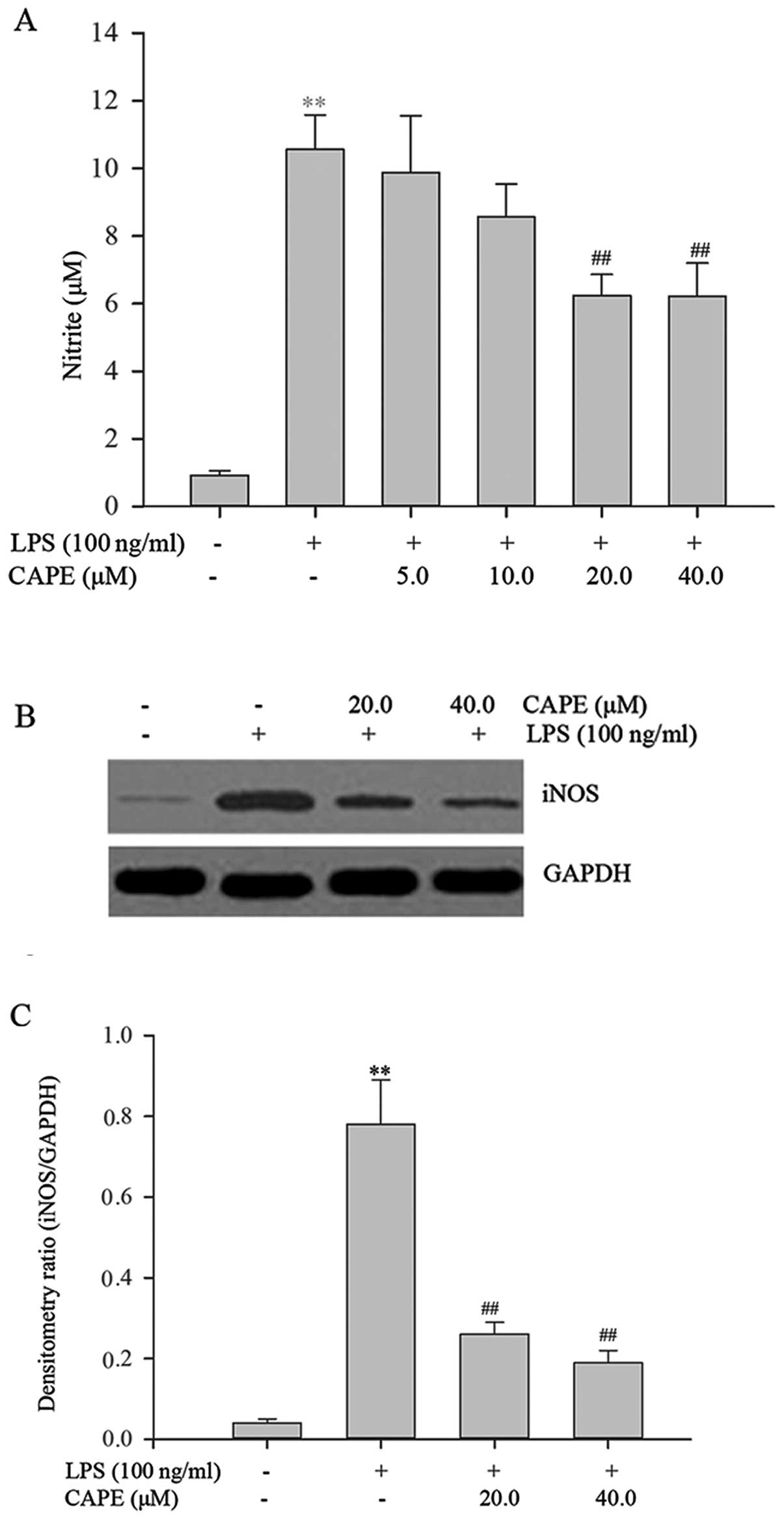
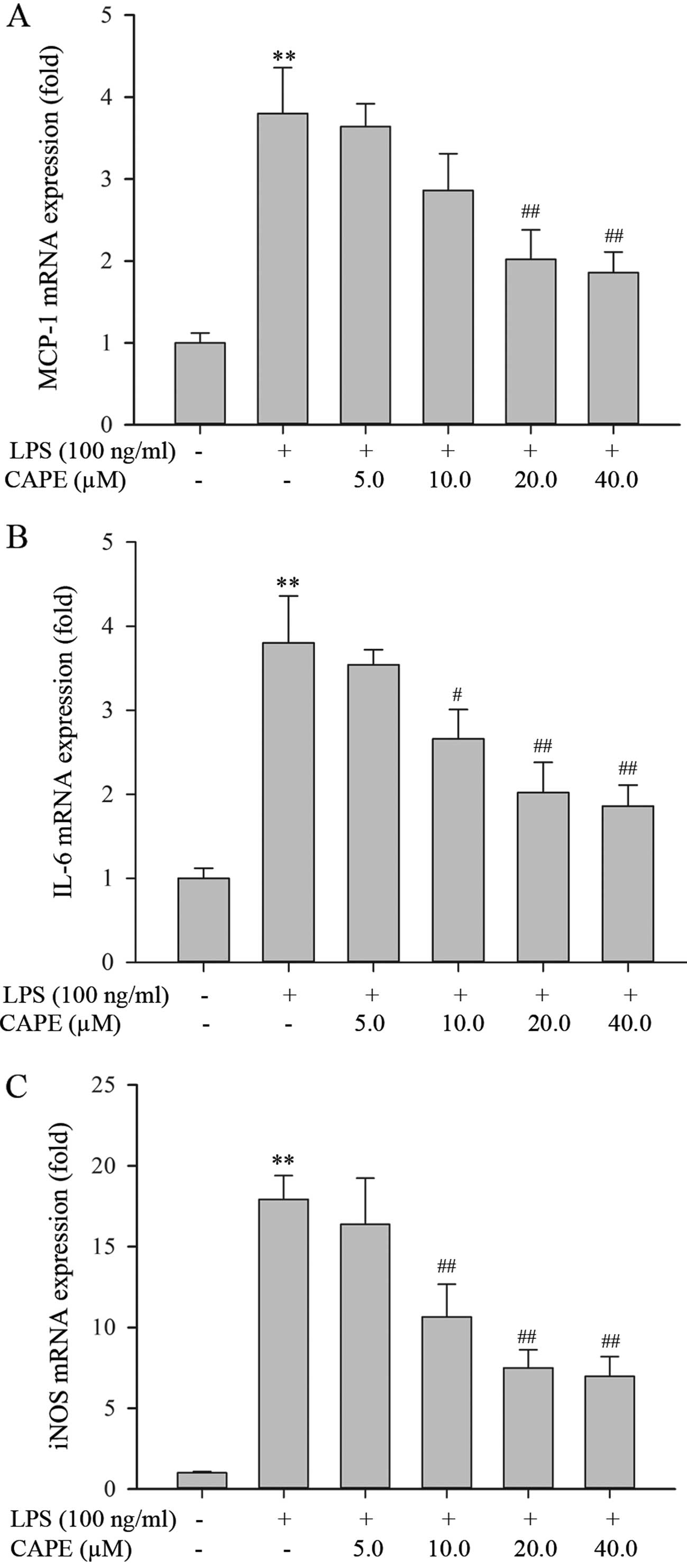
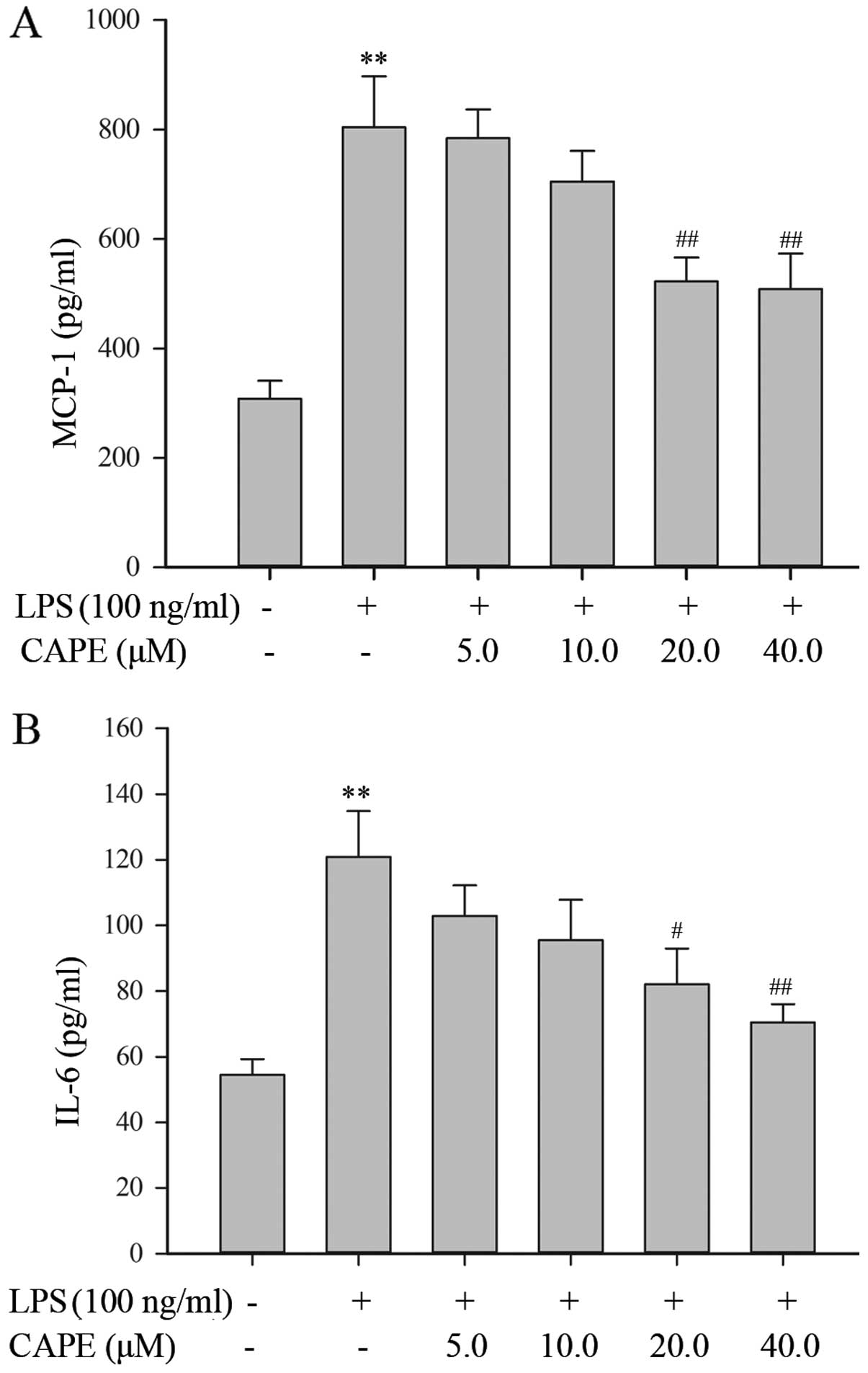
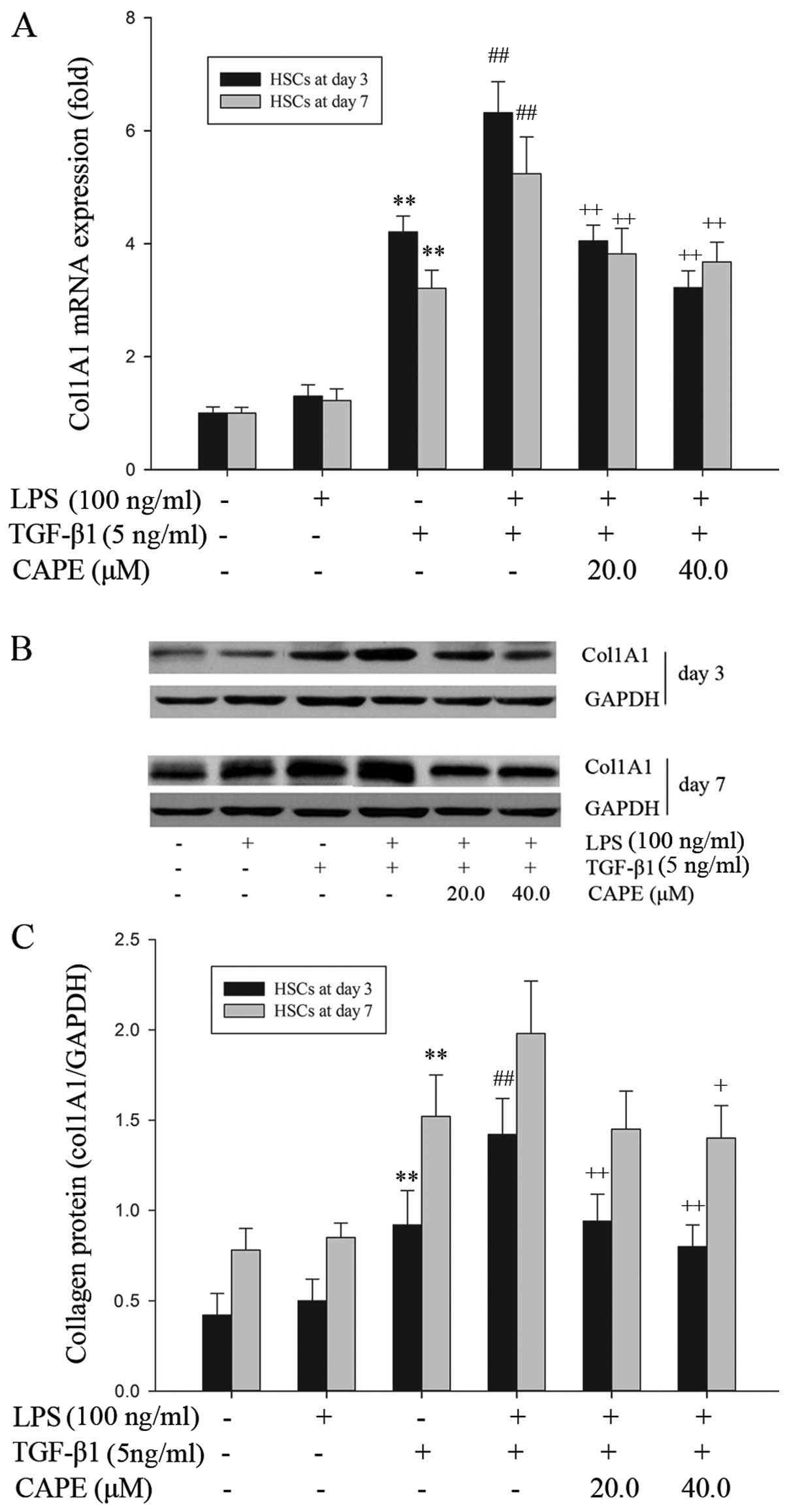
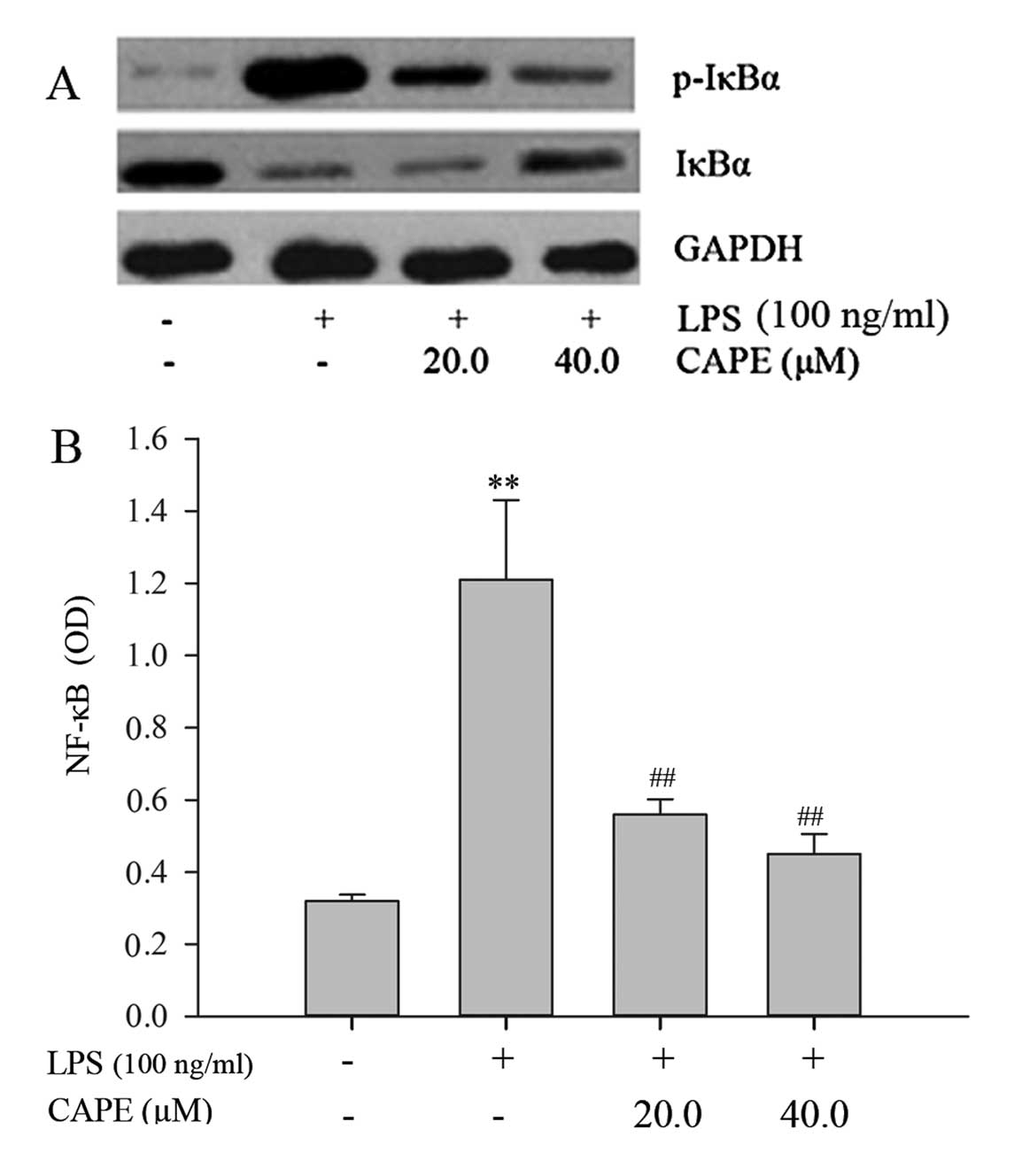
Hepatic stellate cells (HSCs) are the major cell type involved in liver fibrosis. Lipopolysaccharide (LPS)‑mediated signaling through Τoll-like receptor 4 (TLR4) in HSCs has been identified as a key event in liver fibrosis, and as the molecular link between inflammation and liver fibrosis. In this study, we investigated the effects of caffeic acid phenethyl ester (CAPE), one of the main medicinal components of propolis, on the pro‑inflammatory and fibrogenic phenotypes of LPS-stimulated HSCs. HSCs from rats were isolated and cultured in Dulbecco's modified Eagle's medium (DMEM). Following treatment with LPS, HSCs showed a strong pro-inflammatory phenotype with an upregulation of pro-inflammatory mediators, and a fibrogenic phenotype with enhanced collagen synthesis, mediated by transforming growth factor-β1 (TGF‑β1). CAPE significantly and dose-dependently reduced LPS-induced nitrite production, as well as the transcription and protein synthesis of monocyte chemoattractant protein-1 (MCP-1), interleukin-6 (IL-6) and inducible nitric oxide synthase (iNOS), as determined by quantitative reverse transcription-polymerase chain reaction (qRT-PCR), western blotting and enzyme-linked immunosorbent assays (ELISA). CAPE further reduced the TGF-β1‑induced transcription and translation (protein synthesis) of the gene coding for collagen type I α1 (col1A1), in LPS-stimulated HSCs. Following LPS stimulation, the phosphorylation of the nuclear factor-κB (NF-κB) inhibitor IκBα and consequently, the nuclear translocation of NF-κB, were markedly increased in the HSCs, and these changes were reversed by pre-treatment with CAPE. In conclusion, CAPE attenuates the pro-inflammatory phenotype of LPS-stimulated HSCs, as well as the LPS-induced sensitization of HSCs to fibrogenic cytokines by inhibiting NF-κB signaling. Our results provide new insight into the treatment of hepatic fibrosis through regulation of the TLR4 signaling pathway.
View Figures

Figure 1

Figure 2

Figure 3

Figure 4

Figure 5

Figure 6

Figure 7

View References

1 

Friedman SL: Stellate cells: a moving target in hepatic fibrogenesis. Hepatology. 40:1041–1043. 2004. View Article : Google Scholar : PubMed/NCBI

2 

Shaker ME, Ghani A, Shiha GE, Ibrahim TM and Mehal WZ: Nilotinib induces apoptosis and autophagic cell death of activated hepatic stellate cells via inhibition of histone deacetylases. Biochim Biophys Acta. 1833:1992–2003. 2013. View Article : Google Scholar : PubMed/NCBI

3 

Priya S and Sudhakaran PR: Cell survival, activation and apoptosis of hepatic stellate cells: modulation by extracellular matrix proteins. Hepatol Res. 38:1221–1232. 2008.PubMed/NCBI

4 

Tacke F and Weiskirchen R: Update on hepatic stellate cells: pathogenic role in liver fibrosis and novel isolation techniques. Expert Rev Gastroenterol Hepatol. 6:67–80. 2012. View Article : Google Scholar : PubMed/NCBI

5 

Soares JB, Pimentel-Nunes P, Roncon-Albuquerque R and Leite-Moreira A: The role of lipopolysaccharide/toll-like receptor 4 signaling in chronic liver diseases. Hepatol Int. 4:659–672. 2010. View Article : Google Scholar : PubMed/NCBI

6 

Seki E, De Minicis S, Osterreicher CH, et al: TLR4 enhances TGF-beta signaling and hepatic fibrosis. Nat Med. 13:1324–1332. 2007. View Article : Google Scholar : PubMed/NCBI

7 

Yan X, Lin Z, Chen F, et al: Human BAMBI cooperates with Smad7 to inhibit transforming growth factor-beta signaling. J Biol Chem. 284:30097–30104. 2009. View Article : Google Scholar : PubMed/NCBI

8 

Trebicka J, Krag A, Gansweid S, et al: Endotoxin and tumor necrosis factor-receptor levels in portal and hepatic vein of patients with alcoholic liver cirrhosis receiving elective transjugular intrahepatic portosystemic shunt. Eur J Gastroenterol Hepatol. 23:1218–1225. 2011. View Article : Google Scholar

9 

Hanck C, Rossol S, Böcker U, Tokus M and Singer MV: Presence of plasma endotoxin is correlated with tumour necrosis factor receptor levels and disease activity in alcoholic cirrhosis. Alcohol Alcohol. 33:606–608. 1998. View Article : Google Scholar : PubMed/NCBI

10 

Zhu Q, Zou L, Jagavelu K, et al: Intestinal decontamination inhibits TLR4 dependent fibronectin-mediated cross-talk between stellate cells and endothelial cells in liver fibrosis in mice. J Hepatol. 56:893–899. 2012. View Article : Google Scholar : PubMed/NCBI

11 

Bai T, Lian LH, Wu YL, Wan Y and Nan JX: Thymoquinone attenuates liver fibrosis via PI3K and TLR4 signaling pathways in activated hepatic stellate cells. Int Immunopharmacol. 15:275–281. 2013. View Article : Google Scholar : PubMed/NCBI

12 

Pradere JP, Troeger JS, Dapito DH, Mencin AA and Schwabe RF: Toll-like receptor 4 and hepatic fibrogenesis. Semin Liver Dis. 30:232–244. 2010. View Article : Google Scholar : PubMed/NCBI

13 

Luedde T and Trautwein C: A molecular link between inflammation and fibrogenesis: the bacterial microflora influences hepatic fibrosis via toll-like receptor 4-dependent modification of transforming growth factor-beta signaling in hepatic stellate cells. Hepatology. 47:1089–1091. 2008. View Article : Google Scholar

14 

Akira S, Uematsu S and Takeuchi O: Pathogen recognition and innate immunity. Cell. 124:783–801. 2006. View Article : Google Scholar

15 

Isayama F, Hines IN, Kremer M, et al: LPS signaling enhances hepatic fibrogenesis caused by experimental cholestasis in mice. Am J Physiol Gastrointest Liver Physiol. 290:G1318–G1328. 2006. View Article : Google Scholar : PubMed/NCBI

16 

Lotfy M, Badra G, Burham W and Alenzi FQ: Combined use of honey, bee propolis and myrrh in healing a deep, infected wound in a patient with diabetes mellitus. Br J Biomed Sci. 63:171–173. 2006.PubMed/NCBI

17 

Ansorge S, Reinhold D and Lendeckel U: Propolis and some of its constituents down-regulate DNA synthesis and inflammatory cytokine production but induce TGF-beta1 production of human immune cells. Z Naturforsch C. 58:580–589. 2003. View Article : Google Scholar : PubMed/NCBI

18 

Wongmekiat O, Gomonchareonsiri S and Thamprasert K: Caffeic acid phenethyl ester protects against oxidative stress-related renal dysfunction in rats treated with cyclosporin A. Fundam Clin Pharmacol. 25:619–626. 2011. View Article : Google Scholar : PubMed/NCBI

19 

Oktar S, Yönden Z, Aydin M, Ilhan S, Alcin E and Ozturk OH: Protective effects of caffeic acid phenethyl ester on iron-induced liver damage in rats. J Physiol Biochem. 65:339–344. 2009. View Article : Google Scholar : PubMed/NCBI

20 

Toyoda T, Tsukamoto T, Takasu S, et al: Anti-inflammatory effects of caffeic acid phenethyl ester (CAPE), a nuclear factor-kappaB inhibitor, on Helicobacter pylori-induced gastritis in Mongolian gerbils. Int J Cancer. 125:1786–1795. 2009. View Article : Google Scholar : PubMed/NCBI

21 

Ozturk G, Ginis Z, Akyol S, Erden G, Gurel A and Akyol O: The anticancer mechanism of caffeic acid phenethyl ester (CAPE): review of melanomas, lung and prostate cancers. Eur Rev Med Pharmacol Sci. 16:2064–2068. 2012.PubMed/NCBI

22 

Lee Y, Shin DH, Kim JH, et al: Caffeic acid phenethyl ester-mediated Nrf2 activation and IkappaB kinase inhibition are involved in NFkappaB inhibitory effect: structural analysis for NFkappaB inhibition. Eur J Pharmacol. 643:21–28. 2010. View Article : Google Scholar : PubMed/NCBI

23 

Natarajan K, Singh S, Burke TR Jr, Grunberger D and Aggarwal BB: Caffeic acid phenethyl ester is a potent and specific inhibitor of activation of nuclear transcription factor NF-kappa B. Proc Natl Acad Sci USA. 93:9090–9095. 1996. View Article : Google Scholar : PubMed/NCBI

24 

Abdel-Latif MM, Windle HJ, Homasany BS, Sabra K and Kelleher D: Caffeic acid phenethyl ester modulates Helicobacter pylori-induced nuclear factor-kappa B and activator protein-1 expression in gastric epithelial cells. Br J Pharmacol. 146:1139–1147. 2005.PubMed/NCBI

25 

Ramm GA: Isolation and culture of rat hepatic stellate cells. J Gastroenterol Hepatol. 13:846–851. 1998. View Article : Google Scholar : PubMed/NCBI

26 

Weiskirchen R and Gressner AM: Isolation and culture of hepatic stellate cells. Methods Mol Med. 117:99–113. 2005.PubMed/NCBI

27 

Robertson DA, Hughes GA and Lyles GA: Expression of inducible nitric oxide synthase in cultured smooth muscle cells from rat mesenteric lymphatic vessels. Microcirculation. 11:503–515. 2004. View Article : Google Scholar : PubMed/NCBI

28 

Cikos S, Bukovska A and Koppel J: Relative quantification of mRNA: comparison of methods currently used for real-time PCR data analysis. BMC Mol Biol. 8:1132007. View Article : Google Scholar : PubMed/NCBI

29 

Simone RE, Russo M, Catalano A, et al: Lycopene inhibits NF-κB-mediated IL-8 expression and changes redox and PPARγ signalling in cigarette smoke-stimulated macrophages. PLoS One. 6:e196522011.

30 

Bhoopathi P, Chetty C, Kunigal S, Vanamala SK, Rao JS and Lakka SS: Blockade of tumor growth due to matrix metalloproteinase-9 inhibition is mediated by sequential activation of beta1-integrin, ERK, and NF-kappaB. J Biol Chem. 283:1545–1552. 2008. View Article : Google Scholar : PubMed/NCBI

31 

Li H, Zheng HW, Chen H, et al: Hepatitis B virus particles preferably induce Kupffer cells to produce TGF-beta1 over pro-inflammatory cytokines. Dig Liver Dis. 44:328–333. 2012. View Article : Google Scholar : PubMed/NCBI

32 

Schnabl B, Brandl K, Fink M, et al: A TLR4/MD2 fusion protein inhibits LPS-induced pro-inflammatory signaling in hepatic stellate cells. Biochem Biophys Res Commun. 375:210–214. 2008. View Article : Google Scholar : PubMed/NCBI

33 

Bataller R and Brenner DA: Liver fibrosis. J Clin Invest. 115:209–218. 2005. View Article : Google Scholar

34 

Frasinariu OE, Ceccarelli S, Alisi A, Moraru E and Nobili V: Gut-liver axis and fibrosis in nonalcoholic fatty liver disease: an input for novel therapies. Dig Liver Dis. 45:543–551. 2013. View Article : Google Scholar : PubMed/NCBI

35 

Gäbele E, Dostert K, Hofmann C, et al: DSS induced colitis increases portal LPS levels and enhances hepatic inflammation and fibrogenesis in experimental NASH. J Hepatol. 55:1391–1399. 2011.PubMed/NCBI

36 

Guo J and Friedman SL: Toll-like receptor 4 signaling in liver injury and hepatic fibrogenesis. Fibrogenesis Tissue Repair. 3:212010. View Article : Google Scholar : PubMed/NCBI

37 

Guo J, Loke J, Zheng F, et al: Functional linkage of cirrhosis-predictive single nucleotide polymorphisms of Toll-like receptor 4 to hepatic stellate cell responses. Hepatology. 49:960–968. 2009. View Article : Google Scholar : PubMed/NCBI

38 

Brun P, Castagliuolo I, Pinzani M, Palu G and Martines D: Exposure to bacterial cell wall products triggers an inflammatory phenotype in hepatic stellate cells. Am J Physiol Gastrointest Liver Physiol. 289:G571–G578. 2005. View Article : Google Scholar : PubMed/NCBI

39 

Seki E, De Minicis S, Gwak GY, et al: CCR1 and CCR5 promote hepatic fibrosis in mice. J Clin Invest. 119:1858–1870. 2009.PubMed/NCBI

40 

Seki E, de Minicis S, Inokuchi S, et al: CCR2 promotes hepatic fibrosis in mice. Hepatology. 50:185–197. 2009. View Article : Google Scholar : PubMed/NCBI

41 

Borrelli F, Izzo AA, Di Carlo G, et al: Effect of a propolis extract and caffeic acid phenethyl ester on formation of aberrant crypt foci and tumors in the rat colon. Fitoterapia. 73(Suppl 1): S38–S43. 2002. View Article : Google Scholar : PubMed/NCBI

42 

Juman S, Yasui N, Ikeda K, et al: Caffeic acid phenethyl ester suppresses the production of pro-inflammatory cytokines in hypertrophic adipocytes through lipopolysaccharide-stimulated macrophages. Biol Pharm Bull. 35:1941–1946. 2012. View Article : Google Scholar

43 

Kawelke N, Vasel M, Sens C, Au A, Dooley S and Nakchbandi IA: Fibronectin protects from excessive liver fibrosis by modulating the availability of and responsiveness of stellate cells to active TGF-beta. PLoS One. 6:e281812011. View Article : Google Scholar : PubMed/NCBI

44 

Novotny NM, Markel TA, Crisostomo PR and Meldrum DR: Differential IL-6 and VEGF secretion in adult and neonatal mesenchymal stem cells: role of NFkB. Cytokine. 43:215–219. 2008. View Article : Google Scholar : PubMed/NCBI

45 

Wang Y, Rangan GK, Goodwin B, Tay YC and Harris DC: Lipopolysaccharide-induced MCP-1 gene expression in rat tubular epithelial cells is nuclear factor-kappaB dependent. Kidney Int. 57:2011–2022. 2000. View Article : Google Scholar : PubMed/NCBI

46 

Karin M and Ben-Neriah Y: Phosphorylation meets ubiquitination: the control of NF-[kappa]B activity. Annu Rev Immunol. 18:621–663. 2000.PubMed/NCBI

47 

Karin M and Delhase M: The I kappa B kinase (IKK) and NF-kappa B: key elements of proinflammatory signalling. Semin Immunol. 12:85–98. 2000. View Article : Google Scholar : PubMed/NCBI

48 

Ribeiro PS, Cortez-Pinto H, Solá S, et al: Hepatocyte apoptosis, expression of death receptors, and activation of NF-kappaB in the liver of nonalcoholic and alcoholic steatohepatitis patients. Am J Gastroenterol. 99:1708–1717. 2004. View Article : Google Scholar

Related Articles

  • Abstract
  • View
  • Download
  • Twitter
Copy and paste a formatted citation
Spandidos Publications style
Zhao W, Wang L, Yang J, Li L, Xu W and Li T: Caffeic acid phenethyl ester attenuates pro-inflammatory and fibrogenic phenotypes of LPS-stimulated hepatic stellate cells through the inhibition of NF-κB signaling. Int J Mol Med 33: 687-694, 2014.
APA
Zhao, W., Wang, L., Yang, J., Li, L., Xu, W., & Li, T. (2014). Caffeic acid phenethyl ester attenuates pro-inflammatory and fibrogenic phenotypes of LPS-stimulated hepatic stellate cells through the inhibition of NF-κB signaling. International Journal of Molecular Medicine, 33, 687-694. https://doi.org/10.3892/ijmm.2013.1613
MLA
Zhao, W., Wang, L., Yang, J., Li, L., Xu, W., Li, T."Caffeic acid phenethyl ester attenuates pro-inflammatory and fibrogenic phenotypes of LPS-stimulated hepatic stellate cells through the inhibition of NF-κB signaling". International Journal of Molecular Medicine 33.3 (2014): 687-694.
Chicago
Zhao, W., Wang, L., Yang, J., Li, L., Xu, W., Li, T."Caffeic acid phenethyl ester attenuates pro-inflammatory and fibrogenic phenotypes of LPS-stimulated hepatic stellate cells through the inhibition of NF-κB signaling". International Journal of Molecular Medicine 33, no. 3 (2014): 687-694. https://doi.org/10.3892/ijmm.2013.1613
Copy and paste a formatted citation
x
Spandidos Publications style
Zhao W, Wang L, Yang J, Li L, Xu W and Li T: Caffeic acid phenethyl ester attenuates pro-inflammatory and fibrogenic phenotypes of LPS-stimulated hepatic stellate cells through the inhibition of NF-κB signaling. Int J Mol Med 33: 687-694, 2014.
APA
Zhao, W., Wang, L., Yang, J., Li, L., Xu, W., & Li, T. (2014). Caffeic acid phenethyl ester attenuates pro-inflammatory and fibrogenic phenotypes of LPS-stimulated hepatic stellate cells through the inhibition of NF-κB signaling. International Journal of Molecular Medicine, 33, 687-694. https://doi.org/10.3892/ijmm.2013.1613
MLA
Zhao, W., Wang, L., Yang, J., Li, L., Xu, W., Li, T."Caffeic acid phenethyl ester attenuates pro-inflammatory and fibrogenic phenotypes of LPS-stimulated hepatic stellate cells through the inhibition of NF-κB signaling". International Journal of Molecular Medicine 33.3 (2014): 687-694.
Chicago
Zhao, W., Wang, L., Yang, J., Li, L., Xu, W., Li, T."Caffeic acid phenethyl ester attenuates pro-inflammatory and fibrogenic phenotypes of LPS-stimulated hepatic stellate cells through the inhibition of NF-κB signaling". International Journal of Molecular Medicine 33, no. 3 (2014): 687-694. https://doi.org/10.3892/ijmm.2013.1613
Follow us
  • Twitter
  • LinkedIn
  • Facebook
About
  • Spandidos Publications
  • Careers
  • Cookie Policy
  • Privacy Policy
How can we help?
  • Help
  • Live Chat
  • Contact
  • Email to our Support Team