Spandidos Publications Logo
  • About
    • About Spandidos
    • Aims and Scopes
    • Abstracting and Indexing
    • Editorial Policies
    • Reprints and Permissions
    • Job Opportunities
    • Terms and Conditions
    • Contact
  • Journals
    • All Journals
    • Oncology Letters
      • Oncology Letters
      • Information for Authors
      • Editorial Policies
      • Editorial Board
      • Aims and Scope
      • Abstracting and Indexing
      • Bibliographic Information
      • Archive
    • International Journal of Oncology
      • International Journal of Oncology
      • Information for Authors
      • Editorial Policies
      • Editorial Board
      • Aims and Scope
      • Abstracting and Indexing
      • Bibliographic Information
      • Archive
    • Molecular and Clinical Oncology
      • Molecular and Clinical Oncology
      • Information for Authors
      • Editorial Policies
      • Editorial Board
      • Aims and Scope
      • Abstracting and Indexing
      • Bibliographic Information
      • Archive
    • Experimental and Therapeutic Medicine
      • Experimental and Therapeutic Medicine
      • Information for Authors
      • Editorial Policies
      • Editorial Board
      • Aims and Scope
      • Abstracting and Indexing
      • Bibliographic Information
      • Archive
    • International Journal of Molecular Medicine
      • International Journal of Molecular Medicine
      • Information for Authors
      • Editorial Policies
      • Editorial Board
      • Aims and Scope
      • Abstracting and Indexing
      • Bibliographic Information
      • Archive
    • Biomedical Reports
      • Biomedical Reports
      • Information for Authors
      • Editorial Policies
      • Editorial Board
      • Aims and Scope
      • Abstracting and Indexing
      • Bibliographic Information
      • Archive
    • Oncology Reports
      • Oncology Reports
      • Information for Authors
      • Editorial Policies
      • Editorial Board
      • Aims and Scope
      • Abstracting and Indexing
      • Bibliographic Information
      • Archive
    • Molecular Medicine Reports
      • Molecular Medicine Reports
      • Information for Authors
      • Editorial Policies
      • Editorial Board
      • Aims and Scope
      • Abstracting and Indexing
      • Bibliographic Information
      • Archive
    • World Academy of Sciences Journal
      • World Academy of Sciences Journal
      • Information for Authors
      • Editorial Policies
      • Editorial Board
      • Aims and Scope
      • Abstracting and Indexing
      • Bibliographic Information
      • Archive
    • International Journal of Functional Nutrition
      • International Journal of Functional Nutrition
      • Information for Authors
      • Editorial Policies
      • Editorial Board
      • Aims and Scope
      • Abstracting and Indexing
      • Bibliographic Information
      • Archive
    • International Journal of Epigenetics
      • International Journal of Epigenetics
      • Information for Authors
      • Editorial Policies
      • Editorial Board
      • Aims and Scope
      • Abstracting and Indexing
      • Bibliographic Information
      • Archive
    • Medicine International
      • Medicine International
      • Information for Authors
      • Editorial Policies
      • Editorial Board
      • Aims and Scope
      • Abstracting and Indexing
      • Bibliographic Information
      • Archive
  • Articles
  • Information
    • Information for Authors
    • Information for Reviewers
    • Information for Librarians
    • Information for Advertisers
    • Conferences
  • Language Editing
Spandidos Publications Logo
  • About
    • About Spandidos
    • Aims and Scopes
    • Abstracting and Indexing
    • Editorial Policies
    • Reprints and Permissions
    • Job Opportunities
    • Terms and Conditions
    • Contact
  • Journals
    • All Journals
    • Biomedical Reports
      • Information for Authors
      • Editorial Policies
      • Editorial Board
      • Aims and Scope
      • Abstracting and Indexing
      • Bibliographic Information
      • Archive
    • Experimental and Therapeutic Medicine
      • Information for Authors
      • Editorial Policies
      • Editorial Board
      • Aims and Scope
      • Abstracting and Indexing
      • Bibliographic Information
      • Archive
    • International Journal of Epigenetics
      • Information for Authors
      • Editorial Policies
      • Editorial Board
      • Aims and Scope
      • Abstracting and Indexing
      • Bibliographic Information
      • Archive
    • International Journal of Functional Nutrition
      • Information for Authors
      • Editorial Policies
      • Editorial Board
      • Aims and Scope
      • Abstracting and Indexing
      • Bibliographic Information
      • Archive
    • International Journal of Molecular Medicine
      • Information for Authors
      • Editorial Policies
      • Editorial Board
      • Aims and Scope
      • Abstracting and Indexing
      • Bibliographic Information
      • Archive
    • International Journal of Oncology
      • Information for Authors
      • Editorial Policies
      • Editorial Board
      • Aims and Scope
      • Abstracting and Indexing
      • Bibliographic Information
      • Archive
    • Medicine International
      • Information for Authors
      • Editorial Policies
      • Editorial Board
      • Aims and Scope
      • Abstracting and Indexing
      • Bibliographic Information
      • Archive
    • Molecular and Clinical Oncology
      • Information for Authors
      • Editorial Policies
      • Editorial Board
      • Aims and Scope
      • Abstracting and Indexing
      • Bibliographic Information
      • Archive
    • Molecular Medicine Reports
      • Information for Authors
      • Editorial Policies
      • Editorial Board
      • Aims and Scope
      • Abstracting and Indexing
      • Bibliographic Information
      • Archive
    • Oncology Letters
      • Information for Authors
      • Editorial Policies
      • Editorial Board
      • Aims and Scope
      • Abstracting and Indexing
      • Bibliographic Information
      • Archive
    • Oncology Reports
      • Information for Authors
      • Editorial Policies
      • Editorial Board
      • Aims and Scope
      • Abstracting and Indexing
      • Bibliographic Information
      • Archive
    • World Academy of Sciences Journal
      • Information for Authors
      • Editorial Policies
      • Editorial Board
      • Aims and Scope
      • Abstracting and Indexing
      • Bibliographic Information
      • Archive
  • Articles
  • Information
    • For Authors
    • For Reviewers
    • For Librarians
    • For Advertisers
    • Conferences
  • Language Editing
Login Register Submit
  • This site uses cookies
  • You can change your cookie settings at any time by following the instructions in our Cookie Policy. To find out more, you may read our Privacy Policy.

    I agree
Search articles by DOI, keyword, author or affiliation
Search
Advanced Search
presentation
International Journal of Molecular Medicine
Join Editorial Board Propose a Special Issue
Print ISSN: 1107-3756 Online ISSN: 1791-244X
Journal Cover
2014-March Volume 33 Issue 3

Full Size Image

Sign up for eToc alerts
Recommend to Library

Journals

International Journal of Molecular Medicine

International Journal of Molecular Medicine

International Journal of Molecular Medicine is an international journal devoted to molecular mechanisms of human disease.

International Journal of Oncology

International Journal of Oncology

International Journal of Oncology is an international journal devoted to oncology research and cancer treatment.

Molecular Medicine Reports

Molecular Medicine Reports

Covers molecular medicine topics such as pharmacology, pathology, genetics, neuroscience, infectious diseases, molecular cardiology, and molecular surgery.

Oncology Reports

Oncology Reports

Oncology Reports is an international journal devoted to fundamental and applied research in Oncology.

Experimental and Therapeutic Medicine

Experimental and Therapeutic Medicine

Experimental and Therapeutic Medicine is an international journal devoted to laboratory and clinical medicine.

Oncology Letters

Oncology Letters

Oncology Letters is an international journal devoted to Experimental and Clinical Oncology.

Biomedical Reports

Biomedical Reports

Explores a wide range of biological and medical fields, including pharmacology, genetics, microbiology, neuroscience, and molecular cardiology.

Molecular and Clinical Oncology

Molecular and Clinical Oncology

International journal addressing all aspects of oncology research, from tumorigenesis and oncogenes to chemotherapy and metastasis.

World Academy of Sciences Journal

World Academy of Sciences Journal

Multidisciplinary open-access journal spanning biochemistry, genetics, neuroscience, environmental health, and synthetic biology.

International Journal of Functional Nutrition

International Journal of Functional Nutrition

Open-access journal combining biochemistry, pharmacology, immunology, and genetics to advance health through functional nutrition.

International Journal of Epigenetics

International Journal of Epigenetics

Publishes open-access research on using epigenetics to advance understanding and treatment of human disease.

Medicine International

Medicine International

An International Open Access Journal Devoted to General Medicine.

Journal Cover
2014-March Volume 33 Issue 3

Full Size Image

Sign up for eToc alerts
Recommend to Library

  • Article
  • Citations
    • Cite This Article
    • Download Citation
    • Create Citation Alert
    • Remove Citation Alert
    • Cited By
  • Similar Articles
    • Related Articles (in Spandidos Publications)
    • Similar Articles (Google Scholar)
    • Similar Articles (PubMed)
  • Download PDF
  • Download XML
  • View XML
Article

Phytosphigosine-1-phosphate increases sensitivity of EGF-dependent cell proliferation

  • Authors:
    • Hwa Jun Cha
    • Jeong Pyo Lee
    • Kwang Sik Lee
    • Kun Kook Lee
    • Myoung Jun Choi
    • Dong Kyu Lee
    • Kwang Nyeon Kim
    • Sungkwan An
  • View Affiliations / Copyright

    Affiliations: Molecular-Targeted Drug Research Center and Korea Institute for Skin and Clinical Sciences, Konkuk University, Gwangjin-gu, Seoul 143-701, Republic of Korea, Coreana Cosmetics Co., Ltd., Seonggeo-eup, Seobuk-gu, Cheonan-si, Chungcheongnam-do 330-833, Republic of Korea, Phytos Co. Ltd., No. 609, Industry-Academic Collaboration Foundation, Yeongtong-gu, Gyeonggi-do 443-760, Republic of Korea, Industrial Engineering Chemistry, Chungbuk National University, Heungdeok-gu, Cheongju, Chungcheongbuk-do 361-763, Republic of Korea, Damy Chemical Co., Ltd., No. 308, Byuk-San Digital Valley II, Keumchun-gu, Seoul 153-803, Republic of Korea
  • Pages: 649-653
    |
    Published online on: January 7, 2014
       https://doi.org/10.3892/ijmm.2014.1617
  • Expand metrics +
Metrics: Total Views: 0 (Spandidos Publications: | PMC Statistics: )
Metrics: Total PDF Downloads: 0 (Spandidos Publications: | PMC Statistics: )
Cited By (CrossRef): 0 citations Loading Articles...

This article is mentioned in:


Abstract

The dermis is composed of dermal fibroblasts and various synthesized extracellular matrices. Proliferation of these cells is important to skin structure homeostasis. Therefore, human dermal fibroblasts (HDFs) growth factors have been previously evaluated. In the present study, we examined whether phytosphingosine‑1-phosphate (PhS1P) regulates gene expression, particularly cell cycle-related genes. In addition, we investigated whether there was a synergistic effect of proliferation induced by PhS1P and epidermal growth factor (EGF) through PhS1P-regulated genes. A microarray approach was utilized to identify gene expression changes in PhS1P-treated HDFs and data were analyzed using gene ontology (GO). In addition, proliferative synergistic effects were measured using an MTT assay. The results showed that PhS1P regulates various genes, particularly cell cycle-related genes. Microarray data, followed by GO, indicated that PhS1P affected the biological processes involved in the cell cycle (cyclins A2, B1 and B2). Furthermore, these genes synergistically affected EGF-dependent proliferation. The results obtained in this study demonstrated that PhS1P altered gene expression profiles, inducing EGF-dependent cell proliferation. Therefore, PhS1p acts as a synergistic effector for EGF.

Introduction

Human dermal fibroblasts (HDFs) are mesenchymal cells specialized in extracellular matrix synthesis, including collagen, elastin and hyaluronic acid, in the dermis (1,2). Dermal fibroblast proliferation is important in wound healing and skin structure homeostasis (3). Therefore, a growth factor was used for proliferating HDFs in cosmetics (4).

Epidermal growth factor (EGF), one of various growth factors, is a small polypeptide first purified by Cohen from the submaxillary gland of adult male mice (5). EGF is important in cell proliferation, migration and differentiation (5). These roles are mediated via activation of the EGF receptor (EGFR), a transmembrane glycoprotein with tyrosine kinase activity (6). Activated EGFR regulates proliferation and migration via activation of intrinsic signaling molecules (7,8). EGF is added to serum-free media in in vitro cell culture systems as EGF is essential to cell growth (9). Furthermore, EGF exerts cytoprotective effects from cell damage, such as senescence (10). Therefore, EGF is used as an inducer of dermal fibroblast proliferation in cosmetics and medicine (4).

Phytosphingosine-1-phosphate (PhS1P) is derived from fungi and plants, and is structurally similar to sphingosine-1-phosphate (S1P), an endogenous signal lipid in mammalian cells (11,12). PhS1P is an agonist for S1P receptors, with a particularly high affinity for S1P4 (13). S1P receptors include the isomers, S1P1, S1P2, S1P3 and S1P4, in mammalian cells (13). Since each receptor activates different downstream signals, the effects of these S1Ps are slightly different (14,15). Therefore, we aimed to evaluate the PhS1P function in HDFs. The results showed that PhS1P altered gene expression and induced EGF-dependent proliferation as a synergistic effector.

Materials and methods

Cell culture and materials

HDFs were purchased from Lonza (Basel, Switzerland) and maintained in Dulbecco’s modified Eagle’s medium (DMEM; Gibco, Life Technologies, Carlsbad, CA, USA) supplemented with 10% fetal bovine serum (Sigma-Aldrich, St. Louis, MO, USA). The cells were incubated at 37°C in a humidified incubator containing 5% CO2. PhS1P was obtained from Phytos Co., Ltd. (Suwon, Korea).

RNA extraction and microarray

Total RNA was isolated using RiboEX (GeneAll, Seoul, Korea) and quantified based on the optical density ratio (280/260 nm) using a Bioanalyzer 2100 (28S RNA/18S RNA ratio; Agilent Technologies, Santa Clara, CA, USA). Equal amounts of RNA were used to synthesize cDNA and label it with biotin using an RNA amplification kit (Ambion, Austin, TX, USA). After labeling, the microarray was hybridized with biotin-labeled RNA and streptavidin-Cy3 (Invitrogen Life Technologies, Carlsbad, CA, USA). Following hybridization, the microarray was washed using wash E1BC buffer and scanned using the iScan system (both from Illumina, Hayward, CA, USA).

Microarray analyses

Microarray data were analyzed using Genespring GX software version 11 (Agilent Technologies). mRNAs flagged ‘present’ in at least one sample were analyzed using fold-change. The threshold cut-off was 1.3-fold for fold-change between non-treated HDFs and PhS1P-treated HDFs. Significantly altered mRNAs were sorted using the gene ontology (GO) tool.

Quantitative polymerase chain reaction (qPCR)

cDNA was synthesized using MMLV-reverse transcriptase (Invitrogen Life Technologies) according to the manufacturer’s instructions. Synthesized cDNA was used for qPCR (Line gene K; Bioer Technology, Co., Ltd., China) using specific primers for cyclin A1, B1 and B2. Primers were designed by primer 3 (http://frodo.wi.mit.edu) (Table I). Expression was normalized to β-actin.

Table I

Quantitative PCR primer sequences.

Table I

Quantitative PCR primer sequences.

GenePrimer sequences
Cyclin A2Forward 5′-TTATTGCTGGAGCTGCCTTT-3′
Reverse 5′-CTCTGGTGGGTTGAGGAGAG-3′
Cyclin B1Forward 5′-CGGGAAGTCACTGGAAACAT-3′
Reverse 5′-AAACATGGCAGTGACACCAA-3′
Cyclin B2Forward 5′-TTGCAGTCCATAAACCCACA-3′
Reverse 5′-GAAGCCAAGAGCAGAGCAGT-3′
MTT assay

Cell viability was assessed using 3-(4,5-dimethylthiazol-2-yl)-2,5-diphenyltetrazolium bromide (MTT) assay. HDFs were cultured for 24 h in 96-well plates with PhS1P and EGF. MTT tetrazolium salt (0.5 mg/ml; Sigma) was added to cells for 4 h. After incubation, the medium was replaced with dimethyl sulfoxide in each well. The absorbance of each sample was measured at 595 nm using a plate reader (Bio-Rad Laboratories, Hercules, CA, USA).

Results

PhS1P cytotoxicity in HDFs

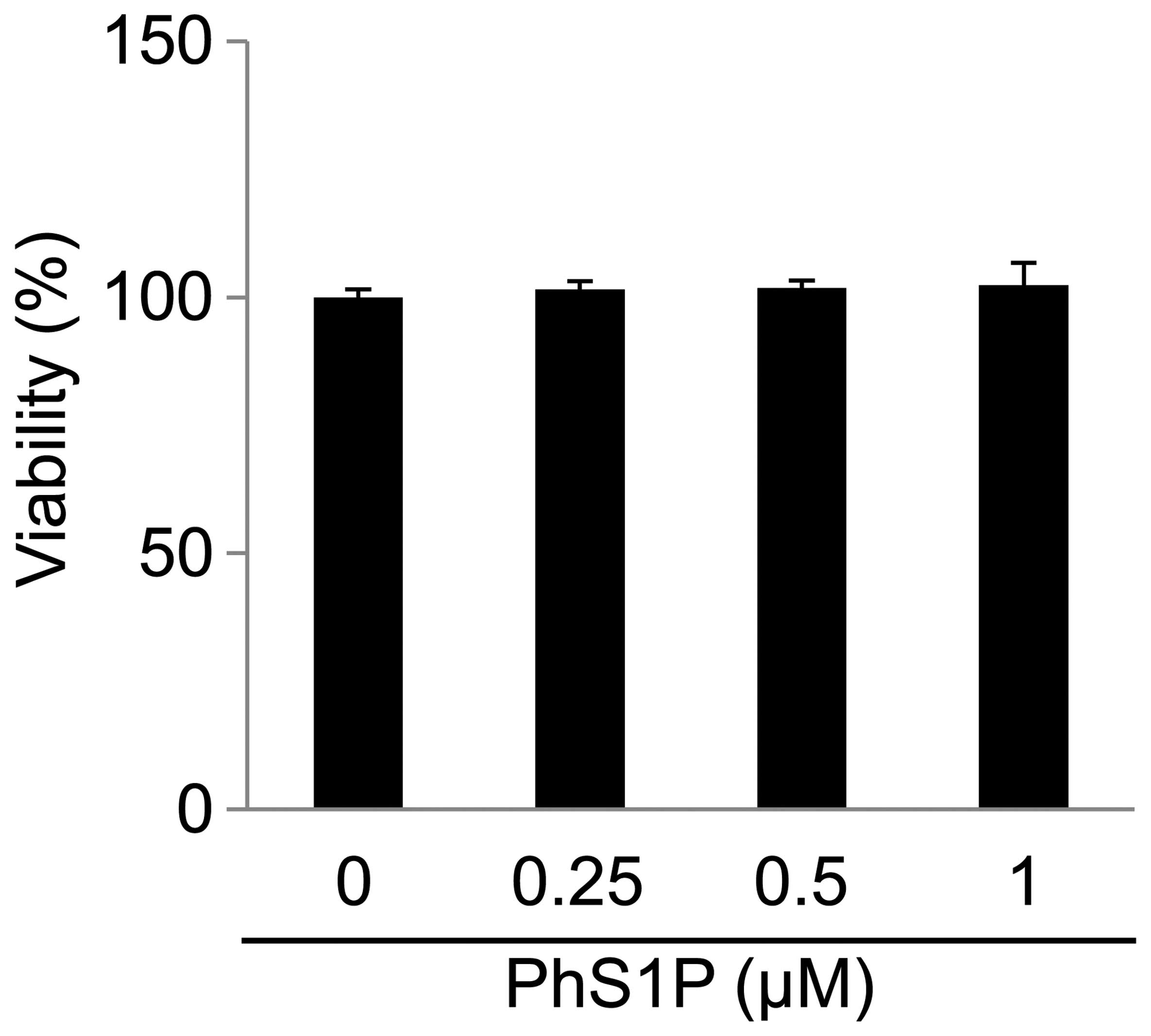
To assess the effect of PhS1P on cell viability, HDFs were treated with various concentrations of PhS1P (0, 0.25, 0.5 and 1 μM) for 24 h (Fig. 1). We determined that PhS1P at concentrations of ≤1 μM had no cytotoxicity.

Figure 1

Phytosphingosine-1-phosphate (PhS1P) affects human dermal fibroblasts (HDFs) viability. Dose-dependent effect of PhS1P on HDF viability. HDFs (5×10⁴ cells/well) were plated in 24-well plates and cultured for 24 h in serum-free DMEM with the indicated concentrations of PhS1P and epidermal growth factor (EGF). Cell viability was determined using MTT assay and absorbance was measured at 490 nm. Mean values were calculated from three independent experiments. Results are expressed as the mean ± SD.

PhS1P alters the mRNA expression profile

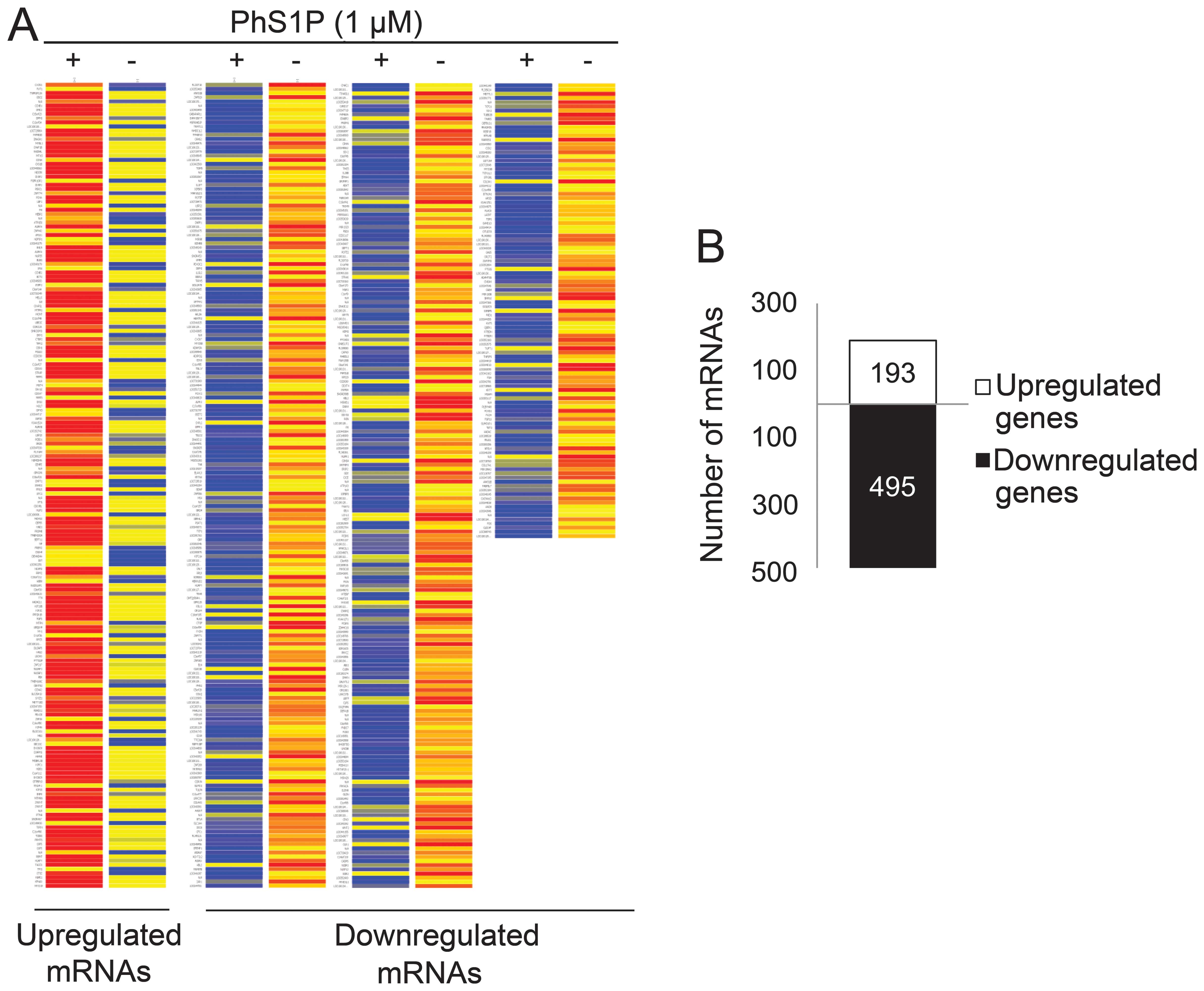
To identify genes that may play a PhS1P-dependent role, we compared the expression profiles of non-treated and 1 μM PhS1P-treated HDFs using the Illumina bead chip HumanHT-12. In 47,207 whole genes, we first filtered 35,973 genes that were flagged ‘present’ with a frequency higher than the sensitivity of detection in a minimum of one array. Fold-change was then analyzed in these flag-filtered genes. Genes that changed by 1.3-fold between non-treated and PhS1P-treated HDFs were presented on the heat map (Fig. 2A). The analyses identified 193 upregulated genes and 495 downregulated genes (Fig. 2B).

Figure 2

Phytosphingosine-1-phosphate (PhS1P) regulates the gene expression profile in human dermal fibroblasts (HDFs). HDFs were treated with PhS1P (1 μM) for 24 h, and total RNA was extracted as described in Materials and methods. Changes in gene expression were determined by cDNA microarray gene profiling using the Illumina Human Bead-Chip array. A fold-change of >1.3-fold was considered differential expression. (A) Heat map of upregulated and downregulated genes. Red and blue colors show relative expression intensity. (B) Number of mRNA altered by 1 μM PhS1P in HDFs.

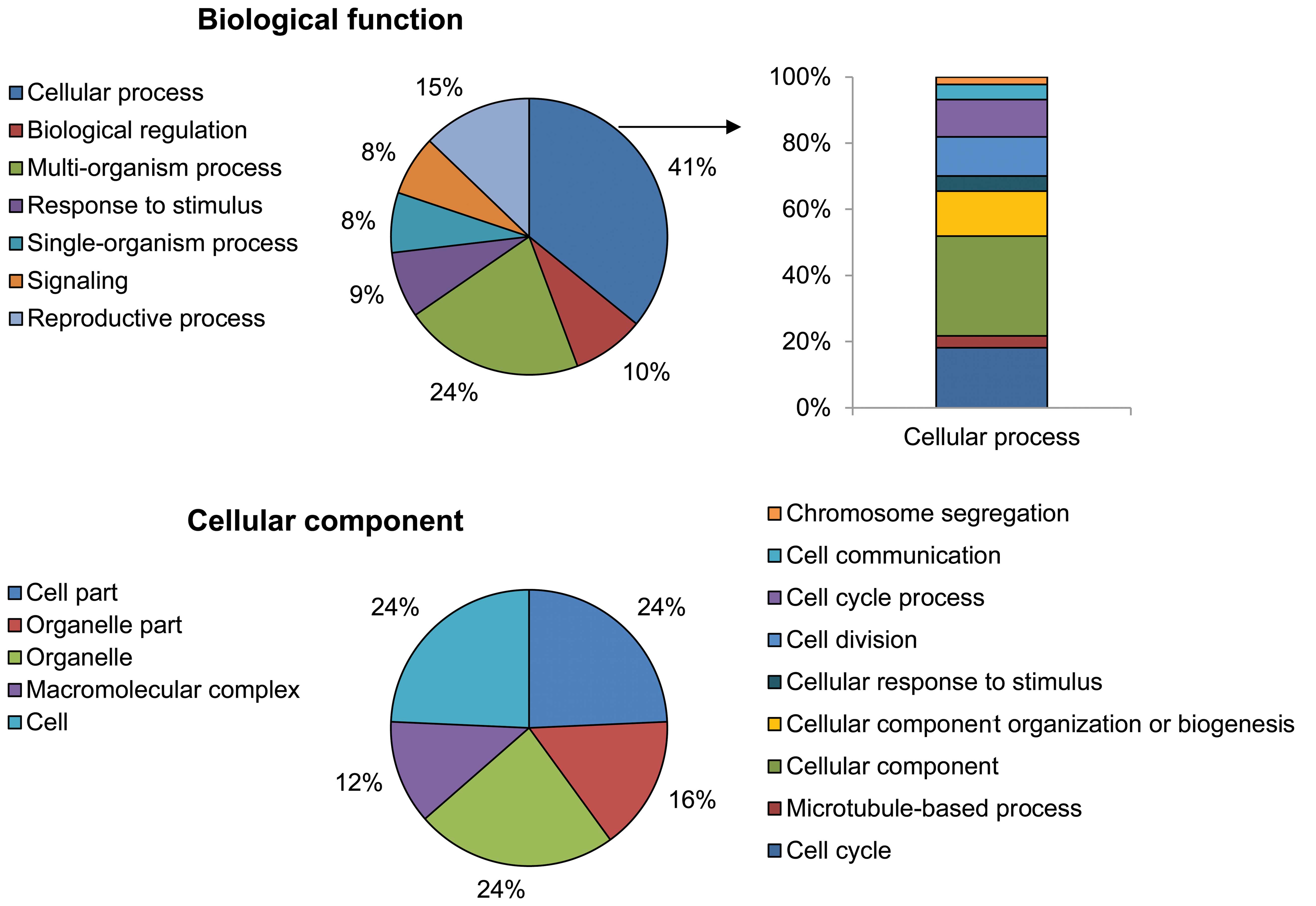
Using the GO analytical tool, the genes were sorted based on their roles in biological processes (Fig. 3). Genes upregulated in PhS1P-treated HDFs appeared to be involved in cell processes such as cell cycle, cell division, microtubule-based processes, chromosome segregation, cell communication, cellular responses to stimuli, and cellular component organization or biogenesis. In particular, cell cycle-related ontology (cell cycle, cell division and chromosome segregation) was significantly enriched by PhS1P.

Figure 3

Gene ontology (GO) analyses of phytosphingosine-1-phosphate (PhS1P)-related genes in human dermal fibroblasts (HDFs). Enriched GO categories (P<0.01) were determined by counting ontology of up- and downregulated genes in biological processes. Gene classification was performed according to gene ontology terms: i) biological function, ii) cellular component and iii) molecular function. However, molecular function was not analyzed in the GO analyses.

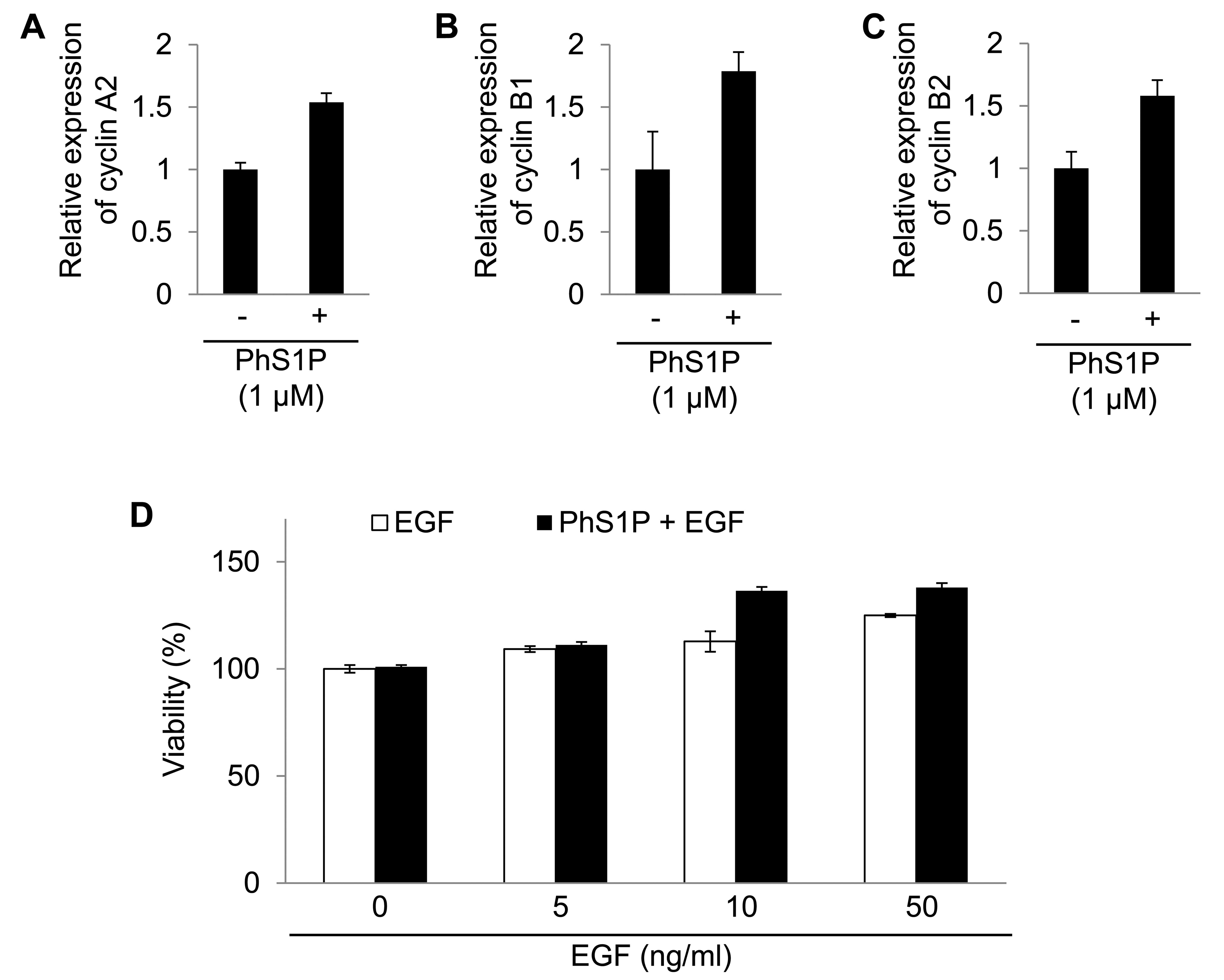
Cyclins A2, B1 and B2 were regulated by PhS1P. Cyclins are well-known regulators in cells (16). Therefore, the analyses revealed that PhS1P affected cell proliferation by altering specific mRNAs. In addition, we confirmed the mRNA expression change of cyclin A2, B1 and B2 using qPCR (Fig. 4).

Figure 4

Phytosphingosine-1-phosphate (PhS1P) regulates cell cycle-related genes and shows the proliferative synergistic effect with epidermal growth factor (EGF) in human dermal fibroblasts (HDFs). Total RNA was isolated from PhS1P-treated and non-treated HDFs. Results are expressed as the mean ± SD in triplicate. (A) Cyclin A2, (B) cyclin B1 and (C) cyclin B2. (D) Proliferative synergistic effect of PhS1P and EGF. HDFs (5×10⁴ cells/well) were plated in 24-well plates and cultured for 24 h in serum-free DMEM with the indicated concentrations of PhS1P and EGF. Cell viability was determined using MTT assay and absorbance was measured at 490 nm. Mean values were calculated from three independent experiments. Results are expressed as the mean ± SD.

We also examined the synergistic effect of PhS1P and EGF on HDF viability. Compared with PhS1P-treated HDFs in the absence of EGF, the viability of PhS1P-treated HDFs with EGF was markedly increased (Fig. 4D). These data indicate that PhS1P is a co-effector in the induction of EGF-dependent cell proliferation.

Discussion

The aim of the study was to evaluate the effect of PhS1P on EGF-induced proliferation in HDFs. PhS1P is phytochemically derived from fungi, plants, and even mammalian cells (12). In a previous study, it was shown that PhS1P protects against hydrogen peroxide-dependent growth arrest (17). Recent data from Lee et al (17) suggested that PhS1P had no significant effect on the proliferation at concentrations <1 μM in HDFs (Fig. 1). However, PhS1P (1 μM) regulates various cell cycle-related genes in HDFs (Fig. 2). In particular, the cyclins (cyclin A2, B1 and B2), master regulators of the cell cycle, were upregulated by PhS1P. Cyclin A2 regulates S-phase progression and entry into mitosis (18,19). During S phase, cyclin A2 initiates DNA synthesis (20). During the G/M phase, cyclin A2 triggers entry into mitosis by activating cyclin B1-Cdk1 (21).

In the progressing cell cycle, a sustained high expression of cyclins is essential (16). However, overexpression of cyclins is insufficient to induce cell cycle progression (22,23). As shown in Fig. 2, PhS1P upregulated mRNA expression of cyclin A2, B1 and B2 although there was no change in cell viability (Figs. 1 and 2).

Combining the present data with our previous data (17), we determined that <1 μM PhS1P increases cyclin expression, but does not affect viability. Moreover, EGF triggered proliferation in PhS1P-treated HDFs (Fig. 4D). Therefore, together with the results from Ikezawa et al (22), our data suggest that a cyclin-enriched condition results in synergistic growth following treatment with growth factors, such as EGF (24).

In summary, results of the present study have shown that PhS1P regulates cell cycle-related genes. In addition, the changes in gene expression synergistically trigger EGF-induced proliferation.

Acknowledgements

We would like to thank all other members of Damy Chemical Co., Ltd. for their support. This study was supported by the Konkuk University in 2012.

References

1 

Crigler L, Kazhanie A, Yoon TJ, Zakhari J, Anders J, Taylor B and Virador VM: Isolation of a mesenchymal cell population from murine dermis that contains progenitors of multiple cell lineages. FASEB J. 21:2050–2063. 2007. View Article : Google Scholar : PubMed/NCBI

2 

Giro MG, Oikarinen AI, Oikarinen H, Sephel G, Uitto J and Davidson JM: Demonstration of elastin gene expression in human skin fibroblast cultures and reduced tropoelastin production by cells from a patient with atrophoderma. J Clin Invest. 75:672–628. 1985. View Article : Google Scholar : PubMed/NCBI

3 

Schreier T, Degen E and Baschong W: Fibroblast migration and proliferation during in vitro wound healing. A quantitative comparison between various growth factors and a low molecular weight blood dialysate used in the clinic to normalize impaired wound healing. Res Exp Med (Berl). 193:195–205. 1993.

4 

Allen G: Cosmetics - chemical technology or biotechnology? Int J Cosmet Sci. 6:61–69. 1984. View Article : Google Scholar : PubMed/NCBI

5 

Carpenter G and Cohen S: Epidermal growth factor. J Biol Chem. 265:7709–7712. 1990.

6 

Cohen S: The receptor for epidermal growth factor functions as a tyrosyl-specific kinase. Prog Nucleic Acid Res Mol Biol. 29:245–247. 1983. View Article : Google Scholar : PubMed/NCBI

7 

Dittmar T, Husemann A, Schewe Y, Nofer JR, Niggemann B, Zänker KS and Brandt BH: Induction of cancer cell migration by epidermal growth factor is initiated by specific phosphorylation of tyrosine 1248 of c-erbB-2 receptor via EGFR. FASEB J. 16:1823–1825. 2002.PubMed/NCBI

8 

Andl CD, Mizushima T, Nakagawa H, Oyama K, Harada H, Chruma K, Herlyn M and Rustgi AK: Epidermal growth factor receptor mediates increased cell proliferation, migration, and aggregation in esophageal keratinocytes in vitro and in vivo. J Biol Chem. 278:1824–1830. 2003. View Article : Google Scholar : PubMed/NCBI

9 

Halleux C and Schneider YJ: Iron absorption by CaCo2 cells cultivated in serum-free medium as in vitro model of the human intestinal epithelial barrier. J Cell Physiol. 158:17–28. 1994.

10 

Shiraha H, Gupta K, Drabik K and Wells A: Aging fibroblasts present reduced epidermal growth factor (EGF) responsiveness due to preferential loss of EGF receptors. J Biol Chem. 275:19343–19351. 2000. View Article : Google Scholar : PubMed/NCBI

11 

Kim MK, Park KS, Lee H, Kim YD, Yun J and Bae YS: Phytosphingosine-1-phosphate stimulates chemotactic migration of L2071 mouse fibroblasts via pertussis toxin-sensitive G-proteins. Exp Mol Med. 39:185–194. 2007. View Article : Google Scholar : PubMed/NCBI

12 

Pata MO, Hannun YA and Ng CK: Plant sphingolipids: decoding the enigma of the Sphinx. New Phytol. 185:611–630. 2010. View Article : Google Scholar : PubMed/NCBI

13 

Inagaki Y, Pham TT, Fujiwara Y, Kohno T, Osborne DA, Igarashi Y, Tigyi G and Parrill AL: Sphingosine 1-phosphate analogue recognition and selectivity at S1P4 within the endothelial differentiation gene family of receptors. Biochem J. 389:187–195. 2005. View Article : Google Scholar : PubMed/NCBI

14 

Takuwa N, Du W, Kaneko E, Okamoto Y, Yoshioka K and Takuwa Y: Tumor-suppressive sphingosine-1-phosphate receptor-2 counteracting tumor-promoting sphingosine-1-phosphate receptor-1 and sphingosine kinase 1 - Jekyll Hidden behind Hyde. Am J Cancer Res. 1:460–481. 2011.PubMed/NCBI

15 

Takuwa Y, Du W, Qi X, Okamoto Y, Takuwa N and Yoshioka K: Roles of sphingosine-1-phosphate signaling in angiogenesis. World J Biol Chem. 1:298–306. 2010. View Article : Google Scholar : PubMed/NCBI

16 

Malumbres M and Barbacid M: Cell cycle, CDKs and cancer: a changing paradigm. Nat Rev Cancer. 9:153–166. 2009. View Article : Google Scholar : PubMed/NCBI

17 

Lee JP, Cha HJ, Lee KS, Lee KK, Son JH, Kim KN, Lee DK and An S: Phytosphingosine-1-phosphate represses the hydrogen peroxide-induced activation of c-Jun N-terminal kinase in human dermal fibroblasts through the phosphatidylinositol 3-kinase/Akt pathway. Arch Dermatol Res. 304:673–678. 2012. View Article : Google Scholar : PubMed/NCBI

18 

Ohashi A, Imai H and Minami N: Cyclin A2 is phosphorylated during the G2/M transition in mouse two-cell embryos. Mol Reprod Dev. 66:343–348. 2003. View Article : Google Scholar : PubMed/NCBI

19 

Alexandrow MG and Hamlin JL: Cdc6 chromatin affinity is unaffected by serine-54 phosphorylation, S-phase progression, and overexpression of cyclin A. Mol Cell Biol. 24:1614–1627. 2004. View Article : Google Scholar : PubMed/NCBI

20 

Yam CH, Fung TK and Poon RY: Cyclin A in cell cycle control and cancer. Cell Mol Life Sci. 59:1317–1326. 2002. View Article : Google Scholar : PubMed/NCBI

21 

Fung TK, Ma HT and Poon RY: Specialized roles of the two mitotic cyclins in somatic cells: cyclin A as an activator of M phase-promoting factor. Mol Biol Cell. 18:1861–1873. 2007. View Article : Google Scholar : PubMed/NCBI

22 

Ikezawa K, Ohtsubo M, Norwood TH and Narayanan AS: Role of cyclin E and cyclin E-dependent kinase in mitogenic stimulation by cementum-derived growth factor in human fibroblasts. FASEB J. 12:1233–1239. 1998.PubMed/NCBI

23 

Chou JL, Fan Z, DeBlasio T, Koff A, Rosen N and Mendelsohn J: Constitutive overexpression of cyclin D1 in human breast epithelial cells does not prevent G1 arrest induced by deprivation of epidermal growth factor. Breast Cancer Res Treat. 55:267–283. 1999. View Article : Google Scholar : PubMed/NCBI

24 

Fisher D, Krasinska L, Coudreuse D and Novák B: Phosphorylation network dynamics in the control of cell cycle transitions. J Cell Sci. 125:4703–4711. 2012. View Article : Google Scholar : PubMed/NCBI

Related Articles

  • Abstract
  • View
  • Download
  • Twitter
Copy and paste a formatted citation
Spandidos Publications style
Cha HJ, Lee JP, Lee KS, Lee KK, Choi MJ, Lee DK, Kim KN and An S: Phytosphigosine-1-phosphate increases sensitivity of EGF-dependent cell proliferation. Int J Mol Med 33: 649-653, 2014.
APA
Cha, H.J., Lee, J.P., Lee, K.S., Lee, K.K., Choi, M.J., Lee, D.K. ... An, S. (2014). Phytosphigosine-1-phosphate increases sensitivity of EGF-dependent cell proliferation. International Journal of Molecular Medicine, 33, 649-653. https://doi.org/10.3892/ijmm.2014.1617
MLA
Cha, H. J., Lee, J. P., Lee, K. S., Lee, K. K., Choi, M. J., Lee, D. K., Kim, K. N., An, S."Phytosphigosine-1-phosphate increases sensitivity of EGF-dependent cell proliferation". International Journal of Molecular Medicine 33.3 (2014): 649-653.
Chicago
Cha, H. J., Lee, J. P., Lee, K. S., Lee, K. K., Choi, M. J., Lee, D. K., Kim, K. N., An, S."Phytosphigosine-1-phosphate increases sensitivity of EGF-dependent cell proliferation". International Journal of Molecular Medicine 33, no. 3 (2014): 649-653. https://doi.org/10.3892/ijmm.2014.1617
Copy and paste a formatted citation
x
Spandidos Publications style
Cha HJ, Lee JP, Lee KS, Lee KK, Choi MJ, Lee DK, Kim KN and An S: Phytosphigosine-1-phosphate increases sensitivity of EGF-dependent cell proliferation. Int J Mol Med 33: 649-653, 2014.
APA
Cha, H.J., Lee, J.P., Lee, K.S., Lee, K.K., Choi, M.J., Lee, D.K. ... An, S. (2014). Phytosphigosine-1-phosphate increases sensitivity of EGF-dependent cell proliferation. International Journal of Molecular Medicine, 33, 649-653. https://doi.org/10.3892/ijmm.2014.1617
MLA
Cha, H. J., Lee, J. P., Lee, K. S., Lee, K. K., Choi, M. J., Lee, D. K., Kim, K. N., An, S."Phytosphigosine-1-phosphate increases sensitivity of EGF-dependent cell proliferation". International Journal of Molecular Medicine 33.3 (2014): 649-653.
Chicago
Cha, H. J., Lee, J. P., Lee, K. S., Lee, K. K., Choi, M. J., Lee, D. K., Kim, K. N., An, S."Phytosphigosine-1-phosphate increases sensitivity of EGF-dependent cell proliferation". International Journal of Molecular Medicine 33, no. 3 (2014): 649-653. https://doi.org/10.3892/ijmm.2014.1617
Follow us
  • Twitter
  • LinkedIn
  • Facebook
About
  • Spandidos Publications
  • Careers
  • Cookie Policy
  • Privacy Policy
How can we help?
  • Help
  • Live Chat
  • Contact
  • Email to our Support Team