Spandidos Publications Logo
  • About
    • About Spandidos
    • Aims and Scopes
    • Abstracting and Indexing
    • Editorial Policies
    • Reprints and Permissions
    • Job Opportunities
    • Terms and Conditions
    • Contact
  • Journals
    • All Journals
    • Oncology Letters
      • Oncology Letters
      • Information for Authors
      • Editorial Policies
      • Editorial Board
      • Aims and Scope
      • Abstracting and Indexing
      • Bibliographic Information
      • Archive
    • International Journal of Oncology
      • International Journal of Oncology
      • Information for Authors
      • Editorial Policies
      • Editorial Board
      • Aims and Scope
      • Abstracting and Indexing
      • Bibliographic Information
      • Archive
    • Molecular and Clinical Oncology
      • Molecular and Clinical Oncology
      • Information for Authors
      • Editorial Policies
      • Editorial Board
      • Aims and Scope
      • Abstracting and Indexing
      • Bibliographic Information
      • Archive
    • Experimental and Therapeutic Medicine
      • Experimental and Therapeutic Medicine
      • Information for Authors
      • Editorial Policies
      • Editorial Board
      • Aims and Scope
      • Abstracting and Indexing
      • Bibliographic Information
      • Archive
    • International Journal of Molecular Medicine
      • International Journal of Molecular Medicine
      • Information for Authors
      • Editorial Policies
      • Editorial Board
      • Aims and Scope
      • Abstracting and Indexing
      • Bibliographic Information
      • Archive
    • Biomedical Reports
      • Biomedical Reports
      • Information for Authors
      • Editorial Policies
      • Editorial Board
      • Aims and Scope
      • Abstracting and Indexing
      • Bibliographic Information
      • Archive
    • Oncology Reports
      • Oncology Reports
      • Information for Authors
      • Editorial Policies
      • Editorial Board
      • Aims and Scope
      • Abstracting and Indexing
      • Bibliographic Information
      • Archive
    • Molecular Medicine Reports
      • Molecular Medicine Reports
      • Information for Authors
      • Editorial Policies
      • Editorial Board
      • Aims and Scope
      • Abstracting and Indexing
      • Bibliographic Information
      • Archive
    • World Academy of Sciences Journal
      • World Academy of Sciences Journal
      • Information for Authors
      • Editorial Policies
      • Editorial Board
      • Aims and Scope
      • Abstracting and Indexing
      • Bibliographic Information
      • Archive
    • International Journal of Functional Nutrition
      • International Journal of Functional Nutrition
      • Information for Authors
      • Editorial Policies
      • Editorial Board
      • Aims and Scope
      • Abstracting and Indexing
      • Bibliographic Information
      • Archive
    • International Journal of Epigenetics
      • International Journal of Epigenetics
      • Information for Authors
      • Editorial Policies
      • Editorial Board
      • Aims and Scope
      • Abstracting and Indexing
      • Bibliographic Information
      • Archive
    • Medicine International
      • Medicine International
      • Information for Authors
      • Editorial Policies
      • Editorial Board
      • Aims and Scope
      • Abstracting and Indexing
      • Bibliographic Information
      • Archive
  • Articles
  • Information
    • Information for Authors
    • Information for Reviewers
    • Information for Librarians
    • Information for Advertisers
    • Conferences
  • Language Editing
Spandidos Publications Logo
  • About
    • About Spandidos
    • Aims and Scopes
    • Abstracting and Indexing
    • Editorial Policies
    • Reprints and Permissions
    • Job Opportunities
    • Terms and Conditions
    • Contact
  • Journals
    • All Journals
    • Biomedical Reports
      • Information for Authors
      • Editorial Policies
      • Editorial Board
      • Aims and Scope
      • Abstracting and Indexing
      • Bibliographic Information
      • Archive
    • Experimental and Therapeutic Medicine
      • Information for Authors
      • Editorial Policies
      • Editorial Board
      • Aims and Scope
      • Abstracting and Indexing
      • Bibliographic Information
      • Archive
    • International Journal of Epigenetics
      • Information for Authors
      • Editorial Policies
      • Editorial Board
      • Aims and Scope
      • Abstracting and Indexing
      • Bibliographic Information
      • Archive
    • International Journal of Functional Nutrition
      • Information for Authors
      • Editorial Policies
      • Editorial Board
      • Aims and Scope
      • Abstracting and Indexing
      • Bibliographic Information
      • Archive
    • International Journal of Molecular Medicine
      • Information for Authors
      • Editorial Policies
      • Editorial Board
      • Aims and Scope
      • Abstracting and Indexing
      • Bibliographic Information
      • Archive
    • International Journal of Oncology
      • Information for Authors
      • Editorial Policies
      • Editorial Board
      • Aims and Scope
      • Abstracting and Indexing
      • Bibliographic Information
      • Archive
    • Medicine International
      • Information for Authors
      • Editorial Policies
      • Editorial Board
      • Aims and Scope
      • Abstracting and Indexing
      • Bibliographic Information
      • Archive
    • Molecular and Clinical Oncology
      • Information for Authors
      • Editorial Policies
      • Editorial Board
      • Aims and Scope
      • Abstracting and Indexing
      • Bibliographic Information
      • Archive
    • Molecular Medicine Reports
      • Information for Authors
      • Editorial Policies
      • Editorial Board
      • Aims and Scope
      • Abstracting and Indexing
      • Bibliographic Information
      • Archive
    • Oncology Letters
      • Information for Authors
      • Editorial Policies
      • Editorial Board
      • Aims and Scope
      • Abstracting and Indexing
      • Bibliographic Information
      • Archive
    • Oncology Reports
      • Information for Authors
      • Editorial Policies
      • Editorial Board
      • Aims and Scope
      • Abstracting and Indexing
      • Bibliographic Information
      • Archive
    • World Academy of Sciences Journal
      • Information for Authors
      • Editorial Policies
      • Editorial Board
      • Aims and Scope
      • Abstracting and Indexing
      • Bibliographic Information
      • Archive
  • Articles
  • Information
    • For Authors
    • For Reviewers
    • For Librarians
    • For Advertisers
    • Conferences
  • Language Editing
Login Register Submit
  • This site uses cookies
  • You can change your cookie settings at any time by following the instructions in our Cookie Policy. To find out more, you may read our Privacy Policy.

    I agree
Search articles by DOI, keyword, author or affiliation
Search
Advanced Search
presentation
International Journal of Molecular Medicine
Join Editorial Board Propose a Special Issue
Print ISSN: 1107-3756 Online ISSN: 1791-244X
Journal Cover
May-2014 Volume 33 Issue 5

Full Size Image

Sign up for eToc alerts
Recommend to Library

Journals

International Journal of Molecular Medicine

International Journal of Molecular Medicine

International Journal of Molecular Medicine is an international journal devoted to molecular mechanisms of human disease.

International Journal of Oncology

International Journal of Oncology

International Journal of Oncology is an international journal devoted to oncology research and cancer treatment.

Molecular Medicine Reports

Molecular Medicine Reports

Covers molecular medicine topics such as pharmacology, pathology, genetics, neuroscience, infectious diseases, molecular cardiology, and molecular surgery.

Oncology Reports

Oncology Reports

Oncology Reports is an international journal devoted to fundamental and applied research in Oncology.

Experimental and Therapeutic Medicine

Experimental and Therapeutic Medicine

Experimental and Therapeutic Medicine is an international journal devoted to laboratory and clinical medicine.

Oncology Letters

Oncology Letters

Oncology Letters is an international journal devoted to Experimental and Clinical Oncology.

Biomedical Reports

Biomedical Reports

Explores a wide range of biological and medical fields, including pharmacology, genetics, microbiology, neuroscience, and molecular cardiology.

Molecular and Clinical Oncology

Molecular and Clinical Oncology

International journal addressing all aspects of oncology research, from tumorigenesis and oncogenes to chemotherapy and metastasis.

World Academy of Sciences Journal

World Academy of Sciences Journal

Multidisciplinary open-access journal spanning biochemistry, genetics, neuroscience, environmental health, and synthetic biology.

International Journal of Functional Nutrition

International Journal of Functional Nutrition

Open-access journal combining biochemistry, pharmacology, immunology, and genetics to advance health through functional nutrition.

International Journal of Epigenetics

International Journal of Epigenetics

Publishes open-access research on using epigenetics to advance understanding and treatment of human disease.

Medicine International

Medicine International

An International Open Access Journal Devoted to General Medicine.

Journal Cover
May-2014 Volume 33 Issue 5

Full Size Image

Sign up for eToc alerts
Recommend to Library

  • Article
  • Citations
    • Cite This Article
    • Download Citation
    • Create Citation Alert
    • Remove Citation Alert
    • Cited By
  • Similar Articles
    • Related Articles (in Spandidos Publications)
    • Similar Articles (Google Scholar)
    • Similar Articles (PubMed)
  • Download PDF
  • Download XML
  • View XML
Article

Recombinant growth factor mixtures induce cell cycle progression and the upregulation of type I collagen in human skin fibroblasts, resulting in the acceleration of wound healing processess

  • Authors:
    • Do Hyun Lee
    • Kyung-Ha Choi
    • Jae-We Cho
    • So Young Kim
    • Tae Rin Kwon
    • Sun Young Choi
    • Yoo Mi Choi
    • Jay Lee
    • Ho Sang Yoon
    • Beom Joon Kim
  • View Affiliations / Copyright

    Affiliations: Nutrex Technology R&D Center, Seoul, Republic of Korea, Department of Dermatology, Keimyung University School of Medicine, Daegu, Republic of Korea, Department of Convergence Medicine and Pharmaceutical Biosciences, Graduate School, Chung-Ang University, Seoul, Republic of Korea, Department of Dermatology, Chung-Ang University College of Medicine, Seoul, Republic of Korea, Cosmeceutical Team, Pacific Pharmaceuticals, Seoul, Republic of Korea, Marketing and Business Division, Pacific Pharmaceuticals, Seoul, Republic of Korea, MB Business Development Team, Pacific Pharmaceuticals, Seoul, Republic of Korea
  • Pages: 1147-1152
    |
    Published online on: March 14, 2014
       https://doi.org/10.3892/ijmm.2014.1698
  • Expand metrics +
Metrics: Total Views: 0 (Spandidos Publications: | PMC Statistics: )
Metrics: Total PDF Downloads: 0 (Spandidos Publications: | PMC Statistics: )
Cited By (CrossRef): 0 citations Loading Articles...

This article is mentioned in:


Abstract

Application of growth factor mixtures has been used for wound healing and anti-wrinkles agents. The aim of this study was to evaluate the effect of recombinant growth factor mixtures (RGFM) on the expression of cell cycle regulatory proteins, type I collagen, and wound healing processes of acute animal wound models. The results showed that RGFM induced increased rates of cell proliferation and cell migration of human skin fibroblasts (HSF). In addition, expression of cyclin D1, cyclin E, cyclin-dependent kinase (Cdk)4, and Cdk2 proteins was markedly increased with a growth factor mixtures treatment in fibroblasts. Expression of type I collagen was also increased in growth factor mixtures-treated HSF. Moreover, growth factor mixtures-induced the upregulation of type I collagen was associated with the activation of Smad2/3. In the animal model, RGFM-treated mice showed accelerated wound closure, with the closure rate increasing as early as on day 7, as well as re-epithelization and reduced inflammatory cell infiltration than phosphate-buffered saline (PBS)-treated mice. In conclusion, the results indicated that RGFM has the potential to accelerate wound healing through the upregulation of type I collagen, which is partly mediated by activation of Smad2/3-dependent signaling pathway as well as cell cycle progression in HSF. The topical application of growth factor mixtures to acute and chronic skin wound may accelerate the epithelization process through these molecular mechanisms.

Introduction

Growth factors are important in anti-aging and wound healing processes (1–4). Wound healing processes involve coagulation, inflammation, migration/proliferation, granulation, and remodeling phases (5). The migration and proliferation of keratinocytes and fibroblasts play key roles in initiating wound healing (6). The transition from the inflammatory phase of wound healing to granulation phases is mediated by a variety of growth factors and cytokines (7,8). Multiple signaling pathways induce the formation of new collagen and repair of extracellular matrix during the granulation phase.

Growth factors are crucial in the initiation of proliferation and migration of dermal fibroblasts during wound healing phases. The migration and proliferation of fibroblasts are precisely regulated by positive and negative cell cycle regulatory proteins (9–11). Positive cell cycle regulatory proteins include cyclin D1, cyclin E, cyclin A, and their kinase partners, cyclin-dependent protein kinases (Cdk). Of these, cyclin D1-Cdk4/6 and cyclin E-Cdk2 are the key positive regulatory proteins in the progression of G1/S transition phase, and cyclin A-Cdk2 plays an important role in the G2/M transition phase (12).

Fibroblasts, which are derived from chronic wounds, showed a decreased proliferation rate, senescence-like morphology, and decreased expressions of extracellular matrix proteins (13). Several growth factors, including platelet-derived growth factors (PDGF), interleukin-1 and transforming growth factor (TGF)-β have been shown to exert an effect on the proliferation and activation of dermal fibroblasts leading to the regeneration and remodeling of dermal extracellular matrix (14).

The aim of this study was to evaluate the potential use of recombinant growth factor mixtures (RGFM) for wound healing or an anti-aging agent by investigating the effect of RGFM on cell migration, proliferation, expressions of cell cycle regulatory proteins as well as type I collagen in fibroblasts and animal wound healing model.

Materials and methods

Materials

Antibodies against cell cycle regulatory proteins (Cdk2, Cdk4, cyclin A, cyclin D1 and cyclin E), type I collagen, matrix metalloproteinase (MMP)-1, MMP-2, and tissue inhibitor metalloproteinase-1 (TIMP-1), were obtained from Santa Cruz Biotechnology, Inc. (Santa Cruz, CA, USA). Anti-RB antibody was purchased from BD Biosciences Pharmingen (San Diego, CA, USA). Smad-2, Smad-3, phospho-Smad2 (p-Smad2) and p-Smad3 were obtained from Cell Signaling Technology, Inc. (Danvers, MA, USA). Antibodies against phospho-extracellular signal-regulated kinases (p-ERK), ERK, phospho-p38 (p-p38), p38, phospho-c-Jun N-terminal kinases (p-JNK), and JNK were purchased from Cell Signaling Technology, Inc.

Preparation of recombinant growth factors

The ingredients of RGFM, recombinant human epidermal growth factor (EGF), recombinant human basic fibroblast growth factor (bFGF), recombinant human keratinocyte growth factor (KGF), recombinant human insulin-like growth factor-1 (IGF-1), and recombinant human superoxide dismutase (SOD), were provided by Nutrex Technology Co., Ltd. (Seoul, Korea). The RGFM was prepared by mixing the same ratios of recombinant human EGF, recombinant human bFGF, recombinant human KGF, recombinant human IGF-1, and recombinant human SOD. For the in vitro and in vivo experiments, RGFM was dissolved in water containing 5 mM sodium phosphate buffer and 80 mM NaCl at pH 7.4.

Cell cultures

Human skin fibroblasts (HSF) were maintained at 37°C in a humidified atmosphere of 95% air and 5% CO2 in Dulbecco’s modified Eagle’s medium (DMEM) supplemented with 10% heat-inactivated fetal bovine serum (FBS), 2 mM glutamine, 100 U/ml penicillin and 100 μg/ml streptomycin. For experiments, cells (5×10⁴ cells/ml) were seeded in a culture dish, and maintained in the tissue culture incubator.

Cell proliferation assay

Cell proliferation was determined using a 3-(4,5-dimethylthiazol-2-yl)-2,5-diphenyl tetrazolium bromide (MTT) assay. Briefly, human fibroblasts were seeded at a density of 2×10⁴ cells/well in 24-well plates and cultured for 18 h. After twice washing with phosphate-buffered saline (PBS), cells were cultured for 72 h with various concentrations of RGFM in serum-free medium. Five hundred microliters of MTT solution (5 mg/ml) in serum-free medium were added and incubated at 37°C for 4 h. The supernatant was removed and formazan crystals were dissolved in 200 μl of dimethyl sulfoxide (DMSO). The plate was agitated at room temperature for 30 min, and the optical density was measured at 540 nm using an enzyme-linked immunosorbent assay (ELISA) reader (VersaMax; Molecular Devices, Sunnyvale, CA, USA). Cell morphology was evaluated using phase contrast microscopy after treatment for 72 h. Phase contrast images were captured using an Olympus CKX41 inverted microscope with QCapture Pro-software (Olympus Optical, Tokyo, Japan).

Migration assay

For the measurement of cell migration, confluent fibroblasts kept in serum-free medium for 24 h were wounded with a plastic micropipette tip that had a large orifice. Subsequent to washing, the medium was replaced with various concentrations of RGFM without FBS. Images of the wounded area were captured every 24 h by phase-contrast microscopy under crystal violet staining.

Western blot analysis

Whole cell extracts were prepared in the lysis buffer [10 mM Tris (pH 7.4), 5 mM ethylenediaminetetraacetic acid (EDTA), 130 mM NaCl, 1% Triton X-100, phenylmethylsulphonyl fluoride (PMSF, 10 g/ml), aprotinin (10 g/ml), leupeptin (10 g/ml), 5 mM phenanthroline and 28 mM benzamidine-HCl]. The protein concentration of extracts was estimated with Bradford reagent (Bio-Rad, Hercules, CA, USA) using bovine serum albumin as the standard. Equal amounts of protein (40 μg/lane) were resolved by 6.5–12% sodium dodecyl sulfate-polyacrylamide gel electrophoresis, and transferred onto a nitrocellulose membrane. The membrane was washed with Tris-buffered saline (10 mM Tris, 150 mM NaCl) containing 0.05% Tween-20 (TBST) and blocked in TBST containing 5% non-fat dry milk. The membrane was then incubated with the respective specific antibodies. The membrane was continuously incubated with appropriate secondary antibodies coupled with horseradish peroxidase, and developed in the ECL Western detection reagents (Amersham Pharmacia Biotech, Inc., Piscataway, NJ, USA).

Wound healing studies in the animal model

Six-week-old hairless male mice (Japan SLC, Shizuoka, Japan) weighing 18–20 g were used for all the experiments (n=18). Anesthesia was performed by an intraperitoneal injection of a 30–40 μl mixture of Rompun and Zoletil 50 (1 ml anesthetic is composed of 0.5 ml Zoletil 50, 0.22 ml Rompun, and 0.28 ml ddH2O). The anesthetized animals received two full-thickness round wounds (~1.5 cm in diameter) created on the back of each hairless mouse using the Er:YAG laser (CB Erbium/2.94; Continuum Biomedical, Inc., Dublin, CA, USA). The energy density of each wound site was 60 J/cm2.

The dissolved RGFM in distilled water was applied to the wound. In order to evaluate the wound healing in each group of RGFM- and PBS-treated mice after 24 h, the wound closure rate was observed at days 0, 7 and 11 after the wounds were inflicted and the rates were compared among the differently treated groups of mice. Three groups of mice were used: non-treated (which received irradiation) (n=6), PBS-treated (n=6), and RGFM-treated (n=6) mice. Image analysis of the wound sites was performed by an image analysis device, the 3D LifeViz (Quantificare, Sophia Antipolis, France). Following scarification of mice, skin specimens were taken from the center area of each wound, 11 days following creation of the wound.

Hematoxylin and eosin (H&E) staining

Skin tissue samples from the center of each wound, were fixed in a 10% formalin solution for 24 h at room temperature and processed for conventional paraffin embedding. Cross-sections (5 μm) were deparaffinized in xylene and dehydrated in an ethanol concentration series of 100, 95, 90, 80 and 70%. For morphological observations, the sections were stained with H&E. Slide staining results were evaluated using a DX70 microscope, Olysia Soft Imaging System (Olympus Optical).

Statistical analysis

Data are presented as the means ± SD. One-way ANOVA followed by Dunnett’s T3 test was used to assess statistical significance with thresholds of P<0.05, P<0.01 and P<0.001 for significant and highly significant, respectively.

Results

Effect of RGFM on cell migration/proliferation rates of fibroblasts

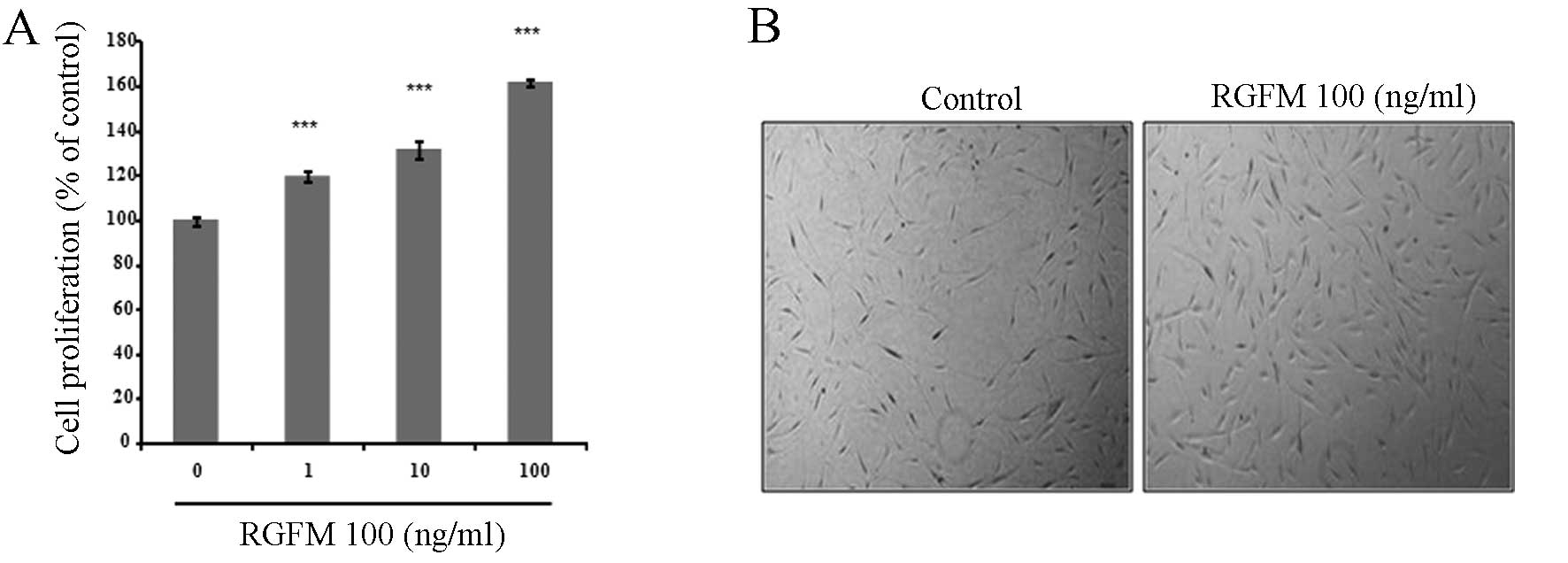
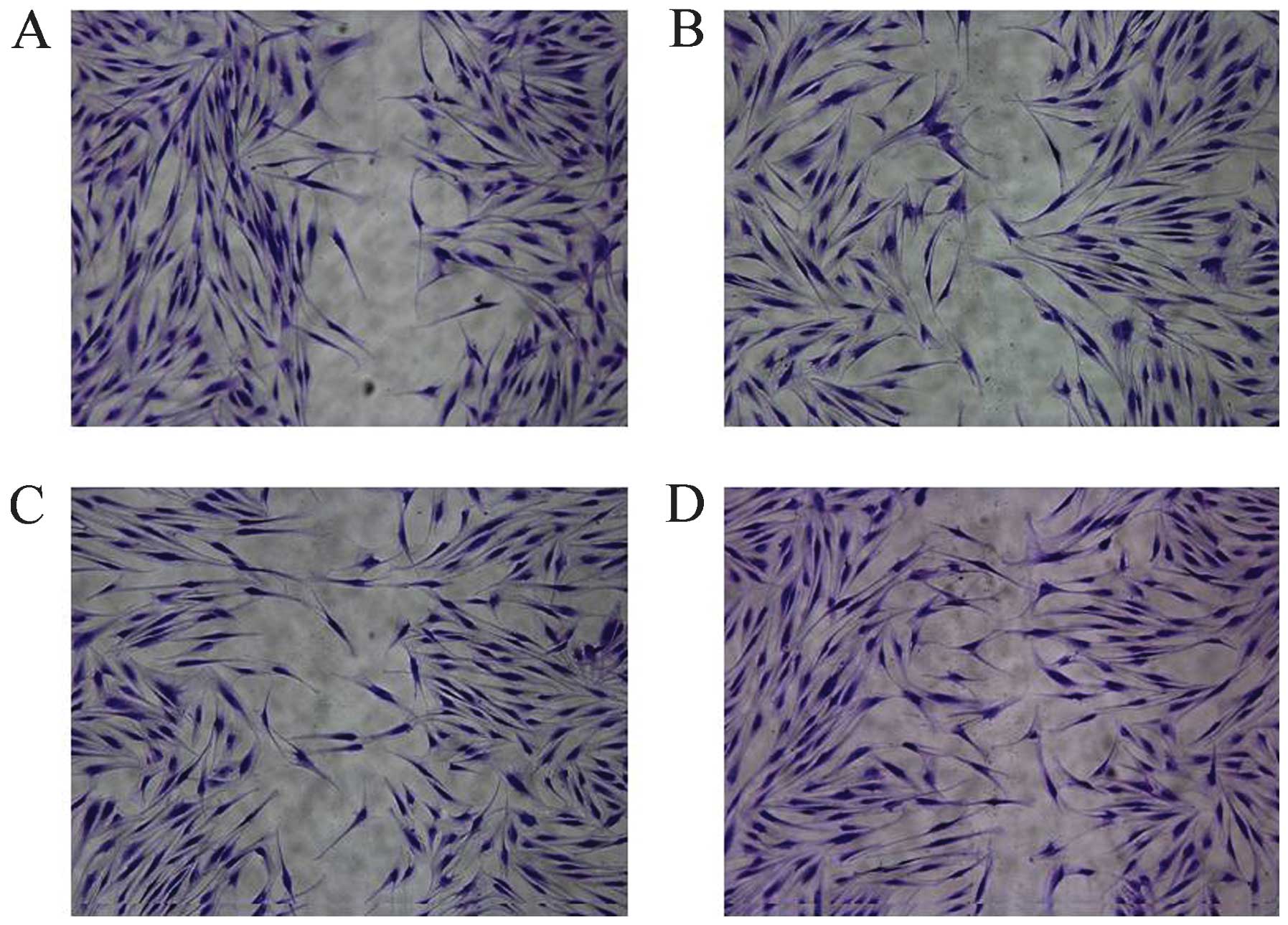
We analyzed the effect of RGFM on the proliferation and migration rates of the fibroblast cell line. RGFM resulted in a dose-dependent increase of proliferation rates of fibroblasts (Fig. 1). In addition, migration of fibroblasts is important in the promotion of wound healing. In order to examine whether RGFM is more effective on the migration of fibroblasts, confluent fibroblasts were scratched using a plastic micropipette and were then cultured for 1 day under various concentrations of RGFM. RGFM treatment resulted in markedly increased rates of the migration of fibroblasts (Fig. 2).

Figure 1

Effect of recombinant growth factor mixtures (RGFM) on cell proliferation in human skin fibroblasts. (A) The cells were treated for 5 days with the indicated concentrations of the RGFM. After an additional incubation for 4 h with 5 mg/ml MTT, the formation of formazan was determined at 540 nm in an enzyme-linked immunosorbent assay (ELISA) reader. Each measurement was performed in triplicate, and data represent the means ± SD. ***P<0.001, compared with the non-treated control. (B) Phase contrast image of the cell morphology following treatment for 72 h (magnification, ×40).

Figure 2

Increased migration of human skin fibroblasts by treatment of recombinant growth factor mixtures (RGFM). Human skin fibroblasts (1×10⁵/ml) were cultured under various concentrations of (A) 0, (B) 1, (C) 10 and (D) 100 ng/ml, of RGFM for 1 day. Confluent fibroblasts were scratched with plastic micropipette and the cells were cultured with RGFM for 24 h. Cell migration was observed by inverted microscopy.

Effect of RGFM on type I collagen, MMP-1 and TIMP-1 in HSF

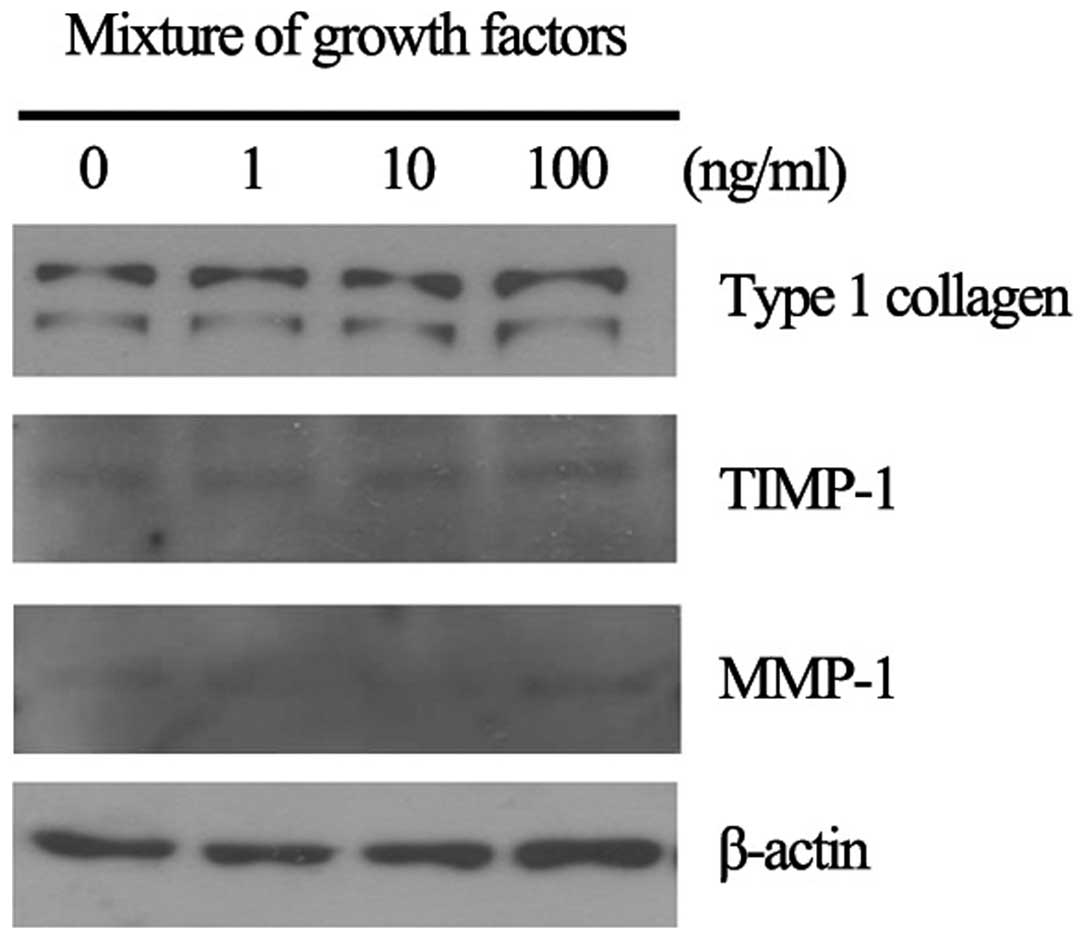
We analyzed the effect of RGFM on the expression of type I collagen, MMP-1 and TIMP-1 in culture fibroblasts. RGFM induced the increased expression of type I collagen in a dose-dependent manner, however, the expression of MMP-1 and TIMP-1 was not markedly altered (Fig. 3). β-actin was used as the loading control. The increased expression of type I collagen was clearly observed in RGFM-treated fibroblasts (100 ng/ml). RGFM induced the increased expression of type I collagen as well as the proliferation and migration rates of fibroblasts. Thus, we focused on the role of RGFM in Smad2 and Smad3 in cultured HSF.

Figure 3

Increased expression of type I collagen in human skin fibroblasts following recombinant growth factor mixtures (RGFM) treatment. Cells were cultured in Dulbecco’s modified Eagle’s medium (DMEM) without fetal bovine serum (FBS) for 48 h. Mixture of synthetic growth factors were added into the culture medium without FBS for 48 h and extracted proteins were subjected to western blotting using specific primary antibodies.

Effect of RGFM on Smad2 and Smad3 expression in HSF

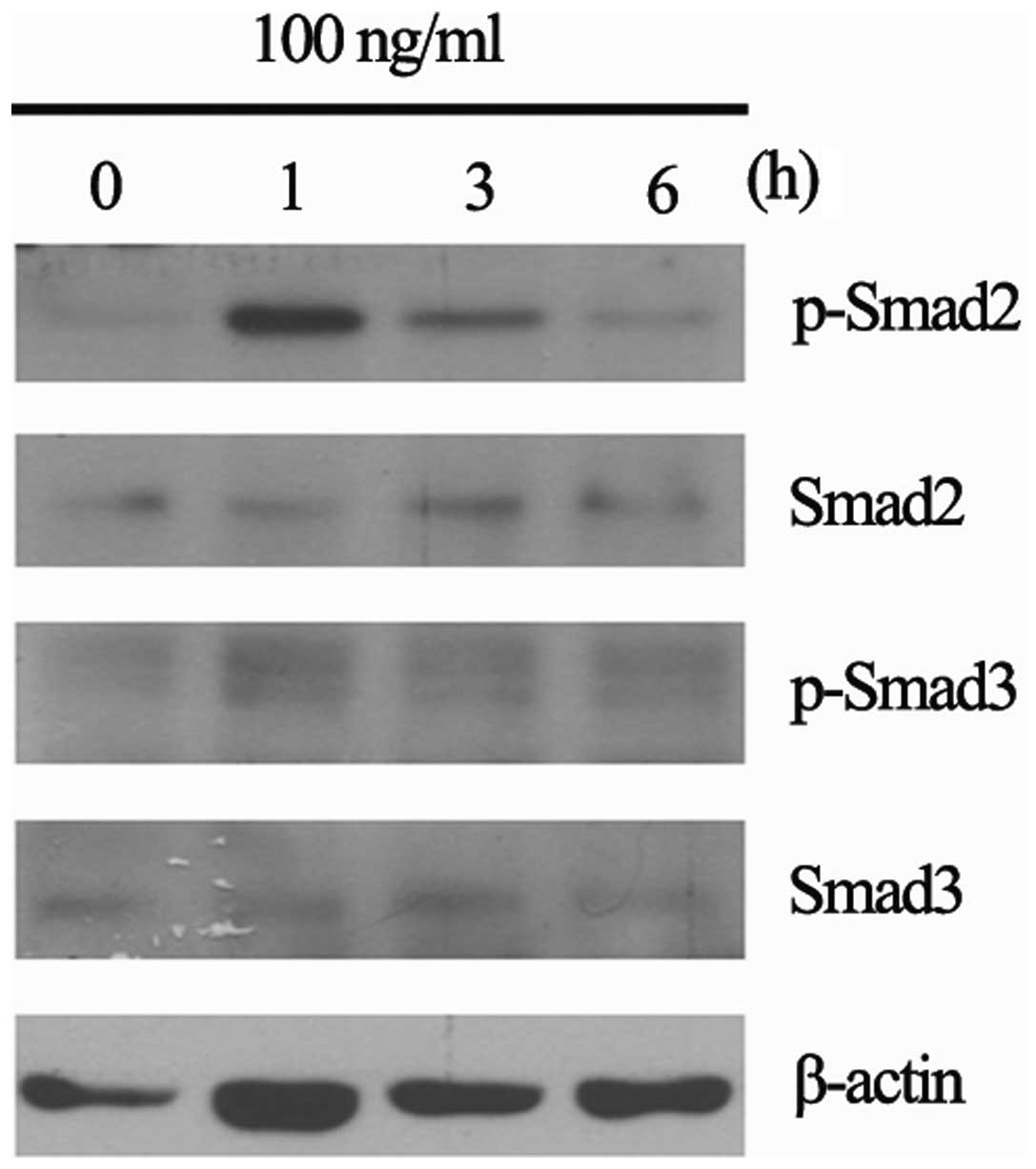
We analyzed the effect of RGFM on the expression of Smad2 and Smad3 in cultured skin fibroblasts. RGFM modulated the activity of Smad2 and Smad3 (Fig. 4). The phosphorylations of Smad2 and Smad3 were clearly observed at 1 h after treatment.

Figure 4

Increased activity of Smad2 and Smad3 in recombinant growth factor mixtures (RGFM)-treated human skin fibroblasts. Cells were cultured in Dulbecco’s modified Eagle’s medium (DMEM) without fetal bovine serum (FBS) for 48 h. Mixture of synthetic growth factors (100 ng/ml) was added into culture medium without FBS for the indicated time points. Whole cell lysates were prepared and used for p-Smad2, Smad2, p-Smad3, and Smad3 western blotting with respective antibodies.

Expression of cell cycle regulatory proteins in fibroblast cell line by RGFM treatment

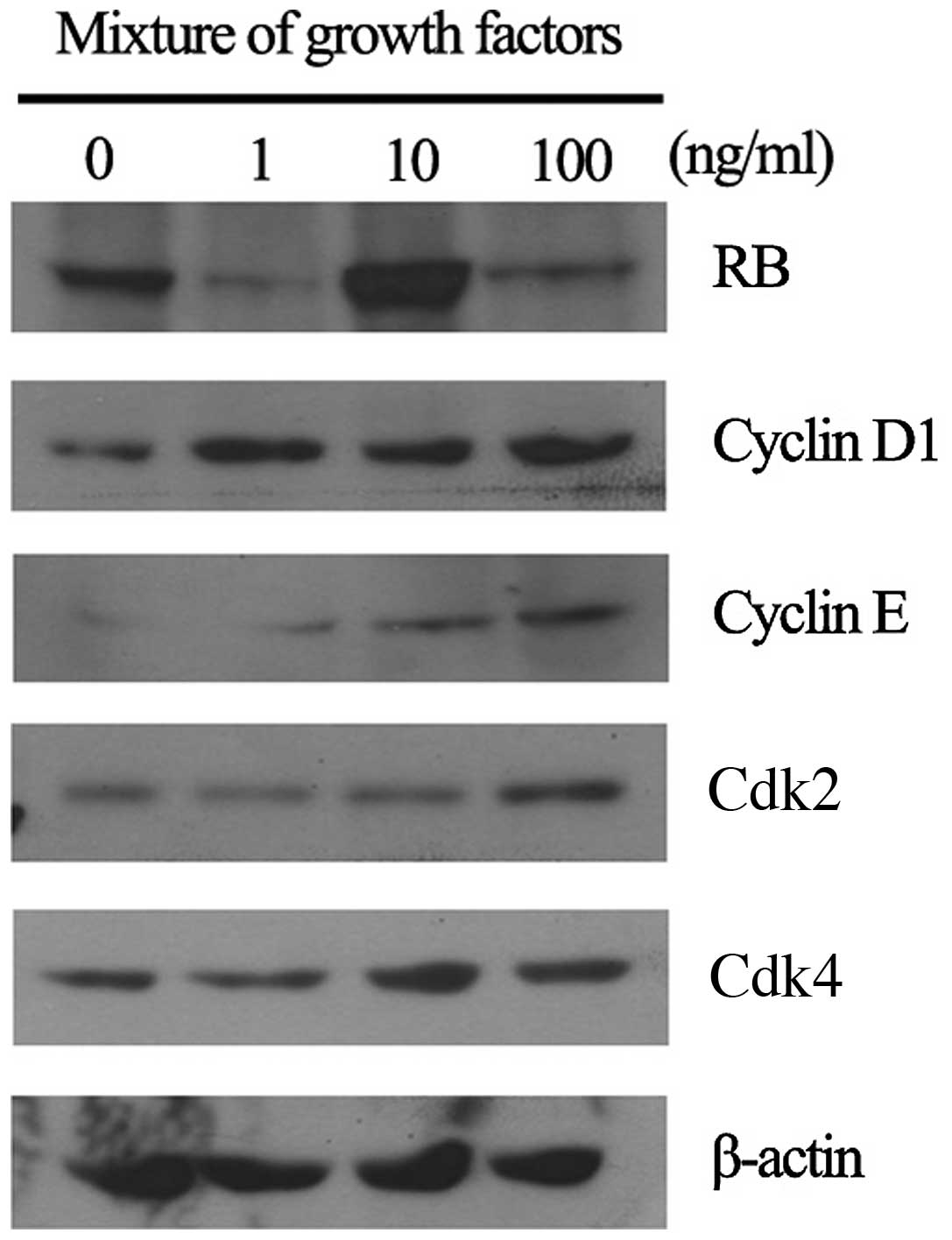
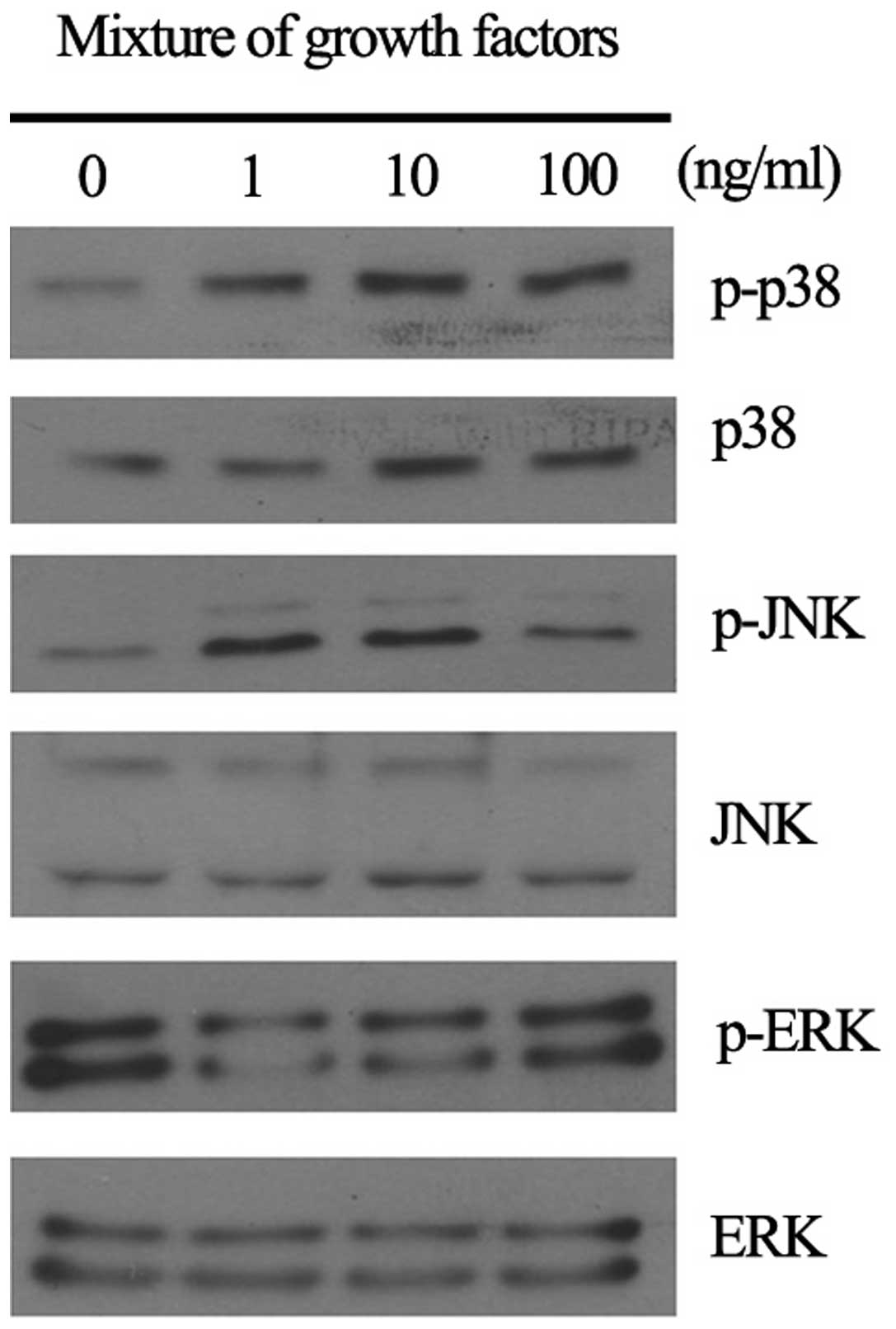
Cell cycle regulatory proteins play important roles in proliferation and migration in fibroblast cell lines. We have investigated whether RGFM treatment promotes proliferation and migration activities of fibroblasts through the upregulation of G1/S or G2/M transition regulatory proteins. Expression levels of G1/S transition regulatory proteins, i.e., cyclin D1, cyclin E, Cdk2 and Cdk4, were increased in RGFM-treated fibroblasts, resulting in increased phosphorylation of RB protein (Fig. 5). In addition, RGFM induced the activation of JNK, p38 and ERK, in cultured skin fibroblasts at 15 min after treatment (Fig. 6).

Figure 5

Increased positive cell cycle regulatory proteins in recombinant growth factor mixtures (RGFM)-treated human skin fibroblasts. Cells were cultured in Dulbecco’s modified Eagle’s medium (DMEM) media without fetal bovine serum (FBS) for 48 h. Mixture of synthetic growth factors was added into the culture medium without FBS for the indicated time points. Whole cell lysates were prepared and used for RB, cyclin D1, cyclin E, cyclin-dependent kinase (Cdk)2, Cdk4 and β-actin.

Figure 6

Increased activity of p38, c-Jun N-terminal kinases (JNK), and extracellular-signal-regulated kinase (ERK) proteins in recombinant growth factor mixtures (RGFM)-treated human skin fibroblasts. Cells were cultured in Dulbecco’s modified Eagle’s medium (DMEM) without fetal bovine serum (FBS) for 48 h. Mixture of synthetic growth factors was added into the culture medium without FBS for 15 min. Whole cell lysates were prepared and used for p-p38, p38, p-JNK, JNK, p-ERK and ERK western blotting with respective antibodies.

Wound healing effect of RGFM on the animal wound model

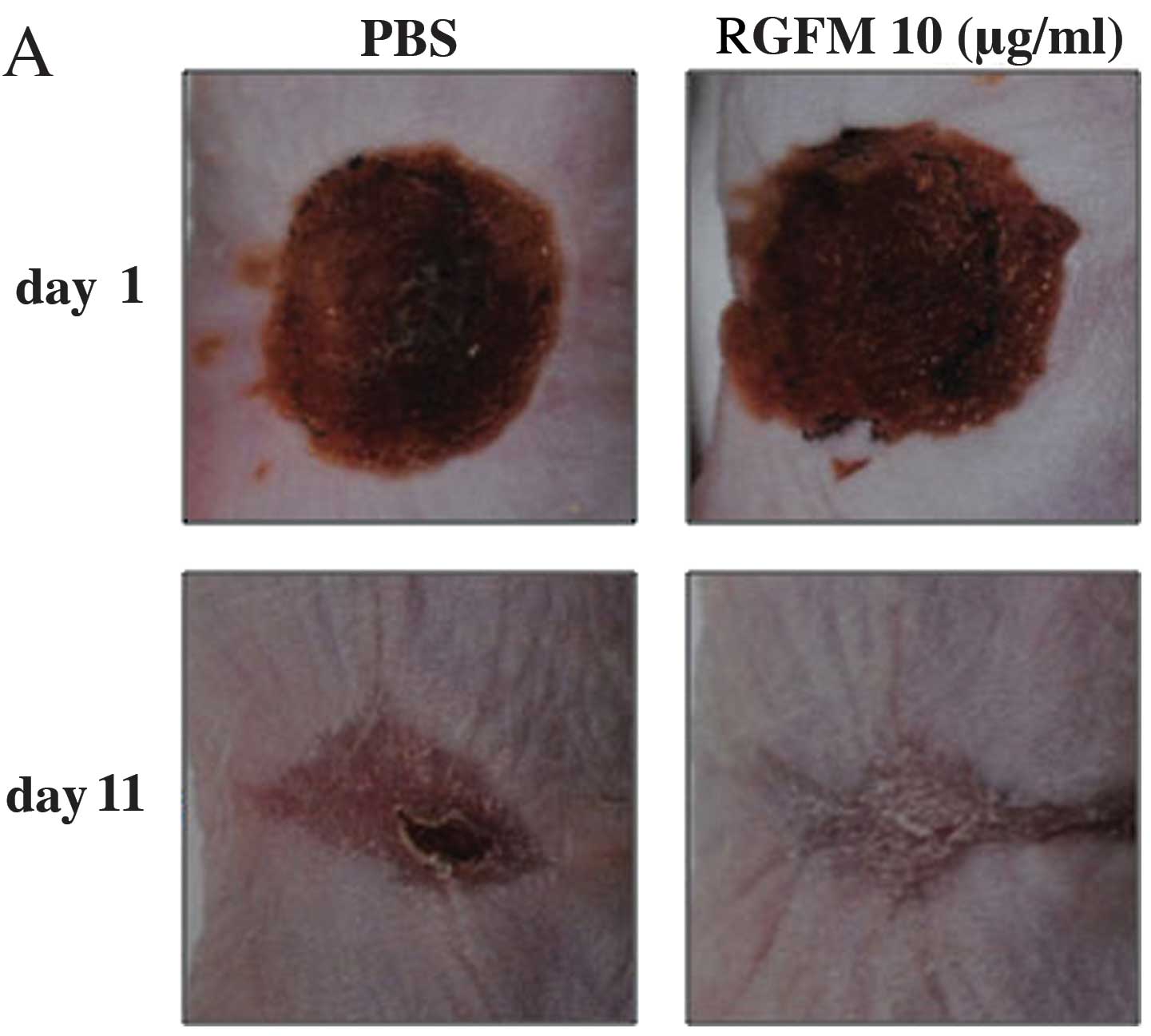
Topical application of RGFM on wound healing was carried out by irradiation on the back skins of hairless mice for up to 11 days. The RGFM-treated mice exhibited accelerated wound closure at day 7 after injury. This accelerated wound closure was observed until day 11 (Fig. 7A and B). The PBS-treated mice exhibited delayed wound closure compared to the RGFM-treated mice (Fig. 7A and B). At 11 days, the mice were sacrificed, and wound histology was analyzed by H&E staining. The histological parameters were re-epithelialization, dermal regeneration, and granulation tissue formation. The PBS-treated mice showed similarly sufficient epidermal layers and discontinuity of dermal regeneration with a large amount of inflammatory cells infiltrating the dermal region (Fig. 7C). On the other hand, the RGFM-treated mice found complete re-epithelialization of the epidermal region. Additionally, continuity of dermal regeneration included decreased levels of inflammatory cell infiltration in the wound (Fig. 7C).

Figure 7

Wound contraction profile and histological examination of each group. (A) Photographs of the wounds at 1 and 11 days. (B) Wound contraction rate measured in PBS- and recombinant growth factor mixtures (RGFM)-treated mice, and plotted by time after wounding. Results are expressed as the means ± SD (n=6) for each point in time and group (**P<0.01, ***P<0.001 compared with PBS-treated mice). (C) Representative histology of wound sections stained on day 11 [hematoxylin and eosin (H&E) ×100].

Discussion

The wound healing process involves the phases of inflammation, tissue formation, and tissue remodeling (15). Successful wound healing requires a balance between development of inflammation and its rapid resolution (16). Furthermore, transition from the inflammatory phase of wound healing to the granulation phase is mediated by a variety of growth factors and cytokines including PDGF, TGF-β, FGF, IGF-1 and TNF-α (8).

In the present study, we prepared recombinant synthetic growth factors (RGFM) for the wound healing agent. RGFM contain bioactive proteins including EGF, bFGF and KGF, which have fundamental roles in wound healing. These factors are known to regulate processes such as cell migration, attachment, proliferation and differentiation, and promote extracellular matrix accumulation by binding to specific cell surface receptors. Thus, RGFM may be a promising agent for acceleration of the wound healing process through high concentrations of growth factors.

Skin fibroblasts play an important role during the wound healing process through extracellular modulation (17). Synthesis, remodeling and deposition of structural extracellular matrix molecules, are indispensable for initiating repair and progression into the healing state (15). In this study, we investigated the effect of RGFM on the activation of fibroblasts including migration, proliferation, and expression of type I collagen and MMP-1 as well as cell cycle regulatory proteins. Our data clearly indicate that RGFM accelerated the migration of fibroblasts. In addition, cell proliferation rates of RGFM-treated fibroblasts were increased by the upregulation of cyclin D1, cyclin E, Cdk2 and Cdk4 expression. Furthermore, mitogen-activated protein kinases, such as p38, JNK and ERK, were clearly activated by RGFM treatment in fibroblasts. Upregulation of type I collagen by RGFM treatment in fibroblasts was mediated by the activation of Smad2/3. Phosphorylation and nuclear translocation of Smad2 and Smad3 in response to TGF-β1 are critical for the synthesis of type I collagen in fibroblasts (18). It is well known that fibroblasts, which are isolated from chronic wound, are senescent and show a decreased proliferative response to growth factors (19,20). Fibroblasts from chronic wounds show a decreased expression of type II TGF-β receptors, with impaired phosphorylation of transduction signals, including Smad2, Smad3 and mitogen-activated protein kinase (13,21). Thus, RGFM-induced fibroblast migration, cell proliferation, and upregulation of type I collagen by the activation of Smad2/3 may contribute to the rapid wound healing process under chronic wounds.

Findings of the in vivo study showed that the RGFM-treated mice exhibited complete re-epithelialization of the epidermal region, while continuity of dermal regeneration included decreased levels of inflammatory cell infiltration in the wound. Persistent inflammation has been associated with delayed wound healing and eventually resulted in scar formation (16).

In conclusion, RGFM has the potential to accelerate wound healing through the upregulation of type I collagen which is partly mediated by the activation of Smad2/3-dependent signaling pathway as well as the cell cycle progression in HSF. Topical application of RGFM to acute and chronic skin wound may accelerate the epithelization process through these molecular mechanisms.

Acknowledgements

This study was financially supported by the Ministry of Knowledge Economy (MKE), the Korea Institute for Advancement of Technology (KIAT) through the Inter-ER Cooperation Projects

References

1 

Taguchi M, Moran SL, Zobitz ME, et al: Wound-healing properties of transforming growth factor β (TGF-β) inducible early gene 1 (TIEG1) knockout mice. J Musculoskelet Res. 11:63–69. 2008.

2 

Rosen PS: Using recombinant platelet-derived growth factor to facilitate wound healing. Compend Contin Educ Dent. 27:520–525. 2006.PubMed/NCBI

3 

Frechette JP, Martineau I and Gagnon G: Platelet-rich plasmas: growth factor content and roles in wound healing. J Dent Res. 84:434–439. 2005. View Article : Google Scholar : PubMed/NCBI

4 

Mehta RC and Fitzpatrick RE: Endogenous growth factors as cosmeceuticals. Dermatol Ther. 20:350–359. 2007. View Article : Google Scholar : PubMed/NCBI

5 

Martin P: Wound healing - aiming for perfect skin regeneration. Science. 276:75–81. 1997. View Article : Google Scholar : PubMed/NCBI

6 

Spiekstra SW, Breetveld M, Rustemeyer T, Scheper RJ and Gibbs S: Wound-healing factors secreted by epidermal keratinocytes and dermal fibroblasts in skin substitutes. Wound Repair Regen. 15:708–717. 2007. View Article : Google Scholar : PubMed/NCBI

7 

Kiritsy CP, Lynch AB and Lynch SE: Role of growth factors in cutaneous wound healing: a review. Crit Rev Oral Biol Med. 4:729–760. 1993.PubMed/NCBI

8 

Moulin V: Growth factors in skin wound healing. Eur J Cell Biol. 68:1–7. 1995.PubMed/NCBI

9 

Obeyesekere MN, Zimmerman SO, Tecarro ES and Auchmuty G: A model of cell cycle behavior dominated by kinetics of a pathway stimulated by growth factors. Bull Math Biol. 61:917–934. 1999. View Article : Google Scholar : PubMed/NCBI

10 

Andreeva V, Prudovsky I and Thomas M: Stimulation of quiescent cells by individual polypeptide growth factors is limited to one cell cycle. Eur J Cell Biol. 83:327–335. 2004. View Article : Google Scholar : PubMed/NCBI

11 

Baserga R, Porcu P and Sell C: Oncogenes, growth factors and control of the cell cycle. Cancer Surv. 16:201–213. 1993.PubMed/NCBI

12 

Hunt T, Nasmyth K and Novak B: The cell cycle. Philos Trans R Soc Lond B Biol Sci. 366:3494–3497. 2011. View Article : Google Scholar

13 

Loots MA, Lamme EN, Mekkes JR, Bos JD and Middelkoop E: Cultured fibroblasts from chronic diabetic wounds on the lower extremity (non-insulin-dependent diabetes mellitus) show disturbed proliferation. Arch Dermatol Res. 291:93–99. 1999. View Article : Google Scholar : PubMed/NCBI

14 

Werner S, Krieg T and Smola H: Keratinocyte-fibroblast interactions in wound healing. J Invest Dermatol. 127:998–1008. 2007. View Article : Google Scholar : PubMed/NCBI

15 

Fu X, Cheng B and Sheng Z: Growth factors and wound healing: review and prospect in recent ten years. Zhongguo Zhongguo Xiu Fu Chong Jian Wai Ke Za Zhi. 18:508–512. 2004.(In Chinese).

16 

Eming SA, Krieg T and Davidson JM: Inflammation in wound repair: molecular and cellular mechanisms. J Invest Dermatol. 127:514–525. 2007. View Article : Google Scholar : PubMed/NCBI

17 

Mansbridge JN, Liu K, Pinney RE, Patch R, Ratcliffe A and Naughton GK: Growth factors secreted by fibroblasts: role in healing diabetic foot ulcers. Diabetes Obes Metab. 1:265–279. 1999. View Article : Google Scholar : PubMed/NCBI

18 

Ghosh AK, Yuan W, Mori Y and Varga J: Smad-dependent stimulation of type I collagen gene expression in human skin fibroblasts by TGF-beta involves functional cooperation with p300/CBP transcriptional coactivators. Oncogene. 19:3546–3555. 2000. View Article : Google Scholar

19 

Moreo K: Understanding and overcoming the challenges of effective case management for patients with chronic wounds. Case Manager. 16:62–63. 67:2005

20 

Mustoe T: Understanding chronic wounds: a unifying hypothesis on their pathogenesis and implications for therapy. Am J Surg. 187:S65–S70. 2004. View Article : Google Scholar : PubMed/NCBI

21 

Loot MA, Kenter SB, Au FL, et al: Fibroblasts derived from chronic diabetic ulcers differ in their response to stimulation with EGF, IGF-I, bFGF and PDGF-AB compared to controls. Eur J Cell Biol. 81:153–160. 2002. View Article : Google Scholar : PubMed/NCBI

Related Articles

  • Abstract
  • View
  • Download
  • Twitter
Copy and paste a formatted citation
Spandidos Publications style
Lee DH, Choi K, Cho J, Kim SY, Kwon TR, Choi SY, Choi YM, Lee J, Yoon HS, Kim BJ, Kim BJ, et al: Recombinant growth factor mixtures induce cell cycle progression and the upregulation of type I collagen in human skin fibroblasts, resulting in the acceleration of wound healing processess. Int J Mol Med 33: 1147-1152, 2014.
APA
Lee, D.H., Choi, K., Cho, J., Kim, S.Y., Kwon, T.R., Choi, S.Y. ... Kim, B.J. (2014). Recombinant growth factor mixtures induce cell cycle progression and the upregulation of type I collagen in human skin fibroblasts, resulting in the acceleration of wound healing processess. International Journal of Molecular Medicine, 33, 1147-1152. https://doi.org/10.3892/ijmm.2014.1698
MLA
Lee, D. H., Choi, K., Cho, J., Kim, S. Y., Kwon, T. R., Choi, S. Y., Choi, Y. M., Lee, J., Yoon, H. S., Kim, B. J."Recombinant growth factor mixtures induce cell cycle progression and the upregulation of type I collagen in human skin fibroblasts, resulting in the acceleration of wound healing processess". International Journal of Molecular Medicine 33.5 (2014): 1147-1152.
Chicago
Lee, D. H., Choi, K., Cho, J., Kim, S. Y., Kwon, T. R., Choi, S. Y., Choi, Y. M., Lee, J., Yoon, H. S., Kim, B. J."Recombinant growth factor mixtures induce cell cycle progression and the upregulation of type I collagen in human skin fibroblasts, resulting in the acceleration of wound healing processess". International Journal of Molecular Medicine 33, no. 5 (2014): 1147-1152. https://doi.org/10.3892/ijmm.2014.1698
Copy and paste a formatted citation
x
Spandidos Publications style
Lee DH, Choi K, Cho J, Kim SY, Kwon TR, Choi SY, Choi YM, Lee J, Yoon HS, Kim BJ, Kim BJ, et al: Recombinant growth factor mixtures induce cell cycle progression and the upregulation of type I collagen in human skin fibroblasts, resulting in the acceleration of wound healing processess. Int J Mol Med 33: 1147-1152, 2014.
APA
Lee, D.H., Choi, K., Cho, J., Kim, S.Y., Kwon, T.R., Choi, S.Y. ... Kim, B.J. (2014). Recombinant growth factor mixtures induce cell cycle progression and the upregulation of type I collagen in human skin fibroblasts, resulting in the acceleration of wound healing processess. International Journal of Molecular Medicine, 33, 1147-1152. https://doi.org/10.3892/ijmm.2014.1698
MLA
Lee, D. H., Choi, K., Cho, J., Kim, S. Y., Kwon, T. R., Choi, S. Y., Choi, Y. M., Lee, J., Yoon, H. S., Kim, B. J."Recombinant growth factor mixtures induce cell cycle progression and the upregulation of type I collagen in human skin fibroblasts, resulting in the acceleration of wound healing processess". International Journal of Molecular Medicine 33.5 (2014): 1147-1152.
Chicago
Lee, D. H., Choi, K., Cho, J., Kim, S. Y., Kwon, T. R., Choi, S. Y., Choi, Y. M., Lee, J., Yoon, H. S., Kim, B. J."Recombinant growth factor mixtures induce cell cycle progression and the upregulation of type I collagen in human skin fibroblasts, resulting in the acceleration of wound healing processess". International Journal of Molecular Medicine 33, no. 5 (2014): 1147-1152. https://doi.org/10.3892/ijmm.2014.1698
Follow us
  • Twitter
  • LinkedIn
  • Facebook
About
  • Spandidos Publications
  • Careers
  • Cookie Policy
  • Privacy Policy
How can we help?
  • Help
  • Live Chat
  • Contact
  • Email to our Support Team