Spandidos Publications Logo
  • About
    • About Spandidos
    • Aims and Scopes
    • Abstracting and Indexing
    • Editorial Policies
    • Reprints and Permissions
    • Job Opportunities
    • Terms and Conditions
    • Contact
  • Journals
    • All Journals
    • Oncology Letters
      • Oncology Letters
      • Information for Authors
      • Editorial Policies
      • Editorial Board
      • Aims and Scope
      • Abstracting and Indexing
      • Bibliographic Information
      • Archive
    • International Journal of Oncology
      • International Journal of Oncology
      • Information for Authors
      • Editorial Policies
      • Editorial Board
      • Aims and Scope
      • Abstracting and Indexing
      • Bibliographic Information
      • Archive
    • Molecular and Clinical Oncology
      • Molecular and Clinical Oncology
      • Information for Authors
      • Editorial Policies
      • Editorial Board
      • Aims and Scope
      • Abstracting and Indexing
      • Bibliographic Information
      • Archive
    • Experimental and Therapeutic Medicine
      • Experimental and Therapeutic Medicine
      • Information for Authors
      • Editorial Policies
      • Editorial Board
      • Aims and Scope
      • Abstracting and Indexing
      • Bibliographic Information
      • Archive
    • International Journal of Molecular Medicine
      • International Journal of Molecular Medicine
      • Information for Authors
      • Editorial Policies
      • Editorial Board
      • Aims and Scope
      • Abstracting and Indexing
      • Bibliographic Information
      • Archive
    • Biomedical Reports
      • Biomedical Reports
      • Information for Authors
      • Editorial Policies
      • Editorial Board
      • Aims and Scope
      • Abstracting and Indexing
      • Bibliographic Information
      • Archive
    • Oncology Reports
      • Oncology Reports
      • Information for Authors
      • Editorial Policies
      • Editorial Board
      • Aims and Scope
      • Abstracting and Indexing
      • Bibliographic Information
      • Archive
    • Molecular Medicine Reports
      • Molecular Medicine Reports
      • Information for Authors
      • Editorial Policies
      • Editorial Board
      • Aims and Scope
      • Abstracting and Indexing
      • Bibliographic Information
      • Archive
    • World Academy of Sciences Journal
      • World Academy of Sciences Journal
      • Information for Authors
      • Editorial Policies
      • Editorial Board
      • Aims and Scope
      • Abstracting and Indexing
      • Bibliographic Information
      • Archive
    • International Journal of Functional Nutrition
      • International Journal of Functional Nutrition
      • Information for Authors
      • Editorial Policies
      • Editorial Board
      • Aims and Scope
      • Abstracting and Indexing
      • Bibliographic Information
      • Archive
    • International Journal of Epigenetics
      • International Journal of Epigenetics
      • Information for Authors
      • Editorial Policies
      • Editorial Board
      • Aims and Scope
      • Abstracting and Indexing
      • Bibliographic Information
      • Archive
    • Medicine International
      • Medicine International
      • Information for Authors
      • Editorial Policies
      • Editorial Board
      • Aims and Scope
      • Abstracting and Indexing
      • Bibliographic Information
      • Archive
  • Articles
  • Information
    • Information for Authors
    • Information for Reviewers
    • Information for Librarians
    • Information for Advertisers
    • Conferences
  • Language Editing
Spandidos Publications Logo
  • About
    • About Spandidos
    • Aims and Scopes
    • Abstracting and Indexing
    • Editorial Policies
    • Reprints and Permissions
    • Job Opportunities
    • Terms and Conditions
    • Contact
  • Journals
    • All Journals
    • Biomedical Reports
      • Information for Authors
      • Editorial Policies
      • Editorial Board
      • Aims and Scope
      • Abstracting and Indexing
      • Bibliographic Information
      • Archive
    • Experimental and Therapeutic Medicine
      • Information for Authors
      • Editorial Policies
      • Editorial Board
      • Aims and Scope
      • Abstracting and Indexing
      • Bibliographic Information
      • Archive
    • International Journal of Epigenetics
      • Information for Authors
      • Editorial Policies
      • Editorial Board
      • Aims and Scope
      • Abstracting and Indexing
      • Bibliographic Information
      • Archive
    • International Journal of Functional Nutrition
      • Information for Authors
      • Editorial Policies
      • Editorial Board
      • Aims and Scope
      • Abstracting and Indexing
      • Bibliographic Information
      • Archive
    • International Journal of Molecular Medicine
      • Information for Authors
      • Editorial Policies
      • Editorial Board
      • Aims and Scope
      • Abstracting and Indexing
      • Bibliographic Information
      • Archive
    • International Journal of Oncology
      • Information for Authors
      • Editorial Policies
      • Editorial Board
      • Aims and Scope
      • Abstracting and Indexing
      • Bibliographic Information
      • Archive
    • Medicine International
      • Information for Authors
      • Editorial Policies
      • Editorial Board
      • Aims and Scope
      • Abstracting and Indexing
      • Bibliographic Information
      • Archive
    • Molecular and Clinical Oncology
      • Information for Authors
      • Editorial Policies
      • Editorial Board
      • Aims and Scope
      • Abstracting and Indexing
      • Bibliographic Information
      • Archive
    • Molecular Medicine Reports
      • Information for Authors
      • Editorial Policies
      • Editorial Board
      • Aims and Scope
      • Abstracting and Indexing
      • Bibliographic Information
      • Archive
    • Oncology Letters
      • Information for Authors
      • Editorial Policies
      • Editorial Board
      • Aims and Scope
      • Abstracting and Indexing
      • Bibliographic Information
      • Archive
    • Oncology Reports
      • Information for Authors
      • Editorial Policies
      • Editorial Board
      • Aims and Scope
      • Abstracting and Indexing
      • Bibliographic Information
      • Archive
    • World Academy of Sciences Journal
      • Information for Authors
      • Editorial Policies
      • Editorial Board
      • Aims and Scope
      • Abstracting and Indexing
      • Bibliographic Information
      • Archive
  • Articles
  • Information
    • For Authors
    • For Reviewers
    • For Librarians
    • For Advertisers
    • Conferences
  • Language Editing
Login Register Submit
  • This site uses cookies
  • You can change your cookie settings at any time by following the instructions in our Cookie Policy. To find out more, you may read our Privacy Policy.

    I agree
Search articles by DOI, keyword, author or affiliation
Search
Advanced Search
presentation
International Journal of Molecular Medicine
Join Editorial Board Propose a Special Issue
Print ISSN: 1107-3756 Online ISSN: 1791-244X
Journal Cover
July-2018 Volume 42 Issue 1

Full Size Image

Sign up for eToc alerts
Recommend to Library

Journals

International Journal of Molecular Medicine

International Journal of Molecular Medicine

International Journal of Molecular Medicine is an international journal devoted to molecular mechanisms of human disease.

International Journal of Oncology

International Journal of Oncology

International Journal of Oncology is an international journal devoted to oncology research and cancer treatment.

Molecular Medicine Reports

Molecular Medicine Reports

Covers molecular medicine topics such as pharmacology, pathology, genetics, neuroscience, infectious diseases, molecular cardiology, and molecular surgery.

Oncology Reports

Oncology Reports

Oncology Reports is an international journal devoted to fundamental and applied research in Oncology.

Experimental and Therapeutic Medicine

Experimental and Therapeutic Medicine

Experimental and Therapeutic Medicine is an international journal devoted to laboratory and clinical medicine.

Oncology Letters

Oncology Letters

Oncology Letters is an international journal devoted to Experimental and Clinical Oncology.

Biomedical Reports

Biomedical Reports

Explores a wide range of biological and medical fields, including pharmacology, genetics, microbiology, neuroscience, and molecular cardiology.

Molecular and Clinical Oncology

Molecular and Clinical Oncology

International journal addressing all aspects of oncology research, from tumorigenesis and oncogenes to chemotherapy and metastasis.

World Academy of Sciences Journal

World Academy of Sciences Journal

Multidisciplinary open-access journal spanning biochemistry, genetics, neuroscience, environmental health, and synthetic biology.

International Journal of Functional Nutrition

International Journal of Functional Nutrition

Open-access journal combining biochemistry, pharmacology, immunology, and genetics to advance health through functional nutrition.

International Journal of Epigenetics

International Journal of Epigenetics

Publishes open-access research on using epigenetics to advance understanding and treatment of human disease.

Medicine International

Medicine International

An International Open Access Journal Devoted to General Medicine.

Journal Cover
July-2018 Volume 42 Issue 1

Full Size Image

Sign up for eToc alerts
Recommend to Library

  • Article
  • Citations
    • Cite This Article
    • Download Citation
    • Create Citation Alert
    • Remove Citation Alert
    • Cited By
  • Similar Articles
    • Related Articles (in Spandidos Publications)
    • Similar Articles (Google Scholar)
    • Similar Articles (PubMed)
  • Download PDF
  • Download XML
  • View XML
Article

Mesenchymal stem cells attenuate doxorubicin‑induced cellular senescence through the VEGF/Notch/TGF‑β signaling pathway in H9c2 cardiomyocytes

  • Authors:
    • Lingli Chen
    • Wenzheng Xia
    • Meng Hou
  • View Affiliations / Copyright

    Affiliations: Department of Neurology, First Affiliated Hospital, Wenzhou Medical University, Wenzhou, Zhejiang 325000, P.R. China, Department of Neurosurgery, First Affiliated Hospital, Wenzhou Medical University, Wenzhou, Zhejiang 325000, P.R. China, Department of Radiation Oncology, First Affiliated Hospital, Wenzhou Medical University, Wenzhou, Zhejiang 325000, P.R. China
  • Pages: 674-684
    |
    Published online on: April 19, 2018
       https://doi.org/10.3892/ijmm.2018.3635
  • Expand metrics +
Metrics: Total Views: 0 (Spandidos Publications: | PMC Statistics: )
Metrics: Total PDF Downloads: 0 (Spandidos Publications: | PMC Statistics: )
Cited By (CrossRef): 0 citations Loading Articles...

This article is mentioned in:


Abstract

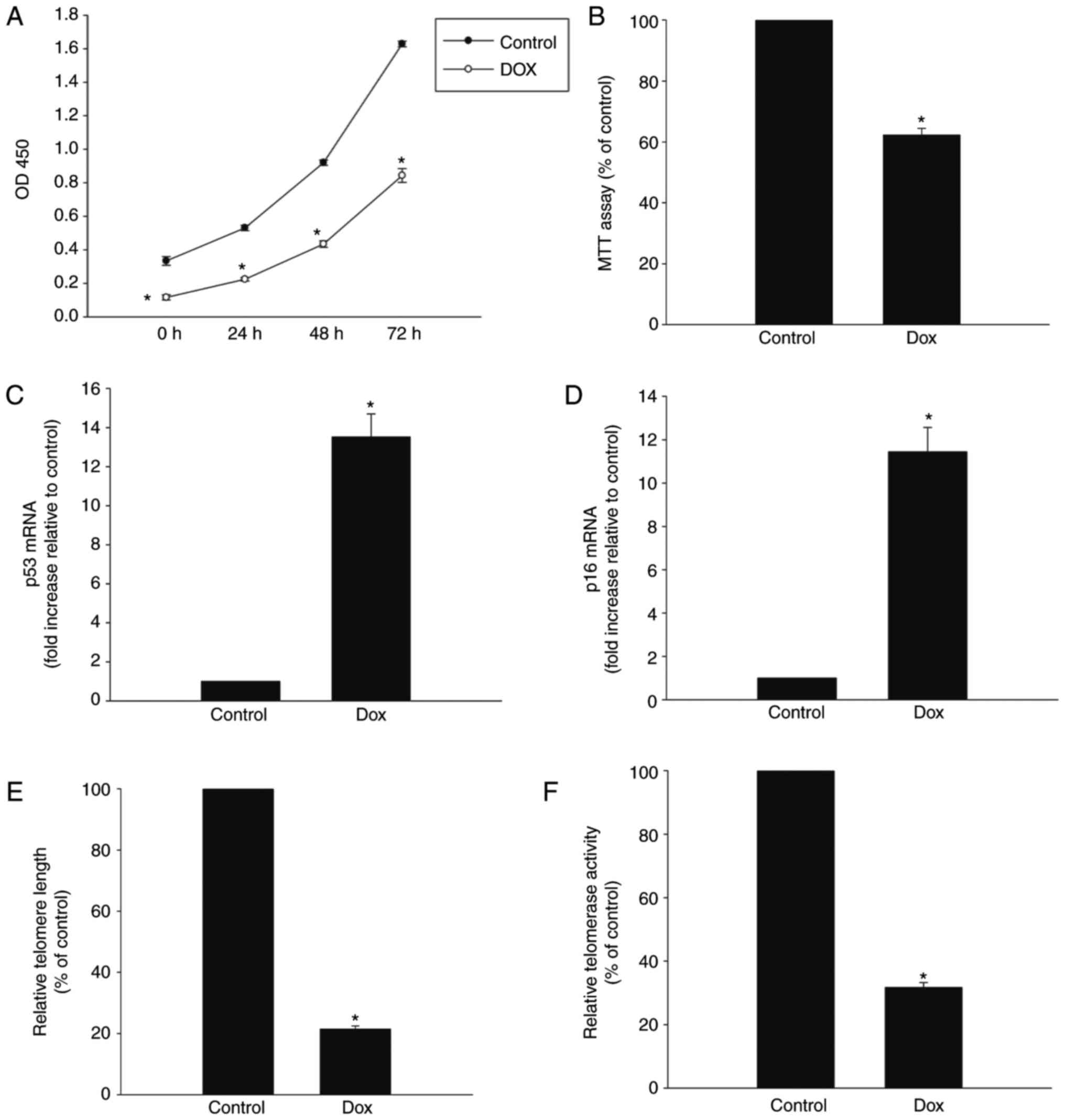
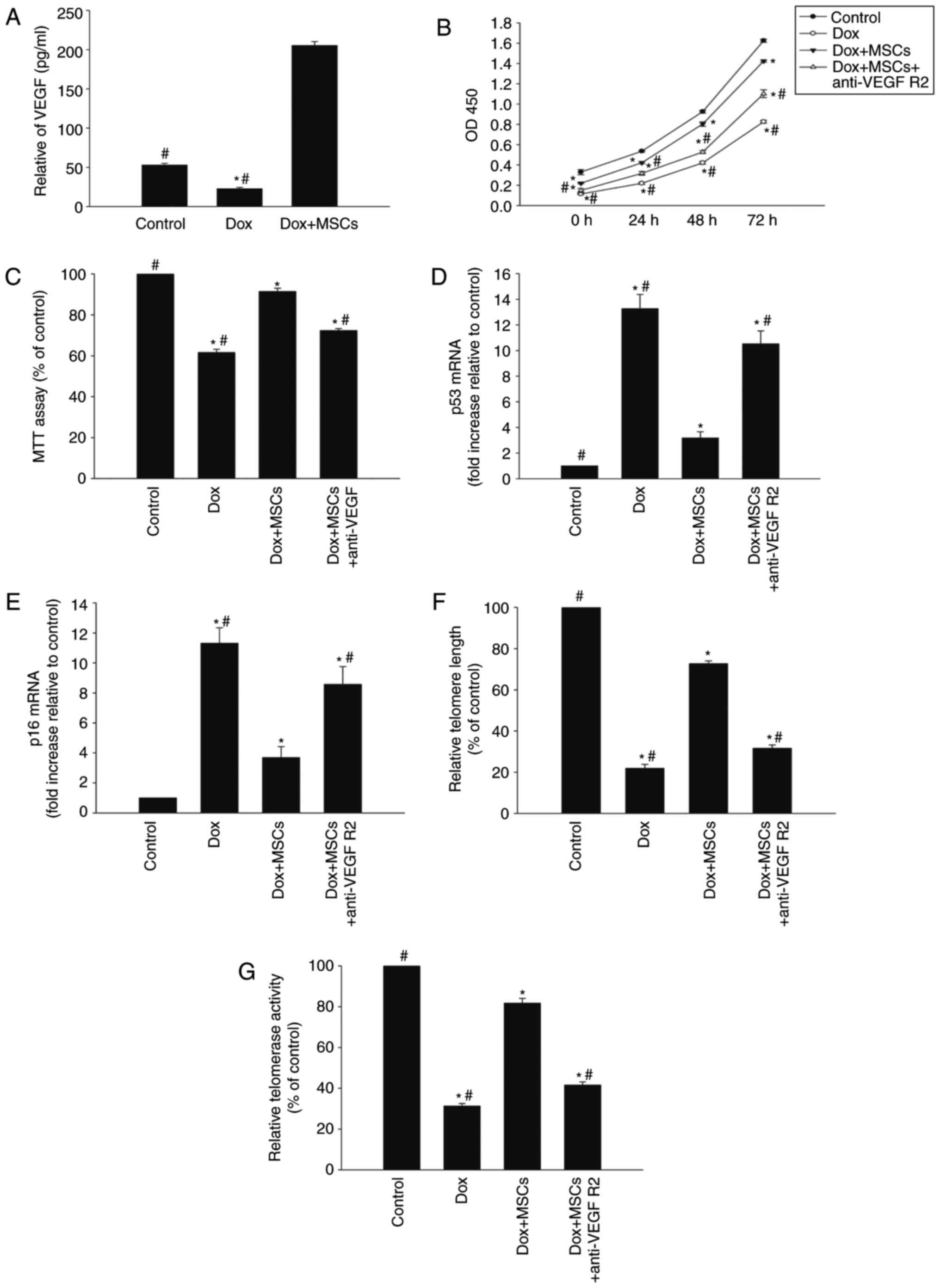
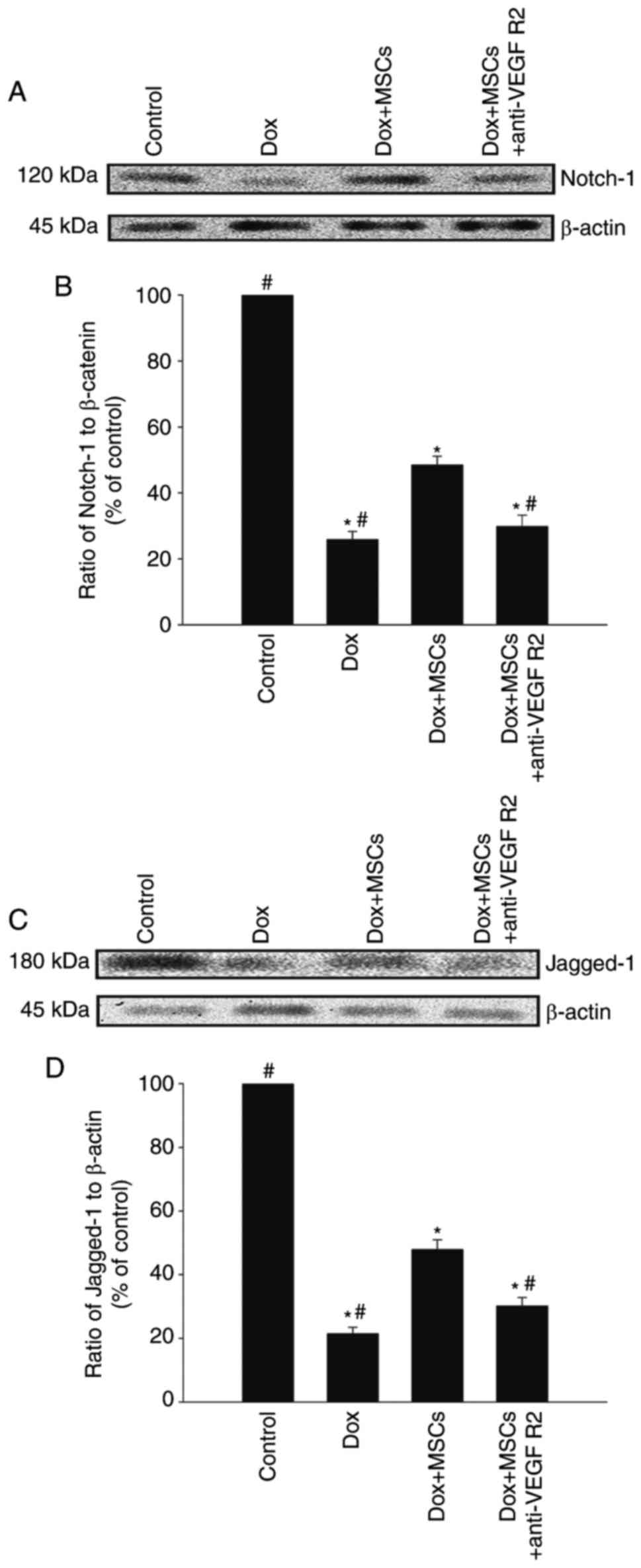
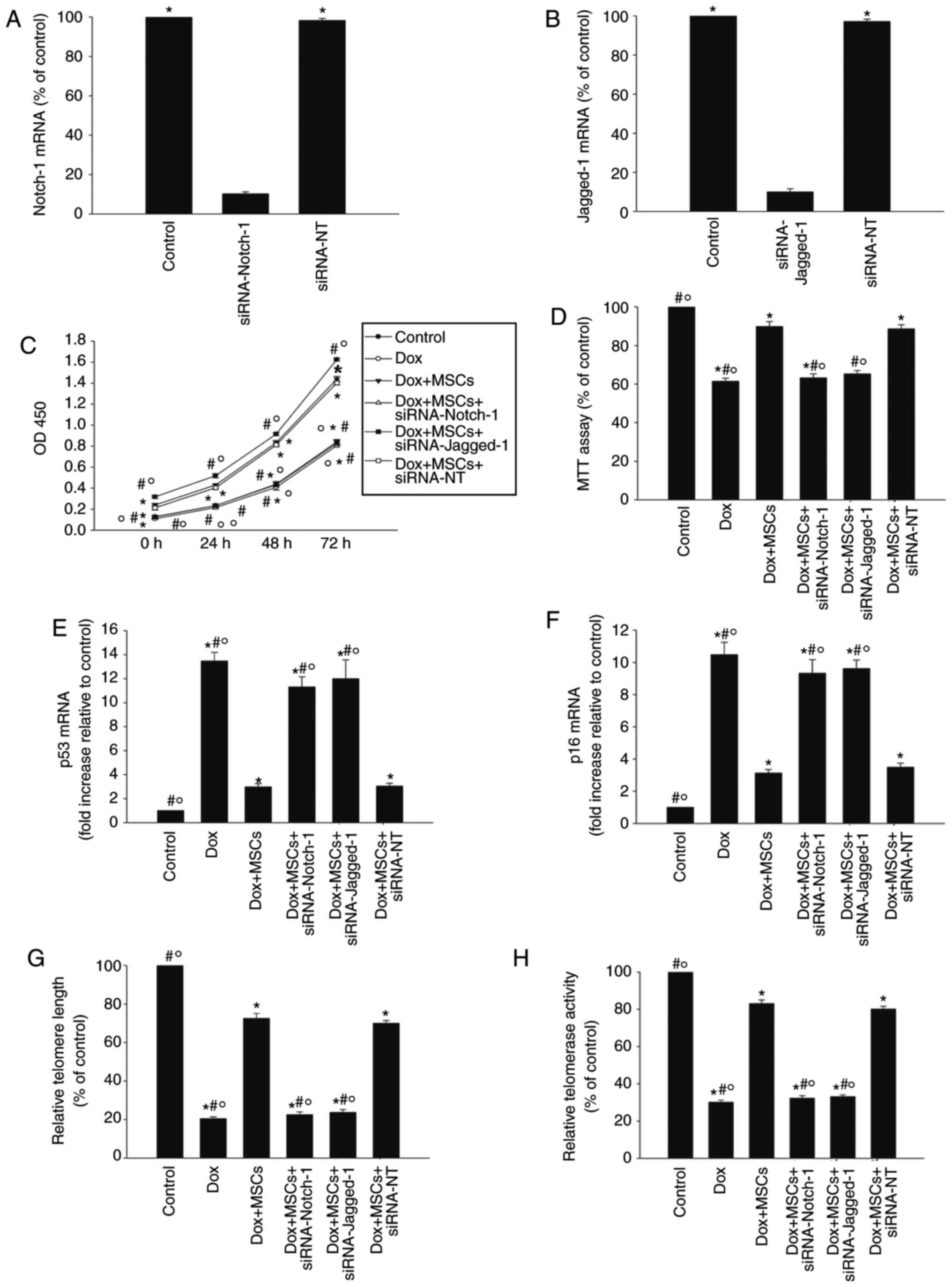
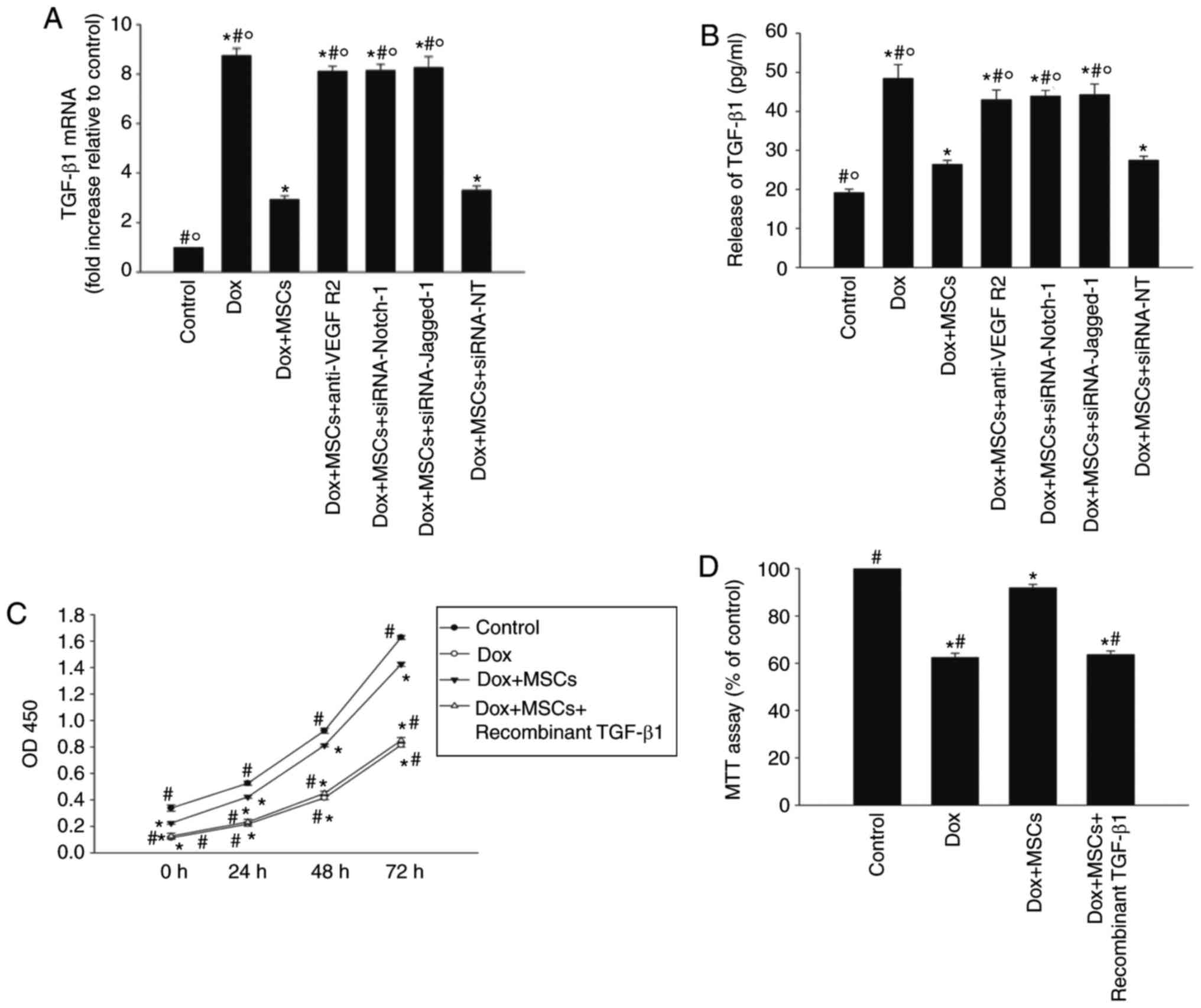
The clinical use of doxorubicin (Dox) is limited by its cardiotoxicity. The fundamental changes it induces include interstitial myocardial fibrosis and the appearance of senescent cardiomyocytes. Mesenchymal stem cell (MSC)‑based therapies have also been reported to modulate cellular senescence, and have been used effectively to treat age‑related cardiovascular diseases. In the present study, the Transwell system was used to coculture H9c2 cells with MSCs, and their proliferation and viability were assessed. The expression of senescence‑related genes p53 and p16, and telomere length were measured using reverse transcription‑quantitative polymerase chain reaction analysis, and the Jagged‑1/Notch‑1 signaling pathway was detected using western blot analysis. The results revealed that Dox induced the senescence of H9c2 cells, characterized by a low proliferation rate, poor viability, reduced telomere length and impaired telomerase activity, and by marked increases in the expression of p53 and p16. By contrast, when cocultured with MSCs in the presence of Dox, H9c2 cell proliferation and viability increased, whereas the expression levels of p53 and p16 decreased, and telomere length and telomerase activity increased. The mechanism underlying the antisenescence function of MSCs was clarified, which involved the vascular endothelial growth factor (VEGF)/Jagged‑1/Notch‑1/transforming growth factor‑β1 (TGF‑β1) signaling pathway. It was confirmed that inhibiting VEGF, or silencing Jagged‑1 or Notch‑1 with small interfering RNA, or using recombinant TGF‑β1 eliminated the antisenescence effects of MSCs on the Dox‑treated H9c2 cells. The results revealed that MSCs rescued H9c2 cells from Dox‑induced senescence through the release of VEGF, which activated the Jagged‑1/Notch‑1 signaling pathway, leading to the inhibition of TGF‑β1 release. Therefore, treatment with MSCs may have important therapeutic implications on the attenuation of cardiotoxicity in patients with cancer treated with Dox.
View Figures

Figure 1

Figure 2

Figure 3

Figure 4

Figure 5

View References

1 

Octavia Y, Tocchetti CG, Gabrielson KL, Janssens S, Crijns HJ and Moens AL: Doxorubicin-induced cardiomyopathy: From molecular mechanisms to therapeutic strategies. J Mol Cell Cardiol. 52:1213–1225. 2012. View Article : Google Scholar : PubMed/NCBI

2 

Carvalho C, Santos RX, Cardoso S, Correia S, Oliveira PJ, Santos MS and Moreira PI: Doxorubicin: The good, the bad and the ugly effect. Curr Med Chem. 16:3267–3285. 2009. View Article : Google Scholar : PubMed/NCBI

3 

Stěrba M, Popelová O, Vávrová A, Jirkovský E, Kovaříková P, Geršl V and Simůnek T: Oxidative stress, redox signaling, and metal chelation in anthracycline cardiotoxicity and pharmacological cardioprotection. Antioxid Redox Signal. 18:899–929. 2013. View Article : Google Scholar

4 

Singh P, Sharma R, McElhanon K, Allen CD, Megyesi JK, Beneš H and Singh SP: Sulforaphane protects the heart from doxorubicin-induced toxicity. Free Radic Biol Med. 86:90–101. 2015. View Article : Google Scholar : PubMed/NCBI

5 

Guarita-Souza LC, Teixeira de Carvalho KA, Francisco JC, Simeoni R and Faria-Neto JR: Cellular transplantation for the treatment of non-ischaemic dilated cardiomyopathies. Eur Heart J Suppl. 10:K7–K10. 2008. View Article : Google Scholar

6 

Mohammadi Gorji S, Karimpor Malekshah AA, Hashemi-Soteh MB, Rafiei A, Parivar K and Aghdami N: Effect of mesenchymal stem cells on doxorubicin-induced fibrosis. Cell J. 14:142–151. 2012.

7 

Ezquer F, Gutiérrez J, Ezquer M, Caglevic C, Salgado HC and Calligaris SD: Mesenchymal stem cell therapy for doxorubicin cardiomyopathy: Hopes and fears. Stem Cell Res Ther. 6:1162015. View Article : Google Scholar : PubMed/NCBI

8 

Garbade J, Dhein S, Lipinski C, Aupperle H, Arsalan M, Borger MA, Barten MJ, Lehmann S, Walther T and Mohr FW: Bone marrow-derived stem cells attenuate impaired contractility and enhance capillary density in a rabbit model of doxorubicin-induced failing hearts. J Card Surg. 24:591–599. 2009. View Article : Google Scholar : PubMed/NCBI

9 

Tian Y, Xu Y, Xue T, Chen L, Shi B, Shu B, Xie C, Max Morandi M, Jaeblon T, Marymont JV and Dong Y: Notch activation enhances mesenchymal stem cell sheet osteogenic potential by inhibition of cellular senescence. Cell Death Dis. 8:e25952017. View Article : Google Scholar : PubMed/NCBI

10 

Iglesias-Bartolome R and Gutkind JS: Signaling circuitries controlling stem cell fate: To be or not to be. Curr Opin Cell Biol. 23:716–723. 2011. View Article : Google Scholar : PubMed/NCBI

11 

Towbin JA, Lorts A and Jefferies JL: Left ventricular non-compaction cardiomyopathy. Lancet. 386:813–825. 2015. View Article : Google Scholar : PubMed/NCBI

12 

Gude N, Joyo E, Toko H, Quijada P, Villanueva M, Hariharan N, Sacchi V, Truffa S, Joyo A, Voelkers M, et al: Notch activation enhances lineage commitment and protective signaling in cardiac progenitor cells. Basic Res Cardiol. 110:292015. View Article : Google Scholar : PubMed/NCBI

13 

Ieronimakis N, Hays AL, Janebodin K, Mahoney WM Jr, Duffield JS, Majesky MW and Reyes M: Coronary adventitial cells are linked to perivascular cardiac fibrosis via TGFβ1 signaling in the mdx mouse model of duchenne muscular dystrophy. J Mol Cell Cardiol. 63:122–134. 2013. View Article : Google Scholar : PubMed/NCBI

14 

Castañares C, Redondo-Horcajo M, Magán-Marchal N, Ten Dijke P, Lamas S and Rodríguez-Pascual F: Signaling by ALK5 mediates TGF-beta-induced ET-1 expression in endothelial cells: A role for migration and proliferation. J Cell Sci. 120:1256–1266. 2007. View Article : Google Scholar : PubMed/NCBI

15 

Konorev EA, Vanamala S and Kalyanaraman B: Differences in doxorubicin-induced apoptotic signaling in adult and immature cardiomyocytes. Free Radic Biol Med. 45:1723–1728. 2008. View Article : Google Scholar : PubMed/NCBI

16 

Hou J, Wang L, Hou J, Guo T, Xing Y, Zheng S, Zhou C, Huang H, Long H, Zhong T, et al: Peroxisome proliferator-activated receptor gamma promotes mesenchymal stem cells to express connexin43 via the inhibition of tgf-β1/smads signaling in a rat model of myocardial infarction. Stem Cell Rev. 11:885–899. 2015. View Article : Google Scholar : PubMed/NCBI

17 

Witek P, Korga A, Burdan F, Ostrowska M, Nosowska B, Iwan M and Dudka J: The effect of a number of H9C2 rat cardiomyocytes passage on repeatability of cytotoxicity study results. Cytotechnology. 68:2407–2415. 2016. View Article : Google Scholar : PubMed/NCBI

18 

Xia W, Zhang F, Xie C, Jiang M and Hou M: Macrophage migration inhibitory factor confers resistance to senescence through cd74-dependent ampk-foxo3a signaling in mesenchymal stem cells. Stem Cell Res Ther. 6:822015. View Article : Google Scholar : PubMed/NCBI

19 

Hou M, Liu J, Liu F, Liu K and Yu B: C1q tumor necrosis factor-related protein-3 protects mesenchymal stem cells against hypoxia- and serum deprivation-induced apoptosis through the phosphoinositide 3-kinase/Akt pathway. Int J Mol Med. 33:97–104. 2014. View Article : Google Scholar

20 

Piegari E, Russo R, Cappetta D, Esposito G, Urbanek K, Dell’Aversana C, Altucci L, Berrino L, Rossi F and De Angelis A: MicroRNA-34a regulates doxorubicin-induced cardiotoxicity in rat. Oncotarget. 7:62312–62326. 2016. View Article : Google Scholar : PubMed/NCBI

21 

Livak KJ and Schmittgen TD: Analysis of relative gene expression data using real-time quantitative PCR and the 2-(Delta Delta C(T)) method. Methods. 25:402–408. 2001. View Article : Google Scholar

22 

Xia W and Hou M: Macrophage migration inhibitory factor rescues mesenchymal stem cells from doxorubicin-induced senescence though the PI3K-Akt signaling pathway. Int J Mol Med. 41:1127–1137. 2018.

23 

Kourembanas S: Exosomes: Vehicles of intercellular signaling, biomarkers, and vectors of cell therapy. Annu Rev Physiol. 77:13–27. 2015. View Article : Google Scholar

24 

Xu LL, Fu HX, Zhang JM, Feng FE, Wang QM, Zhu XL, Xue J, Wang CC, Chen Q, Liu X, et al: Impaired function of bone marrow mesenchymal stem cells from immune thrombocytopenia patients in inducing regulatory dendritic cell differentiation through the Notch-1/Jagged-1 signaling pathway. Stem Cell Dev. 26:1648–1661. 2017. View Article : Google Scholar

25 

Cardinale D, Colombo A, Bacchiani G, Tedeschi I, Meroni CA, Veglia F, Civelli M, Lamantia G, Colombo N, Curigliano G, et al: Early detection of anthracycline cardiotoxicity and improvement with heart failure therapy. Circulation. 131:1981–1988. 2015. View Article : Google Scholar : PubMed/NCBI

26 

Carver JR, Shapiro CL, Ng A, Jacobs L, Schwartz C, Virgo KS, Hagerty KL, Somerfield MR and Vaughn DJ; ASCO Cancer Survivorship Expert Panel: American society of clinical oncology clinical evidence review on the ongoing care of adult cancer survivors: Cardiac and pulmonary late effects. J Clin Oncol. 25:3991–4008. 2007. View Article : Google Scholar : PubMed/NCBI

27 

Du WW, Yang W, Chen Y, Wu ZK, Foster FS, Yang Z, Li X and Yang BB: Foxo3 circular RNA promotes cardiac senescence by modulating multiple factors associated with stress and senescence responses. Eur Heart J. 38:1402–1412. 2017.

28 

Jackson JG, Pant V, Li Q, Chang LL, Quintás-Cardama A, Garza D, Tavana O, Yang P, Manshouri T, Li Y, et al: p53-mediated senescence impairs the apoptotic response to chemotherapy and clinical outcome in breast cancer. Cancer Cell. 21:793–806. 2012. View Article : Google Scholar : PubMed/NCBI

29 

Baar MP, Brandt RMC, Putavet DA, Klein JDD, Derks KWJ, Bourgeois BRM, Stryeck S, Rijksen Y, van Willigenburg H, Feijtel DA, et al: Targeted apoptosis of senescent cells restores tissue homeostasis in response to chemotoxicity and aging. Cell. 169:132–147. 2017. View Article : Google Scholar : PubMed/NCBI

30 

Mao C, Hou X, Wang B, Chi J, Jiang Y, Zhang C and Li Z: Intramuscular injection of human umbilical cord-derived mesenchymal stem cells improves cardiac function in dilated cardiomyopathy rats. Stem Cell Res Ther. 8:182017. View Article : Google Scholar : PubMed/NCBI

31 

Bollini S, Cheung KK, Riegler J, Dong X, Smart N, Ghionzoli M, Loukogeorgakis SP, Maghsoudlou P, Dubé KN, Riley PR, et al: amniotic fluid stem cells are cardioprotective following acute myocardial infarction. Stem Cells Dev. 20:1985–1994. 2011. View Article : Google Scholar : PubMed/NCBI

32 

Lazzarini E, Balbi C, Altieri P, Pfeffer U, Gambini E, Canepa M, Varesio L, Bosco MC, Coviello D, Pompilio G, et al: The human amniotic fluid stem cell secretome effectively counteracts doxorubicin-induced cardiotoxicity. Sci Rep. 6:299942016. View Article : Google Scholar : PubMed/NCBI

33 

Zhou N, Fu Y, Wang Y, Chen P, Meng H, Guo S, Zhang M, Yang Z and Ge Y: p27kip1 haplo-insufficiency improves cardiac function in early-stages of myocardial infarction by protecting myocardium and increasing angiogenesis by promoting IKK activation. Sci Rep. 4:59782014. View Article : Google Scholar :

34 

Rios C, D’Ippolito G, Curtis KM, Delcroix GJ, Gomez LA, El Hokayem J, Rieger M, Parrondo R, de Las Pozas A, Perez-Stable C, et al: Low oxygen modulates multiple signaling pathways increasing self-renewal while decreasing differentiation, senescence and apoptosis in stromal miami cells. Stem Cells Dev. 25:848–460. 2016. View Article : Google Scholar : PubMed/NCBI

35 

Packard RRS, Baek KI, Beebe T, Jen N, Ding Y, Shi F, Fei P, Kang BJ, Chen PH, Gau J, et al: Automated segmentation of light-sheet fluorescent imaging to characterize experimental doxorubicin-induced cardiac injury and repair. Sci Rep. 7:86032017. View Article : Google Scholar

36 

Chua S, Lee FY, Chiang HJ, Chen KH, Lu HI, Chen YT, Yang CC, Lin KC, Chen YL, Kao GS, et al: The cardioprotective effect of melatonin and exendin-4 treatment in a rat model of cardiorenal syndrome. J Pineal Res. 61:438–456. 2016. View Article : Google Scholar

37 

Sun Z, Schriewer J, Tang M, Marlin J, Taylor F, Shohet RV and Konorev EA: The TGF-β pathway mediates doxorubicin effects on cardiac endothelial cells. J Mol Cell Cardiol. 90:129–138. 2016. View Article : Google Scholar

38 

Cappetta D, Esposito G, Piegari E, Russo R, Ciuffreda LP, Rivellino A, Berrino L, Rossi F, De Angelis A and Urbanek K: SIRT1 activation attenuates diastolic dysfunction by reducing cardiac fibrosis in a model of anthracycline cardiomyopathy. Int J Cardiol. 205:99–110. 2016. View Article : Google Scholar : PubMed/NCBI

39 

Li H, Xu D, Toh BH and Liu JP: TGF-beta and cancer: Is Smad3 a repressor of hTERT gene? Cell Res. 16:169–173. 2006. View Article : Google Scholar : PubMed/NCBI

40 

Chen P, Wu R, Zhu W, Jiang Z, Xu Y, Chen H, Zhang Z, Chen H, Zhang L, Yu H, et al: Hypoxia preconditioned mesenchymal stem cells prevent cardiac fibroblast activation and collagen production via leptin. PloS one. 9:e1035872014. View Article : Google Scholar : PubMed/NCBI

Related Articles

  • Abstract
  • View
  • Download
  • Twitter
Copy and paste a formatted citation
Spandidos Publications style
Chen L, Xia W and Hou M: Mesenchymal stem cells attenuate doxorubicin‑induced cellular senescence through the VEGF/Notch/TGF‑β signaling pathway in H9c2 cardiomyocytes. Int J Mol Med 42: 674-684, 2018.
APA
Chen, L., Xia, W., & Hou, M. (2018). Mesenchymal stem cells attenuate doxorubicin‑induced cellular senescence through the VEGF/Notch/TGF‑β signaling pathway in H9c2 cardiomyocytes. International Journal of Molecular Medicine, 42, 674-684. https://doi.org/10.3892/ijmm.2018.3635
MLA
Chen, L., Xia, W., Hou, M."Mesenchymal stem cells attenuate doxorubicin‑induced cellular senescence through the VEGF/Notch/TGF‑β signaling pathway in H9c2 cardiomyocytes". International Journal of Molecular Medicine 42.1 (2018): 674-684.
Chicago
Chen, L., Xia, W., Hou, M."Mesenchymal stem cells attenuate doxorubicin‑induced cellular senescence through the VEGF/Notch/TGF‑β signaling pathway in H9c2 cardiomyocytes". International Journal of Molecular Medicine 42, no. 1 (2018): 674-684. https://doi.org/10.3892/ijmm.2018.3635
Copy and paste a formatted citation
x
Spandidos Publications style
Chen L, Xia W and Hou M: Mesenchymal stem cells attenuate doxorubicin‑induced cellular senescence through the VEGF/Notch/TGF‑β signaling pathway in H9c2 cardiomyocytes. Int J Mol Med 42: 674-684, 2018.
APA
Chen, L., Xia, W., & Hou, M. (2018). Mesenchymal stem cells attenuate doxorubicin‑induced cellular senescence through the VEGF/Notch/TGF‑β signaling pathway in H9c2 cardiomyocytes. International Journal of Molecular Medicine, 42, 674-684. https://doi.org/10.3892/ijmm.2018.3635
MLA
Chen, L., Xia, W., Hou, M."Mesenchymal stem cells attenuate doxorubicin‑induced cellular senescence through the VEGF/Notch/TGF‑β signaling pathway in H9c2 cardiomyocytes". International Journal of Molecular Medicine 42.1 (2018): 674-684.
Chicago
Chen, L., Xia, W., Hou, M."Mesenchymal stem cells attenuate doxorubicin‑induced cellular senescence through the VEGF/Notch/TGF‑β signaling pathway in H9c2 cardiomyocytes". International Journal of Molecular Medicine 42, no. 1 (2018): 674-684. https://doi.org/10.3892/ijmm.2018.3635
Follow us
  • Twitter
  • LinkedIn
  • Facebook
About
  • Spandidos Publications
  • Careers
  • Cookie Policy
  • Privacy Policy
How can we help?
  • Help
  • Live Chat
  • Contact
  • Email to our Support Team