Spandidos Publications Logo
  • About
    • About Spandidos
    • Aims and Scopes
    • Abstracting and Indexing
    • Editorial Policies
    • Reprints and Permissions
    • Job Opportunities
    • Terms and Conditions
    • Contact
  • Journals
    • All Journals
    • Oncology Letters
      • Oncology Letters
      • Information for Authors
      • Editorial Policies
      • Editorial Board
      • Aims and Scope
      • Abstracting and Indexing
      • Bibliographic Information
      • Archive
    • International Journal of Oncology
      • International Journal of Oncology
      • Information for Authors
      • Editorial Policies
      • Editorial Board
      • Aims and Scope
      • Abstracting and Indexing
      • Bibliographic Information
      • Archive
    • Molecular and Clinical Oncology
      • Molecular and Clinical Oncology
      • Information for Authors
      • Editorial Policies
      • Editorial Board
      • Aims and Scope
      • Abstracting and Indexing
      • Bibliographic Information
      • Archive
    • Experimental and Therapeutic Medicine
      • Experimental and Therapeutic Medicine
      • Information for Authors
      • Editorial Policies
      • Editorial Board
      • Aims and Scope
      • Abstracting and Indexing
      • Bibliographic Information
      • Archive
    • International Journal of Molecular Medicine
      • International Journal of Molecular Medicine
      • Information for Authors
      • Editorial Policies
      • Editorial Board
      • Aims and Scope
      • Abstracting and Indexing
      • Bibliographic Information
      • Archive
    • Biomedical Reports
      • Biomedical Reports
      • Information for Authors
      • Editorial Policies
      • Editorial Board
      • Aims and Scope
      • Abstracting and Indexing
      • Bibliographic Information
      • Archive
    • Oncology Reports
      • Oncology Reports
      • Information for Authors
      • Editorial Policies
      • Editorial Board
      • Aims and Scope
      • Abstracting and Indexing
      • Bibliographic Information
      • Archive
    • Molecular Medicine Reports
      • Molecular Medicine Reports
      • Information for Authors
      • Editorial Policies
      • Editorial Board
      • Aims and Scope
      • Abstracting and Indexing
      • Bibliographic Information
      • Archive
    • World Academy of Sciences Journal
      • World Academy of Sciences Journal
      • Information for Authors
      • Editorial Policies
      • Editorial Board
      • Aims and Scope
      • Abstracting and Indexing
      • Bibliographic Information
      • Archive
    • International Journal of Functional Nutrition
      • International Journal of Functional Nutrition
      • Information for Authors
      • Editorial Policies
      • Editorial Board
      • Aims and Scope
      • Abstracting and Indexing
      • Bibliographic Information
      • Archive
    • International Journal of Epigenetics
      • International Journal of Epigenetics
      • Information for Authors
      • Editorial Policies
      • Editorial Board
      • Aims and Scope
      • Abstracting and Indexing
      • Bibliographic Information
      • Archive
    • Medicine International
      • Medicine International
      • Information for Authors
      • Editorial Policies
      • Editorial Board
      • Aims and Scope
      • Abstracting and Indexing
      • Bibliographic Information
      • Archive
  • Articles
  • Information
    • Information for Authors
    • Information for Reviewers
    • Information for Librarians
    • Information for Advertisers
    • Conferences
  • Language Editing
Spandidos Publications Logo
  • About
    • About Spandidos
    • Aims and Scopes
    • Abstracting and Indexing
    • Editorial Policies
    • Reprints and Permissions
    • Job Opportunities
    • Terms and Conditions
    • Contact
  • Journals
    • All Journals
    • Biomedical Reports
      • Information for Authors
      • Editorial Policies
      • Editorial Board
      • Aims and Scope
      • Abstracting and Indexing
      • Bibliographic Information
      • Archive
    • Experimental and Therapeutic Medicine
      • Information for Authors
      • Editorial Policies
      • Editorial Board
      • Aims and Scope
      • Abstracting and Indexing
      • Bibliographic Information
      • Archive
    • International Journal of Epigenetics
      • Information for Authors
      • Editorial Policies
      • Editorial Board
      • Aims and Scope
      • Abstracting and Indexing
      • Bibliographic Information
      • Archive
    • International Journal of Functional Nutrition
      • Information for Authors
      • Editorial Policies
      • Editorial Board
      • Aims and Scope
      • Abstracting and Indexing
      • Bibliographic Information
      • Archive
    • International Journal of Molecular Medicine
      • Information for Authors
      • Editorial Policies
      • Editorial Board
      • Aims and Scope
      • Abstracting and Indexing
      • Bibliographic Information
      • Archive
    • International Journal of Oncology
      • Information for Authors
      • Editorial Policies
      • Editorial Board
      • Aims and Scope
      • Abstracting and Indexing
      • Bibliographic Information
      • Archive
    • Medicine International
      • Information for Authors
      • Editorial Policies
      • Editorial Board
      • Aims and Scope
      • Abstracting and Indexing
      • Bibliographic Information
      • Archive
    • Molecular and Clinical Oncology
      • Information for Authors
      • Editorial Policies
      • Editorial Board
      • Aims and Scope
      • Abstracting and Indexing
      • Bibliographic Information
      • Archive
    • Molecular Medicine Reports
      • Information for Authors
      • Editorial Policies
      • Editorial Board
      • Aims and Scope
      • Abstracting and Indexing
      • Bibliographic Information
      • Archive
    • Oncology Letters
      • Information for Authors
      • Editorial Policies
      • Editorial Board
      • Aims and Scope
      • Abstracting and Indexing
      • Bibliographic Information
      • Archive
    • Oncology Reports
      • Information for Authors
      • Editorial Policies
      • Editorial Board
      • Aims and Scope
      • Abstracting and Indexing
      • Bibliographic Information
      • Archive
    • World Academy of Sciences Journal
      • Information for Authors
      • Editorial Policies
      • Editorial Board
      • Aims and Scope
      • Abstracting and Indexing
      • Bibliographic Information
      • Archive
  • Articles
  • Information
    • For Authors
    • For Reviewers
    • For Librarians
    • For Advertisers
    • Conferences
  • Language Editing
Login Register Submit
  • This site uses cookies
  • You can change your cookie settings at any time by following the instructions in our Cookie Policy. To find out more, you may read our Privacy Policy.

    I agree
Search articles by DOI, keyword, author or affiliation
Search
Advanced Search
presentation
International Journal of Molecular Medicine
Join Editorial Board Propose a Special Issue
Print ISSN: 1107-3756 Online ISSN: 1791-244X
Journal Cover
November-2018 Volume 42 Issue 5

Full Size Image

Sign up for eToc alerts
Recommend to Library

Journals

International Journal of Molecular Medicine

International Journal of Molecular Medicine

International Journal of Molecular Medicine is an international journal devoted to molecular mechanisms of human disease.

International Journal of Oncology

International Journal of Oncology

International Journal of Oncology is an international journal devoted to oncology research and cancer treatment.

Molecular Medicine Reports

Molecular Medicine Reports

Covers molecular medicine topics such as pharmacology, pathology, genetics, neuroscience, infectious diseases, molecular cardiology, and molecular surgery.

Oncology Reports

Oncology Reports

Oncology Reports is an international journal devoted to fundamental and applied research in Oncology.

Experimental and Therapeutic Medicine

Experimental and Therapeutic Medicine

Experimental and Therapeutic Medicine is an international journal devoted to laboratory and clinical medicine.

Oncology Letters

Oncology Letters

Oncology Letters is an international journal devoted to Experimental and Clinical Oncology.

Biomedical Reports

Biomedical Reports

Explores a wide range of biological and medical fields, including pharmacology, genetics, microbiology, neuroscience, and molecular cardiology.

Molecular and Clinical Oncology

Molecular and Clinical Oncology

International journal addressing all aspects of oncology research, from tumorigenesis and oncogenes to chemotherapy and metastasis.

World Academy of Sciences Journal

World Academy of Sciences Journal

Multidisciplinary open-access journal spanning biochemistry, genetics, neuroscience, environmental health, and synthetic biology.

International Journal of Functional Nutrition

International Journal of Functional Nutrition

Open-access journal combining biochemistry, pharmacology, immunology, and genetics to advance health through functional nutrition.

International Journal of Epigenetics

International Journal of Epigenetics

Publishes open-access research on using epigenetics to advance understanding and treatment of human disease.

Medicine International

Medicine International

An International Open Access Journal Devoted to General Medicine.

Journal Cover
November-2018 Volume 42 Issue 5

Full Size Image

Sign up for eToc alerts
Recommend to Library

  • Article
  • Citations
    • Cite This Article
    • Download Citation
    • Create Citation Alert
    • Remove Citation Alert
    • Cited By
  • Similar Articles
    • Related Articles (in Spandidos Publications)
    • Similar Articles (Google Scholar)
    • Similar Articles (PubMed)
  • Download PDF
  • Download XML
  • View XML
Article Open Access

The effect of curcumin on the differentiation, apoptosis and cell cycle of neural stem cells is mediated through inhibiting autophagy by the modulation of Atg7 and p62

  • Authors:
    • Jun‑Ling Wang
    • Jian‑Jun Wang
    • Zhen‑Nao Cai
    • Chao‑Jin Xu
  • View Affiliations / Copyright

    Affiliations: Centre for Reproductive Medicine, Affiliated Hospital 1 of Wenzhou Medical University, Wenzhou, Zhejiang 325000, P.R. China, Affiliated Stomatology Hospital, Wenzhou Medical University, Wenzhou, Zhejiang 325035, P.R. China, College of Physics and Electronic Information Engineering, Wenzhou University, Wenzhou, Zhejiang 325035, P.R. China, Department of Histology and Embryology, School of Basic Medical Science, Wenzhou Medical University, Wenzhou, Zhejiang 325035, P.R. China
    Copyright: © Wang et al. This is an open access article distributed under the terms of Creative Commons Attribution License.
  • Pages: 2481-2488
    |
    Published online on: August 29, 2018
       https://doi.org/10.3892/ijmm.2018.3847
  • Expand metrics +
Metrics: Total Views: 0 (Spandidos Publications: | PMC Statistics: )
Metrics: Total PDF Downloads: 0 (Spandidos Publications: | PMC Statistics: )
Cited By (CrossRef): 0 citations Loading Articles...

This article is mentioned in:


Abstract

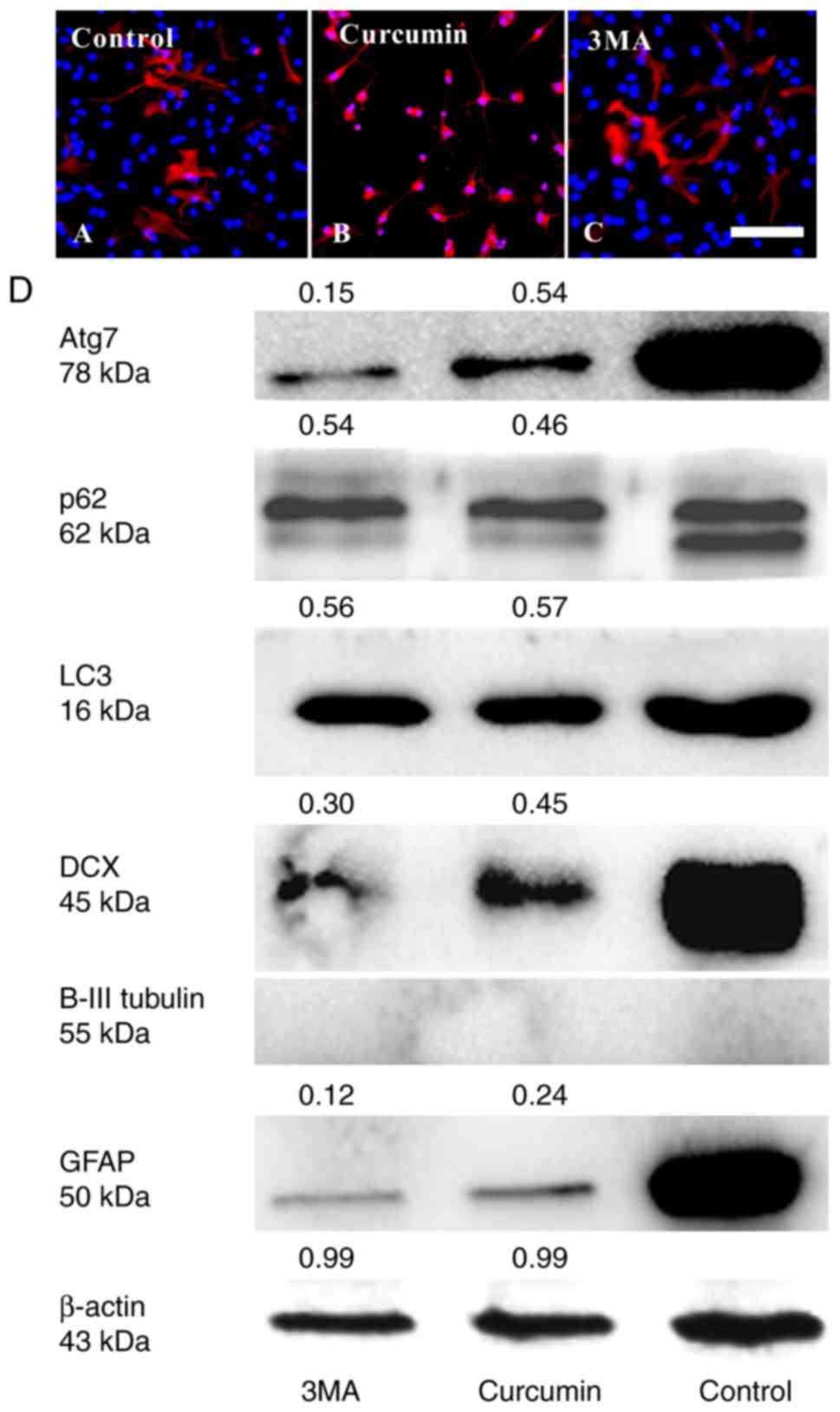
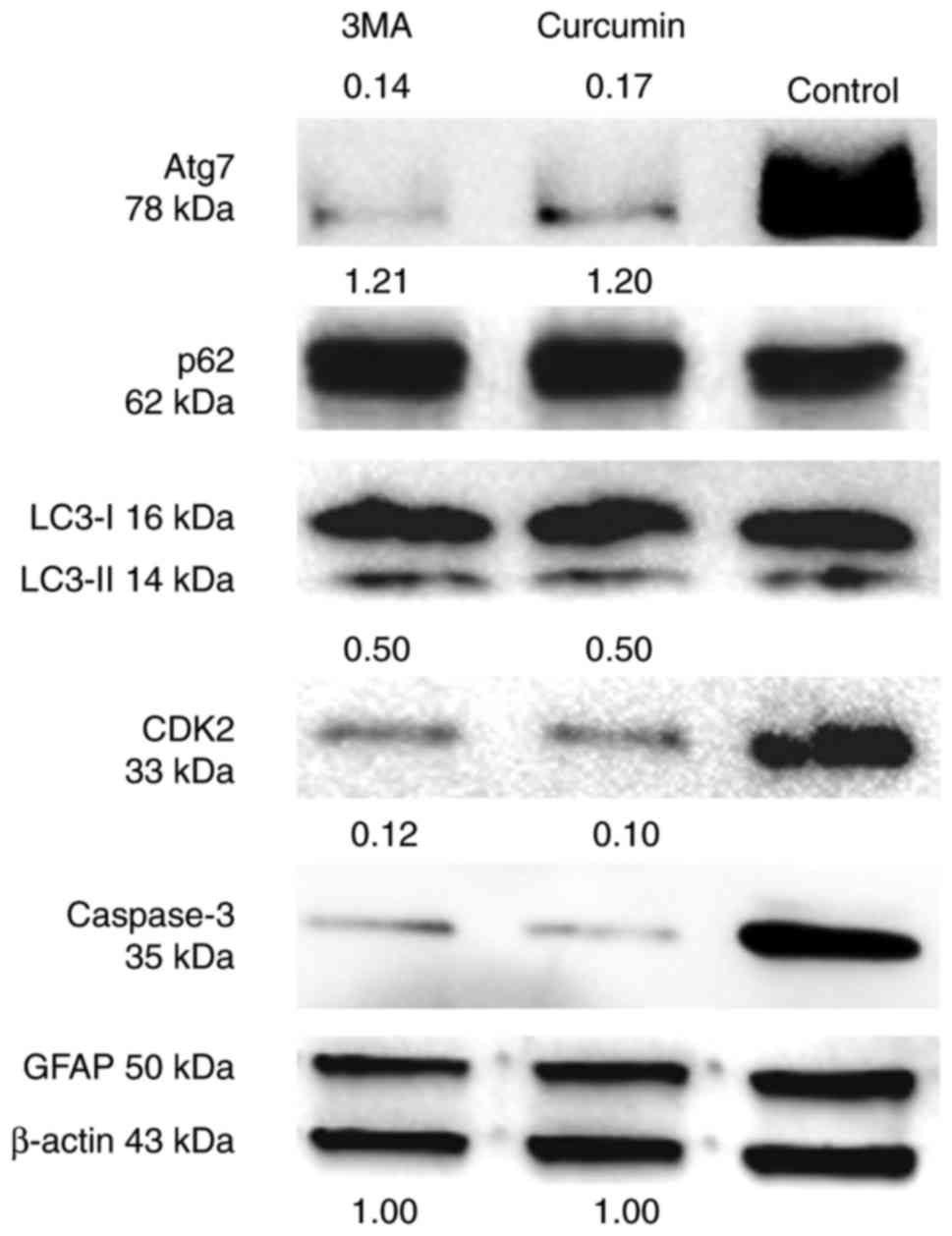
Curcumin is an orange-yellow colored, lipophilic polyphenol substance derived from the rhizome of Curcuma longa that is widely used in many countries. Curcumin has many reported functions, including antioxidant and anti‑inflammatory effects. Autophagy removes damaged organelles and protein aggregates in the cell. However, whether curcumin mediates its effects on neural stem cell (NSC) differentiation, cell cycle and apoptosis through autophagy is unknown. In the present study, the effects of curcumin and 3‑methyladenine (3MA; an autophagy inhibitor, as a positive control) on the autophagy, differentiation, cell cycle progression and apoptosis of NSCs in different culture states were examined. In order to confirm the role of autophagy in these processes of NSC behavioral change, the protein expression level changes of markers of autophagy, such as autophagy‑related protein 7 (Atg7), light chain (LC)3 and p62, were assessed. When NSCs were in an adherent state, 10 µM curcumin inhibited their differentiation into GFAP+ astrocytes or DCX+ immature neurons, while Atg7 and p62 protein expression were also reduced compared with the untreated control group. When NSCs were in a suspended state, 10 µM curcumin inhibited the cell cycle progression and apoptosis of NSCs as determined by western blotting, which was associated with a decreased autophagic flux and Atg7 expression. In addition, the curcumin‑treated group trended in a similar direction to the 3MA‑treated group. Thus, the data suggest that curcumin can inhibit differentiation, promote cell survival and inhibit cell cycle progression from G1 to S in NSCs, and that these effects are mediated through the regulation of Atg7 and p62.
View Figures

Figure 1

Figure 2

Figure 3

Figure 4

Figure 5

Figure 6

View References

1 

Aoki H, Takada Y, Kondo S, Sawaya R, Aggarwal BB and Kondo Y: Evidence that curcumin suppresses the growth of malignant gliomas in vitro and in vivo through induction of autophagy: Role of Akt and extracellular signal-regulated kinase signaling pathways. Mol Pharmacol. 72:29–39. 2007. View Article : Google Scholar : PubMed/NCBI

2 

Wang R, Li Y, Li Y, Xu Y, Wu H and Li X: Curcumin protects against glutamate excitotoxicity in rat cerebral cortical neurons by increasing brain-derived neurotrophic factor level and activating. TrkB Brain Res. 1210:84–91. 2008. View Article : Google Scholar

3 

Ramadan G, Al-Kahtani MA and El-Sayed WM: Anti-inflammatory and anti-oxidant properties of curcuma longa (turmeric) versus zingiber officinale (ginger) rhizomes in rat adjuvant-induced arthritis. Inflammation. 34:291–301. 2011. View Article : Google Scholar

4 

Kang SK, Cha SH and Jeon HG: Curcumin-induced histone hypoacetylation enhances caspase-3-dependent glioma cell death and neurogenesis of neural progenitor cells. Stem Cells Dev. 15:165–174. 2006. View Article : Google Scholar : PubMed/NCBI

5 

Kim SJ, Son TG, Park HR, Park M, Kim MS, Kim HS, Chung HY, Mattson MP and Lee J: Curcumin stimulates proliferation of embryonic neural progenitor cells and neurogenesis in the adult hippocampus. J Biol Chem. 283:14497–14505. 2008. View Article : Google Scholar : PubMed/NCBI

6 

Long DX, Hu D, Wang P and Wu YJ: Induction of autophagy in human neuroblastoma SH-SY5Y cells by tri-ortho-cresyl phosphate. Mol Cell Biochem. 396:33–40. 2014. View Article : Google Scholar : PubMed/NCBI

7 

Shi R, Weng J, Zhao L, Li XM, Gao TM and Kong J: Excessive autophagy contributes to neuron death in cerebral ischemia. CNS Neurosci Ther. 18:250–260. 2012. View Article : Google Scholar : PubMed/NCBI

8 

Kroemer G, Mariño G and Levine B: Autophagy and the integrated stress response. Mol Cell. 40:280–293. 2010. View Article : Google Scholar : PubMed/NCBI

9 

Gomez-Puerto MC, Folkerts H, Wierenga ATJ, Schepers K, Schuringa JJ, Coffer PJ and Vellenga E: Autophagy proteins ATG5 and ATG7 are essential for the maintenance of human CD34+ hematopoietic stem-progenitor cells. Stem Cells. 34:1651–1663. 2016. View Article : Google Scholar : PubMed/NCBI

10 

Ouyang L, Zhang L, Zhang S, Yao D, Zhao Y, Wang G, Fu L, Lei P and Liu B: Small-molecule activator of UNC-51-like kinase 1 (ULK1) that induces cytoprotective autophagy for Parkinson's disease treatment. J Med Chem. 61:2776–2792. 2018. View Article : Google Scholar : PubMed/NCBI

11 

Karabiyik C, Lee MJ and Rubinsztein DC: Autophagy impairment in Parkinson's disease. Essays Biochem. 61:711–720. 2017. View Article : Google Scholar : PubMed/NCBI

12 

Kabuta T, Suzuki Y and Wada K: Degradation of amyotrophic lateral sclerosis-linked mutant Cu, Zn-superoxide dismutase proteins by macroautophagy and the proteasome. J Biol Chem. 281:30524–30533. 2006. View Article : Google Scholar : PubMed/NCBI

13 

Fornai F, Longone P, Ferrucci M, Lenzi P, Isidoro C, Ruggieri S and Paparelli A: Autophagy and amyotrophic lateral sclerosis: The multiple roles of lithium. Autophagy. 4:527–530. 2008. View Article : Google Scholar : PubMed/NCBI

14 

Nixon RA, Wegiel J, Kumar A, Yu WH, Peterhoff C, Cataldo A and Cuervo AM: Extensive involvement of autophagy in Alzheimer disease: An immunoelectron microscopy study. J Neuropathol Exp Neurol. 64:113–122. 2005. View Article : Google Scholar : PubMed/NCBI

15 

Cianfanelli V and Cecconi F: AMBRA1: When autophagy meets cell proliferation. Autophagy. 11:1705–1707. 2015. View Article : Google Scholar : PubMed/NCBI

16 

Revuelta M and Matheu A: Autophagy in stem cell aging. Aging Cell. 16:912–915. 2017. View Article : Google Scholar : PubMed/NCBI

17 

Codogno P and Meijer AJ: Autophagy and signaling: Their role in cell survival and cell death. Cell Death Differ. 2(Suppl 12): S1509–S1518. 2005. View Article : Google Scholar

18 

Zhang C, Wu JM, Liao M, Wang JL and Xu CJ: The ROCK/GGtase pathway are essential to the proliferation and differentiation of neural stem cells mediated by simvastatin. J Mol Neurosci. 60:474–485. 2016. View Article : Google Scholar : PubMed/NCBI

19 

Xu CJ, Xu L, Huang LD, Li Y, Yu PP, Hang Q, Xu XM and Lu PH: Combined NgR vaccination and neural stem cell transplantation promote functional recovery after spinal cord injury in adult rats. Neuropathol Appl Neurobiol. 37:135–155. 2011. View Article : Google Scholar

20 

Peng ZW, Xue F, Wang HN, Zhang RG, Chen YC, Wang Y, Zhang LY, Fan J and Tan QR: Paroxetine up-regulates neurogenesis in hippocampus-derived neural stem cell from fetal rats. Mol Cell Biochem. 375:105–113. 2013.

21 

Vázquez CL and Colombo MI: Chapter 6 assays to assess autophagy induction and fusion of autophagic vacuoles with a degradative compartment, using monodansylcadaverine (MDC) and DQ-BSA. Methods Enzymol. 452:85–95. 2009. View Article : Google Scholar

22 

Mizushima N and Yoshimori T: How to interpret LC3 immunoblotting. Autophagy. 3:542–545. 2007. View Article : Google Scholar : PubMed/NCBI

23 

Komatsu M, Waguri S, Ueno T, Iwata J, Murata S, Tanida I, Ezaki J, Mizushima N, Ohsumi Y, Uchiyama Y, et al: Impairment of starvation-induced and constitutive autophagy in Atg7-deficient mice. J Cell Biol. 169:425–434. 2005. View Article : Google Scholar : PubMed/NCBI

24 

Bjørkøy G, Lamark T, Brech A, Outzen H, Perander M, Overvatn A, Stenmark H and Johansen T: p62/SQSTM1 forms protein aggregates degraded by autophagy and has a protective effect on huntingtin-induced cell death. J Cell Biol. 171:603–614. 2005. View Article : Google Scholar : PubMed/NCBI

25 

Bjørkøy G, Lamark T, Pankiv S, Øvervatn A, Brech A and Johansen T: Monitoring autophagic degradation of p62/SQSTM1. Methods Enzymol. 452:181–197. 2009. View Article : Google Scholar : PubMed/NCBI

26 

Hamzehzadeh L, Atkin SL, Majeed M, Butler AE and Sahebkar A: The versatile role of curcumin in cancer prevention and treatment: A focus on PI3K/AKT pathway. J Cell Physiol. 233:6530–6537. 2018. View Article : Google Scholar : PubMed/NCBI

27 

Zhu X and Zhu R: Curcumin suppresses the progression of laryngeal squamous cell carcinoma through the upregulation of miR-145 and inhibition of the PI3K/Akt/mTOR pathway. Onco Targets Ther. 11:3521–3531. 2018. View Article : Google Scholar : PubMed/NCBI

28 

Ahmed AI, Shtaya AB, Zaben MJ, Owens EV, Kiecker C and Gray WP: Endogenous GFAP-positive neural stem/progenitor cells in the postnatal mouse cortex are activated following traumatic brain injury. J Neurotrauma. 29:828–842. 2012. View Article : Google Scholar :

29 

Vermeulen K, Van Bockstaele DR and Berneman ZN: The cell cycle: A review of regulation, deregulation and therapeutic targets in cancer. Cell Prolif. 36:131–149. 2010. View Article : Google Scholar

30 

Munafó DB and Colombo MI: A novel assay to study autophagy: Regulation of autophagosome vacuole size by amino acid deprivation. J Cell Sci. 114:3619–3629. 2001.PubMed/NCBI

31 

Gukovskaya AS and Gukovsky I: Autophagy and pancreatitis. Am J Physiol Gastrointest Liver Physiol. 303:G993–G1003. 2012. View Article : Google Scholar : PubMed/NCBI

32 

Zhuang W, Long L, Zheng B, Ji W, Yang N, Zhang Q and Liang Z: Curcumin promotes differentiation of glioma-initiating cells by inducing autophagy. Cancer Sci. 103:684–690. 2012. View Article : Google Scholar

33 

Shi L, Wang Z and Sun G: Curcumin induces glioma stem-like cell formation. Neuroreport. 26:167–172. 2015. View Article : Google Scholar : PubMed/NCBI

34 

Méndez J: Cell proliferation without cyclin E-CDK2. Cell. 114:398–399. 2003. View Article : Google Scholar : PubMed/NCBI

35 

Tetsu O and Mccormick F: Proliferation of cancer cells despite CDK2 inhibition. Cancer Cell. 3:233–245. 2003. View Article : Google Scholar : PubMed/NCBI

36 

Kelly TJ and Brown GW: Regulation of chromosome replication. Annu Rev Biochem. 69:829–880. 2000. View Article : Google Scholar : PubMed/NCBI

37 

Tasdemir E, Maiuri MC, Tajeddine N, Vitale I, Criollo A, Vicencio JM, Hickman JA, Geneste O and Kroemer G: Cell cycle-dependent induction of autophagy, mitophagy and reticulophagy. Cell Cycle. 6:2263–2267. 2007. View Article : Google Scholar : PubMed/NCBI

38 

Lee IH, Kawai Y, Fergusson MM, Rovira II, Bishop AJ, Motoyama N, Cao L and Finkel T: Atg7 modulates p53 activity to regulate cell cycle and survival during metabolic stress. Science. 336:225–228. 2012. View Article : Google Scholar : PubMed/NCBI

39 

Zhu J, Yang L, Tian Z, Hua X, Gu J, Li J, Liu C, Jin H, Wang Y, Jiang G, et al: ATG7 overexpression is crucial for tumorigenic growth of bladder cancer in vitro and in vivo by targeting the ETS2/miRNA196b/FOXO1/p27 axis. Mol Ther Nucleic Acids. 7:299–313. 2017. View Article : Google Scholar : PubMed/NCBI

40 

Ojha R, Ishaq M and Singh SK: Caspase-mediated crosstalk between autophagy and apoptosis: Mutual adjustment or matter of dominance. J Cancer Res Ther. 11:514–524. 2015. View Article : Google Scholar : PubMed/NCBI

41 

Oral O, Oz-Arslan D, Itah Z, Naghavi A, Deveci R, Karacali S and Gozuacik D: Cleavage of Atg3 protein by caspase-8 regulates autophagy during receptor-activated cell death. Apoptosis. 17:810–820. 2012. View Article : Google Scholar : PubMed/NCBI

42 

Han J, Hou W, Goldstein LA, Stolz DB, Watkins SC and Rabinowich H: A complex between atg7 and caspase-9: A novel mechanism of cross-regulation between autophagy and apoptosis. J Biol Chem. 289:6485–6497. 2014. View Article : Google Scholar :

43 

Chang JL, Chow JM, Chang JH, Wen YC, Lin YW, Yang SF, Lee WJ and Chien MH: Quercetin simultaneously induces G0/G1-phase arrest and caspase-mediated crosstalk between apoptosis and autophagy in human leukemia HL-60 cells. Environ Toxicol. 32:1857–1868. 2017. View Article : Google Scholar : PubMed/NCBI

44 

Rubinstein AD, Eisenstein M, Ber Y, Bialik S and Kimchi A: The autophagy protein atg12 associates with antiapoptotic BCL-2 family members to promote mitochondrial apoptosis. Mol Cell. 44:698–709. 2011. View Article : Google Scholar : PubMed/NCBI

45 

Wang C, Chen S, Yeo S, Karsli-Uzunbas G, White E, Mizushima N, Virgin HW and Guan JL: Elevated p62/SQSTM1 determines the fate of autophagy-deficient neural stem cells by increasing superoxide. J Cell Biol. 212:545–560. 2016. View Article : Google Scholar : PubMed/NCBI

46 

Taniguchi K, Yamachika S, He F and Karin M: p62/SQSTM1-Dr. Jekyll and Mr. Hyde that prevents oxidative stress but promotes liver cancer. FEBS Lett. 590:2375–2397. 2016. View Article : Google Scholar : PubMed/NCBI

47 

Wang L, Cano M and Handa JT: p62 provides dual cytoprotection against oxidative stress in the retinal pigment epithelium. Biochim Biophys Acta. 1843:1248–1258. 2014. View Article : Google Scholar : PubMed/NCBI

48 

Carroll B, Otten EG, Manni D, Stefanatos R, Menzies FM, Smith GR, Jurk D, Kenneth N, Wilkinson S, Passos JF, et al: Oxidation of SQSTM1/p62 mediates the link between redox state and protein homeostasis. Nat Commun. 9:2562018. View Article : Google Scholar : PubMed/NCBI

49 

Perez Estrada C, Covacu R, Sankavaram SR, Svensson M and Brundin L: Oxidative stress increases neurogenesis and oligodendrogenesis in adult neural progenitor cells. Stem Cells Dev. 23:2311–2327. 2014. View Article : Google Scholar : PubMed/NCBI

50 

Panchal HD, Vranizan K, Lee CY, Ho J, Ngai J and Timiras PS: Early anti-oxidative and anti-proliferative curcumin effects on neuroglioma cells suggest therapeutic targets. Neurochem Res. 33:1701–1710. 2008. View Article : Google Scholar : PubMed/NCBI

51 

Mizushima N: Autophagy: Process and function. Genes Dev. 21:2861–2873. 2007. View Article : Google Scholar : PubMed/NCBI

52 

Mizushima N: Methods for monitoring autophagy. Int J Biochem Cell Biol. 36:2491–2502. 2004. View Article : Google Scholar : PubMed/NCBI

53 

Yasuda T and Adams DJ: Physiological roles of ion channels in adult neural stem cells and their progeny. J Neurochem. 114:946–959. 2010.PubMed/NCBI

54 

Zhang X, Chen Q, Wang Y, Peng W and Cai H: Effects of curcumin on ion channels and transporters. Front Physiol. 5:942014. View Article : Google Scholar : PubMed/NCBI

55 

Nalli M, Ortar G, Schiano Moriello A, Di Marzo V and De Petrocellis L: Effects of curcumin and curcumin analogues on TRP channels. Fitoterapia. 122:126–131. 2017. View Article : Google Scholar : PubMed/NCBI

Related Articles

  • Abstract
  • View
  • Download
  • Twitter
Copy and paste a formatted citation
Spandidos Publications style
Wang JL, Wang JJ, Cai ZN and Xu CJ: The effect of curcumin on the differentiation, apoptosis and cell cycle of neural stem cells is mediated through inhibiting autophagy by the modulation of Atg7 and p62. Int J Mol Med 42: 2481-2488, 2018.
APA
Wang, J., Wang, J., Cai, Z., & Xu, C. (2018). The effect of curcumin on the differentiation, apoptosis and cell cycle of neural stem cells is mediated through inhibiting autophagy by the modulation of Atg7 and p62. International Journal of Molecular Medicine, 42, 2481-2488. https://doi.org/10.3892/ijmm.2018.3847
MLA
Wang, J., Wang, J., Cai, Z., Xu, C."The effect of curcumin on the differentiation, apoptosis and cell cycle of neural stem cells is mediated through inhibiting autophagy by the modulation of Atg7 and p62". International Journal of Molecular Medicine 42.5 (2018): 2481-2488.
Chicago
Wang, J., Wang, J., Cai, Z., Xu, C."The effect of curcumin on the differentiation, apoptosis and cell cycle of neural stem cells is mediated through inhibiting autophagy by the modulation of Atg7 and p62". International Journal of Molecular Medicine 42, no. 5 (2018): 2481-2488. https://doi.org/10.3892/ijmm.2018.3847
Copy and paste a formatted citation
x
Spandidos Publications style
Wang JL, Wang JJ, Cai ZN and Xu CJ: The effect of curcumin on the differentiation, apoptosis and cell cycle of neural stem cells is mediated through inhibiting autophagy by the modulation of Atg7 and p62. Int J Mol Med 42: 2481-2488, 2018.
APA
Wang, J., Wang, J., Cai, Z., & Xu, C. (2018). The effect of curcumin on the differentiation, apoptosis and cell cycle of neural stem cells is mediated through inhibiting autophagy by the modulation of Atg7 and p62. International Journal of Molecular Medicine, 42, 2481-2488. https://doi.org/10.3892/ijmm.2018.3847
MLA
Wang, J., Wang, J., Cai, Z., Xu, C."The effect of curcumin on the differentiation, apoptosis and cell cycle of neural stem cells is mediated through inhibiting autophagy by the modulation of Atg7 and p62". International Journal of Molecular Medicine 42.5 (2018): 2481-2488.
Chicago
Wang, J., Wang, J., Cai, Z., Xu, C."The effect of curcumin on the differentiation, apoptosis and cell cycle of neural stem cells is mediated through inhibiting autophagy by the modulation of Atg7 and p62". International Journal of Molecular Medicine 42, no. 5 (2018): 2481-2488. https://doi.org/10.3892/ijmm.2018.3847
Follow us
  • Twitter
  • LinkedIn
  • Facebook
About
  • Spandidos Publications
  • Careers
  • Cookie Policy
  • Privacy Policy
How can we help?
  • Help
  • Live Chat
  • Contact
  • Email to our Support Team