Spandidos Publications Logo
  • About
    • About Spandidos
    • Aims and Scopes
    • Abstracting and Indexing
    • Editorial Policies
    • Reprints and Permissions
    • Job Opportunities
    • Terms and Conditions
    • Contact
  • Journals
    • All Journals
    • Oncology Letters
      • Oncology Letters
      • Information for Authors
      • Editorial Policies
      • Editorial Board
      • Aims and Scope
      • Abstracting and Indexing
      • Bibliographic Information
      • Archive
    • International Journal of Oncology
      • International Journal of Oncology
      • Information for Authors
      • Editorial Policies
      • Editorial Board
      • Aims and Scope
      • Abstracting and Indexing
      • Bibliographic Information
      • Archive
    • Molecular and Clinical Oncology
      • Molecular and Clinical Oncology
      • Information for Authors
      • Editorial Policies
      • Editorial Board
      • Aims and Scope
      • Abstracting and Indexing
      • Bibliographic Information
      • Archive
    • Experimental and Therapeutic Medicine
      • Experimental and Therapeutic Medicine
      • Information for Authors
      • Editorial Policies
      • Editorial Board
      • Aims and Scope
      • Abstracting and Indexing
      • Bibliographic Information
      • Archive
    • International Journal of Molecular Medicine
      • International Journal of Molecular Medicine
      • Information for Authors
      • Editorial Policies
      • Editorial Board
      • Aims and Scope
      • Abstracting and Indexing
      • Bibliographic Information
      • Archive
    • Biomedical Reports
      • Biomedical Reports
      • Information for Authors
      • Editorial Policies
      • Editorial Board
      • Aims and Scope
      • Abstracting and Indexing
      • Bibliographic Information
      • Archive
    • Oncology Reports
      • Oncology Reports
      • Information for Authors
      • Editorial Policies
      • Editorial Board
      • Aims and Scope
      • Abstracting and Indexing
      • Bibliographic Information
      • Archive
    • Molecular Medicine Reports
      • Molecular Medicine Reports
      • Information for Authors
      • Editorial Policies
      • Editorial Board
      • Aims and Scope
      • Abstracting and Indexing
      • Bibliographic Information
      • Archive
    • World Academy of Sciences Journal
      • World Academy of Sciences Journal
      • Information for Authors
      • Editorial Policies
      • Editorial Board
      • Aims and Scope
      • Abstracting and Indexing
      • Bibliographic Information
      • Archive
    • International Journal of Functional Nutrition
      • International Journal of Functional Nutrition
      • Information for Authors
      • Editorial Policies
      • Editorial Board
      • Aims and Scope
      • Abstracting and Indexing
      • Bibliographic Information
      • Archive
    • International Journal of Epigenetics
      • International Journal of Epigenetics
      • Information for Authors
      • Editorial Policies
      • Editorial Board
      • Aims and Scope
      • Abstracting and Indexing
      • Bibliographic Information
      • Archive
    • Medicine International
      • Medicine International
      • Information for Authors
      • Editorial Policies
      • Editorial Board
      • Aims and Scope
      • Abstracting and Indexing
      • Bibliographic Information
      • Archive
  • Articles
  • Information
    • Information for Authors
    • Information for Reviewers
    • Information for Librarians
    • Information for Advertisers
    • Conferences
  • Language Editing
Spandidos Publications Logo
  • About
    • About Spandidos
    • Aims and Scopes
    • Abstracting and Indexing
    • Editorial Policies
    • Reprints and Permissions
    • Job Opportunities
    • Terms and Conditions
    • Contact
  • Journals
    • All Journals
    • Biomedical Reports
      • Information for Authors
      • Editorial Policies
      • Editorial Board
      • Aims and Scope
      • Abstracting and Indexing
      • Bibliographic Information
      • Archive
    • Experimental and Therapeutic Medicine
      • Information for Authors
      • Editorial Policies
      • Editorial Board
      • Aims and Scope
      • Abstracting and Indexing
      • Bibliographic Information
      • Archive
    • International Journal of Epigenetics
      • Information for Authors
      • Editorial Policies
      • Editorial Board
      • Aims and Scope
      • Abstracting and Indexing
      • Bibliographic Information
      • Archive
    • International Journal of Functional Nutrition
      • Information for Authors
      • Editorial Policies
      • Editorial Board
      • Aims and Scope
      • Abstracting and Indexing
      • Bibliographic Information
      • Archive
    • International Journal of Molecular Medicine
      • Information for Authors
      • Editorial Policies
      • Editorial Board
      • Aims and Scope
      • Abstracting and Indexing
      • Bibliographic Information
      • Archive
    • International Journal of Oncology
      • Information for Authors
      • Editorial Policies
      • Editorial Board
      • Aims and Scope
      • Abstracting and Indexing
      • Bibliographic Information
      • Archive
    • Medicine International
      • Information for Authors
      • Editorial Policies
      • Editorial Board
      • Aims and Scope
      • Abstracting and Indexing
      • Bibliographic Information
      • Archive
    • Molecular and Clinical Oncology
      • Information for Authors
      • Editorial Policies
      • Editorial Board
      • Aims and Scope
      • Abstracting and Indexing
      • Bibliographic Information
      • Archive
    • Molecular Medicine Reports
      • Information for Authors
      • Editorial Policies
      • Editorial Board
      • Aims and Scope
      • Abstracting and Indexing
      • Bibliographic Information
      • Archive
    • Oncology Letters
      • Information for Authors
      • Editorial Policies
      • Editorial Board
      • Aims and Scope
      • Abstracting and Indexing
      • Bibliographic Information
      • Archive
    • Oncology Reports
      • Information for Authors
      • Editorial Policies
      • Editorial Board
      • Aims and Scope
      • Abstracting and Indexing
      • Bibliographic Information
      • Archive
    • World Academy of Sciences Journal
      • Information for Authors
      • Editorial Policies
      • Editorial Board
      • Aims and Scope
      • Abstracting and Indexing
      • Bibliographic Information
      • Archive
  • Articles
  • Information
    • For Authors
    • For Reviewers
    • For Librarians
    • For Advertisers
    • Conferences
  • Language Editing
Login Register Submit
  • This site uses cookies
  • You can change your cookie settings at any time by following the instructions in our Cookie Policy. To find out more, you may read our Privacy Policy.

    I agree
Search articles by DOI, keyword, author or affiliation
Search
Advanced Search
presentation
International Journal of Molecular Medicine
Join Editorial Board Propose a Special Issue
Print ISSN: 1107-3756 Online ISSN: 1791-244X
Journal Cover
December-2018 Volume 42 Issue 6

Full Size Image

Sign up for eToc alerts
Recommend to Library

Journals

International Journal of Molecular Medicine

International Journal of Molecular Medicine

International Journal of Molecular Medicine is an international journal devoted to molecular mechanisms of human disease.

International Journal of Oncology

International Journal of Oncology

International Journal of Oncology is an international journal devoted to oncology research and cancer treatment.

Molecular Medicine Reports

Molecular Medicine Reports

Covers molecular medicine topics such as pharmacology, pathology, genetics, neuroscience, infectious diseases, molecular cardiology, and molecular surgery.

Oncology Reports

Oncology Reports

Oncology Reports is an international journal devoted to fundamental and applied research in Oncology.

Experimental and Therapeutic Medicine

Experimental and Therapeutic Medicine

Experimental and Therapeutic Medicine is an international journal devoted to laboratory and clinical medicine.

Oncology Letters

Oncology Letters

Oncology Letters is an international journal devoted to Experimental and Clinical Oncology.

Biomedical Reports

Biomedical Reports

Explores a wide range of biological and medical fields, including pharmacology, genetics, microbiology, neuroscience, and molecular cardiology.

Molecular and Clinical Oncology

Molecular and Clinical Oncology

International journal addressing all aspects of oncology research, from tumorigenesis and oncogenes to chemotherapy and metastasis.

World Academy of Sciences Journal

World Academy of Sciences Journal

Multidisciplinary open-access journal spanning biochemistry, genetics, neuroscience, environmental health, and synthetic biology.

International Journal of Functional Nutrition

International Journal of Functional Nutrition

Open-access journal combining biochemistry, pharmacology, immunology, and genetics to advance health through functional nutrition.

International Journal of Epigenetics

International Journal of Epigenetics

Publishes open-access research on using epigenetics to advance understanding and treatment of human disease.

Medicine International

Medicine International

An International Open Access Journal Devoted to General Medicine.

Journal Cover
December-2018 Volume 42 Issue 6

Full Size Image

Sign up for eToc alerts
Recommend to Library

  • Article
  • Citations
    • Cite This Article
    • Download Citation
    • Create Citation Alert
    • Remove Citation Alert
    • Cited By
  • Similar Articles
    • Related Articles (in Spandidos Publications)
    • Similar Articles (Google Scholar)
    • Similar Articles (PubMed)
  • Download PDF
  • Download XML
  • View XML
Article

Hyperosmotic stress stimulates autophagy via the NFAT5/mTOR pathway in cardiomyocytes

  • Authors:
    • Hong Zhu
    • Wei Cao
    • Peng Zhao
    • Jieyu Wang
    • Yuying Qian
    • Yun Li
  • View Affiliations / Copyright

    Affiliations: Department of Geriatrics, Xuanwu Hospital, Capital Medical University, Beijing 100053, P.R. China, Department of Cardiology, The Second Affiliated Hospital of Harbin Medical University, Harbin, Heilongjiang 150081, P.R. China, Division of Cardiology, Department of Internal Medicine, David Geffen School of Medicine at University of California Los Angeles, Los Angeles, CA 90095, USA
  • Pages: 3459-3466
    |
    Published online on: September 12, 2018
       https://doi.org/10.3892/ijmm.2018.3873
  • Expand metrics +
Metrics: Total Views: 0 (Spandidos Publications: | PMC Statistics: )
Metrics: Total PDF Downloads: 0 (Spandidos Publications: | PMC Statistics: )
Cited By (CrossRef): 0 citations Loading Articles...

This article is mentioned in:


Abstract

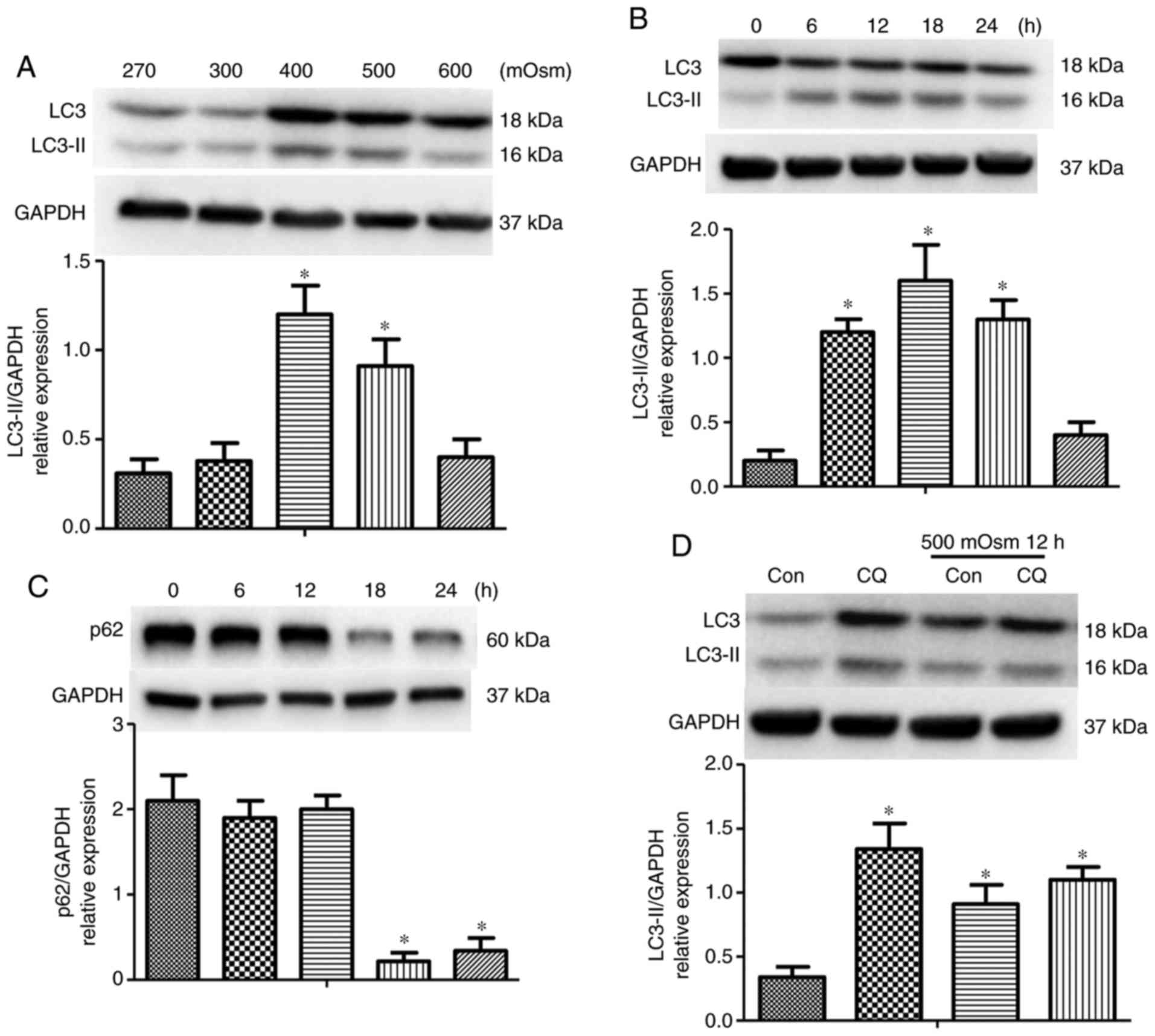
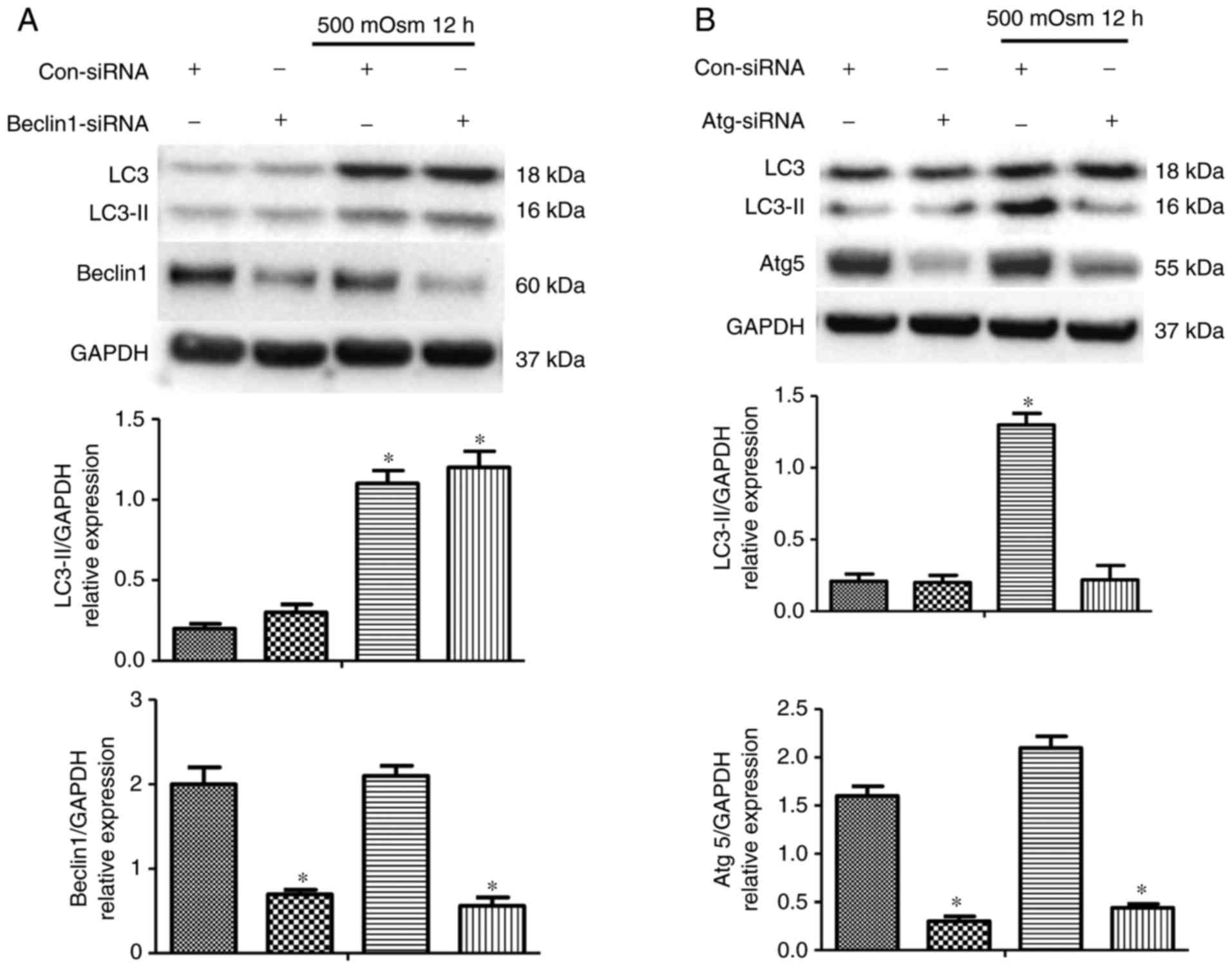
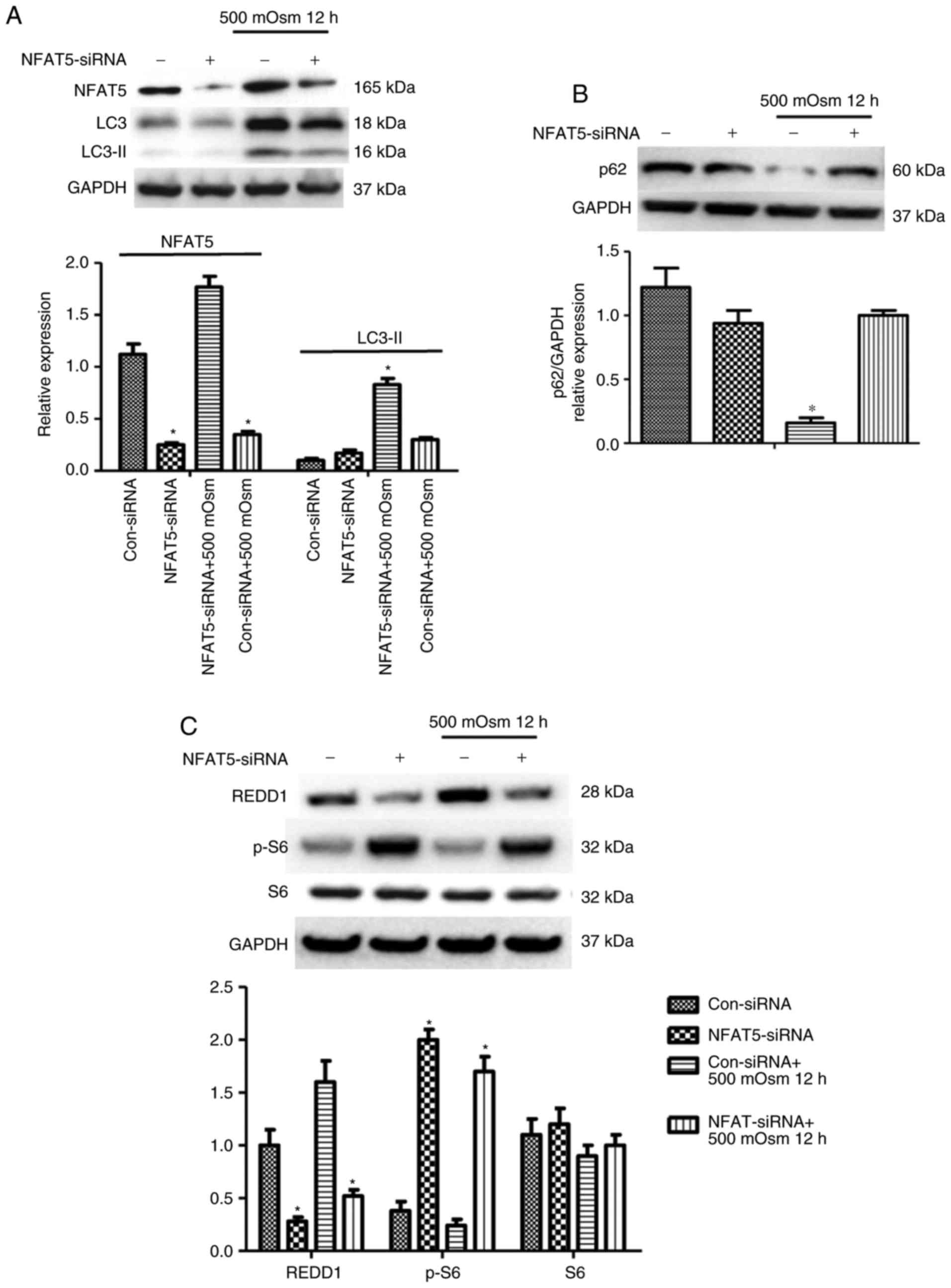
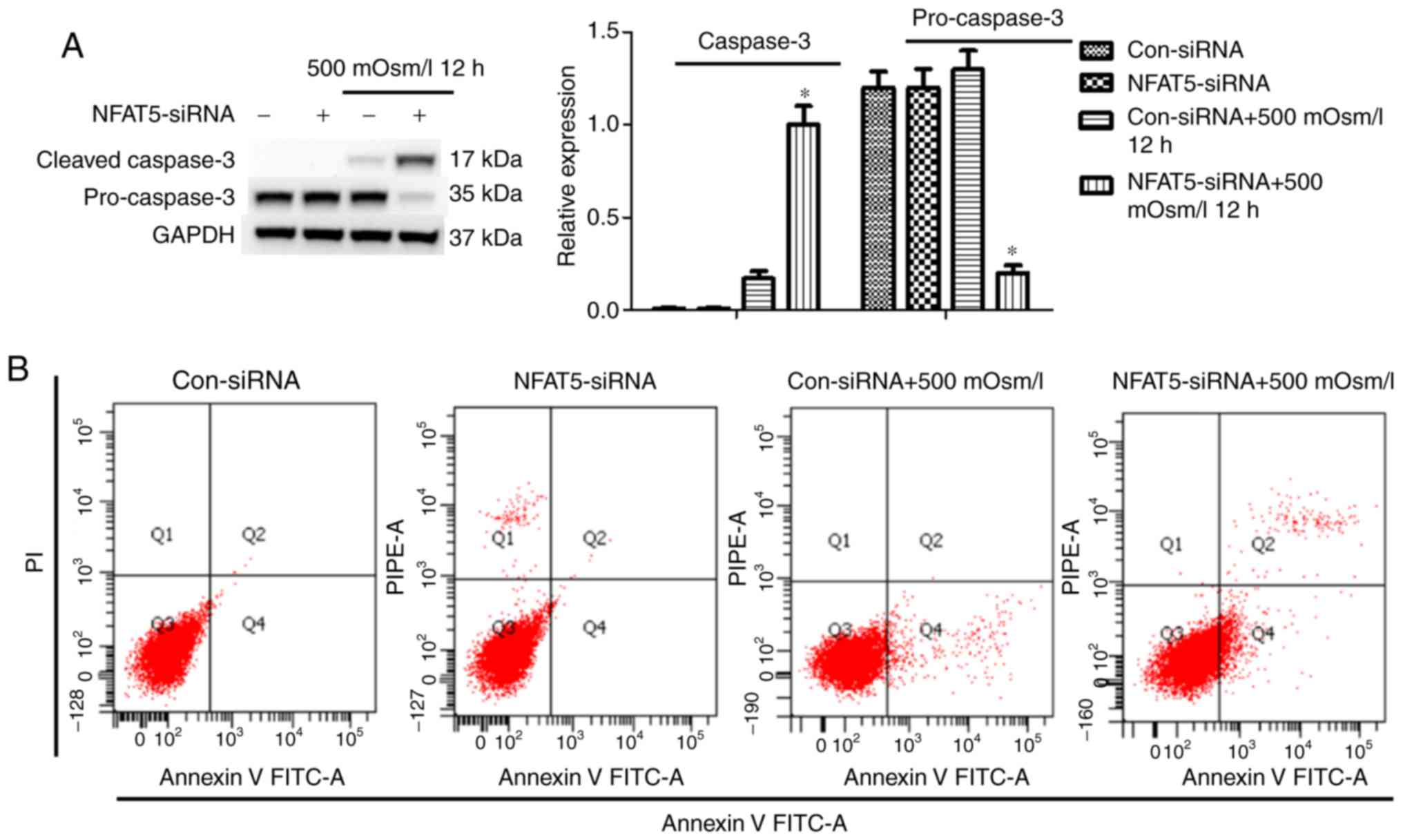
Hyperosmotic stress may be initiated during a diverse range pathological circumstances, which in turn results in tissue damage. In this process, the activation of survival signaling, which has the capacity to restore cell homeostasis, determines cell fate. Autophagy is responsible for cell survival and is activated by various pathological stimuli. However, its interplay with hyperosmotic stress and its effect on terminally differentiated cardiac myocytes is unknown. Nuclear factor of activated T‑cells 5 (NFAT5), an osmo‑sensitive transcription factor, mediates the expression of cell survival associated‑genes under hyperosmotic conditions. The present study investigated whether NFAT5 signaling is required in hyperosmotic stress‑induced autophagy. It was demonstrated that the presence of a hyperosmotic stress induced an increase in NFAT5 expression, which in turn triggered autophagy through autophagy‑related protein 5 (Atg5) activation. By contrast, NFAT5 silencing inhibited DNA damage response 1 protein expression, which then initiated the activation of mammalian target of rapamycin signaling. Therefore, the balance between NFAT5‑induced apoptosis and autophagy may serve a critical role in the determination of the fate of cardiomyocytes under hyperosmotic stress. These data suggest that autophagy activation is a beneficial adaptive response to attenuate hyperosmotic stress‑induced cell death. Therefore, increasing autophagy through activation of NFAT5 may provide a novel cardioprotective strategy against hyperosmotic stress‑induced damage.
View Figures

Figure 1

Figure 2

Figure 3

Figure 4

View References

1 

Wright AR and Rees SA: Cardiac cell volume: Crystal clear or murky waters? A comparison with other cell types. Pharmacol Ther. 80:89–121. 1998. View Article : Google Scholar : PubMed/NCBI

2 

Galvez A, Morales MP, Eltit JM, Ocaranza P, Carrasco L, Campos X, Sapag-Hagar M, Díaz-Araya G and Lavandero S: A rapid and strong apoptotic process is triggered by hyperosmotic stress in cultured rat cardiac myocytes. Cell Tissue Res. 304:279–285. 2001. View Article : Google Scholar : PubMed/NCBI

3 

Kaur J and Debnath J: Autophagy at the crossroads of catabolism and anabolism. Nat Rev Mol Cell Biol. 16:461–472. 2015. View Article : Google Scholar : PubMed/NCBI

4 

Tanaka K and Matsuda N: Proteostasis and neurodegeneration: The roles of proteasomal degradation and autophagy. Biochim Biophys Acta. 1843:197–204. 2014. View Article : Google Scholar

5 

Mazure NM and Pouysségur J: Hypoxia-induced autophagy: Cell death or cell survival? Curr Opin Cell Biol. 22:177–180. 2010. View Article : Google Scholar

6 

Galluzzi L, Pietrocola F, Levine B and Kroemer G: Metabolic control of autophagy. Cell. 159:1263–1276. 2014. View Article : Google Scholar : PubMed/NCBI

7 

Russell RC, Yuan HX and Guan KL: Autophagy regulation by nutrient signaling. Cell Res. 24:42–57. 2014. View Article : Google Scholar :

8 

Levine B and Deretic V: Unveiling the roles of autophagy in innate and adaptive immunity. Nat Rev Immunol. 7:767–777. 2007. View Article : Google Scholar : PubMed/NCBI

9 

Klionsky DJ, Abdelmohsen K, Abe A, Abedin MJ, Abeliovich H, Acevedo Arozena A, Adachi H, Adams CM, Adams PD, Adeli K, et al: Guidelines for the use and interpretation of assays for monitoring autophagy (3rd edition). Autophagy. 12:1–222. 2016. View Article : Google Scholar : PubMed/NCBI

10 

Klionsky DJ, Abdalla FC, Abeliovich H, Abraham RT, Acevedo-Arozena A, Adeli K, Agholme L, Agnello M, Agostinis P, Aguirre-Ghiso JA, et al: Guidelines for the use and interpretation of assays for monitoring autophagy. Autophagy. 8:445–544. 2012. View Article : Google Scholar : PubMed/NCBI

11 

Chen C, Deng M, Sun Q, Loughran P, Billiar TR and Scott MJ: Lipopolysaccharide stimulates p62-dependent autophagy-like aggregate clearance in hepatocytes. Biomed Res Int. 2014:2673502014.PubMed/NCBI

12 

Nishida Y, Arakawa S, Fujitani K, Yamaguchi H, Mizuta T, Kanaseki T, Komatsu M, Otsu K, Tsujimoto Y and Shimizu S: Discovery of Atg5/Atg7-independent alternative macroau-tophagy. Nature. 461:6542009. View Article : Google Scholar : PubMed/NCBI

13 

Johnson ZI, Shapiro IM and Risbud MV: Extracellular osmo-larity regulates matrix homeostasis in the intervertebral disc and articular cartilage: Evolving role of TonEBP. Matrix Biol. 40:10–16. 2014. View Article : Google Scholar : PubMed/NCBI

14 

Woo SK, Lee S and Kwon MH: TonEBP transcriptional activator in the cellular response to increased osmolality. Pflugers Arch. 444:579–585. 2002. View Article : Google Scholar : PubMed/NCBI

15 

Woo SK and Kwon HM: Adaptation of kidney medulla to hypertonicity: Role of the transcription factor TonEBP. Int Rev Cytol. 215:189–202. 2002. View Article : Google Scholar : PubMed/NCBI

16 

Ortells MC, Morancho B, Drews-Elger K, Viollet B, Laderoute KR, López-Rodríguez C and Aramburu J: Transcriptional regulation of gene expression during osmotic stress responses by the mammalian target of rapamycin. Nucleic Acids Res. 40:4368–4384. 2012. View Article : Google Scholar : PubMed/NCBI

17 

Zhou Y, Wang Q, Weiss HL and Evers BM: Nuclear factor of activated T-cells 5 increases intestinal goblet cell differentiation through an mTOR/Notch signaling pathway. Mol Biol Cell. 25:2882–2890. 2014. View Article : Google Scholar : PubMed/NCBI

18 

National Research Council: Guide for the care and use of laboratory animals. 8th edition. National Academies Press; Washington, DC: 2011

19 

Pursiheimo JP, Rantanen K, Heikkinen PT, Johansen T and Jaakkola PM: Hypoxia-activated autophagy accelerates degradation of SQSTM1/p62. Oncogene. 28:334–344. 2009. View Article : Google Scholar

20 

Beth L and Kroemer G: Autophagy in the pathogenesis of disease. Cell. 132:27–42. 2008. View Article : Google Scholar

21 

Burg MB, Ferraris JD and Dmitrieva NI: Cellular response to hyperosmotic stresses. Physiol Rev. 87:1441–1474. 2007. View Article : Google Scholar : PubMed/NCBI

22 

Hoover HE, Thuerauf DJ, Martindale JJ and Glembotski CC: Alpha B-crystallin gene induction and phosphorylation by MKK6-activated p38 A potential role for alpha B-crystallin as a target of the p38 branch of the cardiac stress response. J Biol Chem. 275:825–833. 2000. View Article : Google Scholar

23 

Takatani T, Takahashi K, Uozumi Y, Matsuda T, Ito T, Schaffer SW, Fujio Y and Azuma J: Taurine prevents the ischemia-induced apoptosis in cultured neonatal rat cardio-myocytes through Akt/caspase-9 pathway. Biochem Biophys Res Commun. 316:484–489. 2004. View Article : Google Scholar : PubMed/NCBI

24 

Takatani T, Takahashi K, Uozumi Y, Shikata E, Yamamoto Y, Ito T, Matsuda T, Schaffer SW, Fujio Y and Azuma J: Taurine inhibits apoptosis by preventing formation of the Apaf-1/caspase-9 apoptosome. Am J Physiol Cell Physiol. 287:C949–C953. 2004. View Article : Google Scholar : PubMed/NCBI

25 

Nunes P, Ernandez T, Roth I, Qiao X, Strebel D, Bouley R, Charollais A, Ramadori P, Foti M, Meda P, et al: Hypertonic stress promotes autophagy and microtubule-dependent autopha-gosomal clusters. Autophagy. 9:550–567. 2013. View Article : Google Scholar : PubMed/NCBI

26 

Biswas K, Khongsngi JL, Häussinger D and Saha N: Influence of cell volume changes on autophagic proteolysis in the perfused liver of air-breathing walking catfish (Clarias batrachus). J Exp Zool A Ecol Genet Physiol. 311:115–124. 2009. View Article : Google Scholar

27 

Liu Y, Xiong Y and Bassham DC: Autophagy is required for tolerance of drought and salt stress in plants. Autophagy. 5:954–963. 2009. View Article : Google Scholar : PubMed/NCBI

28 

Marchenko ND, Zaika A and Moll UM: Death signal-induced localization of p53 protein to mitochondria a potential role in apoptotic signaling. J Biol Chem. 275:16202–16212. 2000. View Article : Google Scholar : PubMed/NCBI

29 

Mihara M, Erster S, Zaika A, Petrenko O, Chittenden T, Pancoska P and Moll UM: p53 has a direct apoptogenic role at the mitochondria. Mol Cell. 11:577–590. 2003. View Article : Google Scholar : PubMed/NCBI

30 

Chipuk JE, Kuwana T, Bouchier-Hayes L, Droin NM, Newmeyer DD, Schuler M and Green DR: Direct activation of Bax by p53 mediates mitochondrial membrane permeabilization and apoptosis. Science. 303:1010–1014. 2004. View Article : Google Scholar : PubMed/NCBI

31 

Leu JJ, Dumont P, Hafey M, Murphy ME and George DL: Mitochondrial p53 activates Bak and causes disruption of a Bak-Mcl1 complex. Nat Cell Biol. 6:443–450. 2004. View Article : Google Scholar : PubMed/NCBI

32 

Zhou F, Yang Y and Xing D: Bcl-2 and Bcl-xL play important roles in the crosstalk between autophagy and apoptosis. FEBS J. 278:403–413. 2011. View Article : Google Scholar

33 

Strasser A: The role of BH3-only proteins in the immune system. Nat Rev Immunol. 5:189–200. 2005. View Article : Google Scholar : PubMed/NCBI

34 

Olson JM and Hallahan AR: p38 MAP kinase: A convergence point in cancer therapy. Trends Mol Med. 10:125–129. 2004. View Article : Google Scholar : PubMed/NCBI

35 

Irarrazabal CE, Liu JC, Burg MB and Ferraris JD: ATM, a DNA damage-inducible kinase, contributes to activation by high NaCl of the transcription factor TonEBP/OREBP. Proc Natl Acad Sci USA. 101:8809–8814. 2004. View Article : Google Scholar : PubMed/NCBI

36 

Ko BC, Lam AK, Kapus A, Fan L, Chung SK and Chung SS: Fyn and p38 signaling are both required for maximal hypertonic activation of the osmotic response element-binding protein/tonicity-responsive enhancer-binding protein (OREBP/TonEBP). J Biol Chem. 277:46085–46092. 2002. View Article : Google Scholar : PubMed/NCBI

37 

Ferraris JD, Williams CK, Persaud P, Zhang Z, Chen Y and Burg MB: Activity of the TonEBP/OREBP transactivation domain varies directly with extracellular NaCl concentration. Proc Natl Acad Sci USA. 99:739–744. 2002. View Article : Google Scholar : PubMed/NCBI

38 

Jauliac S, López-Rodriguez C, Shaw LM, Brown LF, Rao A and Toker A: The role of NFAT transcription factors in integrin-mediated carcinoma invasion. Nat Cell Biol. 4:540–544. 2002. View Article : Google Scholar : PubMed/NCBI

39 

O'Connor RS, Mills ST, Jones KA, Ho SN and Pavlath GK: A combinatorial role for NFAT5 in both myoblast migration and differentiation during skeletal muscle myogenesis. J Cell Sci. 120:149–159. 2007. View Article : Google Scholar

40 

Go WY, Liu X, Roti MA, Liu F and Ho SN: NFAT5/TonEBP mutant mice define osmotic stress as a critical feature of the lymphoid microenvironment. Proc Natl Acad Sci USA. 101:10673–10678. 2004. View Article : Google Scholar : PubMed/NCBI

41 

Halterman JA, Kwon HM and Wamhoff BR: Tonicity-independent regulation of the osmosensitive transcription factor TonEBP (NFAT5). Am J Physiol Cell Physiol. 302:C1–C8. 2012. View Article : Google Scholar :

42 

Cuadrado A and Nebreda AR: Mechanisms and functions of p38 MAPK signalling. Biochem J. 429:403–417. 2010. View Article : Google Scholar : PubMed/NCBI

43 

Paillas S, Causse A, Marzi L, de Medina P, Poirot M, Denis V, Vezzio-Vie N, Espert L, Arzouk H, Coquelle A, et al: MAPK14/p38α confers irinotecan resistance to TP53-defective cells by inducing survival autophagy. Autophagy. 8:1098–1112. 2012. View Article : Google Scholar : PubMed/NCBI

44 

Ye YC, Yu L, Wang HJ, Tashiro S, Onodera S and Ikejima T: TNFα-induced necroptosis and autophagy via supression of the p38-NF-κB survival pathway in L929 cells. J Pharmacol Sci. 117:160–169. 2011. View Article : Google Scholar

45 

Keil E, Höcker R, Schuster M, Essmann F, Ueffing N, Hoffman B, Liebermann DA, Pfeffer K, Schulze-Osthoff K and Schmitz I: Phosphorylation of Atg5 by the Gadd45β-MEKK4-p38 pathway inhibits autophagy. Cell death and differentiation. 20:3212013. View Article : Google Scholar

Related Articles

  • Abstract
  • View
  • Download
  • Twitter
Copy and paste a formatted citation
Spandidos Publications style
Zhu H, Cao W, Zhao P, Wang J, Qian Y and Li Y: Hyperosmotic stress stimulates autophagy via the NFAT5/mTOR pathway in cardiomyocytes. Int J Mol Med 42: 3459-3466, 2018.
APA
Zhu, H., Cao, W., Zhao, P., Wang, J., Qian, Y., & Li, Y. (2018). Hyperosmotic stress stimulates autophagy via the NFAT5/mTOR pathway in cardiomyocytes. International Journal of Molecular Medicine, 42, 3459-3466. https://doi.org/10.3892/ijmm.2018.3873
MLA
Zhu, H., Cao, W., Zhao, P., Wang, J., Qian, Y., Li, Y."Hyperosmotic stress stimulates autophagy via the NFAT5/mTOR pathway in cardiomyocytes". International Journal of Molecular Medicine 42.6 (2018): 3459-3466.
Chicago
Zhu, H., Cao, W., Zhao, P., Wang, J., Qian, Y., Li, Y."Hyperosmotic stress stimulates autophagy via the NFAT5/mTOR pathway in cardiomyocytes". International Journal of Molecular Medicine 42, no. 6 (2018): 3459-3466. https://doi.org/10.3892/ijmm.2018.3873
Copy and paste a formatted citation
x
Spandidos Publications style
Zhu H, Cao W, Zhao P, Wang J, Qian Y and Li Y: Hyperosmotic stress stimulates autophagy via the NFAT5/mTOR pathway in cardiomyocytes. Int J Mol Med 42: 3459-3466, 2018.
APA
Zhu, H., Cao, W., Zhao, P., Wang, J., Qian, Y., & Li, Y. (2018). Hyperosmotic stress stimulates autophagy via the NFAT5/mTOR pathway in cardiomyocytes. International Journal of Molecular Medicine, 42, 3459-3466. https://doi.org/10.3892/ijmm.2018.3873
MLA
Zhu, H., Cao, W., Zhao, P., Wang, J., Qian, Y., Li, Y."Hyperosmotic stress stimulates autophagy via the NFAT5/mTOR pathway in cardiomyocytes". International Journal of Molecular Medicine 42.6 (2018): 3459-3466.
Chicago
Zhu, H., Cao, W., Zhao, P., Wang, J., Qian, Y., Li, Y."Hyperosmotic stress stimulates autophagy via the NFAT5/mTOR pathway in cardiomyocytes". International Journal of Molecular Medicine 42, no. 6 (2018): 3459-3466. https://doi.org/10.3892/ijmm.2018.3873
Follow us
  • Twitter
  • LinkedIn
  • Facebook
About
  • Spandidos Publications
  • Careers
  • Cookie Policy
  • Privacy Policy
How can we help?
  • Help
  • Live Chat
  • Contact
  • Email to our Support Team