Spandidos Publications Logo
  • About
    • About Spandidos
    • Aims and Scopes
    • Abstracting and Indexing
    • Editorial Policies
    • Reprints and Permissions
    • Job Opportunities
    • Terms and Conditions
    • Contact
  • Journals
    • All Journals
    • Oncology Letters
      • Oncology Letters
      • Information for Authors
      • Editorial Policies
      • Editorial Board
      • Aims and Scope
      • Abstracting and Indexing
      • Bibliographic Information
      • Archive
    • International Journal of Oncology
      • International Journal of Oncology
      • Information for Authors
      • Editorial Policies
      • Editorial Board
      • Aims and Scope
      • Abstracting and Indexing
      • Bibliographic Information
      • Archive
    • Molecular and Clinical Oncology
      • Molecular and Clinical Oncology
      • Information for Authors
      • Editorial Policies
      • Editorial Board
      • Aims and Scope
      • Abstracting and Indexing
      • Bibliographic Information
      • Archive
    • Experimental and Therapeutic Medicine
      • Experimental and Therapeutic Medicine
      • Information for Authors
      • Editorial Policies
      • Editorial Board
      • Aims and Scope
      • Abstracting and Indexing
      • Bibliographic Information
      • Archive
    • International Journal of Molecular Medicine
      • International Journal of Molecular Medicine
      • Information for Authors
      • Editorial Policies
      • Editorial Board
      • Aims and Scope
      • Abstracting and Indexing
      • Bibliographic Information
      • Archive
    • Biomedical Reports
      • Biomedical Reports
      • Information for Authors
      • Editorial Policies
      • Editorial Board
      • Aims and Scope
      • Abstracting and Indexing
      • Bibliographic Information
      • Archive
    • Oncology Reports
      • Oncology Reports
      • Information for Authors
      • Editorial Policies
      • Editorial Board
      • Aims and Scope
      • Abstracting and Indexing
      • Bibliographic Information
      • Archive
    • Molecular Medicine Reports
      • Molecular Medicine Reports
      • Information for Authors
      • Editorial Policies
      • Editorial Board
      • Aims and Scope
      • Abstracting and Indexing
      • Bibliographic Information
      • Archive
    • World Academy of Sciences Journal
      • World Academy of Sciences Journal
      • Information for Authors
      • Editorial Policies
      • Editorial Board
      • Aims and Scope
      • Abstracting and Indexing
      • Bibliographic Information
      • Archive
    • International Journal of Functional Nutrition
      • International Journal of Functional Nutrition
      • Information for Authors
      • Editorial Policies
      • Editorial Board
      • Aims and Scope
      • Abstracting and Indexing
      • Bibliographic Information
      • Archive
    • International Journal of Epigenetics
      • International Journal of Epigenetics
      • Information for Authors
      • Editorial Policies
      • Editorial Board
      • Aims and Scope
      • Abstracting and Indexing
      • Bibliographic Information
      • Archive
    • Medicine International
      • Medicine International
      • Information for Authors
      • Editorial Policies
      • Editorial Board
      • Aims and Scope
      • Abstracting and Indexing
      • Bibliographic Information
      • Archive
  • Articles
  • Information
    • Information for Authors
    • Information for Reviewers
    • Information for Librarians
    • Information for Advertisers
    • Conferences
  • Language Editing
Spandidos Publications Logo
  • About
    • About Spandidos
    • Aims and Scopes
    • Abstracting and Indexing
    • Editorial Policies
    • Reprints and Permissions
    • Job Opportunities
    • Terms and Conditions
    • Contact
  • Journals
    • All Journals
    • Biomedical Reports
      • Information for Authors
      • Editorial Policies
      • Editorial Board
      • Aims and Scope
      • Abstracting and Indexing
      • Bibliographic Information
      • Archive
    • Experimental and Therapeutic Medicine
      • Information for Authors
      • Editorial Policies
      • Editorial Board
      • Aims and Scope
      • Abstracting and Indexing
      • Bibliographic Information
      • Archive
    • International Journal of Epigenetics
      • Information for Authors
      • Editorial Policies
      • Editorial Board
      • Aims and Scope
      • Abstracting and Indexing
      • Bibliographic Information
      • Archive
    • International Journal of Functional Nutrition
      • Information for Authors
      • Editorial Policies
      • Editorial Board
      • Aims and Scope
      • Abstracting and Indexing
      • Bibliographic Information
      • Archive
    • International Journal of Molecular Medicine
      • Information for Authors
      • Editorial Policies
      • Editorial Board
      • Aims and Scope
      • Abstracting and Indexing
      • Bibliographic Information
      • Archive
    • International Journal of Oncology
      • Information for Authors
      • Editorial Policies
      • Editorial Board
      • Aims and Scope
      • Abstracting and Indexing
      • Bibliographic Information
      • Archive
    • Medicine International
      • Information for Authors
      • Editorial Policies
      • Editorial Board
      • Aims and Scope
      • Abstracting and Indexing
      • Bibliographic Information
      • Archive
    • Molecular and Clinical Oncology
      • Information for Authors
      • Editorial Policies
      • Editorial Board
      • Aims and Scope
      • Abstracting and Indexing
      • Bibliographic Information
      • Archive
    • Molecular Medicine Reports
      • Information for Authors
      • Editorial Policies
      • Editorial Board
      • Aims and Scope
      • Abstracting and Indexing
      • Bibliographic Information
      • Archive
    • Oncology Letters
      • Information for Authors
      • Editorial Policies
      • Editorial Board
      • Aims and Scope
      • Abstracting and Indexing
      • Bibliographic Information
      • Archive
    • Oncology Reports
      • Information for Authors
      • Editorial Policies
      • Editorial Board
      • Aims and Scope
      • Abstracting and Indexing
      • Bibliographic Information
      • Archive
    • World Academy of Sciences Journal
      • Information for Authors
      • Editorial Policies
      • Editorial Board
      • Aims and Scope
      • Abstracting and Indexing
      • Bibliographic Information
      • Archive
  • Articles
  • Information
    • For Authors
    • For Reviewers
    • For Librarians
    • For Advertisers
    • Conferences
  • Language Editing
Login Register Submit
  • This site uses cookies
  • You can change your cookie settings at any time by following the instructions in our Cookie Policy. To find out more, you may read our Privacy Policy.

    I agree
Search articles by DOI, keyword, author or affiliation
Search
Advanced Search
presentation
International Journal of Molecular Medicine
Join Editorial Board Propose a Special Issue
Print ISSN: 1107-3756 Online ISSN: 1791-244X
Journal Cover
January-2026 Volume 57 Issue 1

Full Size Image

Sign up for eToc alerts
Recommend to Library

Journals

International Journal of Molecular Medicine

International Journal of Molecular Medicine

International Journal of Molecular Medicine is an international journal devoted to molecular mechanisms of human disease.

International Journal of Oncology

International Journal of Oncology

International Journal of Oncology is an international journal devoted to oncology research and cancer treatment.

Molecular Medicine Reports

Molecular Medicine Reports

Covers molecular medicine topics such as pharmacology, pathology, genetics, neuroscience, infectious diseases, molecular cardiology, and molecular surgery.

Oncology Reports

Oncology Reports

Oncology Reports is an international journal devoted to fundamental and applied research in Oncology.

Experimental and Therapeutic Medicine

Experimental and Therapeutic Medicine

Experimental and Therapeutic Medicine is an international journal devoted to laboratory and clinical medicine.

Oncology Letters

Oncology Letters

Oncology Letters is an international journal devoted to Experimental and Clinical Oncology.

Biomedical Reports

Biomedical Reports

Explores a wide range of biological and medical fields, including pharmacology, genetics, microbiology, neuroscience, and molecular cardiology.

Molecular and Clinical Oncology

Molecular and Clinical Oncology

International journal addressing all aspects of oncology research, from tumorigenesis and oncogenes to chemotherapy and metastasis.

World Academy of Sciences Journal

World Academy of Sciences Journal

Multidisciplinary open-access journal spanning biochemistry, genetics, neuroscience, environmental health, and synthetic biology.

International Journal of Functional Nutrition

International Journal of Functional Nutrition

Open-access journal combining biochemistry, pharmacology, immunology, and genetics to advance health through functional nutrition.

International Journal of Epigenetics

International Journal of Epigenetics

Publishes open-access research on using epigenetics to advance understanding and treatment of human disease.

Medicine International

Medicine International

An International Open Access Journal Devoted to General Medicine.

Journal Cover
January-2026 Volume 57 Issue 1

Full Size Image

Sign up for eToc alerts
Recommend to Library

  • Article
  • Citations
    • Cite This Article
    • Download Citation
    • Create Citation Alert
    • Remove Citation Alert
    • Cited By
  • Similar Articles
    • Related Articles (in Spandidos Publications)
    • Similar Articles (Google Scholar)
    • Similar Articles (PubMed)
  • Download PDF
  • Download XML
  • View XML

  • Supplementary Files
    • Supplementary_Data.pdf
Article Open Access

Targeting of CIRP attenuates osteoarthritis progression via suppressing TLR4/NF‑κB/NLRP3 signaling axis

  • Authors:
    • Weichao Sun
    • Yi Liao
    • Jianguo Feng
    • Jianhui Liang
    • Qifei He
    • Yinxing Cui
    • Dixi Huang
    • Houyin Shi
    • Wei You
    • Wei Sun
    • Qian Yi
  • View Affiliations / Copyright

    Affiliations: Department of Orthopedics, Shenzhen Second People's Hospital/First Affiliated Hospital of Shenzhen University Health Science Center, Shenzhen, Guangdong 518035, P.R. China, Department of Technical Support, The People's Hospital of Guangxi Zhuang Autonomous Region, Guangxi Academy of Medical Sciences, Nanning, Guangxi 530021, P.R. China, Department of Anesthesiology, The Affiliated Hospital of Southwest Medical University, Luzhou, Sichuan 646099, P.R. China, Department of Physiology, School of Basic Medical Science, Southwest Medical University, Luzhou, Sichuan 646099, P.R. China, Department of Orthopedics, The Affiliated Traditional Chinese Medicine Hospital of Southwest Medical University, Luzhou, Sichuan 646000, P.R. China
    Copyright: © Sun et al. This is an open access article distributed under the terms of Creative Commons Attribution License.
  • Article Number: 3
    |
    Published online on: October 23, 2025
       https://doi.org/10.3892/ijmm.2025.5674
  • Expand metrics +
Metrics: Total Views: 0 (Spandidos Publications: | PMC Statistics: )
Metrics: Total PDF Downloads: 0 (Spandidos Publications: | PMC Statistics: )
Cited By (CrossRef): 0 citations Loading Articles...

This article is mentioned in:


Abstract

Osteoarthritis (OA) is one of the most common joint diseases worldwide. Recently, cold‑inducible RNA binding protein (CIRP), a novel identified pro‑inflammatory cytokine, was reportedly increased in the synovial fluid of OA patients. However, its function and the underlying mechanism in OA progression remains unclear. Therefore, the current study investigated the role of CIRP in the progression of OA. It was observed that CIRP and matrix metalloproteinases were highly expressed in OA chondrocytes, whereas collagen Ⅱ exhibited low expression levels. Additionally, CIRP was found to be secreted by OA human chondrocytes in the form of exosomes. CIRP treatment influenced inflammatory related signaling pathway, which in turn affected inflammatory response and extracellular matrix (ECM) degradation in human chondrocytes. Additionally, CIRP induced the nuclear translocation of p65 and promoted ECM degradation dependent the Toll‑like receptor 4 (TLR4)/NF‑κB signaling. The present study also reported that CIRP increased the IL‑1β secretion via the NLR family pyrin domain containing 3 (NLRP3) inflammasome. Furthermore, targeting of CIRP by microRNA‑145 or exosome loading with microRNA‑145 attenuated its role in promoting OA both in vitro and in vivo. The findings indicated that CIRP acts as a pro‑inflammatory factor and activates the TLR4/NF‑κB/NLRP3 pathway, which promotes the inflammatory response, ECM degradation and the progression of OA and targeting CIRP could be a novel strategy for OA treatment. 
View Figures

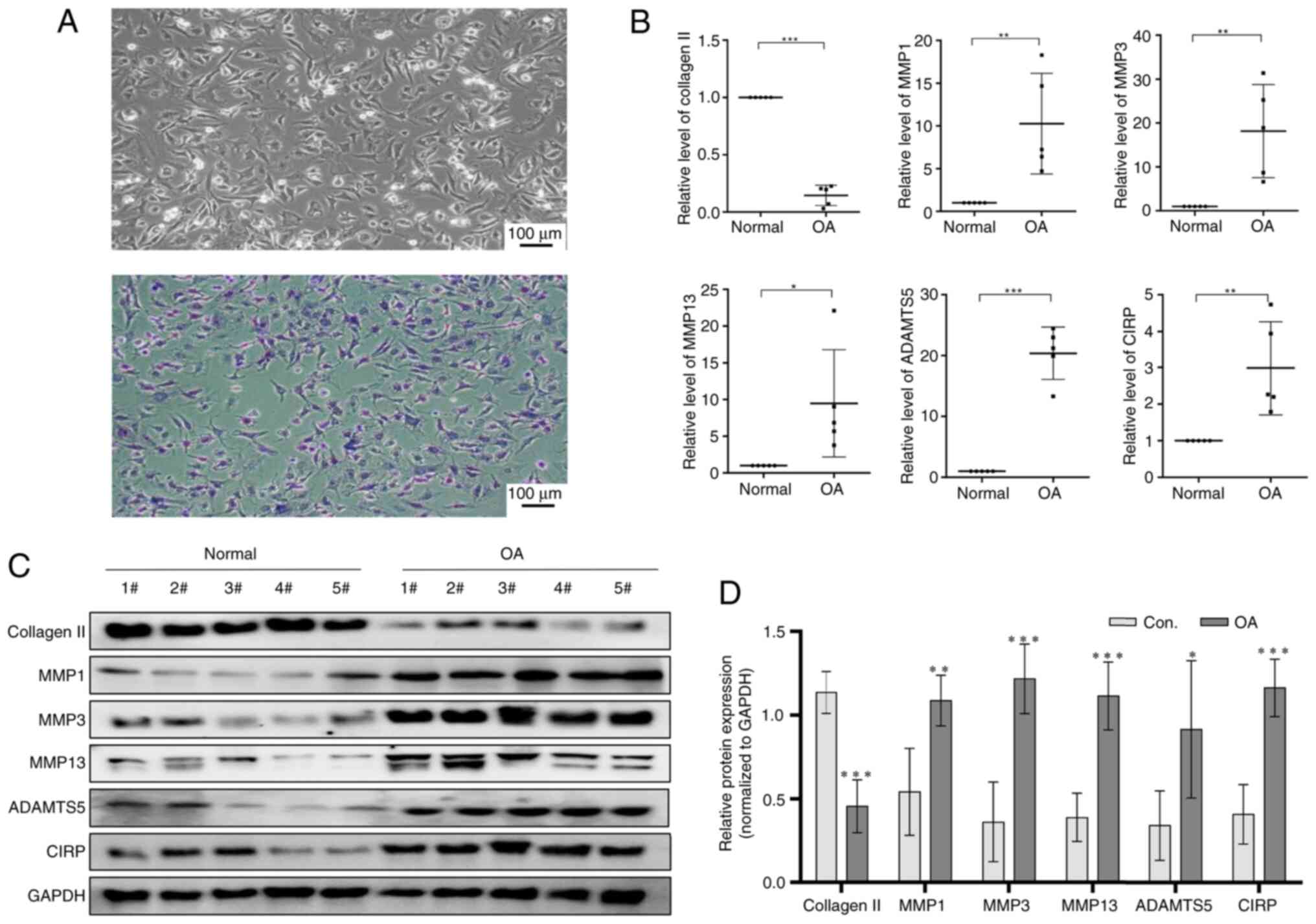
Figure 1

CIRP expression in chondrocytes from
healthy individuals and OA patients. (A) Trypan blue staining of
chondrocytes. (B) Representative quantitative PCR showing the
expression of CIRP, collagen Ⅱ, MMP1, MMP3, MMP13 and ADAMTS5 in
chondrocytes from healthy individuals and OA patients. (C and D)
Western blotting showing the expression of CIRP, collagen Ⅱ, MMP1,
MMP3, MMP13 and ADAMTS5 in chondrocytes from healthy individuals
and OA patients. (n=5), *P<0.05,
**P<0.01, ***P<0.001. CIRP,
cold-inducible RNA-binding protein; OA, osteoarthritis; MMPs,
matrix metalloproteinases; ADAMTS5, ADAM metallopeptidase with
thrombospondin type 1 motif 5.

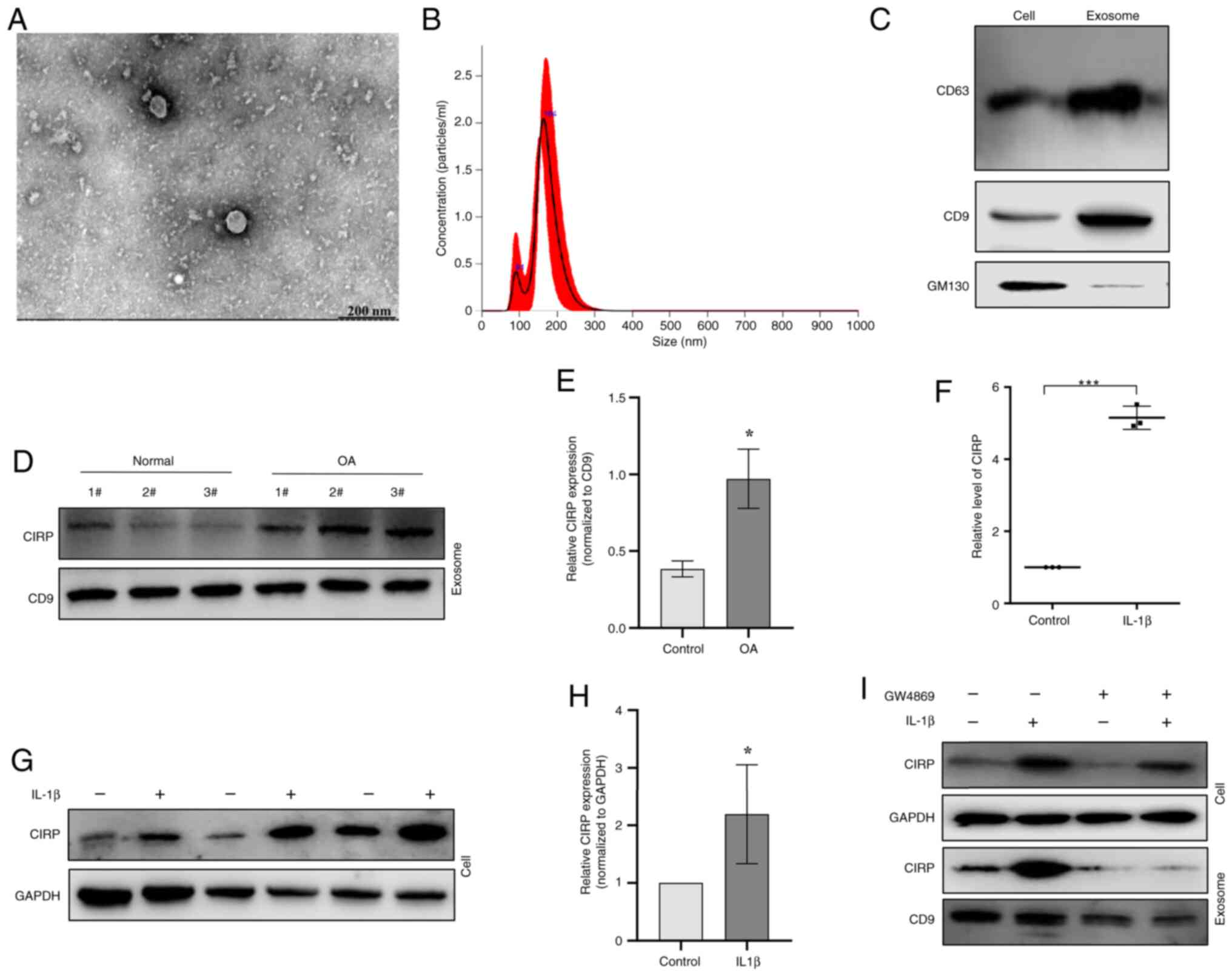
Figure 2

CIRP secretion in OA human
chondrocytes via exosomes. (A) Morphology of exosomes observed
using transmission electron microscopy. (B) Particle size
distribution of exosomes measured by nanoparticle tracking
analysis. (C) Western blotting analysis showing the expression of
the exosomal markers CD63, CD9 and GM130 in both cells and
exosomes. (D and E) Western blotting showing the protein expression
of CIRP in exosomes. (F) Quantitative PCR analysis showing the mRNA
expression of CIRP in chondrocytes treated with IL-1β. (G and H)
Western blotting analysis showing the protein expression of CIRP in
chondrocytes treated with IL-1β. (I) Western blotting analysis
showing the protein expression of CIRP in chondrocytes following
treatment with the exosome release inhibitor GW4869. (n=3),
*P<0.05, ***P<0.001. CIRP,
cold-inducible RNA-binding protein; OA, osteoarthritis

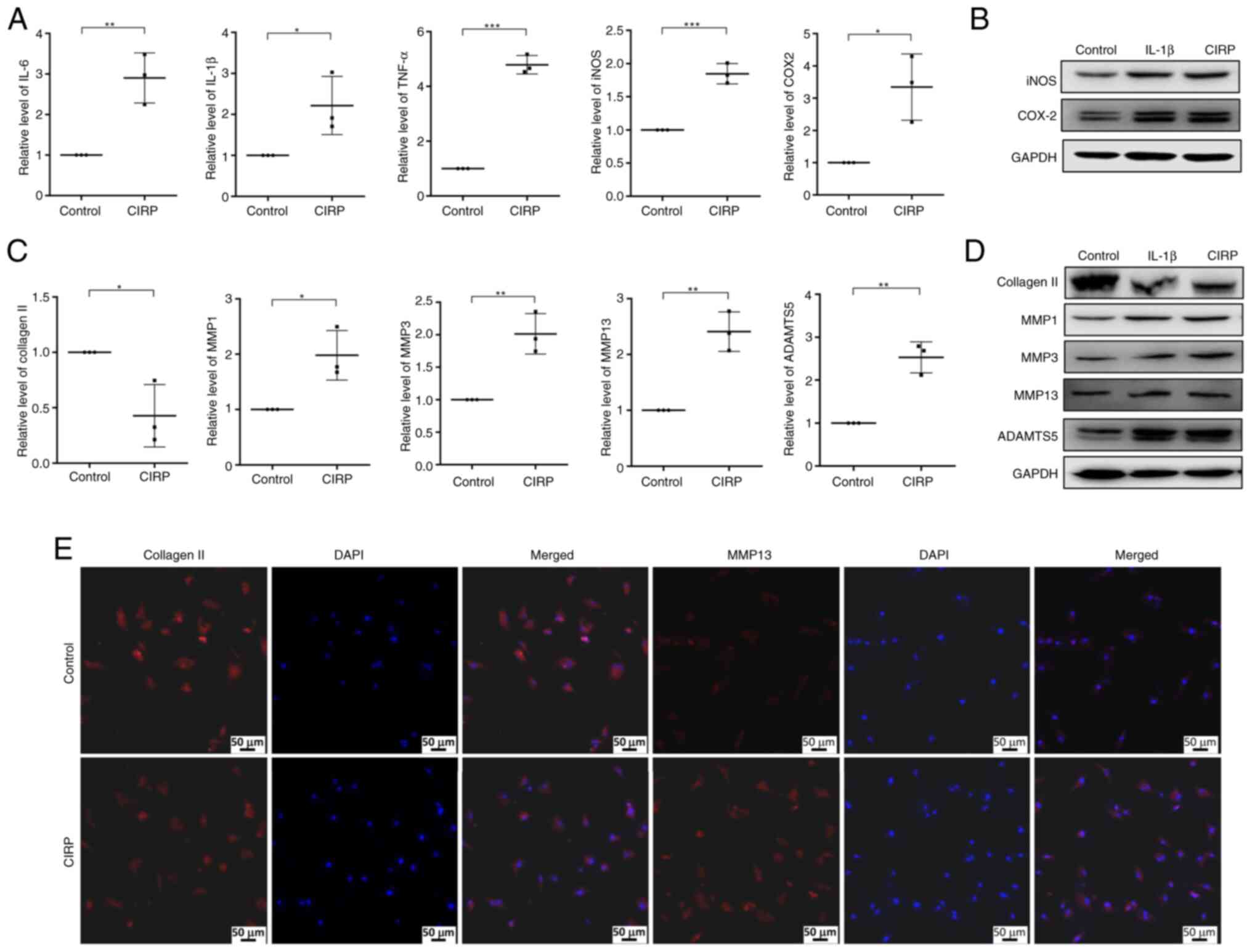
Figure 3

CIRP promotes inflammatory response
and ECM degradation in human chondrocytes. (A) Quantitative PCR
analysis showing the effect of CIRP on the expression of
inflammatory cytokines, including IL-6, IL-1β, TNF-α, iNOS and
COX-2. (B) Western blotting showing the protein expression of iNOS
and COX-2. (C and D) Quantitative PCR and western blotting showing
the effect of CIRP on the expression of MMP1, MMP3, MMP13, ADAMTS5
and collagen Ⅱ. (E) Immunofluorescence analysis of collagen Ⅱ and
MMP13 expression following CIRP treatment, with DAPI staining for
nuclei (scale bar, 50 μm). n=3, *P<0.05,
**P<0.01, ***P<0.001. CIRP,
cold-inducible RNA-binding protein; ECM, extracellular matrix;
iNOS, nitric oxide synthase; COX-2, cyclooxygenase-2; MMPs, matrix
metalloproteinases; ADAMTS5, ADAM metallopeptidase with
thrombospondin type 1 motif 5.

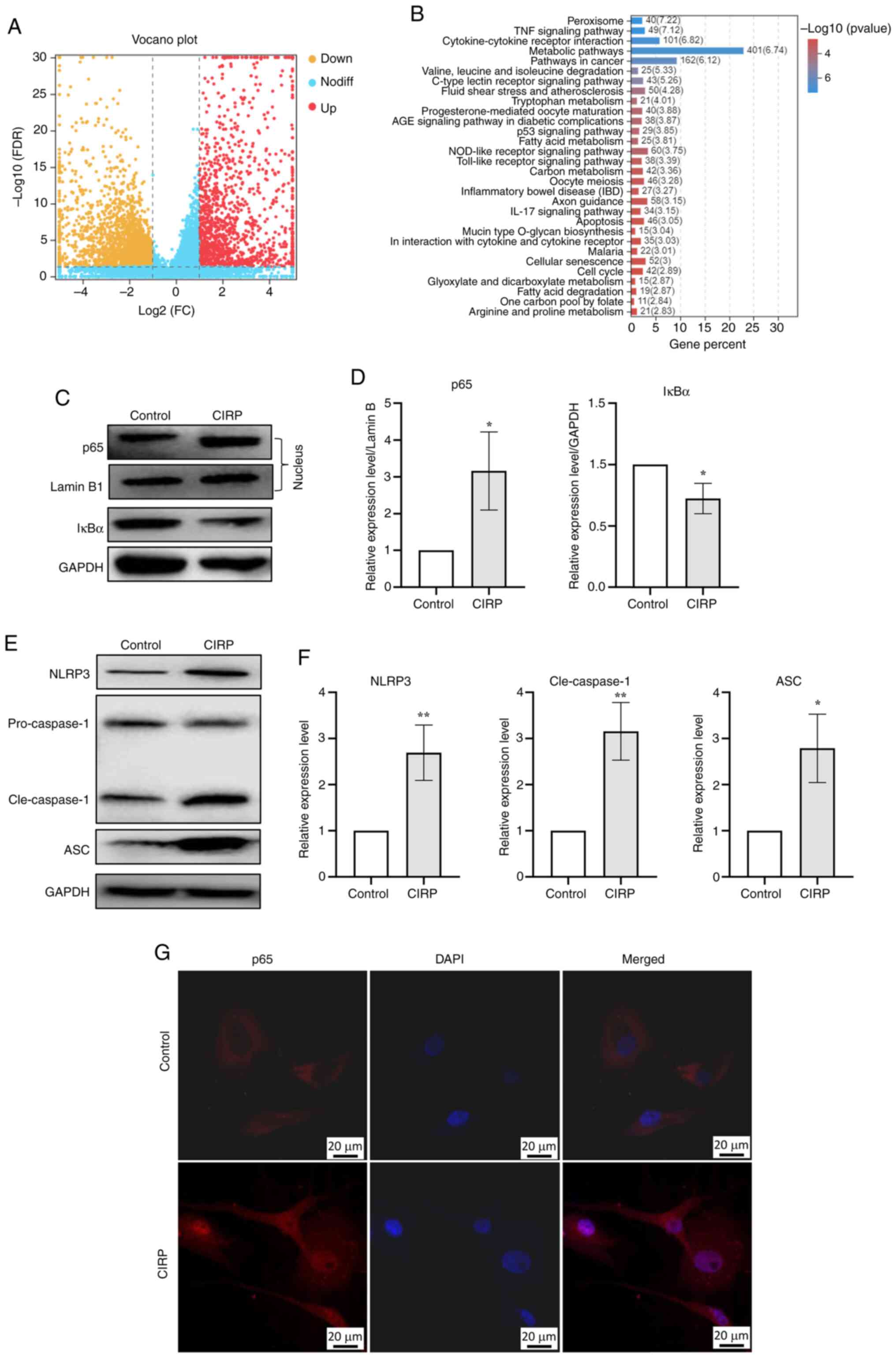
Figure 4

Effect of CIRP on NF-κB/NLRP3 pathway
activation. (A) Volcano plot showing differentially expressed genes
between control and CIRP-treated chondrocytes. (B) Kyoto
Encyclopedia of Genes and Genomes pathway enrichment analysis; a
higher P-value (-Log10) indicates greater enrichment and the top 30
enriched pathways are displayed. (C and D) Western blotting showing
the protein expression of IκBα in chondrocytes and p65 in the
nucleus. (E and F) Western blotting showing the protein expression
of NLRP3, cleaved-caspase-1 and ASC. (G) Immunofluorescence
analysis of p65 nuclear translocation, with DAPI staining for
nuclei (scale bar, 20 μm). n=3, *P<0.05,
**P<0.01. CIRP, cold-inducible RNA-binding protein;
NLRP3, NLR family pyrin domain containing 3; Cle, cleaved.

Figure 5

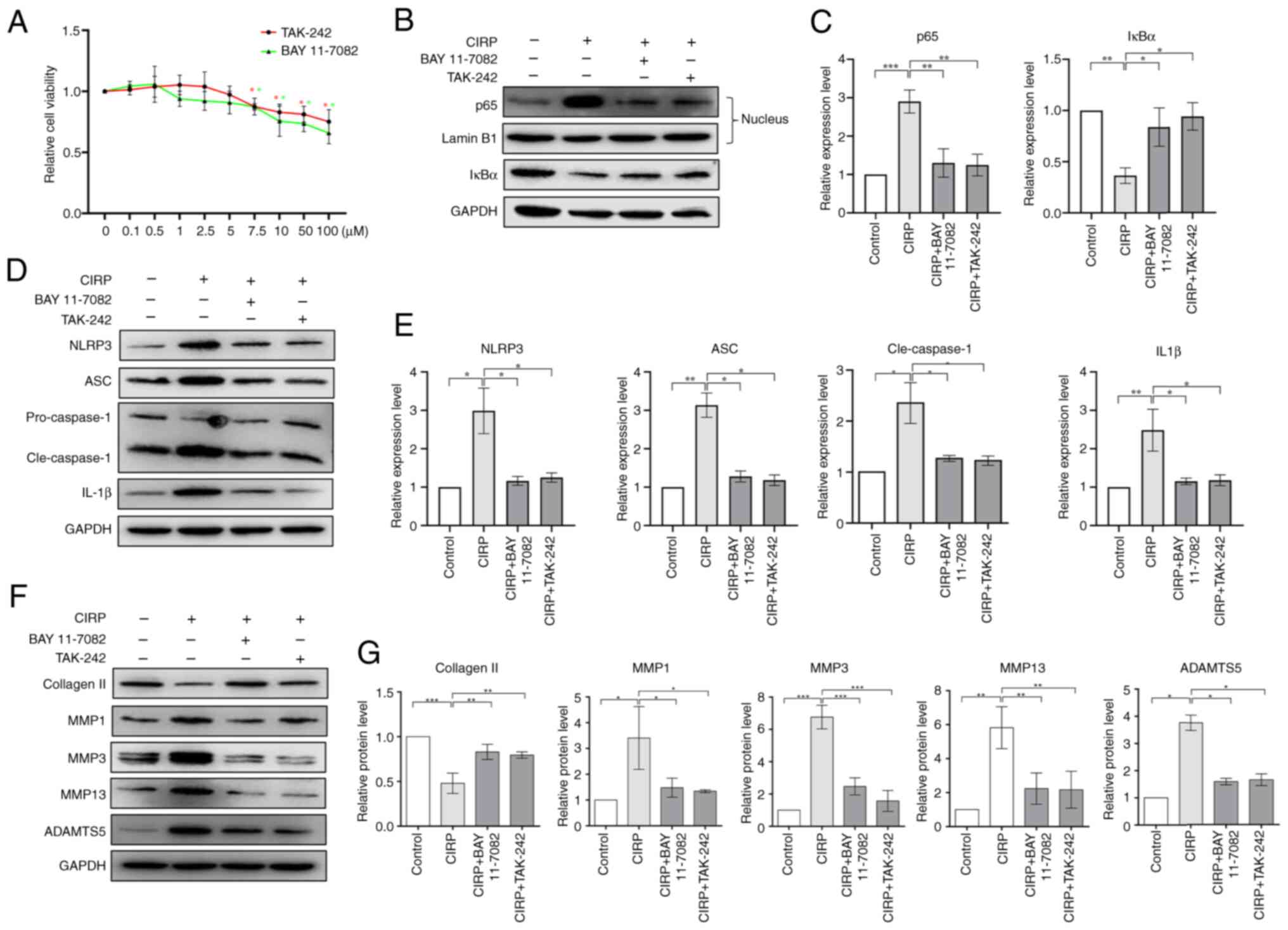
Dependence of CIRP-induced
chondrocyte damage on TLR4/NF-κB signaling. (A) Cytotoxicity of BAY
11-7082 and TAK-242 on chondrocytes at various concentration for 48
h, assessed using a CCK-8 assay. (B and C) Western blotting showing
the protein expression of IκBα in chondrocytes and p65 in the
nucleus of chondrocytes following treatment with the two
inhibitors. (D and E) Western blotting showing the protein
expression NLRP3, cleaved-caspase-1, ASC and IL-1β following
treatment with the two inhibitors. (F and G) Western blotting
showing the expression of extracellular matrix proteins in
chondrocytes following treatment with the two inhibitors. n=3,
*P<0.05, **P<0.01,
***P<0.001. CIRP, cold-inducible RNA-binding protein;
TLR4, Toll-like receptor 4; NLRP3, NLR family pyrin domain
containing 3; Cle, cleaved.

Figure 6

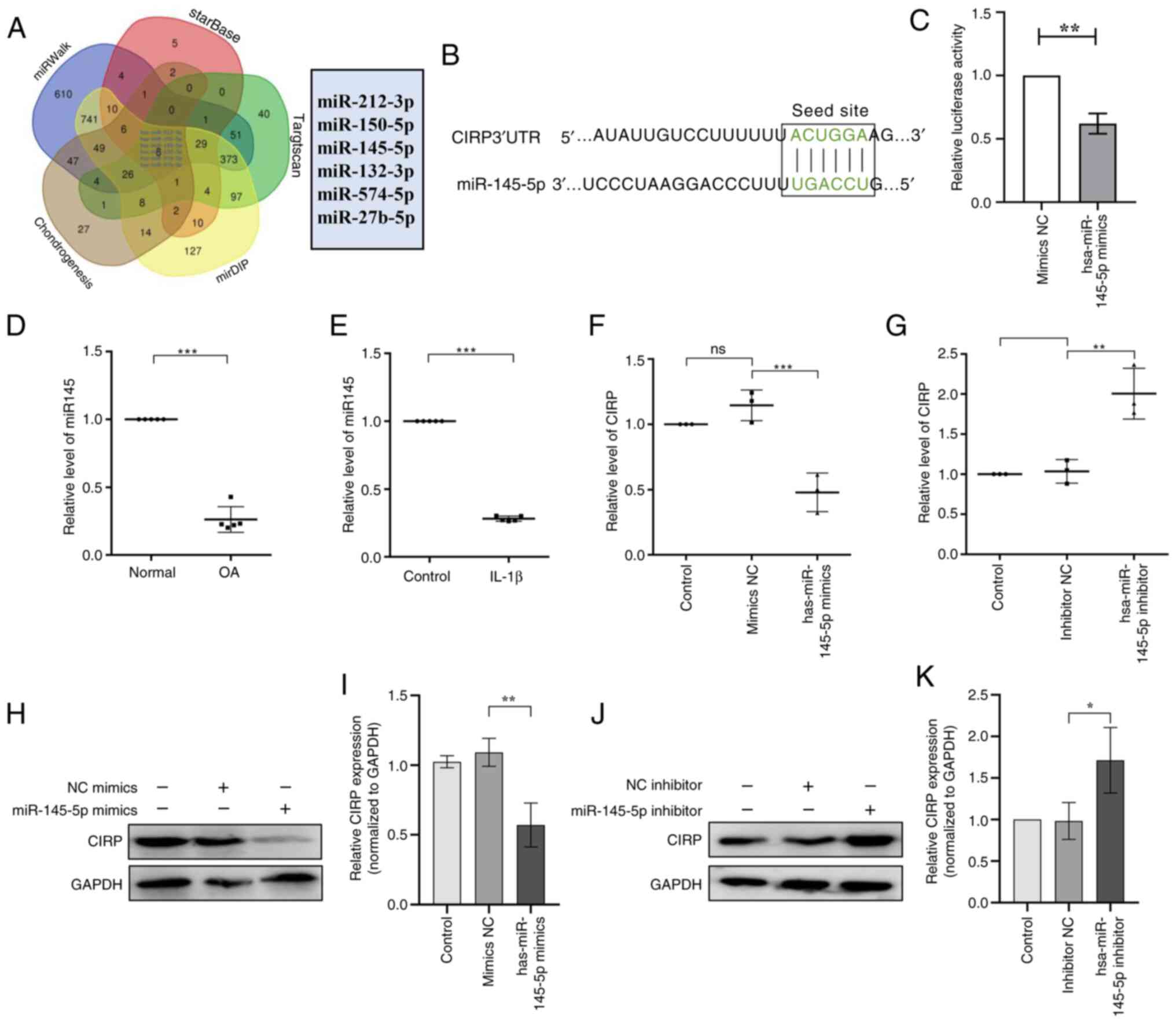
CIRP is a putative target of miR-145.
(A) Comparisons of predicted miRNAs that regulate CIRP in a Venn
map. (B) Binding sites between has-miR-145-5p and CIRP predicted by
online websites. (C) Luciferase activity of CIRP-WT in 293T cells
treated with miR-145-5p mimic or NC-mimic assessed by dual
luciferase reporter gene assay. (D) Expression of miR-145-5p in OA
chondrocytes and normal chondrocytes examined by qPCR. (E)
Expression of miR-145-5p in chondrocytes and IL-1β treated
chondrocytes examined by qPCR. (F-K) Expression of CIRP in
chondrocytes after alteration of miR-145-5p determined by qPCR or
western blotting. n=3, *P<0.05,
**P<0.01, ***P<0.001. CIRP,
cold-inducible RNA-binding protein; miR, microRNA; WT, wild-type;
NC, negative control; OA, osteoarthritis; qPCR, quantitative
PCR.

Figure 7

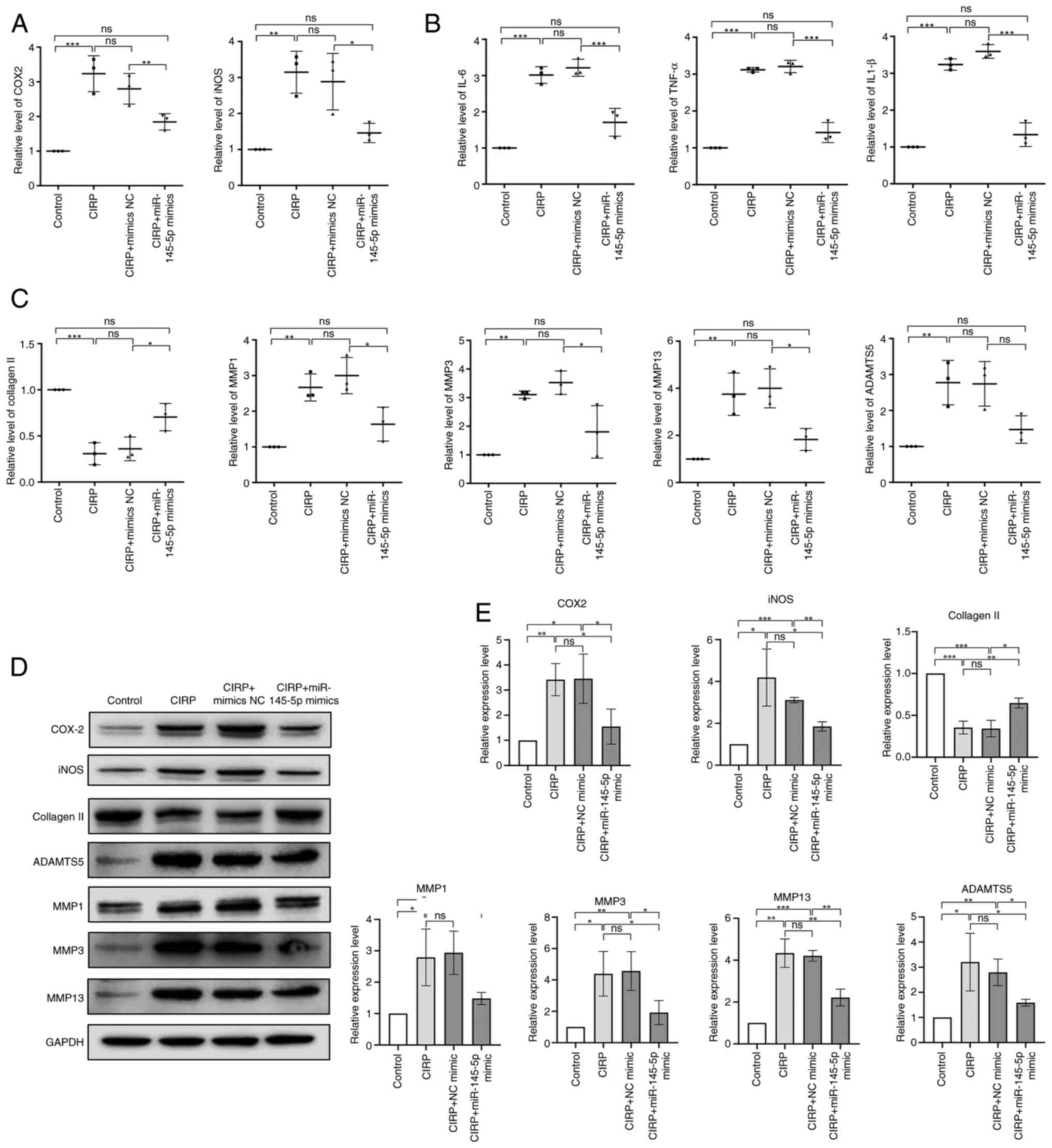
miR-145-5p elevation suppresses CIRP
induced damage of chondrocytes. (A and B) Chondrocytes were
transfected with miR-145-5p mimics or CIRP, IL-6, IL-1β, TNF-α,
iNOS and COX-2 expression were analyzed by qPCR. (C) Chondrocytes
were transfected with miR-145-5p mimics or CIRP, the mRNA
expression of extracellular matrix proteins of chondrocytes were
analyzed by qPCR. (D and E) Chondrocytes were transfected with
miR-145-5p mimics or CIRP, the protein expression of iNOS, COX-2
and extracellular matrix proteins of chondrocytes were analyzed by
western blotting. n=3, *P<0.05,
**P<0.01, ***P<0.001. miR, microRNA;
CIRP, cold-inducible RNA-binding protein; iNOS, inducible nitric
oxide synthase; COX-2, cyclooxygenase-2; qPCR, quantitative
PCR.

Figure 8

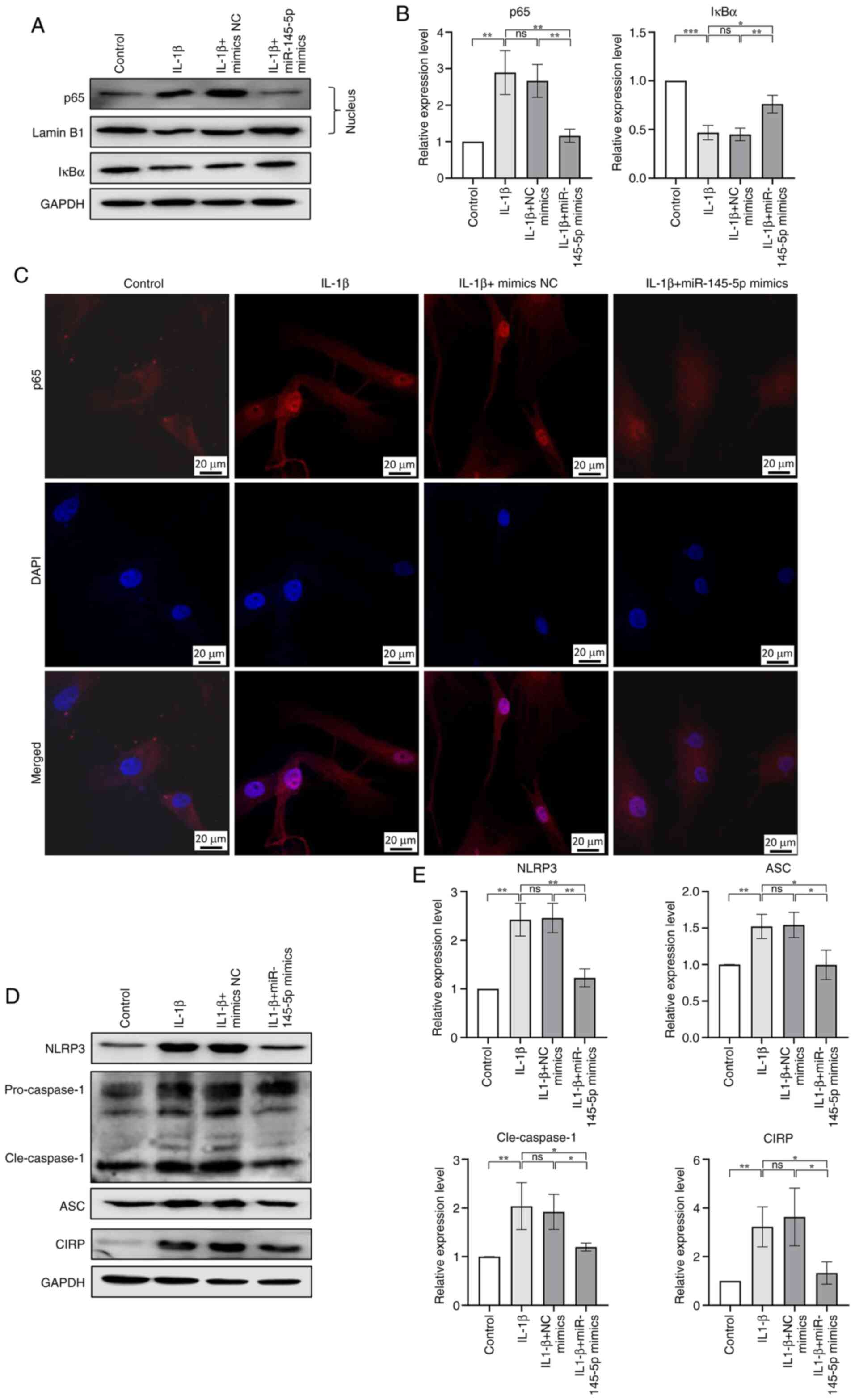
miR-145-5p elevation suppressed CIRP
induced NF-κB/NLRP3 activation. (A and B) Chondrocytes were
transfected with miR-145-5p mimics or IL-1β treatment, western
blotting results showed the protein expression of IκBα in the
cytoplasm and p65 in the nucleus of chondrocytes. (C) The nuclei
translocation of p65 was detected by the immunofluorescence
combined with DAPI staining for the nuclei. (D and E) western
blotting results showed the protein expression NLRP3,
cleaved-caspase-1, ASC and CIRP in chondrocytes transfected with
miR-145-5p mimics or IL-1β treatment. n=3, *P<0.05,
**P<0.01, ***P<0.001. miR, microRNA;
CIRP, cold-inducible RNA-binding protein; NLRP3, NLR family pyrin
domain containing 3; Cle, cleaved.

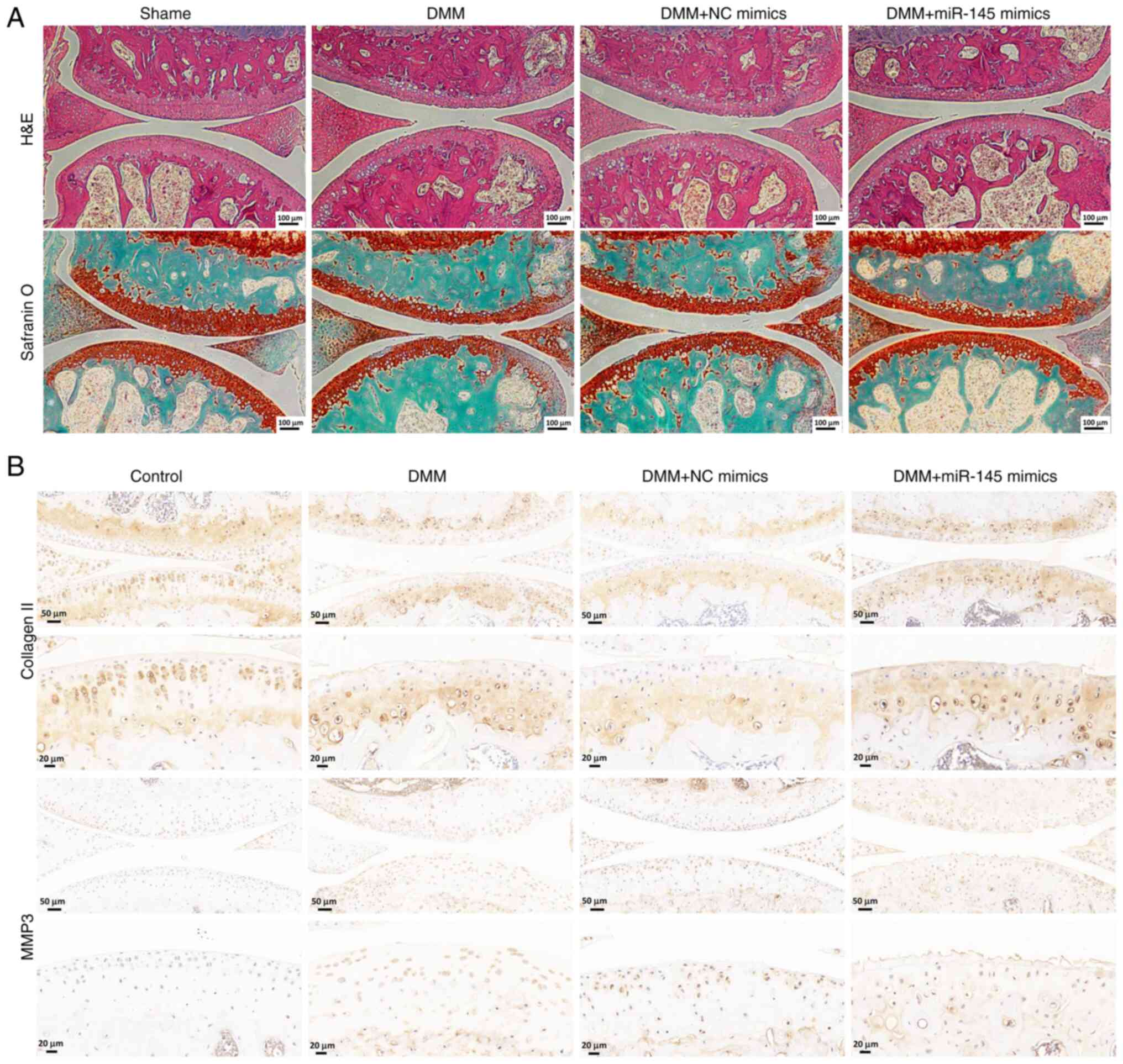
Figure 9

miR-145-5p elevation suppresses OA
progression in animal model. (A) Pathological changes of cartilage
tissues of the knee joint using hematoxylin and eosin staining and
Safranin O staining. (B) Immunohistochemical staining of collagen Ⅱ
and MMP-3 in cartilage tissues of OA mice. miR, microRNA; OA,
osteoarthritis; MMPs, matrix metalloproteinases.

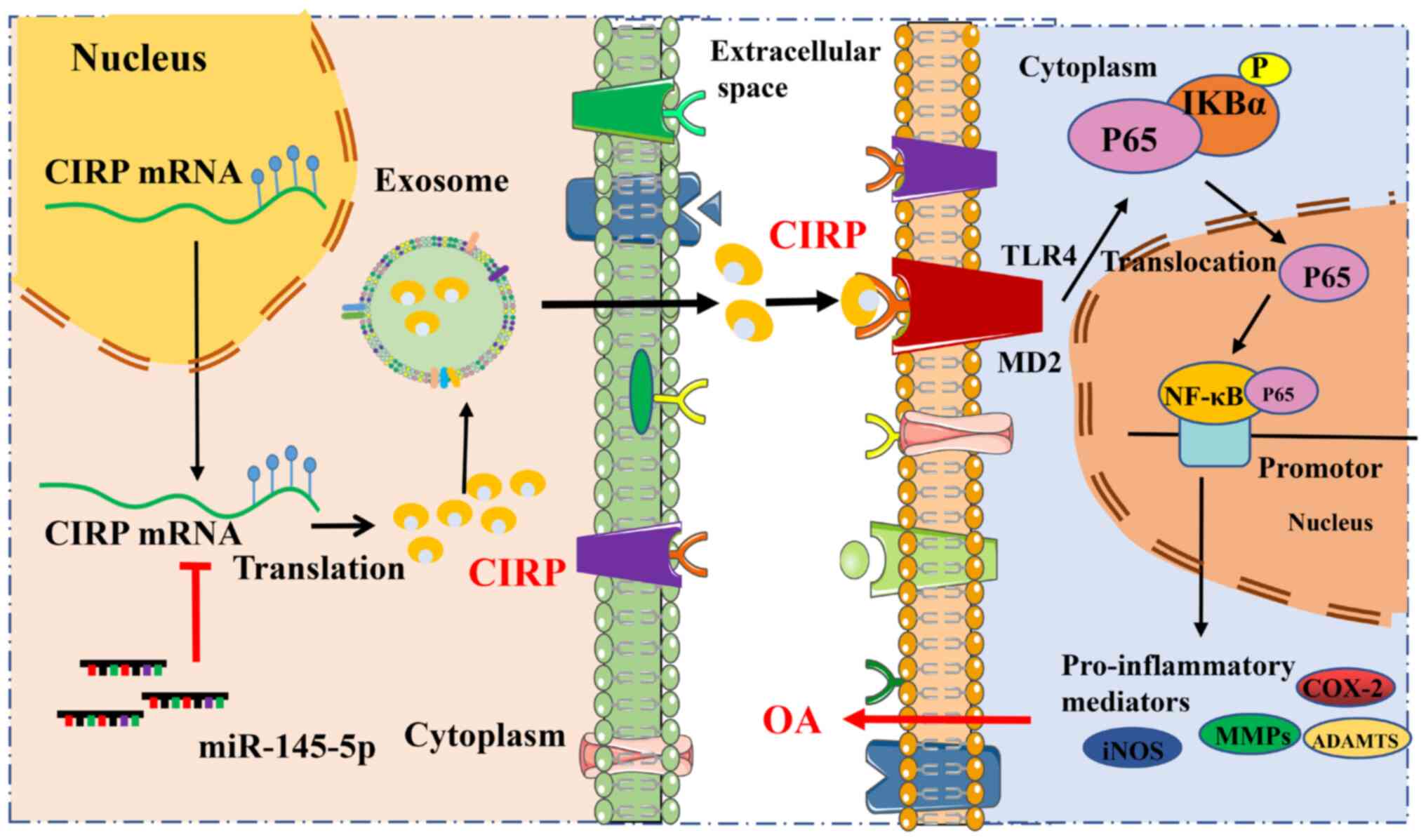
Figure 10

Schematic illustration of targeting
of CIRP attenuates osteoarthritis progression and the underlying
mechanism. CIRP can be secreted in the form of exosomes and acts as
a pro-inflammatory factor that activates the TLR4/NF-κB/NLRP3
signaling pathway, promoting the inflammatory response, ECM
degradation and the progression of OA. Additionally, CIRP is
identified as a target of miR-145, which inhibits its expression in
OA. CIRP, cold-inducible RNA-binding protein; TLR4, Toll-like
receptor 4; NLRP3, NLR family pyrin domain containing 3; OA,
osteoarthritis; ECM, extracellular matrix; miR, microRNA; iNOS,
inducible nitric oxide synthase; COX-2, cyclooxygenase-2; MMPs,
matrix metalloproteinases.
View References

1 

Martel-Pelletier J, Barr AJ, Cicuttini FM, Conaghan PG, Cooper C, Goldring MB, Goldring SR, Jones G, Teichtahl AJ and Pelletier JP: Osteoarthritis. Nat Rev Dis Primers. 2:160722016. View Article : Google Scholar : PubMed/NCBI

2 

Loeser RF, Goldring SR, Scanzello CR and Goldring MB: Osteoarthritis: A disease of the joint as an organ. Arthritis Rheum. 64:1697–1707. 2012. View Article : Google Scholar : PubMed/NCBI

3 

Bijlsma JW, Berenbaum F and Lafeber FP: Osteoarthritis: An update with relevance for clinical practice. Lancet. 377:2115–2126. 2011. View Article : Google Scholar : PubMed/NCBI

4 

Glyn-Jones S, Palmer AJ, Agricola R, Price AJ, Vincent TL, Weinans H and Carr AJ: Osteoarthritis. Lancet. 386:376–387. 2015. View Article : Google Scholar : PubMed/NCBI

5 

Yang B, Kang X, Xing Y, Dou C, Kang F, Li J, Quan Y and Dong S: Effect of microRNA-145 on IL-1beta-induced cartilage degradation in human chondrocytes. FEBS Lett. 588:2344–2352. 2014. View Article : Google Scholar : PubMed/NCBI

6 

Tu C, Huang X, Xiao Y, Song M, Ma Y, Yan J, You H and Wu H: Schisandrin A inhibits the IL-1β-Induced inflammation and cartilage degradation via suppression of MAPK and NF-κB signal pathways in rat chondrocytes. Front Pharmacol. 10:412019. View Article : Google Scholar

7 

Chabane N, Zayed N, Afif H, Mfuna-Endam L, Benderdour M, Boileau C, Martel-Pelletier J, Pelletier JP, Duval N and Fahmi H: Histone deacetylase inhibitors suppress interleukin-1beta-induced nitric oxide and prostaglandin E2 production in human chondrocytes. Osteoarthritis Cartilage. 16:1267–1274. 2008. View Article : Google Scholar : PubMed/NCBI

8 

Zhou S, Liu G, Si Z, Yu L and Hou L: Glycyrrhizin, an HMGB1 inhibitor, suppresses interleukin-1β-induced inflammatory responses in chondrocytes from patients with osteoarthritis. Cartilage. 13(2_Suppl): 947S–955S. 2021. View Article : Google Scholar

9 

Frommer KW, Schaffler A, Rehart S, Lehr A, Muller-Ladner U and Neumann E: Free fatty acids: Potential proinflammatory mediators in rheumatic diseases. Ann Rheum Dis. 74:303–310. 2015. View Article : Google Scholar

10 

Xu HC, Wu B, Ma YM, Xu H, Shen ZH and Chen S: Hederacoside-C protects against AGEs-induced ECM degradation in mice chondrocytes. Int Immunopharmacol. 84:1065792020. View Article : Google Scholar : PubMed/NCBI

11 

Gao F and Zhang S: Loratadine alleviates advanced glycation end Product-induced activation of NLRP3 inflammasome in human chondrocytes. Drug Des Devel Ther. 14:2899–2908. 2020. View Article : Google Scholar : PubMed/NCBI

12 

Liao Y, Tong L, Tang L and Wu S: The role of cold-inducible RNA binding protein in cell stress response. Int J Cancer. 141:2164–2173. 2017. View Article : Google Scholar : PubMed/NCBI

13 

Zhong P and Huang H: Recent progress in the research of cold-inducible RNA-binding protein. Future Sci OA. 3:FSO2462017. View Article : Google Scholar : PubMed/NCBI

14 

Wellmann S, Buhrer C, Moderegger E, Zelmer A, Kirschner R, Koehne P, Fujita J and Seeger K: Oxygen-regulated expression of the RNA-binding proteins RBM3 and CIRP by a HIF-1-independent mechanism. J Cell Sci. 117:1785–1794. 2004. View Article : Google Scholar : PubMed/NCBI

15 

Sun W, Liao Y, Yi Q, Wu S, Tang L and Tong L: The mechanism of CIRP in regulation of STAT3 phosphorylation and Bag-1/S expression Upon UVB radiation. Photochem Photobiol. 94:1234–1239. 2018. View Article : Google Scholar : PubMed/NCBI

16 

Aziz M, Brenner M and Wang P: Extracellular CIRP (eCIRP) and inflammation. J Leukoc Biol. 106:133–146. 2019. View Article : Google Scholar : PubMed/NCBI

17 

Qiang X, Yang WL, Wu R, Zhou M, Jacob A, Dong W, Kuncewitch M, Ji Y, Yang H, Wang H, et al: Cold-inducible RNA-binding protein (CIRP) triggers inflammatory responses in hemorrhagic shock and sepsis. Nat Med. 19:1489–1495. 2013. View Article : Google Scholar : PubMed/NCBI

18 

Sakurai T, Kashida H, Watanabe T, Hagiwara S, Mizushima T, Iijima H, Nishida N, Higashitsuji H, Fujita J and Kudo M: Stress response protein cirp links inflammation and tumorigenesis in colitis-associated cancer. Cancer Res. 74:6119–6128. 2014. View Article : Google Scholar : PubMed/NCBI

19 

Zhou M, Yang WL, Ji Y, Qiang X and Wang P: Cold-inducible RNA-binding protein mediates neuroinflammation in cerebral ischemia. Biochim Biophys Acta. 1840:2253–2261. 2014. View Article : Google Scholar : PubMed/NCBI

20 

Vande Walle L, Van Opdenbosch N, Jacques P, Fossoul A, Verheugen E, Vogel P, Beyaert R, Elewaut D, Kanneganti TD, van Loo G and Lamkanfi M: Negative regulation of the NLRP3 inflammasome by A20 protects against arthritis. Nature. 512:69–73. 2014. View Article : Google Scholar : PubMed/NCBI

21 

McAllister MJ, Chemaly M, Eakin AJ, Gibson DS and McGilligan VE: NLRP3 as a potentially novel biomarker for the management of osteoarthritis. Osteoarthritis Cartilage. 26:612–619. 2018. View Article : Google Scholar : PubMed/NCBI

22 

Chen Z, Zhong H, Wei J, Lin S, Zong Z, Gong F, Huang X, Sun J, Li P, Lin H, et al: Inhibition of Nrf2/HO-1 signaling leads to increased activation of the NLRP3 inflammasome in osteoarthritis. Arthritis Res Ther. 21:3002019. View Article : Google Scholar : PubMed/NCBI

23 

Liu Q, Zhang D, Hu D, Zhou X and Zhou Y: The role of mitochondria in NLRP3 inflammasome activation. Mol Immunol. 103:115–124. 2018. View Article : Google Scholar : PubMed/NCBI

24 

Zhou K, Cui S, Duan W, Zhang J, Huang J, Wang L, Gong Z and Zhou Y: Cold-inducible RNA-binding protein contributes to intracerebral hemorrhage-induced brain injury via TLR4 signaling. Brain Behav. 10:e016182020. View Article : Google Scholar : PubMed/NCBI

25 

Elliott EI and Sutterwala FS: Initiation and perpetuation of NLRP3 inflammasome activation and assembly. Immunol Rev. 265:35–52. 2015. View Article : Google Scholar : PubMed/NCBI

26 

Yu L, Li QH, Deng F, Yu ZW, Luo XZ and Sun JL: Synovial fluid concentrations of cold-inducible RNA-binding protein are associated with severity in knee osteoarthritis. Clin Chim Acta. 464:44–49. 2017. View Article : Google Scholar

27 

Yoo IS, Lee SY, Park CK, Lee JC, Kim Y, Yoo SJ, Shim SC, Choi YS, Lee Y and Kang SW: Serum and synovial fluid concentrations of cold-inducible RNA-binding protein in patients with rheumatoid arthritis. Int J Rheum Dis. 21:148–154. 2018. View Article : Google Scholar

28 

Felekkis K, Pieri M and Papaneophytou C: Exploring the feasibility of circulating miRNAs as diagnostic and prognostic biomarkers in osteoarthritis: Challenges and opportunities. Int J Mol Sci. 24:131442023. View Article : Google Scholar : PubMed/NCBI

29 

Lin Z, Jiang T, Zheng W, Zhang J, Li A, Lu C and Liu W: N6-methyladenosine (m6A) methyltransferase WTAP-mediated miR-92b-5p accelerates osteoarthritis progression. Cell Commun Signal. 21:1992023. View Article : Google Scholar : PubMed/NCBI

30 

Mao G, Zhang Z, Hu S, Zhang Z, Chang Z, Huang Z, Liao W and Kang Y: Exosomes derived from miR-92a-3p-overexpressing human mesenchymal stem cells enhance chondrogenesis and suppress cartilage degradation via targeting WNT5A. Stem Cell Res Ther. 9:2472018. View Article : Google Scholar : PubMed/NCBI

31 

Chen H, Yao H, Chi J, Li C, Liu Y, Yang J, Yu J, Wang J, Ruan Y, Pi J and Xu JF: Engineered exosomes as drug and RNA co-delivery system: New hope for enhanced therapeutics? Front Bioeng Biotechnol. 11:12543562023. View Article : Google Scholar : PubMed/NCBI

32 

Jiang M, Jike Y, Liu K, Gan F, Zhang K, Xie M, Zhang J, Chen C, Zou X, Jiang X, et al: Exosome-mediated miR-144-3p promotes ferroptosis to inhibit osteosarcoma proliferation, migration, and invasion through regulating ZEB1. Mol Cancer. 22:1132023. View Article : Google Scholar : PubMed/NCBI

33 

Zhang X, Wang J, Liu N, Wu W, Li H, Lu W and Guo X: Umbilical cord Blood-derived M1 macrophage exosomes loaded with cisplatin target ovarian cancer in vivo and reverse cisplatin resistance. Mol Pharm. 20:5440–5453. 2023. View Article : Google Scholar : PubMed/NCBI

34 

Hu G, Zhao X, Wang C, Geng Y, Zhao J, Xu J, Zuo B, Zhao C, Wang C and Zhang X: MicroRNA-145 attenuates TNF-α-driven cartilage matrix degradation in osteoarthritis via direct suppression of MKK4. Cell Death Dis. 8:e31402017. View Article : Google Scholar

35 

Zhou J, Sun J, Markova DZ, Li S, Kepler CK, Hong J, Huang Y, Chen W, Xu K, Wei F and Ye W: MicroRNA-145 overexpression attenuates apoptosis and increases matrix synthesis in nucleus pulposus cells. Life Sci. 221:274–283. 2019. View Article : Google Scholar : PubMed/NCBI

36 

Tian K, Deng B, Han X, Zheng H, Lin T, Wang Z, Zhang Y and Wang G: Over-expression of microRNA-145 elevating autophagy activities via downregulating FRS2 expression. Comb Chem High Throughput Screen. 27:127–135. 2024. View Article : Google Scholar

37 

Wang X, Lu W, Xia X, Zhu Y, Ge C, Guo X, Zhang N, Chen H and Xu S: Selenomethionine mitigate PM2.5-induced cellular senescence in the lung via attenuating inflammatory response mediated by cGAS/STING/NF-κB pathway. Ecotoxicol Environ Saf. 247:1142662022. View Article : Google Scholar

38 

Chen Z, Zhang M, Zhao Y, Xu W, Xiang F, Li X, Zhang T, Wu R and Kang X: Hydrogen sulfide contributes to uterine quiescence through inhibition of NLRP3 inflammasome activation by suppressing the TLR4/NF-κB signalling pathway. J Inflamm Res. 14:2753–2768. 2021. View Article : Google Scholar :

39 

Livak KJ and Schmittgen TD: Analysis of relative gene expression data using real-time quantitative PCR and the 2(-Delta Delta C(T)) method. Methods. 25:402–408. 2001. View Article : Google Scholar

40 

Wang S, Li W, Zhang P, Wang Z, Ma X, Liu C, Vasilev K, Zhang L, Zhou X, Liu L, et al: Mechanical overloading induces GPX4-regulated chondrocyte ferroptosis in osteoarthritis via Piezo1 channel facilitated calcium influx. J Adv Res. 41:63–75. 2022. View Article : Google Scholar : PubMed/NCBI

41 

Gong T, Wang QD, Loughran PA, Li YH, Scott MJ, Billiar TR, Liu YT and Fan J: Mechanism of lactic acidemia-promoted pulmonary endothelial cells death in sepsis: Role for CIRP-ZBP1-PANoptosis pathway. Mil Med Res. 11:712024.PubMed/NCBI

42 

Zhou M, Aziz M, Yen HT, Ma G, Murao A and Wang P: Extracellular CIRP dysregulates macrophage bacterial phagocytosis in sepsis. Cell Mol Immunol. 20:80–93. 2023. View Article : Google Scholar

43 

Zhang P, Bai L, Tong Y, Guo S, Lu W, Yuan Y, Wang W, Jin Y, Gao P, Liu J, et al: CIRP attenuates acute kidney injury after hypothermic cardiovascular surgery by inhibiting PHD3/HIF-1α-mediated ROS-TGF-β1/p38 MAPK activation and mitochondrial apoptotic pathways. Mol Med. 29:612023. View Article : Google Scholar

44 

Ye L, Tang X, Liu F, Wei T, Xu T, Jiang Z, Xu L, Xiang C, Yuan X, Shen L, et al: Targeting CIRP and IL-6R-mediated microglial inflammation to improve outcomes in intracerebral hemorrhage. J Adv Res. Sep 9–2025. View Article : Google Scholar : Epub ahead of print.

45 

Han J, Zhang Y, Ge P, Dakal TC, Wen H, Tang S, Luo Y, Yang Q, Hua B, Zhang G, et al: Exosome-derived CIRP: An amplifier of inflammatory diseases. Front Immunol. 14:10667212023. View Article : Google Scholar : PubMed/NCBI

46 

Palazzo C, Nguyen C, Lefevre-Colau MM, Rannou F and Poiraudeau S: Risk factors and burden of osteoarthritis. Ann Phys Rehabil Med. 59:134–138. 2016. View Article : Google Scholar : PubMed/NCBI

47 

Carr AJ, Robertsson O, Graves S, Price AJ, Arden NK, Judge A and Beard DJ: Knee replacement. Lancet. 379:1331–1340. 2012. View Article : Google Scholar : PubMed/NCBI

48 

Liu J, Wu X, Lu J, Huang G, Dang L, Zhang H, Zhong C, Zhang Z, Li D, Li F, et al: Exosomal transfer of osteoclast-derived miRNAs to chondrocytes contributes to osteoarthritis progression. Nat Aging. 1:368–384. 2021. View Article : Google Scholar : PubMed/NCBI

49 

Sun W, Bergmeier AP, Liao Y, Wu S and Tong L: CIRP sensitizes cancer cell responses to ionizing radiation. Radiat Res. 195:93–100. 2021.PubMed/NCBI

50 

Zhang F, Yang WL, Brenner M and Wang P: Attenuation of hemorrhage-associated lung injury by adjuvant treatment with C23, an oligopeptide derived from Cold-inducible RNA-binding protein. J Trauma Acute Care Surg. 83:690–697. 2017. View Article : Google Scholar : PubMed/NCBI

51 

Murao A, Tan C, Jha A, Wang P and Aziz M: Exosome-mediated eCIRP release from macrophages to induce inflammation in sepsis. Front Pharmacol. 12:7916482021. View Article : Google Scholar : PubMed/NCBI

52 

Ying X, Peng L, Chen H, Shen Y, Yu K and Cheng S: Cordycepin prevented IL-β-induced expression of inflammatory mediators in human osteoarthritis chondrocytes. Int Orthop. 38:1519–1526. 2014. View Article : Google Scholar

53 

Schmidt N, Pautz A, Art J, Rauschkolb P, Jung M, Erkel G, Goldring MB and Kleinert H: Transcriptional and post-transcriptional regulation of iNOS expression in human chondrocytes. Biochem Pharmacol. 79:722–732. 2010. View Article : Google Scholar

54 

Stannus O, Jones G, Cicuttini F, Parameswaran V, Quinn S, Burgess J and Ding C: Circulating levels of IL-6 and TNF-α are associated with knee radiographic osteoarthritis and knee cartilage loss in older adults. Osteoarthritis Cartilage. 18:1441–1447. 2010. View Article : Google Scholar : PubMed/NCBI

55 

Zhao Y, Li Y, Qu R, Chen X, Wang W, Qiu C, Liu B, Pan X, Liu L, Vasilev K, et al: Cortistatin binds to TNF-α receptors and protects against osteoarthritis. EBioMedicine. 41:556–570. 2019. View Article : Google Scholar : PubMed/NCBI

56 

Zhou M, Aziz M, Denning NL, Yen HT, Ma G and Wang P: Extracellular CIRP induces macrophage endotoxin tolerance through IL-6R-mediated STAT3 activation. JCI Insight. 5:e1337152020. View Article : Google Scholar : PubMed/NCBI

57 

Denning NL, Aziz M, Murao A, Gurien SD, Ochani M, Prince JM and Wang P: Extracellular CIRP as an endogenous TREM-1 ligand to fuel inflammation in sepsis. JCI Insight. 5:e1341722020. View Article : Google Scholar : PubMed/NCBI

58 

Gomez R, Villalvilla A, Largo R, Gualillo O and Herrero-Beaumont G: TLR4 signalling in osteoarthritis-finding targets for candidate DMOADs. Nat Rev Rheumatol. 11:159–170. 2015. View Article : Google Scholar

59 

Barreto G, Senturk B, Colombo L, Brück O, Neidenbach P, Salzmann G, Zenobi-Wong M and Rottmar M: Lumican is upregulated in osteoarthritis and contributes to TLR4-induced pro-inflammatory activation of cartilage degradation and macrophage polarization. Osteoarthritis Cartilage. 28:92–101. 2020. View Article : Google Scholar

60 

Liu L, Gu H, Liu H, Jiao Y, Li K, Zhao Y, An L and Yang J: Protective effect of resveratrol against IL-1β-induced inflammatory response on human osteoarthritic chondrocytes partly via the TLR4/MyD88/NF-κB signaling pathway: An 'in vitro study'. Int J Mol Sci. 15:6925–6940. 2014. View Article : Google Scholar : PubMed/NCBI

61 

Zhang A, Wang P, Ma X, Yin X, Li J, Wang H, Jiang W, Jia Q and Ni L: Mechanisms that lead to the regulation of NLRP3 inflammasome expression and activation in human dental pulp fibroblasts. Mol Immunol. 66:253–262. 2015. View Article : Google Scholar : PubMed/NCBI

62 

Wang C, Gao Y, Zhang Z, Chen C, Chi Q, Xu K and Yang L: Ursolic acid protects chondrocytes, exhibits anti-inflammatory properties via regulation of the NF-κB/NLRP3 inflammasome pathway and ameliorates osteoarthritis. Biomed Pharmacother. 130:1105682020. View Article : Google Scholar

63 

Dougherty U, Mustafi R, Zhu H, Zhu X, Deb D, Meredith SC, Ayaloglu-Butun F, Fletcher M, Sanchez A, Pekow J, et al: Upregulation of polycistronic microRNA-143 and microRNA-145 in colonocytes suppresses colitis and Inflammation-associated colon cancer. Epigenetics. 16:1317–1334. 2021. View Article : Google Scholar

64 

Tang J, Yi S and Liu Y: Long non-coding RNA PVT1 can regulate the proliferation and inflammatory responses of rheumatoid arthritis fibroblast-like synoviocytes by targeting microRNA-145-5p. Hum Cell. 33:1081–1090. 2020. View Article : Google Scholar : PubMed/NCBI

65 

Liu Z, Tao B, Fan S, Pu Y, Xia H and Xu L: MicroRNA-145 protects against myocardial ischemia reperfusion injury via CaMKII-Mediated antiapoptotic and Anti-inflammatory pathways. Oxid Med Cell Longev. 2019:89486572019. View Article : Google Scholar : PubMed/NCBI

66 

Li Y, Wu X, Miao S and Cao Q: MiR-383-5p promotes apoptosis of ovarian granulosa cells by targeting CIRP through the PI3K/AKT signaling pathway. Arch Gynecol Obstet. 306:501–512. 2022. View Article : Google Scholar : PubMed/NCBI

67 

Lin TY, Jia JS, Luo WR, Lin XL, Xiao SJ, Yang J, Xia JW, Zhou C, Zhou ZH, Lin SJ, et al: ThermomiR-377-3p-induced suppression of Cirbp expression is required for effective elimination of cancer cells and cancer stem-like cells by hyperthermia. J Exp Clin Cancer Res. 43:622024. View Article : Google Scholar : PubMed/NCBI

Related Articles

  • Abstract
  • View
  • Download
  • Twitter
Copy and paste a formatted citation
Spandidos Publications style
Sun W, Liao Y, Feng J, Liang J, He Q, Cui Y, Huang D, Shi H, You W, Sun W, Sun W, et al: Targeting of CIRP attenuates osteoarthritis progression via suppressing TLR4/NF‑&kappa;B/NLRP3 signaling axis. Int J Mol Med 57: 3, 2026.
APA
Sun, W., Liao, Y., Feng, J., Liang, J., He, Q., Cui, Y. ... Yi, Q. (2026). Targeting of CIRP attenuates osteoarthritis progression via suppressing TLR4/NF‑&kappa;B/NLRP3 signaling axis. International Journal of Molecular Medicine, 57, 3. https://doi.org/10.3892/ijmm.2025.5674
MLA
Sun, W., Liao, Y., Feng, J., Liang, J., He, Q., Cui, Y., Huang, D., Shi, H., You, W., Sun, W., Yi, Q."Targeting of CIRP attenuates osteoarthritis progression via suppressing TLR4/NF‑&kappa;B/NLRP3 signaling axis". International Journal of Molecular Medicine 57.1 (2026): 3.
Chicago
Sun, W., Liao, Y., Feng, J., Liang, J., He, Q., Cui, Y., Huang, D., Shi, H., You, W., Sun, W., Yi, Q."Targeting of CIRP attenuates osteoarthritis progression via suppressing TLR4/NF‑&kappa;B/NLRP3 signaling axis". International Journal of Molecular Medicine 57, no. 1 (2026): 3. https://doi.org/10.3892/ijmm.2025.5674
Copy and paste a formatted citation
x
Spandidos Publications style
Sun W, Liao Y, Feng J, Liang J, He Q, Cui Y, Huang D, Shi H, You W, Sun W, Sun W, et al: Targeting of CIRP attenuates osteoarthritis progression via suppressing TLR4/NF‑&kappa;B/NLRP3 signaling axis. Int J Mol Med 57: 3, 2026.
APA
Sun, W., Liao, Y., Feng, J., Liang, J., He, Q., Cui, Y. ... Yi, Q. (2026). Targeting of CIRP attenuates osteoarthritis progression via suppressing TLR4/NF‑&kappa;B/NLRP3 signaling axis. International Journal of Molecular Medicine, 57, 3. https://doi.org/10.3892/ijmm.2025.5674
MLA
Sun, W., Liao, Y., Feng, J., Liang, J., He, Q., Cui, Y., Huang, D., Shi, H., You, W., Sun, W., Yi, Q."Targeting of CIRP attenuates osteoarthritis progression via suppressing TLR4/NF‑&kappa;B/NLRP3 signaling axis". International Journal of Molecular Medicine 57.1 (2026): 3.
Chicago
Sun, W., Liao, Y., Feng, J., Liang, J., He, Q., Cui, Y., Huang, D., Shi, H., You, W., Sun, W., Yi, Q."Targeting of CIRP attenuates osteoarthritis progression via suppressing TLR4/NF‑&kappa;B/NLRP3 signaling axis". International Journal of Molecular Medicine 57, no. 1 (2026): 3. https://doi.org/10.3892/ijmm.2025.5674
Follow us
  • Twitter
  • LinkedIn
  • Facebook
About
  • Spandidos Publications
  • Careers
  • Cookie Policy
  • Privacy Policy
How can we help?
  • Help
  • Live Chat
  • Contact
  • Email to our Support Team