Spandidos Publications Logo
  • About
    • About Spandidos
    • Aims and Scopes
    • Abstracting and Indexing
    • Editorial Policies
    • Reprints and Permissions
    • Job Opportunities
    • Terms and Conditions
    • Contact
  • Journals
    • All Journals
    • Oncology Letters
      • Oncology Letters
      • Information for Authors
      • Editorial Policies
      • Editorial Board
      • Aims and Scope
      • Abstracting and Indexing
      • Bibliographic Information
      • Archive
    • International Journal of Oncology
      • International Journal of Oncology
      • Information for Authors
      • Editorial Policies
      • Editorial Board
      • Aims and Scope
      • Abstracting and Indexing
      • Bibliographic Information
      • Archive
    • Molecular and Clinical Oncology
      • Molecular and Clinical Oncology
      • Information for Authors
      • Editorial Policies
      • Editorial Board
      • Aims and Scope
      • Abstracting and Indexing
      • Bibliographic Information
      • Archive
    • Experimental and Therapeutic Medicine
      • Experimental and Therapeutic Medicine
      • Information for Authors
      • Editorial Policies
      • Editorial Board
      • Aims and Scope
      • Abstracting and Indexing
      • Bibliographic Information
      • Archive
    • International Journal of Molecular Medicine
      • International Journal of Molecular Medicine
      • Information for Authors
      • Editorial Policies
      • Editorial Board
      • Aims and Scope
      • Abstracting and Indexing
      • Bibliographic Information
      • Archive
    • Biomedical Reports
      • Biomedical Reports
      • Information for Authors
      • Editorial Policies
      • Editorial Board
      • Aims and Scope
      • Abstracting and Indexing
      • Bibliographic Information
      • Archive
    • Oncology Reports
      • Oncology Reports
      • Information for Authors
      • Editorial Policies
      • Editorial Board
      • Aims and Scope
      • Abstracting and Indexing
      • Bibliographic Information
      • Archive
    • Molecular Medicine Reports
      • Molecular Medicine Reports
      • Information for Authors
      • Editorial Policies
      • Editorial Board
      • Aims and Scope
      • Abstracting and Indexing
      • Bibliographic Information
      • Archive
    • World Academy of Sciences Journal
      • World Academy of Sciences Journal
      • Information for Authors
      • Editorial Policies
      • Editorial Board
      • Aims and Scope
      • Abstracting and Indexing
      • Bibliographic Information
      • Archive
    • International Journal of Functional Nutrition
      • International Journal of Functional Nutrition
      • Information for Authors
      • Editorial Policies
      • Editorial Board
      • Aims and Scope
      • Abstracting and Indexing
      • Bibliographic Information
      • Archive
    • International Journal of Epigenetics
      • International Journal of Epigenetics
      • Information for Authors
      • Editorial Policies
      • Editorial Board
      • Aims and Scope
      • Abstracting and Indexing
      • Bibliographic Information
      • Archive
    • Medicine International
      • Medicine International
      • Information for Authors
      • Editorial Policies
      • Editorial Board
      • Aims and Scope
      • Abstracting and Indexing
      • Bibliographic Information
      • Archive
  • Articles
  • Information
    • Information for Authors
    • Information for Reviewers
    • Information for Librarians
    • Information for Advertisers
    • Conferences
  • Language Editing
Spandidos Publications Logo
  • About
    • About Spandidos
    • Aims and Scopes
    • Abstracting and Indexing
    • Editorial Policies
    • Reprints and Permissions
    • Job Opportunities
    • Terms and Conditions
    • Contact
  • Journals
    • All Journals
    • Biomedical Reports
      • Information for Authors
      • Editorial Policies
      • Editorial Board
      • Aims and Scope
      • Abstracting and Indexing
      • Bibliographic Information
      • Archive
    • Experimental and Therapeutic Medicine
      • Information for Authors
      • Editorial Policies
      • Editorial Board
      • Aims and Scope
      • Abstracting and Indexing
      • Bibliographic Information
      • Archive
    • International Journal of Epigenetics
      • Information for Authors
      • Editorial Policies
      • Editorial Board
      • Aims and Scope
      • Abstracting and Indexing
      • Bibliographic Information
      • Archive
    • International Journal of Functional Nutrition
      • Information for Authors
      • Editorial Policies
      • Editorial Board
      • Aims and Scope
      • Abstracting and Indexing
      • Bibliographic Information
      • Archive
    • International Journal of Molecular Medicine
      • Information for Authors
      • Editorial Policies
      • Editorial Board
      • Aims and Scope
      • Abstracting and Indexing
      • Bibliographic Information
      • Archive
    • International Journal of Oncology
      • Information for Authors
      • Editorial Policies
      • Editorial Board
      • Aims and Scope
      • Abstracting and Indexing
      • Bibliographic Information
      • Archive
    • Medicine International
      • Information for Authors
      • Editorial Policies
      • Editorial Board
      • Aims and Scope
      • Abstracting and Indexing
      • Bibliographic Information
      • Archive
    • Molecular and Clinical Oncology
      • Information for Authors
      • Editorial Policies
      • Editorial Board
      • Aims and Scope
      • Abstracting and Indexing
      • Bibliographic Information
      • Archive
    • Molecular Medicine Reports
      • Information for Authors
      • Editorial Policies
      • Editorial Board
      • Aims and Scope
      • Abstracting and Indexing
      • Bibliographic Information
      • Archive
    • Oncology Letters
      • Information for Authors
      • Editorial Policies
      • Editorial Board
      • Aims and Scope
      • Abstracting and Indexing
      • Bibliographic Information
      • Archive
    • Oncology Reports
      • Information for Authors
      • Editorial Policies
      • Editorial Board
      • Aims and Scope
      • Abstracting and Indexing
      • Bibliographic Information
      • Archive
    • World Academy of Sciences Journal
      • Information for Authors
      • Editorial Policies
      • Editorial Board
      • Aims and Scope
      • Abstracting and Indexing
      • Bibliographic Information
      • Archive
  • Articles
  • Information
    • For Authors
    • For Reviewers
    • For Librarians
    • For Advertisers
    • Conferences
  • Language Editing
Login Register Submit
  • This site uses cookies
  • You can change your cookie settings at any time by following the instructions in our Cookie Policy. To find out more, you may read our Privacy Policy.

    I agree
Search articles by DOI, keyword, author or affiliation
Search
Advanced Search
presentation
International Journal of Molecular Medicine
Join Editorial Board Propose a Special Issue
Print ISSN: 1107-3756 Online ISSN: 1791-244X
Journal Cover
November-2026 Volume 58 Issue 5

Full Size Image

Sign up for eToc alerts
Recommend to Library

Journals

International Journal of Molecular Medicine

International Journal of Molecular Medicine

International Journal of Molecular Medicine is an international journal devoted to molecular mechanisms of human disease.

International Journal of Oncology

International Journal of Oncology

International Journal of Oncology is an international journal devoted to oncology research and cancer treatment.

Molecular Medicine Reports

Molecular Medicine Reports

Covers molecular medicine topics such as pharmacology, pathology, genetics, neuroscience, infectious diseases, molecular cardiology, and molecular surgery.

Oncology Reports

Oncology Reports

Oncology Reports is an international journal devoted to fundamental and applied research in Oncology.

Experimental and Therapeutic Medicine

Experimental and Therapeutic Medicine

Experimental and Therapeutic Medicine is an international journal devoted to laboratory and clinical medicine.

Oncology Letters

Oncology Letters

Oncology Letters is an international journal devoted to Experimental and Clinical Oncology.

Biomedical Reports

Biomedical Reports

Explores a wide range of biological and medical fields, including pharmacology, genetics, microbiology, neuroscience, and molecular cardiology.

Molecular and Clinical Oncology

Molecular and Clinical Oncology

International journal addressing all aspects of oncology research, from tumorigenesis and oncogenes to chemotherapy and metastasis.

World Academy of Sciences Journal

World Academy of Sciences Journal

Multidisciplinary open-access journal spanning biochemistry, genetics, neuroscience, environmental health, and synthetic biology.

International Journal of Functional Nutrition

International Journal of Functional Nutrition

Open-access journal combining biochemistry, pharmacology, immunology, and genetics to advance health through functional nutrition.

International Journal of Epigenetics

International Journal of Epigenetics

Publishes open-access research on using epigenetics to advance understanding and treatment of human disease.

Medicine International

Medicine International

An International Open Access Journal Devoted to General Medicine.

Journal Cover
November-2026 Volume 58 Issue 5

Full Size Image

Sign up for eToc alerts
Recommend to Library

  • Article
  • Citations
    • Cite This Article
    • Download Citation
    • Create Citation Alert
    • Remove Citation Alert
    • Cited By
  • Similar Articles
    • Related Articles (in Spandidos Publications)
    • Similar Articles (Google Scholar)
    • Similar Articles (PubMed)
  • Download PDF
  • Download XML
  • View XML

  • Supplementary Files
    • Supplementary_Data1.pdf
    • Supplementary_Data2.pdf
Article Open Access

lncRNA TUG1 mediates palmitic acid‑induced neuronal lipotoxic injury via the miR‑449a‑5p/caspase‑3 and Akt/GSK‑3β axes

  • Authors:
    • Ya-Dong Wei
    • Peng-Quan Chen
    • Xin Zheng
    • Le-Qi Wu
    • Xin-Yi Wang
    • Xin-Ran Gao
    • Jin-Fang Ge
  • View Affiliations / Copyright

    Affiliations: Department of Basic and Clinical Pharmacology, School of Pharmacy, Anhui Medical University, Hefei, Anhui 230032, P.R. China
    Copyright: © Wei et al. This is an open access article distributed under the terms of Creative Commons Attribution License [CC BY 4.0].
  • Article Number: 295
    |
    Published online on: August 25, 2026
       https://doi.org/10.3892/ijmm.2026.5966
  • Expand metrics +
Metrics: Total Views: 0 (Spandidos Publications: | PMC Statistics: )
Metrics: Total PDF Downloads: 0 (Spandidos Publications: | PMC Statistics: )
Cited By (CrossRef): 0 citations Loading Articles...

This article is mentioned in:


Abstract

A close relationship exists between excessive lipids and structural and functional brain dysfunction, with the long non‑coding (lncRNA)‑microRNA (miR)‑mRNA network having an emerging role. Given the increasingly recognized role of the lncRNA taurine upregulated gene 1 (TUG1) in metabolic and neurodegenerative diseases, the present study investigated its function and mechanism in palmitic acid (PA)‑induced neuronal injury. Results showed that lncRNA TUG1 expression was elevated in PA‑treated HT‑22 and SH‑SY5Y cells. Moreover, cell‑based in vitro detection including reverse transcription‑quantitative polymerase chain reaction, western blotting and lactate dehydrogenase cytotoxicity assays demonstrated a positive association between lncRNA TUG1 expression and lactate dehydrogenase release and cleaved caspase‑3 levels, whereas a negative association was observed with the expression levels of Bcl‑2 and synaptic proteins (synapsin‑1, synaptotagmin‑1 and brain‑derived neurotrophic factor) and the ratios of phosphorylated (p‑)Akt/Akt and p‑GSK‑3β/GSK‑3β. The downregulation of lncRNA TUG1 reversed PA‑induced damage in HT‑22 cells. Bioinformatics and dual‑luciferase assays identified miR‑449a‑5p as the direct target of lncRNA TUG1. Rescue experiments revealed that miR‑449a‑5p mediated the effects of lncRNA TUG1 by targeting caspase‑3 via the Akt/GSK‑3β pathway. Collectively, these findings establish a causal axis in which lncRNA TUG1 derepresses caspase‑3 and suppresses Akt/GSK‑3β signaling by sponging miR‑449a‑5p, thereby driving neuronal lipotoxic injury.
View Figures

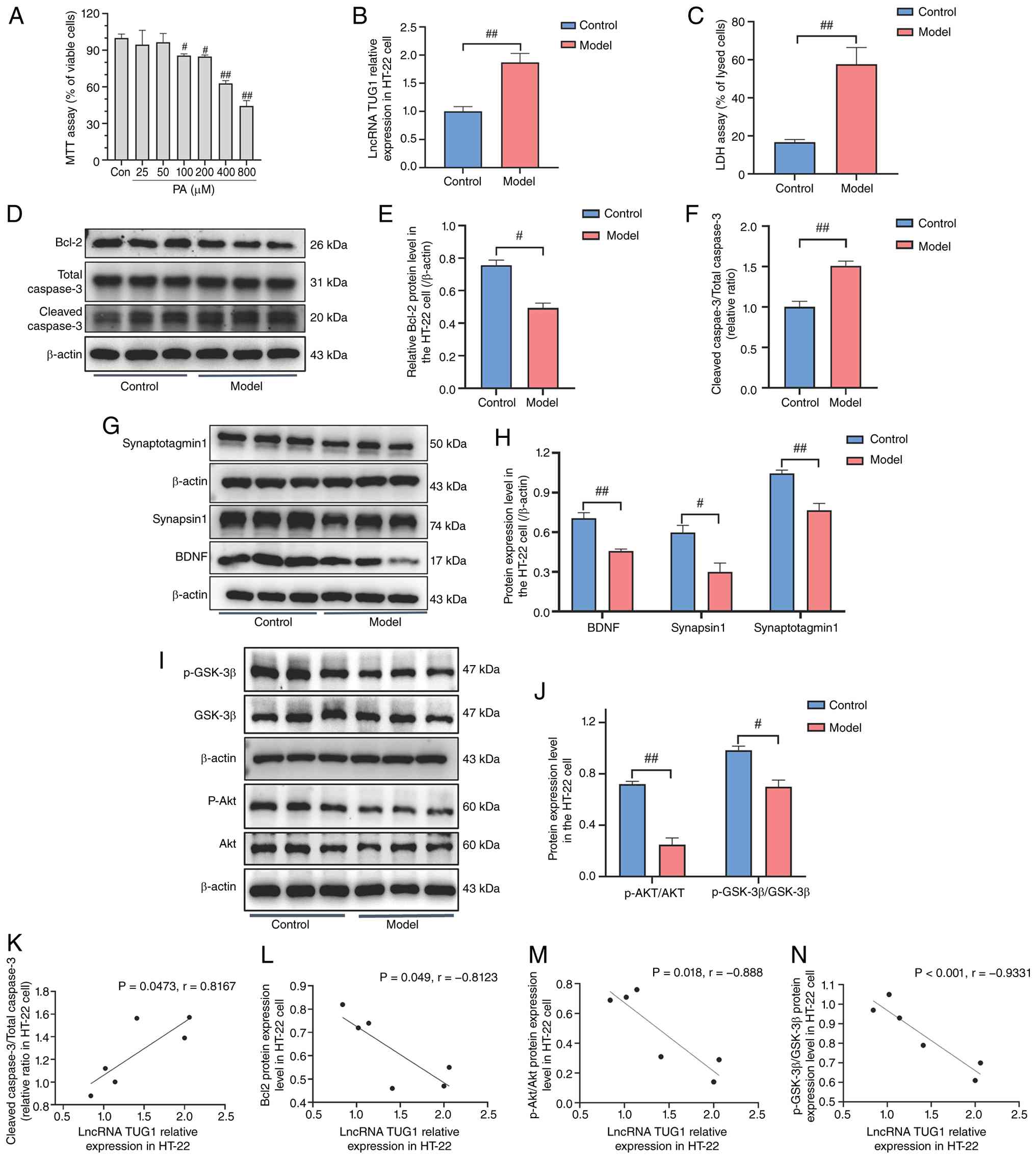
Figure 1

Effects of PA challenge on lncRNA
TUG1 expression as well as apoptosis, synaptic plasticity
and Akt/GSK-3β pathway in HT-22 cells. (A) MTT results of HT-22
cells challenged with different concentrations of PA. (B)
Expression of lncRNA TUG1 in HT-22 cells. (C) LDH rates in
HT-22 cells. (D) Representative western blotting bands of Bcl-2,
cleaved caspase-3 and total caspase-3. Semi-quantification of (E)
Bcl-2 protein levels and (F) the cleaved caspase-3 to total
caspase-3 ratio. (G) Representative western blotting bands of
Synapsin-1, Synaptotagmin-1 and BDNF. (H) Semi-quantification of
the Synapsin-1, Synaptotagmin-1 and BDNF protein levels. (I)
Representative western blotting bands of Akt, p-Akt, GSK-3β and
p-GSK-3β. (J) Semi-Quantification of the p-Akt/Akt and
p-GSK-3β/GSK-3β ratios. Correlation between lncRNA TUG1 expression
and (K) the cleaved caspase-3/total caspase-3 ratio, (L) Bcl-2
protein levels, (M) the p-Akt/Akt ratio and (N) the p-GSK-3β/GSK-3β
ratio. All treatments were performed using 100 μM PA for 24
h. Representative western blotting bands are from three independent
biological replicates per group for both the control and PA-treated
conditions. The data are presented as the mean ± SEM, with n=3 for
each group. #P<0.05, ##P<0.01 compared
with the control group. BDNF, brain-derived neurotrophic factor;
LDH, lactate dehydrogenase; lncRNA, long non-coding RNA; MTT,
3-(4,5-dimethylthiazol-2-yl)-2,5-diphenyltetrazolium bromide assay;
PA, palmitic acid; p, phosphorylated; TUG1, taurine upregulated
gene 1.

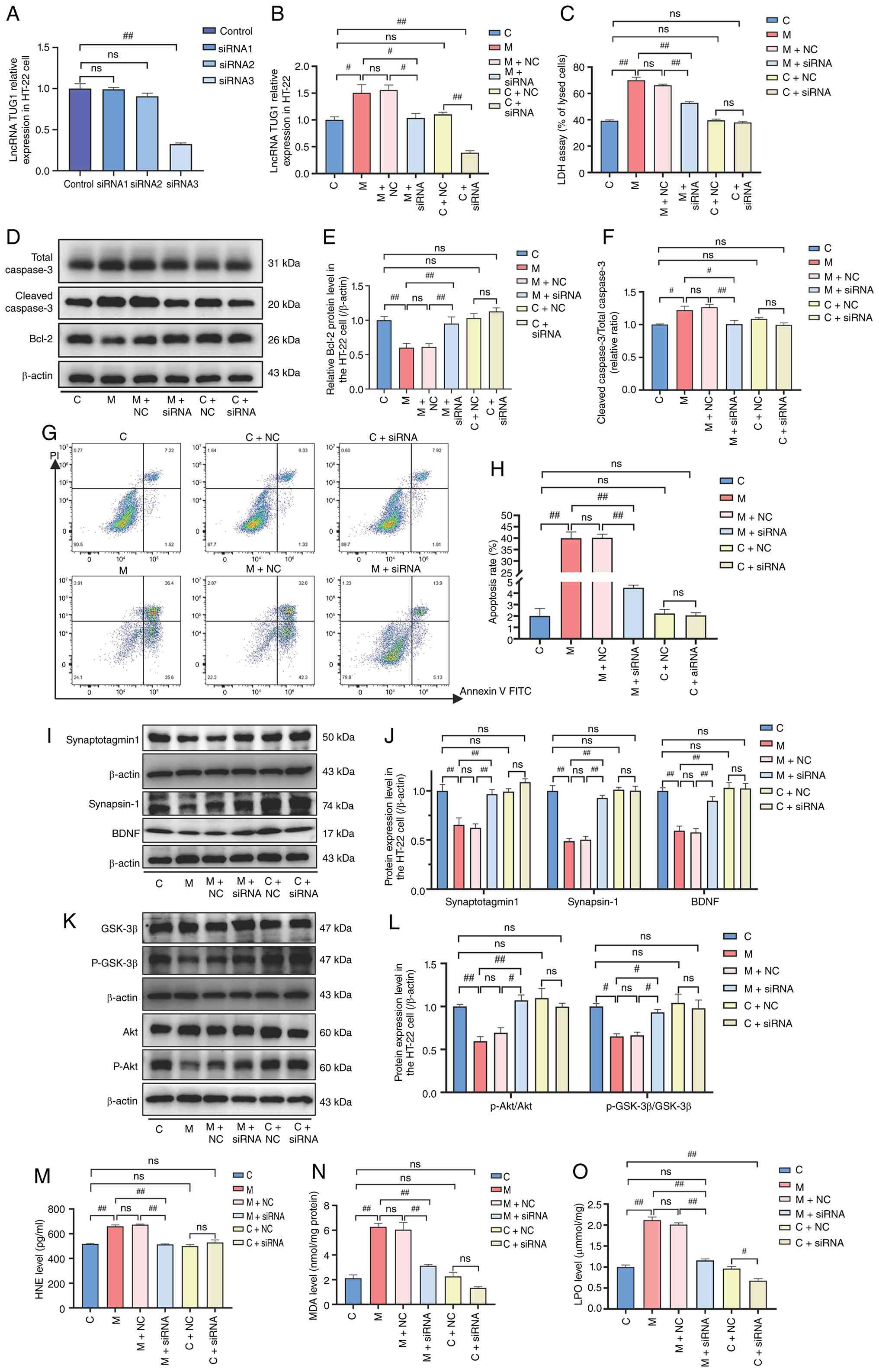
Figure 2

Effects of knocking down lncRNA
TUG1 on apoptosis, synaptic plasticity, the Akt/GSK-3β
pathway and LPO levels in PA-challenged HT-22 cells. (A)
Determination of lncRNA TUG1 expression levels in HT-22
cells using different siRNA sequences. (B) Effect of siRNA for
lncRNA TUG1 on the expression level of lncRNA TUG1 in
HT-22 cells with or without PA challenge. (C) LDH release rate
assay in si-lncRNA TUG1 pretreated PA-challenged HT-22
cells. (D) Representative western blotting bands of cleaved
caspase-3, total caspase-3 and Bcl-2. Semi-quantification of (E)
Bcl-2 protein levels and (F) the cleaved caspase-3 to total
caspase-3 ratio. (G) Flow cytometry determination of apoptosis
levels in si-lncRNA TUG1 pretreated PA-challenged HT-22
cells and (H) the statistical analysis results. (I) Representative
western blotting bands of Synapsin-1, Synaptotagmin-1 and BDNF. (J)
Semi-quantification of Synapsin-1, Synaptotagmin-1 and BDNF protein
levels. (K) Representative western blotting bands of Akt, p-Akt,
GSK-3β and p-GSK-3β. (L) Semi-quantification of p-Akt/Akt and
p-GSK-3β/GSK-3β ratios. Determination of the (M) 4-HNE, (N) MDA
levels and (O) LPO levels. The data are presented as the mean ±
SEM, with n=3 for each group, except for (H) where n=4 per group.
#P<0.05, ##P<0.01. 4-HNE,
4-hydroxynonenal; BDNF, brain-derived neurotrophic factor; C,
control; LDH, lactate dehydrogenase; lncRNA, long non-coding RNA;
LPO, lipid peroxidation; M, model (PA); MDA, malondialdehyde; NC,
negative control; ns, not significant; p-, phosphorylated; PA,
palmitic acid; si, small interfering (RNA); TUG1, taurine
upregulated gene 1.

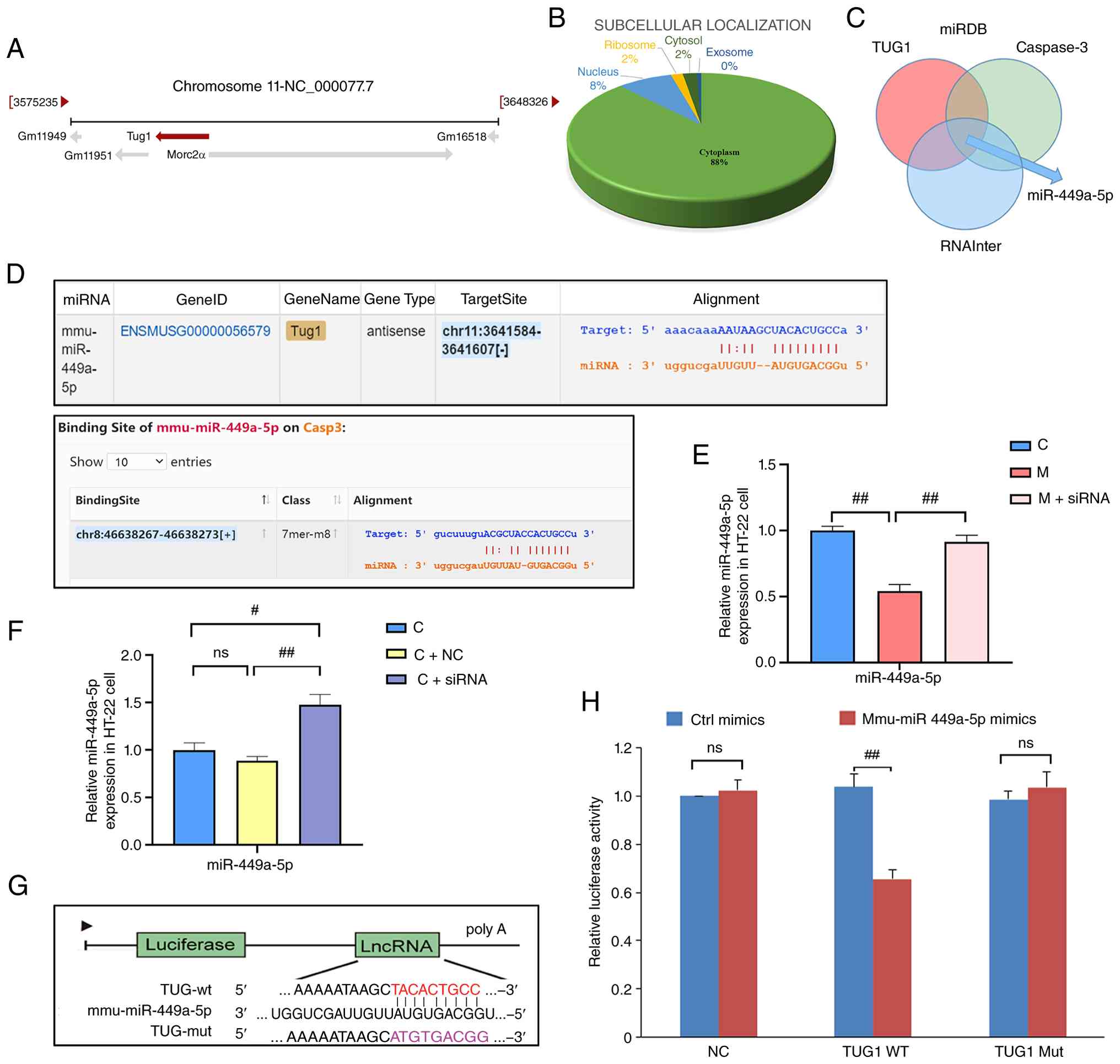
Figure 3

Target relationship between lncRNA
TUG1 and miR-449a-5p. (A) Informational characterization of
lncRNA TUG1 found through the National Center for
Biotechnology Information website. (B) Subcellular localization of
lncRNA TUG1 obtained from an online lncLocator predictor.
(C) Venn diagram of predicted miRNAs targeting lncRNA and Caspase
using miRDB and RNA Interactome databases. (D) Predicted
miR-449a-5p binding sites in lncRNA TUG1 and caspase-3. (E)
Relative miR-449a-5p expression level in PA-challenged HT-22 cells
pretreated with si-lncRNA TUG1. The groups include untreated
control cells 'C', the PA-stimulated group 'M', and the PA plus
si-lncRNA TUG1 group 'M + siRNA'. (F) Relative miR-449a-5p
expression level in HT-22 cells (without PA-challenged) pretreated
with si-lncRNA TUG1. The groups include untreated control
cells 'C', control cells transfected with negative control siRNA 'C
+ NC' and control cells transfected with si-lncRNA TUG1 'C +
siRNA'. (G) Schematic representation of the dual luciferase
reporter gene assay of lncRNA TUG1 with miR-449a-5p. (H)
Results of the dual-luciferase reporter assay containing lncRNA
TUG1-WT/Mut with miR-449a-5p mimic or miR-449a-5p mimic NC.
Ctrl mimics are the negative control miRNA mimics (scrambled
sequence). The data are presented as the mean ± SEM, with n=3 for
each group. #P<0.05, ##P<0.01. C,
control; Ctrl, control; lncRNA, long non-coding RNA; M, model (PA);
miR, microRNA; Mut, mutant; NC, negative control; ns, not
significant; PA, palmitic acid; si, small interfering; TUG1,
taurine upregulated gene 1; WT, wild-type.

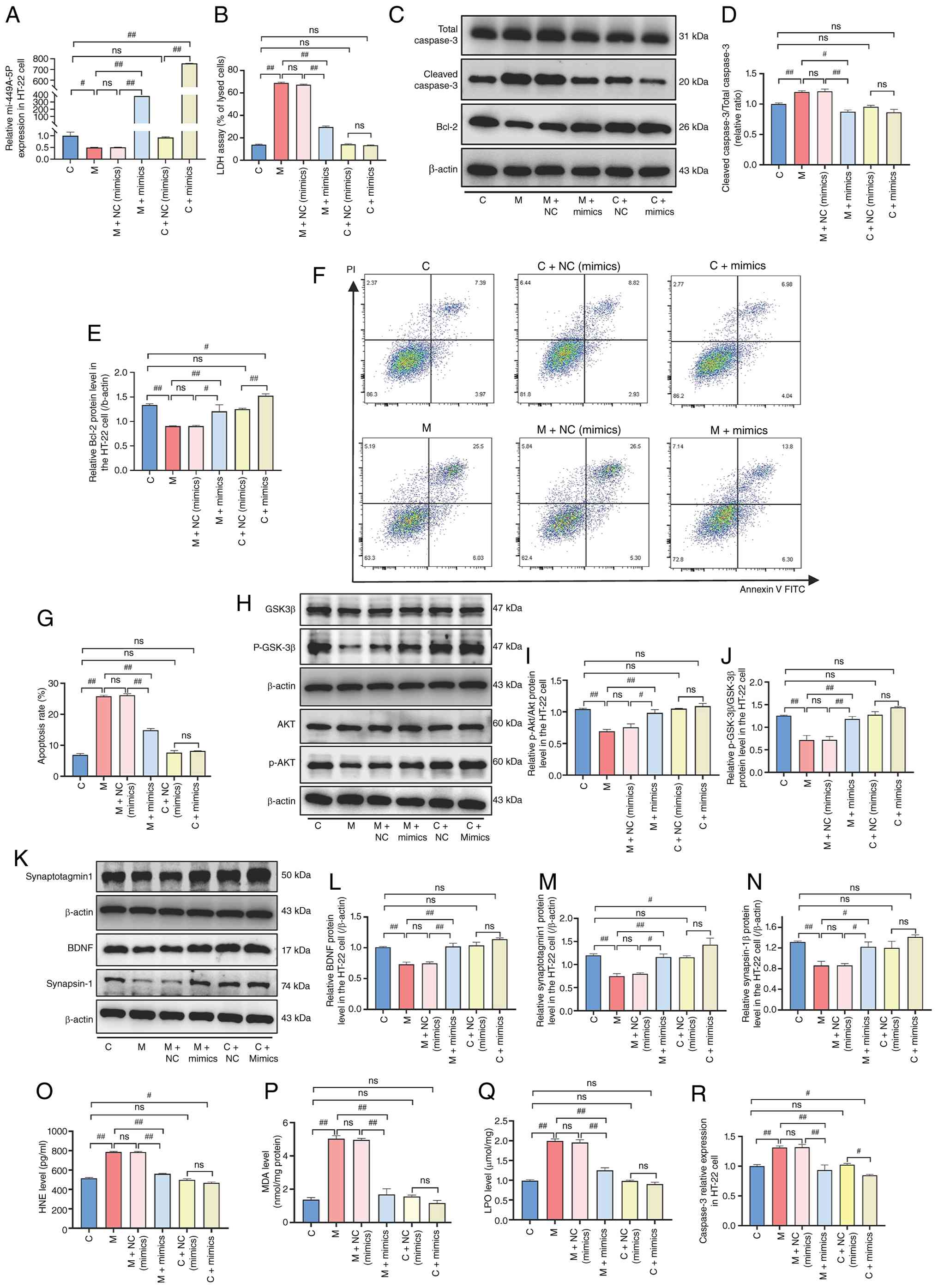
Figure 4

Effects of overexpression of
miR-449a-5p on apoptosis, synaptic plasticity, the Akt/GSK-3β
pathway and LPO levels in PA-challenged HT-22 cells. (A) Effect of
pretreatment with miR-449a-5p mimics on miR-449a-5p expression
levels in PA-challenged HT-22 cells. (B) Detection of LDH release
rate in PA-challenged HT-22 cells by pretreatment with miR-449a-5p
mimics. (C) Representative western blotting bands of Bcl-2, cleaved
caspase-3 and total caspase-3. Semi-quantification of (D) the
cleaved caspase-3 to total caspase-3 ratio and (E) Bcl-2 protein
levels. (F) Flow cytometry determination of apoptosis levels in
miR-449a-5p mimic pretreated PA-challenged HT-22 cells. (G)
Statistical analysis of apoptosis rates. (H) Representative western
blotting bands of Akt, p-Akt, GSK-3β and p-GSK-3β.
Semi-quantification of (I) p-Akt/Akt ratio and (J) p-GSK-3β/GSK-3β
ratio. (K) Representative western blotting bands of Synapsin-1,
Synaptotagmin-1 and BDNF. Semi-quantification of (L) BDNF, (M)
Synaptotagmin-1 and (N) Synapsin-1 protein levels. Determination of
(O) 4-HNE, (P) MDA and (Q) LPO levels. (R) Effect of pretreatment
with miR-449a-5p mimics on caspase-3 expression levels in
PA-challenged HT-22 cells. The data are presented as the mean ±
SEM, with n=3 for each group, except for (G) where n=4 per group.
#P<0.05, ##P<0.01. 4-HNE,
4-hydroxynonenal; BDNF, brain-derived neurotrophic factor; C,
control; LDH, lactate dehydrogenase; LPO, lipid peroxidation; M,
model (PA); MDA, malondialdehyde; miR, microRNA; NC, negative
control; ns, not significant; p, phosphorylated; PA, palmitic
acid.

Figure 5

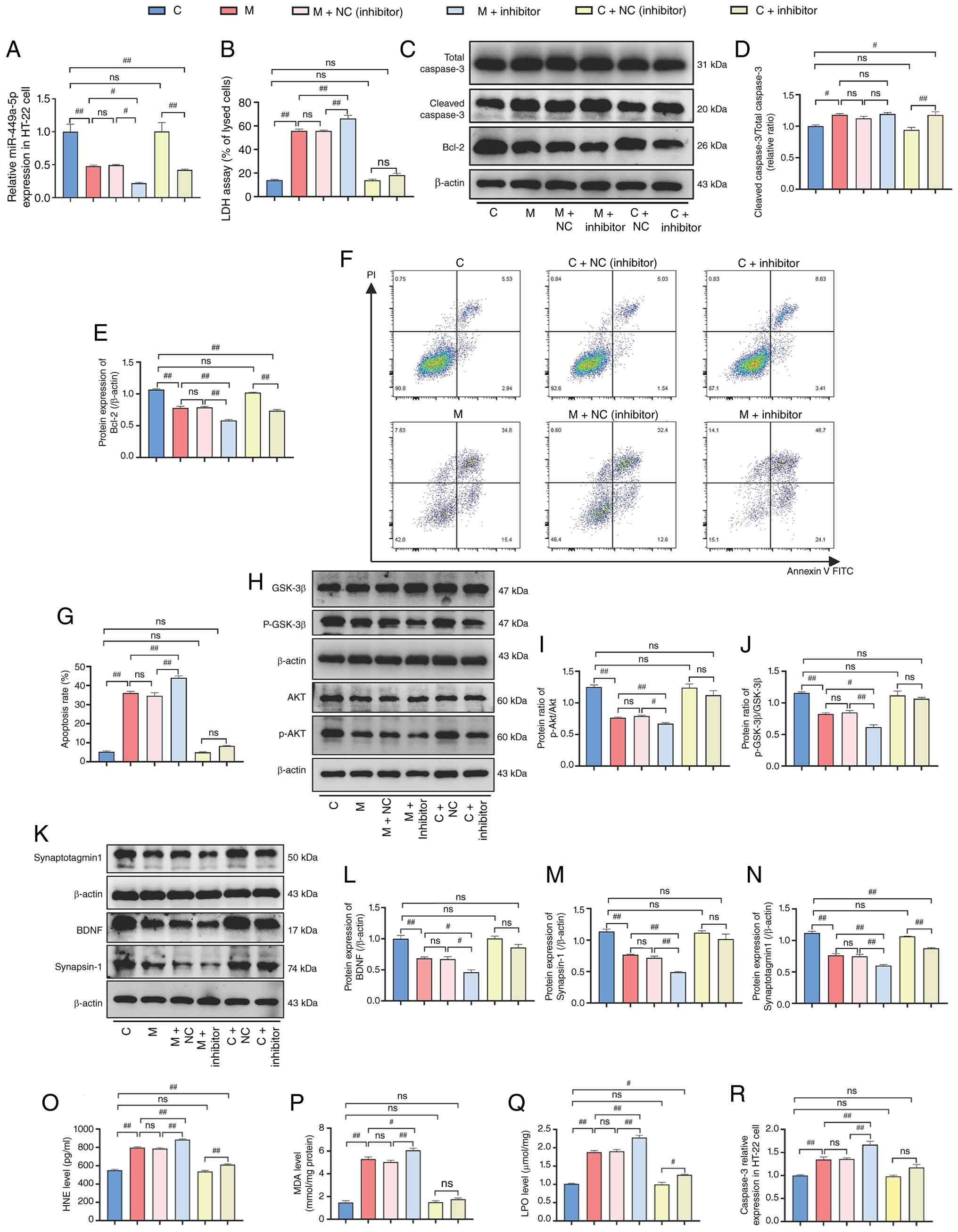
Effects of miR-449a-5p inhibition on
apoptosis, synaptic plasticity, Akt/GSK-3β pathway and LPO levels
in PA-challenged HT-22 cells. (A) Effect of pretreatment with
miR-449a-5p inhibitor on miR-449a-5p expression levels in
PA-challenged HT-22 cells. (B) Detection of LDH release rate in
PA-challenged HT-22 cells by pretreatment with miR-449a-5p
inhibitor. (C) Representative western blotting bands of Bcl-2,
cleaved caspase-3 and total caspase-3. Semi-quantification of the
(D) cleaved caspase-3 to total caspase-3 ratio and (E) Bcl-2
protein levels. (F) Flow cytometry determination of apoptosis
levels in miR-449a-5p inhibitor pretreated PA-challenged HT-22
cells. (G) Statistical analysis of apoptosis rates. (H)
Representative western blotting bands of Akt, p-Akt, GSK-3β and
p-GSK-3β. Semi-quantification of (I) the p-Akt/Akt and (J)
p-GSK-3β/GSK-3β ratios. (K) Representative western blotting bands
of Synapsin-1, Synaptotagmin-1 and BDNF. Semi-quantification of the
(L) BDNF, (M) Synapsin-1 and (N) Synaptotagmin-1 protein levels.
Determination of the (O) 4-HNE, (P) MDA levels and (Q) LPO levels.
(R) Effect of pretreatment with miR-449a-5p inhibitor on caspase-3
expression levels in PA-challenged HT-22 cells. The data are
presented as the mean ± SEM, with n=3 for each group, except for
(G) where n=4 per group. #P<0.05,
##P<0.01. 4-HNE, 4-hydroxynonenal; BDNF,
brain-derived neurotrophic factor; C, control; LDH, lactate
dehydrogenase; LPO, lipid peroxidation; M, model (PA); MDA,
malondialdehyde; miR, microRNA; NC, negative control; ns, not
significant; p, phosphorylated; PA, palmitic acid.

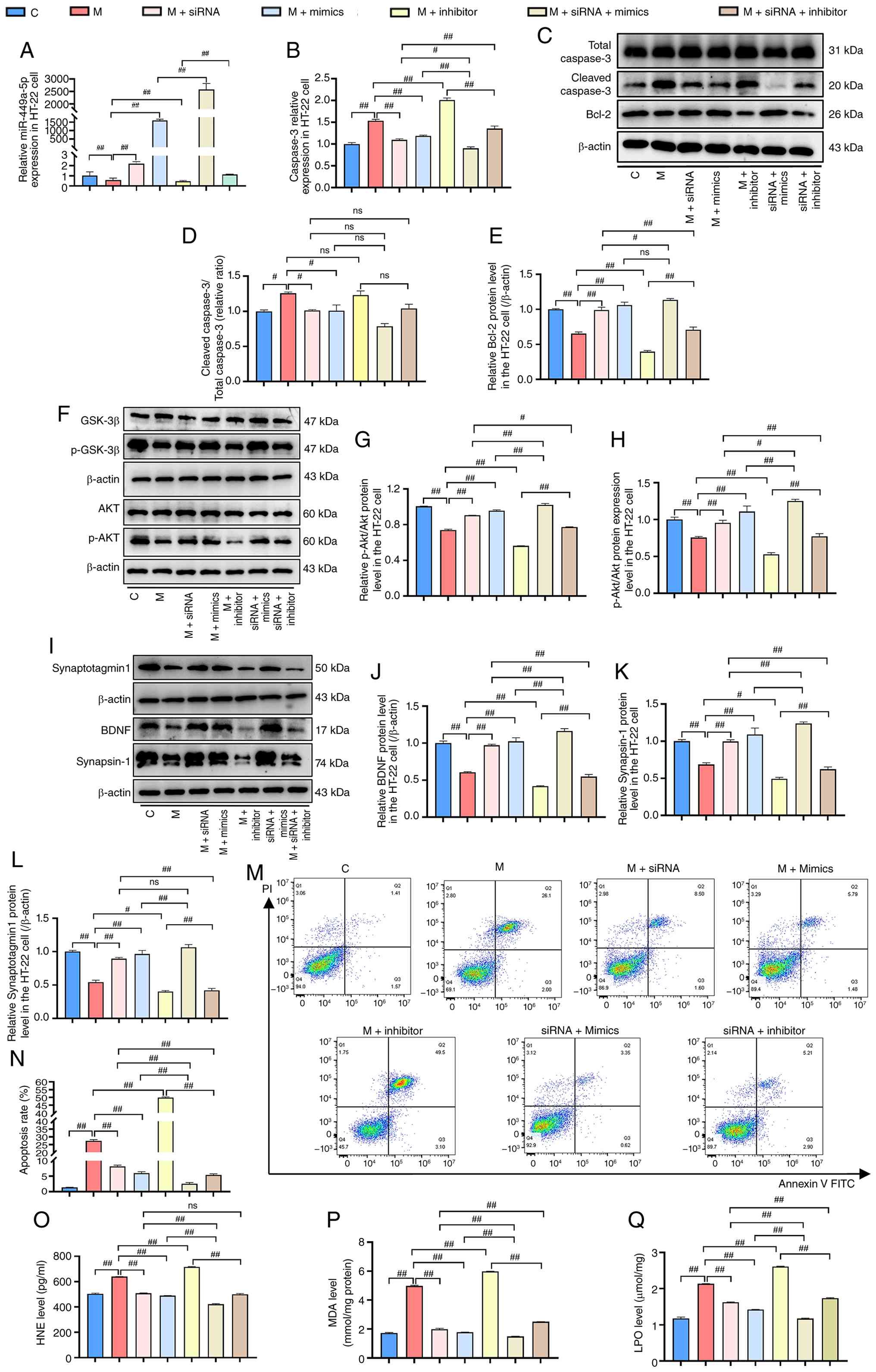
Figure 6

Effect of lncRNA
TUG1/miR-449a-5p/caspase-3 axis on neuroapoptosis in
PA-stimulated HT-22 cells. (A) Relative expression level of
miR-449a-5p in PA-stimulated HT-22 cells pretreated with si-lncRNA
TUG1 and/or miR-449a-5p mimics/inhibitor, determined by
RT-qPCR. (B) Relative expression level of caspase-3 mRNA. (C)
Representative western blot bands of Bcl-2, cleaved caspase-3 and
total caspase-3. Semi-quantification of (D) the cleaved caspase-3
to total caspase-3 ratio and (E) Bcl-2 protein levels. (F)
Representative western blot bands of Akt, p-Akt, GSK-3β and
p-GSK-3β. Semi-quantification of the (G) p-Akt/Akt and (H)
p-GSK-3β/GSK-3β ratios. (I) Representative western blot bands of
Synapsin-1, Synaptotagmin-1 and BDNF. Semi-quantification of the
(J) BDNF, (K) Synaptotagmin-1 and (L) Synapsin-1 protein levels.
(M) Flow cytometry determination of the apoptosis levels in
PA-stimulated HT-22 cells pretreated as indicated. (N) Statistical
analysis of the apoptosis rates. Determination of the (O) 4-HNE,
(P) MDA and (Q) LPO levels. The data are presented as the mean ±
SEM, with n=3 for each group. #P<0.05,
##P<0.01. 4-HNE, 4-hydroxynonenal; BDNF,
brain-derived neurotrophic factor; C, control; LDH, lactate
dehydrogenase; lncRNA, long non-coding RNA; LPO, lipid
peroxidation; M, model (PA); MDA, malondialdehyde; miR, microRNA;
ns, not significant; p, phosphorylated; PA, palmitic acid; si,
small interfering (RNA); TUG1, taurine upregulated gene 1.

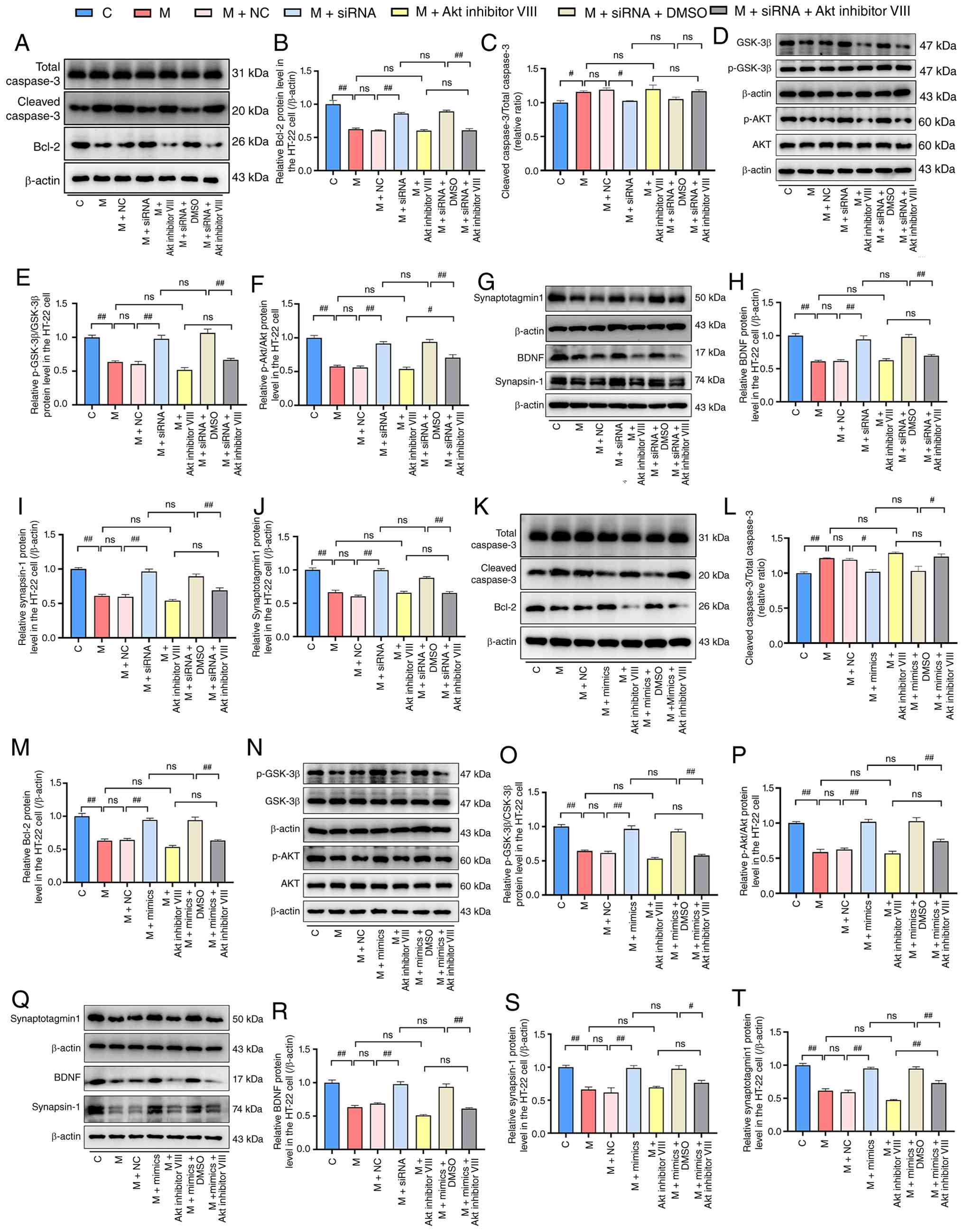
Figure 7

Pharmacological inhibition of Akt
abolishes the neuroprotective effects of lncRNA TUG1
knockdown and miR-449a-5p overexpression in PA-challenged HT-22
cells. (A) Representative western blotting bands of Bcl-2, cleaved
caspase-3 and total caspase-3. Semi-quantification of (B) Bcl-2
protein levels and (C) the cleaved caspase-3 to total caspase-3
ratio. (D) Representative western blotting bands of p-Akt, Akt,
p-GSK-3β and GSK-3β. Semi-quantification of the (E) p-GSK-3β/GSK-3β
and (F) p-Akt/Akt ratios. (G) Representative western blotting bands
of Synapsin-1, Synaptotagmin-1 and BDNF. Semi-quantification of the
(H) BDNF, (I) Synapsin-1 and (J) Synaptotagmin-1 protein levels.
(K) Representative western blotting bands of Bcl-2, cleaved
caspase-3 and total caspase-3. Semi-quantification of (L) the
cleaved caspase-3 to total caspase-3 ratio and (M) Bcl-2 protein
levels. (N) Representative western blotting bands of p-Akt, Akt,
p-GSK-3β and GSK-3β. Semi-quantification of the (O) p-GSK-3β/GSK-3β
and (P) p-Akt/Akt ratios. (Q) Representative western blotting bands
of Synapsin-1, Synaptotagmin-1 and BDNF. Semi-quantification of the
(R) BDNF, (S) Synapsin-1 and (T) Synaptotagmin-1 protein levels.
The data are presented as the mean ± SEM, with n=3 for each group.
#P<0.05, ##P<0.01. BDNF, brain-derived
neurotrophic factor; C, control; DMSO, dimethyl sulfoxide; lncRNA,
long non-coding RNA; M, model (PA); miR, microRNA; NC, negative
control; ns, not significant; p, phosphorylated; PA, palmitic acid;
siRNA, small interfering RNA; TUG1, taurine upregulated gene 1.
View References

1 

Zhao Y, Zhang H, Cheng J, Zou Y, Zhang D and Duan X: Association between dyslipidaemia and cognitive impairment: A meta-analysis of cohort and case-control studies. J Integr Neurosci. 23:402024. View Article : Google Scholar : PubMed/NCBI

2 

Iwagami M, Qizilbash N, Gregson J, Douglas I, Johnson M, Pearce N, Evans S and Pocock S: Blood cholesterol and risk of dementia in more than 1•8 million people over two decades: A retrospective cohort study. Lancet Healthy Longev. 2:e498–e506. 2021. View Article : Google Scholar

3 

Rochoy M, Rivas V, Chazard E, Decarpentry E, Saudemont G, Hazard PA, Puisieux F, Gautier S and Bordet R: Factors associated with Alzheimer's disease: An overview of reviews. J Prev Alzheimers Dis. 6:121–134. 2019. View Article : Google Scholar : PubMed/NCBI

4 

Pappolla MA, Refolo L, Sambamurti K, Zambon D and Duff K: Hypercholesterolemia and Alzheimer's disease: Unraveling the connection and assessing the efficacy of lipid-lowering therapies. J Alzheimers Dis. 101(S1): S371–S393. 2024. View Article : Google Scholar : PubMed/NCBI

5 

Libby P: The changing landscape of atherosclerosis. Nature. 592:524–533. 2021. View Article : Google Scholar : PubMed/NCBI

6 

Sánchez-Alegría K and Arias C: Functional consequences of brain exposure to saturated fatty acids: From energy metabolism and insulin resistance to neuronal damage. Endocrinol Diabetes Metab. 6:e3862023. View Article : Google Scholar :

7 

Moseholm KF, Jensen MK, Buzkova P, Aroner SA, Fitzpatrick AL, Longstreth WT Jr, Lopez O, Siscovick DS, Kizer JR, Ix JH, et al: Circulating non-esterified fatty acids, risk of dementia and cognitive decline: The cardiovascular health study and multi-ethnic study of atherosclerosis. Neurobiol Aging. 148:71–79. 2025. View Article : Google Scholar : PubMed/NCBI

8 

Kalyan-Masih P, Vega-Torres JD, Miles C, Haddad E, Rainsbury S, Baghchechi M, Obenaus A and Figueroa JD: Western high-fat diet consumption during adolescence increases susceptibility to traumatic stress while selectively disrupting hippocampal and ventricular volumes. eNeuro. 3:ENEURO.0125-16.20162016. View Article : Google Scholar : PubMed/NCBI

9 

Gao XR, Chen Z, Fang K, Xu JX and Ge JF: Protective effect of quercetin against the metabolic dysfunction of glucose and lipids and its associated learning and memory impairments in NAFLD rats. Lipids Health Dis. 20:1642021. View Article : Google Scholar : PubMed/NCBI

10 

Chen XX, Xu YY, Wu R, Chen Z, Fang K, Han YX, Yu Y, Huang LL, Peng L and Ge JF: Resveratrol reduces glucolipid metabolic dysfunction and learning and memory impairment in a NAFLD rat model: involvement in regulating the imbalance of nesfatin-1 abundance and copine 6 expression. Front Endocrinol (Lausanne). 10:4342019. View Article : Google Scholar : PubMed/NCBI

11 

Gao X, Sun H, Wei Y, Niu J, Hao S, Sun H, Tang G, Qi C and Ge J: Protective effect of melatonin against metabolic disorders and neuropsychiatric injuries in type 2 diabetes mellitus mice. Phytomedicine. 131:1558052024. View Article : Google Scholar : PubMed/NCBI

12 

Gao X, Sun H, Hao S, Sun H and Ge J: Melatonin protects HT-22 cells against palmitic acid-induced glucolipid metabolic dysfunction and cell injuries: Involved in the regulation of synaptic plasticity and circadian rhythms. Biochem Pharmacol. 217:1158462023. View Article : Google Scholar : PubMed/NCBI

13 

Zhang K, Wu D and Huang C: Crosstalk between non-coding RNA and apoptotic signaling in diabetic nephropathy. Biochem Pharmacol. 230:1166212024. View Article : Google Scholar : PubMed/NCBI

14 

Zhou W, Wang Z, Tao Y, Chen C, Zhang Q, Liu Z, Li L, Xia P and Ye Z: LncRNA-MEG3 attenuates hyperglycemia-induced damage by enhancing mitochondrial translocation of HSP90A in the primary hippocampal neurons. Exp Cell Res. 419:1133202022. View Article : Google Scholar : PubMed/NCBI

15 

Che F, Han Y, Fu J, Wang N, Jia Y, Wang K and Ge J: LncRNA MALAT1 induced by hyperglycemia promotes microvascular endothelial cell apoptosis through activation of the miR-7641/TPR axis to exacerbate neurologic damage caused by cerebral small vessel disease. Ann Transl Med. 9:17622021. View Article : Google Scholar

16 

Young TL, Matsuda T and Cepko CL: The noncoding RNA taurine upregulated gene 1 is required for differentiation of the murine retina. Curr Biol. 15:501–512. 2005. View Article : Google Scholar : PubMed/NCBI

17 

Chen Y, Li Z, Chen X and Zhang S: Long non-coding RNAs: From disease code to drug role. Acta Pharm Sin B. 11:340–354. 2021. View Article : Google Scholar : PubMed/NCBI

18 

Yang B, Liang RS, Wu XY and Lin YJ: LncRNA TUG1 inhibits neuronal apoptosis in status epilepticus rats via targeting the miR-421/mTOR axis. Cell Signal. 76:1097872020. View Article : Google Scholar : PubMed/NCBI

19 

Zhai K, Liu B and Gao L: Long-noncoding RNA TUG1 promotes parkinson's disease via modulating MiR-152-3p/PTEN pathway. Hum Gene Ther. 31:1274–1287. 2020. View Article : Google Scholar : PubMed/NCBI

20 

Li X, Wang SW, Li XL, Yu FY and Cong HM: Knockdown of long non-coding RNA TUG1 depresses apoptosis of hippocampal neurons in Alzheimer's disease by elevating microRNA-15a and repressing ROCK1 expression. Inflamm Res. 69:897–910. 2020. View Article : Google Scholar : PubMed/NCBI

21 

Wang K, Lin Y, Shen H, Yu S and Xu J: LncRNA TUG1 exacerbates myocardial fibrosis in diabetic cardiomyopathy by modulating the microRNA-145a-5p/Cfl2 axis. J Cardiovasc Pharmacol. 81:192–202. 2023. View Article : Google Scholar

22 

Li C, Zheng X, Liu P and Li M: Clinical value of lncRNA TUG1 in temporal lobe epilepsy and its role in the proliferation of hippocampus neuron via sponging miR-199a-3p. Bioengineered. 12:10666–10673. 2021. View Article : Google Scholar : PubMed/NCBI

23 

He C, Li Z, Yu W, Luo R, Zhou J, He J, Chen Q, Song Z and Cheng S: LncRNA TUG1 mediates microglial inflammatory activation by regulating glucose metabolic reprogramming. Sci Rep. 14:121432024. View Article : Google Scholar : PubMed/NCBI

24 

Wang W, Miao Z, Qi X, Wang B, Liu Q, Shi X and Xu S: LncRNA Tug1 relieves the steatosis of SelenoF-knockout hepatocytes via sponging miR-1934-3p. Cell Biol Toxicol. 39:3175–3195. 2023. View Article : Google Scholar : PubMed/NCBI

25 

López-Noriega L and Rutter GA: Long non-coding RNAs as key modulators of pancreatic β-cell mass and function. Front Endocrinol (Lausanne). 11:6102132021. View Article : Google Scholar

26 

Gao X, Wei Y, Sun H, Hao S, Ma M, Sun H, Zang D, Qi C and Ge J: Role of bmal1 in type 2 diabetes mellitus-related glycolipid metabolic disorder and neuropsychiatric injury: Involved in the regulation of synaptic plasticity and circadian rhythms. Mol Neurobiol. 60:4595–4617. 2023. View Article : Google Scholar : PubMed/NCBI

27 

Zhao Y and Ai Y: Overexpression of lncRNA Gm15621 alleviates apoptosis and inflammation response resulting from sevoflurane treatment through inhibiting miR-133a/Sox4. J Cell Physiol. 235:957–965. 2020. View Article : Google Scholar

28 

Feng X, Zhan F, Luo D, Hu J, Wei G, Hua F and Xu G: LncRNA 4344 promotes NLRP3-related neuroinflammation and cognitive impairment by targeting miR-138-5p. Brain Behav Immun. 98:283–298. 2021. View Article : Google Scholar : PubMed/NCBI

29 

Livak KJ and Schmittgen TD: Analysis of relative gene expression data using real-time quantitative PCR and the 2(-Delta Delta C(T)) method. Methods. 25:402–408. 2001. View Article : Google Scholar

30 

Liu S, Fan M, Xu JX, Yang LJ, Qi CC, Xia QR and Ge JF: Exosomes derived from bone-marrow mesenchymal stem cells alleviate cognitive decline in AD-like mice by improving BDNF-related neuropathology. J Neuroinflammation. 19:352022. View Article : Google Scholar : PubMed/NCBI

31 

Diez H, Garrido JJ and Wandosell F: Specific roles of Akt iso forms in apoptosis and axon growth regulation in neurons. PLoS One. 7:e327152012. View Article : Google Scholar : PubMed/NCBI

32 

Jin B, Chen Y, Yang D and Wang M: Linarin from Lycii cortex alleviates high-fat diet-induced cognitive impairment by improving hippocampal insulin signaling and synaptic plasticity. J Nutr Biochem. 158:1104662026. View Article : Google Scholar : PubMed/NCBI

33 

Qiu Q, Yang Z, Zhao J, Zhang R, Zheng S, Wang C, Xu H, Deng H, Zhao K and Liu M: Integrative analysis of cuproptosis-related lncRNAs for prognostic risk assessment and tumor immune microenvironment evaluation in laryngeal squamous cell carcinoma. Int J Biol Macromol. 306:1418462025. View Article : Google Scholar : PubMed/NCBI

34 

De Santis R, Liepelt A, Mossanen JC, Dueck A, Simons N, Mohs A, Trautwein C, Meister G, Marx G, Ostareck-Lederer A and Ostareck DH: miR-155 targets caspase-3 mRNA in activated macrophages. RNA Biol. 13:43–58. 2016. View Article : Google Scholar :

35 

Stern A, Teng P and Frishman WH: Lipid lowering agents and late life cognitive dysfunction. Cardiol Rev. May 16–2025.Epub ahead of print. View Article : Google Scholar : PubMed/NCBI

36 

Horgusluoglu E, Neff R, Song WM, Wang M, Wang Q, Arnold M, Krumsiek J, Galindo-Prieto B, Ming C, Nho K, et al: Integrative metabolomics-genomics approach reveals key metabolic pathways and regulators of Alzheimer's disease. Alzheimers Dement. 18:1260–1278. 2021. View Article : Google Scholar : PubMed/NCBI

37 

Saipuljumri EN, Zeng J and Lo CH: Palmitic acid-induced autolysosomal dysfunction and lipotoxicity in neuroinflammation and neurodegeneration. Neural Regen Res. 21:2806–2811. 2026. View Article : Google Scholar :

38 

Wei YD, Chen XX, Yang LJ, Gao XR, Xia QR, Qi CC and Ge JF: Resveratrol ameliorates learning and memory impairments induced by bilateral hippocampal injection of streptozotocin in mice. Neurochem Int. 159:1053852022. View Article : Google Scholar : PubMed/NCBI

39 

Shi X, Liu S, Zou Y, Wu H, Ma J, Lin J and Zhang X: LncRNA taurine Up-regulated 1 knockout provides neuroprotection in ischemic stroke rats by inhibiting nuclear-cytoplasmic shuttling of HuR. Biomedicines. 12:25202024. View Article : Google Scholar : PubMed/NCBI

40 

Yao M, Wang X, Lin H, Shu H, Xu Z, Tang L, Guo W and Xu P: LncRNA Tug1 regulates post-stroke microglial pyroptosis via PINK1/Parkin-mediated mitophagy. Inflammation. 48:2677–2691. 2025. View Article : Google Scholar : PubMed/NCBI

41 

Sultana R, Banks WA and Butterfield DA: Decreased levels of PSD95 and two associated proteins and increased levels of BCl2 and caspase 3 in hippocampus from subjects with amnestic mild cognitive impairment: Insights into their potential roles for loss of synapses and memory, accumulation of Abeta, and neurodegeneration in a prodromal stage of Alzheimer's disease. J Neurosci Res. 88:469–477. 2010. View Article : Google Scholar

42 

Li Z, Jo J, Jia JM, Lo SC, Whitcomb DJ, Jiao S, Cho K and Sheng M: Caspase-3 activation via mitochondria is required for long-term depression and AMPA receptor internalization. Cell. 141:859–871. 2010. View Article : Google Scholar : PubMed/NCBI

43 

D'Amelio M, Cavallucci V, Middei S, Marchetti C, Pacioni S, Ferri A, Diamantini A, De Zio D, Carrara P, Battistini L, et al: Caspase-3 triggers early synaptic dysfunction in a mouse model of Alzheimer's disease. Nat Neurosci. 14:69–76. 2011. View Article : Google Scholar

44 

Contreras A, Del Rio D, Martinez A, Gil C, Morales L, Ruiz-Gayo M and Del Olmo N: Inhibition of hippocampal long-term potentiation by high-fat diets: Is it related to an effect of palmitic acid involving glycogen synthase kinase-3? Neuroreport. 28:354–359. 2017. View Article : Google Scholar : PubMed/NCBI

45 

Cardone MH, Roy N, Stennicke HR, Salvesen GS, Franke TF, Stanbridge E, Frisch S and Reed JC: Regulation of cell death protease caspase-9 by phosphorylation. Science. 282:1318–1321. 1998. View Article : Google Scholar : PubMed/NCBI

46 

Widmann C, Gibson S and Johnson GL: Caspase-dependent cleavage of signaling proteins during apoptosis. A turn-off mechanism for anti-apoptotic signals. J Biol Chem. 273:7141–7147. 1998. View Article : Google Scholar : PubMed/NCBI

47 

Jope RS and Johnson GVW: The glamour and gloom of glycogen synthase kinase-3. Trends Biochem Sci. 29:95–102. 2004. View Article : Google Scholar : PubMed/NCBI

48 

Chen K and Yu G: Tetrahydroalstonine possesses protective potentials on palmitic acid stimulated SK-N-MC cells by suppression of Aβ1-42 and tau through regulation of PI3K/Akt signaling pathway. Eur J Pharmacol. 962:1762512024. View Article : Google Scholar

49 

Zhao Y, Wang H, Tang G, Wang L, Tian X and Li R: Risk factors for mild cognitive impairment in type 2 diabetes: A systematic review and meta-analysis. Front Endocrinol (Lausanne). 16:16172482025. View Article : Google Scholar : PubMed/NCBI

50 

Tabesh M, Sacre JW, Mehta K, Chen L, Sajjadi SF, Magliano DJ and Shaw JE: Associations of glycaemia-related risk factors with dementia and cognitive decline in individuals with type 2 diabetes: A systematic review and meta-analysis. Diabet Med. 42:e701232025. View Article : Google Scholar : PubMed/NCBI

51 

Zhang X, Chen D, Zhu C, Zhou X, Liu H and Zhu G: Expression significance and relationship of serum miR-542-3p and lncRNA TUG1 in STBI patients and their predictive value for prognosis. Int J Gen Med. 18:3441–3450. 2025. View Article : Google Scholar : PubMed/NCBI

52 

Gu X, Song Y, Liu X, Cheng Z, Min J and Zhang Y: METTL14-mediated m6A modification of TUG1 represses ferroptosis in Alzheimer's disease via inhibiting GDF15 ubiquitination. Front Biosci (Landmark Ed). 29:2982024. View Article : Google Scholar : PubMed/NCBI

53 

Chen J, Su C, Ma Z, Ou X, Zhan M and Hu J: Aerobic exercise suppresses cognitive injury in patients with Alzheimer's disease by regulating long non-coding RNA TUG1. Neurosci Lett. 826:1377322024. View Article : Google Scholar : PubMed/NCBI

Related Articles

  • Abstract
  • View
  • Download
  • Twitter
Copy and paste a formatted citation
Spandidos Publications style
Wei Y, Chen P, Zheng X, Wu L, Wang X, Gao X and Ge J: lncRNA <em>TUG1</em> mediates palmitic acid‑induced neuronal lipotoxic injury via the miR‑449a‑5p/caspase‑3 and Akt/GSK‑3&beta; axes. Int J Mol Med 58: 295, 2026.
APA
Wei, Y., Chen, P., Zheng, X., Wu, L., Wang, X., Gao, X., & Ge, J. (2026). lncRNA <em>TUG1</em> mediates palmitic acid‑induced neuronal lipotoxic injury via the miR‑449a‑5p/caspase‑3 and Akt/GSK‑3&beta; axes. International Journal of Molecular Medicine, 58, 295. https://doi.org/10.3892/ijmm.2026.5966
MLA
Wei, Y., Chen, P., Zheng, X., Wu, L., Wang, X., Gao, X., Ge, J."lncRNA <em>TUG1</em> mediates palmitic acid‑induced neuronal lipotoxic injury via the miR‑449a‑5p/caspase‑3 and Akt/GSK‑3&beta; axes". International Journal of Molecular Medicine 58.5 (2026): 295.
Chicago
Wei, Y., Chen, P., Zheng, X., Wu, L., Wang, X., Gao, X., Ge, J."lncRNA <em>TUG1</em> mediates palmitic acid‑induced neuronal lipotoxic injury via the miR‑449a‑5p/caspase‑3 and Akt/GSK‑3&beta; axes". International Journal of Molecular Medicine 58, no. 5 (2026): 295. https://doi.org/10.3892/ijmm.2026.5966
Copy and paste a formatted citation
x
Spandidos Publications style
Wei Y, Chen P, Zheng X, Wu L, Wang X, Gao X and Ge J: lncRNA <em>TUG1</em> mediates palmitic acid‑induced neuronal lipotoxic injury via the miR‑449a‑5p/caspase‑3 and Akt/GSK‑3&beta; axes. Int J Mol Med 58: 295, 2026.
APA
Wei, Y., Chen, P., Zheng, X., Wu, L., Wang, X., Gao, X., & Ge, J. (2026). lncRNA <em>TUG1</em> mediates palmitic acid‑induced neuronal lipotoxic injury via the miR‑449a‑5p/caspase‑3 and Akt/GSK‑3&beta; axes. International Journal of Molecular Medicine, 58, 295. https://doi.org/10.3892/ijmm.2026.5966
MLA
Wei, Y., Chen, P., Zheng, X., Wu, L., Wang, X., Gao, X., Ge, J."lncRNA <em>TUG1</em> mediates palmitic acid‑induced neuronal lipotoxic injury via the miR‑449a‑5p/caspase‑3 and Akt/GSK‑3&beta; axes". International Journal of Molecular Medicine 58.5 (2026): 295.
Chicago
Wei, Y., Chen, P., Zheng, X., Wu, L., Wang, X., Gao, X., Ge, J."lncRNA <em>TUG1</em> mediates palmitic acid‑induced neuronal lipotoxic injury via the miR‑449a‑5p/caspase‑3 and Akt/GSK‑3&beta; axes". International Journal of Molecular Medicine 58, no. 5 (2026): 295. https://doi.org/10.3892/ijmm.2026.5966
Follow us
  • Twitter
  • LinkedIn
  • Facebook
About
  • Spandidos Publications
  • Careers
  • Cookie Policy
  • Privacy Policy
How can we help?
  • Help
  • Live Chat
  • Contact
  • Email to our Support Team