Spandidos Publications Logo
  • About
    • About Spandidos
    • Aims and Scopes
    • Abstracting and Indexing
    • Editorial Policies
    • Reprints and Permissions
    • Job Opportunities
    • Terms and Conditions
    • Contact
  • Journals
    • All Journals
    • Oncology Letters
      • Oncology Letters
      • Information for Authors
      • Editorial Policies
      • Editorial Board
      • Aims and Scope
      • Abstracting and Indexing
      • Bibliographic Information
      • Archive
    • International Journal of Oncology
      • International Journal of Oncology
      • Information for Authors
      • Editorial Policies
      • Editorial Board
      • Aims and Scope
      • Abstracting and Indexing
      • Bibliographic Information
      • Archive
    • Molecular and Clinical Oncology
      • Molecular and Clinical Oncology
      • Information for Authors
      • Editorial Policies
      • Editorial Board
      • Aims and Scope
      • Abstracting and Indexing
      • Bibliographic Information
      • Archive
    • Experimental and Therapeutic Medicine
      • Experimental and Therapeutic Medicine
      • Information for Authors
      • Editorial Policies
      • Editorial Board
      • Aims and Scope
      • Abstracting and Indexing
      • Bibliographic Information
      • Archive
    • International Journal of Molecular Medicine
      • International Journal of Molecular Medicine
      • Information for Authors
      • Editorial Policies
      • Editorial Board
      • Aims and Scope
      • Abstracting and Indexing
      • Bibliographic Information
      • Archive
    • Biomedical Reports
      • Biomedical Reports
      • Information for Authors
      • Editorial Policies
      • Editorial Board
      • Aims and Scope
      • Abstracting and Indexing
      • Bibliographic Information
      • Archive
    • Oncology Reports
      • Oncology Reports
      • Information for Authors
      • Editorial Policies
      • Editorial Board
      • Aims and Scope
      • Abstracting and Indexing
      • Bibliographic Information
      • Archive
    • Molecular Medicine Reports
      • Molecular Medicine Reports
      • Information for Authors
      • Editorial Policies
      • Editorial Board
      • Aims and Scope
      • Abstracting and Indexing
      • Bibliographic Information
      • Archive
    • World Academy of Sciences Journal
      • World Academy of Sciences Journal
      • Information for Authors
      • Editorial Policies
      • Editorial Board
      • Aims and Scope
      • Abstracting and Indexing
      • Bibliographic Information
      • Archive
    • International Journal of Functional Nutrition
      • International Journal of Functional Nutrition
      • Information for Authors
      • Editorial Policies
      • Editorial Board
      • Aims and Scope
      • Abstracting and Indexing
      • Bibliographic Information
      • Archive
    • International Journal of Epigenetics
      • International Journal of Epigenetics
      • Information for Authors
      • Editorial Policies
      • Editorial Board
      • Aims and Scope
      • Abstracting and Indexing
      • Bibliographic Information
      • Archive
    • Medicine International
      • Medicine International
      • Information for Authors
      • Editorial Policies
      • Editorial Board
      • Aims and Scope
      • Abstracting and Indexing
      • Bibliographic Information
      • Archive
  • Articles
  • Information
    • Information for Authors
    • Information for Reviewers
    • Information for Librarians
    • Information for Advertisers
    • Conferences
  • Language Editing
Spandidos Publications Logo
  • About
    • About Spandidos
    • Aims and Scopes
    • Abstracting and Indexing
    • Editorial Policies
    • Reprints and Permissions
    • Job Opportunities
    • Terms and Conditions
    • Contact
  • Journals
    • All Journals
    • Biomedical Reports
      • Information for Authors
      • Editorial Policies
      • Editorial Board
      • Aims and Scope
      • Abstracting and Indexing
      • Bibliographic Information
      • Archive
    • Experimental and Therapeutic Medicine
      • Information for Authors
      • Editorial Policies
      • Editorial Board
      • Aims and Scope
      • Abstracting and Indexing
      • Bibliographic Information
      • Archive
    • International Journal of Epigenetics
      • Information for Authors
      • Editorial Policies
      • Editorial Board
      • Aims and Scope
      • Abstracting and Indexing
      • Bibliographic Information
      • Archive
    • International Journal of Functional Nutrition
      • Information for Authors
      • Editorial Policies
      • Editorial Board
      • Aims and Scope
      • Abstracting and Indexing
      • Bibliographic Information
      • Archive
    • International Journal of Molecular Medicine
      • Information for Authors
      • Editorial Policies
      • Editorial Board
      • Aims and Scope
      • Abstracting and Indexing
      • Bibliographic Information
      • Archive
    • International Journal of Oncology
      • Information for Authors
      • Editorial Policies
      • Editorial Board
      • Aims and Scope
      • Abstracting and Indexing
      • Bibliographic Information
      • Archive
    • Medicine International
      • Information for Authors
      • Editorial Policies
      • Editorial Board
      • Aims and Scope
      • Abstracting and Indexing
      • Bibliographic Information
      • Archive
    • Molecular and Clinical Oncology
      • Information for Authors
      • Editorial Policies
      • Editorial Board
      • Aims and Scope
      • Abstracting and Indexing
      • Bibliographic Information
      • Archive
    • Molecular Medicine Reports
      • Information for Authors
      • Editorial Policies
      • Editorial Board
      • Aims and Scope
      • Abstracting and Indexing
      • Bibliographic Information
      • Archive
    • Oncology Letters
      • Information for Authors
      • Editorial Policies
      • Editorial Board
      • Aims and Scope
      • Abstracting and Indexing
      • Bibliographic Information
      • Archive
    • Oncology Reports
      • Information for Authors
      • Editorial Policies
      • Editorial Board
      • Aims and Scope
      • Abstracting and Indexing
      • Bibliographic Information
      • Archive
    • World Academy of Sciences Journal
      • Information for Authors
      • Editorial Policies
      • Editorial Board
      • Aims and Scope
      • Abstracting and Indexing
      • Bibliographic Information
      • Archive
  • Articles
  • Information
    • For Authors
    • For Reviewers
    • For Librarians
    • For Advertisers
    • Conferences
  • Language Editing
Login Register Submit
  • This site uses cookies
  • You can change your cookie settings at any time by following the instructions in our Cookie Policy. To find out more, you may read our Privacy Policy.

    I agree
Search articles by DOI, keyword, author or affiliation
Search
Advanced Search
presentation
International Journal of Oncology
Join Editorial Board Propose a Special Issue
Print ISSN: 1019-6439 Online ISSN: 1791-2423
Journal Cover
May 2013 Volume 42 Issue 5

Full Size Image

Cover Legend PDF

Sign up for eToc alerts
Recommend to Library

Journals

International Journal of Molecular Medicine

International Journal of Molecular Medicine

International Journal of Molecular Medicine is an international journal devoted to molecular mechanisms of human disease.

International Journal of Oncology

International Journal of Oncology

International Journal of Oncology is an international journal devoted to oncology research and cancer treatment.

Molecular Medicine Reports

Molecular Medicine Reports

Covers molecular medicine topics such as pharmacology, pathology, genetics, neuroscience, infectious diseases, molecular cardiology, and molecular surgery.

Oncology Reports

Oncology Reports

Oncology Reports is an international journal devoted to fundamental and applied research in Oncology.

Experimental and Therapeutic Medicine

Experimental and Therapeutic Medicine

Experimental and Therapeutic Medicine is an international journal devoted to laboratory and clinical medicine.

Oncology Letters

Oncology Letters

Oncology Letters is an international journal devoted to Experimental and Clinical Oncology.

Biomedical Reports

Biomedical Reports

Explores a wide range of biological and medical fields, including pharmacology, genetics, microbiology, neuroscience, and molecular cardiology.

Molecular and Clinical Oncology

Molecular and Clinical Oncology

International journal addressing all aspects of oncology research, from tumorigenesis and oncogenes to chemotherapy and metastasis.

World Academy of Sciences Journal

World Academy of Sciences Journal

Multidisciplinary open-access journal spanning biochemistry, genetics, neuroscience, environmental health, and synthetic biology.

International Journal of Functional Nutrition

International Journal of Functional Nutrition

Open-access journal combining biochemistry, pharmacology, immunology, and genetics to advance health through functional nutrition.

International Journal of Epigenetics

International Journal of Epigenetics

Publishes open-access research on using epigenetics to advance understanding and treatment of human disease.

Medicine International

Medicine International

An International Open Access Journal Devoted to General Medicine.

Journal Cover
May 2013 Volume 42 Issue 5

Full Size Image

Cover Legend PDF

Sign up for eToc alerts
Recommend to Library

  • Article
  • Citations
    • Cite This Article
    • Download Citation
    • Create Citation Alert
    • Remove Citation Alert
    • Cited By
  • Similar Articles
    • Related Articles (in Spandidos Publications)
    • Similar Articles (Google Scholar)
    • Similar Articles (PubMed)
  • Download PDF
  • Download XML
  • View XML
Article

GABAA receptor-binding protein promotes sensitivity to apoptosis induced by chemotherapeutic agents

  • Authors:
    • Seung Bae Rho
    • Hyun-Jung Byun
    • Boh-Ram Kim
    • Ik Sun Kim
    • Jeong Heon Lee
    • Richard Yoo
    • Sung Taek Park
    • Sung Ho Park
  • View Affiliations / Copyright

    Affiliations: Research Institute, National Cancer Center, Goyang-si, Gyeonggi-do 410-769, Republic of Korea, Department of Obstetrics and Gynecology, Chonbuk National University Medical School, Jeonju 561‑712, Republic of Korea, Department of Biochemistry, University of Washington, Seattle, WA 98195, USA, Department of Obstetrics and Gynecology, Hallym University, Seoul 150-950, Republic of Korea
  • Pages: 1807-1814
    |
    Published online on: March 27, 2013
       https://doi.org/10.3892/ijo.2013.1866
  • Expand metrics +
Metrics: Total Views: 0 (Spandidos Publications: | PMC Statistics: )
Metrics: Total PDF Downloads: 0 (Spandidos Publications: | PMC Statistics: )
Cited By (CrossRef): 0 citations Loading Articles...

This article is mentioned in:


Abstract

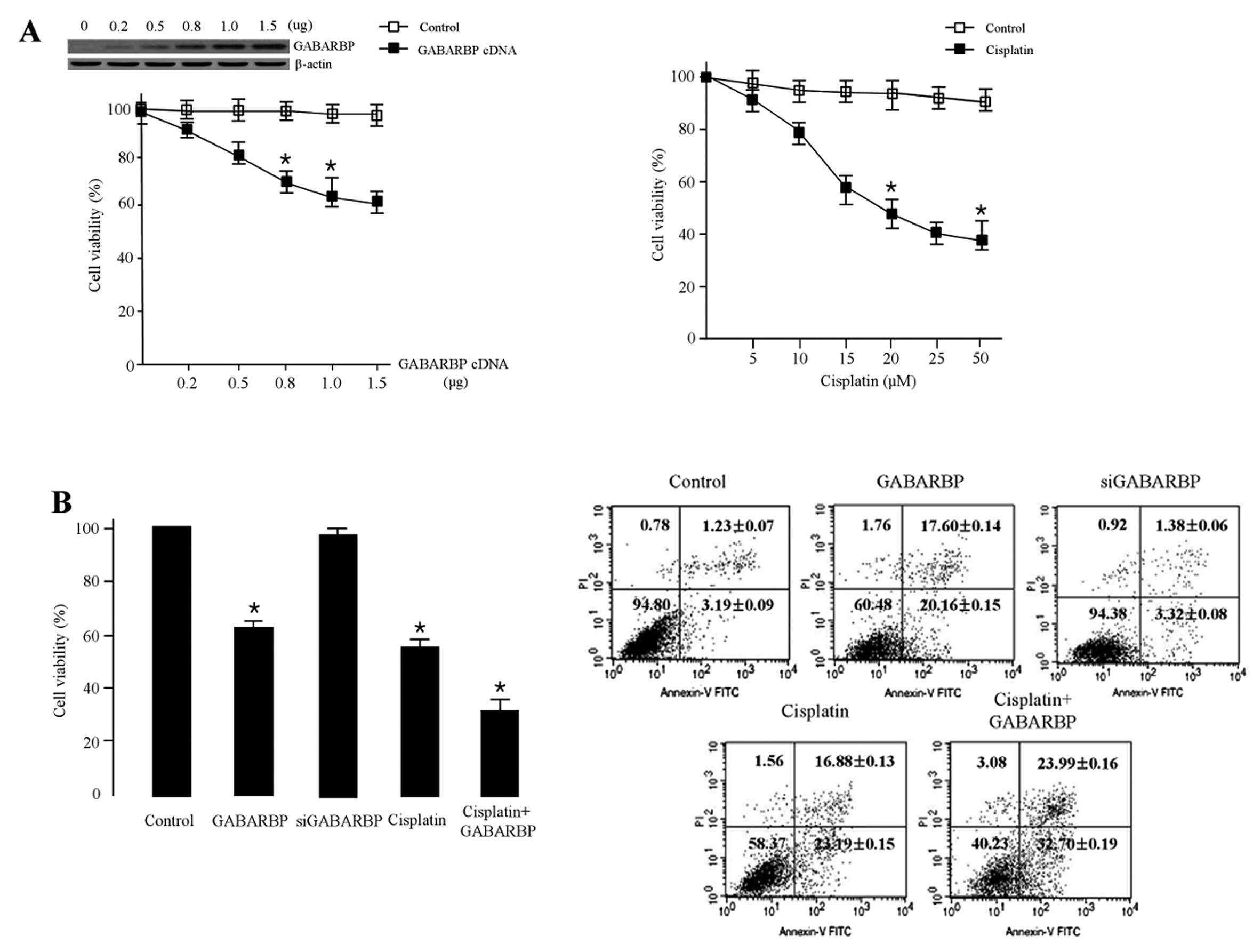
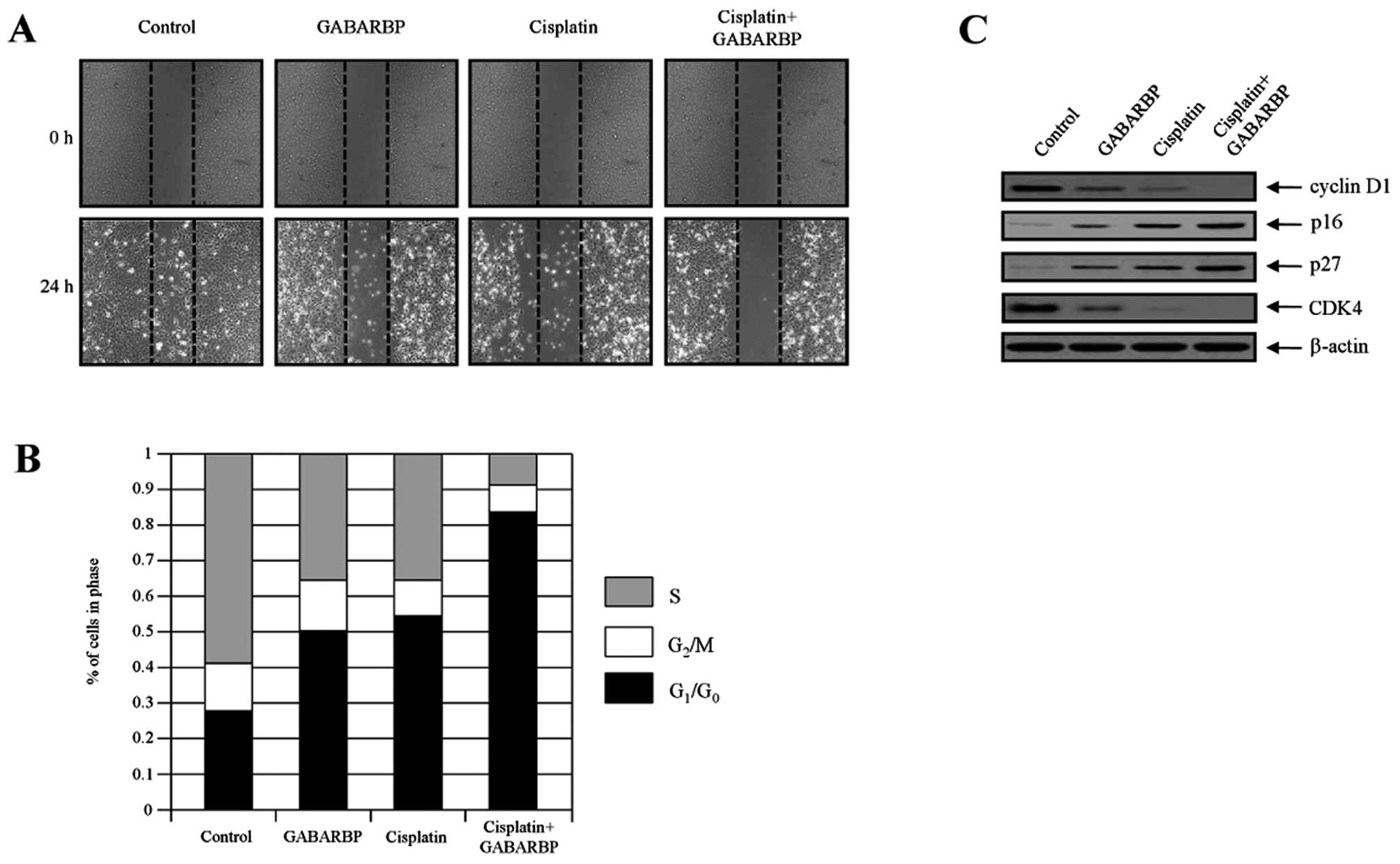
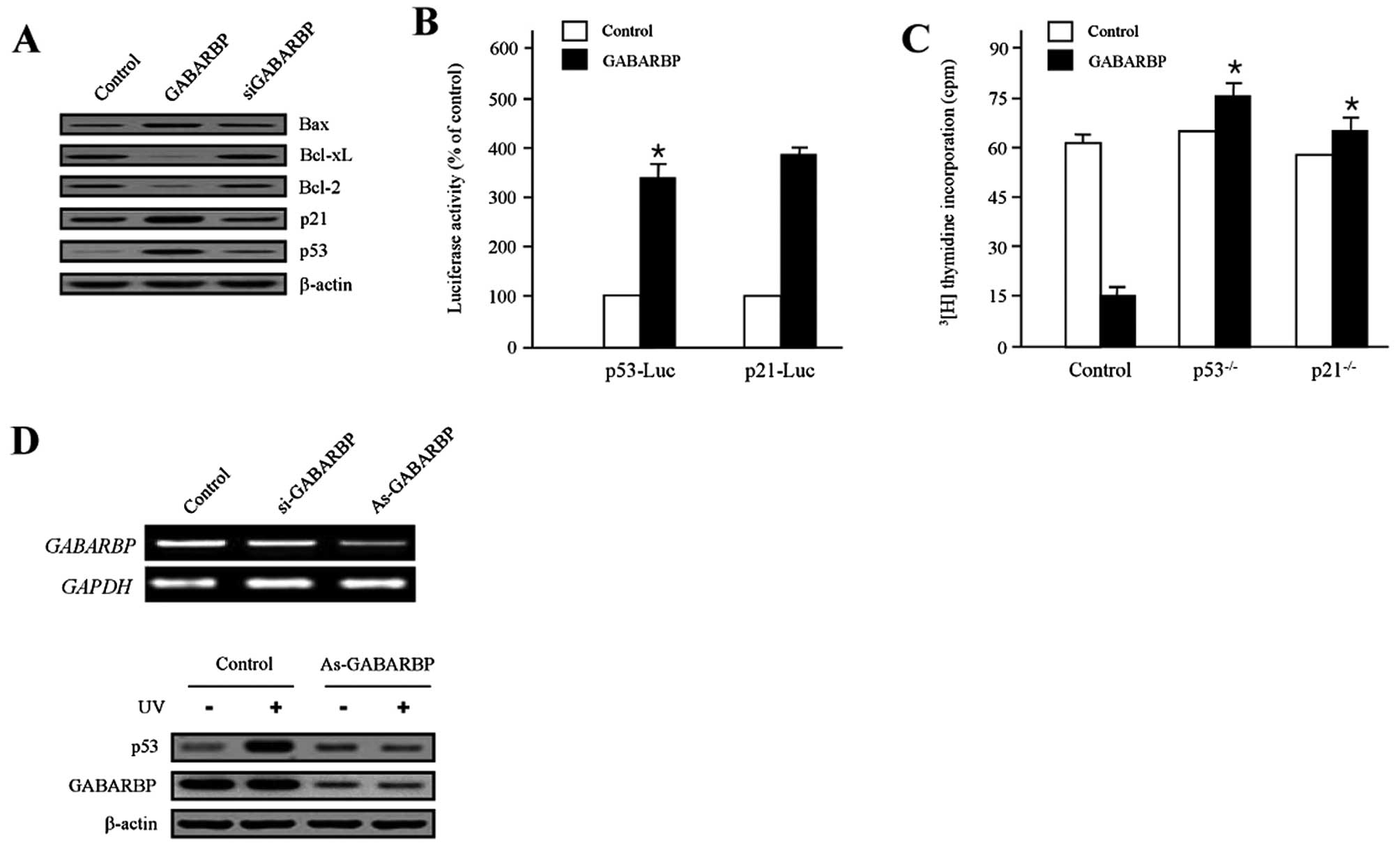
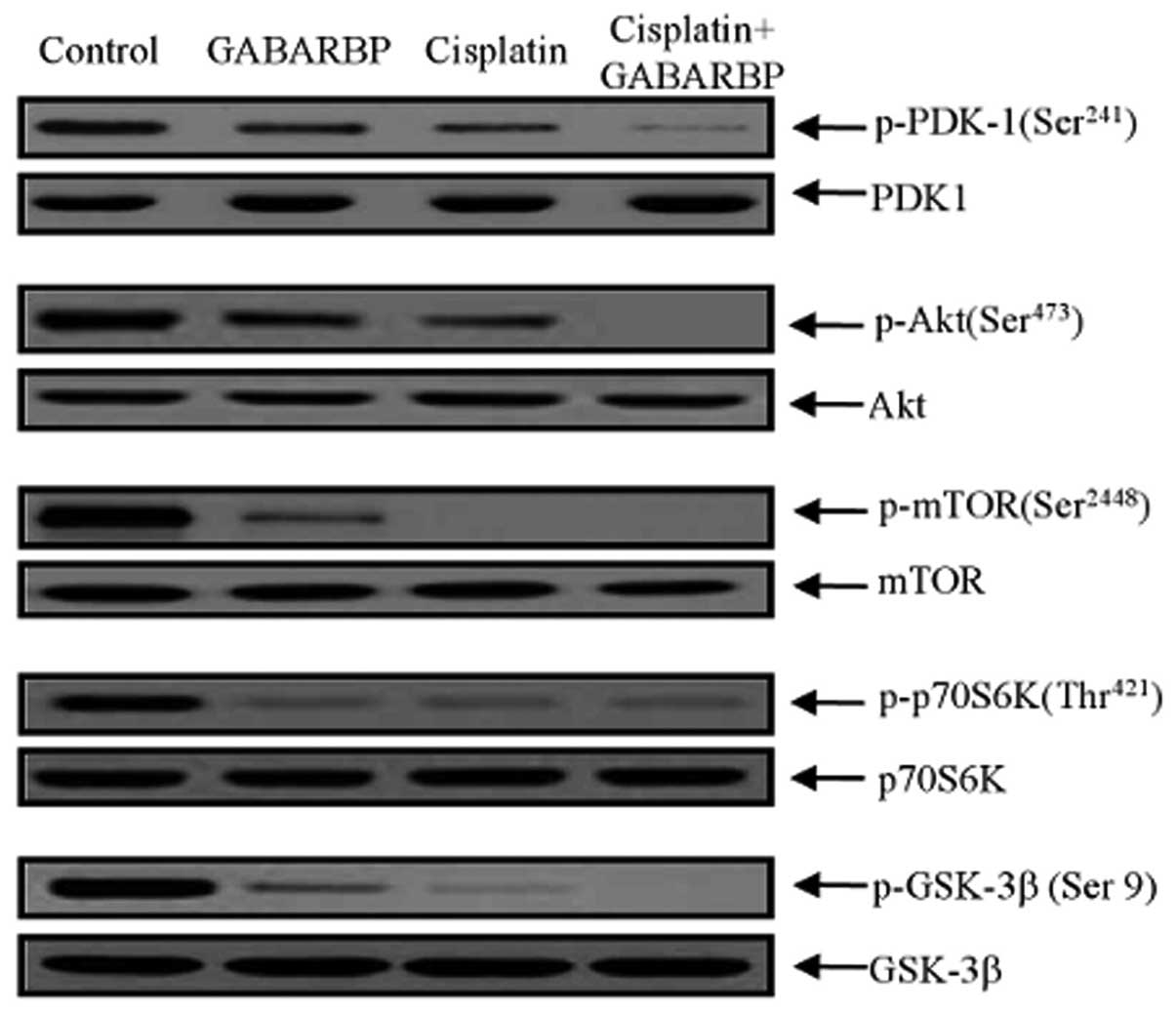
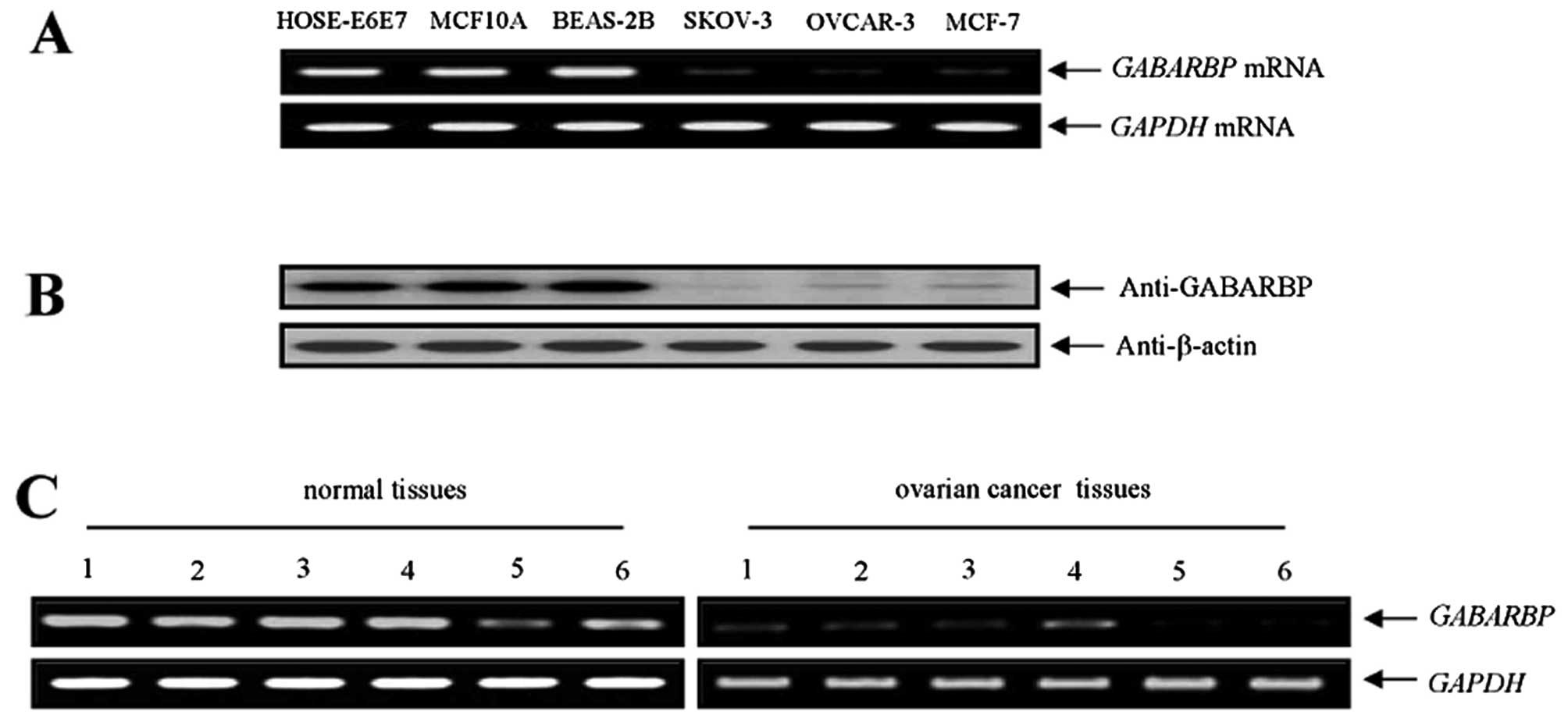
In the present study, the expression of human γ-aminobutyrate type A (GABAA) receptor-binding protein (GABARBP) is downregulated in ovarian cancer cell lines and tissues. We also found that the specific function of GABAPBP was that of a novel pro-apoptotic protein. Both GABARBP and cisplatin suppressed cancer cell proliferation in a concentration-dependent manner. The combined treatment of GABARBP and cisplatin was more effective in inhibiting cell growth, as well as cell migration, than with either drug treatment alone. At the same time, the treatment combination is correlated with the downregulation of cyclin D1 and CDK4, arrested cell cycle progression in the G0-G1 phase and enhancing p53 expression, while also reducing Bcl-2 and Bcl-xL expression. The p53 and p21 promoter luciferase activities were induced by GABARBP, whereas there was no effect on the p53-/- and p21-/- system. In addition, p53 activity was validated with UV irradiation and siGABARBP. Taken together, our results indicate that GABARBP can regulate the pro-apoptotic activity of cisplatin via the upregulation of p53 expression.
View Figures

Figure 1

Figure 2

Figure 3

Figure 4

Figure 5

View References

1. 

Jamieson ER and Lippard SJ: Structure, recognition and processing of cisplatin-DNA adducts. Chem Rev. 99:2467–2498. 1999. View Article : Google Scholar : PubMed/NCBI

2. 

Charalabopoulos K, Karkabounas S, Ioachim E, et al: Antitumour and toxic effects on Wistar rats of two new platinum complexes. Eur J Clin Invest. 32:129–133. 2002. View Article : Google Scholar : PubMed/NCBI

3. 

Covens A, Carey M, Bryson P, et al: Systematic review of first-line chemotherapy for newly diagnosed postoperative patients with stage II, III or IV epithelial ovarian cancer. Gynecol Oncol. 85:71–80. 2002. View Article : Google Scholar : PubMed/NCBI

4. 

Androulakis N, Syrigos K, Polyzos A, et al: Oxaliplatin for pretreated patients with advanced or metastatic pancreatic cancer: a multicenter phase II study. Cancer Invest. 23:9–12. 2005. View Article : Google Scholar : PubMed/NCBI

5. 

Polyzos A, Syrigos K, Stergiou J, et al: Phase I trial of weekly docetaxel with a 4-weekly cisplatin administration in patients with advanced gastric carcinoma. Cancer Chemother Pharmacol. 55:466–470. 2005. View Article : Google Scholar : PubMed/NCBI

6. 

Androulakis N, Aravantinos G, Syrigos K, et al: Oxaliplatin as first-line treatment in inoperable biliary tract carcinoma: a multi-center phase II study. Oncology. 70:280–284. 2006. View Article : Google Scholar : PubMed/NCBI

7. 

Karapanagiotou EM, Boura PG, Papamichalis G, et al: Carboplatin-pemetrexed adjuvant chemotherapy in resected non-small cell lung cancer (NSCLC): a phase II study. Anticancer Res. 29:4297–4301. 2009.PubMed/NCBI

8. 

Syrigos KN, Karachalios D, Karapanagiotou EM, et al: Head and neck cancer in the elderly: an overview on the treatment modalities. Cancer Treat Rev. 35:237–245. 2009. View Article : Google Scholar : PubMed/NCBI

9. 

Charpidou A, Tsagouli S, Tsimpoukis S, et al: Triplet combination of carboplatin, irinotecan and etoposide in the first-line treatment of extensive small-cell lung cancer: a single-institution phase II study. Anticancer Drugs. 21:651–655. 2010. View Article : Google Scholar : PubMed/NCBI

10. 

Bhoola S and Hoskins WJ: Diagnosis and management of epithelial ovarian cancer. Obstet Gynecol. 107:1399–1410. 2006. View Article : Google Scholar

11. 

Trock BJ, Leonessa F and Clarke R: Multidrug resistance in breast cancer: a meta-analysis of MDR1/gp170 expression and its possible functional significance. J Natl Cancer Inst. 89:917–931. 1997. View Article : Google Scholar : PubMed/NCBI

12. 

Leith C: Multidrug resistance in leukemia. Curr Opin Hematol. 5:287–291. 1998. View Article : Google Scholar : PubMed/NCBI

13. 

Szakács G, Jakab K, Antal F and Sarkadi B: Diagnostics of multidrug resistance in cancer. Pathol Oncol Res. 4:251–257. 1998.PubMed/NCBI

14. 

Ohsumi Y: Molecular dissection of autophagy: two ubiquitin-like systems. Nat Rev Mol Cell Biol. 2:211–216. 2001. View Article : Google Scholar : PubMed/NCBI

15. 

Mizushima N: The pleiotropic role of autophagy: from protein metabolism to bactericide. Cell Death Differ. 12:1535–1541. 2005. View Article : Google Scholar : PubMed/NCBI

16. 

Zhu JH, Horbinski C, Guo F, et al: Regulation of autophagy by extracellular signal-regulated protein kinases during 1-methyl-4-phenylpyridiniuminduced cell death. Am J Pathol. 170:75–86. 2007. View Article : Google Scholar : PubMed/NCBI

17. 

Wang H, Bedford FK, Brandon NJ, Moss SJ and Olsen RW: GABA(A)-receptor-associated protein links GABA(A) receptors and the cytoskeleton. Nature. 397:69–72. 1999. View Article : Google Scholar : PubMed/NCBI

18. 

Wang H and Olsen RW: Binding of the GABA(A) receptor-associated protein (GABARAP) to microtubules and microfilaments suggests involvement of the cytoskeleton in GABARAPGABA(A) receptor interaction. J Neurochem. 75:644–655. 2000. View Article : Google Scholar : PubMed/NCBI

19. 

Kneussel M, Haverkamp S, Fuhrmann JC, et al: The gamma-aminobutyric acid type A receptor (GABAAR)-associated protein GABARAP interacts with gephyrin but is not involved in receptor anchoring at the synapse. Proc Natl Acad Sci USA. 97:8594–8599. 2000. View Article : Google Scholar

20. 

Tretter V, Jacob TC, Mukherjee J, et al: The clustering of GABA(A) receptor subtypes at inhibitory synapses is facilitated via the direct binding of receptor alpha 2 subunits to gephyrin. J Neurosci. 28:1356–1365. 2008. View Article : Google Scholar : PubMed/NCBI

21. 

Mohrlüder J, Hoffmann Y, Stangler T, Hänel K and Willbold D: Identification of clathrin heavy chain as a direct interaction partner for the gamma-aminobutyric acid type A receptor associated protein. Biochemistry. 46:14537–14543. 2007.PubMed/NCBI

22. 

Kanematsu T, Jang I-S, Yamaguchi T, et al: Role of the PLC-related, catalytically inactive protein p130 in GABA(A) receptor function. EMBO J. 21:1004–1011. 2002. View Article : Google Scholar : PubMed/NCBI

23. 

Green F, O’Hare T, Blackwell A and Enns CA: Association of human transferrin receptor with GABARAP. FEBS Lett. 518:101–106. 2002. View Article : Google Scholar : PubMed/NCBI

24. 

Okazaki N, Yan J, Yuasa S, et al: Interaction of the Unc-51-like kinase and microtubule-associated protein light chain 3 related proteins in the brain: possible role of vesicular transport in axonal elongation. Brain Res Mol Brain Res. 85:1–12. 2000. View Article : Google Scholar

25. 

Wu M, Yin G, Zhao X, et al: Human RAB24, interestingly and predominantly distributed in the nuclei of COS-7 cells, is colocalized with cyclophilin A and GABARAP. Int J Mol Med. 17:749–754. 2006.PubMed/NCBI

26. 

Lee JH, Rho SB and Chun T: GABAA receptor-associated protein (GABARAP) induces apoptosis by interacting with DEAD (Asp-Glu-Ala-Asp/His) box polypeptide 47 (DDX47). Biotechnol Lett. 27:623–628. 2005. View Article : Google Scholar : PubMed/NCBI

27. 

Kittler JT, Arancibia-Carcamo IL and Moss SJ: Association of GRIP1 with a GABA(A) receptor associated protein suggests a role for GRIP1 at inhibitory synapses. Biochem Pharmacol. 68:1649–1654. 2004. View Article : Google Scholar : PubMed/NCBI

28. 

Mohrlüder J, Stangler T, Hoffmann Y, et al: Identification of calreticulin as a ligand of GABARAP by phage display screening of a peptide library. FEBS J. 274:5543–5555. 2007.PubMed/NCBI

29. 

Cook JL, Re RN, deHaro DL, et al: The trafficking protein GABARAP binds to and enhances plasma membrane expression and function of the angiotensin II type 1 receptor. Circ Res. 102:1539–1547. 2008. View Article : Google Scholar : PubMed/NCBI

30. 

Laínez S, Valente P, Ontoria-Oviedo I, et al: GABAA receptor associated protein (GABARAP) modulates TRPV1 expression and channel function and desensitization. FASEB J. 24:1958–1970. 2010.PubMed/NCBI

31. 

Schwarten M, Mohrlüder J, Ma P, et al: Nix directly binds to GABARAP: a possible crosstalk between apoptosis and autophagy. Autophagy. 5:690–698. 2009. View Article : Google Scholar : PubMed/NCBI

32. 

Alam J, Deharo D, Redding KM, Re RN and Cook JL: C-terminal processing of GABARAP is not required for trafficking of the angiotensin II type 1A receptor. Regul Pept. 159:78–86. 2010. View Article : Google Scholar : PubMed/NCBI

33. 

Klebig C, Seitz S, Arnold W, et al: Characterization of γ-aminobutyric acid type A receptor-associated protein, a novel tumor suppressor, showing reduced expression in breast cancer. Cancer Res. 65:394–400. 2005.

34. 

Roberts SS, Mendonça-Torres MC, Jensen K, Francis GL and Vasko V: GABA receptor expression in benign and malignant thyroid tumors. Pathol Oncol Res. 15:645–650. 2009. View Article : Google Scholar : PubMed/NCBI

35. 

Miao Y, Zhang Y, Chen Y, Chen L and Wang F: GABARAP is overexpressed in colorectal carcinoma and correlates with shortened patient survival. Hepatogastroenterology. 57:257–261. 2010.PubMed/NCBI

36. 

Karin M, Cao Y, Greten FR and Li ZW: NF-kappaB in cancer: from innocent bystander to major culprit. Nat Rev Cancer. 2:301–310. 2002. View Article : Google Scholar : PubMed/NCBI

37. 

Oren M: Decision making by p53: life, death and cancer. Cell Death Differ. 10:431–442. 2003. View Article : Google Scholar : PubMed/NCBI

38. 

Steele RJ and Lane DP: P53 in cancer: a paradigm for modern management of cancer. Surgeon. 3:197–205. 2005. View Article : Google Scholar : PubMed/NCBI

39. 

Haldar S, Negrini M, Monne M, Sabbioni S and Croce CM: Down-regulation of Bcl-2 by p53 in breast cancer cells. Cancer Res. 54:2095–2097. 1994.PubMed/NCBI

40. 

Miyashita T and Reed JC: Tumor suppressor p53 is a direct transcriptional activator of the human bax gene. Cell. 80:293–299. 1995. View Article : Google Scholar : PubMed/NCBI

41. 

Reed JC: Bcl-2 family proteins: regulators of apoptosis and chemoresistance in hematologic malignancies. Semin Hematol. 34:9–19. 1997.PubMed/NCBI

42. 

Antonsson B and Martinou JC: The Bcl-2 protein family. Exp Cell Res. 256:50–57. 2000. View Article : Google Scholar

43. 

Bentires-Alj M, Dejardin E, Viatour P, et al: Inhibition of the NF-kappaB transcription factor increases Bax expression in cancer cell lines. Oncogene. 20:2805–2813. 2001. View Article : Google Scholar : PubMed/NCBI

44. 

Heckman CA, Mehew JW and Boxer LM: NF-kappaB activates Bcl-2 expression in t(14:18) lymphoma cells. Oncogene. 21:3898–3908. 2002. View Article : Google Scholar : PubMed/NCBI

45. 

Khwaja A: Akt is more than just a Bad kinase. Nature. 401:33–34. 1999. View Article : Google Scholar : PubMed/NCBI

46. 

McComick F: Cancer: survival pathways meet their end. Nature. 428:267–269. 2004. View Article : Google Scholar : PubMed/NCBI

47. 

Westfall SD: Inhibition of phosphatidylinositol 3-kinase sensitizes ovarian cancer cells to carboplatin and allows adjunct chemotherapy treatment. Mol Cancer Ther. 11:1764–1769. 2005. View Article : Google Scholar : PubMed/NCBI

48. 

Shih KK and Chi DS: Maximal cytoreductive effort in epithelial ovarian cancer surgery. J Gynecol Oncol. 21:75–80. 2010. View Article : Google Scholar : PubMed/NCBI

49. 

Altaha R, Reed E and Abraham J: Breast and ovarian cancer genetics and prevention. W V Med J. 99:187–191. 2003.PubMed/NCBI

50. 

Wang C, Horiuchi A, Imai T, et al: Expression of BRCA1 protein in benign, borderline and malignant epithelial ovarian neoplasms and its relationship to methylation and allelic loss of the BRCA1 gene. J Pathol. 202:215–223. 2004. View Article : Google Scholar : PubMed/NCBI

51. 

Rho SB, Kim BR and Kang S: A gene signature-based approach identifies thioridazine as an inhibitor of phosphatidylinositol-3′-kinase (PI3K)/AKT pathway in ovarian cancer cells. Gynecol Oncol. 120:121–127. 2011.PubMed/NCBI

52. 

Adams JM and Cory S: The Bcl-2 protein family: arbiters of cell survival. Science. 281:1322–1326. 1998. View Article : Google Scholar : PubMed/NCBI

53. 

Kanematsu T, Mizokami A, Watanabe K and Hirata M: Regulation of GABAA-receptor surface expression with special reference to the involvement of GABARAP (GABAA receptor-associated protein) and PRIP (phospholipase C-related, but catalytically inactive protein). J Pharmacol Sci. 104:285–292. 2007. View Article : Google Scholar

54. 

Johnstone RW, Ruefli AA and Lowe SW: Apoptosis: a link between cancer genetics and chemotherapy. Cell. 108:153–164. 2002. View Article : Google Scholar : PubMed/NCBI

55. 

Malaguarnera L: Implications of apoptosis regulators in tumorigenesis. Cancer Metastasis Rev. 23:367–387. 2004. View Article : Google Scholar : PubMed/NCBI

56. 

Guertin DA and Sabatini DM: An expanding role for mTOR in cancer. Trends Mol Med. 11:353–361. 2005. View Article : Google Scholar : PubMed/NCBI

57. 

Yuan ZQ, Sun N, Feldman RI, et al: Frequent activation of AKT2 and induction of apoptosis by inhibition of phosphoinositide-3-OH kinase/Akt pathway in human ovarian cancer. Oncogene. 19:2324–2330. 2000. View Article : Google Scholar : PubMed/NCBI

58. 

Bjornsti MA and Houghton PJ: The mTOR pathways: a target for cancer therapy. Nat Rev Cancer. 4:335–348. 2004. View Article : Google Scholar

59. 

Bjornsti MA and Houghton PJ: Lost in translation: dysregulation of cap-dependent translation and cancer. Cancer Cell. 5:519–523. 2004. View Article : Google Scholar : PubMed/NCBI

60. 

Suvasini R and Somasundaram K: Essential role of PI3K-kinase pathway in p53-mediated transcription: implications in cancer chemotherapy. Oncogene. 29:3605–3618. 2010. View Article : Google Scholar : PubMed/NCBI

61. 

Tonini T, Gabellini C, Bagella L, et al: pRb2/p130 decreases sensitivity to apoptosis induced by camptothecin and doxorubicin but not by taxol. Clin Cancer Res. 10:8085–8093. 2004. View Article : Google Scholar : PubMed/NCBI

Related Articles

  • Abstract
  • View
  • Download
  • Twitter
Copy and paste a formatted citation
Spandidos Publications style
Rho SB, Byun H, Kim B, Kim IS, Lee JH, Yoo R, Park ST and Park SH: GABAA receptor-binding protein promotes sensitivity to apoptosis induced by chemotherapeutic agents. Int J Oncol 42: 1807-1814, 2013.
APA
Rho, S.B., Byun, H., Kim, B., Kim, I.S., Lee, J.H., Yoo, R. ... Park, S.H. (2013). GABAA receptor-binding protein promotes sensitivity to apoptosis induced by chemotherapeutic agents. International Journal of Oncology, 42, 1807-1814. https://doi.org/10.3892/ijo.2013.1866
MLA
Rho, S. B., Byun, H., Kim, B., Kim, I. S., Lee, J. H., Yoo, R., Park, S. T., Park, S. H."GABAA receptor-binding protein promotes sensitivity to apoptosis induced by chemotherapeutic agents". International Journal of Oncology 42.5 (2013): 1807-1814.
Chicago
Rho, S. B., Byun, H., Kim, B., Kim, I. S., Lee, J. H., Yoo, R., Park, S. T., Park, S. H."GABAA receptor-binding protein promotes sensitivity to apoptosis induced by chemotherapeutic agents". International Journal of Oncology 42, no. 5 (2013): 1807-1814. https://doi.org/10.3892/ijo.2013.1866
Copy and paste a formatted citation
x
Spandidos Publications style
Rho SB, Byun H, Kim B, Kim IS, Lee JH, Yoo R, Park ST and Park SH: GABAA receptor-binding protein promotes sensitivity to apoptosis induced by chemotherapeutic agents. Int J Oncol 42: 1807-1814, 2013.
APA
Rho, S.B., Byun, H., Kim, B., Kim, I.S., Lee, J.H., Yoo, R. ... Park, S.H. (2013). GABAA receptor-binding protein promotes sensitivity to apoptosis induced by chemotherapeutic agents. International Journal of Oncology, 42, 1807-1814. https://doi.org/10.3892/ijo.2013.1866
MLA
Rho, S. B., Byun, H., Kim, B., Kim, I. S., Lee, J. H., Yoo, R., Park, S. T., Park, S. H."GABAA receptor-binding protein promotes sensitivity to apoptosis induced by chemotherapeutic agents". International Journal of Oncology 42.5 (2013): 1807-1814.
Chicago
Rho, S. B., Byun, H., Kim, B., Kim, I. S., Lee, J. H., Yoo, R., Park, S. T., Park, S. H."GABAA receptor-binding protein promotes sensitivity to apoptosis induced by chemotherapeutic agents". International Journal of Oncology 42, no. 5 (2013): 1807-1814. https://doi.org/10.3892/ijo.2013.1866
Follow us
  • Twitter
  • LinkedIn
  • Facebook
About
  • Spandidos Publications
  • Careers
  • Cookie Policy
  • Privacy Policy
How can we help?
  • Help
  • Live Chat
  • Contact
  • Email to our Support Team