Spandidos Publications Logo
  • About
    • About Spandidos
    • Aims and Scopes
    • Abstracting and Indexing
    • Editorial Policies
    • Reprints and Permissions
    • Job Opportunities
    • Terms and Conditions
    • Contact
  • Journals
    • All Journals
    • Oncology Letters
      • Oncology Letters
      • Information for Authors
      • Editorial Policies
      • Editorial Board
      • Aims and Scope
      • Abstracting and Indexing
      • Bibliographic Information
      • Archive
    • International Journal of Oncology
      • International Journal of Oncology
      • Information for Authors
      • Editorial Policies
      • Editorial Board
      • Aims and Scope
      • Abstracting and Indexing
      • Bibliographic Information
      • Archive
    • Molecular and Clinical Oncology
      • Molecular and Clinical Oncology
      • Information for Authors
      • Editorial Policies
      • Editorial Board
      • Aims and Scope
      • Abstracting and Indexing
      • Bibliographic Information
      • Archive
    • Experimental and Therapeutic Medicine
      • Experimental and Therapeutic Medicine
      • Information for Authors
      • Editorial Policies
      • Editorial Board
      • Aims and Scope
      • Abstracting and Indexing
      • Bibliographic Information
      • Archive
    • International Journal of Molecular Medicine
      • International Journal of Molecular Medicine
      • Information for Authors
      • Editorial Policies
      • Editorial Board
      • Aims and Scope
      • Abstracting and Indexing
      • Bibliographic Information
      • Archive
    • Biomedical Reports
      • Biomedical Reports
      • Information for Authors
      • Editorial Policies
      • Editorial Board
      • Aims and Scope
      • Abstracting and Indexing
      • Bibliographic Information
      • Archive
    • Oncology Reports
      • Oncology Reports
      • Information for Authors
      • Editorial Policies
      • Editorial Board
      • Aims and Scope
      • Abstracting and Indexing
      • Bibliographic Information
      • Archive
    • Molecular Medicine Reports
      • Molecular Medicine Reports
      • Information for Authors
      • Editorial Policies
      • Editorial Board
      • Aims and Scope
      • Abstracting and Indexing
      • Bibliographic Information
      • Archive
    • World Academy of Sciences Journal
      • World Academy of Sciences Journal
      • Information for Authors
      • Editorial Policies
      • Editorial Board
      • Aims and Scope
      • Abstracting and Indexing
      • Bibliographic Information
      • Archive
    • International Journal of Functional Nutrition
      • International Journal of Functional Nutrition
      • Information for Authors
      • Editorial Policies
      • Editorial Board
      • Aims and Scope
      • Abstracting and Indexing
      • Bibliographic Information
      • Archive
    • International Journal of Epigenetics
      • International Journal of Epigenetics
      • Information for Authors
      • Editorial Policies
      • Editorial Board
      • Aims and Scope
      • Abstracting and Indexing
      • Bibliographic Information
      • Archive
    • Medicine International
      • Medicine International
      • Information for Authors
      • Editorial Policies
      • Editorial Board
      • Aims and Scope
      • Abstracting and Indexing
      • Bibliographic Information
      • Archive
  • Articles
  • Information
    • Information for Authors
    • Information for Reviewers
    • Information for Librarians
    • Information for Advertisers
    • Conferences
  • Language Editing
Spandidos Publications Logo
  • About
    • About Spandidos
    • Aims and Scopes
    • Abstracting and Indexing
    • Editorial Policies
    • Reprints and Permissions
    • Job Opportunities
    • Terms and Conditions
    • Contact
  • Journals
    • All Journals
    • Biomedical Reports
      • Information for Authors
      • Editorial Policies
      • Editorial Board
      • Aims and Scope
      • Abstracting and Indexing
      • Bibliographic Information
      • Archive
    • Experimental and Therapeutic Medicine
      • Information for Authors
      • Editorial Policies
      • Editorial Board
      • Aims and Scope
      • Abstracting and Indexing
      • Bibliographic Information
      • Archive
    • International Journal of Epigenetics
      • Information for Authors
      • Editorial Policies
      • Editorial Board
      • Aims and Scope
      • Abstracting and Indexing
      • Bibliographic Information
      • Archive
    • International Journal of Functional Nutrition
      • Information for Authors
      • Editorial Policies
      • Editorial Board
      • Aims and Scope
      • Abstracting and Indexing
      • Bibliographic Information
      • Archive
    • International Journal of Molecular Medicine
      • Information for Authors
      • Editorial Policies
      • Editorial Board
      • Aims and Scope
      • Abstracting and Indexing
      • Bibliographic Information
      • Archive
    • International Journal of Oncology
      • Information for Authors
      • Editorial Policies
      • Editorial Board
      • Aims and Scope
      • Abstracting and Indexing
      • Bibliographic Information
      • Archive
    • Medicine International
      • Information for Authors
      • Editorial Policies
      • Editorial Board
      • Aims and Scope
      • Abstracting and Indexing
      • Bibliographic Information
      • Archive
    • Molecular and Clinical Oncology
      • Information for Authors
      • Editorial Policies
      • Editorial Board
      • Aims and Scope
      • Abstracting and Indexing
      • Bibliographic Information
      • Archive
    • Molecular Medicine Reports
      • Information for Authors
      • Editorial Policies
      • Editorial Board
      • Aims and Scope
      • Abstracting and Indexing
      • Bibliographic Information
      • Archive
    • Oncology Letters
      • Information for Authors
      • Editorial Policies
      • Editorial Board
      • Aims and Scope
      • Abstracting and Indexing
      • Bibliographic Information
      • Archive
    • Oncology Reports
      • Information for Authors
      • Editorial Policies
      • Editorial Board
      • Aims and Scope
      • Abstracting and Indexing
      • Bibliographic Information
      • Archive
    • World Academy of Sciences Journal
      • Information for Authors
      • Editorial Policies
      • Editorial Board
      • Aims and Scope
      • Abstracting and Indexing
      • Bibliographic Information
      • Archive
  • Articles
  • Information
    • For Authors
    • For Reviewers
    • For Librarians
    • For Advertisers
    • Conferences
  • Language Editing
Login Register Submit
  • This site uses cookies
  • You can change your cookie settings at any time by following the instructions in our Cookie Policy. To find out more, you may read our Privacy Policy.

    I agree
Search articles by DOI, keyword, author or affiliation
Search
Advanced Search
presentation
International Journal of Oncology
Join Editorial Board Propose a Special Issue
Print ISSN: 1019-6439 Online ISSN: 1791-2423
Journal Cover
November-2014 Volume 45 Issue 5

Full Size Image

Cover Legend PDF

Sign up for eToc alerts
Recommend to Library

Journals

International Journal of Molecular Medicine

International Journal of Molecular Medicine

International Journal of Molecular Medicine is an international journal devoted to molecular mechanisms of human disease.

International Journal of Oncology

International Journal of Oncology

International Journal of Oncology is an international journal devoted to oncology research and cancer treatment.

Molecular Medicine Reports

Molecular Medicine Reports

Covers molecular medicine topics such as pharmacology, pathology, genetics, neuroscience, infectious diseases, molecular cardiology, and molecular surgery.

Oncology Reports

Oncology Reports

Oncology Reports is an international journal devoted to fundamental and applied research in Oncology.

Experimental and Therapeutic Medicine

Experimental and Therapeutic Medicine

Experimental and Therapeutic Medicine is an international journal devoted to laboratory and clinical medicine.

Oncology Letters

Oncology Letters

Oncology Letters is an international journal devoted to Experimental and Clinical Oncology.

Biomedical Reports

Biomedical Reports

Explores a wide range of biological and medical fields, including pharmacology, genetics, microbiology, neuroscience, and molecular cardiology.

Molecular and Clinical Oncology

Molecular and Clinical Oncology

International journal addressing all aspects of oncology research, from tumorigenesis and oncogenes to chemotherapy and metastasis.

World Academy of Sciences Journal

World Academy of Sciences Journal

Multidisciplinary open-access journal spanning biochemistry, genetics, neuroscience, environmental health, and synthetic biology.

International Journal of Functional Nutrition

International Journal of Functional Nutrition

Open-access journal combining biochemistry, pharmacology, immunology, and genetics to advance health through functional nutrition.

International Journal of Epigenetics

International Journal of Epigenetics

Publishes open-access research on using epigenetics to advance understanding and treatment of human disease.

Medicine International

Medicine International

An International Open Access Journal Devoted to General Medicine.

Journal Cover
November-2014 Volume 45 Issue 5

Full Size Image

Cover Legend PDF

Sign up for eToc alerts
Recommend to Library

  • Article
  • Citations
    • Cite This Article
    • Download Citation
    • Create Citation Alert
    • Remove Citation Alert
    • Cited By
  • Similar Articles
    • Related Articles (in Spandidos Publications)
    • Similar Articles (Google Scholar)
    • Similar Articles (PubMed)
  • Download PDF
  • Download XML
  • View XML
Article

Isoegomaketone induces apoptosis in SK-MEL-2 human melanoma cells through mitochondrial apoptotic pathway via activating the PI3K/Akt pathway

  • Authors:
    • Soon-Jae Kwon
    • Ju-Hye Lee
    • Kwang-Deog Moon
    • Il-Yun Jeong
    • Sung-Tae Yee
    • Mi-Kyung Lee
    • Kwon-Il Seo
  • View Affiliations / Copyright

    Affiliations: Department of Food Science and Technology, Kyungpook National University, Daegu 702-701, Republic of Korea, Department of Food and Nutrition, Sunchon National University, Suncheon, Jeonnam 540-742, Republic of Korea, Advanced Radiation Technology Institute, Korea Atomic Energy Research Institute, Jeongeup, Jeonbuk 580-185, Republic of Korea, Department of Biology, Sunchon National University, Suncheon, Jeonnam 540-742, Republic of Korea
  • Pages: 1969-1976
    |
    Published online on: August 14, 2014
       https://doi.org/10.3892/ijo.2014.2598
  • Expand metrics +
Metrics: Total Views: 0 (Spandidos Publications: | PMC Statistics: )
Metrics: Total PDF Downloads: 0 (Spandidos Publications: | PMC Statistics: )
Cited By (CrossRef): 0 citations Loading Articles...

This article is mentioned in:


Abstract

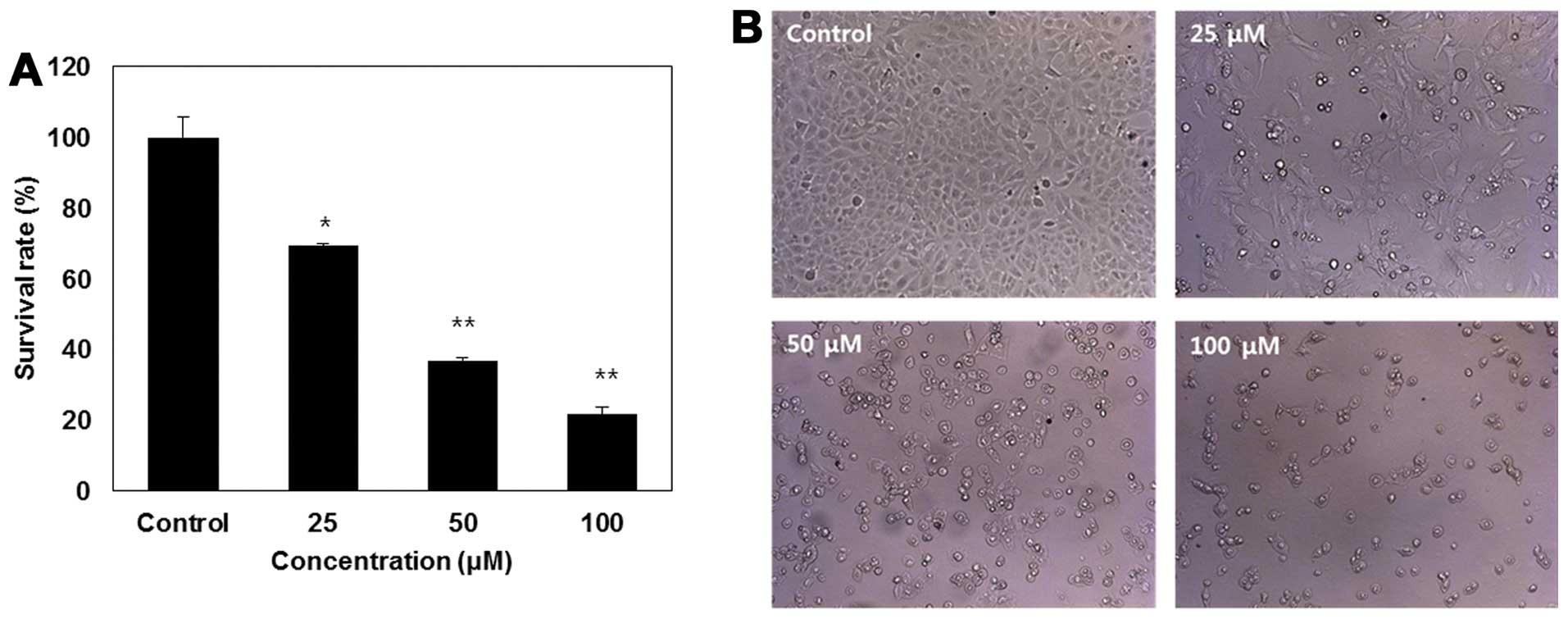
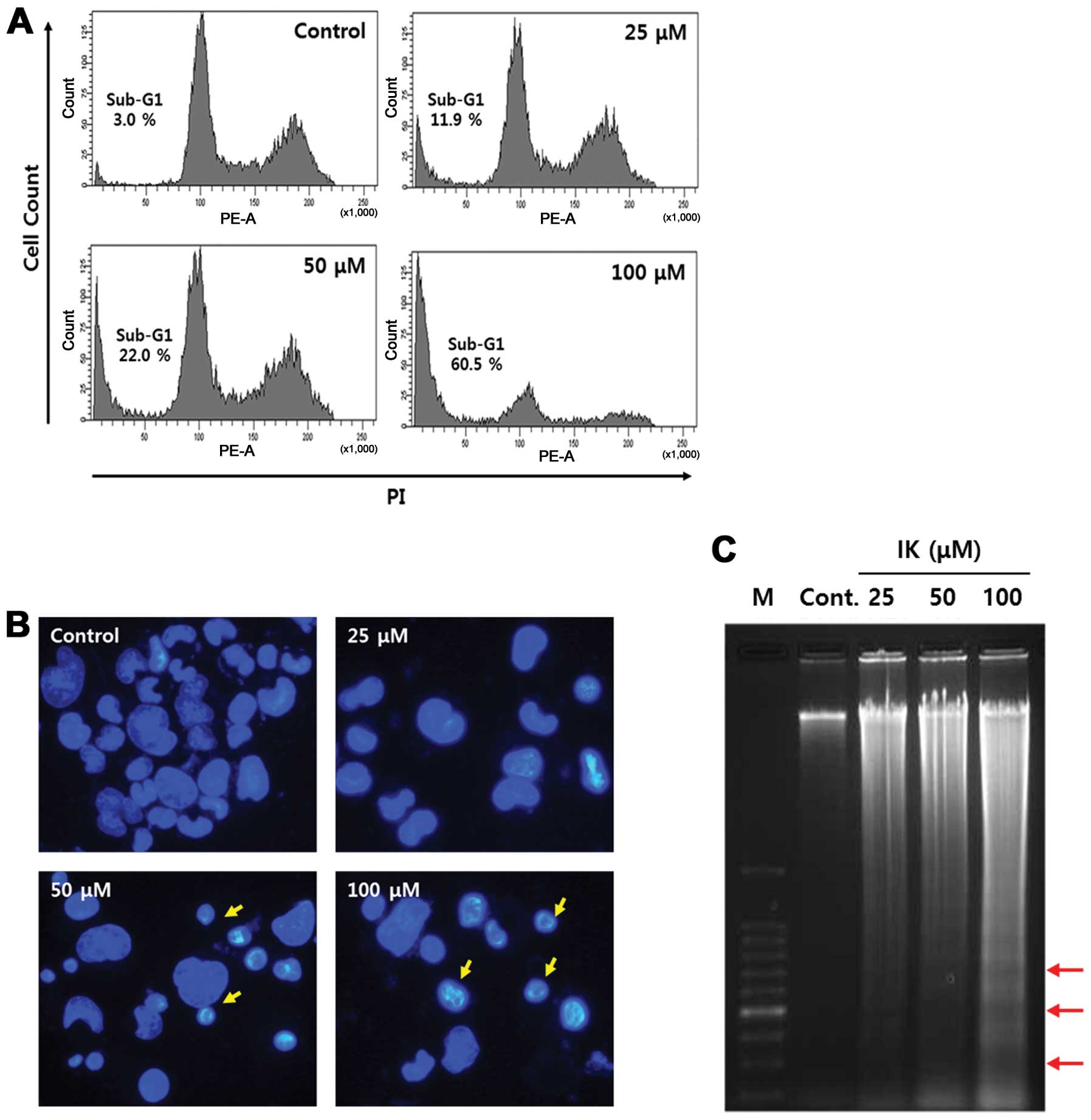
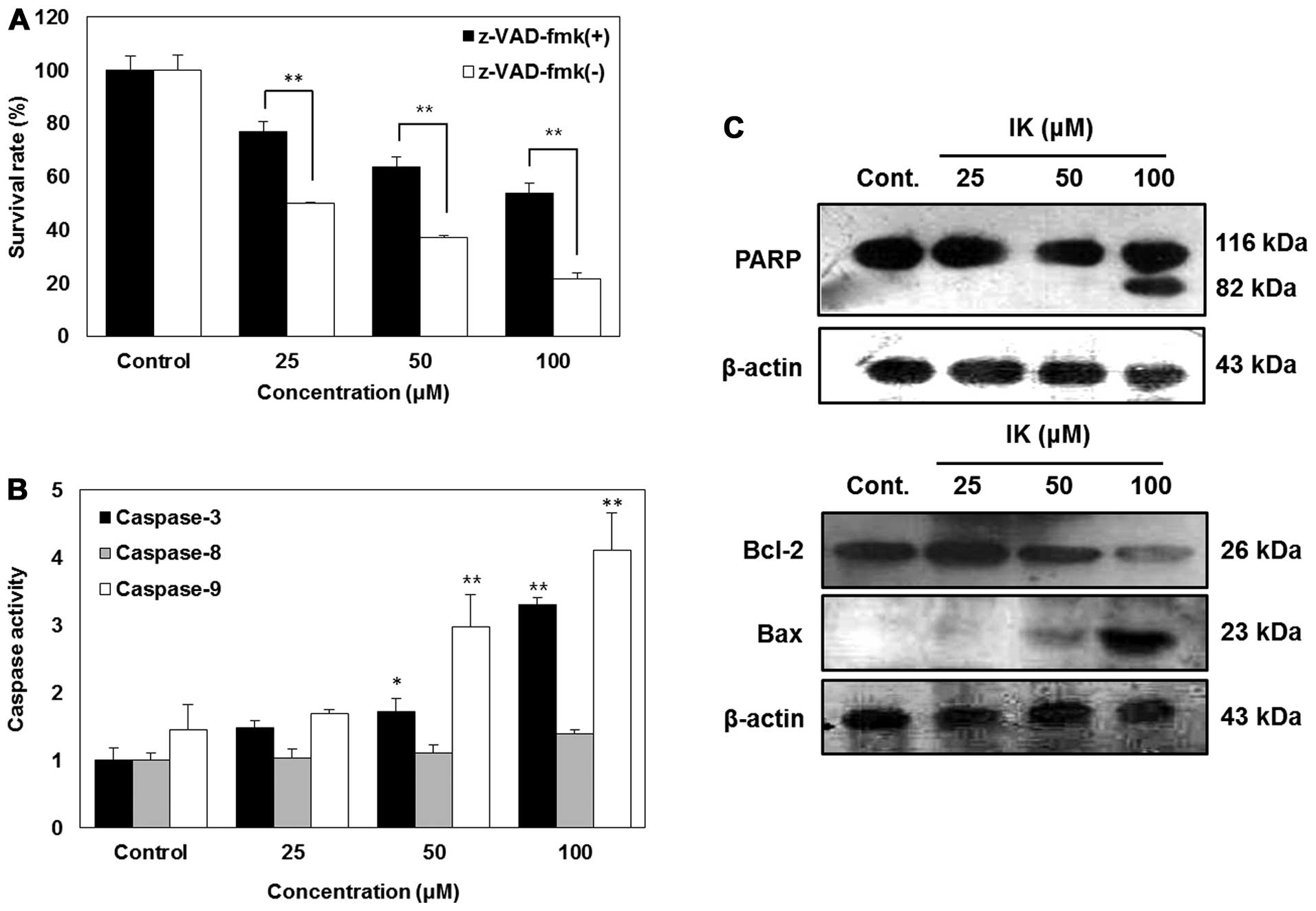
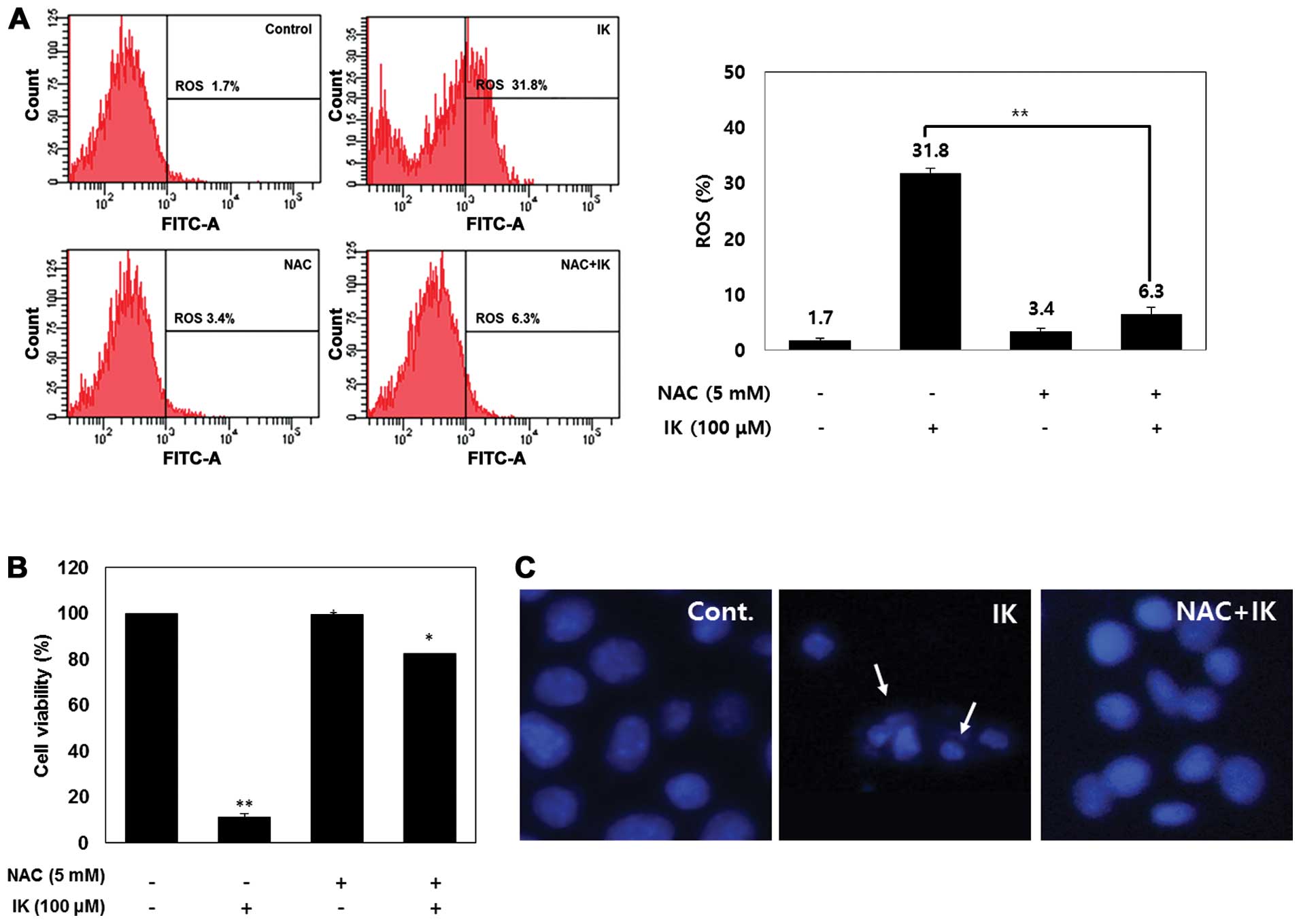
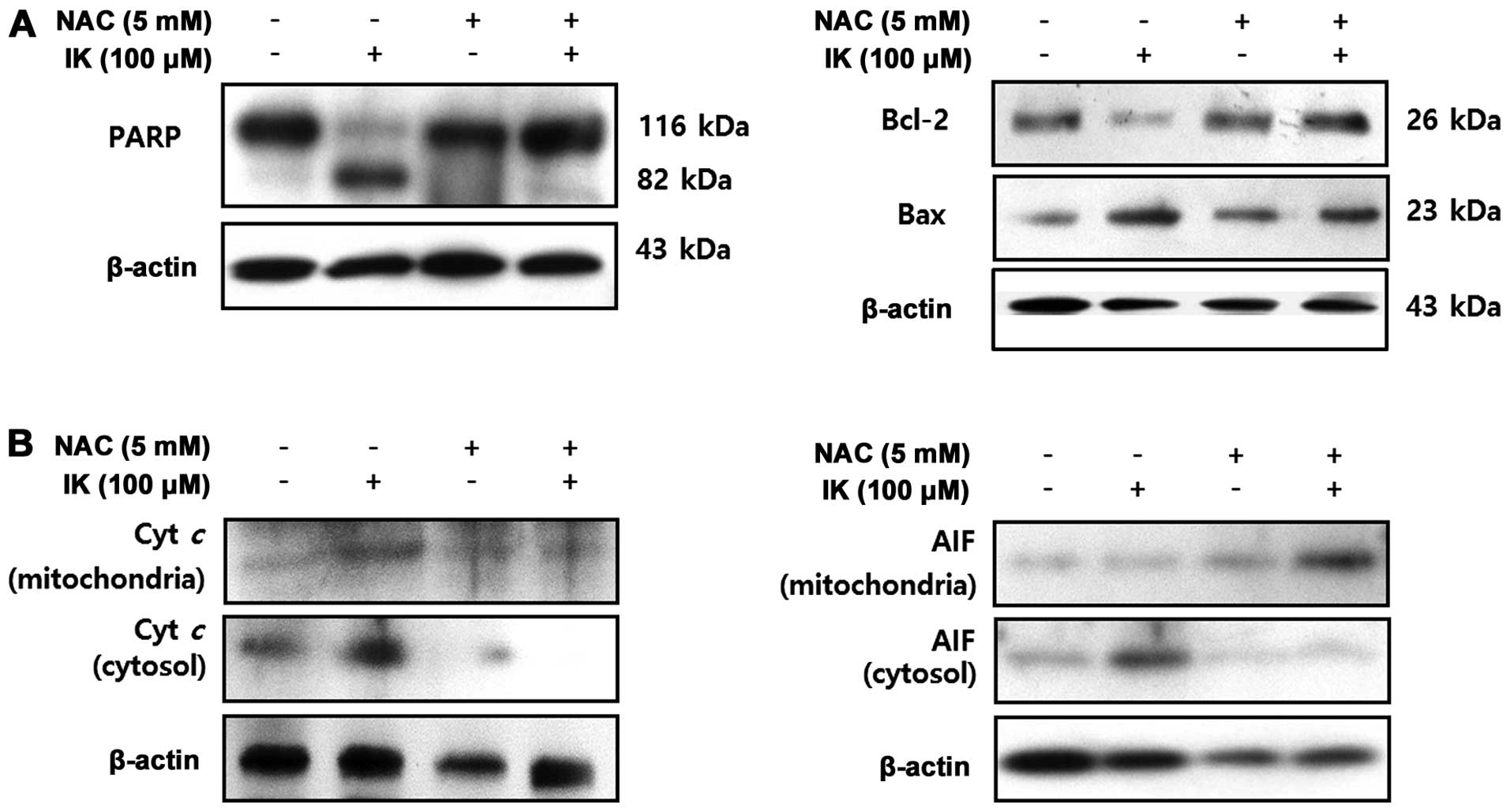
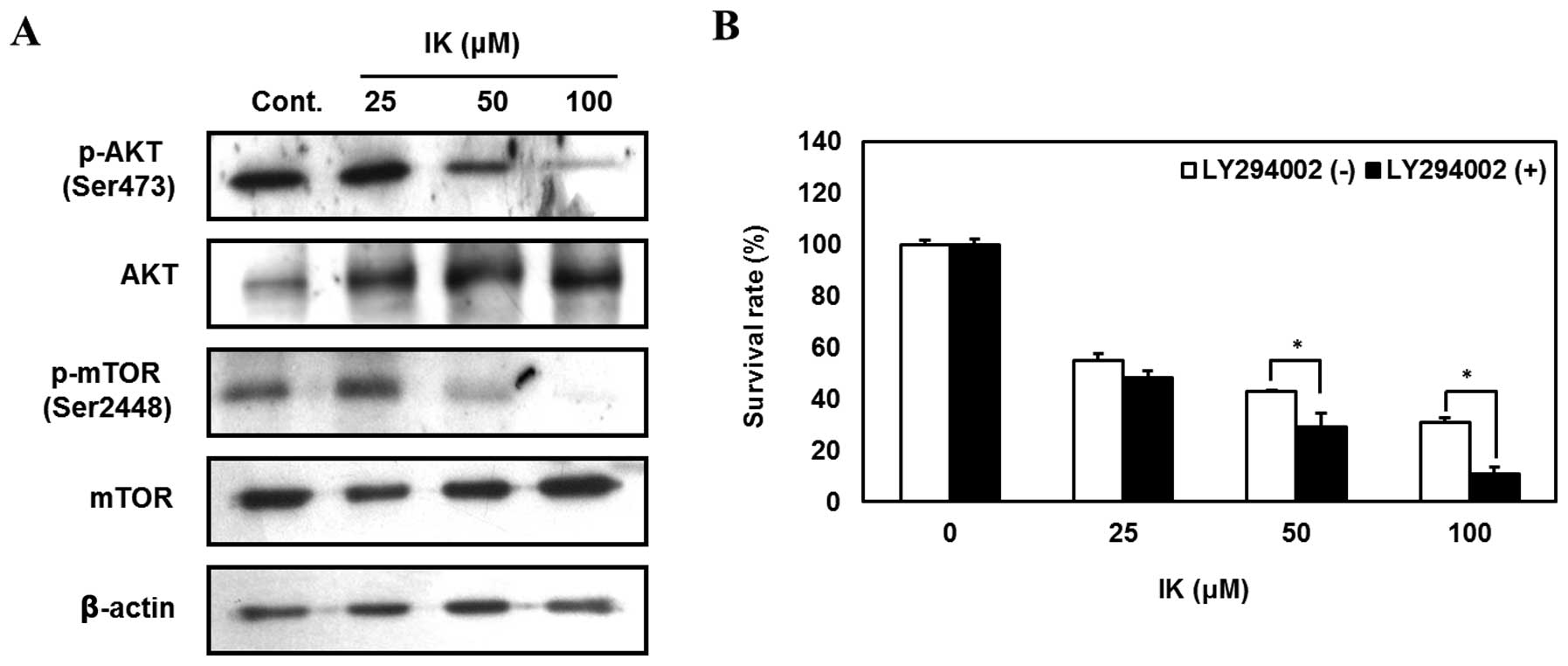
Isoegomaketone (IK) is a major biologically active component of Perilla frutescens. In this study, we investigated the contribution of reactive oxygen species (ROS) to IK-induced apoptosis in human melanoma SK-MEL-2 cells. We found that IK inhibited the proliferation of SK-MEL-2 human melanoma cells in a dose-dependent manner. IK also induced sub-G1 DNA accumulation, formation of apoptotic bodies, nuclear condensation, and a DNA ladder in SK-MEL-2 cells. IK also induced activation of caspase-3 and -9, whereas caspase‑8 was unaffected. Further, N-acetyl-L-cysteine (NAC, ROS scavenger) treatment to SK-MEL-2 cells significantly reduced IK-induced cell death. Pretreatment of NAC to SK-MEL-2 cells followed by 100 µM IK reduced the protein levels of Bax and cytochrome c as well as PARP cleavage, whereas the protein level of Bcl-2 increased. Moreover, IK inhibited the phosphorylation of AKT/mTOR protein and cell proliferation induced by LY294002, a PI3K inhibitor. In conclusion, IK-induced ROS generation regulates cell growth inhibition and it induces apoptosis through caspase‑dependent and -independent pathways via modulation of PI3K/AKT signaling in SK-MEL-2 cells.
View Figures

Figure 1

Figure 2

Figure 3

Figure 4

Figure 5

Figure 6

View References

1 

Park K, Nam D, Yun H, et al: B-caryophyllene oxide inhibits growth and induces apoptosis through the suppression of PI3K/AKT/mTOR/S6K1 pathways and ROS-mediated MAPKs activation. Cancer Lett. 312:178–188. 2011. View Article : Google Scholar : PubMed/NCBI

2 

Seo WH and Baek HH: Characteristic aroma-active compounds of korean perilla (perilla frutescens britton) leaf. J Agric Food Chem. 57:11537–11542. 2009. View Article : Google Scholar : PubMed/NCBI

3 

Choung M, Kwon Y and Kwak Y: Test of components related to quality in perilla leaves: II. test of volatile flavor components in perilla leaves. RDA J Agric Sci. 40:127–132. 1998.

4 

Lee B: Comparison of analytical methods for volatile flavor compounds in leaf of perilla frutescens. Korean J Crop Sci. 44:154–158. 1999.

5 

Lim S, Seo Y, Lee Y and Baek N: Isolation of volatile allelochemicals from leaves of perilla frutescens and artemisia asiatica. Agricult Chem Biotechnol. 37:115–123. 1994.

6 

Park YD, Jin CH, Choi DS, Byun M and Jeong IY: Biological evaluation of isoegomaketone isolated from perilla frutescens and its synthetic derivatives as anti-inflammatory agents. Arch Pharm Res. 34:1277–1282. 2011.PubMed/NCBI

7 

Cho BO, Jin CH, Park YD, Ryu HW, Byun MW, Seo KI and Jeong IY: Isoegomaketone induces apoptosis through caspase-dependent and caspase-independent pathways in human DLD1 cells. Biosci Biotechnol Biochem. 75:1306–1311. 2011. View Article : Google Scholar

8 

Devasagayam TP, Tilak JC, Boloor KK, Sane KS, Ghaskadbi SS and Lele RD: Free radicals and antioxidants in human health: current status and future prospects. J Assoc Physicians India. 52:794–804. 2004.PubMed/NCBI

9 

Simon H, Haj-Yehia A and Levi-Schaffer F: Role of reactive oxygen species (ROS) in apoptosis induction. Apoptosis. 5:415–418. 2000. View Article : Google Scholar : PubMed/NCBI

10 

Sander C, Hamm F, Elsner P and Thiele J: Oxidative stress in malignant melanoma and non-melanoma skin cancer. Br J Dermatol. 148:913–922. 2003. View Article : Google Scholar : PubMed/NCBI

11 

Ralph SJ, Rodríguez-Enríquez S, Neuzil J and Moreno-Sánchez R: Bioenergetic pathways in tumor mitochondria as targets for cancer therapy and the importance of the ROS-induced apoptotic trigger. Mol Aspects Med. 31:29–59. 2010. View Article : Google Scholar : PubMed/NCBI

12 

Raj L, Ide T, Gurkar AU, et al: Selective killing of cancer cells by a small molecule targeting the stress response to ROS. Nature. 475:231–234. 2011. View Article : Google Scholar : PubMed/NCBI

13 

Trachootham D, Alexandre J and Huang P: Targeting cancer cells by ROS-mediated mechanisms: a radical therapeutic approach? Nat Rev Drug Discov. 8:579–591. 2009. View Article : Google Scholar : PubMed/NCBI

14 

Morgensztern D and McLeod HL: PI3K/akt/mTOR pathway as a target for cancer therapy. Anticancer Drugs. 16:797–803. 2005. View Article : Google Scholar : PubMed/NCBI

15 

Yap TA, Garrett MD, Walton MI, Raynaud F, de Bono JS and Workman P: Targeting the PI3K-AKT-mTOR pathway: progress, pitfalls, and promises. Curr Opin Pharmacol. 8:393–412. 2008. View Article : Google Scholar : PubMed/NCBI

16 

Baselga J, Campone M, Piccart M, et al: Everolimus in postmenopausal hormone-receptor-positive advanced breast cancer. N Engl J Med. 366:520–529. 2012. View Article : Google Scholar : PubMed/NCBI

17 

Vara JÁF, Casado E, de Castro J, Cejas P, Belda-Iniesta C and González-Barón M: PI3K/akt signalling pathway and cancer. Cancer Treat Rev. 30:193–204. 2004.PubMed/NCBI

18 

Brugge J, Hung M and Mills GB: A new mutational aktivation in the PI3K pathway. Cancer Cell. 12:104–107. 2007. View Article : Google Scholar : PubMed/NCBI

19 

Agarwal R, Carey M, Hennessy B and Mills GB: PI3K pathway-directed therapeutic strategies in cancer. Curr Opin Investig Drugs. 11:615–628. 2010.PubMed/NCBI

20 

Lee Y, Jeong H, Kim Y, et al: Reactive oxygen species and PI3K/akt signaling play key roles in the induction of Nrf2-driven heme oxygenase-1 expression in sulforaphane-treated human mesothelioma MSTO-211H cells. Food Chem Toxicol. 50:116–123. 2012. View Article : Google Scholar : PubMed/NCBI

21 

Liu C, Gong K, Mao X and Li W: Tetrandrine induces apoptosis by activating reactive oxygen species and repressing akt activity in human hepatocellular carcinoma. Int J Cancer. 129:1519–1531. 2011. View Article : Google Scholar : PubMed/NCBI

22 

Mao X, Yu CR, Li WH and Li WX: Induction of apoptosis by shikonin through a ROS/JNK-mediated process in bcr/abl-positive chronic myelogenous leukemia (CML) cells. Cell Res. 18:879–888. 2008. View Article : Google Scholar : PubMed/NCBI

23 

Ka H, Park H, Jung H, Choi J, Cho K, Ha J and Lee K: Cinnamaldehyde induces apoptosis by ROS-mediated mitochondrial permeability transition in human promyelocytic leukemia HL-60 cells. Cancer Lett. 196:143–152. 2003. View Article : Google Scholar : PubMed/NCBI

24 

Jin CH, Lee HJ, Park YD, et al: Isoegomaketone inhibits lipopolysaccharide-induced nitric oxide production in RAW 264.7 macrophages through the heme oxygenase-1 induction and inhibition of the interferon-beta-STAT-1 pathway. J Agric Food Chem. 58:860–867. 2010. View Article : Google Scholar : PubMed/NCBI

25 

Skehan P, Storeng R, Scudiero D, et al: New colorimetric cytotoxicity assay for anticancer-drug screening. J Natl Cancer Inst. 82:1107–1112. 1990. View Article : Google Scholar : PubMed/NCBI

26 

Park SY, Cho SJ, Kwon HC, Lee KR, Rhee DK and Pyo S: Caspase-independent cell death by allicin in human epithelial carcinoma cells: involvement of PKA. Cancer Lett. 224:123–132. 2005. View Article : Google Scholar : PubMed/NCBI

27 

Ricote M, Garcia-Tunon I, Fraile B, Fernandez C, Aller P, Paniagua R and Royuela M: P38 MAPK protects against TNF-alpha-provoked apoptosis in LNCaP prostatic cancer cells. Apoptosis. 11:1969–1975. 2006. View Article : Google Scholar : PubMed/NCBI

28 

Kim JY, Park KW, Moon KD, et al: Induction of apoptosis in HT-29 colon cancer cells by crude saponin from platycodi radix. Food Chem Toxicol. 46:3753–3758. 2008. View Article : Google Scholar : PubMed/NCBI

29 

Kuo PL, Hsu YL, Chang CH and Lin CC: The mechanism of ellipticine-induced apoptosis and cell cycle arrest in human breast MCF-7 cancer cells. Cancer Lett. 223:293–301. 2005. View Article : Google Scholar : PubMed/NCBI

30 

Chen CY, Liu TZ, Liu YW, et al: 6-shogaol (alkanone from ginger) induces apoptotic cell death of human hepatoma p53 mutant mahlavu subline via an oxidative stress-mediated caspase-dependent mechanism. J Agric Food Chem. 55:948–954. 2007. View Article : Google Scholar

31 

Wan CK, Wang C, Cheung HY, Yang M and Fong WF: Triptolide induces bcl-2 cleavage and mitochondria dependent apoptosis in p53-deficient HL-60 cells. Cancer Lett. 241:31–41. 2006. View Article : Google Scholar : PubMed/NCBI

32 

Alnemri ES, Livingston DJ, Nicholson DW, Salvesen G, Thornberry NA, Wong WW and Yuan J: Human ICE/CED-3 protease nomenclature. Cell. 87:1711996. View Article : Google Scholar : PubMed/NCBI

33 

Tsujimoto Y: Role of bcl-2 family proteins in apoptosis: apoptosomes or mitochondria? Genes Cells. 3:697–707. 1998. View Article : Google Scholar : PubMed/NCBI

34 

Candé C, Cecconi F, Dessen P and Kroemer G: Apoptosis-inducing factor (AIF): key to the conserved caspase-independent pathways of cell death? J Cell Sci. 115:4727–4734. 2002.PubMed/NCBI

35 

Alvarez M, Roman E, Santos ES and Raez LE: New targets for non-small-cell lung cancer therapy. Expert Rev Anticancer Ther. 7:1423–1437. 2007. View Article : Google Scholar : PubMed/NCBI

36 

Di Cosimo S, Scaltriti M, Val D, et al: The PI3-K/AKT/mTOR pathway as a target for breast cancer therapy. J Clin Oncol. 25(Suppl 18): 35112007.PubMed/NCBI

37 

Lin C, Kuo C, Wang J, Cheng J, Huang Z and Chen C: Growth inhibitory and apoptosis inducing effect of Perilla frutescens extract on human hepatoma HepG2 cells. J Ethnopharmacol. 112:557–567. 2007. View Article : Google Scholar

38 

Osakabe N, Yasuda A, Natsume M and Yoshikawa T: Rosmarinic acid inhibits epidermal inflammatory responses: anticarcinogenic effect of perilla frutescens extract in the murine two-stage skin model. Carcinogenesis. 25:549–557. 2004. View Article : Google Scholar : PubMed/NCBI

39 

Budihardjo I, Oliver H, Lutter M, Luo X and Wang X: Biochemical pathways of caspase activation during apoptosis. Annu Rev Cell Dev Biol. 15:269–290. 1999. View Article : Google Scholar : PubMed/NCBI

40 

Earnshaw WC, Martins LM and Kaufmann SH: Mammalian caspases: structure, activation, substrates, and functions during apoptosis. Annu Rev Biochem. 68:383–424. 1999. View Article : Google Scholar : PubMed/NCBI

41 

Köhler C, Orrenius S and Zhivotovsky B: Evaluation of caspase activity in apoptotic cells. J Immunol Methods. 265:97–110. 2002.

42 

Susin SA, Lorenzo HK, Zamzami N, et al: Molecular characterization of mitochondrial apoptosis-inducing factor. Nature. 397:441–446. 1999. View Article : Google Scholar : PubMed/NCBI

43 

Su C, Lin J, Li T, et al: Curcumin-induced apoptosis of human colon cancer colo 205 cells through the production of ROS, Ca2 and the activation of caspase-3. Anticancer Res. 26:4379–4389. 2006.PubMed/NCBI

44 

Hwang J, Ha J, Park I, Lee S, Baik HW, Kim YM and Park OJ: Apoptotic effect of EGCG in HT-29 colon cancer cells via AMPK signal pathway. Cancer Lett. 247:115–121. 2007. View Article : Google Scholar : PubMed/NCBI

45 

Huang J, Wu L, Tashiro S, Onodera S and Ikejima T: Reactive oxygen species mediate oridonin-induced HepG2 apoptosis through p53, MAPK, and mitochondrial signaling pathways. J Pharmacol Sci. 107:370–379. 2008. View Article : Google Scholar : PubMed/NCBI

46 

Chen Q, Wang Y, Xu K, et al: Curcumin induces apoptosis in human lung adenocarcinoma A549 cells through a reactive oxygen species-dependent mitochondrial signaling pathway. Oncol Rep. 23:397–403. 2010. View Article : Google Scholar

47 

Slee EA, Harte MT, Kluck RM, et al: Ordering the cytochrome c-initiated caspase cascade: hierarchical activation of caspases-2,-3,-6,-7,-8, and-10 in a caspase-9-dependent manner. J Cell Biol. 144:281–292. 1999.PubMed/NCBI

48 

Brunet A, Datta SR and Greenberg ME: Transcription-dependent and-independent control of neuronal survival by the PI3K-Akt signaling pathway. Curr Opin Neurobiol. 11:297–305. 2001. View Article : Google Scholar : PubMed/NCBI

49 

Madhunapantula SV, Mosca PJ and Robertson GP: The akt signaling pathway: an emerging therapeutic target in malignant melanoma. Cancer Biol Ther. 12:1032–1049. 2011. View Article : Google Scholar : PubMed/NCBI

50 

Chang F, Lee J, Navolanic P, et al: Involvement of PI3K/akt pathway in cell cycle progression, apoptosis, and neoplastic transformation: a target for cancer chemotherapy. Leukemia. 17:590–603. 2003. View Article : Google Scholar : PubMed/NCBI

51 

Osaki M, Oshimura Ma and Ito H: PI3K-akt pathway: its functions and alterations in human cancer. Apoptosis. 9:667–676. 2004. View Article : Google Scholar : PubMed/NCBI

Related Articles

  • Abstract
  • View
  • Download
  • Twitter
Copy and paste a formatted citation
Spandidos Publications style
Kwon S, Lee J, Moon K, Jeong I, Yee S, Lee M and Seo K: Isoegomaketone induces apoptosis in SK-MEL-2 human melanoma cells through mitochondrial apoptotic pathway via activating the PI3K/Akt pathway. Int J Oncol 45: 1969-1976, 2014.
APA
Kwon, S., Lee, J., Moon, K., Jeong, I., Yee, S., Lee, M., & Seo, K. (2014). Isoegomaketone induces apoptosis in SK-MEL-2 human melanoma cells through mitochondrial apoptotic pathway via activating the PI3K/Akt pathway. International Journal of Oncology, 45, 1969-1976. https://doi.org/10.3892/ijo.2014.2598
MLA
Kwon, S., Lee, J., Moon, K., Jeong, I., Yee, S., Lee, M., Seo, K."Isoegomaketone induces apoptosis in SK-MEL-2 human melanoma cells through mitochondrial apoptotic pathway via activating the PI3K/Akt pathway". International Journal of Oncology 45.5 (2014): 1969-1976.
Chicago
Kwon, S., Lee, J., Moon, K., Jeong, I., Yee, S., Lee, M., Seo, K."Isoegomaketone induces apoptosis in SK-MEL-2 human melanoma cells through mitochondrial apoptotic pathway via activating the PI3K/Akt pathway". International Journal of Oncology 45, no. 5 (2014): 1969-1976. https://doi.org/10.3892/ijo.2014.2598
Copy and paste a formatted citation
x
Spandidos Publications style
Kwon S, Lee J, Moon K, Jeong I, Yee S, Lee M and Seo K: Isoegomaketone induces apoptosis in SK-MEL-2 human melanoma cells through mitochondrial apoptotic pathway via activating the PI3K/Akt pathway. Int J Oncol 45: 1969-1976, 2014.
APA
Kwon, S., Lee, J., Moon, K., Jeong, I., Yee, S., Lee, M., & Seo, K. (2014). Isoegomaketone induces apoptosis in SK-MEL-2 human melanoma cells through mitochondrial apoptotic pathway via activating the PI3K/Akt pathway. International Journal of Oncology, 45, 1969-1976. https://doi.org/10.3892/ijo.2014.2598
MLA
Kwon, S., Lee, J., Moon, K., Jeong, I., Yee, S., Lee, M., Seo, K."Isoegomaketone induces apoptosis in SK-MEL-2 human melanoma cells through mitochondrial apoptotic pathway via activating the PI3K/Akt pathway". International Journal of Oncology 45.5 (2014): 1969-1976.
Chicago
Kwon, S., Lee, J., Moon, K., Jeong, I., Yee, S., Lee, M., Seo, K."Isoegomaketone induces apoptosis in SK-MEL-2 human melanoma cells through mitochondrial apoptotic pathway via activating the PI3K/Akt pathway". International Journal of Oncology 45, no. 5 (2014): 1969-1976. https://doi.org/10.3892/ijo.2014.2598
Follow us
  • Twitter
  • LinkedIn
  • Facebook
About
  • Spandidos Publications
  • Careers
  • Cookie Policy
  • Privacy Policy
How can we help?
  • Help
  • Live Chat
  • Contact
  • Email to our Support Team