Spandidos Publications Logo
  • About
    • About Spandidos
    • Aims and Scopes
    • Abstracting and Indexing
    • Editorial Policies
    • Reprints and Permissions
    • Job Opportunities
    • Terms and Conditions
    • Contact
  • Journals
    • All Journals
    • Oncology Letters
      • Oncology Letters
      • Information for Authors
      • Editorial Policies
      • Editorial Board
      • Aims and Scope
      • Abstracting and Indexing
      • Bibliographic Information
      • Archive
    • International Journal of Oncology
      • International Journal of Oncology
      • Information for Authors
      • Editorial Policies
      • Editorial Board
      • Aims and Scope
      • Abstracting and Indexing
      • Bibliographic Information
      • Archive
    • Molecular and Clinical Oncology
      • Molecular and Clinical Oncology
      • Information for Authors
      • Editorial Policies
      • Editorial Board
      • Aims and Scope
      • Abstracting and Indexing
      • Bibliographic Information
      • Archive
    • Experimental and Therapeutic Medicine
      • Experimental and Therapeutic Medicine
      • Information for Authors
      • Editorial Policies
      • Editorial Board
      • Aims and Scope
      • Abstracting and Indexing
      • Bibliographic Information
      • Archive
    • International Journal of Molecular Medicine
      • International Journal of Molecular Medicine
      • Information for Authors
      • Editorial Policies
      • Editorial Board
      • Aims and Scope
      • Abstracting and Indexing
      • Bibliographic Information
      • Archive
    • Biomedical Reports
      • Biomedical Reports
      • Information for Authors
      • Editorial Policies
      • Editorial Board
      • Aims and Scope
      • Abstracting and Indexing
      • Bibliographic Information
      • Archive
    • Oncology Reports
      • Oncology Reports
      • Information for Authors
      • Editorial Policies
      • Editorial Board
      • Aims and Scope
      • Abstracting and Indexing
      • Bibliographic Information
      • Archive
    • Molecular Medicine Reports
      • Molecular Medicine Reports
      • Information for Authors
      • Editorial Policies
      • Editorial Board
      • Aims and Scope
      • Abstracting and Indexing
      • Bibliographic Information
      • Archive
    • World Academy of Sciences Journal
      • World Academy of Sciences Journal
      • Information for Authors
      • Editorial Policies
      • Editorial Board
      • Aims and Scope
      • Abstracting and Indexing
      • Bibliographic Information
      • Archive
    • International Journal of Functional Nutrition
      • International Journal of Functional Nutrition
      • Information for Authors
      • Editorial Policies
      • Editorial Board
      • Aims and Scope
      • Abstracting and Indexing
      • Bibliographic Information
      • Archive
    • International Journal of Epigenetics
      • International Journal of Epigenetics
      • Information for Authors
      • Editorial Policies
      • Editorial Board
      • Aims and Scope
      • Abstracting and Indexing
      • Bibliographic Information
      • Archive
    • Medicine International
      • Medicine International
      • Information for Authors
      • Editorial Policies
      • Editorial Board
      • Aims and Scope
      • Abstracting and Indexing
      • Bibliographic Information
      • Archive
  • Articles
  • Information
    • Information for Authors
    • Information for Reviewers
    • Information for Librarians
    • Information for Advertisers
    • Conferences
  • Language Editing
Spandidos Publications Logo
  • About
    • About Spandidos
    • Aims and Scopes
    • Abstracting and Indexing
    • Editorial Policies
    • Reprints and Permissions
    • Job Opportunities
    • Terms and Conditions
    • Contact
  • Journals
    • All Journals
    • Biomedical Reports
      • Information for Authors
      • Editorial Policies
      • Editorial Board
      • Aims and Scope
      • Abstracting and Indexing
      • Bibliographic Information
      • Archive
    • Experimental and Therapeutic Medicine
      • Information for Authors
      • Editorial Policies
      • Editorial Board
      • Aims and Scope
      • Abstracting and Indexing
      • Bibliographic Information
      • Archive
    • International Journal of Epigenetics
      • Information for Authors
      • Editorial Policies
      • Editorial Board
      • Aims and Scope
      • Abstracting and Indexing
      • Bibliographic Information
      • Archive
    • International Journal of Functional Nutrition
      • Information for Authors
      • Editorial Policies
      • Editorial Board
      • Aims and Scope
      • Abstracting and Indexing
      • Bibliographic Information
      • Archive
    • International Journal of Molecular Medicine
      • Information for Authors
      • Editorial Policies
      • Editorial Board
      • Aims and Scope
      • Abstracting and Indexing
      • Bibliographic Information
      • Archive
    • International Journal of Oncology
      • Information for Authors
      • Editorial Policies
      • Editorial Board
      • Aims and Scope
      • Abstracting and Indexing
      • Bibliographic Information
      • Archive
    • Medicine International
      • Information for Authors
      • Editorial Policies
      • Editorial Board
      • Aims and Scope
      • Abstracting and Indexing
      • Bibliographic Information
      • Archive
    • Molecular and Clinical Oncology
      • Information for Authors
      • Editorial Policies
      • Editorial Board
      • Aims and Scope
      • Abstracting and Indexing
      • Bibliographic Information
      • Archive
    • Molecular Medicine Reports
      • Information for Authors
      • Editorial Policies
      • Editorial Board
      • Aims and Scope
      • Abstracting and Indexing
      • Bibliographic Information
      • Archive
    • Oncology Letters
      • Information for Authors
      • Editorial Policies
      • Editorial Board
      • Aims and Scope
      • Abstracting and Indexing
      • Bibliographic Information
      • Archive
    • Oncology Reports
      • Information for Authors
      • Editorial Policies
      • Editorial Board
      • Aims and Scope
      • Abstracting and Indexing
      • Bibliographic Information
      • Archive
    • World Academy of Sciences Journal
      • Information for Authors
      • Editorial Policies
      • Editorial Board
      • Aims and Scope
      • Abstracting and Indexing
      • Bibliographic Information
      • Archive
  • Articles
  • Information
    • For Authors
    • For Reviewers
    • For Librarians
    • For Advertisers
    • Conferences
  • Language Editing
Login Register Submit
  • This site uses cookies
  • You can change your cookie settings at any time by following the instructions in our Cookie Policy. To find out more, you may read our Privacy Policy.

    I agree
Search articles by DOI, keyword, author or affiliation
Search
Advanced Search
presentation
International Journal of Oncology
Join Editorial Board Propose a Special Issue
Print ISSN: 1019-6439 Online ISSN: 1791-2423
Journal Cover
November-2018 Volume 53 Issue 5

Full Size Image

Cover Legend PDF

Sign up for eToc alerts
Recommend to Library

Journals

International Journal of Molecular Medicine

International Journal of Molecular Medicine

International Journal of Molecular Medicine is an international journal devoted to molecular mechanisms of human disease.

International Journal of Oncology

International Journal of Oncology

International Journal of Oncology is an international journal devoted to oncology research and cancer treatment.

Molecular Medicine Reports

Molecular Medicine Reports

Covers molecular medicine topics such as pharmacology, pathology, genetics, neuroscience, infectious diseases, molecular cardiology, and molecular surgery.

Oncology Reports

Oncology Reports

Oncology Reports is an international journal devoted to fundamental and applied research in Oncology.

Experimental and Therapeutic Medicine

Experimental and Therapeutic Medicine

Experimental and Therapeutic Medicine is an international journal devoted to laboratory and clinical medicine.

Oncology Letters

Oncology Letters

Oncology Letters is an international journal devoted to Experimental and Clinical Oncology.

Biomedical Reports

Biomedical Reports

Explores a wide range of biological and medical fields, including pharmacology, genetics, microbiology, neuroscience, and molecular cardiology.

Molecular and Clinical Oncology

Molecular and Clinical Oncology

International journal addressing all aspects of oncology research, from tumorigenesis and oncogenes to chemotherapy and metastasis.

World Academy of Sciences Journal

World Academy of Sciences Journal

Multidisciplinary open-access journal spanning biochemistry, genetics, neuroscience, environmental health, and synthetic biology.

International Journal of Functional Nutrition

International Journal of Functional Nutrition

Open-access journal combining biochemistry, pharmacology, immunology, and genetics to advance health through functional nutrition.

International Journal of Epigenetics

International Journal of Epigenetics

Publishes open-access research on using epigenetics to advance understanding and treatment of human disease.

Medicine International

Medicine International

An International Open Access Journal Devoted to General Medicine.

Journal Cover
November-2018 Volume 53 Issue 5

Full Size Image

Cover Legend PDF

Sign up for eToc alerts
Recommend to Library

  • Article
  • Citations
    • Cite This Article
    • Download Citation
    • Create Citation Alert
    • Remove Citation Alert
    • Cited By
  • Similar Articles
    • Related Articles (in Spandidos Publications)
    • Similar Articles (Google Scholar)
    • Similar Articles (PubMed)
  • Download PDF
  • Download XML
  • View XML
Article Open Access

Inhibition of atypical protein kinase C‑ι effectively reduces the malignancy of prostate cancer cells by downregulating the NF-κB signaling cascade

  • Authors:
    • André H. Apostolatos
    • Wishrawana S. Ratnayake
    • Hla Win-Piazza
    • Christopher A. Apostolatos
    • Tracess Smalley
    • Loveleen Kang
    • Raoul Salup
    • Robert Hill
    • Mildred Acevedo-Duncan
  • View Affiliations / Copyright

    Affiliations: Department of Chemistry, University of South Florida, Tampa, FL 33620, USA, Department of Cell Biology, Microbiology and Molecular Biology, University of South Florida, Tampa, FL 33620, USA
    Copyright: © Apostolatos et al. This is an open access article distributed under the terms of Creative Commons Attribution License.
  • Pages: 1836-1846
    |
    Published online on: August 28, 2018
       https://doi.org/10.3892/ijo.2018.4542
  • Expand metrics +
Metrics: Total Views: 0 (Spandidos Publications: | PMC Statistics: )
Metrics: Total PDF Downloads: 0 (Spandidos Publications: | PMC Statistics: )
Cited By (CrossRef): 0 citations Loading Articles...

This article is mentioned in:


Abstract

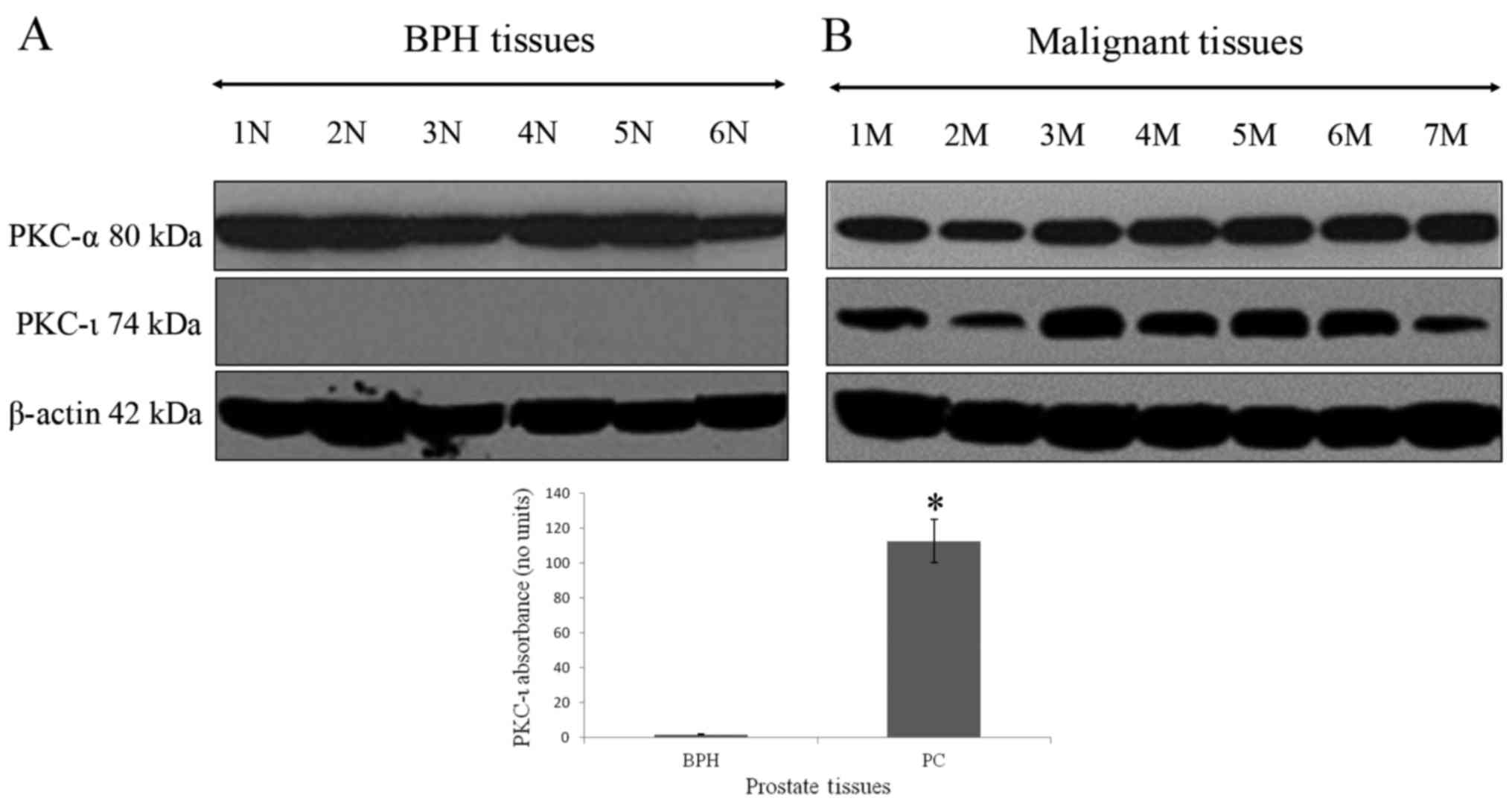
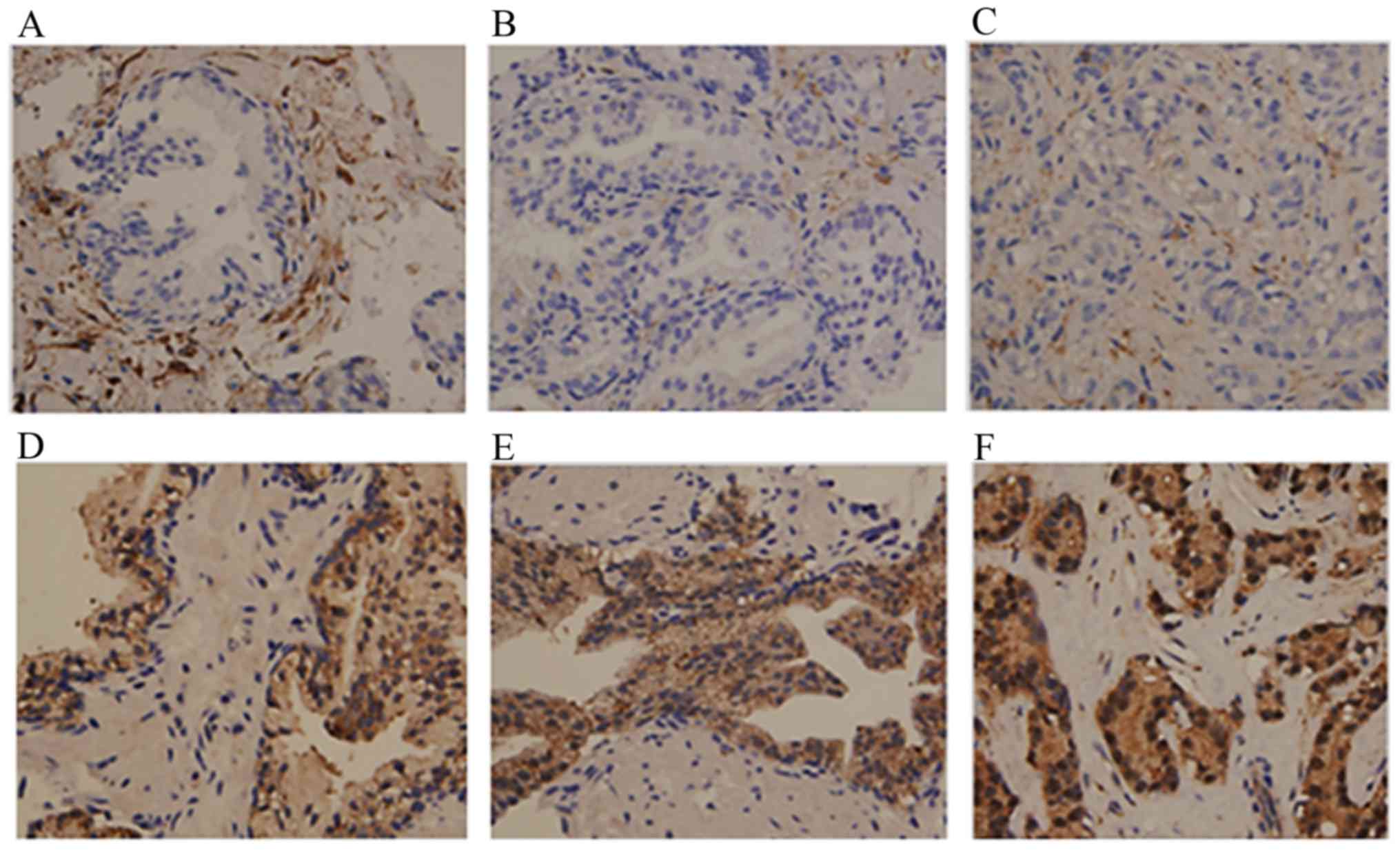
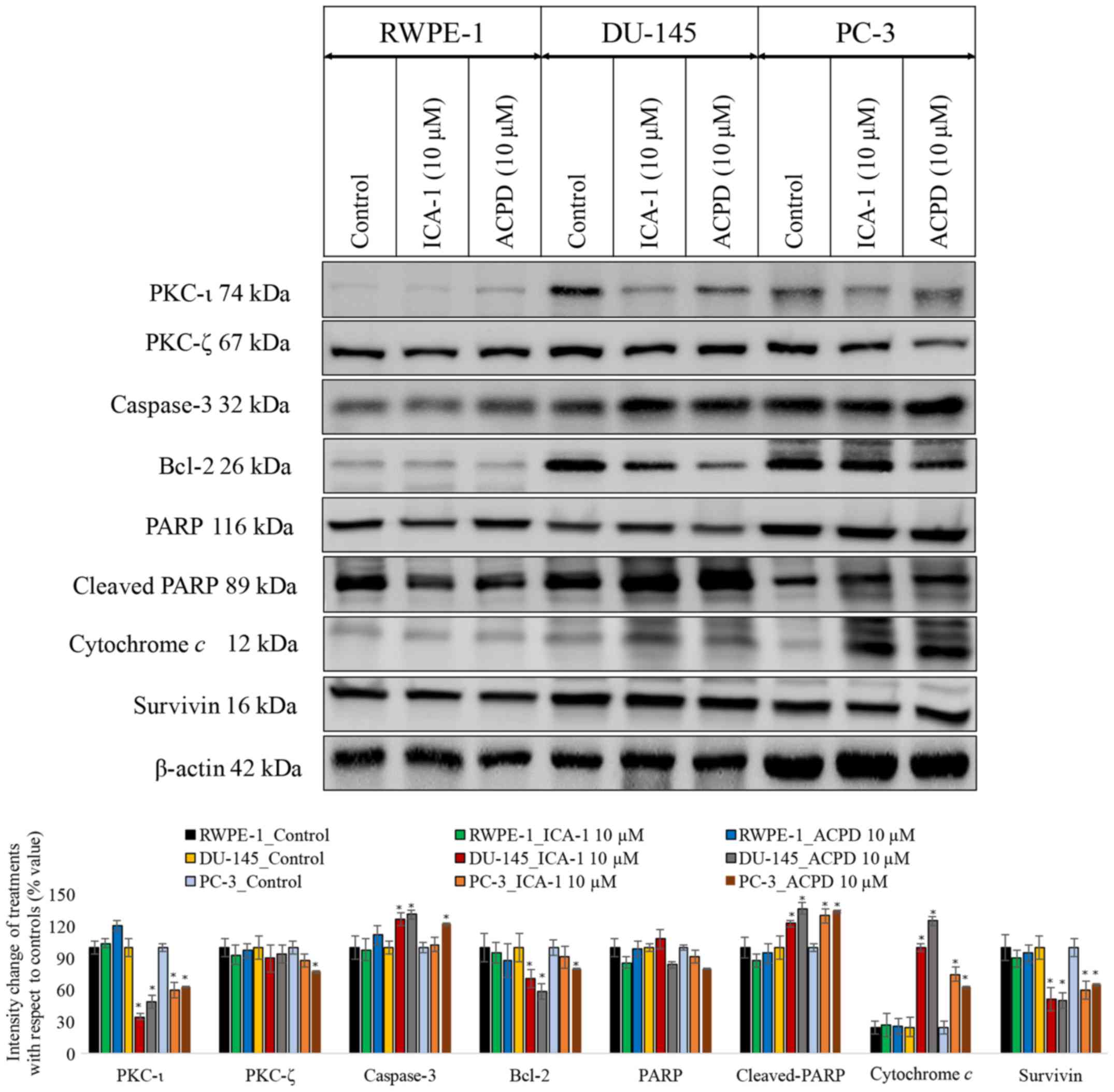
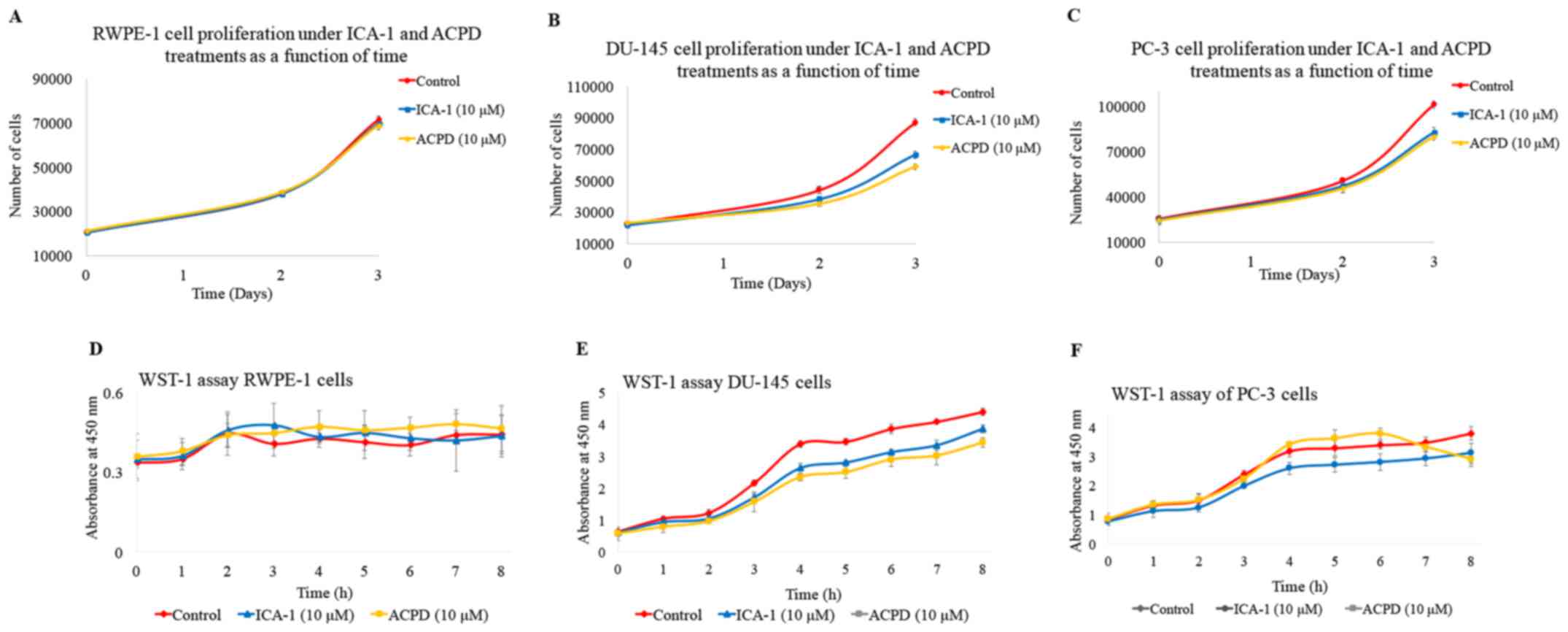
Prostate cancer (PC) is the most common type of cancer among men. Aggressive and metastatic PC results in life-threatening tumors, and represents one of the leading causes of mortality in men. Previous studies of atypical protein kinase C isoforms (aPKCs) have highlighted its role in the survival of cultured prostate cells via the nuclear factor (NF)-κB pathway. The present study showed that PKC‑ι was overexpressed in PC samples collected from cancer patients but not in non-invasive prostate tissues, indicating PKC‑ι as a possible prognostic biomarker for the progression of prostate carcinogenesis. Immunohistochemical staining further confirmed the association between PKC‑ι and the prostate malignancy. The DU‑145 and PC‑3 PC cell lines, and the non-neoplastic RWPE‑1 prostatic epithelial cell line were cultured and treated with aPKC inhibitors 2‑acetyl‑1,3-cyclopentanedione (ACPD) and 5-amino‑1-(1R,2S,3S,4R)-2,3-dihydroxy-4-methylcyclopentyl)‑1H-imidazole-4-carboxamide (ICA‑1). Western blot data demonstrated that ICA‑1 was an effective and specific inhibitor of PKC‑ι and that ACPD inhibited PKC‑ι and PKC‑ζ. Furthermore, the two inhibitors significantly decreased malignant cell proliferation and induced apoptosis. The inhibitors showed no significant cytotoxicity towards the RWPE‑1 cells, but exhibited cytostatic effects on the DU‑145 and PC‑3 cells prior to inducing apoptosis. The inhibition of aPKCs significantly reduced the translocation of NF-κB to the nucleus. Furthermore, this inhibition promoted apoptosis, reduced signaling for cell survival, and reduced the proliferation of PC cells, whereas the normal prostate epithelial cells were relatively unaffected. Overall, the results suggested that PKC‑ι and PKC‑ζ are essential for the progression of PC, and that ACPD and ICA‑1 can be effectively used as potential inhibitors in targeted therapy.
View Figures

Figure 1

Figure 2

Figure 3

Figure 4

Figure 5

Figure 6

Figure 7

View References

1 

American Cancer Society: Key statistics for prostate cancer. Prostate Cancer Facts. https://www.cancer.org/cancer/prostate-cancer/about/key-statistics.html

2 

Kume H, Kawai T, Nagata M, Azuma T, Miyazaki H, Suzuki M, Fujimura T, Nakagawa T, Fukuhara H and Homma Y: Intermittent docetaxel chemotherapy is feasible for castration-resistant prostate cancer. Mol Clin Oncol. 3:303–307. 2015. View Article : Google Scholar : PubMed/NCBI

3 

Kharaziha P, Chioureas D, Rutishauser D, Baltatzis G, Lennartsson L, Fonseca P, Azimi A, Hultenby K, Zubarev R, Ullén A, et al: Molecular profiling of prostate cancer derived exosomes may reveal a predictive signature for response to docetaxel. Oncotarget. 6:21740–21754. 2015. View Article : Google Scholar : PubMed/NCBI

4 

Newton AC: Protein kinase C: Poised to signal. Am J Physiol Endocrinol Metab. 298:E395–E402. 2010. View Article : Google Scholar :

5 

Nishizuka Y: Intracellular signaling by hydrolysis of phospholipids and activation of protein kinase C. Science. 258:607–614. 1992. View Article : Google Scholar : PubMed/NCBI

6 

Selbie LA, Schmitz-Peiffer C, Sheng Y and Biden TJ: Molecular cloning and characterization of PKC iota, an atypical isoform of protein kinase C derived from insulin-secreting cells. J Biol Chem. 268:24296–24302. 1993.PubMed/NCBI

7 

Hirai T, Niino YS and Chida K: PKC zeta II, a small molecule of protein kinase C zeta, specifically expressed in the mouse brain. Neurosci Lett. 348:151–154. 2003. View Article : Google Scholar : PubMed/NCBI

8 

Hayashi A, Seki N, Hattori A, Kozuma S and Saito T: PKCnu, a new member of the protein kinase C family, composes a fourth subfamily with PKCmu. Biochim Biophys Acta. 1450:99–106. 1999. View Article : Google Scholar : PubMed/NCBI

9 

Persons DA, Wilkison WO, Bell RM and Finn OJ: Altered growth regulation and enhanced tumorigenicity of NIH 3T3 fibroblasts transfected with protein kinase C-I cDNA. Cell. 52:447–458. 1988. View Article : Google Scholar : PubMed/NCBI

10 

Housey GM, Johnson MD, Hsiao WL, O’Brian CA, Murphy JP, Kirschmeier P and Weinstein IB: Overproduction of protein kinase C causes disordered growth control in rat fibroblasts. Cell. 52:343–354. 1988. View Article : Google Scholar : PubMed/NCBI

11 

Kamata T, Sullivan NF and Wooten MW: Reduced protein kinase C activity in a ras-resistant cell line derived from Ki-MSV transformed cells. Oncogene. 1:37–46. 1987.PubMed/NCBI

12 

Weyman CM, Taparowsky EJ, Wolfson M and Ashendel CL: Partial down-regulation of protein kinase C in C3H 10T 1/2 mouse fibroblasts transfected with the human Ha-ras oncogene. Cancer Res. 48:6535–6541. 1988.PubMed/NCBI

13 

Mizuguchi J, Nakabayashi H, Yoshida Y, Huang KP, Uchida T, Sasaki T, Ohno S and Suzuki K: Increased degradation of protein kinase C without diminution of mRNA level after treatment of WEHI-231 B lymphoma cells with phorbol esters. Biochem Biophys Res Commun. 155:1311–1317. 1988. View Article : Google Scholar : PubMed/NCBI

14 

Hudes GR: Signaling inhibitors in the treatment of prostate cancer. Invest New Drugs. 20:159–172. 2002. View Article : Google Scholar : PubMed/NCBI

15 

Wu D, Thakore CU, Wescott GG, McCubrey JA and Terrian DM: Integrin signaling links protein kinase Cepsilon to the protein kinase B/Akt survival pathway in recurrent prostate cancer cells. Oncogene. 23:8659–8672. 2004. View Article : Google Scholar : PubMed/NCBI

16 

Rusnak JM and Lazo JS: Downregulation of protein kinase C suppresses induction of apoptosis in human prostatic carcinoma cells. Exp Cell Res. 224:189–199. 1996. View Article : Google Scholar : PubMed/NCBI

17 

Jaggi M, Rao PS, Smith DJ, Hemstreet GP and Balaji KC: Protein kinase C mu is down-regulated in androgen-independent prostate cancer. Biochem Biophys Res Commun. 307:254–260. 2003. View Article : Google Scholar : PubMed/NCBI

18 

Rao PS, Jaggi M, Smith DJ, Hemstreet GP and Balaji KC: Metallothionein 2A interacts with the kinase domain of PKCmu in prostate cancer. Biochem Biophys Res Commun. 310:1032–1038. 2003. View Article : Google Scholar : PubMed/NCBI

19 

Inoue T, Yoshida T, Shimizu Y, Kobayashi T, Yamasaki T, Toda Y, Segawa T, Kamoto T, Nakamura E and Ogawa O: Requirement of androgen-dependent activation of protein kinase Czeta for androgen-dependent cell proliferation in LNCaP Cells and its roles in transition to androgen-independent cells. Mol Endocrinol. 20:3053–3069. 2006. View Article : Google Scholar : PubMed/NCBI

20 

Regala RP, Weems C, Jamieson L, Copland JA, Thompson EA and Fields AP: Atypical protein kinase Ciota plays a critical role in human lung cancer cell growth and tumorigenicity. J Biol Chem. 280:31109–31115. 2005. View Article : Google Scholar : PubMed/NCBI

21 

Weichert W, Gekeler V, Denkert C, Dietel M and Hauptmann S: Protein kinase C isoform expression in ovarian carcinoma correlates with indicators of poor prognosis. Int J Oncol. 23:633–639. 2003.PubMed/NCBI

22 

Win HY and Acevedo-Duncan M: Atypical protein kinase C phosphorylates IKKalphabeta in transformed non-malignant and malignant prostate cell survival. Cancer Lett. 270:302–311. 2008. View Article : Google Scholar : PubMed/NCBI

23 

Regala RP, Weems C, Jamieson L, Khoor A, Edell ES, Lohse CM and Fields AP: Atypical protein kinase C iota is an oncogene in human non-small cell lung cancer. Cancer Res. 65:8905–8911. 2005. View Article : Google Scholar : PubMed/NCBI

24 

Desai S, Pillai P, Win-Piazza H and Acevedo-Duncan M: PKC-ι promotes glioblastoma cell survival by phosphorylating and inhibiting BAD through a phosphatidylinositol 3-kinase pathway. Biochim Biophys Acta. 1813.1190–1197. 2011.

25 

Pillai P, Desai S, Patel R, Sajan M, Farese R, Ostrov D and Acevedo-Duncan M: A novel PKC-ι inhibitor abrogates cell proliferation and induces apoptosis in neuroblastoma. Int J Biochem Cell Biol. 43:784–794. 2011. View Article : Google Scholar : PubMed/NCBI

26 

Bradford MM: A rapid and sensitive method for the quantitation of microgram quantities of protein utilizing the principle of protein-dye binding. Anal Biochem. 72:248–254. 1976. View Article : Google Scholar : PubMed/NCBI

27 

Laemmli UK: Cleavage of structural proteins during the assembly of the head of bacteriophage T4. Nature. 227:680–685. 1970. View Article : Google Scholar : PubMed/NCBI

28 

Towbin H, Staehelin T and Gordon J: Electrophoretic transfer of proteins from polyacrylamide gels to nitrocellulose sheets: Procedure and some applications. 1979.Biotechnology. 24:145–149. 1992.

29 

Allred DC, Harvey JM, Berardo M and Clark GM: Prognostic and predictive factors in breast cancer by immunohistochemical analysis. Mod Pathol. 11:155–168. 1998.PubMed/NCBI

30 

Ratnayake WS, Apostolatos AH, Ostrov DA and Acevedo- Duncan M: Two novel atypical PKC inhibitors; ACPD and DNDA effectively mitigate cell proliferation and epithelial to mesenchymal transition of metastatic melanoma while inducing apoptosis. Int J Oncol. 51:1370–1382. 2017. View Article : Google Scholar : PubMed/NCBI

31 

Diaz-Meco MT, Municio MM, Sanchez P, Lozano J and Moscat J: Lambda-interacting protein, a novel protein that specifically interacts with the zinc finger domain of the atypical protein kinase C isotype lambda/iota and stimulates its kinase activity in vitro and in vivo. Mol Cell Biol. 16:105–114. 1996. View Article : Google Scholar : PubMed/NCBI

32 

Eder AM, Sui X, Rosen DG, Nolden LK, Cheng KW, Lahad JP, Kango-Singh M, Lu KH, Warneke CL, Atkinson EN, et al: Atypical PKCiota contributes to poor prognosis through loss of apical-basal polarity and cyclin E overexpression in ovarian cancer. Proc Natl Acad Sci USA. 102:12519–12524. 2005. View Article : Google Scholar : PubMed/NCBI

33 

Selzer E, Okamoto I, Lucas T, Kodym R, Pehamberger H and Jansen B: Protein kinase C isoforms in normal and transformed cells of the melanocytic lineage. Melanoma Res. 12:201–209. 2002. View Article : Google Scholar : PubMed/NCBI

34 

Li Q, Wang J-M, Liu C, Xiao B-L, Lu J-X and Zou S-Q: Correlation of aPKC-iota and E-cadherin expression with invasion and prognosis of cholangiocarcinoma. Hepatobiliary Pancreat Dis Int. 7:70–75. 2008.PubMed/NCBI

35 

Patel R, Win H, Desai S, Patel K, Matthews JA and Acevedo- Duncan M: Involvement of PKC-iota in glioma proliferation. Cell Prolif. 41:122–135. 2008. View Article : Google Scholar : PubMed/NCBI

36 

Yang Y-L, Chu J-Y, Luo M-L, Wu YP, Zhang Y, Feng YB, Shi ZZ, Xu X, Han YL, Cai Y, et al: Amplification of PRKCI, located in 3q26, is associated with lymph node metastasis in esophageal squamous cell carcinoma. Genes Chromosomes Cancer. 47:127–136. 2008. View Article : Google Scholar

37 

Justilien V, Walsh MP, Ali SA, Thompson EA, Murray NR and Fields AP: The PRKCI and SOX2 oncogenes are coamplified and cooperate to activate Hedgehog signaling in lung squamous cell carcinoma. Cancer Cell. 25:139–151. 2014. View Article : Google Scholar : PubMed/NCBI

38 

Kim S-W, Schifano M, Oleksyn D, Jordan CT, Ryan D, Insel R, Zhao J and Chen L: Protein kinase C-associated kinase regulates NF-κB activation through inducing IKK activation. Int J Oncol. 45:1707–1714. 2014. View Article : Google Scholar : PubMed/NCBI

39 

Xie J, Guo Q, Zhu H, Wooten MW and Mattson MP: Protein kinase C iota protects neural cells against apoptosis induced by amyloid beta-peptide. Brain Res Mol Brain Res. 82:107–113. 2000. View Article : Google Scholar : PubMed/NCBI

Related Articles

  • Abstract
  • View
  • Download
  • Twitter
Copy and paste a formatted citation
Spandidos Publications style
Apostolatos AH, Ratnayake WS, Win-Piazza H, Apostolatos CA, Smalley T, Kang L, Salup R, Hill R and Acevedo-Duncan M: Inhibition of atypical protein kinase C‑ι effectively reduces the malignancy of prostate cancer cells by downregulating the NF-κB signaling cascade. Int J Oncol 53: 1836-1846, 2018.
APA
Apostolatos, A.H., Ratnayake, W.S., Win-Piazza, H., Apostolatos, C.A., Smalley, T., Kang, L. ... Acevedo-Duncan, M. (2018). Inhibition of atypical protein kinase C‑ι effectively reduces the malignancy of prostate cancer cells by downregulating the NF-κB signaling cascade. International Journal of Oncology, 53, 1836-1846. https://doi.org/10.3892/ijo.2018.4542
MLA
Apostolatos, A. H., Ratnayake, W. S., Win-Piazza, H., Apostolatos, C. A., Smalley, T., Kang, L., Salup, R., Hill, R., Acevedo-Duncan, M."Inhibition of atypical protein kinase C‑ι effectively reduces the malignancy of prostate cancer cells by downregulating the NF-κB signaling cascade". International Journal of Oncology 53.5 (2018): 1836-1846.
Chicago
Apostolatos, A. H., Ratnayake, W. S., Win-Piazza, H., Apostolatos, C. A., Smalley, T., Kang, L., Salup, R., Hill, R., Acevedo-Duncan, M."Inhibition of atypical protein kinase C‑ι effectively reduces the malignancy of prostate cancer cells by downregulating the NF-κB signaling cascade". International Journal of Oncology 53, no. 5 (2018): 1836-1846. https://doi.org/10.3892/ijo.2018.4542
Copy and paste a formatted citation
x
Spandidos Publications style
Apostolatos AH, Ratnayake WS, Win-Piazza H, Apostolatos CA, Smalley T, Kang L, Salup R, Hill R and Acevedo-Duncan M: Inhibition of atypical protein kinase C‑ι effectively reduces the malignancy of prostate cancer cells by downregulating the NF-κB signaling cascade. Int J Oncol 53: 1836-1846, 2018.
APA
Apostolatos, A.H., Ratnayake, W.S., Win-Piazza, H., Apostolatos, C.A., Smalley, T., Kang, L. ... Acevedo-Duncan, M. (2018). Inhibition of atypical protein kinase C‑ι effectively reduces the malignancy of prostate cancer cells by downregulating the NF-κB signaling cascade. International Journal of Oncology, 53, 1836-1846. https://doi.org/10.3892/ijo.2018.4542
MLA
Apostolatos, A. H., Ratnayake, W. S., Win-Piazza, H., Apostolatos, C. A., Smalley, T., Kang, L., Salup, R., Hill, R., Acevedo-Duncan, M."Inhibition of atypical protein kinase C‑ι effectively reduces the malignancy of prostate cancer cells by downregulating the NF-κB signaling cascade". International Journal of Oncology 53.5 (2018): 1836-1846.
Chicago
Apostolatos, A. H., Ratnayake, W. S., Win-Piazza, H., Apostolatos, C. A., Smalley, T., Kang, L., Salup, R., Hill, R., Acevedo-Duncan, M."Inhibition of atypical protein kinase C‑ι effectively reduces the malignancy of prostate cancer cells by downregulating the NF-κB signaling cascade". International Journal of Oncology 53, no. 5 (2018): 1836-1846. https://doi.org/10.3892/ijo.2018.4542
Follow us
  • Twitter
  • LinkedIn
  • Facebook
About
  • Spandidos Publications
  • Careers
  • Cookie Policy
  • Privacy Policy
How can we help?
  • Help
  • Live Chat
  • Contact
  • Email to our Support Team