Spandidos Publications Logo
  • About
    • About Spandidos
    • Aims and Scopes
    • Abstracting and Indexing
    • Editorial Policies
    • Reprints and Permissions
    • Job Opportunities
    • Terms and Conditions
    • Contact
  • Journals
    • All Journals
    • Oncology Letters
      • Oncology Letters
      • Information for Authors
      • Editorial Policies
      • Editorial Board
      • Aims and Scope
      • Abstracting and Indexing
      • Bibliographic Information
      • Archive
    • International Journal of Oncology
      • International Journal of Oncology
      • Information for Authors
      • Editorial Policies
      • Editorial Board
      • Aims and Scope
      • Abstracting and Indexing
      • Bibliographic Information
      • Archive
    • Molecular and Clinical Oncology
      • Molecular and Clinical Oncology
      • Information for Authors
      • Editorial Policies
      • Editorial Board
      • Aims and Scope
      • Abstracting and Indexing
      • Bibliographic Information
      • Archive
    • Experimental and Therapeutic Medicine
      • Experimental and Therapeutic Medicine
      • Information for Authors
      • Editorial Policies
      • Editorial Board
      • Aims and Scope
      • Abstracting and Indexing
      • Bibliographic Information
      • Archive
    • International Journal of Molecular Medicine
      • International Journal of Molecular Medicine
      • Information for Authors
      • Editorial Policies
      • Editorial Board
      • Aims and Scope
      • Abstracting and Indexing
      • Bibliographic Information
      • Archive
    • Biomedical Reports
      • Biomedical Reports
      • Information for Authors
      • Editorial Policies
      • Editorial Board
      • Aims and Scope
      • Abstracting and Indexing
      • Bibliographic Information
      • Archive
    • Oncology Reports
      • Oncology Reports
      • Information for Authors
      • Editorial Policies
      • Editorial Board
      • Aims and Scope
      • Abstracting and Indexing
      • Bibliographic Information
      • Archive
    • Molecular Medicine Reports
      • Molecular Medicine Reports
      • Information for Authors
      • Editorial Policies
      • Editorial Board
      • Aims and Scope
      • Abstracting and Indexing
      • Bibliographic Information
      • Archive
    • World Academy of Sciences Journal
      • World Academy of Sciences Journal
      • Information for Authors
      • Editorial Policies
      • Editorial Board
      • Aims and Scope
      • Abstracting and Indexing
      • Bibliographic Information
      • Archive
    • International Journal of Functional Nutrition
      • International Journal of Functional Nutrition
      • Information for Authors
      • Editorial Policies
      • Editorial Board
      • Aims and Scope
      • Abstracting and Indexing
      • Bibliographic Information
      • Archive
    • International Journal of Epigenetics
      • International Journal of Epigenetics
      • Information for Authors
      • Editorial Policies
      • Editorial Board
      • Aims and Scope
      • Abstracting and Indexing
      • Bibliographic Information
      • Archive
    • Medicine International
      • Medicine International
      • Information for Authors
      • Editorial Policies
      • Editorial Board
      • Aims and Scope
      • Abstracting and Indexing
      • Bibliographic Information
      • Archive
  • Articles
  • Information
    • Information for Authors
    • Information for Reviewers
    • Information for Librarians
    • Information for Advertisers
    • Conferences
  • Language Editing
Spandidos Publications Logo
  • About
    • About Spandidos
    • Aims and Scopes
    • Abstracting and Indexing
    • Editorial Policies
    • Reprints and Permissions
    • Job Opportunities
    • Terms and Conditions
    • Contact
  • Journals
    • All Journals
    • Biomedical Reports
      • Information for Authors
      • Editorial Policies
      • Editorial Board
      • Aims and Scope
      • Abstracting and Indexing
      • Bibliographic Information
      • Archive
    • Experimental and Therapeutic Medicine
      • Information for Authors
      • Editorial Policies
      • Editorial Board
      • Aims and Scope
      • Abstracting and Indexing
      • Bibliographic Information
      • Archive
    • International Journal of Epigenetics
      • Information for Authors
      • Editorial Policies
      • Editorial Board
      • Aims and Scope
      • Abstracting and Indexing
      • Bibliographic Information
      • Archive
    • International Journal of Functional Nutrition
      • Information for Authors
      • Editorial Policies
      • Editorial Board
      • Aims and Scope
      • Abstracting and Indexing
      • Bibliographic Information
      • Archive
    • International Journal of Molecular Medicine
      • Information for Authors
      • Editorial Policies
      • Editorial Board
      • Aims and Scope
      • Abstracting and Indexing
      • Bibliographic Information
      • Archive
    • International Journal of Oncology
      • Information for Authors
      • Editorial Policies
      • Editorial Board
      • Aims and Scope
      • Abstracting and Indexing
      • Bibliographic Information
      • Archive
    • Medicine International
      • Information for Authors
      • Editorial Policies
      • Editorial Board
      • Aims and Scope
      • Abstracting and Indexing
      • Bibliographic Information
      • Archive
    • Molecular and Clinical Oncology
      • Information for Authors
      • Editorial Policies
      • Editorial Board
      • Aims and Scope
      • Abstracting and Indexing
      • Bibliographic Information
      • Archive
    • Molecular Medicine Reports
      • Information for Authors
      • Editorial Policies
      • Editorial Board
      • Aims and Scope
      • Abstracting and Indexing
      • Bibliographic Information
      • Archive
    • Oncology Letters
      • Information for Authors
      • Editorial Policies
      • Editorial Board
      • Aims and Scope
      • Abstracting and Indexing
      • Bibliographic Information
      • Archive
    • Oncology Reports
      • Information for Authors
      • Editorial Policies
      • Editorial Board
      • Aims and Scope
      • Abstracting and Indexing
      • Bibliographic Information
      • Archive
    • World Academy of Sciences Journal
      • Information for Authors
      • Editorial Policies
      • Editorial Board
      • Aims and Scope
      • Abstracting and Indexing
      • Bibliographic Information
      • Archive
  • Articles
  • Information
    • For Authors
    • For Reviewers
    • For Librarians
    • For Advertisers
    • Conferences
  • Language Editing
Login Register Submit
  • This site uses cookies
  • You can change your cookie settings at any time by following the instructions in our Cookie Policy. To find out more, you may read our Privacy Policy.

    I agree
Search articles by DOI, keyword, author or affiliation
Search
Advanced Search
presentation
International Journal of Oncology
Join Editorial Board Propose a Special Issue
Print ISSN: 1019-6439 Online ISSN: 1791-2423
Journal Cover
July-2022 Volume 61 Issue 1

Full Size Image

Cover Legend PDF

Sign up for eToc alerts
Recommend to Library

Journals

International Journal of Molecular Medicine

International Journal of Molecular Medicine

International Journal of Molecular Medicine is an international journal devoted to molecular mechanisms of human disease.

International Journal of Oncology

International Journal of Oncology

International Journal of Oncology is an international journal devoted to oncology research and cancer treatment.

Molecular Medicine Reports

Molecular Medicine Reports

Covers molecular medicine topics such as pharmacology, pathology, genetics, neuroscience, infectious diseases, molecular cardiology, and molecular surgery.

Oncology Reports

Oncology Reports

Oncology Reports is an international journal devoted to fundamental and applied research in Oncology.

Experimental and Therapeutic Medicine

Experimental and Therapeutic Medicine

Experimental and Therapeutic Medicine is an international journal devoted to laboratory and clinical medicine.

Oncology Letters

Oncology Letters

Oncology Letters is an international journal devoted to Experimental and Clinical Oncology.

Biomedical Reports

Biomedical Reports

Explores a wide range of biological and medical fields, including pharmacology, genetics, microbiology, neuroscience, and molecular cardiology.

Molecular and Clinical Oncology

Molecular and Clinical Oncology

International journal addressing all aspects of oncology research, from tumorigenesis and oncogenes to chemotherapy and metastasis.

World Academy of Sciences Journal

World Academy of Sciences Journal

Multidisciplinary open-access journal spanning biochemistry, genetics, neuroscience, environmental health, and synthetic biology.

International Journal of Functional Nutrition

International Journal of Functional Nutrition

Open-access journal combining biochemistry, pharmacology, immunology, and genetics to advance health through functional nutrition.

International Journal of Epigenetics

International Journal of Epigenetics

Publishes open-access research on using epigenetics to advance understanding and treatment of human disease.

Medicine International

Medicine International

An International Open Access Journal Devoted to General Medicine.

Journal Cover
July-2022 Volume 61 Issue 1

Full Size Image

Cover Legend PDF

Sign up for eToc alerts
Recommend to Library

  • Article
  • Citations
    • Cite This Article
    • Download Citation
    • Create Citation Alert
    • Remove Citation Alert
    • Cited By
  • Similar Articles
    • Related Articles (in Spandidos Publications)
    • Similar Articles (Google Scholar)
    • Similar Articles (PubMed)
  • Download PDF
  • Download XML
  • View XML
Article Open Access

Exposure to escalating olaparib does not induce acquired resistance to PARPi and to other chemotherapeutic compounds in ovarian cancer cell lines

  • Authors:
    • André Fedier
    • Nadia Maggi
    • Alessandra Tozzi
    • Muriel Disler
    • Ricardo Coelho
    • Francis Jacob
    • Viola Heinzelmann‑Schwarz
  • View Affiliations / Copyright

    Affiliations: Ovarian Cancer Research Program, Department of Biomedicine, University Hospital Basel, University of Basel, 4031 Basel, Switzerland, Hospital for Women, Department of Gynecology and Gynecological Oncology, Women's Hospital, University Hospital Basel, University of Basel, 4021 Basel, Switzerland
    Copyright: © Fedier et al. This is an open access article distributed under the terms of Creative Commons Attribution License [CC BY 4.0].
  • Article Number: 89
    |
    Published online on: June 1, 2022
       https://doi.org/10.3892/ijo.2022.5379
  • Expand metrics +
Metrics: Total Views: 0 (Spandidos Publications: | PMC Statistics: )
Metrics: Total PDF Downloads: 0 (Spandidos Publications: | PMC Statistics: )
Cited By (CrossRef): 0 citations Loading Articles...

This article is mentioned in:


Abstract

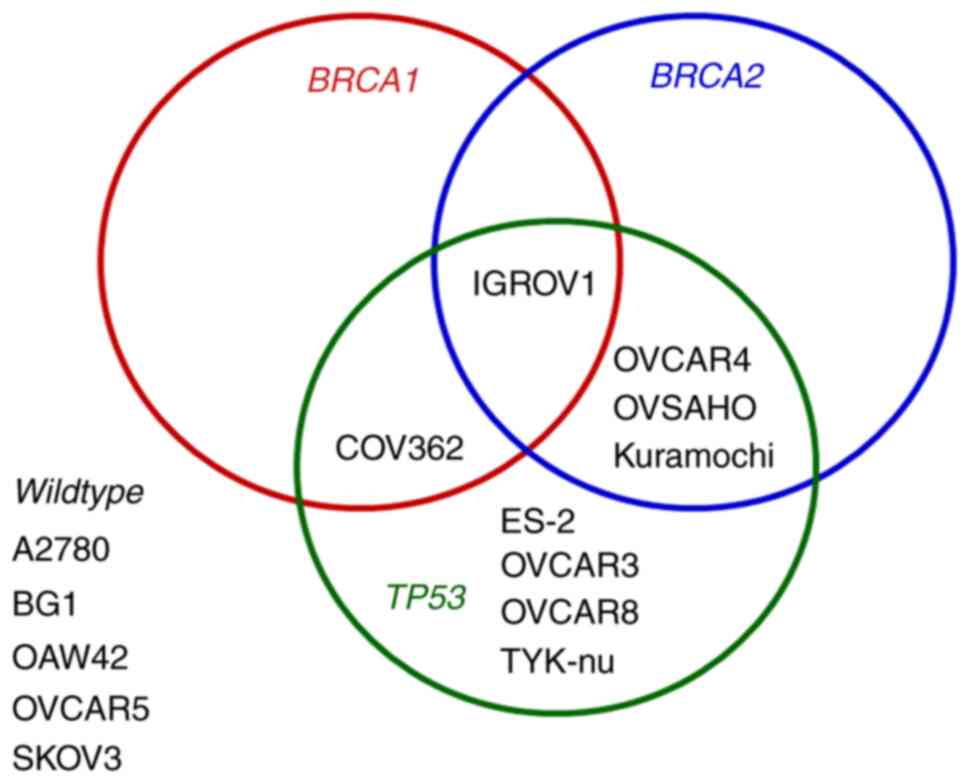
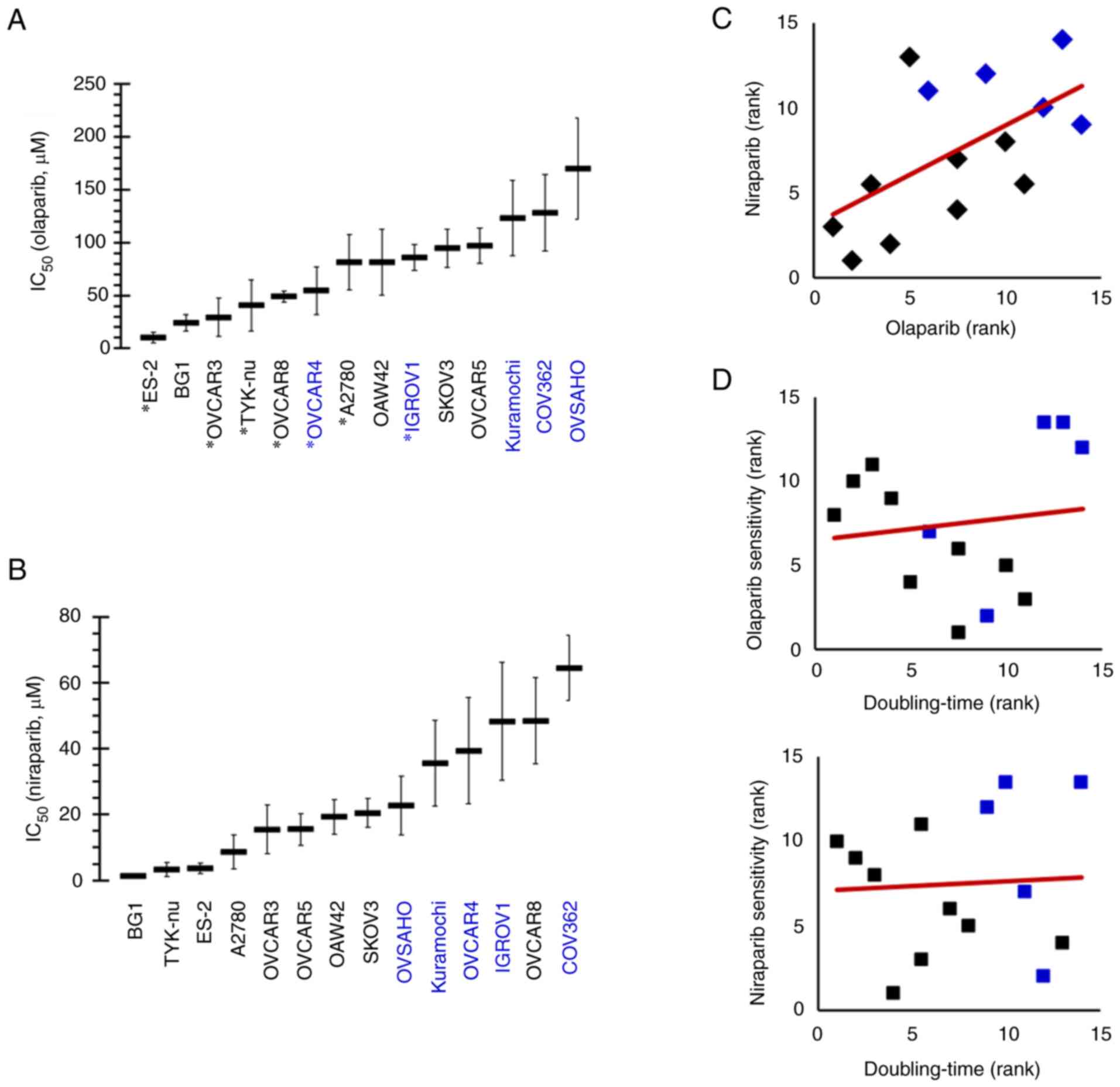
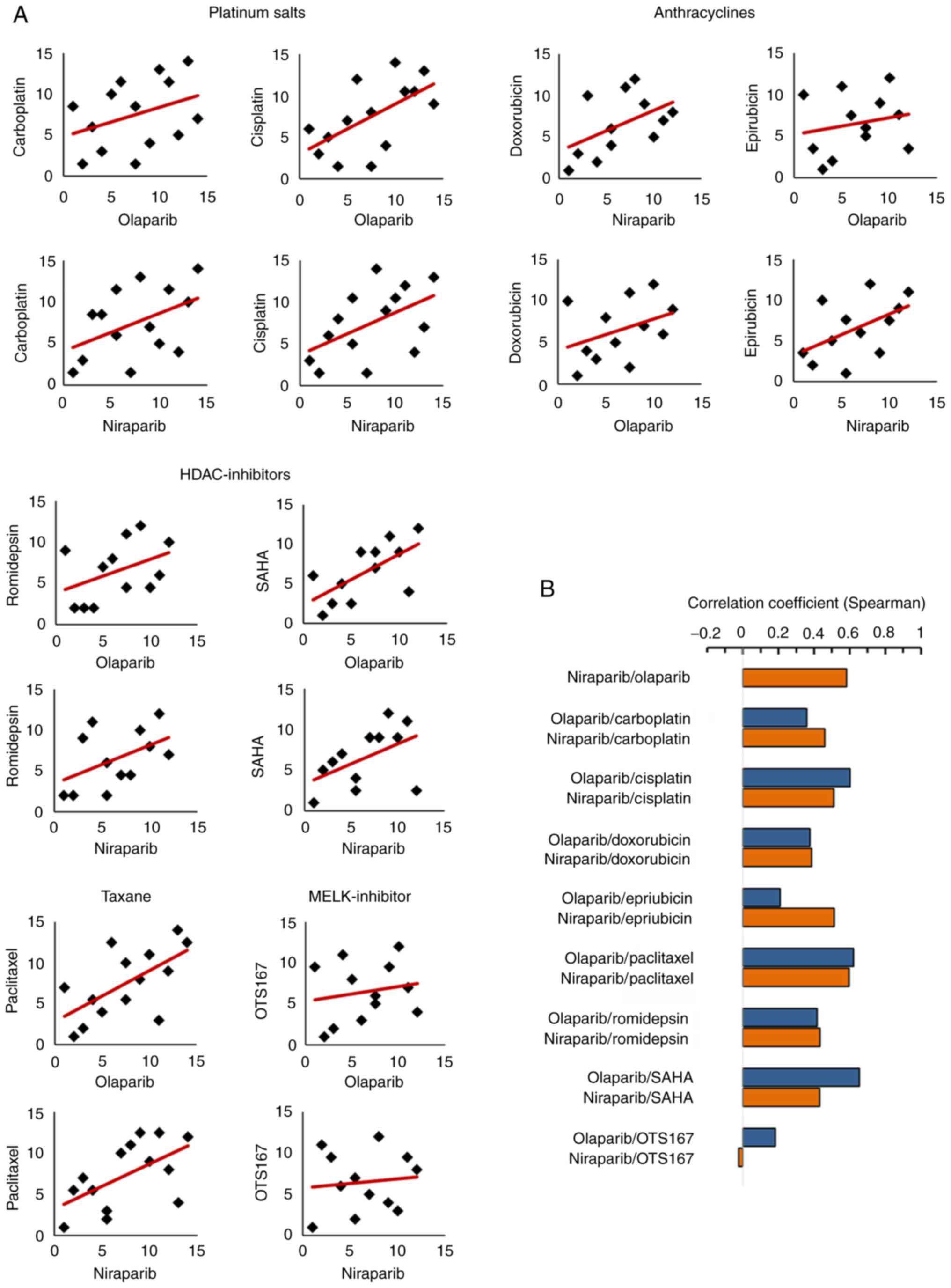
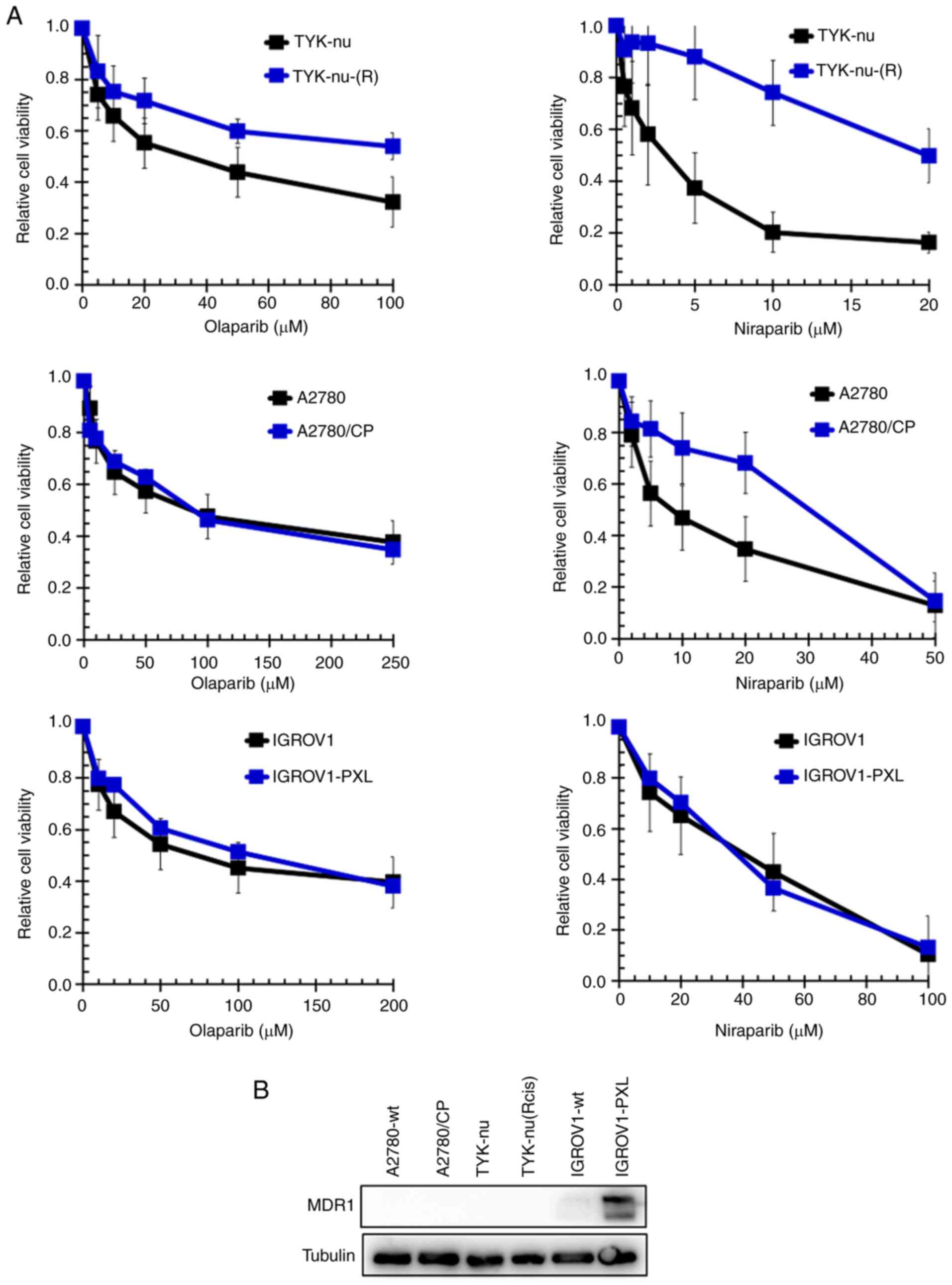
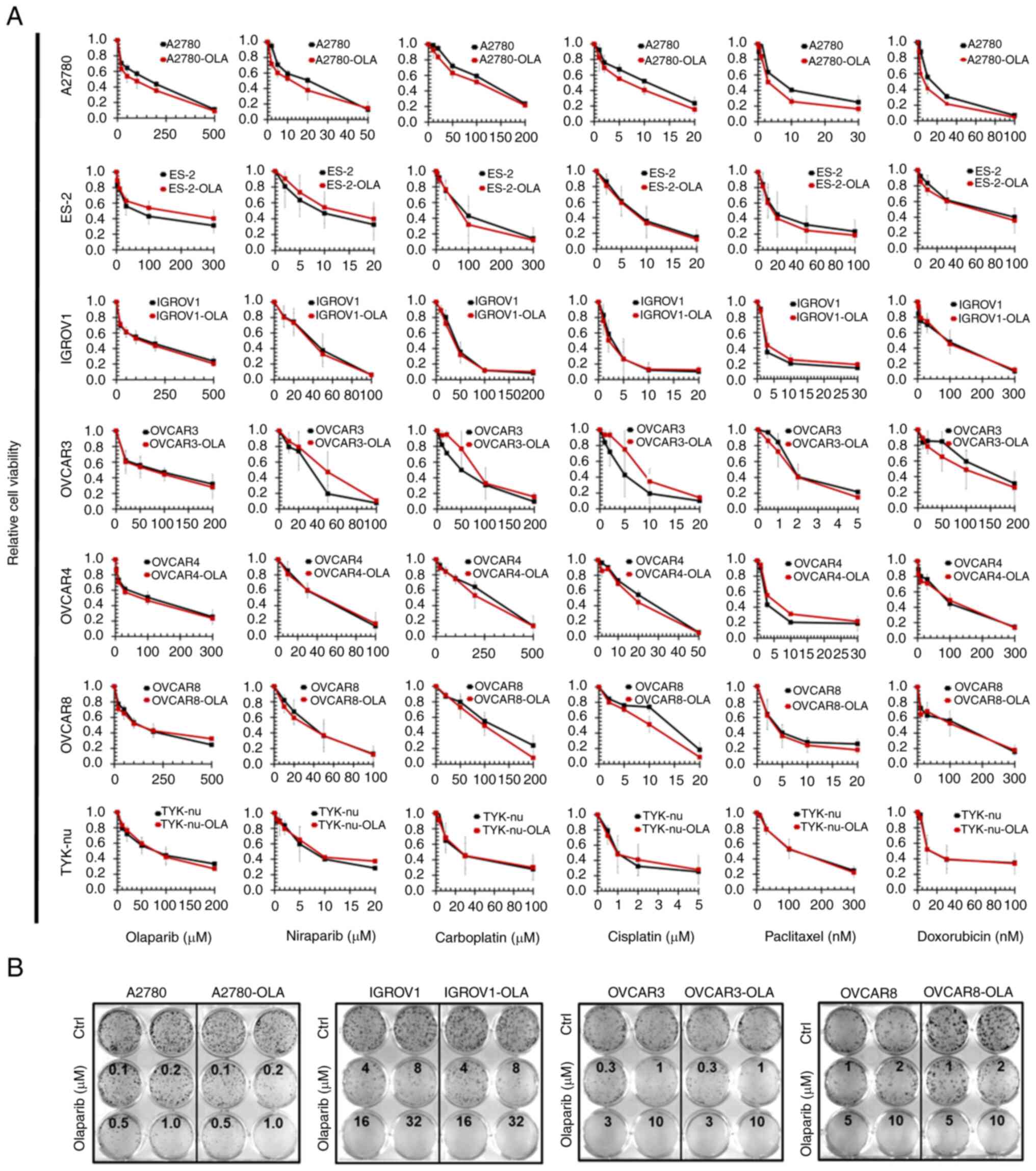
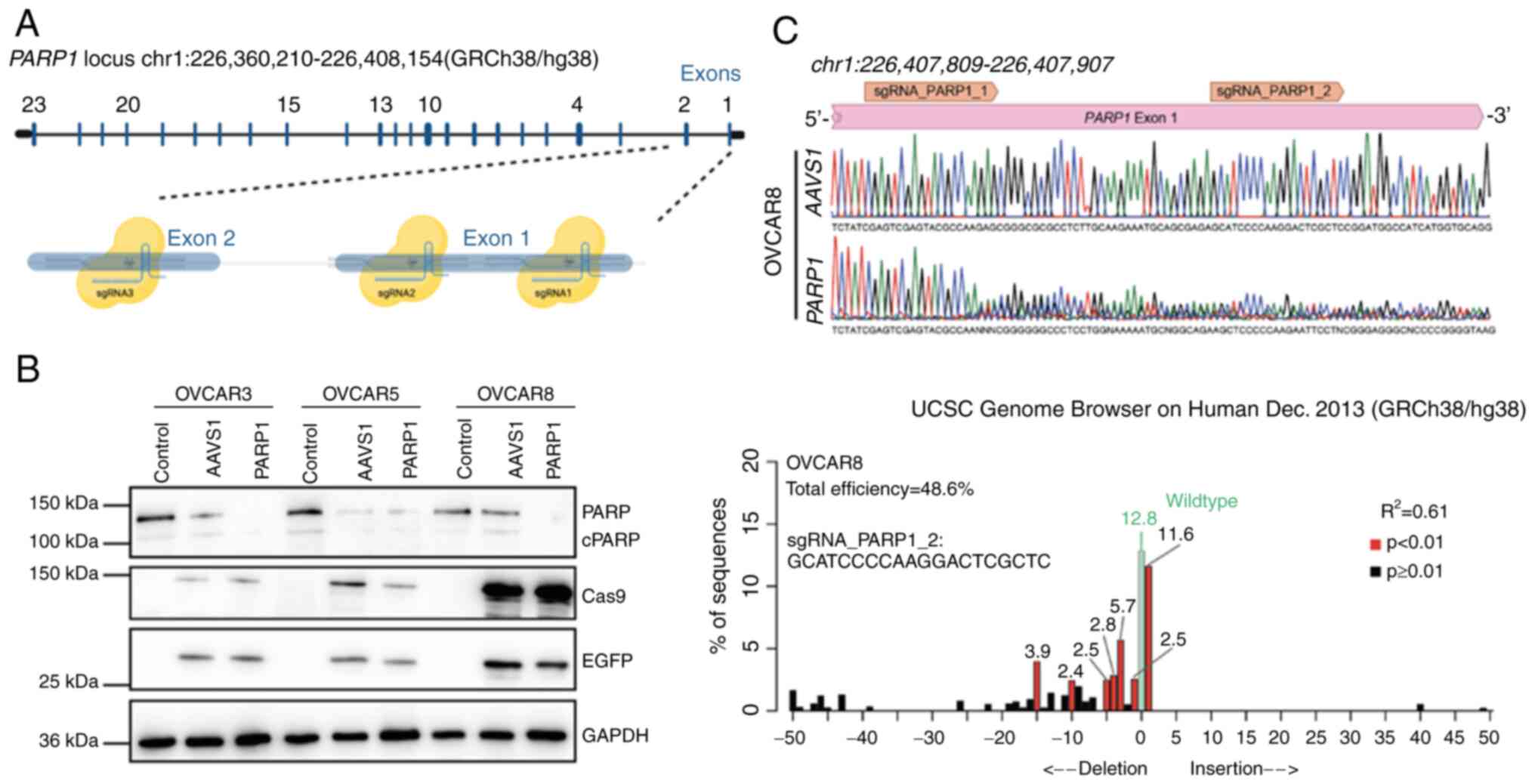
Poly (ADP‑ribose) polymerase (PARP)‑inhibitors (PARPi) such as olaparib and niraparib are currently used as a treatment option for BRCA‑deficient tumors and also show efficacy in platinum‑sensitive tumors. However, resistance to PARPi occurs in numerous patients and in particular acquired PARPi resistance presents a major obstacle in the treatment of these tumors. In the present study, it was investigated whether stepwise exposure of ovarian cancer cells to escalating concentrations of olaparib produced subcells with acquired resistance to PARPi and/or acquired cross‑resistance to platinum compounds, paclitaxel, and doxorubicin. To this aim, the sensitivity of fourteen ovarian cancer cell lines, including nine with TP53‑mutations and five carrying BRCA‑mutations, to olaparib and niraparib was determined and a subset of seven cell lines was selected to investigate the potential of olaparib to produce resistance. It was identified that escalating olaparib did neither produce subcells with acquired PARPi‑resistance nor did it produce acquired cross‑resistance to platinum compounds, doxorubicin, and paclitaxel. This finding was independent of the cells' TP53 and BRCA mutation status. CRISPR‑Cas9 mediated deletion of PARP1 did not affect sensitivity to PARPi, platinum compounds, doxorubicin, and paclitaxel. In addition, olaparib sensitivity correlated with niraparib sensitivity, but BRCA‑mutated cells were not more sensitive to PARPi. Moreover, PARPi sensitivity associated with cross‑sensitivity not only to platinum compounds but also to anthracylines, paclitaxel, and inhibitors of histone deacetylases. These in vitro data indicated that olaparib exposure is unlikely to produce an acquired resistance phenotype and that PARPi‑sensitive ovarian cancer cells are also cross‑sensitive to non‑platinum and even to compounds not directly interacting with the DNA.
View Figures

Figure 1

Figure 2

Figure 3

Figure 4

Figure 5

Figure 6

View References

1 

Longley DB and Johnston PG: Molecular mechanisms of drug resistance. J Pathol. 205:275–292. 2005. View Article : Google Scholar

2 

Shibue T and Weinberg RA: EMT, CSCs, and drug resistance: The mechanistic link and clinical implications. Nat Rev Clin Oncol. 14:611–629. 2017. View Article : Google Scholar

3 

Bryant HE, Schultz N, Thomas HD, Parker KM, Flower D, Lopez E, Kyle S, Meuth M, Curtin NJ and Helleday T: Specific killing of BRCA2-deficient tumours with inhibitors of poly(ADP-ribose) polymerase. Nature. 434:913–917. 2005. View Article : Google Scholar

4 

Farmer H, McCabe N, Lord CJ, Tutt AN, Johnson DA, Richardson TB, Santarosa M, Dillon KJ, Hickson I, Knights C, et al: Targeting the DNA repair defect in BRCA mutant cells as a therapeutic strategy. Nature. 434:917–921. 2005. View Article : Google Scholar

5 

McCabe N, Turner NC, Lord CJ, Kluzek K, Bialkowska A, Swift S, Giavara S, O'Connor MJ, Tutt AN, Zdzienicka MZ, et al: Deficiency in the repair of DNA damage by homologous recombination and sensitivity to poly(ADP-ribose) polymerase inhibition. Cancer Res. 66:8109–8115. 2006. View Article : Google Scholar

6 

Kim G, Ison G, McKee AE, Zhang H, Tang S, Gwise T, Sridhara R, Lee E, Tzou A, Philip R, et al: FDA approval summary: Olaparib monotherapy in patients with deleterious germline BRCA-mutated advanced ovarian cancer treated with three or more lines of chemotherapy. Clin Cancer Res. 21:4257–4261. 2015. View Article : Google Scholar

7 

Lord CJ and Ashworth A: BRCAness revisited. Nat Rev Cancer. 16:110–120. 2016. View Article : Google Scholar

8 

Ashworth A and Lord CJ: Synthetic lethal therapies for cancer: What's next after PARP inhibitors? Nat Rev Clin Oncol. 15:564–576. 2018. View Article : Google Scholar

9 

Litton JK, Rugo HS, Ettl J, Hurvitz SA, Gonçalves A, Lee KH, Fehrenbacher L, Yerushalmi R, Mina LA, Martin M, et al: Talazoparib in patients with advanced breast cancer and a germline BRCA mutation. N Engl J Med. 379:753–763. 2018. View Article : Google Scholar

10 

Smeby J, Kryeziu K, Berg KCG, Eilertsen IA, Eide PW, Johannessen B, Guren MG, Nesbakken A, Bruun J, Lothe RA and Sveen A: Molecular correlates of sensitivity to PARP inhibition beyond homologous recombination deficiency in pre-clinical models of colorectal cancer point to wild-type TP53 activity. EBioMedicine. 59:1029232020. View Article : Google Scholar

11 

Audeh MW, Carmichael J, Penson RT, Friedlander M, Powell B, Bell-McGuinn KM, Scott C, Weitzel JN, Oaknin A, Loman N, et al: Oral poly(ADP-ribose) polymerase inhibitor olaparib in patients with BRCA1 or BRCA2 mutations and recurrent ovarian cancer: A proof-of-concept trial. Lancet. 376:245–251. 2010. View Article : Google Scholar

12 

Fong PC, Yap TA, Boss DS, Carden CP, Mergui-Roelvink M, Gourley C, De Greve J, Lubinski J, Shanley S, Messiou C, et al: Poly(ADP)-ribose polymerase inhibition: Frequent durable responses in BRCA carrier ovarian cancer correlating with platinum-free interval. J Clin Oncol. 28:2512–2519. 2010. View Article : Google Scholar

13 

Gelmon KA, Tischkowitz M, Mackay H, Swenerton K, Robidoux A, Tonkin K, Hirte H, Huntsman D, Clemons M, Gilks B, et al: Olaparib in patients with recurrent high-grade serous or poorly differentiated ovarian carcinoma or triple-negative breast cancer: A phase 2, multicentre, open-label, non-randomised study. Lancet Oncol. 12:852–861. 2011. View Article : Google Scholar

14 

Jiang X, Li X, Li W, Bai H and Zhang Z: PARP inhibitors in ovarian cancer: Sensitivity prediction and resistance mechanisms. J Cell Mol Med. 23:2303–2313. 2019. View Article : Google Scholar

15 

Noordermeer SM and van Attikum H: PARP inhibitor resistance: A tug-of-war in BRCA-mutated cells. Trends Cell Biol. 29:820–834. 2019. View Article : Google Scholar

16 

Lee EK and Matulonis UA: PARP inhibitor resistance mechanisms and implications for post-progression combination therapies. Cancers (Basel). 12:20542020. View Article : Google Scholar

17 

Dias MP, Moser SC, Ganesan S and Jonkers J: Understanding and overcoming resistance to PARP inhibitors in cancer therapy. Nat Rev Clin Oncol. 18:773–791. 2021. View Article : Google Scholar

18 

Lin KK, Harrell MI, Oza AM, Oaknin A, Ray-Coquard I, Tinker AV, Helman E, Radke MR, Say C, Vo LT, et al: BRCA reversion mutations in circulating tumor DNA predict primary and acquired resistance to the PARP inhibitor rucaparib in high-grade ovarian carcinoma. Cancer Discov. 9:210–219. 2019. View Article : Google Scholar

19 

Mayor P, Gay LM, Gornstein E, Morley S, Frampton GM, Heilmann A, Sun J, Chung J, Daniel S, Ramkissoon S, et al: BRCA1/2 reversion mutations revealed in breast and gynecologic cancers sequenced during routine clinical care using tissue or liquid biopsy. J Clin Oncol. 35:55512017. View Article : Google Scholar

20 

Kondrashova O, Nguyen M, Shield-Artin K, Tinker AV, Teng NN, Harrell MI, Kuiper MJ, Ho GY, Barker H, Jasin M, et al: Secondary somatic mutations restoring RAD51C and RAD51D associated with acquired resistance to the PARP inhibitor rucaparib in high-grade ovarian carcinoma. Cancer Discov. 7:984–998. 2017. View Article : Google Scholar

21 

Brugge PT, Kristel P, Van Der Burg E, Boon U, de Maaker M, Lips E, Mulder L, de Ruiter J, Moutinho C, Gevensleben H, et al: Mechanisms of therapy resistance in patient-derived xenograft models of BRCA1-deficient breast cancer. J Natl Cancer Inst. 108: View Article : Google Scholar : 2016.

22 

Kondrashova O, Topp M, Nesic K, Lieschke E, Ho GY, Harrell MI, Zapparoli GV, Hadley A, Holian R, Boehm E, et al: Methylation of all BRCA1 copies predicts response to the PARP inhibitor rucaparib in ovarian carcinoma. Nat Commun. 9:39702018. View Article : Google Scholar

23 

Bunting SF, Callén E, Wong N, Chen HT, Polato F, Gunn A, Bothmer A, Feldhahn N, Fernandez-Capetillo O, Cao L, et al: 53BP1 inhibits homologous recombination in Brca1-deficient cells by blocking resection of DNA breaks. Cell. 141:243–254. 2010. View Article : Google Scholar

24 

Xu G, Chapman JR, Brandsma I, Yuan J, Mistrik M, Bouwman P, Bartkova J, Gogola E, Warmerdam D, Barazas M, et al: REV7 counteracts DNA double-strand break resection and affects PARP inhibition. Nature. 521:541–544. 2015. View Article : Google Scholar

25 

Pettitt SJ, Krastev DB, Brandsma I, Dréan A, Song F, Aleksandrov R, Harrell M, Menon M, Brough, Campbell J, et al: Genome-wide and high-density CRISPR-Cas9 screens identify point mutations in PARP1 causing PARP inhibitor resistance. Nat Commun. 9:18492018. View Article : Google Scholar

26 

Du Y, Yamaguchi H, Wei Y, Hsu JL, Wang HL, Hsu YH, Lin WC, Yu WH, Leonard PG, Lee GR IV, et al: Blocking c-Met-mediated PARP1 phosphorylation enhances anti-tumor effects of PARP inhibitors. Nat Med. 22:194–201. 2016. View Article : Google Scholar

27 

Chaudhuri AR, Callen E, Ding X, Gogola E, Duarte AA, Lee JE, Wong N, Lafarga V, Calvo JA, Panzarino NJ, et al: Replication fork stability confers chemoresistance in BRCA-deficient cells. Nature. 535:382–387. 2016. View Article : Google Scholar

28 

Taglialatela A, Alvarez S, Leuzzi G, Sannino V, Ranjha L, Huang JW, Madubata C, Anand R, Levy B, Rabadan R, et al: Restoration of replication fork stability in BRCA1- and BRCA2-deficient cells by inactivation of SNF2-family fork remodelers. Mol Cell. 68:414–430. 2017. View Article : Google Scholar

29 

Rottenberg S, Jaspers JE, Kersbergen A, van der Burg E, Nygren AO, Zander SA, Derksen PW, de Bruin M, Zevenhoven J, Lau A, et al: High sensitivity of BRCA1-deficient mammary tumors to the PARP inhibitor AZD2281 alone and in combination with platinum drugs. Proc Natl Acad Sci USA. 105:17079–17084. 2008. View Article : Google Scholar

30 

Christie EL, Fereday S, Doig K, Pattnaik S, Dawson SJ and Bowtell DDL: Reversion of BRCA1/2 germline mutations detected in circulating tumor DNA from patients with high-grade serous ovarian cancer. J Clin Oncol. 35:1274–1280. 2017. View Article : Google Scholar

31 

Yamamoto TM, McMellen A, Watson ZL, Aguilera J, Ferguson R, Nurmemmedov E, Thakar T, Moldovan GL, Kim H, Cittelly DM, et al: Activation of Wnt signaling promotes olaparib resistant ovarian cancer. Mol Carcinog. 58:1770–1782. 2019. View Article : Google Scholar

32 

Nesic K, Kondrashova O, Hurley RM, McGehee CD, Vandenberg CJ, Ho GY, Lieschke E, Dall G, Bound N, Shield-Artin K, et al: Acquired RAD51C promoter methylation loss causes PARP inhibitor resistance in high grade serous ovarian carcinoma. Cancer Res. 81:4709–4722. 2021. View Article : Google Scholar

33 

Póti Á, Berta K, Xiao Y, Pipek O, Klus GT, Ried T, Csabai I, Wilcoxen K, Mikule K, Szallasi Z and Szüts D: Long-term treatment with the PARP inhibitor niraparib does not increase the mutation load in cell line models and tumour xenografts. Br J Cancer. 119:1392–1400. 2018. View Article : Google Scholar

34 

Domcke S, Sinha R, Levine DA, Sander C and Schultz N: Evaluating cell lines as tumour models by comparison of genomic profiles. Nat Commun. 4:21262013. View Article : Google Scholar

35 

Behrens BC, Hamilton TC, Masuda H, Grotzinger KR, Whang-Peng J, Louie KG, Knutsen T, McKoy WM, Young RC and Ozols RF: Characterization of a cis-diamminedichloroplat inum(II)-resistant human ovarian cancer cell line and its use in evaluation of platinum analogues. Cancer Res. 47:414–148. 1987.

36 

Yoshiya N, Adachi S, Misawa Y, Yuzawa H, Honda T, Kanazawa K, Takeuchi S and Tanaka K and Tanaka K: Isolation of cisplatin-resistant subline from human ovarian cancer cell line and analysis of its cell-biological characteristics. Nihon Sanka Fujinka Gakkai Zasshi. 41:7–14. 1989.In Japanese.

37 

Montavon C, Stricker GR, Schoetzau A, Heinzelmann-Schwarz V, Jacob F and Fedier A: Outcome in serous ovarian cancer is not associated with LATS expression. J Cancer Res Clin Oncol. 145:2737–2749. 2019. View Article : Google Scholar

38 

Fedier A, Dedes KJ, Imesch P, Von Bueren AO and Fink D: The histone deacetylase inhibitors suberoylanilide hydroxamic (Vorinostat) and valproic acid induce irreversible and MDR1-independent resistance in human colon cancer cells. Int J Oncol. 31:633–741. 2007.

39 

Dedes KJ, Dedes I, Imesch P, von Bueren AO, Fink D and Fedier A: Acquired vorinostat resistance shows partial cross-resistance to 'second-generation' HDAC inhibitors and correlates with loss of histone acetylation and apoptosis but not with altered HDAC and HAT activities. Anticancer Drugs. 20:321–333. 2009. View Article : Google Scholar

40 

Imesch P, Dedes KJ, Furlato M, Fink D and Fedier A: MLH1 protects from resistance acquisition by the histone deacetylase inhibitor trichostatin A in colon tumor cells. Int J Oncol. 35:631–640. 2009.

41 

Shin S, Kim SH, Shin SW, Grav LM, Pedersen LE, Lee JS and Lee GM: Comprehensive analysis of genomic safe harbors as target sites for stable expression of the heterologous gene in HEK293 cells. ACS Synth Biol. 9:1263–1269. 2020. View Article : Google Scholar

42 

Brinkman EK, Chen T, Amendola M and van Steensel B: Easy quantitative assessment of genome editing by sequence trace decomposition. Nucleic Acids Res. 42:e1682014. View Article : Google Scholar

43 

Kohler RS, Kettelhack H, Knipprath-Mészaros AM, Fedier A, Schoetzau A, Jacob F and Heinzelmann-Schwarz V: MELK expression in ovarian cancer correlates with poor outcome and its inhibition by OTSSP167 abrogates proliferation and viability of ovarian cancer cells. Gynecol Oncol. 145:159–166. 2017. View Article : Google Scholar

44 

Minucci S and Pelicci PG: Histone deacetylase inhibitors and the promise of epigenetic (and more) treatments for cancer. Nat Rev Cancer. 6:38–51. 2006. View Article : Google Scholar

45 

Lapinska K, Housman G, Byler S, Heerboth S, Willbanks A, Oza A and Sarkar S: The effects of histone deacetylase inhibitor and calpain inhibitor combination therapies on ovarian cancer cells. Anticancer Res. 36:5731–7542. 2016. View Article : Google Scholar

46 

Matulonis U, Berlin S, Lee H, Whalen C, Obermayer E, Penson R, Liu J, Campos S, Krasner C and Horowitz N: Phase I study of combination of vorinostat, carboplatin, and gemcitabine in women with recurrent, platinum-sensitive epithelial ovarian, fallopian tube, or peritoneal cancer. Cancer Chemother Pharmacol. 76:417–423. 2015. View Article : Google Scholar

47 

Armstrong DK, Bundy B, Wenzel L, Huang HQ, Baergen R, Lele S, Copeland LJ, Walker JL, Burger RA and Gynecologic Oncology Group: Gynecologic oncology group: Intraperitoneal cisplatin and paclitaxel in ovarian cancer. N Engl J Med. 354:34–43. 2006. View Article : Google Scholar

48 

Pennington KP, Walsh T, Harrell MI, Lee MK, Pennil CC, Rendi MH, Thornton A, Norquist BM, Casadei S, Nord AS, et al: Germline and somatic mutations in homologous recombination genes predict platinum response and survival in ovarian, fallopian tube, and peritoneal carcinomas. Clin Cancer Res. 20:764–775. 2014. View Article : Google Scholar

49 

Nitiss JL: Targeting DNA topoisomerase II in cancer chemotherapy. Nat Rev Cancer. 9:338–350. 2009. View Article : Google Scholar

50 

Adams SF, Marsh EB, Elmasri W, Halberstadt S, Vandecker S, Sammel MD, Bradbury AR, Daly M, Karlan B and Rubin SC: A high response rate to liposomal doxorubicin is seen among women with BRCA mutations treated for recurrent epithelial ovarian cancer. Gynecol Oncol. 123:486–491. 2011. View Article : Google Scholar

51 

Zaremba T, Thomas H, Cole M, Plummer ER and Curtin NJ: Doxorubicin-induced suppression of poly(ADP-ribose) polymerase-1 (PARP-1) activity and expression and its implication for PARP inhibitors in clinical trials. Cancer Chemother Pharmacol. 66:807–812. 2010. View Article : Google Scholar

52 

Robert C and Rassool FV: HDAC inhibitors: Roles of DNA damage and repair. Adv Cancer Res. 116:87–129. 2012. View Article : Google Scholar

53 

Ha K, Fiskus W, Choi DS, Bhaskara S, Cerchietti L, Devaraj SG, Shah B, Sharma S, Chang JC, Melnick AM, et al: Histone deacetylase inhibitor treatment induces 'BRCAness' and synergistic lethality with PARP inhibitor and cisplatin against human triple negative breast cancer cells. Oncotarget. 5:5637–5650. 2014. View Article : Google Scholar

54 

Weaver BA: How taxol/paclitaxel kills cancer cells. Mol Biol Cell. 25:2677–2681. 2014. View Article : Google Scholar

55 

Slade D: Mitotic functions of poly(ADP-ribose) polymerases. Biochem Pharmacol. 167:33–43. 2019. View Article : Google Scholar

56 

McCormick A and Swaisland H: In vitro assessment of the roles of drug transporters in the disposition and drug-drug interaction potential of olaparib. Xenobiotica. 47:903–915. 2017. View Article : Google Scholar

57 

Wheeler DA, Takebe N, Hinoue T, Hoadley KA, Cardenas MF, Hamilton AM, Laird PW, Wang L, Johnson A, Dewal N, et al: Molecular features of cancers exhibiting exceptional responses to treatment. Cancer Cell. 39:38–53. 2021. View Article : Google Scholar

58 

Sanderson BJ, Ferguson LR and Denny WA: Mutagenic and carcinogenic properties of platinum-based anticancer drugs. Mutat Res. 355:59–70. 1996. View Article : Google Scholar

Related Articles

  • Abstract
  • View
  • Download
  • Twitter
Copy and paste a formatted citation
Spandidos Publications style
Fedier A, Maggi N, Tozzi A, Disler M, Coelho R, Jacob F and Heinzelmann‑Schwarz V: Exposure to escalating olaparib does not induce acquired resistance to PARPi and to other chemotherapeutic compounds in ovarian cancer cell lines. Int J Oncol 61: 89, 2022.
APA
Fedier, A., Maggi, N., Tozzi, A., Disler, M., Coelho, R., Jacob, F., & Heinzelmann‑Schwarz, V. (2022). Exposure to escalating olaparib does not induce acquired resistance to PARPi and to other chemotherapeutic compounds in ovarian cancer cell lines. International Journal of Oncology, 61, 89. https://doi.org/10.3892/ijo.2022.5379
MLA
Fedier, A., Maggi, N., Tozzi, A., Disler, M., Coelho, R., Jacob, F., Heinzelmann‑Schwarz, V."Exposure to escalating olaparib does not induce acquired resistance to PARPi and to other chemotherapeutic compounds in ovarian cancer cell lines". International Journal of Oncology 61.1 (2022): 89.
Chicago
Fedier, A., Maggi, N., Tozzi, A., Disler, M., Coelho, R., Jacob, F., Heinzelmann‑Schwarz, V."Exposure to escalating olaparib does not induce acquired resistance to PARPi and to other chemotherapeutic compounds in ovarian cancer cell lines". International Journal of Oncology 61, no. 1 (2022): 89. https://doi.org/10.3892/ijo.2022.5379
Copy and paste a formatted citation
x
Spandidos Publications style
Fedier A, Maggi N, Tozzi A, Disler M, Coelho R, Jacob F and Heinzelmann‑Schwarz V: Exposure to escalating olaparib does not induce acquired resistance to PARPi and to other chemotherapeutic compounds in ovarian cancer cell lines. Int J Oncol 61: 89, 2022.
APA
Fedier, A., Maggi, N., Tozzi, A., Disler, M., Coelho, R., Jacob, F., & Heinzelmann‑Schwarz, V. (2022). Exposure to escalating olaparib does not induce acquired resistance to PARPi and to other chemotherapeutic compounds in ovarian cancer cell lines. International Journal of Oncology, 61, 89. https://doi.org/10.3892/ijo.2022.5379
MLA
Fedier, A., Maggi, N., Tozzi, A., Disler, M., Coelho, R., Jacob, F., Heinzelmann‑Schwarz, V."Exposure to escalating olaparib does not induce acquired resistance to PARPi and to other chemotherapeutic compounds in ovarian cancer cell lines". International Journal of Oncology 61.1 (2022): 89.
Chicago
Fedier, A., Maggi, N., Tozzi, A., Disler, M., Coelho, R., Jacob, F., Heinzelmann‑Schwarz, V."Exposure to escalating olaparib does not induce acquired resistance to PARPi and to other chemotherapeutic compounds in ovarian cancer cell lines". International Journal of Oncology 61, no. 1 (2022): 89. https://doi.org/10.3892/ijo.2022.5379
Follow us
  • Twitter
  • LinkedIn
  • Facebook
About
  • Spandidos Publications
  • Careers
  • Cookie Policy
  • Privacy Policy
How can we help?
  • Help
  • Live Chat
  • Contact
  • Email to our Support Team