Spandidos Publications Logo
  • About
    • About Spandidos
    • Aims and Scopes
    • Abstracting and Indexing
    • Editorial Policies
    • Reprints and Permissions
    • Job Opportunities
    • Terms and Conditions
    • Contact
  • Journals
    • All Journals
    • Oncology Letters
      • Oncology Letters
      • Information for Authors
      • Editorial Policies
      • Editorial Board
      • Aims and Scope
      • Abstracting and Indexing
      • Bibliographic Information
      • Archive
    • International Journal of Oncology
      • International Journal of Oncology
      • Information for Authors
      • Editorial Policies
      • Editorial Board
      • Aims and Scope
      • Abstracting and Indexing
      • Bibliographic Information
      • Archive
    • Molecular and Clinical Oncology
      • Molecular and Clinical Oncology
      • Information for Authors
      • Editorial Policies
      • Editorial Board
      • Aims and Scope
      • Abstracting and Indexing
      • Bibliographic Information
      • Archive
    • Experimental and Therapeutic Medicine
      • Experimental and Therapeutic Medicine
      • Information for Authors
      • Editorial Policies
      • Editorial Board
      • Aims and Scope
      • Abstracting and Indexing
      • Bibliographic Information
      • Archive
    • International Journal of Molecular Medicine
      • International Journal of Molecular Medicine
      • Information for Authors
      • Editorial Policies
      • Editorial Board
      • Aims and Scope
      • Abstracting and Indexing
      • Bibliographic Information
      • Archive
    • Biomedical Reports
      • Biomedical Reports
      • Information for Authors
      • Editorial Policies
      • Editorial Board
      • Aims and Scope
      • Abstracting and Indexing
      • Bibliographic Information
      • Archive
    • Oncology Reports
      • Oncology Reports
      • Information for Authors
      • Editorial Policies
      • Editorial Board
      • Aims and Scope
      • Abstracting and Indexing
      • Bibliographic Information
      • Archive
    • Molecular Medicine Reports
      • Molecular Medicine Reports
      • Information for Authors
      • Editorial Policies
      • Editorial Board
      • Aims and Scope
      • Abstracting and Indexing
      • Bibliographic Information
      • Archive
    • World Academy of Sciences Journal
      • World Academy of Sciences Journal
      • Information for Authors
      • Editorial Policies
      • Editorial Board
      • Aims and Scope
      • Abstracting and Indexing
      • Bibliographic Information
      • Archive
    • International Journal of Functional Nutrition
      • International Journal of Functional Nutrition
      • Information for Authors
      • Editorial Policies
      • Editorial Board
      • Aims and Scope
      • Abstracting and Indexing
      • Bibliographic Information
      • Archive
    • International Journal of Epigenetics
      • International Journal of Epigenetics
      • Information for Authors
      • Editorial Policies
      • Editorial Board
      • Aims and Scope
      • Abstracting and Indexing
      • Bibliographic Information
      • Archive
    • Medicine International
      • Medicine International
      • Information for Authors
      • Editorial Policies
      • Editorial Board
      • Aims and Scope
      • Abstracting and Indexing
      • Bibliographic Information
      • Archive
  • Articles
  • Information
    • Information for Authors
    • Information for Reviewers
    • Information for Librarians
    • Information for Advertisers
    • Conferences
  • Language Editing
Spandidos Publications Logo
  • About
    • About Spandidos
    • Aims and Scopes
    • Abstracting and Indexing
    • Editorial Policies
    • Reprints and Permissions
    • Job Opportunities
    • Terms and Conditions
    • Contact
  • Journals
    • All Journals
    • Biomedical Reports
      • Information for Authors
      • Editorial Policies
      • Editorial Board
      • Aims and Scope
      • Abstracting and Indexing
      • Bibliographic Information
      • Archive
    • Experimental and Therapeutic Medicine
      • Information for Authors
      • Editorial Policies
      • Editorial Board
      • Aims and Scope
      • Abstracting and Indexing
      • Bibliographic Information
      • Archive
    • International Journal of Epigenetics
      • Information for Authors
      • Editorial Policies
      • Editorial Board
      • Aims and Scope
      • Abstracting and Indexing
      • Bibliographic Information
      • Archive
    • International Journal of Functional Nutrition
      • Information for Authors
      • Editorial Policies
      • Editorial Board
      • Aims and Scope
      • Abstracting and Indexing
      • Bibliographic Information
      • Archive
    • International Journal of Molecular Medicine
      • Information for Authors
      • Editorial Policies
      • Editorial Board
      • Aims and Scope
      • Abstracting and Indexing
      • Bibliographic Information
      • Archive
    • International Journal of Oncology
      • Information for Authors
      • Editorial Policies
      • Editorial Board
      • Aims and Scope
      • Abstracting and Indexing
      • Bibliographic Information
      • Archive
    • Medicine International
      • Information for Authors
      • Editorial Policies
      • Editorial Board
      • Aims and Scope
      • Abstracting and Indexing
      • Bibliographic Information
      • Archive
    • Molecular and Clinical Oncology
      • Information for Authors
      • Editorial Policies
      • Editorial Board
      • Aims and Scope
      • Abstracting and Indexing
      • Bibliographic Information
      • Archive
    • Molecular Medicine Reports
      • Information for Authors
      • Editorial Policies
      • Editorial Board
      • Aims and Scope
      • Abstracting and Indexing
      • Bibliographic Information
      • Archive
    • Oncology Letters
      • Information for Authors
      • Editorial Policies
      • Editorial Board
      • Aims and Scope
      • Abstracting and Indexing
      • Bibliographic Information
      • Archive
    • Oncology Reports
      • Information for Authors
      • Editorial Policies
      • Editorial Board
      • Aims and Scope
      • Abstracting and Indexing
      • Bibliographic Information
      • Archive
    • World Academy of Sciences Journal
      • Information for Authors
      • Editorial Policies
      • Editorial Board
      • Aims and Scope
      • Abstracting and Indexing
      • Bibliographic Information
      • Archive
  • Articles
  • Information
    • For Authors
    • For Reviewers
    • For Librarians
    • For Advertisers
    • Conferences
  • Language Editing
Login Register Submit
  • This site uses cookies
  • You can change your cookie settings at any time by following the instructions in our Cookie Policy. To find out more, you may read our Privacy Policy.

    I agree
Search articles by DOI, keyword, author or affiliation
Search
Advanced Search
presentation
International Journal of Oncology
Join Editorial Board Propose a Special Issue
Print ISSN: 1019-6439 Online ISSN: 1791-2423
Journal Cover
May-2026 Volume 68 Issue 5

Full Size Image

Cover Legend PDF

Sign up for eToc alerts
Recommend to Library

Journals

International Journal of Molecular Medicine

International Journal of Molecular Medicine

International Journal of Molecular Medicine is an international journal devoted to molecular mechanisms of human disease.

International Journal of Oncology

International Journal of Oncology

International Journal of Oncology is an international journal devoted to oncology research and cancer treatment.

Molecular Medicine Reports

Molecular Medicine Reports

Covers molecular medicine topics such as pharmacology, pathology, genetics, neuroscience, infectious diseases, molecular cardiology, and molecular surgery.

Oncology Reports

Oncology Reports

Oncology Reports is an international journal devoted to fundamental and applied research in Oncology.

Experimental and Therapeutic Medicine

Experimental and Therapeutic Medicine

Experimental and Therapeutic Medicine is an international journal devoted to laboratory and clinical medicine.

Oncology Letters

Oncology Letters

Oncology Letters is an international journal devoted to Experimental and Clinical Oncology.

Biomedical Reports

Biomedical Reports

Explores a wide range of biological and medical fields, including pharmacology, genetics, microbiology, neuroscience, and molecular cardiology.

Molecular and Clinical Oncology

Molecular and Clinical Oncology

International journal addressing all aspects of oncology research, from tumorigenesis and oncogenes to chemotherapy and metastasis.

World Academy of Sciences Journal

World Academy of Sciences Journal

Multidisciplinary open-access journal spanning biochemistry, genetics, neuroscience, environmental health, and synthetic biology.

International Journal of Functional Nutrition

International Journal of Functional Nutrition

Open-access journal combining biochemistry, pharmacology, immunology, and genetics to advance health through functional nutrition.

International Journal of Epigenetics

International Journal of Epigenetics

Publishes open-access research on using epigenetics to advance understanding and treatment of human disease.

Medicine International

Medicine International

An International Open Access Journal Devoted to General Medicine.

Journal Cover
May-2026 Volume 68 Issue 5

Full Size Image

Cover Legend PDF

Sign up for eToc alerts
Recommend to Library

  • Article
  • Citations
    • Cite This Article
    • Download Citation
    • Create Citation Alert
    • Remove Citation Alert
    • Cited By
  • Similar Articles
    • Related Articles (in Spandidos Publications)
    • Similar Articles (Google Scholar)
    • Similar Articles (PubMed)
  • Download PDF
  • Download XML
  • View XML

  • Supplementary Files
    • Supplementary_Data1.pdf
    • Supplementary_Data2.pdf
Article Open Access

FOXM1 inhibitor, RCM‑1, enhances venetoclax mediated apoptosis through downregulation of ATP2B4 in rhabdomyosarcoma

  • Authors:
    • Nawal Merjaneh
    • Ying-Wei Lan
    • Zicheng Deng
    • Johnny Donovan
    • Guolun Wang
    • Jonathan Do
    • Tiffany Juan
    • Xiaomei Xia
    • Vladimir V. Kalinichenko
    • Tanya V. Kalin
  • View Affiliations / Copyright

    Affiliations: Center for Cancer and Blood Disorders, Phoenix Children's Hospital, Phoenix, AZ 85016, USA, Phoenix Children's Research Institute, The University of Arizona College of Medicine‑Phoenix, Phoenix, AZ 85004, USA, Division of Neonatology and Pulmonary Biology, Perinatal Institute, Cincinnati Children's Research Foundation, Cincinnati, OH 45229, USA
    Copyright: © Merjaneh et al. This is an open access article distributed under the terms of Creative Commons Attribution License.
  • Article Number: 52
    |
    Published online on: March 4, 2026
       https://doi.org/10.3892/ijo.2026.5865
  • Expand metrics +
Metrics: Total Views: 0 (Spandidos Publications: | PMC Statistics: )
Metrics: Total PDF Downloads: 0 (Spandidos Publications: | PMC Statistics: )
Cited By (CrossRef): 0 citations Loading Articles...

This article is mentioned in:


Abstract

Rhabdomyosarcoma (RMS) is the most common type of soft tissue sarcoma in children. Intensifying chemotherapy has failed to improve patient survival for metastatic or relapsed RMS and RMS survivors often suffer from significant long‑term toxicities. More efficient and less toxic new therapies are critically needed. RMS expresses high levels of anti‑apoptotic protein Bcl‑2 and an oncogenic transcription factor Forkhead box protein M1 (FOXM1), which is also known to inhibit tumor cell apoptosis. The present study used a combination therapy of a recently developed non‑toxic FOXM1 inhibitor, RCM‑1 and the FDA‑approved Bcl2 inhibitor, venetoclax, which is not effective as a monotherapy in solid tumors. Compared with venetoclax alone, the combination therapy efficiently inhibited RMS growth in the animal model by decreasing tumor cell proliferation and inducing tumor cell apoptosis. RNA‑sequencing analysis demonstrated that the combination therapy uniquely decreased expression of ATPase Plasma Membrane Ca2+ Transporting 4 (ATP2B4), a plasma membrane calcium channel that is highly expressed in RMS compared with normal muscle cells. RCM‑1, but not venetoclax treatment, inhibited ATP2B4 and enhanced the sensitivity of RMS cells to apoptosis. Knockdown of ATP2B4 decreased RMS tumor cell proliferation, migration and colony formation in vitro. Furthermore, knockdown of ATP2B4 increased tumor cell apoptosis, while overexpression of ATP2B4 decreased tumor cell apoptosis in vitro. In the animal model of RMS, depletion of ATP2B4 decreased tumor growth. In summary, combining RCM‑1 with venetoclax sensitized RMS cells to apoptosis by decreasing ATP2B4. This made ATP2B4 a promising therapeutic target for RMS and provides a rationale for exploring this combination in early‑stage clinical trials.
View Figures

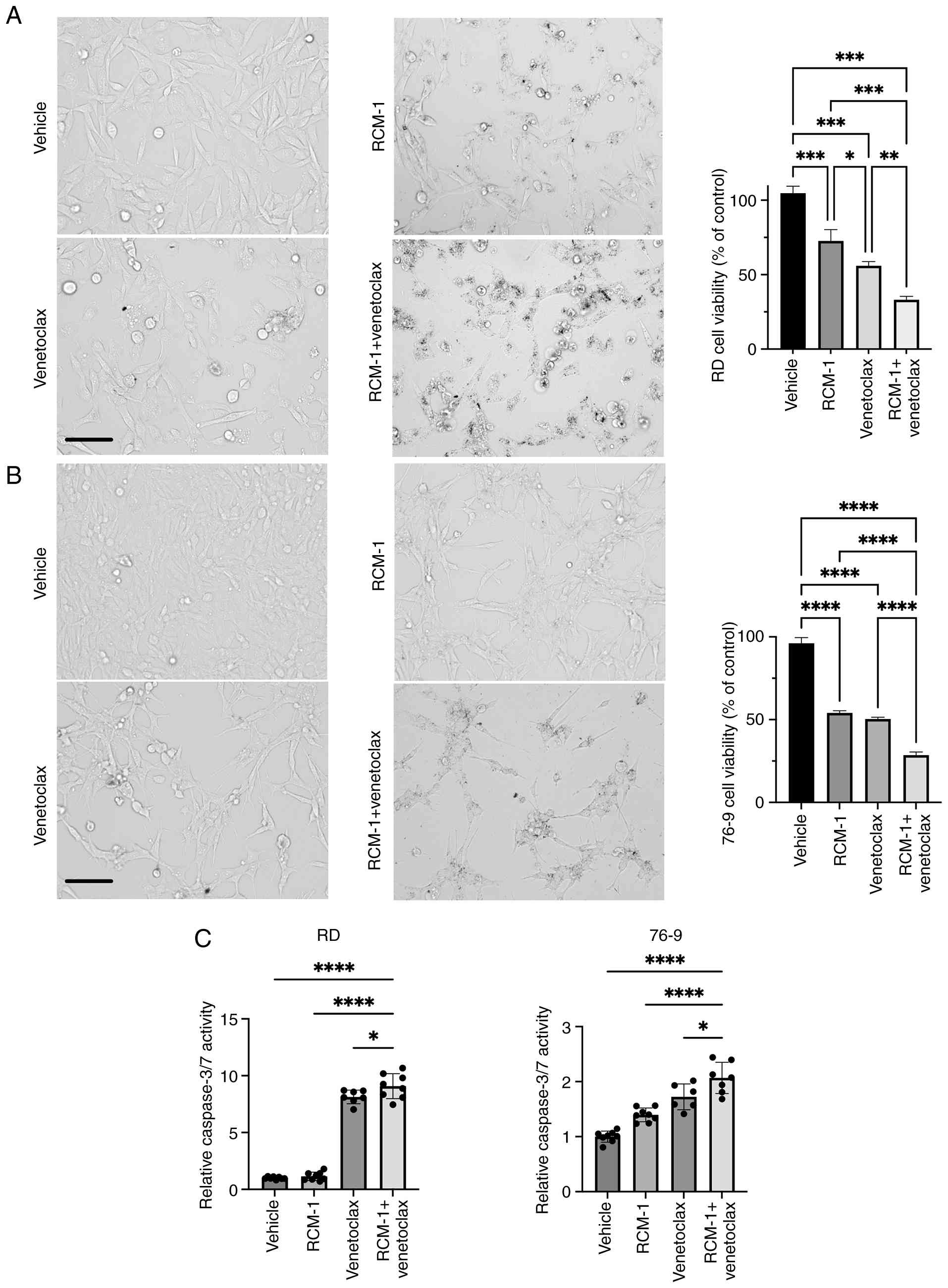
Figure 1

RCM-1 and venetoclax synergistically
reduce RMS tumor cell viability and induce apoptosis in
vitro. Combination therapy of RCM-1 and venetoclax using the
IC50 dose significantly reduced RD and 76-9
rhabdomyosarcoma cell viability compared with a single agent. (A)
Light microscopy images of RD cells treated with vehicle, single
agent RCM-1, venetocalx, or combination therapy. (B) The same
experiment was performed using 76-9 tumor cells. (C) Combination
therapy significantly enhanced apoptosis in RD and 76-9 cells
compared with either agent alone. Values are shown as mean ± SD.
*P≤0.05, **P≤0.01, ***P≤0.001,
****P≤0.0001. Scale bar, 100 μm. RMS,
rhabdomyosarcoma; IC50, half-maximal inhibitory
concentrations.

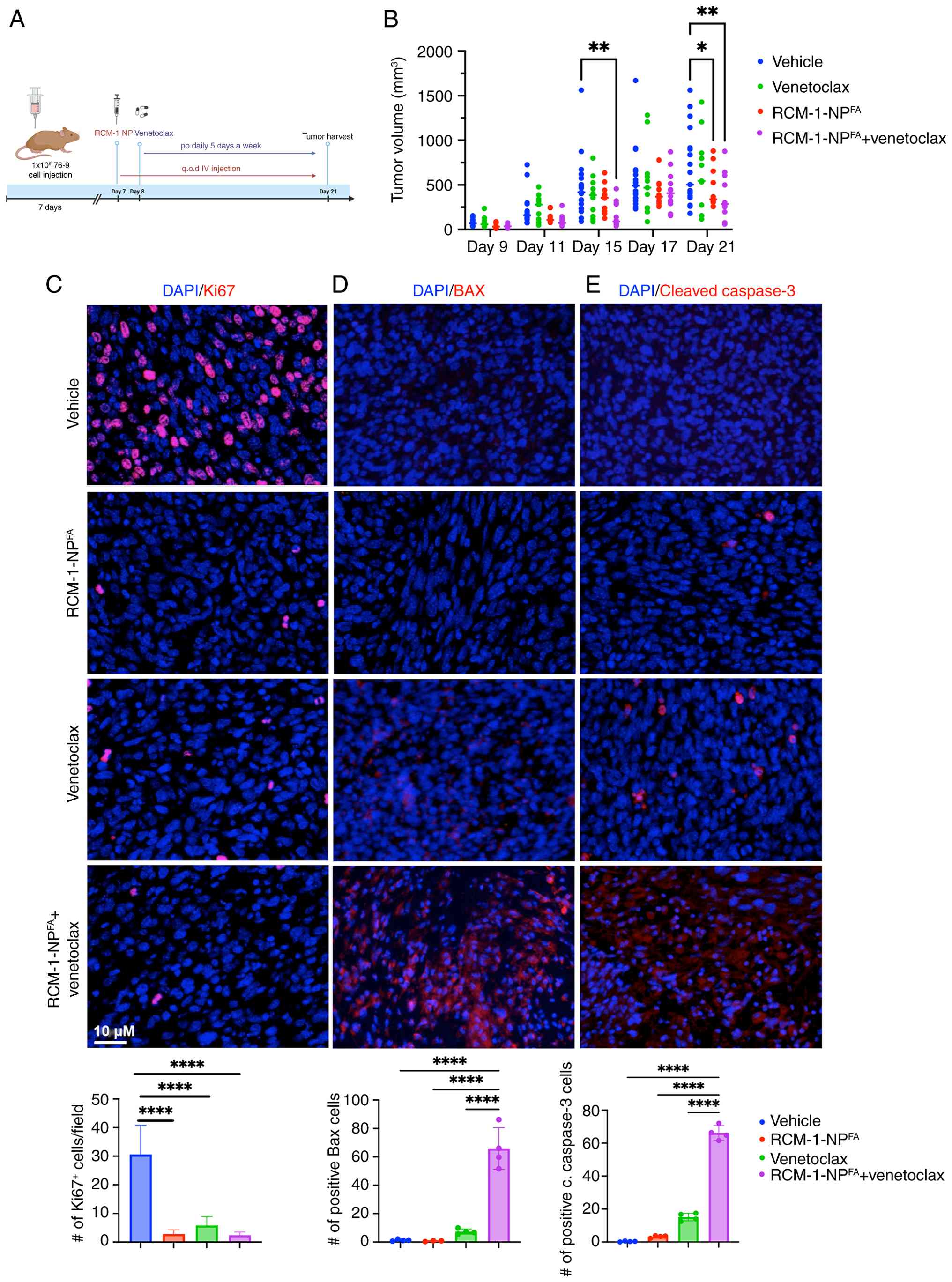
Figure 2

The combination of
RCM1-NPFA and venetoclax decreases tumor growth and
enhances caspase-mediated apoptosis in a murine RMS model. (A)
Schematic diagram of tumor cells inoculation and treatment. The
figure is created in BioRender. Merjaneh, N. (2024) https://BioRender.com/z67t342. (B) Combination
therapy significantly reduced tumor burden compared with vehicle.
The mean vehicle tumor volume on day 21 was 685 mm3,
compared with the average tumor volume of the combination therapy
of 361 mm3. The maximum tumor diameter was 17.3×11.5 mm
and the corresponding maximum tumor volume was 1,144
mm3. Tumor volume was measured at different time points
during the experiment (P≤0.01; n=12). (C) Combination therapy
inhibited proliferation, as indicated by the decreased number of
Ki67-positive cells. Combination therapy increased apoptosis, shown
by the increased number of (D) BAX-positive cells and (E) the
number of caspase3-positive cells compared with single agents
and/or vehicle. A total of five random fields per sample were used
to quantify the number of Ki67, BAX and cleaved caspase 3 positive
cells per group. Values are shown as mean ± SD. Scale bar, 10
μm. *P≤0.05, **P≤0.01,
****P≤0.0001. RMS, rhabdomyosarcoma.

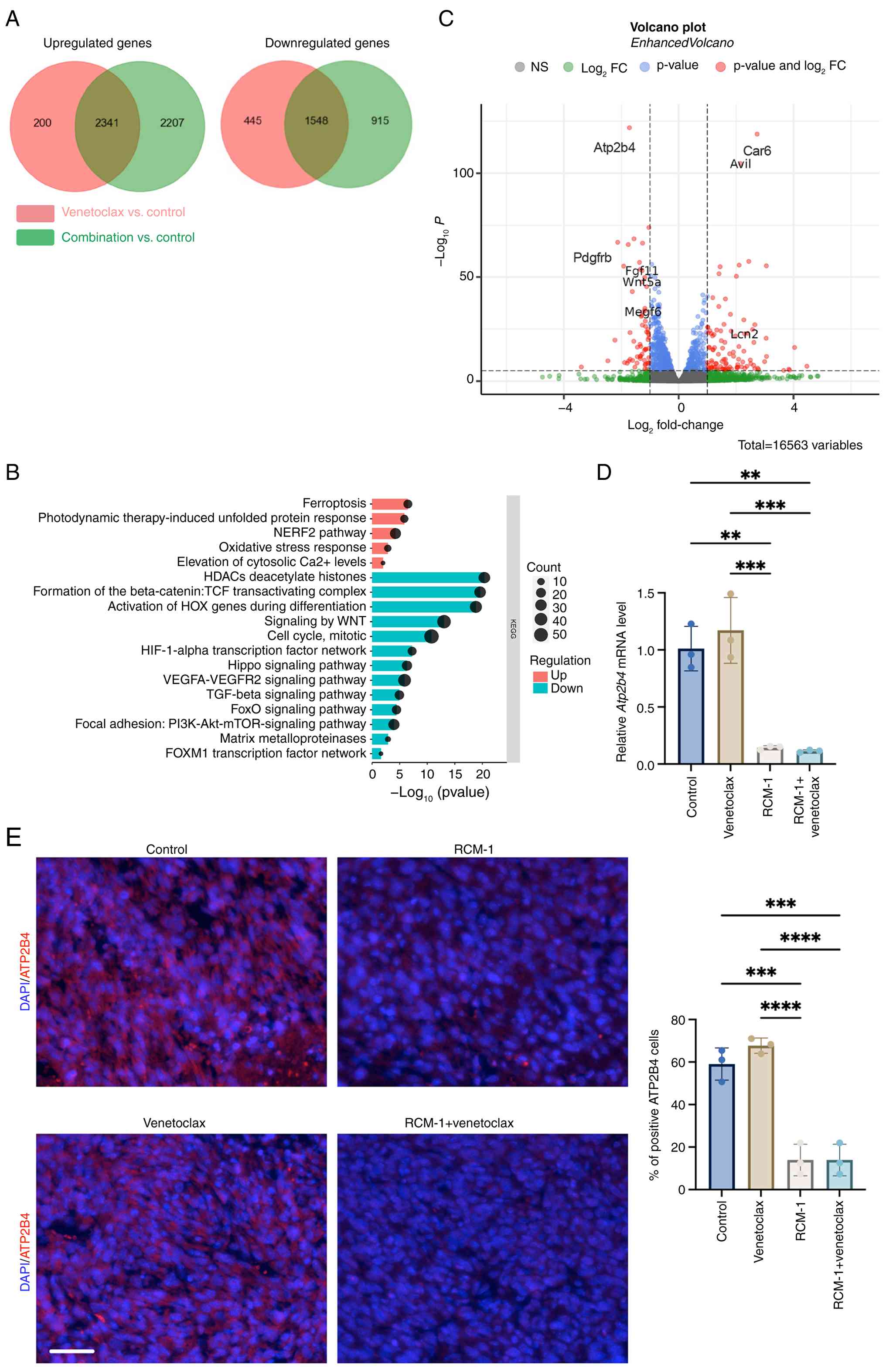
Figure 3

Combination treatment with RCM-1 and
venetoclax reveals a unique genetic profile in 76-9 cells. (A) Venn
diagrams illustrated the overlap of differentially expressed genes
between the combination therapy and venetoclax compared with the
control. (B) Gene set enrichment analysis of RNA-sequencing data
highlighted the upregulated pathways in the combination therapy
relative to venetoclax, such as ferroptosis and elevated cytosolic
Ca+2 level, as well as the downregulated pathways, such
as WNT signaling pathway, mitotic cell cycle and angiogenesis
pathway. (C) Volcano plot identified the differentially expressed
genes in the combination therapy vs. venetoclax. Atp2b4 was
notably downregulated in the combination therapy. (D) Reverse
transcription-quantitative PCR showed the downregulation of
Atp2b4 in 76-9 cells treated with RCM-1 and combination
therapy. Actb mRNA was used for normalization (E) Protein
levels of ATP2B4 were decreased after RCM-1 and the combination
treatments, as shown by immunofluorescence using ATP2B4 antibodies.
A total of five random fields per sample were used to quantify the
percentage of ATP2B4-positive cells per group. Scale bar, 10
μm. Data presented as mean ± SD. **P≤0.01,
***P≤0.001, ****P≤0.0001.

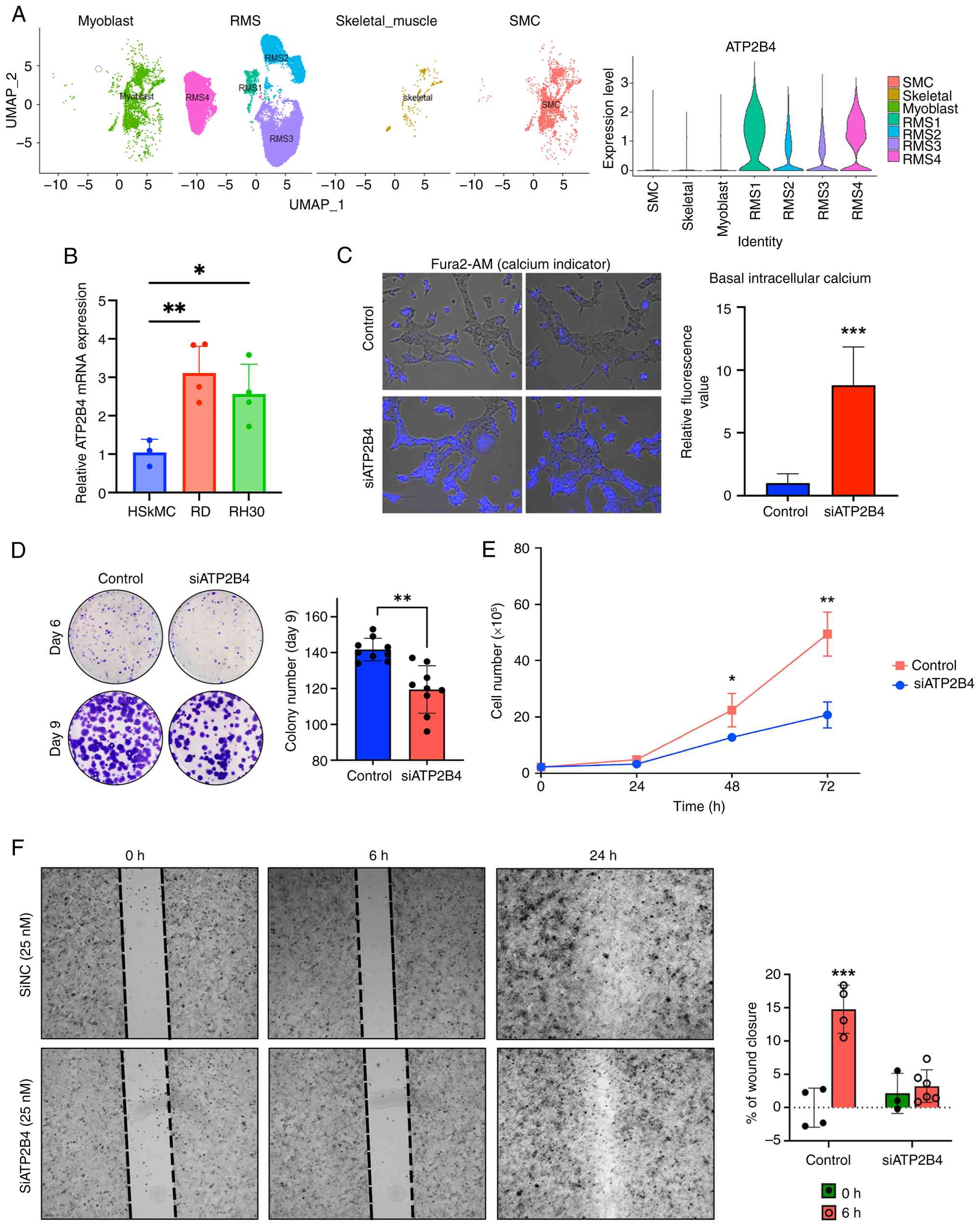
Figure 4

ATP2B4 is differentially
overexpressed in RMS cells vs. normal muscle cells and its
knockdown decreases tumor cell proliferation, migration and colony
formation. (A) Left panel, Human myoblast (muscle progenitor
cells), RMS, normal skeletal muscle and smooth muscle scRNA
sequencing datasets were visualized using UMAP. Data were extracted
from GSE143704 for normal muscle tissue, GSE 195709 for RMS (RMS1
and 3 are fusion-negative RMS, RMS2 is fusion-positive and RMS4 is
spindle (fusion-negative). Right panel, ATP2B4 mRNA
expression was higher in RMS cells compared with normal muscle
cells. (B) Reverse transcription-quantitative PCR showed the
upregulation of ATP2B4 mRNA level in RMS cells (RD and RH30)
compared with HSkMC. (C) Knockdown of ATP2B4 increased the
intracellular calcium level. Calcium level was assessed using the
calcium-sensitive fluorescent dye fura-2 AM. Scale bar, 10
μm. (D) Knockdown of ATP2B4 inhibited colony
formation in 76-9 RMS cells. Data presented as mean ± SD. (E)
Knockdown of ATP2B4 suppressed 76-9 cell proliferation in
culture. Data presented as mean ± SD. (F) ATP2B4 knockdown
decreased RMS cell migration. The percentage of wound closure
presented as mean ± SD (magnification, ×4). *P≤0.05,
**P≤0.01, ***P≤0.001. RMS, rhabdomyosarcoma;
UMAP, Uniform Manifold Approximation and Projection; HSkMC, human
skeletal muscle cells; SMC, smooth muscle cells.

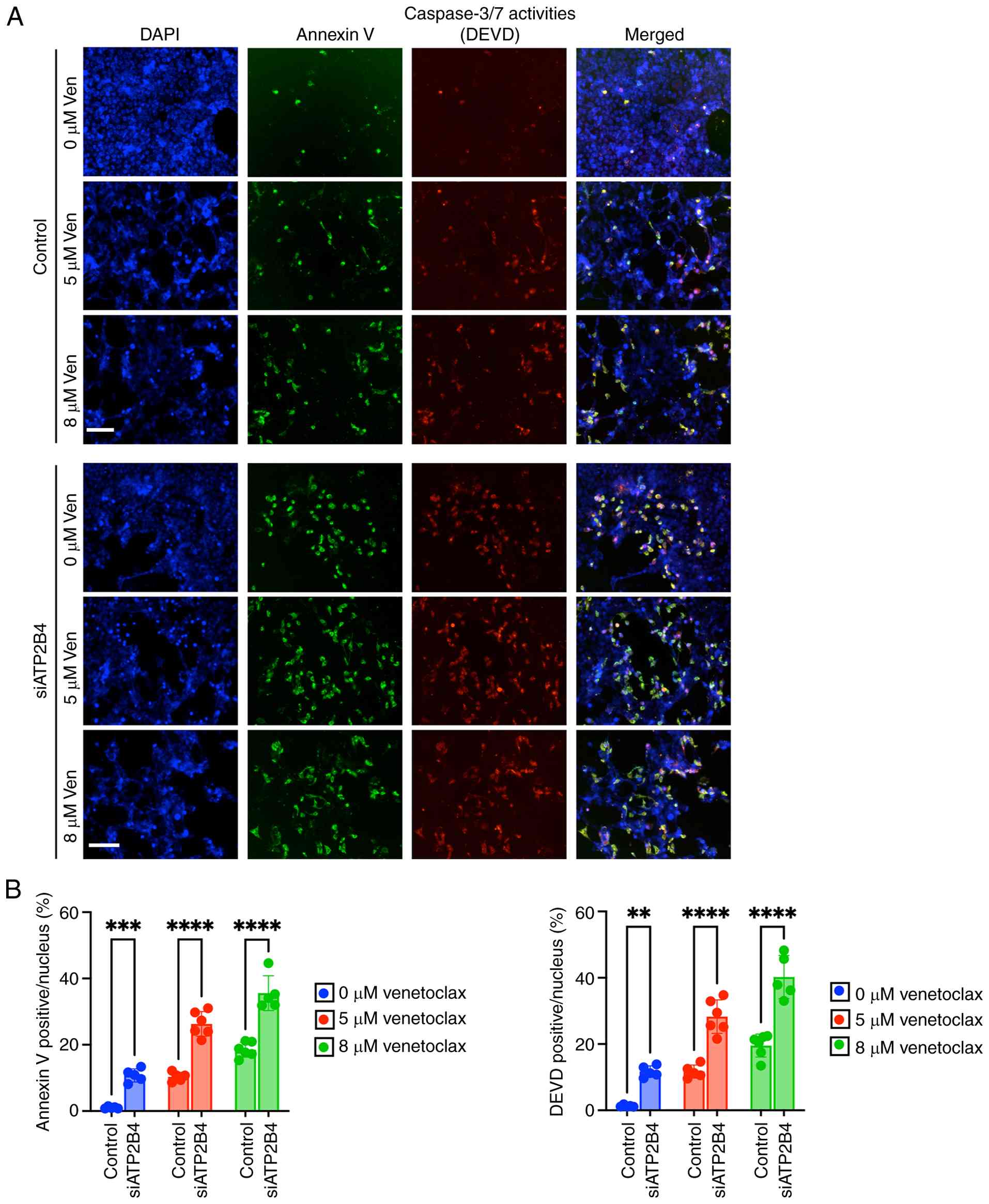
Figure 5

ATP2B4 knockdown enhances
venetoclax-mediated apoptosis in 76-9 RMS cells. (A) Representative
immunofluorescence images from control and siATP2B4 76-9 cells
treated with DMSO, 5 and or 8 mM of venetoclax for 24 h.
Venetoclax-induced dose-dependent apoptosis was measured by caspase
3/7 (DEVD) activity (red) and annexin V (green). Scale bar, 100 mm.
The knockdown of ATP2B4 increased RMS apoptosis compared
with control cells. (B) The percentage of annexin and DEVD positive
cells were counted in five random fields using the EVOS imaging
software and presented as mean ± SD from triplicates of one
experiment. **P≤0.01, ***P≤0.001,
****P≤0.0001. ATP2B4; ATPase Plasma Membrane
Ca2+ Transporting 4; RMS, rhabdomyosarcoma.

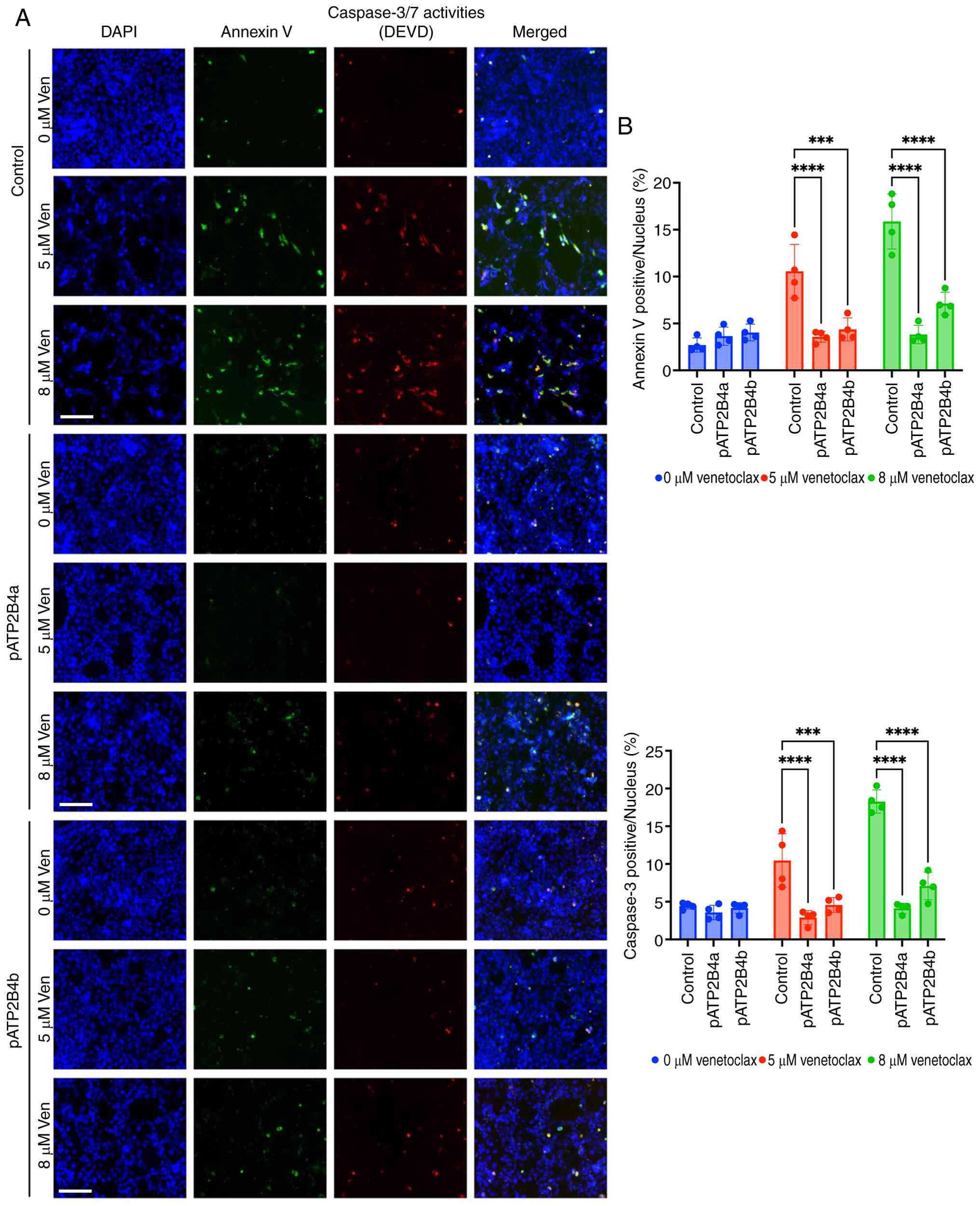
Figure 6

Overexpression of ATP2B4 increases
the resistance of RMS cells to apoptosis. (A) Representative
immunofluorescence images depicting control, pATP2B4a and pATP2B4b
76-9 cells treated with DMSO, 5 mM, or 8 mM of venetoclax for 24 h.
The overexpression of both ATP2B4 isoforms reduced apoptosis
compared with control RMS cells following venetoclax treatment.
Scale bar, 100 mm. (B) The percentage of positive annexin and DEVD
cells were counted in five random fields using the EVOS imaging
software and presented as the mean ± SD from triplicates of one
experiment. ***P≤0.001, ****P≤0.0001. ATP2B4;
ATPase Plasma Membrane Ca2+ Transporting 4; RMS,
rhabdomyosarcoma.

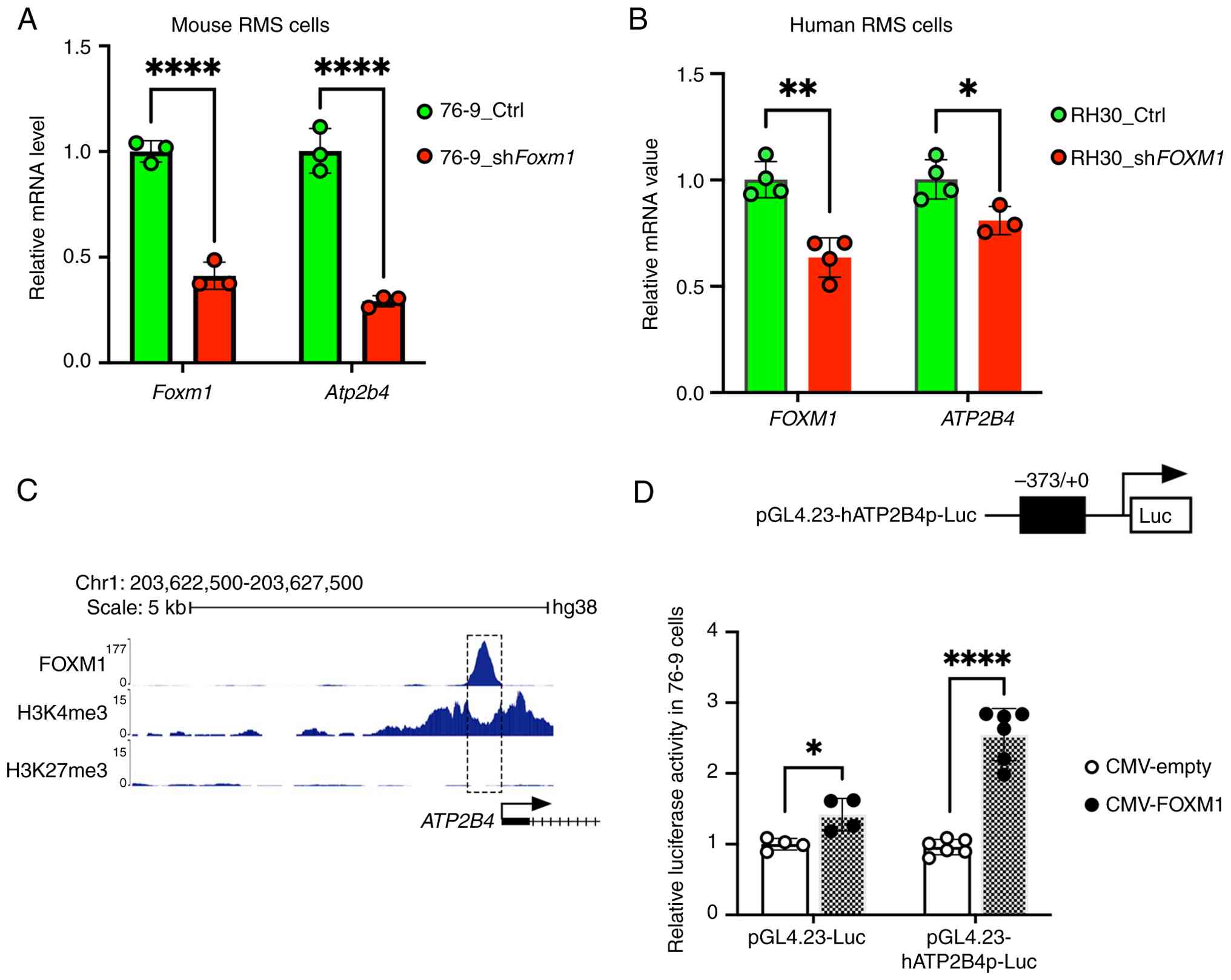
Figure 7

FOXM1 binds the ATP2B4 promotor and
regulates the expression of ATP2B4 in RMS cells. (A) shRNA-mediated
knockdown of Foxm1 reduced Atp2b4 mRNA in 76-9 murine
RMS cells. RT-qPCR showed the efficient knockdown of Foxm1
in 76-9 cells. n=3. P≤0.0001. (B) shRNA-mediated knockdown of
FOXM1 reduced ATP2B4 mRNA in RH30 human RMS cells.
RT-qPCR confirmed the efficient knockdown of FOXM1 in RH30
cells. n=3. P≤0.01 (C) ChIP-seq showed the direct binding of FOXM1
protein to the ATP2B4 promoter region in K562 (human
lymphoblasts). (D) Upper panel, schematic drawing of the
pGL4.23-ATP2B4-Luc construct. Lower panel, 76-9 cells were
co-infected with the luciferase reporter, Renilla and either
a CMV-empty or CMV-Foxm1 overexpressed plasmid. The CMV-Foxm1
expression vector increased the transcriptional activity of the
Atp2b4 promoter region compared with the CMV-empty vector
(P<0.0001). *P≤0.05, **P≤0.01,
****P≤0.0001. FOXM1, Forkhead box protein M1; ATP2B4;
ATPase Plasma Membrane Ca2+ Transporting 4; RMS,
rhabdomyosarcoma; sh, short hairpin; RT-qPCR, reverse
transcription-quantitative PCR.

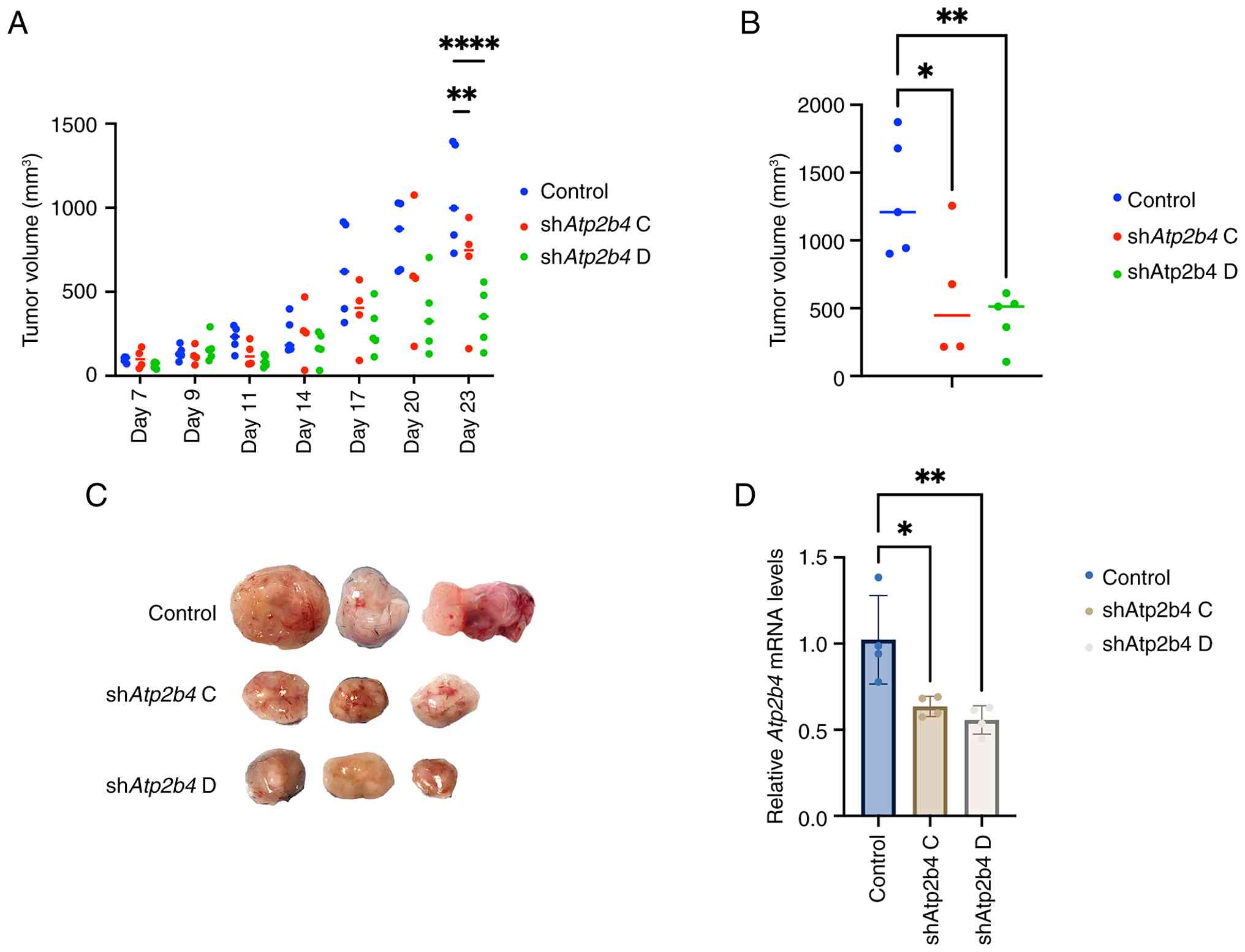
Figure 8

The knockdown of ATP2B4 slows RMS
tumor growth. (A) Control and shAtp2b4 76-9 cells were
inoculated subcutaneously into the flank of C57Bl/6J mice. Tumor
volume measured at different time points. Knockdown of ATP2B4
significantly impaired tumor growth compared with control mice (n=5
per group; presented as the mean ± SD). (B) Tumor volumes measured
after tumor harvest show smaller shAtp2b4 tumors. The
average vehicle tumor volume was 1,321 mm3 compared with
592 mm3 for shAtp2b4 C and 468 mm3 for
shAtp2b4 D. The maximum tumor diameter was 15.56×13.39 mm
and the corresponding maximum tumor volume was 1,395
mm3. (C) Gross images of control and shAtp2b4 RMS
tumors. (D) Reverse transcription-quantitative PCR analysis of mRNA
isolated from tumors confirmed ~50% knockdown efficiency in
shAtp2b4-expressing tumors. *P≤0.05,
**P≤0.01, ****P≤0.0001. ATP2B4; ATPase Plasma
Membrane Ca2+ Transporting 4; RMS, rhabdomyosarcoma; sh,
short hairpin.
View References

1 

Martin-Giacalone BA, Weinstein PA, Plon SE and Lupo PJ: Pediatric rhabdomyosarcoma: Epidemiology and genetic susceptibility. J Clin Med. 10:20282021. View Article : Google Scholar : PubMed/NCBI

2 

McEvoy MT, Siegel DA, Dai S, Okcu MF, Zobeck M, Venkatramani R and Lupo PJ: Pediatric rhabdomyosarcoma incidence and survival in the United States: An assessment of 5656 cases, 2001-2017. Cancer Med. 12:3644–3656. 2023. View Article : Google Scholar :

3 

Oberlin O, Rey A, Lyden E, Bisogno G, Stevens MCG, Meyer WH, Carli M and Anderson JR: Prognostic factors in metastatic rhabdomyosarcomas: Results of a pooled analysis from United States and European cooperative groups. J Clin Oncol. 26:2384–2389. 2008. View Article : Google Scholar : PubMed/NCBI

4 

Weigel BJ, Lyden E, Anderson JR, Meyer WH, Parham DM, Rodeberg DA, Michalski JM, Hawkins DS and Arndt CA: Intensive multiagent therapy, including dose-compressed cycles of ifosfamide/etoposide and vincristine/doxorubicin/cyclophosphamide, irinotecan, and radiation, in patients with high-risk rhabdomyosarcoma: A report from the children's oncology group. J Clin Oncol. 34:117–122. 2016. View Article : Google Scholar :

5 

Clark KL, Halay ED, Lai E and Burley SK: Co-crystal structure of the HNF-3/fork head DNA-recognition motif resembles histone H5. Nature. 364:412–420. 1993. View Article : Google Scholar : PubMed/NCBI

6 

Kalin TV, Ustiyan V and Kalinichenko VV: Multiple faces of FoxM1 transcription factor: Lessons from transgenic mouse models. Cell Cycle. 10:396–405. 2011. View Article : Google Scholar : PubMed/NCBI

7 

Milewski D, Balli D, Ustiyan V, Le T, Dienemann H, Warth A, Breuhahn K, Whitsett JA, Kalinichenko VV and Kalin TV: FOXM1 activates AGR2 and causes progression of lung adenomas into invasive mucinous adenocarcinomas. PLoS Genet. 13:e10070972017. View Article : Google Scholar : PubMed/NCBI

8 

Weiler SME, Pinna F, Wolf T, Lutz T, Geldiyev A, Sticht C, Knaub M, Thomann S, Bissinger M, Wan S, et al: Induction of chromosome instability by activation of yes-associated protein and forkhead box M1 in liver cancer. Gastroenterology. 152:2037–2051.e22. 2017. View Article : Google Scholar : PubMed/NCBI

9 

Cheng XH, Black M, Ustiyan V, Le T, Fulford L, Sridharan A, Medvedovic M, Kalinichenko VV, Whitsett JA and Kalin TV: SPDEF inhibits prostate carcinogenesis by disrupting a positive feedback loop in regulation of the Foxm1 oncogene. PLoS Genet. 10:e10046562014. View Article : Google Scholar : PubMed/NCBI

10 

Wang IC, Ustiyan V, Zhang Y, Cai Y, Kalin TV and Kalinichenko VV: Foxm1 transcription factor is required for the initiation of lung tumorigenesis by oncogenic Kras(G12D.). Oncogene. 33:5391–5396. 2014. View Article : Google Scholar

11 

Cai Y, Balli D, Ustiyan V, Fulford L, Hiller A, Misetic V, Zhang Y, Paluch AM, Waltz SE, Kasper S and Kalin TV: Foxm1 expression in prostate epithelial cells is essential for prostate carcinogenesis. J Biol Chem. 288:22527–22541. 2013. View Article : Google Scholar : PubMed/NCBI

12 

Balli D, Ren X, Chou FS, Cross E, Zhang Y, Kalinichenko VV and Kalin TV: Foxm1 transcription factor is required for macrophage migration during lung inflammation and tumor formation. Oncogene. 31:3875–3888. 2012. View Article : Google Scholar

13 

Li L, Wu D, Yu Q, Li L and Wu P: Prognostic value of FOXM1 in solid tumors: A systematic review and meta-analysis. Oncotarget. 8:32298–32308. 2017. View Article : Google Scholar : PubMed/NCBI

14 

Kuda M, Kohashi K, Yamada Y, Maekawa A, Kinoshita Y, Nakatsura T, Iwamoto Y, Taguchi T and Oda Y: FOXM1 expression in rhabdomyosarcoma: A novel prognostic factor and therapeutic target. Tumour Biol. 37:5213–5223. 2016. View Article : Google Scholar

15 

Nestal de Moraes G, Bella L, Zona S, Burton MJ and Lam EWF: Insights into a critical role of the FOXO3a-FOXM1 axis in DNA damage response and genotoxic drug resistance. Curr Drug Targets. 17:164–177. 2016. View Article : Google Scholar

16 

Merjaneh N, Hajjar M, Lan YW, Kalinichenko VV and Kalin TV: The promise of combination therapies with FOXM1 inhibitors for cancer treatment. Cancers (Basel). 16:7562024. View Article : Google Scholar : PubMed/NCBI

17 

Ustiyan V, Zhang Y, Perl AKT, Whitsett JA, Kalin TV and Kalinichenko VV: β-catenin and Kras/Foxm1 signaling pathway are critical to restrict Sox9 in basal cells during pulmonary branching morphogenesis. Dev Dyn. 245:590–604. 2016. View Article : Google Scholar : PubMed/NCBI

18 

Sun L, Ren X, Wang IC, Pradhan A, Zhang Y, Flood HM, Han B, Whitsett JA, Kalin TV and Kalinichenko VV: The FOXM1 inhibitor RCM-1 suppresses goblet cell metaplasia and prevents IL-13 and STAT6 signaling in allergen-exposed mice. Sci Signal. 10:eaai85832017. View Article : Google Scholar : PubMed/NCBI

19 

Shukla S, Milewski D, Pradhan A, Rama N, Rice K, Le T, Flick MJ, Vaz S, Zhao X, Setchell KD, et al: The FOXM1 inhibitor RCM-1 decreases carcinogenesis and nuclear β-catenin. Mol Cancer Ther. 18:1217–1229. 2019. View Article : Google Scholar : PubMed/NCBI

20 

Donovan J, Deng Z, Bian F, Shukla S, Gomez-Arroyo J, Shi D, Kalinichenko VV and Kalin TV: Improving anti-tumor efficacy of low-dose vincristine in rhabdomyosarcoma via the combination therapy with FOXM1 inhibitor RCM1. Front Oncol. 13:11128592023. View Article : Google Scholar : PubMed/NCBI

21 

Fairlie WD and Lee EF: Targeting the BCL-2-regulated apoptotic pathway for the treatment of solid cancers. Biochem Soc Trans. 49:2397–2410. 2021. View Article : Google Scholar : PubMed/NCBI

22 

Steinert DM, Salganick J, Ballo M, Zhang W, Munsell M, Raney B, Jaffe N, Koh J, El-Naggar A and Trent J: Expression of Bax and Bcl-2 in human rhabdomyosarcoma: Correlation with survival in 64 patients. J Clin Oncol. 23(Suppl 16): S90412005. View Article : Google Scholar

23 

Armistead PM, Salganick J, Roh JS, Steinert DM, Patel S, Munsell M, El-Naggar AK, Benjamin RS, Zhang W and Trent JC: Expression of receptor tyrosine kinases and apoptotic molecules in rhabdomyosarcoma: Correlation with overall survival in 105 patients. Cancer. 110:2293–2303. 2007. View Article : Google Scholar : PubMed/NCBI

24 

Ploumaki I, Triantafyllou E, Koumprentziotis IA, Karampinos K, Drougkas K, Karavolias I, Trontzas I and Kotteas EA: Bcl-2 pathway inhibition in solid tumors: A review of clinical trials. Clin Transl Oncol. 25:1554–1578. 2023. View Article : Google Scholar : PubMed/NCBI

25 

Heinicke U, Haydn T, Kehr S, Vogler M and Fulda S: BCL-2 selective inhibitor ABT-199 primes rhabdomyosarcoma cells to histone deacetylase inhibitor-induced apoptosis. Oncogene. 37:5325–5339. 2018. View Article : Google Scholar : PubMed/NCBI

26 

Alcon C, Manzano-Muñoz A, Prada E, Mora J, Soriano A, Guillén G, Gallego S, Roma J, Samitier J, Villanueva A and Montero J: Sequential combinations of chemotherapeutic agents with BH3 mimetics to treat rhabdomyosarcoma and avoid resistance. Cell Death Dis. 11:6342020. View Article : Google Scholar : PubMed/NCBI

27 

Alcon C, Martín F, Prada E, Mora J, Soriano A, Guillén G, Gallego S, Roma J, Samitier J, Villanueva A and Montero J: MEK and MCL-1 sequential inhibition synergize to enhance rhabdomyosarcoma treatment. Cell Death Discov. 8:1722022. View Article : Google Scholar : PubMed/NCBI

28 

Goldsmith KC, Verschuur A, Morgenstern DA, van Eijkelenburg N, Federico SM, Fraser C, Forlenza CJ, Ziegler DS, Gerber NU, Khaw AL, et al: The first report of pediatric patients with solid tumors treated with venetoclax. J Clin Oncol. 38(15 Suppl): S105242020. View Article : Google Scholar

29 

Hinson ARP, Jones R, Crose LES, Belyea BC, Barr FG and Linardic CM: Human rhabdomyosarcoma cell lines for rhabdomyosarcoma research: Utility and pitfalls. Front Oncol. 3:1832013. View Article : Google Scholar : PubMed/NCBI

30 

Leddon JL, Chen CY, Currier MA, Wang PY, Jung FA, Denton NL, Cripe KM, Haworth KB, Arnold MA, Gross AC, et al: Oncolytic HSV virotherapy in murine sarcomas differentially triggers an antitumor T-cell response in the absence of virus permissivity. Mol Ther Oncolytics. 1:140102015. View Article : Google Scholar : PubMed/NCBI

31 

Milewski D, Pradhan A, Wang X, Cai Y, Le T, Turpin B, Kalinichenko VV and Kalin TV: FoxF1 and FoxF2 transcription factors synergistically promote rhabdomyosarcoma carcinogenesis by repressing transcription of p21Cip1 CDK inhibitor. Oncogene. 36:850–862. 2017. View Article : Google Scholar :

32 

Sun F, Wang G, Pradhan A, Xu K, Gomez-Arroyo J, Zhang Y, Kalin GT, Deng Z, Vagnozzi RJ, He H, et al: Nanoparticle delivery of STAT3 alleviates pulmonary hypertension in a mouse model of alveolar capillary dysplasia. Circulation. 144:539–555. 2021. View Article : Google Scholar : PubMed/NCBI

33 

Deng Z, Lin J, Bud'ko SL, Webster B, Kalin TV, Kalinichenko VV and Shi D: Dual targeting with cell surface electrical charge and folic acid via superparamagnetic Fe3O4@Cu2-xS for photothermal cancer cell killing. Cancers (Basel). 13:52752021. View Article : Google Scholar

34 

Deng Z, Gao W, Kohram F, Li E, Kalin TV, Shi D and Kalinichenko VV: Fluorinated amphiphilic Poly(β-Amino ester) nanoparticle for highly efficient and specific delivery of nucleic acids to the Lung capillary endothelium. Bioact Mater. 31:1–17. 2023.

35 

Milewski D, Shukla S, Gryder BE, Pradhan A, Donovan J, Sudha P, Vallabh S, Pyros A, Xu Y, Barski A, et al: FOXF1 is required for the oncogenic properties of PAX3-FOXO1 in rhabdomyosarcoma. Oncogene. 40:2182–2199. 2021. View Article : Google Scholar : PubMed/NCBI

36 

Singh S, Uppuluri P, Mamouei Z, Alqarihi A, Elhassan H, French S, Lockhart SR, Chiller T, Edwards JE Jr and Ibrahim AS: The NDV-3A vaccine protects mice from multidrug resistant Candida auris infection. PLoS Pathog. 15:e10074602019. View Article : Google Scholar : PubMed/NCBI

37 

Li Z, Wang H, Li S, Deng B, Zhang W, Wu P, Li W, Xin P, Zhao L and Gao S: Anti-pseudomonas aeruginosa activity of the scorpion-derived peptide GK8. Probiotics Antimicrob Proteins. Jul 3–2025.Epub ahead of print.

38 

Acharya A, Bian F, Gomez-Arroyo J, Wagner KA, Kalinichenko VV and Kalin TV: Hypoxia represses FOXF1 in lung endothelial cells through HIF-1α. Front Physiol. 14:13091552024. View Article : Google Scholar

39 

Shukla S, Saha T, Rama N, Acharya A, Le T, Bian F, Donovan J, Tan LA, Vatner R, Kalinichenko V, et al: Ultra-high dose-rate proton FLASH improves tumor control. Radiother Oncol. 186:1097412023. View Article : Google Scholar : PubMed/NCBI

40 

Livak KJ and Schmittgen TD: Analysis of relative gene expression data using real-time quantitative PCR and the 2(-Delta Delta C(T)) method. Methods. 25:402–408. 2001. View Article : Google Scholar

41 

Love MI, Huber W and Anders S: Moderated estimation of fold change and dispersion for RNA-seq data with DESeq2. Genome Biol. 15:5502014. View Article : Google Scholar : PubMed/NCBI

42 

Emig D, Salomonis N, Baumbach J, Lengauer T, Conklin BR and Albrecht M: AltAnalyze and DomainGraph: Analyzing and visualizing exon expression data. Nucleic Acids Res. 38:W755–W762. 2010. View Article : Google Scholar : PubMed/NCBI

43 

Chen J, Bardes EE, Aronow BJ and Jegga AG: ToppGene Suite for gene list enrichment analysis and candidate gene prioritization. Nucleic Acids Res. 37:W305–W311. 2009. View Article : Google Scholar : PubMed/NCBI

44 

Tang D, Chen M, Huang X, Zhang G, Zeng L, Zhang G, Wu S and Wang Y: SRplot: A free online platform for data visualization and graphing. PLoS One. 18:e02942362023. View Article : Google Scholar : PubMed/NCBI

45 

De Micheli AJ, Spector JA, Elemento O and Cosgrove BD: A reference single-cell transcriptomic atlas of human skeletal muscle tissue reveals bifurcated muscle stem cell populations. Skelet Muscle. 10:192020. View Article : Google Scholar : PubMed/NCBI

46 

Wei Y, Qin Q, Yan C, Hayes MN, Garcia SP, Xi H, Do D, Jin AH, Eng TC, McCarthy KM, et al: Single-cell analysis and functional characterization uncover the stem cell hierarchies and developmental origins of rhabdomyosarcoma. Nat Cancer. 3:961–975. 2022. View Article : Google Scholar : PubMed/NCBI

47 

Dalton KM, Krytska K, Lochmann TL, Sano R, Casey C, D'Aulerio A, Khan QA, Crowther GS, Coon C, Cai J, et al: Venetoclax-based rational combinations are effective in models of MYCN-amplified neuroblastoma. Mol Cancer Ther. 20:1400–1411. 2021. View Article : Google Scholar : PubMed/NCBI

48 

Curry MC, Luk NA, Kenny PA, Roberts-Thomson SJ and Monteith GR: Distinct regulation of cytoplasmic calcium signals and cell death pathways by different plasma membrane calcium ATPase isoforms in MDA-MB-231 breast cancer cells. J Biol Chem. 287:28598–28608. 2012. View Article : Google Scholar : PubMed/NCBI

49 

Sritangos P, Pena Alarcon E, James AD, Sultan A, Richardson DA and Bruce JIE: Plasma membrane Ca2+ ATPase isoform 4 (PMCA4) has an important role in numerous hallmarks of pancreatic cancer. Cancers (Basel). 12:2182020. View Article : Google Scholar

50 

Naffa R, Hegedűs L, Hegedűs T, Tóth S, Papp B, Tordai A and Enyedi Á: Plasma membrane Ca2+ pump isoform 4 function in cell migration and cancer metastasis. J Physiol. 602:1551–1564. 2024. View Article : Google Scholar

51 

ENCODE Project Consortium: An integrated encyclopedia of DNA elements in the human genome. Nature. 489:57–74. 2012. View Article : Google Scholar : PubMed/NCBI

52 

Zhang J, Liu J, Lee D, Lou S, Chen Z, Gürsoy G and Gerstein M: DiNeR: A differential graphical model for analysis of co-regulation network rewiring. BMC Bioinformatics. 21:2812020. View Article : Google Scholar : PubMed/NCBI

53 

Ruymann FB: The development of VAC chemotherapy in rhabdomyosarcoma: What does one do for an encore? Curr Oncol Rep. 5:505–509. 2003. View Article : Google Scholar : PubMed/NCBI

54 

Nguyen TH and Barr FG: Therapeutic approaches targeting PAX3-FOXO1 and its regulatory and transcriptional pathways in rhabdomyosarcoma. Molecules. 23:27982018. View Article : Google Scholar : PubMed/NCBI

55 

Chen C, Dorado Garcia H, Scheer M and Henssen AG: Current and future treatment strategies for rhabdomyosarcoma. Front Oncol. 9:14582019. View Article : Google Scholar

56 

Kalinichenko VV and Kalin TV: Is there potential to target FOXM1 for 'undruggable' lung cancers? Expert Opin Ther Targets. 19:865–867. 2015. View Article : Google Scholar : PubMed/NCBI

57 

Black M, Arumugam P, Shukla S, Pradhan A, Ustiyan V, Milewski D, Kalinichenko VV and Kalin TV: FOXM1 nuclear transcription factor translocates into mitochondria and inhibits oxidative phosphorylation. Mol Biol Cell. 31:1411–1424. 2020. View Article : Google Scholar : PubMed/NCBI

58 

Stafford N, Wilson C, Oceandy D, Neyses L and Cartwright EJ: The plasma membrane calcium ATPases and their role as major new players in human disease. Physiol Rev. 97:1089–1125. 2017. View Article : Google Scholar : PubMed/NCBI

59 

James AD, Chan A, Erice O, Siriwardena AK and Bruce JIE: Glycolytic ATP fuels the plasma membrane calcium pump critical for pancreatic cancer cell survival. J Biol Chem. 288:36007–36019. 2013. View Article : Google Scholar : PubMed/NCBI

60 

Hegedũs L, Garay T, Molnár E, Varga K, Bilecz Á, Török S, Padányi R, Pászty K, Wolf M, Grusch M, et al: The plasma membrane Ca2+ pump PMCA4b inhibits the migratory and metastatic activity of BRAF mutant melanoma cells. Int J Cancer. 140:2758–2770. 2017. View Article : Google Scholar

61 

Ribiczey P, Tordai A, Andrikovics H, Filoteo AG, Penniston JT, Enouf J, Enyedi A, Papp B and Kovács T: Isoform-specific up-regulation of plasma membrane Ca2+ATPase expression during colon and gastric cancer cell differentiation. Cell Calcium. 42:590–605. 2007. View Article : Google Scholar : PubMed/NCBI

62 

Aung C, Kruger W, Poronnik P, Roberts-Thomson S and Monteith G: Plasma membrane Ca2+-ATPase expression during colon cancer cell line differentiation. Biochem Biophys Res Commun. 355:932–936. 2007. View Article : Google Scholar : PubMed/NCBI

63 

Sloan CA, Chan ET, Davidson JM, Malladi VS, Strattan JS, Hitz BC, Gabdank I, Narayanan AK, Ho M, Lee BT, et al: ENCODE data at the ENCODE portal. Nucleic Acids Res. 44:D726–D732. 2016. View Article : Google Scholar :

Related Articles

  • Abstract
  • View
  • Download
  • Twitter
Copy and paste a formatted citation
Spandidos Publications style
Merjaneh N, Lan Y, Deng Z, Donovan J, Wang G, Do J, Juan T, Xia X, Kalinichenko VV, Kalin TV, Kalin TV, et al: FOXM1 inhibitor, RCM‑1, enhances venetoclax mediated apoptosis through downregulation of ATP2B4 in rhabdomyosarcoma. Int J Oncol 68: 52, 2026.
APA
Merjaneh, N., Lan, Y., Deng, Z., Donovan, J., Wang, G., Do, J. ... Kalin, T.V. (2026). FOXM1 inhibitor, RCM‑1, enhances venetoclax mediated apoptosis through downregulation of ATP2B4 in rhabdomyosarcoma. International Journal of Oncology, 68, 52. https://doi.org/10.3892/ijo.2026.5865
MLA
Merjaneh, N., Lan, Y., Deng, Z., Donovan, J., Wang, G., Do, J., Juan, T., Xia, X., Kalinichenko, V. V., Kalin, T. V."FOXM1 inhibitor, RCM‑1, enhances venetoclax mediated apoptosis through downregulation of ATP2B4 in rhabdomyosarcoma". International Journal of Oncology 68.5 (2026): 52.
Chicago
Merjaneh, N., Lan, Y., Deng, Z., Donovan, J., Wang, G., Do, J., Juan, T., Xia, X., Kalinichenko, V. V., Kalin, T. V."FOXM1 inhibitor, RCM‑1, enhances venetoclax mediated apoptosis through downregulation of ATP2B4 in rhabdomyosarcoma". International Journal of Oncology 68, no. 5 (2026): 52. https://doi.org/10.3892/ijo.2026.5865
Copy and paste a formatted citation
x
Spandidos Publications style
Merjaneh N, Lan Y, Deng Z, Donovan J, Wang G, Do J, Juan T, Xia X, Kalinichenko VV, Kalin TV, Kalin TV, et al: FOXM1 inhibitor, RCM‑1, enhances venetoclax mediated apoptosis through downregulation of ATP2B4 in rhabdomyosarcoma. Int J Oncol 68: 52, 2026.
APA
Merjaneh, N., Lan, Y., Deng, Z., Donovan, J., Wang, G., Do, J. ... Kalin, T.V. (2026). FOXM1 inhibitor, RCM‑1, enhances venetoclax mediated apoptosis through downregulation of ATP2B4 in rhabdomyosarcoma. International Journal of Oncology, 68, 52. https://doi.org/10.3892/ijo.2026.5865
MLA
Merjaneh, N., Lan, Y., Deng, Z., Donovan, J., Wang, G., Do, J., Juan, T., Xia, X., Kalinichenko, V. V., Kalin, T. V."FOXM1 inhibitor, RCM‑1, enhances venetoclax mediated apoptosis through downregulation of ATP2B4 in rhabdomyosarcoma". International Journal of Oncology 68.5 (2026): 52.
Chicago
Merjaneh, N., Lan, Y., Deng, Z., Donovan, J., Wang, G., Do, J., Juan, T., Xia, X., Kalinichenko, V. V., Kalin, T. V."FOXM1 inhibitor, RCM‑1, enhances venetoclax mediated apoptosis through downregulation of ATP2B4 in rhabdomyosarcoma". International Journal of Oncology 68, no. 5 (2026): 52. https://doi.org/10.3892/ijo.2026.5865
Follow us
  • Twitter
  • LinkedIn
  • Facebook
About
  • Spandidos Publications
  • Careers
  • Cookie Policy
  • Privacy Policy
How can we help?
  • Help
  • Live Chat
  • Contact
  • Email to our Support Team