Spandidos Publications Logo
  • About
    • About Spandidos
    • Aims and Scopes
    • Abstracting and Indexing
    • Editorial Policies
    • Reprints and Permissions
    • Job Opportunities
    • Terms and Conditions
    • Contact
  • Journals
    • All Journals
    • Oncology Letters
      • Oncology Letters
      • Information for Authors
      • Editorial Policies
      • Editorial Board
      • Aims and Scope
      • Abstracting and Indexing
      • Bibliographic Information
      • Archive
    • International Journal of Oncology
      • International Journal of Oncology
      • Information for Authors
      • Editorial Policies
      • Editorial Board
      • Aims and Scope
      • Abstracting and Indexing
      • Bibliographic Information
      • Archive
    • Molecular and Clinical Oncology
      • Molecular and Clinical Oncology
      • Information for Authors
      • Editorial Policies
      • Editorial Board
      • Aims and Scope
      • Abstracting and Indexing
      • Bibliographic Information
      • Archive
    • Experimental and Therapeutic Medicine
      • Experimental and Therapeutic Medicine
      • Information for Authors
      • Editorial Policies
      • Editorial Board
      • Aims and Scope
      • Abstracting and Indexing
      • Bibliographic Information
      • Archive
    • International Journal of Molecular Medicine
      • International Journal of Molecular Medicine
      • Information for Authors
      • Editorial Policies
      • Editorial Board
      • Aims and Scope
      • Abstracting and Indexing
      • Bibliographic Information
      • Archive
    • Biomedical Reports
      • Biomedical Reports
      • Information for Authors
      • Editorial Policies
      • Editorial Board
      • Aims and Scope
      • Abstracting and Indexing
      • Bibliographic Information
      • Archive
    • Oncology Reports
      • Oncology Reports
      • Information for Authors
      • Editorial Policies
      • Editorial Board
      • Aims and Scope
      • Abstracting and Indexing
      • Bibliographic Information
      • Archive
    • Molecular Medicine Reports
      • Molecular Medicine Reports
      • Information for Authors
      • Editorial Policies
      • Editorial Board
      • Aims and Scope
      • Abstracting and Indexing
      • Bibliographic Information
      • Archive
    • World Academy of Sciences Journal
      • World Academy of Sciences Journal
      • Information for Authors
      • Editorial Policies
      • Editorial Board
      • Aims and Scope
      • Abstracting and Indexing
      • Bibliographic Information
      • Archive
    • International Journal of Functional Nutrition
      • International Journal of Functional Nutrition
      • Information for Authors
      • Editorial Policies
      • Editorial Board
      • Aims and Scope
      • Abstracting and Indexing
      • Bibliographic Information
      • Archive
    • International Journal of Epigenetics
      • International Journal of Epigenetics
      • Information for Authors
      • Editorial Policies
      • Editorial Board
      • Aims and Scope
      • Abstracting and Indexing
      • Bibliographic Information
      • Archive
    • Medicine International
      • Medicine International
      • Information for Authors
      • Editorial Policies
      • Editorial Board
      • Aims and Scope
      • Abstracting and Indexing
      • Bibliographic Information
      • Archive
  • Articles
  • Information
    • Information for Authors
    • Information for Reviewers
    • Information for Librarians
    • Information for Advertisers
    • Conferences
  • Language Editing
Spandidos Publications Logo
  • About
    • About Spandidos
    • Aims and Scopes
    • Abstracting and Indexing
    • Editorial Policies
    • Reprints and Permissions
    • Job Opportunities
    • Terms and Conditions
    • Contact
  • Journals
    • All Journals
    • Biomedical Reports
      • Information for Authors
      • Editorial Policies
      • Editorial Board
      • Aims and Scope
      • Abstracting and Indexing
      • Bibliographic Information
      • Archive
    • Experimental and Therapeutic Medicine
      • Information for Authors
      • Editorial Policies
      • Editorial Board
      • Aims and Scope
      • Abstracting and Indexing
      • Bibliographic Information
      • Archive
    • International Journal of Epigenetics
      • Information for Authors
      • Editorial Policies
      • Editorial Board
      • Aims and Scope
      • Abstracting and Indexing
      • Bibliographic Information
      • Archive
    • International Journal of Functional Nutrition
      • Information for Authors
      • Editorial Policies
      • Editorial Board
      • Aims and Scope
      • Abstracting and Indexing
      • Bibliographic Information
      • Archive
    • International Journal of Molecular Medicine
      • Information for Authors
      • Editorial Policies
      • Editorial Board
      • Aims and Scope
      • Abstracting and Indexing
      • Bibliographic Information
      • Archive
    • International Journal of Oncology
      • Information for Authors
      • Editorial Policies
      • Editorial Board
      • Aims and Scope
      • Abstracting and Indexing
      • Bibliographic Information
      • Archive
    • Medicine International
      • Information for Authors
      • Editorial Policies
      • Editorial Board
      • Aims and Scope
      • Abstracting and Indexing
      • Bibliographic Information
      • Archive
    • Molecular and Clinical Oncology
      • Information for Authors
      • Editorial Policies
      • Editorial Board
      • Aims and Scope
      • Abstracting and Indexing
      • Bibliographic Information
      • Archive
    • Molecular Medicine Reports
      • Information for Authors
      • Editorial Policies
      • Editorial Board
      • Aims and Scope
      • Abstracting and Indexing
      • Bibliographic Information
      • Archive
    • Oncology Letters
      • Information for Authors
      • Editorial Policies
      • Editorial Board
      • Aims and Scope
      • Abstracting and Indexing
      • Bibliographic Information
      • Archive
    • Oncology Reports
      • Information for Authors
      • Editorial Policies
      • Editorial Board
      • Aims and Scope
      • Abstracting and Indexing
      • Bibliographic Information
      • Archive
    • World Academy of Sciences Journal
      • Information for Authors
      • Editorial Policies
      • Editorial Board
      • Aims and Scope
      • Abstracting and Indexing
      • Bibliographic Information
      • Archive
  • Articles
  • Information
    • For Authors
    • For Reviewers
    • For Librarians
    • For Advertisers
    • Conferences
  • Language Editing
Login Register Submit
  • This site uses cookies
  • You can change your cookie settings at any time by following the instructions in our Cookie Policy. To find out more, you may read our Privacy Policy.

    I agree
Search articles by DOI, keyword, author or affiliation
Search
Advanced Search
presentation
Molecular and Clinical Oncology
Join Editorial Board Propose a Special Issue
Print ISSN: 2049-9450 Online ISSN: 2049-9469
Journal Cover
January-2026 Volume 24 Issue 1

Full Size Image

Sign up for eToc alerts
Recommend to Library

Journals

International Journal of Molecular Medicine

International Journal of Molecular Medicine

International Journal of Molecular Medicine is an international journal devoted to molecular mechanisms of human disease.

International Journal of Oncology

International Journal of Oncology

International Journal of Oncology is an international journal devoted to oncology research and cancer treatment.

Molecular Medicine Reports

Molecular Medicine Reports

Covers molecular medicine topics such as pharmacology, pathology, genetics, neuroscience, infectious diseases, molecular cardiology, and molecular surgery.

Oncology Reports

Oncology Reports

Oncology Reports is an international journal devoted to fundamental and applied research in Oncology.

Experimental and Therapeutic Medicine

Experimental and Therapeutic Medicine

Experimental and Therapeutic Medicine is an international journal devoted to laboratory and clinical medicine.

Oncology Letters

Oncology Letters

Oncology Letters is an international journal devoted to Experimental and Clinical Oncology.

Biomedical Reports

Biomedical Reports

Explores a wide range of biological and medical fields, including pharmacology, genetics, microbiology, neuroscience, and molecular cardiology.

Molecular and Clinical Oncology

Molecular and Clinical Oncology

International journal addressing all aspects of oncology research, from tumorigenesis and oncogenes to chemotherapy and metastasis.

World Academy of Sciences Journal

World Academy of Sciences Journal

Multidisciplinary open-access journal spanning biochemistry, genetics, neuroscience, environmental health, and synthetic biology.

International Journal of Functional Nutrition

International Journal of Functional Nutrition

Open-access journal combining biochemistry, pharmacology, immunology, and genetics to advance health through functional nutrition.

International Journal of Epigenetics

International Journal of Epigenetics

Publishes open-access research on using epigenetics to advance understanding and treatment of human disease.

Medicine International

Medicine International

An International Open Access Journal Devoted to General Medicine.

Journal Cover
January-2026 Volume 24 Issue 1

Full Size Image

Sign up for eToc alerts
Recommend to Library

  • Article
  • Citations
    • Cite This Article
    • Download Citation
    • Create Citation Alert
    • Remove Citation Alert
    • Cited By
  • Similar Articles
    • Related Articles (in Spandidos Publications)
    • Similar Articles (Google Scholar)
    • Similar Articles (PubMed)
  • Download PDF
  • Download XML
  • View XML

  • Supplementary Files
    • Supplementary_Data1.pdf
    • Supplementary_Data2.pdf
    • Supplementary_Data3.xlsx
    • Supplementary_Data4.pdf
Article Open Access

A 4‑cuproptosis‑related lncRNA theragnostic signature predicts survival and immunotherapy response in patients with lung adenocarcinoma

  • Authors:
    • Lina Lu
    • Yinyin Qin
    • Mingdeng Wang
    • Yanjun Deng
    • Yuansheng Lin
  • View Affiliations / Copyright

    Affiliations: Department of Radiation Oncology, Suzhou Hospital, Affiliated Hospital of Medical School, Nanjing University, Suzhou, Jiangsu 215000, P.R. China, Institute of Clinical Medicine Research, Suzhou Research Center of Medical School, Suzhou Hospital, Affiliated Hospital of Medical School, Nanjing University, Suzhou, Jiangsu 215000, P.R. China, Department of Intensive Care Unit, Suzhou Hospital, Affiliated Hospital of Medical School, Nanjing University, Suzhou, Jiangsu 215000, P.R. China
    Copyright: © Lu et al. This is an open access article distributed under the terms of Creative Commons Attribution License.
  • Article Number: 3
    |
    Published online on: October 30, 2025
       https://doi.org/10.3892/mco.2025.2912
  • Expand metrics +
Metrics: Total Views: 0 (Spandidos Publications: | PMC Statistics: )
Metrics: Total PDF Downloads: 0 (Spandidos Publications: | PMC Statistics: )
Cited By (CrossRef): 0 citations Loading Articles...

This article is mentioned in:


Abstract

Lung adenocarcinoma (LUAD), the most prevalent histological subtype of lung cancer worldwide, is associated with poor survival outcomes. Both cuproptosis and long non‑coding RNAs (lncRNAs) demonstrate significant prognostic value and play emerging roles in LUAD immunotherapy. The aim of the present study was to identify a cuproptosis‑related lncRNA signature for predicting survival and treatment response in patients with LUAD. Cuproptosis‑related lncRNAs were screened from The Cancer Genome Atlas‑LUAD cohort using Pearson correlation analysis (|R|>0.3, P<0.001) with 19 established cuproptosis genes. To establish a prognostic lncRNA signature for LUAD, univariate Cox regression followed by LASSO and multivariate Cox regression analyses were employed. Validation was performed using Kaplan‑Meier survival analysis, principal component analysis, and functional enrichment analysis. A clinical nomogram integrating the signature with clinicopathological features was subsequently developed. The association of the signature with immunotherapy response and chemosensitivity was further assessed. Finally, reverse transcription‑quantitative PCR confirmed the differential expression of cuproptosis‑related lncRNAs in LUAD tissues. The results revealed that a 4‑cuproptosis‑related lncRNA signature (AC026355.2, AP000695.1, ARHGEF26‑AS1 and AP005137.2) was established, demonstrating its utility as an independent prognostic factor for overall survival in patients with LUAD. In addition, the signature effectively differentiates between patients with different responses to immunotherapy. Finally, candidate compounds targeting the signature were identified. In conclusion, this cuproptosis‑related lncRNA signature stratifies LUAD prognosis and immunotherapy response and provides a theragnostic tool for personalized therapy.
View Figures

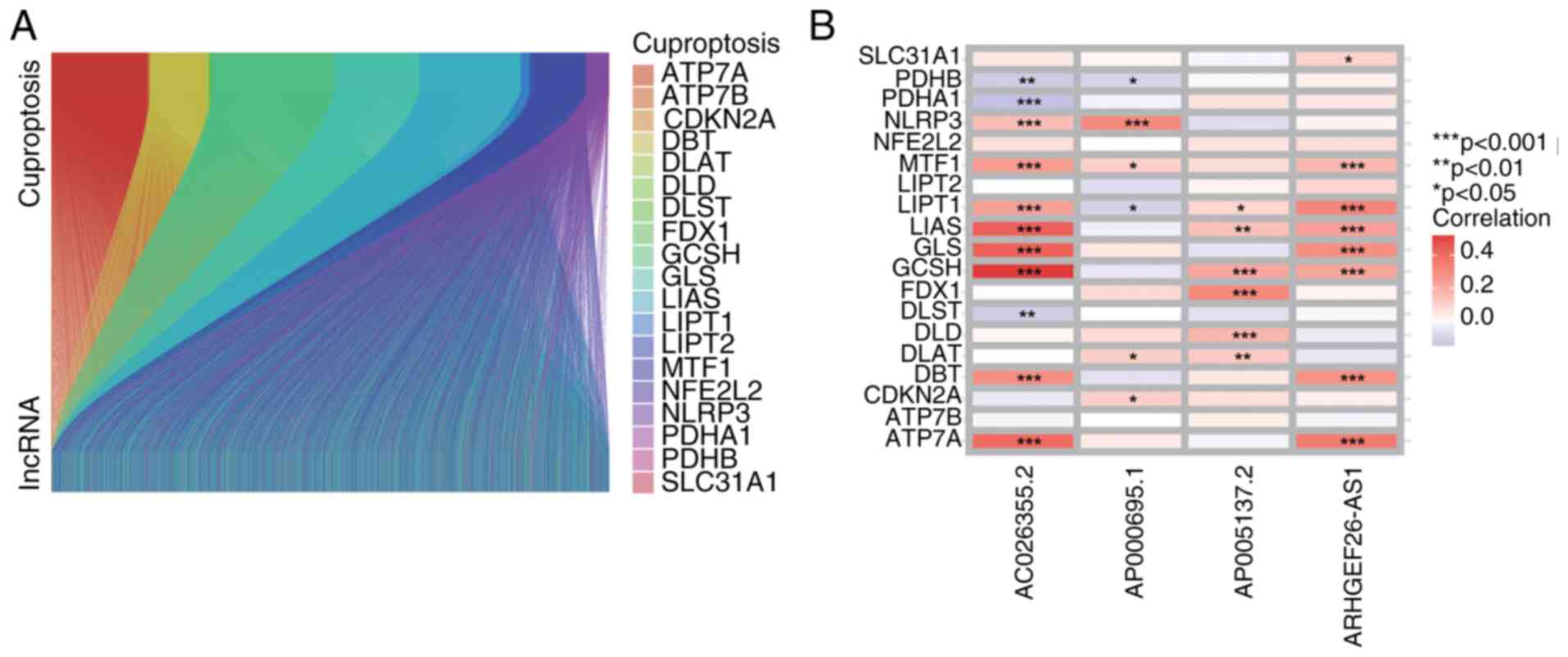
Figure 1

Identification of
cuproptosis-associated lncRNAs in LUAD. (A) Sankey diagram of the
19 cuproptosis-associated genes and 16,876 lncRNAs from The Cancer
Genome Atlas-LUAD. (B) Heatmap of the correlation between the 19
cuproptosis-associated genes and 4 cuproptosis-associated lncRNAs.
*P<0.05, **P<0.01,
***P<0.001. lncRNA, long non-coding RNA; LUAD, lung
adenocarcinoma.

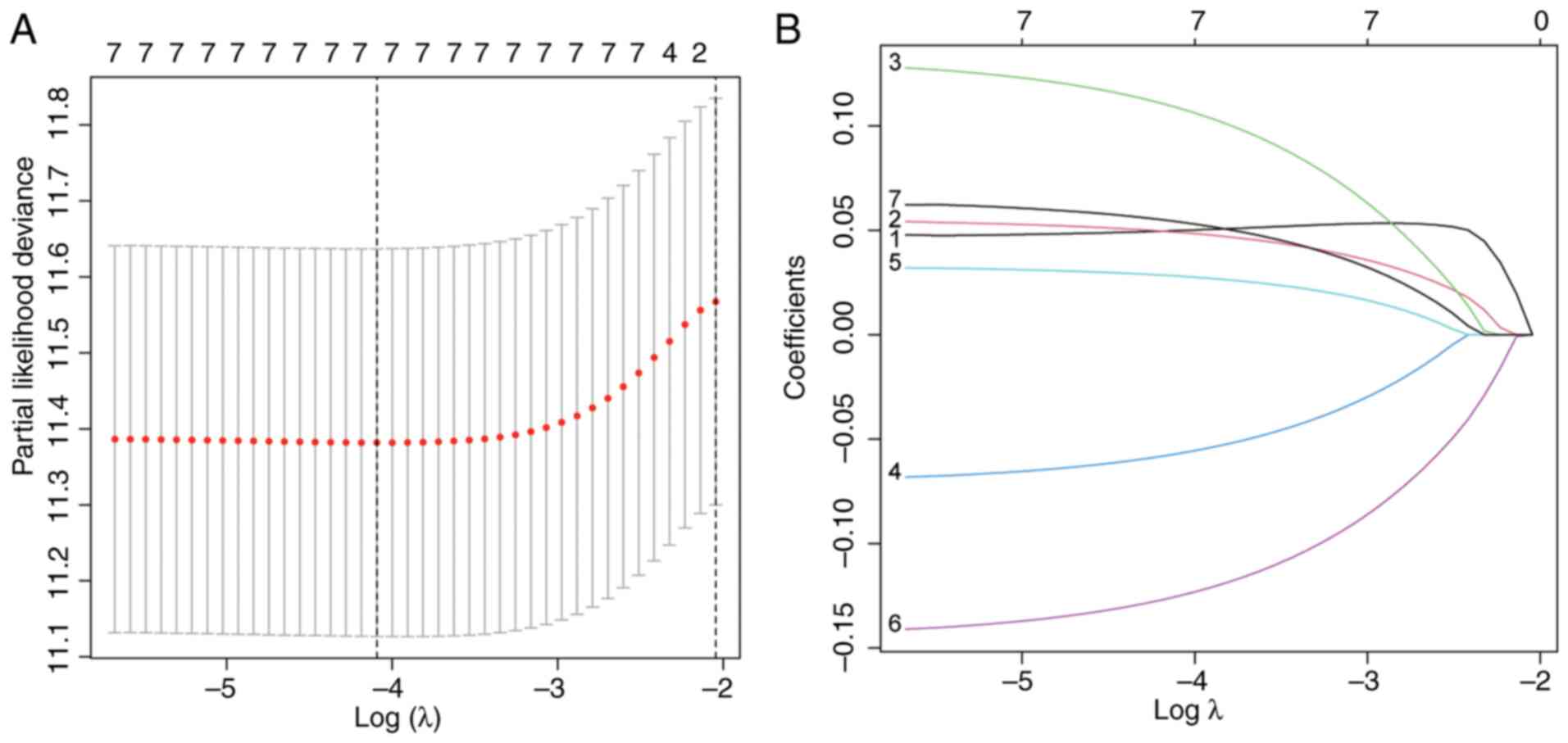
Figure 2

Construction of
cuproptosis-associated long non-coding RNA signature. (A)
Cross-validation error curve with the tuning parameter log λ. The
optimal model was selected according to the Akaike Information
Criterion (AIC) and 1-SE rule. (B) 10-fold cross-validation
LASSO.

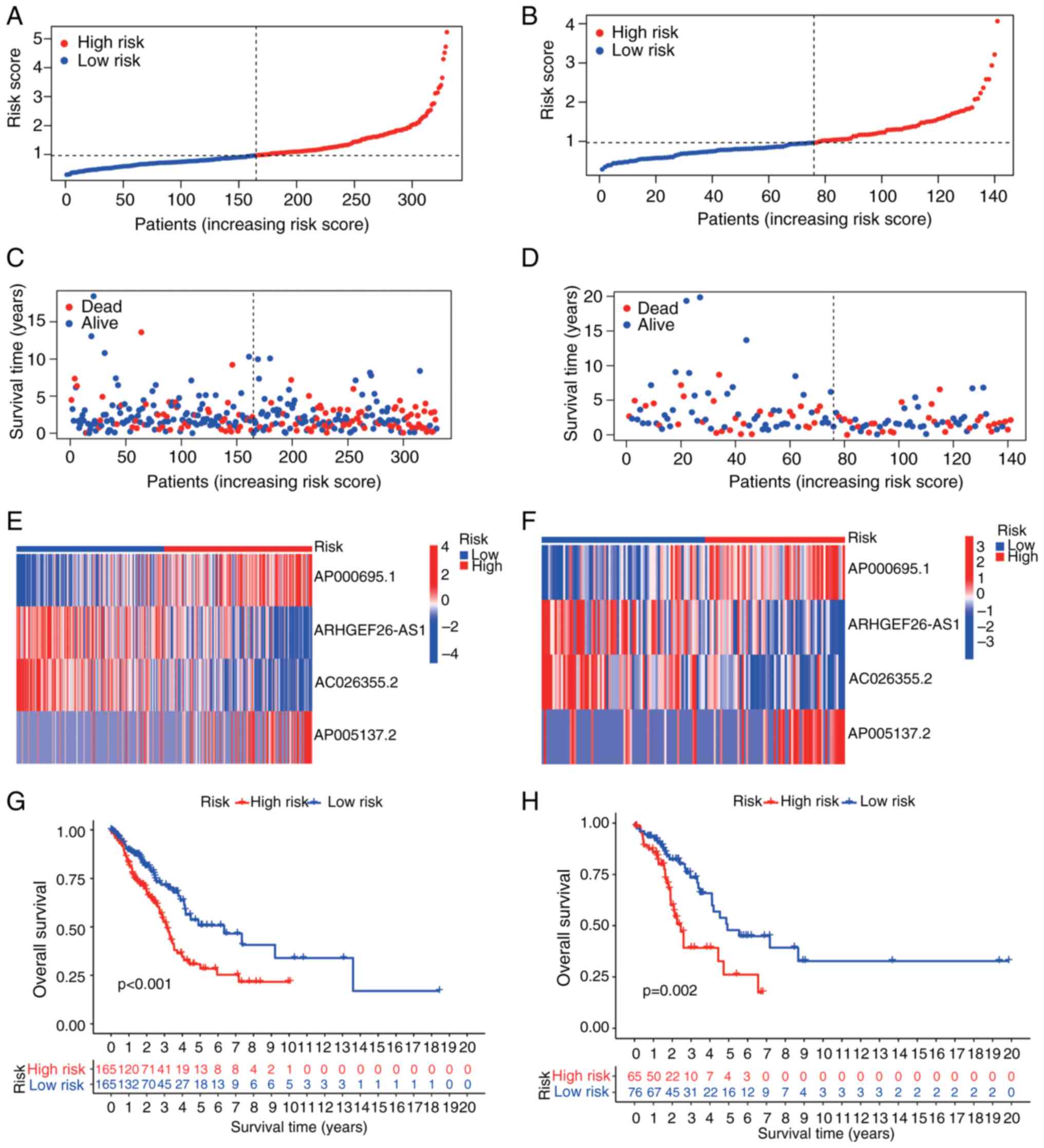
Figure 3

Construction and validation of the
4-lncRNA prognostic signature in The Cancer Genome Atlas-lung
adenocarcinoma cohorts. (A and E) Risk score distribution for
patients in the (A) training cohort (n=360) and (E) test cohort
(n=155). Patients are ordered by risk score (low to high). (B and
F) Survival status scatter plots showing patient survival outcomes
(dead: red; alive: blue) against risk scores in the (B) training
and (F) test cohorts. (C and G) Heatmaps of signature lncRNA
expression (rows: 4 lncRNAs; columns: patients) in the (C) training
and (G) test cohorts. Expression levels are z-score normalized
(red: high; blue: low). (D and H) Kaplan-Meier survival curves
comparing overall survival between high- and low-risk groups in the
(D) training and (H) test cohorts (log-rank P<0.001).

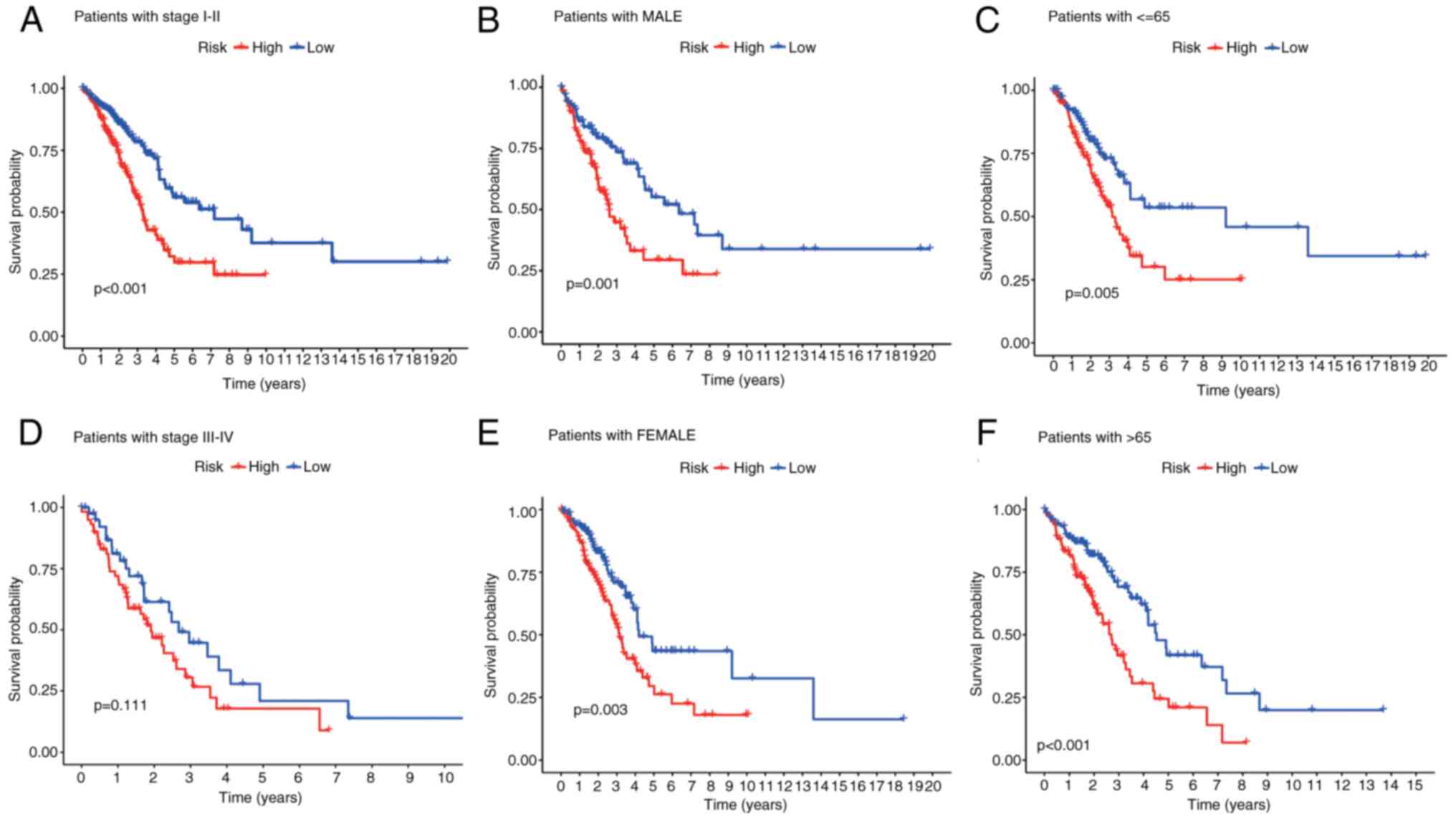
Figure 4

Kaplan-Meier overall survival curves
of the high- and low-risk patients stratified by age, sex and TNM
classification in The Cancer Genome Atlas training and test sets.
(A) Patients with stage I-II. (B) Patients with female. (C)
Patients ≤65 years old. (D) Patients with stage III-IV. (E)
Patients with male. (F) Patients >65 years old.

Figure 5

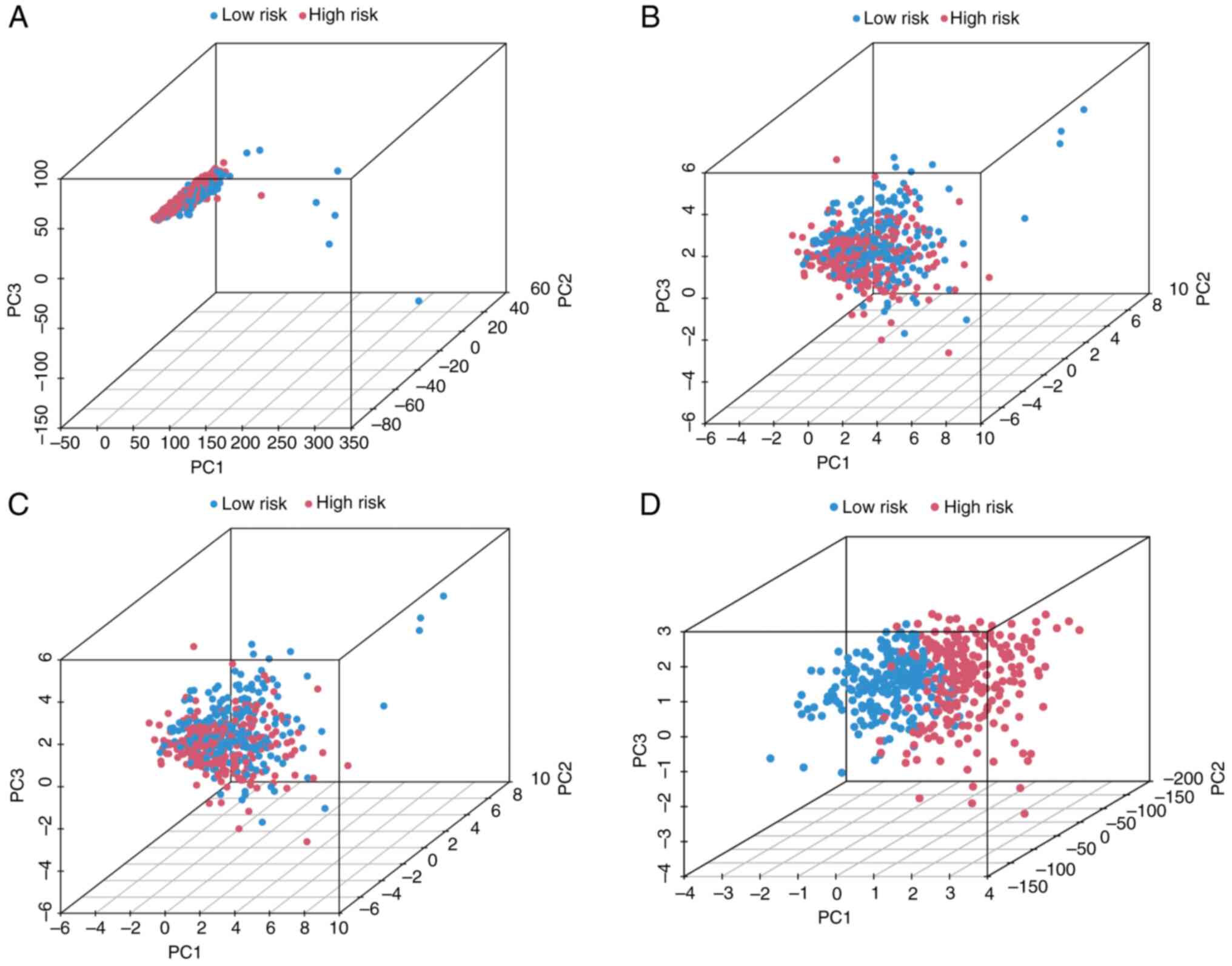
Principal Component Analysis for the
high- and low-risk patients. (A) Expression profile of 4
cuproptosis-associated lncRNAs. (B) Expression profile 21
cuproptosis-associated genes. (C) Whole-genome expression profile.
(D) The 4 cuproptosis-associated lncRNA signature. Variance
explained by top 3 PCs: (A) Signature=58.7%, (B) Cuproptosis
genes=41.2%, (C) Whole genome=18.3% and (D) Risk model=72.1%.
Separation efficiency calculated as: (Between-group variance/Total
variance) x100.

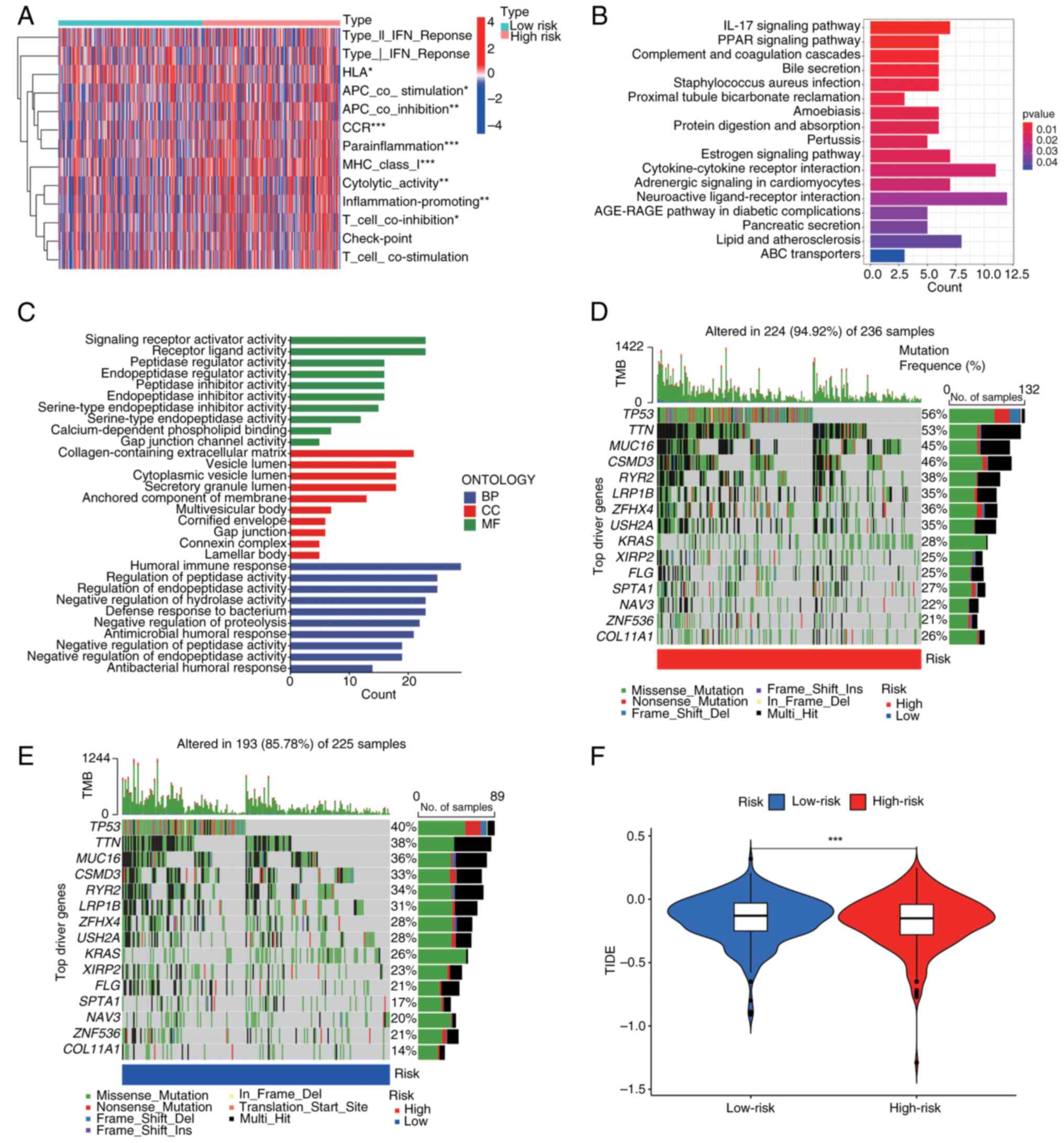
Figure 6

Long non-coding RNA signature
predicts the tumor immune microenvironment and immunotherapy
response. (A) Infiltration of immune cells. (B) Gene Ontology
annotations. (C) Kyoto Encyclopedia of Genes and Genomes pathways.
(D and E) Waterfall plot of the mutation data of the top 15 genes
with the highest mutation frequency. (F) TIDE scores.
*P<0.05, **P<0.01,
***P<0.001. BP, biological process; MF, molecular
function; CC, cellular component.

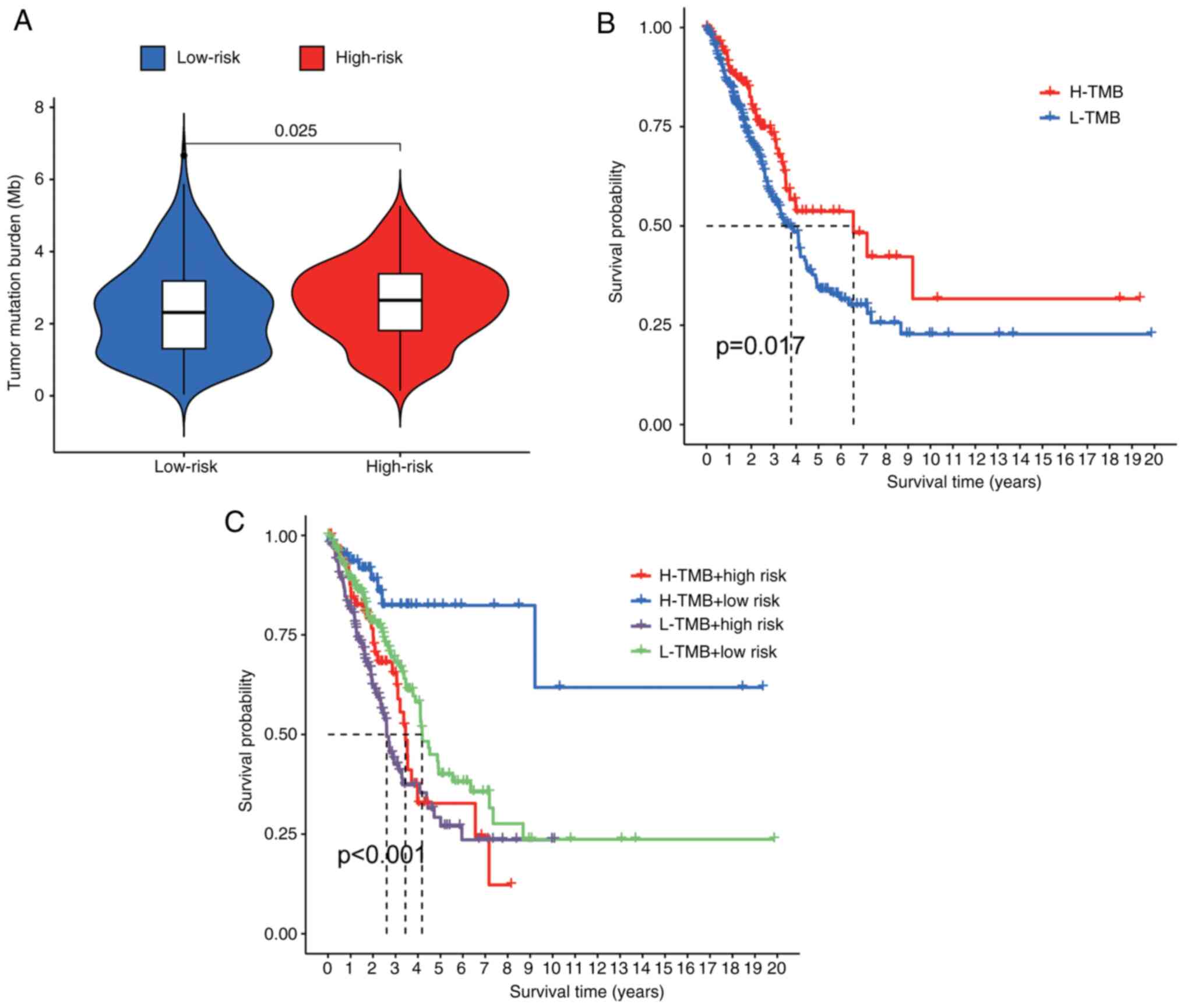
Figure 7

TMB analysis. (A) Difference in TMB
between the high- and low-risk groups. (B) Kaplan-Meier OS curves
of patients with a high TMB and a low TMB in high- and low-risk
groups, respectively. (C) Kaplan-Meier OS curves of high- and
low-risk patients stratified by TMB. TMB, tumor mutational burden;
OS, overall survival.

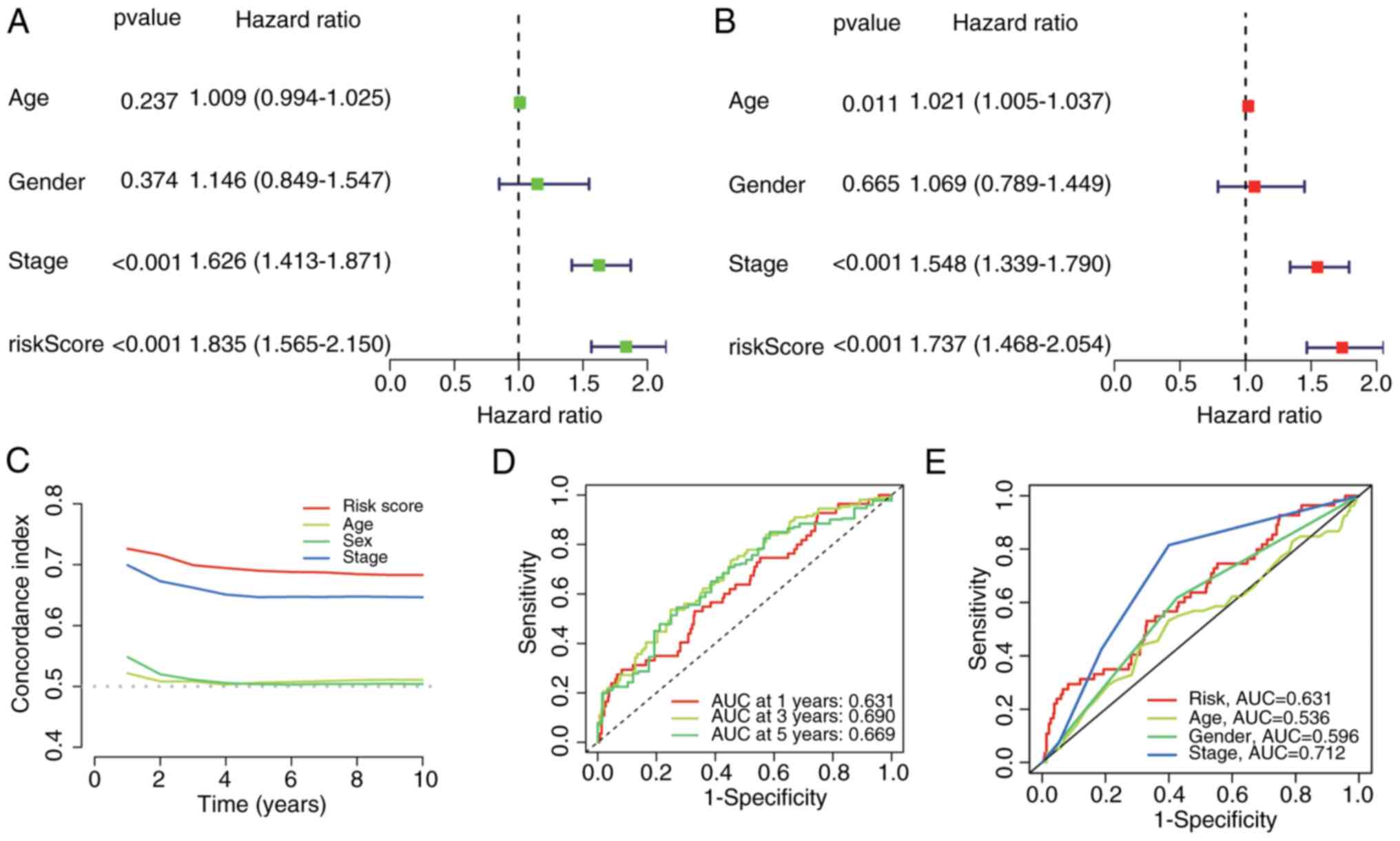
Figure 8

Independence of the Risk score in
prediction of survival outcome of patients with LUAD. (A and B)
Uni- and multivariate Cox regression analyses for the risk score
and clinical features. (C) C-index for the Risk score and clinical
features. (D) ROC curves of the Risk score for 1-, 3- and 5-year
overall survival. (E) Receiver Operating Characteristic curves of
the Risk score and clinical features.

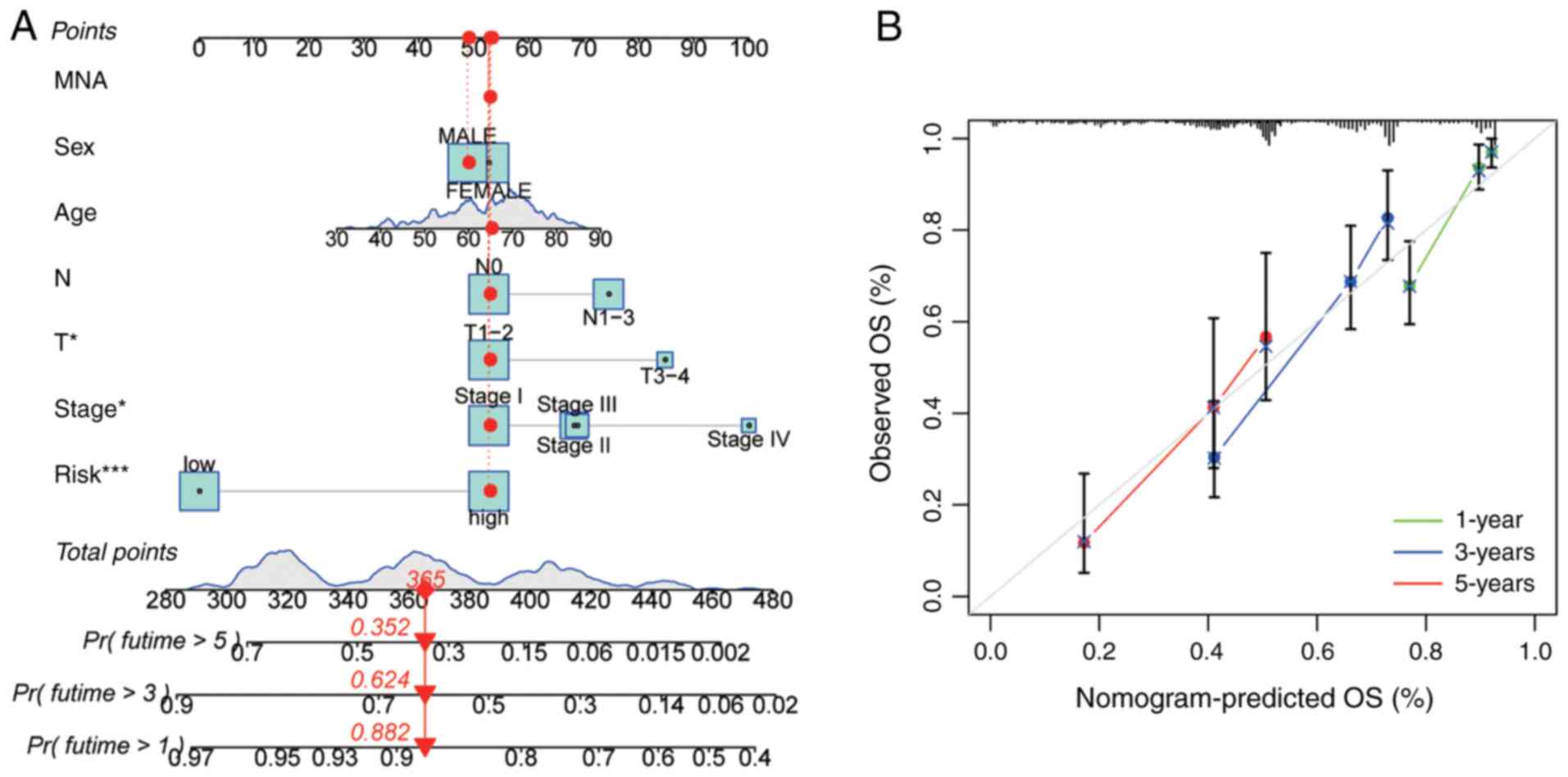
Figure 9

Establishment and validation of
nomogram. (A) Receiver Operating Characteristic curves of the
nomogram for 1-, 3- and 5-year OS. (B) Calibration curve.
*P<0.05, ***P<0.001. OS, overall
survival.

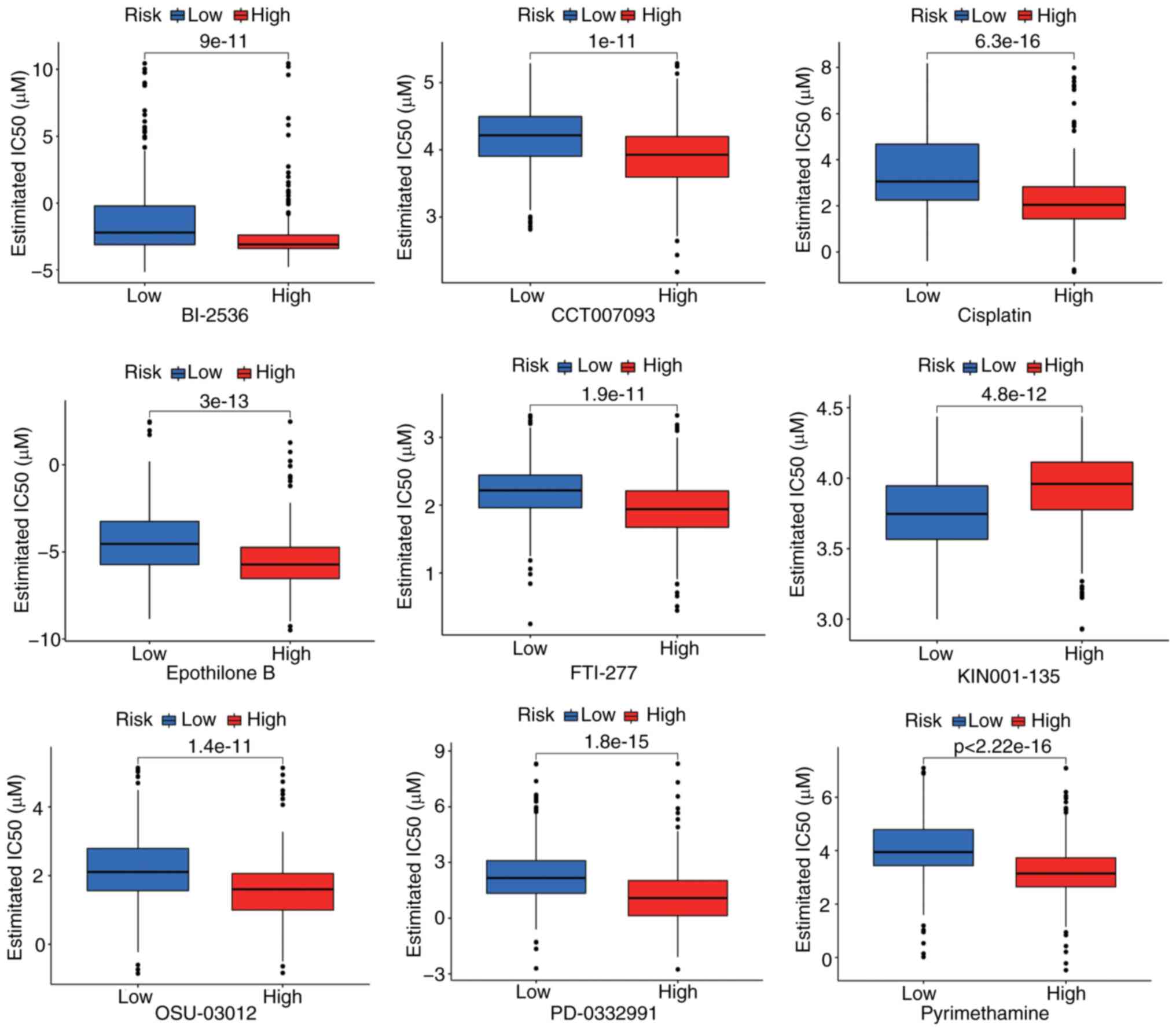
Figure 10

Candidate compounds targeting the
long non-coding RNA signature.
View References

1 

Cao M, Li H, Sun D and Chen W: Cancer burden of major cancers in China: A need for sustainable actions. Cancer Commun (Lond). 40:205–210. 2020.PubMed/NCBI View Article : Google Scholar

2 

Ferlay J, Colombet M, Soerjomataram I, Dyba T, Randi G, Bettio M, Gavin A, Visser O and Bray F: Cancer incidence and mortality patterns in Europe: Estimates for 40 countries and 25 major cancers in 2018. Eur J Cancer. 103:356–387. 2018.PubMed/NCBI View Article : Google Scholar

3 

Jurisic V, Vukovic V, Obradovic J, Gulyaeva LF, Kushlinskii NE and Djordjević N: EGFR polymorphism and survival of NSCLC patients treated with TKIs: A systematic review and meta-analysis. J Oncol. 2020(1973241)2020.PubMed/NCBI View Article : Google Scholar

4 

Zhang C, Zhang J, Xu FP, Wang YG, Xie Z, Su J, Dong S, Nie Q, Shao Y, Zhou Q, et al: Genomic landscape and immune microenvironment features of preinvasive and early invasive lung adenocarcinoma. J Thorac Oncol. 14:1912–1923. 2019.PubMed/NCBI View Article : Google Scholar

5 

Zhao L, Li M, Shen C and Luo Y, Hou X, Qi Y, Huang Z, Li W, Gao L, Wu M and Luo Y: Nano-assisted radiotherapy strategies: New opportunities for treatment of non-small cell lung cancer. Research (Wash D C). 7(0429)2024.PubMed/NCBI View Article : Google Scholar

6 

Liu C, Chen Y, Xu X, Yin M, Zhang H and Su W: Utilizing macrophages missile for sulfate-based nanomedicine delivery in lung cancer therapy. Research (Wash D C). 7(0448)2024.PubMed/NCBI View Article : Google Scholar

7 

Wang Y, Shen C, Wu C, Zhan Z, Qu R, Xie Y and Chen P: Self-assembled DNA machine and selective complexation recognition enable rapid homogeneous portable quantification of lung cancer CTCs. Research (Wash D C). 7(0352)2024.PubMed/NCBI View Article : Google Scholar

8 

Tsvetkov P, Coy S, Petrova B, Dreishpoon M, Verma A, Abdusamad M, Rossen J, Joesch-Cohen L, Humeidi R, Spangler RD, et al: Copper induces cell death by targeting lipoylated TCA cycle proteins. Science. 375:1254–1261. 2022.PubMed/NCBI View Article : Google Scholar

9 

Tsvetkov P, Detappe A, Cai K, Keys HR, Brune Z, Ying W, Thiru P, Reidy M, Kugener G, Rossen J, et al: Mitochondrial metabolism promotes adaptation to proteotoxic stress. Nat Chem Biol. 15:681–689. 2019.PubMed/NCBI View Article : Google Scholar

10 

Tang D, Kroemer G and Kang R: Targeting cuproplasia and cuproptosis in cancer. Nat Rev Clin Oncol. 21:370–388. 2024.PubMed/NCBI View Article : Google Scholar

11 

Gupta RA, Shah N, Wang KC, Kim J, Horlings HM, Wong DJ, Tsai MC, Hung T, Argani P, Rinn JL, et al: Long non-coding RNA HOTAIR reprograms chromatin state to promote cancer metastasis. Nature. 464:1071–1076. 2010.PubMed/NCBI View Article : Google Scholar

12 

Kahlson MA and Dixon SJ: Copper-induced cell death. Science. 375:1231–1232. 2022.PubMed/NCBI View Article : Google Scholar

13 

Aubert L, Nandagopal N, Steinhart Z, Lavoie G, Nourreddine S, Berman J, Saba-El-Leil MK, Papadopoli D, Lin S, Hart T, et al: Copper bioavailability is a KRAS-specific vulnerability in colorectal cancer. Nat Commun. 11(3701)2020.PubMed/NCBI View Article : Google Scholar

14 

Dong J, Wang X, Xu C, Gao M, Wang S, Zhang J, Tong H, Wang L and Han Y, Cheng N and Han Y: Inhibiting NLRP3 inflammasome activation prevents copper-induced neuropathology in a murine model of Wilson's disease. Cell Death Dis. 12(87)2021.PubMed/NCBI View Article : Google Scholar

15 

Ren X, Li Y, Zhou Y, Hu W, Yang C, Jing Q, Zhou C, Wang X, Hu J, Wang L, et al: Overcoming the compensatory elevation of NRF2 renders hepatocellular carcinoma cells more vulnerable to disulfiram/copper-induced ferroptosis. Redox Biol. 46(102122)2021.PubMed/NCBI View Article : Google Scholar

16 

Polishchuk EV, Merolla A, Lichtmannegger J, Romano A, Indrieri A, Ilyechova EY, Concilli M, De Cegli R, Crispino R, Mariniello M, et al: Activation of autophagy, observed in liver tissues from patients with Wilson disease and from ATP7B-deficient animals, protects hepatocytes from copper-induced apoptosis. Gastroenterology. 156:1173–1189.e5. 2019.PubMed/NCBI View Article : Google Scholar

17 

Xu F, Lin H, He P, He L, Chen J, Lin L and Chen Y: A TP53-associated gene signature for prediction of prognosis and therapeutic responses in lung squamous cell carcinoma. Oncoimmunology. 9(1731943)2020.PubMed/NCBI View Article : Google Scholar

18 

Livak KJ and Schmittgen TD: Analysis of relative gene expression data using real-time quantitative PCR and the 2(-Delta Delta C(T)) method. Methods. 25:402–408. 2001.PubMed/NCBI View Article : Google Scholar

19 

Hong W, Liang L, Gu Y, Qi Z, Qiu H, Yang X, Zeng W, Ma L and Xie J: Immune-related lncRNA to construct novel signature and predict the immune landscape of human hepatocellular carcinoma. Mol Ther Nucleic Acids. 22:937–947. 2020.PubMed/NCBI View Article : Google Scholar

20 

Zhao X, Liu X and Cui L: Development of a five-protein signature for predicting the prognosis of head and neck squamous cell carcinoma. Aging (Albany NY). 12:19740–19755. 2020.PubMed/NCBI View Article : Google Scholar

21 

Dong HX, Wang R, Jin XY, Zeng J and Pan J: LncRNA DGCR5 promotes lung adenocarcinoma (LUAD) progression via inhibiting hsa-mir-22-3p. J Cell Physiol. 233:4126–4136. 2018.PubMed/NCBI View Article : Google Scholar

22 

Tian Y, Yu M, Sun L, Liu L, Wang J, Hui K, Nan Q, Nie X, Ren Y and Ren X: Distinct patterns of mRNA and lncRNA expression differences between lung squamous cell carcinoma and adenocarcinoma. J Comput Biol. 27:1067–1078. 2020.PubMed/NCBI View Article : Google Scholar

23 

Yang L, Wu Y, Xu H, Zhang J, Zheng X, Zhang L, Wang Y, Chen W and Wang K: Identification and validation of a novel six-lncRNA-based prognostic model for lung adenocarcinoma. Front Oncol. 11(775583)2022.PubMed/NCBI View Article : Google Scholar

24 

Zhang H, Guo L and Chen J: Rationale for lung adenocarcinoma prevention and drug development based on molecular biology during carcinogenesis. Onco Targets Ther. 13:3085–3091. 2020.PubMed/NCBI View Article : Google Scholar

25 

Sun Q, Qin X, Zhao J, Gao T, Xu Y, Chen G, Bai G, Guo Z and Liu J: Cuproptosis-related LncRNA signatures as a prognostic model for head and neck squamous cell carcinoma. Apoptosis. 28:247–262. 2023.PubMed/NCBI View Article : Google Scholar

26 

Cao Q, Dong Z, Liu S, An G, Yan B and Lei L: Construction of a metastasis-associated ceRNA network reveals a prognostic signature in lung cancer. Cancer Cell Int. 20(208)2020.PubMed/NCBI View Article : Google Scholar

27 

Zhang P, Pei S, Liu J, Zhang X, Feng Y, Gong Z, Zeng T, Li J and Wang W: Cuproptosis-related lncRNA signatures: Predicting prognosis and evaluating the tumor immune microenvironment in lung adenocarcinoma. Front Oncol. 12(1088931)2022.PubMed/NCBI View Article : Google Scholar

28 

Bian M, Wang W, Song C, Pan L, Wu Y and Chen L: Autophagy-related genes predict the progression of periodontitis through the ceRNA network. J Inflamm Res. 15:1811–1824. 2022.PubMed/NCBI View Article : Google Scholar

29 

Wang G, Ye Q, Ning S, Yang Z, Chen Y, Zhang L, Huang Y, Xie F, Cheng X, Chi J, et al: LncRNA MEG3 promotes endoplasmic reticulum stress and suppresses proliferation and invasion of colorectal carcinoma cells through the MEG3/miR-103a-3p/PDHB ceRNA pathway. Neoplasma. 68:362–374. 2021.PubMed/NCBI View Article : Google Scholar

30 

Xuan J, Zhu D, Cheng Z, Qiu Y, Shao M, Yang Y, Zhai Q, Wang F and Qin F: Crocin inhibits the activation of mouse hepatic stellate cells via the lnc-LFAR1/MTF-1/GDNF pathway. Cell Cycle. 19:3480–3490. 2020.PubMed/NCBI View Article : Google Scholar

31 

Mafra ACP and Dias SMG: Several faces of glutaminase regulation in cells. Cancer Res. 79:1302–1304. 2019.PubMed/NCBI View Article : Google Scholar

32 

Wang T, Zhang XD and Hua KQ: A ceRNA network of BBOX1-AS1-hsa-miR-125b-5p/hsa-miR-125a-5p-CDKN2A shows prognostic value in cervical cancer. Taiwan J Obstet Gynecol. 60:253–261. 2021.PubMed/NCBI View Article : Google Scholar

33 

Liu J, Liu Q, Shen H, Liu Y, Wang Y, Wang G and Du J: Identification and validation of a three pyroptosis-related lncRNA signature for prognosis prediction in lung adenocarcinoma. Front Genet. 13(838624)2022.PubMed/NCBI View Article : Google Scholar

34 

Sun X, Song J, Lu C, Sun X, Yue H, Bao H, Wang S and Zhong X: Characterization of cuproptosis-related lncRNA landscape for predicting the prognosis and aiding immunotherapy in lung adenocarcinoma patients. Am J Cancer Res. 13:778–801. 2023.PubMed/NCBI

35 

Zhang S, Li X, Tang C and Kuang W: Inflammation-related long non-coding RNA signature predicts the prognosis of gastric carcinoma. Front Genet. 12(736766)2021.PubMed/NCBI View Article : Google Scholar

36 

Zhou D, Wang J and Liu X: Development of six immune-related lncRNA signature prognostic model for smoking-positive lung adenocarcinoma. J Clin Lab Anal. 36(e24467)2022.PubMed/NCBI View Article : Google Scholar

37 

Qiu Y, Yao J, Li L, Xiao M, Meng J, Huang X, Cai Y, Wen Z, Huang J, Zhu M, et al: Machine learning identifies ferroptosis-related genes as potential diagnostic biomarkers for osteoarthritis. Front Endocrinol (Lausanne). 14(1198763)2023.PubMed/NCBI View Article : Google Scholar

38 

Wang D, Tian Z, Zhang P, Zhen L, Meng Q, Sun B, Xu X, Jia T and Li S: The molecular mechanisms of cuproptosis and its relevance to cardiovascular disease. Biomed Pharmacother. 163(114830)2023.PubMed/NCBI View Article : Google Scholar

39 

Wang F, Lin H, Su Q and Li C: Cuproptosis-related lncRNA predict prognosis and immune response of lung adenocarcinoma. World J Surg Oncol. 20(275)2022.PubMed/NCBI View Article : Google Scholar

40 

Yalimaimaiti S, Liang X, Zhao H, Dou H, Liu W, Yang Y and Ning L: Establishment of a prognostic signature for lung adenocarcinoma using cuproptosis-related lncRNAs. BMC Bioinformatics. 24(81)2023.PubMed/NCBI View Article : Google Scholar

41 

Zheng J, Zhao Z, Wan J, Guo M, Wang Y, Yang Z, Li Z, Ming L and Qin Z: N-6 methylation-related lncRNA is potential signature in lung adenocarcinoma and influences tumor microenvironment. J Clin Lab Anal. 35(e23951)2021.PubMed/NCBI View Article : Google Scholar

42 

Liu L, Wang T, Huang D and Song D: Comprehensive analysis of differentially expressed genes in clinically diagnosed irreversible pulpitis by multiplatform data integration using a robust rank aggregation approach. J Endod. 47:1365–1375. 2021.PubMed/NCBI View Article : Google Scholar

43 

Yang L, He YT, Dong S, Wei XW, Chen ZH, Zhang B, Chen WD, Yang XR, Wang F, Shang XM, et al: Single-cell transcriptome analysis revealed a suppressive tumor immune microenvironment in EGFR mutant lung adenocarcinoma. J Immunother Cancer. 10(e003534)2022.PubMed/NCBI View Article : Google Scholar

44 

Franzese O, Palermo B, Frisullo G, Panetta M, Campo G, D'Andrea D, Sperduti I, Taje R, Visca P and Nisticò P: ADA/CD26 axis increases intra-tumor PD-1+CD28+CD8+ T-cell fitness and affects NSCLC prognosis and response to ICB. Oncoimmunology. 13(2371051)2024.PubMed/NCBI View Article : Google Scholar

Related Articles

  • Abstract
  • View
  • Download
  • Twitter
Copy and paste a formatted citation
Spandidos Publications style
Lu L, Qin Y, Wang M, Deng Y and Lin Y: A 4‑cuproptosis‑related lncRNA theragnostic signature predicts survival and immunotherapy response in patients with lung adenocarcinoma. Mol Clin Oncol 24: 3, 2026.
APA
Lu, L., Qin, Y., Wang, M., Deng, Y., & Lin, Y. (2026). A 4‑cuproptosis‑related lncRNA theragnostic signature predicts survival and immunotherapy response in patients with lung adenocarcinoma. Molecular and Clinical Oncology, 24, 3. https://doi.org/10.3892/mco.2025.2912
MLA
Lu, L., Qin, Y., Wang, M., Deng, Y., Lin, Y."A 4‑cuproptosis‑related lncRNA theragnostic signature predicts survival and immunotherapy response in patients with lung adenocarcinoma". Molecular and Clinical Oncology 24.1 (2026): 3.
Chicago
Lu, L., Qin, Y., Wang, M., Deng, Y., Lin, Y."A 4‑cuproptosis‑related lncRNA theragnostic signature predicts survival and immunotherapy response in patients with lung adenocarcinoma". Molecular and Clinical Oncology 24, no. 1 (2026): 3. https://doi.org/10.3892/mco.2025.2912
Copy and paste a formatted citation
x
Spandidos Publications style
Lu L, Qin Y, Wang M, Deng Y and Lin Y: A 4‑cuproptosis‑related lncRNA theragnostic signature predicts survival and immunotherapy response in patients with lung adenocarcinoma. Mol Clin Oncol 24: 3, 2026.
APA
Lu, L., Qin, Y., Wang, M., Deng, Y., & Lin, Y. (2026). A 4‑cuproptosis‑related lncRNA theragnostic signature predicts survival and immunotherapy response in patients with lung adenocarcinoma. Molecular and Clinical Oncology, 24, 3. https://doi.org/10.3892/mco.2025.2912
MLA
Lu, L., Qin, Y., Wang, M., Deng, Y., Lin, Y."A 4‑cuproptosis‑related lncRNA theragnostic signature predicts survival and immunotherapy response in patients with lung adenocarcinoma". Molecular and Clinical Oncology 24.1 (2026): 3.
Chicago
Lu, L., Qin, Y., Wang, M., Deng, Y., Lin, Y."A 4‑cuproptosis‑related lncRNA theragnostic signature predicts survival and immunotherapy response in patients with lung adenocarcinoma". Molecular and Clinical Oncology 24, no. 1 (2026): 3. https://doi.org/10.3892/mco.2025.2912
Follow us
  • Twitter
  • LinkedIn
  • Facebook
About
  • Spandidos Publications
  • Careers
  • Cookie Policy
  • Privacy Policy
How can we help?
  • Help
  • Live Chat
  • Contact
  • Email to our Support Team