Spandidos Publications Logo
  • About
    • About Spandidos
    • Aims and Scopes
    • Abstracting and Indexing
    • Editorial Policies
    • Reprints and Permissions
    • Job Opportunities
    • Terms and Conditions
    • Contact
  • Journals
    • All Journals
    • Oncology Letters
      • Oncology Letters
      • Information for Authors
      • Editorial Policies
      • Editorial Board
      • Aims and Scope
      • Abstracting and Indexing
      • Bibliographic Information
      • Archive
    • International Journal of Oncology
      • International Journal of Oncology
      • Information for Authors
      • Editorial Policies
      • Editorial Board
      • Aims and Scope
      • Abstracting and Indexing
      • Bibliographic Information
      • Archive
    • Molecular and Clinical Oncology
      • Molecular and Clinical Oncology
      • Information for Authors
      • Editorial Policies
      • Editorial Board
      • Aims and Scope
      • Abstracting and Indexing
      • Bibliographic Information
      • Archive
    • Experimental and Therapeutic Medicine
      • Experimental and Therapeutic Medicine
      • Information for Authors
      • Editorial Policies
      • Editorial Board
      • Aims and Scope
      • Abstracting and Indexing
      • Bibliographic Information
      • Archive
    • International Journal of Molecular Medicine
      • International Journal of Molecular Medicine
      • Information for Authors
      • Editorial Policies
      • Editorial Board
      • Aims and Scope
      • Abstracting and Indexing
      • Bibliographic Information
      • Archive
    • Biomedical Reports
      • Biomedical Reports
      • Information for Authors
      • Editorial Policies
      • Editorial Board
      • Aims and Scope
      • Abstracting and Indexing
      • Bibliographic Information
      • Archive
    • Oncology Reports
      • Oncology Reports
      • Information for Authors
      • Editorial Policies
      • Editorial Board
      • Aims and Scope
      • Abstracting and Indexing
      • Bibliographic Information
      • Archive
    • Molecular Medicine Reports
      • Molecular Medicine Reports
      • Information for Authors
      • Editorial Policies
      • Editorial Board
      • Aims and Scope
      • Abstracting and Indexing
      • Bibliographic Information
      • Archive
    • World Academy of Sciences Journal
      • World Academy of Sciences Journal
      • Information for Authors
      • Editorial Policies
      • Editorial Board
      • Aims and Scope
      • Abstracting and Indexing
      • Bibliographic Information
      • Archive
    • International Journal of Functional Nutrition
      • International Journal of Functional Nutrition
      • Information for Authors
      • Editorial Policies
      • Editorial Board
      • Aims and Scope
      • Abstracting and Indexing
      • Bibliographic Information
      • Archive
    • International Journal of Epigenetics
      • International Journal of Epigenetics
      • Information for Authors
      • Editorial Policies
      • Editorial Board
      • Aims and Scope
      • Abstracting and Indexing
      • Bibliographic Information
      • Archive
    • Medicine International
      • Medicine International
      • Information for Authors
      • Editorial Policies
      • Editorial Board
      • Aims and Scope
      • Abstracting and Indexing
      • Bibliographic Information
      • Archive
  • Articles
  • Information
    • Information for Authors
    • Information for Reviewers
    • Information for Librarians
    • Information for Advertisers
    • Conferences
  • Language Editing
Spandidos Publications Logo
  • About
    • About Spandidos
    • Aims and Scopes
    • Abstracting and Indexing
    • Editorial Policies
    • Reprints and Permissions
    • Job Opportunities
    • Terms and Conditions
    • Contact
  • Journals
    • All Journals
    • Biomedical Reports
      • Information for Authors
      • Editorial Policies
      • Editorial Board
      • Aims and Scope
      • Abstracting and Indexing
      • Bibliographic Information
      • Archive
    • Experimental and Therapeutic Medicine
      • Information for Authors
      • Editorial Policies
      • Editorial Board
      • Aims and Scope
      • Abstracting and Indexing
      • Bibliographic Information
      • Archive
    • International Journal of Epigenetics
      • Information for Authors
      • Editorial Policies
      • Editorial Board
      • Aims and Scope
      • Abstracting and Indexing
      • Bibliographic Information
      • Archive
    • International Journal of Functional Nutrition
      • Information for Authors
      • Editorial Policies
      • Editorial Board
      • Aims and Scope
      • Abstracting and Indexing
      • Bibliographic Information
      • Archive
    • International Journal of Molecular Medicine
      • Information for Authors
      • Editorial Policies
      • Editorial Board
      • Aims and Scope
      • Abstracting and Indexing
      • Bibliographic Information
      • Archive
    • International Journal of Oncology
      • Information for Authors
      • Editorial Policies
      • Editorial Board
      • Aims and Scope
      • Abstracting and Indexing
      • Bibliographic Information
      • Archive
    • Medicine International
      • Information for Authors
      • Editorial Policies
      • Editorial Board
      • Aims and Scope
      • Abstracting and Indexing
      • Bibliographic Information
      • Archive
    • Molecular and Clinical Oncology
      • Information for Authors
      • Editorial Policies
      • Editorial Board
      • Aims and Scope
      • Abstracting and Indexing
      • Bibliographic Information
      • Archive
    • Molecular Medicine Reports
      • Information for Authors
      • Editorial Policies
      • Editorial Board
      • Aims and Scope
      • Abstracting and Indexing
      • Bibliographic Information
      • Archive
    • Oncology Letters
      • Information for Authors
      • Editorial Policies
      • Editorial Board
      • Aims and Scope
      • Abstracting and Indexing
      • Bibliographic Information
      • Archive
    • Oncology Reports
      • Information for Authors
      • Editorial Policies
      • Editorial Board
      • Aims and Scope
      • Abstracting and Indexing
      • Bibliographic Information
      • Archive
    • World Academy of Sciences Journal
      • Information for Authors
      • Editorial Policies
      • Editorial Board
      • Aims and Scope
      • Abstracting and Indexing
      • Bibliographic Information
      • Archive
  • Articles
  • Information
    • For Authors
    • For Reviewers
    • For Librarians
    • For Advertisers
    • Conferences
  • Language Editing
Login Register Submit
  • This site uses cookies
  • You can change your cookie settings at any time by following the instructions in our Cookie Policy. To find out more, you may read our Privacy Policy.

    I agree
Search articles by DOI, keyword, author or affiliation
Search
Advanced Search
presentation
Molecular Medicine Reports
Join Editorial Board Propose a Special Issue
Print ISSN: 1791-2997 Online ISSN: 1791-3004
Journal Cover
November 2012 Volume 6 Issue 5

Full Size Image

Sign up for eToc alerts
Recommend to Library

Journals

International Journal of Molecular Medicine

International Journal of Molecular Medicine

International Journal of Molecular Medicine is an international journal devoted to molecular mechanisms of human disease.

International Journal of Oncology

International Journal of Oncology

International Journal of Oncology is an international journal devoted to oncology research and cancer treatment.

Molecular Medicine Reports

Molecular Medicine Reports

Covers molecular medicine topics such as pharmacology, pathology, genetics, neuroscience, infectious diseases, molecular cardiology, and molecular surgery.

Oncology Reports

Oncology Reports

Oncology Reports is an international journal devoted to fundamental and applied research in Oncology.

Experimental and Therapeutic Medicine

Experimental and Therapeutic Medicine

Experimental and Therapeutic Medicine is an international journal devoted to laboratory and clinical medicine.

Oncology Letters

Oncology Letters

Oncology Letters is an international journal devoted to Experimental and Clinical Oncology.

Biomedical Reports

Biomedical Reports

Explores a wide range of biological and medical fields, including pharmacology, genetics, microbiology, neuroscience, and molecular cardiology.

Molecular and Clinical Oncology

Molecular and Clinical Oncology

International journal addressing all aspects of oncology research, from tumorigenesis and oncogenes to chemotherapy and metastasis.

World Academy of Sciences Journal

World Academy of Sciences Journal

Multidisciplinary open-access journal spanning biochemistry, genetics, neuroscience, environmental health, and synthetic biology.

International Journal of Functional Nutrition

International Journal of Functional Nutrition

Open-access journal combining biochemistry, pharmacology, immunology, and genetics to advance health through functional nutrition.

International Journal of Epigenetics

International Journal of Epigenetics

Publishes open-access research on using epigenetics to advance understanding and treatment of human disease.

Medicine International

Medicine International

An International Open Access Journal Devoted to General Medicine.

Journal Cover
November 2012 Volume 6 Issue 5

Full Size Image

Sign up for eToc alerts
Recommend to Library

  • Article
  • Citations
    • Cite This Article
    • Download Citation
    • Create Citation Alert
    • Remove Citation Alert
    • Cited By
  • Similar Articles
    • Related Articles (in Spandidos Publications)
    • Similar Articles (Google Scholar)
    • Similar Articles (PubMed)
  • Download PDF
  • Download XML
  • View XML
Article

A simple and practical method that prepares high molecular weight DNA ladders

  • Authors:
    • Jun-He Zhang
    • Rui Yang
    • Tian-Yun Wang
    • Wei-Hua Dong
    • Fang Wang
    • Li Wang
  • View Affiliations / Copyright

    Affiliations: Department of Biochemistry and Molecular Biology, Xinxiang Medical University, Xinxiang, Henan 453003, P.R. China
  • Pages: 1211-1213
    |
    Published online on: September 4, 2012
       https://doi.org/10.3892/mmr.2012.1061
  • Expand metrics +
Metrics: Total Views: 0 (Spandidos Publications: | PMC Statistics: )
Metrics: Total PDF Downloads: 0 (Spandidos Publications: | PMC Statistics: )
Cited By (CrossRef): 0 citations Loading Articles...

This article is mentioned in:


Abstract

The purpose of the current study was to report a simple and practical method to prepare high molecular weight (mw) DNA ladders. The method involves 1,000-4,000-base pairs (bp) DNA fragments being amplified by polymerase chain reaction (PCR), using λ DNA as a template. The constructed plasmids are digested by restriction endonucleases to produce 5-, 6-, 8- and 10-kb DNA fragments, followed by purification and precipitation with ethanol, and mixed proportionally. The 1,000-4,000-bp DNA fragments were successfully generated by PCR and 5-, 6-, 8- and 10-kb DNA fragments were obtained through the digestion of the plasmids. The bands of the prepared high mw DNA ladder were clear and may aid future molecular biology studies.

Introduction

DNA molecular weight (mw) standard controls of nucleic acids, also known as DNA ladders, are widely used in molecular biology studies to determine the mw or the base pair (bp) length of nucleic acids. The DNA ladder is also used to quantitatively analyze target DNA fragments. At present, there are two ways to prepare a DNA ladder: i) amplification by polymerase chain reaction (PCR) (1,2); and ii) digestion of plasmid DNA by restriction endonucleases (3,4). However, each of these methods have advantages and disadvantages. The former achieves regular bands, but it is difficult to amplify DNA fragments of a high mw. The latter involves the preparation of the DNA ladder mostly from bacteriophages or plasmids, with digestion of the purified DNA by restriction endonucleases, but this process is complex and produces unevenly distributed DNA fragments, particularly for the preparation of large quantities of DNA ladders. The present study describes a method that is based on the combination of PCR amplification and plasmid digestion by restriction endonucleases to prepare a high mw DNA ladder. The results show that the prepared DNA ladder bands were clear, accurate and cheap and may be used as a standard in future molecular biology experiments.

Materials and methods

PCR primers

According to the λ phage DNA sequence (GenBank accession no. J02459), pairs of 1,000-, 2,000-, 3,000- and 4,000-bp primers were designed with Primer 5.0 software and were obtained from Shanghai Sangon Co., Ltd. (Shanghai, China). The primers are shown in Table I.

Table I

Primers used in this study.

Table I

Primers used in this study.

Length (bp)PrimersMelting temperature (°C)
1,000 5′-GCGGCACGGAGTGGAGCAAG-3′66.00
5′-GTTATCGAAATCAGCCACAGGGC-3′63.68
2,000 5′-GCAGTGACACTGCGCTGGATC-3′61.90
5′-GTTATCGAAATCAGCCACAGGGC-3′63.68
3,000 5′-CAGGCCCGCAGTTATCAGGTC-3′63.87
5′-GTTATCGAAATCAGCCACAGGGC-3′63.68
4,000 5′-CAGCATGCCACGTAAGCGAAACAAAAA-3′62.00
5′-CACGGAAAAAGAGACGCAGAAACAGC-3′63.52
PCR amplification

DNA fragments of 1,000–4,000-bp were amplified by PCR. The reaction mixture (100 μl) for each quantitative PCR contained 100 ng template DNA, 0.2 mM dNTP, 10 mM Tris-Cl (pH 8.8), 1.5 mM MgCl2, 50 mM KCl, 0.1 mM of each primer and 2.5 units Taq DNA polymerase. All PCR procedures of these DNA fragments were adopted by the improved touch-down PCR method (5) and DNA fragments were amplified using various PCR procedures. The specific PCR procedures were as follows: the PCR conditions of 1,000- and 2,000-bp included a temperature profile of 30 cycles, which included 2 cycles at 95°C for 40 sec, 60°C for 50 sec and 72°C for 50 sec, 2 cycles 95°C for 40 sec, 59°C for 50 sec and 72°C for 50 sec, 2 cycles for every annealing temperature interval one temperature, until 56°C polishing 20 cycles. The PCR conditions of 3,000- and 4,000-bp included a temperature profile of 30 cycles, which contained 2 cycles at 95°C for 40 sec, 65°C for 1 min and 72°C for 2 min, 2 cycles 95°C for 40 sec, 64°C for 1 min and 72°C for 2 min, 2 cycles for every annealing temperature interval one temperature, until 61°C polishing 20 cycles.

Construction, purification and identification of plasmids

The construction of high mw plasmids, including 5-, 6-, 8- and 10-kb was carried out as described previously (6), purified with a plasmid DNA purification kit and identified with endonuclease HindIII. The undigested plasmid of corresponding mw was used as the control and then electrophoresed.

Electrophoresis, purification and sequencing

The PCR products of 1,000- and 2,000-bp were detected by 1% agarose gel electrophoresis at 120 V for 30 min. The PCR products of 3,000- and 4,000-bp, the undigested plasmids and the restriction endonuclease were detected by 0.8% agarose gel at 120 V for 30 min. The PCR products and plasmid DNA were recovered using the agarose gel purification kit according to the manufacturer’s instructions, followed by sequencing by Shanghai Sangon Co., Ltd. The generated sequences were compared with BLAST (http://www.ncbi.nlm.nih.gov/blast/Blast.cgi).

Preparation of a high mw DNA ladder

The PCR products and linear plasmids were extracted by phenol/chloroform and precipitated with ethanol, then dissolved in TE (10 mM Tris-HCl, 1 mM EDTA) buffers and had their UV absorbance analyzed at 260 nm. According to the special proportions, various sizes of DNA fragments were mixed and added to 10X loading buffer and were then ready for use. The prepared DNA ladder was then frozen at −20°C.

Results

PCR amplification

All DNA fragments of 1,000–4,000-bp were amplified successfully by PCR. As shown in Fig. 1, DNA fragments had high specificity and the sizes of the amplified PCR products were consistent with those expected.
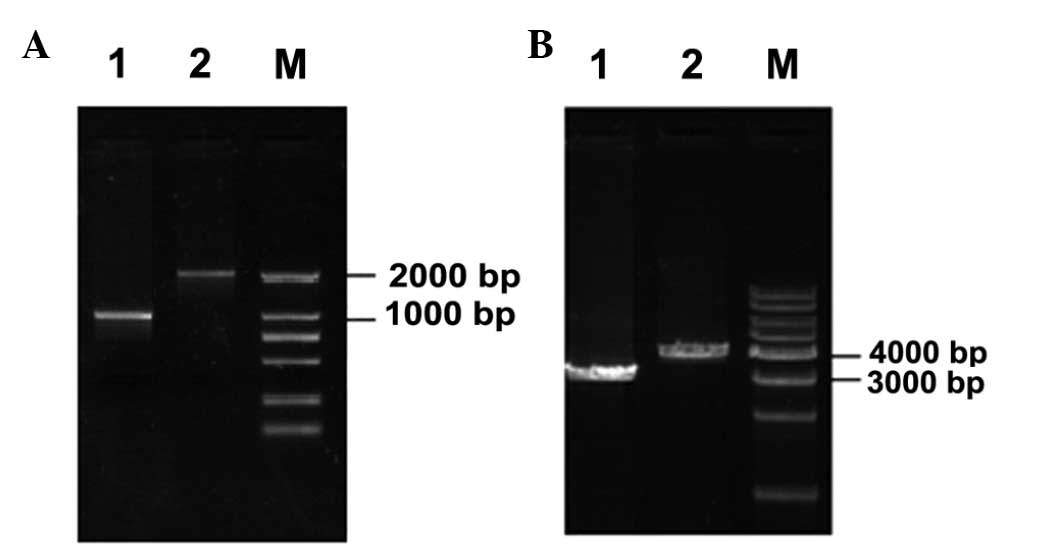
Figure 1

DNA fragments (1,000–4,000-bp) were amplified by PCR. (A) The electrophoresis results of 1,000-bp (lane 1), 2,000-bp (lane 2), DL200 (M). (B) The electrophoresis results of 3,000-bp (lane 1), 4,000-bp (lane 2), 1-kb DNA ladder (M) in (B). PCR, polymerase chain reaction.

Purification and identification of plasmids

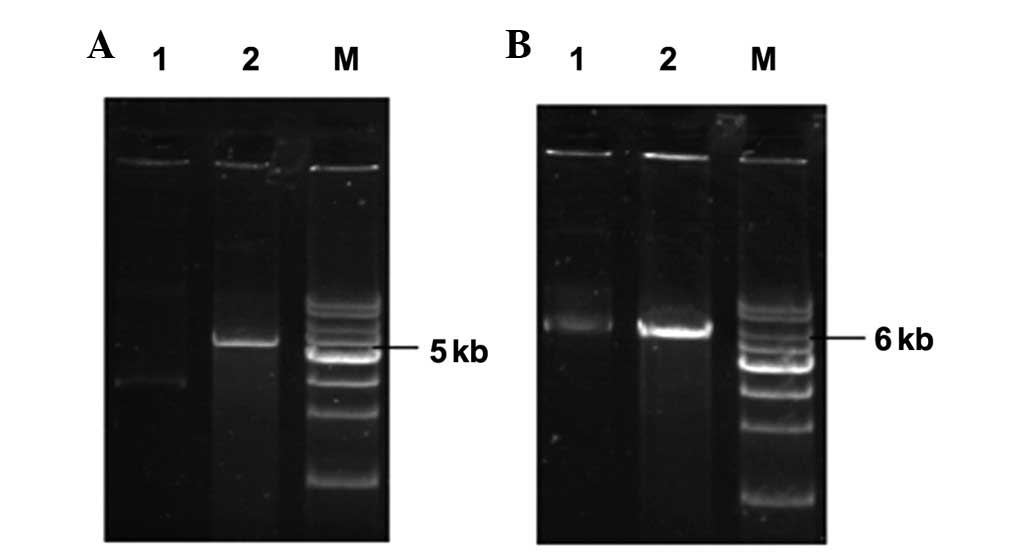
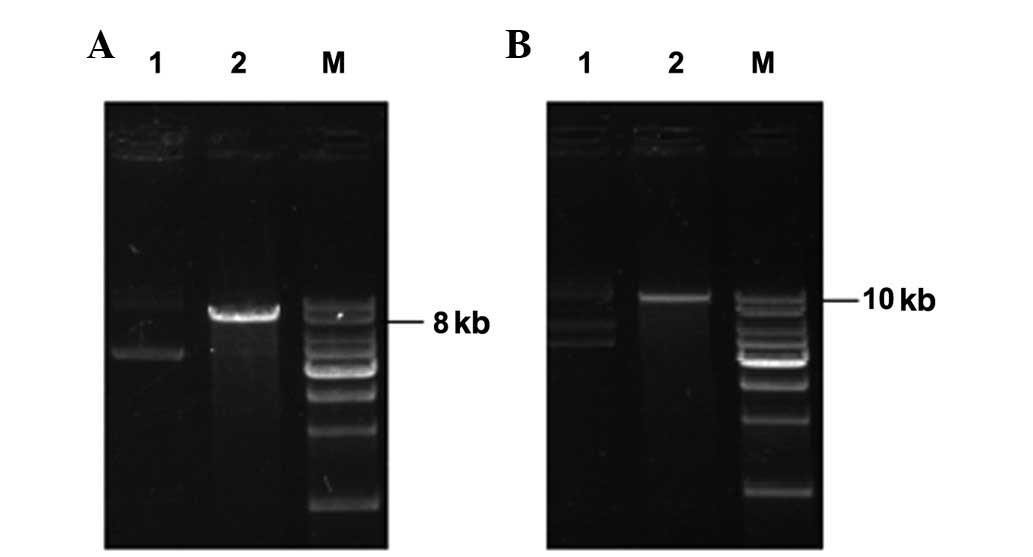
The 4 plasmids and their restriction endonuclease analyses are shown in Figs. 2 and 3. Following the digestion of these constructed vectors by HindIII, revealing the linearized DNA strands, the results of the restriction were consistent with those expected, the above results indicate that 4 plasmids had been successfully constructed.

Figure 2

Purification and identification of 5- and 6-kb. (A) The electrophoresis results of 5-kb (lane 1), the linearized strand of 5-kb digested by HindIII (lane 2), 1-kb DNA ladder (M). (B) The electrophoresis results of 6-kb (lane 1), the linearized strand of 6-kb digested by HindIII (lane 2), 1-kb DNA ladder (M).

Figure 3

Purification and identification of 8- and 10-kb. (A) The electrophoresis results of 8 kb (lane 1), the linearized strand of 8 kb digested by HindIII (lane 2), 1-kb DNA ladder (M). (B) The electrophoresis results of 10 kb (lane 1), the linearized strand of 10 kb digested by HindIII (lane 2), 1-kb DNA ladder (M).

Preparation of high mw DNA ladder

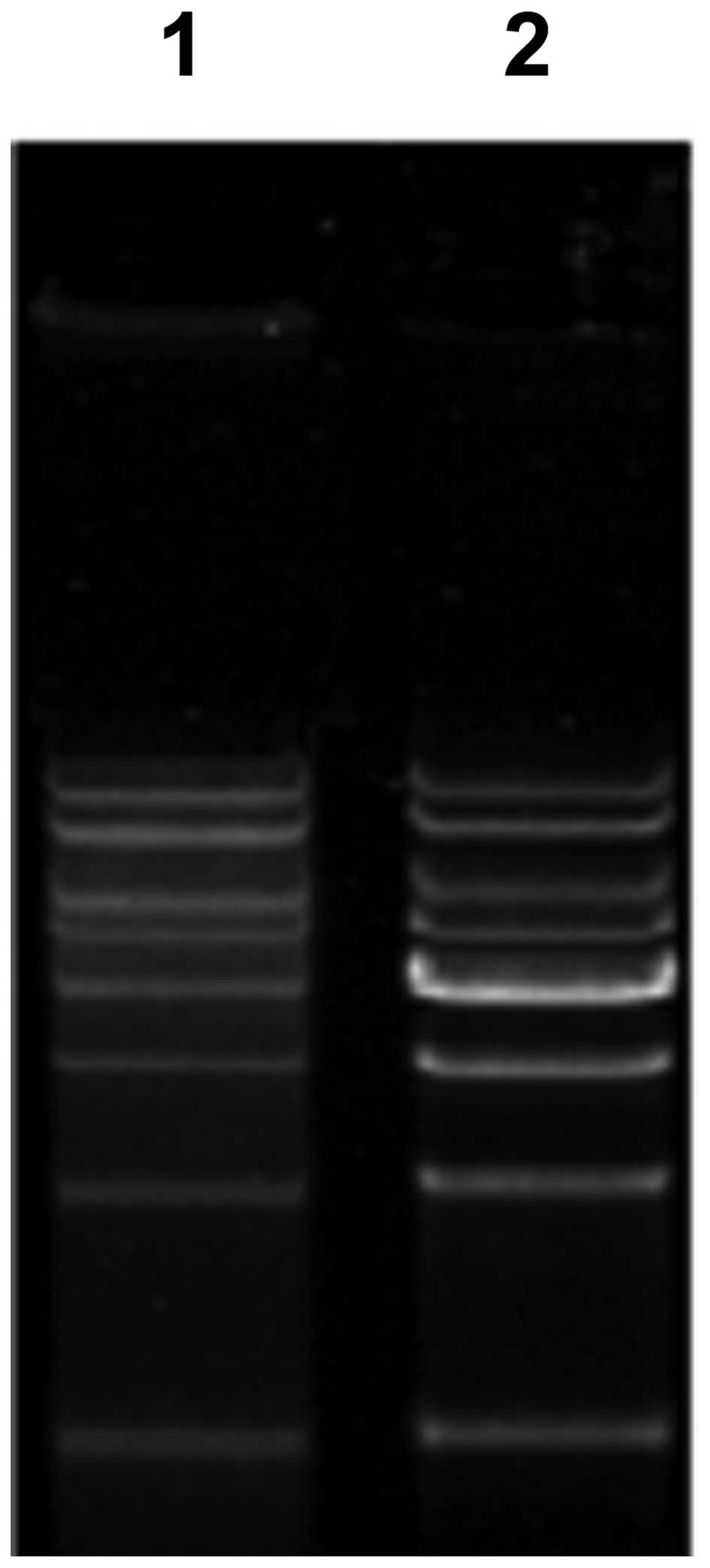
Following extraction, purification and quantity analysis, the PCR products and linear plasmids were mixed according to the special proportions, while the 4,000-bp band was doubled to increase the discrimination effect, then added to 10X loading buffer and was then ready for use. The result of the agarose gel electrophoresis revealed that all the DNA bands were clear and that the ladder was comparable with the commercial version (Fig. 4).

Figure 4

Preparation of high molecular weight DNA ladder. The electrophoresis results of the prepared 1-kb DNA ladder (lane 1), the commercial product of 1-kb DNA ladder (lane 2).

Discussion

The DNA ladder is a widely applied method in electrophoresis and is valuable in molecular biology experiments. It is used to mark the mw of unknown samples in nucleic acid electrophoresis and further aids the judgement of the properties of DNA samples. DNA ladders have been widely applied in such fields as biotechnology, medicine and agriculture, among others, and the market demand is extremely high. PCR was initiated in 1983 by Mullis et al(7) as a specific DNA amplification technology and has the advantages of easy operation, high sensitivity and specificity and good selectivity, and has been widely applied in the fields of molecular biology, genetics, biochemistry, genetic engineering and forensics (8–10). Although PCR amplification is convenient for preparing the DNA ladder, conventional PCR is designed to amplify one type of DNA fragment, one tube at a time, while the DNA ladder is an integration of several DNA fragments, which makes the technological process more complex and cumbersome (11). In addition, the technology is only suitable for amplifying small DNA fragments, while the corresponding fragments of a high mw DNA ladder are difficult to obtain. Despite certain large fragments being amplified using high-fidelity DNA polymerase, the specificity is poor and production cost is high and cannot meet the experimental demand. Another routine method of preparing a DNA ladder is using bacteriophages or plasmids which are digested by restriction endonucleases (12,13). This process requires the construction of a series of vectors for preparing the DNA ladder, further digesting the purified DNA with certain restriction endonucleases and subsequently the combinations of DNA fragments that were required are obtained (14,15). This process is laborious, time consuming and material- and equipment-intensive, involving the propagation of the virus or plasmid in the appropriate host organism and the purification and digestion of the genomic or plasmid DNA from the nucleic acids of the host. Since the corresponding restriction enzyme sites of bacteriophages or plasmid DNA are not well balanced, the distribution of the prepared DNA ladder is irregular and the gaps of the DNA bands are variable in size and not convenient (16).

Based on the analysis and research of the advantages and disadvantages of the above two methods, the methods of PCR amplification and plasmid digestion by restriction endonucleases were adopted in the current study to prepare a high mw DNA ladder. In the current study, 1,000–4,000-bp DNA bands were amplified by PCR and the larger DNA bands, including 5-, 6-, 8- and 10-kb, were obtained by restriction endonuclease digestion of the purified plasmids. These DNA fragments were extracted with phenol/chloroform and precipitated with ethanol, further mixed according to the special proportions and added to 10X loading buffer to obtain the high mw DNA ladder. Compared with commercial DNA ladders, this method was simple, practical and low cost, and the DNA bands were clear. It may also be adjusted to any size of mw standard in a certain range according to the experimental requirement and may be used as a standard in molecular experiments. In short, a new method of preparing high mw DNA ladders was developed in this study.

Acknowledgements

This work was supported by grants from the National Natural Science Foundation of China (30970055), Henan Province (122102310194; 12A310005) and the key research areas bidding subject of Xinxiang Medical University (ZD2011-36).

References

1 

Wu J and Ye C: Tandem PCR: a novel and efficient unit amplification model for the preparation of small DNA fragments. Mol Biol Rep. 38:2729–2731. 2011. View Article : Google Scholar : PubMed/NCBI

2 

Wang TY, Guo L and Zhang JH: Preparation of DNA ladder based on multiplex PCR technique. J Nucleic Acids. 25:4218032010.PubMed/NCBI

3 

Dodgson JB, Cheng HH and Okemoto R: DNA marker technology: a revolution in animal genetics. Poult Sci. 76:1108–1114. 1997. View Article : Google Scholar : PubMed/NCBI

4 

Chen Z, Wu J, Li X, Ye C and Wenxing H: Novel strategies to construct complex synthetic vectors to produce DNA molecular weight standards. Mol Biotechnol. 42:128–133. 2009. View Article : Google Scholar : PubMed/NCBI

5 

Schunck B, Kraft W and Truyen U: A simple touch-down polymerase chain reaction for the detection of canine parvovirus and feline panleukopenia virus in feces. J Virol Methods. 55:427–433. 1995. View Article : Google Scholar : PubMed/NCBI

6 

Sambrook J and Russell DW: Molecular Cloning: A Laboratory Manual. 3rd edition. Cold Spring Harbor Laboratory Press; New York, NY: 2001

7 

Mullis K, Faloona F, Scharf S, Saiki R, Horn G and Erlich H: Specific enzymatic amplification of DNA in vitro: the polymerase chain reaction. Cold Spring Harb Symp Quant Biol. 51:263–273. 1986. View Article : Google Scholar : PubMed/NCBI

8 

Ting NC, Zaki NM, Rosli R, et al: SSR mining in oil palm EST database: application in oil palm germplasm diversity studies. J Genet. 89:135–145. 2010. View Article : Google Scholar : PubMed/NCBI

9 

Lee JH, Shin SR and Cho JH: Evaluation of direct immunofluorescence test with PCR for detection of novel influenza A (H1N1) virus during 2009 pandemic. Yonsei Med J. 52:680–682. 2011. View Article : Google Scholar : PubMed/NCBI

10 

Bellstedt DU, Pirie MD, Visser JC, de Villiers MJ and Gehrke B: A rapid and inexpensive method for the direct PCR amplification of DNA from plants. Am J Bot. 97:e65–e68. 2010.PubMed/NCBI

11 

Dawson EP: Method for the multiplexed preparation of nucleic acid molecular weight markers and resultant products US Patent 5,714,326. Filed January 3, 1996; issued February 3, 1998.

12 

Ye C, Gu J, Chen S, Deng A, Li YZ and Li D: Unit cloning and amplification as novel and universal strategies for complex vector construction and small DNA fragment preparation. Electrophoresis. 31:2929–2935. 2010. View Article : Google Scholar : PubMed/NCBI

13 

Hu A-li W, Hartley JL and Jordan HJ: Nucleic acid ladders US Patent 6,924,098. Filed December 3, 1999; issued August 2, 2005.

14 

Barvish Z, Davis C and Gitelman I: A wide-range, low-cost 150 bp ladder for sizing DNA fragments between 150 and 4500 bp. Electrophoresis. 28:900–902. 2007.PubMed/NCBI

15 

Cole KD: Preparative separation of plasmid and bacterial artificial chromosome DNA by density gradient electrophoresis in the presence of linear polymers. Electrophoresis. 19:3062–3068. 1998. View Article : Google Scholar

16 

Hyman ED: Method of making DNA ladders US Patent 5,939,293. Filed June 5, 1998; issued August 17, 1999.

Related Articles

  • Abstract
  • View
  • Download
  • Twitter
Copy and paste a formatted citation
Spandidos Publications style
Zhang J, Yang R, Wang T, Dong W, Wang F and Wang L: A simple and practical method that prepares high molecular weight DNA ladders. Mol Med Rep 6: 1211-1213, 2012.
APA
Zhang, J., Yang, R., Wang, T., Dong, W., Wang, F., & Wang, L. (2012). A simple and practical method that prepares high molecular weight DNA ladders. Molecular Medicine Reports, 6, 1211-1213. https://doi.org/10.3892/mmr.2012.1061
MLA
Zhang, J., Yang, R., Wang, T., Dong, W., Wang, F., Wang, L."A simple and practical method that prepares high molecular weight DNA ladders". Molecular Medicine Reports 6.5 (2012): 1211-1213.
Chicago
Zhang, J., Yang, R., Wang, T., Dong, W., Wang, F., Wang, L."A simple and practical method that prepares high molecular weight DNA ladders". Molecular Medicine Reports 6, no. 5 (2012): 1211-1213. https://doi.org/10.3892/mmr.2012.1061
Copy and paste a formatted citation
x
Spandidos Publications style
Zhang J, Yang R, Wang T, Dong W, Wang F and Wang L: A simple and practical method that prepares high molecular weight DNA ladders. Mol Med Rep 6: 1211-1213, 2012.
APA
Zhang, J., Yang, R., Wang, T., Dong, W., Wang, F., & Wang, L. (2012). A simple and practical method that prepares high molecular weight DNA ladders. Molecular Medicine Reports, 6, 1211-1213. https://doi.org/10.3892/mmr.2012.1061
MLA
Zhang, J., Yang, R., Wang, T., Dong, W., Wang, F., Wang, L."A simple and practical method that prepares high molecular weight DNA ladders". Molecular Medicine Reports 6.5 (2012): 1211-1213.
Chicago
Zhang, J., Yang, R., Wang, T., Dong, W., Wang, F., Wang, L."A simple and practical method that prepares high molecular weight DNA ladders". Molecular Medicine Reports 6, no. 5 (2012): 1211-1213. https://doi.org/10.3892/mmr.2012.1061
Follow us
  • Twitter
  • LinkedIn
  • Facebook
About
  • Spandidos Publications
  • Careers
  • Cookie Policy
  • Privacy Policy
How can we help?
  • Help
  • Live Chat
  • Contact
  • Email to our Support Team