Spandidos Publications Logo
  • About
    • About Spandidos
    • Aims and Scopes
    • Abstracting and Indexing
    • Editorial Policies
    • Reprints and Permissions
    • Job Opportunities
    • Terms and Conditions
    • Contact
  • Journals
    • All Journals
    • Oncology Letters
      • Oncology Letters
      • Information for Authors
      • Editorial Policies
      • Editorial Board
      • Aims and Scope
      • Abstracting and Indexing
      • Bibliographic Information
      • Archive
    • International Journal of Oncology
      • International Journal of Oncology
      • Information for Authors
      • Editorial Policies
      • Editorial Board
      • Aims and Scope
      • Abstracting and Indexing
      • Bibliographic Information
      • Archive
    • Molecular and Clinical Oncology
      • Molecular and Clinical Oncology
      • Information for Authors
      • Editorial Policies
      • Editorial Board
      • Aims and Scope
      • Abstracting and Indexing
      • Bibliographic Information
      • Archive
    • Experimental and Therapeutic Medicine
      • Experimental and Therapeutic Medicine
      • Information for Authors
      • Editorial Policies
      • Editorial Board
      • Aims and Scope
      • Abstracting and Indexing
      • Bibliographic Information
      • Archive
    • International Journal of Molecular Medicine
      • International Journal of Molecular Medicine
      • Information for Authors
      • Editorial Policies
      • Editorial Board
      • Aims and Scope
      • Abstracting and Indexing
      • Bibliographic Information
      • Archive
    • Biomedical Reports
      • Biomedical Reports
      • Information for Authors
      • Editorial Policies
      • Editorial Board
      • Aims and Scope
      • Abstracting and Indexing
      • Bibliographic Information
      • Archive
    • Oncology Reports
      • Oncology Reports
      • Information for Authors
      • Editorial Policies
      • Editorial Board
      • Aims and Scope
      • Abstracting and Indexing
      • Bibliographic Information
      • Archive
    • Molecular Medicine Reports
      • Molecular Medicine Reports
      • Information for Authors
      • Editorial Policies
      • Editorial Board
      • Aims and Scope
      • Abstracting and Indexing
      • Bibliographic Information
      • Archive
    • World Academy of Sciences Journal
      • World Academy of Sciences Journal
      • Information for Authors
      • Editorial Policies
      • Editorial Board
      • Aims and Scope
      • Abstracting and Indexing
      • Bibliographic Information
      • Archive
    • International Journal of Functional Nutrition
      • International Journal of Functional Nutrition
      • Information for Authors
      • Editorial Policies
      • Editorial Board
      • Aims and Scope
      • Abstracting and Indexing
      • Bibliographic Information
      • Archive
    • International Journal of Epigenetics
      • International Journal of Epigenetics
      • Information for Authors
      • Editorial Policies
      • Editorial Board
      • Aims and Scope
      • Abstracting and Indexing
      • Bibliographic Information
      • Archive
    • Medicine International
      • Medicine International
      • Information for Authors
      • Editorial Policies
      • Editorial Board
      • Aims and Scope
      • Abstracting and Indexing
      • Bibliographic Information
      • Archive
  • Articles
  • Information
    • Information for Authors
    • Information for Reviewers
    • Information for Librarians
    • Information for Advertisers
    • Conferences
  • Language Editing
Spandidos Publications Logo
  • About
    • About Spandidos
    • Aims and Scopes
    • Abstracting and Indexing
    • Editorial Policies
    • Reprints and Permissions
    • Job Opportunities
    • Terms and Conditions
    • Contact
  • Journals
    • All Journals
    • Biomedical Reports
      • Information for Authors
      • Editorial Policies
      • Editorial Board
      • Aims and Scope
      • Abstracting and Indexing
      • Bibliographic Information
      • Archive
    • Experimental and Therapeutic Medicine
      • Information for Authors
      • Editorial Policies
      • Editorial Board
      • Aims and Scope
      • Abstracting and Indexing
      • Bibliographic Information
      • Archive
    • International Journal of Epigenetics
      • Information for Authors
      • Editorial Policies
      • Editorial Board
      • Aims and Scope
      • Abstracting and Indexing
      • Bibliographic Information
      • Archive
    • International Journal of Functional Nutrition
      • Information for Authors
      • Editorial Policies
      • Editorial Board
      • Aims and Scope
      • Abstracting and Indexing
      • Bibliographic Information
      • Archive
    • International Journal of Molecular Medicine
      • Information for Authors
      • Editorial Policies
      • Editorial Board
      • Aims and Scope
      • Abstracting and Indexing
      • Bibliographic Information
      • Archive
    • International Journal of Oncology
      • Information for Authors
      • Editorial Policies
      • Editorial Board
      • Aims and Scope
      • Abstracting and Indexing
      • Bibliographic Information
      • Archive
    • Medicine International
      • Information for Authors
      • Editorial Policies
      • Editorial Board
      • Aims and Scope
      • Abstracting and Indexing
      • Bibliographic Information
      • Archive
    • Molecular and Clinical Oncology
      • Information for Authors
      • Editorial Policies
      • Editorial Board
      • Aims and Scope
      • Abstracting and Indexing
      • Bibliographic Information
      • Archive
    • Molecular Medicine Reports
      • Information for Authors
      • Editorial Policies
      • Editorial Board
      • Aims and Scope
      • Abstracting and Indexing
      • Bibliographic Information
      • Archive
    • Oncology Letters
      • Information for Authors
      • Editorial Policies
      • Editorial Board
      • Aims and Scope
      • Abstracting and Indexing
      • Bibliographic Information
      • Archive
    • Oncology Reports
      • Information for Authors
      • Editorial Policies
      • Editorial Board
      • Aims and Scope
      • Abstracting and Indexing
      • Bibliographic Information
      • Archive
    • World Academy of Sciences Journal
      • Information for Authors
      • Editorial Policies
      • Editorial Board
      • Aims and Scope
      • Abstracting and Indexing
      • Bibliographic Information
      • Archive
  • Articles
  • Information
    • For Authors
    • For Reviewers
    • For Librarians
    • For Advertisers
    • Conferences
  • Language Editing
Login Register Submit
  • This site uses cookies
  • You can change your cookie settings at any time by following the instructions in our Cookie Policy. To find out more, you may read our Privacy Policy.

    I agree
Search articles by DOI, keyword, author or affiliation
Search
Advanced Search
presentation
Molecular Medicine Reports
Join Editorial Board Propose a Special Issue
Print ISSN: 1791-2997 Online ISSN: 1791-3004
Journal Cover
April 2012 Volume 5 Issue 4

Full Size Image

Sign up for eToc alerts
Recommend to Library

Journals

International Journal of Molecular Medicine

International Journal of Molecular Medicine

International Journal of Molecular Medicine is an international journal devoted to molecular mechanisms of human disease.

International Journal of Oncology

International Journal of Oncology

International Journal of Oncology is an international journal devoted to oncology research and cancer treatment.

Molecular Medicine Reports

Molecular Medicine Reports

Covers molecular medicine topics such as pharmacology, pathology, genetics, neuroscience, infectious diseases, molecular cardiology, and molecular surgery.

Oncology Reports

Oncology Reports

Oncology Reports is an international journal devoted to fundamental and applied research in Oncology.

Experimental and Therapeutic Medicine

Experimental and Therapeutic Medicine

Experimental and Therapeutic Medicine is an international journal devoted to laboratory and clinical medicine.

Oncology Letters

Oncology Letters

Oncology Letters is an international journal devoted to Experimental and Clinical Oncology.

Biomedical Reports

Biomedical Reports

Explores a wide range of biological and medical fields, including pharmacology, genetics, microbiology, neuroscience, and molecular cardiology.

Molecular and Clinical Oncology

Molecular and Clinical Oncology

International journal addressing all aspects of oncology research, from tumorigenesis and oncogenes to chemotherapy and metastasis.

World Academy of Sciences Journal

World Academy of Sciences Journal

Multidisciplinary open-access journal spanning biochemistry, genetics, neuroscience, environmental health, and synthetic biology.

International Journal of Functional Nutrition

International Journal of Functional Nutrition

Open-access journal combining biochemistry, pharmacology, immunology, and genetics to advance health through functional nutrition.

International Journal of Epigenetics

International Journal of Epigenetics

Publishes open-access research on using epigenetics to advance understanding and treatment of human disease.

Medicine International

Medicine International

An International Open Access Journal Devoted to General Medicine.

Journal Cover
April 2012 Volume 5 Issue 4

Full Size Image

Sign up for eToc alerts
Recommend to Library

  • Article
  • Citations
    • Cite This Article
    • Download Citation
    • Create Citation Alert
    • Remove Citation Alert
    • Cited By
  • Similar Articles
    • Related Articles (in Spandidos Publications)
    • Similar Articles (Google Scholar)
    • Similar Articles (PubMed)
  • Download PDF
  • Download XML
  • View XML
Article

Tanshinone IIA inhibits human breast cancer MDA-MB-231 cells by decreasing LC3-II, Erb-B2 and NF-κBp65

  • Authors:
    • Chin-Cheng Su
    • Su-Yu Chien
    • Shou-Jen Kuo
    • Yao-Li Chen
    • Chun-Yuan Cheng
    • Dar-Ren Chen
  • View Affiliations / Copyright

    Affiliations: Department of Surgery, Comprehensive Breast Cancer Center, Laboratory of Integrative Medicine Cancer Research, Changhua Christian Hospital, Changhua 500-06, Taiwan, R.O.C., Department of Pharmacy, Comprehensive Breast Cancer Center, Changhua Christian Hospital, Changhua 500-06, Taiwan, R.O.C., Department of Surgery, Comprehensive Breast Cancer Center, Changhua Christian Hospital, Changhua 500-06, Taiwan, R.O.C.
  • Pages: 1019-1022
    |
    Published online on: January 13, 2012
       https://doi.org/10.3892/mmr.2012.756
  • Expand metrics +
Metrics: Total Views: 0 (Spandidos Publications: | PMC Statistics: )
Metrics: Total PDF Downloads: 0 (Spandidos Publications: | PMC Statistics: )
Cited By (CrossRef): 0 citations Loading Articles...

This article is mentioned in:


Abstract

The ability of tanshinone IIA (Tan-IIA) to inhibit the proliferation of human breast cancer cell lines in vitro and in vivo is well documented. However, the molecular mechanisms have not been fully elucidated. In the present study, MDA-MB-231 cells were treated with different concentrations of Tan-IIA for 48 h, followed by protein extraction for western blotting. For an in vivo study, MDA-MB-231 cells were implanted directly into female SCID mice which were divided randomly into three groups to be treated with vehicle, Tan-IIA (20 mg/kg) and Tan-IIA (60 mg/kg) every other day orally, with treatment starting 4 weeks after inoculation with the MDA-MB-231 cells. The results showed that Tan-IIA inhibited the proliferation of MDA-MB-231 cells and decreased the protein expression of LC3-II and Erb-B2 in vitro. Treatment with Tan-IIA (20 or 60 mg/kg) for 90 days resulted in a reduction in tumor size and weight compared to the control group. The protein expression of NF-κBp65 was reduced, while caspase-3 was up-regulated compared to the control group. These findings indicate that Tan-IIA inhibits tumor growth in a MDA-MB-231 xenograft animal model. One of the molecular mechanisms may be through a decrease in NF-κBp65 and an increase in caspase-3 expression.

Introduction

Based on the GLOBOCAN 2008 estimates, breast cancer is the leading cause of cancer-related death in women worldwide. New cases of breast cancer are estimated to be 1,383,500 with 458,400 deaths (1). Many prescriptions for chemotherapy have been derived from plants (2). Danshen (Salviae miltiorrhizae radix) has been used in traditional Chinese medicine for cardiovascular disease and appeared in the Chinese book, Shennong Bencao Jing (ca. 100 A.D.) (3). Tanshinone IIA (Tan-IIA) was extracted from danshen and was first described in 1968. It is known to have antioxidant (4) and anti-inflammatory properties (5). Our previous studies showed that Tan-IIA induces apoptosis in certain human cancer cells, such as human colon cancer colo 205 cells (6,7), human hepatocellular carcinoma hep-J5 cells (8), small-cell lung cancer H146 cells (9) and non-small-cell lung cancer A549 cells (10). Our previous study also showed that Tan-IIA inhibited MDA-MB-231 cells through inducing apoptosis by increasing Bax to Bcl-xL ratios and the protein levels of p21 and caspase-8 in vitro (11). The anticancer effects of Tan-IIA on human breast cancer cell lines in vitro and in vivo have been well documented (12–15). However, the molecular mechanisms have not been fully elucidated. In the present study, we evaluated the effects and molecular mechanisms of Tan-IIA on MDA-MB-231 cells in vitro using a human breast cancer xenograft model in SCID mice.

Materials and methods

Chemicals

Tan-IIA (molecular formula: C19H18O3, purity >96% by HPLC) was purchased from Herbasin Co. (Shenyang, China). Corn oil, aprotinin, antipain, sodium deoxycholate, leupeptin, sodium orthovanadate, Triton X-100, Tris-HCl, ribonuclease-A and MTT [3-(4,5-dimethylthiazol-2-y1)-2,5-diphenyltetrazolium bromide] were obtained from Sigma Chemical Co. (St. Louis, MO, USA). Dimethyl sulfoxide (DMSO), potassium phosphates and TE buffer were purchased from Merck Co. (Darmstadt, Germany). L-15 medium, fetal bovine serum (FBS), penicillin-streptomycin, trypsin-EDTA and glutamine were obtained from Gibco BRL (Grand Island, NY, USA). The MDA-MB-231 human breast cancer cell line was obtained from the Food Industry Research and Development Institute (Hsinchu, Taiwan).

Cell culture

The MDA-MB-231 human breast cancer cells were placed into 75-cm3 tissue culture flasks and grown at 37˚C in a humidified atmosphere (CO2 was not present) in L-15 medium (Sigma Chemical Co.) containing 10% heat-inactivated FBS, 1% penicillin-streptomycin (10,000 U/ml penicillin and 10 mg/ml streptomycin). The data presented herein are from a minimum of three independent experiments.

The protein expression of LC3-II and Erb-B2 in MDA-MB-231 cells treated with Tan-IIA was determined by western blotting. The cytotoxicity of Tan-IIA on MDA-MB-231 cells has been well documented (11). The result showed that the proliferation of MDA-MB-231 cells was inhibited by Tan-IIA in a dose- and time-dependent manner. The IC50 was 11.85±0.29 μg/ml when MDA-MB-231 cells were treated with Tan-IIA for 48 h.

Protein preparation

Approximately 1×10⁶ cells/10-cm dish were incubated with Tan-IIA at 0, 3, 10 and 25 μg/ml concentrations for 48 h before the cells were harvested by centrifugation. Protein was extracted as described (16). Briefly, cell pellets were resuspended in modified RIPA buffer (50 mM Tris-HCl, pH 7.5, 150 mM NaCl, 1% Nonidet P-40, 0.25% sodium deoxycholate, 1 mM EGTA, 1 mM DTT, 1 mM PMSF, 1 mM sodium orthovanadate, 1 mM sodium fluoride, 5 μg/ml aprotinin, 5 μg/ml leupeptin and 5 μg/ml antipain) for 30 min at 4˚C. Lysates were immediately centrifuged at 13,000 × g for 20 min at 4˚C, and the supernatant was collected, aliquoated (50 μg/tube) and stored at −80˚C before being assayed. The protein concentrations were measured using the Bradford method (17).

Effects of Tan-IIA on the expression of LC3-II, Erb-B2 and β-actin in MDA-MB-231 cells

All samples were separated by sodium dodecyl sulfate polyacrylamide (SDS-PAGE) gel electrophoresis (Bio-Rad Life Science Products, Hercules, CA, USA) as previously described (16). The SDS separated proteins were followed by equilibration in transfer buffer (50 mM Tris, pH 9.0, 40 mM glycine, 0.375% SDS and 20% methanol) and electro-transferred to Immobilon-P Transfer membranes (Millipore Corporation, Bedford, MA, USA). The blot was then blocked with a solution containing 5% nonfat dry milk in Tris-buffered saline [10 mM Tris and 150 mM NaCl (Sigma Chemical Co.)], containing 0.05% Tween-20 for 1 h. It was then washed and incubated with antibodies to Erb-B2 (R&D), LC3-II (Sigma Chemical Co.) and β-actin (Upstate, Lake Placid, NY, USA) at 4˚C overnight. After incubating with anti-mouse peroxidase-conjugated antibody (Santa Cruz, Santa Cruz, CA, USA), the signal was visualized by enhanced chemiluminescence (ECL; Amersham Pharmacia Biotech). The detection of β-actin was used as an internal control in all the data for western blotting.

In vivo MDA-MB-231 cell tumor xenograft model

Three-week-old female nude SCID mice (NOD.CB 17-Prkdcscid/Tcu) were xenografted with MDA-MB-231 human breast cancer cells (3×10⁶/0.2 ml) and maintained in a pathogen-free environment (Laboratory Animal Center of Tzu Chi University, Hualien, Taiwan). On day 28 onwards, the mice were divided randomly into three groups (each group n=7) to be treated with Tan-IIA (20 and 60 mg/kg of body weight, dissolved in corn oil). As a control, xenografted tumors were separately treated with corn oil (0.1 ml/10 g body weight). Each agent was administered orally every other day. At the end of the 3-month dosing schedule, the SCID mice were sacrificed by CO2 inhalation on the 97th day. After xenograft transplantation, mice exhibiting tumors were monitored, and the tumor size was measured once every 2 days using calipers. The tumor volume in each animal was estimated according to the formula: Tumor volume (mm3) = L × W2/2 (where L is the length and W is the width), with the final measurement taken 3 months after tumor cell inoculation. At the same time, the body weight of each animal was measured once every 2 days. The xenograft tumors were dissected and weighed individually, then the proteins were extracted for western blotting. The protein expression of NF-κBp65, caspase-3 and β-actin was measured by western blotting. Immunoreactive bands were scanned and analyzed using a digital scanning densitometer (Molecular Dynamics, Sunnyvale, CA, USA).

Statistical analysis

Values are presented as the means ± SD. The Student's t-test was used to analyze the statistical significance and p<0.05 was considered significant for all tests.

Results and Discussion

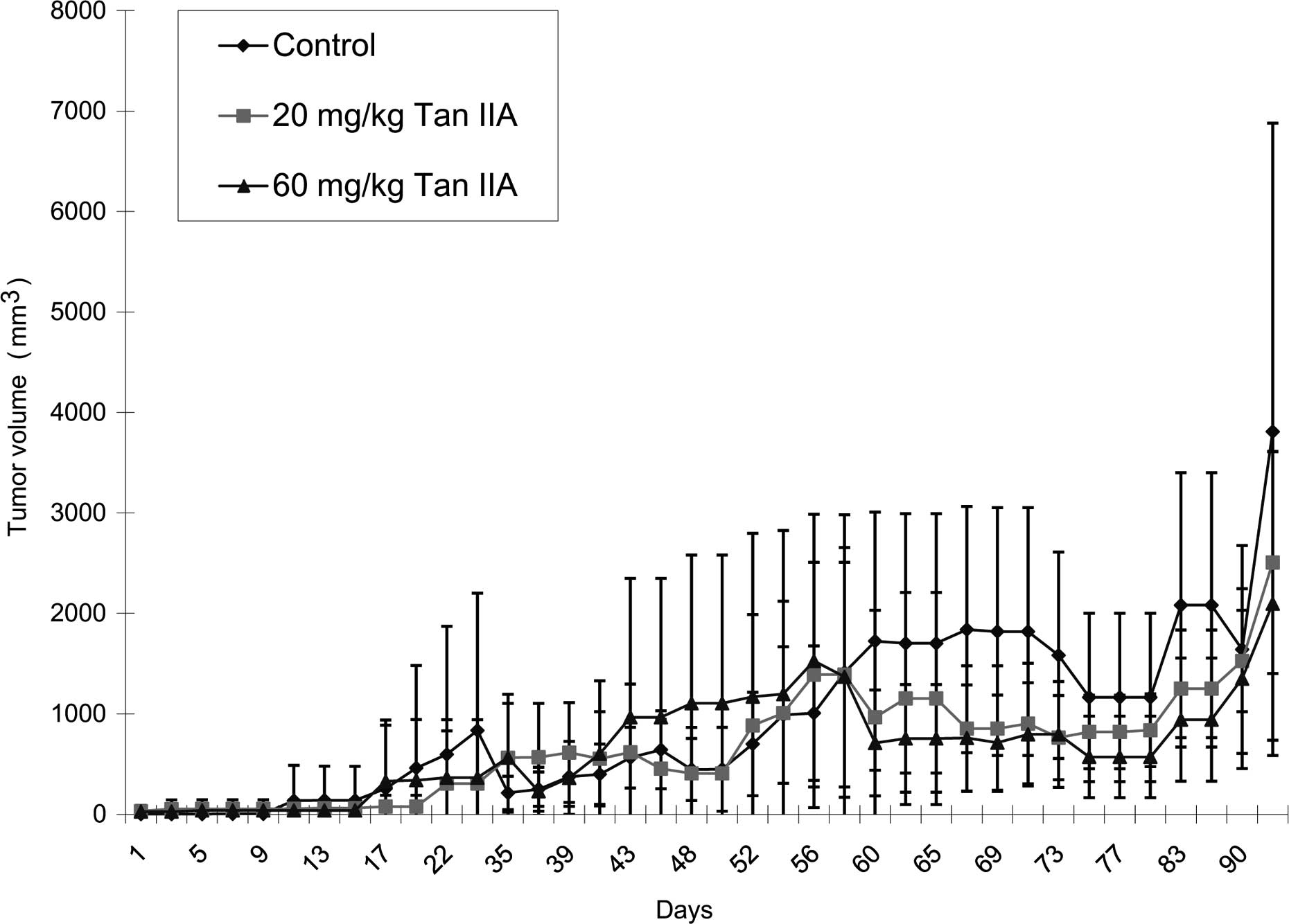
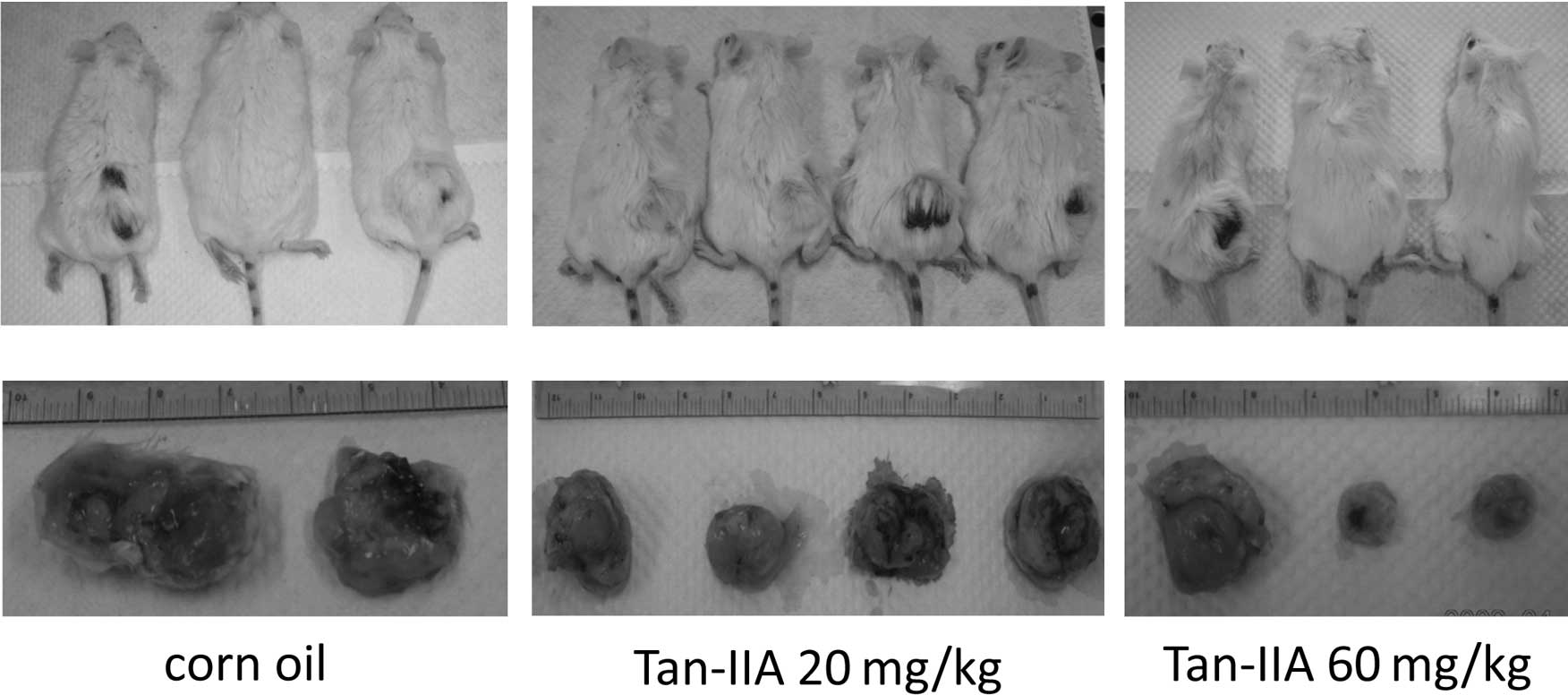
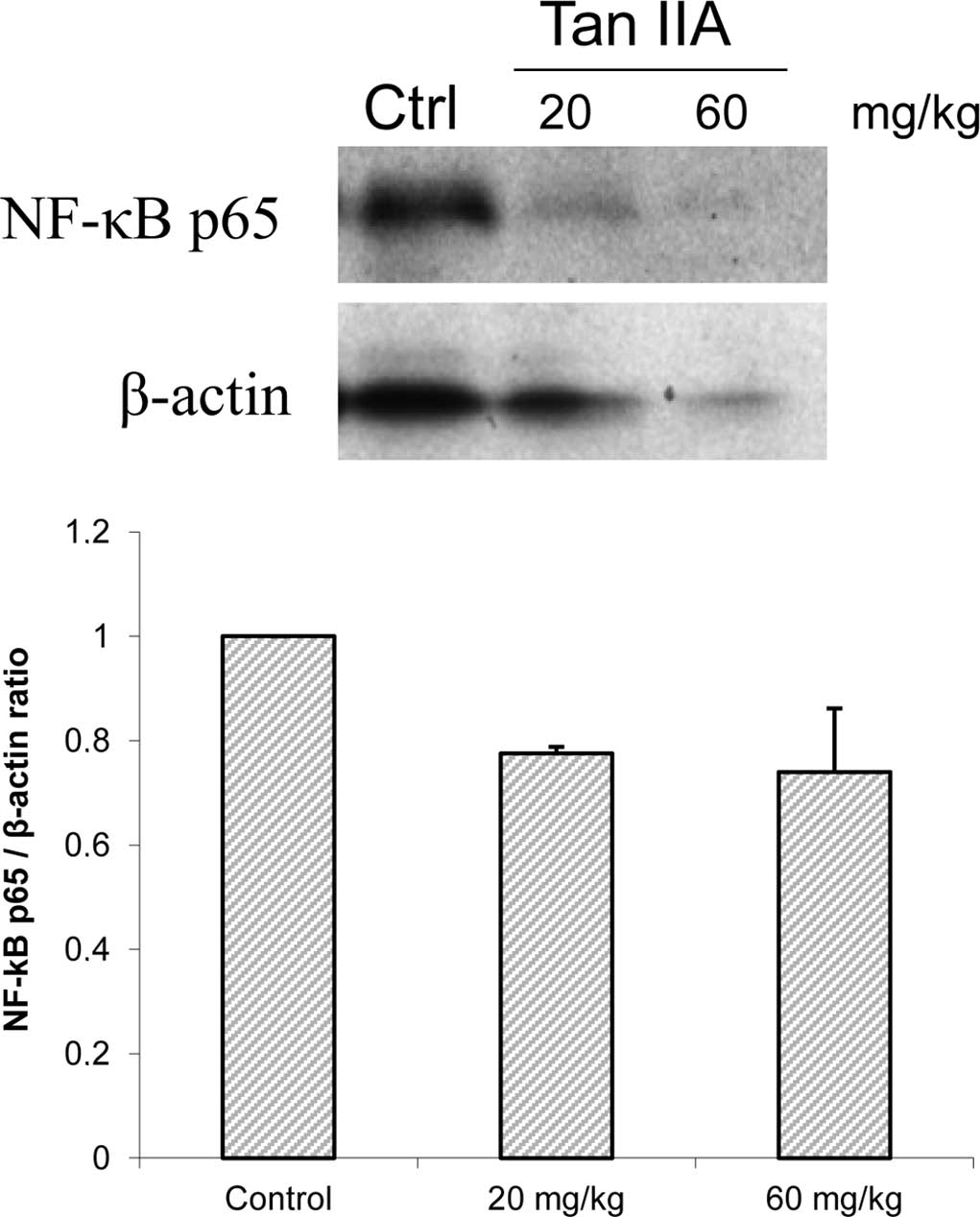
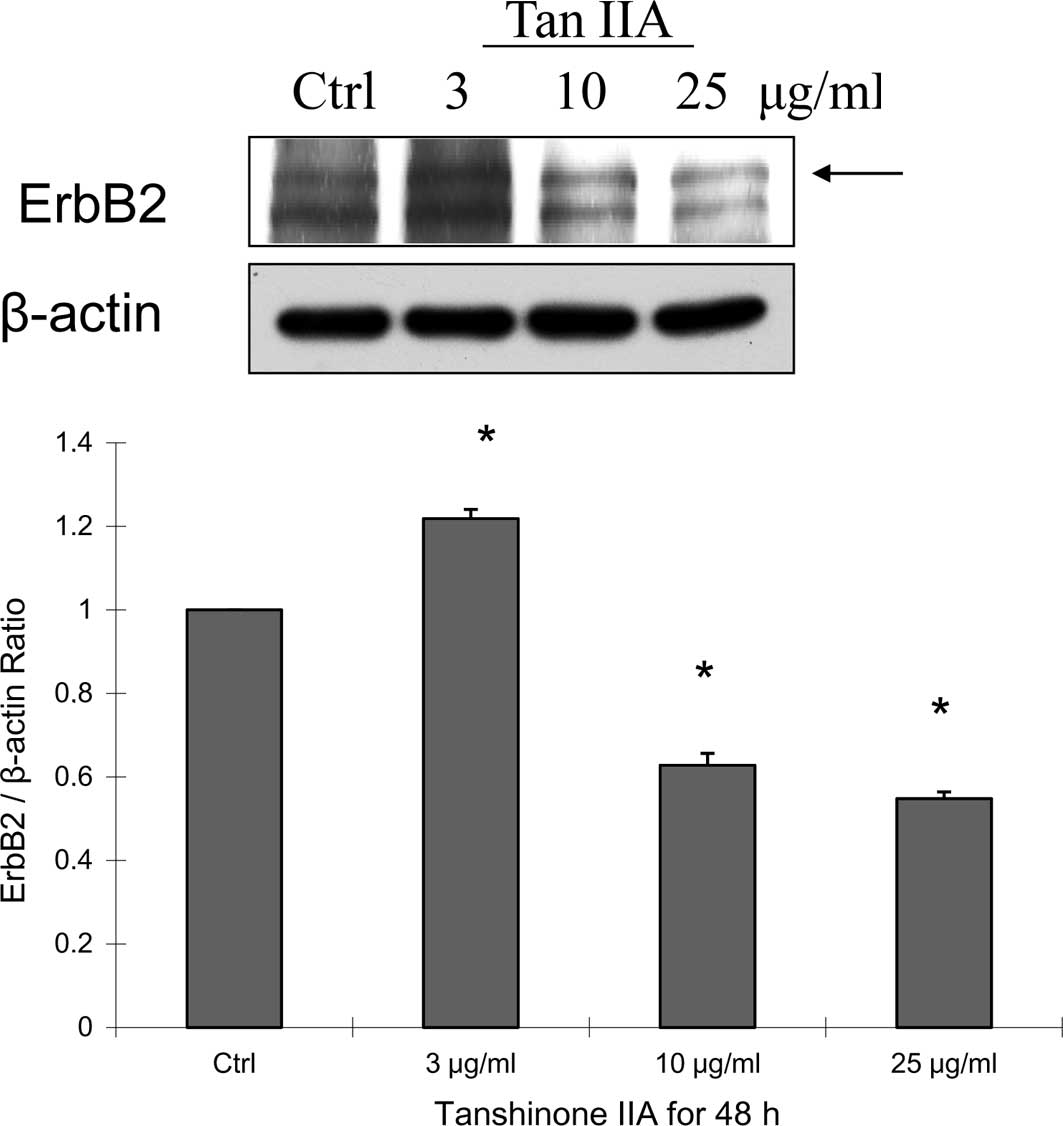
The results showed that Tan-IIA significantly decreased the MDA-MB-231 cell xenograft tumor size (Fig. 1). An illustration of a representative animal treated with Tan-IIA relative to the control is shown in Fig. 2A. The results also showed that Tan-IIA (60 mg/kg) significantly decreased the weight of MDA-MB-231 cell xenograft tumors when compared to the control group (Fig. 2B). All MDA-MB-231 cell xenograft tumors appeared only at the inoculation sites (data not shown). Based on these results, Tan-IIA treatment (both 20 and 60 mg/kg body weight/per day) by oral administration inhibited MDA-MB-231 cell xenograft tumor growth. In the present study, mice with MDA-MB-231 xenograft tumors received Tan-IIA treatment; these tumors continue to grow slowly, indicating that multiple treatments are necessary to achieve a complete response. However, the results showed that a high dose of Tan-IIA had therapeutic potential in MDA-MB-231 cells in vivo. This is in agreement with other studies (12,13). Our results showed that MDA-MB-231 cell xenograft tumors treated with Tan-IIA decreased NF-κBp65 (Fig. 3A), but increased caspase 3 expression (Fig. 3B) when compared to the control group. Our results also showed that MDA-MB-231 cells treated with Tan-IIA for 48 h decreased the protein expression of Erb-B2 (Fig. 4A) and LC3-II (Fig. 4B), but increased caspase 3 (Fig. 4C) expression. This is not in agreement with other studies, which showed that xenograft tumors treated with Tan-IIA decreased P53 and bcl-2 expression, but not of cerbB-2 (12,13). The present study provides the first report of Tan-IIA anti-human breast cancer activity through a decrease in Erb-B2 and LC3-II expression in vitro and a decrease in NF-κBp65 expression in an MDA-MB-231 cell xenograft tumor model.

Figure 1

Three-week-old female nude SCID mice were xenografted with MDA-MB-231 cells. On day 28 onwards, the mice were divided randomly into three groups (each group n=7) to be treated with Tan-IIA (20 mg/kg) and Tan-IIA (60 mg/kg). As a control, mice were treated with corn oil (0.1 ml/10 g body weight). Each agent was administered orally every other day. At the end of the 3-month dosing schedule, the SCID mice were sacrificed by CO2 inhalation on the 97th day. After xenograft transplantation, mice exhibiting tumors were monitored and the tumor size was measured once every 2 days using calipers. The results showed that Tan-IIA significantly decreased MDA-MB-231 cell xenograft tumor size.

Figure 2

Mice bearing MDA-MB-231 cell xenograft tumors were treated with low dose (20 mg/kg) and high dose (60 mg/kg) Tan-IIA for 90 days. As a control, mice were treated with corn oil. (A) At the end of the 3-month dosing schedule, the SCID mice were sacrificed by CO2 inhalation on the 97th day, and the xenograft tumors were dissected and weighed. (B) The results also showed that high dose (60 mg/kg) of Tan-IIA significantly decreased the weight of MDA-MB-231 cell xenograft tumors when compared to the control group.

Figure 3

MDA-MB-231 cell xenograft model treated with Tan-IIA decreased NF-κBp65 expression (A), but increased caspase 3 expression (B) when compared to the control group. Values are expressed as the means ± SD. *Significant difference at p<0.05 vs. the control group.

Figure 4

Protein expression of Erb-B2, LC3-II, caspase 3 and β-actin in MDA-MB-231 cells treated with Tan-IIA for 48 h. The results showed that MDA-MB-231 cells treated with Tan-IIA for 48 h down-regulated the protein expression of Erb-B2 (A) and LC3-II (B), but increased caspase 3 expression C) in vitro. Values are expressed as the means ± SD. *Significant difference at p<0.05 vs. the control group.

Acknowledgements

This study was supported by the grant NSC 98-2314-B-303-004 from the National Science Council, Department of Health, Executive Yuan, Taiwan, R.O.C.

References

1 

A JemalF BrayMM CenterJ FerlayE WardD FormanGlobal Cancer StatisticsCA Cancer J Clin616990201110.3322/caac.20107

2 

TW LeungPJ JohnsonSystemic therapy for hepatocellular carcinomaSemin Oncol28514520200110.1016/S0093-7754(01)90144-711685744

3 

ZT LiBJ YangGE MaChemical studies of Salvia miltiorrhiza f. albaYaoxue Xuebao262092131991(In Chinese).

4 

TJ LinAntioxidation mechanism of schizandrin and tanshinonatic acid A and their effects on the protection of cardio-toxic action of adriamycinShengli Kexue Jinzhan223423451991(In Chinese).

5 

Y LiangYM YangSL YuanStudies on Pharmic mechanism and clinic application of TanshinoneTradit Herbal Drugs313043062000

6 

CC SuYH LinTanshinone IIA down-regulates the protein expression of ErbB-2 and up-regulates TNF-α in colon cancer cells in vitro and in vivoInt J Mol Med22847851200819020785

7 

CC SuGW ChenJC KangMH ChanGrowth inhibition and apoptosis induction by tanshinone IIA in human colon adenocarcinoma cellsPlanta Med7413571362200810.1055/s-2008-108129918622903

8 

CY ChengCC SuTanshinone IIA inhibits Hep-J5 cells by increasing calreticulin, caspase 12 and GADD153 protein expressionInt J Mol Med26379385201020664954

9 

CY ChengCC SuTanshinone IIA may inhibit the growth of small cell lung cancer H146 cells by up-regulating the Bax/Bcl-2 ratio and decreasing mitochondrial membrane potentialMol Med Rep3645650201021472292

10 

TL ChiuCC SuTanshinone IIA induces apoptosis in human lung cancer A549 cells through the induction of reactive oxygen species and decreasing the mitochondrial membrane potentialInt J Mol Med25231236201020043132

11 

CC SuYH LinTanshinone IIA inhibits human breast cancer cells through increased Bax to Bcl-xL ratiosInt J Mol Med22357361200818698495

12 

X ZhangPR ZhangJ ChenQA LüStudy on the effect of Tanshinone II A against human breast cancer in vivoSichuan Da Xue Xue Bao Yi Xue Ban4162672010(In Chinese).

13 

Q LuP ZhangX ZhangJ ChenExperimental study of the anti-cancer mechanism of tanshinone IIA against human breast cancerInt J Mol Med24773780200919885617

14 

PR ZhangQA Lüstudy on anticancer activity of tanshinone IIA against human breast cancerSichuan Da Xue Xue Bao Yi Xue Ban402452492009(In Chinese).

15 

X WangY WeiS YuanG LiuY LuJ ZhangW WangPotential anticancer activity of tanshinone IIA against human breast cancerInt J Cancer116799807200510.1002/ijc.2088015849732

16 

HC ChenWT HsiehWC ChangJG ChungAloe-emodin induced in vitro G2/M arrest of cell cycle in human promyelocytic leukemia HL-60 cellsFood Chem Toxicol4212511257200410.1016/j.fct.2004.03.00215207375

17 

MM BradfordA rapid and sensitive method for the quantitation of microgram quantities of protein using the principle of protein-dye bindingAnal Biochem72248254197610.1016/0003-2697(76)90527-3942051

Related Articles

  • Abstract
  • View
  • Download
  • Twitter
Copy and paste a formatted citation
Spandidos Publications style
Su C, Chien S, Kuo S, Chen Y, Cheng C and Chen D: Tanshinone IIA inhibits human breast cancer MDA-MB-231 cells by decreasing LC3-II, Erb-B2 and NF-κBp65. Mol Med Rep 5: 1019-1022, 2012.
APA
Su, C., Chien, S., Kuo, S., Chen, Y., Cheng, C., & Chen, D. (2012). Tanshinone IIA inhibits human breast cancer MDA-MB-231 cells by decreasing LC3-II, Erb-B2 and NF-κBp65. Molecular Medicine Reports, 5, 1019-1022. https://doi.org/10.3892/mmr.2012.756
MLA
Su, C., Chien, S., Kuo, S., Chen, Y., Cheng, C., Chen, D."Tanshinone IIA inhibits human breast cancer MDA-MB-231 cells by decreasing LC3-II, Erb-B2 and NF-κBp65". Molecular Medicine Reports 5.4 (2012): 1019-1022.
Chicago
Su, C., Chien, S., Kuo, S., Chen, Y., Cheng, C., Chen, D."Tanshinone IIA inhibits human breast cancer MDA-MB-231 cells by decreasing LC3-II, Erb-B2 and NF-κBp65". Molecular Medicine Reports 5, no. 4 (2012): 1019-1022. https://doi.org/10.3892/mmr.2012.756
Copy and paste a formatted citation
x
Spandidos Publications style
Su C, Chien S, Kuo S, Chen Y, Cheng C and Chen D: Tanshinone IIA inhibits human breast cancer MDA-MB-231 cells by decreasing LC3-II, Erb-B2 and NF-κBp65. Mol Med Rep 5: 1019-1022, 2012.
APA
Su, C., Chien, S., Kuo, S., Chen, Y., Cheng, C., & Chen, D. (2012). Tanshinone IIA inhibits human breast cancer MDA-MB-231 cells by decreasing LC3-II, Erb-B2 and NF-κBp65. Molecular Medicine Reports, 5, 1019-1022. https://doi.org/10.3892/mmr.2012.756
MLA
Su, C., Chien, S., Kuo, S., Chen, Y., Cheng, C., Chen, D."Tanshinone IIA inhibits human breast cancer MDA-MB-231 cells by decreasing LC3-II, Erb-B2 and NF-κBp65". Molecular Medicine Reports 5.4 (2012): 1019-1022.
Chicago
Su, C., Chien, S., Kuo, S., Chen, Y., Cheng, C., Chen, D."Tanshinone IIA inhibits human breast cancer MDA-MB-231 cells by decreasing LC3-II, Erb-B2 and NF-κBp65". Molecular Medicine Reports 5, no. 4 (2012): 1019-1022. https://doi.org/10.3892/mmr.2012.756
Follow us
  • Twitter
  • LinkedIn
  • Facebook
About
  • Spandidos Publications
  • Careers
  • Cookie Policy
  • Privacy Policy
How can we help?
  • Help
  • Live Chat
  • Contact
  • Email to our Support Team