Spandidos Publications Logo
  • About
    • About Spandidos
    • Aims and Scopes
    • Abstracting and Indexing
    • Editorial Policies
    • Reprints and Permissions
    • Job Opportunities
    • Terms and Conditions
    • Contact
  • Journals
    • All Journals
    • Oncology Letters
      • Oncology Letters
      • Information for Authors
      • Editorial Policies
      • Editorial Board
      • Aims and Scope
      • Abstracting and Indexing
      • Bibliographic Information
      • Archive
    • International Journal of Oncology
      • International Journal of Oncology
      • Information for Authors
      • Editorial Policies
      • Editorial Board
      • Aims and Scope
      • Abstracting and Indexing
      • Bibliographic Information
      • Archive
    • Molecular and Clinical Oncology
      • Molecular and Clinical Oncology
      • Information for Authors
      • Editorial Policies
      • Editorial Board
      • Aims and Scope
      • Abstracting and Indexing
      • Bibliographic Information
      • Archive
    • Experimental and Therapeutic Medicine
      • Experimental and Therapeutic Medicine
      • Information for Authors
      • Editorial Policies
      • Editorial Board
      • Aims and Scope
      • Abstracting and Indexing
      • Bibliographic Information
      • Archive
    • International Journal of Molecular Medicine
      • International Journal of Molecular Medicine
      • Information for Authors
      • Editorial Policies
      • Editorial Board
      • Aims and Scope
      • Abstracting and Indexing
      • Bibliographic Information
      • Archive
    • Biomedical Reports
      • Biomedical Reports
      • Information for Authors
      • Editorial Policies
      • Editorial Board
      • Aims and Scope
      • Abstracting and Indexing
      • Bibliographic Information
      • Archive
    • Oncology Reports
      • Oncology Reports
      • Information for Authors
      • Editorial Policies
      • Editorial Board
      • Aims and Scope
      • Abstracting and Indexing
      • Bibliographic Information
      • Archive
    • Molecular Medicine Reports
      • Molecular Medicine Reports
      • Information for Authors
      • Editorial Policies
      • Editorial Board
      • Aims and Scope
      • Abstracting and Indexing
      • Bibliographic Information
      • Archive
    • World Academy of Sciences Journal
      • World Academy of Sciences Journal
      • Information for Authors
      • Editorial Policies
      • Editorial Board
      • Aims and Scope
      • Abstracting and Indexing
      • Bibliographic Information
      • Archive
    • International Journal of Functional Nutrition
      • International Journal of Functional Nutrition
      • Information for Authors
      • Editorial Policies
      • Editorial Board
      • Aims and Scope
      • Abstracting and Indexing
      • Bibliographic Information
      • Archive
    • International Journal of Epigenetics
      • International Journal of Epigenetics
      • Information for Authors
      • Editorial Policies
      • Editorial Board
      • Aims and Scope
      • Abstracting and Indexing
      • Bibliographic Information
      • Archive
    • Medicine International
      • Medicine International
      • Information for Authors
      • Editorial Policies
      • Editorial Board
      • Aims and Scope
      • Abstracting and Indexing
      • Bibliographic Information
      • Archive
  • Articles
  • Information
    • Information for Authors
    • Information for Reviewers
    • Information for Librarians
    • Information for Advertisers
    • Conferences
  • Language Editing
Spandidos Publications Logo
  • About
    • About Spandidos
    • Aims and Scopes
    • Abstracting and Indexing
    • Editorial Policies
    • Reprints and Permissions
    • Job Opportunities
    • Terms and Conditions
    • Contact
  • Journals
    • All Journals
    • Biomedical Reports
      • Information for Authors
      • Editorial Policies
      • Editorial Board
      • Aims and Scope
      • Abstracting and Indexing
      • Bibliographic Information
      • Archive
    • Experimental and Therapeutic Medicine
      • Information for Authors
      • Editorial Policies
      • Editorial Board
      • Aims and Scope
      • Abstracting and Indexing
      • Bibliographic Information
      • Archive
    • International Journal of Epigenetics
      • Information for Authors
      • Editorial Policies
      • Editorial Board
      • Aims and Scope
      • Abstracting and Indexing
      • Bibliographic Information
      • Archive
    • International Journal of Functional Nutrition
      • Information for Authors
      • Editorial Policies
      • Editorial Board
      • Aims and Scope
      • Abstracting and Indexing
      • Bibliographic Information
      • Archive
    • International Journal of Molecular Medicine
      • Information for Authors
      • Editorial Policies
      • Editorial Board
      • Aims and Scope
      • Abstracting and Indexing
      • Bibliographic Information
      • Archive
    • International Journal of Oncology
      • Information for Authors
      • Editorial Policies
      • Editorial Board
      • Aims and Scope
      • Abstracting and Indexing
      • Bibliographic Information
      • Archive
    • Medicine International
      • Information for Authors
      • Editorial Policies
      • Editorial Board
      • Aims and Scope
      • Abstracting and Indexing
      • Bibliographic Information
      • Archive
    • Molecular and Clinical Oncology
      • Information for Authors
      • Editorial Policies
      • Editorial Board
      • Aims and Scope
      • Abstracting and Indexing
      • Bibliographic Information
      • Archive
    • Molecular Medicine Reports
      • Information for Authors
      • Editorial Policies
      • Editorial Board
      • Aims and Scope
      • Abstracting and Indexing
      • Bibliographic Information
      • Archive
    • Oncology Letters
      • Information for Authors
      • Editorial Policies
      • Editorial Board
      • Aims and Scope
      • Abstracting and Indexing
      • Bibliographic Information
      • Archive
    • Oncology Reports
      • Information for Authors
      • Editorial Policies
      • Editorial Board
      • Aims and Scope
      • Abstracting and Indexing
      • Bibliographic Information
      • Archive
    • World Academy of Sciences Journal
      • Information for Authors
      • Editorial Policies
      • Editorial Board
      • Aims and Scope
      • Abstracting and Indexing
      • Bibliographic Information
      • Archive
  • Articles
  • Information
    • For Authors
    • For Reviewers
    • For Librarians
    • For Advertisers
    • Conferences
  • Language Editing
Login Register Submit
  • This site uses cookies
  • You can change your cookie settings at any time by following the instructions in our Cookie Policy. To find out more, you may read our Privacy Policy.

    I agree
Search articles by DOI, keyword, author or affiliation
Search
Advanced Search
presentation
Molecular Medicine Reports
Join Editorial Board Propose a Special Issue
Print ISSN: 1791-2997 Online ISSN: 1791-3004
Journal Cover
October 2014 Volume 10 Issue 4

Full Size Image

Sign up for eToc alerts
Recommend to Library

Journals

International Journal of Molecular Medicine

International Journal of Molecular Medicine

International Journal of Molecular Medicine is an international journal devoted to molecular mechanisms of human disease.

International Journal of Oncology

International Journal of Oncology

International Journal of Oncology is an international journal devoted to oncology research and cancer treatment.

Molecular Medicine Reports

Molecular Medicine Reports

Covers molecular medicine topics such as pharmacology, pathology, genetics, neuroscience, infectious diseases, molecular cardiology, and molecular surgery.

Oncology Reports

Oncology Reports

Oncology Reports is an international journal devoted to fundamental and applied research in Oncology.

Experimental and Therapeutic Medicine

Experimental and Therapeutic Medicine

Experimental and Therapeutic Medicine is an international journal devoted to laboratory and clinical medicine.

Oncology Letters

Oncology Letters

Oncology Letters is an international journal devoted to Experimental and Clinical Oncology.

Biomedical Reports

Biomedical Reports

Explores a wide range of biological and medical fields, including pharmacology, genetics, microbiology, neuroscience, and molecular cardiology.

Molecular and Clinical Oncology

Molecular and Clinical Oncology

International journal addressing all aspects of oncology research, from tumorigenesis and oncogenes to chemotherapy and metastasis.

World Academy of Sciences Journal

World Academy of Sciences Journal

Multidisciplinary open-access journal spanning biochemistry, genetics, neuroscience, environmental health, and synthetic biology.

International Journal of Functional Nutrition

International Journal of Functional Nutrition

Open-access journal combining biochemistry, pharmacology, immunology, and genetics to advance health through functional nutrition.

International Journal of Epigenetics

International Journal of Epigenetics

Publishes open-access research on using epigenetics to advance understanding and treatment of human disease.

Medicine International

Medicine International

An International Open Access Journal Devoted to General Medicine.

Journal Cover
October 2014 Volume 10 Issue 4

Full Size Image

Sign up for eToc alerts
Recommend to Library

  • Article
  • Citations
    • Cite This Article
    • Download Citation
    • Create Citation Alert
    • Remove Citation Alert
    • Cited By
  • Similar Articles
    • Related Articles (in Spandidos Publications)
    • Similar Articles (Google Scholar)
    • Similar Articles (PubMed)
  • Download PDF
  • Download XML
  • View XML
Article

Histone deacetylase 5 promotes the proliferation of glioma cells by upregulation of Notch 1

  • Authors:
    • Quan Liu
    • Jie‑Min Zheng
    • Jia‑Kang Chen
    • Xian‑Lei Yan
    • Hong‑Mou Chen
    • Wei‑Xia Nong
    • He‑Qing Huang
  • View Affiliations / Copyright

    Affiliations: Department of Neurosurgery, The Fourth Affiliated Hospital of Guangxi Medical University, Liuzhou, Guangxi 545005, P.R. China, Department of Histology and Embryology, School of Basic Medicine, Guangxi Medical University, Nanning, Guangxi 530021, P.R. China
  • Pages: 2045-2050
    |
    Published online on: July 18, 2014
       https://doi.org/10.3892/mmr.2014.2395
  • Expand metrics +
Metrics: Total Views: 0 (Spandidos Publications: | PMC Statistics: )
Metrics: Total PDF Downloads: 0 (Spandidos Publications: | PMC Statistics: )
Cited By (CrossRef): 0 citations Loading Articles...

This article is mentioned in:


Abstract

Histone deacetylases (HDACs) constitute a family of enzymes that play important roles in the epigenetic regulation of gene expression and contribute to the growth, differentiation and apoptosis of cancer cells. However, the biological function of HDAC5 in glioma cells has not been fully understood. In the present study, we found that the mRNA and protein levels of HDAC5 are increased in human glioma tissues and cell lines. In addition, overexpression of HDAC5 promoted proliferation of glioma cells, as measured by the MTT assay. By contrast, HDAC5 gene silencing using small interfering RNA (siRNA) inhibited cell proliferation. Furthermore, we demonstrated that HDAC5 enhances Notch 1 expression at both the mRNA and the protein level in glioma cell lines. Taken together, these results demonstrated, for the first time to the best of our knowledge, that HDAC5 promotes glioma cell proliferation, and suggest that this effect involves the upregulation of Notch 1. Therefore, our study may provide a novel therapeutic target for treatment of gliomas.

Introduction

Gliomas are the most common primary tumor type of the central nervous system and have a poor prognosis (1). In a meta-analysis of 12 randomized clinical trials, the overall 1-year survival rate of high-grade gliomas, such as glioblastomas and anaplastic astrocytomas, was 40%, and only slightly higher (46%) following combined radiotherapy and chemotherapy (2). Current clinical treatment of glioma includes radiotherapy, chemotherapy and surgical operation (3). However, an increasing number of studies have shown that the resistance of glioma cells to conventional drugs is becoming a challenging issue. Therefore, it is urgent to develop new and effective therapeutic methods for the treatment of gliomas (4).

The histone deacetylase (HDAC) family contains a total of 18 proteins, grouped into classes I–IV based on their homology and structure. Classes I, II and IV contain 11 family members, which are called classical HDACs, whereas the 7 members of the class III are referred to as sirtuins (5,6). HDAC5 belongs to the class II, and has been shown to constitute an important regulator of cell proliferation, cell-cycle progression and apoptosis (7,8). Additional members of the HDAC family were demonstrated to play critical roles in tumor initiation, proliferation and metastasis, such as SIRT6 (9). A number of HDAC inhibitors possess the ability to promote apoptosis and inhibit proliferation in tumor cells and animal models (10). In addition, a clinical study previously highlighted the potential of HDAC inhibitors to be used as anticancer agents (11). However, the biological function of HDAC5 in human glioma has never been investigated to date. Therefore, in the present study, we examined the expression of HDAC5 in human glioma samples and further investigated its biological function.

Materials and methods

Tissue samples and ethics

Glioma and distant healthy tissues were collected from therapeutic surgery at the Department of Neurosurgery, the Fourth Affiliated Hospital of Guangxi Medical University (Guangxi, China). All samples were obtained with informed consent from the participants, and this study was approved by the Institutional Review Board of the Fourth Affiliated Hospital of Guangxi Medical University.

Cell culture

The human glioma cell lines U87 and LN-229 were obtained from the Shanghai Institute of Cell Biology, Chinese Academy of Sciences (Shanghai, China). Cells were cultured in Dulbecco’s modified Eagle’s medium supplemented with 10% fetal bovine serum, streptomycin (100 mg/ml) and penicillin (100 U/ml). Cultured cells were maintained at 37°C and 5% CO2 in a humid environment, and were passaged when the confluency had reached 80%. Healthy human astrocytes were cultured in astrocyte medium (Dulbecco’s modified Eagle’s medium/F12 supplemented with 10% fetal bovine serum, Gibco Laboratories, Grand Island, NY).

Plasmid construction, small interfering RNA (siRNA) and transfection

The complementary DNA (cDNA) fragment encoding HDAC5 was obtained by reverse transcription (RT) performed on total RNA extracted from the glioma cell line U87, using the Takara RNA PCR kit reagents (Takara Bio Inc., Tokyo, Japan). RNA extraction was performed using the TRIzol reagent (Invitrogen Life Technologies, Carlsbad, CA, USA) following the manufacturer’s instructions. The cDNA was then amplified by polymerase chain reaction (PCR) using the following primers: forward, 5′-GGA ATT CAT GAA GTT GGA GGT GTT CGT C-3′, and reverse, 5′-CCT CGA GCG CTA CTC AGG CTA GGA GCG TCT CCA C-3′.

The PCR product was cloned into the mammalian expression vector pcDNA3.1 (+)-flag (Invitrogen Life Technologies). Two independent oligos targeting HDAC5 (siRNA-HDAC5), siRNA Notch 1 and scrambled control siRNA were purchased from Invitrogen Life Technologies. Cells were transfected with lipofectamine 2000 (Invitrogen Life Technologies) according to the manufacturer’s instructions.

Quantitative (q)PCR

In order to quantify the transcripts of the genes of interest, qPCR was performed using the SYBR® Premix Ex Taq™ kit (Takara Bio Inc.) on an Applied Biosystems® ABI 7500 system (Thermo Fisher Scientific). The cycling parameters were as follows: an initial stage of 95°C for 30 sec, followed by a two step program of 95°C for 5 sec and 60°C for 31 sec over 40 cycles, performed in triplicate. The qPCR data were analyzed using the 2−ΔΔCt method (12).

MTT assay

Proliferation of cells was determined using an MTT assay (Sigma, St. Louis, MO, USA). Briefly, the glioma cells transfected with indicated oligonucleotides were seeded into 96-well plates at a density of 3×10⁴ (cells/well). Subsequently, 10 ml of 5 mg/ml MTT was added and incubated in the dark at 37°C for 2 h. The absorbance was determined at a wavelength of 490 nm using a BioRad microplate reader (FluoDia T70; Photon Technology International, Inc., Lawrenceville, NJ, USA).

Western blotting

Cells were harvested by trypsinization and lysed in buffer (Beyotime Institute of Biotechnology, Shanghai, China). The proteins were then subjected to sodium dodecyl sulfate-polyacrylamide gel electrophoresis and transferred onto a polyvinylidene fluoride membrane (Millipore, Billerica, MA, USA). The membranes were blocked in phosphate-buffered saline (PBS)/0.1% Tween-20 with 5% nonfat dry milk and then incubated with primary antibodies in PBS/0.1% Tween-20 with 0.1–5% nonfat dry milk. Antibodies directed against HDAC5 (rabbit polyclonal, dilution 1:2,000), Notch 1 (rabbit polyclonal, dilution 1:2,000) and glyceraldehyde 3-phosphate dehydrogenase (GAPDH; mouse monoclonal, dilution 1:5,000) were purchased from Santa Cruz Biotechnology, Inc. (Santa Cruz, CA, USA) with GAPDH used as a loading control.

Statistical analysis

All data were expressed as mean ± standard error of the mean, and were analyzed using the SPSS software (IBM, Armonk, NY, USA). P-values (P) for the comparisons between groups were determined by analysis of variance (ANOVA), with P<0.05 considered to indicate statistically significant differences.

Results

HDAC5 expression is increased in human glioma tissues and cells

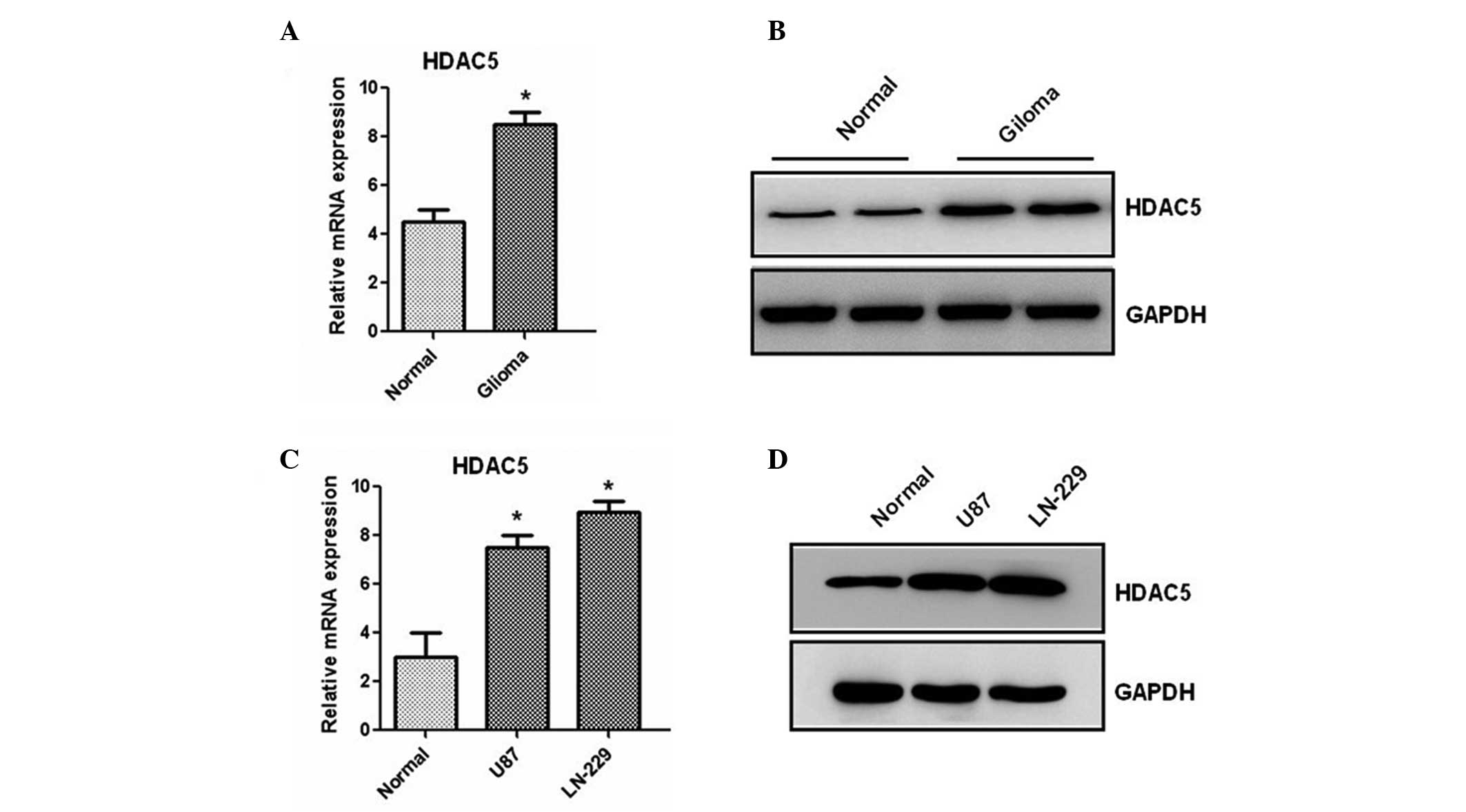
We first analyzed the expression of the HDAC5 gene in 20 paired glioma and adjacent non-tumor healthy tissues by RT-qPCR. Results showed that the mRNA level of HDAC5 is significantly increased in human cancer compared to healthy tissues (Fig. 1A). Then, western blotting was used to determine the protein expression of HDAC5. We found that the protein level of HDAC5 is also increased in glioma samples (Fig. 1B). Furthermore, two glioma cell lines were analyzed by RT-qPCR and western blotting. As shown in Fig. 1C and D, higher expression of HDAC5, at both the mRNA and the protein level, was observed in the two lines compared to healthy human astrocytes, suggesting that HDAC5 expression is upregulated in glioma tissues and cell lines.

Figure 1

Upregulation of histone deacetylase 5 (HDAC5) in human glioma tissues and cell lines. The (A) mRNA and (B) protein levels of HDAC5 were determined by reverse transcription-quantitative polymerase chain reaction (RT-qPCR) and western blotting in human glioma and healthy tissues. (C) RT-qPCR and (D) western blotting were performed to determine the expression of HDAC5 in healthy human astrocytes and the glioma cell lines U87 and LN-229. *P<0.05 compared to healthy tissues/astrocytes (normal). GAPDH, glyceraldehyde 3-phosphate dehydrogenase.

HDAC5 overexpression promotes proliferation of glioma cells

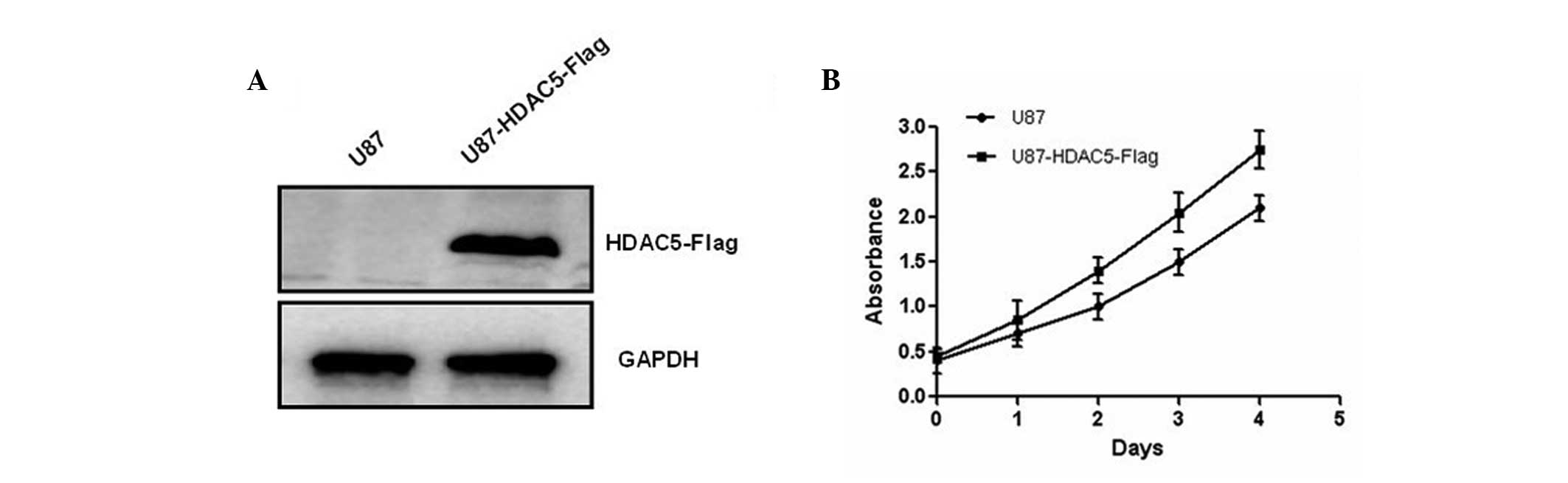
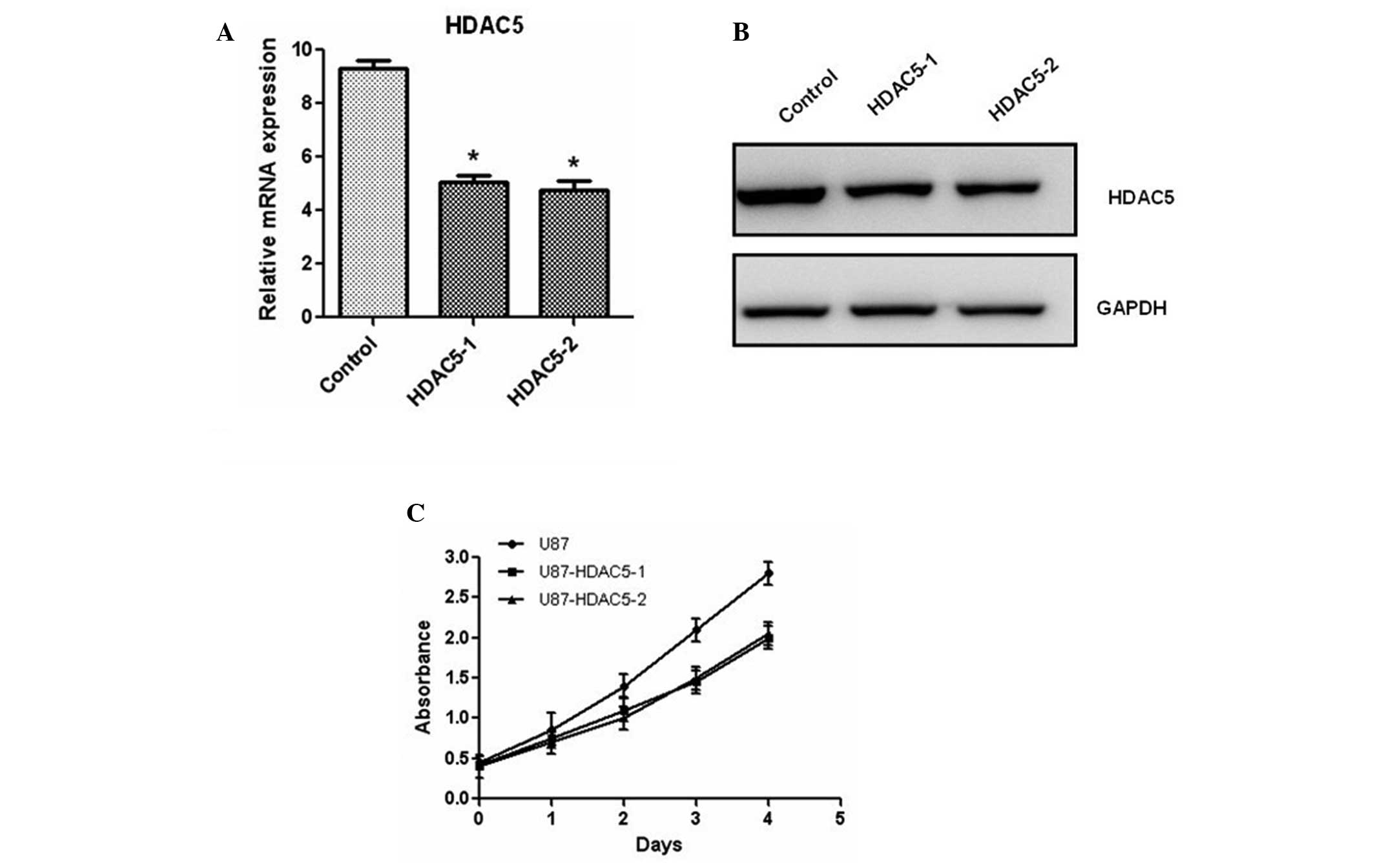
To further investigate the biological role of HDAC5 in human glioma, U87 cells were transfected with a plasmid containing the HDAC5 gene, which allowed its overexpression (Fig. 2A). Results of the MTT assay further showed that HDAC5 overexpression promotes glioma cell proliferation (Fig. 2B). In addition, U87 cells were transfected with siRNA targeting HDAC5. Efficient silencing of HDAC5 was achieved with two independent siRNA oligos compared to scramble siRNA-transfected U87 cells (Fig. 3A and B). Silencing of HDAC5 in these cells inhibited cell proliferation (Fig. 3C). Similar results were also observed in LN-229 cells (data not shown). Taken together, our results demonstrated that HDAC5 promotes the proliferation of glioma cells.

Figure 2

Histone deacetylase 5 (HDAC5) overexpression promotes the proliferation of glioma cells. (A) HDAC5 expression was determined by western blotting in U87 glioma cells transfected with a plasmid bearing the HDAC5 gene with a flag tag. (B) The proliferation of U87 glioma cells following transfection with the plasmid bearing the HDAC5-flag tag was measured using the MTT assay. GAPDH, glyceraldehyde 3-phosphate dehydrogenase.

Figure 3

Downregulation of the histone deacetylase 5 (HDAC5) gene inhibits glioma cell proliferation. (A) Reverse transcription-quantitative polymerase chain reaction (RT-qPCR) and (B) western blotting were used to measure the HDAC5 expression at the mRNA and protein level in U87 glioma cells transfected with small interfering RNA (siRNA) oligos targeting the HDAC5 gene (HDAC5-1 and -2 cell lines). *P<0.05 compared to the control (cells transfected with the scramble siRNA). (C) Cell proliferation was measured using the MTT assay in U87 cells and U87 cells transfected with HDAC5 siRNA oligos. GAPDH, glyceraldehyde 3-phosphate dehydrogenase.

HDAC5 promotes glioma cell proliferation via Notch 1 upregulation

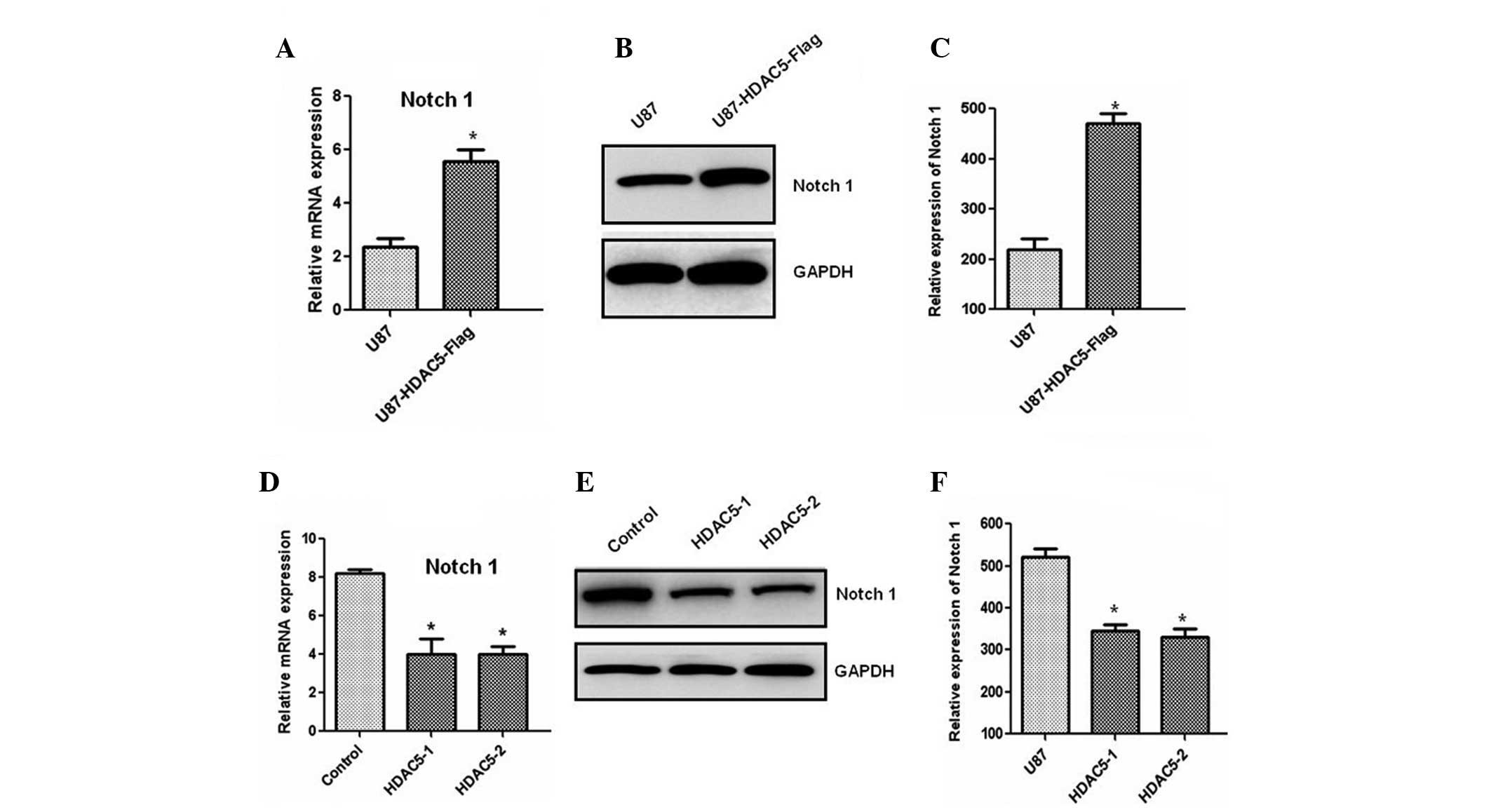
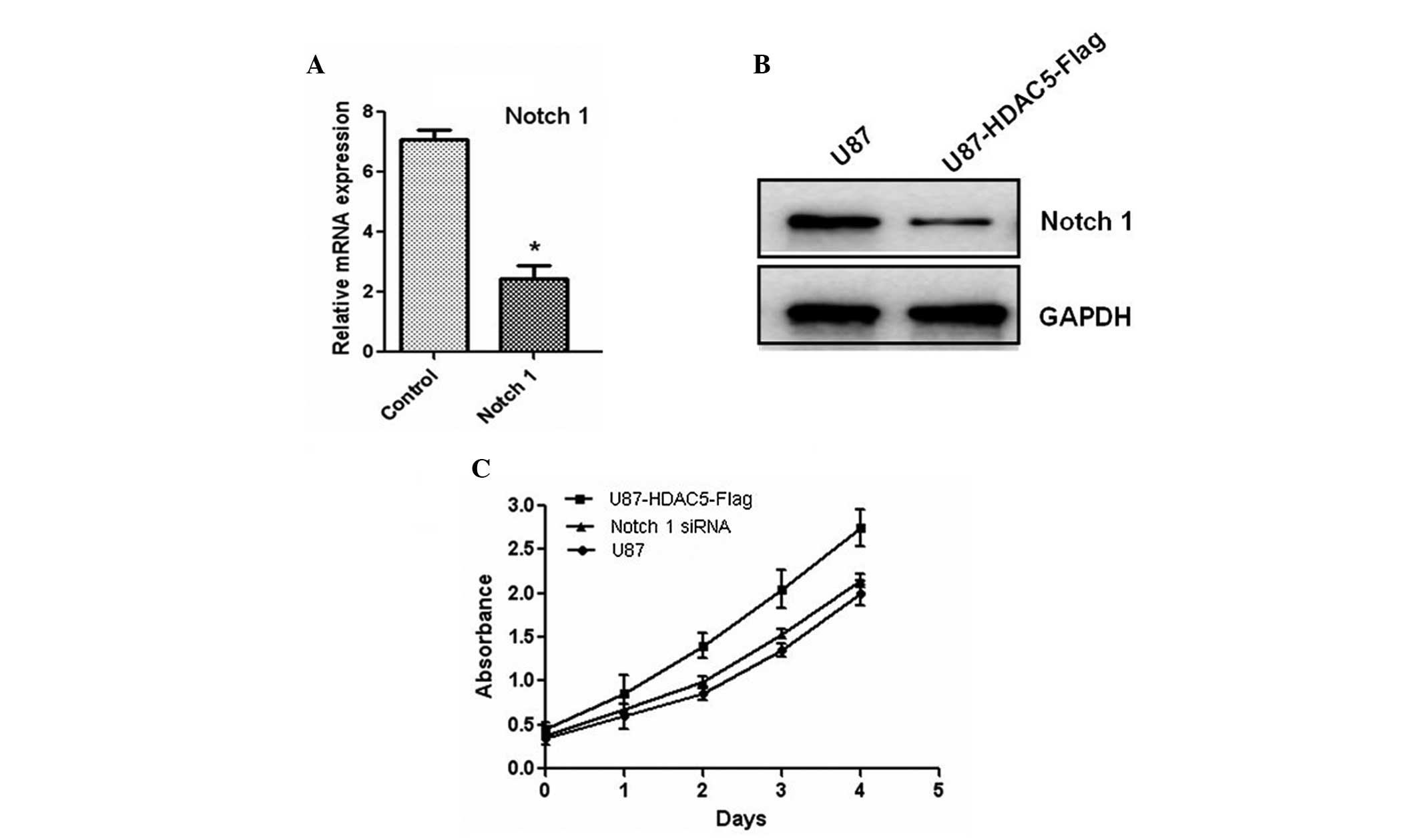
Next, we investigated the molecular mechanism underlying the effect of HDAC5 on cell proliferation. The results demonstrated that the Notch 1 mRNA level was significantly increased in the cells overexpressing HDAC5 (Fig. 4A). An increase in the Notch 1 protein level was also observed by western blotting (Fig. 4B and C). Consistent with these results, silencing of the HDAC5 gene markedly reduced Notch 1 expression at the mRNA (Fig. 4D) and the protein level (Fig. 4E and F). These results indicated that HDAC5 may act as an upstream regulator of Notch 1. Furthermore, the Notch 1 gene was silenced using siRNA oligos, and the protein levels of Notch 1 were also reduced (Fig. 5A and B). The decreased expression of Notch 1 attenuated the effect of HDAC5 on glioma cell proliferation (Fig. 5C). Taken together, these results indicated that HDAC5 promotes cell proliferation by upregulating Notch 1.

Figure 4

Histone deacetylase 5 (HDAC5) positively regulates Notch 1 expression. (A) The mRNA and (B and C) the protein level of Notch 1 in U87 cells overexpressing HDAC5. The mRNA level was determined by reverse transcription-quantitative polymerase chain reaction (RT-qPCR), and the protein level was measured by western blotting. Relative band intensities of each protein were quantified by densitometry. *P<0.05 compared to U87 cells with normal expression of HDAC5. (D) The mRNA level and (E and F) the protein level of Notch 1 in HDAC5-silenced U87 cells, measured by RT-qPCR and western blotting. *P<0.05 compared to the control (cells transfected with the scramble small interfering RNA instead of the one targeting HDAC5. GAPDH, glyceraldehyde 3-phosphate dehydrogenase.

Figure 5

Histone deacetylase 5 (HDAC5) promotes glioma cell proliferation by upregulating Notch 1. (A and B) Reverse transcription-quantitative polymerase chain reaction and western blotting were performed to detect the mRNA and protein levels of Notch 1 in U87 cells transfected with small interfering (siRNA) oligos targeting the Notch 1 gene. *P<0.05 compared to the control (cells transfected with the scramble small interfering RNA). (C) The MTT assay was used to measure the proliferation of U87 cells overexpressing HDAC5 with or without Notch 1 silencing. GAPDH, glyceraldehyde 3-phosphate dehydrogenase.

Discussion

It has been reported that certain members of the HDAC family play critical roles in promoting carcinogenesis (9). However, the biological function of HDAC5 in glioma cells remains poorly understood. In the current study, the biological function of HDAC5 was investigated in glioma tissues and cell lines for the first time, to the best of our knowledge.

HDACs remove the acetyl groups from the N-acetylly-sines on a histone and modify the chromatin structure, therefore modulating the expression levels of numerous genes. Their aberrant expression is closely related to tumor initiation and development (13). In our study, we found that both the mRNA and protein expression of HDAC5 were significantly increased in glioma tissues and cell lines.

The class II HDAC family member HDAC5 has been shown to be an important regulator of cell-cycle progression, proliferation and apoptosis in numerous cancer cell lines and animal models (14). For example, HDAC5 was shown to translocate from the nucleus to the cytoplasm during myoblast differentiation and suppress the expression of the cell-cycle activator cyclin D3, confirming its involvement in cell differentiation and proliferation (15,16). A recent study demonstrated that HDAC5 and HDAC9 are significantly upregulated in high-risk medulloblastoma in comparison to low-risk medulloblastoma samples, and that their expression is associated with poor survival, indicating that HDAC5 and HDAC9 may be valuable markers for risk stratification (17). Another study reported that HDAC5 upregulates Twist 1, and revealed a so-far unknown link between HDAC5 and osteosarcoma progression (18).

In our study, overexpression of HDAC5 enhanced glioma cell proliferation. In addition, HDAC5 silencing using siRNA inhibited glioma cell proliferation, indicating that HDAC5 may be a positive regulator of glioma cell proliferation.

The Notch family of proteins plays an important role in cell proliferation, differentiation and apoptosis. The Notch 1 protein shares structural features with other members of this family, such as the presence of an extracellular domain consisting of multiple epidermal growth factor-like repeats and an intracellular domain consisting of multiple, different domain types (19). A number of studies have shown that Notch 1 is overexpressed in cancer cell lines, including gliomas (20). Downregulation of Notch 1 and its ligands by RNA interference induces apoptosis and inhibits proliferation in multiple glioma cell lines. Therefore, Notch 1 has been proposed to constitute a promising therapeutic target in the treatment of glioma (21,22). Our study found that HDAC5 significantly increases the expression of Notch 1. Furthermore, Notch 1 silencing attenuated the proliferative effect of HDAC5 on glioma cells.

In conclusion, our study demonstrated that HDAC5 promotes the proliferation of glioma cells via upregulation of Notch 1 and may provide novel therapeutic targets in the treatment of gliomas.

References

1 

Medina Villaamil V, Alvarez García A, Aparicio Gallego G, et al: Tissue array analysis for the differentiation of gliosis from gliomas. Mol Med Rep. 4:451–457. 2011.PubMed/NCBI

2 

Stewart LA: Chemotherapy in adult high-grade glioma: a systematic review and meta-analysis of individual patient data from 12 randomised trials. Lancet. 359:1011–1018. 2002. View Article : Google Scholar : PubMed/NCBI

3 

Wang Y, Zhou Z, Luo H, et al: Combination of tamoxifen and antisense human telomerase RNA inhibits glioma cell proliferation and anti-apoptosis via suppression of telomerase activity. Mol Med Rep. 3:935–940. 2010.PubMed/NCBI

4 

Lefranc F, Facchini V and Kiss R: Proautophagic drugs: a novel means to combat apoptosis-resistant cancers, with a special emphasis on glioblastomas. Oncologist. 12:1395–1403. 2007. View Article : Google Scholar

5 

Witt O, Deubzer HE, Milde T and Oehme I: HDAC family: What are the cancer relevant targets? Cancer Lett. 277:8–21. 2009. View Article : Google Scholar : PubMed/NCBI

6 

de Ruijter AJ, van Gennip AH, Caron HN, Kemp S and van Kuilenburg AB: Histone deacetylases (HDACs): characterization of the classical HDAC family. Biochem J. 370:737–749. 2003.PubMed/NCBI

7 

Voelter-Mahlknecht S, Ho AD and Mahlknecht U: Chromosomal organization and localization of the novel class IV human histone deacetylase 11 gene. Int J Mol Med. 16:589–598. 2005.PubMed/NCBI

8 

Sen N, Kumari R, Singh MI and Das S: HDAC5, a key component in temporal regulation of p53-mediated transactivation in response to genotoxic stress. Mol Cell. 52:406–420. 2013. View Article : Google Scholar : PubMed/NCBI

9 

Witt O, Deubzer HE, Milde T and Oehme I: HDAC family: What are the cancer relevant targets? Cancer Lett. 277:8–21. 2009. View Article : Google Scholar : PubMed/NCBI

10 

Wiegmans AP, Alsop AE, Bots M, et al: Deciphering the molecular events necessary for synergistic tumor cell apoptosis mediated by the histone deacetylase inhibitor vorinostat and the BH3 mimetic ABT-737. Cancer Res. 71:3603–3615. 2011. View Article : Google Scholar

11 

Munster P, Marchion D, Bicaku E, et al: Clinical and biological effects of valproic acid as a histone deacetylase inhibitor on tumor and surrogate tissues: phase I/II trial of valproic acid and epirubicin/FEC. Clin Cancer Res. 15:2488–2496. 2009. View Article : Google Scholar : PubMed/NCBI

12 

Livak KJ and Schmittgen TD: Analysis of relative gene expression data using real-time quantitative PCR and the 2(−Delta Delta C(T)) Method. Methods. 25:402–408. 2001.

13 

Ronsch K, Jager M, Schopflin A, Danciu M, Lassmann S and Hecht A: Class I and III HDACs and loss of active chromatin features contribute to epigenetic silencing of CDX1 and EPHB tumor suppressor genes in colorectal cancer. Epigenetics. 6:610–622. 2011. View Article : Google Scholar : PubMed/NCBI

14 

Khan O and La Thangue NB: HDAC inhibitors in cancer biology: emerging mechanisms and clinical applications. Immunol Cell Biol. 90:85–94. 2012. View Article : Google Scholar : PubMed/NCBI

15 

Roy S, Shor AC, Bagui TK, Seto E and Pledger WJ: Histone deacetylase 5 represses the transcription of cyclin D3. J Cell Biochem. 104:2143–2154. 2008. View Article : Google Scholar : PubMed/NCBI

16 

McKinsey TA, Zhang CL, Lu J and Olson EN: Signal-dependent nuclear export of a histone deacetylase regulates muscle differentiation. Nature. 408:106–111. 2000. View Article : Google Scholar : PubMed/NCBI

17 

Milde T, Oehme I, Korshunov A, et al: HDAC5 and HDAC9 in medulloblastoma: novel markers for risk stratification and role in tumor cell growth. Clin Cancer Res. 16:3240–3252. 2010. View Article : Google Scholar : PubMed/NCBI

18 

Chen J, Xia J, Yu YL, et al: HDAC5 promotes osteosarcoma progression by upregulation of Twist 1 expression. Tumour Biol. 35:1383–1387. 2013. View Article : Google Scholar : PubMed/NCBI

19 

Rana NA and Haltiwanger RS: Fringe benefits: functional and structural impacts of O-glycosylation on the extracellular domain of Notch receptors. Curr Opin Struct Biol. 21:583–589. 2011. View Article : Google Scholar : PubMed/NCBI

20 

Ayukawa T, Matsumoto K, Ishikawa HO, et al: Rescue of Notch signaling in cells incapable of GDP-L-fucose synthesis by gap junction transfer of GDP-L-fucose in Drosophila. Proc Natl Acad Sci USA. 109:15318–15323. 2012. View Article : Google Scholar : PubMed/NCBI

21 

Hu B, Nandhu MS, Sim H, et al: Fibulin-3 promotes glioma growth and resistance through a novel paracrine regulation of Notch signaling. Cancer Res. 72:3873–3885. 2012. View Article : Google Scholar : PubMed/NCBI

22 

Berry N, Gursel DB and Boockvar JA: Notch inhibition via micro-RNA blocks glioma development. Neurosurgery. 70:N20–N22. 2012. View Article : Google Scholar : PubMed/NCBI

Related Articles

  • Abstract
  • View
  • Download
  • Twitter
Copy and paste a formatted citation
Spandidos Publications style
Liu Q, Zheng JM, Chen JK, Yan XL, Chen HM, Nong WX and Huang HQ: Histone deacetylase 5 promotes the proliferation of glioma cells by upregulation of Notch 1. Mol Med Rep 10: 2045-2050, 2014.
APA
Liu, Q., Zheng, J., Chen, J., Yan, X., Chen, H., Nong, W., & Huang, H. (2014). Histone deacetylase 5 promotes the proliferation of glioma cells by upregulation of Notch 1. Molecular Medicine Reports, 10, 2045-2050. https://doi.org/10.3892/mmr.2014.2395
MLA
Liu, Q., Zheng, J., Chen, J., Yan, X., Chen, H., Nong, W., Huang, H."Histone deacetylase 5 promotes the proliferation of glioma cells by upregulation of Notch 1". Molecular Medicine Reports 10.4 (2014): 2045-2050.
Chicago
Liu, Q., Zheng, J., Chen, J., Yan, X., Chen, H., Nong, W., Huang, H."Histone deacetylase 5 promotes the proliferation of glioma cells by upregulation of Notch 1". Molecular Medicine Reports 10, no. 4 (2014): 2045-2050. https://doi.org/10.3892/mmr.2014.2395
Copy and paste a formatted citation
x
Spandidos Publications style
Liu Q, Zheng JM, Chen JK, Yan XL, Chen HM, Nong WX and Huang HQ: Histone deacetylase 5 promotes the proliferation of glioma cells by upregulation of Notch 1. Mol Med Rep 10: 2045-2050, 2014.
APA
Liu, Q., Zheng, J., Chen, J., Yan, X., Chen, H., Nong, W., & Huang, H. (2014). Histone deacetylase 5 promotes the proliferation of glioma cells by upregulation of Notch 1. Molecular Medicine Reports, 10, 2045-2050. https://doi.org/10.3892/mmr.2014.2395
MLA
Liu, Q., Zheng, J., Chen, J., Yan, X., Chen, H., Nong, W., Huang, H."Histone deacetylase 5 promotes the proliferation of glioma cells by upregulation of Notch 1". Molecular Medicine Reports 10.4 (2014): 2045-2050.
Chicago
Liu, Q., Zheng, J., Chen, J., Yan, X., Chen, H., Nong, W., Huang, H."Histone deacetylase 5 promotes the proliferation of glioma cells by upregulation of Notch 1". Molecular Medicine Reports 10, no. 4 (2014): 2045-2050. https://doi.org/10.3892/mmr.2014.2395
Follow us
  • Twitter
  • LinkedIn
  • Facebook
About
  • Spandidos Publications
  • Careers
  • Cookie Policy
  • Privacy Policy
How can we help?
  • Help
  • Live Chat
  • Contact
  • Email to our Support Team