Spandidos Publications Logo
  • About
    • About Spandidos
    • Aims and Scopes
    • Abstracting and Indexing
    • Editorial Policies
    • Reprints and Permissions
    • Job Opportunities
    • Terms and Conditions
    • Contact
  • Journals
    • All Journals
    • Oncology Letters
      • Oncology Letters
      • Information for Authors
      • Editorial Policies
      • Editorial Board
      • Aims and Scope
      • Abstracting and Indexing
      • Bibliographic Information
      • Archive
    • International Journal of Oncology
      • International Journal of Oncology
      • Information for Authors
      • Editorial Policies
      • Editorial Board
      • Aims and Scope
      • Abstracting and Indexing
      • Bibliographic Information
      • Archive
    • Molecular and Clinical Oncology
      • Molecular and Clinical Oncology
      • Information for Authors
      • Editorial Policies
      • Editorial Board
      • Aims and Scope
      • Abstracting and Indexing
      • Bibliographic Information
      • Archive
    • Experimental and Therapeutic Medicine
      • Experimental and Therapeutic Medicine
      • Information for Authors
      • Editorial Policies
      • Editorial Board
      • Aims and Scope
      • Abstracting and Indexing
      • Bibliographic Information
      • Archive
    • International Journal of Molecular Medicine
      • International Journal of Molecular Medicine
      • Information for Authors
      • Editorial Policies
      • Editorial Board
      • Aims and Scope
      • Abstracting and Indexing
      • Bibliographic Information
      • Archive
    • Biomedical Reports
      • Biomedical Reports
      • Information for Authors
      • Editorial Policies
      • Editorial Board
      • Aims and Scope
      • Abstracting and Indexing
      • Bibliographic Information
      • Archive
    • Oncology Reports
      • Oncology Reports
      • Information for Authors
      • Editorial Policies
      • Editorial Board
      • Aims and Scope
      • Abstracting and Indexing
      • Bibliographic Information
      • Archive
    • Molecular Medicine Reports
      • Molecular Medicine Reports
      • Information for Authors
      • Editorial Policies
      • Editorial Board
      • Aims and Scope
      • Abstracting and Indexing
      • Bibliographic Information
      • Archive
    • World Academy of Sciences Journal
      • World Academy of Sciences Journal
      • Information for Authors
      • Editorial Policies
      • Editorial Board
      • Aims and Scope
      • Abstracting and Indexing
      • Bibliographic Information
      • Archive
    • International Journal of Functional Nutrition
      • International Journal of Functional Nutrition
      • Information for Authors
      • Editorial Policies
      • Editorial Board
      • Aims and Scope
      • Abstracting and Indexing
      • Bibliographic Information
      • Archive
    • International Journal of Epigenetics
      • International Journal of Epigenetics
      • Information for Authors
      • Editorial Policies
      • Editorial Board
      • Aims and Scope
      • Abstracting and Indexing
      • Bibliographic Information
      • Archive
    • Medicine International
      • Medicine International
      • Information for Authors
      • Editorial Policies
      • Editorial Board
      • Aims and Scope
      • Abstracting and Indexing
      • Bibliographic Information
      • Archive
  • Articles
  • Information
    • Information for Authors
    • Information for Reviewers
    • Information for Librarians
    • Information for Advertisers
    • Conferences
  • Language Editing
Spandidos Publications Logo
  • About
    • About Spandidos
    • Aims and Scopes
    • Abstracting and Indexing
    • Editorial Policies
    • Reprints and Permissions
    • Job Opportunities
    • Terms and Conditions
    • Contact
  • Journals
    • All Journals
    • Biomedical Reports
      • Information for Authors
      • Editorial Policies
      • Editorial Board
      • Aims and Scope
      • Abstracting and Indexing
      • Bibliographic Information
      • Archive
    • Experimental and Therapeutic Medicine
      • Information for Authors
      • Editorial Policies
      • Editorial Board
      • Aims and Scope
      • Abstracting and Indexing
      • Bibliographic Information
      • Archive
    • International Journal of Epigenetics
      • Information for Authors
      • Editorial Policies
      • Editorial Board
      • Aims and Scope
      • Abstracting and Indexing
      • Bibliographic Information
      • Archive
    • International Journal of Functional Nutrition
      • Information for Authors
      • Editorial Policies
      • Editorial Board
      • Aims and Scope
      • Abstracting and Indexing
      • Bibliographic Information
      • Archive
    • International Journal of Molecular Medicine
      • Information for Authors
      • Editorial Policies
      • Editorial Board
      • Aims and Scope
      • Abstracting and Indexing
      • Bibliographic Information
      • Archive
    • International Journal of Oncology
      • Information for Authors
      • Editorial Policies
      • Editorial Board
      • Aims and Scope
      • Abstracting and Indexing
      • Bibliographic Information
      • Archive
    • Medicine International
      • Information for Authors
      • Editorial Policies
      • Editorial Board
      • Aims and Scope
      • Abstracting and Indexing
      • Bibliographic Information
      • Archive
    • Molecular and Clinical Oncology
      • Information for Authors
      • Editorial Policies
      • Editorial Board
      • Aims and Scope
      • Abstracting and Indexing
      • Bibliographic Information
      • Archive
    • Molecular Medicine Reports
      • Information for Authors
      • Editorial Policies
      • Editorial Board
      • Aims and Scope
      • Abstracting and Indexing
      • Bibliographic Information
      • Archive
    • Oncology Letters
      • Information for Authors
      • Editorial Policies
      • Editorial Board
      • Aims and Scope
      • Abstracting and Indexing
      • Bibliographic Information
      • Archive
    • Oncology Reports
      • Information for Authors
      • Editorial Policies
      • Editorial Board
      • Aims and Scope
      • Abstracting and Indexing
      • Bibliographic Information
      • Archive
    • World Academy of Sciences Journal
      • Information for Authors
      • Editorial Policies
      • Editorial Board
      • Aims and Scope
      • Abstracting and Indexing
      • Bibliographic Information
      • Archive
  • Articles
  • Information
    • For Authors
    • For Reviewers
    • For Librarians
    • For Advertisers
    • Conferences
  • Language Editing
Login Register Submit
  • This site uses cookies
  • You can change your cookie settings at any time by following the instructions in our Cookie Policy. To find out more, you may read our Privacy Policy.

    I agree
Search articles by DOI, keyword, author or affiliation
Search
Advanced Search
presentation
Molecular Medicine Reports
Join Editorial Board Propose a Special Issue
Print ISSN: 1791-2997 Online ISSN: 1791-3004
Journal Cover
January-2015 Volume 11 Issue 1

Full Size Image

Sign up for eToc alerts
Recommend to Library

Journals

International Journal of Molecular Medicine

International Journal of Molecular Medicine

International Journal of Molecular Medicine is an international journal devoted to molecular mechanisms of human disease.

International Journal of Oncology

International Journal of Oncology

International Journal of Oncology is an international journal devoted to oncology research and cancer treatment.

Molecular Medicine Reports

Molecular Medicine Reports

Covers molecular medicine topics such as pharmacology, pathology, genetics, neuroscience, infectious diseases, molecular cardiology, and molecular surgery.

Oncology Reports

Oncology Reports

Oncology Reports is an international journal devoted to fundamental and applied research in Oncology.

Experimental and Therapeutic Medicine

Experimental and Therapeutic Medicine

Experimental and Therapeutic Medicine is an international journal devoted to laboratory and clinical medicine.

Oncology Letters

Oncology Letters

Oncology Letters is an international journal devoted to Experimental and Clinical Oncology.

Biomedical Reports

Biomedical Reports

Explores a wide range of biological and medical fields, including pharmacology, genetics, microbiology, neuroscience, and molecular cardiology.

Molecular and Clinical Oncology

Molecular and Clinical Oncology

International journal addressing all aspects of oncology research, from tumorigenesis and oncogenes to chemotherapy and metastasis.

World Academy of Sciences Journal

World Academy of Sciences Journal

Multidisciplinary open-access journal spanning biochemistry, genetics, neuroscience, environmental health, and synthetic biology.

International Journal of Functional Nutrition

International Journal of Functional Nutrition

Open-access journal combining biochemistry, pharmacology, immunology, and genetics to advance health through functional nutrition.

International Journal of Epigenetics

International Journal of Epigenetics

Publishes open-access research on using epigenetics to advance understanding and treatment of human disease.

Medicine International

Medicine International

An International Open Access Journal Devoted to General Medicine.

Journal Cover
January-2015 Volume 11 Issue 1

Full Size Image

Sign up for eToc alerts
Recommend to Library

  • Article
  • Citations
    • Cite This Article
    • Download Citation
    • Create Citation Alert
    • Remove Citation Alert
    • Cited By
  • Similar Articles
    • Related Articles (in Spandidos Publications)
    • Similar Articles (Google Scholar)
    • Similar Articles (PubMed)
  • Download PDF
  • Download XML
  • View XML
Article

Resveratrol inhibits the proliferation of human melanoma cells by inducing G1/S cell cycle arrest and apoptosis

  • Authors:
    • Zhiyuan Wu
    • Bin Liu
    • Cailing E
    • Jie Liu
    • Qingyu Zhang
    • Juntao  Liu
    • Nianping Chen
    • Rongyi Chen
    • Runzhi Zhu
  • View Affiliations / Copyright

    Affiliations: Department of Plastic Surgery, Affiliated Hospital of Guangdong Medical College, Zhanjiang, Guangdong 524001, P.R. China, Department of Dermatology, Affiliated Hospital of Guangdong Medical College, Zhanjiang, Guangdong 524001, P.R. China, The Second Department of Orthopedics, Ningde Hospital, Affiliated Hospital of Fujian Medical University, Ningde, Fujian 352100, P.R. China, Laboratory of Hepatobiliary Surgery, Guangdong Medical College, Zhanjiang Key Laboratory of Hepatobiliary Diseases, Zhanjiang, Guangdong 524001, P.R. China
  • Pages: 400-404
    |
    Published online on: October 21, 2014
       https://doi.org/10.3892/mmr.2014.2716
  • Expand metrics +
Metrics: Total Views: 0 (Spandidos Publications: | PMC Statistics: )
Metrics: Total PDF Downloads: 0 (Spandidos Publications: | PMC Statistics: )
Cited By (CrossRef): 0 citations Loading Articles...

This article is mentioned in:


Abstract

Resveratrol (Res), a natural plant extract, is an effective inducer of cell apoptosis and cell cycle arrest in multiple carcinoma cell types, which has been demonstrated by its ability to inhibit the proliferation of multiple human tumor cells in vitro. Although Res possesses chemopreventive properties against several types of cancer, the molecular mechanism underlying its anticancer activity remains to be fully elucidated. The present study demonstrated that Res induced cell cycle arrest and inhibited the proliferation of human melanoma A375 (IC50=23 µM after 48 h; P<0.05) and SK‑MEL‑31 (IC50=15 µM after 48 h; P<0.05) cells. Western blot analysis demonstrated that Res induced the apoptosis of human melanoma A375 and SK‑MEL‑31 cells by upregulating the expression of Bcl‑2‑associated X protein and B‑cell lymphoma 2, possibly via the p53 pathway and activation of caspase‑9 and caspase‑3.

Introduction

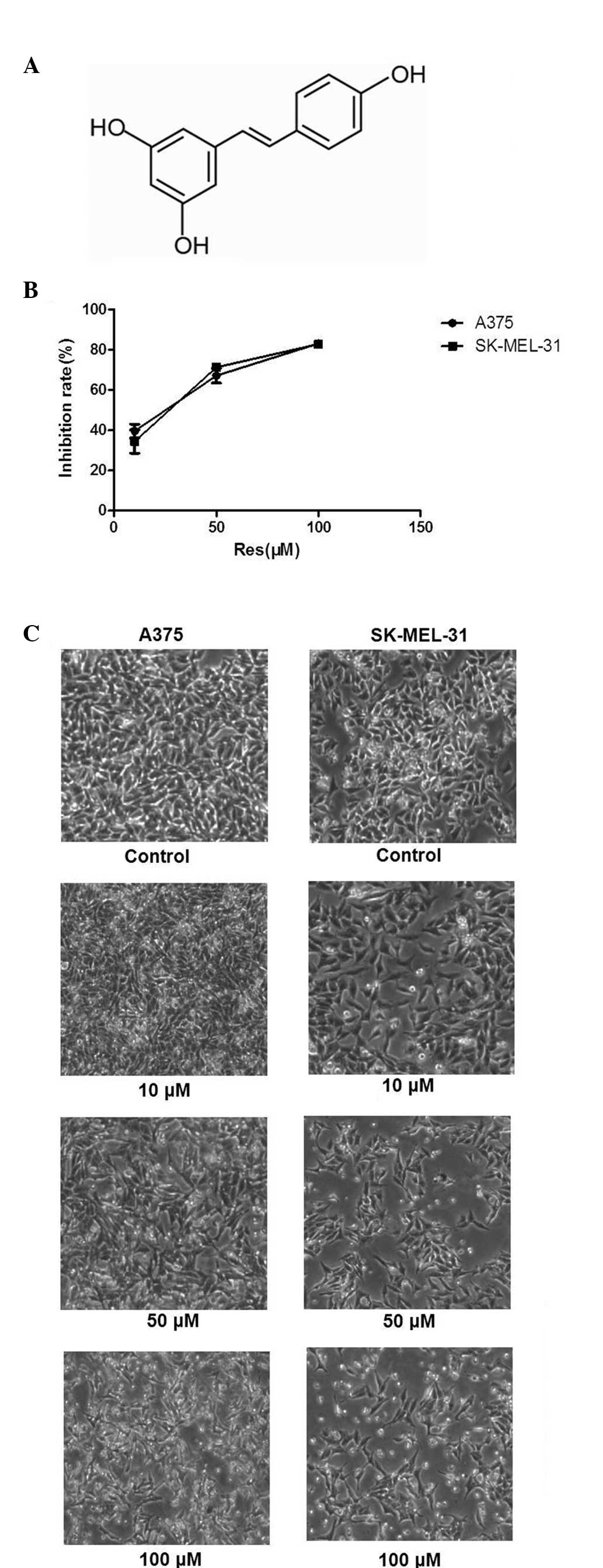
Resveratrol (Res; C14H12O3; PubChem, CID: 445154; Fig. 1A) is primarily found in the skin of grapes and has been demonstrated to exhibit health-promoting benefits to the coronary, neurological, hepatic and cardiovascular systems (1–3). In addition, Res inhibits the proliferation of tumor cells of different etiologies (4,5). The biological properties of Res have been described in detail (6–9). The predominant form of resveratrol in plants is the glycosylated (3-O-β-D-glucosides) form (also termed the piceid form). It has traditionally been used as an anti-inflammatory agent. Other beneficial properties of resveratrol include antioxidant effects, cardioprotection and increased longevity. The antitumor activities of Res are mediated through several cell signaling pathways, including cell cycle arrest, suppression of tumor cell proliferation, induction of apoptosis and differentiation, angiogenesis and the inhibition of invasion, adhesion and metastasis (10). Skin cancer is one of the major causes of cancer-associated mortality worldwide. In addition, human cutaneous malignant melanoma is an aggressive cause of mortality, which exhibits a rising trend every year (9). In order to inhibit the development of cancer, pharmacological or natural chemopreventive and chemotherapeutic agents are commonly used (12).

Figure 1

Res induces the loss of cell viability in A375 and SK-MEL-31 cells. (A) Chemical structure of Res. (B) Cells were incubated for 24 h with increasing concentrations of Res. Cell viability was measured using a 3-(4,5-dimethylthiazol-2-thiazolyl)-2,5-diphenyltetrazolium bromide assay. (C) Res-induced inhibitory cell proliferation in A375 and SK-MEL-31 cells with different concentrations for 48 h, which was visualized using a microscope (magnification, ×100). Res, resveratrol.

p53 is a frequent target for mutation in various types of human tumor. It functions as a cell nucleus phosphate protein, which responds to various types and levels of stress arising from apoptosis, cell cycle arrest, senescence, DNA repair and cell metabolism (13–15). A previous study demonstrated that gambogic acid, an efficient apoptosis inducer, was able to repress the expression of B-cell lymphoma 2 (Bcl-2) via increasing the level of p53 in MCF-7 cells (16). Although previous studies have described intracellular changes leading to cell cycle arrest or apoptosis in response to Res treatment, the precise mechanisms underlying Res-regulated tumor growth remain to be fully elucidated (20–22). In the present study, the anti-cancer effects of Res in human melanoma A375 and SK-MEL-31 cells were assessed. The results demonstrated for the first time, to the best of our knowledge, that the regulation of caspase and p53 proteins was involved in the induction of apoptosis and cell cycle arrest by Res.

Materials and methods

Cell culture

Human melanoma A375 and SK-MEL-31 cells, obtained from the Affiliated Hospital of Guangdong Medical College (Guangdong, China), were grown as a suspension culture in Dulbecco’s modified Eagle’s medium (Invitrogen Life Technologies, Carlsbad, CA, USA) supplemented with 10% (v/v) fetal bovine serum (Gibco-BRL, Carlsbad, CA, USA) 100 U/ml penicillin and 100 U/ml streptomycin. They were maintained in a humidified atmosphere of 95% air and 5% CO2 at 37°C.

Reagents

Res was purchased from Sigma-Aldrich (St. Louis, MO, USA). Monoclonal human anti-rabbit antibodies to caspase-9, caspase-3, Bcl-2, Bcl-2-associated X protein (Bax), p53 and GAPDH were obtained from Cell Signaling Technology, Inc. (Beverly, MA, USA) and goat anti-rabbit IgG-horseradish peroxidase (EarthOx Life Sciences, Millbrae, CA, USA) was used as a secondary antibody.

Cell viability assays

The cell densities were adjusted to 2×10⁴ cells/100 μl. The cells were seeded into a 96-well plate and treated with 10, 50 and 100 μM Res for 24 h. The cell viability was then assessed using a Cell Titer 96 AQueous One Solution Cell Proliferation Assay kit (Promega Corporation, Madison, WI, USA) according to the manufacturer’s instructions.

Analysis of cell apoptosis and cell cycle arrest

Cells were pretreated with 10, 50 and 100 μM Res for 48 h. Cells were quantified using a Cell Cycle Analysis kit (Beyotime Institute of Biotechnology) and a PE Annexin V Apoptosis Detection kit I (BD Biosciences, Franklin Lakes, NJ, USA), respectively. Analysis was preformed using flow cytometry (FACSCalibur; Beckton Dickinson, Franklin Lakes, NJ, USA) and then analyzed using ModFit and CellQuest software (BD Biosciences).

Western blot analysis

Cells were lysed in lysis buffer (100 mM Tris-hydrochloride, 4% pH 6.8 (m/v) sodium dodecyl sulfonate, 20% (v/v), glycerol, 200 mM mercaptoethanol, 1 mM phenylmethyl sulfonylfluoride and 1 g/ml aprotinin). The total protein concentration in the supernatants was detected using a BCA Protein assay kit (Beyotime Institute of Biotechnology). Proteins were then transferred onto nitrocellulose membranes (Millipore, Billerica, MA, USA). Detection was performed using an Odyssey Infrared Imaging System (LI-COR Biosciences, Lincoln, NE, USA).

Statistical analysis

The data were analyzed using GraphPad Prism 5 software (GraphPad Software, Inc., San Diego, CA, USA). All results are expressed as the mean ± standard deviation from triplicate experiments performed in a parallel manner, unless otherwise indicated.

Results

Res induces growth inhibition, proliferation and cell apoptosis in A375 and SK-MEL-31 cells

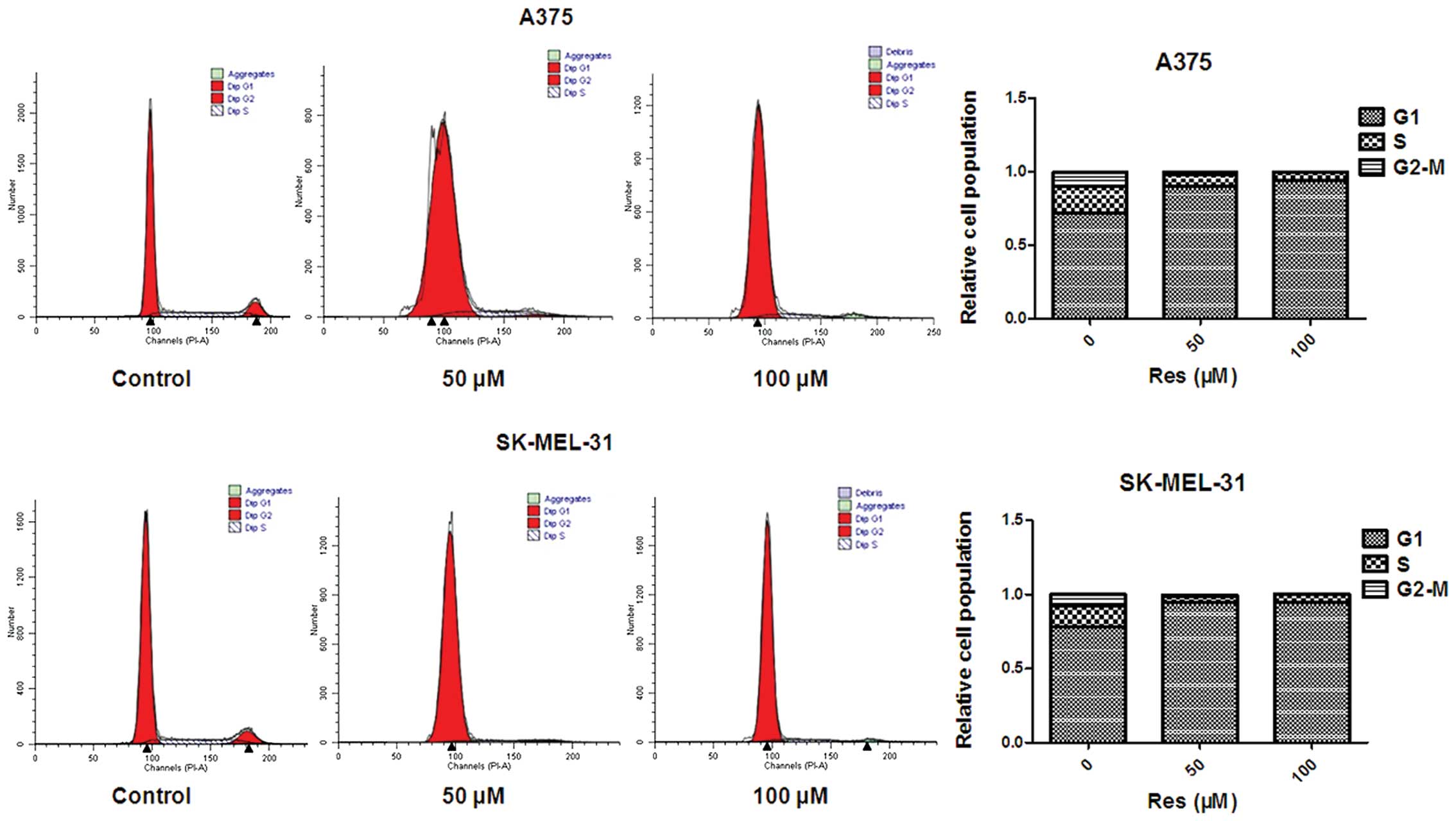
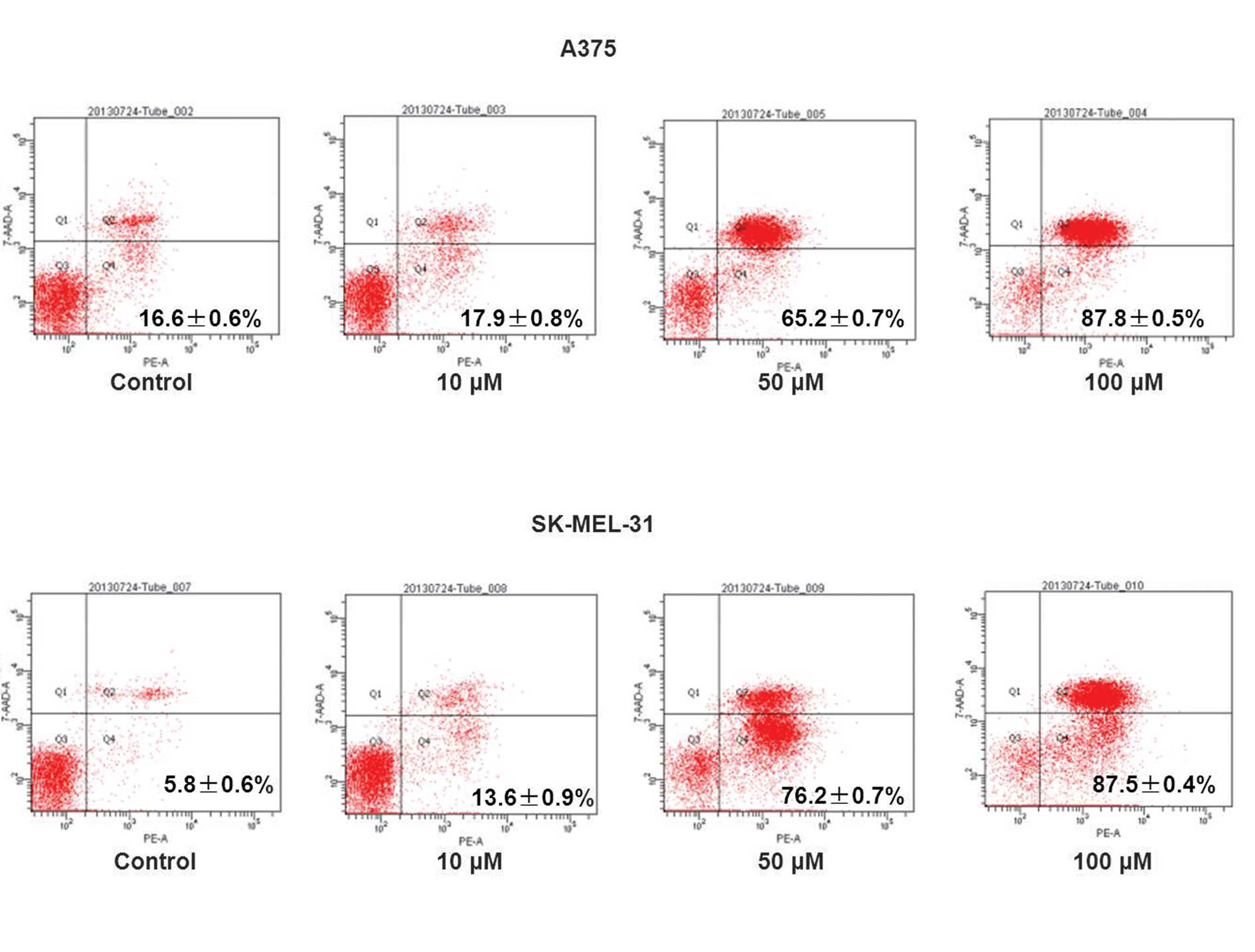
In the Res-treated cells, certain cells became round and floating and a marked reduction in cell viability was observed over the experimental period in a concentration-dependent manner (Fig. 1B and C). Following treatment with 50 and 100 μM Res, inhibition of the cell cycle was observed in the A375 and SK-MEL-31 cells (Fig. 2). The population of cells in the G1 phase increased in A375 (78–93%) and SK-MEL-31 (78–94%) cells, coinciding with a reduction in cells in the S phase, when compared with the vehicle-treated control. This result demonstrated that the primary growth inhibitory effect of Res was due to inhibition of the cell cycle at the G1 phase. Cell apoptosis was detected using flow cytometry. Data revealed that Res induced cell apoptosis in a concentration-dependent manner (Fig. 3). In addition, the Q2 and Q4 cell population in A375 (16.6–87.8%) and SK-MEL-31 (5.8–87.5%) cells increased compared with the vehicle-treated control (Fig. 3).

Figure 2

Res induces cell cycle arrest in A375 and SK-MEL-31 cells. Cells incubated for 48 h with increasing Res concentrations were analyzed by flow cytometric analysis. The data in the graphs are expressed as the mean ± standard deviation from three independent experiments. Res, resveratrol.

Figure 3

Res induces apoptosis in A375 and SK-MEL-31 cells. Cells were treated with Res for 48 h and stained with propidium iodide and annexin V, followed by flow cytometric analysis. Res, resveratrol.

Res induces the expression of cell cycle and apoptotic-related proteins in A375 and SK-MEL-31 cells

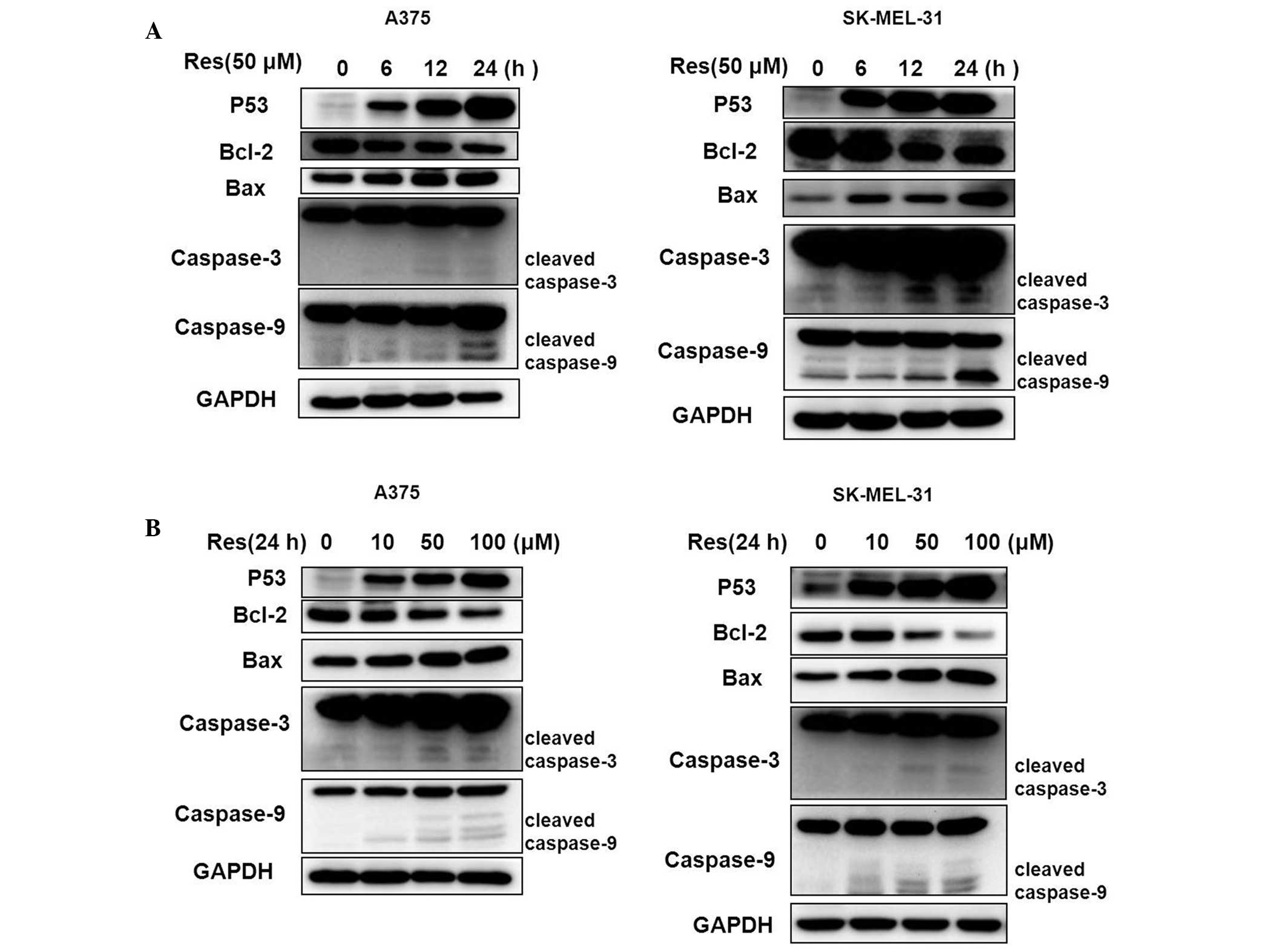
Western blot analysis demonstrated that cell cycle and apoptotic-related proteins altered following treatment with Res (Fig. 4). The Bcl-2 protein was downregulated, however, the apoptotic proteins of p53, Bax, caspase-3 and caspase-9 were markedly upregulated in a concentration- and time-dependent manner.

Figure 4

Cell cycle and apoptosis-associated protein analysis. Cells were treated with Res for (A) increasing time periods and at (B) increasing concentrations. Western blot analysis was performed for detection of protein expression. Res, resveratrol; Bcl-2, B-cell lymphoma 2; Bax, Bcl-2-associated X protein.

Discussion

Res, a natural plant polyphenol compound, has been extensively investigated for several years due to its various potential health-promoting benefits (8,20–23). In the present study, the effects of Res in human melanoma A375 and SK-MEL-31 cell lines was investigated. The inhibitory and apoptotic-promoting effects of Res on the growth of two human melanoma cells were determined, these cells have different genetic aberrations and acquired growth aggressiveness. The results from the cell viability and apoptotic rate assay demonstrated that the anticancer properties of Res in A375 and SK-MEL-31 cells were almost identical. The cell viability, G1 phase cell-cycle arrest and apoptotic rates increased in a concentration-dependent manner. Subsequently, the cell cycle and apoptotic-related proteins p53, Bcl-2, Bax, caspase-3 and caspase-9 were analyzed. The protein expression of Bcl-2 reduced, however, the protein expression of p53, Bax, caspase-3 and caspase-9 were markedly enhanced compared with the control. Cleaved caspase-9, cleaved caspase-3 and the ratio of Bax and Bcl-2 increased gradually in a concentration- and time-dependent manner. Caspase-9 and caspase-3 activation is a crucial step in apoptotic cell death (24,25) and the increased expression of cleaved caspase-9 and cleaved caspase-3 may be considered as a marker of apoptosis. The apoptosis-inducing effect is more dependent on the balance of Bcl-2 and Bax than on the quantity of Bcl-2 alone, which is important in cell proliferation. The steady state of cell survival is decided by the balance of Bcl-2 and Bax expression (26,27). Previous studies have demonstrated that the apoptotic inducer, p53, induces cell growth arrest, apoptosis and senescence in response to different stimuli and this was associated with cancer cell metastasis (28–31). The increased expression level of the Bax/Bcl-2 protein ratio in cells treated with Res suggested that the p53 and Bax/Bcl-2 proteins are important in Res-induced apoptosis.

Acknowledgements

This study was supported, in part, by the following grants: The National Natural Science Fund (no. 81041099) and the Guangdong Province Natural Science Fund (no. S2011010003750), China. This study was also supported by the Institute of Neurology, Affiliated Hospital of Guangdong Medical College and National Natural Science Foundation of China (no. 81102066), the Natural Science Foundation of Guangdong Province of China (no. S2011040003129) and the Medical Research Foundation of Guangdong Province of China (no. A2011441).

References

1 

Chan V, Fenning A, Iver A, et al: Resveratol improves cardiovascular function in DOCA-salt hypertensive rats. Curr Pharm Biotechnol. 12:429–436. 2011. View Article : Google Scholar : PubMed/NCBI

2 

Jiang L, Gu Y, Ye J, Liu F, et al: Resveratrol prevents hepatic steatosis induced by hepatitis C virus core protein. Biotechnol Lett. 34:2205–2212. 2012. View Article : Google Scholar : PubMed/NCBI

3 

Zhang F, Liu J and Shi JS: Anti-inflammatory activities of resveratrol in the brain: role of resveratrol in microglial activation. Eur J Pharmacol. 25:1–7. 2010. View Article : Google Scholar : PubMed/NCBI

4 

Lin JN, Lin VC, Rau KM, et al: Resveratrol modulates tumor cell proliferation and protein translation via SIRT1-dependent AMPK activation. J Agric Food Chem. 58:1584–92. 2010. View Article : Google Scholar : PubMed/NCBI

5 

Huang F, Wu XN, Chen J, et al: Resveratrol reverses multidrug resistance in human breast cancer doxorubicin-resistant cells. Exp Ther Med. 7:1611–1616. 2014.PubMed/NCBI

6 

Fulda S: Resveratrol and derivatives for the prevention and treatment of cancer. Drug Discov Today. 15:757–765. 2010. View Article : Google Scholar : PubMed/NCBI

7 

Calabrese EJ, Mattson MP and Calabrese V: Dose response biology: the case of resveratrol. Hum Exp Toxicol. 29:1034–1037. 2010. View Article : Google Scholar : PubMed/NCBI

8 

Park SJ, Ahmad F, Philp A, et al: Resveratrol ameliorates aging-related metabolic phenotypes by inhibiting cAMP phosphodiesterases. Cell. 148:421–433. 2012. View Article : Google Scholar : PubMed/NCBI

9 

Bishayee A, Politis T and Darvesh AS: Resveratrol in the chemoprevention and treatment of hepatocellular carcinoma. Cancer Treat Rev. 36:43–53. 2010. View Article : Google Scholar : PubMed/NCBI

10 

Bishayee A: Cancer prevention and treatment with resveratrol: from rodent studies to clinical trials. Cancer Prev Res (Philia). 2:409–418. 2009. View Article : Google Scholar : PubMed/NCBI

11 

Hsiao YP, Yu CS, Yu CC, et al: Triggering apoptotic death of human malignant melanoma a375.s2 cells by bufalin: Involvement of caspase cascade-dependent and independent mitochondrial signaling pathways. Evi Based Complemen Alternat Med. 2012:5912412012.

12 

Kuo JH, Chu YL, Yang JS, et al: Cantharidin induces apoptosis in human bladder cancer TSGH 8301 cells through mitochondria-dependent signal pathways. Int J Oncol. 37:1243–1250. 2010.PubMed/NCBI

13 

Vazquez A, Bond EE, Levine AJ and Bond GL: The genetics of the p53 pathway, apoptosis and cancer therapy. Nat Rev Drug Discov. 7:979–987. 2008. View Article : Google Scholar : PubMed/NCBI

14 

Brady CA, Jiang D, Mello SS, et al: Distinct p53 transcriptional programs dictate acute DNA-damage responses and tumor suppression. Cell. 145:571–583. 2011. View Article : Google Scholar : PubMed/NCBI

15 

Chee JL, Saidin S, Lane DP, et al: Wild-type and mutant p53 mediate cisplatin resistance through interaction and inhibition of active caspase-9. Cell Cycle. 12:278–288. 2013. View Article : Google Scholar : PubMed/NCBI

16 

Gu H, Rao S, Zhao J, et al: Gambogic acid reduced bcl-2 expression via p53 in human breast MCF-7 cancer cells. J Cancer Res Clin Oncol. 135:1777–1782. 2009. View Article : Google Scholar : PubMed/NCBI

17 

Liu B, Zhou Z, Zhou W, et al: Resveratrol inhibits proliferation in human colorectal carcinoma cells by inducing G1/S-phase cell cycle arrest and apoptosis through caspase/cyclin-CDK pathways. Mol Med Rep. 10:1697–1702. 2014.PubMed/NCBI

18 

Li P, Yang S, Dou M, et al: Synergic effects of artemisinin and resveratrol in cancer cells. J Cancer Res Clin Oncol. 2014:Epub ahead of print. 2014.

19 

Zhang P, Li H, Yang B, et al: Biological significance and therapeutic implication of resveratrol-inhibited Wnt, Notch and STAT3 signaling in cervical cancer cells. Genes Cancer. 5:154–64. 2014.PubMed/NCBI

20 

Szekeres T, Saiko P, Fritzer-Szekeres M, Djavan B and Jäger W: Chemopreventive effects of resveratrol and resveratrol derivatives. Ann NY Acad Sci. 1215:89–95. 2011. View Article : Google Scholar : PubMed/NCBI

21 

Nutakul W, Sobers HS, Qiu P, et al: Inhibitory effects of resveratrol and pterostilbene on human colon cancer cells: a side-by-side comparison. J Agric Food Chem. 59:10964–10970. 2011. View Article : Google Scholar : PubMed/NCBI

22 

Piotrowska H, Kucinska M and Murias M: Biological activity of piceatannol: Leaving the shadow of resveratrol. Mutat Res. 750:60–82. 2012. View Article : Google Scholar : PubMed/NCBI

23 

Um JH, Park SJ, Kang H, et al: AMP-activated protein kinase-deficient mice are resistant to the metabolic effects of resveratrol. Diabetes. 59:554–563. 2010. View Article : Google Scholar : PubMed/NCBI

24 

Zhang Y, Liu H, Jin J, Zhu X, Lu L and Jiang H: The role of endogenous reactive oxygen species in oxymatrine-induced caspase-3-dependent apoptosis in human melanoma A375 cells. Anticancer Drugs. 21:494–501. 2010. View Article : Google Scholar : PubMed/NCBI

25 

Miyata M, Kambe M, Tajima O, et al: Membrane sialidase NEU3 is highly expressed in human melanoma cells promoting cell growth with minimal changes in the composition of gangliosides. Cancer Sci. 102:2139–2149. 2011. View Article : Google Scholar : PubMed/NCBI

26 

Tasyriq M, Najmuldeen IA, In LL, Mohamad K, Awang K and Hasima N: 7 alpha-Hydroxy-beta-Sitosterol from Chisocheton tomentosus induces apoptosis via dysregulation of cellular Bax/Bcl-2 ratio and cell cycle arrest by downregulating ERK1/2 activation. Evid Based Complement Alternat Med. 2012:7653162012.PubMed/NCBI

27 

Wu S, Liu B, Zhang Q, et al: Dihydromyricetin reduced Bcl-2 expression via p53 in human hepatoma HepG2 cells. PloS One. 8:e768862013. View Article : Google Scholar : PubMed/NCBI

28 

Zhu HB, Yang K, Xie YQ, Lin YW, Mao QQ and Xie LP: Silencing of mutant p53 by siRNA induces cell cycle arrest and apoptosis in human bladder cancer cells. World J Surg Oncology. 11:222013. View Article : Google Scholar : PubMed/NCBI

29 

Yeudall WA, Wrighton KH and Deb S: Mutant p53 in cell adhesion and motility. Methods Mol Biol. 962:135–146. 2013. View Article : Google Scholar : PubMed/NCBI

30 

Voskamp P, Bodmann CA, Koehl GE, et al: Dietary immunosuppressants do not enhance UV-induced skin carcinogenesis, and reveal discordance between p53-mutant early clones and carcinomas. Cancer Prev Res. 6:129–138. 2013. View Article : Google Scholar

31 

Lee JH, Gaddameedhi S, Ozturk N, Ye R and Sancar A: DNA damage-specific control of cell death by cryptochrome in p53-mutant ras-transformed cells. Cancer Res. 73:785–791. 2013. View Article : Google Scholar : PubMed/NCBI

Related Articles

  • Abstract
  • View
  • Download
  • Twitter
Copy and paste a formatted citation
Spandidos Publications style
Wu Z, Liu B, E C, Liu J, Zhang Q, Liu J, Chen N, Chen R and Zhu R: Resveratrol inhibits the proliferation of human melanoma cells by inducing G1/S cell cycle arrest and apoptosis. Mol Med Rep 11: 400-404, 2015.
APA
Wu, Z., Liu, B., E, C., Liu, J., Zhang, Q., Liu, J. ... Zhu, R. (2015). Resveratrol inhibits the proliferation of human melanoma cells by inducing G1/S cell cycle arrest and apoptosis. Molecular Medicine Reports, 11, 400-404. https://doi.org/10.3892/mmr.2014.2716
MLA
Wu, Z., Liu, B., E, C., Liu, J., Zhang, Q., Liu, J., Chen, N., Chen, R., Zhu, R."Resveratrol inhibits the proliferation of human melanoma cells by inducing G1/S cell cycle arrest and apoptosis". Molecular Medicine Reports 11.1 (2015): 400-404.
Chicago
Wu, Z., Liu, B., E, C., Liu, J., Zhang, Q., Liu, J., Chen, N., Chen, R., Zhu, R."Resveratrol inhibits the proliferation of human melanoma cells by inducing G1/S cell cycle arrest and apoptosis". Molecular Medicine Reports 11, no. 1 (2015): 400-404. https://doi.org/10.3892/mmr.2014.2716
Copy and paste a formatted citation
x
Spandidos Publications style
Wu Z, Liu B, E C, Liu J, Zhang Q, Liu J, Chen N, Chen R and Zhu R: Resveratrol inhibits the proliferation of human melanoma cells by inducing G1/S cell cycle arrest and apoptosis. Mol Med Rep 11: 400-404, 2015.
APA
Wu, Z., Liu, B., E, C., Liu, J., Zhang, Q., Liu, J. ... Zhu, R. (2015). Resveratrol inhibits the proliferation of human melanoma cells by inducing G1/S cell cycle arrest and apoptosis. Molecular Medicine Reports, 11, 400-404. https://doi.org/10.3892/mmr.2014.2716
MLA
Wu, Z., Liu, B., E, C., Liu, J., Zhang, Q., Liu, J., Chen, N., Chen, R., Zhu, R."Resveratrol inhibits the proliferation of human melanoma cells by inducing G1/S cell cycle arrest and apoptosis". Molecular Medicine Reports 11.1 (2015): 400-404.
Chicago
Wu, Z., Liu, B., E, C., Liu, J., Zhang, Q., Liu, J., Chen, N., Chen, R., Zhu, R."Resveratrol inhibits the proliferation of human melanoma cells by inducing G1/S cell cycle arrest and apoptosis". Molecular Medicine Reports 11, no. 1 (2015): 400-404. https://doi.org/10.3892/mmr.2014.2716
Follow us
  • Twitter
  • LinkedIn
  • Facebook
About
  • Spandidos Publications
  • Careers
  • Cookie Policy
  • Privacy Policy
How can we help?
  • Help
  • Live Chat
  • Contact
  • Email to our Support Team