Spandidos Publications Logo
  • About
    • About Spandidos
    • Aims and Scopes
    • Abstracting and Indexing
    • Editorial Policies
    • Reprints and Permissions
    • Job Opportunities
    • Terms and Conditions
    • Contact
  • Journals
    • All Journals
    • Oncology Letters
      • Oncology Letters
      • Information for Authors
      • Editorial Policies
      • Editorial Board
      • Aims and Scope
      • Abstracting and Indexing
      • Bibliographic Information
      • Archive
    • International Journal of Oncology
      • International Journal of Oncology
      • Information for Authors
      • Editorial Policies
      • Editorial Board
      • Aims and Scope
      • Abstracting and Indexing
      • Bibliographic Information
      • Archive
    • Molecular and Clinical Oncology
      • Molecular and Clinical Oncology
      • Information for Authors
      • Editorial Policies
      • Editorial Board
      • Aims and Scope
      • Abstracting and Indexing
      • Bibliographic Information
      • Archive
    • Experimental and Therapeutic Medicine
      • Experimental and Therapeutic Medicine
      • Information for Authors
      • Editorial Policies
      • Editorial Board
      • Aims and Scope
      • Abstracting and Indexing
      • Bibliographic Information
      • Archive
    • International Journal of Molecular Medicine
      • International Journal of Molecular Medicine
      • Information for Authors
      • Editorial Policies
      • Editorial Board
      • Aims and Scope
      • Abstracting and Indexing
      • Bibliographic Information
      • Archive
    • Biomedical Reports
      • Biomedical Reports
      • Information for Authors
      • Editorial Policies
      • Editorial Board
      • Aims and Scope
      • Abstracting and Indexing
      • Bibliographic Information
      • Archive
    • Oncology Reports
      • Oncology Reports
      • Information for Authors
      • Editorial Policies
      • Editorial Board
      • Aims and Scope
      • Abstracting and Indexing
      • Bibliographic Information
      • Archive
    • Molecular Medicine Reports
      • Molecular Medicine Reports
      • Information for Authors
      • Editorial Policies
      • Editorial Board
      • Aims and Scope
      • Abstracting and Indexing
      • Bibliographic Information
      • Archive
    • World Academy of Sciences Journal
      • World Academy of Sciences Journal
      • Information for Authors
      • Editorial Policies
      • Editorial Board
      • Aims and Scope
      • Abstracting and Indexing
      • Bibliographic Information
      • Archive
    • International Journal of Functional Nutrition
      • International Journal of Functional Nutrition
      • Information for Authors
      • Editorial Policies
      • Editorial Board
      • Aims and Scope
      • Abstracting and Indexing
      • Bibliographic Information
      • Archive
    • International Journal of Epigenetics
      • International Journal of Epigenetics
      • Information for Authors
      • Editorial Policies
      • Editorial Board
      • Aims and Scope
      • Abstracting and Indexing
      • Bibliographic Information
      • Archive
    • Medicine International
      • Medicine International
      • Information for Authors
      • Editorial Policies
      • Editorial Board
      • Aims and Scope
      • Abstracting and Indexing
      • Bibliographic Information
      • Archive
  • Articles
  • Information
    • Information for Authors
    • Information for Reviewers
    • Information for Librarians
    • Information for Advertisers
    • Conferences
  • Language Editing
Spandidos Publications Logo
  • About
    • About Spandidos
    • Aims and Scopes
    • Abstracting and Indexing
    • Editorial Policies
    • Reprints and Permissions
    • Job Opportunities
    • Terms and Conditions
    • Contact
  • Journals
    • All Journals
    • Biomedical Reports
      • Information for Authors
      • Editorial Policies
      • Editorial Board
      • Aims and Scope
      • Abstracting and Indexing
      • Bibliographic Information
      • Archive
    • Experimental and Therapeutic Medicine
      • Information for Authors
      • Editorial Policies
      • Editorial Board
      • Aims and Scope
      • Abstracting and Indexing
      • Bibliographic Information
      • Archive
    • International Journal of Epigenetics
      • Information for Authors
      • Editorial Policies
      • Editorial Board
      • Aims and Scope
      • Abstracting and Indexing
      • Bibliographic Information
      • Archive
    • International Journal of Functional Nutrition
      • Information for Authors
      • Editorial Policies
      • Editorial Board
      • Aims and Scope
      • Abstracting and Indexing
      • Bibliographic Information
      • Archive
    • International Journal of Molecular Medicine
      • Information for Authors
      • Editorial Policies
      • Editorial Board
      • Aims and Scope
      • Abstracting and Indexing
      • Bibliographic Information
      • Archive
    • International Journal of Oncology
      • Information for Authors
      • Editorial Policies
      • Editorial Board
      • Aims and Scope
      • Abstracting and Indexing
      • Bibliographic Information
      • Archive
    • Medicine International
      • Information for Authors
      • Editorial Policies
      • Editorial Board
      • Aims and Scope
      • Abstracting and Indexing
      • Bibliographic Information
      • Archive
    • Molecular and Clinical Oncology
      • Information for Authors
      • Editorial Policies
      • Editorial Board
      • Aims and Scope
      • Abstracting and Indexing
      • Bibliographic Information
      • Archive
    • Molecular Medicine Reports
      • Information for Authors
      • Editorial Policies
      • Editorial Board
      • Aims and Scope
      • Abstracting and Indexing
      • Bibliographic Information
      • Archive
    • Oncology Letters
      • Information for Authors
      • Editorial Policies
      • Editorial Board
      • Aims and Scope
      • Abstracting and Indexing
      • Bibliographic Information
      • Archive
    • Oncology Reports
      • Information for Authors
      • Editorial Policies
      • Editorial Board
      • Aims and Scope
      • Abstracting and Indexing
      • Bibliographic Information
      • Archive
    • World Academy of Sciences Journal
      • Information for Authors
      • Editorial Policies
      • Editorial Board
      • Aims and Scope
      • Abstracting and Indexing
      • Bibliographic Information
      • Archive
  • Articles
  • Information
    • For Authors
    • For Reviewers
    • For Librarians
    • For Advertisers
    • Conferences
  • Language Editing
Login Register Submit
  • This site uses cookies
  • You can change your cookie settings at any time by following the instructions in our Cookie Policy. To find out more, you may read our Privacy Policy.

    I agree
Search articles by DOI, keyword, author or affiliation
Search
Advanced Search
presentation
Molecular Medicine Reports
Join Editorial Board Propose a Special Issue
Print ISSN: 1791-2997 Online ISSN: 1791-3004
Journal Cover
April-2015 Volume 11 Issue 4

Full Size Image

Sign up for eToc alerts
Recommend to Library

Journals

International Journal of Molecular Medicine

International Journal of Molecular Medicine

International Journal of Molecular Medicine is an international journal devoted to molecular mechanisms of human disease.

International Journal of Oncology

International Journal of Oncology

International Journal of Oncology is an international journal devoted to oncology research and cancer treatment.

Molecular Medicine Reports

Molecular Medicine Reports

Covers molecular medicine topics such as pharmacology, pathology, genetics, neuroscience, infectious diseases, molecular cardiology, and molecular surgery.

Oncology Reports

Oncology Reports

Oncology Reports is an international journal devoted to fundamental and applied research in Oncology.

Experimental and Therapeutic Medicine

Experimental and Therapeutic Medicine

Experimental and Therapeutic Medicine is an international journal devoted to laboratory and clinical medicine.

Oncology Letters

Oncology Letters

Oncology Letters is an international journal devoted to Experimental and Clinical Oncology.

Biomedical Reports

Biomedical Reports

Explores a wide range of biological and medical fields, including pharmacology, genetics, microbiology, neuroscience, and molecular cardiology.

Molecular and Clinical Oncology

Molecular and Clinical Oncology

International journal addressing all aspects of oncology research, from tumorigenesis and oncogenes to chemotherapy and metastasis.

World Academy of Sciences Journal

World Academy of Sciences Journal

Multidisciplinary open-access journal spanning biochemistry, genetics, neuroscience, environmental health, and synthetic biology.

International Journal of Functional Nutrition

International Journal of Functional Nutrition

Open-access journal combining biochemistry, pharmacology, immunology, and genetics to advance health through functional nutrition.

International Journal of Epigenetics

International Journal of Epigenetics

Publishes open-access research on using epigenetics to advance understanding and treatment of human disease.

Medicine International

Medicine International

An International Open Access Journal Devoted to General Medicine.

Journal Cover
April-2015 Volume 11 Issue 4

Full Size Image

Sign up for eToc alerts
Recommend to Library

  • Article
  • Citations
    • Cite This Article
    • Download Citation
    • Create Citation Alert
    • Remove Citation Alert
    • Cited By
  • Similar Articles
    • Related Articles (in Spandidos Publications)
    • Similar Articles (Google Scholar)
    • Similar Articles (PubMed)
  • Download PDF
  • Download XML
  • View XML
Article

A hemagglutinin quantification method for development of an influenza pandemic vaccine using size exclusion high performance liquid chromatography

  • Authors:
    • Hang Sik Roh
    • Hye Min Song
    • Bo Reum Yun
    • Hyun Kyung Kang
    • Keum Suk Choi
    • Yun Ju Park
    • Dong Sub Kim
    • Seung Hee Kim
    • In Pil Mo
    • Beum‑Soo An
    • Chi Young Ahn
  • View Affiliations / Copyright

    Affiliations: Biologics Research Division, National Institute of Food and Drug Safety Evaluation, Korea Food and Drug Administration, Cheongwon‑gun, Chungcheongbuk‑do 363‑951, Republic of Korea, College of Veterinary Medicine, Chungbuk National University, Cheongju‑si, Chungcheongbuk‑do 361‑763, Republic of Korea, Department of Biomaterials Science, College of Natural Resources and Life Science, Pusan National University, Miryang, Gyeongsangnam‑do 627‑706, Republic of Korea
  • Pages: 2819-2824
    |
    Published online on: December 4, 2014
       https://doi.org/10.3892/mmr.2014.3049
  • Expand metrics +
Metrics: Total Views: 0 (Spandidos Publications: | PMC Statistics: )
Metrics: Total PDF Downloads: 0 (Spandidos Publications: | PMC Statistics: )
Cited By (CrossRef): 0 citations Loading Articles...

This article is mentioned in:


Abstract

Single radial immunodiffusion (SRID) assay requires a reference antigen and an antibody to the hemagglutinin (HA) of an influenza vaccine. As it takes 2‑3 months to develop the reference antigen, vaccine development is delayed in cases of an influenza pandemic. In the present study, the measurement of the HA content of influenza vaccines was assessed using size exclusion high performance liquid chromatography (SE‑HPLC) for the rapid development of a pandemic vaccine. When the 2009 H1N1 reference antigen, pandemic 2009 H1N1 vaccine and 2010 seasonal influenza vaccines were analyzed by SE‑HPLC, the HA of the reference antigen and vaccines was specifically separated. The presence and specificity of HA were evidenced with immunoprecipitation and ELISA assays. For the influenza vaccines, the chromatogram pattern and retention time of HA were similar among the antigen types (2009 H1N1, 2010 H3N2 and 2010 B). In addition, when SE‑HPLC was applied, the ratio of HA chromatogram to peak area revealed a significant correlation with HA concentration for the reference antigen and vaccine. The result of the HA content calculation based on SE‑HPLC exhibited 99.91‑100% similarity, compared with that of SRID. These findings suggest that the measurement of peak area ratio/HA content using SE‑HPLC may be a substitute for SRID and rapidly measure HA content to enable faster development of a vaccine during an influenza pandemic.

Introduction

Influenza is a respiratory disease, which is caused by an infectious virus. It can be effectively prevented by antibodies formed as a result of vaccination. An influenza vaccine can be developed using hemagglutinin (HA), present on the viral surface, which is a main antigen of the influenza virus. The HA content of an influenza virus is currently measured using a single radial immunodiffusion (SRID) assay, which is internationally authorized by the European Medicines Agency, Food and Drug Administration and World Health Organisation (1–5). However, this assay has the disadvantages of requiring the corresponding reference antigen and antiserum for the vaccine, and these reference factors require a longer time to develop (6–11). Due to these factors, vaccine development may be delayed, as revealed in the 2009 influenza pandemic. To overcome this issue, various methods have been investigated to develop a more rapid measurement of the HA content of an influenza vaccine. For example, Kapteyn et al (7,8) measured HA content using reverse phase-high performance liquid chromatography. In addition, during the 2009 influenza pandemic, Li et al (12), measured HA content using SDS-PAGE and densitometry, which resulted in an 88–122% similarity with that of the conventional SRID for four subtypes of influenza vaccine (H1N1, H3N2, H5N1 and B type). Based on this study, the authors manufactured the first vaccine for the 2009 influenza pandemic (12). In the present study, size exclusion high performance liquid chromatography (SE-HPLC) was examined to develop a novel measurement method for HA content, which can be used without the preparation of reference antigen and antiserum.

Materials and methods

Influenza vaccine and reference virus samples

The 2009 pandemic A/California/7/2009 (H1N1)v NYMC-X179A (2009 H1N1; Green Cross Corp., Yongin, Korea) vaccine, the A/California/7/2009 (H1N1) NYMC-X181 (2010 H1N1, Green Cross Corp.) monovalent seasonal vaccine, the A/Victoria/210/2009 (H3N2) NYMC-X187 (2010 H3N2, Green Cross Corp.) monovalent seasonal vaccine, the B/Brisbane/60/2008 (2010 B, Green Cross Corp.) monovalent seasonal vaccines and the 2010 trivalent vaccine (combined 2010 H1N1, 2010 H3N2 and 2010 B monovalent vaccines, Green Cross Corp.) were assessed in the present study. Reference antigens for 2009 H1N1 [National Institute for Biological References and Control (NIBSC) code: 09/146], 2010 H1N1 (NIBSC code: 09/294), 2010 H3N2 (NIBSC code: 10/102), 2010 B (NIBSC code: 8/352) were provided by NIBSC (Potters Bar, UK). The assessed vaccines, reference antigens and antiserums are listed in Table I.

Table I

Vaccines and reference reagents.

Table I

Vaccines and reference reagents.

Vaccine typeVaccine strainAntigen reference codeAntiserum reference code
2009H1N1 NYMC-X179A (A/California/7/2009)NIBSC 09/146NIBSC 09/152
2010H1N1 NYMC-X181 (A/California/7/2009)NIBSC 09/294NIBSC 09/152
2010H3N2 NYMC-X187 (A/Victoria/210/2009)NIBSC 10/102NIBSC 09/270
2010 B B/Brisbane/60/2008NIBSC 08/352CBER B-Ab-0913

[i] NIBSC, National Institute for Biological Standards and Control; CBER, Center for Biologics Evaluation and Research.

SRID

The SRID assay was conducted using reference antigens and antiserums (Table I) provided by the NIBSC, which were appropriate for the influenza vaccines used in the present study, following the standard operating procedure of the National Institute of Food and Drug Safety evaluation and the Korea Food and Drug administration (Cheongwon-gun, Korea) as previously reported by Wood and Levandowski (13).

SE-HPLC

HPLC Alliance 2695 (Waters, Co., Milford, MA, USA), Waters 2489 UV-Vis Detector (Waters, Co.) and TSK G3000SWxl 7.8 × 300 mm pore size 250Å (Tosoh, Tokyo, Japan) were used for HPLC. For the mobile phase, phosphate buffer (Sigma-Aldrich, St. Louis, MO, USA) was used at a flow rate of 1.0 ml/min. The experimental condition was as follows: Sample injection volume, 20 μl; wavelength, 210 nm and temperature, 15°C.

HA chromatographic peak

Subsequent to the vaccines and the corresponding reference antigens being assessed using HPLC, elutes of each peak in the chromatogram were collected and then the accuracy of HA level in each peak was examined using ELISA and immunoprecipitation.

ELISA

Fractions of the peak from the HPLC results were plated on a Nunc-Immuno MaxiSorp™ plate (Sigma-Aldrich) and incubated for 2 h at 37°C. Following incubation of the fractions, the supernatants were removed and the plates were treated with anti-A/California/07/2009 antiserum (anti-H1N1 serum, NIBSC code: 09/152) (1:20,000 in phosphate-buffered saline (PBS)-Tween) for 2 h at 37°C. The plates were then washed with PBS-Tween three times and secondary antibody (rabbit polyclonal secondary antibody to sheep immunoglobulin G-horseradish peroxidase; Abcam, Cambridge, UK) was applied for 2 h at 37°C. SigmaFast™ o-phenylenediamine (Sigma-Aldrich) was added and the intensity was measured at 450 nm with an ELISA reader (Spectra Max 190, Molecular Devices, Sunnyvale, CA, USA).

Immunoprecipitation

Protein GHP SpinTrapTM column (GE Healthcare, Amersham, UK) was washed and equilibrated with binding buffer (1X Tris-buffered saline) following removing the storage solution and reacting with 200 μl of anti-H1N1 serum for 30 min. The column was washed with 400 μl of binding buffer and 200 μl of reference antigen or the influenza vaccine was applied for 1 h. Following centrifugation at 150 × g for 1 min, the eluted solution was subjected to HPLC to verify the HA peak intensity.

Analysis of the correlation of the HA content between SRID and SE-HPLC

The SRID assessment was conducted to measure the HA content of the influenza vaccines relative to the reference antigens. In addition, the SE-HPLC chromatogram area for the HA content of the reference antigens and influenza vaccines was measured. The SE-HPLC chromatogram area/HA (1 μg) was calculated for the reference antigens and influenza vaccines, respectively. The SE-HPLC chromatogram area was calculated and compared with that of the SRID.

Results

SE-HPLC analysis: HA peak examination by SE-HPLC

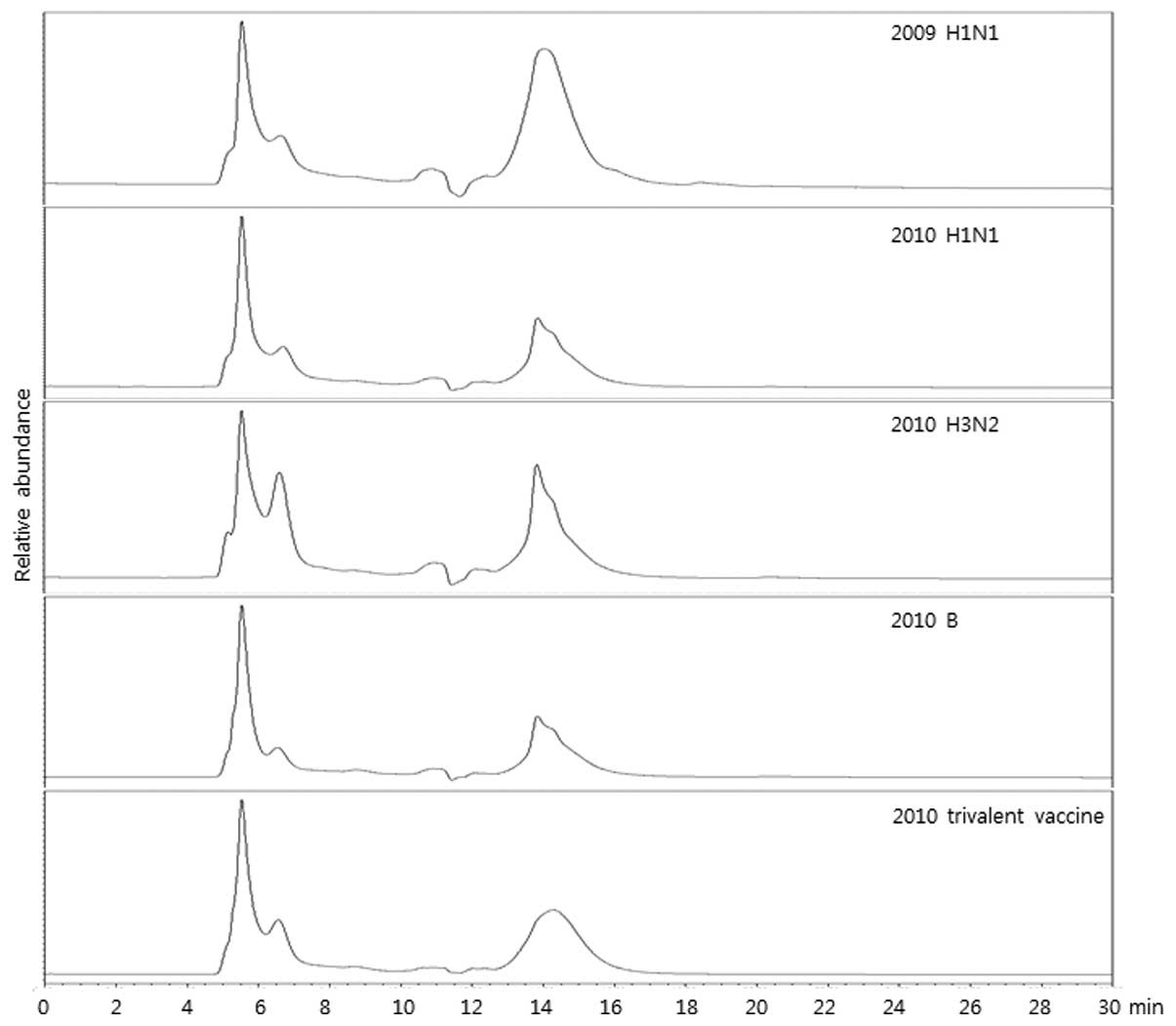
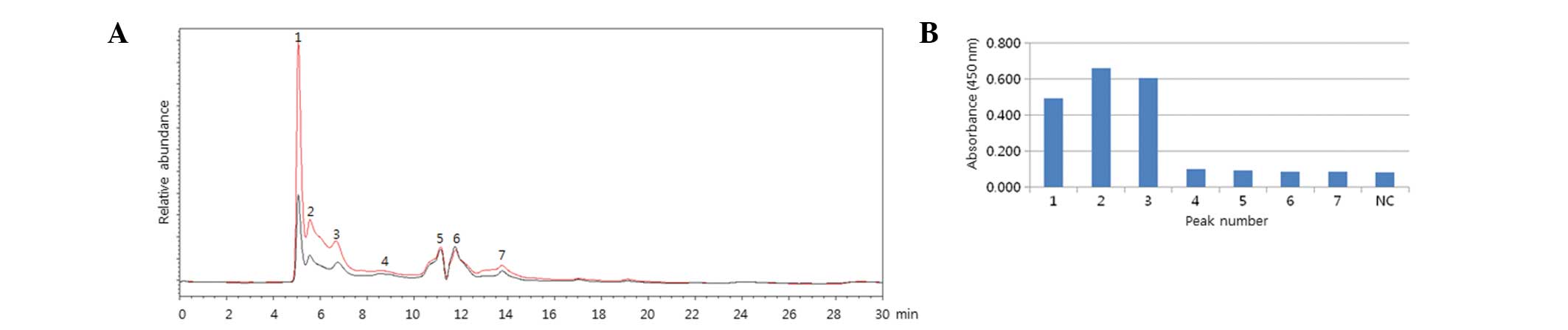
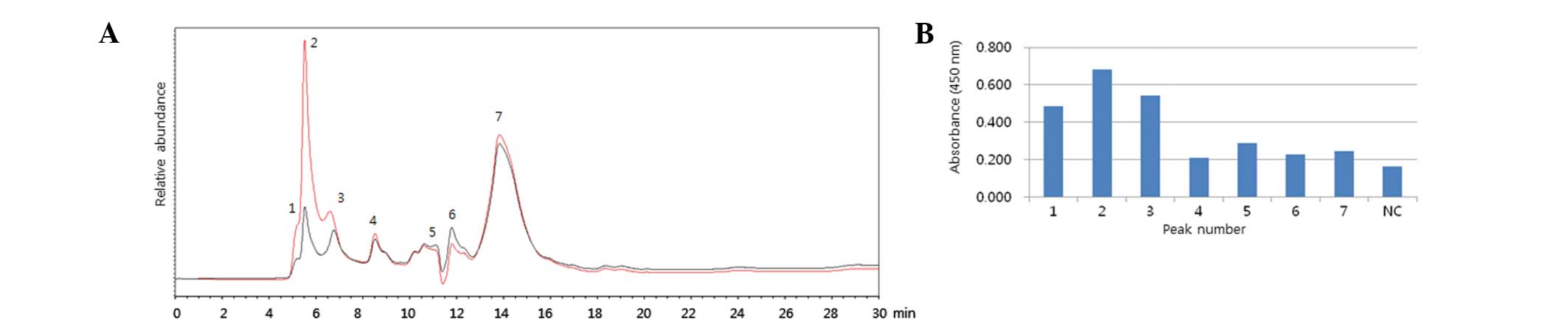
To compare the HA content, vaccine samples (2009 H1N1, 2010 H1N1, 2010 H3N2 and 2010 B monovalent vaccines and 2010 seasonal trivalent vaccines) were analyzed using SE-HPLC. The result demonstrated that the patterns of chromatogram were similar among the assessed vaccines, meaning that SE-HPLC analysis revealed similar results although a different HA was applied (Fig. 1). To verify the specificity of SE-HPLC, 2009 H1N1 reference antigen was immunoprecipitated with antiserum for H1N1 and peaks for HA were compared prior to and following immunoprecipitation (Fig. 2A). The results revealed that the peaks of SE-HPLC were reduced following immunoprecipitation, suggesting that the peaks from SE-HPLC were correlated with HA antigen. The fractions from each peak were designated 1 to 7, harvested and subject to an ELISA assay (Fig. 2B). When the fractions were reacted with antiserum for H1N1, fractions between 1, 2 and 3 peaks exhibited higher absorbance than others. These results suggested that major HA contents may be present in 1, 2 and 3 peaks. To confirm the specificity of SE-HPLC, an immunoprecipitation and ELISA assay were also conducted with the 2009 H1N1 vaccine (Fig. 3A and B). A total of 7 peaks were also designated and assessed and the results were similar to those of Fig. 2.

Figure 1

Comparison of SE-HPLC chromatograms of influenza vaccines. SE-HPLC chromatograms of 2009 H1N1, 2010 H1N1, 2010 H3N2, 2010 B monovalent vaccines and 2010 trivalent vaccine were assessed. The SE-HPLC chromatogram pattern was similar among the vaccines manufactured by a single manufacturer under the same process, regardless of virus type. SE-HPLC, size exclusion high performance liquid chromatography.

Figure 2

SE-HPLC chromatogram pattern of 2009 H1N1 reference antigen following immunoprecipitation. To examine the specificity of the SE-HPLC peaks for the HA, the 2009 H1N1 reference antigen was immunoprecipitated with anti-H1N1 serum. (A) SE-HPLC peaks represented before (red line) and after (blue line) immunoprecipitation. (B) The elutes of the SE-HPLC peaks were provided to the ELISA assay for the reaction with anti-H1N1 serum. NC, negative control; SE-HPLC, size exclusion high performance liquid chromatography.

Figure 3

SE-HPLC chromatogram pattern of 2009 H1N1 vaccine following immunoprecipitation. To examine specificity of the SE-HPLC peaks for the HA, the 2009 H1N1 vaccine was immunoprecipitated with anti-H1N1 serum. (A) SE-HPLC peaks represented before (red line) and after (blue line) immunoprecipitation. (B) The elutes of the SE-HPLC peaks were provided to the ELISA assay for the reaction with anti-H1N1 serum. NC, negative control; SE-HPLC, size exclusion high performance liquid chromatography.

Correlation of HA content with peak area

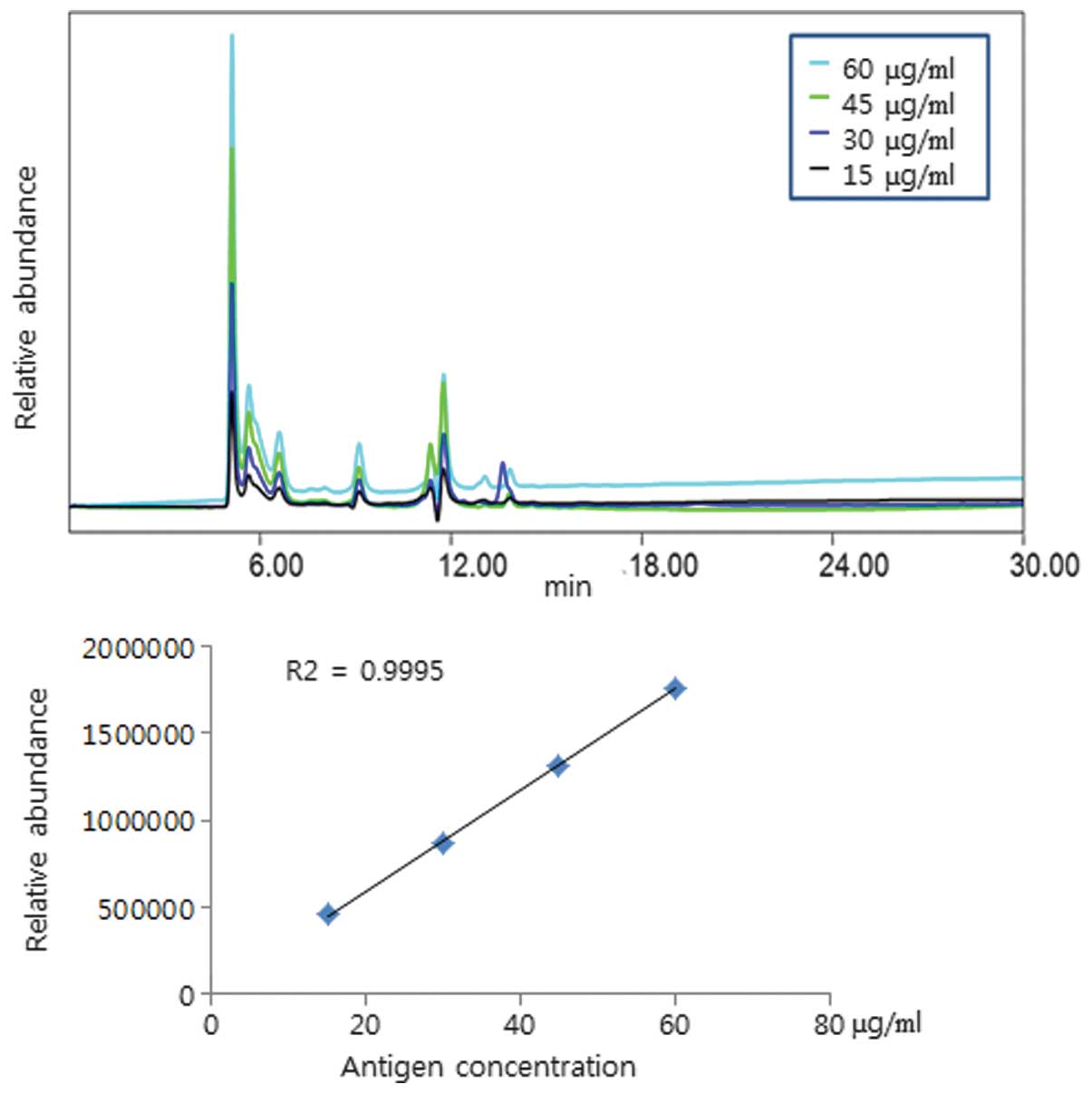
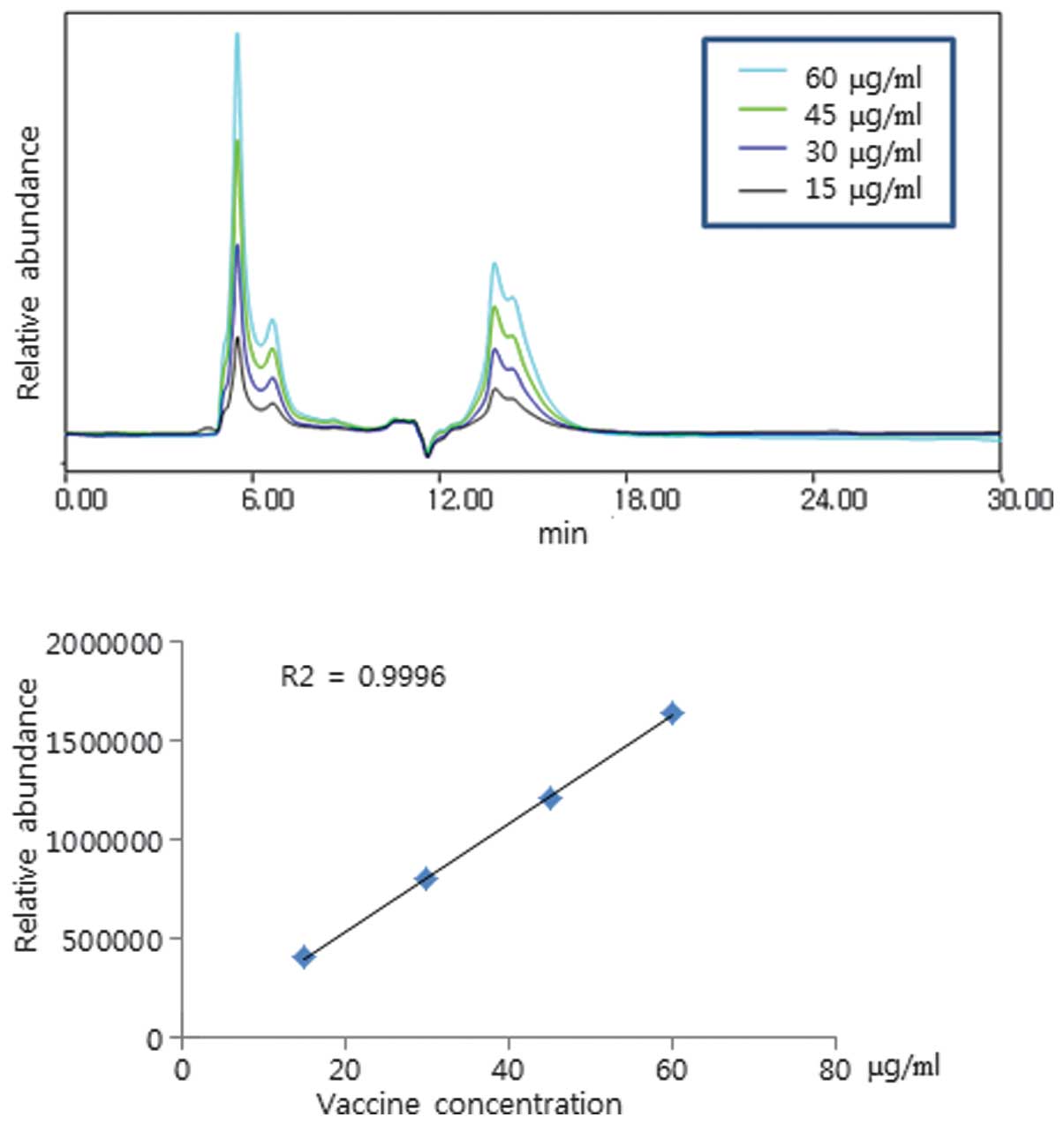
To examine the correlation of the HA content according to the SE-HPLC chromatogram area, different concentrations of 2009 H1N1 reference antigen were assessed. The result revealed that the chromatogram area was enhanced proportionately following the increased HA concentration from the 2009 H1N1 reference antigen (Fig. 4) and 2009 H1N1 vaccine (Fig. 5; R2>0.99). The present results revealed that the quantitative read-out from the SE-HPLC is matched with the content of HA.

Figure 4

Dose-dependent calibration curve of the 2009 H1N1 reference antigen. The different concentrations (15, 30, 45 and 60 μg/ml) of the 2009 H1N1 reference antigen were provided and the SE-HPLC chromatogram area was evaluated. When the HA content of the 2009 H1N1 reference antigen was analyzed by SE-HPLC, the chromatogram area was increased in proportion to the concentration, which revealed a significant correlation (R2=0.99). SE-HPLC, size exclusion high performance liquid chromatography.

Figure 5

Dose-dependent calibration curve of the 2009 H1N1 vaccine. The different concentrations (15, 30, 45 and 60 μg/ml) of the 2009 H1N1 vaccine were provided and the SE-HPLC chromatogram area was evaluated. When the HA content of the 2009 H1N1 vaccine was analyzed by SE-HPLC, the chromatogram area was increased in proportion to the concentration, which revealed a significant correlation (R2=0.99). SE-HPLC, size exclusion high performance liquid chromatography.

Correlation of SRID with SE-HPLC analyses in the measurement of HA content

To examine the accuracy and similarity of SE-HPLC compared with SRID, 2009 H1N1 (Table II) and 2010 H1N1 (Table III) vaccines were assessed. Initially, 10 repeats of the 2009 H1N1 vaccine, together with 2009 H1N1 reference antigen were examined and the content of HA, analyzed by SRID and SE-HPLC was evaluated. To compare HA content from SRID or SE-HPLC, the peak area from SE-HPLC was applied to the following equation: HA content (μg/0.5 ml) = (vaccine SE-HPLC peak area/reference SE-HPLC peak area) × reference HA content (μg) from SRID/average of normalized HA peak area. The HA content of the 2009 H1N1 vaccines was measured by SRID using the 2009 H1N1 reference antigen. In addition, the HA peak area was measured by SE-HPLC using the same reference antigen and then converted into the HA content using the above equation. In the present results, the similarity of HA content analyzed by SRID and SE-HPLC was 99.91% (SD, 5.94), meaning that evaluation of HA content by SE-HPLC is as reliable as SRID in 99.91% of cases. The HA content of the 2010 H1N1, 2010 H3N2 and 2010 B monovalent vaccines was also measured by SE-HPLC and compared with those of SRID using the 2009 H1N1 reference antigen. The result was similar to that of the 2009 H1N1 vaccines with 100% (SD, 6.73) similarity.

Table II

Content of HA in pandemic influenza vaccine by SE-HPLC using the 2009 H1N1 reference antigen.

Table II

Content of HA in pandemic influenza vaccine by SE-HPLC using the 2009 H1N1 reference antigen.

Reference and vaccinesaHA content from SRID (μg/0.5 ml)HA peak area from SE-HPLCHA peak area/1μgbNormalized HA peak areacHA content from SE-HPLC (μg/0.5ml)dSimilarity (%)e
2009 H1N1 antigen15.00831,67155,445
Lot 112.05728,85060,4851.0912.29101.95
Lot 211.52731,22063,4741.1412.33106.99
Lot 312.72725,52457,0381.0312.2396.14
Lot 412.99725,64255,8621.0112.2394.16
Lot 513.07723,72355,3731.0012.2093.34
Lot 612.80722,59256,4531.0212.1895.16
Lot 710.87721,42166,3681.2012.16111.87
Lot 811.10647,78658,3591.0510.9298.37
Lot 910.85657,19460,5711.0911.08102.10
Lot 1010.86647,89259,6591.0810.92100.56
Average/SD value1.07/0.0699.91/5.94

a Vaccines, 10 different lots of 2009 H1N1 pandemic vaccines were assessed;

b HA peak area/1 μg = HA peak area from SE-HPLC/HA content from SRID;

c Peak area of the vaccine was normalized with that of reference antigen;

d HA Content (μg/0.5 ml) = (vaccine SE-HPLC peak area/Reference SE-HPLC peak area) × Reference HA content (μg) from SRID/Average of normalized HA peak area;

e Similarity = (HA content from SE-HPLC)/(HA content from SRID) × 100. HA, hemagglutinin;

{ label (or @symbol) needed for fn[@id='tfn7-mmr-11-04-2819'] } SE-HPLC, size exclusion high performance liquid chromatography; SRID, single radial immunodiffusion; SD, standard deviation.

Table III

Content of HA in monovalent influenza vaccines by SE-HPLC using 2009 H1N1 as a reference material.

Table III

Content of HA in monovalent influenza vaccines by SE-HPLC using 2009 H1N1 as a reference material.

Reference and vaccinesaHA content from SRID (μg/0.5 ml)HA peak area from SE-HPLCHA peak area/1 μgbNormalized HA peak areacHA content from SE-HPLC (μg/0.5 ml)dSimilarity (%)e
Reference antigen15.00650,16443,344
2010 H1N114.03899,80764,1341.4814.72104.94
2010 H3N212.82724,38156,5041.3011.8592.45
2010 B14.56917,08762,9871.4515.01103.06
Average (SD)1.41 (0.09)100.00(6.73)

a HA peak area/1μg = HA peak area from SE-HPLC/HA content from SRID;

b Peak area of the vaccine was normalized with that of reference antigen;

c HA Content (μg/0.5 ml) = (vaccine SE-HPLC peak area/reference SE-HPLC peak area) × reference HA content (μg) from SRID/average of normalized HA peak area;

d Similarity = (HA content from SE-HPLC)/(HA content from SRID) × 100.

{ label (or @symbol) needed for fn[@id='tfn12-mmr-11-04-2819'] } HA, hemagglutinin; SE-HPLC, size exclusion high performance liquid chromatography; SRID, single radial immunodiffusion; SD, standard deviation.

Discussion

The prevention of influenza through vaccination is the most effective method to control an influenza pandemic (14). This has been confirmed once again during the 2009/2010 H1N1 influenza pandemic. In addition, to maximize the preventive effect, vaccination should be performed as soon as possible following the onset of the influenza virus outbreak. For rapid vaccination, the shortening of the time required for vaccine development, including isolation of the pandemic virus, manufacturing of the vaccine virus with high yield, measurement of antigen content and clinical assessment is required (6,13).

At present, the internationally authorized measurement of the antigen content of an influenza vaccine is using SRID. This method measures HA content by comparing the areas of the reference antigen with known HA content and the vaccine. Therefore, for the measurement of the HA content, the reference antigen and antibody are essentially required. It generally takes 2–3 months to prepare the reference antigen and antibody, which is the most significant obstacle in vaccine development.

The present study was conducted to develop a simple method that measures the HA content without the reference antigen and antibody. The present study revealed a relevant similarity in data produced using SE-HPLC to that of SRID, meaning SE-HPLC may be applied to any type of influenza virus in the situation of an influenza pandemic. The results of SE-HPLC analysis on H1, H3 and B type influenza vaccines revealed similar chromatogram patterns. Furthermore, the retention time designating HA separation revealed consistent results with the chromatogram. The SE-HPLC chromatogram area was increased in proportion to HA concentration, which demonstrated a significant correlation between the HA concentration and peak area. Although the HA content, as examined using SE-HPLC did not accurately represent HA antigenicity compared with that of SRID, it exhibited a high similarity to that of SRID (99.91–100.00%) with regards to HA concentration.

During the SE-HPLC process, protease treatment for the specimens of the reference antigen and the vaccine was not applied, which differs from the SRID method. As the protease step was skipped, the results may not be as accurate as SRID. However, an experimental protocol, which excludes protease treatment saves time in the analysis of the HA content. Therefore, SE-HPLC is not a method that replaces the SRID assay, but a supplementary assessment to overcome delayed vaccine development, a disadvantage of the SRID assay. If a clinical dose of HA content is prepared using SE-HPLC prior to the development of the reference antigen and antibody for a pandemic influenza virus, a shortening of the vaccination development time against the pandemic influenza virus may be achieved. A further study on the influenza pandemic virus type H5 is required for more accurate measurement.

Acknowledgements

The authors would like to thank Green Cross for providing influenza vaccines and NIBSC for providing reference materials. The present study was supported by a grant from the Korean Food and Drug Administration (no. 10171KFDA307).

References

1 

Schild GC, Wood JM and Newman RW: A single-radial-immunodiffusion technique for the assay of influenza haemagglutinin antigen. Proposals for an assay method for the haemagglutinin content of influenza vaccines. Bull World Health Organ. 52:223–231. 1975.PubMed/NCBI

2 

Wood JM, Schild GC, Newman RW and Seagroatt V: An improved single-radial-immunodiffusion technique for the assay of influenza haemagglutinin antigen: application for potency determinations of inactivated whole virus and subunit vaccines. J Biol Stand. 5:237–247. 1977. View Article : Google Scholar : PubMed/NCBI

3 

Wood JM, Mumford J, Schild GC, Webster RG and Nicholson KG: Single-radial-immunodiffusion potency tests of inactivated influenza vaccines for use in man and animals. Dev Biol Stand. 64:169–177. 1986.PubMed/NCBI

4 

Williams MS: Single-radial-immunodiffusion as an in vitro potency assay for human inactivated viral vaccines. Vet Microbiol. 37:253–262. 1993. View Article : Google Scholar : PubMed/NCBI

5 

Hu J, Liu DC and Wang TR: Clinical application of the single radial immunodiffusion (SRID) technic to detect antitubercle bacillus antibody. Zhonghua Jie He He Hu Xi Za Zhi. 16:270–271. 318–279. 1993.(In Chinese).

6 

Gerdil C: The annual production cycle for influenza vaccine. Vaccine. 21:1776–1779. 2003. View Article : Google Scholar : PubMed/NCBI

7 

Kapteyn JC, Saidi MD, Dijkstra R, et al: Haemagglutinin quantification and identification of influenza A&B strains propagated in PER. C6 cells: a novel RP-HPLC method. Vaccine. 24:3137–3144. 2006. View Article : Google Scholar : PubMed/NCBI

8 

Kapteyn JC, Porre AM, de Rond EJ, et al: HPLC-based quantification of haemagglutinin in the production of egg- and MDCK cell-derived influenza virus seasonal and pandemic vaccines. Vaccine. 27:1468–1477. 2009. View Article : Google Scholar

9 

Garcia-Canas V, Lorbetskie B, Bertrand D, Cyr TD and Girard M: Selective and quantitative detection of influenza virus proteins in commercial vaccines using two-dimensional high-performance liquid chromatography and fluorescence detection. Anal Chem. 79:3164–3172. 2007. View Article : Google Scholar : PubMed/NCBI

10 

Williams TL, Luna L, Guo Z, et al: Quantification of influenza virus hemagglutinins in complex mixtures using isotope dilution tandem mass spectrometry. Vaccine. 26:2510–2520. 2008. View Article : Google Scholar : PubMed/NCBI

11 

Peyre M, Fusheng G, Desvaux S and Roger F: Avian influenza vaccines: a practical review in relation to their application in the field with a focus on the Asian experience. Epidemiol Infect. 137:1–21. 2009. View Article : Google Scholar

12 

Li C, Shao M, Cui X, et al: Application of deglycosylation and electrophoresis to the quantification of influenza viral hemagglutinins facilitating the production of 2009 pandemic influenza (H1N1) vaccines at multiple manufacturing sites in China. Biologicals. 38:284–289. 2010. View Article : Google Scholar : PubMed/NCBI

13 

Wood JM and Levandowski RA: The influenza vaccine licensing process. Vaccine. 21:1786–1788. 2003. View Article : Google Scholar : PubMed/NCBI

14 

Ferguson NM, Cummings DA, Fraser C, Cajka JC, Cooley PC and Burke DS: Strategies for mitigating an influenza pandemic. Nature. 442:448–452. 2006. View Article : Google Scholar : PubMed/NCBI

Related Articles

  • Abstract
  • View
  • Download
  • Twitter
Copy and paste a formatted citation
Spandidos Publications style
Roh HS, Song HM, Yun BR, Kang HK, Choi KS, Park YJ, Kim DS, Kim SH, Mo IP, An BS, An BS, et al: A hemagglutinin quantification method for development of an influenza pandemic vaccine using size exclusion high performance liquid chromatography. Mol Med Rep 11: 2819-2824, 2015.
APA
Roh, H.S., Song, H.M., Yun, B.R., Kang, H.K., Choi, K.S., Park, Y.J. ... Ahn, C.Y. (2015). A hemagglutinin quantification method for development of an influenza pandemic vaccine using size exclusion high performance liquid chromatography. Molecular Medicine Reports, 11, 2819-2824. https://doi.org/10.3892/mmr.2014.3049
MLA
Roh, H. S., Song, H. M., Yun, B. R., Kang, H. K., Choi, K. S., Park, Y. J., Kim, D. S., Kim, S. H., Mo, I. P., An, B., Ahn, C. Y."A hemagglutinin quantification method for development of an influenza pandemic vaccine using size exclusion high performance liquid chromatography". Molecular Medicine Reports 11.4 (2015): 2819-2824.
Chicago
Roh, H. S., Song, H. M., Yun, B. R., Kang, H. K., Choi, K. S., Park, Y. J., Kim, D. S., Kim, S. H., Mo, I. P., An, B., Ahn, C. Y."A hemagglutinin quantification method for development of an influenza pandemic vaccine using size exclusion high performance liquid chromatography". Molecular Medicine Reports 11, no. 4 (2015): 2819-2824. https://doi.org/10.3892/mmr.2014.3049
Copy and paste a formatted citation
x
Spandidos Publications style
Roh HS, Song HM, Yun BR, Kang HK, Choi KS, Park YJ, Kim DS, Kim SH, Mo IP, An BS, An BS, et al: A hemagglutinin quantification method for development of an influenza pandemic vaccine using size exclusion high performance liquid chromatography. Mol Med Rep 11: 2819-2824, 2015.
APA
Roh, H.S., Song, H.M., Yun, B.R., Kang, H.K., Choi, K.S., Park, Y.J. ... Ahn, C.Y. (2015). A hemagglutinin quantification method for development of an influenza pandemic vaccine using size exclusion high performance liquid chromatography. Molecular Medicine Reports, 11, 2819-2824. https://doi.org/10.3892/mmr.2014.3049
MLA
Roh, H. S., Song, H. M., Yun, B. R., Kang, H. K., Choi, K. S., Park, Y. J., Kim, D. S., Kim, S. H., Mo, I. P., An, B., Ahn, C. Y."A hemagglutinin quantification method for development of an influenza pandemic vaccine using size exclusion high performance liquid chromatography". Molecular Medicine Reports 11.4 (2015): 2819-2824.
Chicago
Roh, H. S., Song, H. M., Yun, B. R., Kang, H. K., Choi, K. S., Park, Y. J., Kim, D. S., Kim, S. H., Mo, I. P., An, B., Ahn, C. Y."A hemagglutinin quantification method for development of an influenza pandemic vaccine using size exclusion high performance liquid chromatography". Molecular Medicine Reports 11, no. 4 (2015): 2819-2824. https://doi.org/10.3892/mmr.2014.3049
Follow us
  • Twitter
  • LinkedIn
  • Facebook
About
  • Spandidos Publications
  • Careers
  • Cookie Policy
  • Privacy Policy
How can we help?
  • Help
  • Live Chat
  • Contact
  • Email to our Support Team